


Airport Security and Graft Protection During Travel
Airport screening is usually possible after surgery when the scalp is checked and the trip is physically calm. Airport scanners do not damage transplanted grafts. The real risks are more ordinary. A tight hat, a rushed queue, overhead luggage, headrest friction, or trying to hide the scalp at the wrong moment can cause the problem. If you plan to hide the scalp in the airport, choose soft headwear after transplant cautiously rather than pulling on a tight covering. A mask can also become a pressure issue if it is tightened or adjusted repeatedly, so review face mask after FUE planning before the airport day.
Do not plan the airport day like ordinary travel if the scalp still needs protection from friction, rushing, overhead bags, and seat headrest contact. After surgery, the scalp may be tender, swollen, red, numb, crusted, or still wrapped in a donor area dressing. You may also be tired after a long procedure. A safer plan means light luggage, no rushing, no heavy bags above the head, and airport assistance after hair transplant when walking, queues, or bags would make the first airport day difficult.
Airport stress comes from exposure and movement
Most people are not really afraid of the airport building. They are afraid of being seen. Passport control, bright lights, queues, security staff, and other passengers can make a newly transplanted scalp feel very exposed. That embarrassment can push the wrong decisions, such as wearing a tight cap too early or rushing through the airport with heavy bags. A covering that needs constant fixing can create more risk than the attention it avoids.
At security, follow the officer’s instruction first and move slowly. If headwear has to come off, remove it without rubbing the graft area. A private screening is the better option when exposure or rushing would make you handle the grafts carelessly.
Privacy is easier when the explanation stays simple and truthful. A short statement that you had recent scalp surgery gives screening staff enough context without turning the moment into a long explanation. Carry the clinic note when you are travelling with a dressing or visible redness. Do not invent a complicated story just to hide the transplant. Use private screening when exposure would make you rush, and remove any covering only in a way that does not rub the grafted area.
A change in hairline alone does not necessarily mean you need a new passport. The practical issue is whether the photograph still clearly identifies you and meets the rules for your passport. Check the issuing country’s requirements before replacing a valid document just to update your hairline. Passport acceptance and fitness to fly remain separate decisions.
The medical question is narrower. Newly implanted grafts need protection from direct trauma, repeated rubbing, scratching, tight pressure, and unnecessary contamination. A controlled walk through airport security is usually not the problem. The risky moments are pulling a hat on and off, bumping the scalp while lifting luggage, pressing the head into a seat, or forgetting aftercare because travel feels stressful.
Airport planning belongs next to flying after a hair transplant, but it is not the same question. Flying is about timing, swelling, comfort, and medical readiness. The airport itself adds security checks, head covering rules, bags, product limits, crowds, and visibility anxiety.
Airport scanners do not harm newly implanted grafts
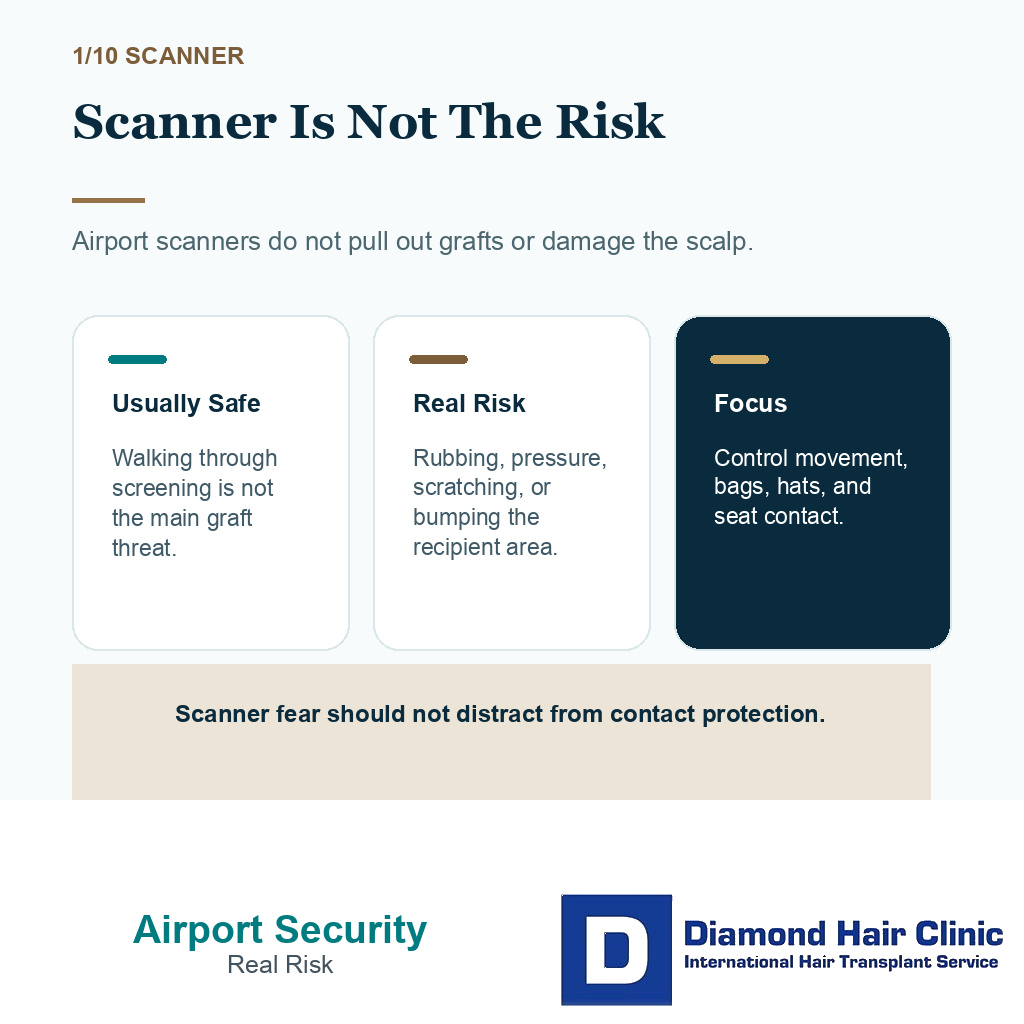
Airport metal detectors, body scanners, and airport bag scanners do not pull out grafts, heat the scalp, or change graft survival. Hair grafts are living tissue placed into tiny recipient openings. Their early risk comes from mechanical trauma and healing conditions, not from walking through a scanner.
If someone worries about airport scanning, I separate that fear from the real recovery risks. The scanner is not the issue. Rubbing the grafts with a cap, scratching because the scalp itches, bumping the head during boarding, or sleeping with the grafted area pressed into a headrest is much more relevant.
If the donor area is dressed, security staff may need to screen a bandage or head covering. That can feel embarrassing, but the grafts are not harmed by the check itself. Explain that you had recent scalp surgery, move slowly, and avoid sudden movements while the officer completes the check.
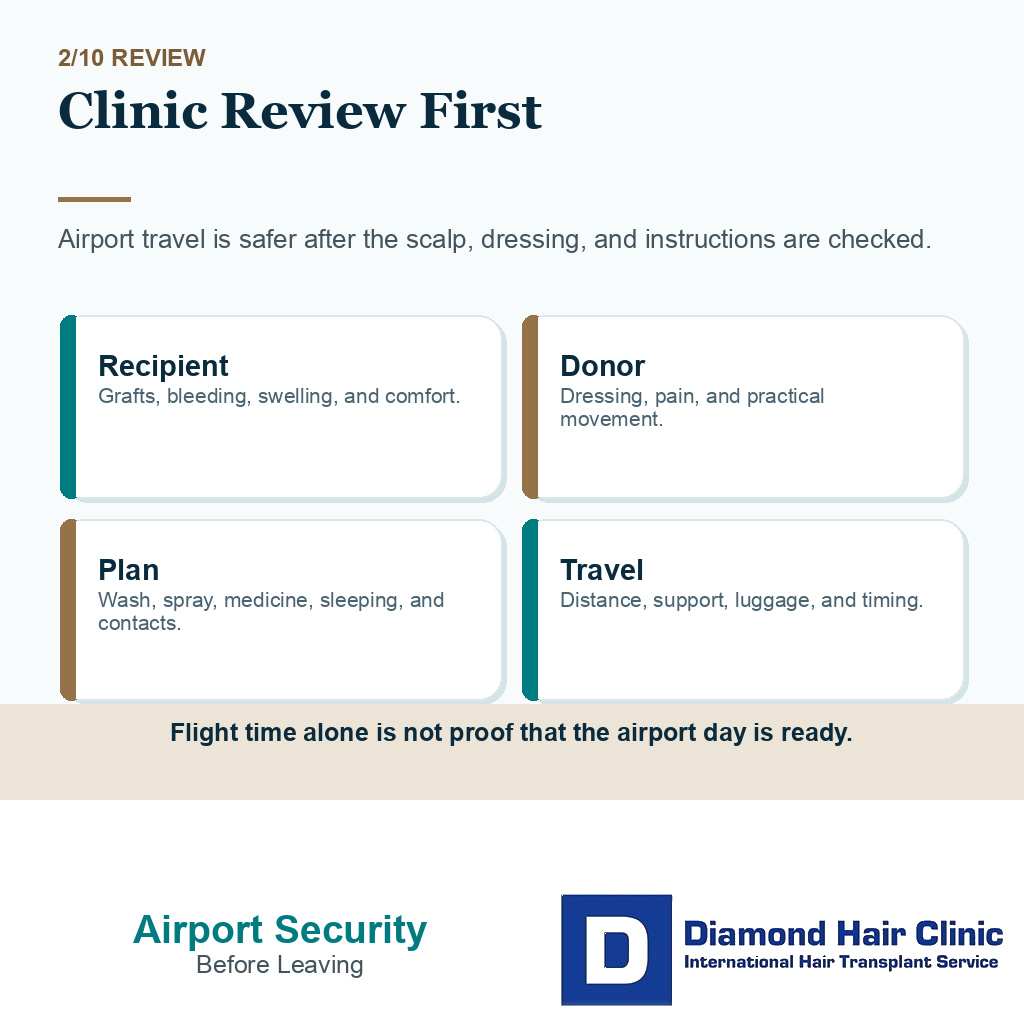
Airport travel needs clinic review first
For many international cases, airport travel becomes reasonable after the clinic has reviewed the scalp, checked bleeding, explained washing and spray instructions, and confirmed that you understand how to protect the grafts. At Diamond Hair Clinic, I do not treat the operation and airport transfer as one rushed event. A check after surgery before leaving Istanbul is valuable because it catches problems before you are far away.
Many people can travel within the first few days, but early travel is not right for everyone. A short, organized trip after review is different from rushing to a long flight while bleeding, dizzy, nauseated, feverish, heavily swollen, in strong pain, medically complicated, or alone without support. If the airport plan changes after surgery, flight home changes after FUE helps decide whether the delay is practical or medical.
The airport decision depends on the clinic review, first wash plan, travel distance, and how many days you stay in Turkey after a hair transplant. Leaving too quickly can make a small recovery problem harder to manage.
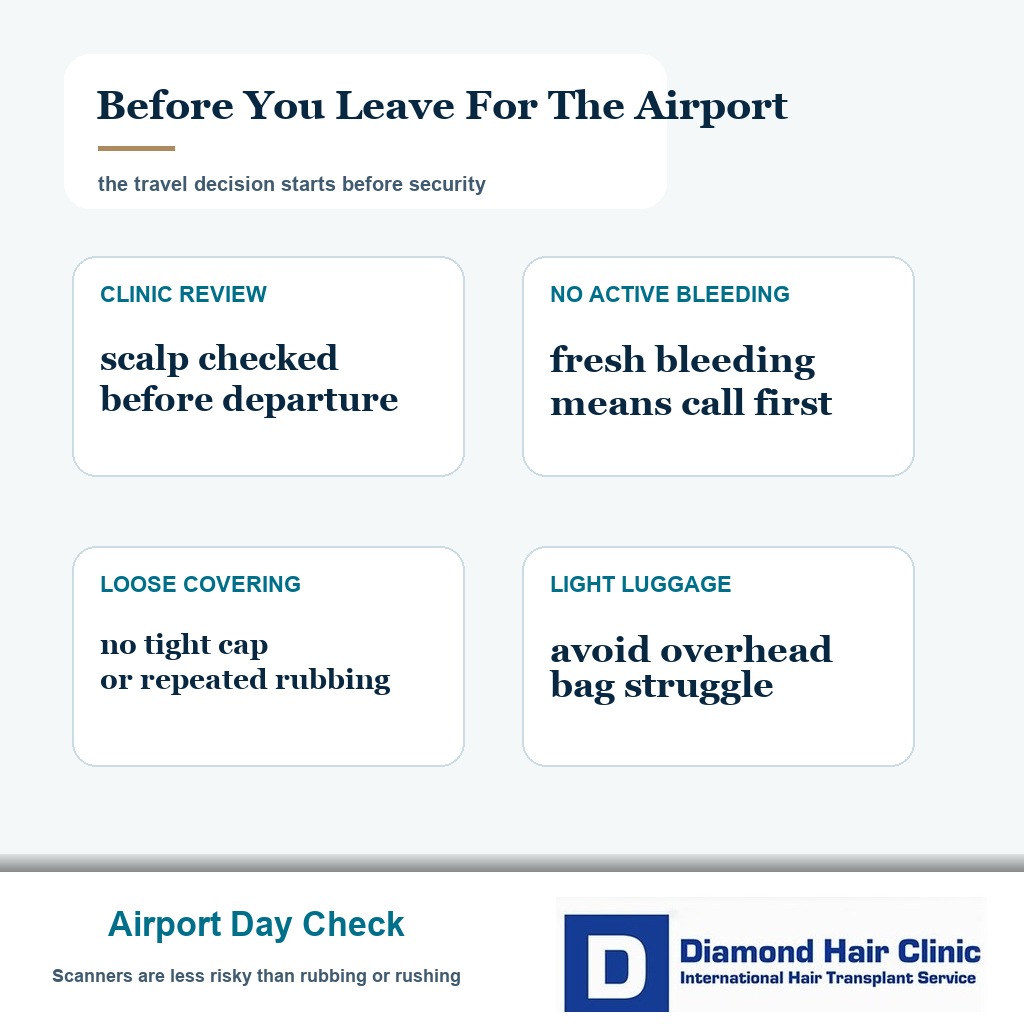
Clinic review before airport travel
Before you go to the airport, the clinic checks the recipient area, donor area, bleeding status, swelling pattern, and dressing. You need to know how to sleep, how to protect the grafts, when to wash, what medicine to take, what to avoid, and who to contact if something changes during travel. Patients who wear lenses should also plan contact lens hygiene after hair transplant before relying on airport bathrooms or a dry flight.
Products supplied by the clinic, such as shampoo, foam, saline spray, or medication, should be sorted before the airport, not explained at the checkpoint. Keep only what you need during the journey with you, and place the rest in checked luggage when the clinic says that is acceptable. The same review should cover what to do if a long flight dries the scalp or if washing has to wait until you arrive home. Airport bathrooms are not the place to improvise with products.
If you are traveling alone for a hair transplant in Turkey, the plan has to be even more practical. Treat the airport day as part of hair transplant aftercare, not as ordinary travel. The first airport day should be simple and controlled. It should not involve heavy shopping bags, running to the gate, complicated transfers, or carrying all luggage without help.
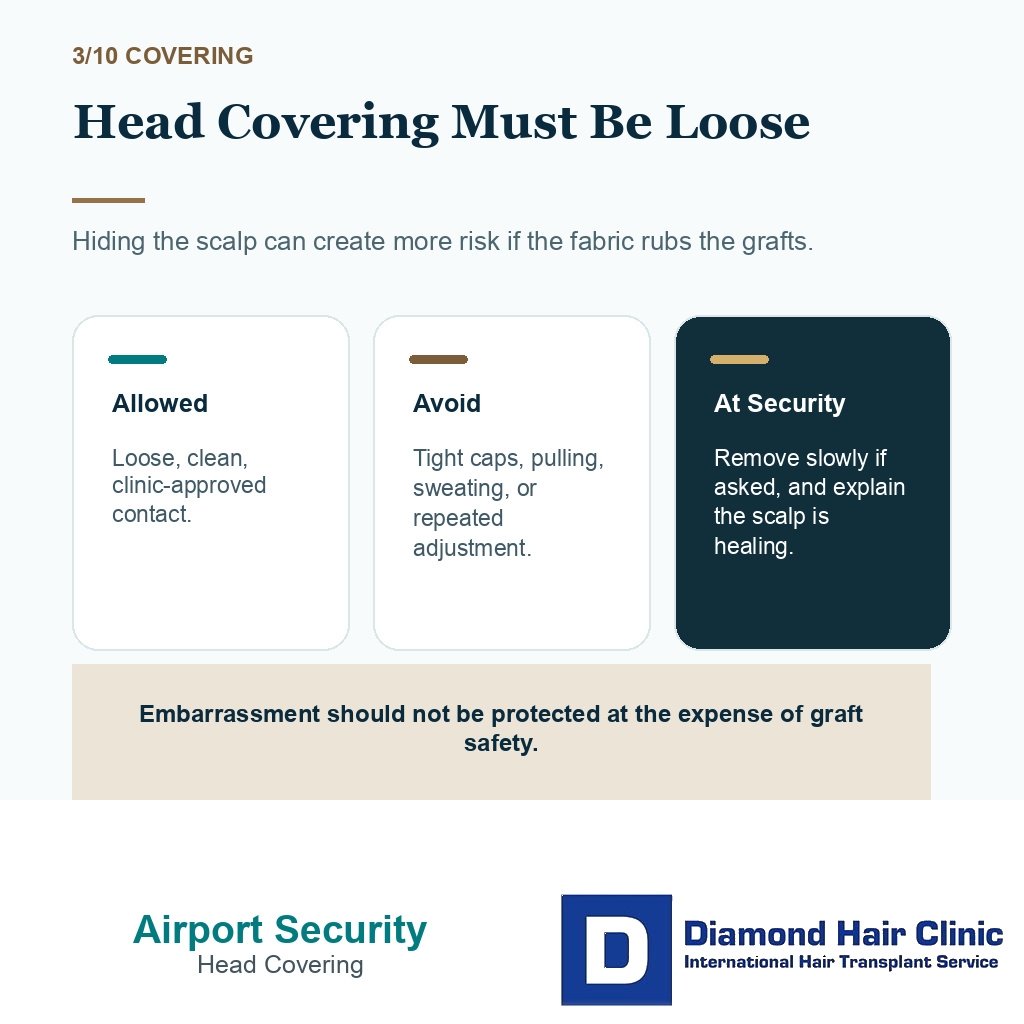
Head coverings need clinic approval and loose contact
A loose head covering may be possible when your clinic approves it, but a tight cap, beanie, compression style hat, helmet, or headwear that rubs the grafted area is not a good airport solution. Wearing it is only one part of the decision. Putting it on, taking it off, adjusting it repeatedly, sweating under it, and pulling it away quickly at security can all create unnecessary contact. At security, explain the surgery before moving any covering over the grafted area.
A security request to remove a hat needs a slow, controlled response. Lift the covering without dragging fabric across the grafted area. When exposure makes you nervous, explain that you had recent scalp surgery and need to remove the covering gently. Private or slower inspection works best before you are already rushed.
If the covering is religious, cultural, medical, or simply being used to protect a healing scalp, say that calmly. Some airports can offer a private screening area when a head covering has to be removed or checked more closely. Availability and procedure vary, so ask early and move slowly rather than arguing at the belt.
The timing is similar to the rules for wearing a hat after a hair transplant. A loose, clean covering can be different from tight pressure. The recipient area should not be treated as protected just because the hat feels soft in your hand. Judge the covering by how it contacts the grafts in real movement.
Security checks of the scalp or dressing
With a bandage, donor area dressing, swelling, or visible surgical marks, security may look more closely. That can feel uncomfortable, but it is not a medical emergency. Tell them you had recent scalp surgery. Ask for a moment to remove any head covering gently if needed. Keep your hands away from the grafted area unless you have been instructed how to touch around it safely.
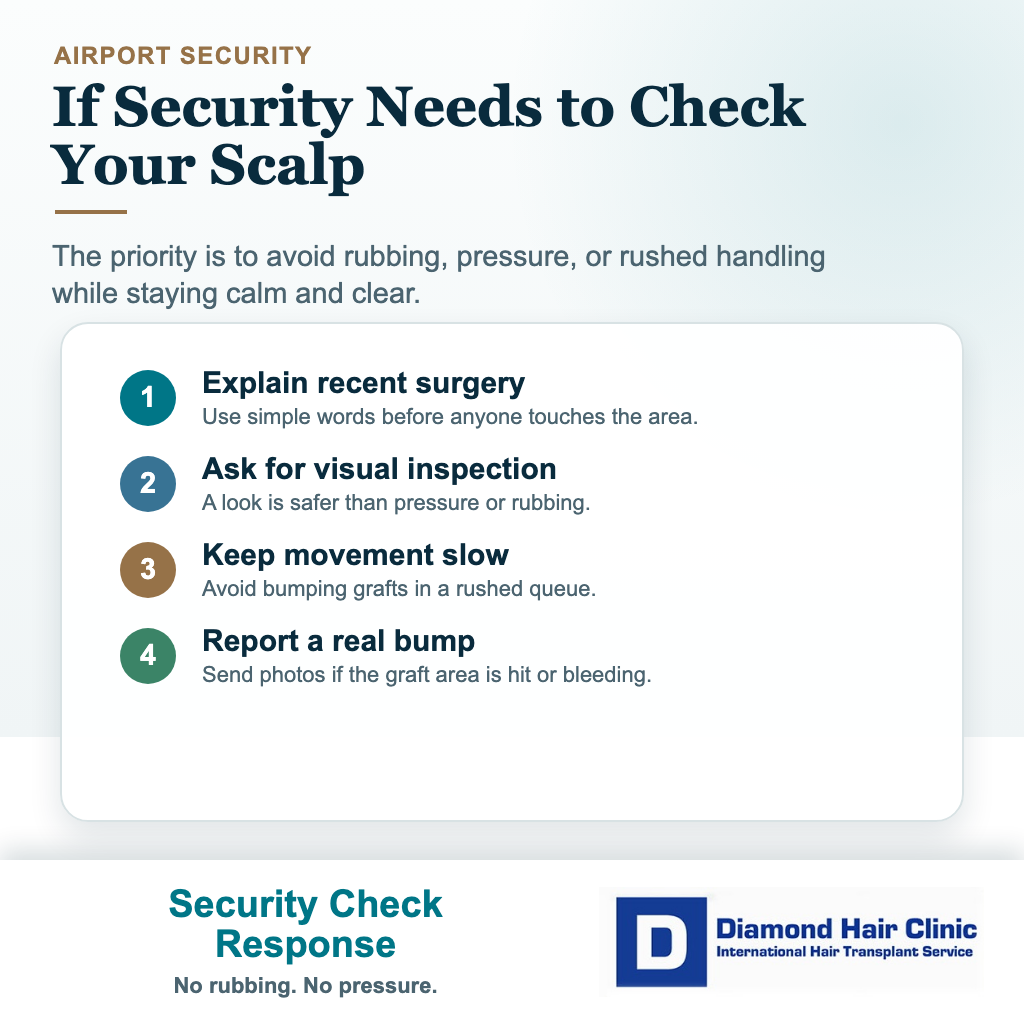
The recipient area should not be scratched, rubbed, or pressed during this process. If a staff member seems about to touch the scalp directly, explain that the area is surgical and newly healing. Airport staff see medical dressings, scars, swelling, and people after recent surgery regularly, but you still need to protect the grafted area.
Early after surgery, the timing for when you can touch grafts after a hair transplant still applies. Airport stress does not change the rules. If you would not rub the grafts at home, do not rub them in a checkpoint line.
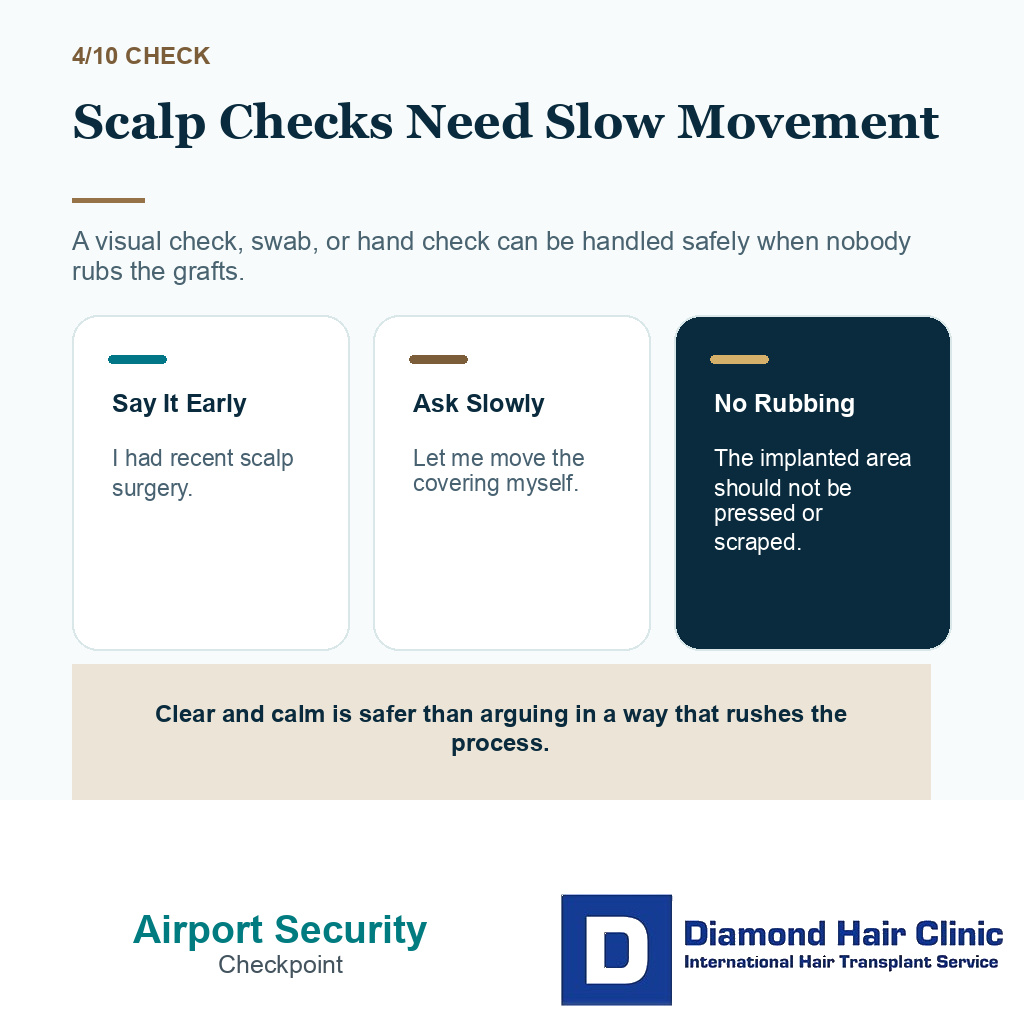
Pat downs, swabs, and hand checks need slow movement
Extra screening is possible if a scanner flags a dressing, swelling, head covering, or unusual shape around the scalp. In many airports this can mean visual inspection, a handheld detector, a swab of your hands or covering, or being asked to touch the area yourself while the officer observes. These steps do not damage grafts when the scalp is not rubbed, pressed, or scraped.
Any scalp check should start with a clear explanation that you had recent scalp surgery and that the implanted area must not be rubbed. Remove or adjust the covering yourself when possible. A private screening room is useful when exposure would make the check feel rushed.
A donor dressing, bandage, or visible medical item should be explained before screening starts. It may be inspected, swabbed, or checked with a handheld detector. The check is easier to handle when staff understand it is a recent surgical dressing and which area should not be pressed.
A rushed argument makes the screening process harder. A better response is clear, slow, and specific. Say that you had recent scalp surgery, no rubbing should happen over the implanted area, and you need time to move the covering yourself. Security staff need to complete their work, and you need to protect the recipient area. Both can happen if the scalp is handled gently.
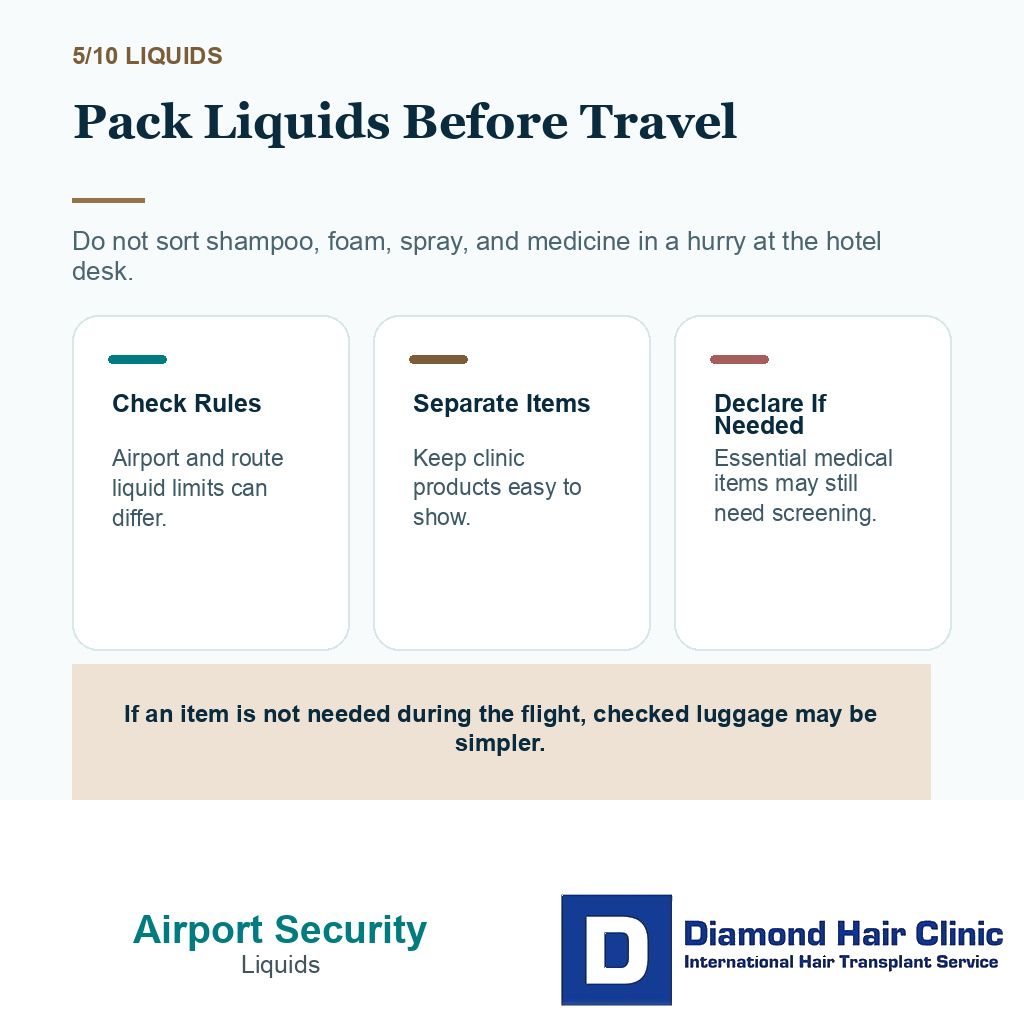
Pack aftercare liquids and medication before travel
Pack aftercare products before the travel day, not in a hurry at the hotel desk. Airport liquid rules vary by country, airport, and route, so check the airport and airline rules before leaving the hotel. In many airports, liquids, gels, foams, shampoos, lotions, and sprays in carry on baggage need travel size containers, often 100 ml or smaller, unless they are accepted as essential medical items after screening. If the wider question is where each item should travel, use the cabin bag or checked bag after a hair transplant guide before you close the suitcase.
Before checkout, make a small travel kit for the journey and keep the rest of the bottles separate. This prevents security pressure from turning into scalp handling, missed spray use, or a rushed decision to throw away the product you were told to use.
Keep clinic provided liquids, sprays, foams, and medicines separate and easy to show. If something is medically necessary and over the usual liquid limit, declare it before screening instead of hiding it in the bag. A clinic note or prescription can help explain the item, but it does not remove the need for airport screening.
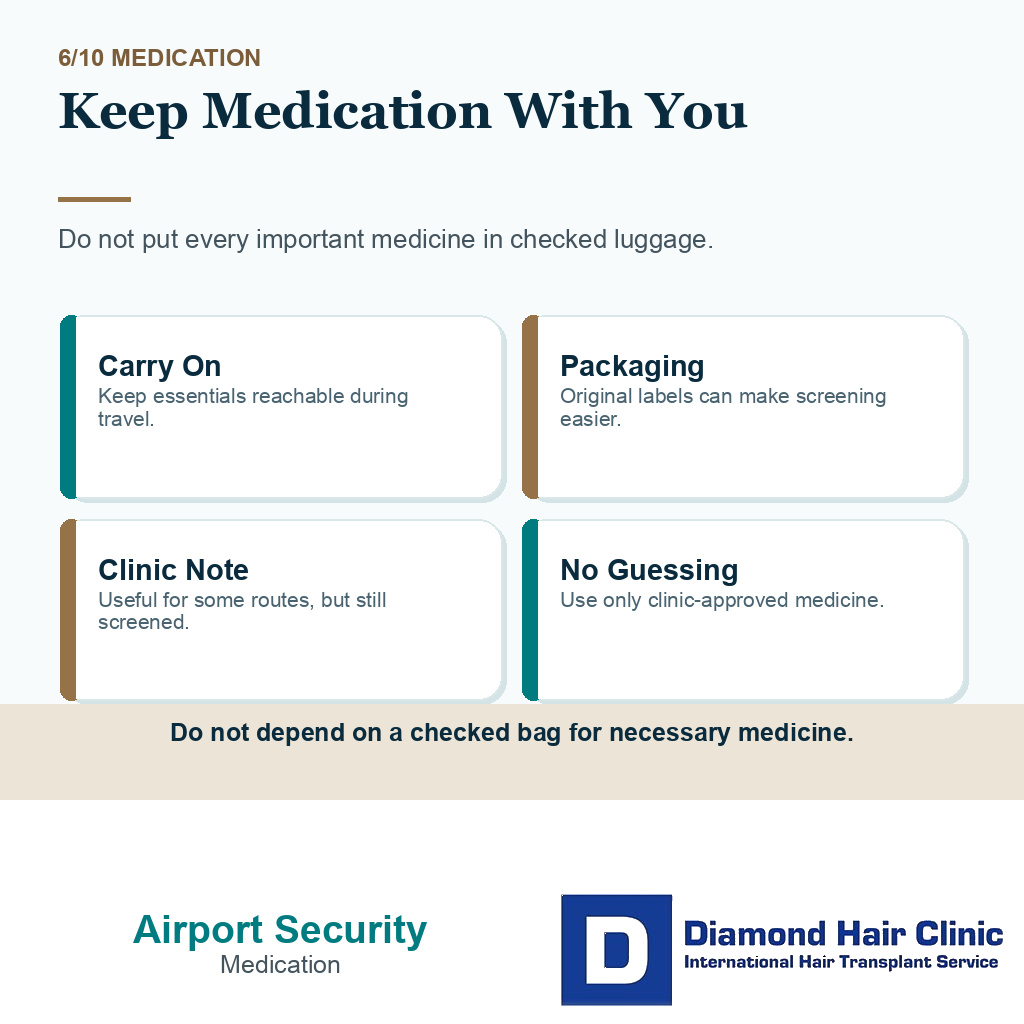
Keep essential medication with you, preferably in original packaging, with the prescription or clinic note if the route may require it. Do not place all medication in checked luggage if missing it would create a medical problem. If the clinic gives a small approved spray or medicine for the flight, keep it accessible and follow the clinic’s instructions. Do not spray, wash, moisturize, or apply products because another traveler suggests it.
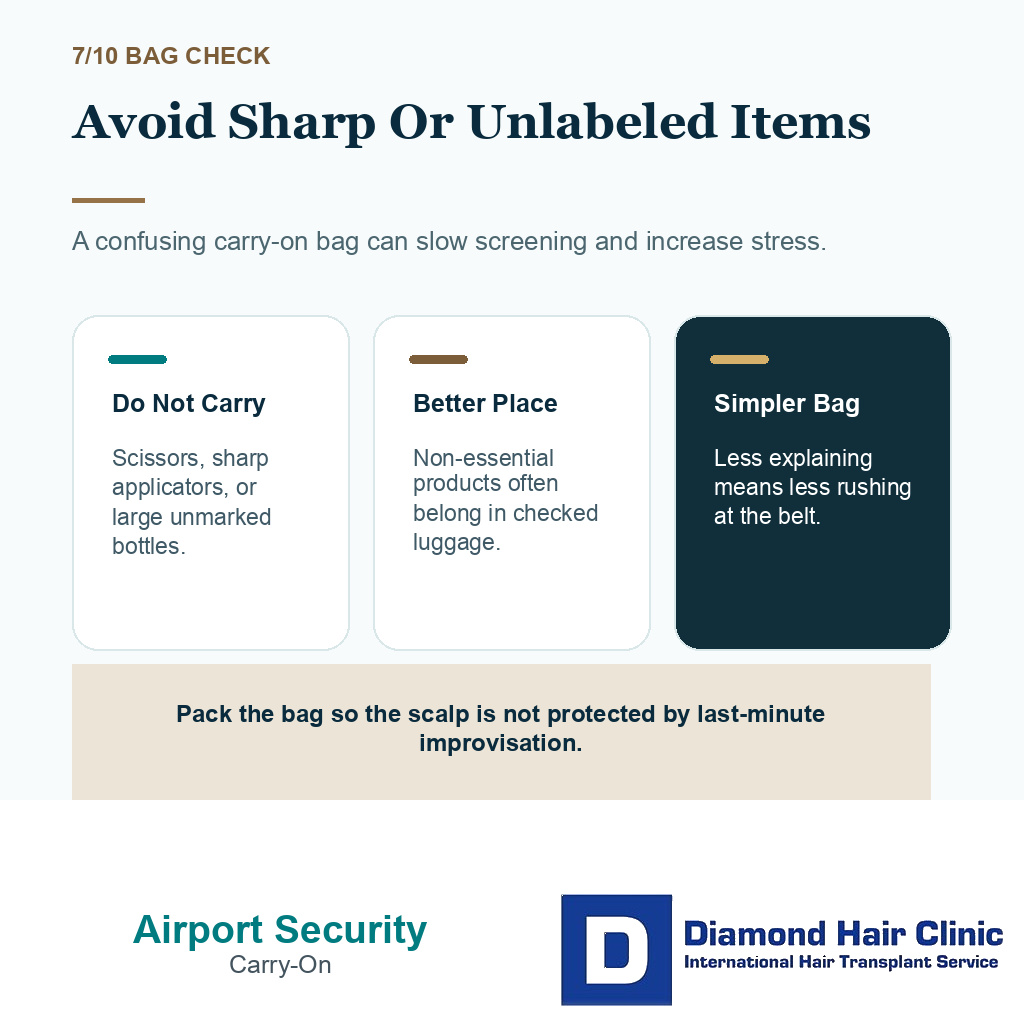
Sharp applicators, unlabeled bottles, and large unmarked product containers belong out of the carry on when they are not essential during the flight. Checked luggage is usually the simpler place for nonessential products.
Saline spray after a hair transplant needs clear travel instructions before you leave when it is supplied by the clinic. Saline is not a substitute for washing instructions, and more spraying is not always better. The scalp needs the right routine, not random airport treatment.
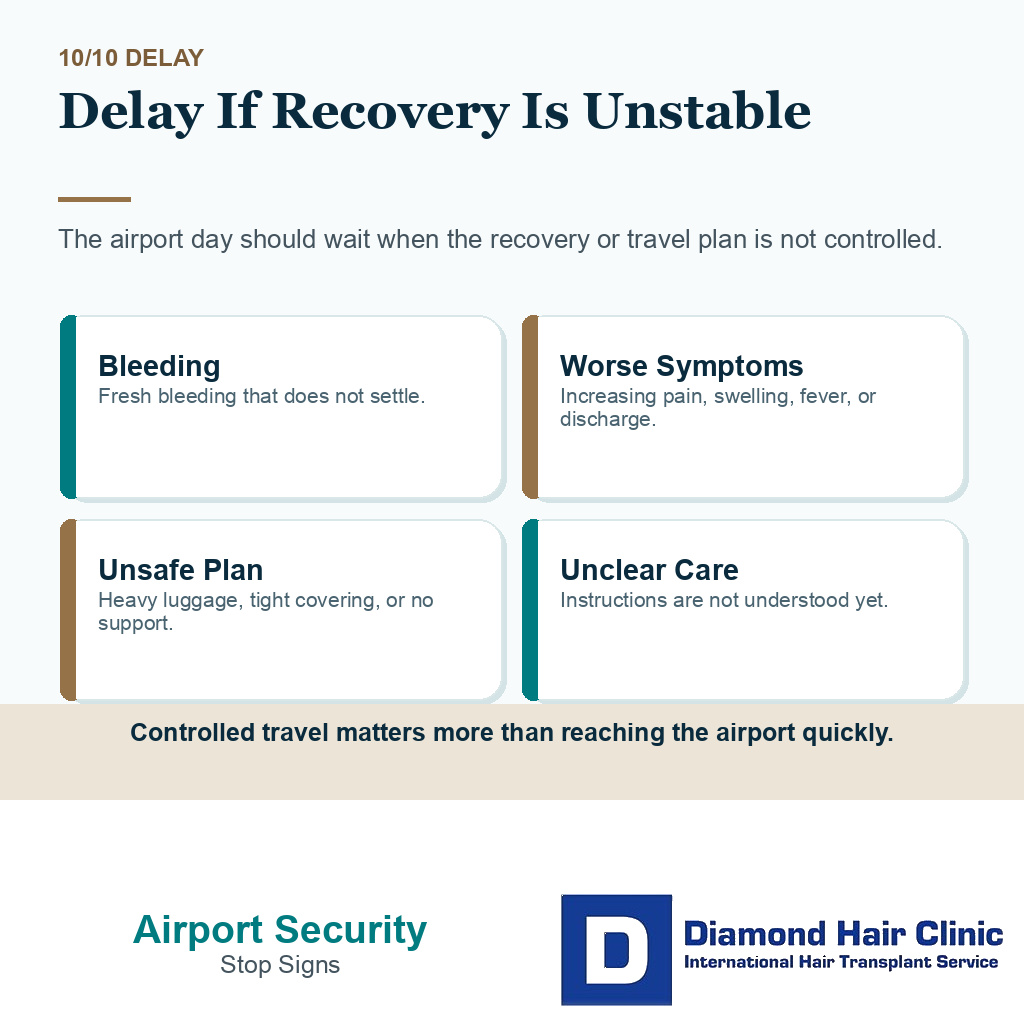
Use these 10 airport travel slides to separate scanner fear from real graft contact risks. Swipe sideways, use the arrows to move one slide at a time, or choose a number below the image to jump to a specific slide.
Avoiding bumps in queues and on the plane
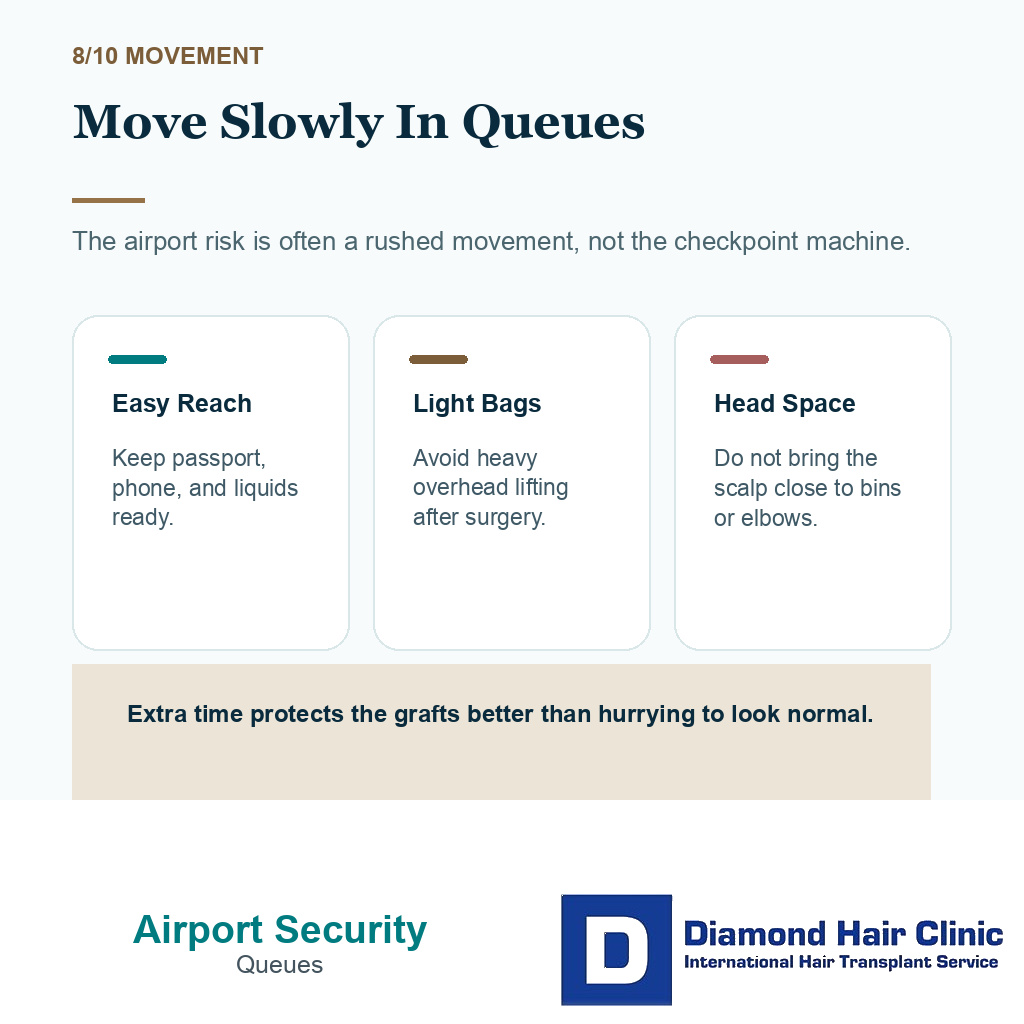
Move more slowly than usual. Keep your boarding pass, passport, phone, and liquid bag easy to reach so you are not digging through luggage with your head down. Avoid placing a backpack or jacket over the grafted area. Do not lift a heavy carry on into the overhead bin if it brings your head close to the compartment, another passenger’s elbow, or the bag itself.
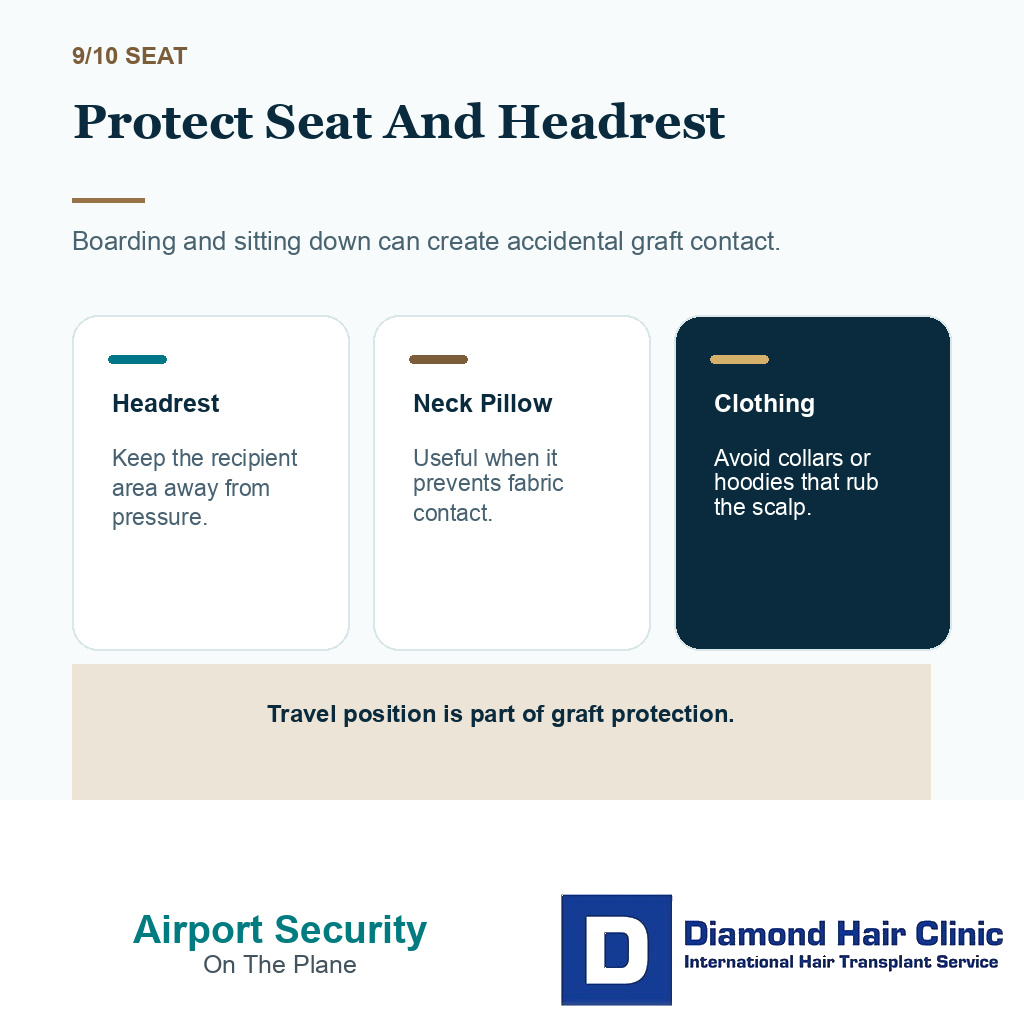
On the plane, protect the recipient area from the headrest. A neck pillow can help, especially when it keeps the grafted area away from fabric and pressure. In practice, using a neck pillow after a hair transplant matters because sleep position and travel position can both affect early graft protection.
Clothing also matters. A tight hoodie, narrow collar, or pullover can rub the scalp while dressing at the hotel or while adjusting clothes during travel. In the same way, what you wear after a hair transplant can make the airport day safer because the right shirt reduces accidental contact before you even reach security.

Warning signs that should stop airport travel
Do not treat every red scalp as a reason to panic. Redness, crusting, mild swelling, and tenderness can happen after surgery. Still, airport travel should wait if there is fresh bleeding that does not settle, worsening pain, spreading redness, discharge, fever, dizziness, fainting, chest symptoms, shortness of breath, severe nausea, or a donor area dressing that is not secure.
If something looks wrong before leaving the hotel, contact the clinic before going to the airport. It is much easier to solve a wound, bleeding, pain, or medication problem while you are still near the surgical team than during boarding or after a long flight.
If the concern is infection, the decision should be medical, not logistical. Worsening pain, discharge, fever, spreading redness, or delayed healing with infection signs after a hair transplant needs proper review. The airport should not become the place where the patient first asks whether a sign is serious.
International patients need a slower airport day
International travelers should leave more time than they normally would. Istanbul airport travel, check in, security, passport control, boarding, and gate changes can take longer than expected. The scalp is not protected by rushing. A slower schedule is part of the protection plan.
For a long flight, choose comfort over pride. Ask for help with luggage. Keep the grafted area away from the headrest when possible. Avoid alcohol before and during travel. Use only medication approved by the clinic. If a sedative was used during surgery, do not make independent transport plans as if you are fully alert.
Use airport assistance if you need it. A slower lane, help with bags, wheelchair support when medically appropriate, or boarding without rushing can be safer than pretending the day is normal. The aim is not special treatment. It is fewer chances to bump, sweat, bend, or lift at the wrong moment.
Airport planning also connects with time off work after a hair transplant. You may be able to travel or answer emails early, but returning to normal physical activity, public facing work, helmets, dust, sweat, and tight schedules may need more time.
Delay airport travel when recovery is not stable
Delay the airport trip if you have not had a check after surgery, do not understand the instructions, have active bleeding, have worsening symptoms, feel too unwell to travel, or need tight pressure to hide the scalp. Delay it also if the travel plan depends on lifting heavy luggage, driving alone after sedating medication, or skipping the first wash or review.
Graft security improves with time, but that is not permission to be careless. Airport travel often creates the kind of accidental contact people underestimate, so the timing for when hair transplant grafts become secure should be understood before the trip home.
A safer airport day is quiet. Leave after review, dress simply, pack correctly, move slowly, avoid pressure on the grafts, and contact the clinic if warning signs appear. That plan will not remove every awkward look in an airport, but it protects the result better than rushing, hiding, or guessing.
Controlled travel matters more than scanner fear
Airport security itself is not the enemy of a hair transplant. The scanner does not damage grafts, and walking through the checkpoint is usually safe when you are medically ready to travel. The real decision is whether the scalp has been checked, whether you can protect the grafts, and whether the travel plan is controlled enough for early healing.
While you are still in Istanbul after surgery, ask the clinic before leaving for the airport. Confirm what you can wear, what to pack in your carry on bag, how to manage saline or medication, and what warning signs should stop travel. A few minutes of clear planning before airport transfer can prevent many avoidable problems later.
The focus is controlled travel, not scanner fear. Go through security slowly, do not fight the head covering rules, and do not protect embarrassment at the expense of graft protection. Careful travel and clear instructions make the airport day safer than trying to look normal too early.

Read this review excerpt
Probably my only concern of the whole trip was when my transport pulled up to a different hotel than I had been told but this was solved instantly and was only due to the Covid situation.