


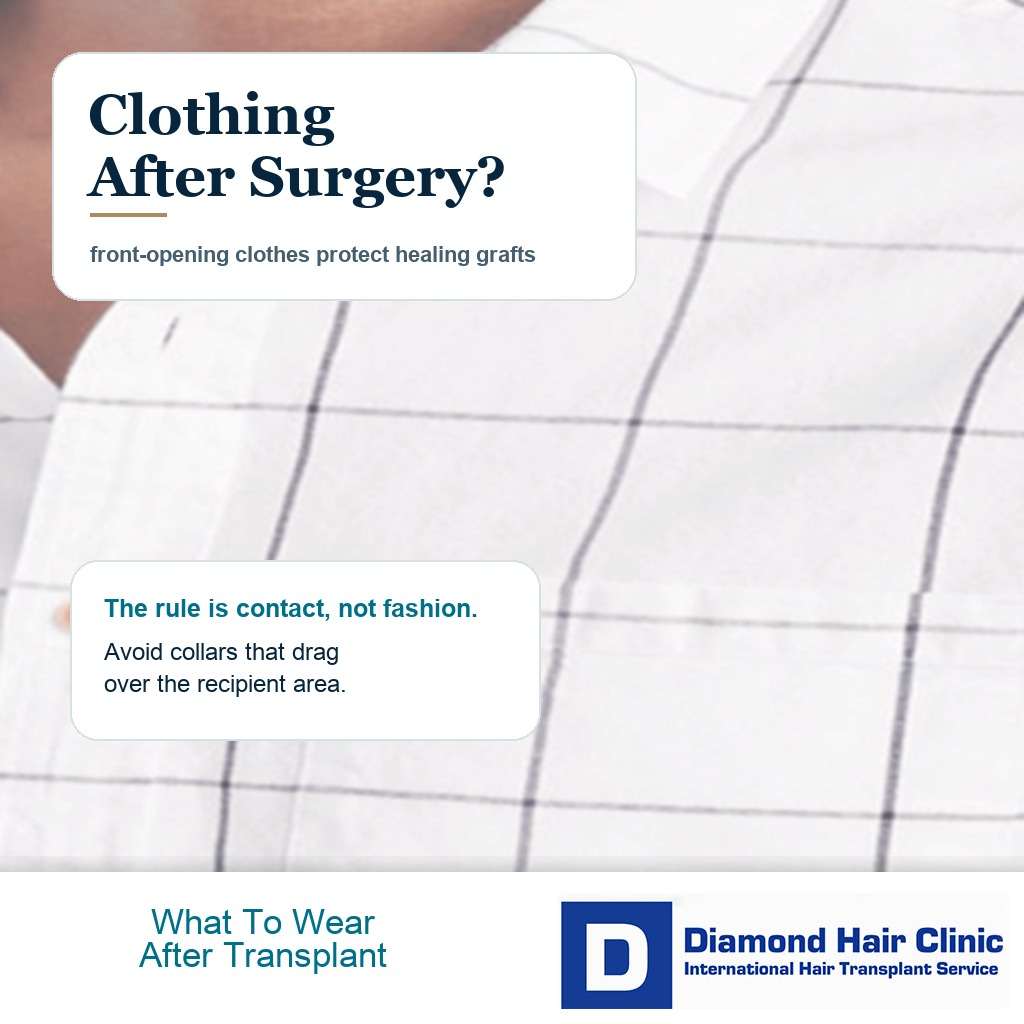
Clothing Choices That Protect New Grafts
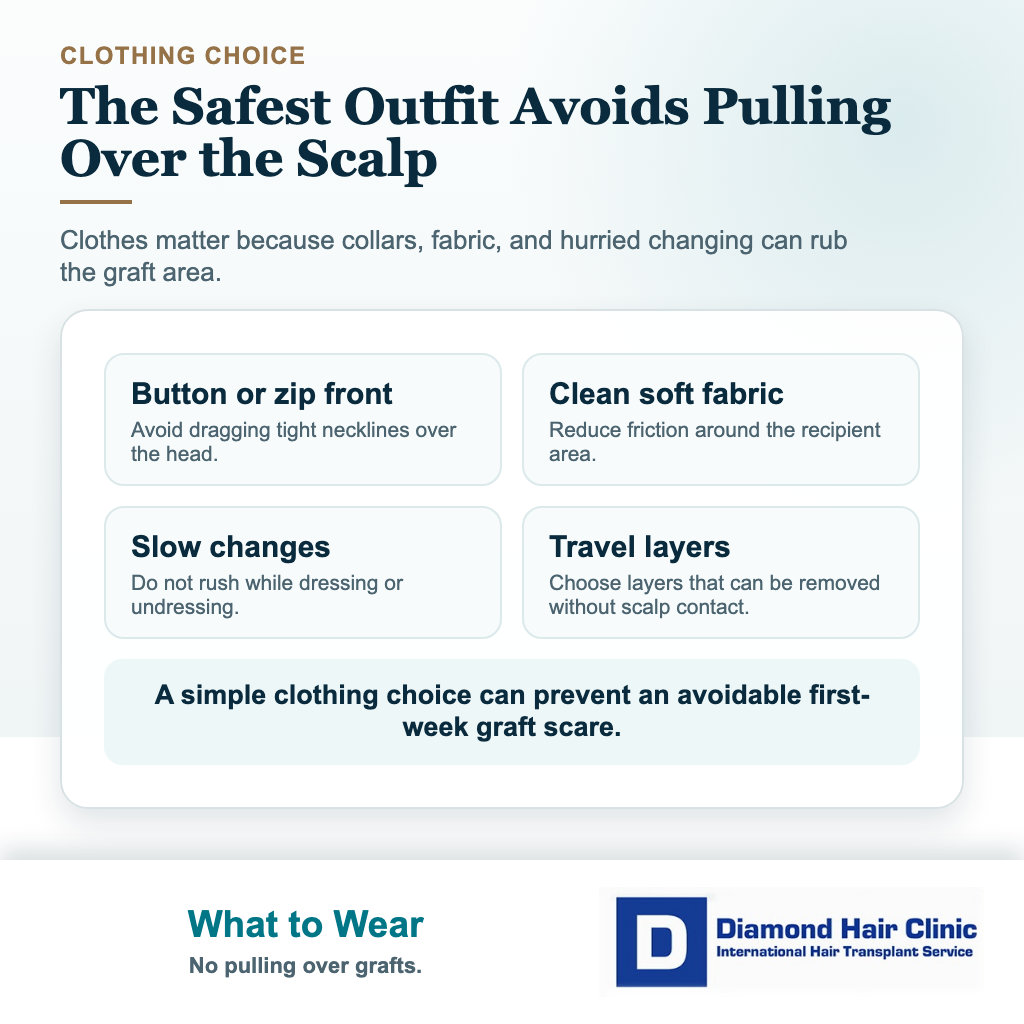
For the first 10 to 14 days after a hair transplant, choose loose clothing that opens from the front and never drags over the grafted area. A button up shirt, a zip up top, or a wide neck garment is safer than tight shirts, turtlenecks, hoodies pulled over the scalp, narrow collars, and anything that rubs the recipient area while you dress. After scabs are gone and the skin is calm, most patients can return to normal clothes carefully, but friction, bleeding, pain, or attached crusts mean you should wait.
Pack a shirt that opens in front before you travel. It removes one more chance of dragging fabric across the grafts when you are tired, swollen, or trying to dress quickly.
Try the travel shirt on before surgery. If removing it makes fabric pass near the grafts, choose a front opening option that comes off without touching the scalp.
The same low contact rule applies to recovery bands and hats. If a band is being used for eyelid swelling, review the headband after hair transplant for eye swelling guidance before tightening or repositioning it.
This sounds like a small detail before surgery. In real recovery, clothing matters because avoidable irritation often comes from ordinary movements done too early, not from dramatic accidents. A shirt collar can scrape the hairline before the patient realizes the fabric has touched it. A hoodie can catch on crusts. A tight neck opening can make you panic and touch the grafts repeatedly.
I use one practical rule. In the early days, dress in a way that lets your hands stay away from the transplanted area.
Clothing matters after FUE
Newly placed grafts sit in fresh recipient area channels. The early plan is to protect those tiny surgical sites while the skin closes, crusts dry, swelling settles, and the grafts become harder to move. Clothing becomes part of hair transplant aftercare because every shirt, hood, scarf, collar, and jacket either reduces contact or adds contact. The same clothing logic applies to soft headwear after transplant, especially when a bandana, scarf, or cap would move across the grafts.
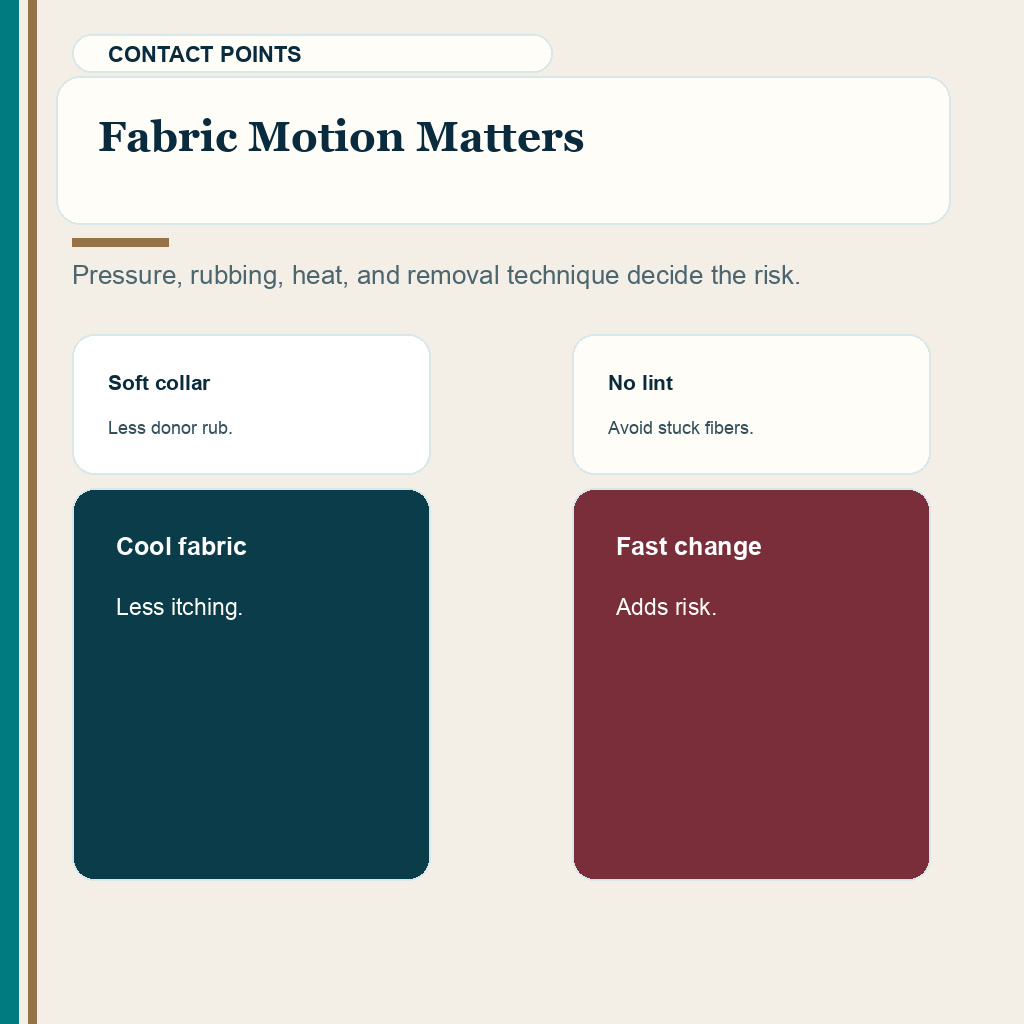
The risk is not only the fabric itself. It is the motion. Pulling a tight shirt upward can make the collar scrape the frontal hairline. Taking off a hoodie can drag fabric from the back of the head toward the front. A narrow sweater can make you bend the neck, press the scalp, or ask someone else to pull the garment over your head. When someone helps with dressing, the fabric still needs to move forward and away from the grafts, not upward across them.
If the grafted area was only the frontal hairline, clothing that passes over the forehead is the main concern. If the crown was transplanted, anything pulled over the back of the scalp also deserves caution. If the donor area is tender, rough collars and stiff jackets can irritate the back of the head even when they never touch the recipient area.
Safe clothes on surgery day
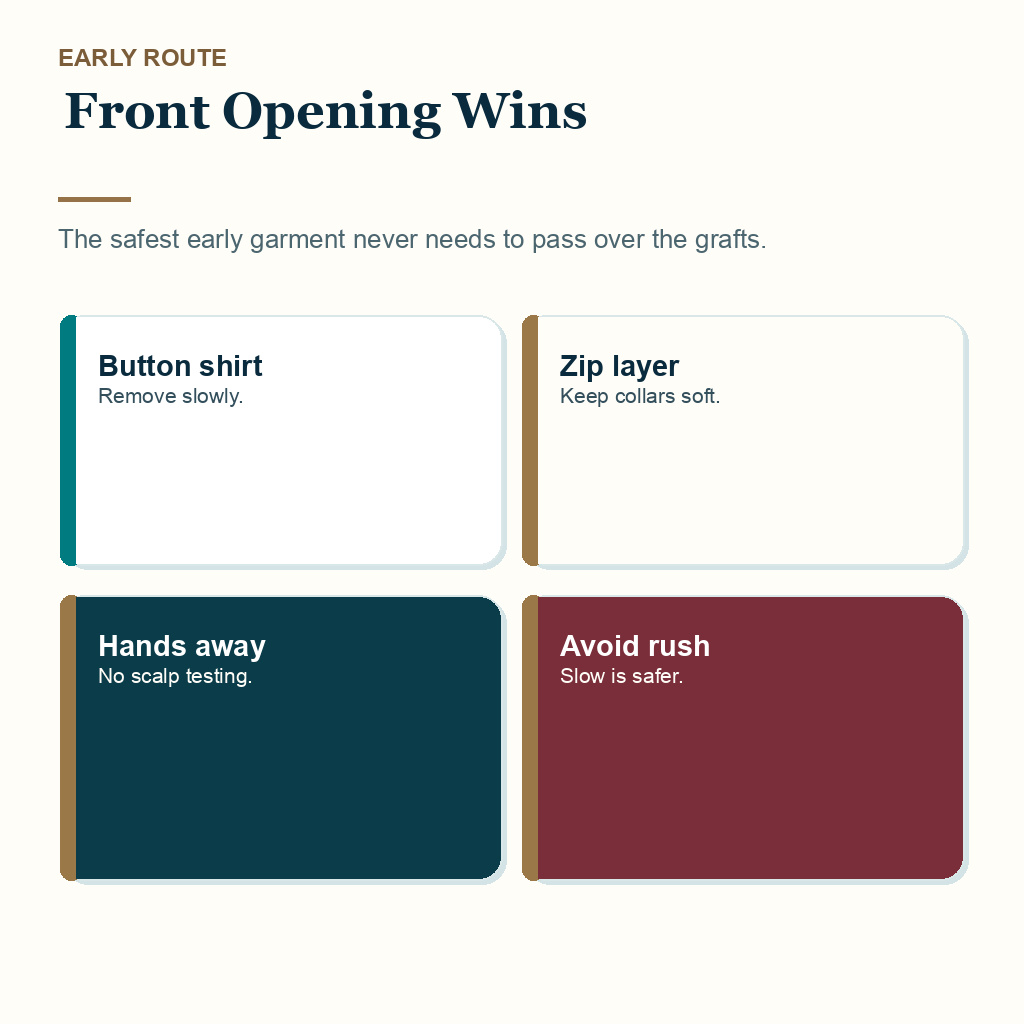
Wear a clean, loose, front opening shirt on the day of surgery. A button up shirt is usually the easiest choice. A zip up top can also work if the zipper does not catch hair and the collar is soft. The aim is straightforward. You should be able to get dressed and undressed without pulling fabric over the new grafts.
Avoid turtlenecks, tight crew neck shirts, compression tops, thick hoodies, and anything with a narrow neck opening. Also avoid clothing that sheds lint heavily, because small fibers can stick to ointment, dried blood, or damp skin. Soft cotton is usually easier than rough wool or stiff synthetic fabric.
Dark colors can hide a small amount of spotting from the donor area, but they are not more medically protective. Clean, loose, easy to remove clothing matters more than color. If you are flying home soon after surgery, bring the same type of front opening clothing for travel instead of planning to change into a tight shirt at the hotel.
Recovery clothes to pack before travel
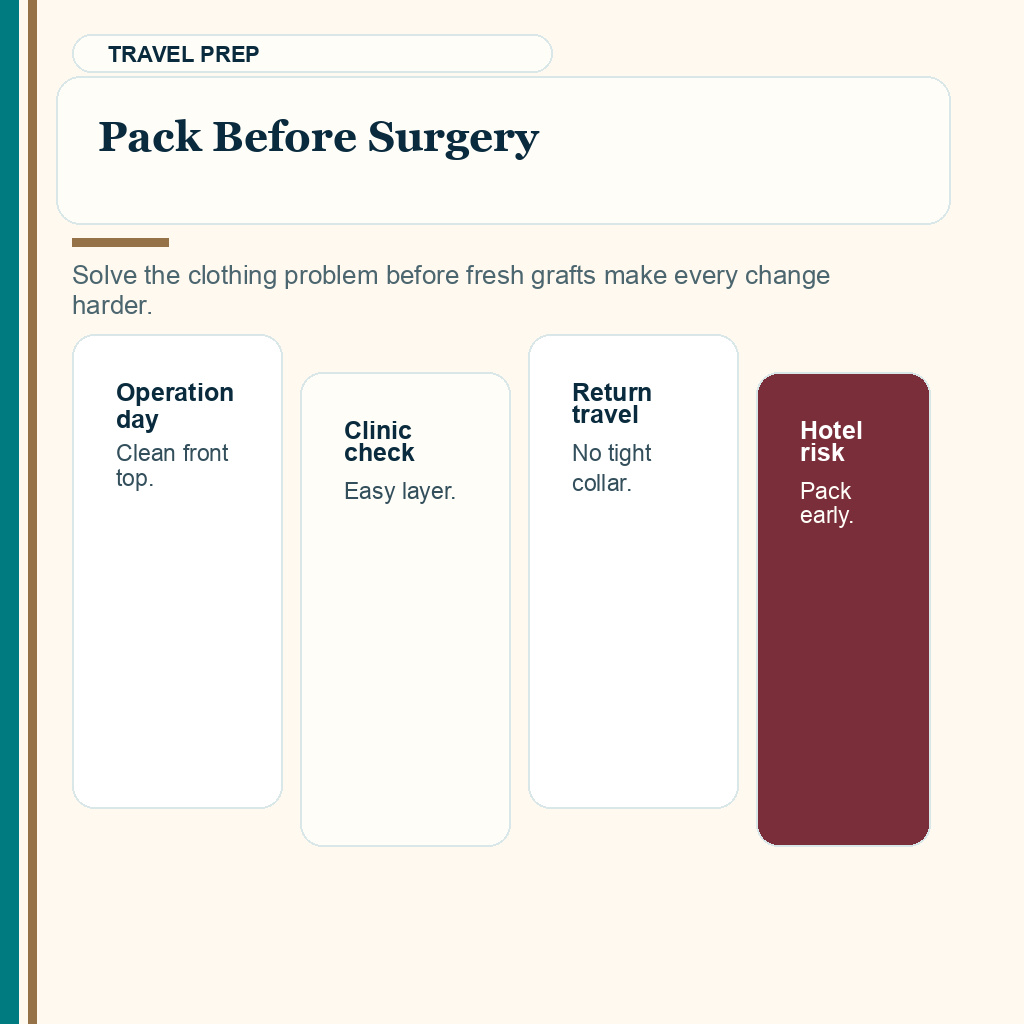
Pack the recovery clothes before the operation, not after it. Arriving with two or three loose front opening shirts is safer than trying to solve the problem at the hotel with fresh grafts and a tight collar.
For travel, keep one clean front opening top for the operation day, one for the first clinic check, and one for the return journey. Avoid thick hoods, tight necklines, rough seams, and anything that makes you lift both arms high while dressing. If you are travelling home soon after surgery, think about clothing together with your flight plan and the way you will protect the scalp around people, bags, and seats. If the next workday includes customers or video meetings, plan clothing together with public work after a hair transplant.
Accessories belong in the recovery plan. A hat, headphones, sunglasses, scarf, or jacket collar can all be harmless when they do not touch the recipient area, and risky when they rub new grafts. Clothing is part of early recovery discipline, not a fashion detail. If the accessory is required for work, especially a hard hat or tight headwear, treat it with the limits described in physical work after hair transplant.
Plan accessories before recovery starts
Recovery accessories are easier to judge when the surgery day removal plan is already clear. Jewelry, piercings, and nails before FUE covers the small items that should not become pressure, hygiene, or monitoring problems on the day of surgery.
Avoid pulling clothes over your head early on
In an uncomplicated recovery, I usually prefer front opening clothes for the first 10 to 14 days. This matches the period when patients are most anxious about when hair transplant grafts are secure and when crusts may still be attached. Around day 10, many grafts are more stable, but the surface of the skin may still be sensitive.
Do not treat day 10 as permission to force a tight collar over the scalp. The safer question is whether the recipient area is dry, calm, free of attached scabs, and not painful when touched accidentally. When this is yes, a loose shirt can usually return before a tight hoodie or narrow sweater.
If crusts are still stuck, if a grafted hair catches in fabric, or if the collar touches the recipient area while you pull the shirt off, keep using front opening clothing. Waiting a few extra days is much easier than turning a small clothing mistake into bleeding, stress, and repeated checking.

Shirts, hoodies, and sweaters need timing
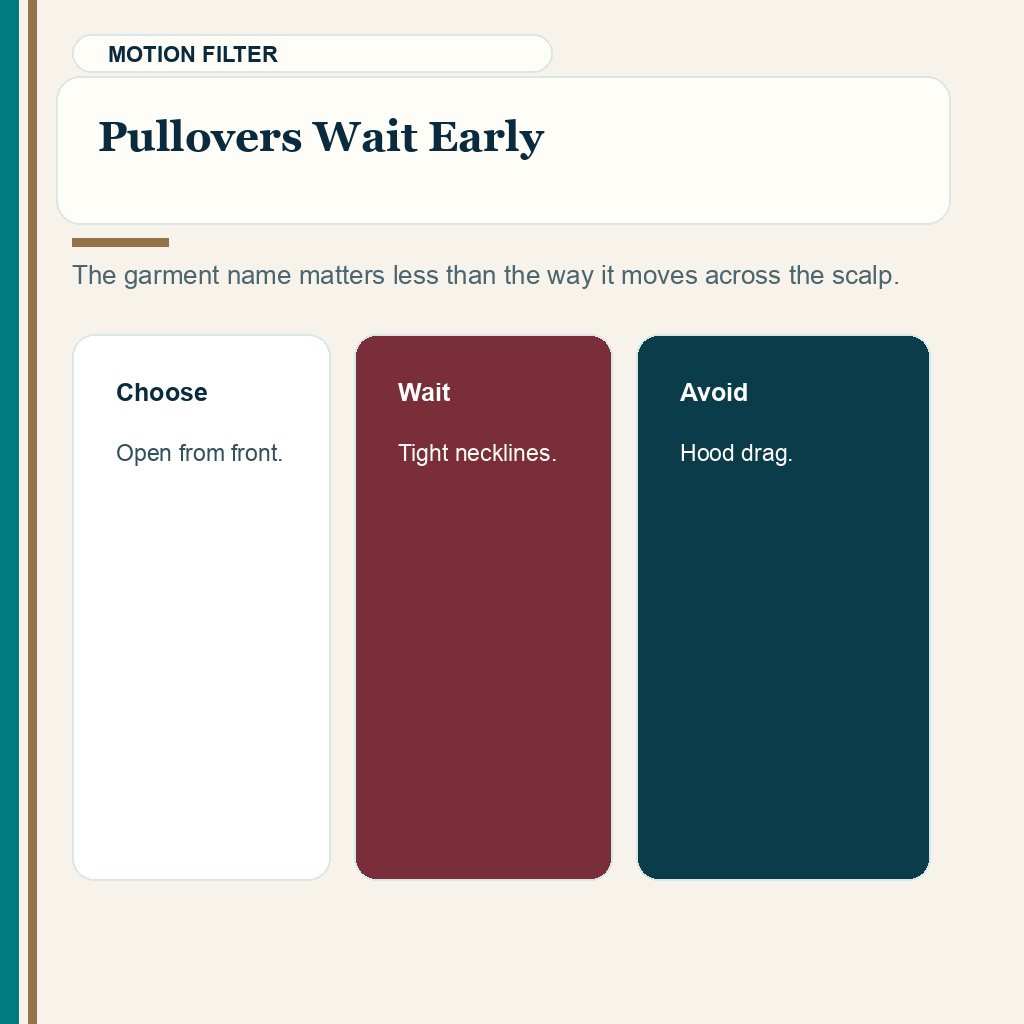
A loose shirt after the early healing period is usually not a problem. A tight shirt during the first days can be a problem if it drags across the recipient area. Hoodies and sweaters create the problem when they drag over the scalp. The issue is not the name of the garment. The issue is pressure, friction, heat, and how the garment moves across the scalp.
A hoodie has two separate risks. First, putting it on or taking it off can pull fabric over the head. Second, wearing the hood can rub the hairline, temples, or crown if it slides. If you love hoodies, choose a zip up hoodie later in recovery and keep the hood off the grafted area until the skin is calmer.
If fabric touches the grafted area once without pain, bleeding, or a visible skin opening, do not panic. A light accidental brush is different from rubbing, scratching, or pulling a crust away. The same calm distinction applies to touching the grafts. Judge the event by timing, force, bleeding, and what the scalp looks like afterward.
If clothing catches on the scalp
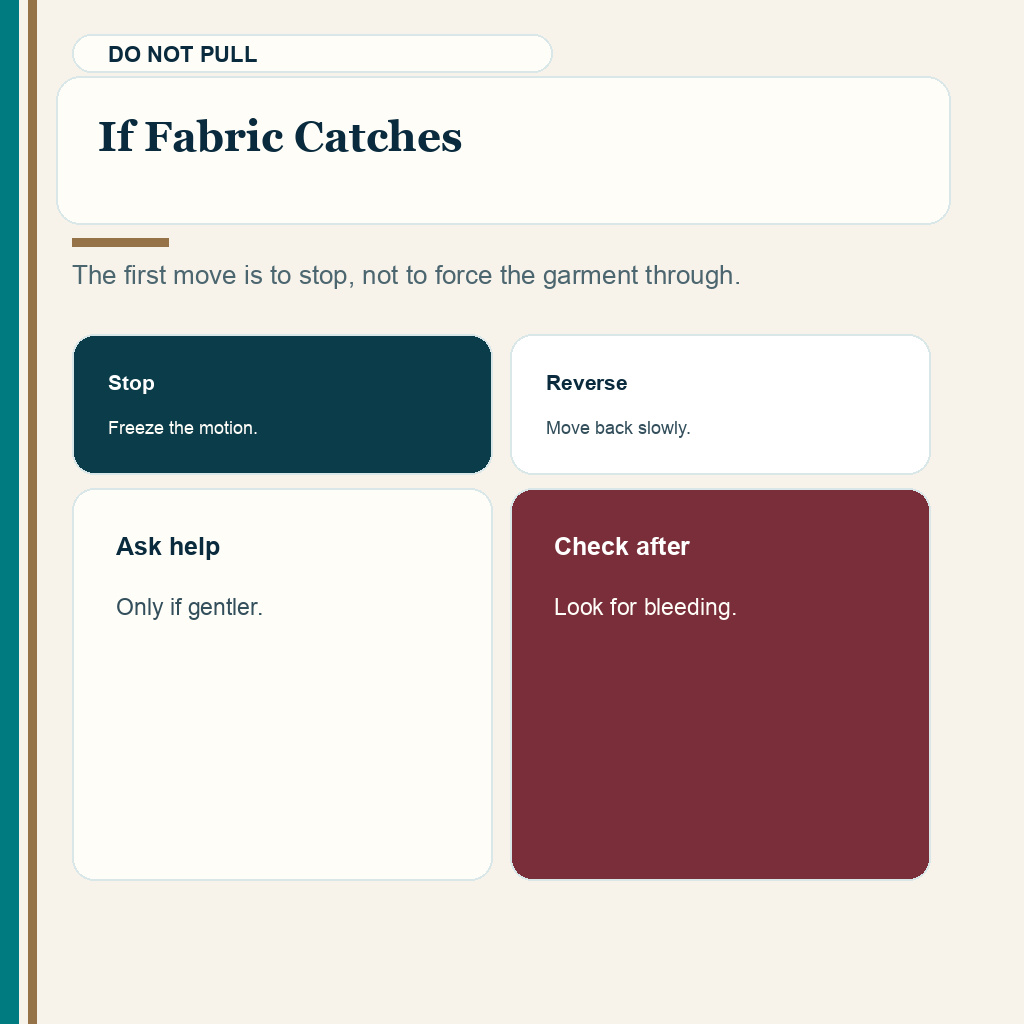
If fabric catches on scabs, short graft hairs, or donor crusts, stop the movement first and do not pull harder. Reverse the movement slowly and ask someone to help if needed.
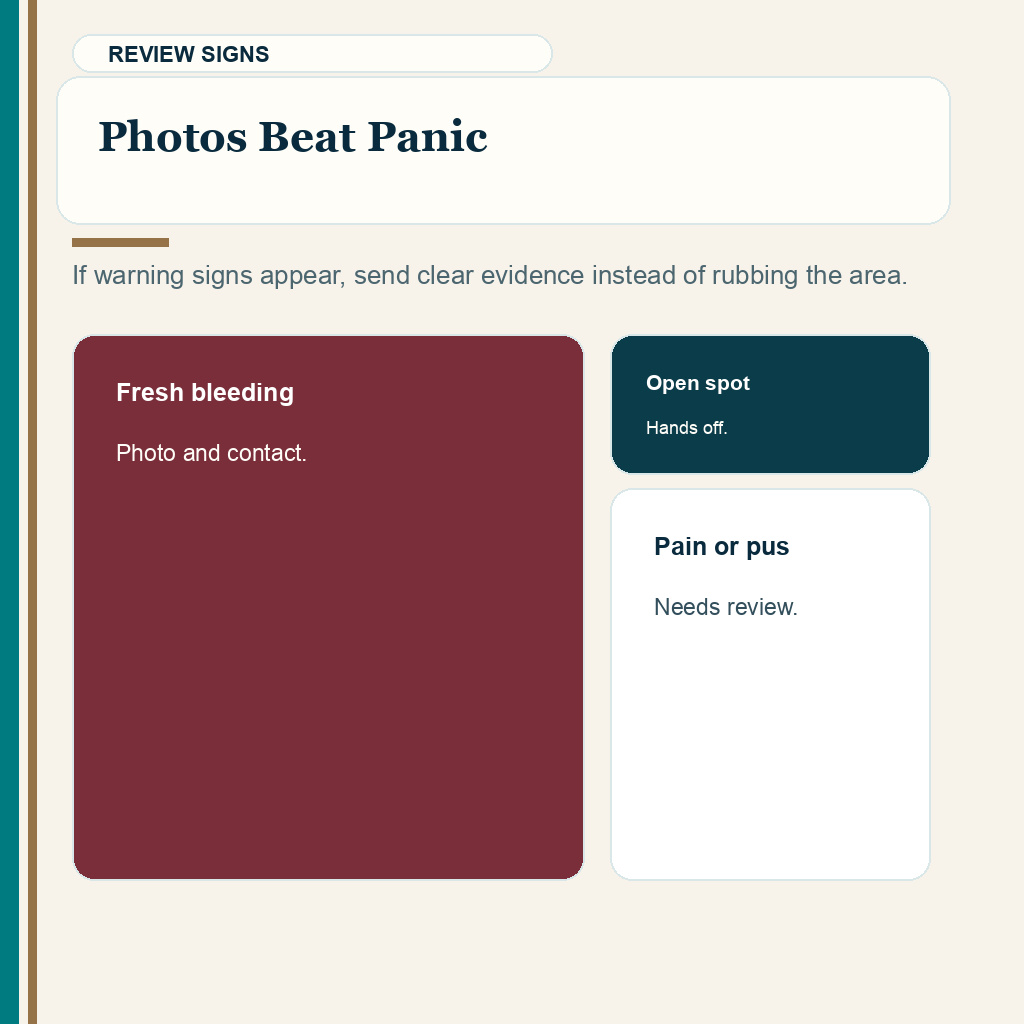
Afterward, check for fresh bleeding, new pain, an opened area, or a visible graft like particle on the fabric. If any of those appear, share photos for review. If nothing looks disturbed, keep the area clean, avoid repeated checking, and switch to front opening clothing for the rest of the early recovery period.
Dressing while the bandage is still on
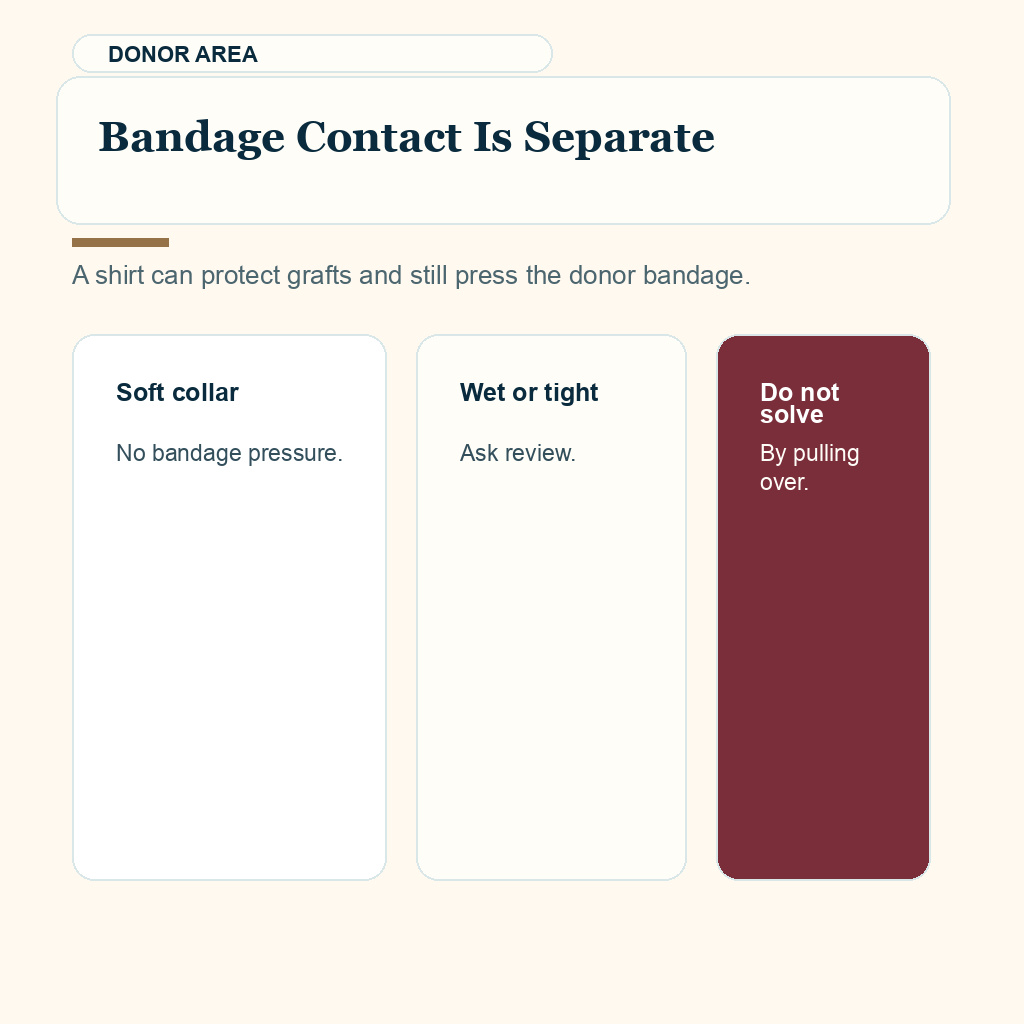
The donor area bandage is usually on the back or sides of the scalp, while the recipient area is left open to heal according to clinic instructions. Clothing still matters even when a bandage is present. A collar can press on the donor bandage. A hood can slide against the recipient area. A tight top can disturb both areas when you change clothes.
Before you remove the bandage, choose soft clothing with a collar that does not push into the dressing. If the bandage feels wet, tight, painful, or stuck, do not solve the problem by pulling a garment over it. Ask for clinic review and share clear photos.
After the bandage is removed, the donor area may still feel tender. A soft collar and loose neckline help you avoid rubbing the extraction points. The recipient area still needs its own protection from direct fabric contact, so front opening clothing remains useful even after the bandage is gone.
Safer sleepwear after a hair transplant
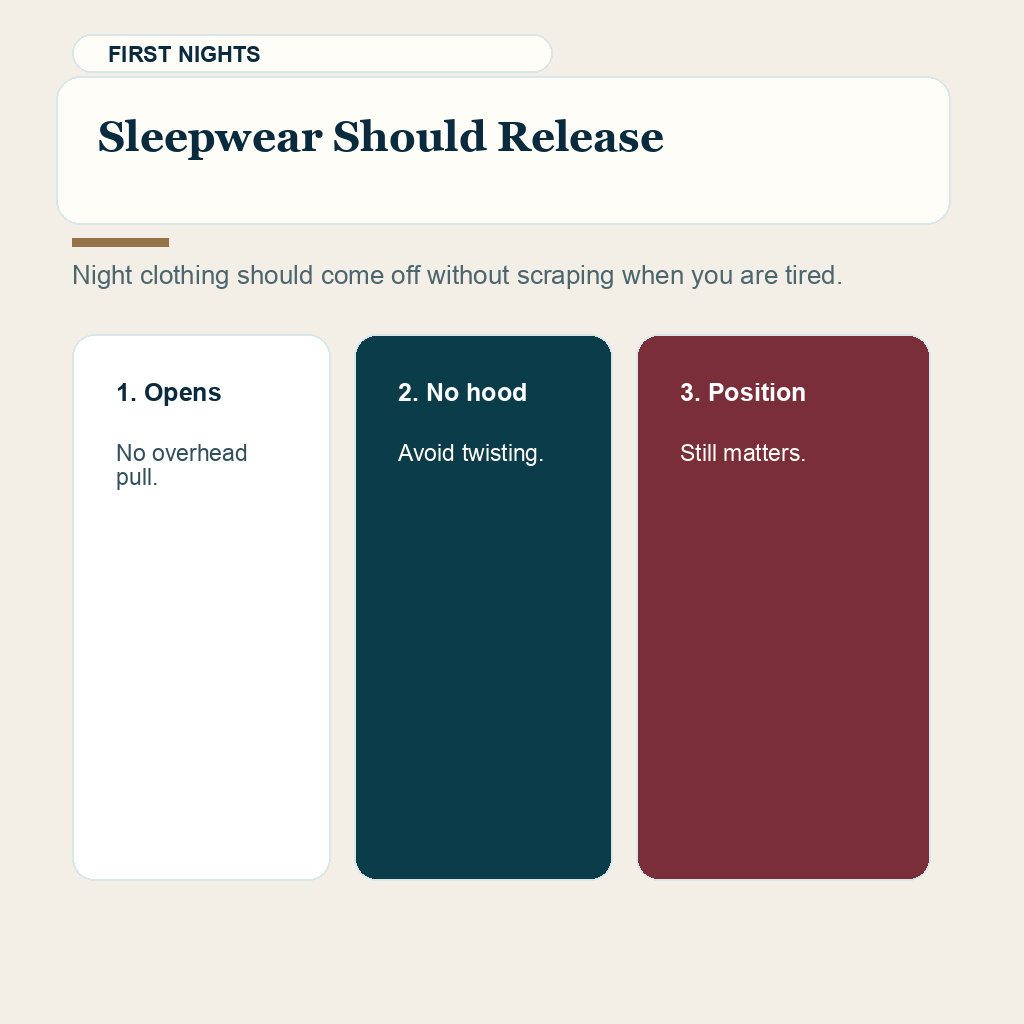
For the first nights, choose sleepwear that does not make you pull fabric over the scalp when you are tired. A front opening pajama top or a loose zip up layer is usually easier than a tight shirt. If you wake up hot, itchy, or uncomfortable, you should be able to remove a layer without scraping the recipient area.
Hoods are usually not helpful in bed during early recovery. A hood can twist, pull, or bunch under the head. If you are trying to protect the pillowcase from ointment or dried blood, use the dressing plan given by the clinic rather than covering the grafts with a hood.
Clothing cannot replace safe positioning. During the early nights, the main goal of sleep after a hair transplant is to reduce pressure, friction, and careless contact. If your shirt is loose but your grafted crown rubs the pillow, the clothing choice has not solved the real risk.
Headwear and accessories need separate timing
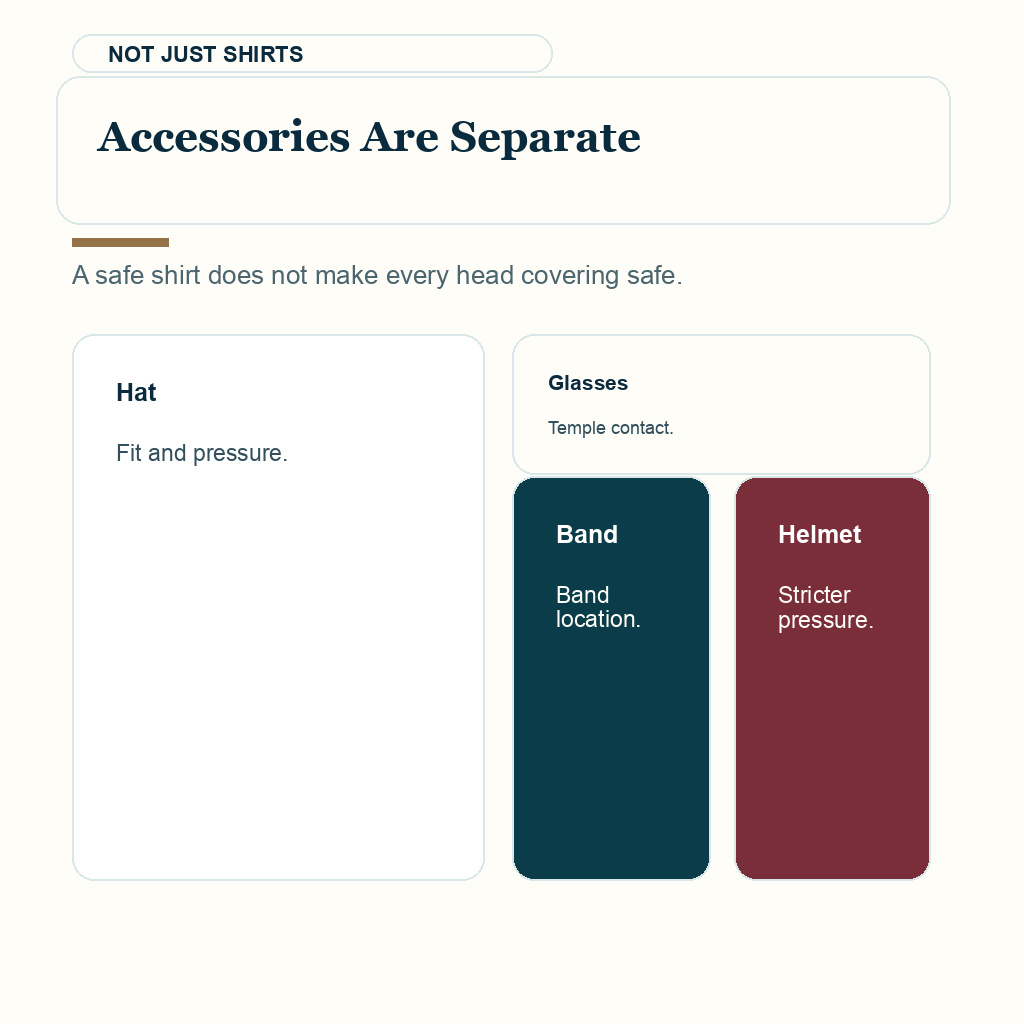
Judge clothing and headwear separately. A button up shirt protects you while changing clothes, but it does not make a tight cap safe. If you are thinking about wearing a hat, the timing depends on whether the hat is loose, clean, breathable, and away from the grafted area.
Try the full route before you leave home. Put the shirt, mask, glasses, and any approved headwear on and off in the same order you will use outside. If one item makes you lift, drag, or adjust another item over the grafts, simplify the outfit rather than forcing the full combination.
A helmet is stricter because it creates pressure, heat, sweat, and repeated friction. Pressure and heat also matter with headphones if a headband crosses the hairline or crown, so judge pressure and heat before convenience.
Glasses or sunglasses are usually easier when the frame does not touch temple grafts, but tight sports frames or goggles need more caution.
The clothing lesson still helps here. Ask where the object sits, how it moves, how long it stays there, and whether it rubs scabs or tender skin. If it touches the grafted area during the first 10 to 14 days, waiting is usually the more protective choice.

Plan clothes before the first outing
Outside clothing should protect you without trapping heat. A loose front opening shirt, light breathable fabric, and shade are usually better than a thick hoodie pulled close to the scalp. In warm weather, the wrong clothing can increase sweating after a hair transplant, which can make the scalp itch and make you touch it more.
For a short walk or travel when you want to hide the surgery, do not use tight clothing or a hood as camouflage. Ask the clinic what head covering is allowed for your exact day of recovery. Some patients can use a loose clinic approved covering later in the first phase, while others should wait because the recipient area is still crusted, swollen, or tender.
For airport travel after a hair transplant, plan clothing before the surgery. Choose layers you can remove at the airport, in the hotel, or in the car without lifting anything over the grafts. If the weather is cold, a zip up jacket is easier than a pullover sweater. If the weather is hot, breathable clothing is safer than heavy fabric that makes you sweat under stress.
Think about bags and security checks too. A heavy backpack strap, tight neck pillow, hoodie drawstring, or shoulder bag adjusted quickly in a queue can bring your hands and fabric close to the scalp. Use easy layers, keep important items accessible, and avoid any clothing setup that makes you rush while fresh grafts are exposed.
Warning signs that matter after clothing rubs the scalp
If clothing lightly touched the scalp and there is no bleeding, no open spot, no tissue like graft, and no worsening pain, the event is usually less concerning. Take a clear photo, stop checking repeatedly, and continue careful aftercare.
Fresh bleeding, an open wound, increasing pain, spreading redness, pus, bad smell, fever, or worsening swelling should be reviewed by the clinic. A graft like tissue piece attached to fabric also deserves review. Do not rub the area to test whether the grafts are still there.
If a scab was pulled away by clothing, the timing matters. During the early days, attached crusts should not be forced. Later, crusts may loosen with proper washing. If you are not sure whether you lost a graft or only a scab, take photos in bright light and send them instead of trying to inspect the scalp aggressively.
These 10 clothing safety slides separate front opening shirts, pullovers, packing, fabric motion, scabs, catching, bandage contact, sleepwear, accessories, and warning signs. Swipe sideways, use the arrows one slide at a time, or choose a number below the image.
Dressing normally again
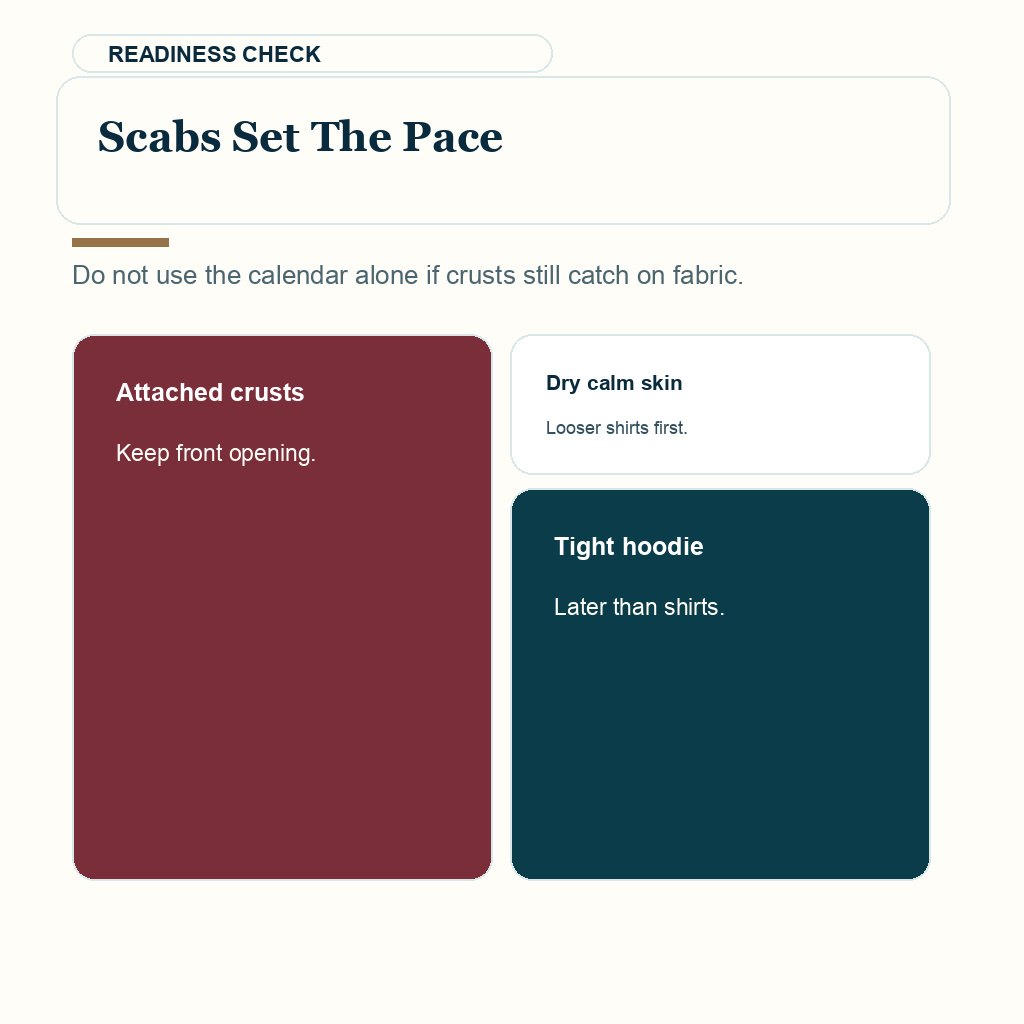
Most patients can return gradually to normal clothing after the first 10 to 14 days if scabs have cleared, the skin is calm, and the garment does not scrape the transplanted area. Normal clothing should return in stages. A loose shirt first. Then a slightly closer neckline. Tight hoodies, helmets, thick beanies, and rough collars later.
The donor area may need a different timeline from the recipient area. A shaved FUE donor area may feel collar irritation longer than expected. Temple work may need extra caution with glasses, hat edges, and shirt collars that brush the sideburn area. A crown transplant may make hoodies and sleepwear more relevant than a frontal only case.
Do not use the calendar alone. Use the condition of the skin. Dry, settled skin with no attached scabs can tolerate more ordinary clothing than a red, tender, crusted recipient area. If you are recovering slowly, dressing carefully for a few more days is a small price for peace of mind.
Loose necklines keep grafts out of the collar
The safest clothing choice is the one that keeps fabric away from the grafts while you dress, sleep, travel, and move through the first recovery phase. I ask patients to think less about fashion and more about contact points. Neck opening, collar stiffness, hood movement, fabric texture, heat, sweat, and removal technique all matter.
If you are choosing between two garments, choose the one that opens from the front and can be removed slowly. If you must wear something over the head, wait until the grafts are more secure, the scabs are gone, and the garment can pass over the scalp without touching the recipient area. Ask someone to help only if that reduces contact. Help that pulls the shirt quickly is not helpful.
My preference is conservative during the first 10 to 14 days because the inconvenience is temporary. A button up shirt or zip up top is not a medical treatment, but it removes one common avoidable risk. Good recovery often comes from these small practical decisions made consistently, especially when you are tired, travelling, or getting dressed in a hurry.
Read this review excerpt
We also had a levelled conversation about my hairline and results I could expect based on my donor density area.