


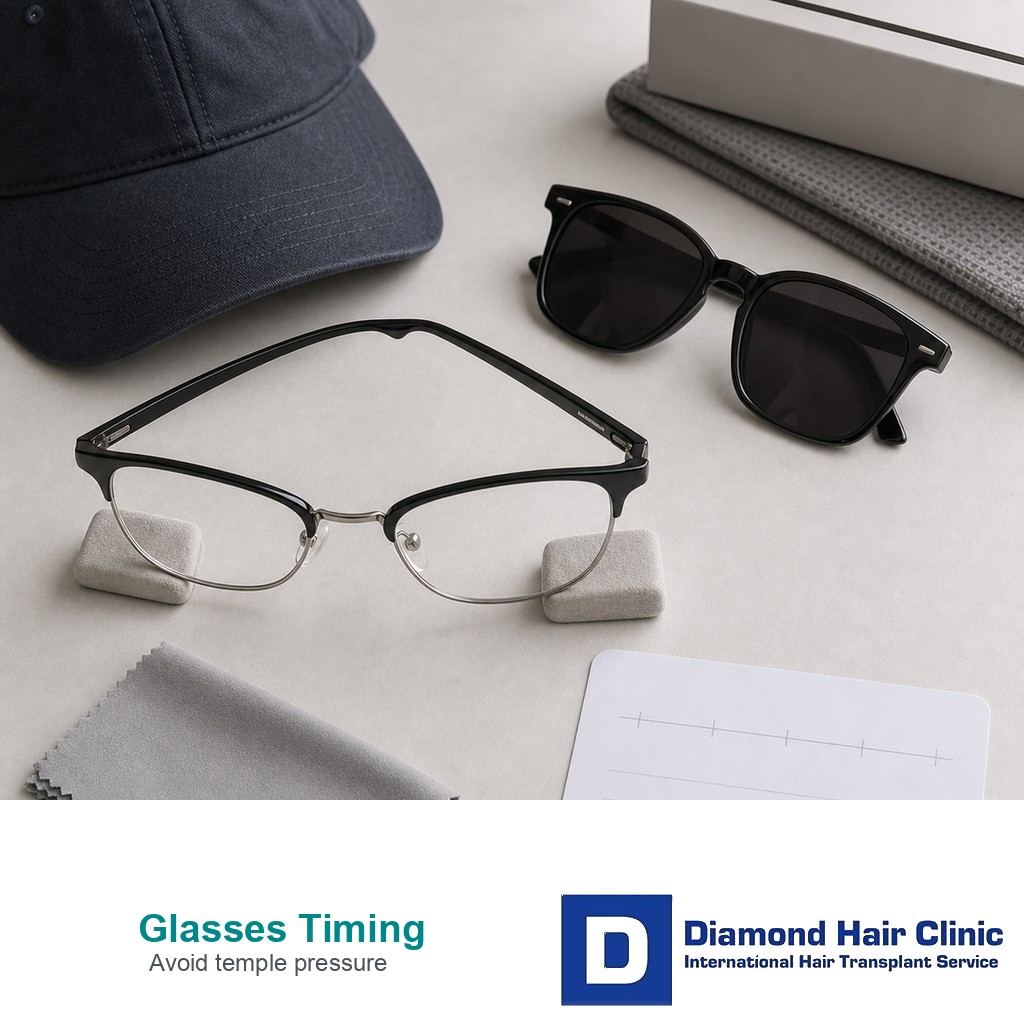
Frame Pressure Matters With Glasses and Sunglasses
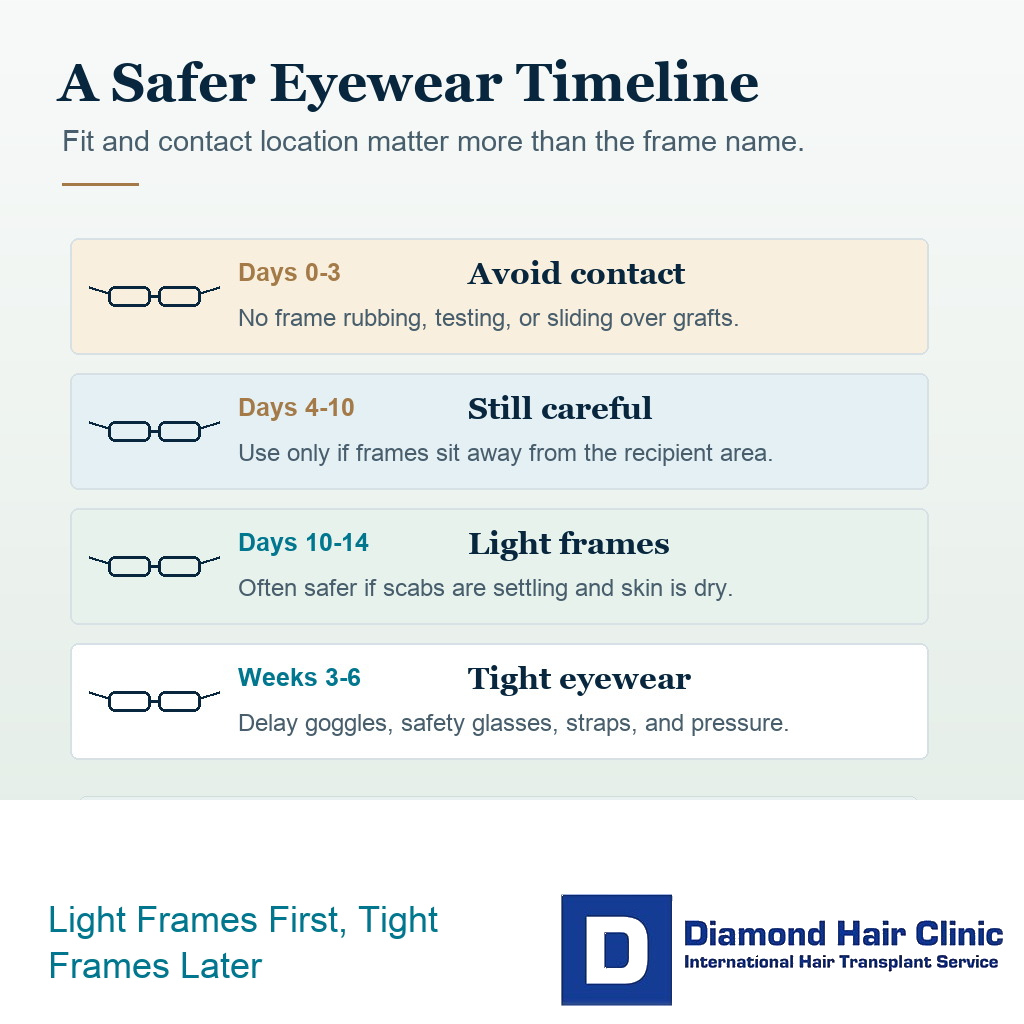
If the frame does not touch the grafted skin, glasses can usually be worn carefully after a hair transplant. The answer changes when the arms press on new temple grafts, a lowered hairline, sideburn work, swelling, or irritated skin near the recipient area. During the first 3 days, avoid anything that can rub, catch, or drag across the grafts. From day 10 to day 14, light glasses are usually safer if the scabs are settling and the frame stays away from the transplanted area. Tight sunglasses, sports glasses, goggles, or safety glasses need more caution, often 3 to 6 weeks depending on pressure and fit.
Clear vision and sun protection are only part of the decision. The practical issue is where the frame touches, how often you adjust it, and whether it crosses the exact area I have transplanted. Ordinary prescription glasses are very different from a tight frame sitting on fresh temple grafts. The same contact logic applies to mask strap pressure after FUE, especially when loops or bands sit near the temples.
Try the frame at home before you rely on it outside. If you keep adjusting the arms, nose bridge, or temples, the frame is still part of the healing problem.
Glasses are judged by contact point
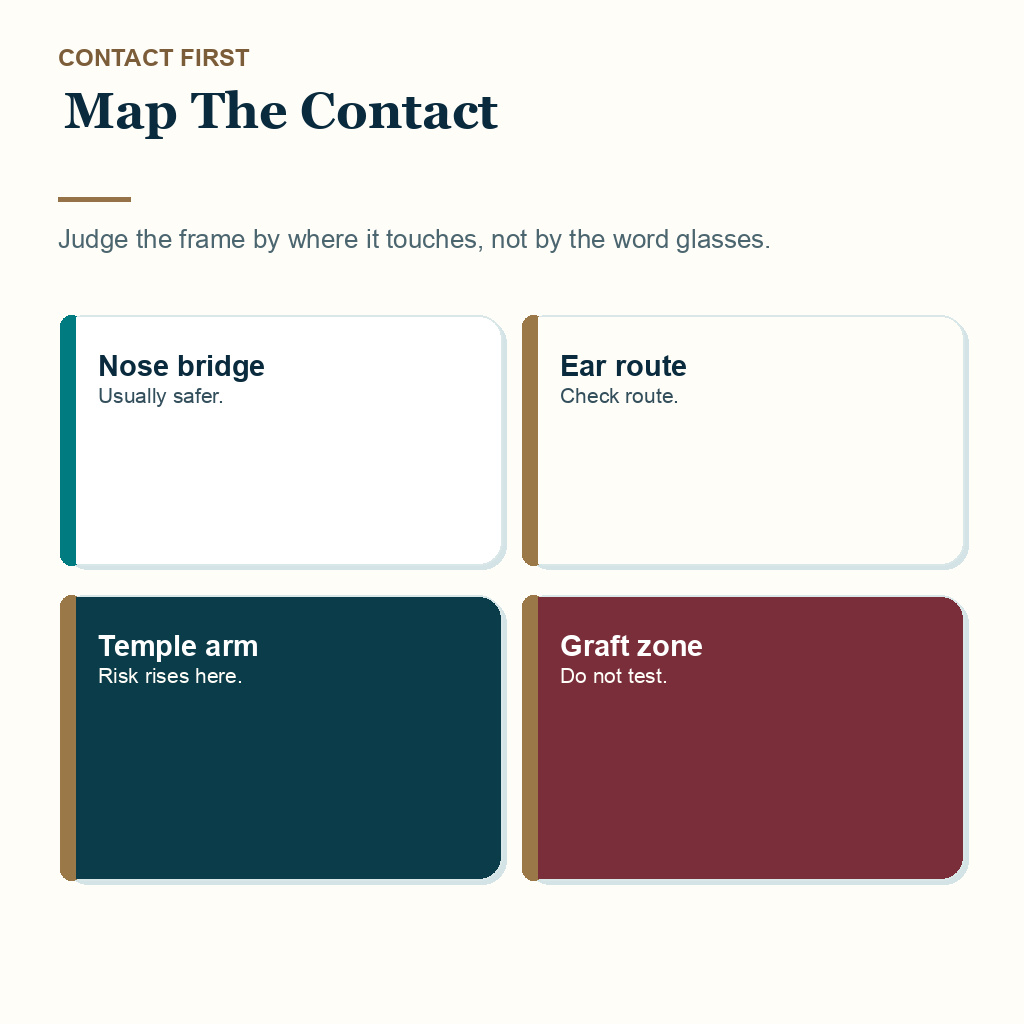
Glasses are different from a hat because they usually rest on the nose and ears, not on the top of the scalp. If your transplant was only in the frontal hairline and the frame arms sit clearly below or behind the grafts, the risk is much lower than with a cap that slides over the recipient area. I judge the contact point before I judge the object. If nasal splints, frame pressure, or temple grafts overlap, rhinoplasty and hair transplant timing should be planned before glasses are treated as a small detail.
Practice putting the frame on and taking it off without dragging the arms through the temples. If that movement crosses grafted skin, bring the glasses to the clinic so the contact path can be checked.
A loose pair of glasses that does not touch the grafts is not comparable to a tight cap. A helmet is another category because it can create pressure, heat, sweat, and repeated rubbing. Judge headphones after a hair transplant by the contact point too, especially when a band crosses the hairline, temples, crown, or donor area. For helmet pressure, follow the dedicated guidance on helmet use after a hair transplant.
Even so, glasses can still become a problem when they cross the temples, sit close to a reconstructed hairline, slide up during sweating, or need constant adjustment with the fingers. The first days after surgery are not the time to test the grafts, even with something that feels light.
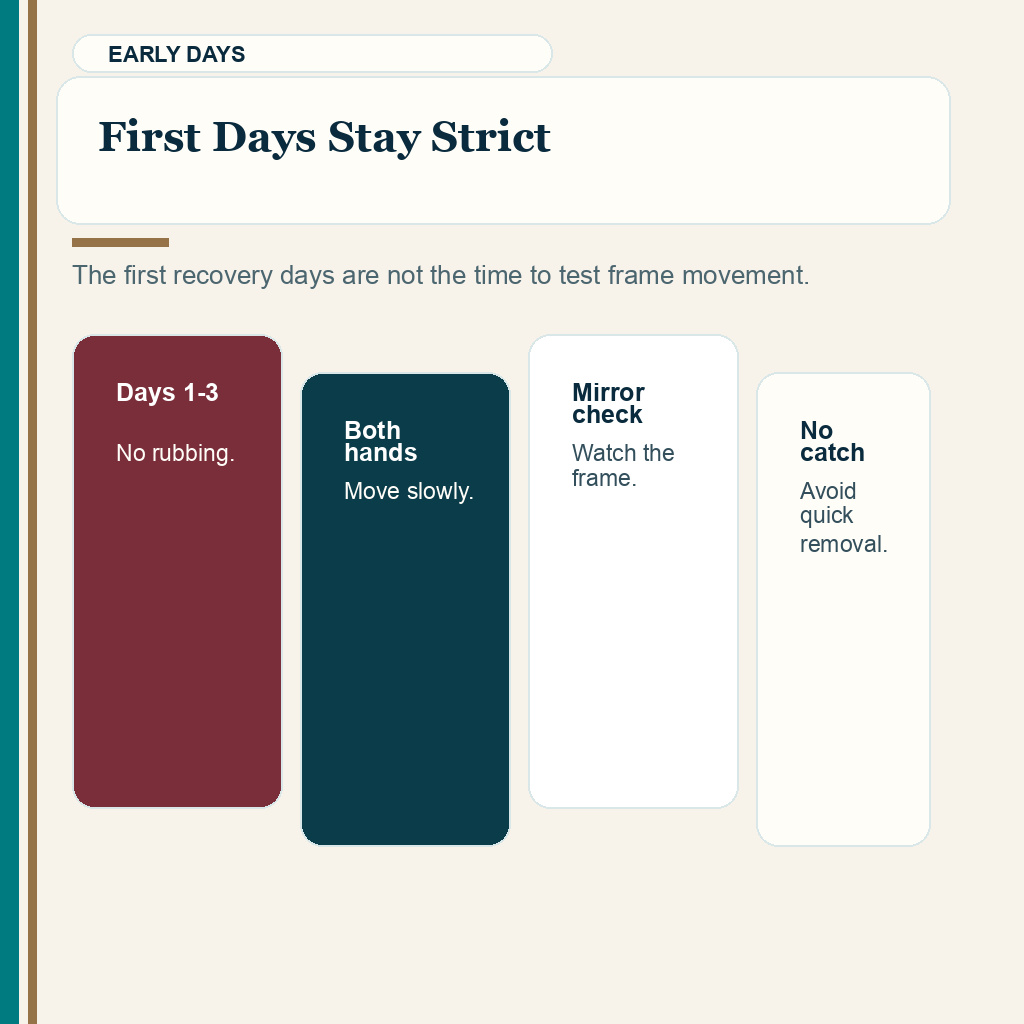
The other detail is how glasses are put on and removed. Some people are careful once the frames are on the face, then catch the side of the grafted area while taking them off. That quick dragging movement can matter more than quiet wearing. In the first recovery days, use both hands, move slowly, and avoid brushing the frame across the hairline. Before the first longer wear, try the frame in front of a mirror for a few minutes. If putting it on or taking it off brushes the grafts, the frame is not ready for that stage.
Grafts close to the temples
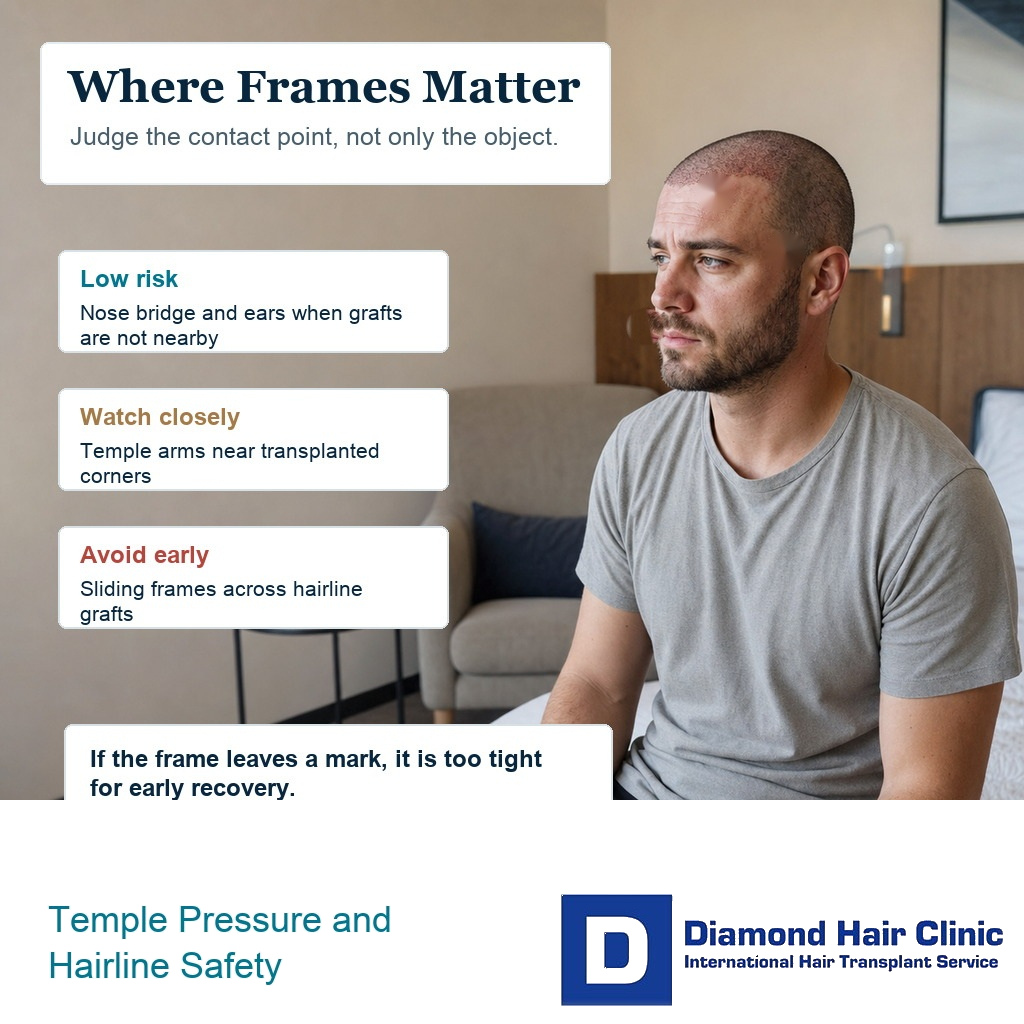
Temple work changes the answer. If grafts were placed near the temple points, side hairline, or front corners, the arms of the glasses may pass very close to the recipient area. In that case, I become more conservative. The frame may not look dangerous, but small repeated pressure in the same place can irritate healing skin.
For temple grafts, avoid frame contact for the first 10 to 14 days when possible. After that, I look at the skin. Are the crusts gone? Is the area dry? Is there bleeding, soreness, or swelling? Does the frame slide across the grafted skin when you put it on or remove it? These details matter more than a fixed calendar date.
When graft security is the worry, start with the basic timing. The first 10 days deserve the most protection, even though healing continues after that. The broader reason belongs in when hair transplant grafts become secure.
Marks from glasses near the temples
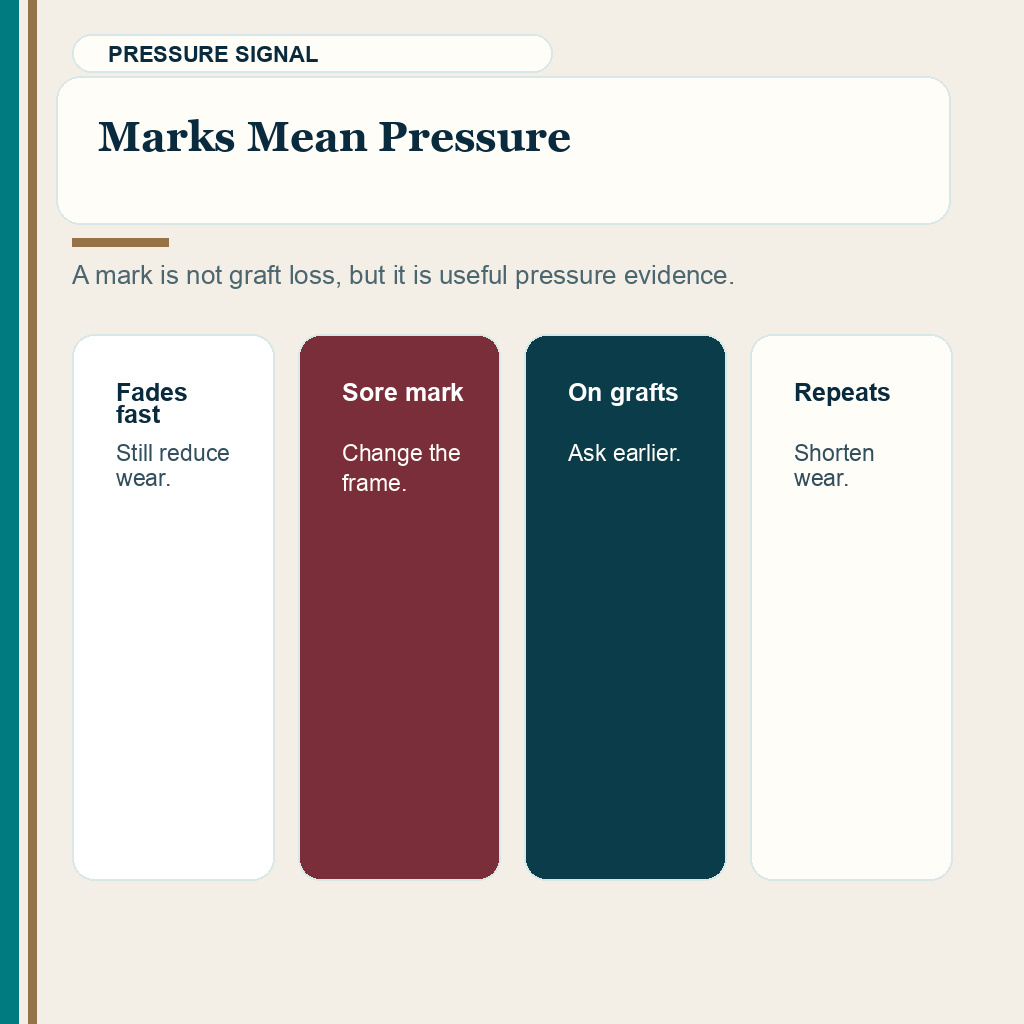
A temporary skin mark is not the same as graft loss, but it tells you that the frame is creating pressure. Remove the glasses, check whether the mark fades, and look for fresh bleeding, new pain, a scab that has lifted, or redness that keeps increasing. A mark on ordinary temple skin is different from a mark running through fresh temple grafts. If the mark becomes deeper each time, stays sore, or appears exactly where grafts were placed, shorten wear time and have the frame position reviewed before repeating the same contact.
If the mark sits close to temple grafts or sideburn work, switch to lighter frames, loosen the fit if that is possible, shorten wearing time, or use contact lenses after a hair transplant if they are already safe for your eyes. Do not keep testing the same tight frame several times a day just to see whether the scalp can tolerate it.
Prescription glasses needed for daily function
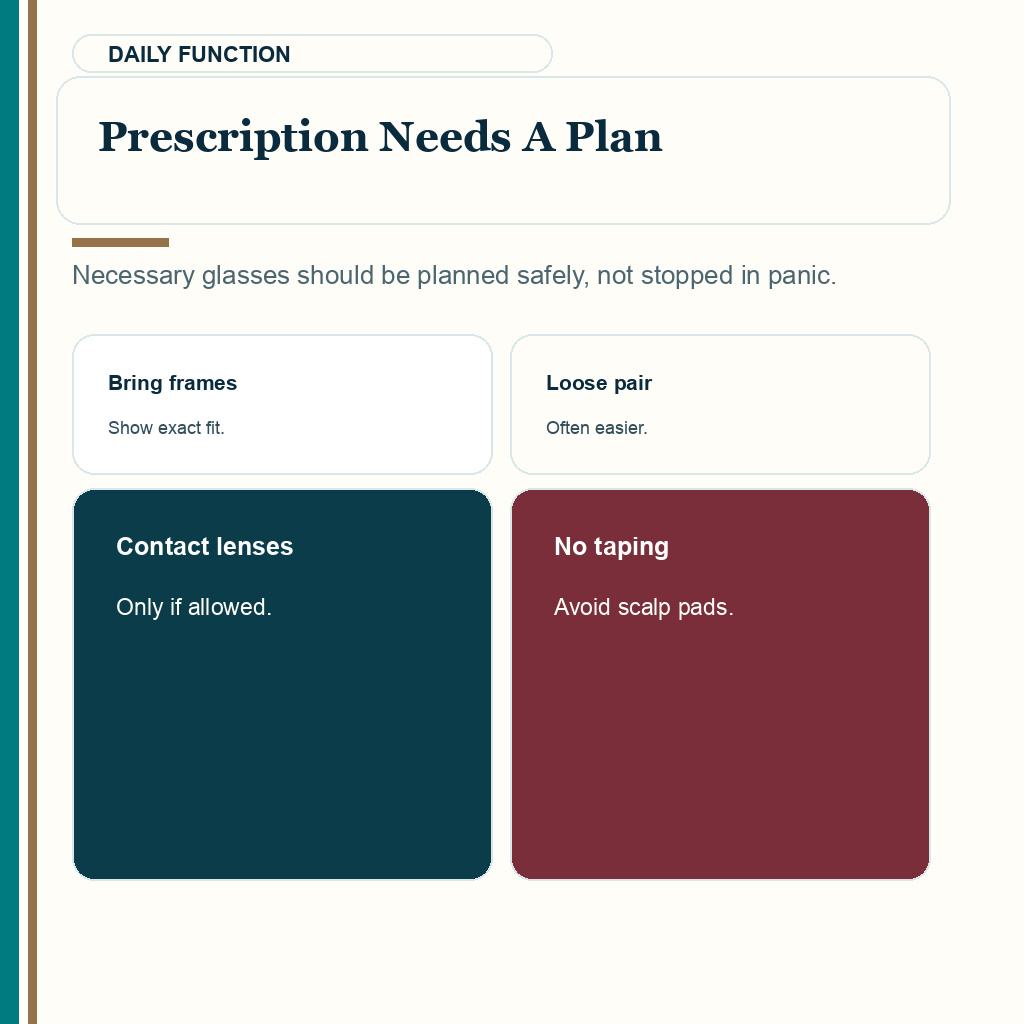
If you need prescription glasses to walk safely, read medication labels, work, or travel, the answer has to be practical. Do not stop wearing necessary glasses and make yourself unsafe. Wear them only if the frame arms do not press on grafts, do not scrape temple work, and do not sit on swollen or irritated skin. A loose older frame is often safer than a tight new frame that looks better but grips the temples.
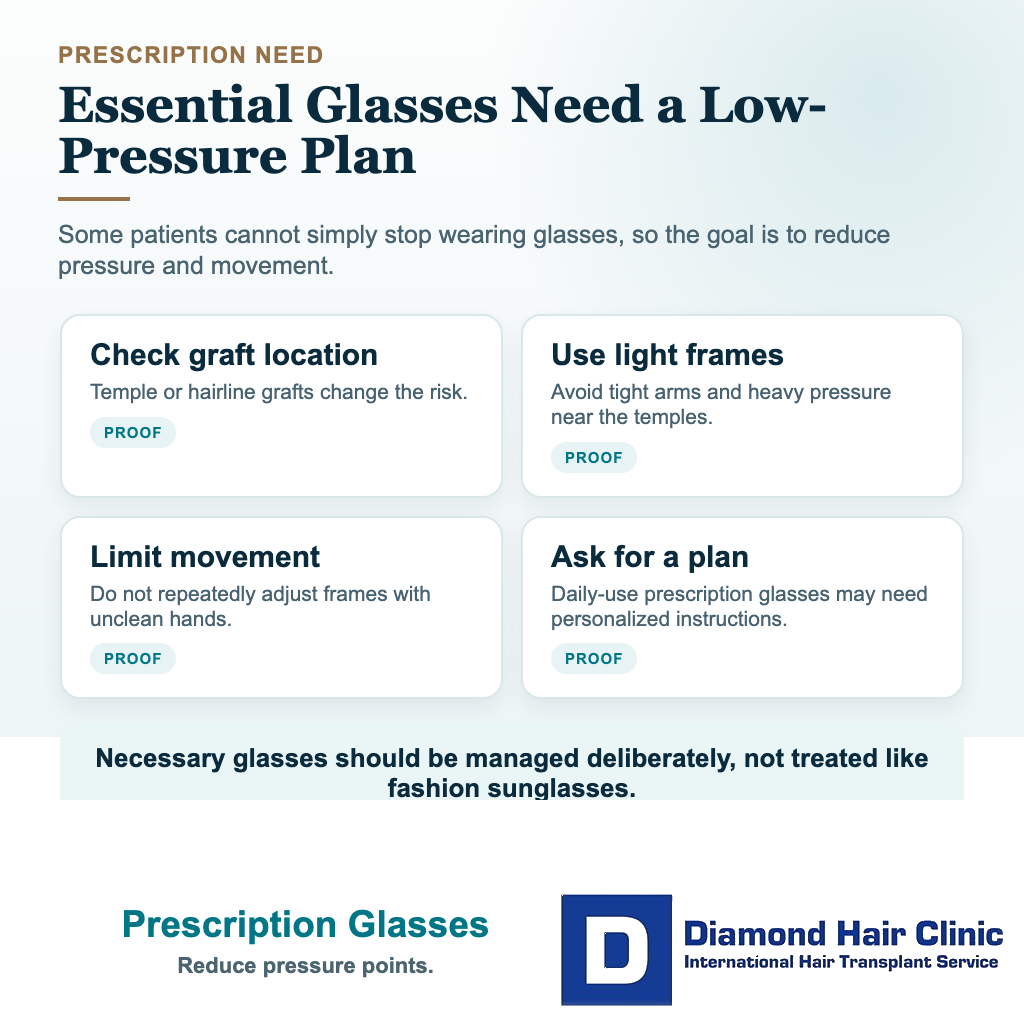
Do not solve the problem by taping frames to the scalp or adding pressure pads over the recipient area. If temple points, sideburns, or a lowered hairline were transplanted, show the exact frame position to the clinic. A small contact point near the ear may be harmless, while the same frame arm crossing new temple grafts may need a different plan for the first days.
Sunglasses after surgery
Sunglasses are useful for the eyes, but they are not a complete scalp protection plan. If you are going outside early after surgery, shade matters more than sunglasses. Strong direct sun on a healing scalp can worsen redness, dryness, heat, sweating, irritation, and the urge to touch the area. Sunglasses that make you sweat or keep adjusting the frame can create more handling than they solve. For scalp sun exposure, review when sun exposure is safer after a hair transplant with the clinic’s instructions.
From a graft safety point of view, sunglasses are judged like prescription glasses. If the frame is light, clean, stable, and does not touch the grafts, the risk is usually low. If the sunglasses are heavy, tight at the temples, or pushed up onto the top of the head, they are not a good choice in the early recovery period.
Do not lift sunglasses onto the scalp during the first weeks. This movement is automatic for many people. The frame can drag across the hairline, catch scabs, or press on a sensitive area. Keep them on the face or in a case, not on the transplanted scalp.
Daily prescription glasses should be planned before surgery
If you need glasses to see safely, the solution is planning, not panic. Bring the exact frames to your consultation or send clear photos before surgery. I can judge whether the arms sit near the planned graft zone. This is especially helpful if the transplant includes the corners, temples, or a low frontal hairline.
Some people can use contact lenses for a short period if they already tolerate them and their eye doctor allows it. Others can use lighter frames, a looser fit, or a strap arrangement that avoids the grafted area. If you are considering LASIK so you will not need glasses during recovery, LASIK and hair transplant timing should be planned separately before surgery. I do not want someone driving, walking outside, or working unsafely because they stopped wearing necessary prescription glasses without a plan.
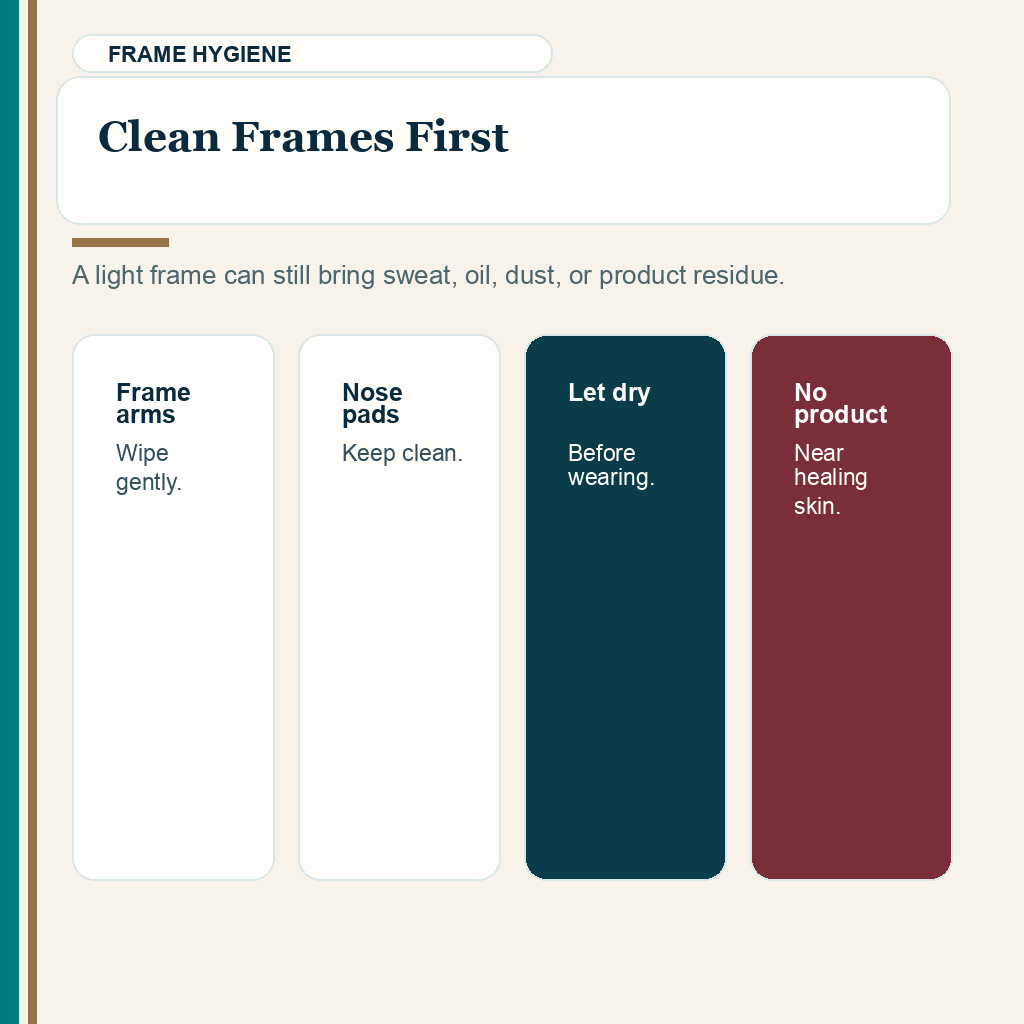
If contact lenses are not realistic, a second pair of lighter glasses can be helpful. A frame with softer arms and less temple pressure is often easier than a heavy designer frame. Clean the glasses before wearing them, especially the arms and nose pads, because the early scalp should not be exposed to unnecessary sweat, skin oil, dust, or product residue from the frame. If you use an alcohol wipe on the frame, let it dry fully before wearing it near healing skin.
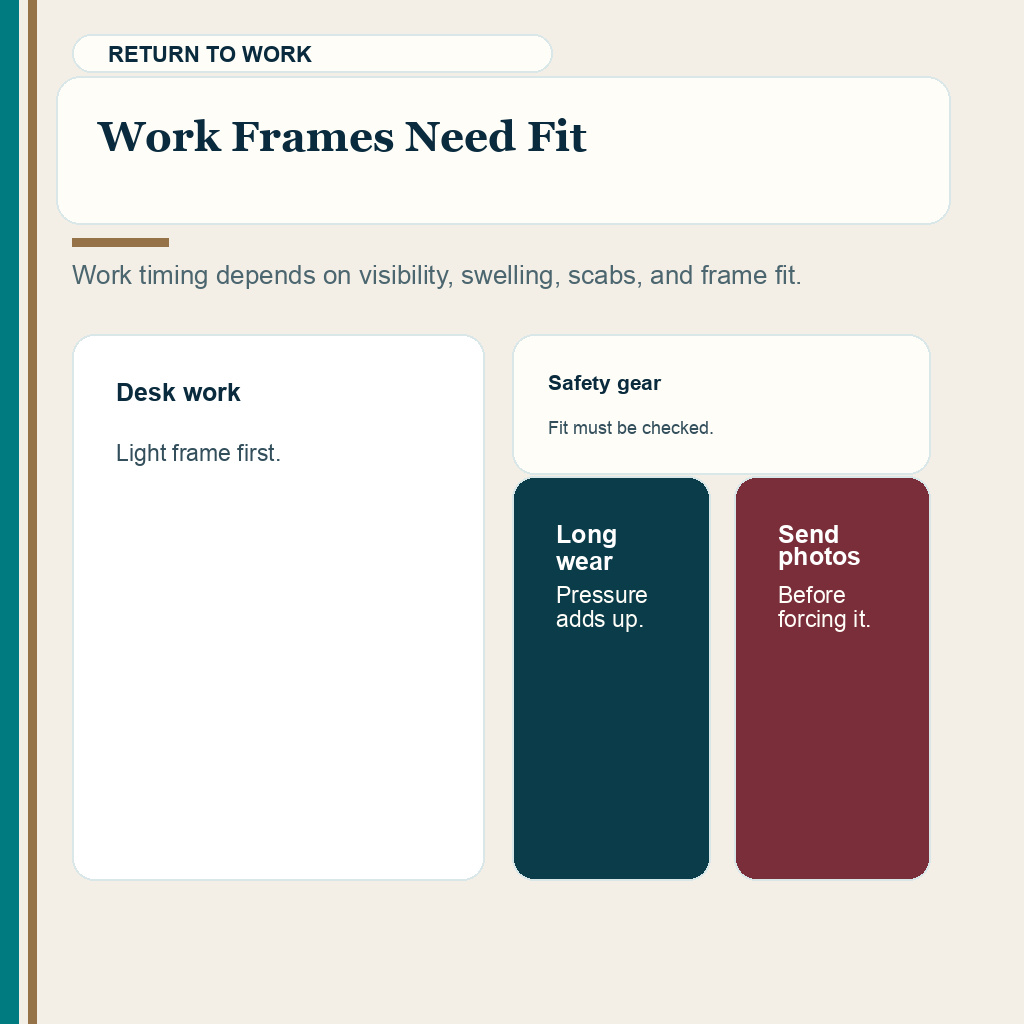
For a quick return to work, glasses can be part of that recovery plan. If work timing is the real concern, time off work after a hair transplant depends on visibility, swelling, scabs, vision needs, and job requirements together.


Glasses rarely damage grafts after the first 10 days
After about 10 days, grafts are usually much harder to dislodge in uncomplicated healing. That does not make the scalp ready for every kind of pressure. A light frame that sits away from the recipient area is different from a tight frame that presses into temple grafts all day.
The concern after the first 10 days is often less about a graft suddenly falling out and more about irritation, friction, swelling, scratching, or repeated rubbing. You may feel itchy, adjust the glasses, touch the scabs, check the mirror, then repeat the same cycle. Repeated checking can become a problem even when one light touch is not catastrophic. That also matters for when touching grafts becomes safer.
If glasses leave a mark on the temple skin, feel tight, or make the area sore, do not force them just because a certain number of days has passed. Change the frame, reduce the wearing time, or ask the clinic to check photos.
Tight sunglasses, goggles, and safety glasses
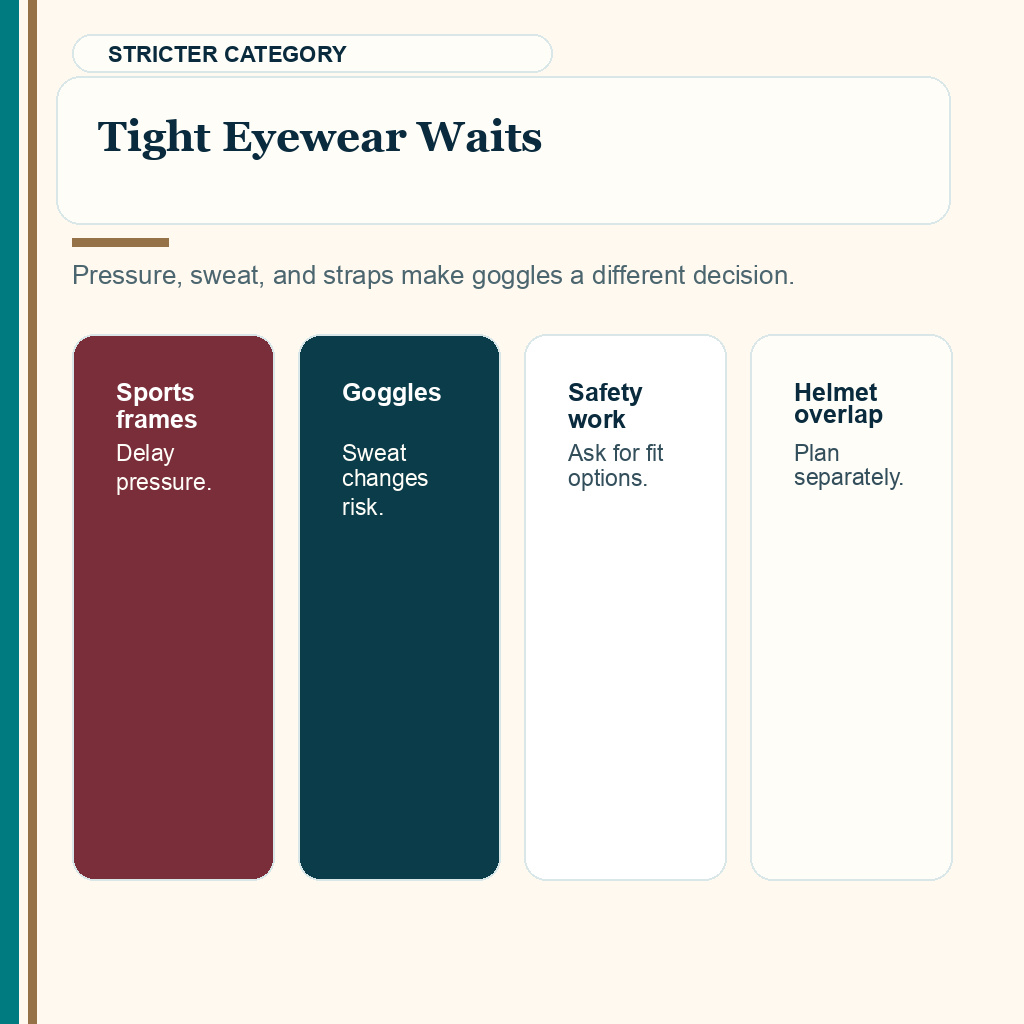
Tight eyewear needs a stricter answer. Sports sunglasses, cycling glasses, ski goggles, swimming goggles, work safety glasses, and elastic straps can all create pressure or friction. Some also trap sweat or need repeated adjustment. These are not the same as ordinary reading glasses.
For tight side pressure, waiting at least 3 to 4 weeks is often more sensible, and longer if the strap or frame crosses the grafted area. For goggles, helmets, or equipment that combines pressure with sweat or impact, 4 to 6 weeks is a safer discussion. If safety glasses are mandatory at work, ask whether a lighter frame, looser side shield, or temporary clear shield can protect the eyes without pressing on temple grafts. If swimming is part of the question, the risk is not only the goggles. Water exposure and pool hygiene matter too, which is why when swimming is safer after a hair transplant becomes relevant.
Signs that need clinic review
If glasses or sunglasses accidentally touch the recipient area once, do not panic. Look at timing and skin response. A brief light touch without bleeding, open skin, increasing pain, or a visible missing graft is usually not the same as real trauma.
Send clear photos if the frame caused bleeding, an open spot, a piece of tissue coming out, increasing swelling, spreading redness, discharge, worsening pain, or a clear impact to the grafted area. If the concern is an actual bump rather than gentle frame pressure, what to do after bumping your head after a hair transplant gives a better decision frame.
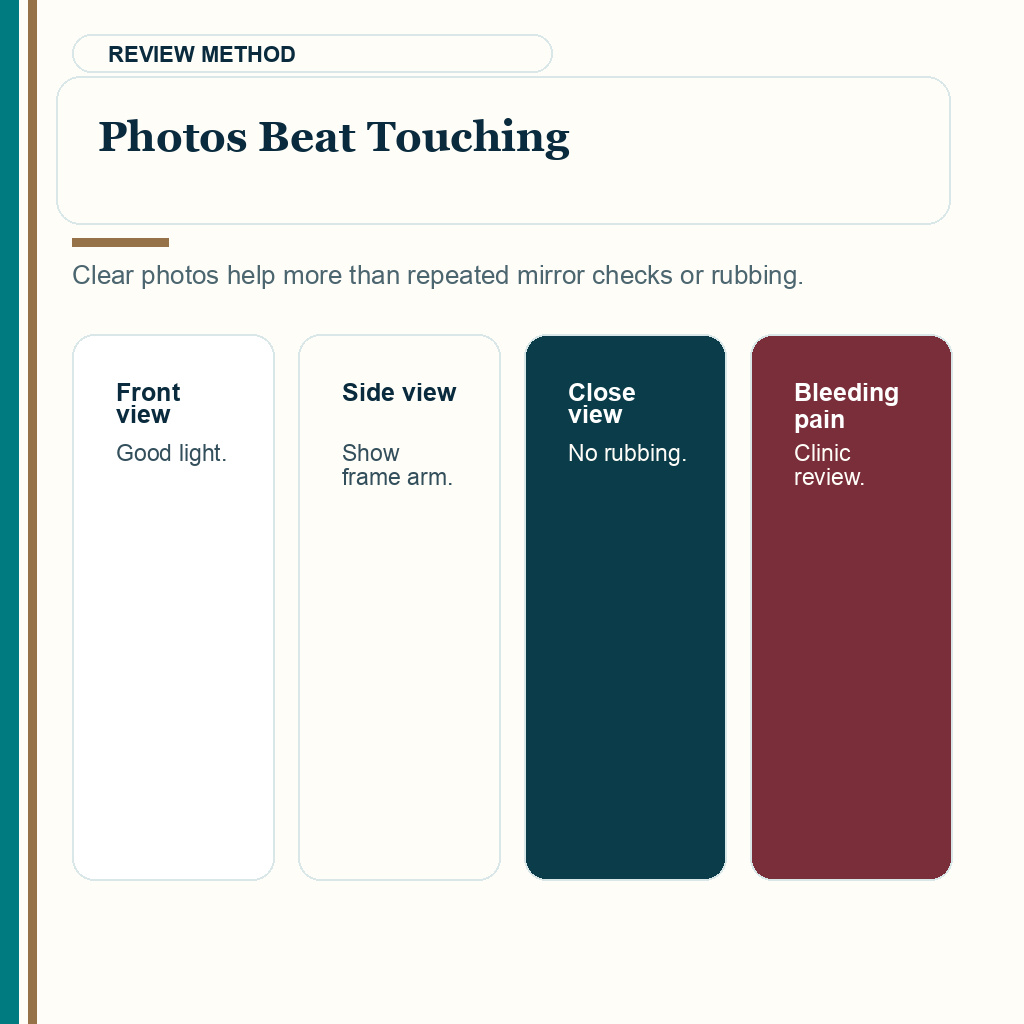
Photos help. Take clear front, side, and close up images in good light. Do not keep rubbing the area to check whether the grafts are still there. The photo is more useful than repeated touching.
Frame position belongs in the surgical plan
Bring up glasses before surgery if they are part of normal life. Thick prescription frames, tight sunglasses, safety eyewear, sports goggles, or frames that sit high near the temples can all affect how I plan the hairline and the first recovery days.
This matters more when temple design is part of the operation. A temple point that is designed too aggressively can spend grafts and create maintenance problems later. The same person who worries about glasses may also need a careful conversation about facial framing and donor limits. Hairline and temple planning should not be rushed, including the question of whether a hairline is too high after a hair transplant.
For work glasses, I may ask to see the frame from the front, side, and above. This is not just a cosmetic detail. The frame position should be understood before grafts are placed where daily pressure may repeat.
Eyewear fits with the rest of aftercare
Glasses are one part of aftercare, not the whole recovery. The first 10 to 14 days are mainly about protecting the grafts, washing correctly, avoiding scratching, keeping the scalp clean, and not rushing back into avoidable friction. The larger aftercare picture is explained in important points after a hair transplant.
Judge glasses by where the frame touches. A light frame in the wrong place can matter more than a heavier item that never reaches the grafts. For sleep timing, pillow pressure and unconscious rubbing around new grafts matter more than the weight of the object. Sleeping normally after a hair transplant raises that contact question in a different setting.
Privacy also plays a role. Sunglasses can feel useful when you feel exposed in public. That is understandable, but recovery privacy should not come at the cost of graft safety. If hiding the surgery is a major concern, review whether a hair transplant can be kept private with the clinic’s instructions before planning the recovery week.
Frame position changes the wait
I look at the parts of the glasses that touch the face and scalp. A frame sitting on the nose and ears is a different situation from tight arms crossing fresh temple grafts or pressing near the recipient area.
When grafts are away from the frame arms and the skin is calm, careful use can often come back earlier. If the temples were transplanted, the arms feel tight, or you keep adjusting the frame, I usually protect the area for at least the first 10 to 14 days before gentle reintroduction.
Sunglasses should stay off the scalp rather than being pushed upward into the grafted area. Safety glasses and sports goggles need more caution because they add pressure, sweat, and movement. For prescription glasses, I account for that need before surgery so the first day after the operation is not improvised.
I treat the frame like any other pressure source after surgery. If it avoids the grafts, glasses are much easier to bring back. If it crosses new temple work, give the area time before making the frame part of daily recovery again.

Read this review excerpt
Every single one of my questions was answered and they made sure I had all the details I needed to make an informed decision.