


Contact Lenses Need Clean Hands and Less Swelling
You may be able to wear contact lenses after a hair transplant if your eyes are comfortable, your hands are clean and dry, and you can insert and remove the lenses without rubbing your eyes, forehead, hairline, or temple grafts. The lens itself does not sit on the transplanted scalp, so it is not a graft problem by itself. The risk appears when swelling, dry eyes, poor hygiene, rushed handling, or repeated rubbing turn a simple vision choice into an eye or scalp problem.
If your eyes feel comfortable and you already wear contact lenses safely, lenses may be useful for a short period when glasses press near temple grafts. If your eyelids are puffy, vision is blurred, the eyes are red or painful, or travel has made everything dry and uncomfortable, glasses may be the safer temporary choice. Contact lenses are judged by eye comfort, hygiene, and handling. Glasses are judged by frame pressure near grafts.
Why contact lenses become a concern after FUE?
Two issues create most of the concern. The first is swelling. Forehead swelling can move down toward the eyelids after surgery, especially around day 2 to day 4. The second is frame pressure. Glasses or sunglasses may sit close to temple grafts, sideburn work, or a lowered hairline. A third issue is less obvious. When you are swollen or tired, lens handling can become less clean and less controlled than it is on a normal day.
This creates an awkward tradeoff. Glasses may be easier for eye safety, but the frame arms may touch fresh grafts. Contact lenses avoid frame pressure, but they only make sense with clean hands, steady handling, comfortable eyes, and no rubbing. Choose the option that controls the risk actually present in your case.
If eyelid puffiness is part of the problem, compare it with the usual pattern of swelling after a hair transplant. When frame arms sit near temple grafts or sideburn work, treat it as a glasses and sunglasses after hair transplant decision rather than only an eye comfort decision.
First days are not the time to experiment with lenses
If the eyes are comfortable, you are used to contact lenses, and you can handle them without touching the scalp, contacts are not forbidden simply because you had FUE. But the first days after surgery are a poor time to experiment. Do not try contacts for the first time, change lens type, wear decorative or color lenses you do not normally use, use old lenses, borrow solution, or improvise with water because you do not want to wear glasses.
On surgery day itself, bring backup glasses, a clean lens case, and proper solution even if you normally prefer lenses. A long procedure, tiredness, swelling, face down positioning, or any sedative medication can make lens handling less reliable, so lenses should not be the only plan. If sedation was used, or if you expect to sleep soon after the procedure, glasses are safer until you are fully alert and can handle lenses without rubbing the eyes, forehead, or grafted temples.
In the first week, I focus on behavior more than the lens itself. Are you washing and drying your hands before touching the lenses? Are you leaning over a sink and letting the head hang forward for a long time? Are you rubbing swollen eyelids? Are you using a mirror position that makes you bend toward the grafts? One clean insertion and removal is different from repeatedly adjusting lenses during a swollen, tired travel day.
If you have daily disposable lenses and your own eye doctor has cleared them, they can be cleaner for short use than stretching an old reusable pair during travel. Do not extend a daily lens into a second day because the hotel room feels inconvenient. Reusable lenses need a clean case, fresh solution each time, and normal replacement timing. The days after surgery are not a good time to use an old case, top off yesterday’s solution, or guess whether a lens is still clean enough.
If lens handling becomes messy, use backup glasses if they do not press on grafts. If frames do press near temple work, send a photo of the frame position to the clinic instead of guessing.
Glasses are safer when the eyes are swollen or irritated
Use glasses instead of lenses when the eyes are swollen, red, painful, watery, dry, sensitive to light, or blurry. Glasses also make more sense when you are tired, medicated, traveling, or not confident that you can wash and dry your hands properly before lens handling.
Contact lenses can turn an otherwise quiet recovery day into an eye problem if you handle them with unclean hands, expose them to tap water, sleep in them, or keep them in despite discomfort. A hair transplant does not protect the eyes from ordinary contact lens risks.
When glasses sit away from the grafts, they are often easier for a few days. A loose older frame may be better than a tight new frame. If temple grafts or sideburn grafts were placed exactly where the frame arms sit, then contact lenses may be considered only if the eyes themselves are suitable.
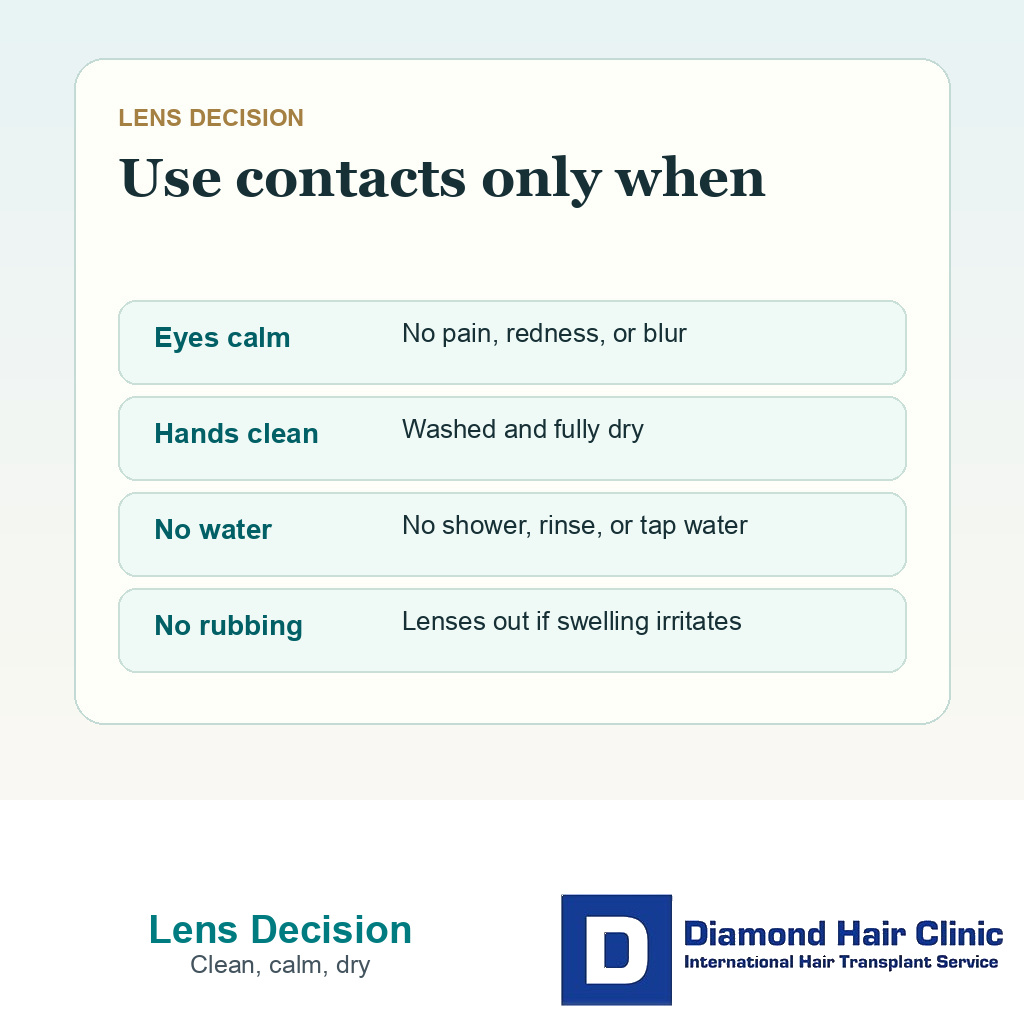
Use lenses only when the eyes are comfortable, your hands are clean and dry, and you can avoid rubbing or water exposure.
Swollen eyelids make lens handling less reliable
Swollen eyelids make contact lenses harder to insert and remove. The eyelid may not open fully. The lens may feel dry or displaced. You may rub more than usual. That rubbing can irritate the eye and can also make you accidentally touch the forehead, hairline, or temple area.
If the swelling is mild and the eyes feel normal, the decision is individual. If one eye is closing, vision is affected, pain is increasing, or the swelling is severe, do not force contact lenses. Use glasses if they do not touch grafts, or get a vision correction plan from the surgical team until the swelling settles.
I separate visible color around the eyes from lens comfort. Black eye bruising after a hair transplant is often a swelling and bruising pattern, but eye pain, vision change, fever, discharge, or worsening one sided swelling should not be ignored.
Clean lens handling matters more during recovery
Wash your hands thoroughly, rinse away soap, and dry your hands before touching contact lenses. Do not handle lenses after touching the donor area, recipient area, ointment, shampoo, saline spray, hotel towels, pillowcases, or airport surfaces unless you wash again.
Do not rinse contact lenses or the lens case with tap water, hotel sink water, bottled water, saliva, scalp saline spray, or shampoo water from the shower. Contact lens solution is a separate sterile product, not a substitute for scalp aftercare sprays. Keep lenses out before showering, swimming, hot tubs, or hammam steam rooms. Water exposure is an eye infection risk, and the early recovery period already gives you enough reasons to avoid extra irritation. Do not insert lenses while your hands are damp from washing the scalp unless you have washed, rinsed, and dried them again. Keep this separate from the scalp routine in washing hair after a hair transplant.
Clean hands are part of eye safety and graft safety at the same time. This matters more after surgery because you may also be touching scalp sprays, shampoo, towels, pillowcases, luggage, and clinic supplies. If handling lenses makes you repeatedly touch the forehead or hairline, the vision solution is creating a recovery problem.
Flights home need backup glasses and clean supplies
The flight home often makes lens use more difficult. The cabin can feel dry, the day is long, sleep is poor, and you may be swollen around the eyes. Contact lenses that feel fine at home may feel irritating during a long travel day after surgery.
If you wear lenses for the flight, pack backup glasses, a fresh case, proper solution, and any eye drops recommended by your own eye doctor in your cabin bag, not checked luggage. If the trip is long, the cabin is very dry, or you may sleep, glasses are often easier. Do not sleep in contacts on the flight unless your own eye doctor specifically allows that lens type and schedule. If lenses begin to feel gritty during travel, remove them early rather than waiting until you are forced to handle them in an airport bathroom with tired hands.
The larger travel plan still comes first. Flying after a hair transplant is judged by medical stability, swelling, graft protection, luggage, dehydration, sleep, and whether the clinic has checked the scalp. Contact lenses are only one small part of that travel plan.
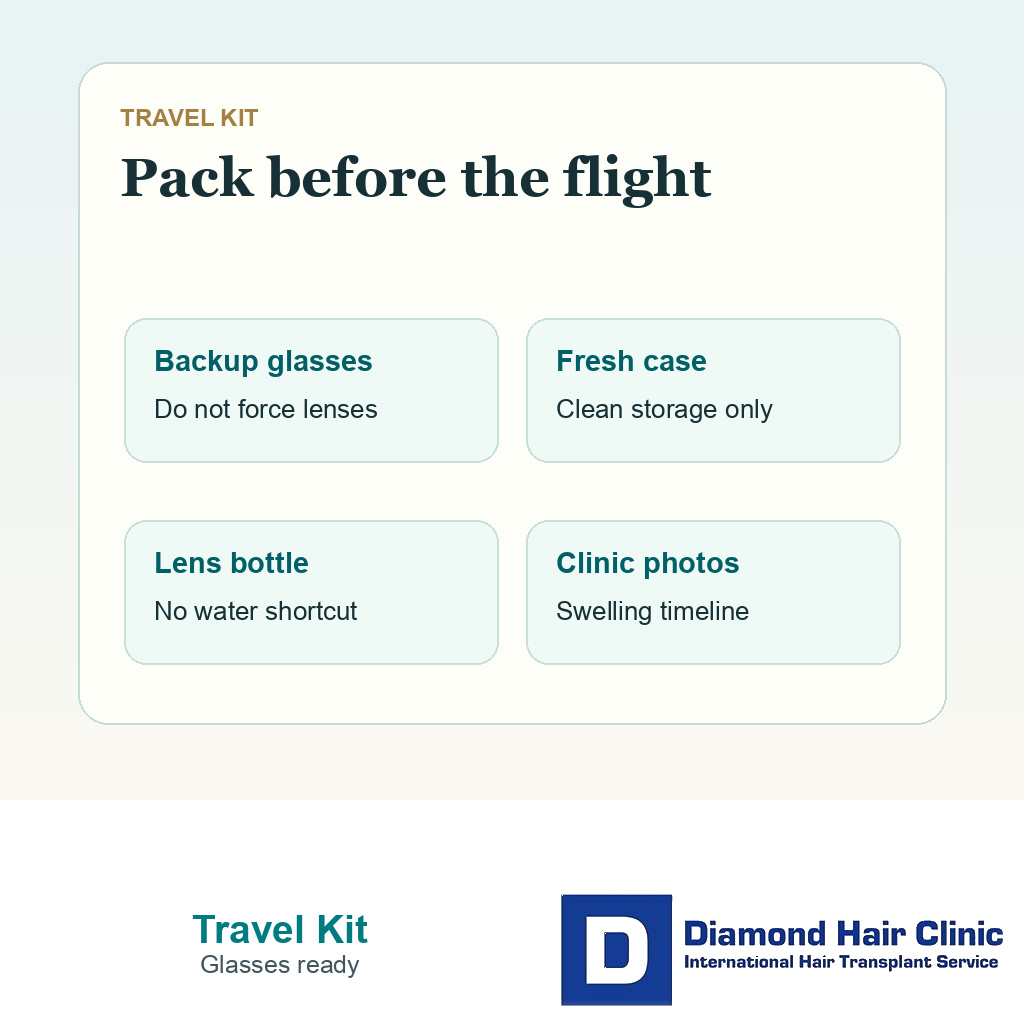
For travel, backup glasses and clean lens supplies are more useful than forcing contacts during swelling.
Airport security and short outings mainly change behavior
Airport security does not damage grafts, and contact lenses do not interact with scanners. The real issue is behavior in a rushed environment. If you are removing a hat, handling bags, looking down at documents, touching your face, and adjusting lenses in a public bathroom, the recovery plan becomes less controlled.
Airport security after a hair transplant does not change the lens decision. Keep the scalp protected from bumps and rubbing. Keep lens handling clean. Keep backup glasses available. Do not improvise with products in the airport.
For short walks, meals, or errands, going out after a hair transplant matters more than the lens question. If leaving the hotel makes you sweat, rub your face, touch the grafts, or handle lenses in poor conditions, keep the outing shorter or wait. Looking normal for a meal or airport queue is not a reason to use unfamiliar cosmetic lenses during recovery.
Eye drops, allergy, and ice need separate judgment
Eye drops should follow your own eye doctor’s instructions, especially if they are medicated drops or if you have dry eye disease, allergy, glaucoma, recent eye surgery, or a corneal problem. Lubricating drops should be compatible with contact lenses, and redness removing drops should not be used casually to hide irritation. Do not assume that every drop is suitable with every contact lens. If LASIK is also being planned, LASIK and hair transplant timing should be separated so dry eyes, eye drops, facial swelling, and follow-up instructions do not collide in the same recovery window.
During pollen season after FUE, itchy, watery, red eyes make contact lenses more uncomfortable and make rubbing more likely. If swelling around the eyes may actually be allergy, medicine reaction, or infection, compare the pattern with allergy signs in hair transplant recovery and contact the clinic if symptoms are not ordinary.
Cold compresses can be useful for some swelling routines, but they should not press into grafts or contaminate the eyes. If the clinic allows cold placement, follow the principles in ice after a hair transplant. The placement should be gentle, wrapped, short, and away from the grafted recipient area.
Eye warning signs need eye review
Remove contact lenses and seek advice from an eye doctor if you have eye pain, increasing redness, blurred vision, unusual light sensitivity, discharge, a lens that feels stuck, or symptoms that do not settle after the lens is removed. Those are eye symptoms, not scalp symptoms, so handle them as an eye problem first. Do not insert a fresh lens just to test whether the eye has improved. Keep glasses on until the eye has settled or an eye professional tells you contact lenses are safe again.
Also contact the transplant clinic if eye swelling is severe, one sided, worsening, linked with fever, associated with scalp discharge, or making it hard to open the eye. I need photos of the full face, the hairline, the donor area if relevant, and a clear timeline.
Do not use contact lenses to push through a warning sign. A few days in glasses is a small compromise compared with creating an avoidable eye infection or rubbing the scalp during the graft protection period.
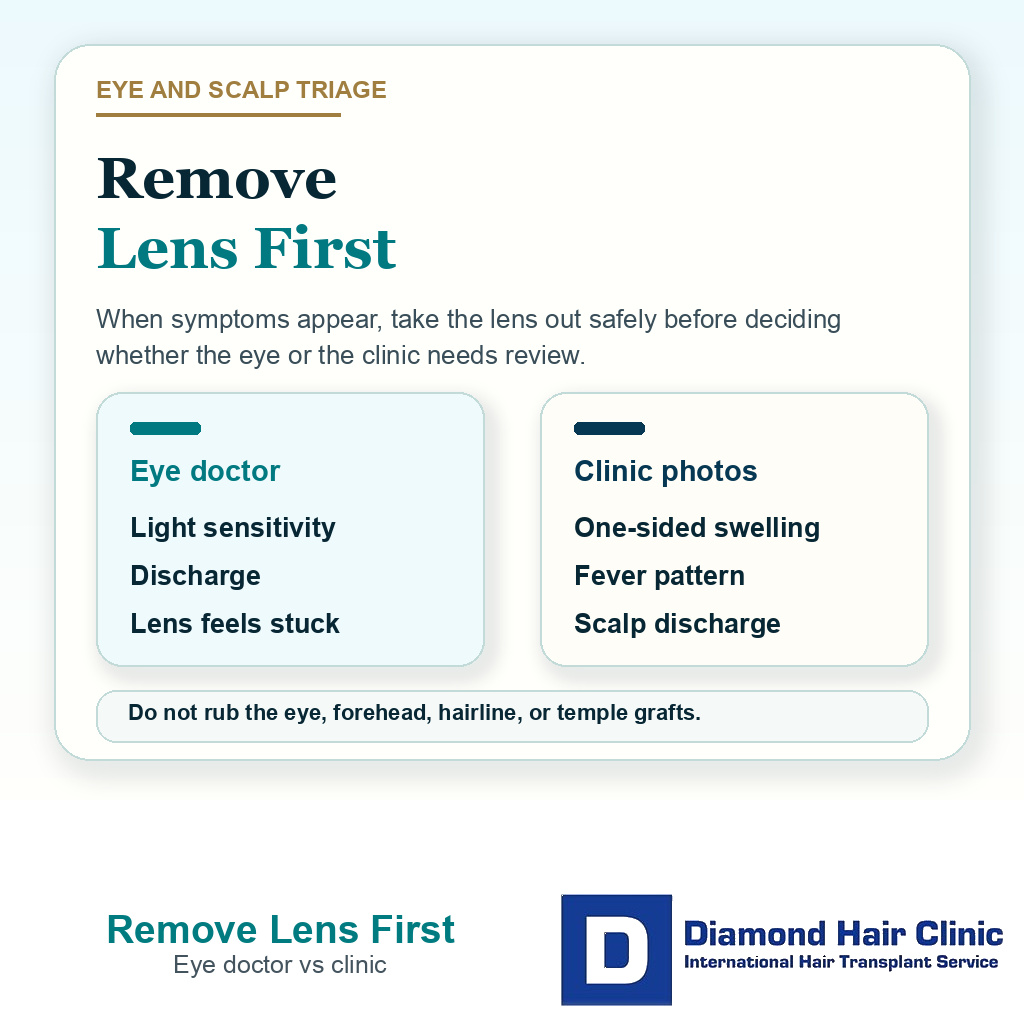
If contact lenses become uncomfortable during FUE recovery, remove the lens first and separate eye symptoms from swelling signs that need clinic photos.
Clean eyes and steady hands come first
Swipe through the 8 contact lens safety checks below before deciding between lenses and glasses after FUE.
Bring both options to surgery, with clean backup glasses and your normal contact lens supplies, including a spare lens case and enough solution for travel delays. Do not depend on one vision option. If glasses do not touch grafts, they are often easiest during swelling and travel. If frames press on temple grafts, contact lenses can be considered only when the eyes are comfortable and hygiene is easy.
Before using lenses, check five points. Are my eyes comfortable? Are my hands clean and dry? Do I have proper solution and a clean case? Can I put lenses in and remove them without rubbing my eyes, forehead, hairline, or temple grafts? Am I going to stay awake, or am I about to nap during recovery or travel?
When the answers are reassuring, contact lenses may work as a short temporary tool. When any point is weak, use glasses carefully and let the surgical team check the frame position before relying on them. Avoiding unnecessary contact with grafts remains the main scalp rule. Clean lens habits remain the main eye rule.
When there is doubt, send a clear photo message through hair transplant follow-up after surgery. Include the day after surgery, swelling level, whether the eyes are red or painful, where the glasses touch, and why you want to use lenses. I need to see the face, the frame position, the eye symptoms, and the surgical plan together.
Read this review excerpt
First wash completed and visual instructions given to my daughter.