


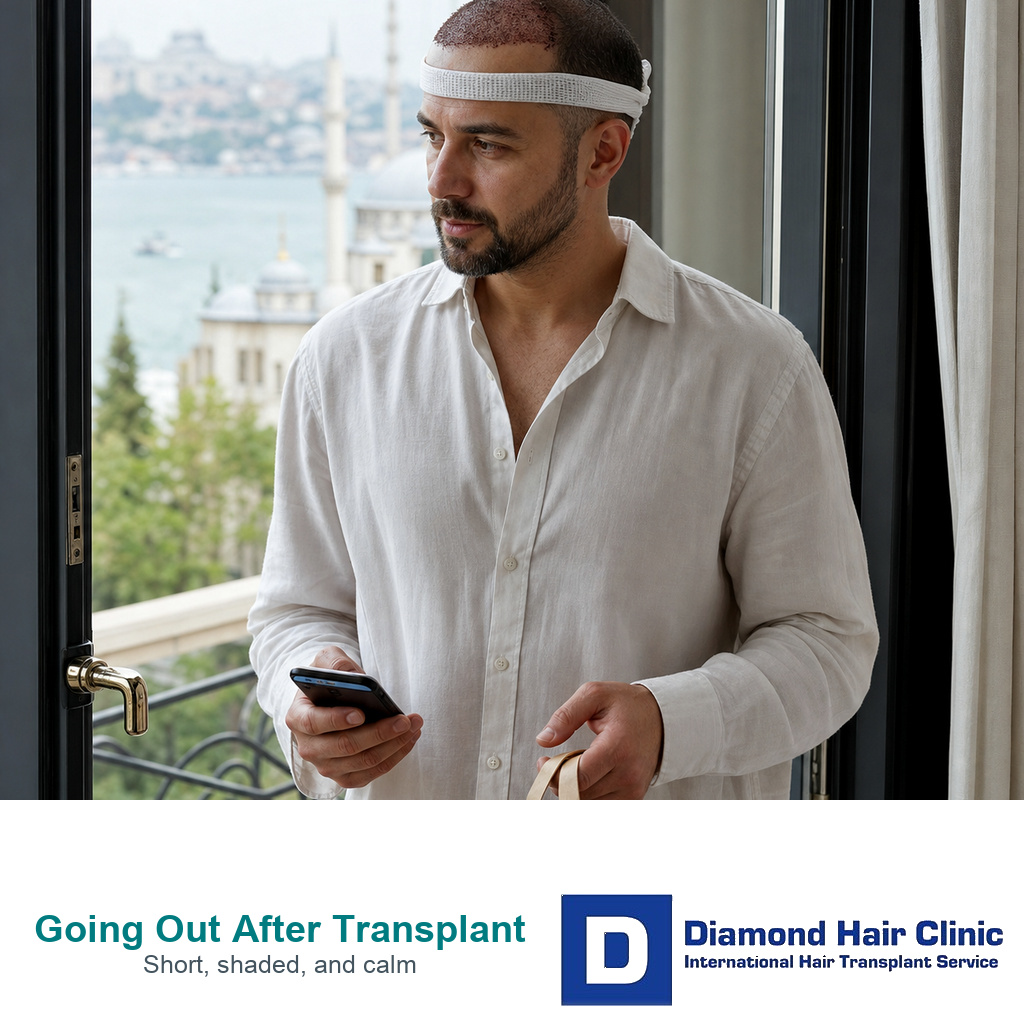
Early Outings Need Shade and Careful Timing
You do not need to stay locked in your hotel room after a hair transplant. If you feel steady, the scalp is dry and protected, and your clinic has not restricted you, a short shaded walk for water, light food, or a clinic visit can be reasonable.
That is very different from treating the first days like normal travel. A useful outing is short, slow, cool, shaded, and easy to stop if swelling, heat, or contact risk appears. Crowded sightseeing, long restaurant meals, bright sun, smoking areas, alcohol, sweat, heavy bags, tight headwear, and places where someone can bump your head change the risk.
I judge going out by graft protection, donor area comfort, swelling, bleeding risk, dizziness, heat, and whether the plan still protects washing and sleep. The surgery evening, the first morning, and day three are not the same decision. Leaving the room is not the same as returning to normal travel habits. Start with one practical errand, and keep the return plan easy if heat, swelling, or tiredness builds.
Leaving the hotel safely
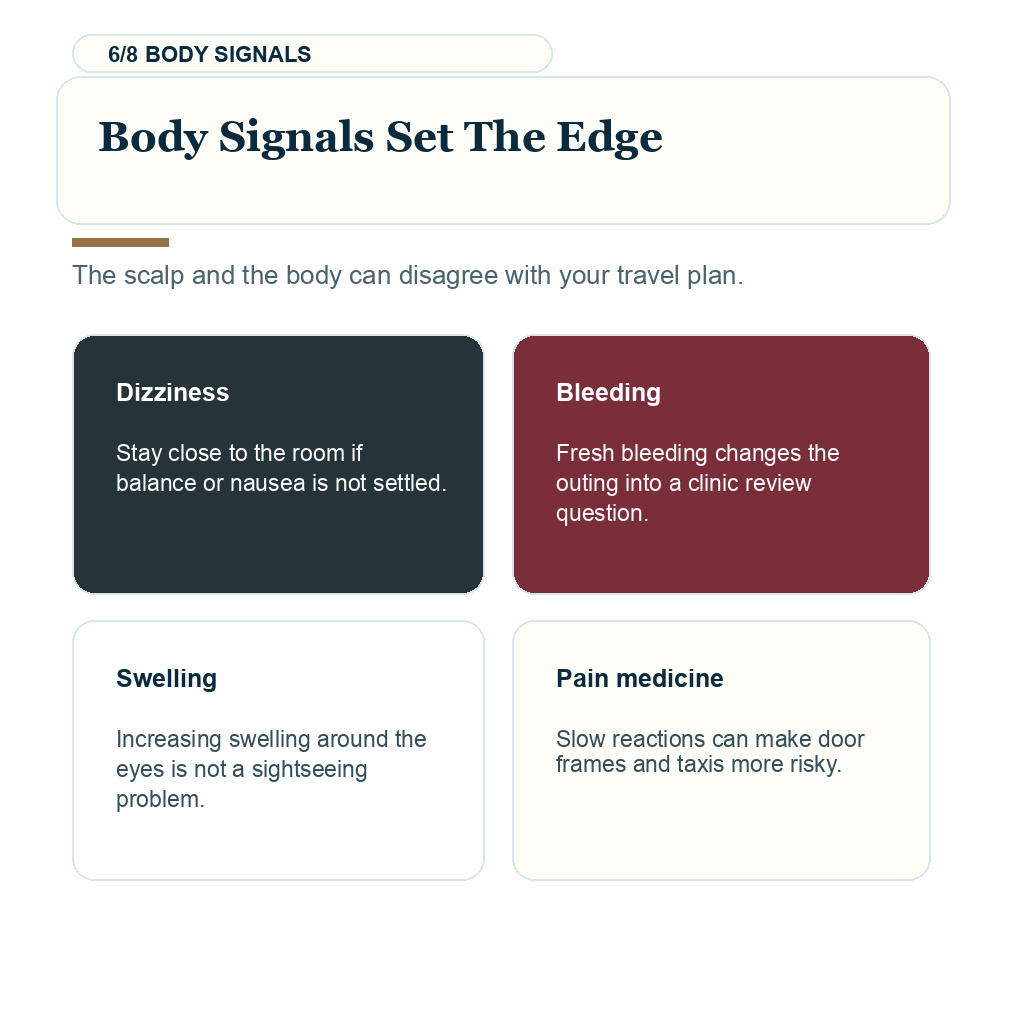
Some people can leave the hotel for a short practical purpose the day after surgery. Others should stay in the room. The difference is not confidence. It is the condition of the scalp and the body. If you are dizzy, nauseated, unusually weak, bleeding, swollen around the eyes, slowed by pain medicine, or unsure about the first wash, stay close to the room and clinic.
After FUE, the grafts are still vulnerable to rubbing, impact, and unnecessary touching. The donor area may also feel tight or tender. Walking slowly to buy water in the shade is very different from spending several hours outside, carrying bags, climbing hills, eating in a busy restaurant, and trying to look normal in public.
I separate practical movement from tourism in the first days. The plan should support hair transplant aftercare, not compete with it. If going outside makes you miss washing instructions, sweat heavily, scratch, or touch the grafts again and again, the outing is no longer harmless. If the outing involves a taxi, the same door frame and headrest caution from the first car ride after FUE still applies.
Early outings that are reasonable
Reasonable early outings are short, slow, shaded, and easy to stop. Examples include walking a few minutes in front of the hotel, collecting prepared food, visiting the clinic for washing or review, taking a taxi to a nearby appointment, or sitting briefly in a quiet place where nobody will touch your head.
The better version has a clear return plan. Make the first outing reversible, shaded, and easy to stop. The first outing should be reversible.
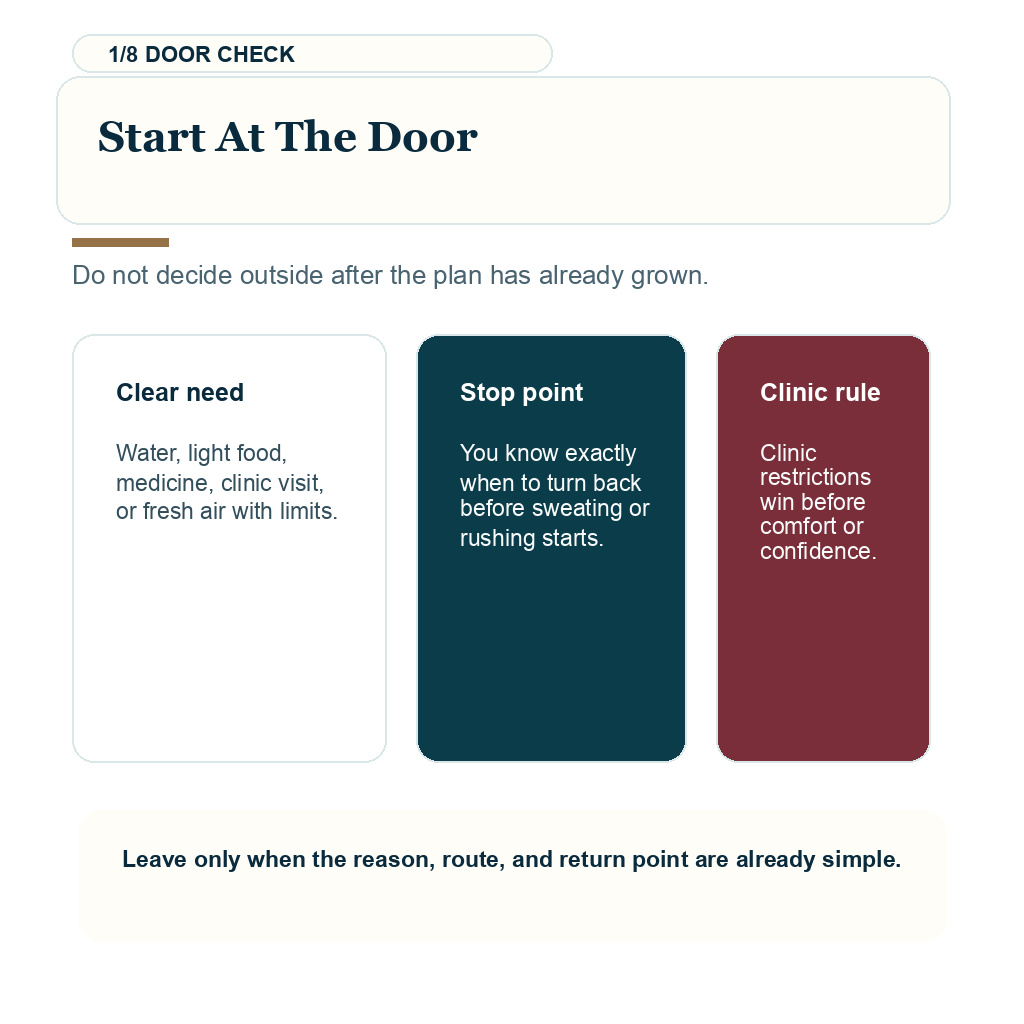
Practical errands are better when they solve a recovery problem, such as water, light food, medicine, a clinic check, or fresh air when you feel confined. Before leaving, keep your phone charged, clinic contact available, and hands clean. Door handles, taxis, payment screens, restaurant tables, low vehicle roofs, and headrests can lead to touching or bumping the scalp without thinking.
Getting home is recovery logistics, not a social test. The route should be short, calm, and easy to leave without head contact, heat, crowd pressure, or fatigue.
In Istanbul, travel plans should follow the recovery schedule. That schedule should be built around surgery, washing, swelling, sleep, flight timing, and how many days to stay in Turkey after a hair transplant, before it is built around sightseeing. The visit should be medical recovery first, not a city break with a procedure attached.
A short walk becomes too much when symptoms build
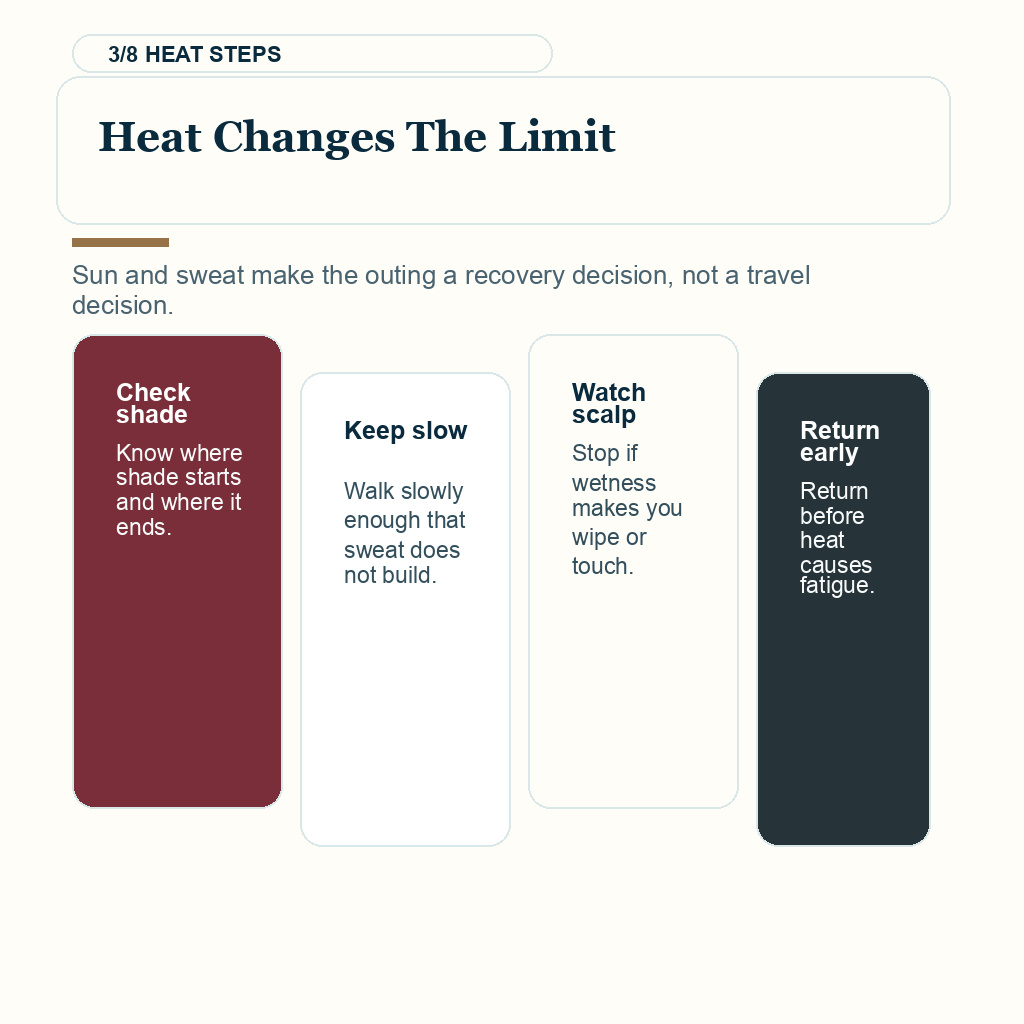
A short walk becomes too much when it turns into heat, sweat, pressure, or fatigue. If your forehead starts sweating, the graft area feels wet, you feel pulsing in the scalp, swelling increases, or you keep adjusting clothing around the head, end the outing. The useful endpoint is getting back before you need to wipe, scratch, or fix headwear.
Stairs, hills, shopping bags, hurried street crossings, crowded transport, crowded elevators, and long restaurant waits can turn a short walk into exertion. Normal fitness is not the measurement here. The first week is not a fitness test. A slow walk that ends with wiping sweat, ducking through crowds, or fixing headwear several times has already changed category.
Heavy activity belongs in the same risk group as unnecessary sweating. Anyone asking about outside walks should also understand sweating after a hair transplant, because heat and moisture can lead to wiping, rubbing, itching, and repeated checking. Stop before sweat becomes the reason you touch the grafts.
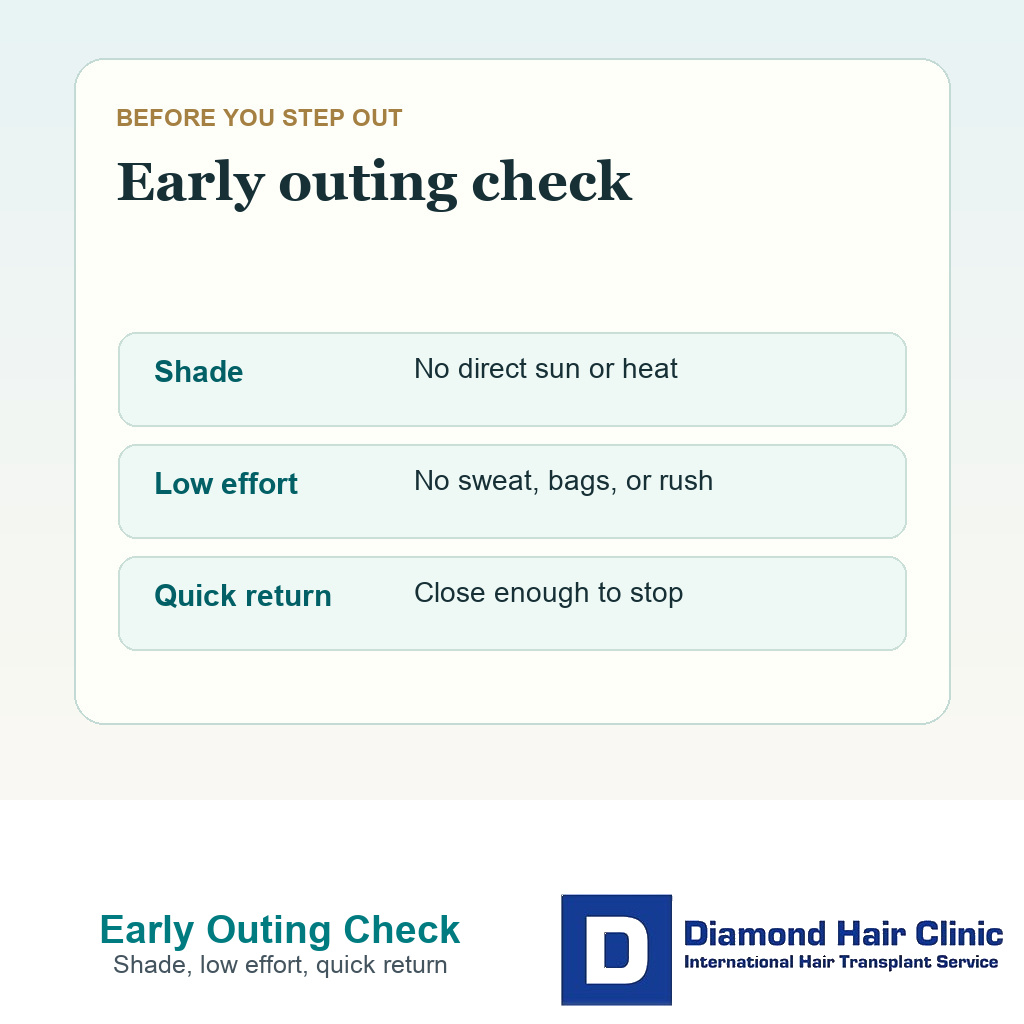
A short outing is safer when shade, low effort, and a quick return are already planned.
Sun, heat, and sweating change the plan
Sun and heat matter because the scalp has just been through surgery. The recipient area is exposed, the donor area is healing, and swelling can still be moving. Direct sun can irritate the skin, worsen discomfort, and make you sweat or wipe the forehead. Heat also makes long walks feel easier at the start and harder by the time you need to return.
A photo that looks dry after the outing can miss the real exposure. Indoor photos may not show sweat, rubbing, a towel on the forehead, repeated cap adjustment, or a moment when someone brushed the head in a narrow place.
For going out, sun after a hair transplant is mainly an exposure control problem. If you cannot keep the outing shaded, cool, short, and easy to stop, wait. Istanbul weather can change quickly, so rain also needs planning. If the forecast is unstable, rain after a hair transplant changes the decision before you walk around.
Restaurant or cafe outings after FUE
Medically, the question is not whether scabs are visible. The question is whether the environment is controlled enough for recovery. A quiet restaurant close to the hotel, where you can sit without heat, smoke, alcohol, crowding, or head contact, may be acceptable for some people. Choose the least exposed seat, avoid buffet lines and tight tables, and leave before the room becomes hot or smoky.
Visible scabs create a social problem before they create a medical problem. Some people feel fine being seen. Others become anxious, cover the head too tightly, or keep checking mirrors and phone cameras. That behavior can matter more than the restaurant itself. If visibility makes you handle the grafts, order food to the room instead.
Food quality matters too. Choose a meal that supports recovery rather than a heavy evening with alcohol, salty snacks, and poor sleep. The meal should fit what to eat after a hair transplant, which means steady recovery, no alcohol, and no long evening outside. In the first days, light food and a direct return to the room are usually better than a long meal outside. A very spicy restaurant meal belongs in that same judgment, which is why I separate spicy food after hair transplant recovery from ordinary light food.
Hats or hoods can make the outing riskier
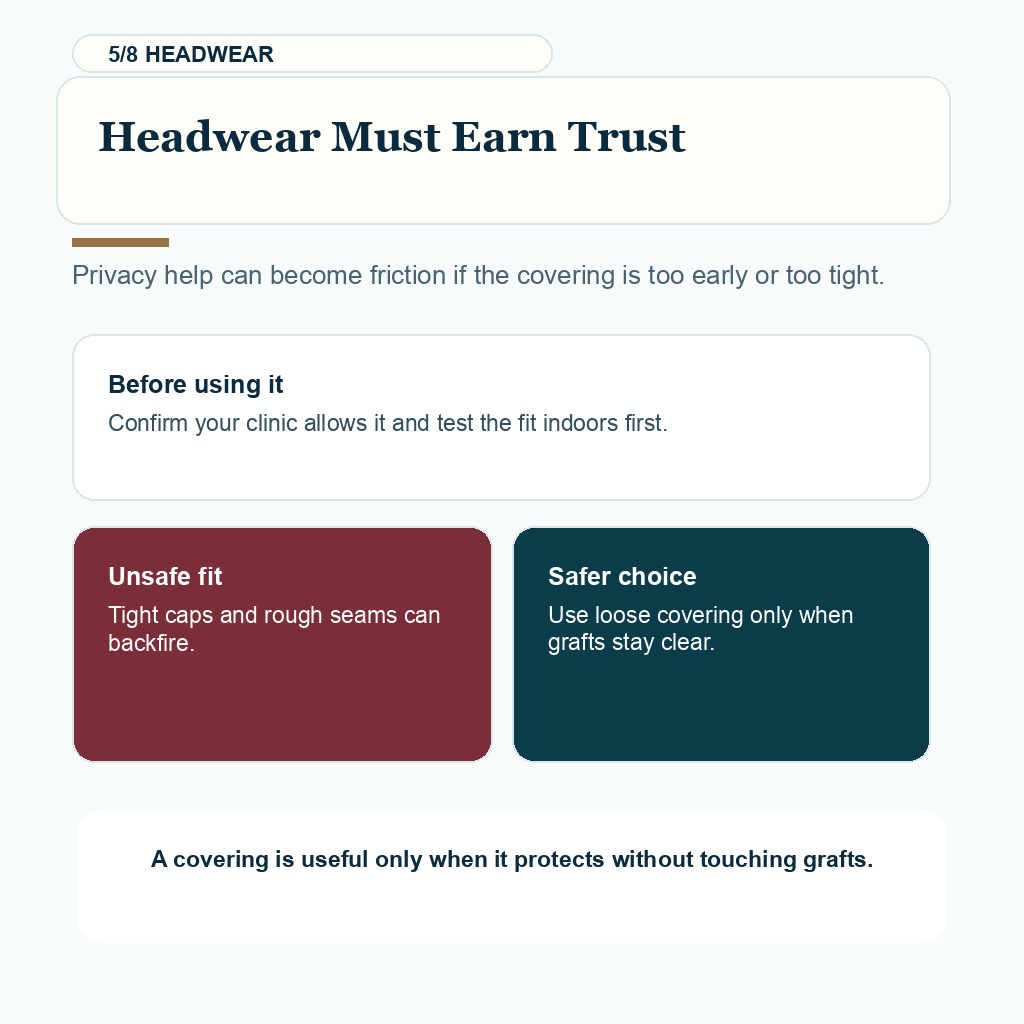
A hat can protect privacy and light exposure later, but it can also rub the grafts if used too early or too tightly. The timing depends on the clinic protocol, the fit of the hat, the graft distribution, and whether you can put it on and remove it without dragging fabric across the recipient area.
I am cautious with caps in the first days because people often adjust them repeatedly. A loose soft covering may be safer than a tight cap for some people, but the fabric, pressure, timing, and repeated adjustments matter. The wrong hat can create exactly the contact risk you were trying to avoid.
If you need headwear because you are going outside, the outing may already be too exposed, too public, or too sunny for the early period. Soft headwear after a hair transplant still has to be loose, clean, and used without dragging fabric across the grafts before you rely on a bandana, bucket hat, hoodie, or cap. Headwear should protect recovery, not hide a risky plan.
Prepare if you travel alone
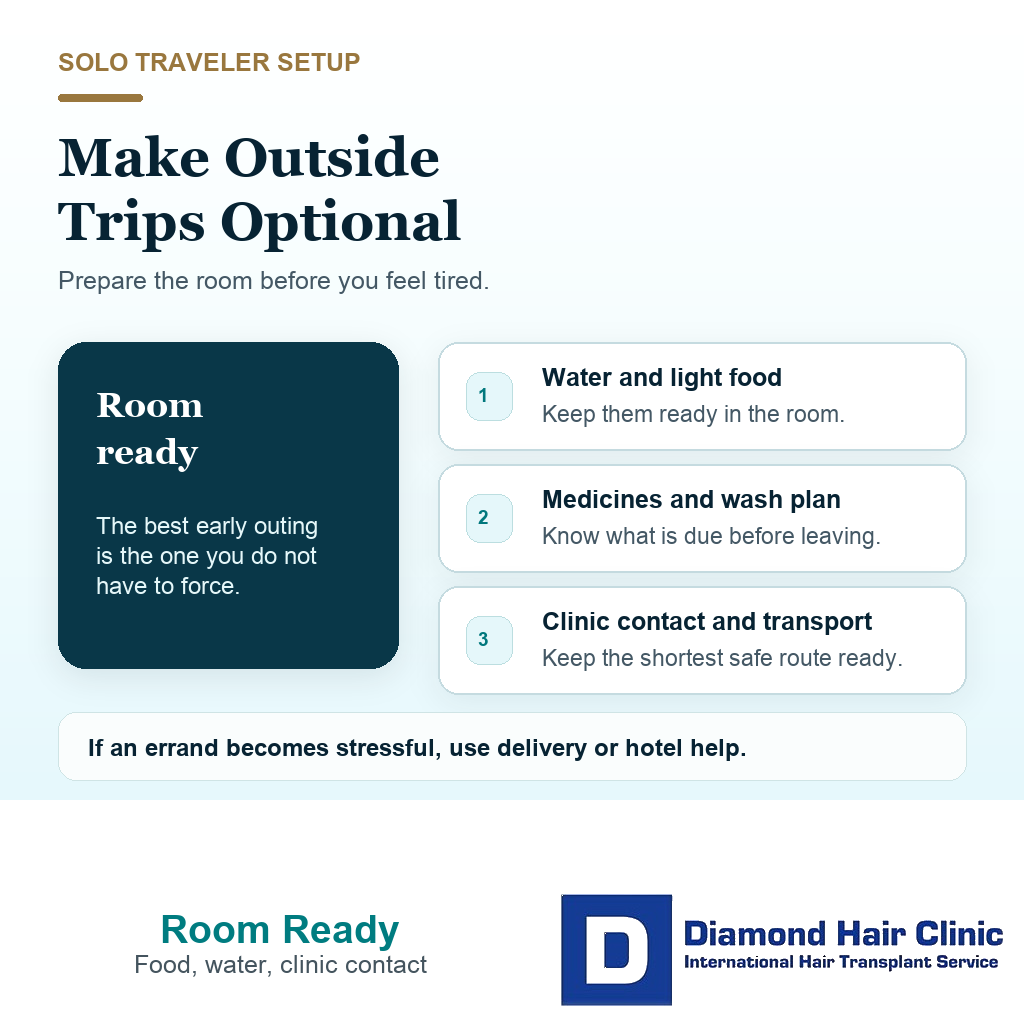
If you travel alone, prepare the room before surgery day. Keep water, easy food, prescribed medicines, chargers, clinic contact details, and transport options within reach. Put essentials somewhere you can reach without bending, searching bags, or leaving the room because one simple item is missing.
Being alone does not mean you must stay trapped. It means less improvisation. Use delivery when possible. Ask the hotel for help. Arrange clinic transport if a review is needed. If you are sleepy, dizzy, nauseated, or slowed by medication, do not go out alone for a small errand just because the errand feels simple. If you must go out, choose the shortest route, tell someone at the hotel where you are going, and avoid carrying anything heavy.
For a patient traveling alone to Turkey for a hair transplant, the important point is preparation, not bravery. Prepare the room so outside trips become optional.
Shopping or sightseeing should wait in some cases
I usually advise delaying shopping, sightseeing, and mall trips in the earliest days. These outings sound gentle, but they often include long walking, bright light, heat, crowds, standing in lines, taxis, photos, bags, and social pressure. That combination is not ideal when grafts, swelling, sleep, and first washes need priority.
A very short visit to buy something essential is different from tourism. If you came to Istanbul for surgery, treat sightseeing as a bonus only after early recovery is stable. Do not design the first 48 to 72 hours around photos, walking routes, or restaurant lists. Design them around protecting the result you came for.
This also connects with public appearance. Some people are medically able to go out but emotionally uncomfortable being seen with redness, swelling, scabs, or a shaved donor area. When you look normal after a hair transplant is better for that public facing timeline. Here the focus is earlier movement for food, errands, shade, and avoiding avoidable contact.
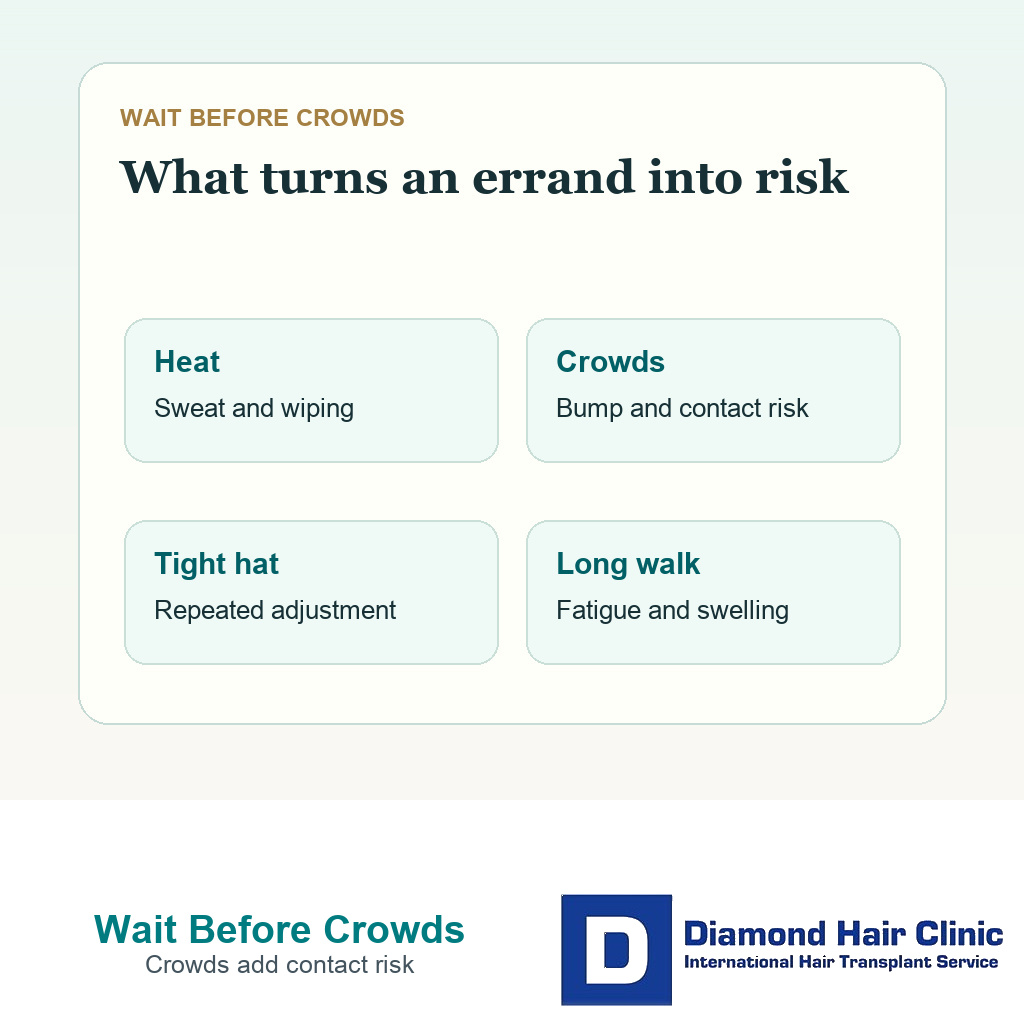
Crowds, heat, and repeated headwear adjustment can turn a simple outing into avoidable graft contact.
Warning signs that should stop the outing
Stay inside, ask for clinic review, or seek medical review if you have active bleeding that does not settle quickly, increasing pain, faintness, fever, chills, spreading hot redness, heavy swelling, thick discharge, repeated vomiting, confusion, chest pain, shortness of breath, or a fall risk. Also stay close to the clinic if the donor area becomes unusually hot, wet, painful, or difficult to keep clean.
If you bump the graft area, hit your head, or nearly fall during an outing, return and send photos before trying another trip. Do not turn an early warning sign into a sightseeing problem. A short walk can wait. A concerning symptom should be reviewed.
Swelling deserves special respect because it can change quickly around the forehead and eyes. Mild swelling can be expected, but swelling that affects vision, worsens rapidly, or comes with pain and illness should change the plan. If puffiness or pressure is the main reason you are staying in, swelling after a hair transplant is the issue to judge first.
Also avoid going out if you are likely to touch or scratch the grafts. Anxiety can make people check the scalp every few minutes, especially in mirrors, elevators, restaurant bathrooms, and phone cameras. Repeated checking can become its own risk because touching grafts after a hair transplant is not always deliberate.
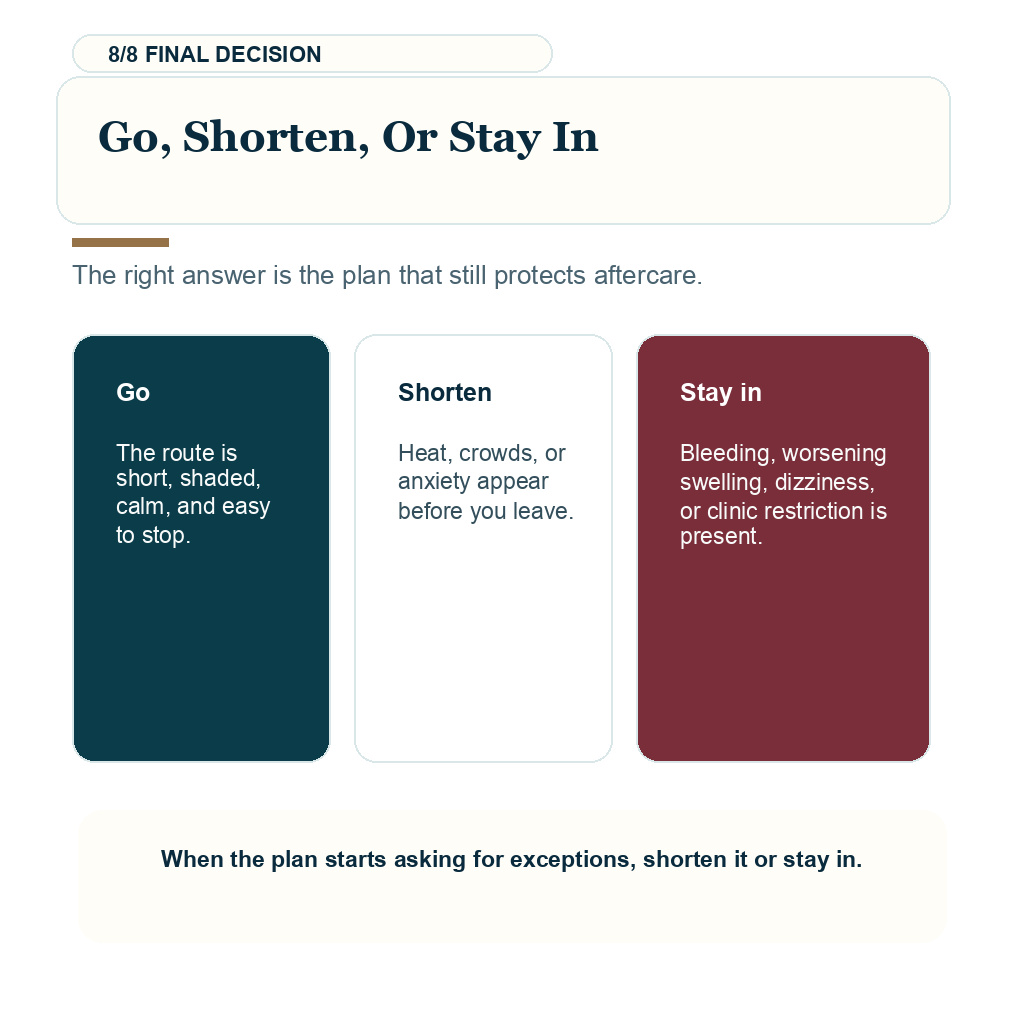
Use the 8 outing decision slides below to compare the doorway check, route size, heat, crowds, headwear, body signals, return plan, and final choice. Swipe sideways, use the arrows one slide at a time, or choose a number below the image.



Istanbul travel details matter most
Arrange the first days in Istanbul as recovery days, not as normal tourist days. Choose a hotel close enough to the clinic, plan quiet meals, avoid unnecessary transfers, and keep your flight timing realistic. If your clinic wants a wash or review before you leave, that appointment should take priority over shopping or sightseeing.
Airport movement is a separate question because it includes security lines, luggage, crowds, time pressure, and fatigue. If you are flying soon after surgery, plan transport and luggage help with a clear route back to the hotel or airport. Do not make the airport your first test of stamina, headwear, or crowd control. Flying after a hair transplant is more relevant than general travel advice when the next outing is the airport.
When checkout, airport transfer, or a clinic visit forces you outside, the outing should stay logistical. Luggage help, a direct route, and a quick return to the room or clinic plan matter more than testing confidence in public.
Istanbul can be easy to enjoy later, but the first days after surgery should feel deliberately boring. That is not wasted time. It is the quiet period where you avoid the small accidents that usually happen when someone tries to combine medical recovery with normal travel too quickly.
Stepping outside safely
Before you leave, I want you to feel steady and think clearly, without medication slowing you down. There should be no active bleeding or worrying swelling. The route needs shade, cool conditions, and a way to avoid crowds, smoke, alcohol, heavy bags, and sweating. Plan exactly how you will get back if you feel unwell. Make sure you can return quickly without touching, wiping, or covering the grafts in a risky way.
When those conditions are met, a short practical outing may be reasonable. If not, room recovery, delivery, hotel help, or a clinic message is the better plan. The choice should keep the first days predictable. A good early outing is boring, close, and easy to cancel.
In the first days, go out only when the outing protects recovery or solves a real need. A quiet walk for water is not the same as a crowded day outside. Food, shade, low effort, and a quick return are the standard. If the outing needs a tight hat, a long walk, heavy sweat, or several explanations to strangers, wait.
Read this review excerpt
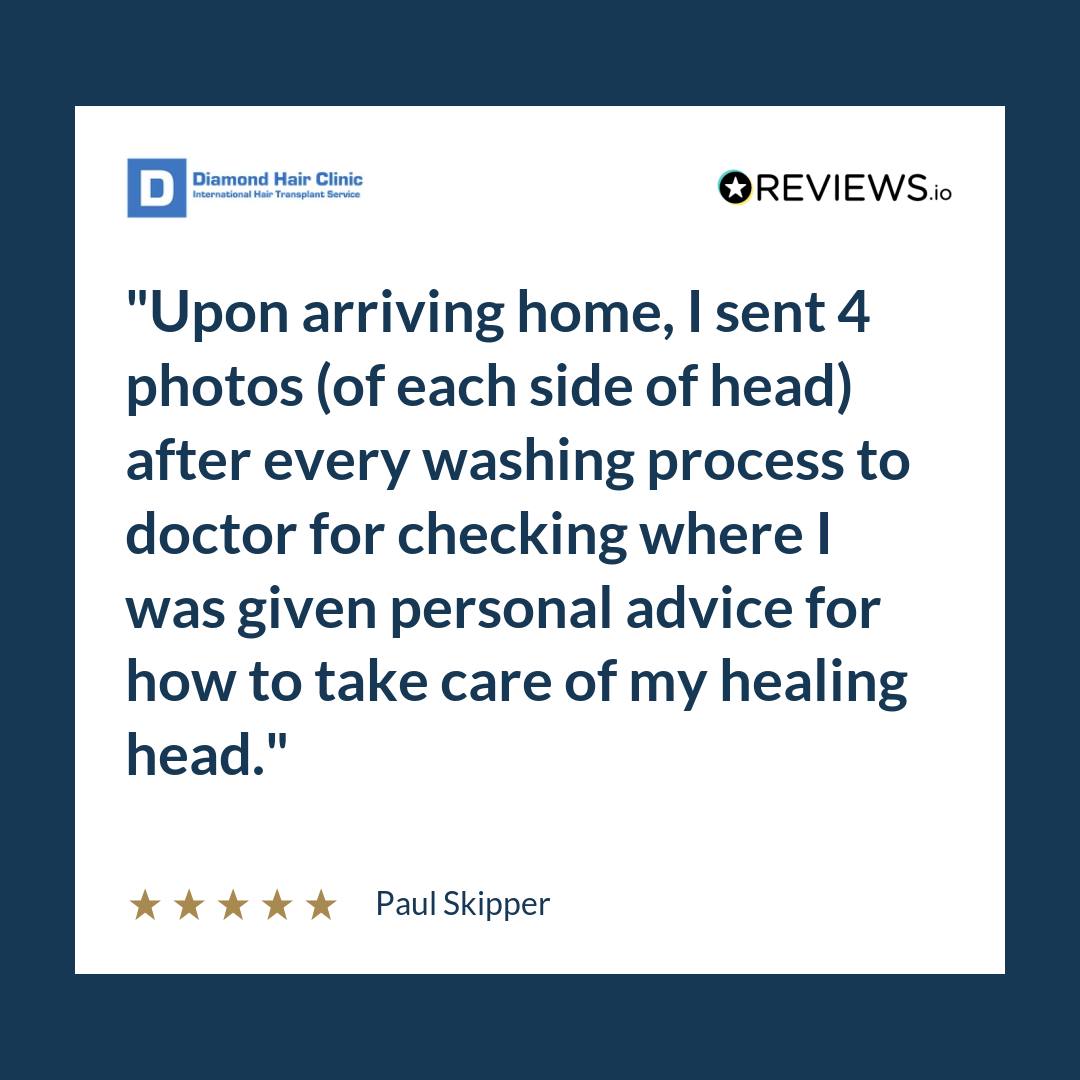
Upon arriving home, I sent 4 photos (of each side of head) after every washing process to doctor for checking where I was given personal advice for how to take care of my healing head.