


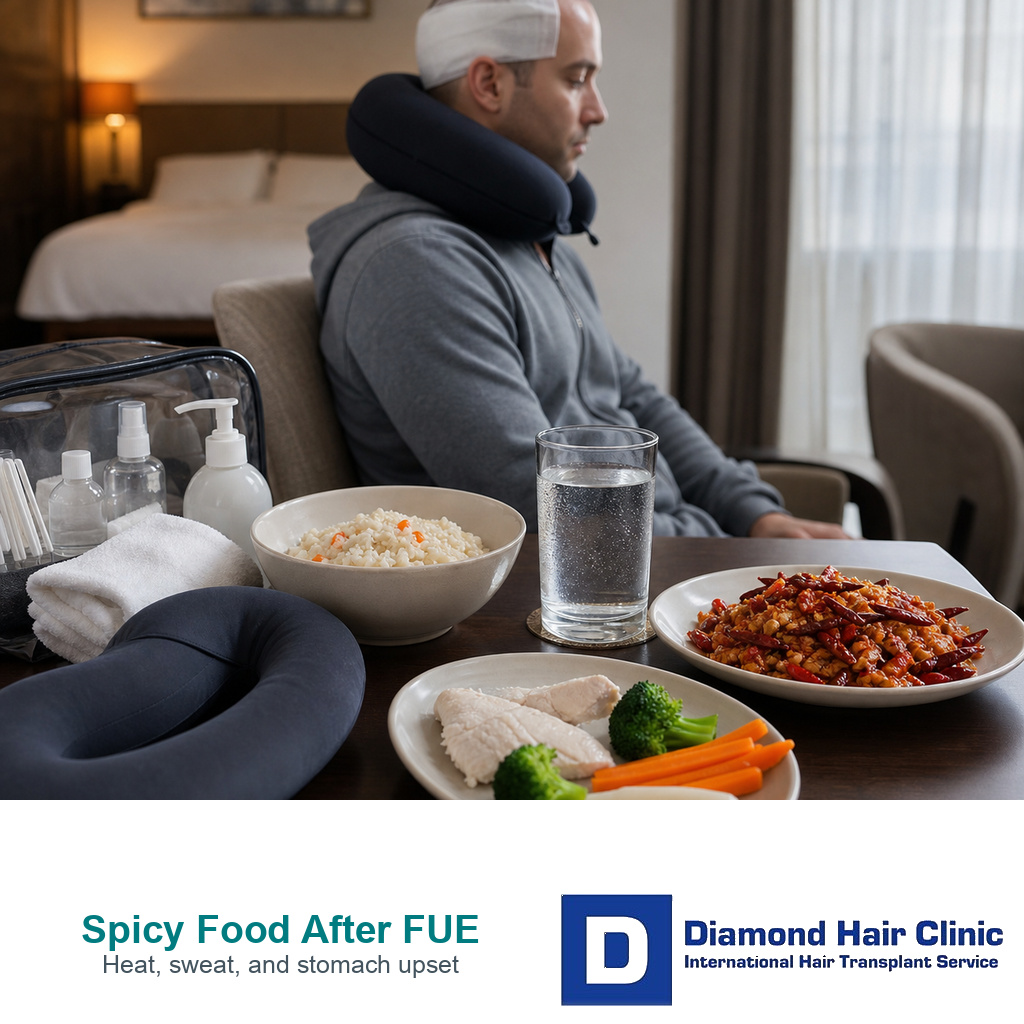
Spicy Food Needs Caution in Early Recovery
Do not use the first 48 hours to test your stomach. Spicy food does not directly ruin transplanted grafts, and chili does not travel to the grafts. Food itself is not the concern. A very spicy meal can trigger sweating, stomach upset, diarrhea, vomiting, poor sleep, dehydration, or more scalp touching when the body feels hot and uncomfortable.
For the first 48 hours, keep very spicy meals out of the recovery plan. After that, restart mildly only if the stomach is settled, fluid intake is good, and the scalp is not being disturbed by sweating or repeated touching. If your own clinic gave a stricter food instruction because of medication, nausea, bleeding risk, or a difficult surgery day, follow that instruction. The first days are for stable recovery, not testing your stomach.
I handle this question through the actual recovery situation. A little pepper in a familiar meal is different from an extreme chili heavy dinner after travel, antibiotics, poor sleep, and a long surgery day. A mild daytime portion is also different from a late meal mixed with alcohol, strong coffee, heavy salt, or unfamiliar street food. Those are not the same recovery situation.
If a spicy meal leads to sweating, stomach upset, vomiting, diarrhea, or repeated wiping near the scalp, that is the part to report. The food name alone does not show what happened to sweating, stomach comfort, or scalp handling.
After an accidental spicy meal, focus on what happened next. Report sweating, vomiting, diarrhea, bleeding, extra touching, or normal comfort afterward.
Spicy food concerns after FUE
The worry comes from mixed instructions. Some clinics say avoid spicy food for a few days. Others say food is not important. The advice becomes confusing because one person eats spicy food on day two and feels fine, while another is told to wait a week or longer. The difference often comes from travel, medication, stomach sensitivity, swelling, sweating tendency, and how safely the rest of the recovery plan is being followed.
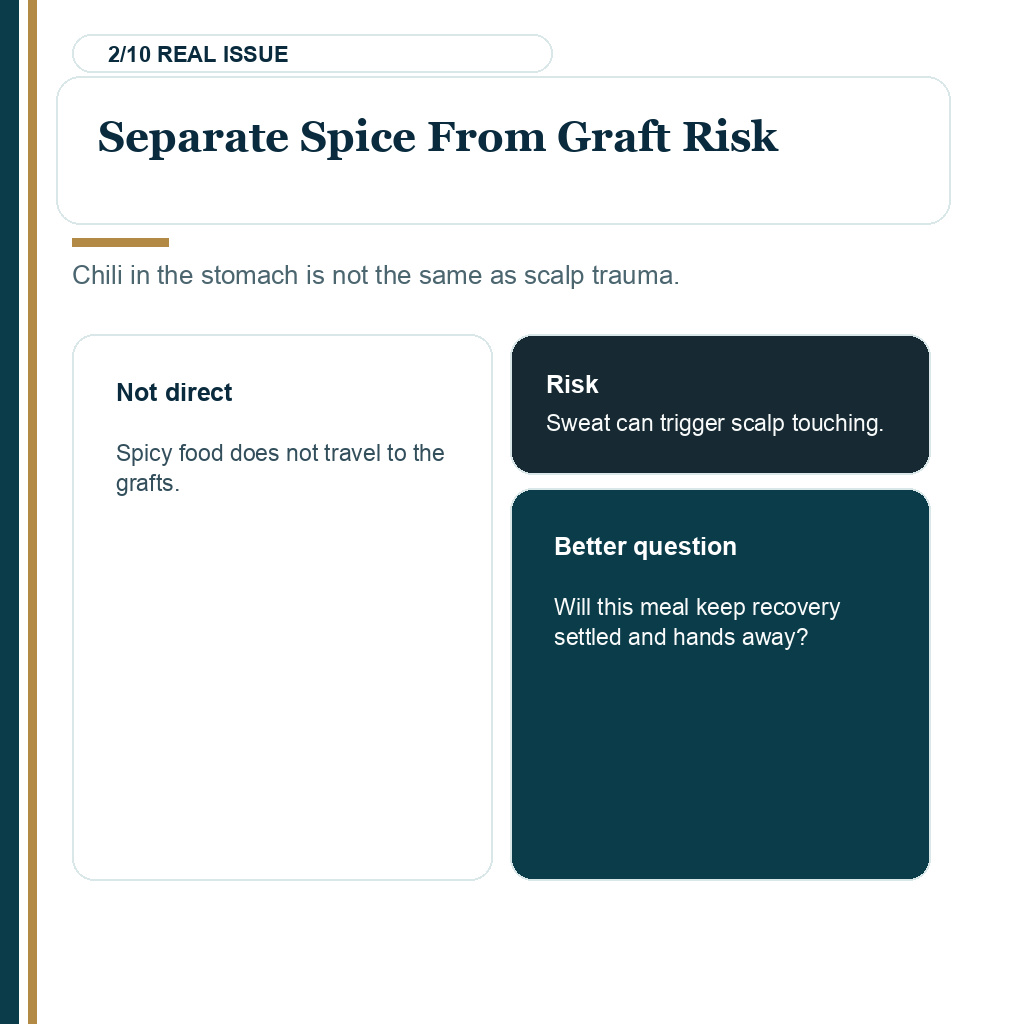
The reason for the difference is that spicy food is not a direct graft handling problem. It is an indirect recovery problem. The grafts are affected more by pressure, friction, bleeding, infection, and poor handling than by chili in the stomach. But if spice makes you sweat heavily, vomit, rush to the toilet, scratch, or sleep badly, then the meal has affected the recovery environment.
Food choices sit inside the wider hair transplant recovery instructions. Keep the scalp untouched, keep the body hydrated, and keep the first nights steady.
Spicy food does not make grafts fall out
A spicy meal by itself does not pull grafts out. Grafts are placed in the scalp, not in the stomach. If there is no bleeding, no trauma, no scratching, no vomiting strain, and no scalp contact, the meal is unlikely to be the reason for graft loss.
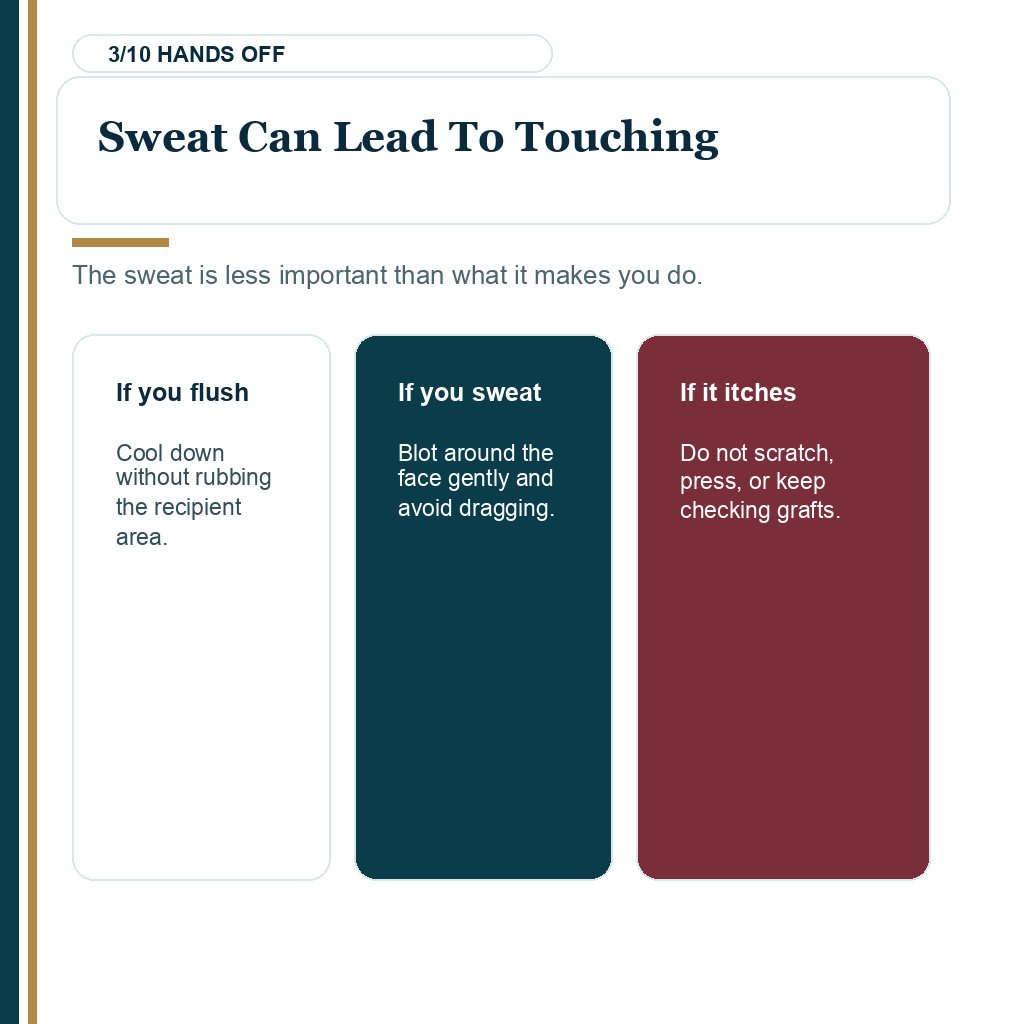
The concern appears when the meal creates a chain reaction. You become hot, sweat, touch the scalp, wipe the forehead roughly, lie badly because of stomach discomfort, or vomit and strain. Then I am no longer judging spice alone. I am judging behavior around the surgery. If you sweat, blot around the forehead and face gently without dragging across the recipient area.
Judge the meal by whether it keeps the first week clean, hydrated, settled, and predictable. The ingredient matters less than the reaction it creates in your body and around the scalp.
Restarting spicy food
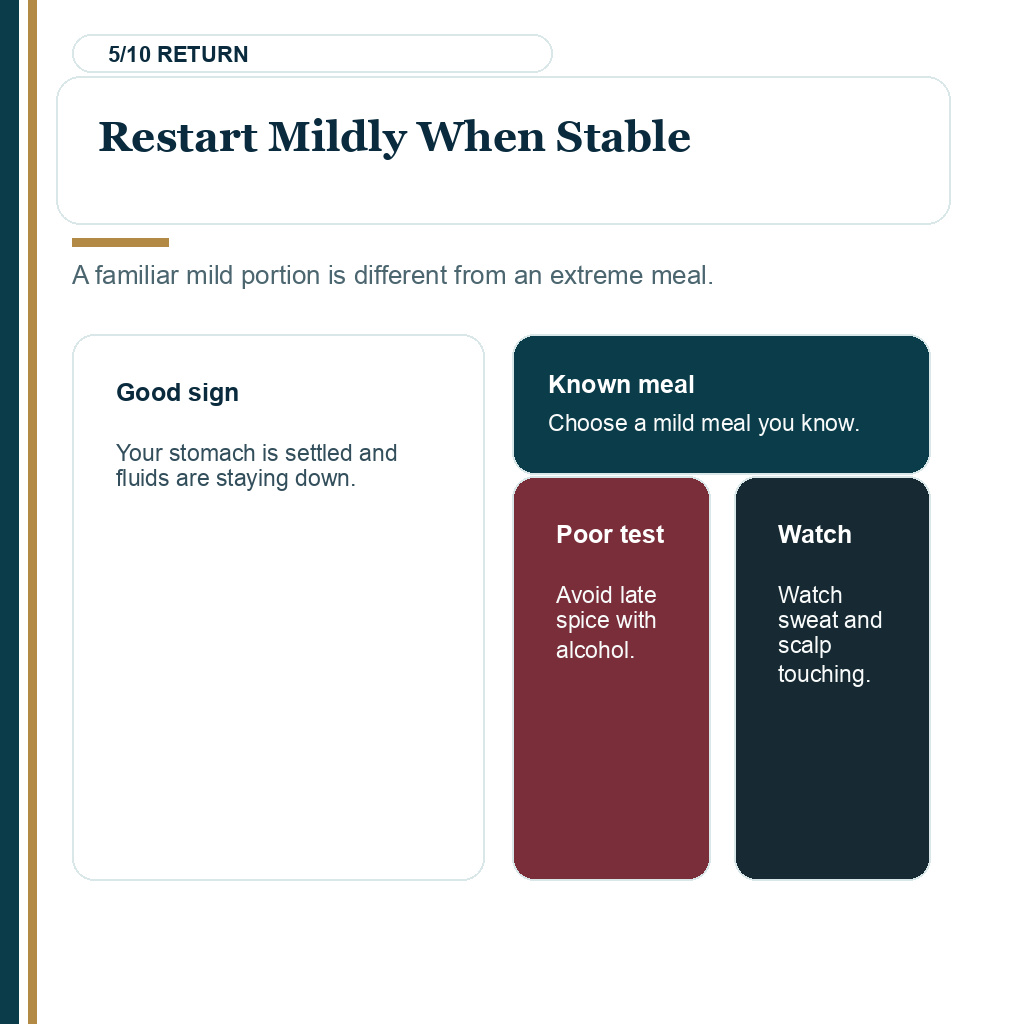
If your recovery is uncomplicated, mild spice can return after the first 48 hours when you are eating comfortably, sleeping reasonably, and not dealing with nausea, diarrhea, strong sweating, or swelling anxiety. For many people, that means avoiding very spicy meals for the first few days and then restarting gently rather than suddenly testing an extreme meal. Choose a familiar daytime portion first, not a huge late night meal mixed with alcohol, strong coffee, or heavy salt.
At Diamond Hair Clinic, I am more careful during the first 48 hours because you are tired, swollen, and still learning how to move, sleep, wash, and protect the scalp during the first night after a hair transplant and the days that follow.
By the time the scalp is settling, washing is controlled, and the stomach feels steady, food can become more familiar too. But if you are still on antibiotics, constipated from pain medicine, dealing with nausea after FUE, or already having loose stools, keep meals mild until the body is stable.
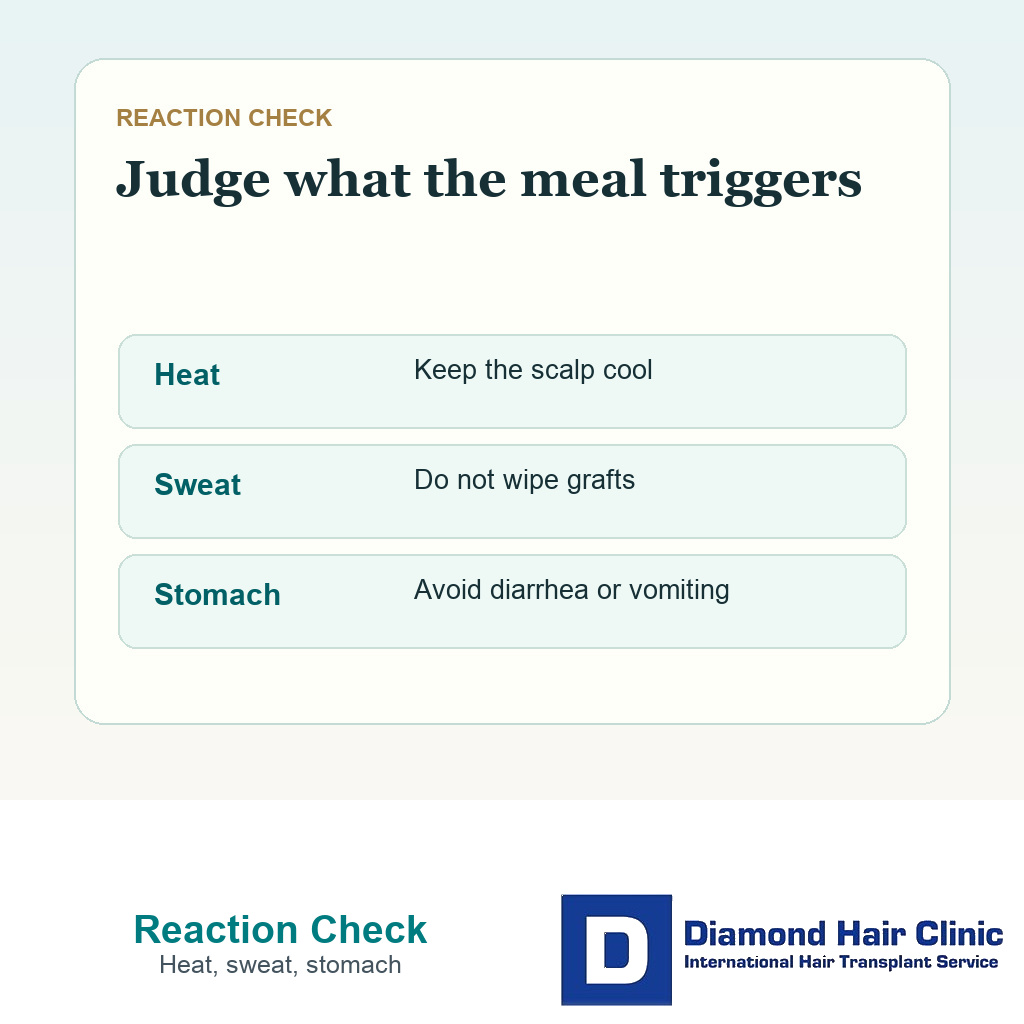
The practical issue is the chain reaction of heat, sweat, stomach upset, and scalp handling.
Sweating can become a scalp handling problem
Very hot spices can make the body feel warmer and trigger sweating in some people. That does not mean the grafts are being washed away from inside. It means the nervous system is reacting to heat and irritation signals.
Sweating itself is not the same as graft failure, but heavy sweating can make the scalp feel itchy, sticky, and uncomfortable. Then you may rub, pat, scratch, change hats, or keep checking the hairline. That is where the risk becomes a behavior problem.
If you already tend to sweat with spicy food, keep meals mild in the first week. Treat sweating after a hair transplant as a scalp handling issue because heat, friction, and repeated touching matter more than the word sweat by itself.
Diarrhea after spicy food matters after surgery
Diarrhea matters because it can dehydrate you, disturb sleep, make medication timing messy, and increase anxiety during a period that already feels unfamiliar. A few loose stools after a questionable meal is different from repeated watery diarrhea, weakness, dizziness, dry mouth, dark urine, fever, blood in the stool, or inability to drink fluids.
Repeated watery diarrhea is a hydration problem, not a graft growth question.
Many people travel for surgery, eat unfamiliar food, take antibiotics, sleep poorly, and feel stressed. Adding a very spicy meal on top of that is not always a good idea. If your stomach is sensitive, choose mild food, water, protein, and patience.
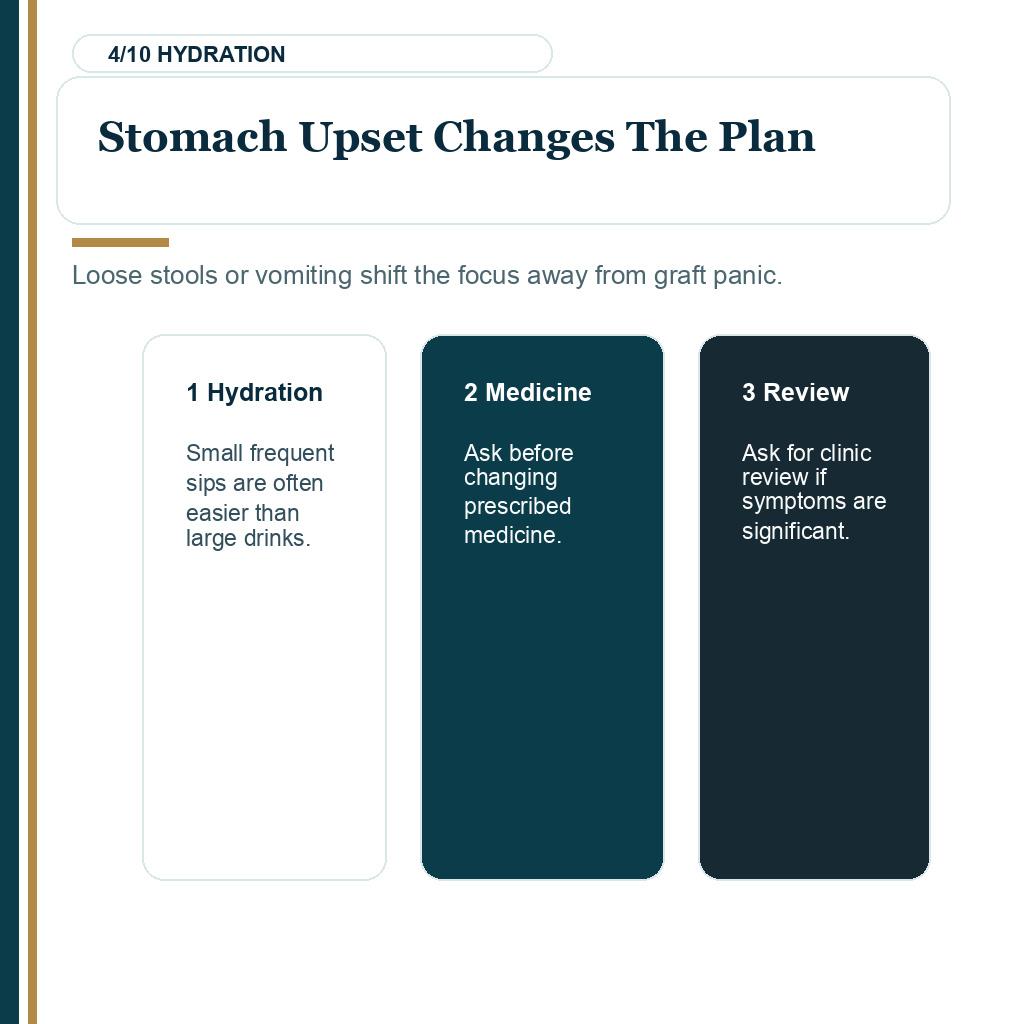
If diarrhea appears after surgery, do not focus only on the grafts. Think about hydration, medication tolerance, electrolyte loss, and whether the symptom is settling. Diarrhea after a hair transplant needs that wider recovery judgment. Small, frequent sips are usually easier than trying to drink a large amount at once. If fluids are not staying down, urination drops, fever appears, blood appears in the stool, or diarrhea continues, ask for clinic review and seek local medical assessment rather than waiting for graft related advice.
Vomiting after spicy food that needs review
Vomiting is more relevant than the spice itself because it creates strain, pressure, sweating, and sudden movement. It can also make it difficult to keep fluids or medicines down. If vomiting happens once and settles, the plan may be brief observation and fluids. If it continues, becomes forceful, or comes with dehydration signs such as dizziness, dry mouth, dark urine, very little urination, or inability to keep fluids down, the clinic should know and a local medical doctor may need to assess you.
If you vomit, you may also bend forward quickly, hold the head low, sweat heavily, or accidentally touch the scalp. Sit up carefully, avoid dropping the head toward the knees, protect the scalp, and ask for help if you feel weak or dizzy. Avoid meals that are likely to irritate the stomach in the first days. Recovery is already demanding enough.
If vomiting happens, judge vomiting after a hair transplant by frequency, force, hydration, and whether scalp contact or sudden head movement occurred.
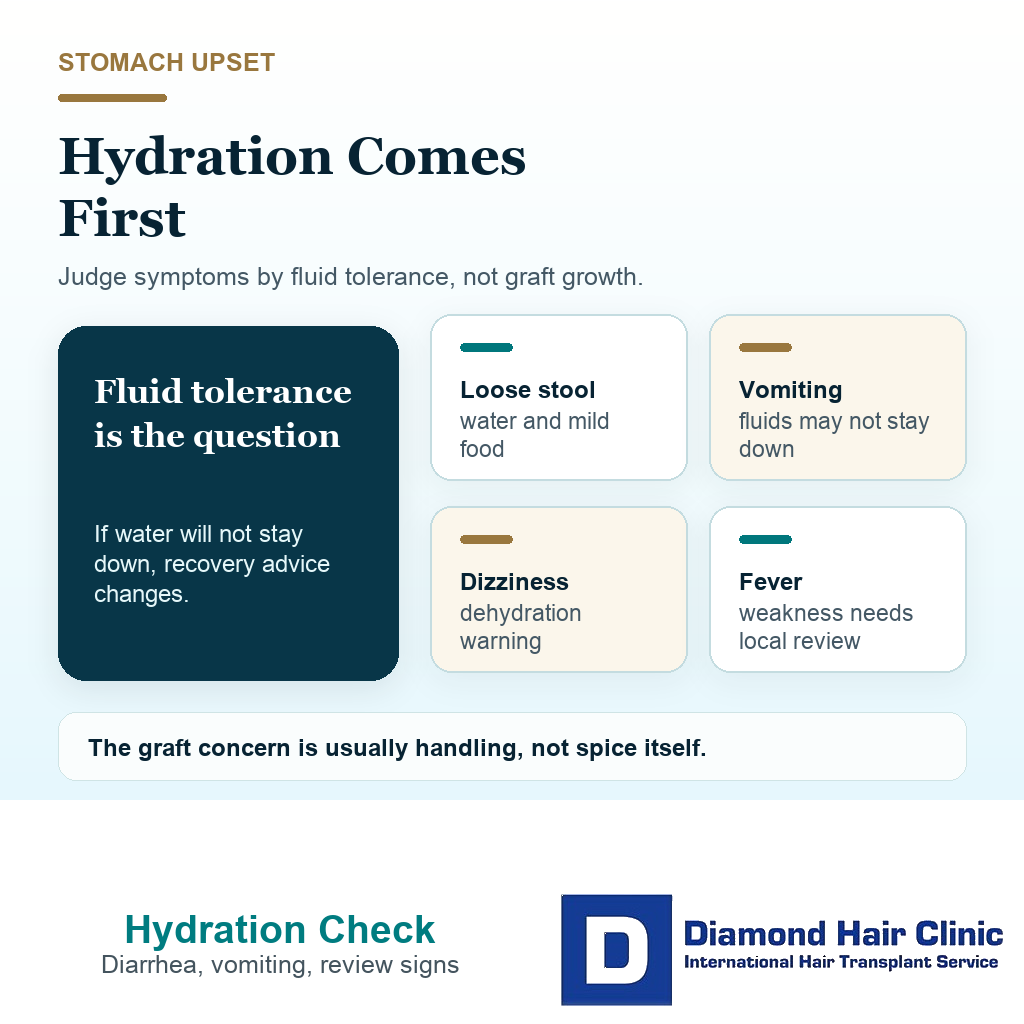
If spicy food causes diarrhea or vomiting after surgery, judge hydration, fluid tolerance, fever, weakness, and medication timing before worrying about graft growth.
Very hot food and spicy food are not the same trigger
A steaming soup and a chili heavy meal are different issues. Very hot food can make you feel flushed or uncomfortable, especially right after a long procedure. Let very hot food cool before eating, and do not sit over steam if it makes your face and scalp sweat. Spicy food can irritate the mouth, stomach, or bowel in sensitive people. Many clinic instructions place them together because both can make the body feel heated or unsettled.
I do not need you to eat cold bland food for weeks. I do want the first meals to be easy to digest, not scorching hot, not extremely spicy, and not so salty or heavy that swelling, thirst, or stomach upset becomes worse.
After surgery, food still needs to be practical. Eat enough, include protein, avoid extremes, and do not turn recovery into a restrictive diet. Knowing what to eat after a hair transplant matters more than avoiding every familiar flavor.
Coffee, alcohol, or medication can change the answer
Because spicy food is often not the only thing in the meal. It may come with alcohol, strong coffee, energy drinks, late night eating, salty fast food, or missed water. These combinations matter more than a small amount of spice in a regular meal.
I separate coffee from spicy food because caffeine affects sleep, heart rate, and anxiety differently. Coffee after a hair transplant is a different decision from a mildly spicy lunch. Alcohol matters more again because it can affect bleeding tendency, sleep, judgment, dehydration, and medication decisions, so alcohol after a hair transplant deserves its own caution.
Antibiotics and pain medication can also change the stomach. If you were given medication, follow the exact schedule and ask before changing anything. Antibiotics after a hair transplant should not be adjusted because a meal caused discomfort. If medication is followed by repeated diarrhea, vomiting, rash, breathing symptoms, or inability to keep fluids down, report that before skipping doses or adding stomach medicines on your own.
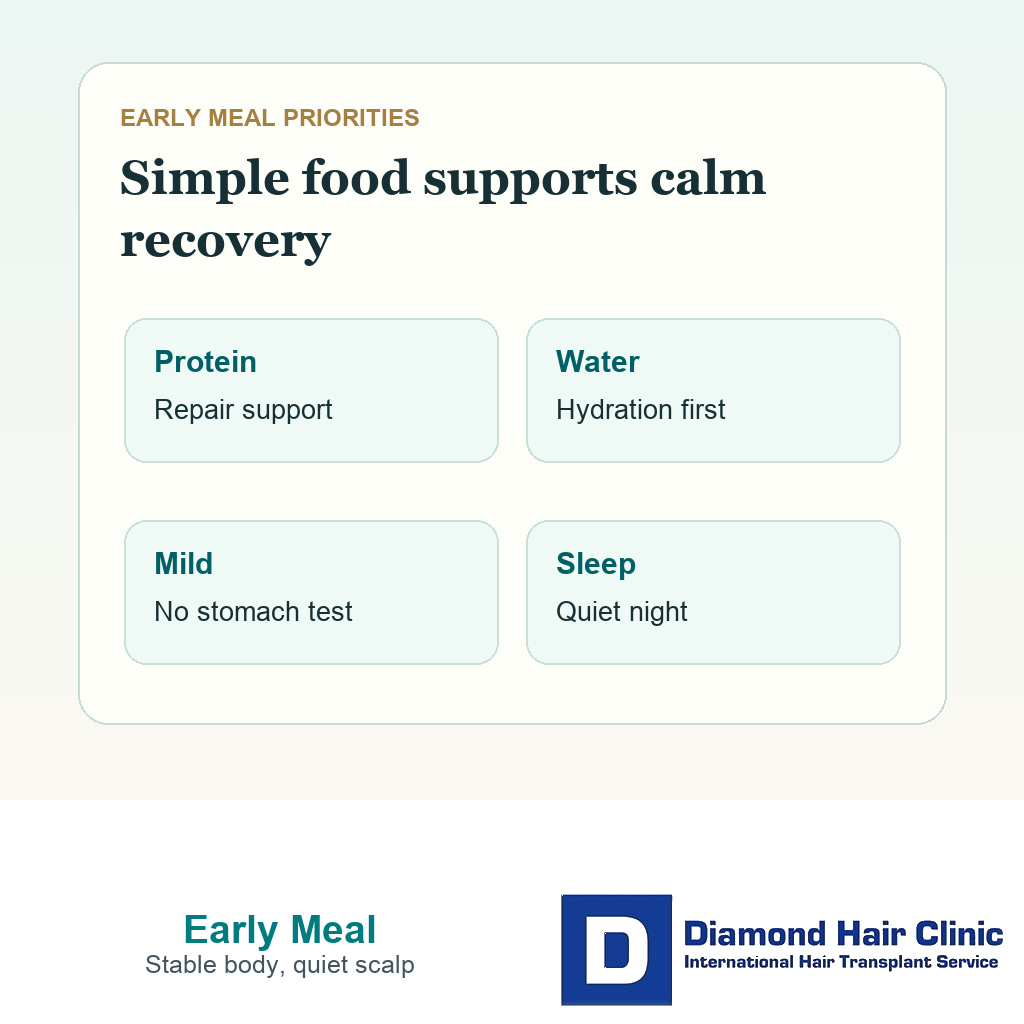
Early meals should keep the body stable enough to follow recovery instructions.
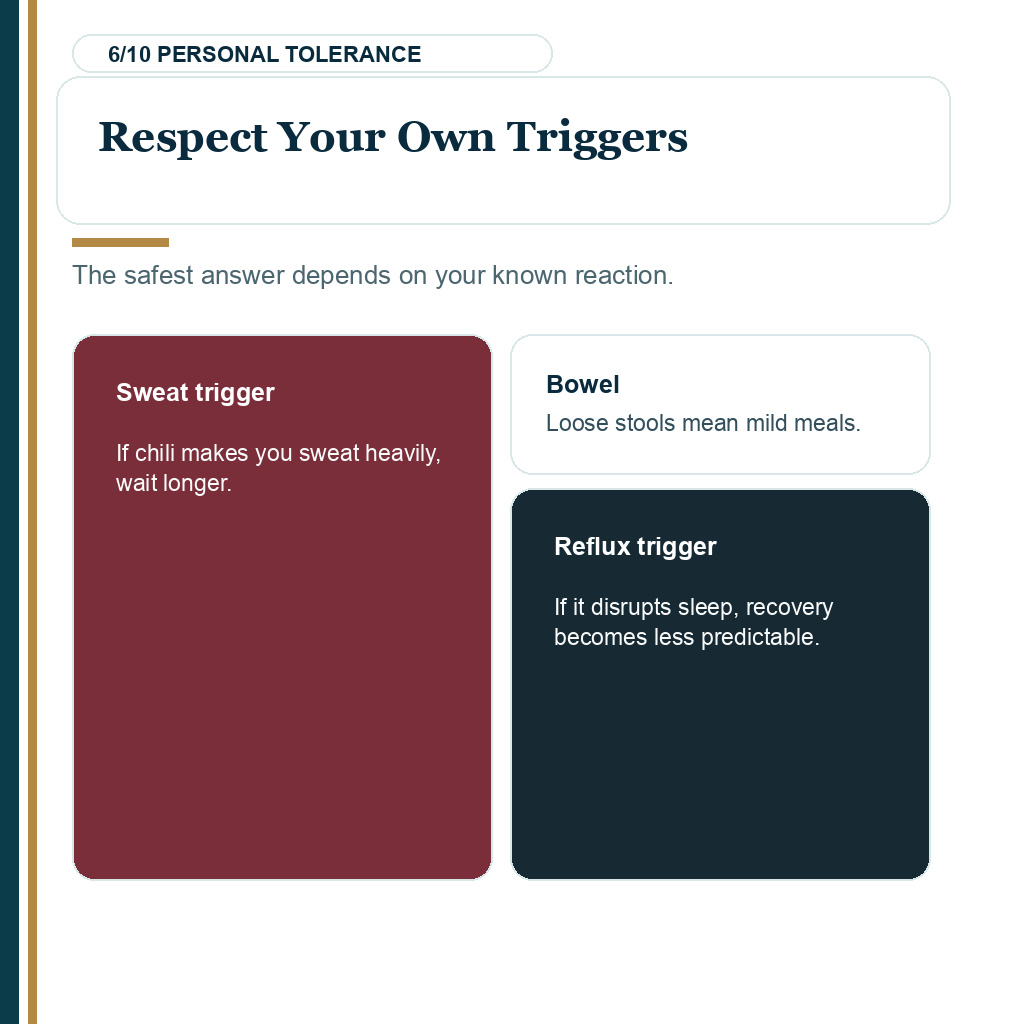
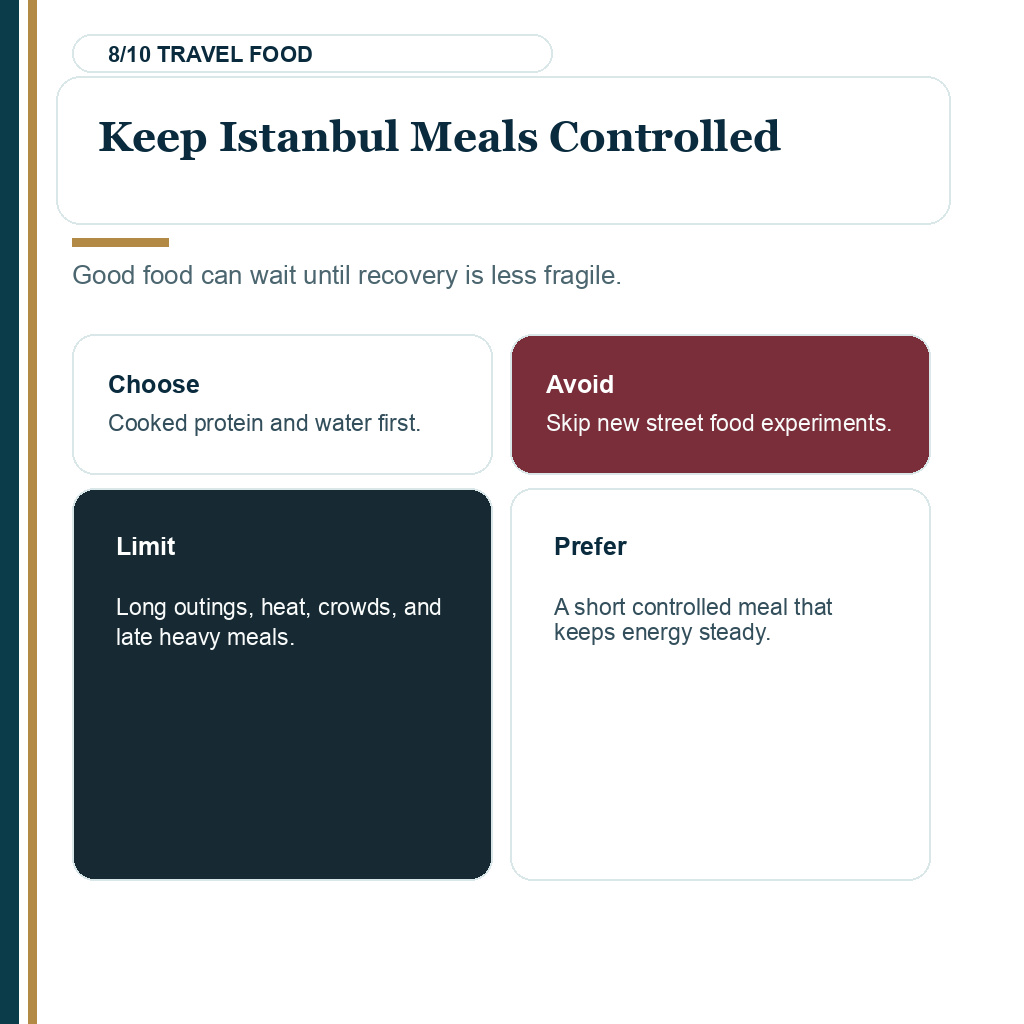
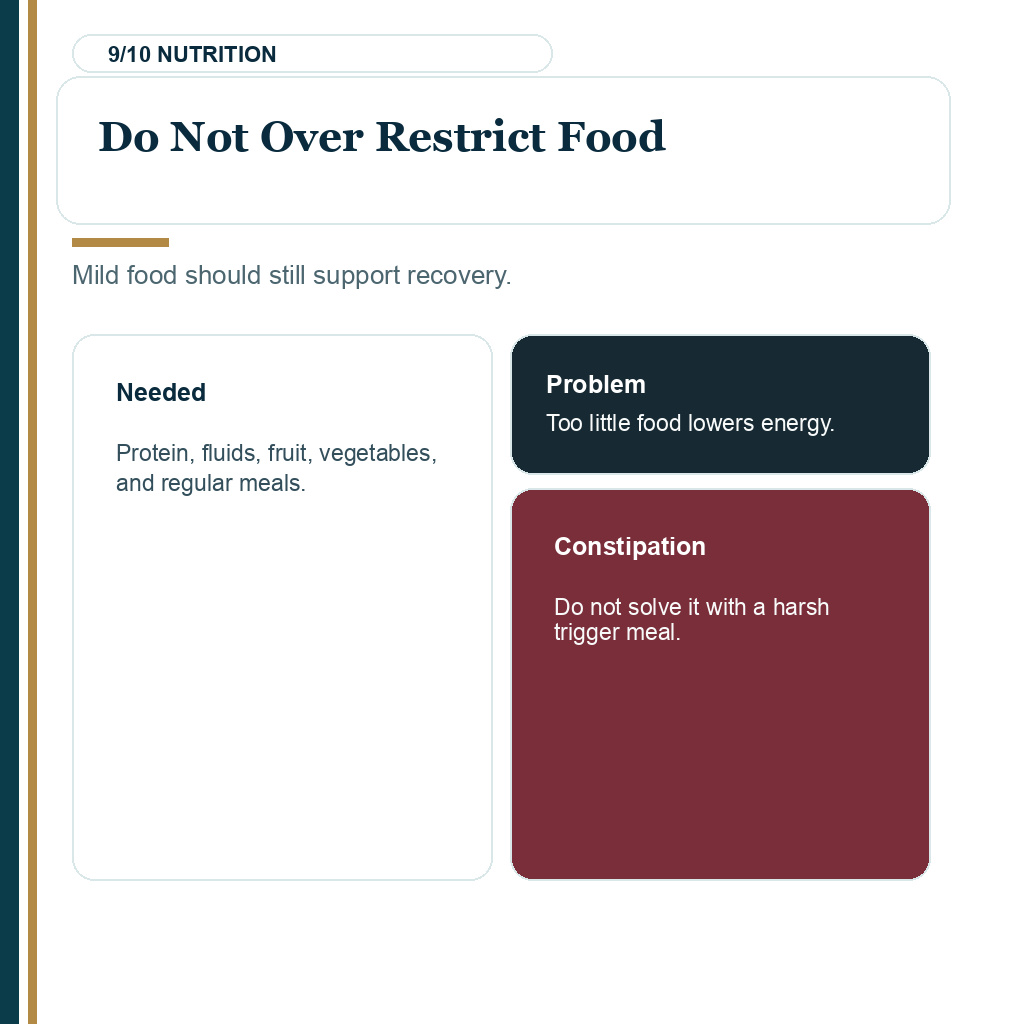
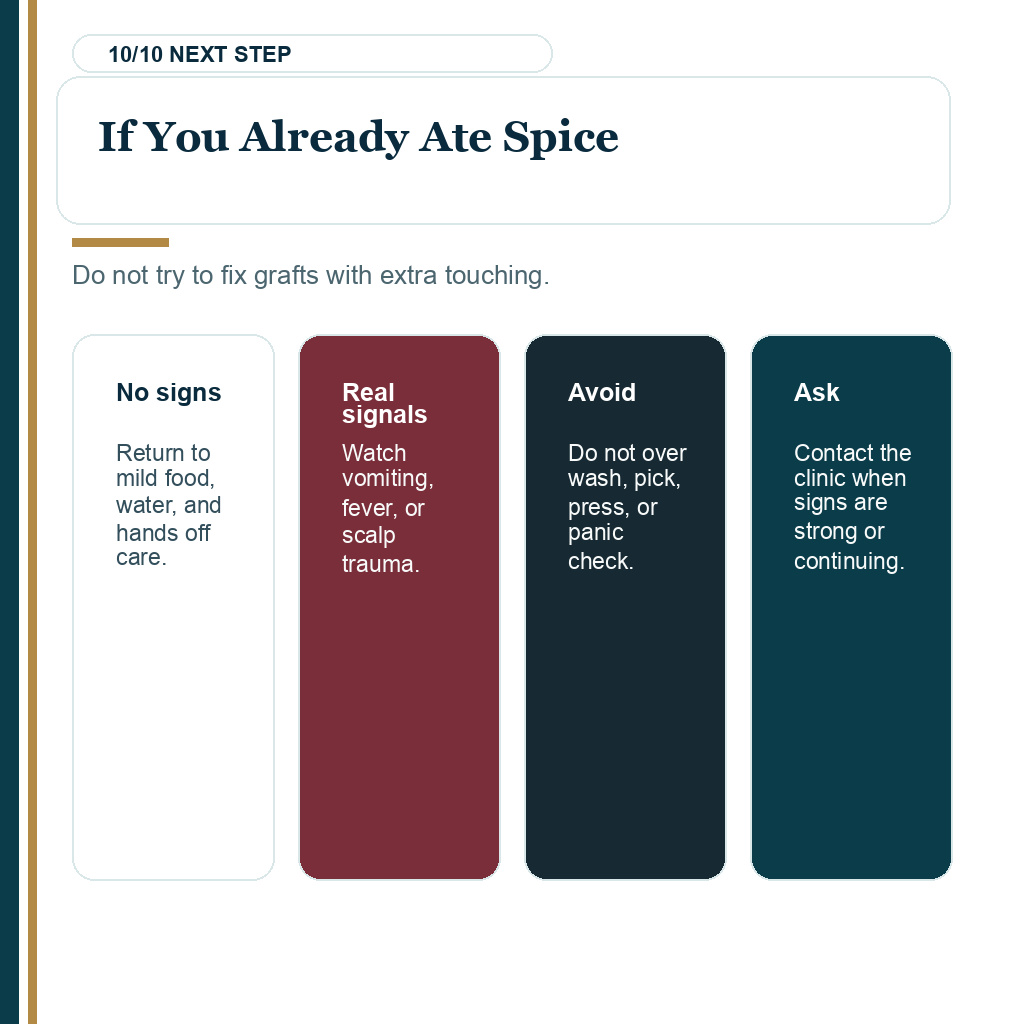
Use the 10 spicy food recovery slides below to compare the first 48 hours, sweating, stomach upset, vomiting, gradual restart, personal triggers, coffee or alcohol, Istanbul meals, nutrition, and what to do if you already ate something spicy. Swipe the carousel, use the arrows one step at a time, or choose a number below the image to jump to that point.


Bland food can still cause recovery problems
Some people go too far in the other direction. They eat only plain bread, rice, and very little protein because they are afraid of every regular food. Then constipation, low energy, and poor appetite become the problem.
Mild food is useful early, but it still needs nutrition. Protein, fluids, fruit, vegetables, and regular meals help the body recover better than panic dieting. If pain medicine or travel slows the bowel, do not solve it with a huge spicy meal just to force movement.
When constipation appears, judge it through hydration, mobility, medication, and diet. Constipation after a hair transplant should not be solved with a harsh meal that upsets the stomach.
Eating in Istanbul after surgery
Istanbul has excellent food, and I do not want recovery to become miserable. Still, the first meals after surgery should be familiar enough for your stomach. Choose clean restaurants, cooked food, good protein, bottled or sealed water when needed, and moderate portions. Avoid turning the first night into a food adventure, and avoid foods that have been sitting out, raw sauces from uncertain kitchens, or street food experiments while the scalp is fresh.
If you are leaving the hotel, keep the plan short and controlled. Heat, walking, crowds, late meals, and restaurant waiting can add up when you are tired after surgery, so going out after a hair transplant should stay low effort in the early days.
If you want spice, restart with a regular portion and a spice level you already tolerate. A familiar mild meal is very different from a new street food challenge when the scalp is fresh and the stomach is adjusting to travel.
Restart spicy food after FUE
In the first days, keep meals mild, clean, and easy to digest. Avoid very hot, extremely spicy, very salty, or meals heavy with alcohol. Drink water, eat enough protein, take prescribed medicines correctly, and protect sleep. If your stomach is settled and recovery is uncomplicated, bring spice back gradually.
If you already know that chili makes you sweat heavily, gives you reflux, or sends you to the bathroom, respect that. Do not use the week after surgery to prove tolerance. If a spicy meal has already happened and there is no bleeding, no vomiting, no strong sweating, no diarrhea, and no scalp trauma, panic is not useful. Return to mild food and water, keep your hands away from the scalp, and monitor symptoms instead of trying to fix the grafts with extra washing, extra spray, picking, or repeated mirror checks.
For the first week, do not measure recovery by one ingredient. Measure whether the body is hydrated, rested, eating enough, taking medicines correctly, and leaving the scalp alone. Eat in a way that keeps the body steady and the hands away from the grafts.

Read this review excerpt
Upon arriving home, I sent 4 photos (of each side of head) after every washing process to doctor for checking where I was given personal advice for how to take care of my healing head.