



Nausea Needs Hydration and Symptom Review
Mild nausea after FUE is usually not graft damage by itself. I first ask whether you can drink, urinate, stay alert, and keep the necessary medicines down. If the nausea is part of a wider stomach illness around travel or surgery, food poisoning and hair transplant timing should be reviewed before treating it as an ordinary queasy day.
Queasiness can happen after a long procedure day, fasting, travel, local anesthesia, antibiotics, painkillers, poor sleep, anxiety, or dehydration. I am trying to separate a stomach discomfort that is settling from a wider safety issue that needs review. If the same episode includes repeated hiccups after a hair transplant, I review medicine timing, reflux, hydration, and vomiting history together.
If nausea appears after travel or surgery, record what you ate, how much you drank, which medicines were taken, and whether vomiting, dizziness, fever, or bleeding is present. That context is more useful than guessing from nausea alone or staring at graft photos.
The line to keep clear is simple. Mild nausea while you are drinking, urinating, alert, and improving is one situation. Repeated vomiting, fainting, chest symptoms, confusion, severe headache, fever, worsening scalp pain, fresh bleeding, spreading redness, discharge, or inability to keep fluids down is another.
When swelling is part of the same symptom picture, tell the clinic what else is happening rather than judging it in isolation.
With those warning signs, the transplant is not the only priority. Fluids, alertness, temperature, breathing, safe medication use, and local medical help if needed come before repeated hairline photographs.
Nausea priority map
Match nausea with hydration, alertness, and warning signs
Nausea alone does not tell me whether grafts are in danger. The safer review starts with fluids, vomiting, alertness, fever, scalp changes, and medicine timing.
Mild and improving
Mild nausea is judged by the recovery setting
You are drinking, urinating, alert, without fever, and the feeling is settling rather than building.
Send one clear update with timing, food, fluids, medicine, and whether vomiting happened.
A mild stomach feeling should not become graft panic when the scalp is unchanged.
I still ask for context because nausea after FUE can come from fasting, travel, anxiety, or medicine.
Nausea after FUE is usually not a graft problem
The word nausea is too broad to guide a recovery decision by itself. Feeling slightly queasy after standing too quickly is different from vomiting several times, being unable to drink, feeling faint, and recording a fever.
I separate the symptom from the setting around it, including procedure length, food intake, fluids, medicines, sleep, blood pressure, pain level, bowel symptoms, and signs from the donor or recipient area.
Timing matters. Nausea on the first evening after surgery may fit with fasting, travel fatigue, pain medicine, anxiety, or dehydration. Nausea several days later with fever, watery diarrhea, or worsening scalp tenderness needs a wider check.
Nausea after starting a new medicine needs the medicine name, dose, and last use time. A single word message saying “nausea” leaves too much unanswered. I need the details that show whether you are stable enough to continue the normal recovery plan.
Common stomach triggers on the first night
The first night after FUE is a demanding recovery window. You may have travelled, slept poorly, skipped normal meals, spent many hours in the clinic, taken antibiotics or pain medicine, and then returned to a hotel room with a new sleeping position.
If you are alone in a hotel, put water, written medicine times, and clinic contact details within reach before resting. Nausea is easier to report clearly when you are not trying to piece the night together while feeling sick.
It is not surprising if the stomach feels unsettled in that setting. The body can feel drained before the scalp is even the main issue.
Small sips and plain food often matter more than forcing a large meal. If the stomach is unsettled, crackers, toast, rice, soup, banana, or another plain tolerated food may be easier than rich hotel food or very spicy meals.
The broader question of what to eat after a hair transplant matters later, but the immediate nausea decision is narrower. Safe fluid and medicine tolerance decide the urgency. Repeatedly bringing every sip back up is no longer a normal appetite issue.
One uncomfortable first night should not define the whole transplant. A difficult first night can still be followed by a stable recovery. The concern rises when nausea comes with a larger pattern such as repeated vomiting, worsening weakness, fainting, fever, chest symptoms, or dehydration.
Antibiotics and painkillers can upset the stomach
Medication is one of the first things I check. Some antibiotics can cause nausea, vomiting, diarrhea, or stomach upset. Some painkillers can cause nausea, constipation, drowsiness, dizziness, or poor appetite.
If you skipped food, mixed medicines, drank alcohol, took another person’s tablet, or added a sleep pill, the stomach reaction becomes harder to interpret. The issue may be the medicine timing, the combination, the empty stomach, or a separate illness.
That does not mean stopping a prescribed medicine without speaking to the clinic. I need the exact medicine names and timing because antibiotics after a hair transplant and painkillers after a hair transplant can both irritate the stomach or change alertness.
I ask for timing instead of guessing from the scalp because the trigger may be the tablet schedule, the empty stomach, the combination of medicines, or a separate illness.
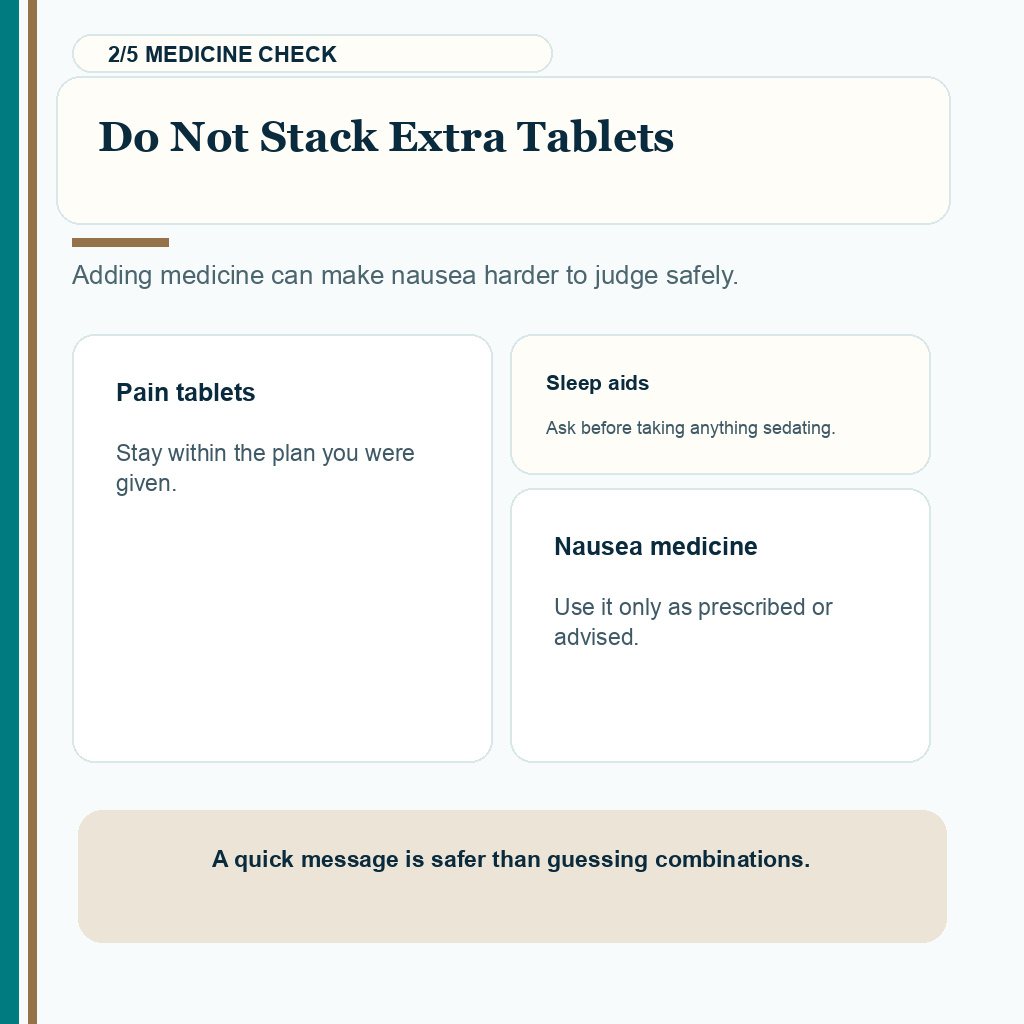
Another tablet should not be added just because nausea feels urgent. Medicine for nausea, stronger pain medicine, sleeping tablets, and stomach medicine can all matter near surgery.
If a clinic gave a written plan, follow that plan and report the symptom. If no plan exists, ask before layering medicines. I am not trying to silence the stomach at any cost. I am trying to keep you hydrated, alert, and medically safe.
Bowel and eating changes that matter
Nausea is not always isolated. Diarrhea can deplete fluids quickly. Constipation can make the abdomen feel heavy and uncomfortable. Poor eating can make painkillers harder to tolerate.
If you feel sick, drink very little, and then stand up quickly, dizziness can follow. These details help separate a passing stomach reaction from a recovery problem that needs closer attention.
If watery stools are part of the picture, diarrhea after a hair transplant becomes part of the same safety check. If the issue is bloating, pain medicine, or no bowel movement, constipation after a hair transplant may explain the abdominal discomfort better than the scalp. Nausea can overlap with both, so I want bowel details in the same message.
If you cannot keep fluids down, the question becomes hydration and medical safety before graft reassurance. Dark urine, very little urine, dry mouth, weakness, and lightheadedness after standing point toward depletion. If these signs are present, I may advise urgent local medical assessment rather than waiting for the next hair transplant check.
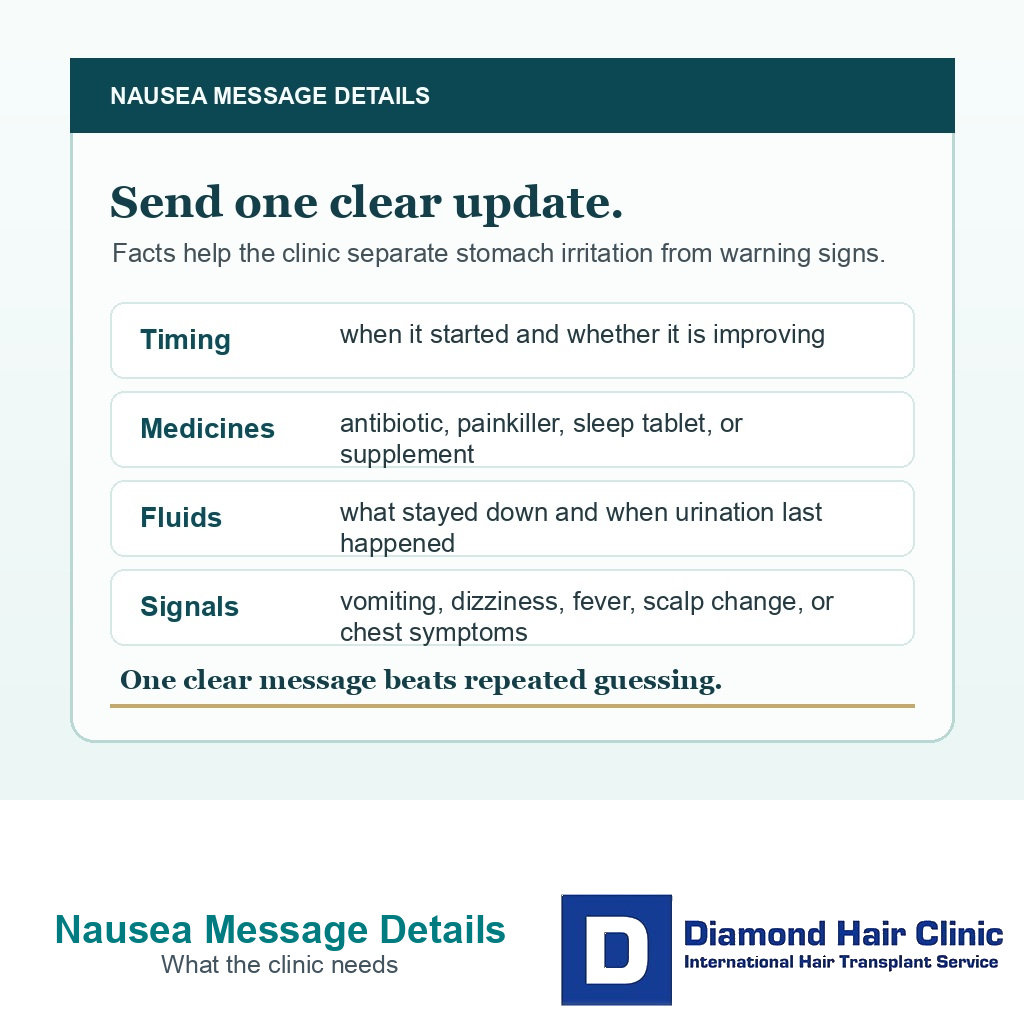
One clear update helps the clinic judge nausea faster than repeated short messages.
Repeated vomiting changes the priority
Vomiting is more important than nausea alone because it can stop fluids and medicines from staying down. It can also create panic about grafts because the body strains for a moment. Patients whose nausea is part of migraine should discuss the migraine plan before FUE before surgery day so hydration, light sensitivity, and rescue medicine questions are not improvised.
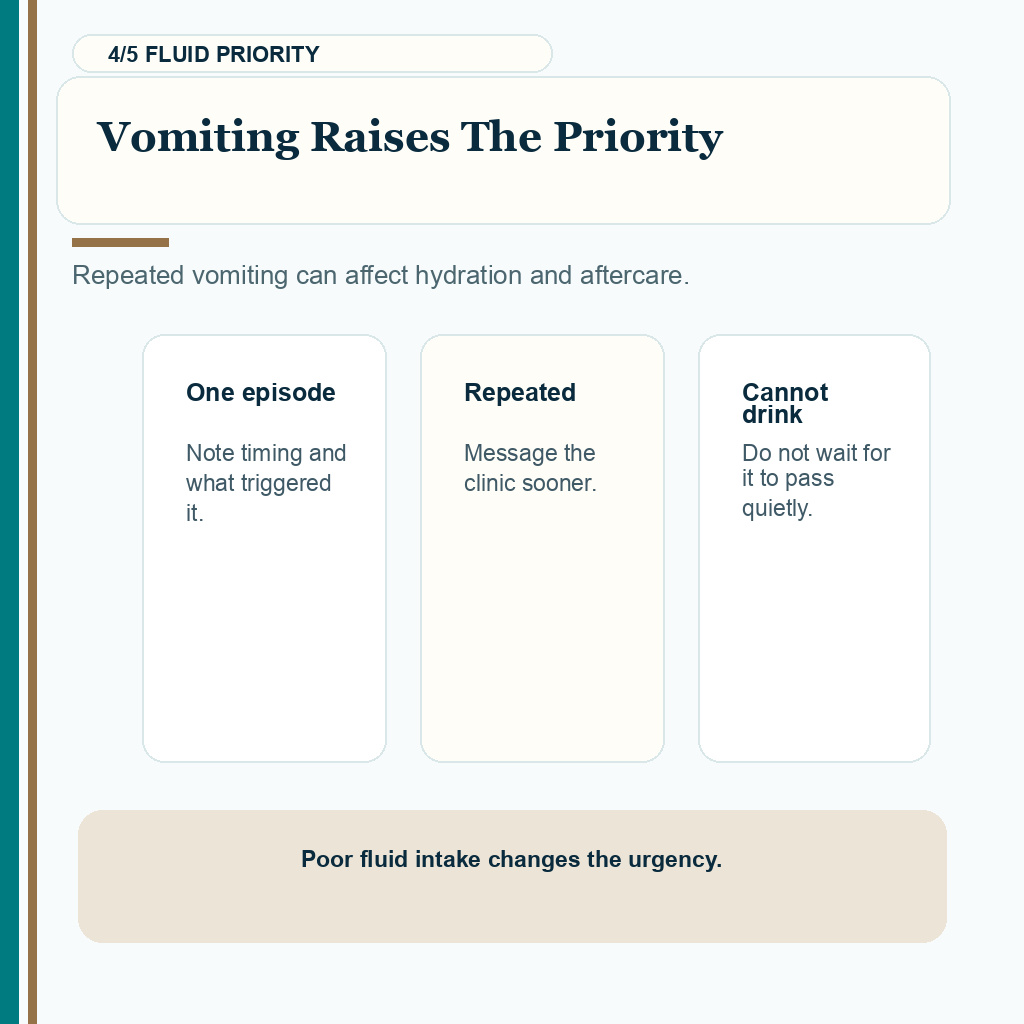
One brief episode does not equal graft loss, but repeated vomiting needs active management. The exact concern depends on timing, force, bleeding, scalp contact, dehydration, and whether medicines were lost.
If vomiting happens soon after taking an antibiotic or painkiller, tell the clinic which medicine it was, how long after the dose the vomiting happened, and whether the tablet clearly came back up. Do not repeat the dose unless the clinic says so. If vomiting is persistent, green, bloody, linked with severe abdominal pain, chest pain, confusion, stiff neck, high fever, or severe headache, treat it as a medical problem first.
After an episode, vomiting after a hair transplant is mainly about graft protection and whether retching, contact, bleeding, or lost medicine changed the recovery plan.
The triage decision rests on fluid tolerance, medicine tolerance, alertness, and whether retching keeps repeating.
Dizziness, fainting, and headache make nausea more serious
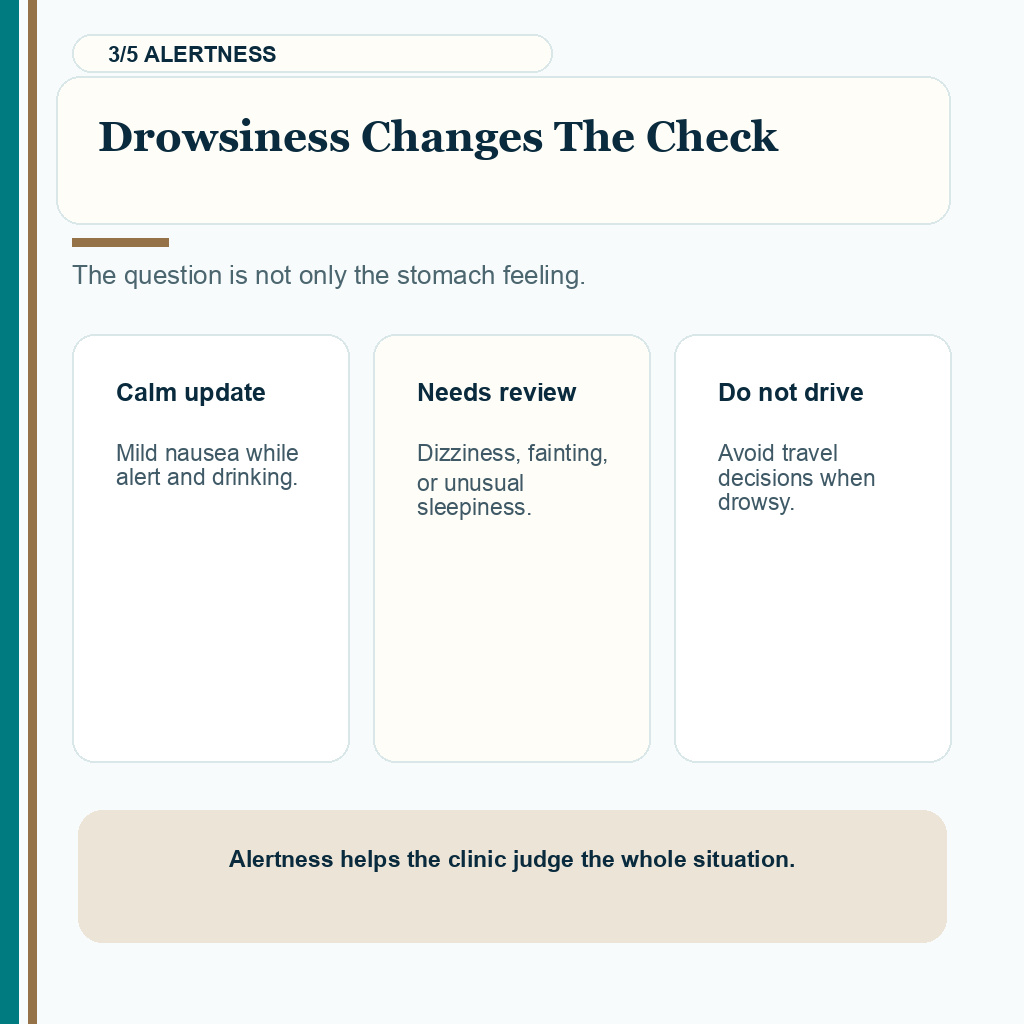
Nausea with dizziness is common after fasting, dehydration, travel fatigue, standing too quickly, or anxiety. It can still be dangerous if you nearly faint, actually faint, become confused, have chest pain, have shortness of breath, or cannot walk safely.
Dizziness is not a normal scalp symptom. It is a symptom from the whole body.
If you feel lightheaded, sit or lie down safely, avoid sudden standing, and message the clinic with fluids taken, urine color, blood pressure if available, heart rate if available, medicines, and whether vomiting happened.
If weakness or almost fainting is the main symptom, fainting and dizziness after a hair transplant becomes more important than the nausea label.
Headache changes the interpretation too. A mild headache after poor sleep and dehydration is different from severe headache with vomiting, vision change, confusion, high fever, stiff neck, or high blood pressure. A headache linked to scalp healing can fit headache after a hair transplant, but severe or unusual headache with vomiting may need local medical review before a routine clinic reply.
Fever or scalp changes need urgent review
Nausea with fever needs closer attention because the stomach symptom may be part of an infection, viral illness, medication reaction, dehydration, or another medical problem. After FUE, I also want to know whether the scalp is becoming more painful, swollen, red, hot, or draining fluid.
A normal recovery scalp and a worsening inflammatory picture are not the same situation.
Take the temperature rather than guessing from the feeling of being hot. Note the time, the number, and any medicines taken before the reading. A measured fever after a hair transplant changes the check because temperature, medicines, scalp pain, discharge, and weakness all matter together.
Nausea by itself can be watched differently from nausea plus fever, worsening scalp pain, discharge, or severe weakness.
Fever should be reported plainly, even when the fear is losing a surgery result. The clinic cannot guide recovery properly without the medical facts. Your safety comes first, then reassurance about the grafts can be judged from the timeline and scalp findings.
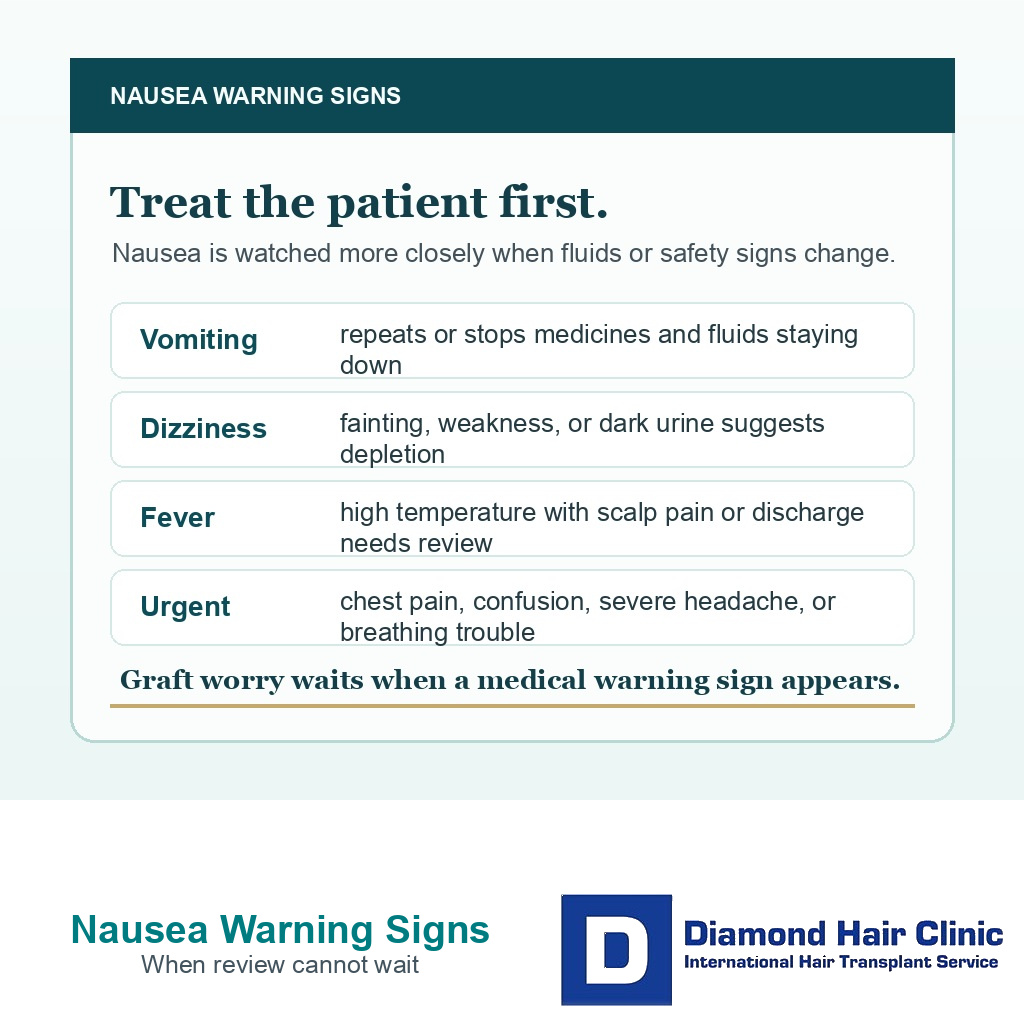
When fluids, alertness, fever, or chest symptoms change, nausea becomes a medical triage issue.
Illness can cause nausea without graft damage
Some people feel sick because they caught a viral illness during travel, ate unfamiliar food, slept badly, or became anxious in the hotel. The scalp may be healing normally while the body feels unwell.
That distinction matters because graft panic can distract from the basic medical assessment, including fever, fluids, vomiting, diarrhea, weakness, medication tolerance, and breathing.
If cold or flu symptoms are present, cold or flu after a hair transplant becomes part of the same recovery decision. If nausea is the only symptom and it improves with rest, fluids, and food, the graft concern is lower. If nausea is part of fever, cough, chest symptoms, repeated vomiting, or dehydration, the illness needs attention before cosmetic reassurance.
Travel patients sometimes minimize symptoms because they are alone in the hotel or do not want to disturb the clinic. One clear message early is better than discovering later that the night was spent vomiting, fainting, or skipping required medicine.
Tablet stacking can make nausea less safe
Nausea can push people into unsafe improvisation. One person takes extra pain medicine because discomfort feels linked to nausea. Another adds a sleep tablet to escape the feeling. Another takes medicine for nausea from a travel bag without checking interactions or drowsiness.
At that point, I look beyond the stomach. I also need to judge alertness, breathing, dizziness, blood pressure, and whether you can follow the first night recovery instructions safely.
Sleep medicine needs special caution after surgery, especially when painkillers, alcohol, or sedating antihistamines are also involved. This concern also applies to sleeping pills after a hair transplant.
Drowsiness and safety matter during the first nights. If nausea is present, adding sedating medicine without advice can make you harder to assess.
If a clinic has prescribed medicine for nausea, use it exactly as instructed. If it was not prescribed, ask first. The priority is staying hydrated, alert, medically safe, and able to follow the recovery plan.
These 5 slides keep nausea after FUE focused on hydration, medicine reactions, food intake, warning signs, and when to contact the clinic. Swipe sideways, use the arrows, or choose a number below the image.
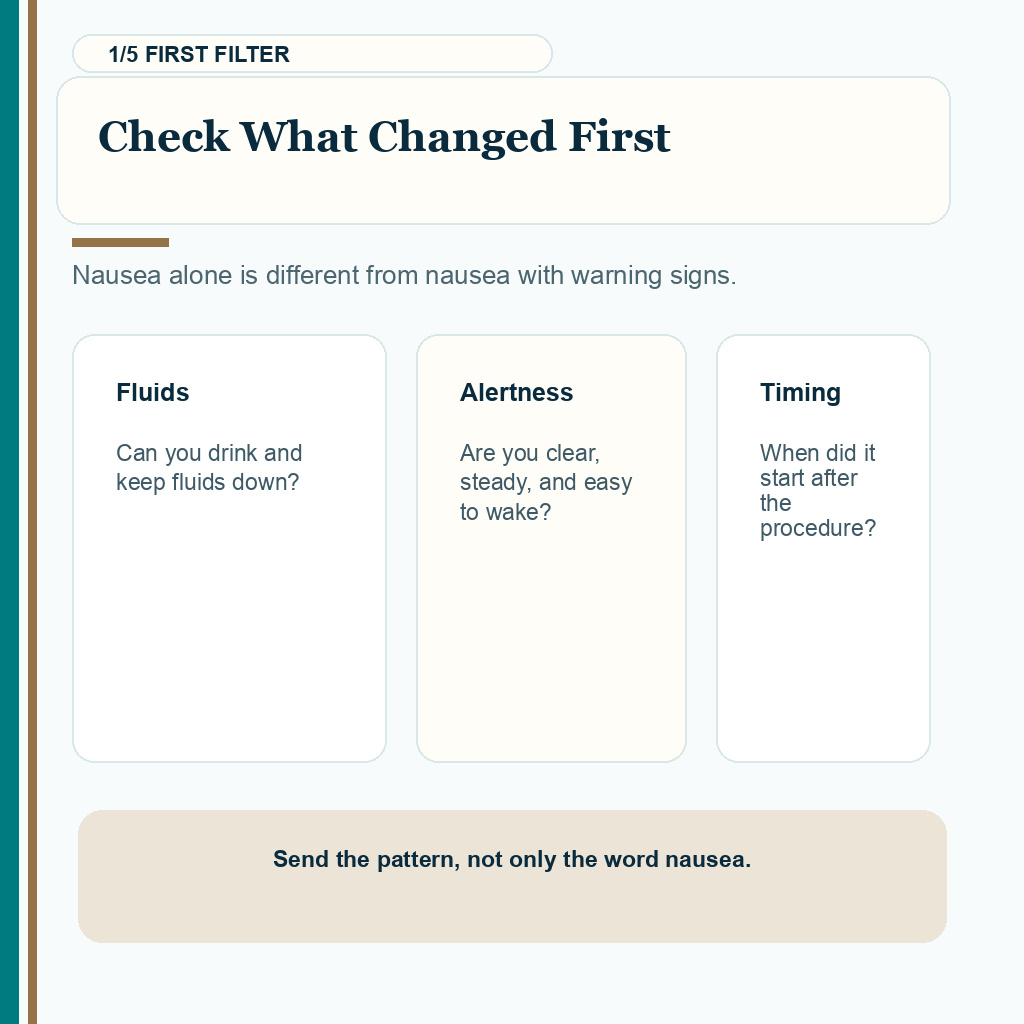
Nausea messages need timing and fluid detail
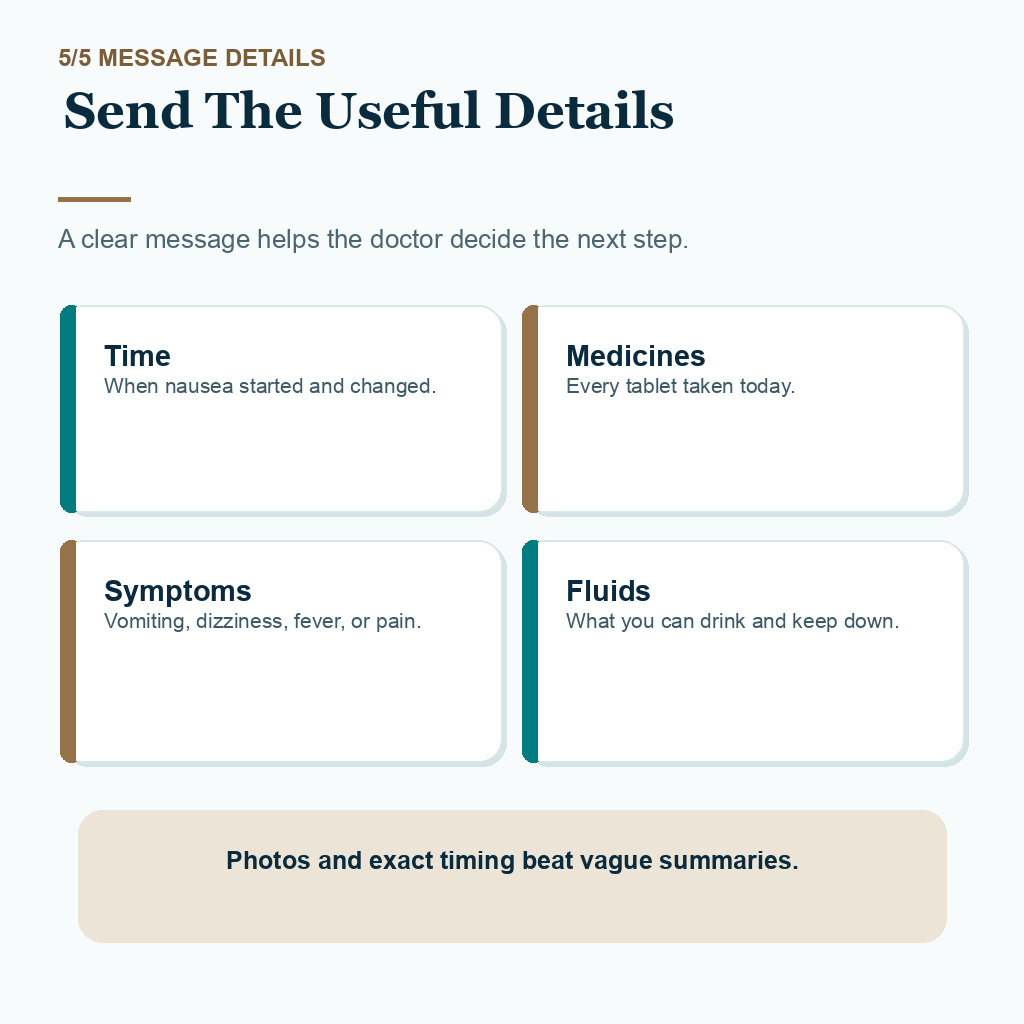
When nausea starts after FUE, send the timeline, whether vomiting happened, what fluids stayed down, when you last urinated, what you ate, and whether you measured a temperature.
Add dizziness, fainting, headache, chest symptoms, bowel symptoms, scalp changes, and every medicine or supplement taken in the last 24 hours. Scalp photos help only if the scalp itself looks changed.
If nausea limits drinking, the issue shifts from appetite to fluid tolerance. The water after FUE advice is useful for small sips and electrolyte context, but fever, confusion, severe headache, chest symptoms, fainting, or inability to keep fluids down needs medical review first.

Read this review excerpt
Every single one of my questions was answered and they made sure I had all the details I needed to make an informed decision.