



Reasons diarrhea can happen after a hair transplant
Several causes can overlap in the first days. Antibiotics can irritate the gut. Pain medicine can upset the stomach. Travel can change food, water, timing, sleep, and stress. Anxiety can change bowel habits. A separate viral illness or an illness related to food can also appear at the same time as transplant recovery, and food poisoning around hair transplant timing can change what must be reported before or soon after surgery.
The cause should not be guessed from one symptom. One soft stool after a restaurant meal is different from watery diarrhea many times a day while taking antibiotics. Diarrhea with fever, blood, mucus, repeated vomiting, or abdominal pain is different from mild stomach upset that improves within a day.
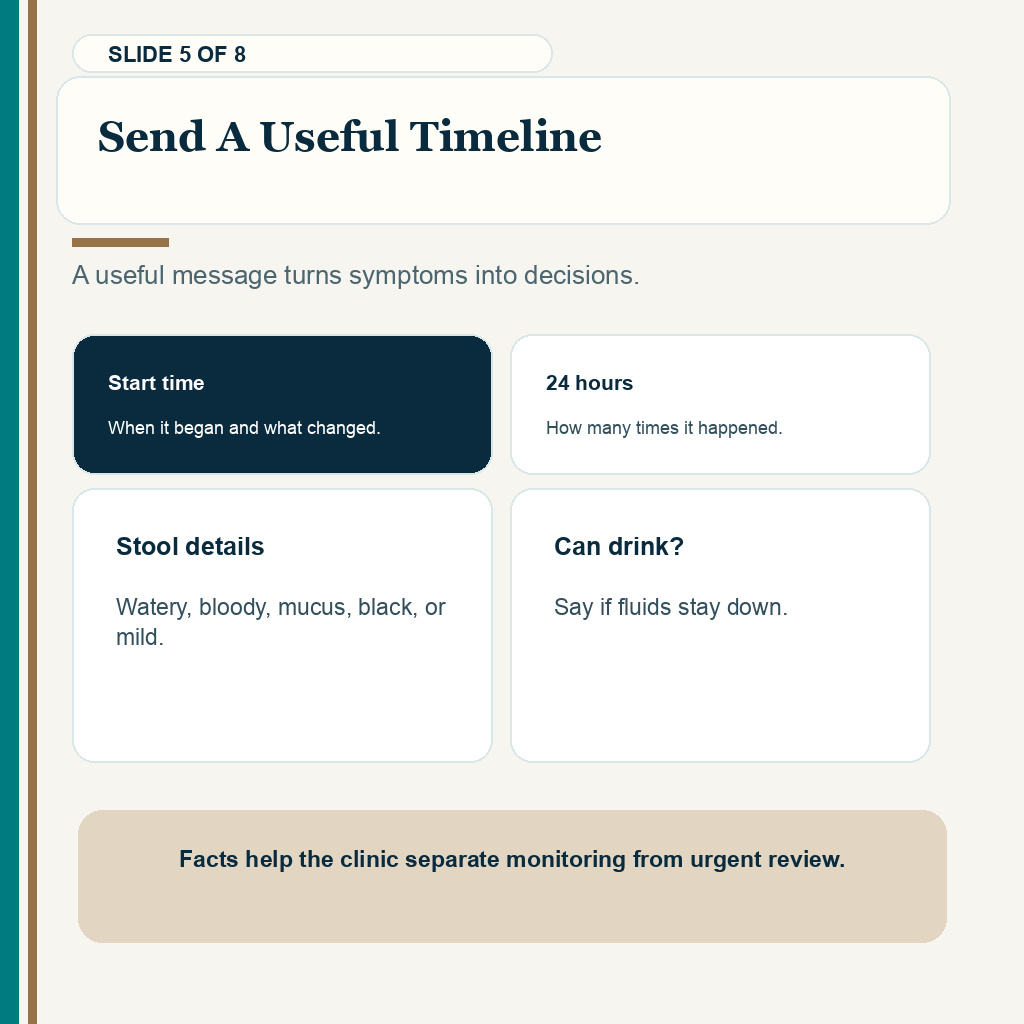
The useful facts are practical. Tell the clinic when it started, how many times it happened in 24 hours, whether it is watery, whether there is blood or mucus, whether there is fever, what medicines you took, and whether you can drink normally. Those details make the next step much clearer.
Antibiotics should not be stopped alone
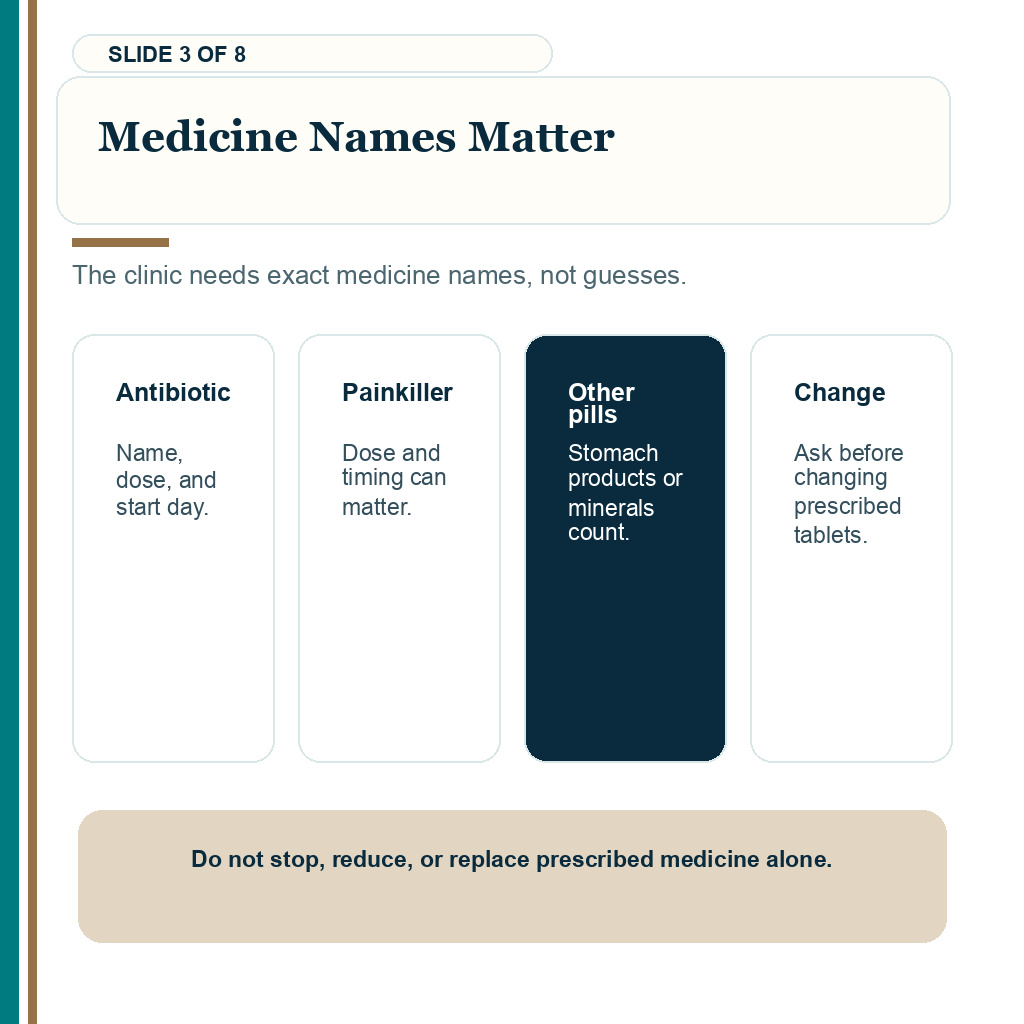
Do not stop, reduce, or replace a prescribed antibiotic on your own. Call the clinic or the doctor who prescribed it and describe the symptoms clearly. The clinician may advise continuing, changing timing with food, switching medicine, testing for infection, or stopping the antibiotic if that is appropriate.
When diarrhea follows a tablet closely, repeating the dose by instinct is the wrong move. The medicine name, dose time, symptom timing, and next planned dose decide the safer next step.
Antibiotics after hair transplant should be handled as a medication decision, not as a casual aftercare detail. Antibiotics can be useful when there is a real reason to use them, but they can also cause side effects. Do not ignore diarrhea, and do not abandon the medicine without review. The safe answer may be to continue, change timing, switch medicine, test, or stop, but that decision should come from the clinician responsible for the prescription.
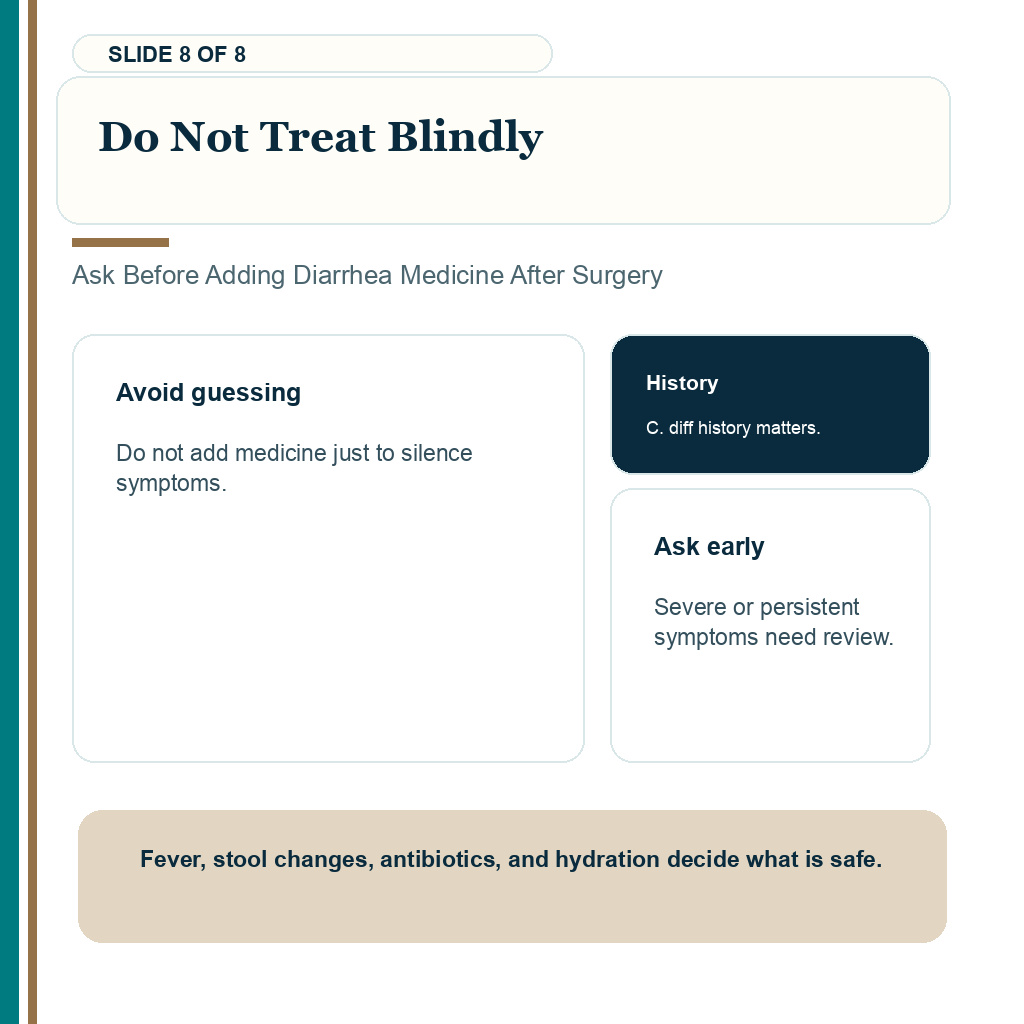
If antibiotics have caused severe diarrhea for you before, or if you have a history of C. diff, send that history before surgery. Include it in the same planning conversation as antibiotics before hair transplant surgery and other medication or infection risk issues.
Diarrhea after surgery that is more concerning
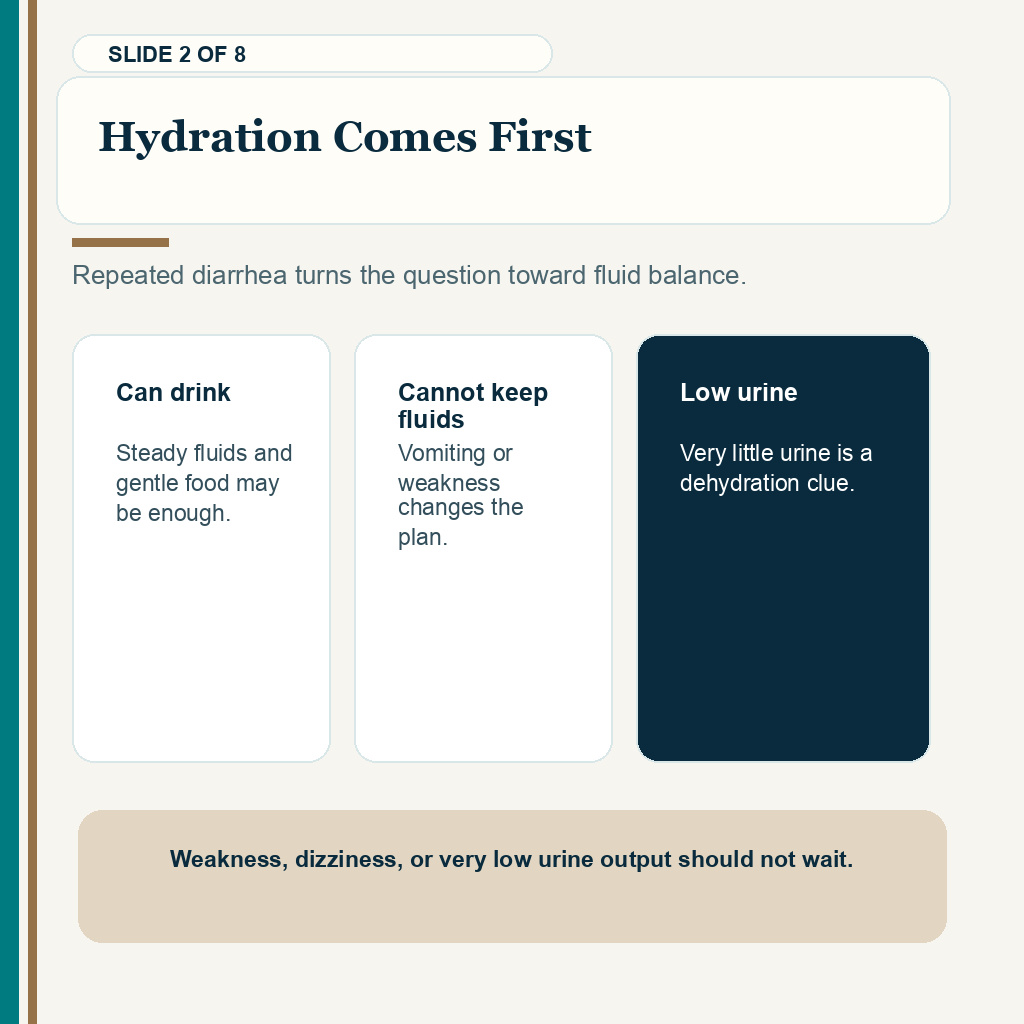
Loose stools become more concerning when they are frequent, watery, worsening, or paired with other symptoms. Diarrhea deserves faster review when it comes with fever, chills, severe abdominal pain, blood, black or tarry stool, repeated vomiting, faintness, confusion, very low urine output, or inability to keep fluids down.
It also deserves faster review if you are diabetic, immunosuppressed, older, already dehydrated from travel, or taking several medicines. A long antibiotic course or a past C. diff infection also makes me review the symptom sooner. In these situations, diarrhea is not just uncomfortable. It can change fluid balance and may need testing or a different treatment plan.
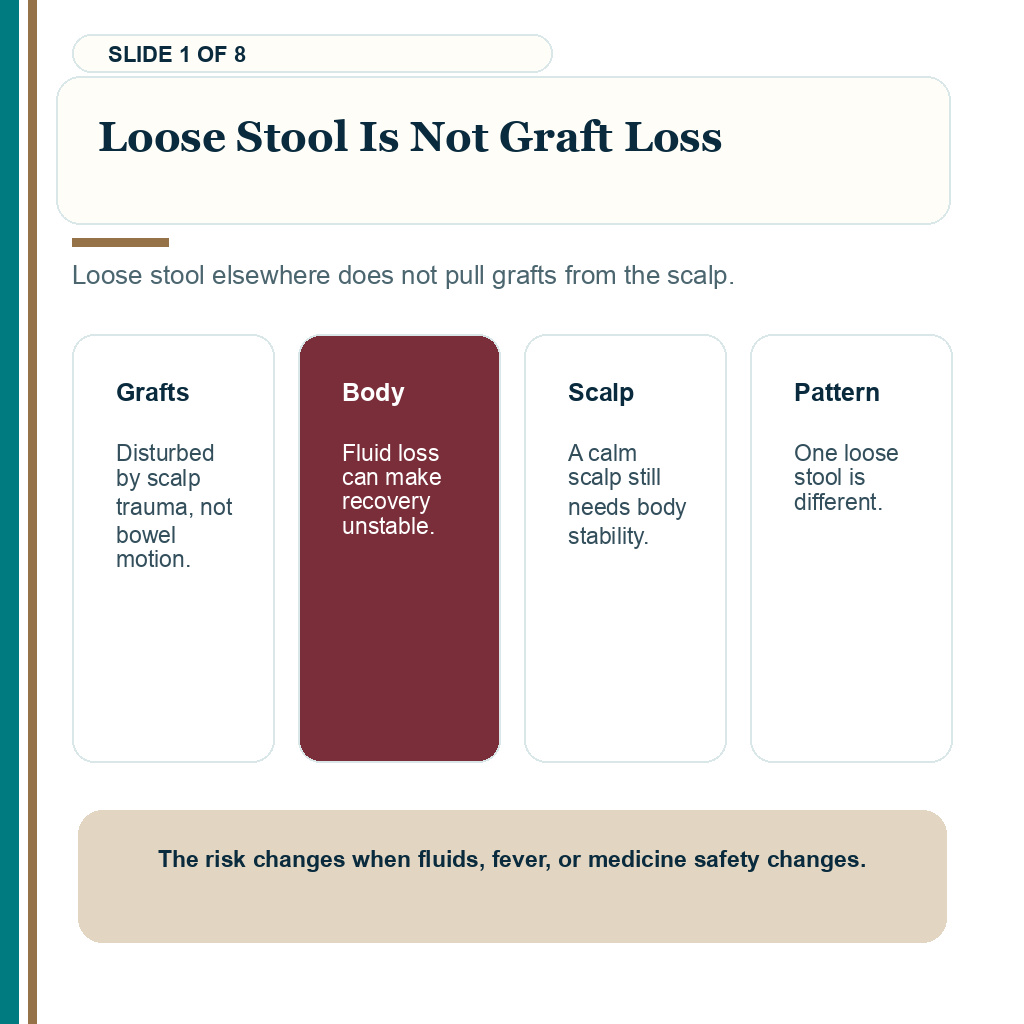
A single loose stool should not become graft panic. Severe watery diarrhea should not sit unreported for days because someone feels embarrassed to message the clinic. Hydration, fever, abdominal pain, stool appearance, and recent antibiotics tell us more than fear alone.
Vomiting or fever changes the concern
Diarrhea with vomiting needs more caution because fluid loss can become faster. When water or oral rehydration fluids will not stay down, or when vomiting keeps returning, clinic review and local medical review matter more than waiting. With vomiting after hair transplant, the concern is not only scalp pressure but weakness, dehydration, and medicine timing.
Fever changes the interpretation too. Mild stomach upset without fever can be watched differently from diarrhea with chills, body aches, or a high temperature. Fever may come from a stomach infection, a viral illness, another infection, or a problem after surgery that needs review. Cough, sore throat, or symptoms that feel like flu make cold or flu after hair transplant part of the review.
If fever and diarrhea appear together after travel, do not assume it is only stress. Share what you ate, what medicines you took, whether anyone around you is sick, and how often you are using the bathroom. These details help decide whether home measures are enough or whether medical attention is needed.
Dehydration during recovery
Dehydration does not usually destroy grafts by itself, but it can make recovery harder. You may feel dizzy when standing, eat poorly, sleep badly, urinate very little, or struggle to follow washing and medication instructions. Dizziness brings fainting around hair transplant surgery into the same safety review.
For mild symptoms, steady fluids are usually more useful than forcing a heavy meal. Water, oral rehydration fluids, broth, and plain foods are often easier than greasy or spicy meals. If diarrhea is repeated, plain water alone may not replace salts well enough, so oral rehydration can be useful when it is safe for your medical history. After travel, conservative food choices are safer in the first few days. Food after hair transplant should avoid miracle food thinking and keep the body stable enough to heal. If spice is the specific concern, review spicy food after a hair transplant before testing your stomach during the first week.
Diabetes, kidney disease, heart disease, or blood pressure concerns can change whether oral rehydration drinks are harmless in your situation. Diabetes needs particular caution because dehydration, reduced food intake, and infection can disturb glucose control. With diabetes and hair transplant surgery, stable control matters before and after the operation.
Bathroom urgency in the first days
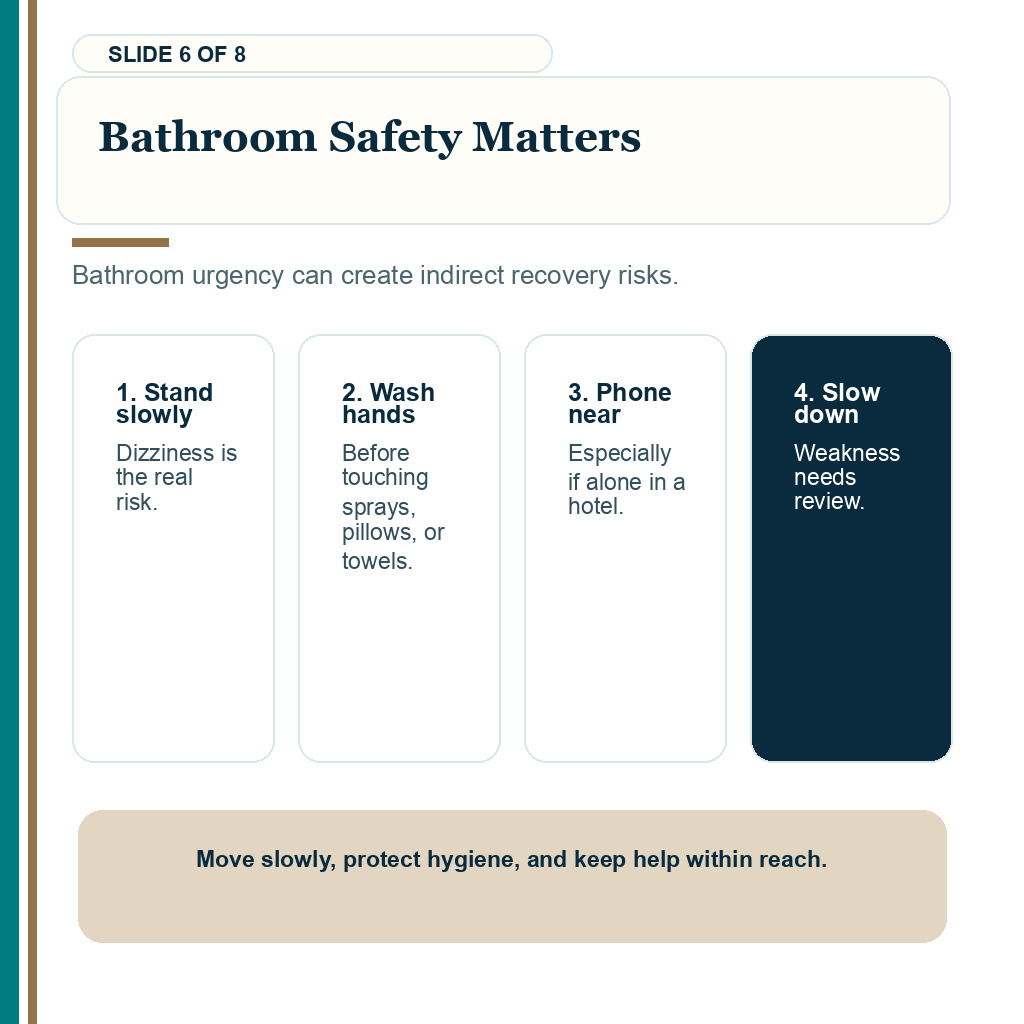
Repeated bathroom trips do not damage grafts by themselves. The risk is usually indirect. Stand up too quickly, become dizzy, bend sharply, sweat heavily, touch the scalp with unwashed hands, or become too weak to follow washing and medicine instructions, and it has become more than a digestive symptom.
Bathroom urgency becomes a scalp issue when it makes you rush, bend sharply, or touch towels and sprays with unwashed hands. The bowel symptom is separate, but the recovery setup is connected.
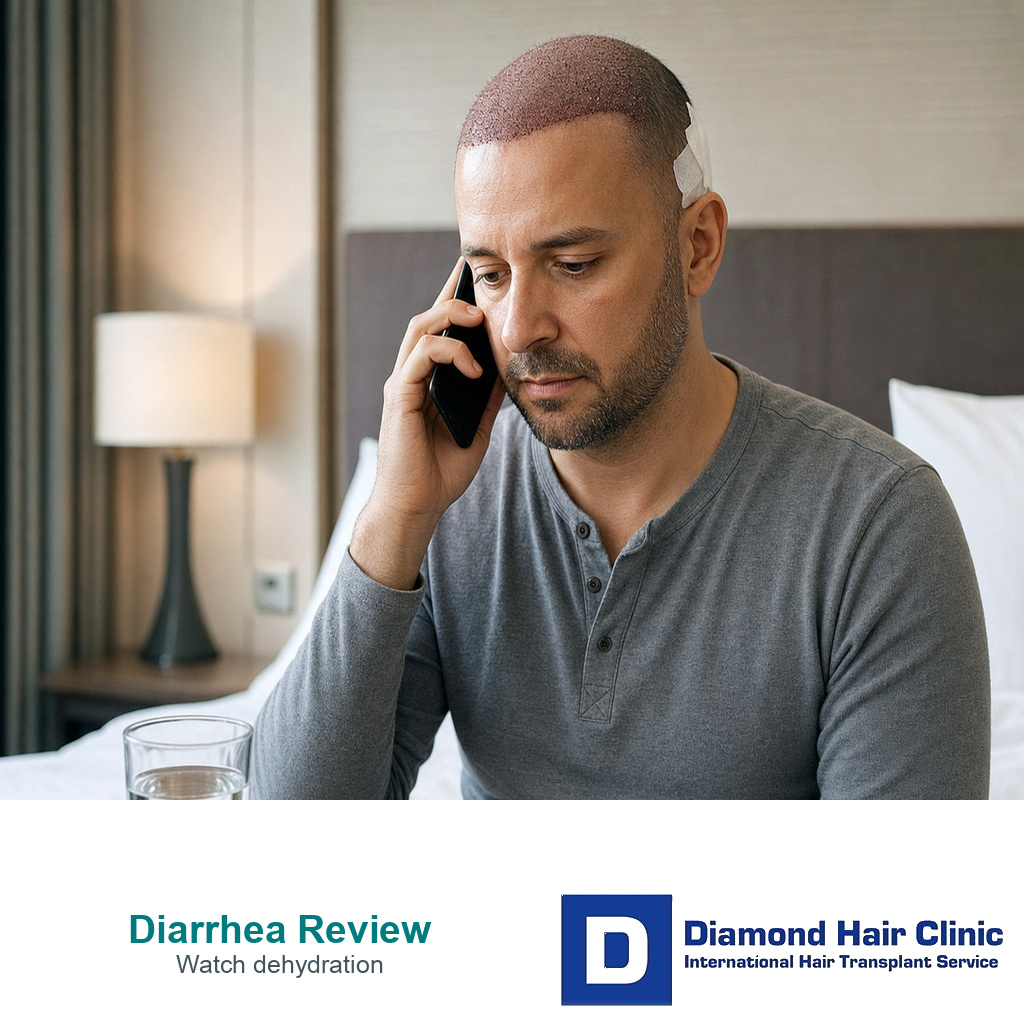
Move slowly and protect hydration before trying to keep a normal schedule. Keep water or oral rehydration fluid near you, stand up carefully, and sit or lie down if you feel faint. If you are alone in a hotel, keep your phone within reach and get instructions if weakness, dizziness, fever, repeated watery diarrhea, or inability to keep fluids down is developing.
Hand hygiene also matters. After using the bathroom, wash your hands before touching sprays, medicine, pillows, towels, or anything used near the transplanted area. If diarrhea makes you too weak to wash, eat, drink, or follow instructions, it has become a recovery problem that needs review.
Details to share with the clinic
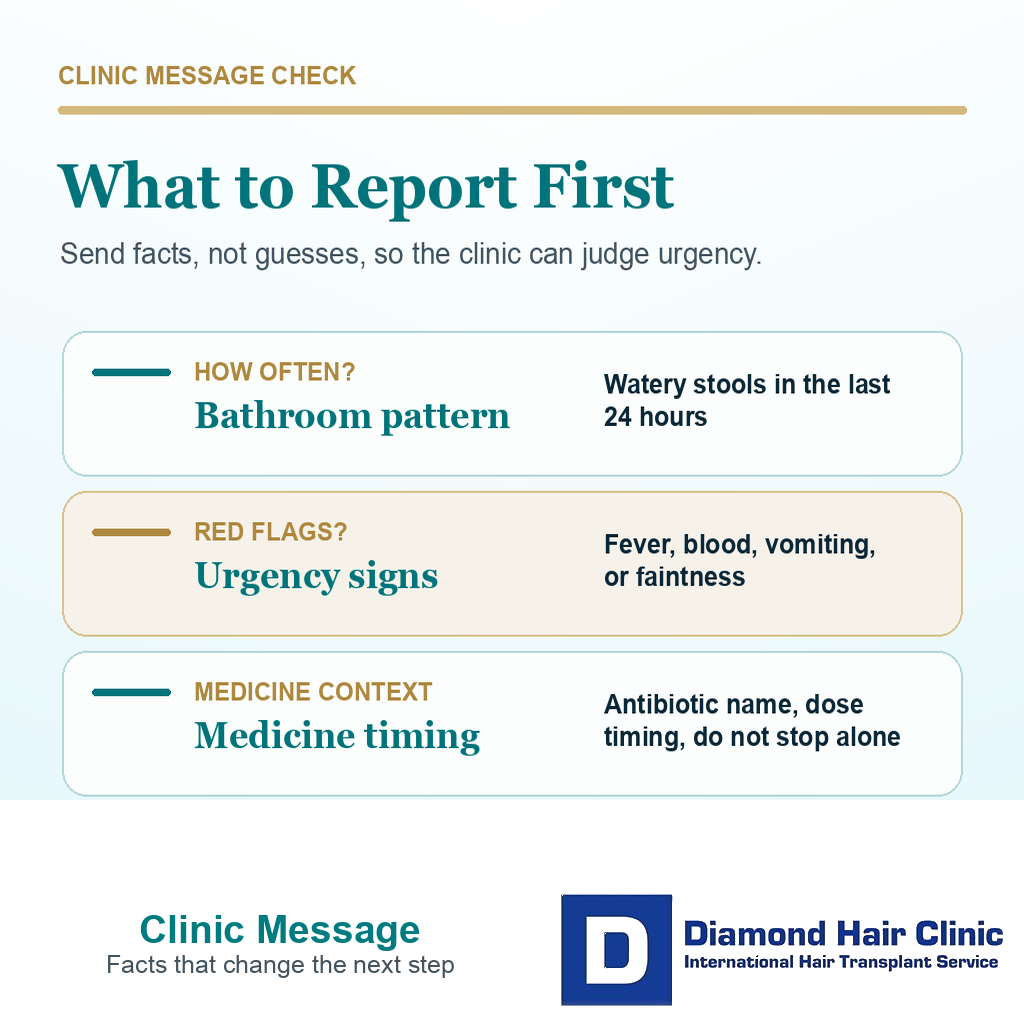
These are the details that help the clinic decide whether symptoms can be monitored or need direct medical review.
Give facts, not guesses. Send the clinic when the diarrhea started, how many times it happened in the last 24 hours, whether it is watery, whether there is blood or mucus, whether you have fever, whether you have abdominal pain, whether you vomited, and whether you can keep fluids down. Include your surgery date and the exact medicine names and doses.
If you were prescribed antibiotics, say which one and when each dose started. If you used painkillers, supplements, antacids, magnesium, laxatives, or medicine for diarrhea, include those too. Nonprescription products can matter. A careful medication review before hair transplant includes blood thinners, stomach irritating tablets, supplements, and the whole recovery plan.
If you are traveling, mention your location and whether you can access medical help nearby. A clinic can guide you better when it knows whether you are still in Istanbul, already flying home, or alone in a hotel. Hair transplant follow up after surgery is part of surgical safety, not a decorative service.
Medicine for diarrhea needs medical advice
Do not take medicine for diarrhea blindly after surgery, especially if you have fever, blood, severe pain, recent antibiotic use, or a history of C. diff. In some infections, slowing the bowel without proper assessment can be the wrong move. A medicine that seems reasonable for mild travel stomach upset can be unsafe in a different symptom pattern. The safer path is to ask the prescribing doctor or clinic before adding a new medicine.
Pain medicine decisions after a transplant need the symptom, dose, and medical history reviewed together. A tablet may reduce a symptom, but it still has to fit the surgical situation and your medical history. With painkillers after hair transplant, routine tablets still deserve review when bleeding, stomach irritation, allergy, or other medicines are involved.
Probiotics or yogurt are often discussed after antibiotics, but they are not a substitute for medical review when symptoms are severe. If symptoms are mild, ask whether they are suitable for you. If symptoms are severe or persistent, diagnosis, hydration, and safe medication decisions come first.
Symptoms before flying home
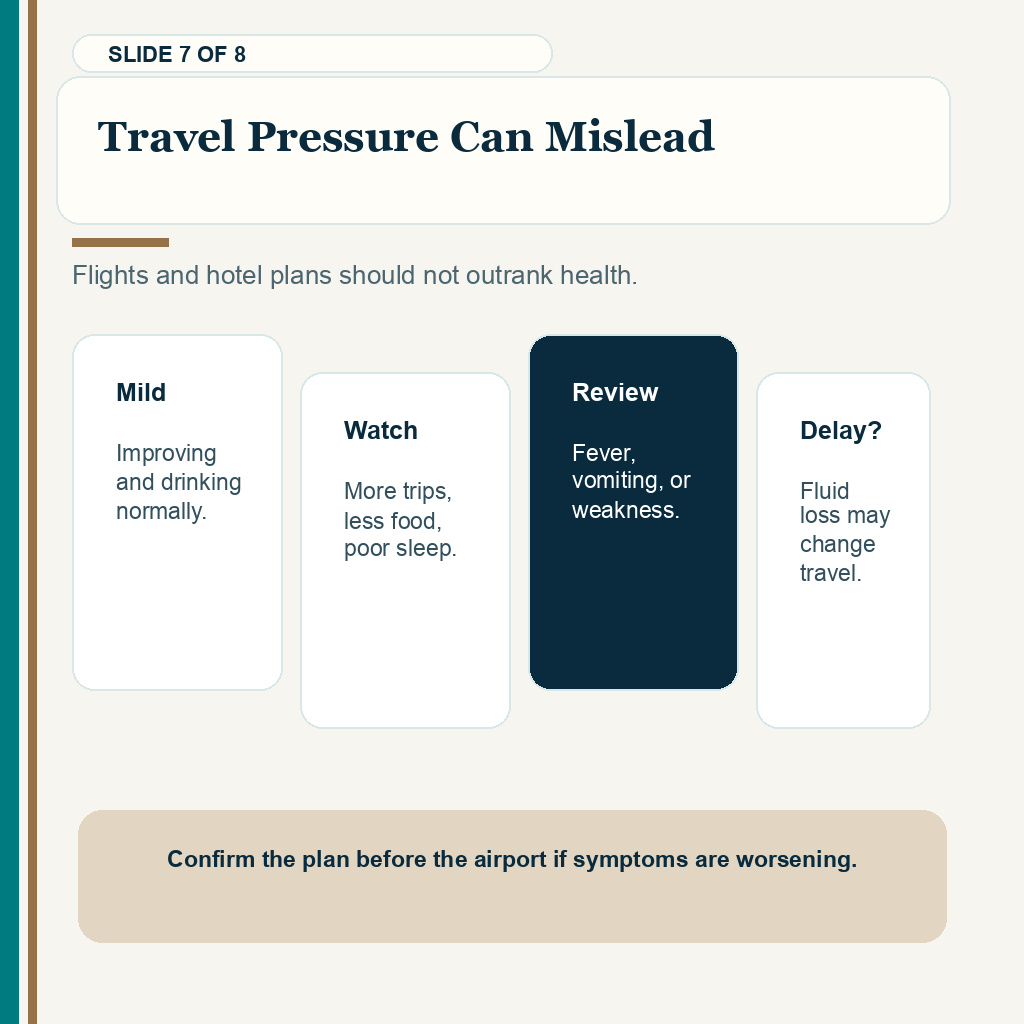
If diarrhea starts before a flight, think about hydration, bathroom access, weakness, and whether symptoms are worsening. A short flight with mild improvement is different from boarding while dehydrated, feverish, and unable to keep fluids down. The airport is a poor place to make a medical decision under pressure. If you are unsure, confirm the plan before travel rather than trying to decide at the gate. The travel question also includes flight home changes after FUE when hydration, weakness, or bathroom access affects the decision.
Flying after hair transplant usually raises questions about swelling and timing, but digestive illness changes the travel decision. You may need fluids, local medical review, a delay, or instructions about medicine.
If you are alone, tell someone where you are and keep the clinic updated. Travel plans can make people hide symptoms because they do not want to disrupt flights, hotels, or work schedules. That is the wrong instinct. A travel schedule should not outrank health.
Planning before surgery
Before surgery, share any history of C. diff, inflammatory bowel disease, severe diarrhea after antibiotics, medication allergies, kidney disease, diabetes, immune suppression, or repeated stomach infections after travel. These details may change medication choices, advice after surgery, and the threshold for medical review.
Preoperative blood work does not diagnose every digestive risk, but it helps identify broader medical issues that can affect surgical planning. Blood tests before hair transplant are not paperwork only. When the body has less reserve, small problems after surgery can become larger.
Avoid starting random supplements, laxatives, digestive cleanses, or antibiotics from another doctor without telling the surgical team. After a hair transplant, clear information beats hidden variables. Each hidden variable makes a new symptom harder to interpret.
My judgment on diarrhea after hair transplant surgery
Do not treat every loose stool as a graft emergency. That creates unnecessary fear. Do not ignore repeated watery diarrhea just because the scalp looks fine either. Hair transplant surgery is planned on the scalp, but recovery belongs to the whole body.
The balanced approach is straightforward. Mild, brief symptoms with good hydration can often be monitored while the clinic is informed. Symptoms that are severe, persistent, bloody, feverish, painful, linked to antibiotics, or causing weakness need direct review. Never stop a prescribed medicine after surgery on your own, and never let embarrassment delay a message to the clinic.
A good transplant plan includes what happens after you leave the operating room. If digestive symptoms appear, protect hydration, identify warning signs early, and keep the surgical team informed enough to guide the response.
Diarrhea can make recovery harder because fluid loss, weakness, and medicine tolerance start to overlap. The water and electrolyte balance after FUE guide gives a wider recovery frame for that situation.

Read this review excerpt
Upon arriving home, I sent 4 photos (of each side of head) after every washing process to doctor for checking where I was given personal advice for how to take care of my healing head.