



Acne or skin antibiotics need scalp review
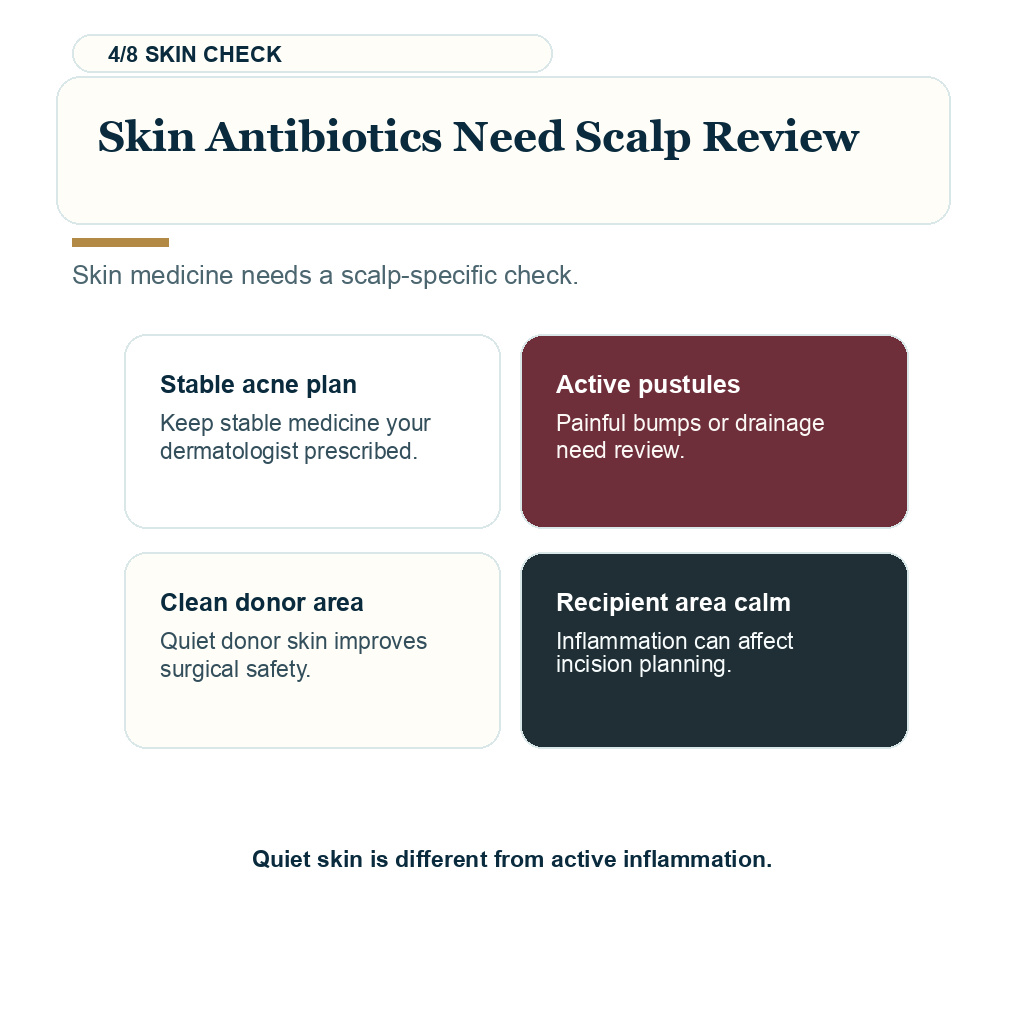
Ongoing or repeated antibiotics for acne, rosacea, hidradenitis, or another skin condition need review, not automatic cancellation. I look at whether the condition is stable, whether there are active pustules on the scalp, whether the donor area is clean, and whether the medication has caused side effects.
The scalp matters more than the label on the box. If the recipient area or donor area has painful bumps, crusting, drainage, spreading redness, or active inflammation, I usually prefer to wait until the skin is controlled. With folliculitis before a hair transplant, operating through active scalp inflammation is different from operating on quiet skin. If antibiotics are connected to scalp bumps, drainage, or scratching, I review the timing together with itchy scalp before surgery.
When the antibiotic is part of stable skin management and the scalp is settled, surgery may still be possible. Do not stop an antibiotic prescribed by your dermatologist just to make the medical form look simpler. Stopping treatment can cause a flare that creates a bigger problem for surgery than the medicine itself.
Dental antibiotics need timing review
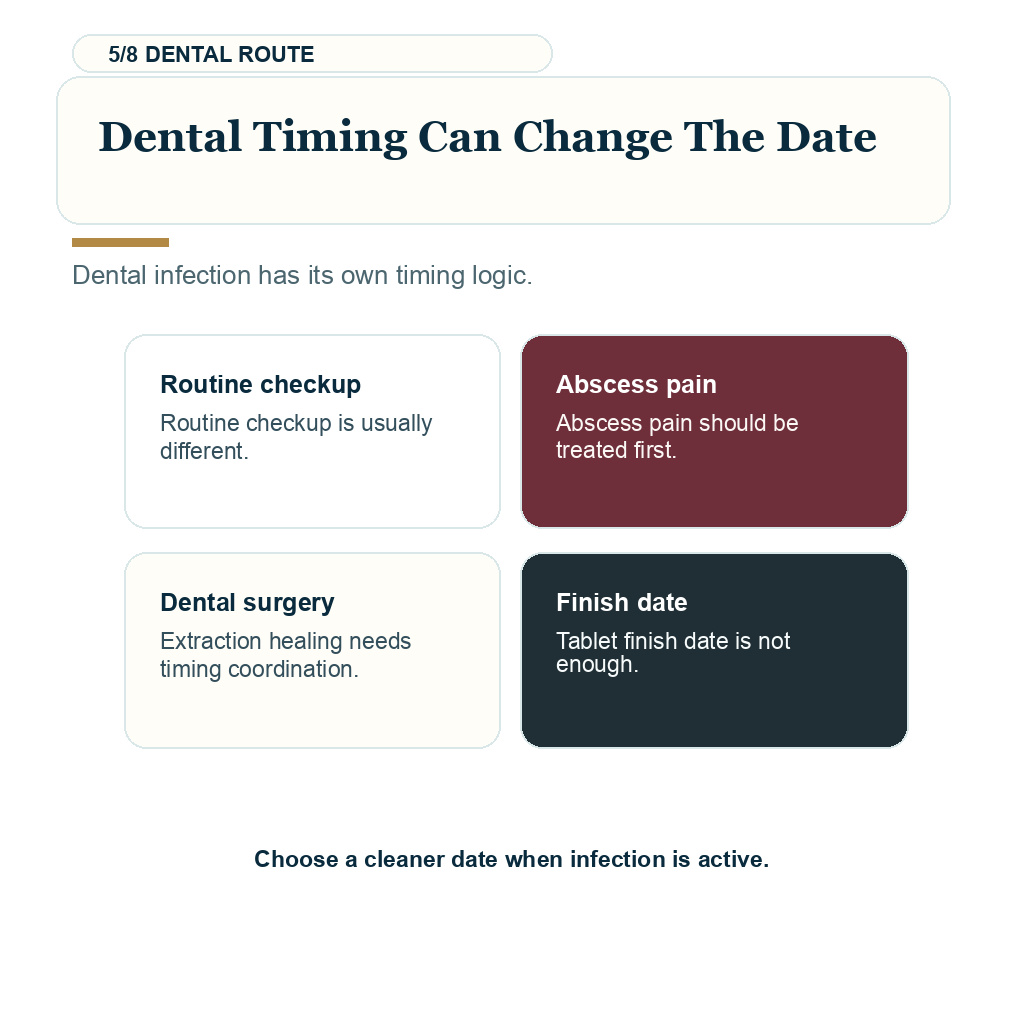
Dental antibiotics deserve special attention because the timing can be misleading. The tooth may feel far from the scalp, but an active dental infection can still mean pain, poor sleep, fever, swelling, stronger painkillers, and a body that is not ready for elective surgery.
When the antibiotic was prescribed after a routine dental visit and symptoms are controlled, the case can often be reviewed without panic. Facial swelling, pus, fever, severe tooth pain, difficulty opening the mouth, or a planned extraction near the transplant date means the hair transplant needs review again before proceeding.
Do not let two clinics give disconnected instructions. The dentist needs to know you are planning surgery, and the hair transplant clinic needs the dental diagnosis, antibiotic name, and expected dental treatment. Medication decisions become safer when both sides understand the timing.
Avoid starting antibiotics on your own
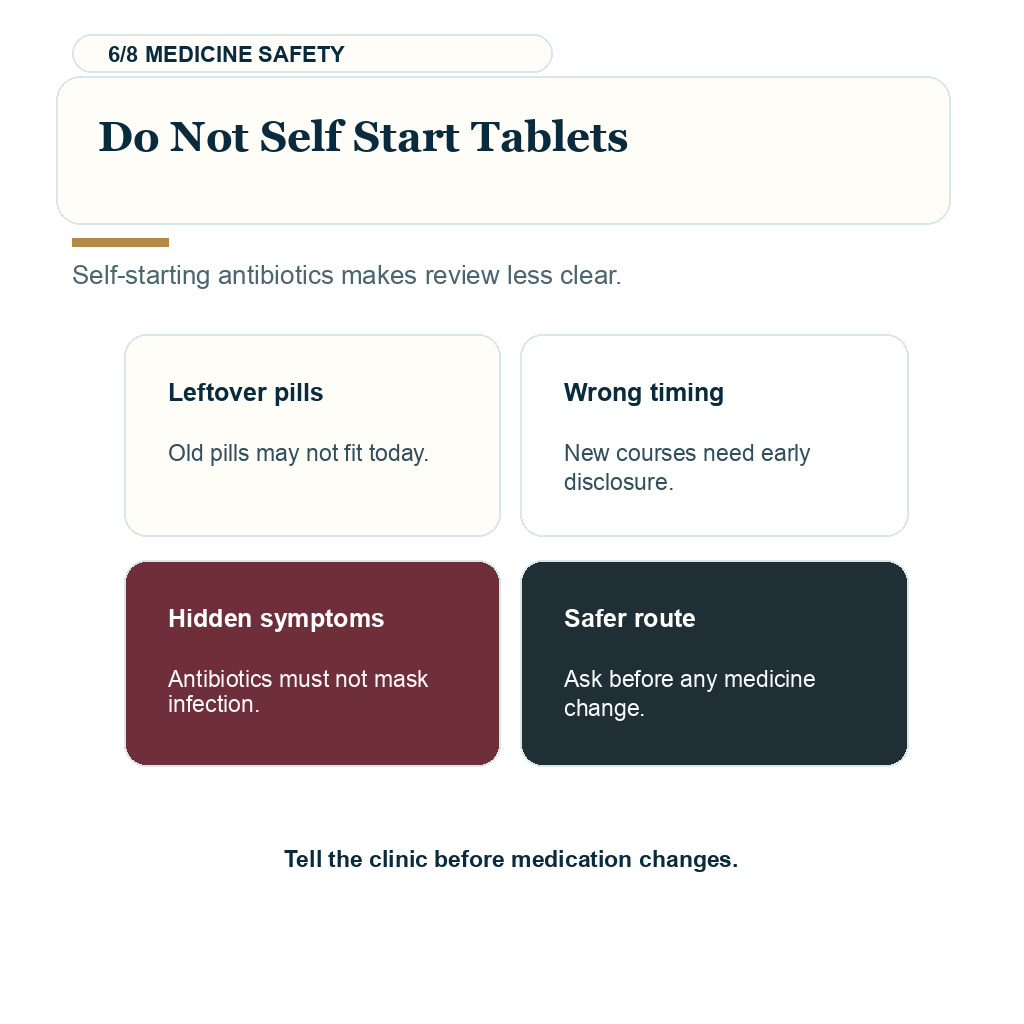
Do not start leftover antibiotics, borrow tablets, take an antibiotic as a precaution, or add a second antibiotic because you think more protection is better. Antibiotics need a diagnosis and a prescriber. Taking antibiotics without a prescriber can hide symptoms, trigger allergy, disturb the stomach, or make later diagnosis harder.
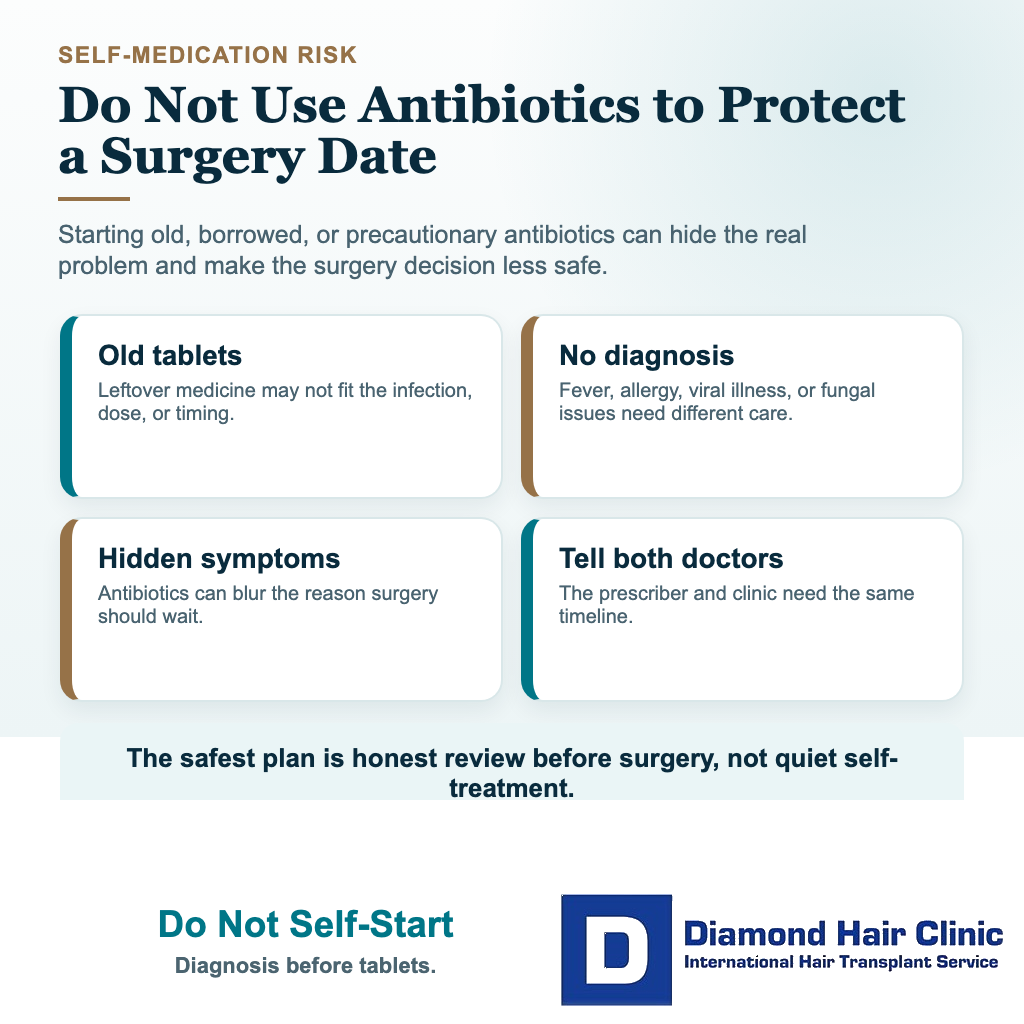
Antibiotics are not insurance for surgery day. They do not treat every problem that worries people before an operation. A viral sore, allergy, irritation, fungal issue, inflammatory flare, or healing pimple may need a different decision. For example, cold sores or herpes before a hair transplant are antiviral timing questions, not antibiotic timing questions.
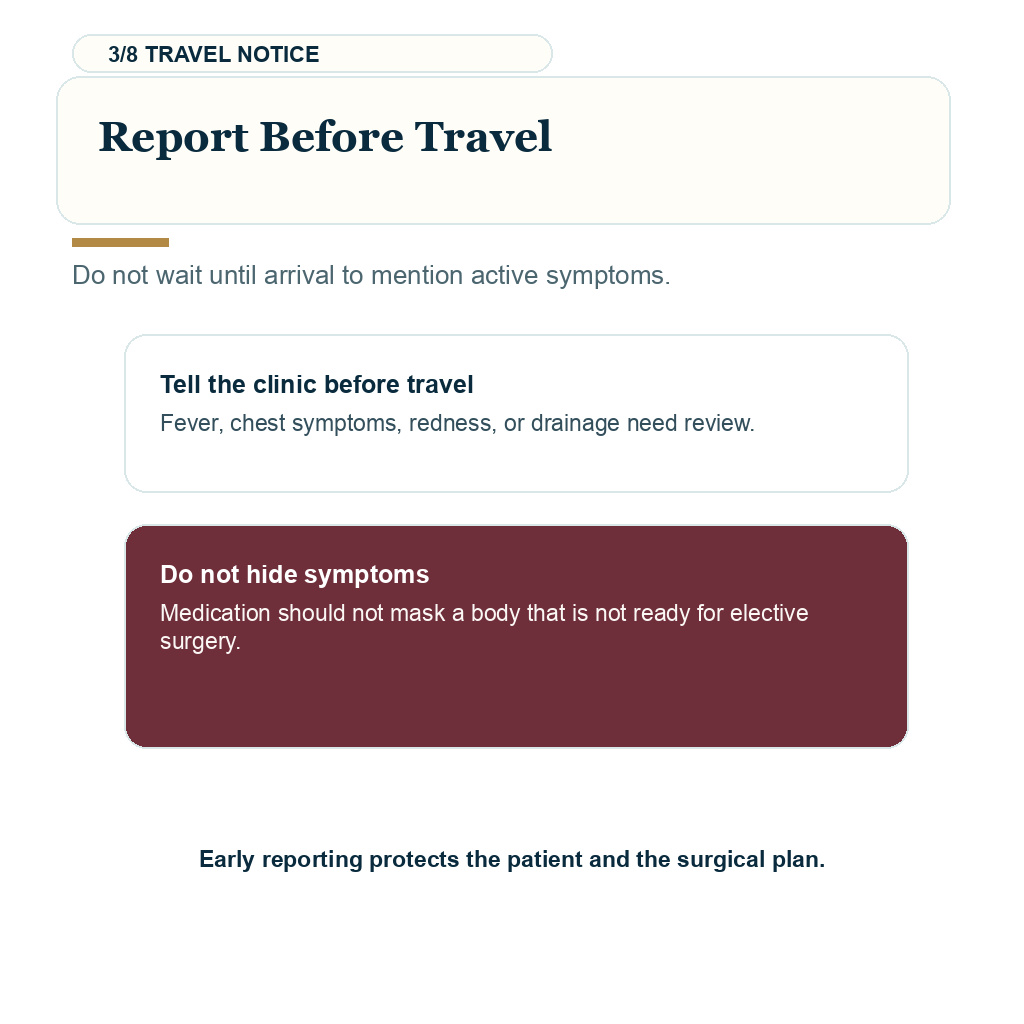
If you are already on a prescribed course, do not stop it early in silence just to make the surgery plan look simpler. If side effects appear, contact the prescribing doctor and the clinic. If you think you have an infection before surgery, send photos and symptoms instead of guessing. A proper review can decide whether the date can stay, whether a doctor should treat the infection first, or whether the operation should wait.
Side effects can affect surgery day
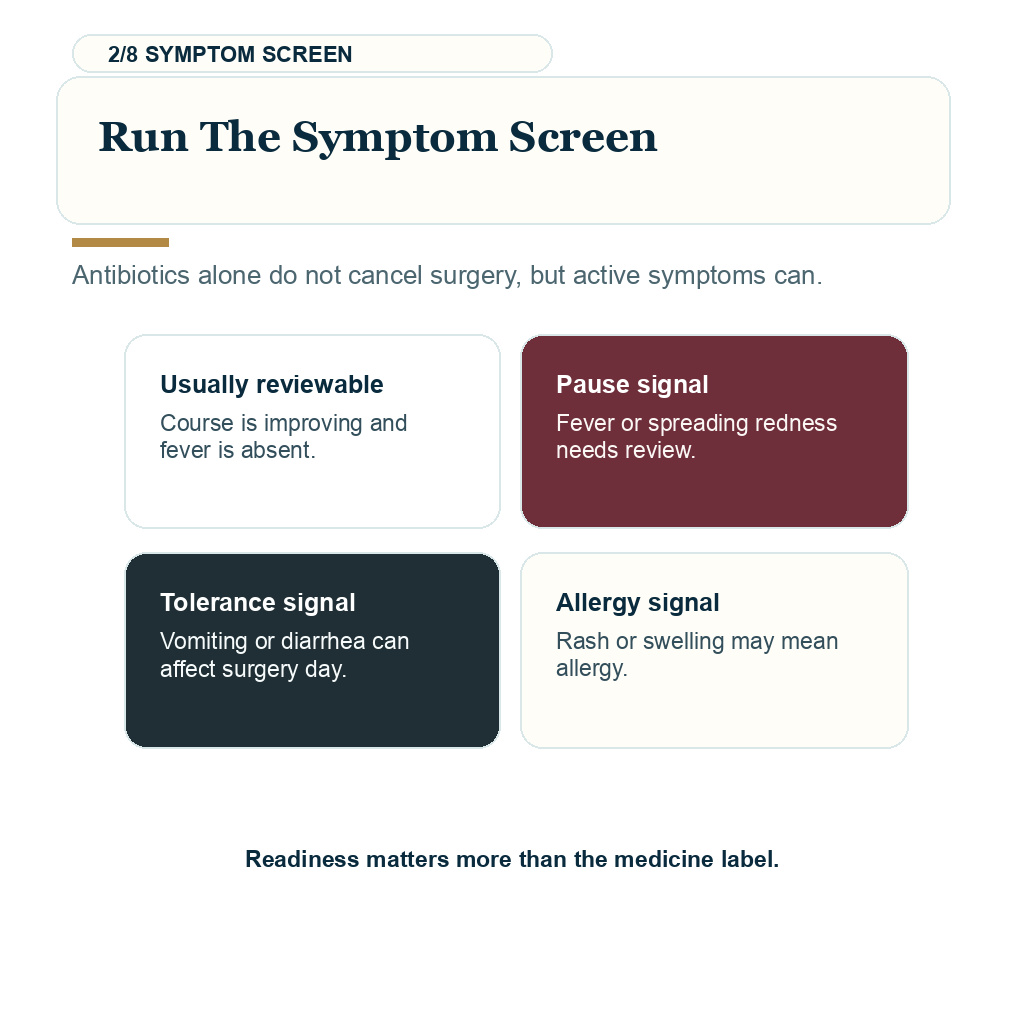
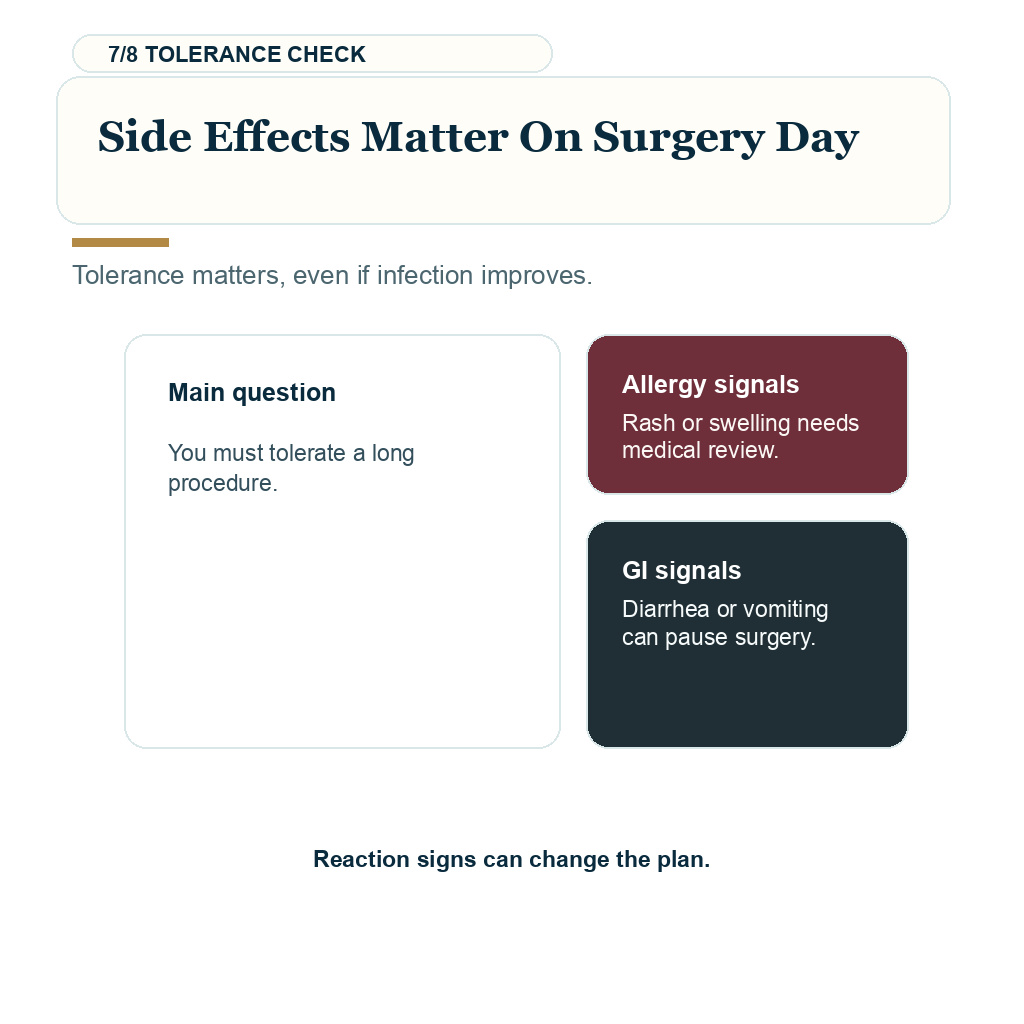
Nausea, vomiting, watery diarrhea, severe stomach pain, rash, hives, swelling, dizziness, tendon pain, palpitations, dehydration, or previous C. diff infection should be reported. Mild stomach upset is not the same as repeated watery diarrhea, fever, fainting, blood in the stool, or signs of allergy. These symptoms may matter more than the hair transplant itself on that day. The same warning logic continues after surgery in diarrhea during early hair transplant recovery, especially when antibiotics and dehydration overlap.

Some medical histories need extra caution when antibiotics are used. Severe diarrhea after antibiotics, bowel disease, kidney disease, liver disease, medication allergy, immune suppression, or repeated hospital treatment needs to be shared early. Crohn disease or ulcerative colitis before a hair transplant need this discussion because diarrhea, nutrition, blood count, inflammation, and previous C. diff history can change planning.
Kidney function can also matter for some medicines. If you have kidney disease before a hair transplant, do not assume every antibiotic dose is automatically safe for you. The prescribing doctor and the surgical team need the full history.
Details to send before the surgery date
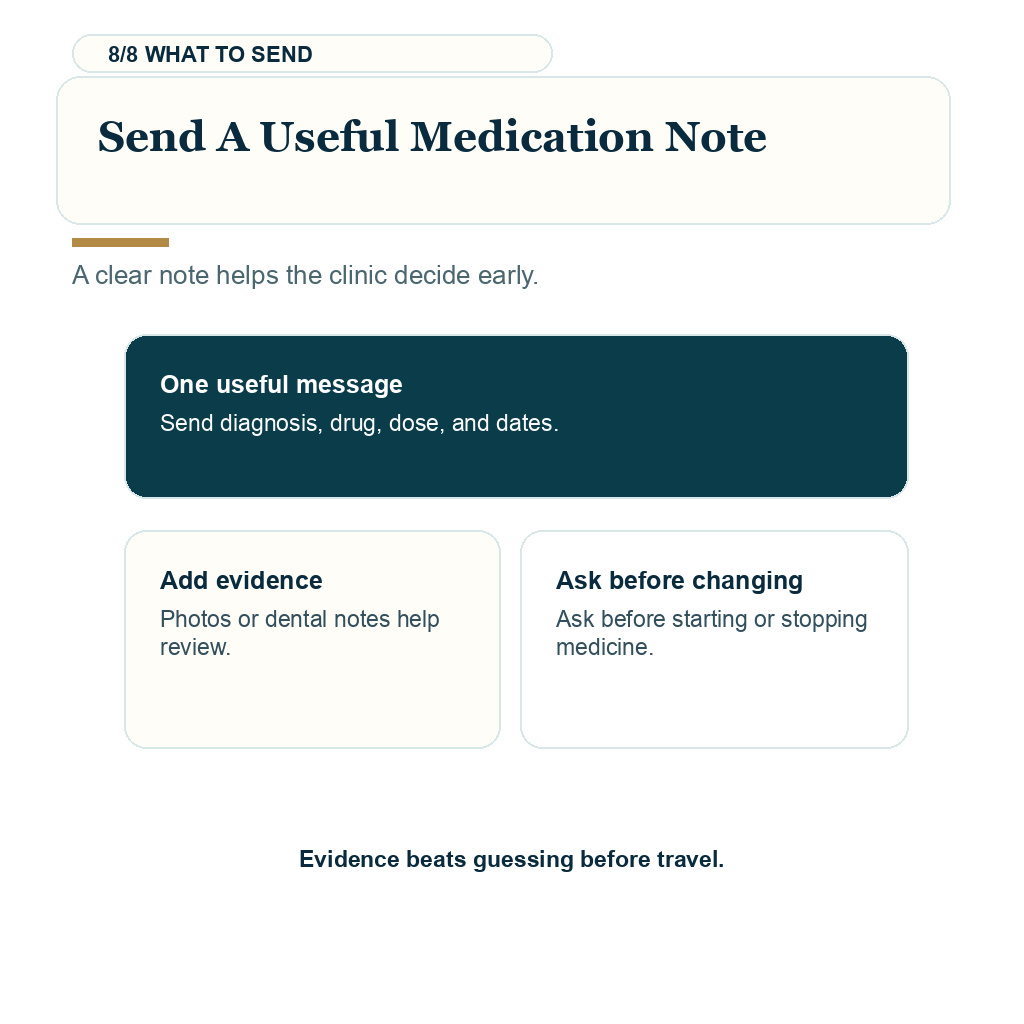
Send the antibiotic name, dose, start date, planned finish date, the reason it was prescribed, who prescribed it, and whether your symptoms are improving. If there are visible skin, dental, lip, or scalp symptoms, send clear photos in good light.
Also send fever history, current temperature if relevant, pain level, drainage, swelling, urinary symptoms, cough, shortness of breath, diarrhea, vomiting, rash, and allergy history. If you already had blood tests before a hair transplant, send the full report rather than only saying the result was fine.

The clinic needs the medicine name, the reason for treatment, and whether symptoms are improving before the surgery date is treated as fixed.
This information separates a small treated issue from a reason to postpone. It also prevents the worst scenario of arriving in Istanbul with a medical problem that needed review before flights were booked.
Finishing the course is not the only checkpoint
Finishing the last tablet one or two days before surgery does not by itself mean the body is ready. I review why the antibiotic was prescribed, whether the symptoms are gone, whether there has been fever, diarrhea, rash, swelling, drainage, cough, urinary pain, dental pain, or scalp inflammation, and whether you feel well enough for a long elective procedure.
Do not stop the antibiotic early just to make the timing look cleaner. If the infection was significant, the safer decision may be to finish the treatment, let the body recover, and then reassess. If the course was short, the diagnosis is clear, symptoms have settled, and there are no side effects, surgery may still remain possible after the clinic reviews the details.
Antibiotics before and after surgery are different decisions
Antibiotics before surgery raise the question of readiness. Why are you taking them? Is the infection controlled? Are you well enough for a long procedure? Can you follow aftercare without fever, diarrhea, pain, or medication confusion?
Antibiotics after surgery raise a different question. If the surgeon prescribes them as part of the plan after surgery, they should be taken as directed unless there is a medical reason to stop and the clinic has been contacted. The decision after surgery is about protecting early healing without ignoring side effects.
Both situations need communication, but they are not the same. Before surgery, a serious infection can make postponement the better choice. After surgery, a reaction or missed dose needs fast contact so the medication plan can be changed safely.
White blood cells and immune medicine change the review
Antibiotic use linked with low white blood cells, immune medication, chemotherapy history, recurrent infections, prednisone, biologic medicine, or a flare of an inflammatory condition makes the decision more cautious. In those cases, healing capacity and infection control matter as much as the prescription itself.
Stable, explained, mildly low counts are different from fever, mouth ulcers, draining skin, repeated infections, or neutrophils that are clearly low. With low white blood cells before surgery, the cause and symptoms matter more than the printed number alone.
Medication also matters. Prednisone before a hair transplant, biologics, methotrexate, and other medicines that affect immune control must not be stopped secretly to make surgery look easier. A flare of the underlying illness can create more risk than a carefully planned medicine schedule.
Operation can usually go ahead when infection is controlled
The operation can often be considered when the reason for the antibiotic is known, symptoms are improving or resolved, there is no fever, hydration is normal, the scalp is clean, you feel well, and the prescribing doctor has no concern about elective surgery. I still judge the timing from all of those details together.
For a stable skin condition, a treated dental issue, or a minor infection that has clearly settled, surgery may stay on schedule after review. The clinic may ask for photos, a medical note, or a short delay if the timing is too close.
Delay does not mean rejection. It can be the most disciplined choice when the donor area is finite and the operation is elective. A better surgical day is worth more than forcing the original date.
Antibiotics only tell part of the story
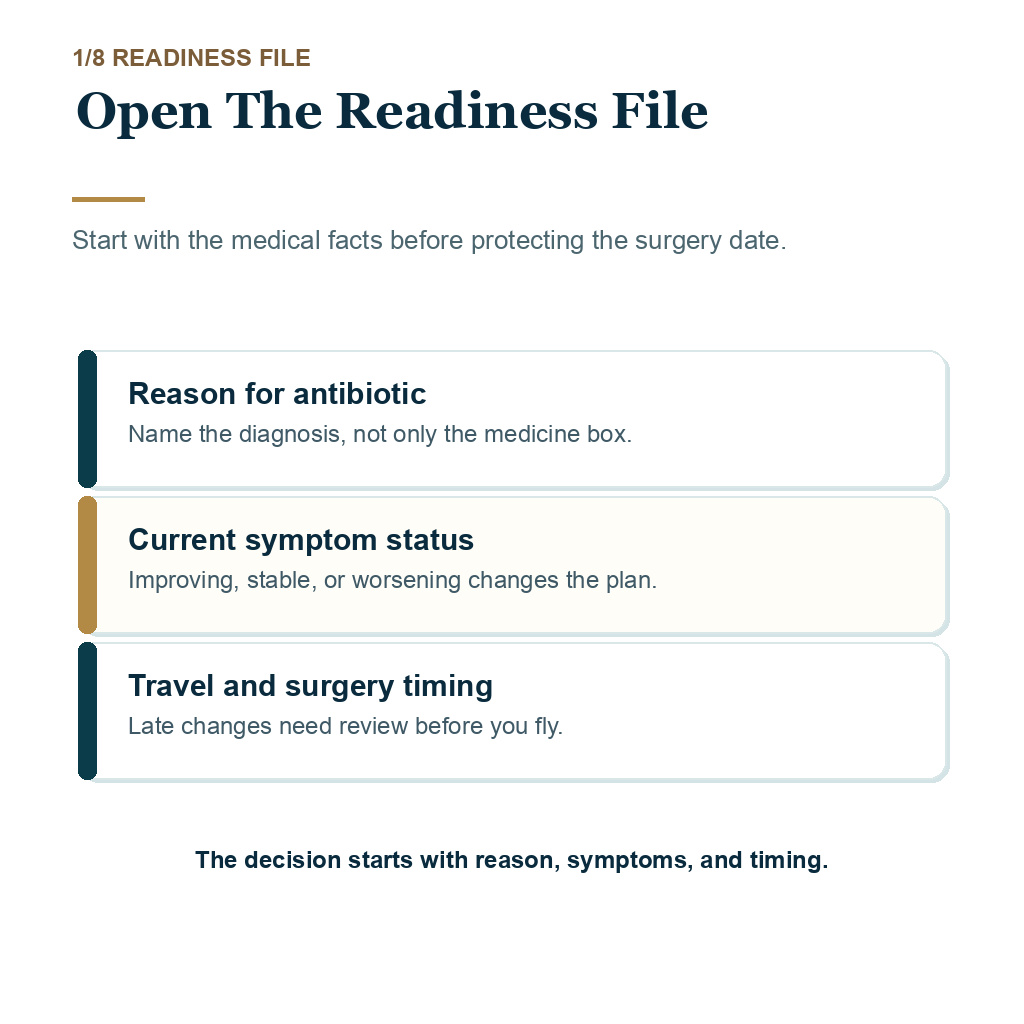
The medicine name is the beginning of the review, not the answer. I need the infection site, the reason the antibiotic was started, the symptom trend, and any fever, swelling, rash, diarrhea, vomiting, or dehydration.
A controlled short course can be very different from a chest infection, dental abscess, spreading redness, severe stomach upset, or medicine that suppresses the immune system. Those details tell us whether the body is ready for an elective graft procedure.
Hiding the illness protects the calendar for a moment and creates a weaker recovery plan. It is easier to move a transplant date than to ask new grafts to heal while infection or medication side effects are still unsettled.

Read this review excerpt
Diamond Hair was the only clinic asking for medications, treatments I've done before, and other type of questions that make me feel confident on the professionalism that they practice with their clients.