



Antibiotic Allergies and FUE Planning
FUE can still be planned for many patients with an antibiotic allergy. The decision depends on the exact medicine, the reaction, the timing, the treatment needed, and whether there is an active infection now.
Before planning surgery, I separate four problems. A true allergy, a side effect, a C. diff or severe diarrhea history, and antibiotics being taken for another infection each change the plan differently. Hives with lip swelling one hour after amoxicillin is not the same as loose stools after several days of tablets.
The phrase “I am allergic to all antibiotics” is not enough to choose safely. The useful history is which drug caused which reaction, how quickly it happened, and what treatment was needed.
A clear record helps decide whether surgery can proceed, whether a medicine should be avoided, whether another doctor or allergist should review, or whether an infection has to settle before travel. Do not hide the reaction before surgery, and do not start leftover antibiotics on your own.
First I decide whether an antibiotic is needed at all before choosing around an allergy label. If medicine is needed, the choice should come from the reaction history and the current infection risk, not from guessing on surgery day.
Antibiotic record planning map
Sort the antibiotic story before choosing medicine
The word allergy is too broad for surgical planning. The useful story is the drug name, reaction timing, symptoms, treatment record, and infection status before I decide whether FUE can safely proceed. A clear medicine and allergy record makes that story safer because the team can compare the drug name, reaction, and current plan before choosing anything.
Treat as serious history
A severe reaction changes the plan before travel
Exact records let the plan avoid the wrong drug class and decide whether another doctor should review.
Do not assume routine medicine choices when airway symptoms, swelling, fainting, or emergency treatment are in the history.
The allergy is hidden until surgery day or the patient only remembers being told never to take that antibiotic again.
Drug name, reaction speed, symptoms, treatment given, hospital record, and any later allergy review.
Exact antibiotic name matters
The word allergy can mean many different things. One person may have had hives within an hour of penicillin. Another may have had diarrhea after an antibiotic that affects a broad range of bacteria. Another may have been told as a child that a rash was an allergy but never had a clear review. These stories lead to different surgical decisions. If a rash or hives happened after a previous procedure, the medication timeline matters as much as the skin description.
The exact name matters because antibiotic groups are not identical. A reaction to amoxicillin, ciprofloxacin, clindamycin, azithromycin, doxycycline, cephalexin, or an unknown hospital injection does not carry the same meaning. Timing matters too. A reaction after the first dose is different from symptoms that began after several days or after finishing the course. The timing often changes the risk category.
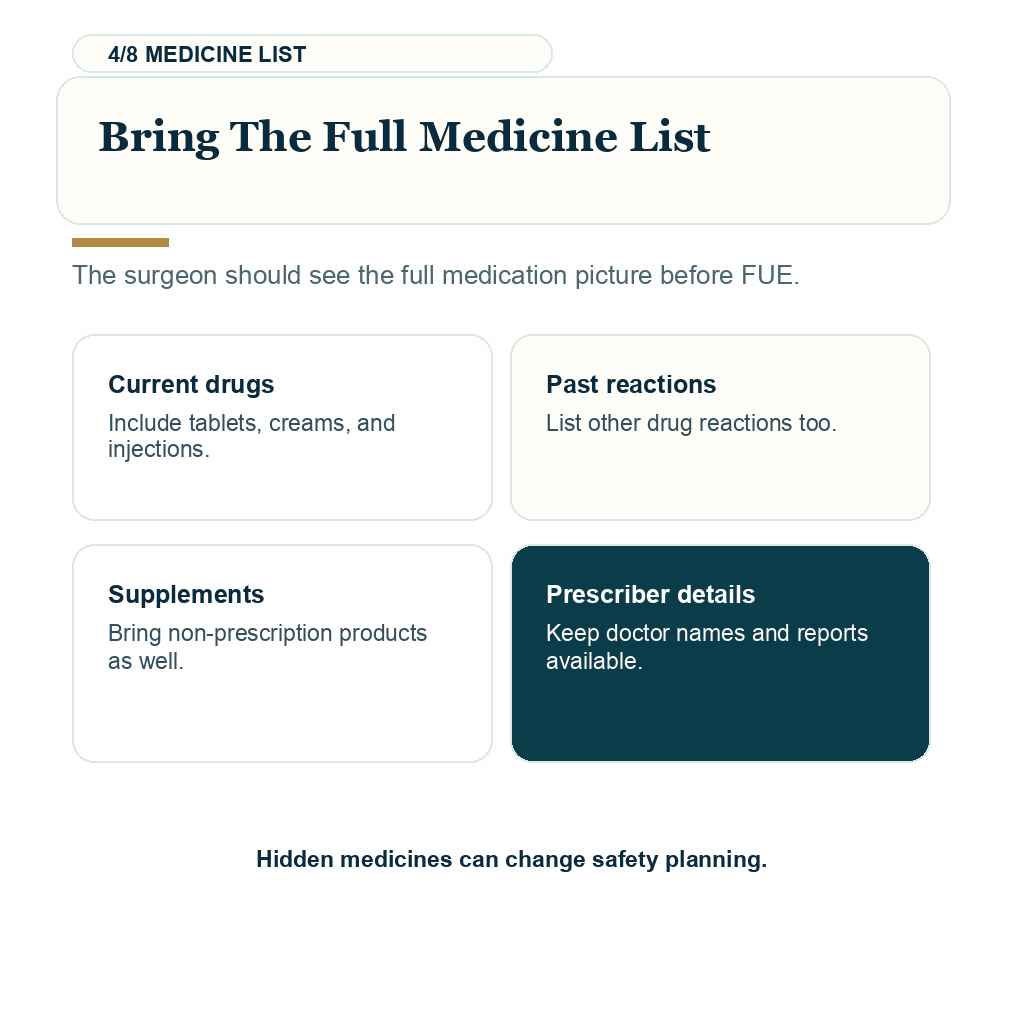
A general medication before hair transplant review has to include allergies, previous side effects, current prescriptions, supplements, and any recent infection treatment. The medicine history is not paperwork. It changes the plan. If the allergy label is about lidocaine or another numbing medicine, local anesthetic allergy before hair transplant keeps the anesthesia plan separate from antibiotic selection.
Reaction details that make planning safer
A useful record is specific. It can be a discharge note, a prescription label, a pharmacy record, a photo of the medicine box, an allergy test result, a message from your doctor, or a written timeline if formal records are not available. The timeline should say what was taken, when it was taken, what happened, how fast it happened, and what treatment was needed.
For example, “hives and lip swelling one hour after amoxicillin, treated in an emergency setting” is very different from “loose stools after five days of antibiotics.” A past severe rash with skin peeling, mouth sores, breathing symptoms, fainting, liver or kidney injury, or hospital treatment needs stronger caution than mild nausea. Before another procedure after a serious reaction, bring the complete perioperative medicine list and records of any steroid treatment, liver tests, or hospital review. Choosing a different antibiotic by guess does not explain which medicine caused the reaction or whether surgery is ready to proceed.

Bring the exact antibiotic name, reaction pattern, timing, and treatment history before surgery is planned.
If you are already taking antibiotics before hair transplant, the diagnosis behind the prescription matters as much as the medicine name. A dental infection, skin infection, respiratory illness, or urinary infection may change whether the surgery date is sensible.
Situations where FUE needs extra caution
Extra caution is needed when the previous reaction involved breathing difficulty, throat tightness, tongue or lip swelling, widespread hives, fainting, a severe blistering rash, emergency treatment, or hospital admission. It is also needed when the allergy history is unclear but you remember being told never to take a specific antibiotic again.
Caution is also needed with active infection signs before travel, such as fever, pus, spreading redness, untreated dental infection, infected scalp lesions, or a chest infection. Then the question is not only “Which antibiotic is safe?” The bigger question is whether the body is ready for surgery. Active infection can be a timing problem, not just a medicine problem.
Blood tests before hair transplant and medical screening do not replace allergy records, but they can reveal infection, inflammation, anemia, liver concerns, or other issues that change how cautious the plan should be.
Can FUE still be planned with an antibiotic allergy?
Often, yes. The answer depends on the reaction and the reason antibiotics might be needed. Many people carry an old antibiotic allergy label without a recent review. Some labels turn out to be intolerance, childhood rash, family history, or an unclear event rather than a confirmed severe allergy. I still treat the label seriously until the details are clear.
If the previous reaction was serious, the plan may include avoiding that drug class, choosing a different medicine only when needed, asking the prescribing doctor or an allergist for advice, or delaying surgery until an infection is fully treated. This should be planned before arrival, not improvised while you are already in the chair.
Cold and fever timing also matters. Recent respiratory symptoms change cold, flu, and hair transplant readiness, because fever and infection can create a separate reason to postpone even when the allergy plan itself is clear.
C. diff or severe diarrhea history
C. diff is not the same as a classic allergy, but it is still a serious antibiotic history. Tell me early if you previously developed C. diff, severe diarrhea after antibiotics, colitis, dehydration, or hospitalization after antibiotics. The decision may involve avoiding unnecessary antibiotic exposure, choosing medicines carefully if they are truly needed, and coordinating with the doctor who knows the bowel history.
If the history is unclear or severe, arrange a medical review before travel so the medication plan is not left until surgery day.
Stomach risk is not a small detail. You can travel for surgery, then become dehydrated or unwell from medication side effects. That can affect recovery, sleep, washing, nutrition, and postoperative review. If loose stools are already present before travel, the surgery conversation changes again because the cause needs review before adding more medicine.
Diarrhea after hair transplant needs context, especially when there is a history of bowel problems after antibiotics. For patients with Crohn disease or ulcerative colitis, hair transplant safety with Crohn’s or ulcerative colitis depends on flare control and medication stability before surgery.
If you are already taking antibiotics for another infection
If you are taking antibiotics for dental work, a sinus infection, a urinary infection, acne, folliculitis, a skin wound, or another condition, do not treat it as a small side note. Send the diagnosis, antibiotic name, dose, start date, expected finish date, and current symptoms. The surgical date may still be possible, but the infection status has to be reviewed first.
Dental infection deserves special attention because it can flare, cause fever, or require urgent medication near the surgery date. With dental work before or after hair transplant surgery, the same timing rule applies. The body should not be pushed into elective surgery while another problem is still unstable.
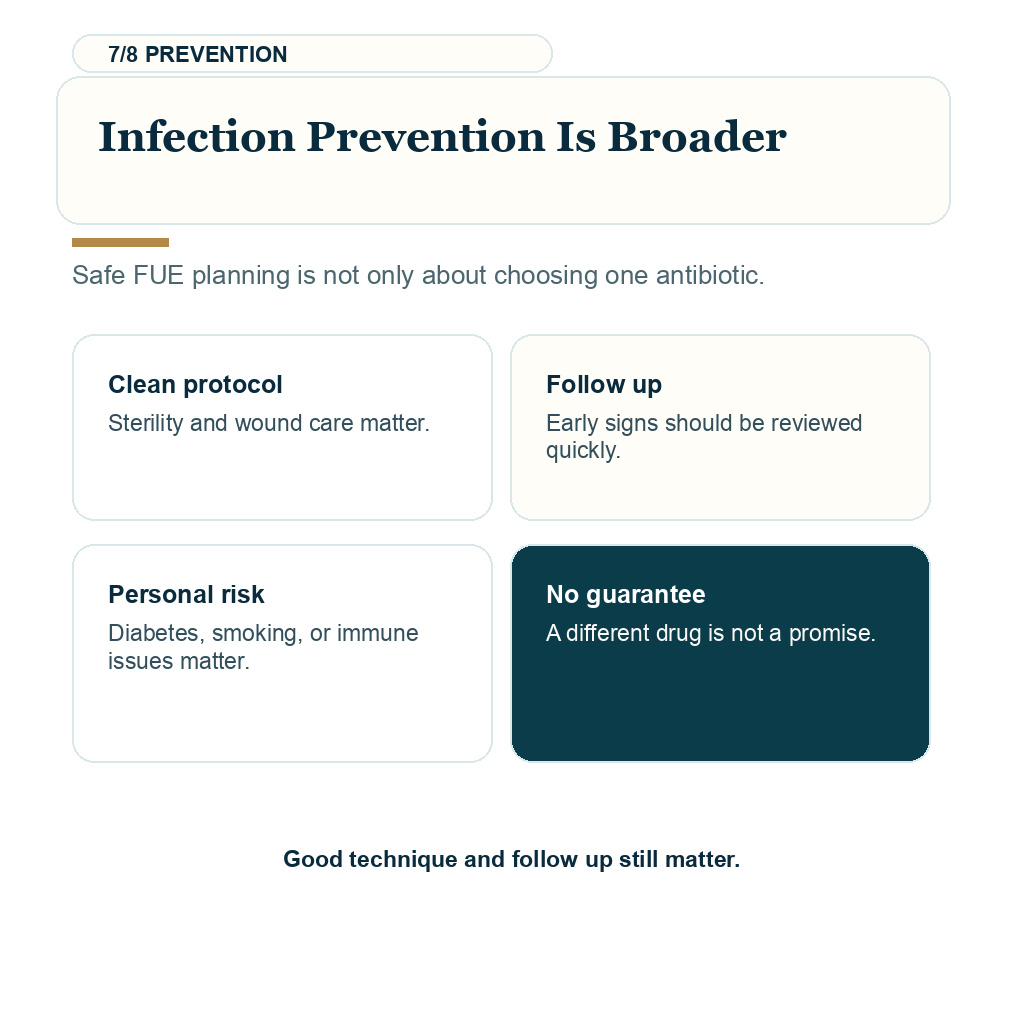
Scalp infection is more direct. If there are pustules, spreading redness, drainage, pain, or crusting that looks infected, review is needed before FUE. Folliculitis and hair transplant surgery and infected hair transplant warnings both come back to the same clinical point. Infection control comes before graft placement.
Allergy history and medicine after the procedure
After FUE, the medicine plan should match your history, the surgery details, and my assessment. That is separate from long-term hair medication timing, such as minoxidil after a hair transplant. Some people need a different medicine choice. Some need closer monitoring for rash, stomach symptoms, or wound signs. The plan should be written clearly before you leave, so you are not guessing in the hotel room.
A previous allergy does not justify stopping prescribed medicine silently or using leftover tablets. If symptoms begin after surgery, contact the prescribing clinic with the name of every medicine, supplement, or cream started, the dose and time taken, when each symptom began, and clear photographs. Hives, swelling, breathing symptoms, or a spreading rash need urgent medical assessment rather than trying to identify the cause yourself.
After FUE, antibiotics after hair transplant should be used only when the indication is clear. If itching or rash appears, antihistamines after hair transplant may be discussed, but they should not be used to hide a serious reaction or delay urgent medical help.
Records to gather before booking travel
Send the allergy record before the surgery date is fixed, not the night before travel. Include the exact antibiotic name if known, the reaction, timing, photos if available, emergency treatment if given, current regular medicines, bowel history, immune conditions, diabetes status, and whether any infection is being treated now. If you cannot remember the medicine name, ask your pharmacy, family doctor, dentist, or previous clinic for the record. Old packaging or a prescription label is better than a vague memory of the antibiotic.
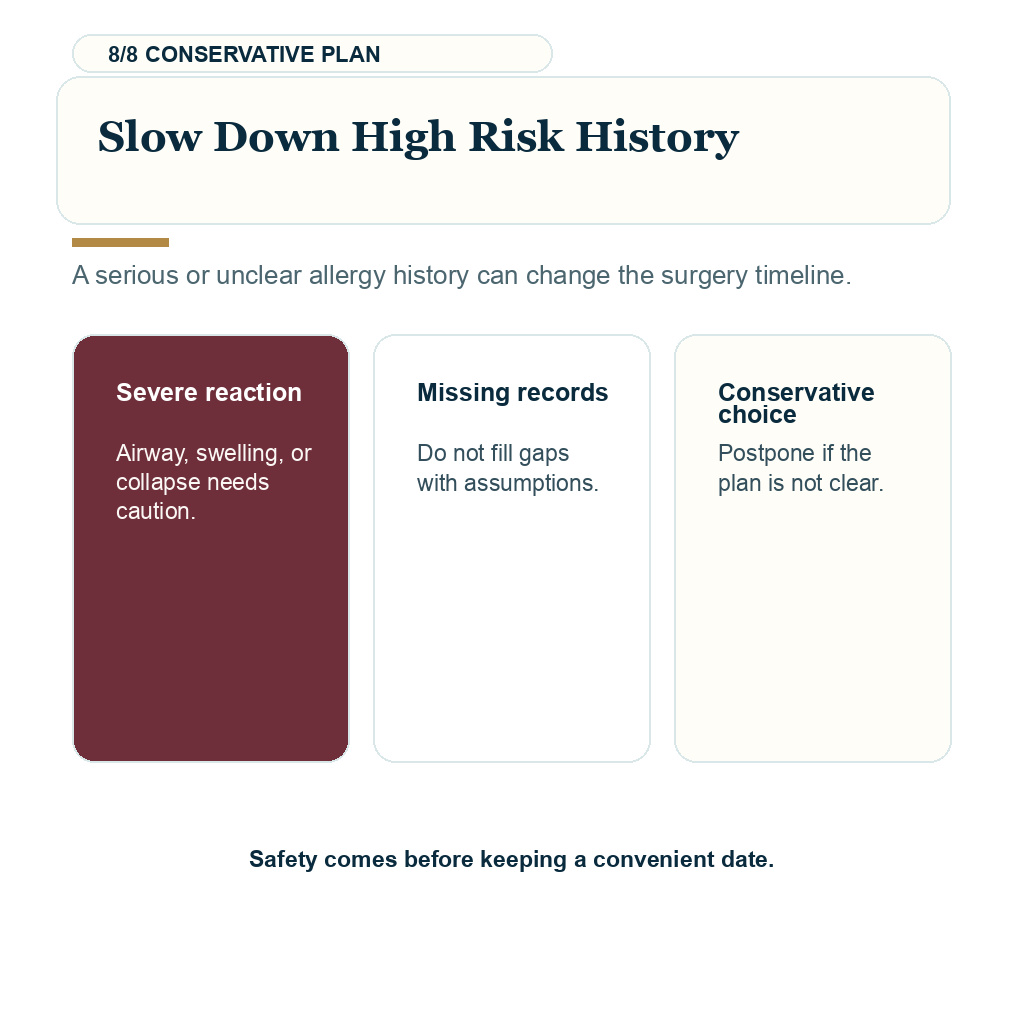
When records are missing, say that early. An old prescription photo, hospital discharge note, pharmacy label, or the drug name you were told to avoid can still help the medical team plan around uncertainty.
Do not minimize the story because you are afraid of being rejected for surgery. A hidden severe reaction can create a rushed decision on surgery day, and rushed medicine decisions are not good for you or the grafts.
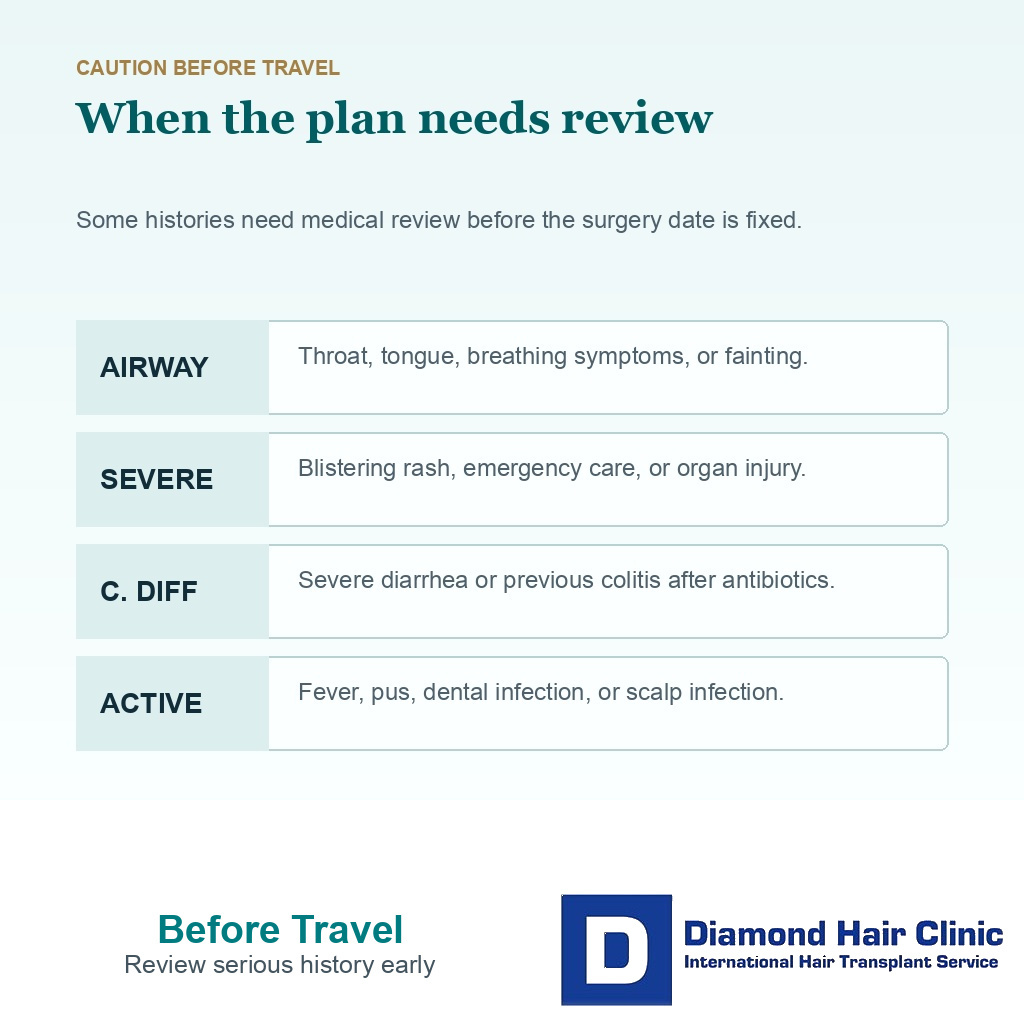
Before travel, send the medicine name, reaction timing, treatment record, and any active infection symptoms.
Diabetes, immune suppression, or slow healing risk makes the infection prevention discussion even more important. Diabetes and hair transplant surgery keeps healing risk and infection risk in the planning stage, before a complication appears.
Use the 8 antibiotic allergy planning slides below to separate allergy records, reaction severity, medication lists, anesthesia review, travel timing, and surgical safety. Swipe sideways, use the arrows, or choose a number below the image.




Warning signs after surgery that need urgent medical help
Urgent medical assessment comes before hair transplant anxiety if there is trouble breathing, wheezing, throat tightness, tongue or lip swelling, chest tightness, fainting, confusion, repeated vomiting, severe dizziness, or rapidly spreading hives. In that moment, airway, blood pressure, and systemic reaction safety come first. Update the clinic after emergency treatment has started.
Less urgent symptoms still need review when they are spreading, worsening, repeated after each medicine dose, associated with fever, or accompanied by pus, severe pain, or open wounds. Take clear photos before applying creams if possible, and include the medicine timeline. The sequence matters because the medicine name, dose timing, symptom timing, and repeat pattern help separate mild skin irritation from a reaction that needs faster medical attention.
After surgery, allergy signs in hair transplant recovery have to be separated from ordinary itching, irritation, and medicine side effects. The record you send before surgery can make those decisions faster and safer.
Allergy history should be exact before FUE
An antibiotic allergy note is useful only when it names the medicine, the reaction, the timing, and how serious it was. Rash, swelling, breathing difficulty, stomach upset, fainting, and anaphylaxis do not carry the same planning meaning. The word allergy should not replace the name of the drug.
That record helps the surgical team avoid the wrong drug, choose safer alternatives when medicine is needed, and decide whether another doctor or allergist should review the case before travel.
Antibiotic allergy does not always block FUE. A vague or hidden allergy history creates the bigger risk. Bring the details early so the operation day is not forced to solve a medical question that belonged in the plan.

Read this review excerpt
Every single one of my questions was answered and they made sure I had all the details I needed to make an informed decision.