


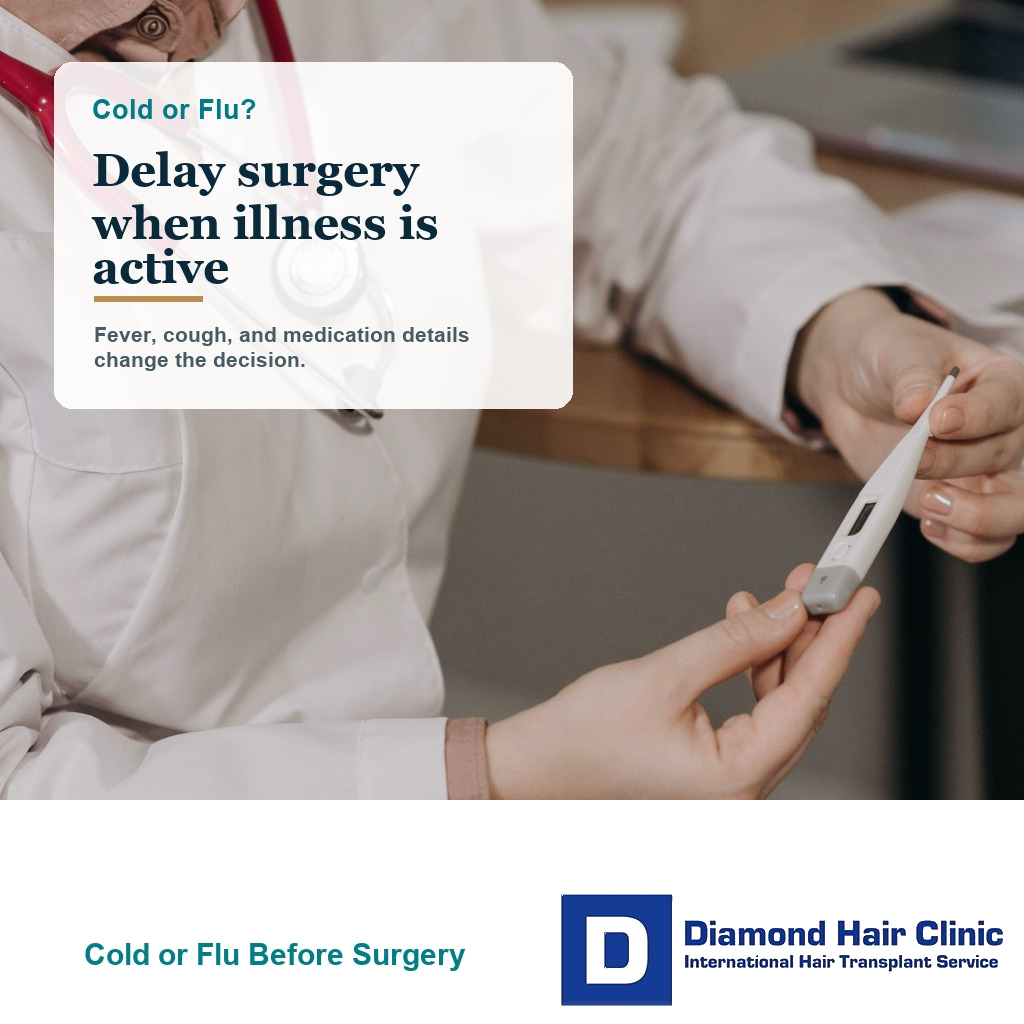
Can I Have a Hair Transplant With a Cold or Flu?
If you have fever, flu symptoms, chest symptoms, shortness of breath, or a cough that is getting worse, do not travel for a hair transplant until we review it. If it is only a light runny nose, with no fever, no chest symptoms, normal energy, and clear improvement, the date may sometimes still be reviewed, but it still needs to be reported before travel or before the surgery day.
The important question is not only the name of the illness, but how your body is coping. I need to know whether you can breathe comfortably, lie still for several hours, eat and drink normally, sleep enough, and follow aftercare after the operation. If the body is fighting a chest infection, flu, COVID, or cold sores or herpes before a hair transplant, delaying a few days or a few weeks can be safer than forcing the original date.
If you have chest pain, severe breathing difficulty, coughing blood, fainting, confusion, blue lips, severe dehydration, or an illness that is rapidly getting worse, seek urgent medical care locally first. That is not a hair transplant scheduling problem.
I know delay is frustrating when flights, hotels, work leave, and expectations are arranged. Still, a procedure can be technically possible and medically wrong for that day. The surgical date has to make sense for the whole body, not only for the hairline plan.
Before flights are fixed, send the symptom timeline, highest temperature, cough or chest symptoms, test results, medicine names, last dose time, antibiotics if prescribed, and travel dates. Clear information lets the plan change before the trip becomes harder to adjust.
Cold becomes too much for surgery
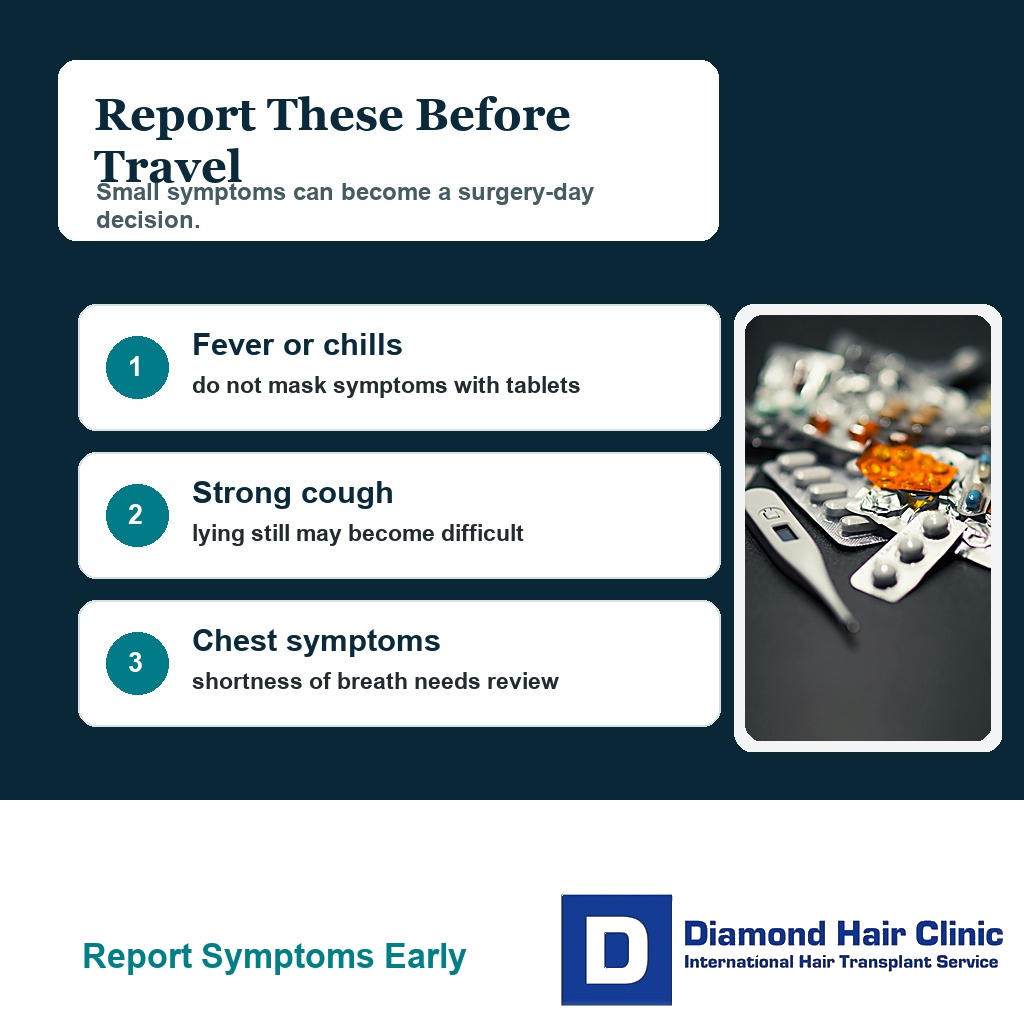
A cold becomes too much when it is more than a small, improving nasal symptom. Ask for clinic review before travel or surgery if you have fever, chills, body aches, chest tightness, wheezing, shortness of breath, repeated coughing, thick mucus together with fever, chest pain, worsening breathlessness, or feeling very unwell, vomiting, diarrhea, or a positive viral test with ongoing symptoms. If the symptom is a blocked nose and you are considering cold medicine, review decongestants before FUE because blood pressure and ingredient disclosure can change the plan for that day.
These signs matter because the operation is long. You may be lying still for several hours, the scalp will be cleaned and operated on, and you need to follow instructions carefully afterward. If you are coughing repeatedly, feverish, dehydrated, or exhausted, the procedure becomes harder to perform safely and harder to recover from.
Use specific details instead of labels. A message that says “I feel sick” is less useful than the highest temperature, whether you used paracetamol or another fever reducer, whether the cough is dry or productive, whether breathing is normal, and whether symptoms are improving or worsening today.
The direction of symptoms matters too. A light sore throat three days ago that is now clearly improving is different from a cough that is deeper today than yesterday. The trend tells the clinic whether symptoms are calming down or whether the surgery day plan needs a medical review.
COVID needs its own timing decision. For hair transplant after COVID, two weeks is only the earliest review point, not automatic clearance. Between two and seven weeks, I judge symptom severity, breathing, fatigue, medical history, procedure length, and travel before deciding whether the date is realistic.
If you tested for COVID or flu, send the test type, date, result, and whether symptoms are still present. A negative home test does not erase fever, chest tightness, or a worsening cough. I still judge the person in front of me, not only the test line.
Mild cold can sometimes be reviewed
A mild cold can sometimes be reviewed instead of cancelling the procedure. If you have a slightly runny nose, no fever, no chest symptoms, no worsening cough, normal energy, and symptoms that are clearly improving, surgery may still be considered. That decision needs to be made openly, not hidden until the morning of surgery.
A clear update gives the clinic options. Observation may be enough, a medical check may be needed, or a short delay may protect the appointment and recovery. Hiding symptoms removes the chance to make a clean adjustment.
Reporting symptoms is not a punishment. It is how we separate a small, settling cold from an illness that changes safety, travel, aftercare, or infection control.
Allergy or sinus irritation is different from infection
Not every runny nose is an infection. Seasonal allergy, dry air, mild sinus irritation, or a known noninfectious trigger can look like a cold from the outside. Stable sneezing or clear nasal symptoms without fever, chest symptoms, body aches, worsening fatigue, or a positive viral test may be judged differently from flu or an active respiratory infection.
Allergy tablets, nasal sprays, decongestants, asthma inhalers, and recent antibiotics still need to be disclosed, even when you do not feel truly sick. Wheezing or asthma symptoms belong in the same review before surgery as asthma and hair transplant planning.
Stable and explained symptoms are different from symptoms that are new and moving. A familiar mild hay fever pattern every spring is different from a new fever, deep cough, and chest tightness two days before surgery.
Fever or flu can delay a hair transplant
Fever or flu can delay a hair transplant because they suggest active infection or inflammatory stress. During that period, hydration, appetite, sleep, breathing comfort, blood pressure, and medicine tolerance can all become less predictable. Hair transplantation is normally performed under local anesthesia, but it is still a medical procedure.
There is also a safety issue for the surgical team and other people in the clinic. If you are contagious, the surgery day can put others at risk. A surgeon-led clinic should not treat that as a small inconvenience.
If fever was present, I do not judge readiness from a few better hours after fever medicine. I want symptoms improving overall and no fever without medicine that lowers temperature before an elective surgery date is treated as realistic. If you feel weak, feverish, or mentally foggy, you may forget medication details, miss instructions, or struggle with the careful early aftercare that protects grafts.
If fever appears before surgery, updated screening may be needed. Blood tests before a hair transplant are not there to create obstacles. They help catch medical problems before thousands of grafts are moved.
Repeated cough can affect surgical control
A repeated cough can be a real problem during hair transplant surgery. You need to stay still while grafts are extracted and placed. Sudden movement at the wrong moment can make the work less controlled, especially during delicate recipient area work. A brief occasional cough is one thing. A cough that comes in waves, wakes you at night, or makes lying flat difficult is different. If the cough is the main active symptom near your FUE date, the bad cough before FUE surgery day plan explains what to report before the appointment is confirmed.
Sleep disruption is part of the cough story. Movement, fatigue, and medicine use matter more than whether the throat feels only mildly irritated.
Coughing after surgery is also a practical issue. Coughing itself does not usually dislodge secure grafts after the earliest vulnerable period, but forceful coughing can increase discomfort, disturb sleep, and make you more likely to touch, rub, or bump the scalp. Timing still matters because the first days are different from later recovery.
Cold or flu medicine should not hide symptoms
Avoid using cold or flu medicine to make symptoms look better for the clinic. Some products bought without a prescription contain painkillers, NSAIDs, decongestants, antihistamines, caffeine, or other ingredients that may affect blood pressure, sleepiness, bleeding tendency, stomach comfort, or medication planning. The product name is not enough. The ingredient list matters.
FUE is usually done with local anesthesia, and some anesthetic plans use adrenaline. That does not make every cold medicine dangerous, but stimulant decongestants, high blood pressure, fast pulse, poor sleep, anxiety, and chest symptoms can make surgery day less predictable.
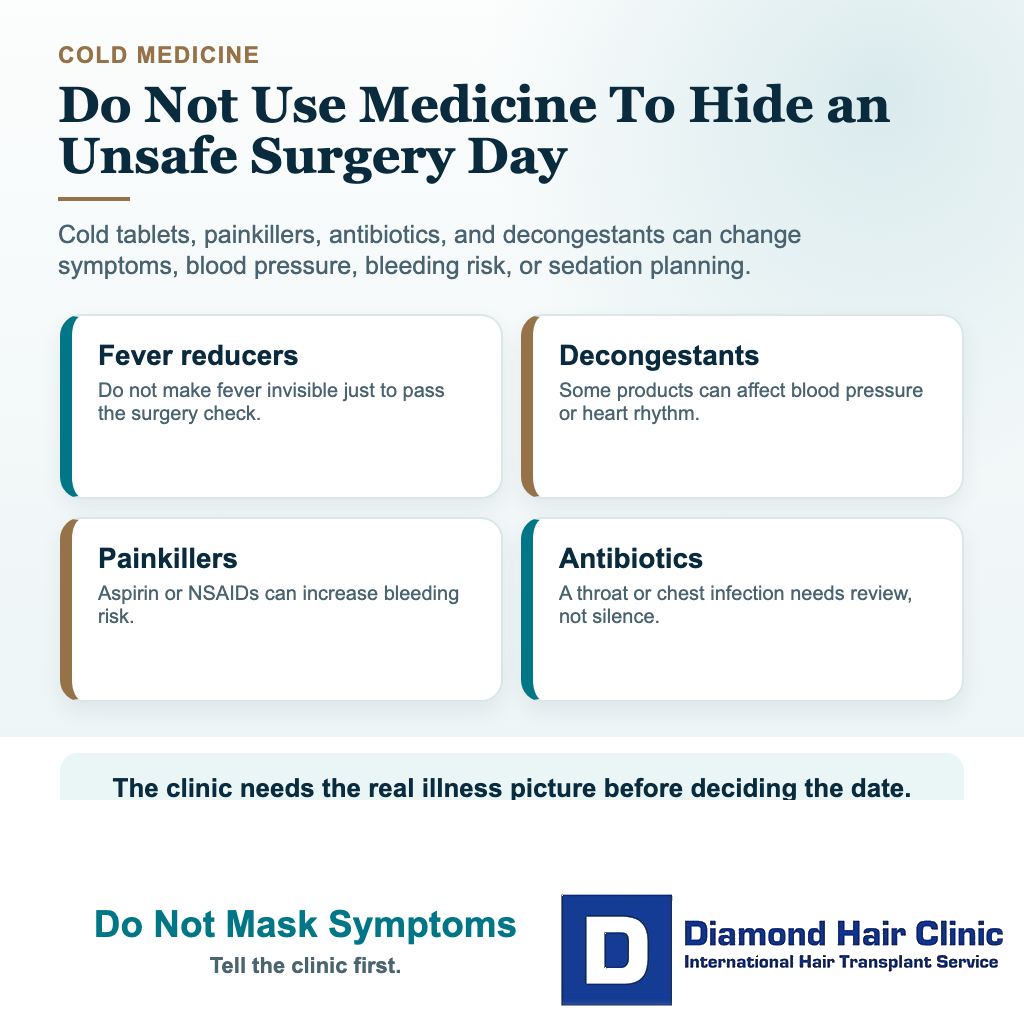
If you have already taken tablets, syrup, nasal spray, antibiotics, or fever reducers, tell the clinic exactly what you took, the dose if you know it, and when you took the last dose. Fever medicine can make you look better for a few hours while the illness is still active. Normal prescriptions need that detail too. For medication before a hair transplant, the decision depends on the medicine, dose, reason for use, and timing.
Send photos of cold and flu product labels when possible. Combination products can hide ibuprofen, aspirin, decongestants, antihistamines, caffeine, or several active ingredients in one sachet or syrup. If the product contains ibuprofen, naproxen, diclofenac, aspirin, pseudoephedrine, phenylephrine, caffeine, codeine, or a sedating antihistamine, send the label before taking another dose or traveling. Brand names change by country, so the active ingredient panel is more useful than the front of the box.
One ordinary cold tablet is different from repeated doses of a combination flu product. After surgery, do not guess between paracetamol, ibuprofen, aspirin, or stronger tablets. If pain or fever medicine is needed, keep it consistent with the plan for painkillers after a hair transplant.
Antibiotics for throat or chest infection need review
If you are already on antibiotics for a throat infection, sinus infection, chest infection, dental infection, or another active infection, surgery needs review before proceeding. The main issue is not only the antibiotic. Antibiotics do not turn an active throat, chest, dental, urinary, or skin infection into a safe surgery day. The reason for the antibiotic may mean the body is not ready for elective surgery.
Share the diagnosis, antibiotic name, dose, start date, planned finish date, and whether fever, cough, pain, swelling, diarrhea, vomiting, or weakness is still present. A completed prescription with full recovery is different from day two of treatment while symptoms are still moving.
Some people think antibiotics make the situation safe by themselves. I do not judge it that way. The reason for the antibiotic, symptom direction, fever history, chest involvement, general energy, and the treating doctor’s opinion all matter. After surgery, infection planning still needs that full context. The tablet is only one part of infection planning, not a substitute for medical judgment.
This point matters more when you are flying from another country. If antibiotics start two days before travel, send the update before boarding the plane. A small delay at home is usually easier and safer than arriving sick, tired, and uncertain on the planned surgery day.
Being sick can affect healing indirectly
Being sick can affect healing indirectly. A short mild cold that is settling may not change healing in a meaningful way, but fever, poor sleep, dehydration, poor appetite, active infection, and immune stress can make recovery less predictable. Hair transplant healing depends on clean surgery, careful graft handling, good aftercare, and your ability to follow instructions.
I do not want a patient starting recovery already exhausted, coughing heavily, dehydrated, or unsure which medicines were taken that morning. This page is mainly about illness before travel or surgery. If surgery has already happened, fever, chills, worsening pain, spreading hot redness, pus, a bad smell, or feeling unwell needs review, and those signs need the same clinical attention used for infection after a hair transplant.
Low white blood cells can change the decision
Low white blood cells can change the decision if the result is unexplained, falling, moderate or severe, or connected with fever, mouth ulcers, skin infection, recent antibiotics, or medicine that affects the immune system. A low result does not always mean surgery is impossible, but it should not be ignored when you are also sick.
If a recent blood test shows low WBC or low neutrophils, that result needs review before surgery is confirmed. The same applies if you think you “only have flu” but also have unusual infections, delayed recovery, or unexplained fatigue. I treat that concern with the same care as low white blood cells and hair transplant surgery.
This does not make every blood result alarming. It means the result has to be understood in context. A stable old result when you feel well is different from a new abnormal result with fever or active infection.
Details to send the clinic before traveling
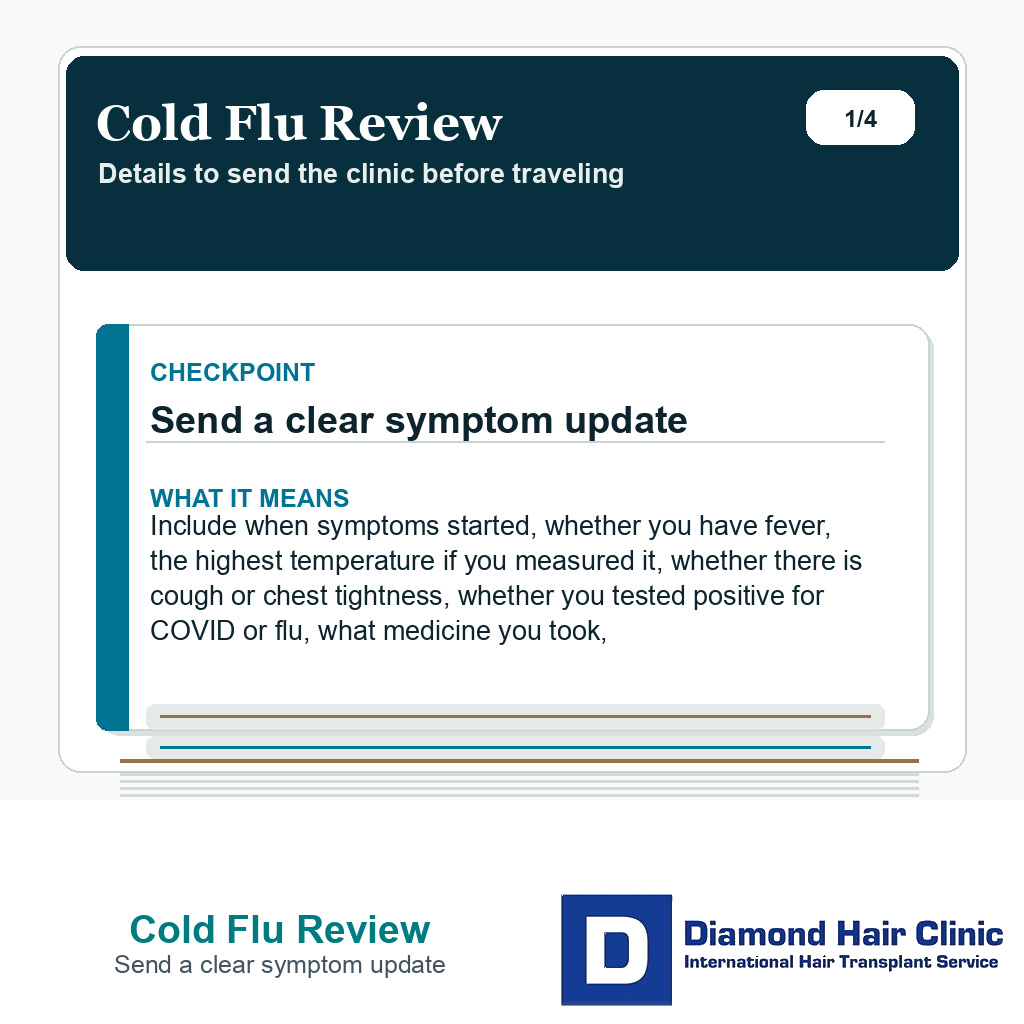
Send a clear symptom update before you travel. Include when symptoms started, whether you have fever, the highest temperature if you measured it, whether there is cough or chest tightness, whether you tested positive for COVID or flu, what medicine you took, and whether symptoms are improving or getting worse. If a doctor prescribed antibiotics or another treatment, include that information too.
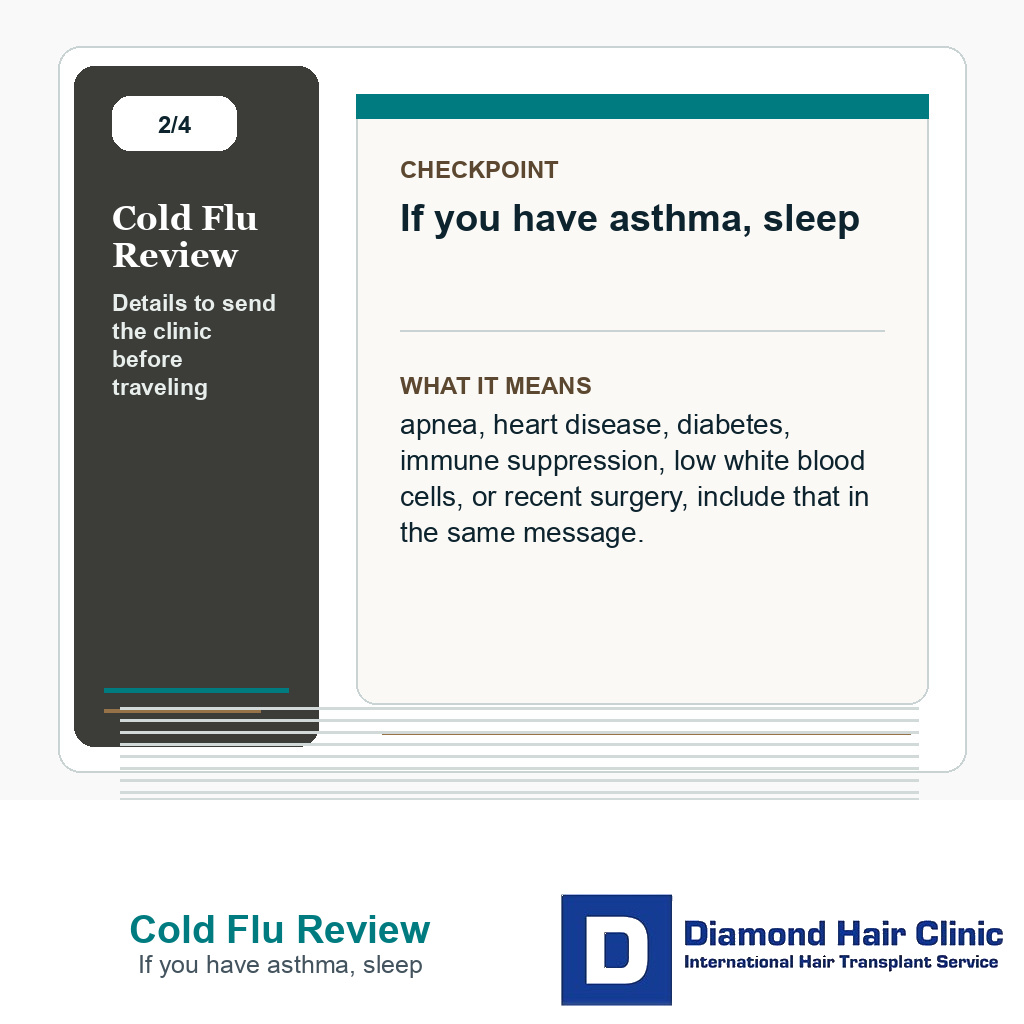
If you have asthma, sleep apnea, heart disease, diabetes, immune suppression, low white blood cells, or recent surgery, include that in the same message. A mild cold in a stable person is not the same decision as respiratory symptoms in someone with a medical condition that can worsen during travel or recovery.
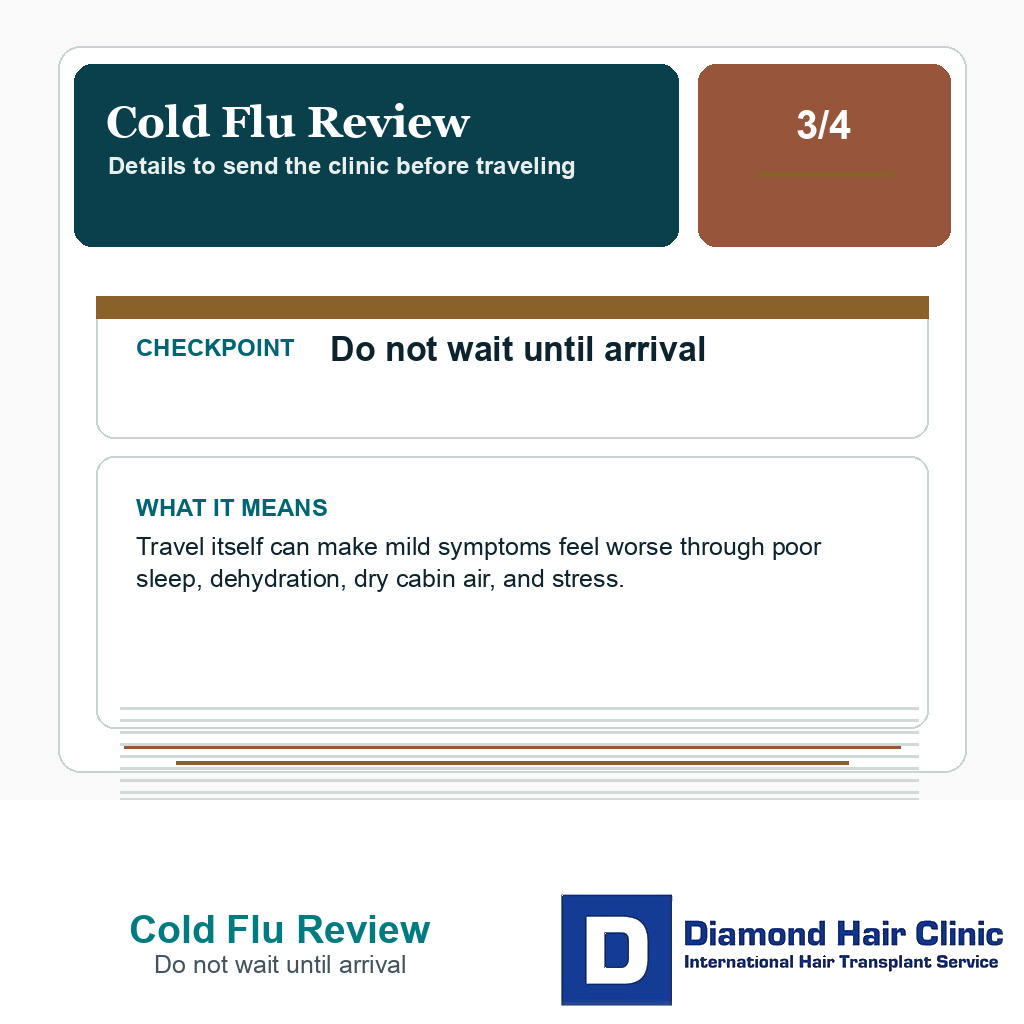
Tell the clinic before the Istanbul trip if a new illness is developing. Travel itself can make mild symptoms feel worse through poor sleep, dehydration, dry cabin air, and stress. If you are planning a flight, travel timing and early recovery need practical planning, especially around flying after a hair transplant.
If symptoms return after you arrive in Istanbul, update the clinic from the hotel before taking extra medicine or coming to the appointment as if nothing changed. A new fever, stronger cough, chest symptoms, or a worse general feeling can change the decision even if you were improving before the flight.
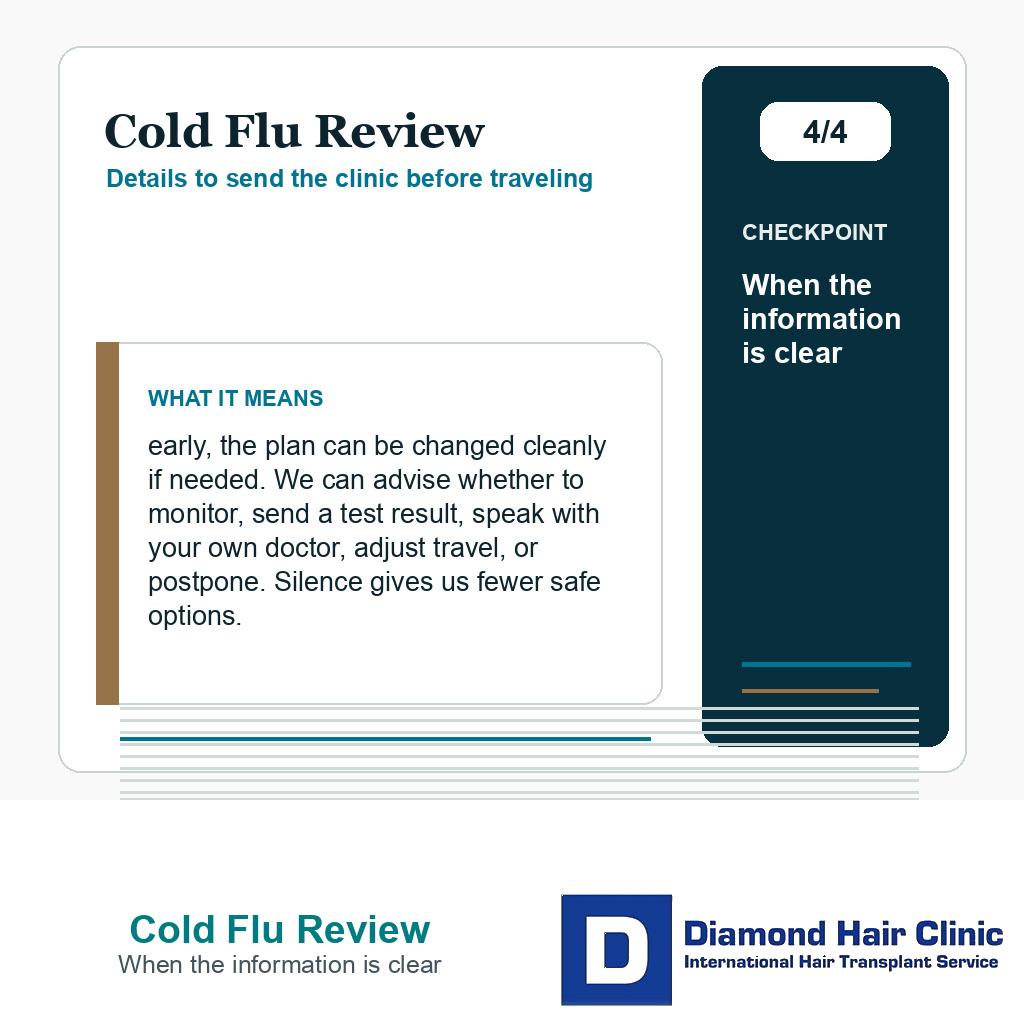
Early information gives us cleaner choices. We can advise whether to monitor, send a test result, speak with your own doctor, adjust travel, or postpone. Silence gives us fewer safe options.
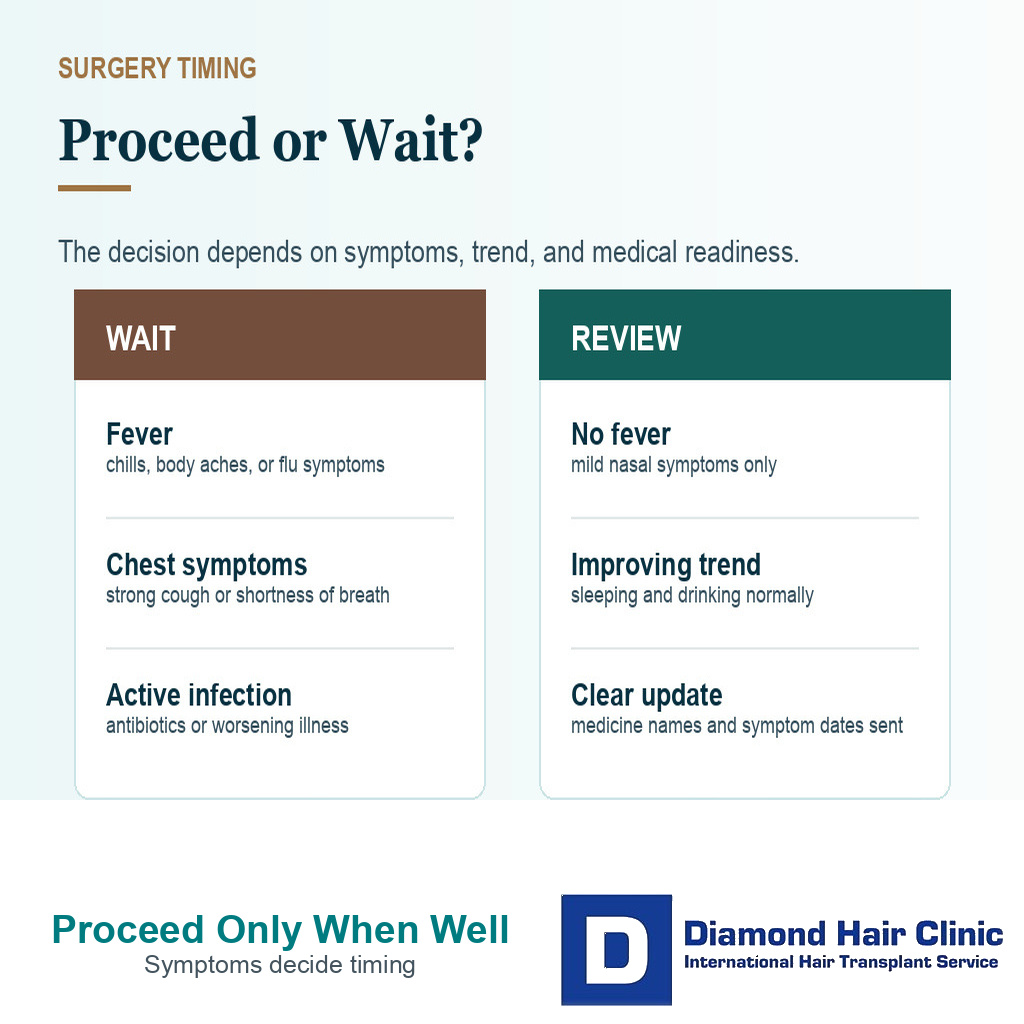
The 4 slides here separate a mild, improving symptom from fever, active infection, medicine uncertainty, and travel warning signs. Use the arrows to move through the examples.
Waiting after cold or flu symptoms
There is no single number that fits every case. For a mild cold, I may only need symptoms to be clearly improving, with no fever and no chest symptoms. For flu, fever, chest symptoms, strong cough, shortness of breath, recent positive viral test, dehydration, or antibiotics for an active infection, waiting longer is usually more sensible.
Before an elective hair transplant date is treated as realistic, the recovery pattern should be stable. You should be free of fever without medicine that lowers temperature, breathing comfortably, sleeping reasonably, eating and drinking normally, and clearly improving. If the illness was significant, the decision may need medical review rather than a fixed calendar rule.
The first day you feel slightly better is not always the best surgery day, especially after a flight. I want to see symptoms moving in a stable direction, with no new fever, no worsening cough, no chest symptoms, normal hydration, and enough energy to follow washing, sleeping, and medication instructions after the operation.
For travel to Turkey, this is also a logistics problem. A safer delay before travel is better than arriving unwell and discovering that surgery cannot proceed. The travel buffer also affects how many days to stay in Turkey for a hair transplant.
If your surgery date is close
If your surgery date is close and you feel unwell, do not hide it. Send the clinic a clear update. The decision may be to proceed, monitor for one or two days, ask for medical review, update tests, change travel timing, or postpone. The answer depends on symptoms, timing, medical history, medicine use, and how stable you feel.
A clean surgical day is better than a forced date. A hair transplant uses donor grafts that cannot be treated casually. If the body is clearly not ready, delaying is not failure. It is often the part of the plan that protects safety, graft handling, and recovery.
If the illness is settling, we can review the date without panic. If fever, chest symptoms, strong cough, dehydration, or active infection are still present, delaying is safer than forcing a surgery day the body is not ready for. Do not protect the appointment by hiding symptoms. Protect safety and the result by telling us early.

Read this review excerpt
Every single one of my questions was answered and they made sure I had all the details I needed to make an informed decision.