


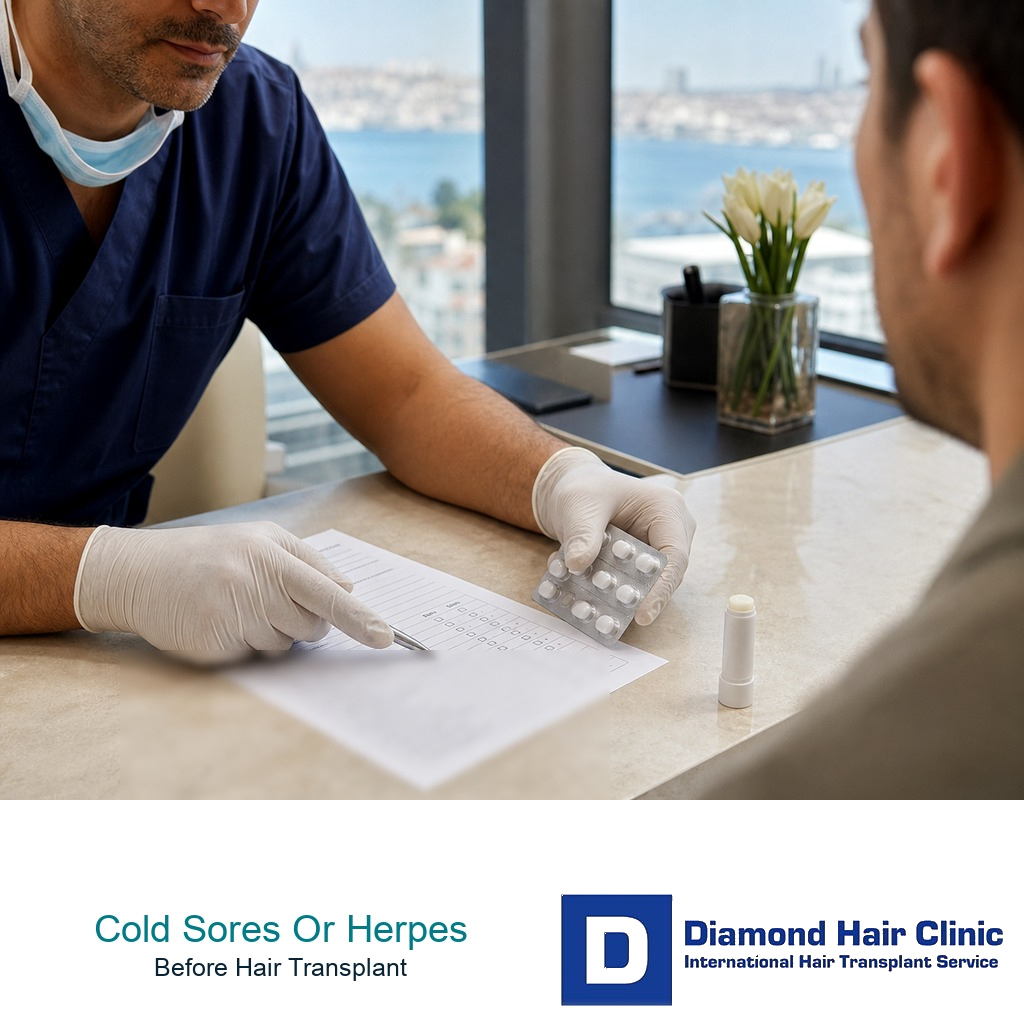
Cold Sores, Herpes, and Hair Transplant Timing
A past history of cold sores or herpes can still be compatible with hair transplant surgery. A past cold sore history is not the same as an active outbreak. The date needs review if you have new tingling, burning, blisters, an open or wet sore, fever, eye symptoms, painful scalp lesions, or an outbreak that is still spreading. Early tingling matters because waiting for an obvious blister can make the timing decision too late.
The timing decision starts with whether the skin is quiet enough, whether you feel well enough for a long elective procedure, and whether the antiviral plan is clear. Surgery may need to wait until the sore is dry, healing, and medically reviewed. Do not hide symptoms or start, stop, or change acyclovir, valacyclovir, famciclovir, or similar antiviral medicine on your own.
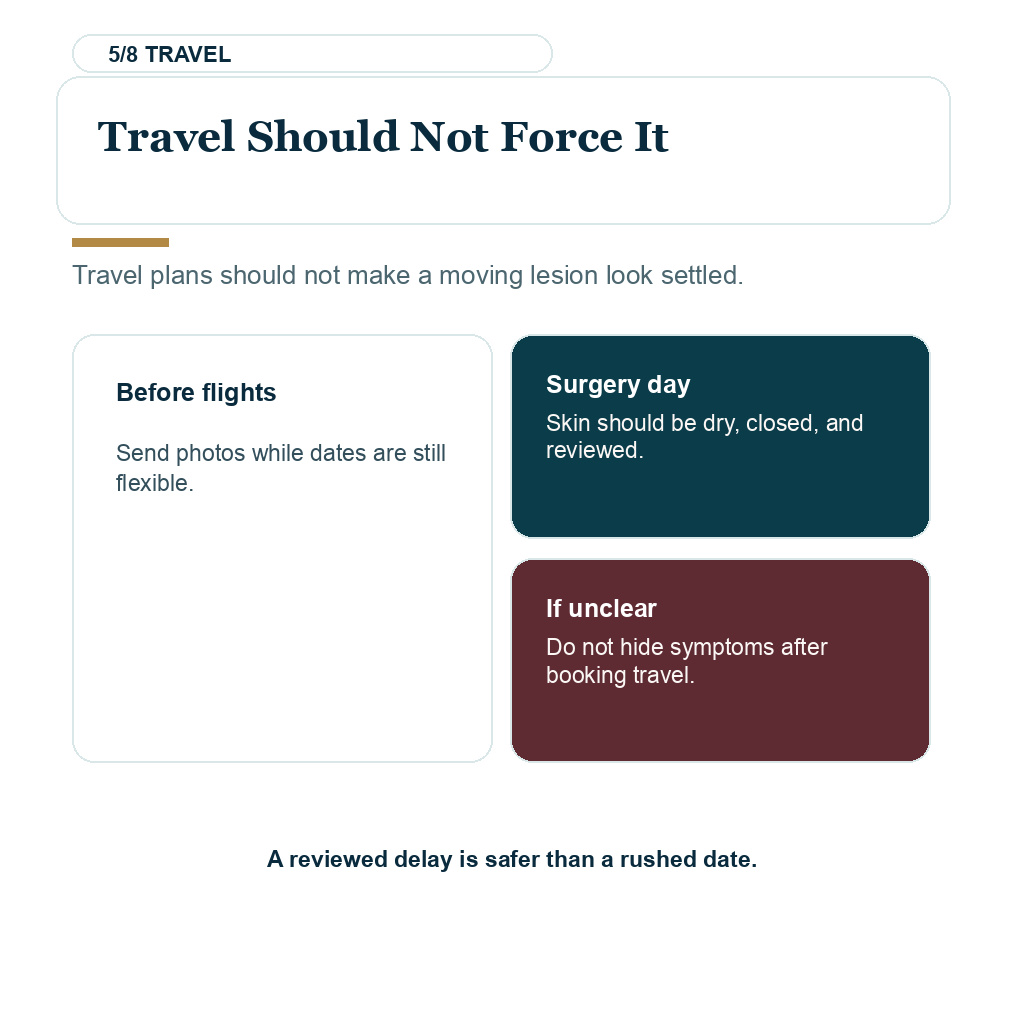
If a sore appears close to the operation date, tell the clinic before you travel or before the design starts. Covering it, picking it, or hoping it dries by the morning makes the review less reliable.
If flights are already booked, the update matters even more. A fresh blister, early tingling, fever, or a new antiviral start should be reported before the clinic commits to surgery day. That location can change whether a mask, shaving, or washing keeps irritating the area.
This is different from having a cold or flu before a hair transplant, but the timing logic is similar. The right surgical date is the day your body is ready for surgery, not only the day that matches the flight ticket.
Past cold sore history is different from an active outbreak
A history of cold sores or herpes does not by itself cancel hair transplant surgery. Many people carry herpes simplex virus and only have occasional outbreaks. If the skin is quiet, there is no current sore, and the medical history is clear, surgery can often be planned normally.
The label alone is not enough. I look at how often outbreaks happen, where they appear, whether the recent one fully healed, antiviral use, and any history of eye symptoms, severe spreading lesions, or immune system problems. Those details matter more than one word on the medical form.
If you have ever been told you had herpes in or near the eye, mention it directly. I do not judge eye herpes like a small lip cold sore. Eye pain, redness, light sensitivity, blurred vision, or a sore close to the eyelid should involve an ophthalmologist or the doctor already treating you before an elective operation is planned.
I know some people feel embarrassed and avoid mentioning herpes. Please do not treat this as a moral question. It is a medical timing question. Travel stress, poor sleep, strong sun, dental work, fever, and surgery can all trigger outbreaks in some people. Knowing the pattern early helps us decide whether the date can stay, whether an antiviral plan needs coordination, or whether waiting is safer.
If long flights, intense sun, fever, fatigue, or stress often trigger your cold sores, say that before travel. It may not cancel the operation, but it can change preparation, timing, and how carefully we watch the first healing days.
An active cold sore usually means delaying surgery
An active cold sore should be reviewed before surgery, especially if it is new, open, painful, wet, crusting, spreading, or joined by fever or feeling unwell. If the outbreak is still developing, postponement is safer than operating through uncertainty.
An old healed mark is different from the warning stage of a new outbreak. Tingling, itching, burning, or numbness can appear before the blister is obvious. From that stage until complete healing, the sore can still create hygiene and touching problems. It is not something to cover with cream and ignore because the travel date is close.
Report tingling early, before a full blister appears. The prodrome stage matters because it may be the start of an outbreak, especially if it follows your usual pattern. A clear message at this point gives more time to review timing, photos, and any existing antiviral plan before travel pressure builds.
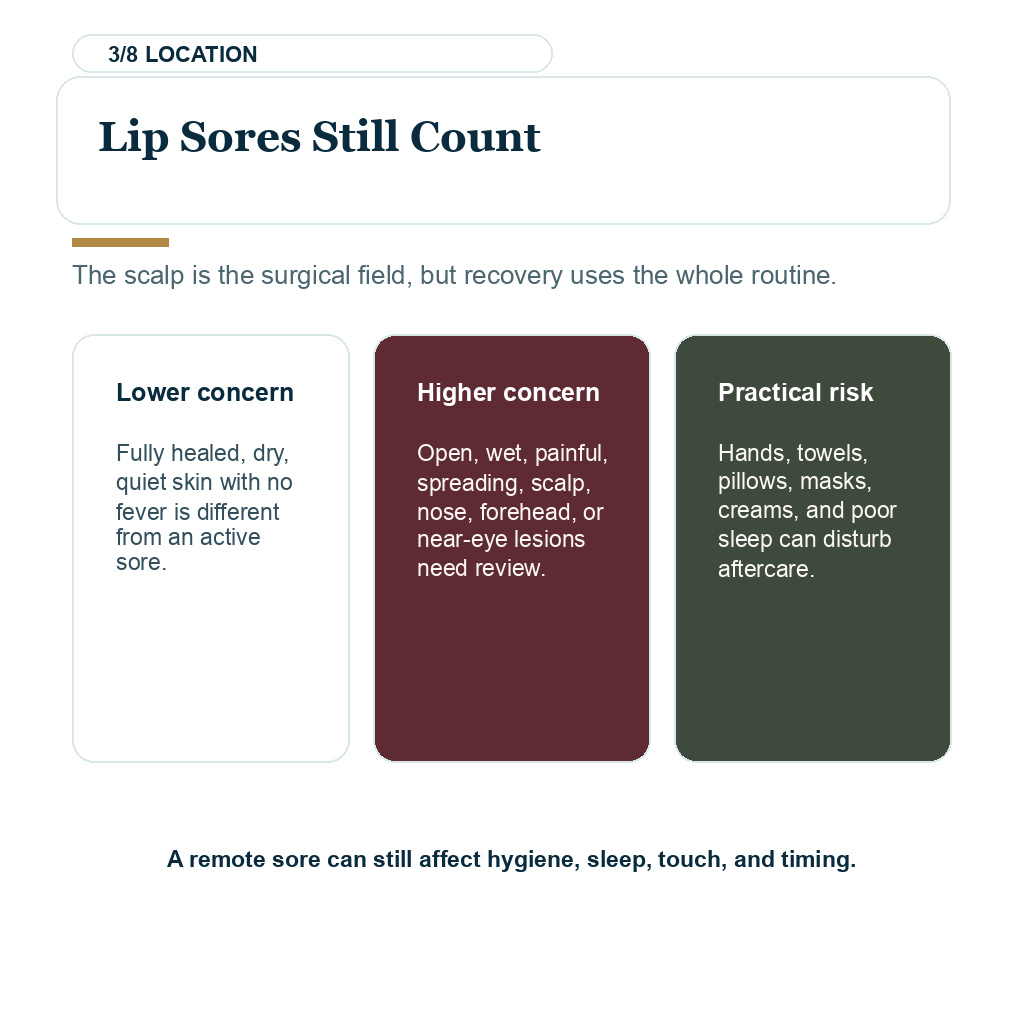
Sores near the nose, around the mouth, on the forehead, near the eyes, or anywhere that could contaminate hands, pillows, masks, towels, or aftercare behavior need closer review. The operation does not happen in isolation. You still need to wash, sleep, eat, take medicine, travel, and avoid touching the scalp after surgery.
Lip cold sore can still affect surgery timing
A lip cold sore is not the same as an infected scalp, but it still matters. The surgical field is on the scalp, yet recovery involves the same hands, towels, pillow, drinking glass, mask, and phone. A painful lip sore can also increase touching, poor sleep, stress, and medication confusion.
If the cold sore is fully healed and you feel well, the concern may be small. If the sore is open, wet, painful, or spreading, the date needs photo and timing review before the surgery day. A remote sore can become a practical problem when it is treated casually.
Scalp lesions are more direct. New blisters, painful bumps, pustules, crusting, or unclear sores on the donor area or recipient area need medical review before graft extraction or placement. I use a stricter skin barrier standard when judging folliculitis before a hair transplant or scalp eczema before a hair transplant. I need the skin quiet enough for clean work and predictable healing.
Antiviral medicine should follow a clear medical plan
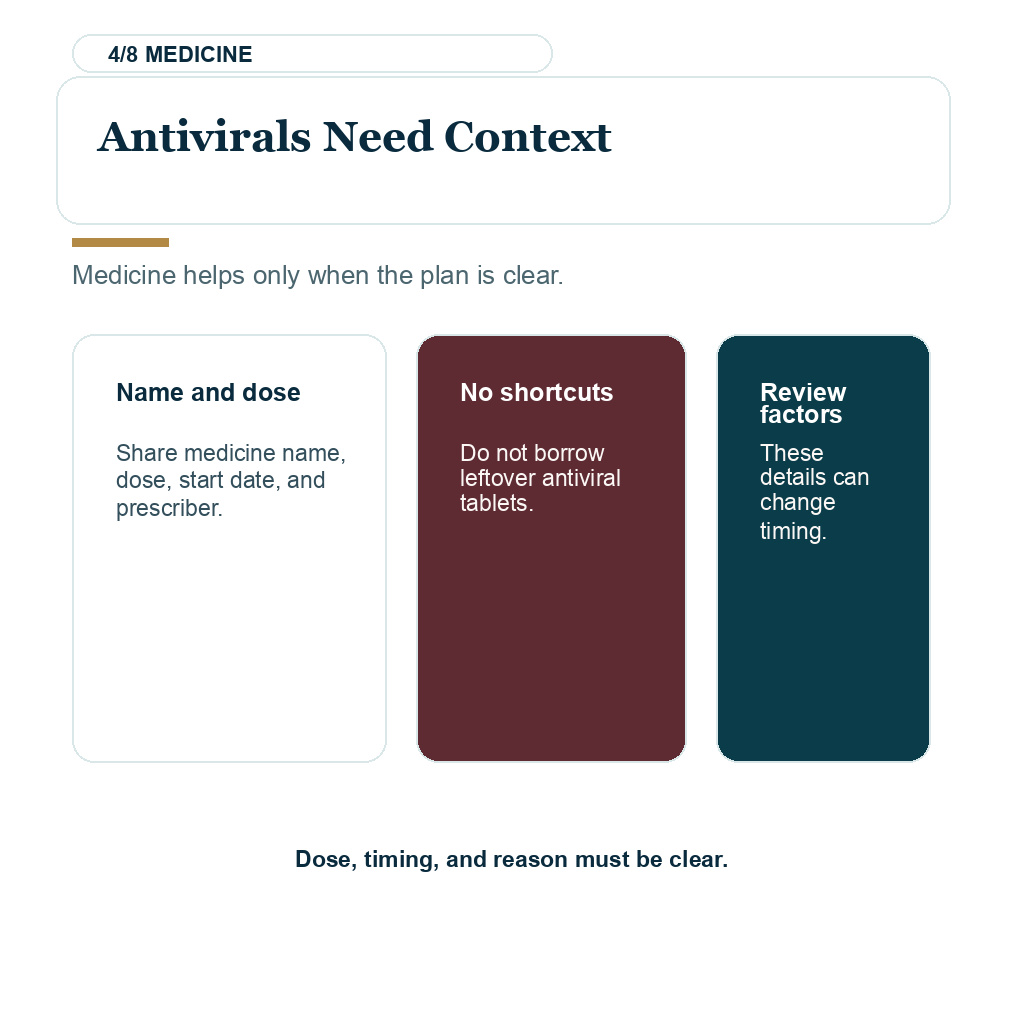
Some people with repeated outbreaks already have acyclovir, valacyclovir, famciclovir, or another antiviral plan from their doctor. That information is useful. It does not mean every person should start tablets on their own before surgery.
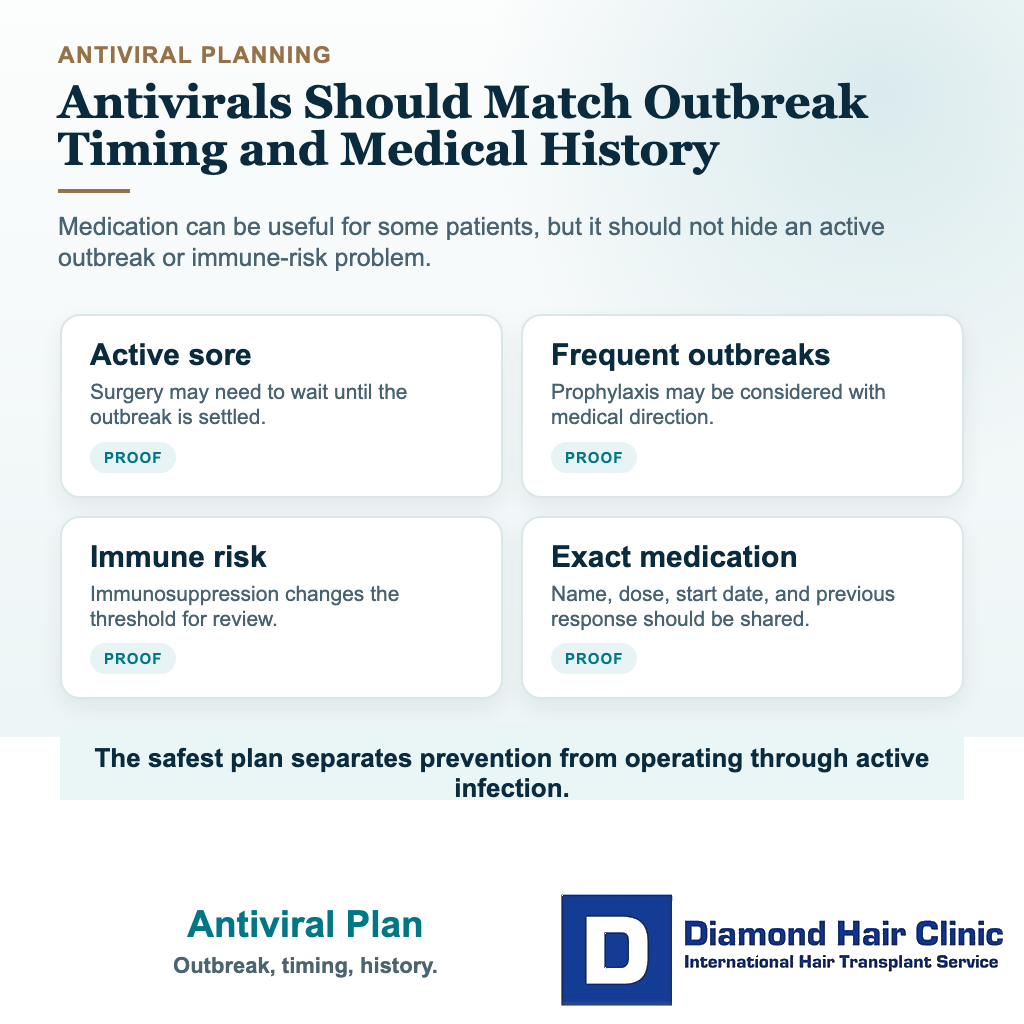
Tell the clinic the medicine name, dose, timing, who prescribed it, why you use it, and whether you started it for this outbreak or take it preventively. Include this in the same direct discussion as any other medication before a hair transplant. If your prescribing doctor gave a plan for recurrent outbreaks, share it before travel.
Antiviral tablets need to match your own prescription and medical history. Old leftover medicine or tablets borrowed from someone else can make the timing review less reliable. The decision changes depending on whether the medicine is prescribed suppression, a short outbreak treatment, or an improvised response. Kidney disease, immune suppression, other medicines, and uncertain dosing all change the review.
Antiviral medicine is not a permission slip to ignore active lesions on surgery day. Creams, tablets, and eye ointments are not interchangeable. The decision depends on outbreak pattern, kidney history, other medicines, immune status, lesion location, and whether symptoms are active.
Fast improvement still needs review before travel
Improvement is useful, but it is not the same as being ready for surgery. A sore that is shrinking, less painful, or partly crusted can still affect hygiene, touching, sleep, and medication planning. I review when tingling started, when the blister appeared, when antiviral medicine began, and whether the skin is now dry, closed, and clearly settling.
If the sore improves quickly before travel, share updated photos instead of deciding alone. A fully healed dry mark is different from a fresh scab, a wet crack, a new tingling area, or a lesion near the eye. The purpose is not to punish you for having herpes. It is to avoid elective scalp surgery while the skin condition is still moving.
Details to send the clinic before traveling
Share clear photos in good light, the date symptoms started, the location of the sore, whether it is improving or spreading, and any antiviral medicine you have used. If the lesion is near the eye, on the scalp, or joined by fever, say that clearly.
Useful photos include one close image and one wider image that shows where the lesion sits on the face, lip, nose, forehead, scalp, or beard area. If you wear contact lenses, have eye irritation, or have a history of eye herpes, include that information in the first message.
A vague message about a small spot is not enough. A dry, nearly healed cold sore is different from a new blister that is still opening. A scalp blister is different from an old lip scar. Two mild outbreaks per year are different from frequent severe outbreaks while using medicine that affects the immune system. If you are not sure whether the lesion is herpes, impetigo, a pimple, a mouth ulcer, or irritation, say that uncertainty instead of naming it yourself.
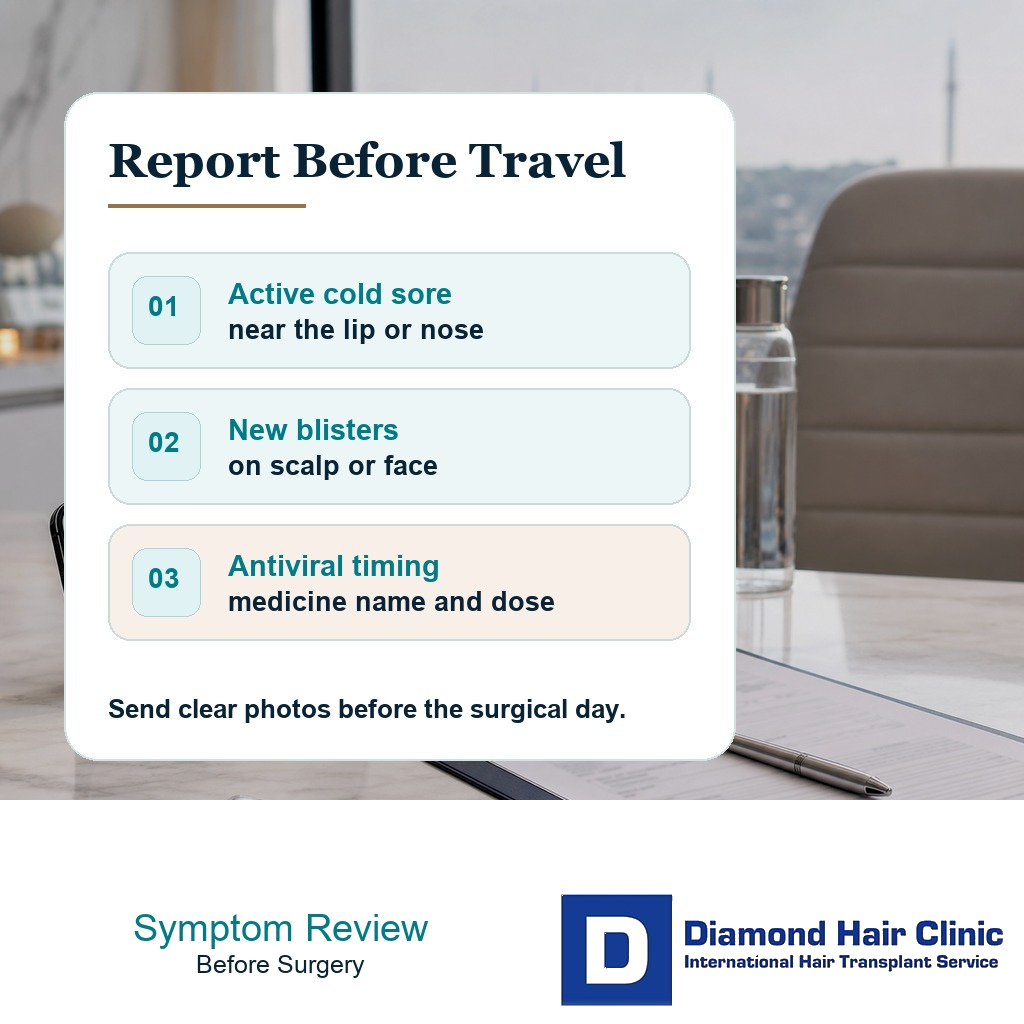
Clear symptom photos and antiviral details help the clinic judge timing before you are already in Istanbul.
For international travel, this discussion is best handled before flights and hotels force a rushed decision. A short delay before travel is often easier than arriving in Istanbul and discovering that the skin is not ready for surgery.
A request for medical review is not rejection. It keeps surgery planning from being settled in a hotel room the night before. Earlier review helps separate a date that can stay from a case that needs antiviral coordination or a delay.
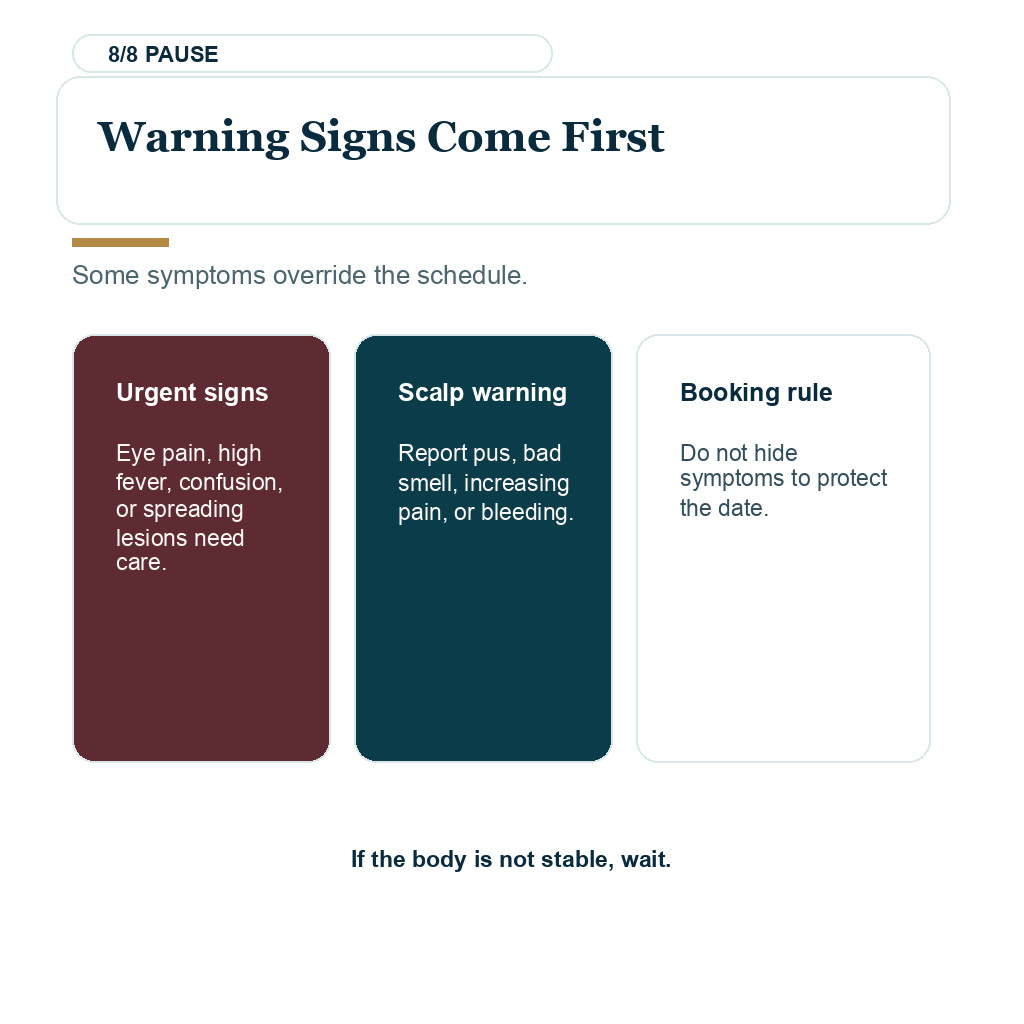
These 8 cold sore timing slides separate old herpes history, early warning symptoms, lesion location, antiviral details, travel pressure, immune context, aftercare symptoms, and urgent warning signs. Swipe sideways, use the arrows one slide at a time, or choose a number below the image.


Genital herpes and scalp surgery planning
A past history of genital herpes does not always stop scalp surgery. The scalp is the surgical area, and a stable history can often be planned safely. The question is whether there is an active outbreak, fever, severe pain, new medication, immune concern, or anything that makes you generally unwell.
If an outbreak is active, share that with the clinic before travel. The concern is not only direct contact with the scalp. It is pain, sleep, stress, medication timing, hygiene, and whether the body is dealing with an active viral episode while an elective surgical procedure is being planned.
Some people separate these details because the outbreak is not on the head. I still look at the whole situation. A hair transplant is local surgery, but it depends on stable health, clear aftercare, and your ability to follow instructions without extra medical pressure.
Immune suppression and frequent outbreaks need extra caution
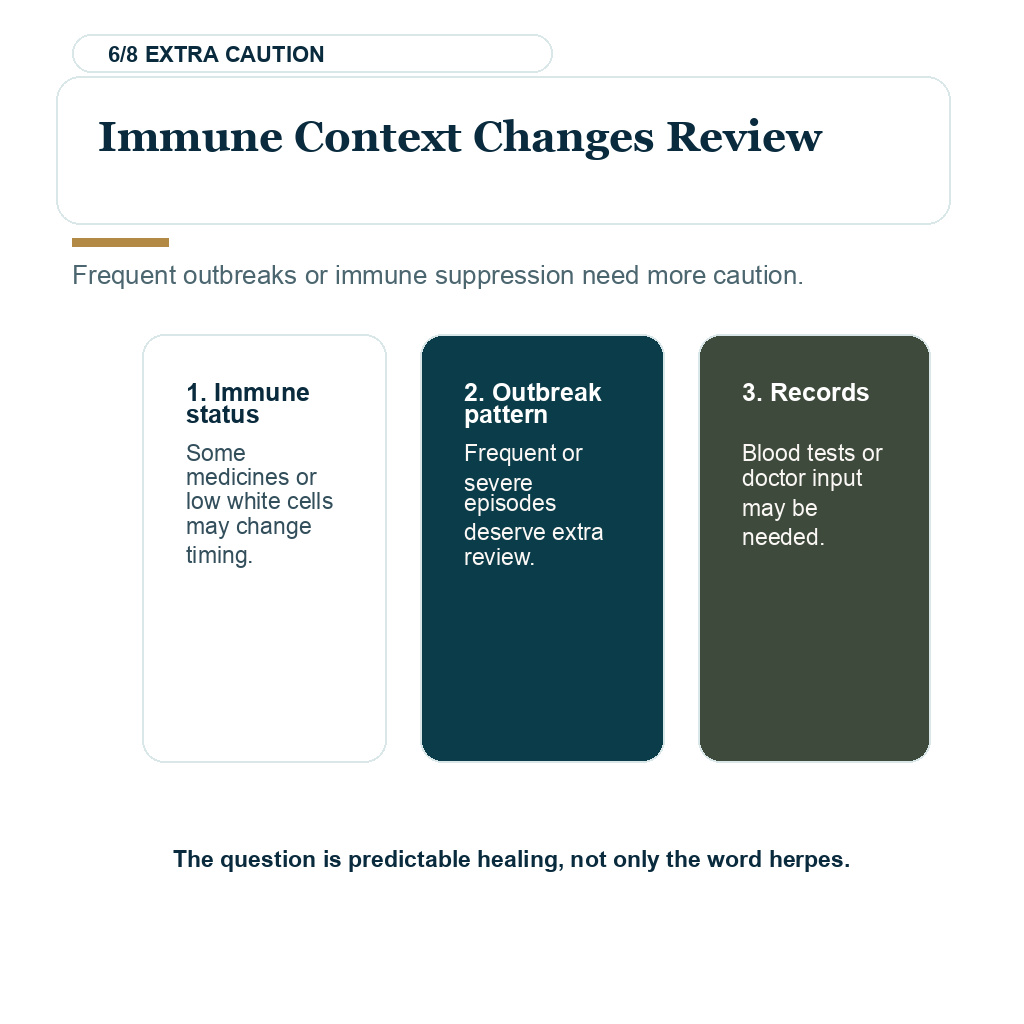
If you are immunosuppressed, have low white blood cells, use biologic medicine, take corticosteroids, have poorly controlled diabetes, or get frequent severe outbreaks, the decision needs more caution. I may need recent medical information, a prescribing doctor opinion, or blood tests before a hair transplant.
Here the concern is healing and outbreak control, not only the word herpes. If the immune system is not controlling infection normally, or if outbreaks are frequent and severe, I do not judge the surgery only by the hairline plan. I judge whether the skin and the body can heal predictably.
A stable, explained, mild immune finding is different from new fever, mouth sores, skin infection, or falling counts. With low white blood cells before surgery, the cause, trend, and symptoms matter more than one number alone.
Herpes is different from a bacterial infection
Cold sores and many herpes outbreaks are viral. Antibiotics do not treat herpes simplex. If you take leftover antibiotics because a sore looks frightening, the real problem may remain untreated while side effects, allergy risk, stomach problems, or drug interactions are added.
Infection after a hair transplant is judged by worsening redness, heat, swelling, pus, bad smell, increasing pain, fever, or feeling unwell. Herpes symptoms can look different, but any worsening or unclear lesion after surgery still needs review.
If antibiotics after a hair transplant are needed, they should be chosen for the right reason. If antiviral medicine is needed, that is a different medical decision. Mixing those categories casually creates avoidable confusion in the first healing days.
Herpes symptoms after the transplant
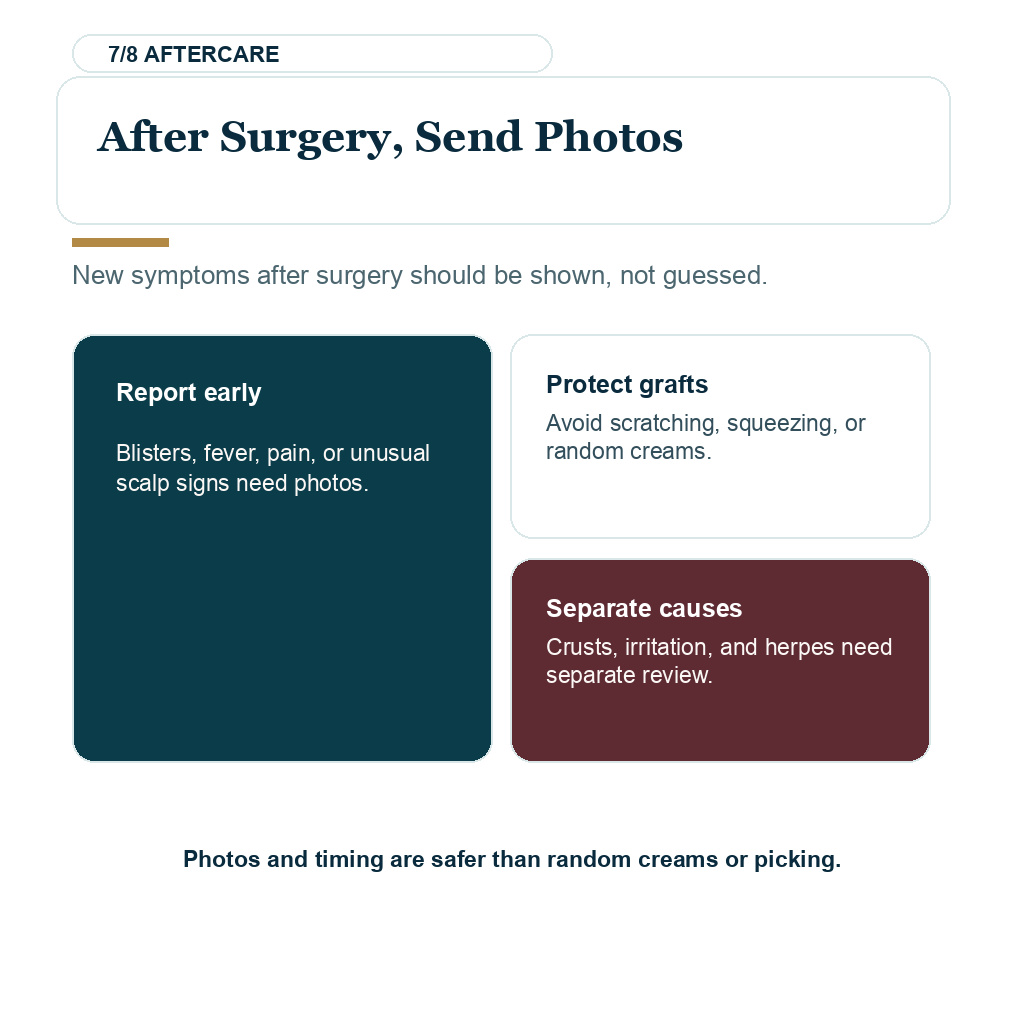
If tingling, blisters, painful sores, fever, or unusual skin symptoms appear after the transplant, document the area in good light and describe the timing. Do not scratch, squeeze, pick, or apply random creams near the transplanted area. A scab, cold sore, folliculitis, irritation, or another skin problem should be separated before anything is applied near grafts.
Hygiene becomes more important during this period. Wash your hands before scalp cleaning, avoid touching a lip sore and then the transplanted area, use a clean towel, and do not share razors, towels, or lip products. Keep any cream away from grafts or donor wounds until the medication plan is clear.
If symptoms are on the lips only and the scalp looks quiet, the graft risk may be different from a painful lesion on the recipient area. Still, the clinic should know. Early recovery already includes swelling, scabs, washing instructions, and strict protection from rubbing. Adding a viral outbreak makes communication more important.
For wider cold or flu symptoms after a hair transplant, diagnosis and timing still drive the review. A herpes outbreak needs its own judgment because antiviral timing, lesion location, hygiene, and eye symptoms can change the level of concern.
Warning signs that need urgent medical review
Urgent medical review is needed if there is eye pain, eye redness, blurred vision, sores near the eye, severe headache, confusion, high fever, rapidly spreading lesions, severe pain, dehydration, or you feel seriously unwell. These are not hair transplant questions only. They are medical warning signs.
Steroid eye drops, old antiviral eye ointment, and leftover antibiotic cream should stay away from the eye unless an ophthalmologist or treating doctor has told you to use them. Eye symptoms need the right diagnosis quickly, because treating the eye without the right doctor can delay proper treatment.
After surgery, also report worsening scalp redness, heat, pus, bad smell, increasing pain, bleeding that does not settle, or a treated area that looks worse each day. Do not wait quietly because you are afraid of disturbing the clinic. Early review is usually simpler than delayed review.
Cold sores can be confused with mouth ulcers, dental infection, impetigo, shaving irritation, or an inflamed spot. Those are different problems, but the timing logic can overlap. Active mouth or facial infection should be disclosed before surgery, just as dental work before or after a hair transplant should be coordinated when infection, antibiotics, or painkillers are involved.
If the surgery date is close
If the surgery date is close, do not make the decision alone. Share photos, symptoms, outbreak timing, medication details, and your travel date. If the sore is active, still spreading, near the eye, on the scalp, or joined by fever, expect a more cautious answer.
A decision to wait should have a purpose. The sore should be settling, the skin should be dry and stable, the medication plan should be clear, and you should feel well enough for a long procedure and careful aftercare. Waiting without review is not the same as preparing safely.
If you only have an old history and no current symptoms, the clinic may simply record it and plan normally. If the outbreak is healing but not fully settled, the decision may depend on photos, timing, lesion location, antiviral plan, and whether there are immune or medication concerns.
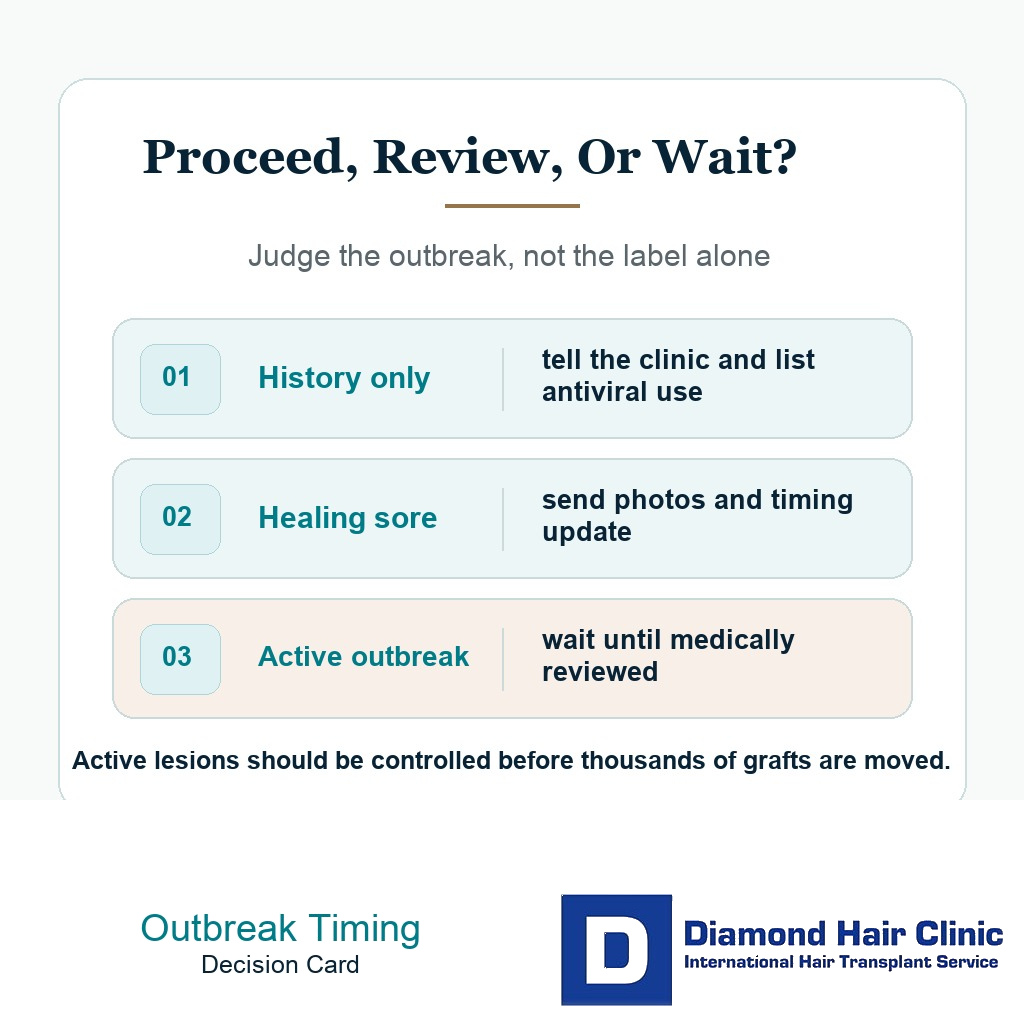
The decision changes when symptoms are active, healing, or only part of a past medical history.
A cold sore should be disclosed even if the surgery date matters to you. A hair transplant can be rescheduled. Donor grafts, scalp healing, and your general safety should not be put under avoidable pressure.

Read this review excerpt
Every single one of my questions was answered and they made sure I had all the details I needed to make an informed decision.