



Folliculitis Control and Hair Transplant Timing
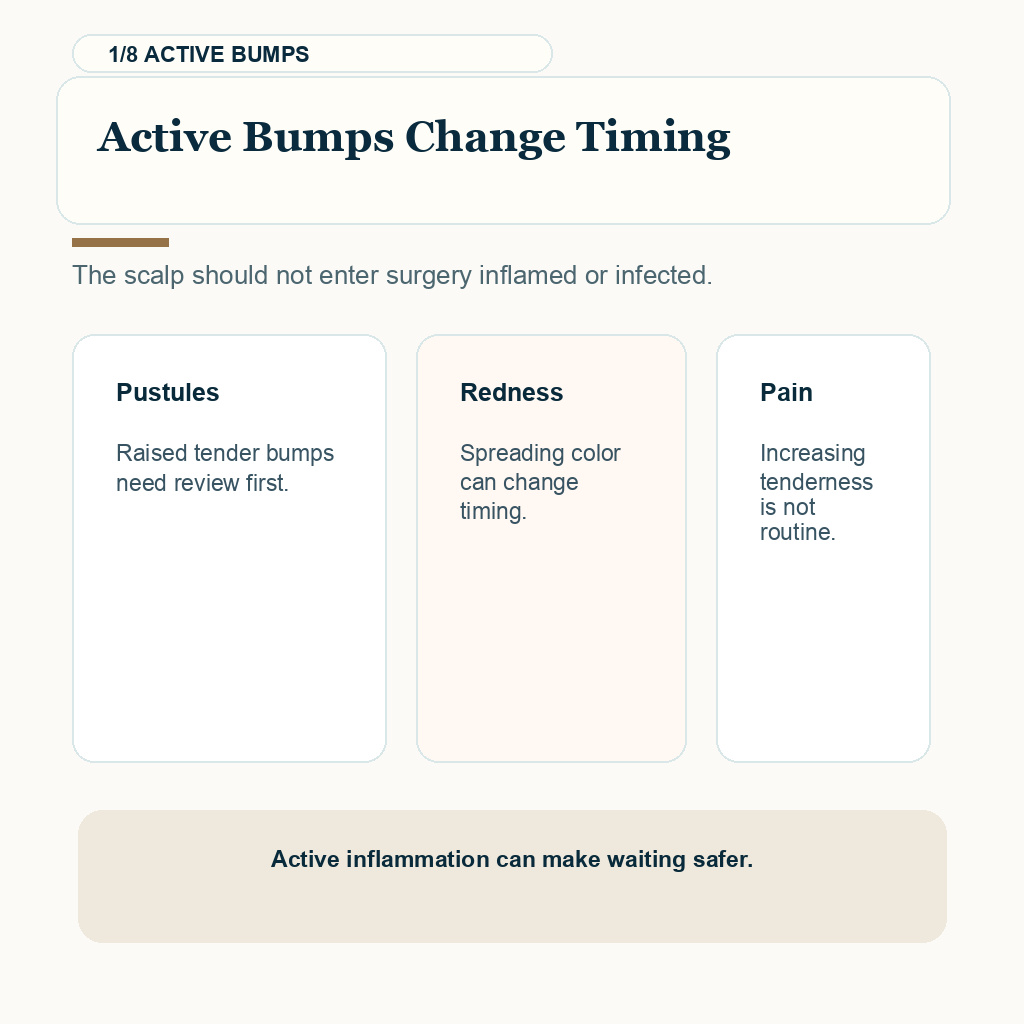
A hair transplant may still be possible if you have a history of folliculitis, but I do not operate through active scalp inflammation as if it is a small detail. Active pustules, crusting, drainage, or repeated unexplained flares should be controlled before surgery. Spreading redness belongs in the review as well. After surgery, a raised white spot needs the same kind of context, which is why I also explain how to judge white spots after FUE during recovery.
For surgery, I need clean skin, predictable healing, careful graft handling, and an accurate reading of the donor and recipient area. A scalp that is actively inflamed is not the same surgical environment as a quiet scalp, and a sunburned scalp before a hair transplant deserves the same kind of timing judgment. A case involving hair transplant with vitiligo is judged differently, but active spreading and Koebner history can still change the timing even without pustules. A mole or raised spot in the transplant area needs separate skin judgment before grafts are placed.
A past episode of folliculitis does not necessarily make someone a poor candidate. Active fungal scalp infection needs the same timing discipline. A tinea capitis hair transplant plan waits until infection is treated and the scalp is calm. Active folliculitis, recurrent folliculitis, donor area involvement, or an uncertain diagnosis changes the timing and the level of caution. The safer question is not only whether surgery can be done. It is whether the scalp is ready for surgery now.
Do not squeeze bumps to see what is inside. It can irritate the graft area, spread bacteria, and make the clinic’s review less clear because the spot no longer shows how it looked before you touched it.
Photograph a bump before any cream or wash change, then note whether it is painful, leaking, increasing, or surrounded by new bumps. One isolated spot and a cluster that keeps spreading lead to different reviews.
Folliculitis needs infection control before surgery
Folliculitis means inflammation around hair follicles. Sometimes it is bacterial. Sometimes it is related to yeast, irritation, shaving, sweat, blocked follicles, ingrown hairs, oily products, or another skin condition. To the patient, it may look like scalp acne. To the surgeon, it is a sign that the skin needs closer judgment before grafts are placed. Patients who mainly notice itching or scratching need a separate review, because bumps and itch can overlap but carry different risk. If the patient mainly notices smell or drainage after surgery, scalp odor during FUE recovery helps separate hygiene residue from infection warning signs.
When the bump question includes retinol or tretinoin, topical tretinoin after FUE needs diagnosis before treatment. If the breakouts sit on the face or chest away from the donor and recipient zones, I separate that from folliculitis in facial acne after a hair transplant. If the same patient is worried about raised cheek graft sites after a beard procedure, beard transplant cobblestoning in the weeks after surgery is the closer texture review page.
I take it seriously because inflammation can make the scalp more sensitive, harder to interpret, and less predictable during recovery. It can affect comfort, aftercare, infection risk, and the patient’s anxiety when bumps appear after surgery. It can also hide scarring alopecia or lichen planopilaris, or a deeper scarring condition such as dissecting cellulitis, which should be diagnosed before a transplant is considered. If the pattern is diagnosed as a chronic scarring folliculitis, I treat folliculitis decalvans and hair transplant timing as a stricter question than ordinary postoperative bumps.
I try not to simply work around active bumps. I check why they are there, how often they return, whether they leave scars, whether the donor area is involved, and whether a dermatologist has already reviewed the scalp. A fixed lump is different again, so I treat scalp cyst mapping before hair transplant as a separate planning step. When those bumps sit at the lower nape, acne keloidalis nuchae and FUE donor planning becomes a separate donor safety question.
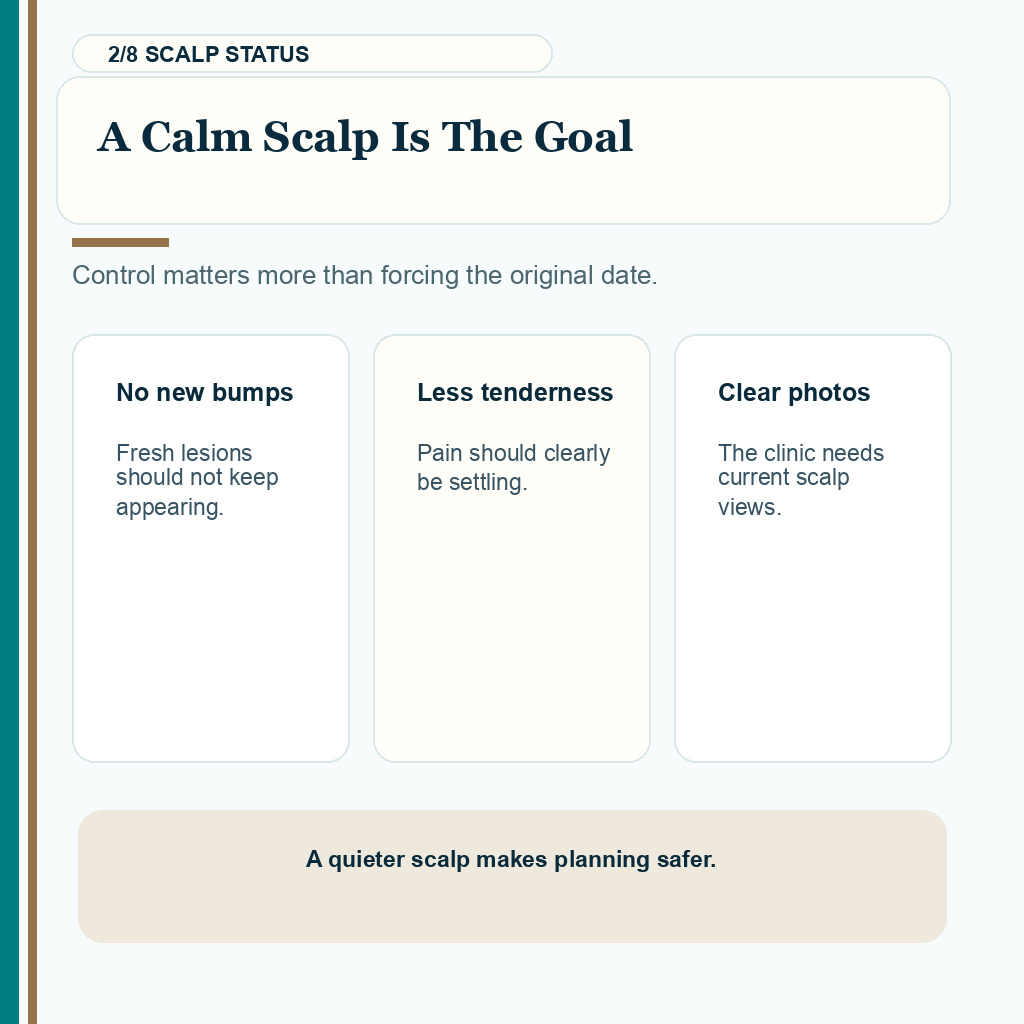
The practical line I look for is not whether the patient has ever had folliculitis. It is whether the scalp is settled, the diagnosis makes sense, and the same problem is not returning as soon as treatment stops.

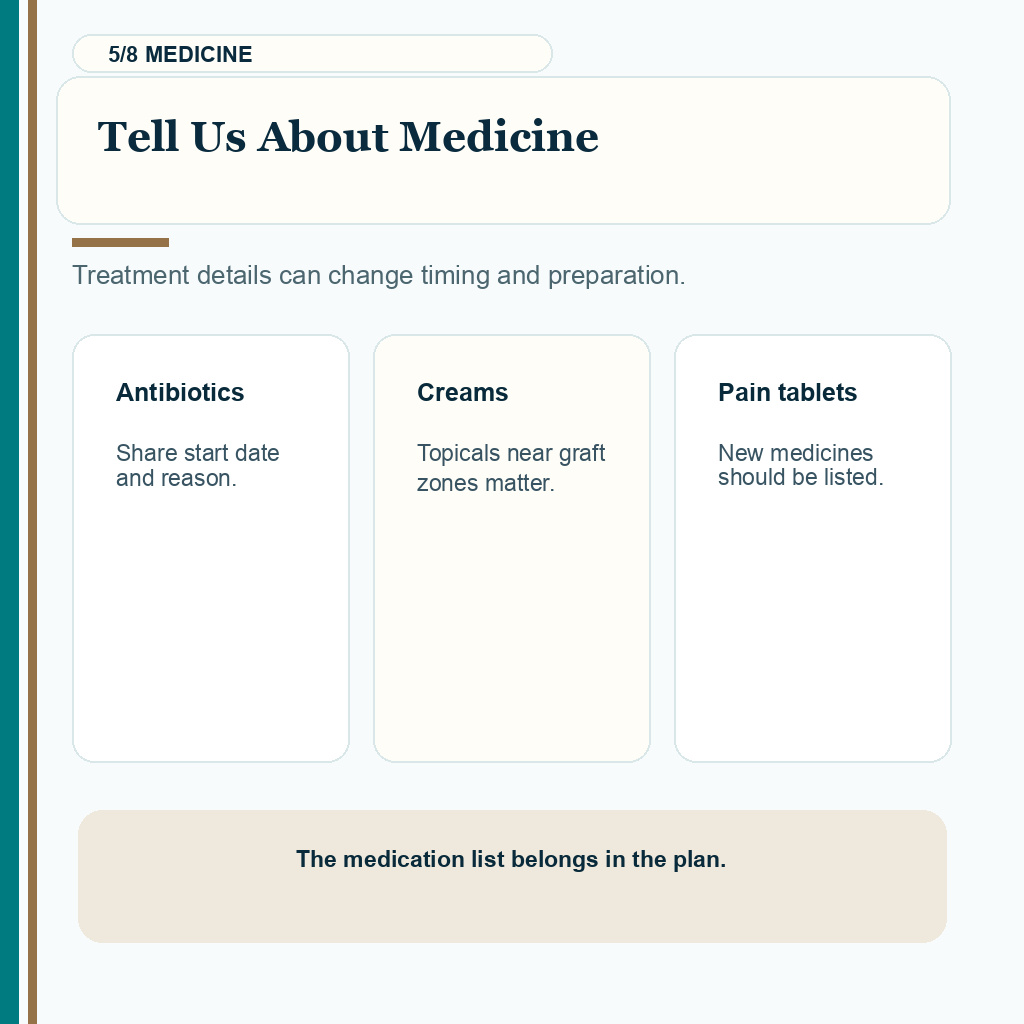
Situations where surgery waits
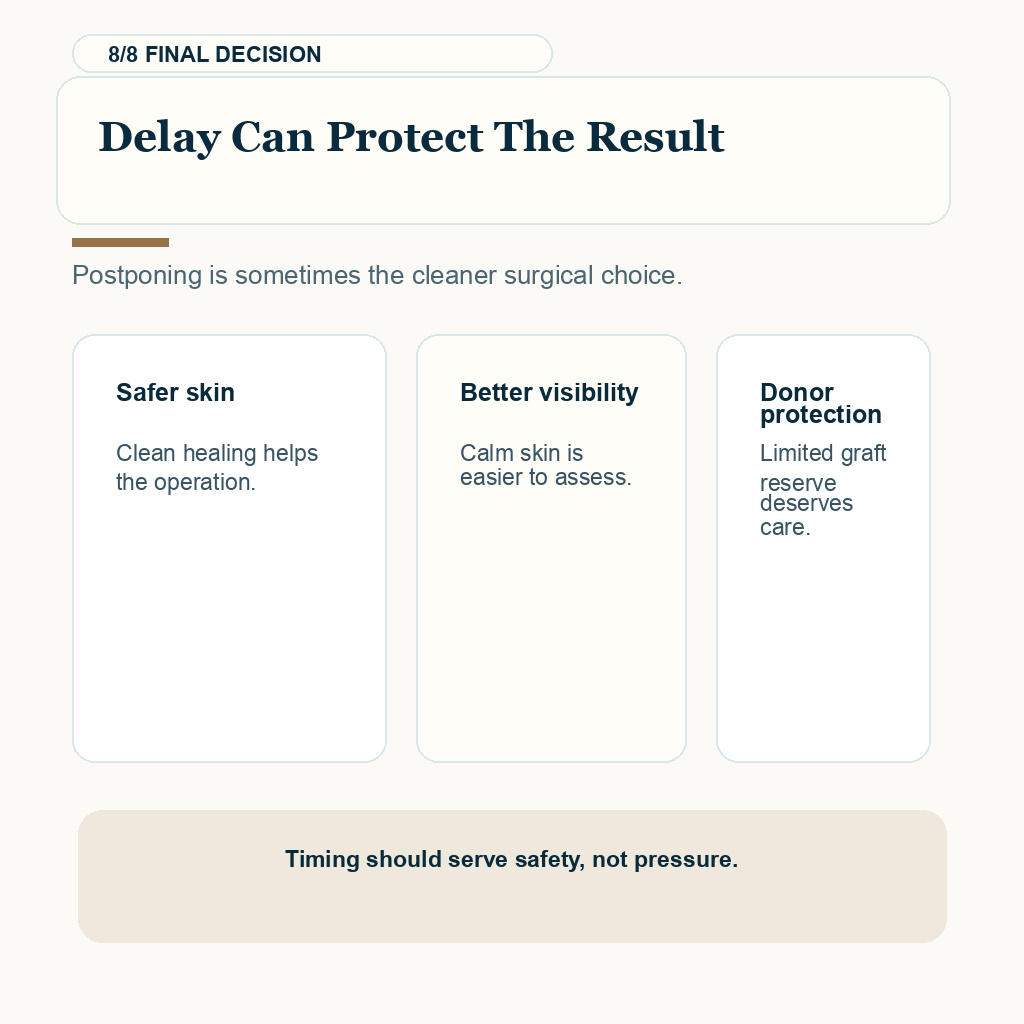
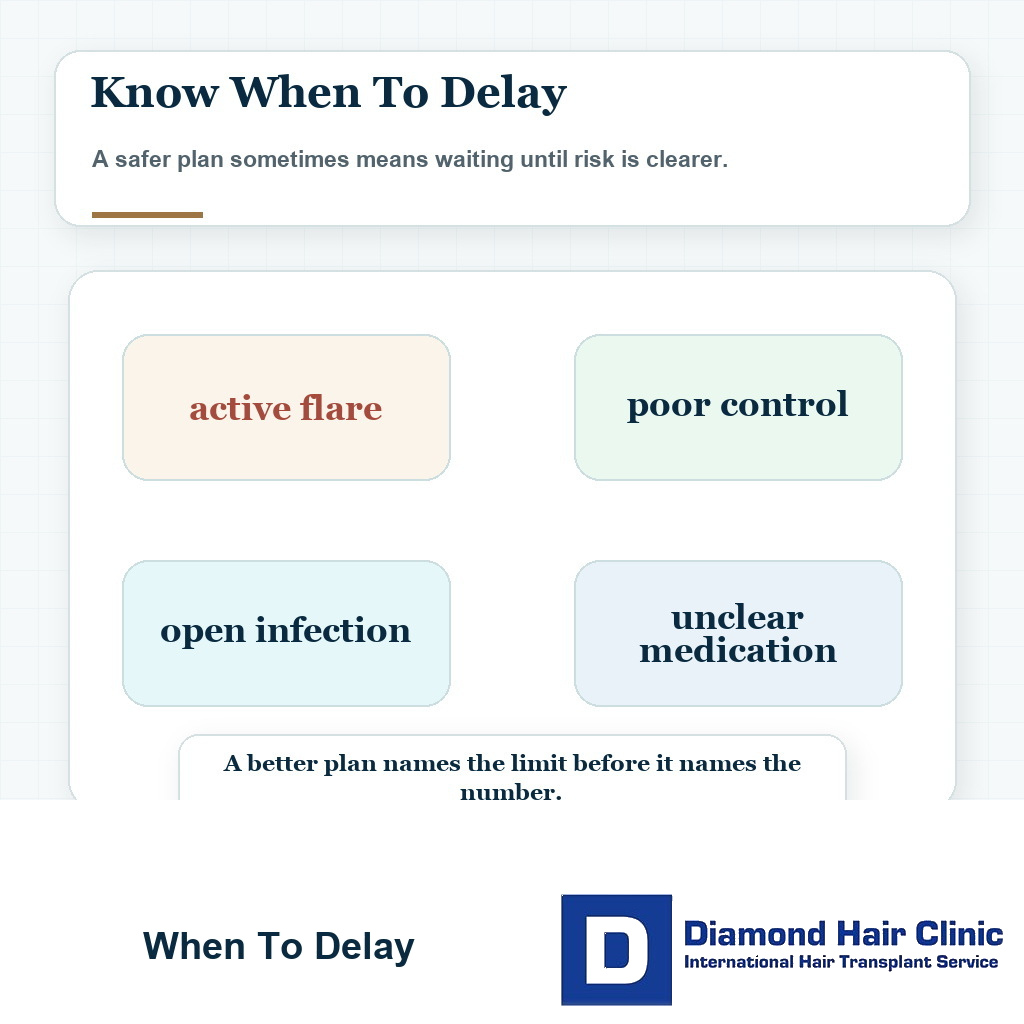
Surgery should wait when folliculitis is active, painful, spreading, draining, crusting, or repeatedly returning without a treatment plan. It should also wait when the diagnosis is uncertain. Treating the wrong scalp condition with surgery is not a solution.
If the scalp needs antibiotics, antifungal treatment, medicated shampoo, culture testing, biopsy, or dermatology review, that should happen before donor grafts are committed. I slow the plan down when a patient has used many treatments without a clear response, because that can mean the concern is not simple folliculitis.
Repeated bumps that return after treatment, spread, drain, scar, or appear with continued hair loss need a diagnosis rather than another guessed product. Depending on the pattern, the next step may be culture, dermatology examination, trichoscopy, or biopsy before grafts are planned.
Postponing can be frustrating when flights, work leave, and expectations are already arranged. I understand that. But if the scalp is inflamed on the day of surgery, the better decision may be to delay. A settled scalp gives the surgeon clearer skin and gives the patient a recovery that is easier to interpret.
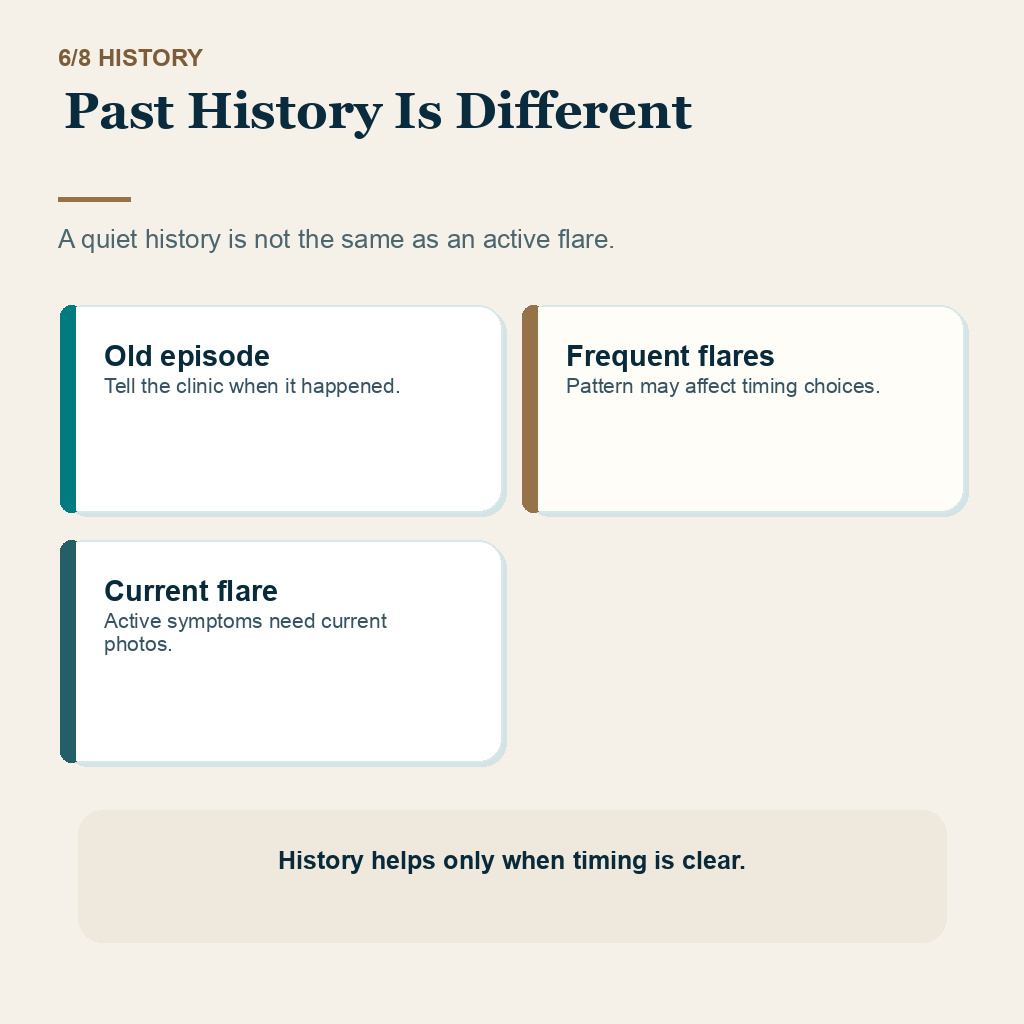
Past history versus active folliculitis
A few old pimples months ago are very different from pustules on the scalp during consultation or on surgery day. A patient with a past history may still be suitable if the scalp is quiet, the diagnosis is understood, and the triggers are controlled.
Active folliculitis is different. If I see red bumps, tenderness, pus, crusts, or repeated lesions, I need to slow down. This is not punishment or delay for its own sake. The purpose is to avoid placing grafts into skin that is already fighting inflammation.
This distinction also protects expectations. If a patient enters surgery with active folliculitis, every bump after surgery becomes frightening. The patient may not know whether it is normal healing, folliculitis, infection, or something that could affect the grafts. A fixed surface change also belongs in a separate raised hairline texture review, because folliculitis bumps and scar texture are not the same problem.
Folliculitis in the donor area
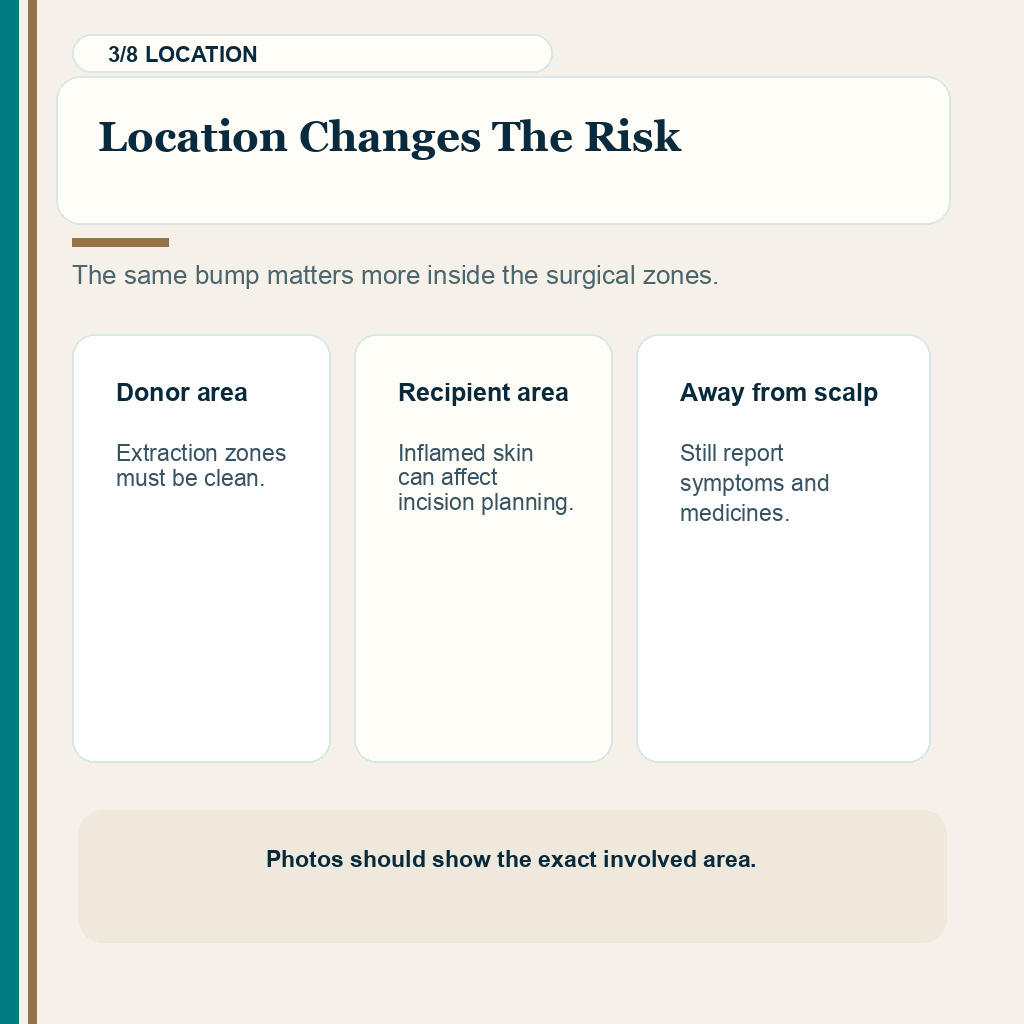
And this matters a great deal. The donor area has to be quiet before grafts are taken from it. If folliculitis affects the donor area, I become more cautious because I need to know whether the follicles are healthy enough and whether extraction could worsen inflammation.
A patient may think only the bald area matters, but the donor area decides what can be safely moved. If the donor is inflamed, itchy, tender, or repeatedly producing pustules, I may recommend treatment first, a smaller surgery, or a delay until the skin is calmer.
Broader donor planning also needs a slower approach. I always protect the donor area because it cannot be replaced. If there is active inflammation in that area, the plan must be slower and more conservative, especially when the donor supply may be needed again in the future.
Folliculitis in recipient healing
It can. The recipient area needs small incisions, careful graft placement, and predictable early healing. If the skin is already inflamed, incision healing may become harder to interpret and the patient may experience more tenderness, redness, or concern about infection.
A minor scalp bump does not necessarily make surgery impossible. But I do not treat active recipient area inflammation casually. Recipient area pustules or crusting deserve treatment before incision planning. Treat the skin first and operate later when the scalp is quiet.
The recipient area will already be sensitive after surgery. Adding active folliculitis to that early healing period is unnecessary when the scalp can be settled before surgery.
Folliculitis and graft survival
Mild bumps during recovery do not necessarily mean grafts are damaged. Many patients develop small pimples as hairs shed, regrow, or push through the skin. These small bumps often settle with proper washing, warm compresses when advised, or medication if the clinic thinks it is needed.
The concern is different when folliculitis is severe, spreading, painful, draining, or ignored. Then, inflammation and infection can create a less safe healing environment. The risk is not only graft survival. It is also scarring, prolonged redness, patient anxiety, and delayed recovery.
Do not panic over every small pimple, but do not squeeze, scratch, or treat the scalp with random products either. The right response is early communication with the clinic, clear photos, and treatment only when the signs justify it.
If folliculitis appears after surgery
Small pimples can appear after a hair transplant, especially weeks later when hairs are shedding or beginning to grow again. This can happen in the donor area or the recipient area. It is common enough that patients should know about it before surgery.
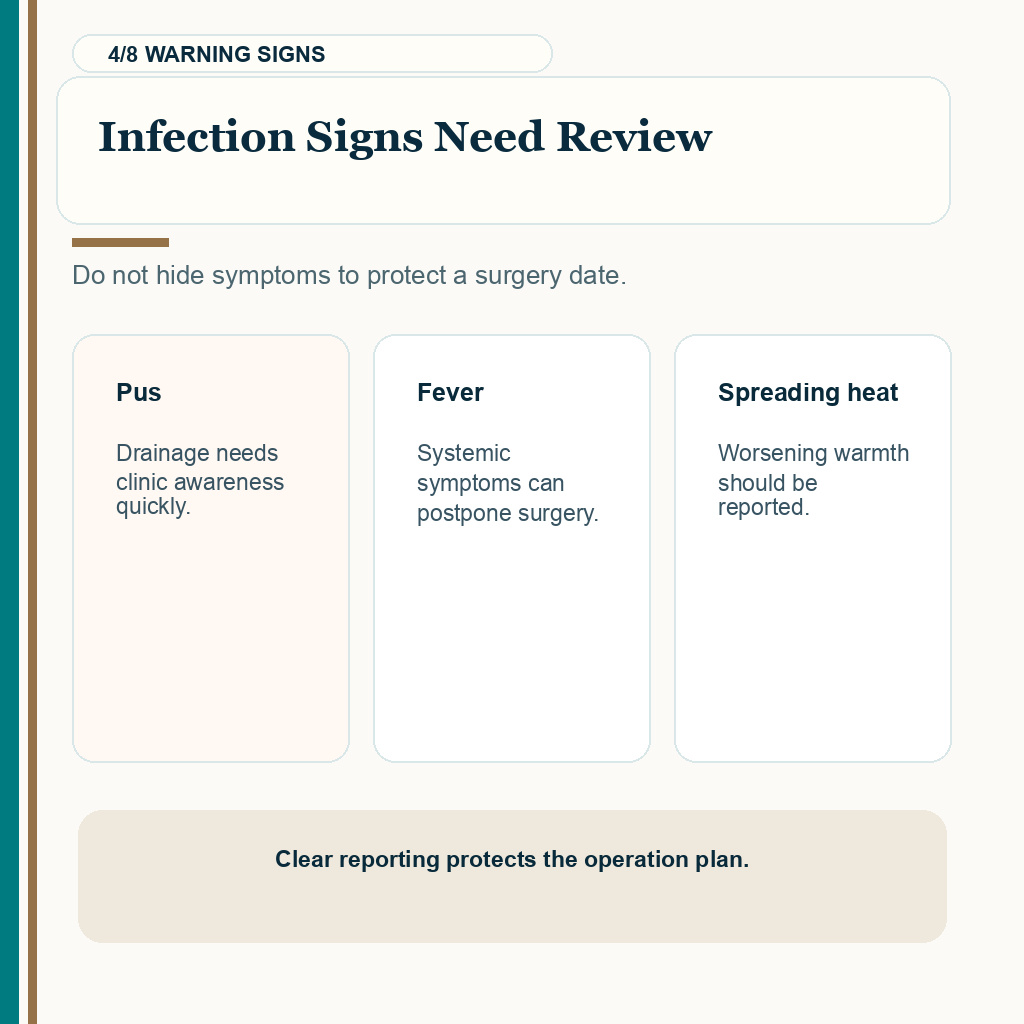
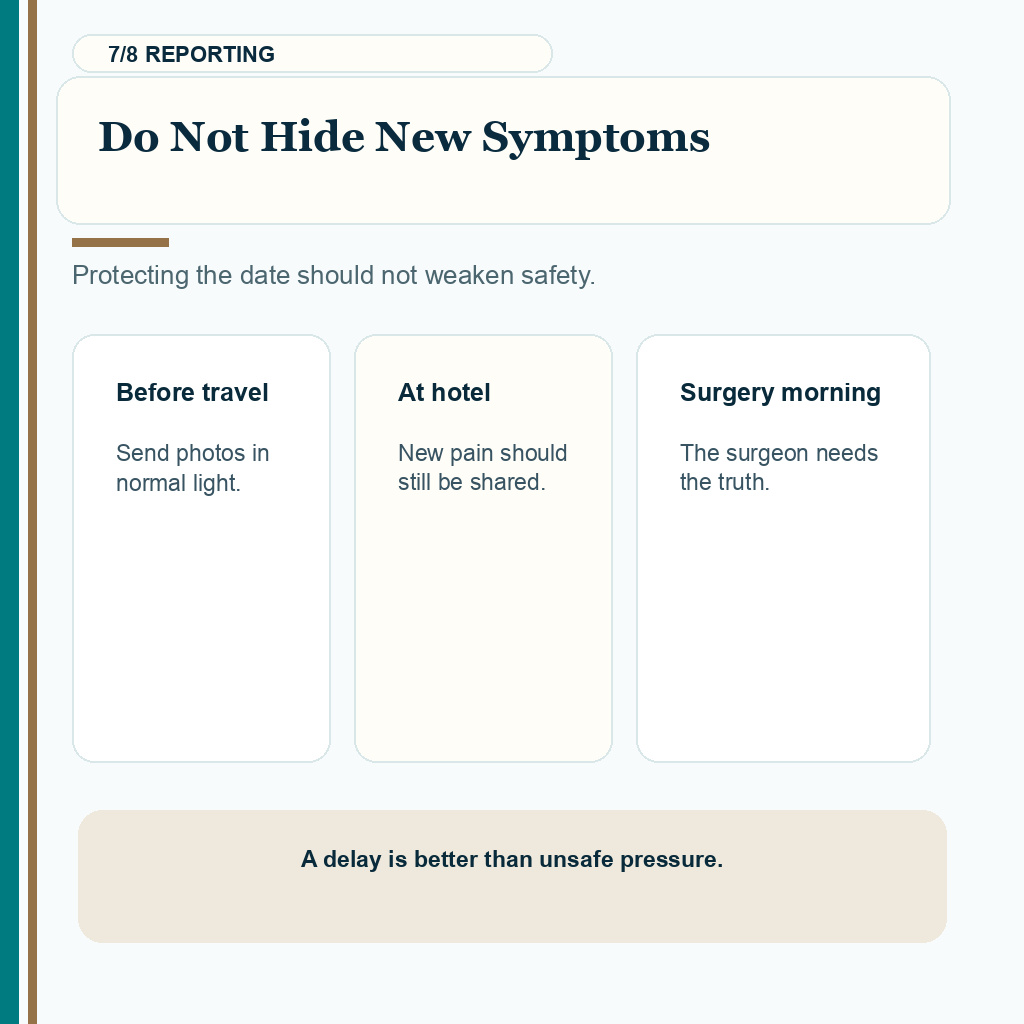
The detail that matters is the pattern. One or two mild bumps are not the same as spreading redness, increasing pain, warmth, pus, fever, or a cluster of lesions that keeps worsening. If the concern is yellow drainage after FUE, I use the same distinction between healing fluid and infection warning signs. Early photos are safer than waiting until the area becomes more inflamed.
A tiny superficial whitehead around a growing hair is different from a deep, hot, tender lump or several pus filled lesions appearing together. The first may only need observation or simple routine. The second needs review because the problem may be infection rather than normal growth related irritation.
Clear hair transplant aftercare reduces confusion. Careful washing, clean hands, avoiding unnecessary touching, and avoiding heavy products in the early phase can all help the scalp heal with fewer problems.
Warning signs needing fast review
The signs I take seriously are spreading redness, increasing pain, heat in the scalp, pus, fever, chills, swelling that is worsening instead of settling, a swollen neck lymph node after FUE, or bumps that become deep and very tender. These signs should not be handled casually at home.
I also review urgently if the patient sees darkening skin, severe pain that feels out of proportion, or rapidly worsening wounds. These are not typical mild pimples. They need direct medical attention because rare but serious healing problems must be recognized early. Unusual pain and skin color change belong with hair transplant necrosis warning signs, not routine pimple treatment.
Most bumps after surgery are not emergencies. Still, patients should know the difference between mild follicle inflammation and signs that deserve urgent contact.
Avoid squeezing pimples after surgery
Not as a routine habit. I know it is tempting, especially when a bump feels tight or visible. But squeezing can irritate the skin, introduce bacteria, worsen inflammation, or create unnecessary bleeding.
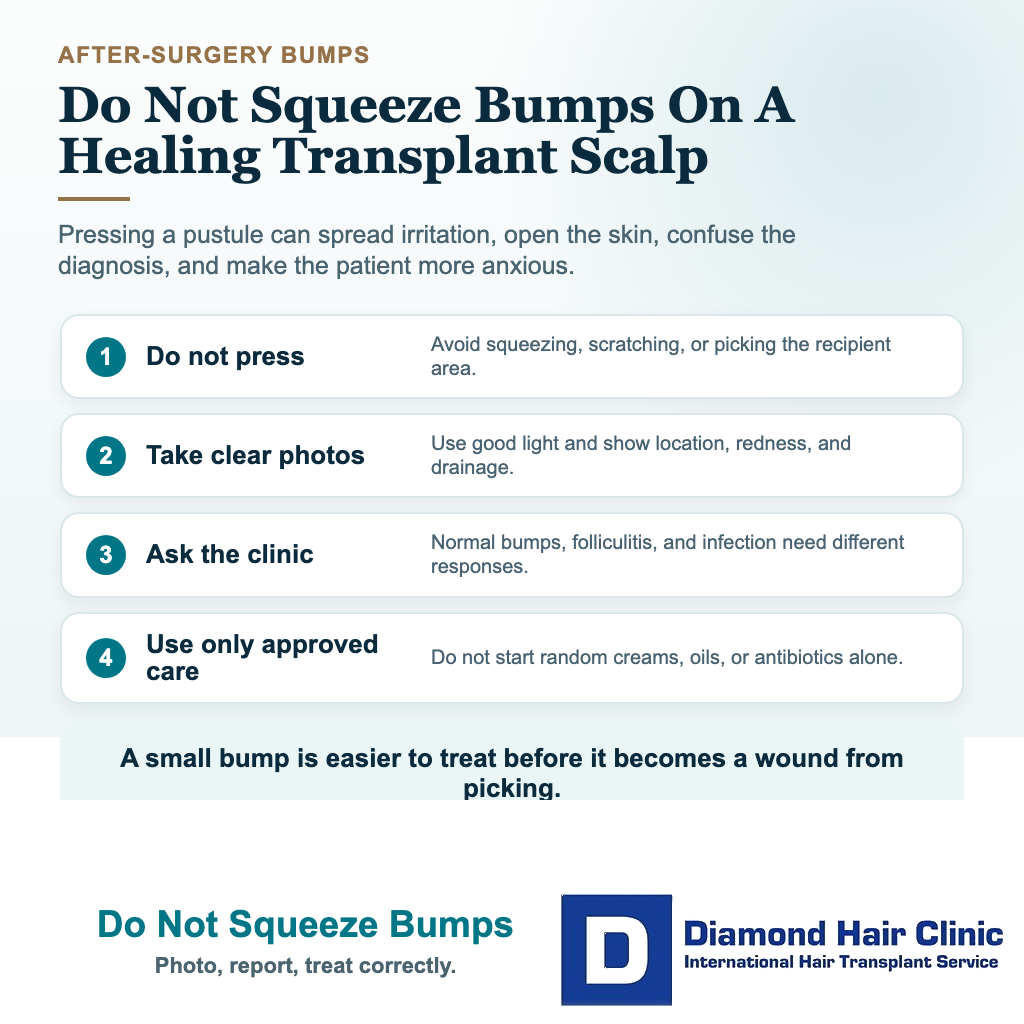
If a bump is mild, the clinic may advise observation, careful washing, or a warm compress. If it is painful, deep, or draining, the clinic may need to review it and decide whether medication is appropriate. Random antibiotic creams, acne acids, alcohol, essential oils, or harsh scrubs do not belong on newly transplanted skin.
The scalp after surgery is not normal skin. It is healing surgical skin. Even a small decision, such as squeezing a bump, deserves more caution than usual.
Hair products, oils, hats, and sweat
Heavy oils, dirty hats, sweat trapped under fabric, close shaving, and irritating products can make folliculitis more likely in some patients. I do not ask every patient to avoid these things forever. The point is timing, cleanliness, and not irritating the scalp while it is still healing.
During early healing, the routine should stay simple. Avoid heavy oils until the grafts and scalp are ready, especially if you already flare easily. The same timing judgment applies to using hair oil after a hair transplant and wearing a hat after a hair transplant, because oil, pressure, dirt, and friction can all make the scalp harder to read.
Sweat is not poison, but sweat mixed with friction, touching, and poor washing can irritate the scalp. A patient with recurrent folliculitis may need more careful guidance about exercise, headwear, washing, and product use during recovery.
Shaving before surgery
It can. Close shaving can irritate follicles in some patients, especially if they already develop razor bumps, ingrown hairs, or pustules after shaving. If a patient tells me that shaving triggers scalp bumps, I need this clear before surgery.
After surgery, shaving needs extra care. Do not shave aggressively over healing donor or recipient skin. If there is a history of folliculitis, the timing and method of shaving should be more careful. The scalp needs time before close cutting or shaving, which is why the timing of when to shave the head after a hair transplant matters.
The issue is scalp respect, not fear. A clean surgical plan includes how the scalp will be prepared and how it will be cared for afterward.
Isotretinoin, antibiotics, and the surgery plan
If a patient is using isotretinoin, recently used it, or may need it for severe recurrent folliculitis, that must be discussed before surgery. Isotretinoin can change skin behavior, dryness, and healing considerations, so it should not be hidden from the clinic.
Antibiotics after a hair transplant also need judgment. If the patient needs antibiotics because the scalp is actively infected, that usually means the condition should be controlled before surgery. I avoid surgery to become a race against an active skin problem.
The timing of isotretinoin and hair transplant needs a separate medication review. Tell the surgeon what you used, when you used it, and why it was prescribed.
Folliculitis changes aftercare instructions
A patient with a folliculitis history may need closer photo follow up, more careful washing guidance, and earlier review if bumps appear. I may also give stricter advice about avoiding oily products, dirty hats, unnecessary touching, and close shaving during early healing.
A history of folliculitis does not mean the patient cannot have a successful transplant. It means the condition should be respected. When folliculitis is controlled before surgery and monitored after surgery, the risk becomes much easier to manage.
The distinction between redness, scabs, and pimples after a hair transplant and true warning signs is especially useful for patients who already worry about folliculitis.
Surgery after folliculitis is controlled
Many patients with a history of folliculitis can still have a successful transplant when the scalp is quiet, the diagnosis is understood, and the patient follows aftercare carefully. The history alone does not disqualify the patient.
The safest cases are the ones where there is no active inflammation on surgery day, the donor area is healthy, and the patient understands what to do if bumps appear during recovery. That is a very different situation from operating through active pustules and hoping it will settle later.
That first situation is more stable for the patient, cleaner for the surgeon, and better for long term donor protection.
Quiet scalp comes first with folliculitis
Folliculitis is not judged from the label alone. The location of the bumps, how often flares return, whether the donor area is involved, and whether treatment has worked all change the surgical conversation.
When the scalp is quiet and the diagnosis is clear, FUE may still be possible. Active pustules, drainage, painful inflammation, crusting, or repeated flares need control first, because grafts should not be placed through an unstable skin problem.
For me, the important sign is control over time. A calm scalp gives grafts and donor skin a better chance of predictable healing. A scalp that is still flaring asks for diagnosis and treatment before donor grafts are committed.
When redness is flat, the question can be different from folliculitis. The pinkness with bumps after FUE guide separates flat fading color from raised, tender, hot, or draining skin that needs closer review.
Read this review excerpt
First wash completed and visual instructions given to my daughter.