


Tattoo Timing Around Hair Transplant Needs a Clean Healing Window
A new tattoo should wait until your hair transplant wounds are settled, the scabs are gone, and the clinic has cleared your recovery. A healed tattoo away from the scalp is usually not the problem. A fresh sleeve, head tattoo, scalp micropigmentation session, or tattoo that is red, painful, draining, or still peeling is a different decision.
The practical concern is control. Hair transplant surgery needs clean skin, predictable healing, clear scalp assessment, stable medication use, and enough energy for aftercare. A fresh tattoo adds another healing surface at the exact time the body and scalp need to be easy to read.
When a tattoo appointment is close to your procedure, tell the clinic early, especially if flights are already arranged. If the tattoo is on the scalp, donor area, hairline, beard area, eyebrow area, or a scar that may be treated, share recent photos before the surgical plan is treated as final.
If you are considering scalp artwork or SMP because the donor looks patchy, first decide whether you are seeing normal healing, true depletion, or a repair concern. Ink can reduce contrast, but it should not be used to hide an extraction pattern that has not been medically reviewed.
A fresh tattoo adds a second healing surface
A fresh tattoo is a controlled skin injury. Needles place pigment into the skin, and the area then needs cleaning, protection, and time to settle. A hair transplant also creates many small wounds in the donor and recipient areas. Combining both too closely can make recovery less predictable.
My concern is not that a tattoo on your arm directly damages grafts on your scalp. The concern is the extra healing demand around the operation. A new wound can bring redness, swelling, tenderness, infection worry, pain medicine use, poor sleep, sweating restrictions, and extra aftercare when surgery needs the opposite.
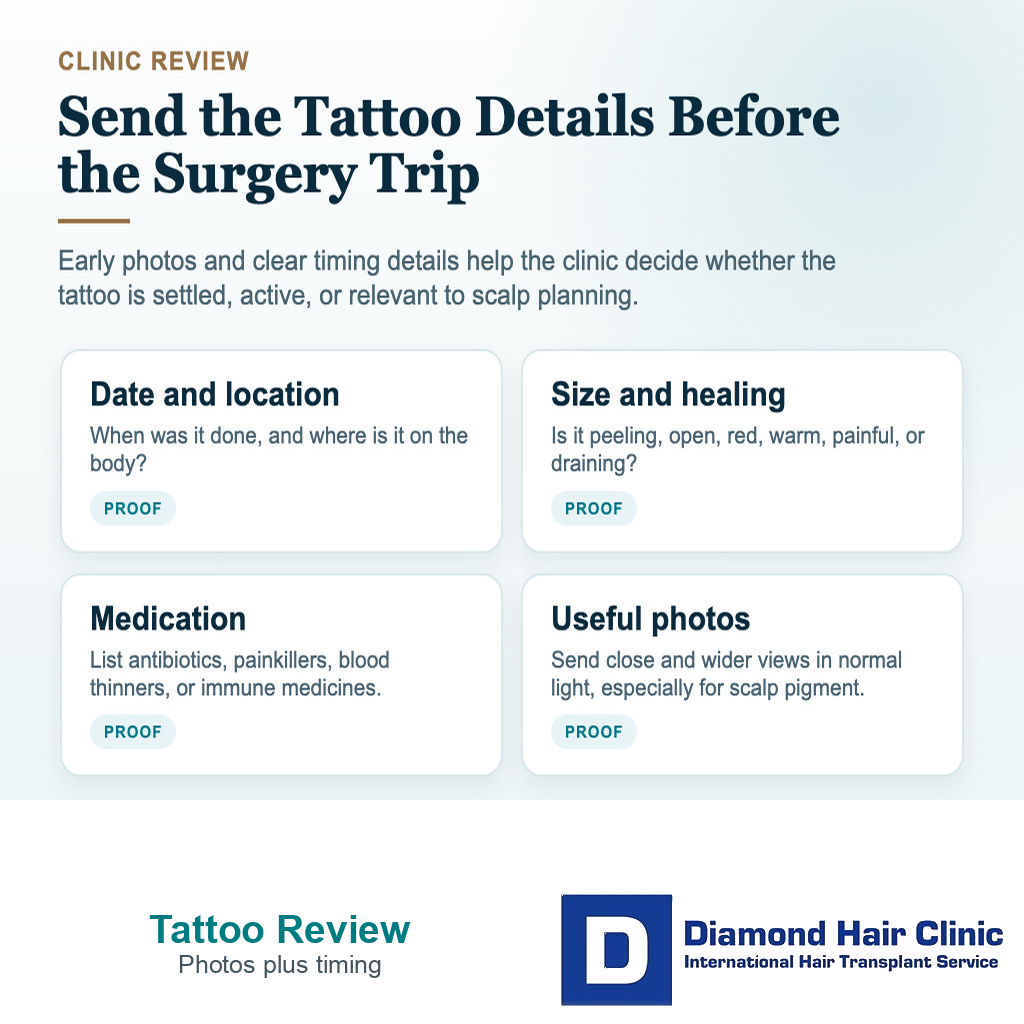
If the tattoo becomes irritated or infected, the surgical decision changes. Fever, spreading redness, discharge, increasing pain, or antibiotics started suddenly before surgery can affect whether the procedure should go ahead. With antibiotics before a hair transplant, the reason for the antibiotic matters as much as the medicine name.
I also need to know whether the tattoo appointment involved alcohol, painkillers, long travel, poor sleep, heavy sweating, or a dressing that is difficult to keep clean. Those details can overlap with the wider instructions before surgery for hair transplant, even when the tattoo is far from the scalp.
Leave a clean timing margin before surgery
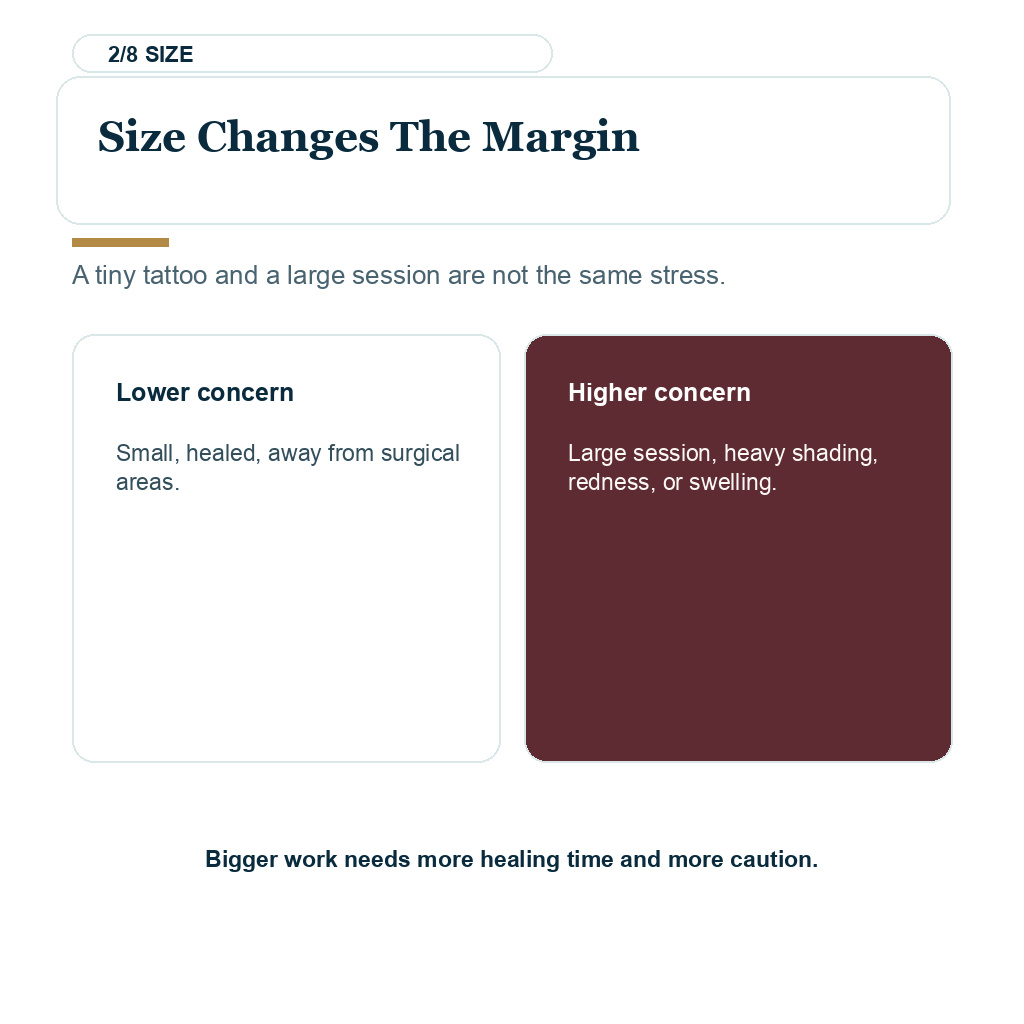
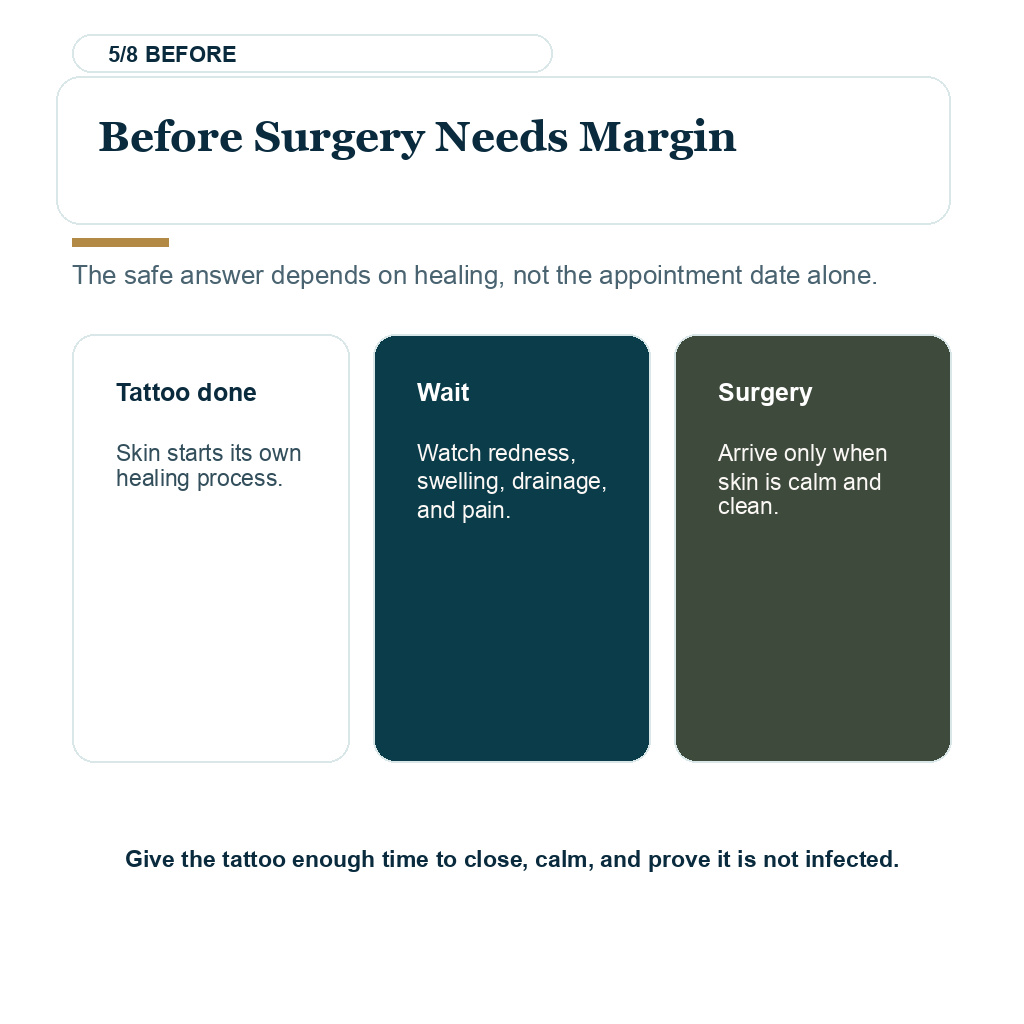
There is no single safe number for every tattoo. A tiny tattoo on healthy skin is different from a sleeve tattoo spread over several days, a large back piece, a scalp tattoo, or pigment placed over a scar. For surgical planning, the tattoo should be fully settled, with no spreading redness, open skin, drainage, fever, unexpected swelling, or need for new medication.
Some local redness, mild swelling, peeling, and tenderness can belong to normal early tattoo healing. That is different from redness that spreads, heat that worsens, pus, fever, increasing pain, a blistering rash, severe itching, or skin that looks worse each day. Normal healing, possible infection, and possible pigment reaction are not the same planning problem.
If the tattoo is large, still peeling, painful, or close to the scalp, I should review it before you travel, not discover it on surgery day. A large new tattoo is another healing surface, not a neutral decoration. If it is still demanding aftercare, it can compete with the attention your transplant recovery needs.
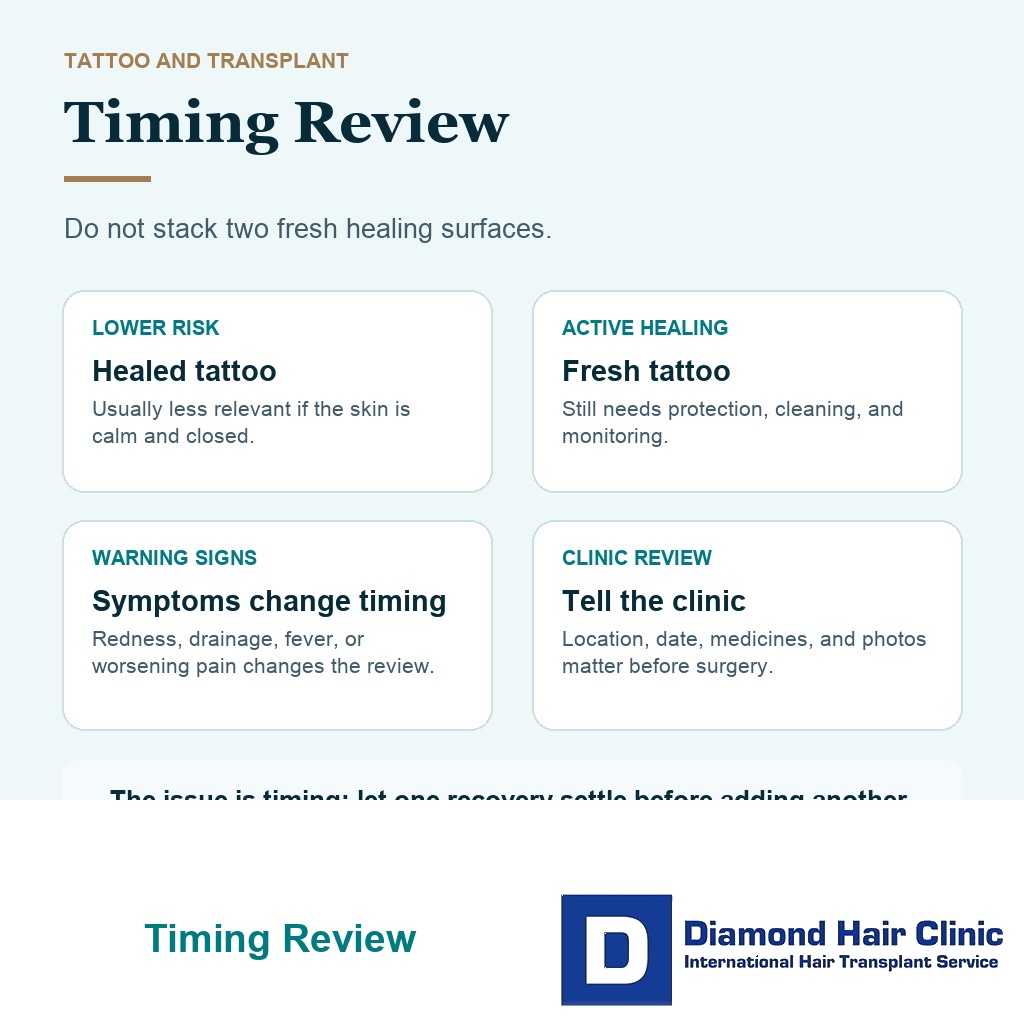
A fresh tattoo and a fresh hair transplant both need clean, predictable healing time.
If your tattoo appointment was booked months earlier, I understand why canceling it feels inconvenient. The timing still has to be judged by size, location, skin reaction, medical history, and travel plan. If you have a keloid tendency, poor wound healing, immune suppression, diabetes, blood thinner use, or a recent skin infection, the threshold for delay becomes lower. Keloid scars and hair transplant surgery explains why scar behavior matters before any elective skin trauma.
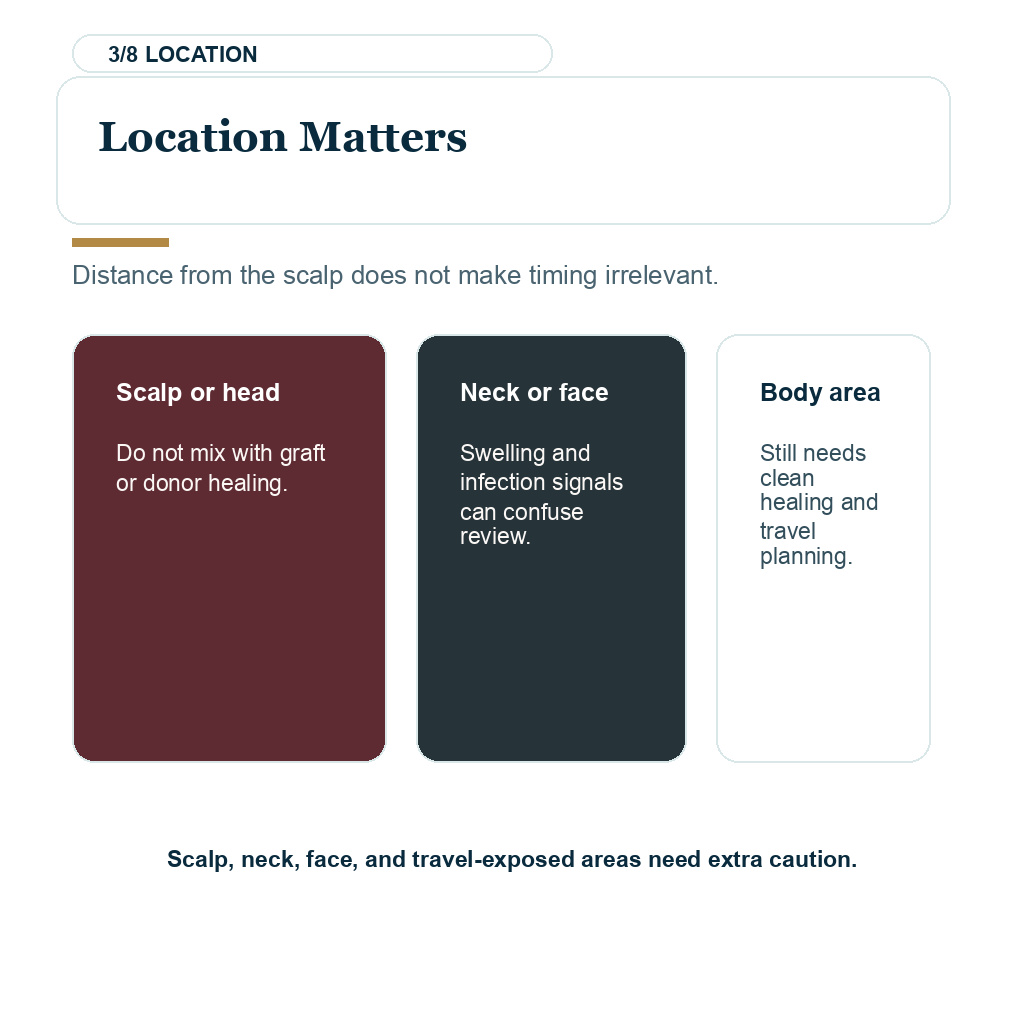
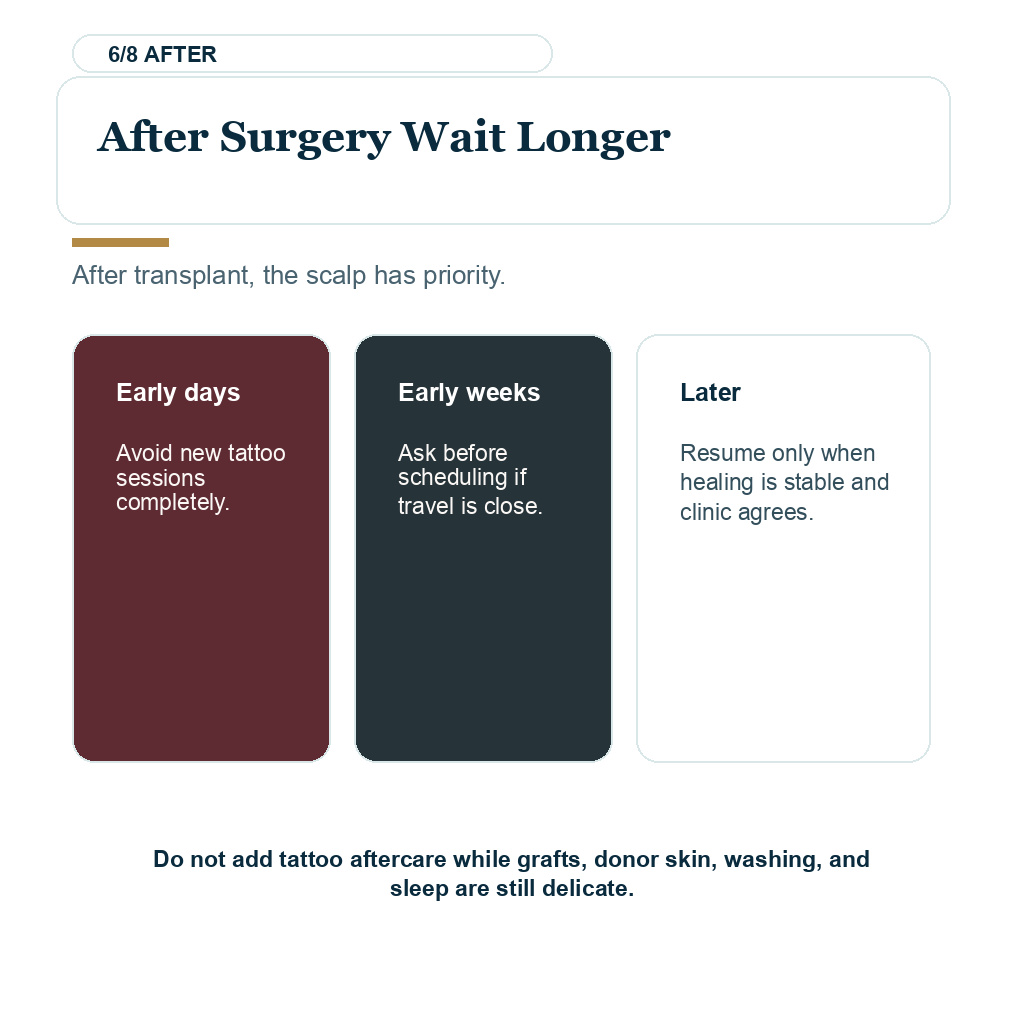
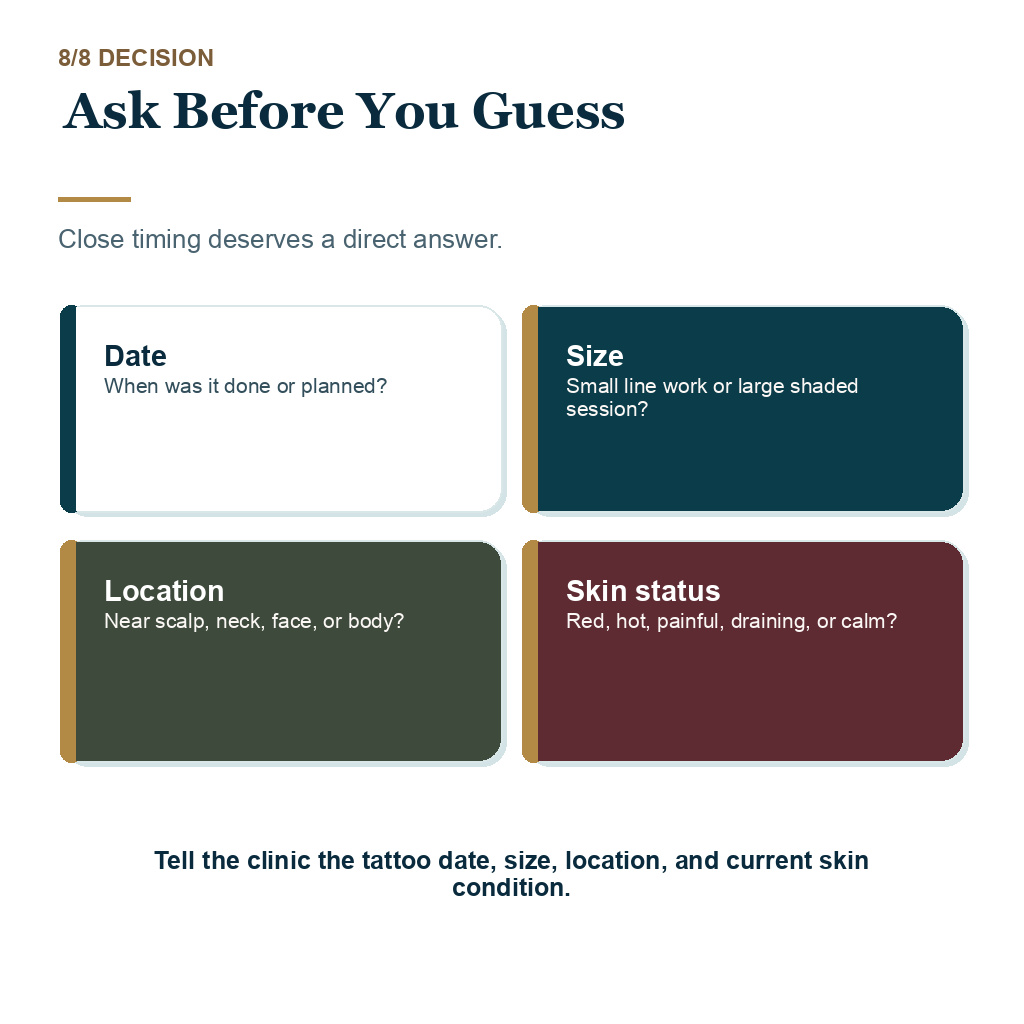
The 8 slides below help you check whether the tattoo and transplant healing windows overlap, how large the tattoo is, where it sits, whether the skin is calm, how much margin you have before or after surgery, and what the clinic needs to review. Use the arrows or the controls below the image to move through the details one at a time.



After transplant, tattooing should wait for clean healing
Do not plan a new tattoo during the early hair transplant recovery period. Even when grafts are becoming more secure after the first 10 to 14 days, the scalp may still be red, tender, scabby, swollen, numb, or sensitive. The donor area may also still be settling. A tattoo session at that point can make sleep, hygiene, sweating control, and aftercare harder.
A full sleeve shortly after surgery is not the same decision as a small adjustment after everything has healed. Long sessions can involve pain, stress, limb swelling, prolonged positioning, sweating, and aftercare dressings. If you need pain medication after tattooing, the choice must fit the transplant recovery plan, and antibiotics after a hair transplant should be linked to a real indication, not used casually because two recoveries are happening at once.
Do not judge tattoo timing only by whether the grafts are anchored. Graft security is one part of recovery. The rest of the body still needs stable healing, good sleep, clean aftercare, and a clear way to recognize warning signs.
Scalp micropigmentation is different from a body tattoo
Yes. A tattoo on the arm and pigment on the scalp are very different questions. Scalp micropigmentation, cosmetic hairline pigment, and head tattoos can affect how I read the hairline, donor area, scar tissue, thinning pattern, and skin quality during planning.
If pigment is already present, I need to know whether it is dense, faded, blue grey, uneven, placed over a FUT scar, placed in the frontal hairline, or used to darken a thin transplant. Hair transplant after scalp micropigmentation is a separate planning problem when pigment is already in the transplant zone. Scalp micropigmentation for a thin hair transplant is the other direction, when pigment is considered after a thin result.
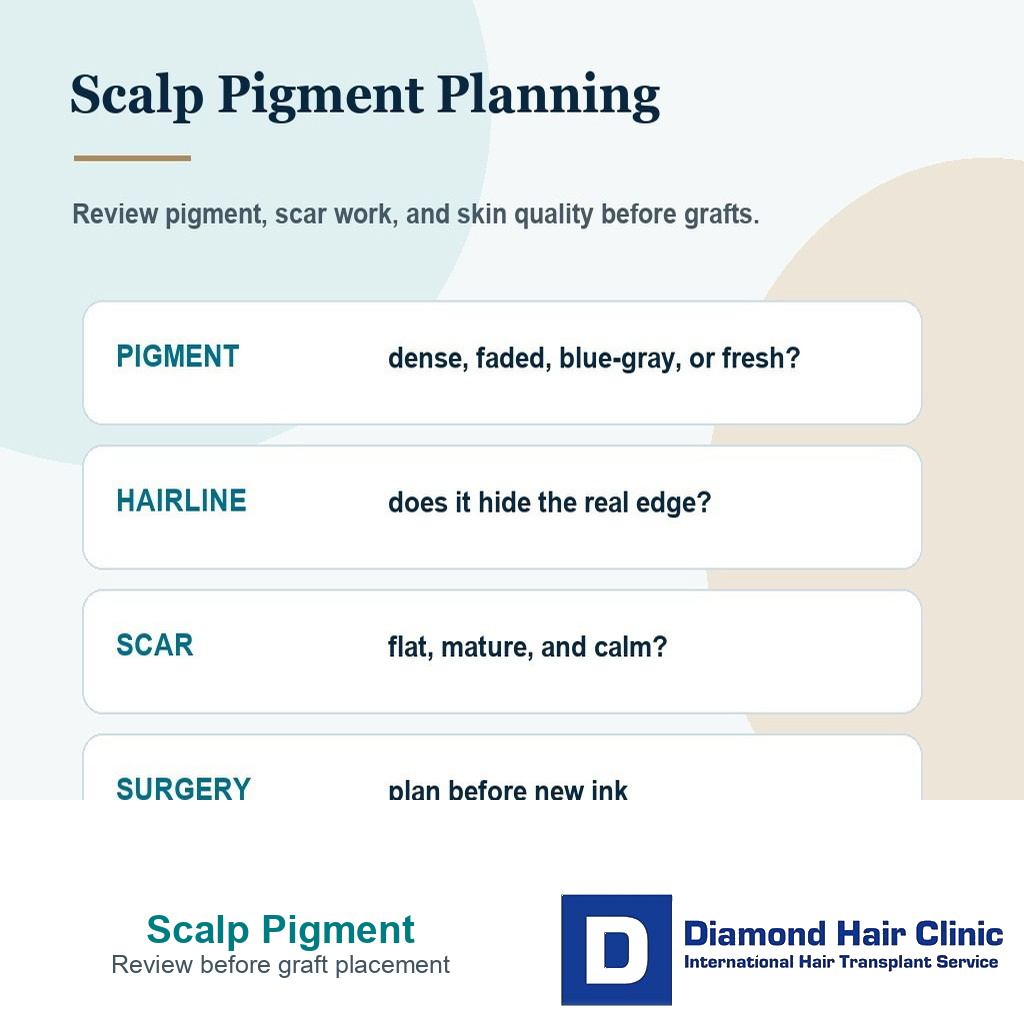
Scalp pigment, head tattoos, and scar work should be reviewed before grafts are placed.
Fresh scalp pigment should not be hidden from the surgical plan. It can mask redness, change how density appears in photos, and distort the skin quality assessment. If the transplant is going into scar tissue or a previously tattooed area, hair growth in scar tissue depends on blood supply, skin thickness, scarring behavior, and realistic expectations.
Existing tattoo pigment can change if surgery crosses it
A fully healed tattoo away from the surgical area is usually not affected by a hair transplant. A tattoo inside the donor area, recipient area, scar, or planned hairline is different. Punch extraction, recipient area incisions, shaving, scabbing, swelling, and later scar behavior can change how pigment looks, even when the transplant itself is technically successful.
Photos before surgery matter when pigment sits near the donor border, hairline, FUT scar, beard donor area, eyebrow area, or scalp micropigmentation zone. The plan has to clarify whether the priority is hair growth, pigment preservation, scar camouflage, or a combination of these goals. If the tattoo is important cosmetically, the plan should explain where surgery may cross pigment and where it should avoid pigment if possible.
A distant fresh tattoo can still matter
Unusual redness, drainage, antibiotics, or irritation after the tattoo should be included even when the tattoo is not on the scalp.
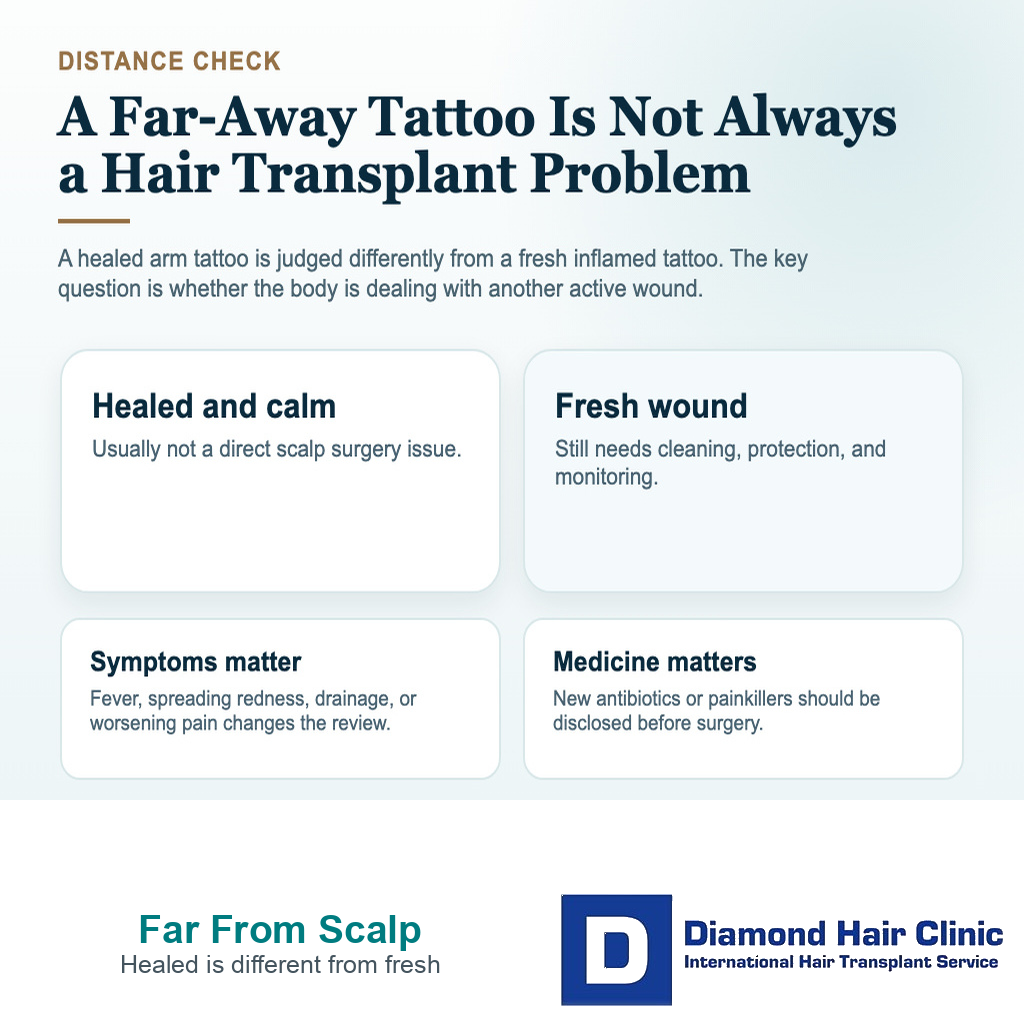
For example, a forearm tattoo may not affect graft placement directly. But if it becomes hot, swollen, painful, or starts draining, the transplant team must decide whether you are medically fit for elective surgery. If you then begin antibiotics or painkillers such as ibuprofen without telling the clinic, the review becomes incomplete.
I also want to know about recent skin problems, not only scalp problems. Folliculitis and hair transplant surgery require review when inflammation or infection signs are active, even when you hope they will settle on their own.
Report warning signs before protecting the surgery date
Ask for clinic review before surgery if a recent tattoo has spreading redness, warmth, worsening pain, pus, yellow or green discharge, fever, chills, swollen lymph nodes, open skin, blistering, severe itching, hives, or symptoms that are getting worse instead of settling. Get review as well if the tattoo artist advised antibiotics, if a doctor started antibiotics, or if you are using painkillers that were not already reviewed.
Breathing symptoms, facial swelling, or a rapidly spreading reaction need local urgent medical help, not only a clinic message. Do not cover up a tattoo problem to protect the surgery date. If the tattoo is not healing cleanly, delaying the elective procedure may be safer than operating while the body is dealing with an avoidable infection or reaction risk.
If you develop cold, flu, fever, or general illness at the same time, the timing should be reviewed separately. Cold or flu before a hair transplant can change the plan even when the symptoms are outside the scalp.
Send tattoo details before travel
Send the tattoo date, location, size, whether it is still peeling or open, any redness, rash, itching, swelling, drainage, whether antibiotics or antihistamines were used, and clear photos in normal light. Also say whether the tattoo affected sleep, travel, alcohol use, sweating, or pain medicine, and whether you have a history of pigment allergy, keloids, or poor wound healing.
Tattoo ointments, dressings, antibiotics, antihistamines, painkillers, and poor sleep should be shared because they can change the recovery plan even when the tattoo is far from the scalp.
If it is scalp micropigmentation or a head tattoo, send close photos plus wider photos showing the full hairline, donor area, crown, and scar pattern. If you are taking aspirin, blood thinners, immune suppressing medicine, diabetes medicine, isotretinoin, antibiotics, or regular ibuprofen or similar pain medicine, include that information. Medication and medical history belong in the same safety review as blood tests before a hair transplant, not separate paperwork.
When you share that information early, the timing can often be managed safely. Hiding the tattoo makes the safety picture weaker for everyone involved.
Keep tattoo travel and transplant travel separate
Do not use medical tourism travel as a reason to stack multiple procedures into the same week. A hair transplant trip already includes surgery, washing instructions, swelling control, sleeping position, flight timing, photos, and follow-up. A tattoo trip adds a separate wound and a separate aftercare routine.
If you want both, plan them as separate decisions. Let the tattoo heal before transplant surgery, or let the transplant recovery settle before the tattoo. If the tattoo is on the scalp, hairline, donor area, beard area, eyebrow area, or a scar that may be treated, have the transplant plan reviewed first. Do not let a tattoo appointment lock the surgeon into a weaker hairline or donor plan.
My preference is to protect surgical visibility, clean healing, and clear communication. A tattoo can be meaningful and safe when timed well. It becomes a problem when it is squeezed into the same recovery window and treated as if the transplant team does not need to know.
Read this review excerpt
First wash completed and visual instructions given to my daughter.