


Allergy Warning Signs Need Fast Medical Review
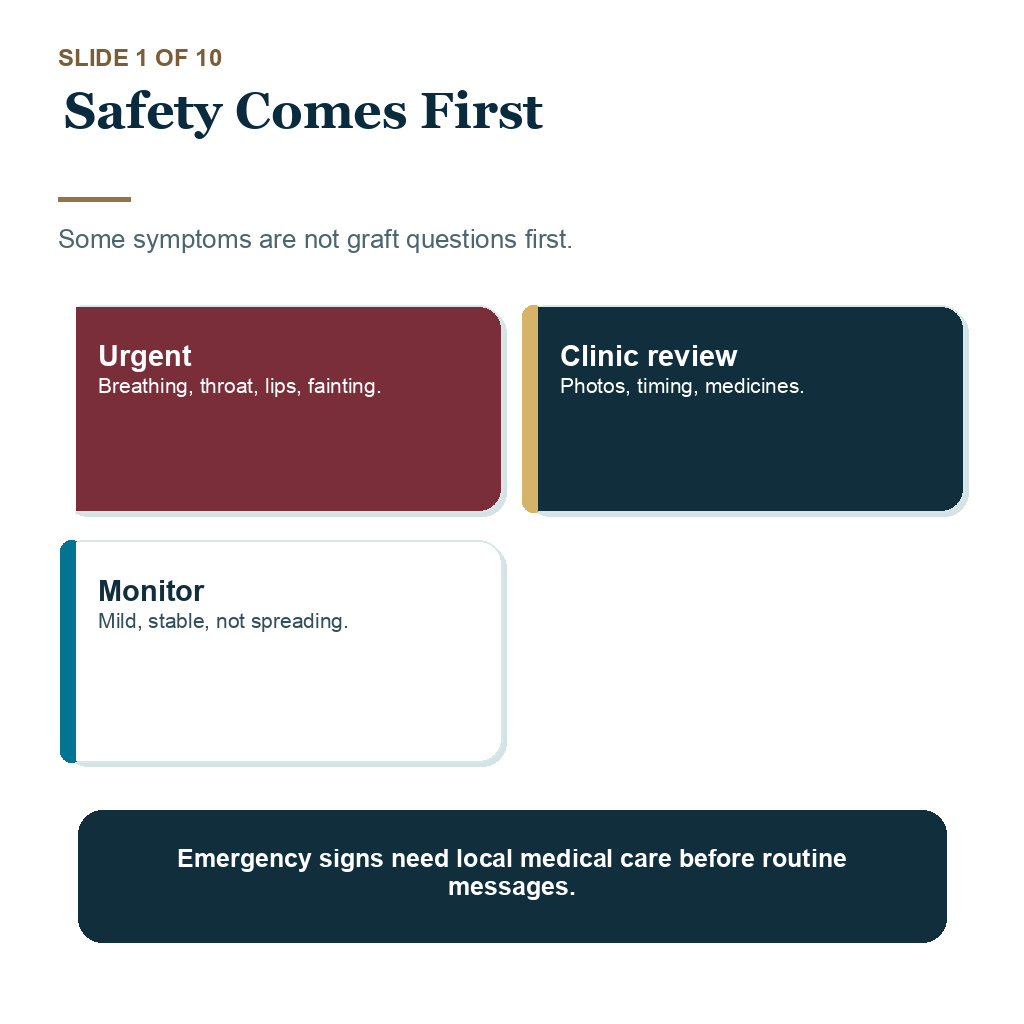
A rash, hives, sudden itching, or unusual swelling after a hair transplant can be minor, but it should not be judged only by looking at the grafts. The symptom location and spread determine how quickly you need help. If there is breathing trouble, throat tightness, tongue or lip swelling, chest tightness, fainting, severe dizziness, confusion, repeated vomiting, or rapidly spreading whole body symptoms, urgent medical help comes before graft anxiety. That means local emergency help first, not waiting in a hotel room to see whether the grafts look affected.
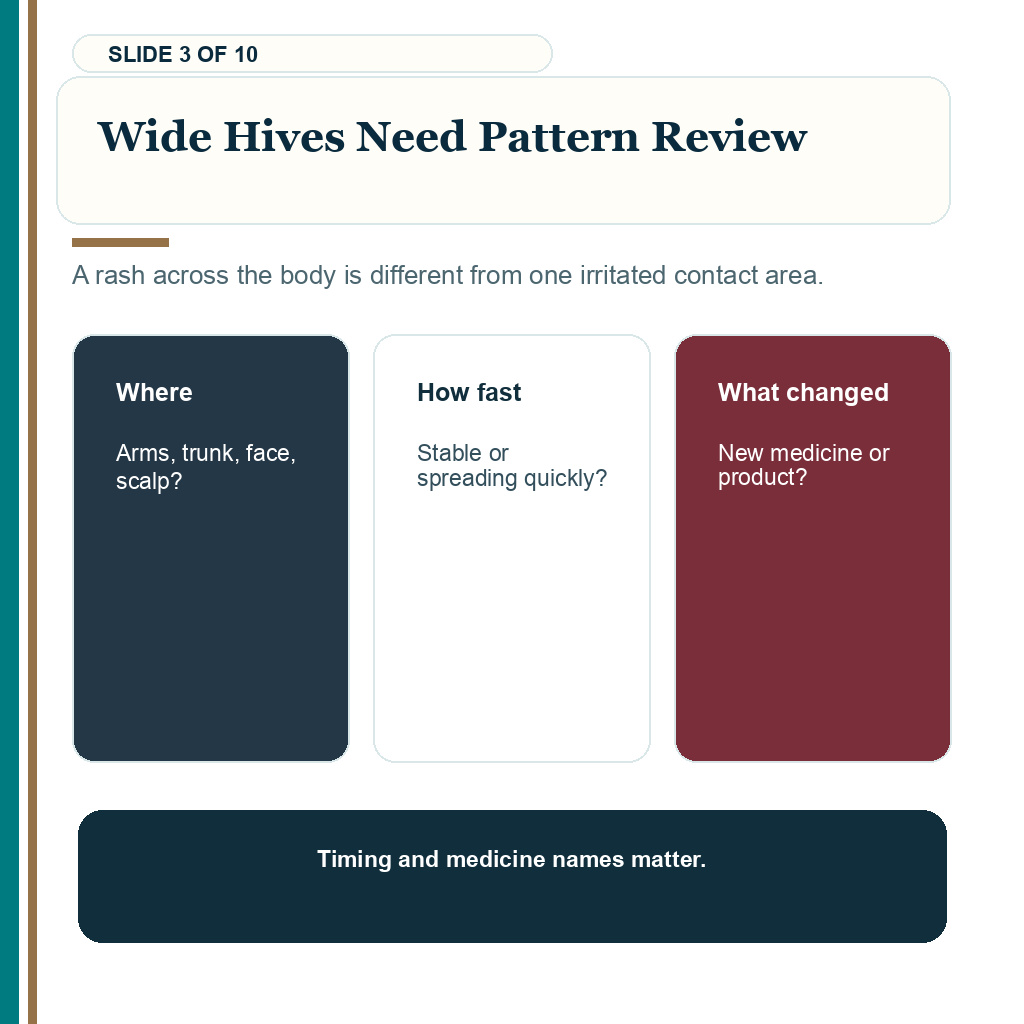
For nonurgent symptoms, location, timing, spread, and recent exposures help separate local irritation from a wider reaction. A dry itchy scalp around scabs is different from hives on the arms. Gradual forehead swelling is different from lip or throat swelling. A rash that starts after a new antibiotic is different from redness only where shampoo touched the skin. A local adhesive rash after dressing removal belongs in that same pattern review, not in the whole body allergy category by default. Send photos in steady lighting, the exact timing, and the full medicine list before changing treatment alone or adding another product. The same careful pattern review helps with a neck lump after FUE, because allergy, irritation, infection, and ordinary healing are not handled in the same way.
If the reaction is not an emergency, write down what changed before it appeared. Include medicine, shampoo, foam, antiseptic, food, supplements, or any new tablet. That timeline often helps more than another close photo of the grafts.
Rash signs beyond ordinary itching
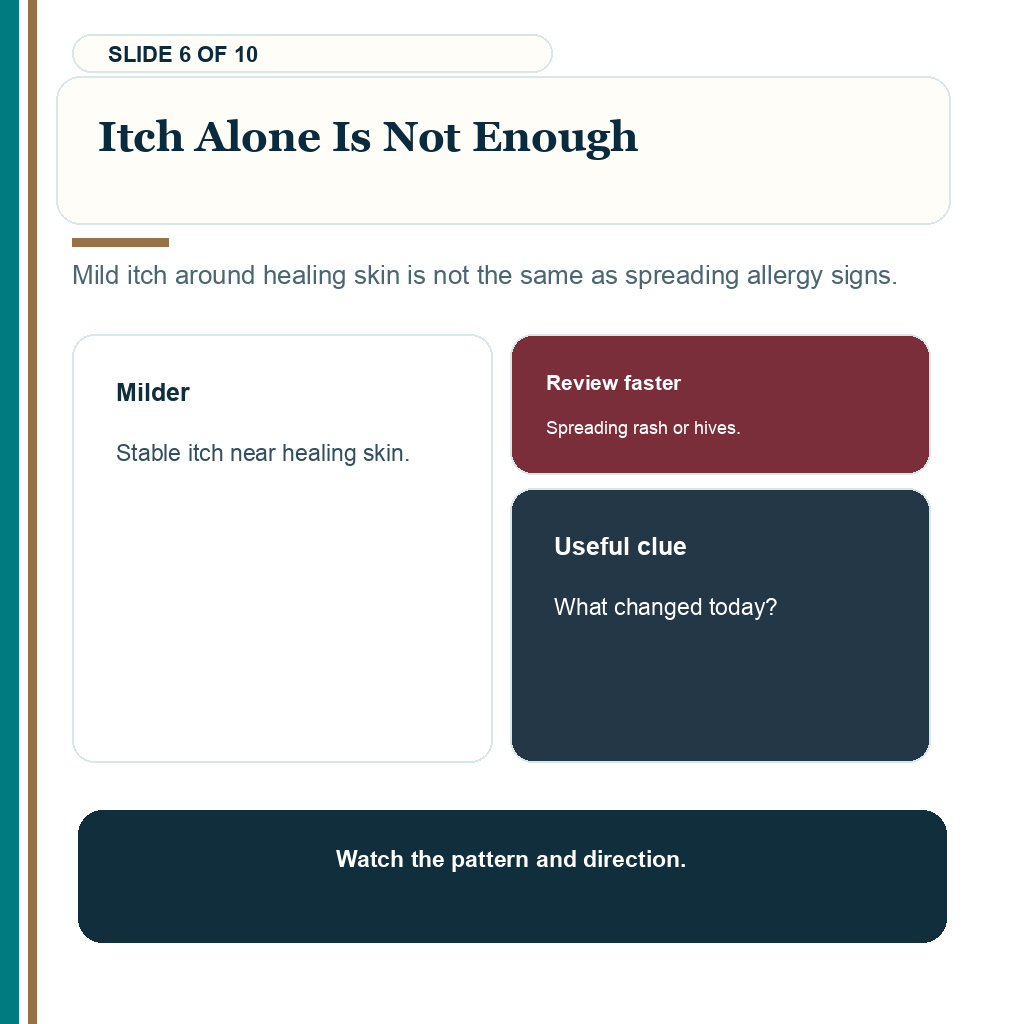
Itching is common during healing, especially when the scalp is dry, scabbed, or adjusting after the first washes. It usually stays near the treated skin and changes slowly. A rash worries me more when it spreads beyond the transplanted area, appears as raised itchy welts, moves from one body area to another, or comes with facial swelling, stomach symptoms, dizziness, or breathing discomfort.
I separate ordinary scalp irritation from allergy by asking where the reaction started and how it behaves. A tight, dry recipient area after washing can fit normal recovery. Hives on the chest, arms, legs, neck, or face point me toward a whole body trigger. If a new medicine, topical product, supplement, or food appeared at the same time, the timing matters more than the fact that surgery was recent. When the concern looks more like cheek or forehead acne than an itchy rash or swelling reaction, I use the separate review of cheek and forehead breakouts after FUE.
Dry healing and scabs can create itching after hair transplant, but allergy review is different. I am looking for a trigger that may need to be stopped, substituted, documented, or reviewed by another doctor.
Details that help identify the trigger
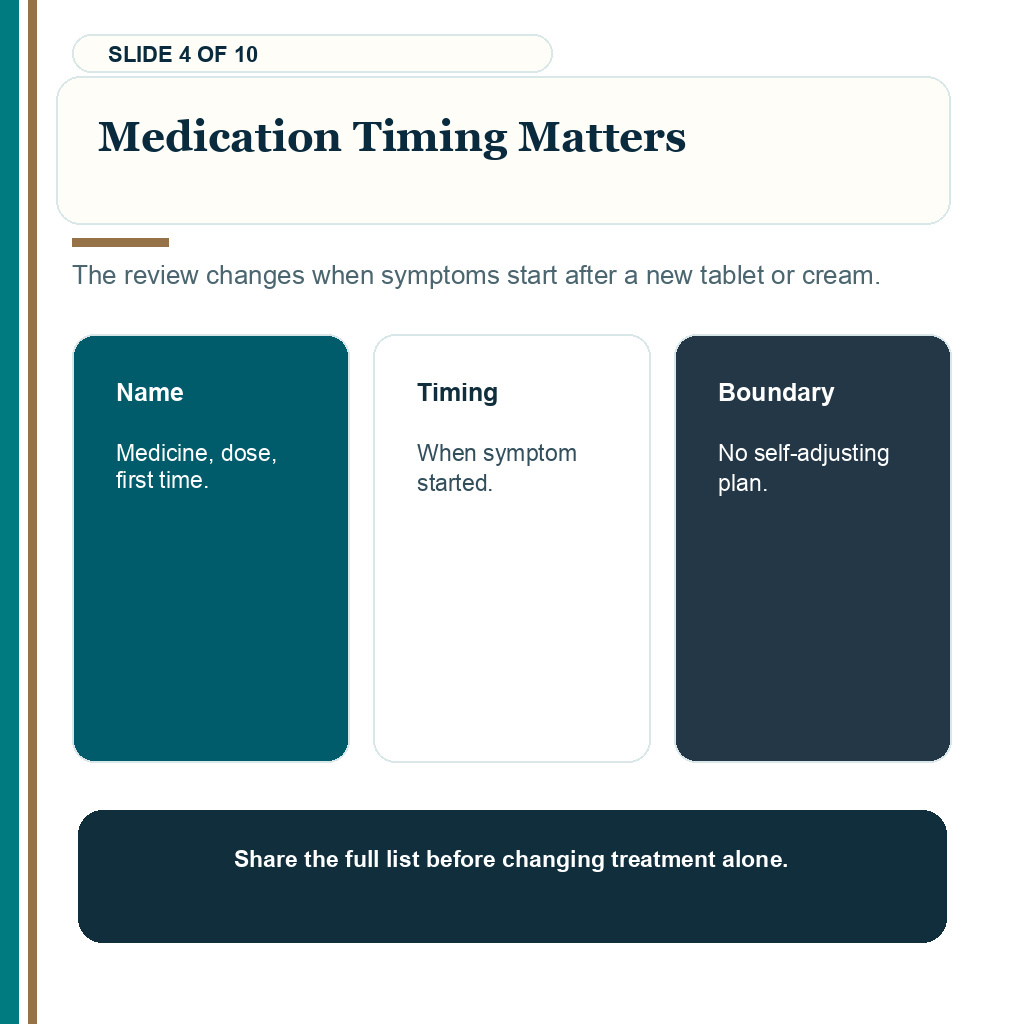
The exact timeline is more useful than a guess. Record when the rash began, which tablet came before it, whether that medicine was tolerated in the past, what touched the skin, and whether the symptom returned after another dose. A reaction that returns after the same dose deserves more caution than itching that stays only where a product touched the scalp.
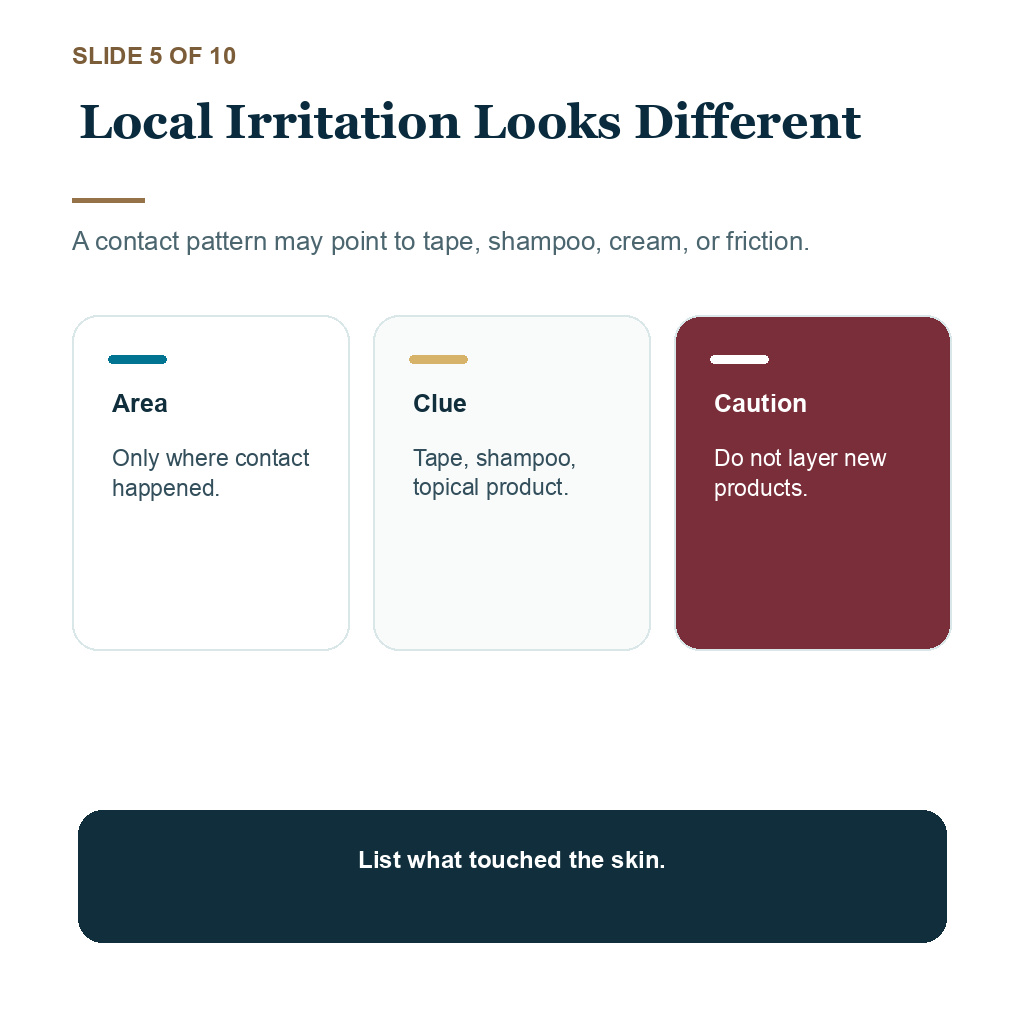
Travel details can change the trigger list. Mention hotel bedding, a new pillowcase, detergent, tape or adhesive, borrowed shampoo, sunscreen, or a new food, especially if the rash sits where something touched the skin.
Timing often narrows the trigger. A reaction soon after a tablet points to a different pattern than a rash that develops after tape removal. Burning confined to product contact also differs from hives after antibiotic doses. Asthma, previous drug allergy, previous hives, or a known reaction to local anesthetic calls for a more careful plan before another exposure.
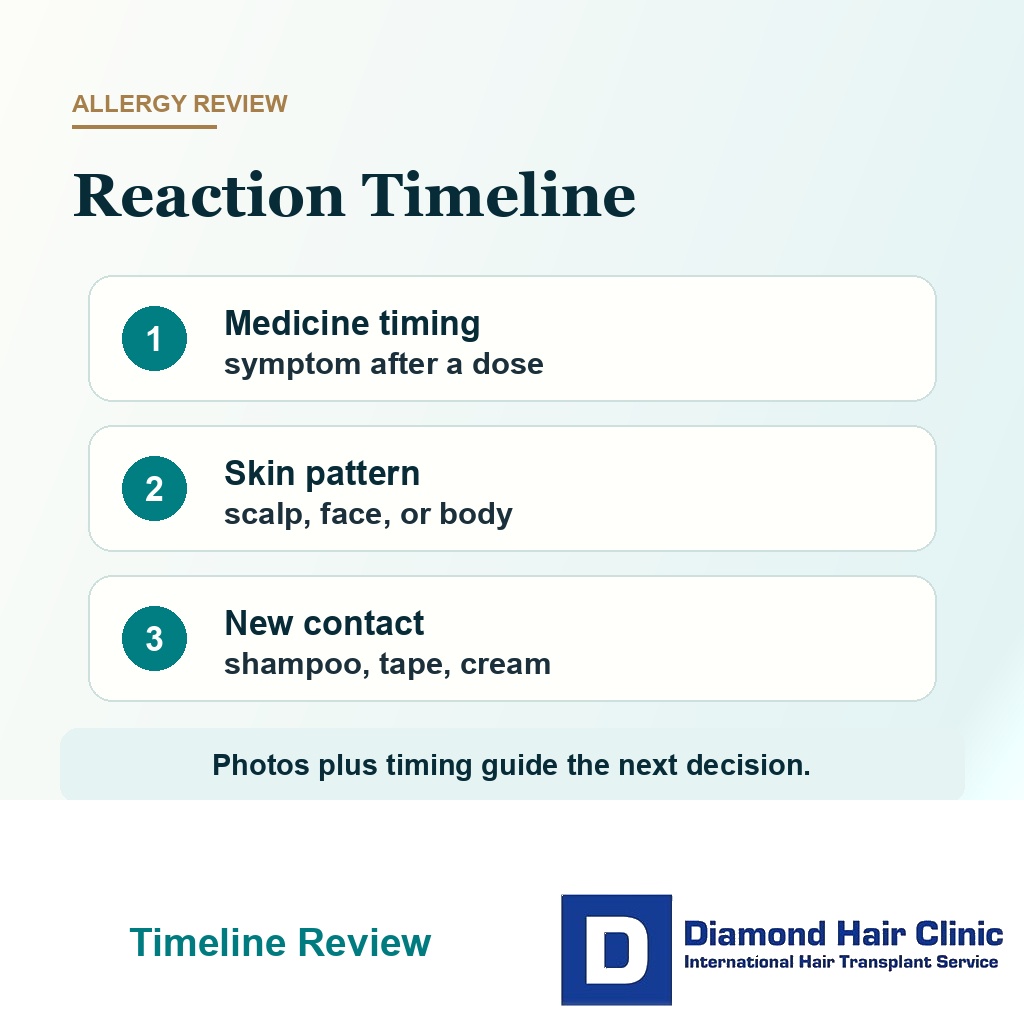
Medication timing, product contact, and symptom location help separate ordinary irritation from a possible allergy.
If you are still preparing for surgery, the broader medication before hair transplant review is where drug allergies, previous reactions, and regular prescriptions should be declared before the day of surgery.
Antibiotics can be responsible
Antibiotics are one possible trigger, but they are not the only explanation. Some people develop stomach upset, loose stools, rash, or hives while taking antibiotics. Others develop folliculitis or infection and then assume the antibiotic caused every symptom. The direction of the decision matters because stopping, changing, or adding medicine without medical review can create a second problem.
If a prescribed antibiotic is suspected, send the name, dose, number of doses taken, timing of each symptom, and photos of the skin. I also need to know whether there is fever, pus, worsening pain, spreading redness, or a wound that looks infected. Do not stop a prescribed medicine quietly and do not add leftover antibiotics from home. The clinic or a local doctor needs enough information to decide whether the medicine is still needed, whether a different class is safer, or whether the symptom is not a drug allergy at all.
Because antibiotics after hair transplant are not a routine answer for every recovery symptom, a possible drug reaction needs review rather than guesswork. The antibiotic allergy before surgery discussion also matters when you arrive with a known drug allergy or a recent infection history.
Local anesthesia or antiseptic can cause symptoms
True allergy to local anesthetic is uncommon, but adverse reactions around anesthesia still need respect. Fear, adrenaline response, dose effects, dizziness, and true allergy are not the same event. The surgical team needs to know whether you previously reacted during dental injections, minor surgery, numbing cream, adhesive dressings, iodine, chlorhexidine, latex, or antibiotic ointments.
A local contact reaction can look like redness, burning, itching, or swelling only where a product touched the skin. Hives away from the scalp, facial swelling, chest tightness, wheezing, faintness, vomiting, or stomach symptoms suggest a wider reaction. Medical review matters in both directions. An inaccurate anesthesia allergy label can complicate future treatment, while a genuine reaction should not be dismissed because it followed a cosmetic procedure.
Hair transplant anesthesia and adrenaline decisions depend on monitoring, blood pressure, pulse, and symptom interpretation. That matters when you later say, “I reacted to the injection,” but the actual event may have been anxiety, adrenaline sensitivity, low blood pressure, or allergy.
Normal swelling versus allergy swelling
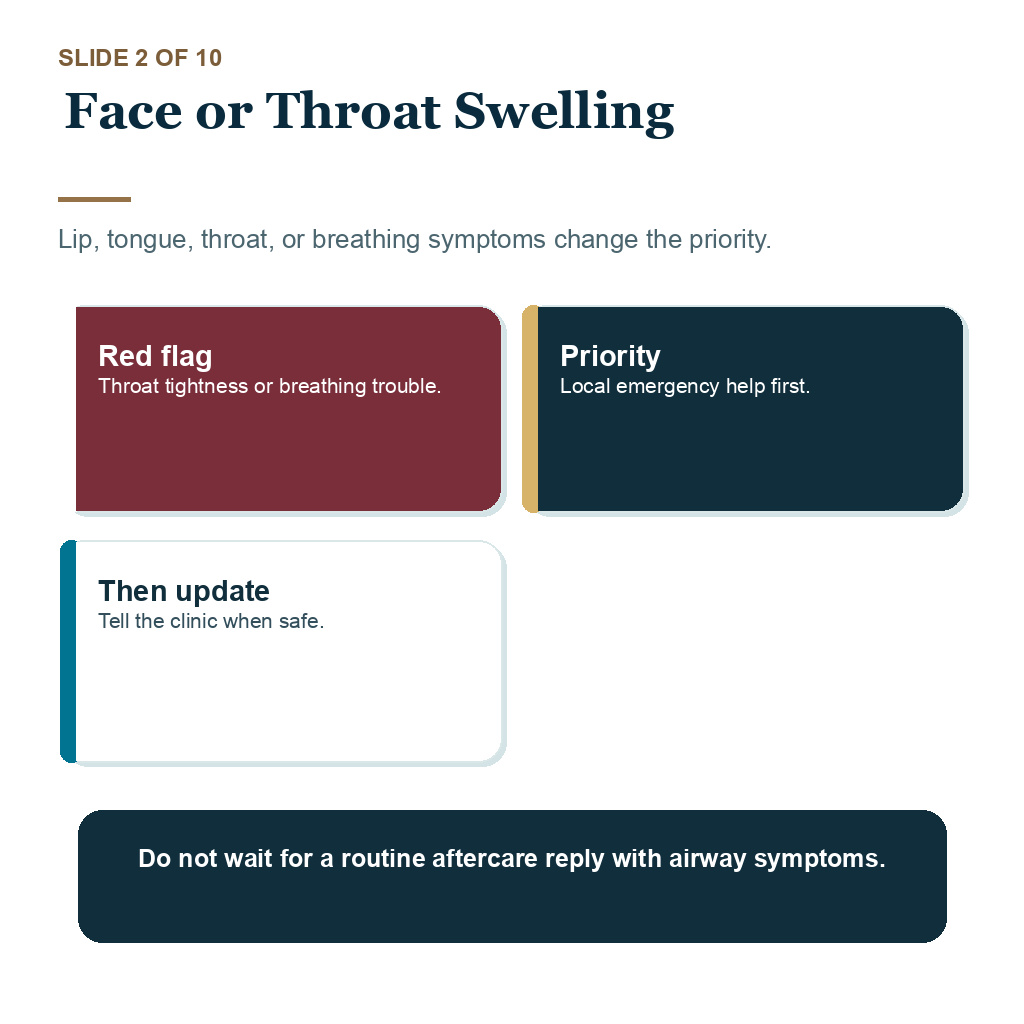
Forehead or eyelid swelling after hair transplant can happen from fluid moving downward after surgery. It often appears gradually, follows gravity, and can look worse in the morning. Allergy swelling behaves differently. Lip swelling, tongue swelling, throat tightness, rapidly enlarging eyelid swelling, or swelling with hives and breathing symptoms is not a normal recovery pattern.
Routine swelling after surgery still deserves follow up if it is severe, painful on one side, associated with fever, or getting worse instead of settling. Allergy concern becomes stronger when the swelling appears after a dose of medicine or comes with skin welts elsewhere. Breathing difficulty or sudden swelling of the mouth or throat takes the situation beyond routine postoperative swelling and requires urgent local medical assessment.
Gradual forehead or eyelid swelling after hair transplant often follows normal postoperative fluid movement. Sudden swelling of the lips, tongue, mouth, or throat, especially with hives, breathing difficulty, or faintness, needs urgent local medical assessment.
Pimples, folliculitis, and allergy can look similar
Small pimples, pustules, ingrown hairs, and folliculitis can be mistaken for allergy, especially when graft loss is the fear. Folliculitis tends to be more localized around follicles. It can be tender, look like small pimples, and sometimes relate to bacteria, shaving irritation, product use, sweat, or occlusion. Hives are usually itchy raised welts that may appear away from the scalp and may fade or move.
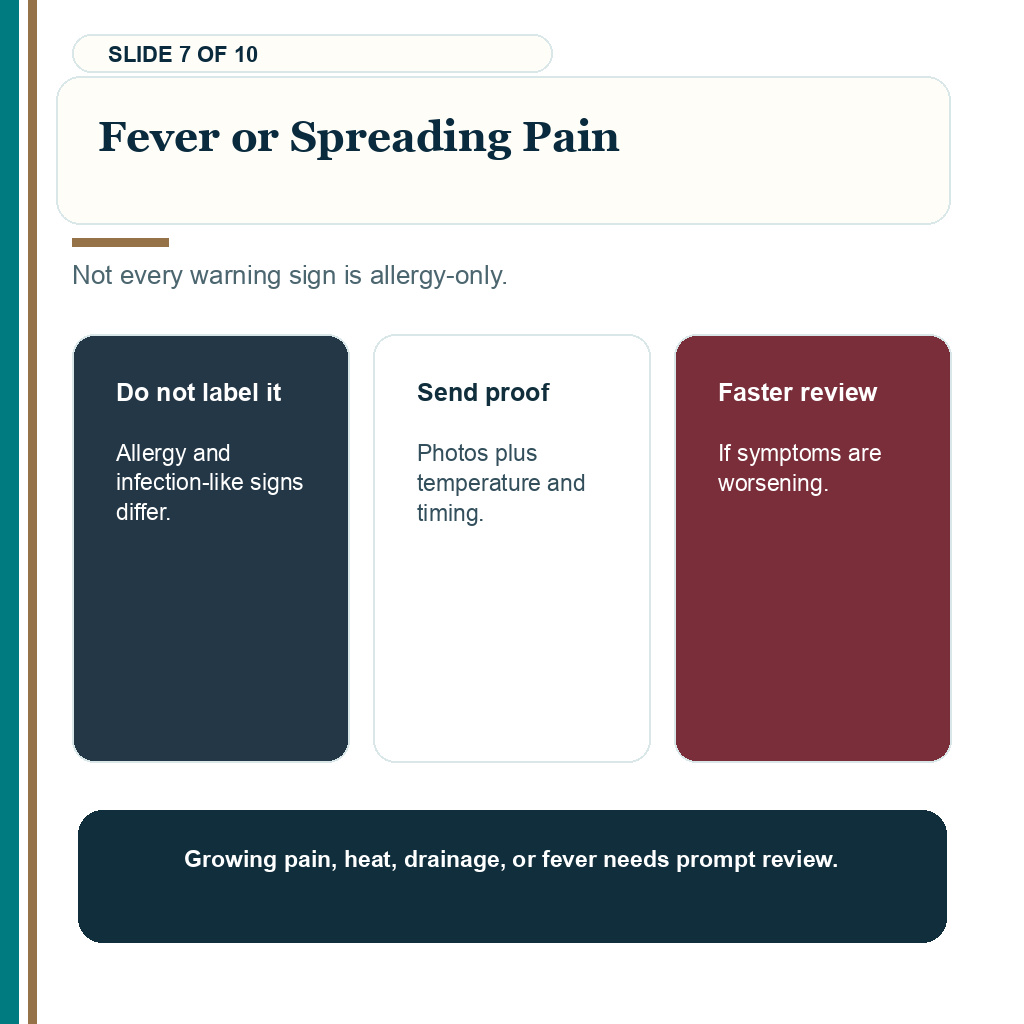
Infection and allergy can overlap. You may receive antibiotics for folliculitis and then develop a rash from the medicine. You may also have a drug rash but an irritated scalp from scratching at the same time. I look at the whole picture rather than one photo. Fever, spreading warmth, pus, worsening pain, or open wounds move the decision toward infection review. Hives, lip swelling, throat symptoms, and repeated reaction after a medicine dose move the decision toward allergy review.
Redness, scabs, or pimples after hair transplant, folliculitis and hair transplant surgery, and infected hair transplant need separate decisions because they can look similar at first, but the treatment is not the same.
Photos to take before asking for advice
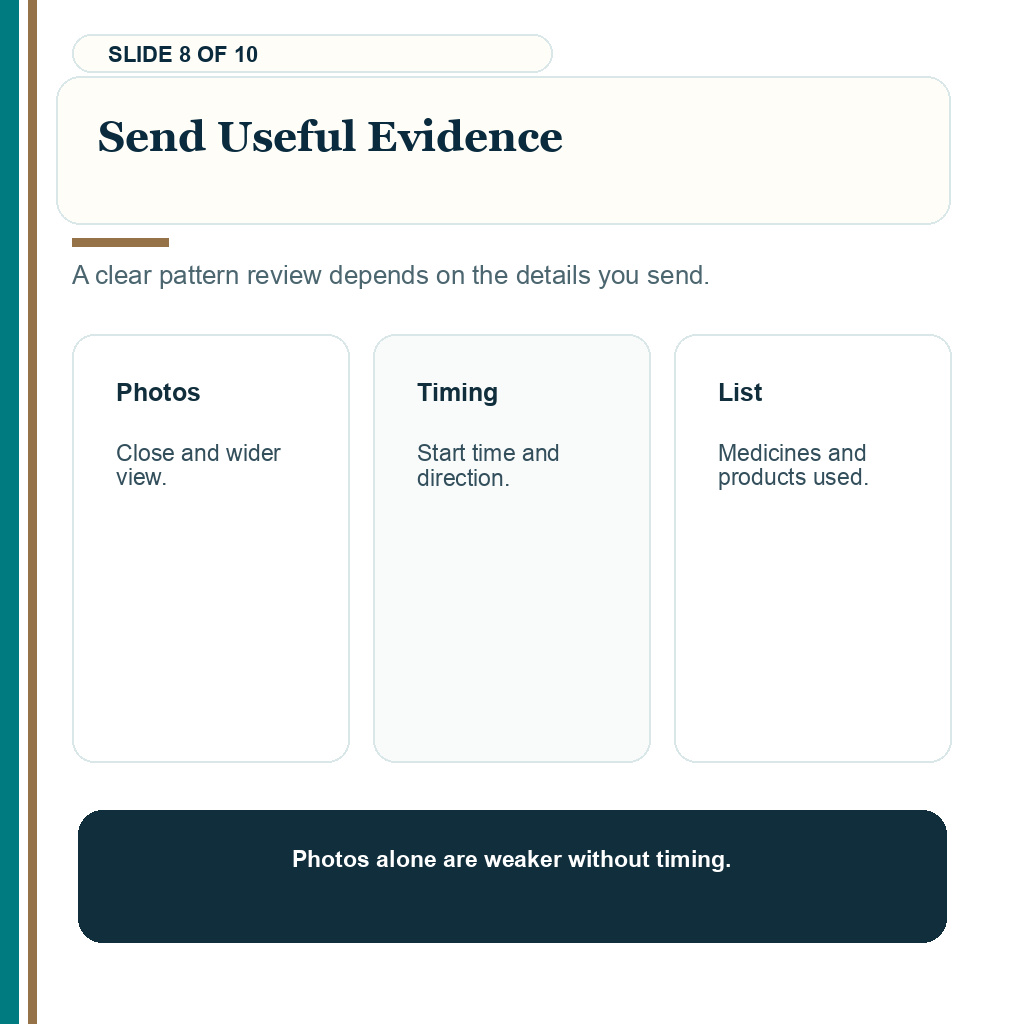
Photographs help only when they are clear and timed properly. Take one close photo of the scalp, one wider photo that shows the exact area on the head, and photos of any rash elsewhere on the body. Include both sides if swelling is uneven. Use normal lighting, avoid filters, and do not apply a thick cream before taking the first photos unless emergency treatment is needed.
Photographs are more useful before creams or tablets change the skin. After that, the pattern can disappear and the clinic may only hear a description. Also send the medicine list, the time each dose was taken, any new shampoo or topical product, known allergies, fever reading if present, and whether breathing, swallowing, voice, chest, or fainting symptoms occurred.
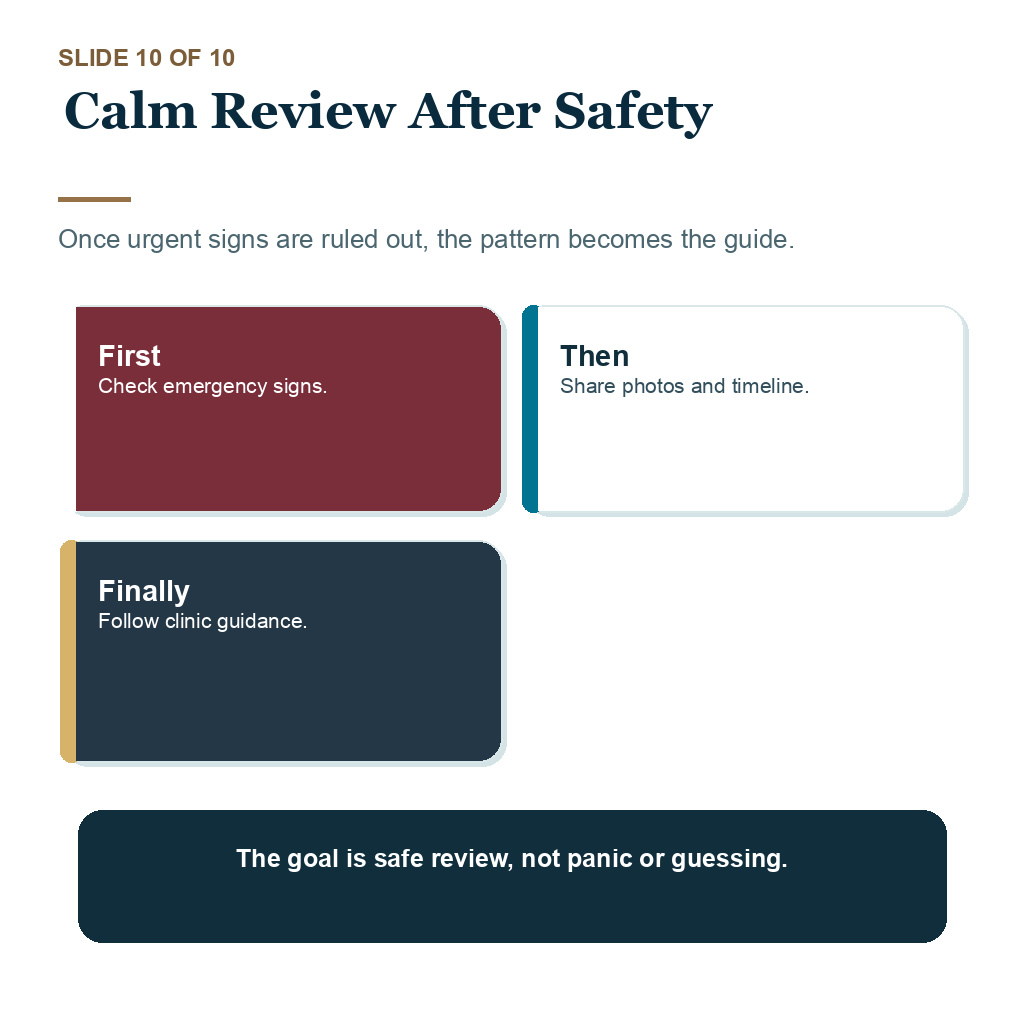
After you leave the clinic or return home, the team needs a reliable route for reviewing photos and changing symptoms. Written hair transplant follow up after surgery should already be part of the surgical plan.
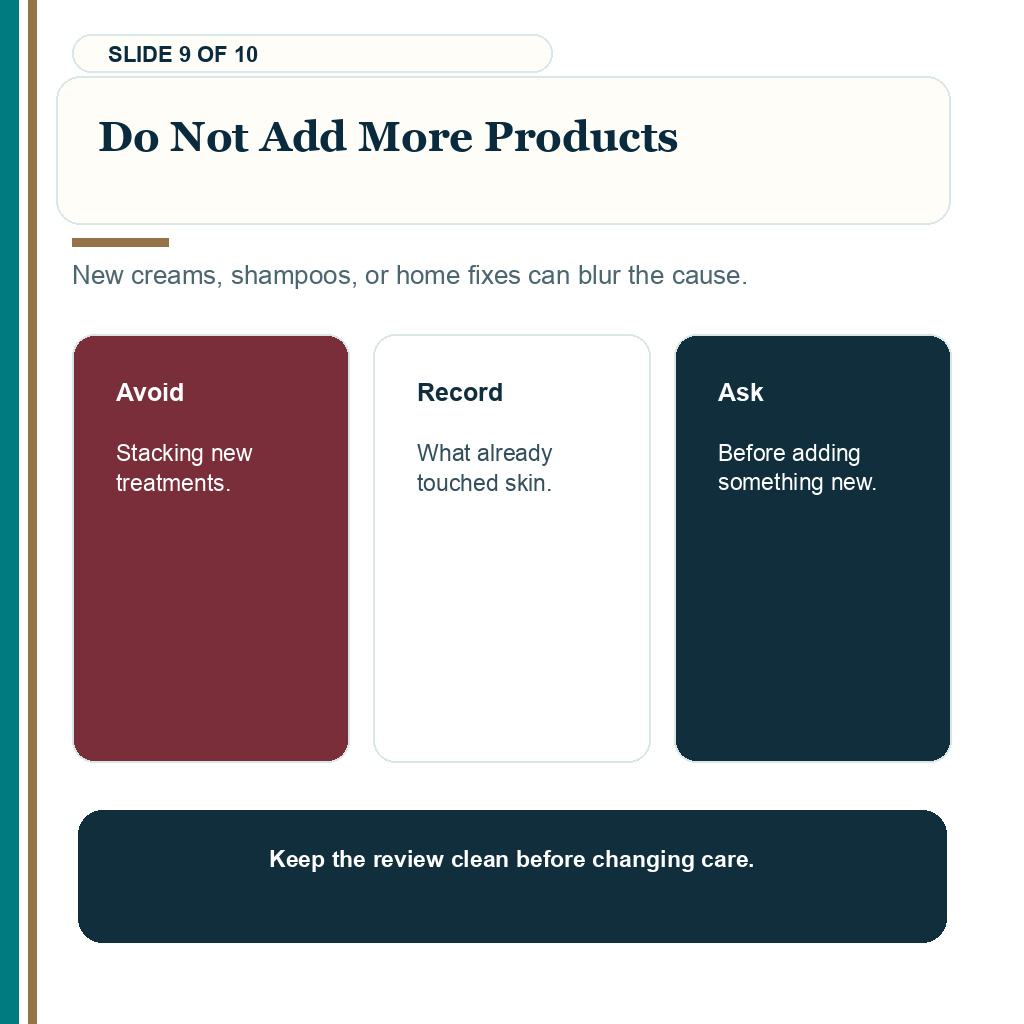
These 10 allergy warning slides separate emergency signs, face or throat swelling, hives, medication timing, local irritation, fever or spreading pain, useful photos, and safer next steps. Swipe sideways, use the arrows one slide at a time, or choose a number below the image.
Steps while waiting for the clinic reply
If symptoms are mild and there are no emergency signs, keep the scalp clean, avoid scratching, pause any new cosmetic product that is not essential, and avoid repeating a suspected trigger just to see what happens. Send the clinic the information above. Do not add strong topical steroids, antibiotic creams, herbal oils, or multiple antihistamines without clear instruction. These can hide the pattern, irritate the scalp, or create medicine interactions.
If an antihistamine was already prescribed for your case, use it only as instructed. If it was not prescribed, ask before taking it, especially if you are also using sleeping tablets, sedatives, alcohol, heart medicine, blood pressure medicine, or other tablets that can cause drowsiness. With antihistamines after hair transplant, “usually safe” still depends on the person and the medicine combination.
Painkillers also matter. Some people take an over the counter tablet, then blame the surgery when the reaction came from the medicine. Others avoid all tablets and suffer unnecessarily. The type of painkiller after hair transplant can change both comfort and safety.
Urgent medical help before graft anxiety
Go for urgent medical help without waiting for a remote clinic reply if there is trouble breathing, wheezing, throat tightness, tongue or lip swelling, chest tightness, fainting, confusion, repeated vomiting, severe dizziness, or a rapidly spreading rash with whole body symptoms. Call the local emergency number or go to an emergency department. Do not drive yourself if you feel faint, short of breath, confused, or swollen around the mouth or throat. If you already carry an epinephrine autoinjector for allergy, follow that personal emergency plan and still seek emergency assessment. At that point, the medical priority is airway, blood pressure, and systemic reaction safety.
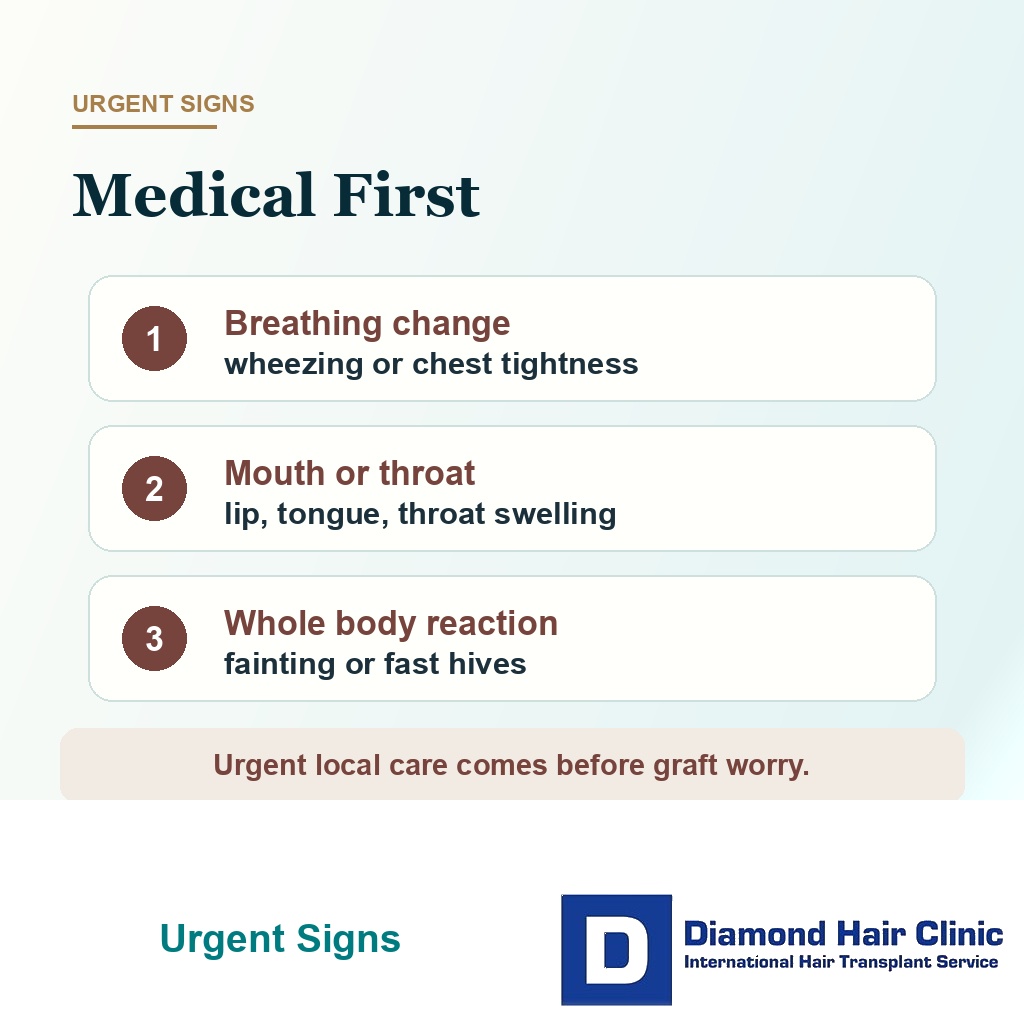
Breathing symptoms, mouth or throat swelling, fainting, and rapidly spreading hives need urgent medical attention.
I understand why graft anxiety takes over, especially in the first days. Still, airway and circulation safety are more important than protecting the hairstyle. Emergency doctors can be told that a hair transplant was recently performed, but they should not be delayed by fear of touching the scalp if the reaction is serious.
Antihistamines may help mild itching or hives when they have been advised for your case, but they are not a substitute for emergency help when breathing, throat, fainting, chest, or rapidly spreading whole body symptoms are present.
Allergy concerns and a second procedure
If you had hives, swelling, a drug rash, a severe stomach reaction, or an unclear event after the first procedure, the second procedure needs a written review first. Bring the actual names of the antibiotics, painkillers, anesthetic solution when available, antiseptic products, topical creams, and any emergency treatment received. Keep the discharge note and local doctor’s assessment if urgent care was needed. A general statement such as “I am allergic to antibiotics” is not enough. The team needs the exact medicine, symptom, timing after the dose, and whether the event involved hives, stomach upset, fainting, or another reaction.
A second procedure needs a written allergy plan, not a verbal guess on the morning of surgery. Sometimes a different medicine can be used. Sometimes a medicine may be avoided. Review by an allergist, dermatologist, cardiologist, or the prescribing doctor may be needed before surgery is booked. The answer depends on the reaction, the medical history, and whether the procedure can be planned without unnecessary medicine exposure.
This is also part of clinic choice. A volume focused clinic that cannot name what was given, cannot provide records, or gives vague instructions after a reaction creates risk for the next decision. Surgeon-led planning means the medical history is not treated as paperwork. It changes the plan.
Judging allergy symptoms during recovery
Pattern, timing, severity, and whole body symptoms determine the response. A small itchy spot near scabs can remain a local recovery issue, while hives after an antibiotic dose raise a medication concern. Gradual eyelid swelling can follow normal postoperative fluid movement. Sudden lip, tongue, mouth, or throat swelling, wheezing, or fainting requires urgent local medical assessment.
A calm response still needs clear thresholds. Photograph a local rash early, record medicine timing, and tell the clinic about previous allergies before surgery. Do not repeat a tablet that appears to trigger the same reaction without medical guidance. Breathing symptoms, sudden mouth or throat swelling, fainting, or rapidly spreading whole body signs need urgent local medical assessment before the clinic update.
Expected changes during hair transplant recovery usually remain around the scalp or follow the usual forehead and eyelid swelling pattern. Breathing difficulty, sudden mouth or throat swelling, fainting, blistering skin, or a rapidly worsening whole body reaction needs urgent local medical assessment. These signs cannot be managed as routine graft aftercare.
Pollen symptoms during FUE recovery can overlap with itching, sneezing, and eye irritation. The distinction rests on timing, symptom location, spread, medicine exposure, and whole body signs. Breathing difficulty, sudden mouth or throat swelling, fainting, blistering skin, or rapidly worsening systemic symptoms need urgent local medical assessment.

Read this review excerpt
First wash completed and visual instructions given to my daughter.