




Already took an antihistamine without asking
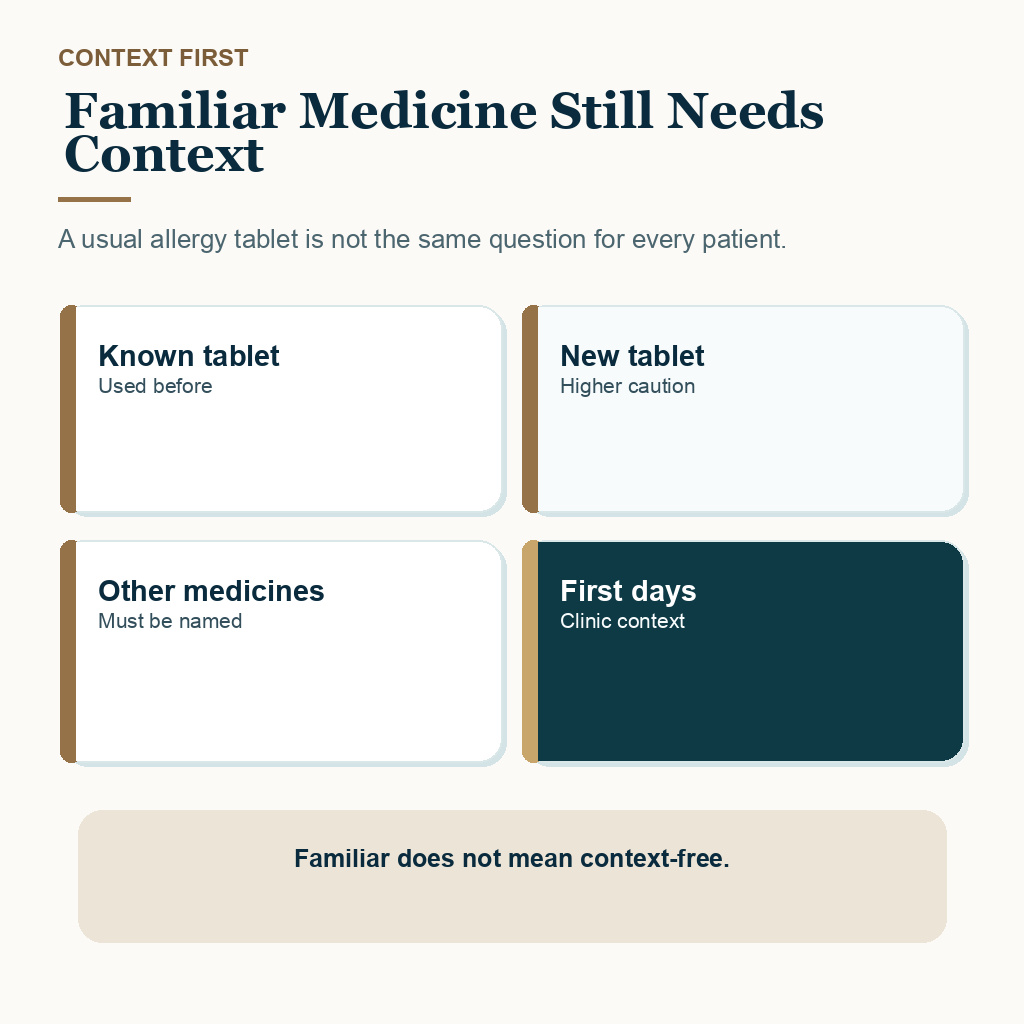
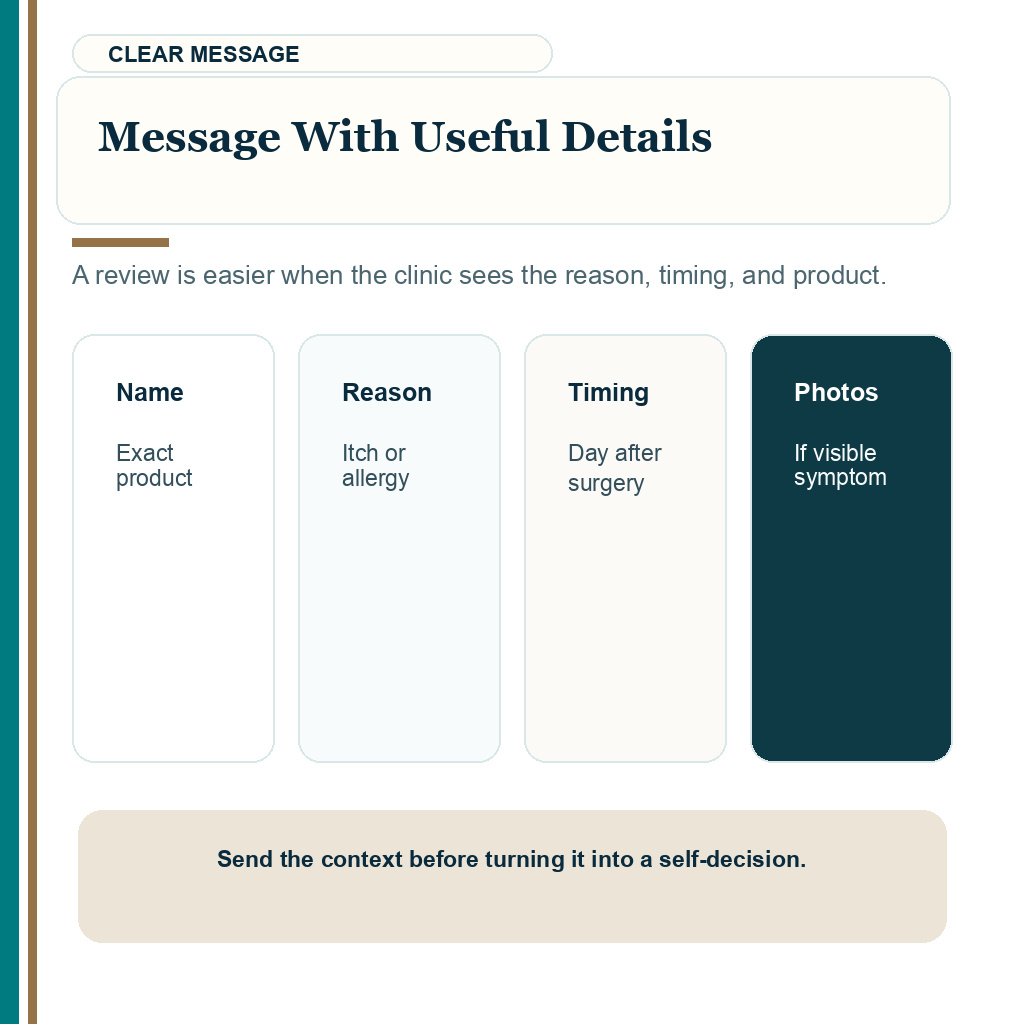
Share what you took, the dose, the time, and why you took it. A single less sedating allergy tablet is usually a different issue from a sedating antihistamine taken to sleep, or a tablet taken because of hives, swelling, breathing symptoms, or a rash.
A second dose should wait until the clinic understands what is happening. Lip, tongue, face, or throat swelling, breathing difficulty, spreading hives, dizziness, or a feeling of being medically unwell should be handled as urgent medical review first, not only as a message about grafts.
Antihistamine use as a sleep aid
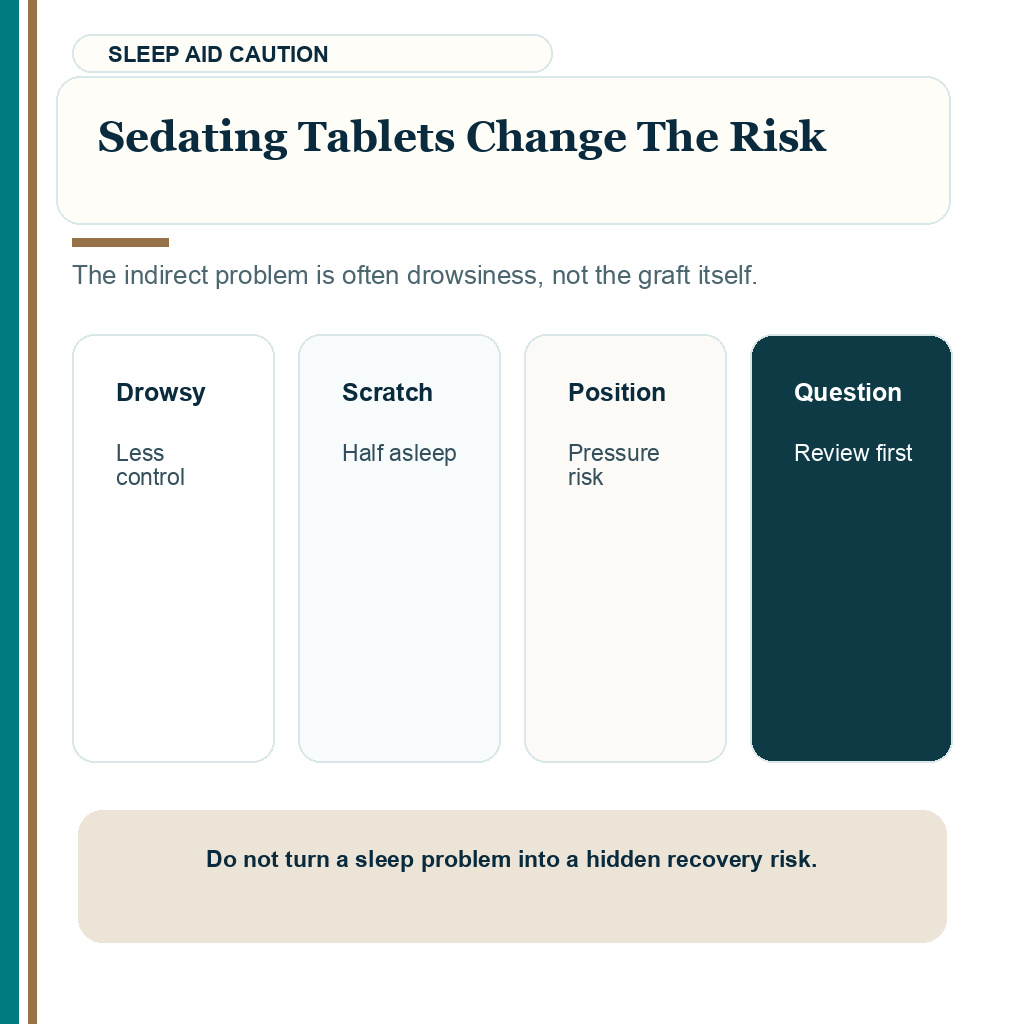
Sometimes the word “antihistamine” hides the real reason for the tablet. A less sedating allergy medicine for hay fever is not the same decision as diphenhydramine or another sedating antihistamine taken at night because you are anxious, itchy, or uncomfortable.
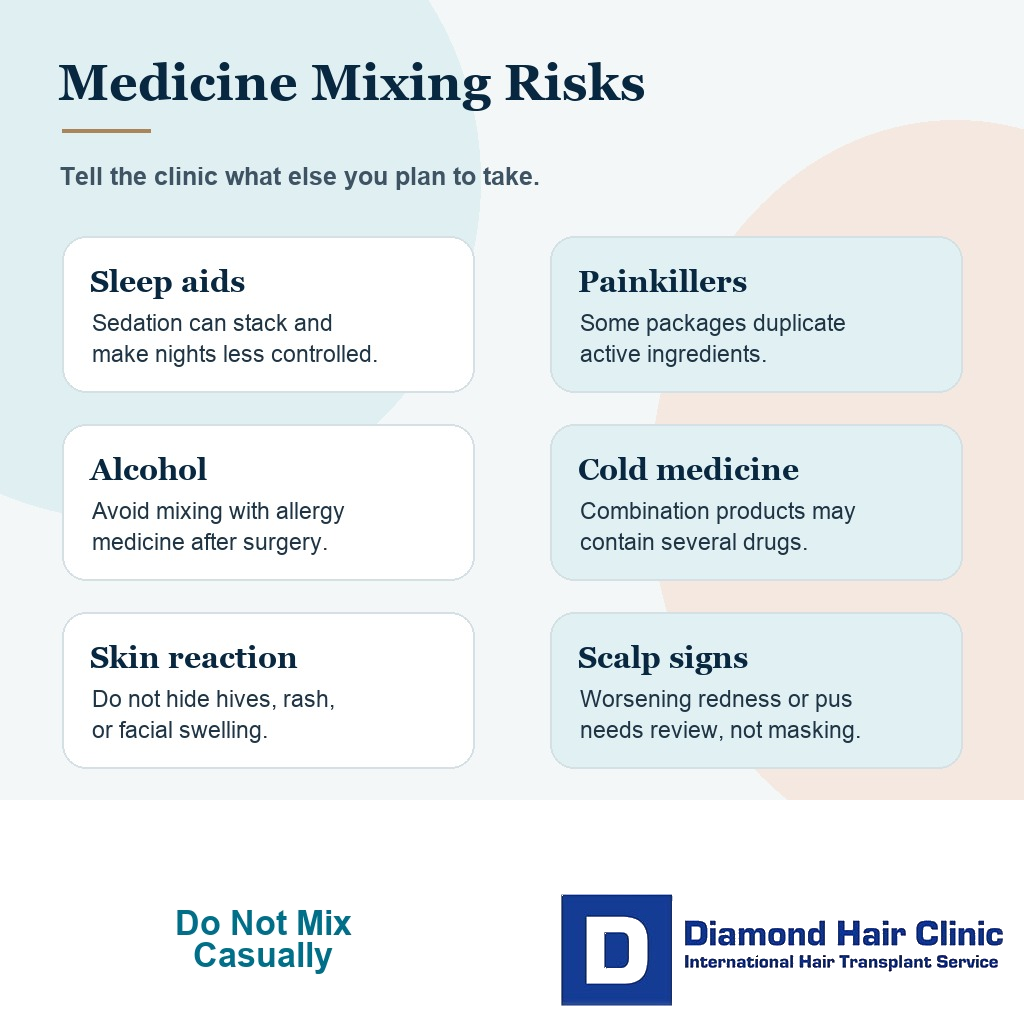
Sedation can reduce judgment, make someone scratch while half asleep, worsen next morning driving safety, and become more risky if mixed with alcohol, sleeping pills, opioid pain medicine, or anxiety medicine. The reason matters as much as the medicine name. Itching, allergy, rash, and sleep trouble do not always need the same response.
Antihistamines can help itching after a hair transplant
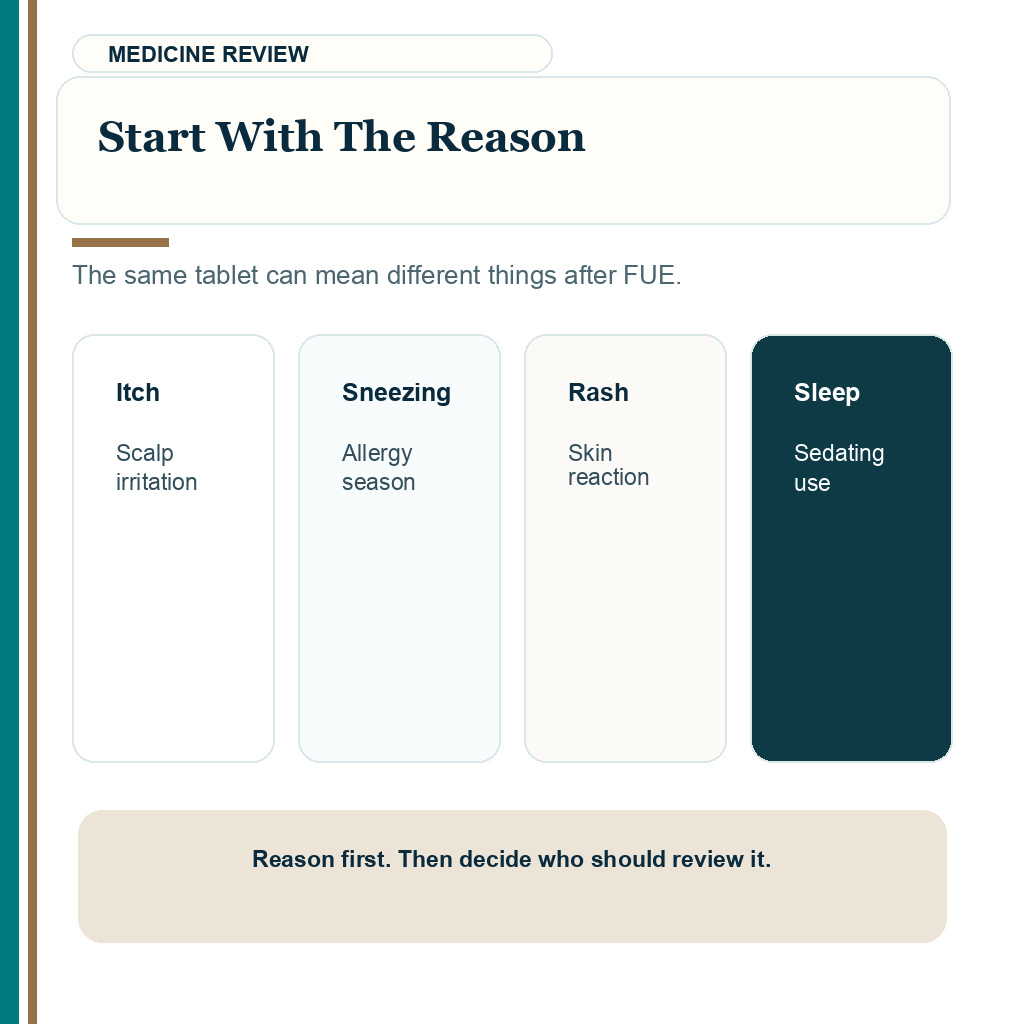
They may help, especially when itching has an allergy or histamine component, but they are not the first answer for every itchy scalp. Early itching can come from dry crusts, healing skin, tightness, nerve sensitivity, shampoo irritation, eczema, or simply the normal repair process after thousands of tiny surgical sites.
First, I look at whether the scalp is settling or getting worse. Dry tight itching without spreading redness is different from itching with heat, pus, increasing pain, wet crusts, fever, or a rash. Antihistamines can reduce an urge to scratch, but they should not be used to silence warning signs that need photos or examination.
Tell the clinic what the itch feels like before you choose a tablet. A tight dry scalp, a rash that looks allergic, and a sedating medicine at night point to different decisions.
Where the itching is located matters too. The donor area and newly implanted area are handled differently, so a cream or cooling method used at the back of the scalp may not be suitable near the grafts.
Comfort measures also matter. Clinic approved washing, careful drying, and sometimes saline support can reduce the dry sensation that makes patients want to touch the scalp. Moisture support is not the same as random product use. Keep that in mind with saline spray after a hair transplant.

Hay fever or sneezing as the reason
If you already use an allergy medicine safely and your clinic approves it, continuing or restarting it may be reasonable. Hay fever can make recovery more uncomfortable because sneezing, a blocked nose, watery eyes, and repeated wiping all make you more aware of the healing scalp.
A single sneeze usually does not make grafts fly out. Direct trauma, rubbing, and bleeding matter more than the reflex alone. The same distinction is useful for sneezing or coughing after a hair transplant. The aim is to control symptoms without creating drowsiness, dryness, or medicine combinations that make recovery harder.
Be careful with combination cold and allergy products. Some contain antihistamines, decongestants, painkillers, caffeine, or several active ingredients in one package. If you also take pain relief or a sleep aid, you can accidentally double a medicine or create a sedation problem without realizing it. If the symptoms feel more like illness than allergy, cold or flu after a hair transplant gives the wider warning sign frame.
Read the active ingredient line, not only the brand name. Diphenhydramine, chlorphenamine, promethazine, doxylamine, or another sedating antihistamine may appear inside night cold products, sleep aids, travel sickness tablets, or allergy tablets. Taking two products with overlapping ingredients can create too much sedation or an overdose risk even when each package looks ordinary.
Hay fever still needs gentle behavior around the grafts. Aggressive nose blowing, forehead scrubbing, and repeated wiping near the hairline can create more risk than the sneeze itself. The tablet may reduce symptoms, but careful hands remain more important than the brand name.
Rash, hives, or swelling after surgery
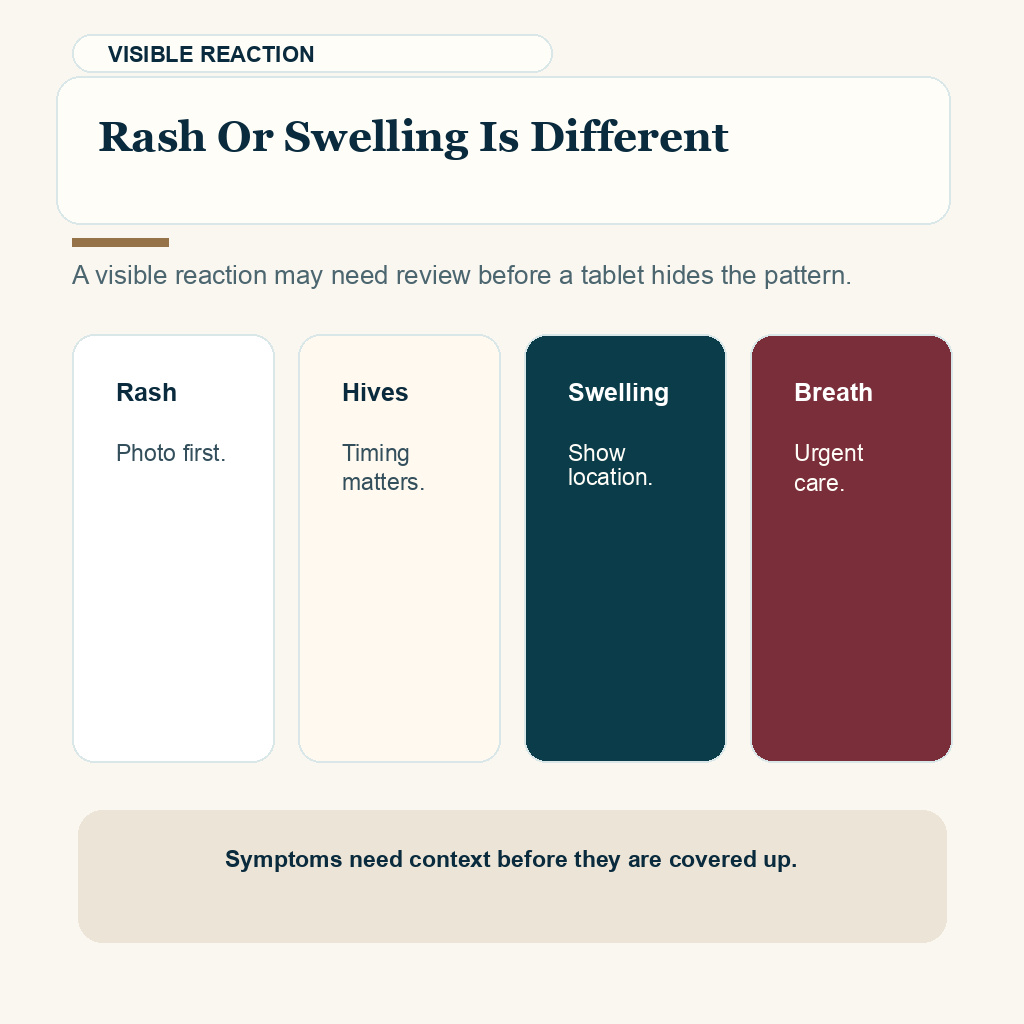
A rash, hives, lip swelling, facial swelling, wheezing, or throat tightness should not be managed as a simple itching question. Those signs may be allergy related and need medical advice. If breathing, throat swelling, faintness, or rapidly spreading symptoms appear, treat it as urgent rather than waiting to see whether the transplant is affected.
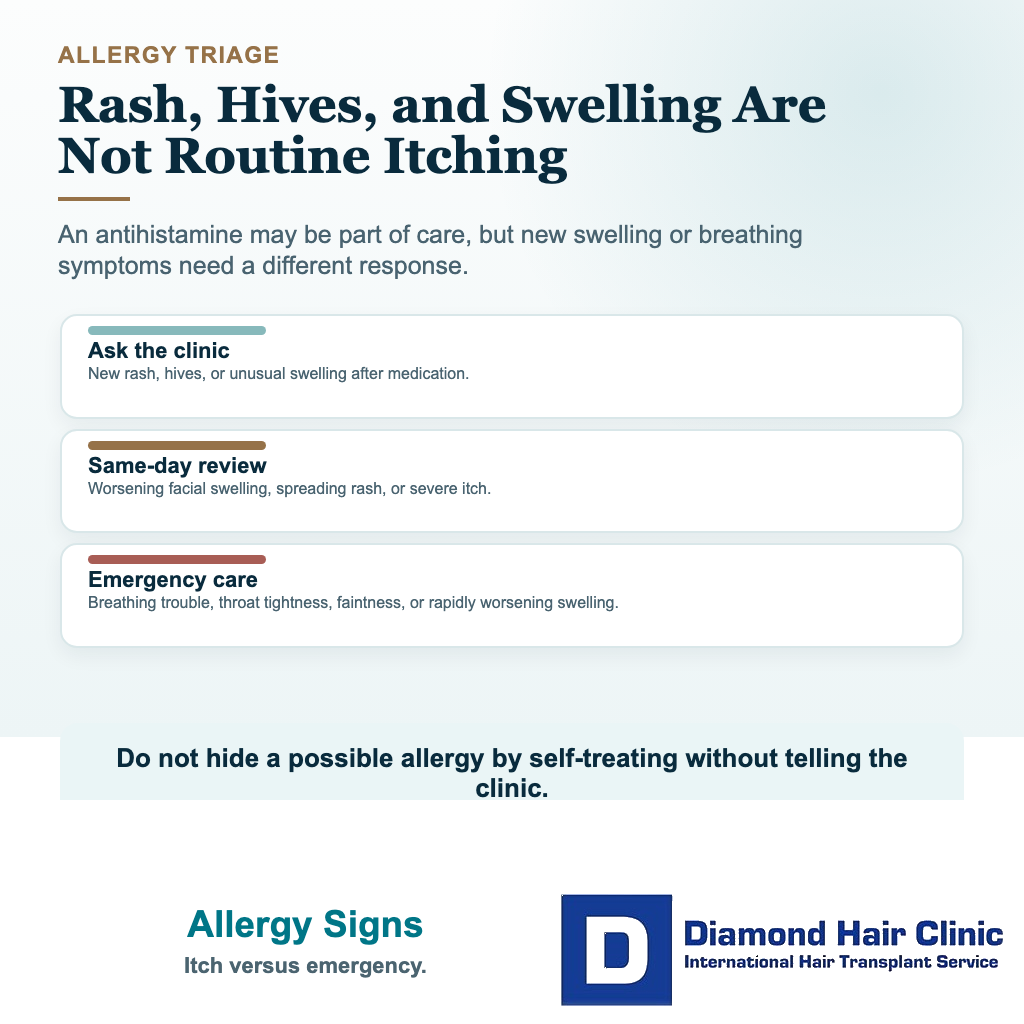
After a hair transplant, possible triggers can include antibiotics, pain medicine, topical products, shampoo, adhesive, food, hotel products, or an unrelated allergy. Allergy history should be disclosed before taking a prescribed course, especially when judging antibiotics after a hair transplant.
Do not use an antihistamine to hide a reaction and continue the same suspected trigger without asking. I need clear photos, timing, medication names, and symptom details. A safe medication decision depends on knowing what problem is being treated.
Antihistamines make dryness or healing harder
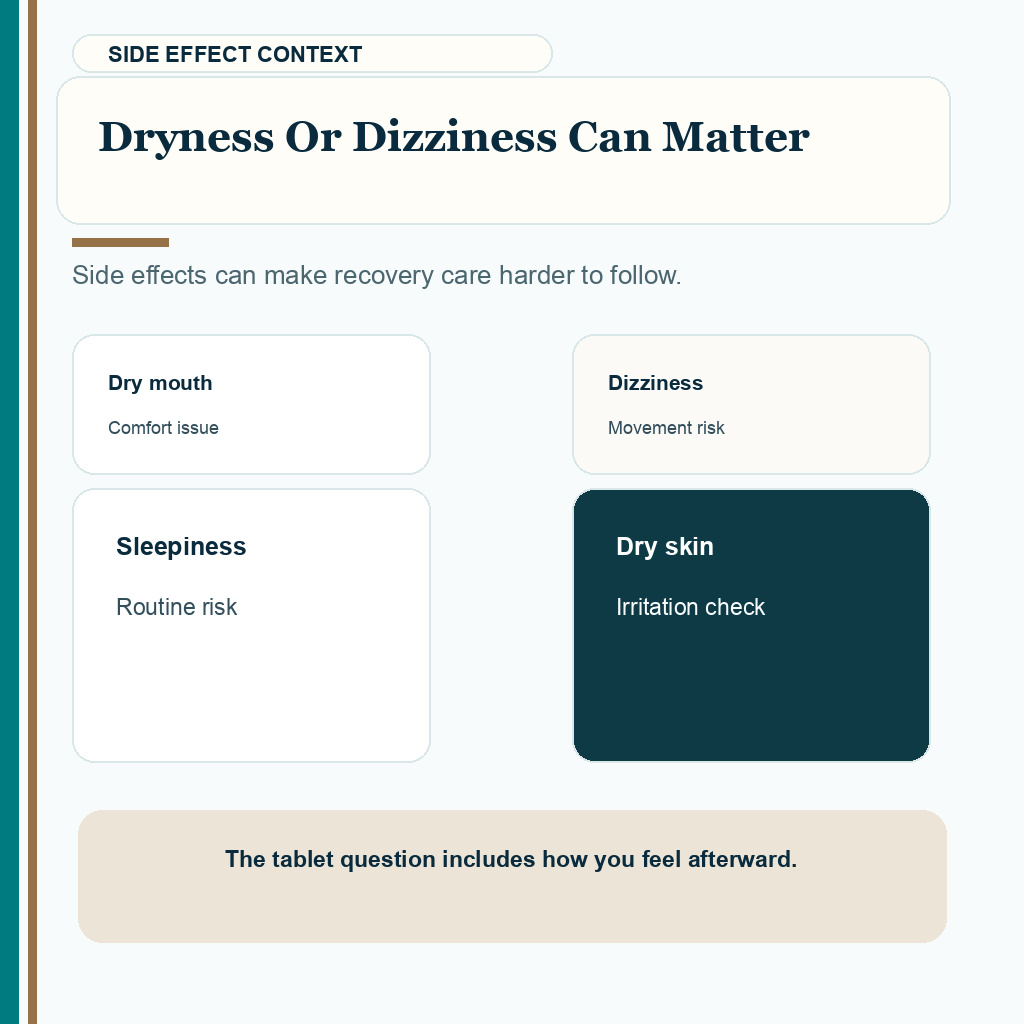
Some people feel drier when they take certain antihistamines. Dry mouth is more obvious than dry scalp, but the wider point is that early recovery should stay controlled. If a medicine makes you dry, dizzy, sleepy, restless, or less careful, that matters even if the tablet itself is not directly attacking grafts.
Scalp dryness after surgery should be handled with the clinic’s aftercare routine, not with random creams, oils, or soothing gels. I discuss that distinction in aloe vera or moisturizer after a hair transplant.
Product reactions can also mimic or worsen itching. Fragrance, preservatives, strong shampoos, styling products, and contact allergy can make the skin more reactive. The broader product safety page on harmful ingredients in hair products is useful when the trigger may be topical rather than internal.
I do not tell patients that antihistamines improve graft growth. That is not the point. The useful role, when appropriate, is comfort and symptom control so the patient scratches less, sleeps more safely, and avoids repeated irritation. If the medicine does not make recovery safer, it has not helped the transplant.
Medicines should not be mixed casually
Medicine combinations need deliberate review. An antihistamine may overlap with a sleep aid, painkiller, cold medicine, anxiety tablet, alcohol, or another allergy product. The risk may be drowsiness, poor coordination, double dosing, stomach upset, dry mouth, or confusion about which symptom belongs to which medicine. Taking more than the recommended dose, especially with sedating antihistamines, can become a medical emergency.
An unfamiliar antihistamine should not become a late night experiment after surgery. Clinic review matters more if you are alone, flying the next morning, taking pain medicine, or already feeling dizzy. The first recovery nights need enough alertness to avoid scratching, rubbing, unsafe sleep position, and missed warning signs.
A safer path is to write down every tablet, spray, syrup, supplement, and topical product you plan to use, then ask the clinic before adding a new one. That complete medicine review is also used in the main page on medications after a hair transplant.
Pay special attention if you have liver disease, kidney disease, glaucoma, urinary retention, sleep apnea, strong snoring, severe asthma, heart rhythm problems, or a history of medication reactions. These details can change which antihistamine is sensible and whether another doctor should be involved.
Timing also matters. A familiar less sedating medicine during the day may be easier to manage than a sedating product taken right before sleep. If you are alone after surgery, traveling early the next morning, or already taking medication that affects alertness, the threshold for asking first should be lower.
Eczema, allergy, or sensitive skin
Scalp eczema, contact allergy, psoriasis tendency, seborrheic dermatitis, or repeated product reactions need a more careful plan. The problem may not be solved by an antihistamine if the scalp itself is actively inflamed or the trigger is still touching the skin.
For surgery, the scalp should be quiet enough for clean incisions and predictable healing. Active inflammation, broken skin, and uncontrolled scratching can delay surgery. Keep that in mind with scalp eczema and hair transplant planning.
After surgery, sensitive skin needs fewer experiments, not more. If one product or medicine is changed at a time, the clinic can understand what helped and what harmed. If five products are added in one night, the picture becomes unclear.
Clinic review before taking one
Clinic review is needed before taking an antihistamine when itching is severe, the recipient area is getting redder or wetter, or there is discharge, fever, facial swelling, hives, breathing difficulty, strong drowsiness, or another medicine already involved, such as a sleep aid, painkiller, anxiety medicine, or cold medicine.
Get clinic review as well if you are trying to treat a symptom that might be infection. Pimples, redness, scabs, and soreness can be part of healing, but worsening pain, heat, pus, bad smell, fever, or spreading redness need review. The warning sign frame is explained in redness, scabs, and pimples after a hair transplant.
When another doctor prescribes the antihistamine, share that with the transplant team. If the clinic prescribed it, follow the exact dose and timing. If you bought it yourself because someone online suggested it, stop and get the transplant team’s review before using it.
Antihistamines are about symptoms, not habit
Use antihistamines only with a clear reason. If the reason is mild hay fever and the medicine is familiar, less sedating, and approved, it may fit recovery. If the reason is severe itching, rash, swelling, or a possible allergy, I want to see the pattern before the medicine hides it.
During the first 10 to 14 days, protect the grafts from scratching, rubbing, and careless sleep. Do not add a sedating medicine just because the scalp feels annoying. Do not combine antihistamines with alcohol, random sleep aids, or unapproved pain medicine. Do not use any tablet to avoid sending photos when the skin is clearly getting worse.
Antihistamines can be useful, but only when they make recovery safer and easier to manage. If they create drowsiness, confusion, medicine mixing, overdose risk, or delayed review of a real reaction, they are no longer helping the transplant.
Get urgent medical help if an antihistamine or suspected overdose is followed by trouble breathing, collapse, seizure, hallucinations, extreme confusion, or a person who cannot be awakened. Those are medical warning signs first. The hair transplant can be checked after the patient is safe.
Antihistamines fit recovery only when the reason, dose, timing, and symptom pattern are clear. A familiar approved tablet for hay fever is different from treating a new rash or swelling privately. Send photos when the skin is changing, and keep the medicine plan simple enough that the scalp stays protected, alertness is preserved, and warning signs are not hidden.
Medication review is only one part of recovery during allergy season. The pollen season during FUE recovery guide also covers rubbing, sneezing habits, room air, and when symptoms should be sent to the clinic.

Read this review excerpt
Every single one of my questions was answered and they made sure I had all the details I needed to make an informed decision.