


Cold, Flu, and Fever Need Recovery Triage
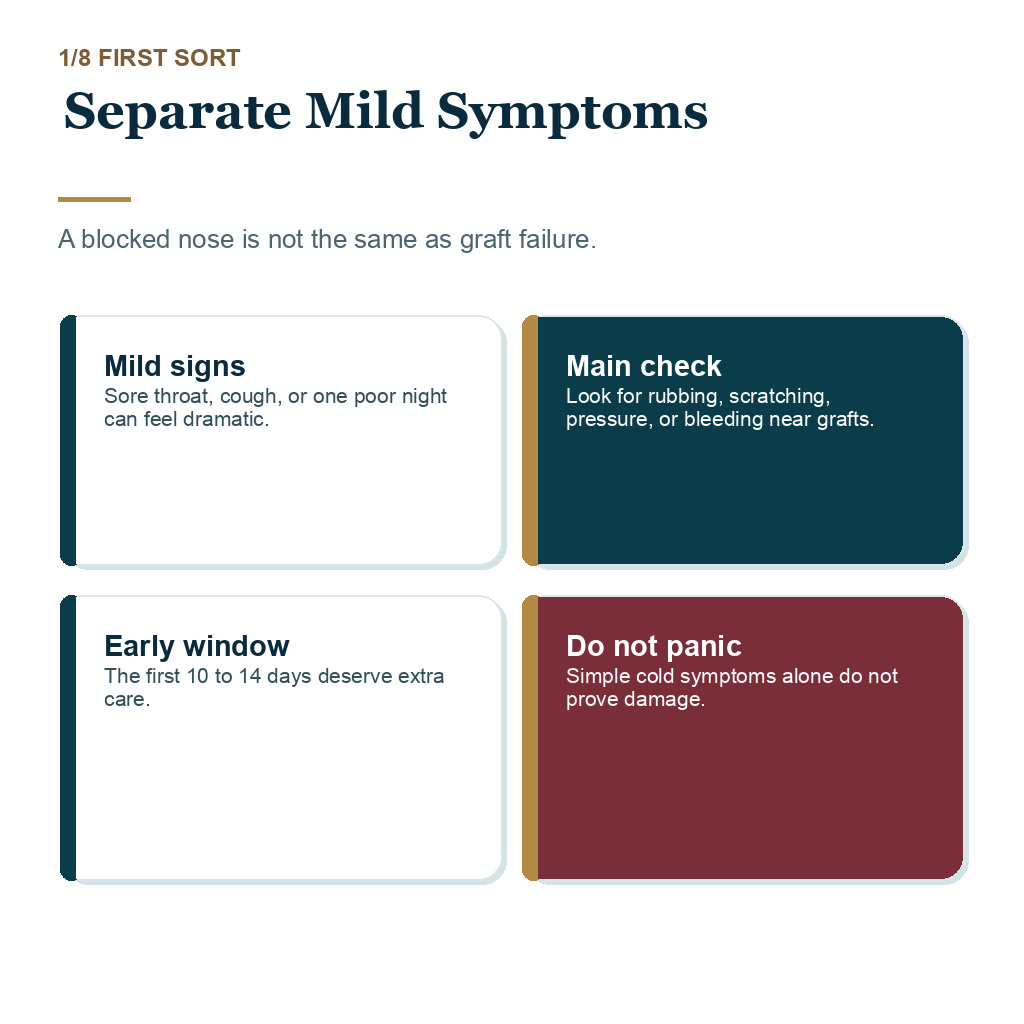
Most mild colds or flu symptoms after a hair transplant do not ruin the result. A blocked nose, sore throat, cough, or one poor night of sleep is not the same as graft failure. The risk changes when illness brings high or persistent fever, worsening scalp pain, spreading redness, pus, dehydration, heavy scratching, or medication taken without checking whether it fits the after surgery plan.
In the first 10 to 14 days, I am more protective because the grafts and the skin are still settling. After that, an ordinary viral illness is unlikely to disturb transplanted grafts directly. A strong fever or severe illness can still matter because it may push weak native hairs into temporary shedding months later.
Sleep, fever, coughing, graft safety, and general recovery decide whether a cold changes the plan. I separate mild throat, nose, or cough symptoms from physical graft disturbance, worsening donor or recipient skin, fever, or illness involving the whole body.
Do not judge the cold by one sneeze. Write down fever, hydration, sleep, cough strength, scalp symptoms, and any medicine you took before asking what needs to change. A cough strong enough to move your head during the procedure or early washing belongs in the clinic update before the appointment. Hiding it through the day makes planning weaker.
Separate contagious illness from a mild recovery nuisance before travel. If others in your home are sick or you still have fever, the clinic needs that update before the appointment.
First things to understand if you get sick after surgery
If you catch a cold, flu, or COVID after a hair transplant, your body does not stop healing the scalp. If COVID happens before the operation instead, hair transplant after COVID recovery should be reviewed before travel. Blocked nose, throat irritation, or cough can make recovery feel harder, but those symptoms do not mean the grafts have failed by themselves. Planning changes when illness affects sleep, washing, medicine timing, fever, or accidental scalp contact. If the cold began before the operation and you used nasal cold medicine, decongestants before FUE is the more relevant before surgery review.
At the start of recovery, transplanted grafts mainly need protection from rubbing, scratching, pressure, infection, and rough aftercare. When someone worries after sneezing or feeling feverish, I first look at the timing, whether the scalp was touched, and whether the treated areas look worse than the day before. For the narrower worry that one sneeze or cough can make grafts come out, I judge the event by contact, bleeding, and timing.
By around 10 days, grafts are usually much more secure than they were in the first nights. That does not make the scalp invincible. It means a cough, a blocked nose, or a few weak days is usually not enough to undo the operation if the recipient area has not been rubbed or injured.
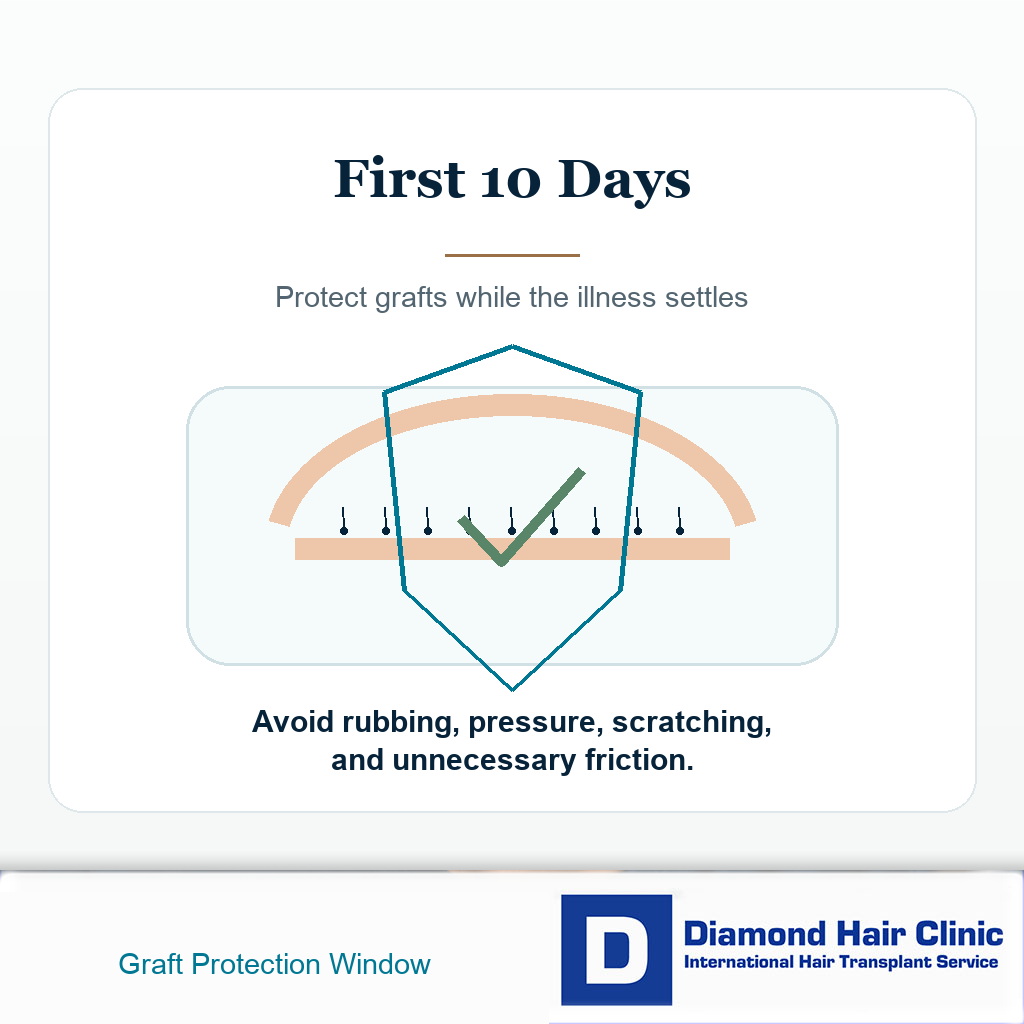
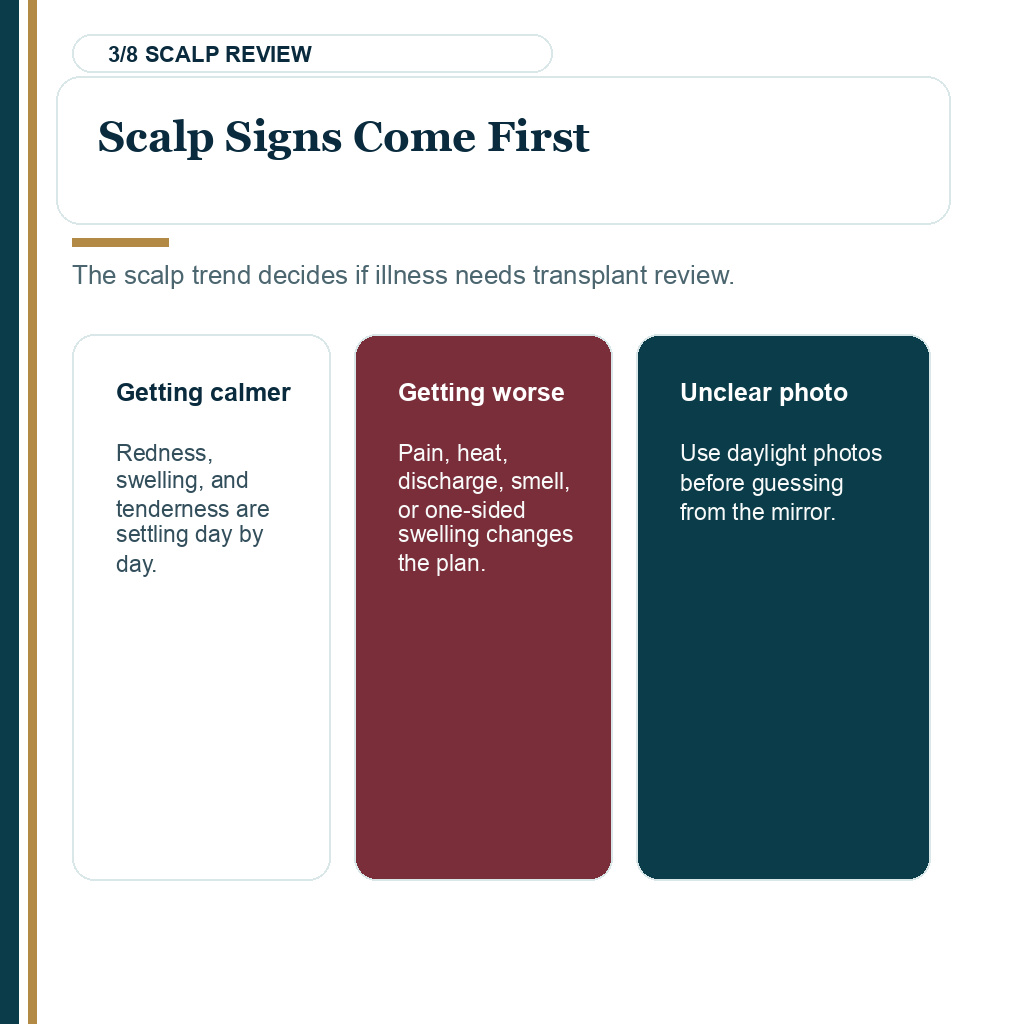
The answer changes if illness and scalp warning signs appear together. If fever comes with increasing pain, spreading redness, wet discharge, bad smell, or tenderness in the treated areas, the question is no longer only about flu. At that point, you need to think about possible infection after a hair transplant and ask the clinic to review it rather than waiting. I explain the temperature specific pathway in fever after FUE.
Fever after surgery can be a warning sign
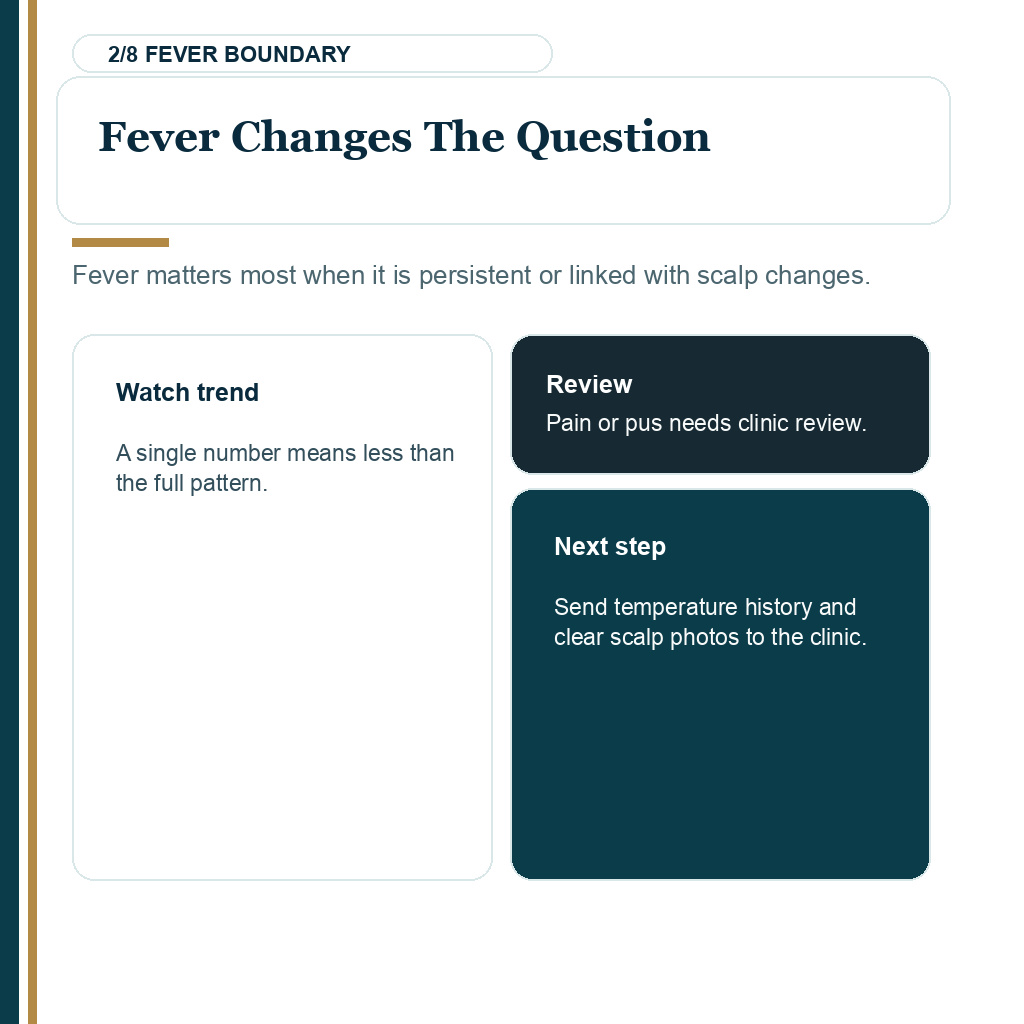
A mild raised temperature and tiredness can happen in the first days after travel, a long procedure, poor sleep, dehydration, or a seasonal virus. A measured temperature around 38 degrees Celsius or higher is usually treated as fever, but after surgery I still look at the full picture rather than the number alone.
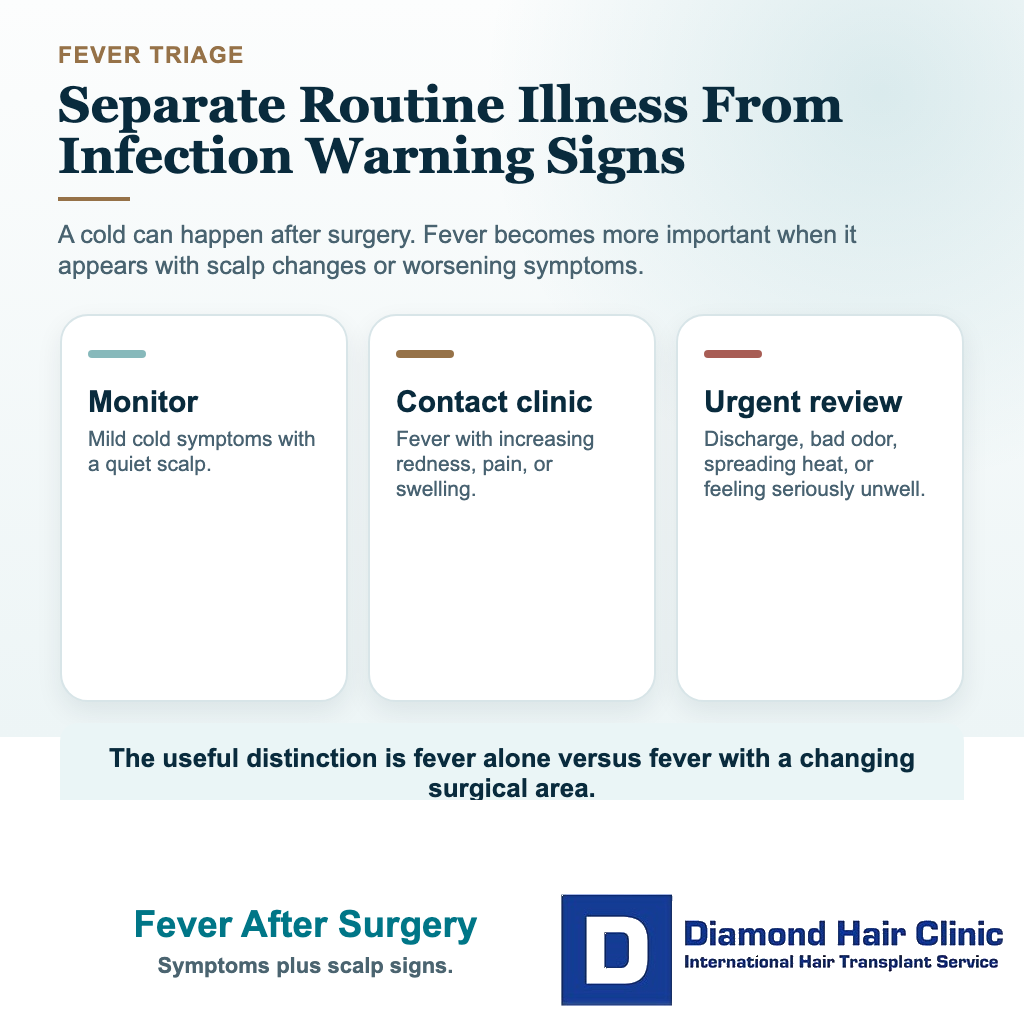
Fever becomes more concerning when it is high, persistent, or connected with chills, worsening pain, pus, spreading redness, increasing swelling, dizziness, or feeling generally unwell. That pattern should not be explained away as normal recovery.
Some people look only at the recipient area because that is where they fear losing grafts. The donor area also matters. Infection, irritation, and delayed healing can begin there, and a donor area that becomes hotter, more painful, more swollen, or starts to drain fluid needs medical attention.
Mild forehead or eye area swelling can be part of recovery, but it should gradually settle. If swelling becomes tense, painful, one sided, or linked with fever, compare it with the normal recovery pattern described in swelling after a hair transplant and speak with the clinic if it does not fit that pattern.
Coughing, sneezing, and poor sleep rarely damage grafts by themselves
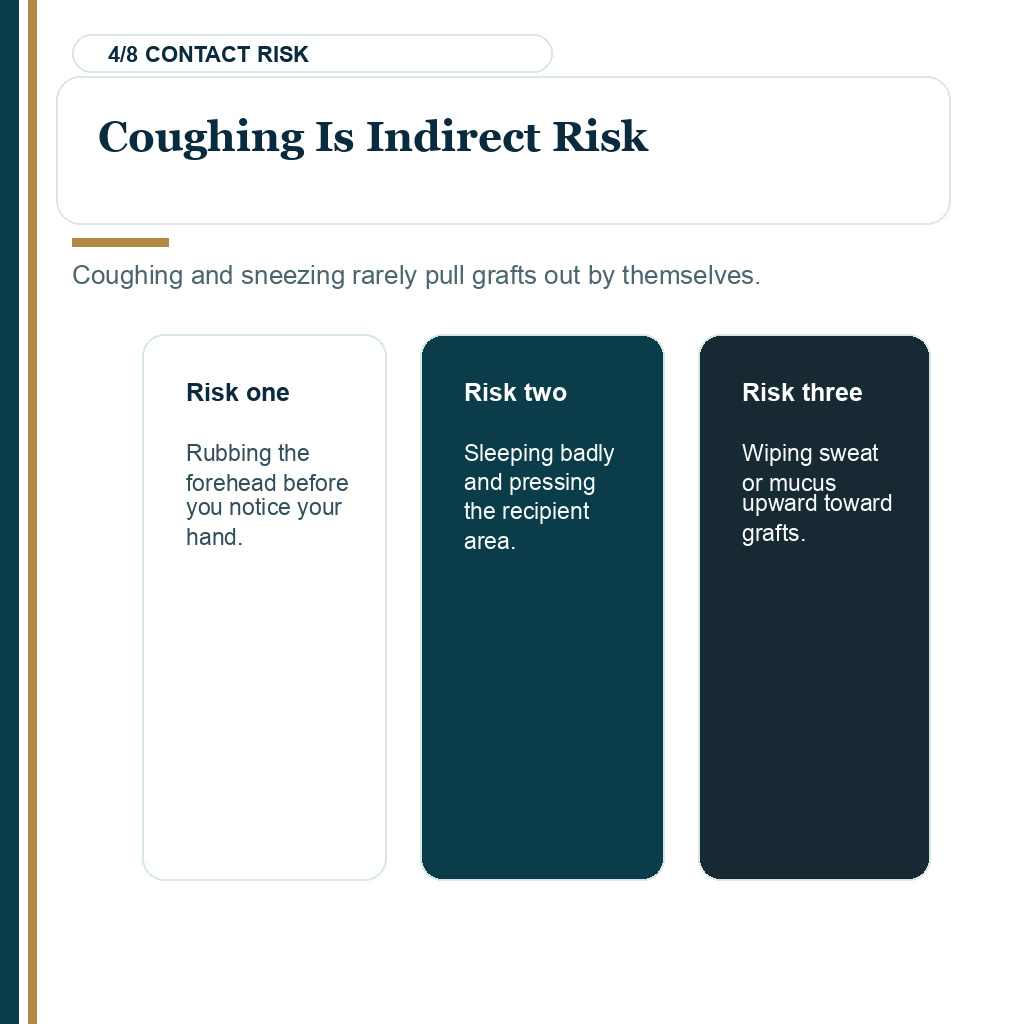
Normal coughing or sneezing does not usually pull grafts out. Grafts are not dislodged by pressure inside the nose or throat. They are at risk when something physically rubs, scratches, scrapes, or presses against the recipient area.
Usually, the concern is indirect. A blocked nose can make you sleep badly, roll toward the grafts, rub the forehead, scratch without noticing, or use a tight hat too early because you feel unwell. That is where illness can create trouble.
If you are sick, protect your sleep setup more carefully rather than trying to sleep perfectly. Keep the head supported, avoid pressure on the recipient area, and do not panic if one night is uncomfortable. The point is to reduce rubbing and accidental contact, not to create another source of anxiety around sleeping after a hair transplant.
Sneezing can also make you touch the scalp before you think. Keep tissues nearby, wash your hands before touching around the head, and avoid wiping sweat or mucus upward toward the grafts. Small habits matter most in the first week.
COVID or flu after surgery changes recovery planning
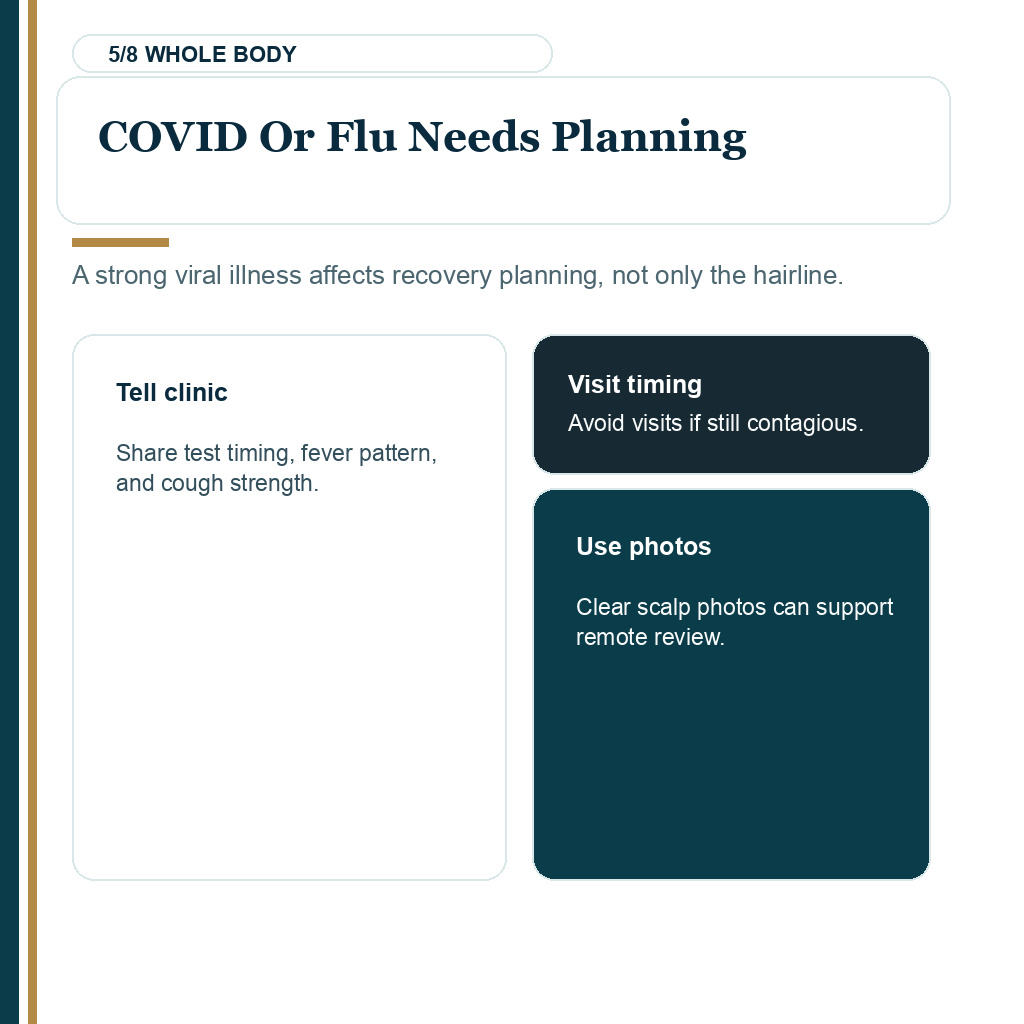
Treat this as both a general medical issue and a recovery planning issue. If you test positive during the first 10 to 14 days, tell the clinic, especially if you have fever, strong cough, asthma flare, chest symptoms, dehydration, vomiting, or scalp changes. The clinic may be able to judge the scalp from clear photos while you avoid unnecessary in person contact during the contagious period. If the first symptom is feeling sick to the stomach rather than cough, nausea after FUE helps sort medicine, hydration, and fever risk. If illness or medicine changes are paired with hiccups after a hair transplant, report the timing and stomach symptoms too rather than treating the hiccup as an isolated problem.
Share the illness details even if you are afraid the transplant will be judged badly. The more important question is whether your fever is controlled, whether you can drink fluids, whether you can sleep safely, and whether the donor or recipient area is still moving in the right direction.
If the illness forces extra rest, take it seriously. Returning to work too quickly while coughing, feverish, exhausted, or medicated can make recovery harder. The same practical thinking used for time off work after a hair transplant applies here. A few more quiet days are often safer than trying to act normal too early.
Flu or COVID can trigger shedding after surgery
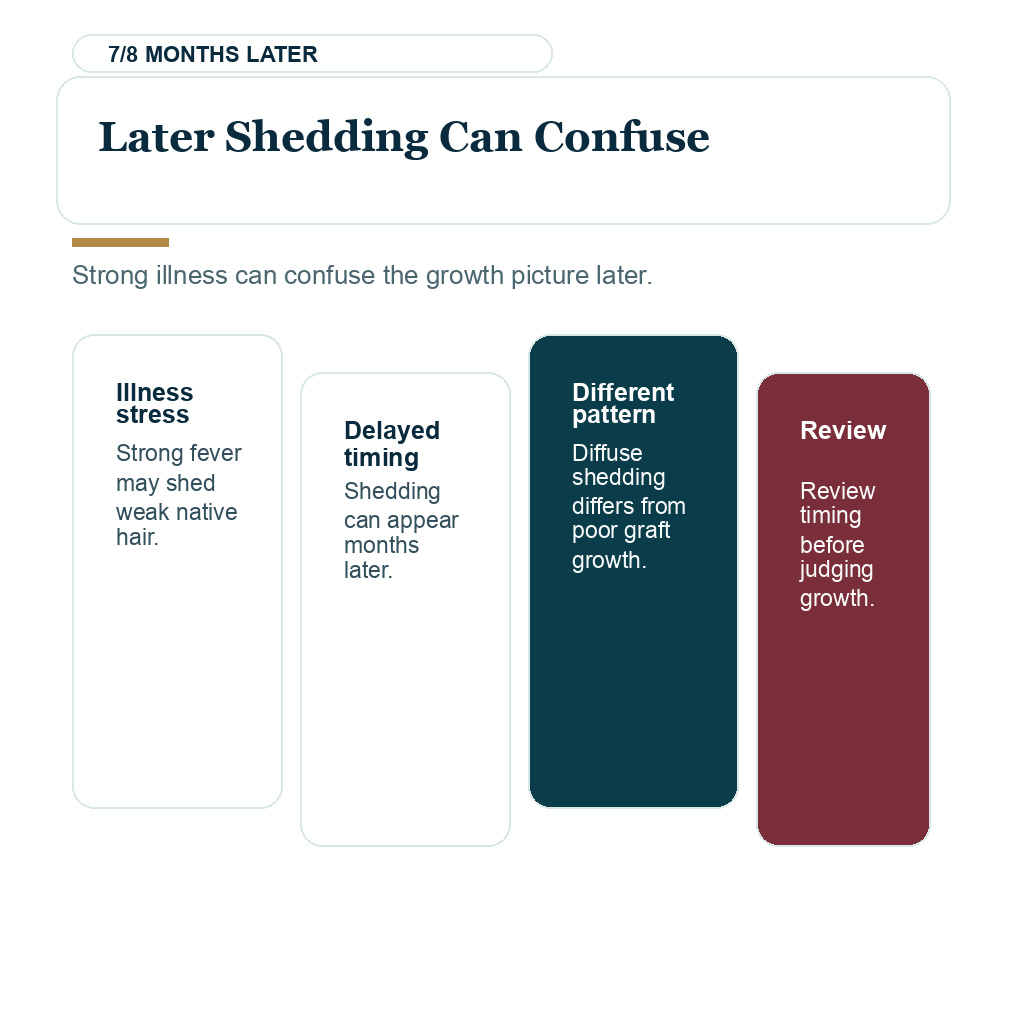
A strong illness with fever can trigger temporary shedding, but that shedding usually affects native hair more than transplanted grafts. The timing often confuses people because shedding from illness can appear 2 to 4 months later, long after the fever has passed.
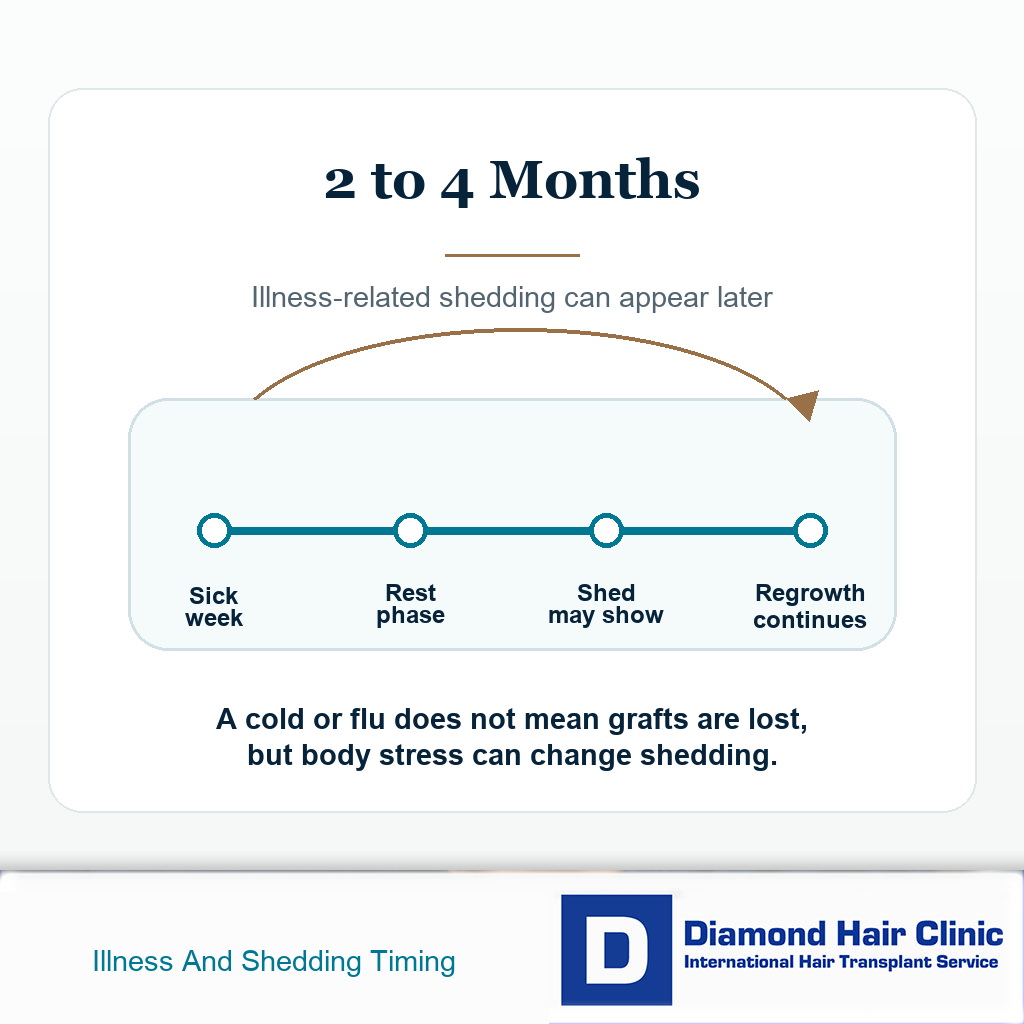
This kind of shedding is usually related to the hair cycle. It is not proof that the body rejected the transplant. After a strong physical stress, some hairs can enter the resting phase earlier than expected and shed later together. It can look dramatic, especially if the native hair around the transplanted area was already miniaturized.
The transplanted hairs also go through a normal shedding phase after surgery. That normal transplant shedding can overlap with illness related shedding, which may make the mirror look worse just when you expected progress.
I judge this by pattern. Sudden diffuse shedding across the scalp after a strong illness is different from poor growth only in the transplanted pattern. If shedding is diffuse, prolonged, or keeps recurring, I review native hair strength, medication changes, iron or thyroid issues, and the illness timeline instead of judging only the transplant. The emotional stress around recovery can also increase worry, which is why I discuss stress after a hair transplant as a separate issue from actual graft survival.
Medicine choices when you feel sick after surgery
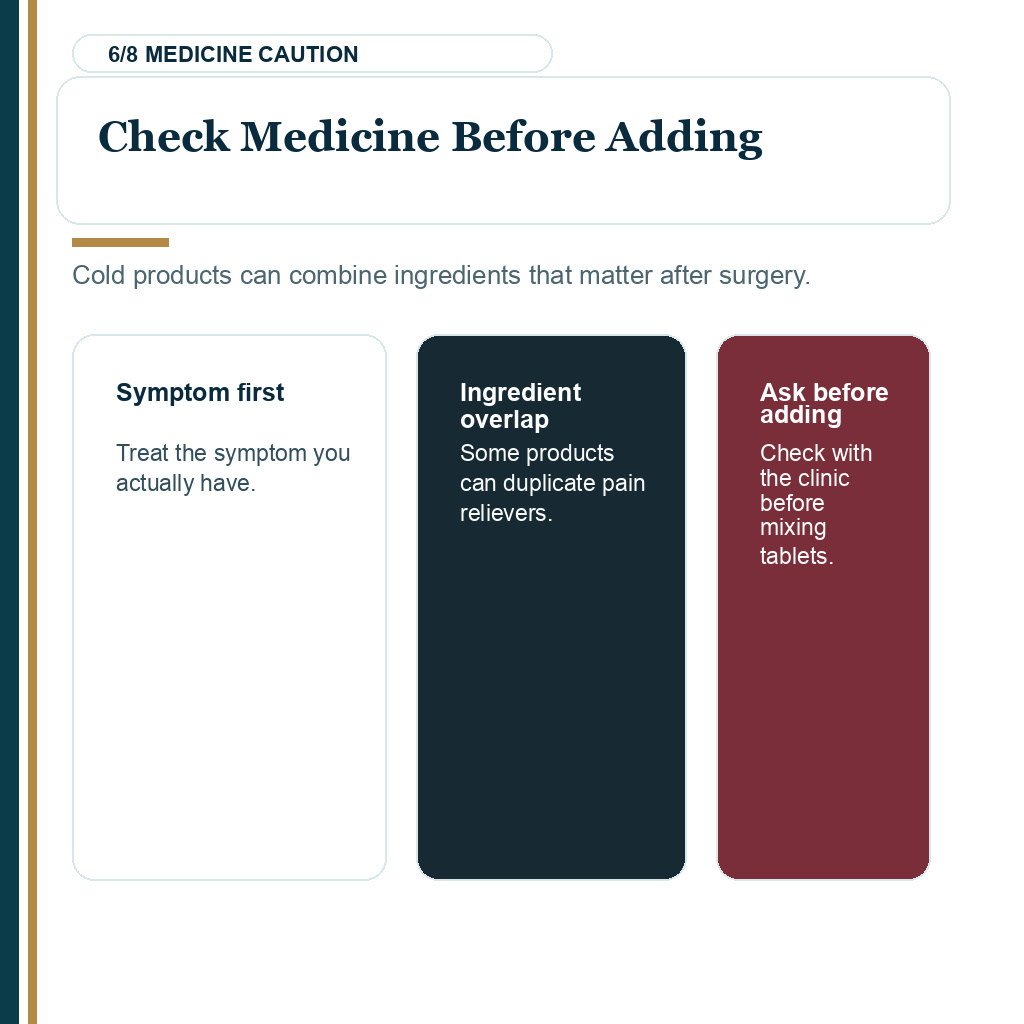
Do not treat cold symptoms by stacking several tablets, herbal products, anti inflammatory medicines, or supplements without checking the after surgery instructions from your clinic. Many cold products combine several ingredients, and some can affect bleeding, blood pressure, sleepiness, or the stomach.
The safer practical distinction is to treat the symptom you actually have rather than taking a combined product automatically. A blocked nose, cough, body ache, or fever may need different advice, and combined cold tablets can hide aspirin, ibuprofen, decongestants, sedating ingredients, or duplicate paracetamol or acetaminophen. If a cold and flu product already contains paracetamol or acetaminophen, do not add another separate dose unless your doctor has told you to.
For pain or fever, medication choice depends on the exact plan you were already given. If you were prescribed medicines after surgery, follow that plan and ask before adding anything new. One careful message is safer than repairing a problem created by guessing.
Be especially careful with aspirin, ibuprofen, strong anti inflammatory drugs, blood thinning supplements, or products that contain several active ingredients in one tablet. The label may look like a simple cold remedy, but the contents may not be simple after surgery.
If you need a clearer framework, compare your plan with the medication principles in painkillers after a hair transplant. Illness does not remove the medication rules. Treat the symptom, but do not create a bleeding, swelling, or interaction problem while trying to feel better quickly.
Illness before surgery may mean delaying the plan
If you are ill before the operation, or if vaccine timing after a hair transplant has created fever or body aches, tell the clinic before traveling or arriving for surgery. A mild runny nose without fever is very different from fever, chest symptoms, shortness of breath, heavy cough, active infection, vomiting, or feeling generally unwell.
Hair transplantation is usually an elective procedure. If you have an active fever or significant respiratory illness, postponing can be the more responsible decision. Losing a travel date is frustrating, but operating on the wrong day can create avoidable risk.
Before surgery, I focus on the whole patient, not only the hairline plan. Blood pressure, medical history, medications, blood test results, allergies, recent illness, and the ability to tolerate a long procedure all matter. Proper blood tests before a hair transplant are part of that safety check, not just paperwork.
Anesthesia planning also changes when the patient is unwell. If the patient has fever, breathing symptoms, uncontrolled blood pressure, or heavy anxiety on surgery day, the safe decision may be to slow down and reassess rather than push forward. This also applies to anesthesia and adrenaline during a hair transplant, where the medical context matters more than rushing the schedule.
Protecting grafts while recovering from illness
Keep the plan simple and gentle. Drink enough fluids, rest, keep the scalp clean within your after surgery plan, and avoid touching the grafts more than needed. Do not use illness as a reason to skip hair transplant aftercare.
Washing matters because sweat, dried spray, crusting, and poor hygiene can irritate the scalp. If you feel weak, ask someone to help you prepare the washing setup rather than washing roughly. The guidance in washing hair after a hair transplant still applies when you have a cold.
Travel can make this more difficult. Some people get sick after flying home, changing climate, sleeping poorly, or spending time in airports, so the symptom pattern should guide the next step more than blaming the transplant. If you are traveling after surgery, keep the scalp protected from friction, avoid crowded unnecessary exposure when possible, and give yourself enough recovery time instead of planning a very tight return.
If the illness begins just before a flight, the decision depends on your symptoms and the day after surgery. A mild blocked nose with normal energy is one situation. Fever, dizziness, vomiting, shortness of breath, chest discomfort, or uncontrolled coughing is different. A travel plan with some recovery margin is much safer than a schedule that depends on everything going perfectly, especially after flying after a hair transplant.
Clinic review is safer than waiting in these situations
Ask the clinic to review high or persistent fever, especially when it is connected with scalp symptoms. Also report spreading redness, pain that increases after initially improving, pus, a bad smell, tense swelling, or a dark patch on the skin.
Also ask before taking medication if you are unsure. It is better to ask before taking a combined cold product than to realize later that it contained an ingredient you should have avoided.
If the illness itself feels medically urgent, such as breathing difficulty, chest pain, confusion, severe vomiting, or sudden dizziness, follow local urgent medical advice as well. A hair clinic should not be the only contact when the whole body is unwell. Repeated watery stools follow a similar safety rule. Diarrhea during early hair transplant recovery needs to be considered with fever, hydration, and medicine use together.
For someone who smokes, vapes, or uses cannabis while sick, I become more concerned about healing quality, blood flow, coughing, and judgment around aftercare. If you have already smoked after surgery, the next step is not panic. The next step is to stop, protect the scalp, and understand the risk described in smoking after a hair transplant.
If you are not sure whether a symptom is normal, photograph the donor and recipient areas in good light and describe the timeline. Include the surgery date, current day after surgery, temperature, medicines taken, and whether the donor or recipient area is getting better or worse.
Use the 8 cold and flu recovery slides below to separate mild symptoms, fever, scalp warning signs, coughing or sneezing contact risk, COVID or flu planning, medicine questions, later shedding confusion, and the details your clinic needs. Swipe the carousel, use the arrows one step at a time, or choose a number below the image to jump to that point.

Judging whether the result is still on track
Do not judge the final result while you are sick. A few bad recovery days can make the scalp look more inflamed, the face more tired, and the hair more uneven. That does not tell you the final density.
Look at the recovery in stages. In the first days, the concern is graft protection and clean healing. In the first weeks, the concern is scabs, redness, normal shedding, and avoiding irritation. In the first months, the concern is patience, because growth is not meant to look complete early.
If a strong illness later triggers temporary shedding, the visual picture can become confusing. Native hair can shed, transplanted hairs can be in their normal resting phase, and the patient may think the surgery failed before growth has had time to mature.
Compare photos under the same light, same angle, and same hair length. Harsh bathroom lighting, wet hair, and close phone flash can make a healing scalp look worse than it is. Judge trend, not one frightening mirror moment.
My advice when patients get sick after surgery
My advice is firm but not dramatic. A mild cold after surgery is usually manageable. Fever with scalp warning signs is different and needs contact with the clinic.
Do not turn recovery into a test of toughness. Rest properly, protect the grafts, wash gently when instructed, avoid smoking, avoid unnecessary medicines, and let the body recover. Surgery already asks the body to heal. Illness adds another burden, so remove the avoidable risks.
The result is not decided by one sneeze, one poor night of sleep, or a few days with a blocked nose. It is decided by surgical planning, donor management, graft handling, clean healing, good aftercare, and enough time.
If you become sick before surgery, report it early. If you become sick after surgery, watch the scalp and your general health together. A short, clear update to the clinic is much better than silent worry or self treatment based on random advice.
Read this review excerpt
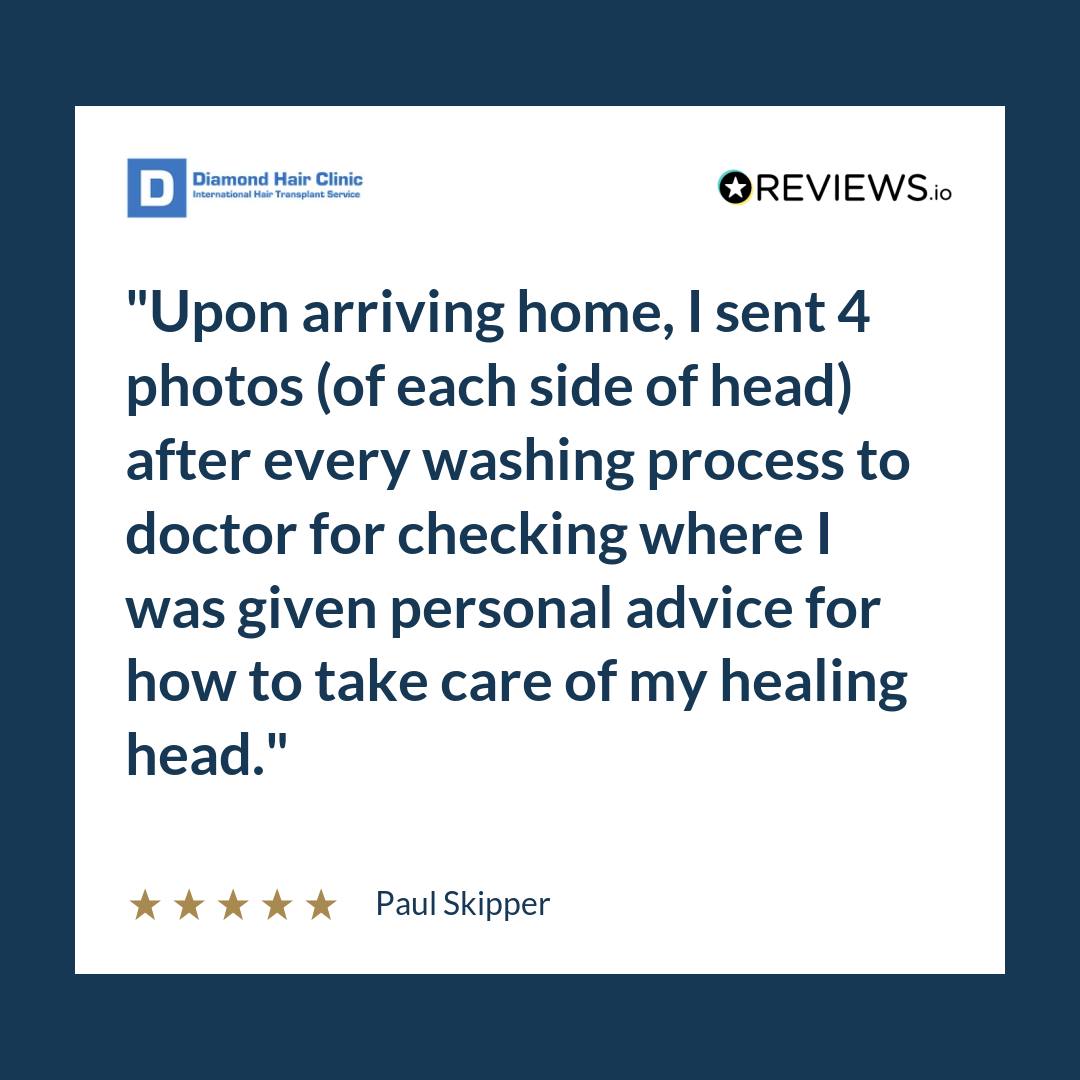
Upon arriving home, I sent 4 photos (of each side of head) after every washing process to doctor for checking where I was given personal advice for how to take care of my healing head.