


Vaccines, Fever, and Early FUE Recovery
Vaccination can often fit safely around a hair transplant, but I still keep an optional vaccine away from the first 7 to 10 recovery days. A vaccine in the arm is not the kind of thing that pushes transplanted grafts out, but fever, chills, body aches, fatigue, headache, nausea, or swollen lymph nodes can make early recovery harder to judge.
When timing is flexible, give the grafts and scalp a clean first week before adding vaccine symptoms or a travel deadline to the picture. Let the skin show its early healing pattern, let swelling and washing become easier, and then schedule the vaccine after the clinic can see the early recovery pattern. When vaccination is medically necessary, urgent, or linked to travel, work, injury, exposure, or your own doctor’s plan, coordinate it rather than hiding or delaying it because of the transplant.
A vaccine question should include symptoms, not just the injection date. Fever, body aches, or a trip that forces the shot can change whether recovery should stay simple that week.
If you take medicine for fever, aches, or nausea after a vaccine during recovery, include the name and timing when you update the clinic. Otherwise the scalp review and the general symptom review can become mixed together.
Before surgery, include any recent vaccine, planned vaccine, or recent COVID infection in your medical history. I put this beside allergies, medical history, and medication before a hair transplant, because the operation is easier to plan when the whole health timeline is clear.
Why vaccine timing matters after a hair transplant?
A hair transplant is performed under local anesthesia, but it is still surgery. In the first days I am watching how the recipient area looks, how the donor area feels, how swelling behaves, whether sleep is controlled, and whether the body is steady enough for recovery.
Many vaccines can cause temporary reactions such as arm soreness, tiredness, low fever, chills, body aches, headache, nausea, or dizziness. Those symptoms can be ordinary after vaccination, but they can overlap with the questions we ask after surgery. Is the fever from the vaccine? Is redness around the scalp normal healing? Is swelling following the expected pattern? Should a medicine be added or avoided?
So I treat timing in two groups. An optional vaccine can usually wait until the early scalp picture is clearer. A medically necessary vaccine may not be able to wait, so that timing should be shared early rather than discovered after symptoms appear.
If you receive a vaccine during recovery, also think about the few minutes after the injection. Some people feel lightheaded or faint after medical injections. Sit long enough to feel steady, avoid rushing into traffic or stairs, and do not put yourself in a situation where a fall could make the grafted scalp hit a wall, seat, or headrest.
A vaccine does not push grafts out
A vaccine in the arm does not move grafts in the scalp. Fresh grafts are mainly disturbed by direct trauma, rubbing, scratching, pressure, rough washing, bleeding with visible graft movement, infection, or careless early aftercare.
The indirect risk is behavior. If vaccine side effects make you feverish, restless, sweaty, dizzy, or nauseated, you may sleep badly, rub the scalp, bend suddenly, scratch without thinking, or ignore washing instructions. That is where hair transplant aftercare still matters. The grafts need steady behavior, not panic about the vaccine itself.
If you had a vaccine and then noticed fresh bleeding, an open area, clear graft displacement, or worsening scalp symptoms, treat the scalp evidence seriously. The vaccine may only be part of the timing, but the scalp still needs assessment.
Waiting window after a hair transplant
When the vaccine is flexible, waiting until the first 7 to 10 days have passed gives the scalp a clearer early picture. Waiting closer to 10 to 14 days is often even cleaner because scabs, washing, swelling, and early skin sensitivity are easier to judge by then.
That waiting period is not a magic graft survival deadline. It is a monitoring window. The first week already has enough moving parts. Swelling may peak, sleep is different, the donor area can feel tight, and washing still needs attention.
If you are in a public health program, need a vaccine for work, had an exposure, need a tetanus shot after an injury, or have a doctor who says the vaccine should not wait, the medical need can outweigh the convenience of waiting. Tell both doctors. The hair transplant team should know what symptoms to expect, and your doctor should know you just had surgery.
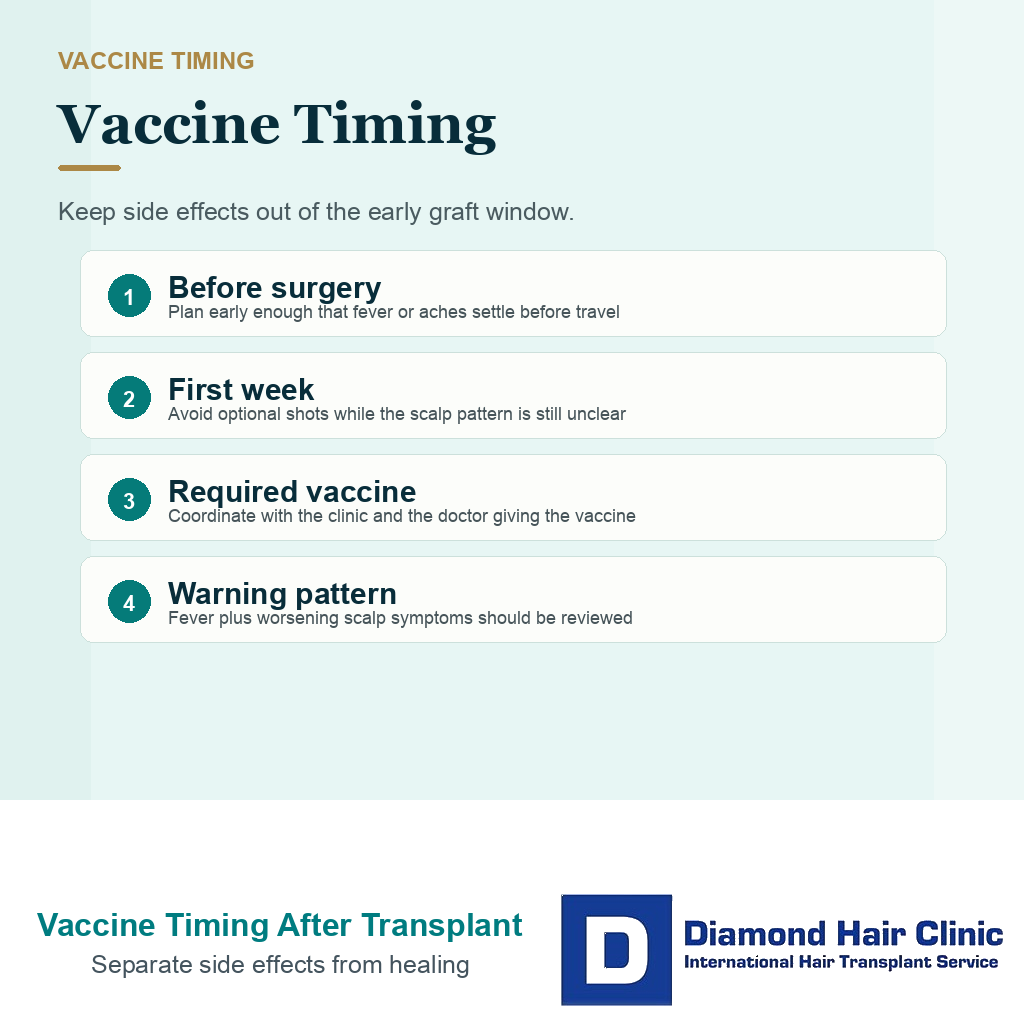
I judge timing by scalp stability and whether vaccine side effects would confuse early recovery.
If you already had a vaccine in the first week
If you already had a vaccine during the first week, do not panic and do not assume the grafts are lost. Send the clinic the vaccine name, the exact day after surgery, your temperature, symptoms, and clear scalp photos. The question is whether the scalp is still behaving normally while the body is reacting to the vaccine.
For the next few days, keep the recovery simple. Protect the scalp from rubbing, drink fluids, follow the washing instructions, avoid unnecessary exertion, and do not add extra medicines unless they were already approved or prescribed. A sore arm or a short low fever with a stable scalp is judged differently from fever with increasing scalp pain, spreading redness, discharge, bleeding, or swelling that is getting worse.
Planning vaccination before surgery
If the vaccine is planned and not urgent, it is often cleaner to complete it before surgery with enough time for expected side effects to settle. For many routine vaccines, that means avoiding the shot on the day before travel or the day before the operation. Give the body time to react, and arrive for surgery well.
The exact interval depends on the vaccine, your health, and the reason for vaccination. There is no single number that fits every vaccine. A flu shot, COVID vaccine, travel vaccine, tetanus vaccine, and a vaccine required after exposure do not all carry the same urgency or schedule.
If you feel feverish, unwell, or unusually fatigued after vaccination just before surgery, share it early. The review before surgery, including blood tests before a hair transplant, can help decide whether the operation day is still reasonable.
Do not schedule a flexible vaccine so tightly that the side effect window overlaps your flight, first wash, surgery morning, or early follow up. If the appointment is optional, a cleaner schedule is usually better than trying to prove you can tolerate everything in the same 24 to 48 hours.
Fever after a vaccine during recovery
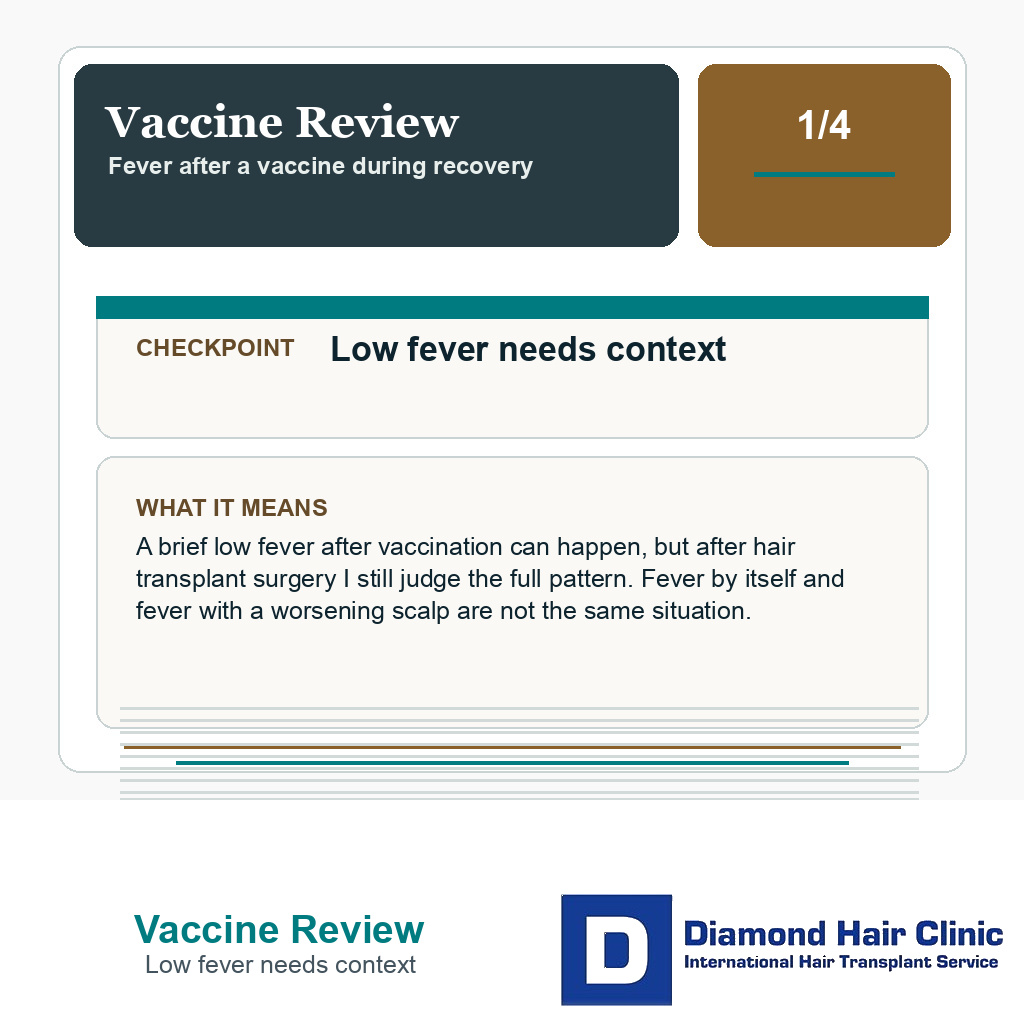
A brief low fever after vaccination can happen, but after hair transplant surgery I still judge the full pattern. Fever by itself and fever with a worsening scalp are not the same situation. If fever comes with increasing scalp pain, spreading redness, warmth, pus, bad smell, wet discharge, or swelling that is getting worse, think about possible infection after a hair transplant and contact the clinic.
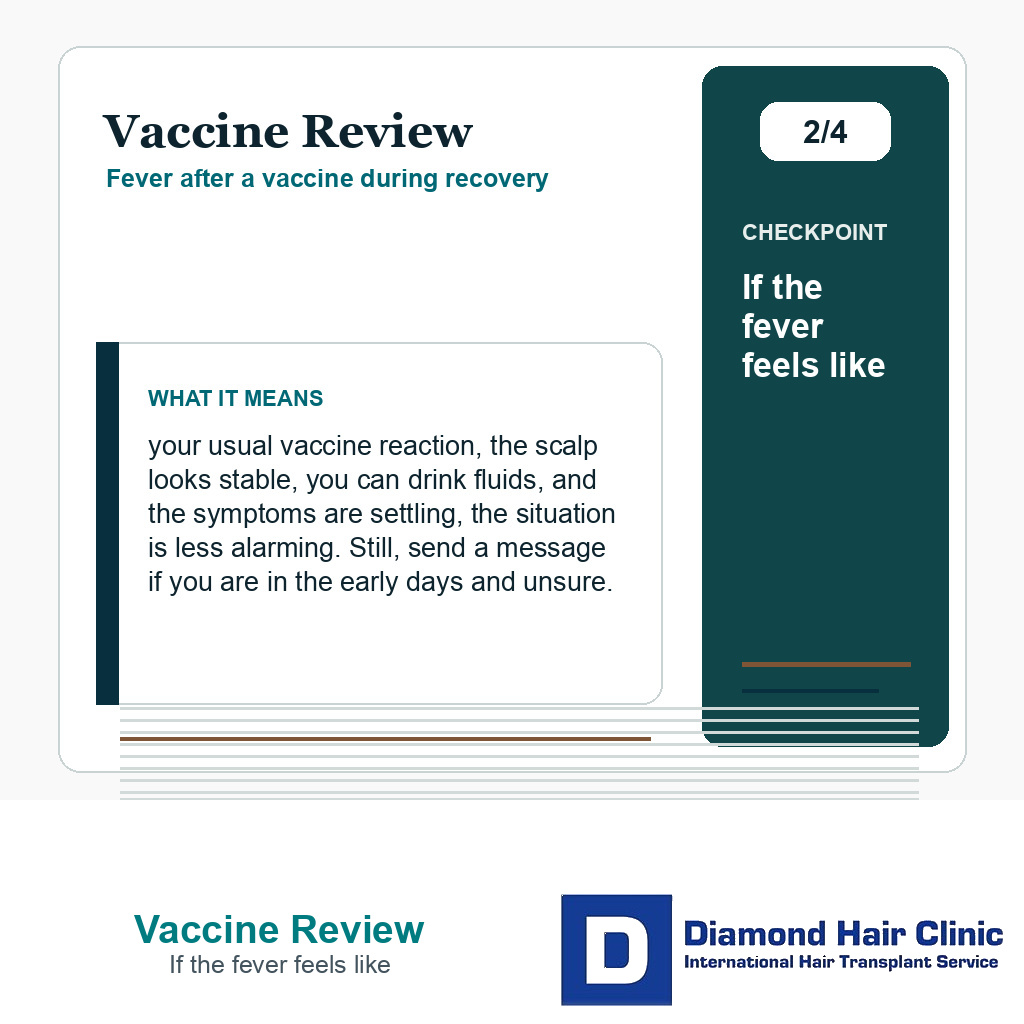
If the fever feels like your usual vaccine reaction, the scalp looks stable, you can drink fluids, and the symptoms are settling, the situation is less alarming. Still, send a message if you are in the early days and unsure. A photo in good light, the surgery day, the vaccine type, the temperature, and the symptoms help the clinic judge whether this looks like a general vaccine reaction or a scalp problem.
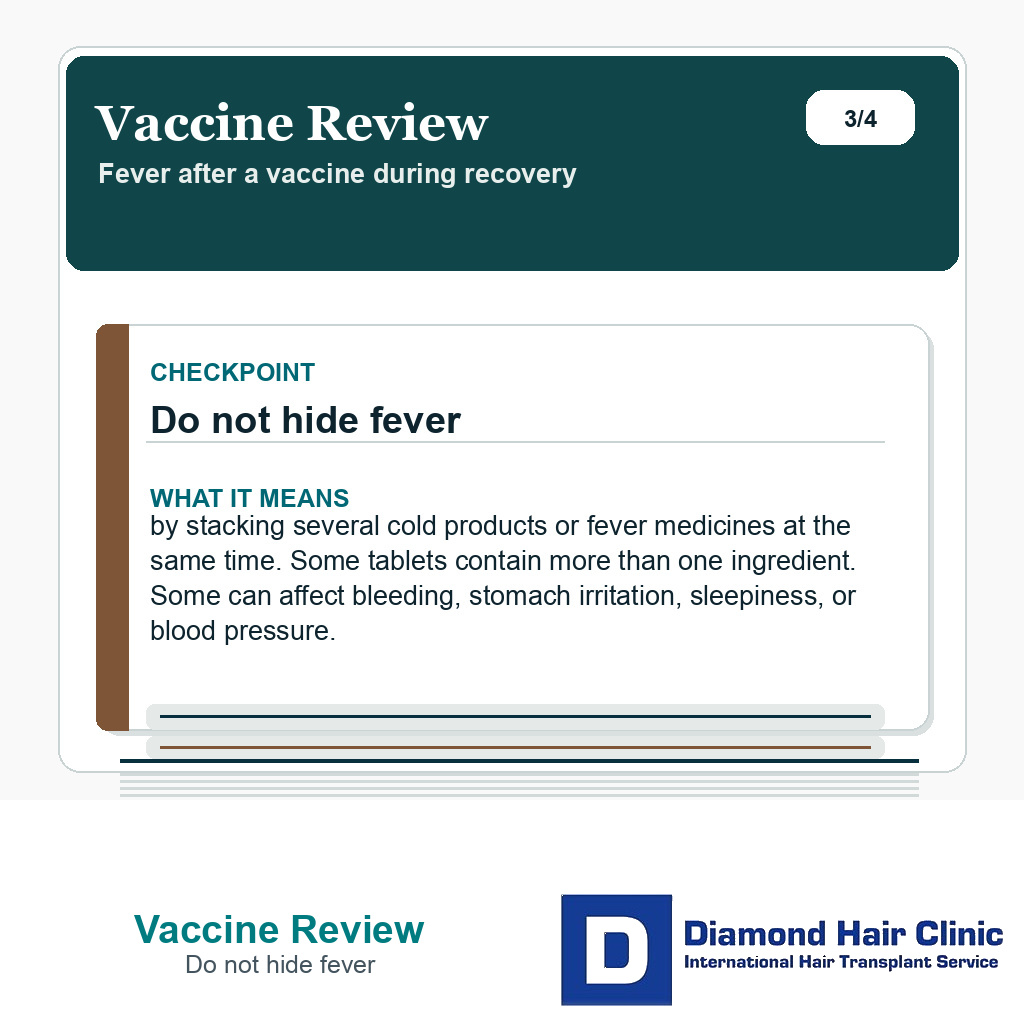
Do not hide fever by stacking several cold products or fever medicines at the same time. Some tablets contain more than one ingredient. Some can affect bleeding, stomach irritation, sleepiness, or blood pressure. If you need fever or body ache medicine, painkillers after a hair transplant gives the safer medication frame.
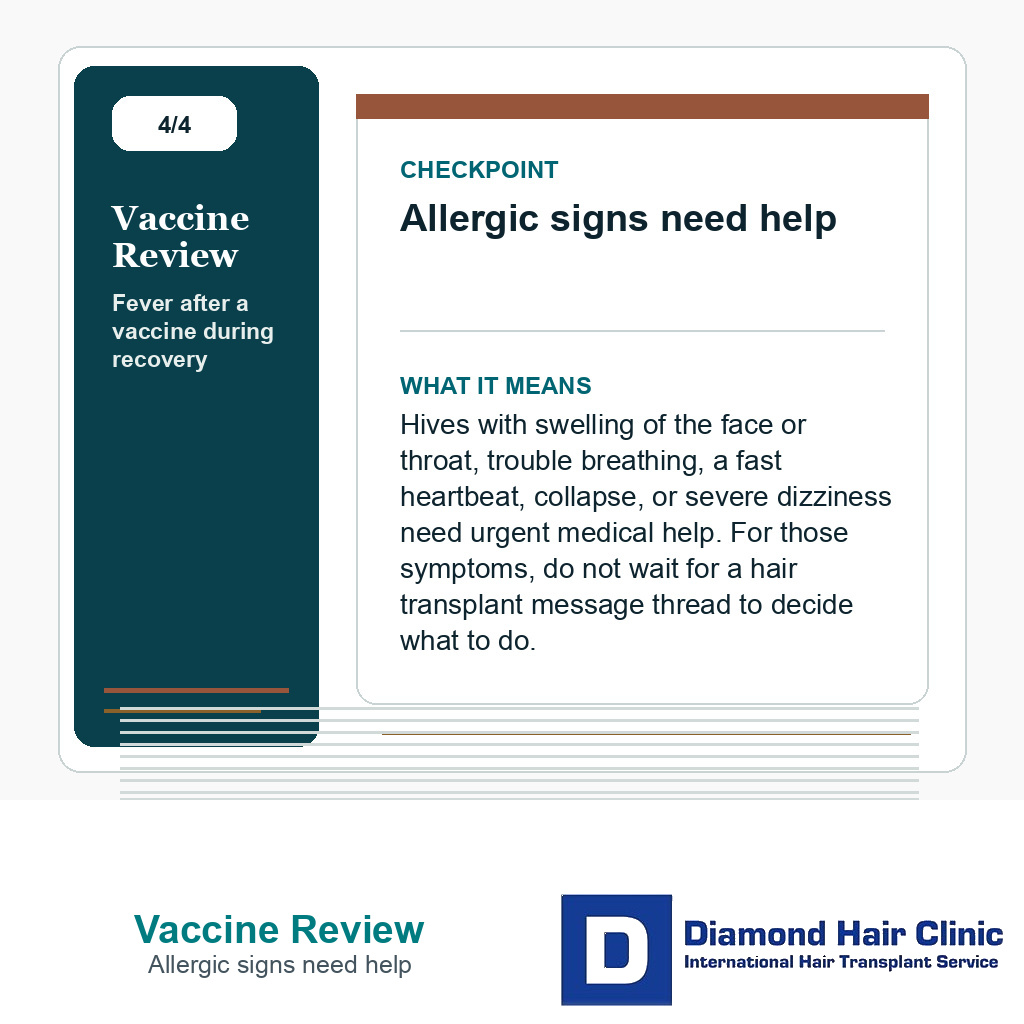
Severe allergic reaction signs are different from ordinary vaccine side effects. Hives with swelling of the face or throat, trouble breathing, a fast heartbeat, collapse, or severe dizziness need urgent medical help. For those symptoms, do not wait for a hair transplant message thread to decide what to do.
These 4 slides connect vaccines after surgery with fever, immune symptoms, travel timing, and photo review if recovery changes. Swipe sideways, use the arrows, or choose a number below the image.
Details to send if you feel unwell after a vaccine
If you feel unwell after vaccination during early recovery, do not only write “I have a fever.” Send the clinic the vaccine name if you know it, the time it was given, your temperature, whether you have chills or body aches, whether the scalp has new redness, discharge, bleeding, increasing swelling, or stronger pain, and whether you took any fever medicine.
A photo of the vaccine card, bottle label, appointment record, or patient leaflet can help if the exact product name is unclear. Brand names, generic vaccine type, booster number, and timing matter more than a vague phrase like “I got a shot yesterday.”
This turns a vague symptom into a pattern the clinic can judge. Mild tiredness or arm soreness after a vaccine is not the same concern as fever with worsening scalp pain or spreading redness. If the vaccine was urgent because of exposure, injury, work, or travel, the medical reason for vaccination may be more important than keeping the recovery calendar perfectly tidy. The decision should be made from the whole situation, not from fear that the vaccine itself will push grafts out.
Vaccine side effects versus transplant warning signs
Vaccine side effects are usually general body symptoms or symptoms around the injection arm. You may feel tired, achy, feverish, or have a sore arm. Hair transplant warning signs are more centered on the scalp. Increasing pain in one area, spreading redness, heat, pus, a bad smell, fresh bleeding, dark skin change, or a donor area that is worsening instead of settling deserve attention.
Swelling needs the same context. Ordinary swelling after a hair transplant often moves downward and improves over several days. Swelling that is painful, tense, on one side, hot, or connected with fever and discharge is different.
Nausea also changes the recovery picture. If a vaccine reaction leads to repeated vomiting after a hair transplant, the concern becomes dehydration, dizziness, falling, rubbing the scalp, and not being able to follow aftercare properly.
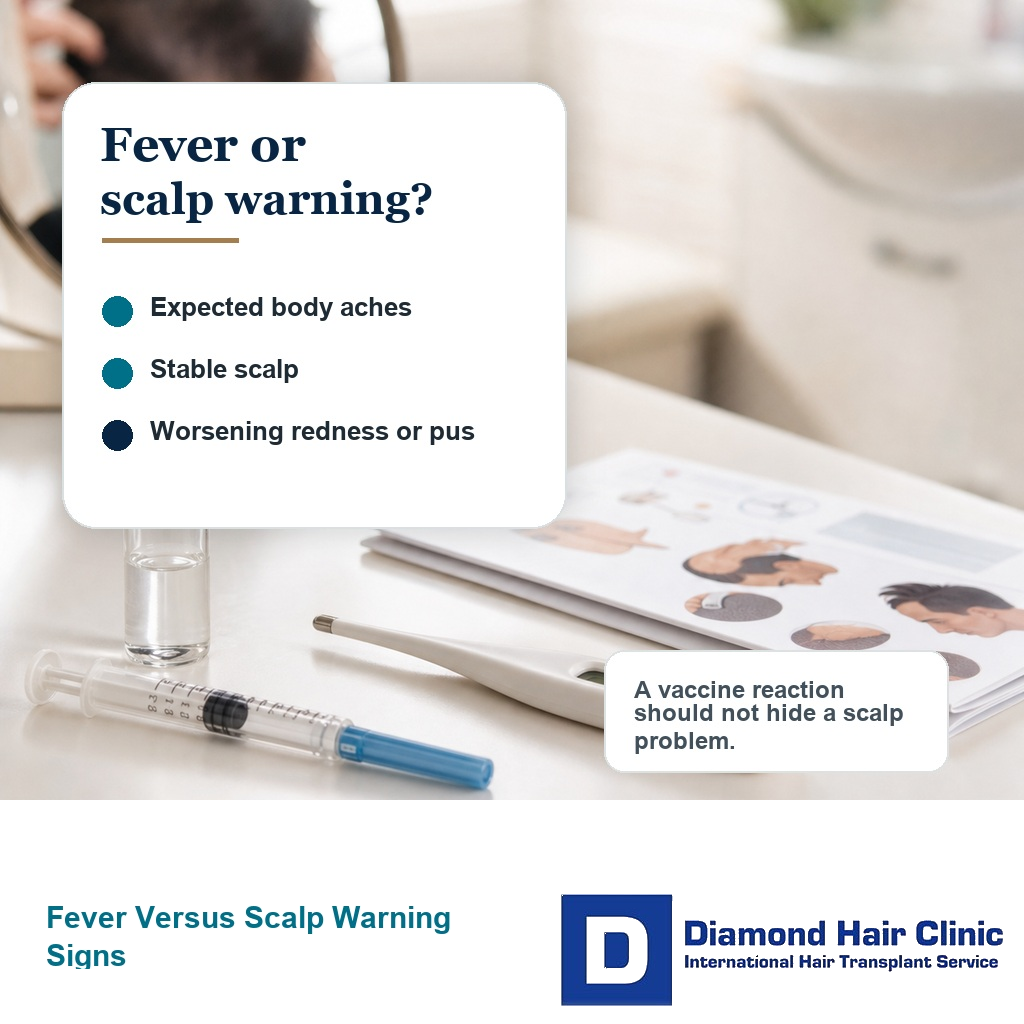
Fever after a vaccine can be temporary, but fever with worsening scalp symptoms deserves medical review.
Feeling unwell before surgery can change timing
If you feel unwell before surgery, raise it before travel or arrival. Mild arm soreness is usually not the same as fever, chills, chest symptoms, heavy cough, dizziness, vomiting, or feeling generally ill. The decision should be made before you travel or arrive at the clinic, not after you are already in the procedure room.
A hair transplant is elective. If the body is clearly reacting, the temperature is high, or symptoms are not settling, postponing may be safer than forcing surgery onto the wrong day. Losing a convenient date is frustrating, but operating when the body is medically unstable can create avoidable risk.
Cold or flu symptoms after a hair transplant need a recovery decision, not a casual guess. The question is whether you can tolerate surgery and recover safely, not whether one symptom sounds inconvenient.
Travel vaccines before coming to Turkey
Plan travel vaccines early. For travel medicine, early often means weeks before the trip, not the final airport week. Do not leave vaccination until the last day before flying unless a doctor has told you that timing is necessary. A vaccine reaction during travel can make the first consultation, blood pressure check, operation day, or return flight more complicated than needed.
If you are traveling for surgery, build the schedule around medical clarity rather than the tightest possible ticket. The same practical thinking used for flying after a hair transplant applies here. Travel is easier when the body is stable and the patient has enough margin.
If a vaccine is required by your destination, work, school, country, or another physician, do not skip it because you are planning transplant surgery. Instead, send the vaccine name, date, reason, and expected side effects before the surgical plan is finalized. The answer should fit the real health need.
COVID or flu vaccination after a hair transplant
For most stable patients, a COVID or flu vaccine can be planned after the early healing period if there is no urgent reason to do it immediately. It is cleaner when the scalp has settled first, especially during the first 7 to 10 days, because fever and body aches can blur the recovery picture.
If you have a higher medical risk from infection, have occupational exposure, are following a physician’s schedule, or need vaccination before travel, the timing may need to be earlier. That decision should not be made by guessing online. Coordinate it with the doctor responsible for the vaccine and the team responsible for the transplant.
After vaccination, watch both the general symptoms and the scalp trend. Feeling tired for a day is one thing. Fever with worsening donor pain, spreading redness, pus, or increasing swelling is another.
Tetanus, rabies, and other urgent vaccines
Urgent vaccines are different from optional timing questions. If you had an injury, possible exposure, animal bite, travel risk, occupational risk, or another medical reason for urgent vaccination, follow local medical advice. A hair transplant should not delay necessary medical protection.
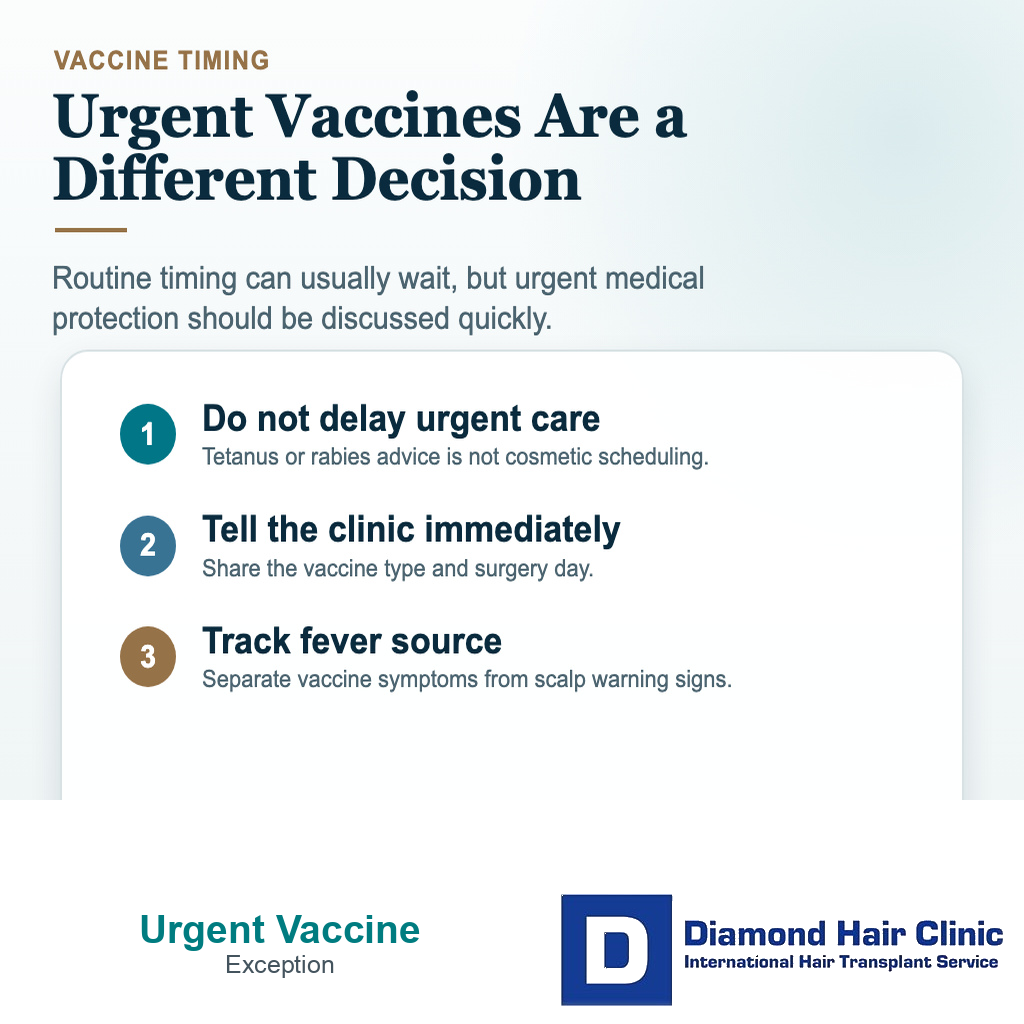
Tell the doctor giving the vaccine that you recently had surgery. Tell the hair transplant clinic what vaccine you received and why. The clinic can then interpret fever, arm soreness, body aches, dizziness, or medication changes in the correct context.
Do not try to solve an urgent vaccine question through the hair transplant team alone. The clinic can protect the scalp and guide recovery, but exposure decisions and urgent vaccination schedules belong to the doctor handling that medical issue.
Planning vaccines safely around surgery
Write down the vaccine name, the reason for it, the date planned or received, previous reactions, fever history, allergies, and any medicine you normally take after vaccination. Send that information before surgery if the timing is close.
If you are immunocompromised, on strong immune suppressing medicine, pregnant, or following a specialist schedule, the vaccine decision belongs with the doctor managing that condition. The hair transplant plan should adapt to that medical advice rather than replacing it.
If the vaccine is flexible, keep it away from the operation day and the first recovery week. If it is not flexible, coordinate instead of hiding it. Good planning means the clinic knows whether fever, swelling, tiredness, or body aches may appear for a predictable reason.
After surgery, keep the early days predictable. Drink fluids, sleep with the scalp protected, follow washing instructions, and avoid adding unapproved medicines. If you need advice about medications after a hair transplant, ask before combining vaccine side effect treatment with the clinic’s medication plan.
Vaccines fit best when recovery is settled
I separate three questions. Is the vaccine optional or medically needed now? Is the scalp still in the sensitive first recovery days? Are the symptoms general, such as arm soreness and tiredness, or centered on the scalp, such as spreading redness, discharge, worsening donor pain, bleeding, or increasing swelling?
When timing is flexible, choose a clean window. Complete planned vaccination before surgery with enough time to feel well, or wait until early scalp healing has settled. When timing is medically important, protect your general health first and tell the clinic immediately so the recovery plan can be adjusted.
You do not need to avoid every normal medical need to protect a transplant. Good recovery depends on clear communication, sensible timing, careful graft protection, and knowing when a symptom fits ordinary vaccine side effects or needs medical review.

Read this review excerpt
Upon arriving home, I sent 4 photos (of each side of head) after every washing process to doctor for checking where I was given personal advice for how to take care of my healing head.