





Redness can still be part of normal healing
Redness alone is not enough to diagnose infection. Many patients stay pink or red for days, sometimes longer, especially if they have fair skin, sensitive skin, or a large recipient area. The redness should still be dry, controlled, and gradually less intense.
On darker skin, infection may not look bright red. I check for warmth, swelling, tenderness, wetness, discharge, and a clear change from that patient’s normal skin tone. The color matters, but the behavior of the skin matters more.
Concern rises when redness spreads beyond the transplanted or donor area, feels hot to the touch, becomes more painful, or appears with swelling that is increasing rather than settling. Redness with fever, chills, pus, or a bad smell is a different situation from ordinary color change after surgery.
Swelling also needs context. A forehead that becomes puffy in the first few days may be ordinary fluid movement after surgery, but swelling that is more painful, more asymmetric, hotter, or paired with discharge changes the meaning. The normal pattern is explained in swelling after a hair transplant. If the main worry is a puffy or firm donor area after FUE, compare it with donor area swelling after FUE so infection concern is judged against the right expected timeline.
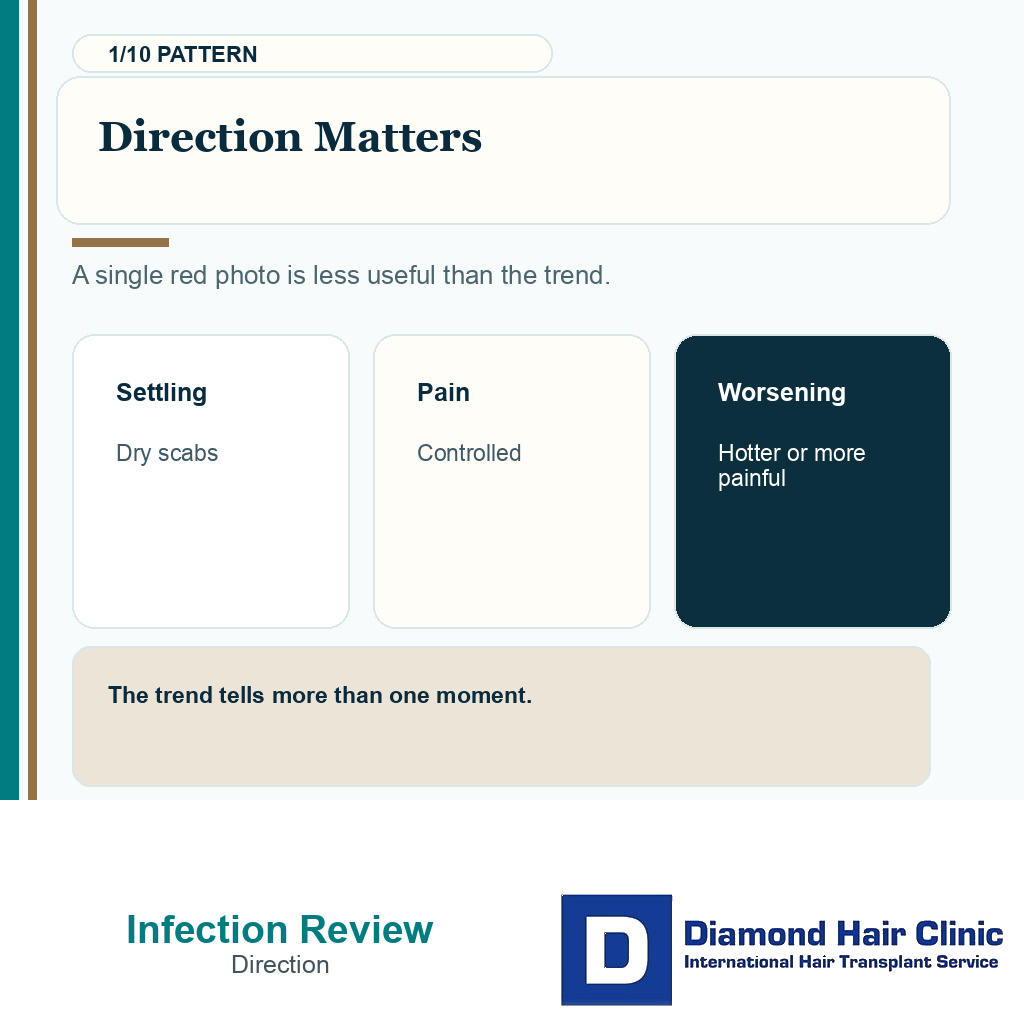
Patients sometimes compare their scalp to another person’s day 5 or day 10 photo. That comparison can mislead them. The better comparison is with their own scalp from yesterday, the day before, and the instructions they were given after surgery.
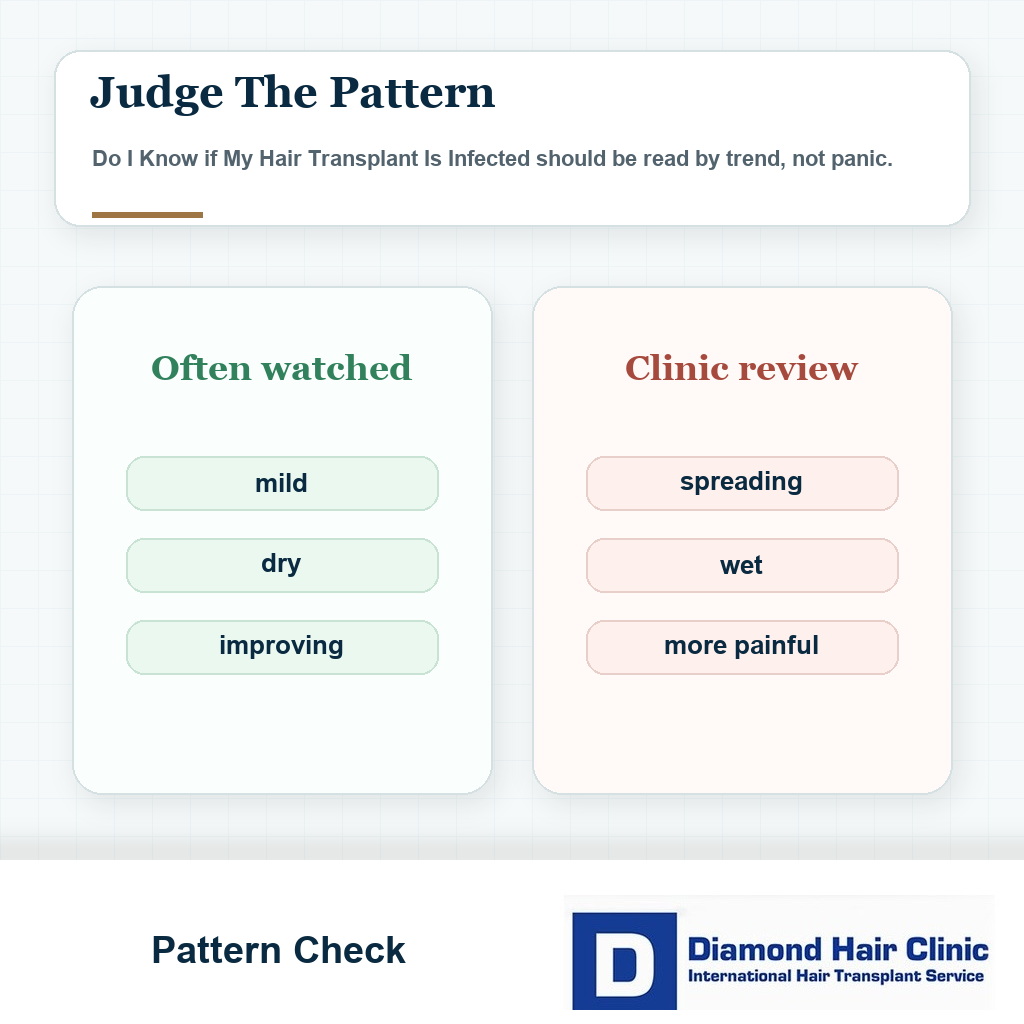
Pus, odor, or wet crusts change the situation
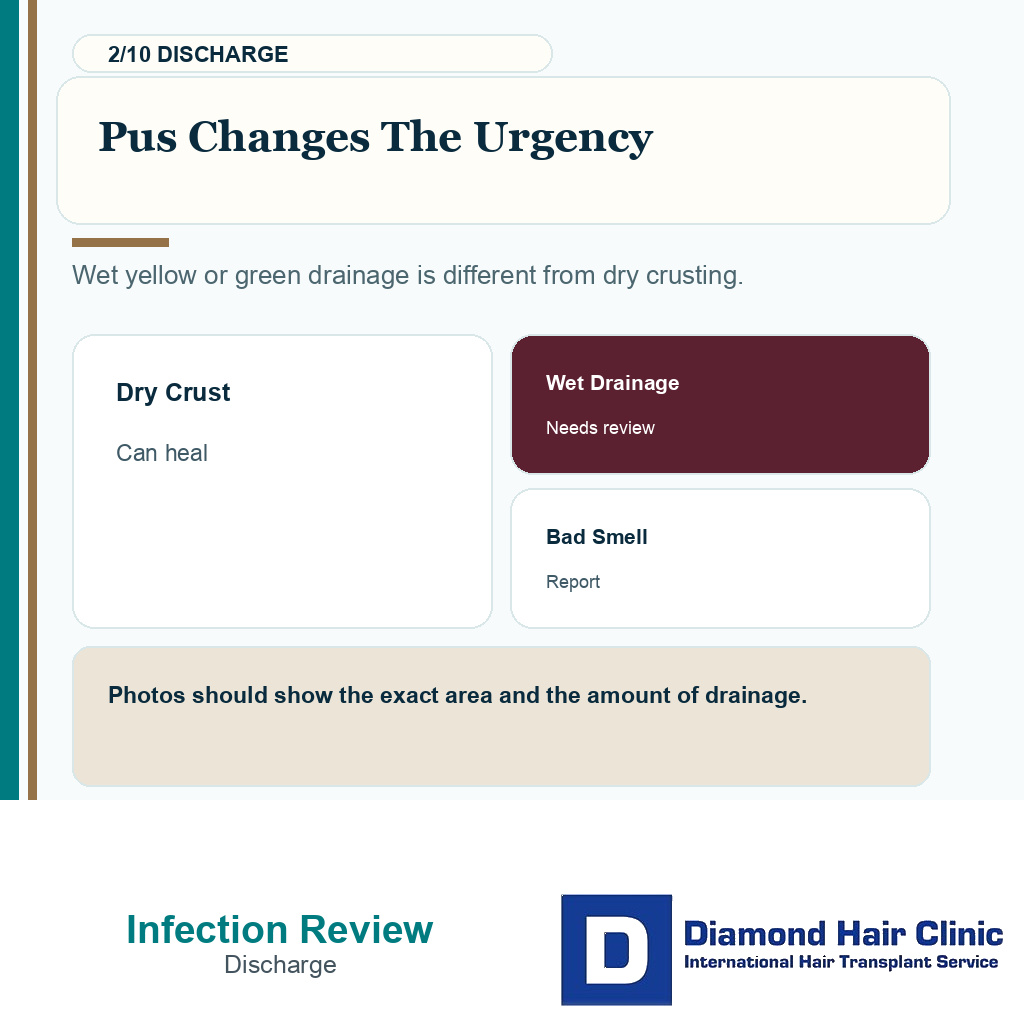
Dry crusts are common after a hair transplant. Yellowish dried serum or fibrin can also confuse patients because it may look like pus in a photo. A little pale fluid that dries and settles is different from thick, cloudy pus that keeps returning with heat, pain, odor, or worsening swelling. A true warning sign is wet discharge, yellow or green pus, a bad smell, increasing pain, or a crust that stays thick, sticky, wet, and inflamed instead of drying and loosening.
If scabs come away during washing and there is no bleeding, no new open wound, no pus, and no increasing pain, that is usually very different from infection. The concern is higher when crusts are attached to angry skin, when fluid keeps coming back, or when the same area becomes more swollen and tender.
Patients often panic because they think every scab contains a graft. The graft question is covered separately in scabs coming away after a hair transplant. For infection, I am more interested in discharge, smell, heat, worsening pain, and whether the skin is improving or deteriorating.
Dark grey, black, or dusky skin, skin breakdown, a wound that looks deeper instead of cleaner, or severe pain that does not fit the normal recovery pattern should be assessed urgently. That situation is not just a cosmetic worry about scabs. It overlaps with the warning signs covered in necrosis after a hair transplant.
Folliculitis after transplant is not always infection
Folliculitis means inflammation around hair follicles, and after a hair transplant it can appear as small pimple like bumps in the donor or recipient area. Some cases are mild and settle with proper management. Some need medical treatment, especially if the bumps are numerous, painful, spreading, or pus filled.
A few small bumps are different from a scalp that looks infected as a whole. One small pimple around a growing hair is not the same as spreading redness, fever, foul discharge, or deep tenderness. But if you have many pustules, recurrent painful bumps, or a history of scalp folliculitis, early medical review is better than waiting until the skin becomes more irritated.
If a patient already has active folliculitis before a hair transplant, surgery may need to wait until the scalp is quiet. Operating through active inflammation can make aftercare harder and can confuse the early healing picture.
Infection does not always damage grafts
A mild, early, properly treated infection does not mean the transplant has failed. The risk rises when infection is ignored, squeezed, scratched, treated late, or allowed to spread through the recipient area or donor area.
In the first days, the grafts need a clean, stable environment. The skin is healing around thousands of tiny surgical openings. If inflammation becomes strong, wet, and infected, that environment becomes less predictable. Early contact with the clinic is the more responsible choice when the pattern looks wrong.
No clinic should promise that infection is impossible. A careful clinic reduces risk with sterile technique, clean handling, proper aftercare, and direct follow up. But any procedure that opens the skin has some infection risk, even when the concern is low.
Lower threshold for medical review
Some patients should ask for review earlier rather than watching the scalp for too long. This includes patients with diabetes, immune suppression, autoimmune medication, recent steroid use, poor wound healing, previous scalp infection, active folliculitis, or any medical condition that makes infection harder to control.
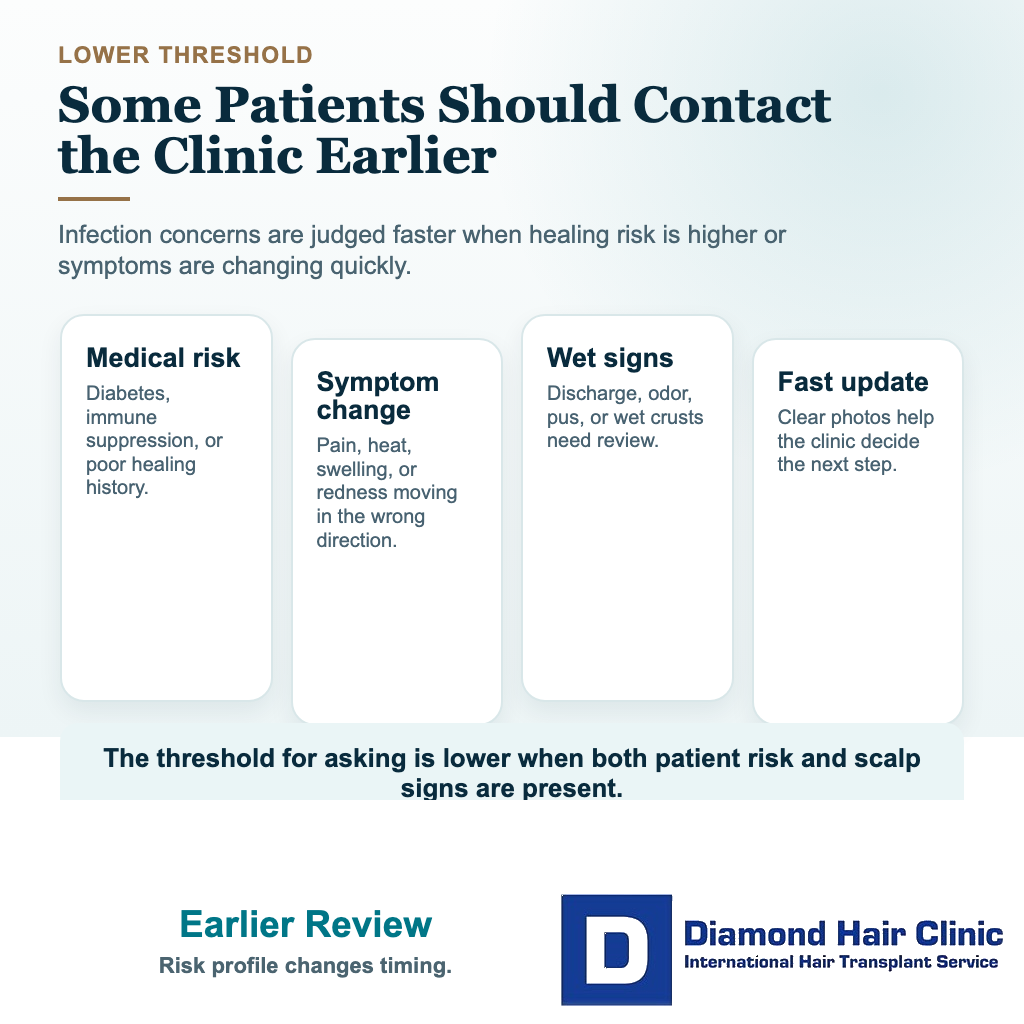
That point does not mean every patient in these groups will develop infection. It means the margin for waiting is smaller. If a patient has diabetes and hair transplant planning involved medication or blood sugar concerns, or if autoimmune disease and hair transplant timing was already part of the discussion, worsening redness, pus, fever, or increasing pain should be checked promptly.
The same applies when medication before a hair transplant includes immune treatment, blood thinners, recent antibiotics, or other drugs that change wound healing. Share these details before surgery, and make sure the doctor reviewing a possible infection has them afterward.
Washing and hygiene matter
Gentle washing is not only about appearance. It helps remove crusts, sweat, dried fluid, and surface debris without traumatizing the grafts. A scalp that is never cleaned properly can develop thicker crusting, more irritation, and a more confusing healing pattern.
Aggressive scrubbing in the recipient area during the early period can create trauma, but fear based avoidance of washing can also create problems. The correct approach is clean, calm handling without trauma. Follow the clinic’s washing plan carefully, protect the grafts from friction, and keep towels, pillows, hands, and hats clean.
The timing and technique matter, so the normal washing routine after a hair transplant is covered in a separate guide. In an infection concern, clean handling becomes more important. Clean handling should reduce irritation, not create new trauma.
Donor area pain can be more than normal sensitivity
The donor area often feels sore, tight, numb, itchy, or sensitive after FUE. Sharp sensitivity can appear when scabs loosen and the skin wakes up again. That can be unpleasant without being dangerous.
My concern rises when donor pain is severe, one sided, increasing, hot, swollen, or associated with pus, bad smell, fever, or spreading redness. Pain that keeps getting stronger instead of gradually settling deserves review. Do not assume that severe donor pain is harmless only because other people online felt discomfort too.
For the donor area specifically, severe donor area pain after a hair transplant goes deeper into normal nerve sensitivity, extraction trauma, and when the pain pattern needs medical attention.
Sweat, exercise, and sauna can raise infection risk
Accidental light sweating is not necessarily an infection. The weak point is the environment around the healing scalp. Heat, dirty moisture, pressure from a tight hat, friction from exercise, and delayed washing can make irritation worse during the early healing period.
During the first 10 to 14 days, avoid deliberate heavy sweating, gym training, sauna, steam rooms, and hot environments unless your clinic has cleared you for that stage. These activities can combine heat and moisture with friction, and that is not helpful when tiny surgical openings are still healing.
If sweating is your main concern, read heavy sweating after a hair transplant. For activity timing, the recovery plan should also respect the guidance on returning to exercise after a hair transplant and sauna exposure after a hair transplant.
Judging clinic advice when infection is a concern
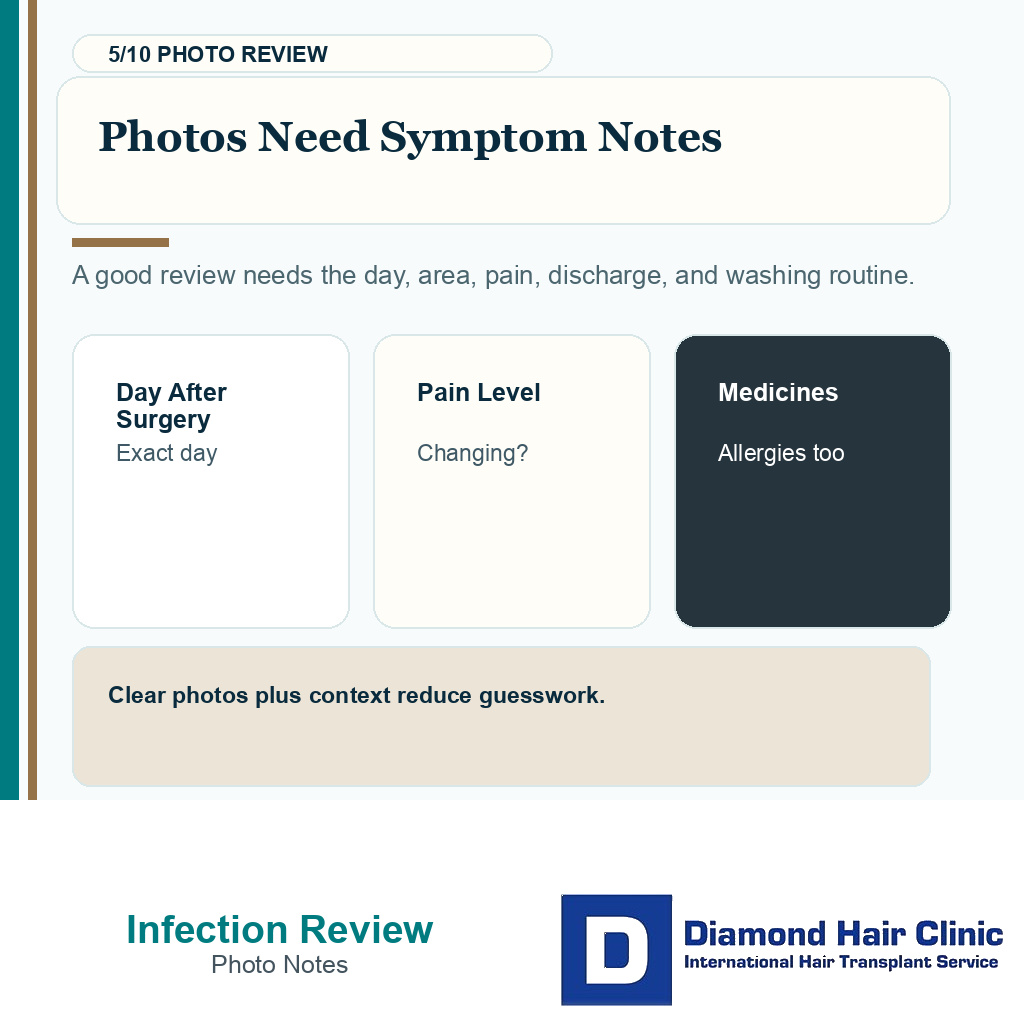
A clinic’s response after surgery tells you a lot about how seriously it takes follow up. If you send photos of possible infection, the answer should be specific, practical, and medically responsible. The review should ask about timing, pain, fever, discharge, smell, swelling, medications, washing, and whether the symptoms are getting worse. The same judgment applies if you are also worried about a cold or flu after a hair transplant, because fever and scalp warning signs must be separated from ordinary viral symptoms.
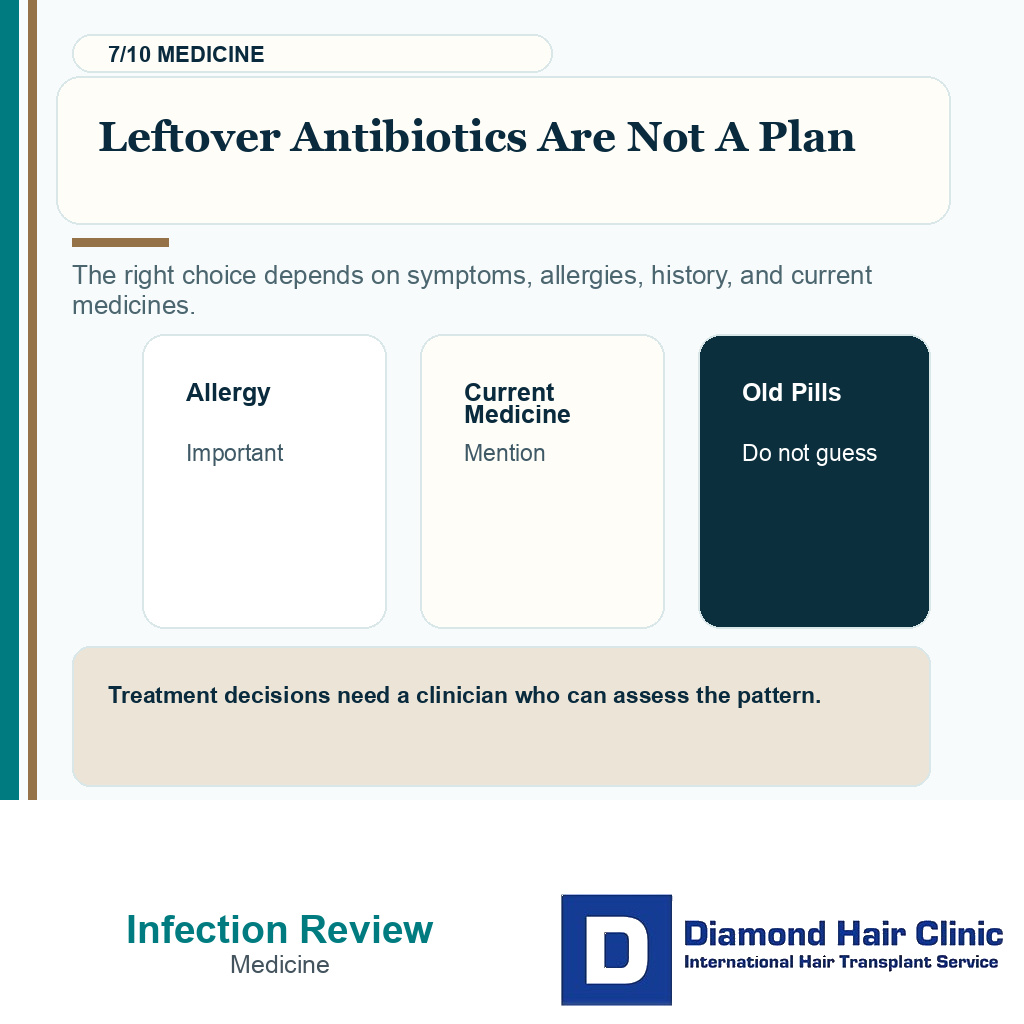
A weak response is one that treats every concern as panic without looking carefully. Another weak response is to give a casual antibiotic suggestion without proper assessment, especially when the patient is abroad, worried, and unable to be examined. Antibiotics may be needed in some cases, but they should be chosen by a doctor who understands the clinical picture.
The process before surgery matters as well. A high volume clinic that rushes the plan, avoids direct medical follow up, or gives vague instructions leaves the patient alone at the exact moment when judgment matters. Safe hair transplant aftercare is not a marketing extra. It is part of safe hair transplant surgery.
Surgery should wait when scalp infection is active
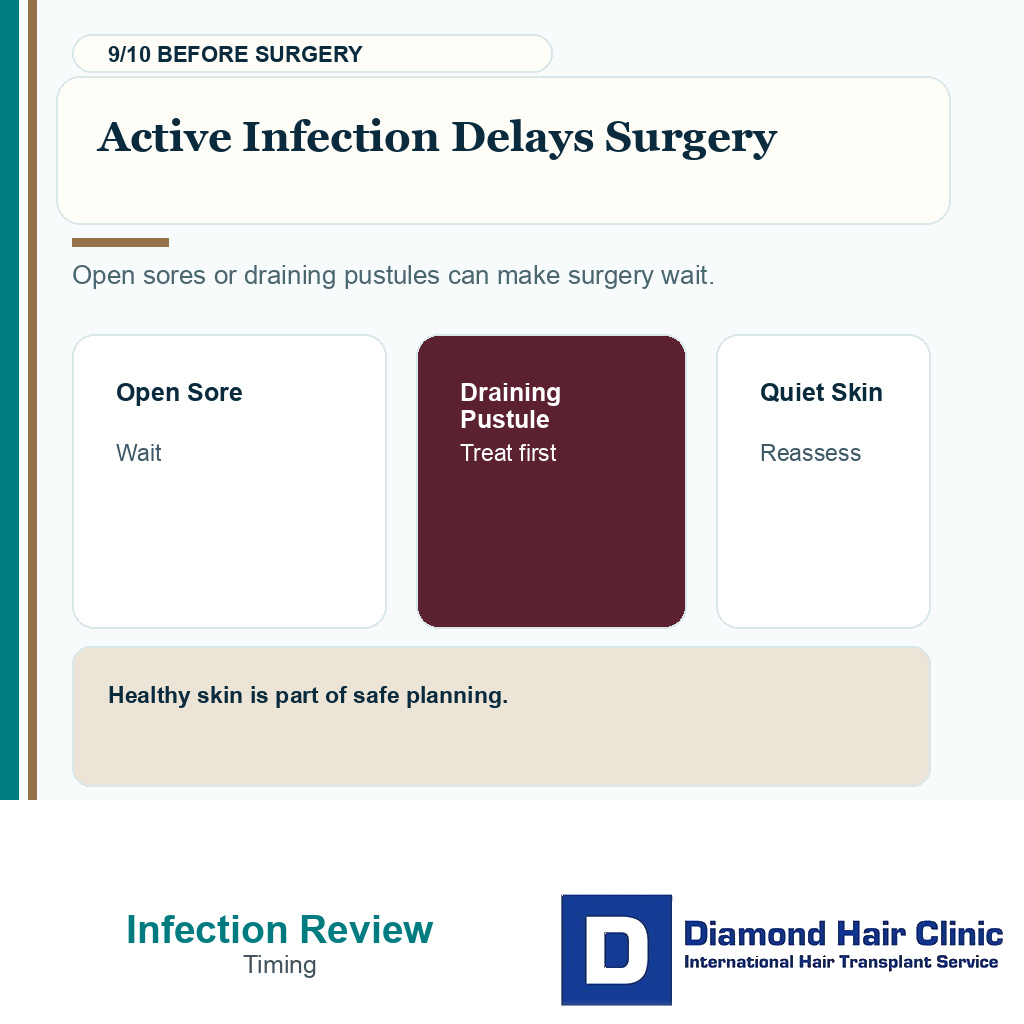
If a patient has active scalp infection, uncontrolled folliculitis, draining pustules, open sores, or inflamed skin in the donor or recipient area, surgery should usually wait until the condition is treated and stable. A hair transplant is elective. It should not be forced through skin that is already irritated or infected.
There are patients who feel frustrated by waiting, especially if they have already booked flights or taken time off work. I understand that pressure. Still, operating into an active skin problem can create a poor healing environment, make infection harder to interpret afterward, and increase the chance of regret.
Good surgery starts before the first graft is removed. The scalp, donor area, medical history, medications, hygiene risk, warning signs, and follow up plan all matter. A delayed operation can be disappointing, but a rushed operation through unsafe skin can become much more difficult to fix.
Steps to take when worried at home
First, look at whether the scalp is improving or worsening. Mild redness, dry scabs, itching, and tenderness can be normal. Spreading redness, increasing heat, worsening pain, pus, bad smell, fever, chills, or feeling unwell are not signs to ignore.
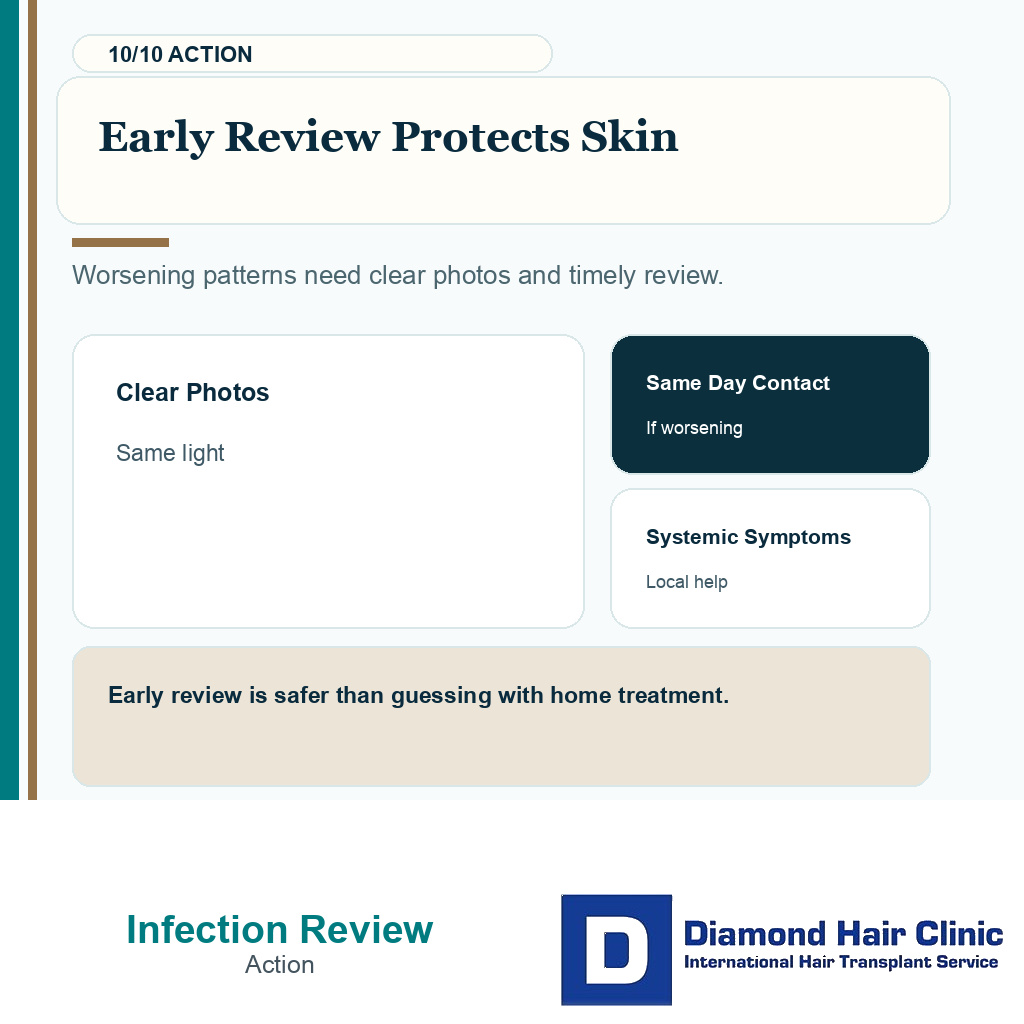
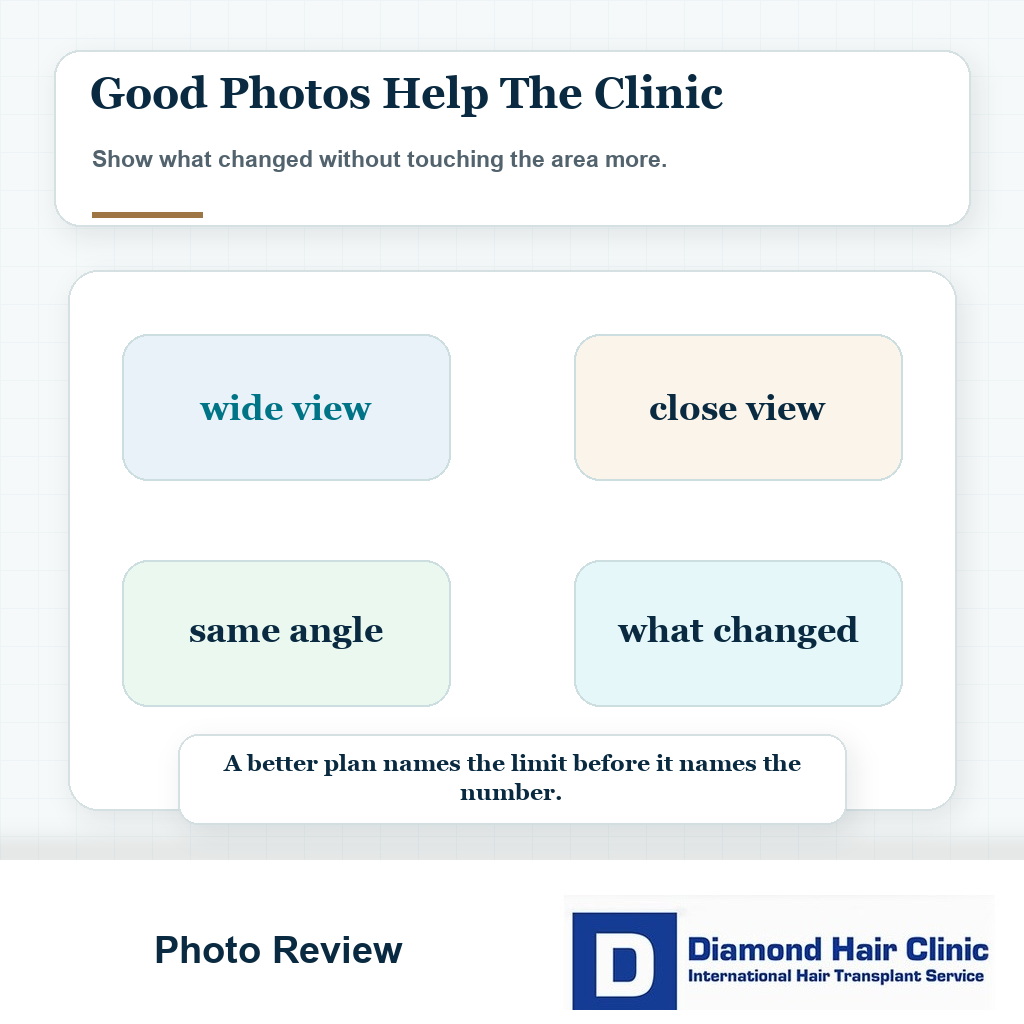
If the concern is small and the scalp is improving, send photos to your clinic and follow the washing and aftercare plan. If the area is worsening, painful, wet, hot, or you feel systemically unwell, seek medical review locally and tell your clinic what is happening. Early review is not overreacting. It is how you protect the healing process.
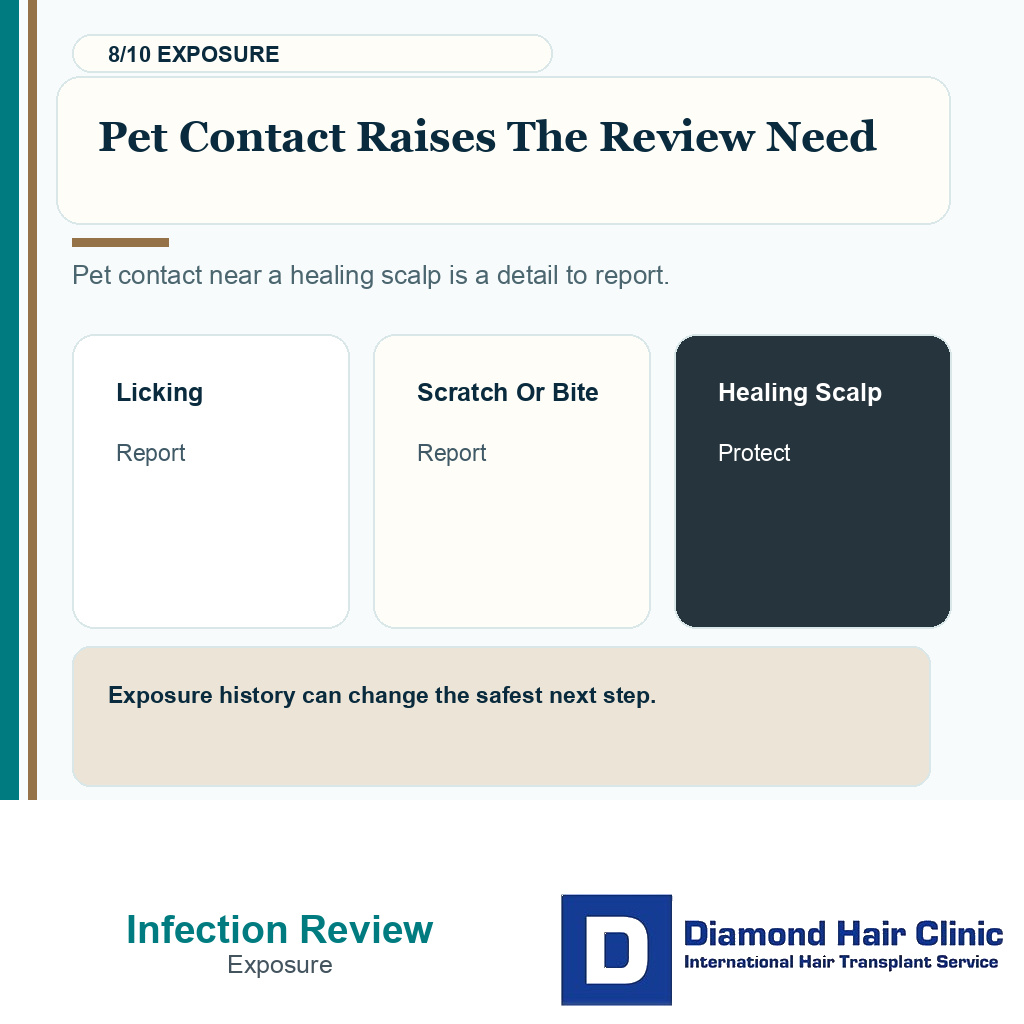
Do not panic, but do not ignore a worsening pattern. Scratching, squeezing, internet remedies, and repeated checking can create more irritation. Clear observation, clean aftercare, and timely medical review give the scalp the best chance to heal normally.
Read this review excerpt
He was very thorough in every little detail and I never felt pressure to do anything I wasn’t sure of.