


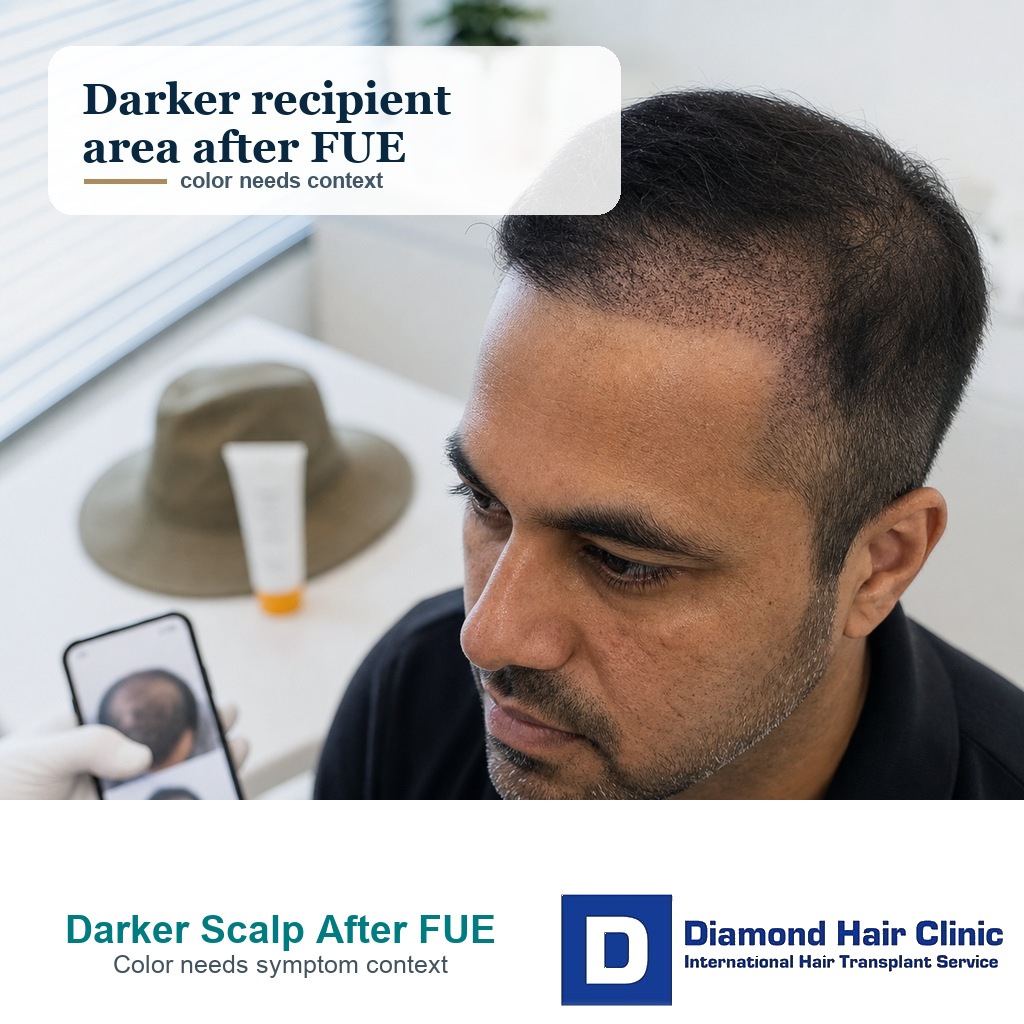
Darker Recipient Area Needs Symptom Review
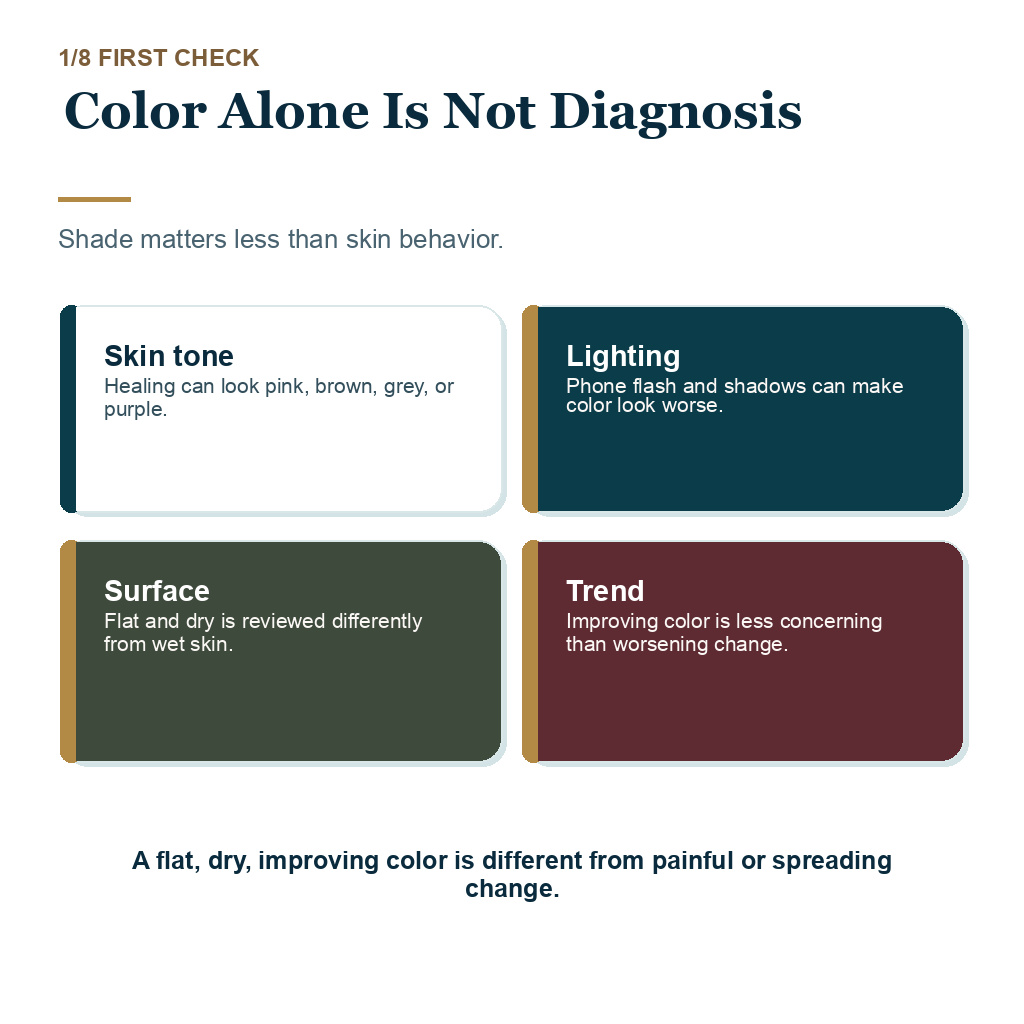
Shade alone is not enough to judge a darker recipient area. After FUE, the same healing skin may look pink on one person, reddish brown on another, and grey, purple, or darker brown in someone with a deeper skin tone. The first question is not the exact color in one photo. Color matters less than whether the skin is calm, improving, or showing warning signs.
A flat, dry, gradually improving color change is very different from skin that is hot, wet, painful, swollen, open, smelly, or spreading. Crusts, dried blood, normal inflammation, pigment response, lighting, sun exposure, and warning signs can all make the recipient area look darker. Timing, symptoms, photo pattern, and direction of change matter more than one frightening close photo.
If the change is one isolated spot that looks like a mole after FUE, I judge that separately from a wider recipient area color change. Color alone is not the diagnosis, and darker skin alone does not prove infection, scarring, graft loss, or permanent damage.
The recipient area can look darker after FUE
FUE creates many small openings in the recipient area, whether the work is in the front, mid scalp, or crown. Each opening has a tiny wound, a small amount of inflammation, and early crusting. On light skin, that inflammation often looks pink or red. On deeper skin tones, the same healing process may look brown, purple, grey, or darker than the surrounding scalp.
There is also a pigment response to inflammation. The medical term is post inflammatory hyperpigmentation. Skin can make more pigment after irritation, injury, acne, burns, scratching, or surgery. After FUE, the recipient area has thousands of tiny healing points, so pigment change can happen even when the surgery itself was careful.
Photos can make the situation look worse than it is. A phone camera can deepen shadows between grafts, sharpen redness, or make brown pigment look almost black. I still want clear photos, but they need normal light, enough distance, and a short timeline so the image helps judgment instead of increasing fear.
Part the surrounding hair the same way before judging the color. A dense or wet edge can cast a shadow over the recipient area and make pigment look worse than the skin really is.
Darker color is different from redness
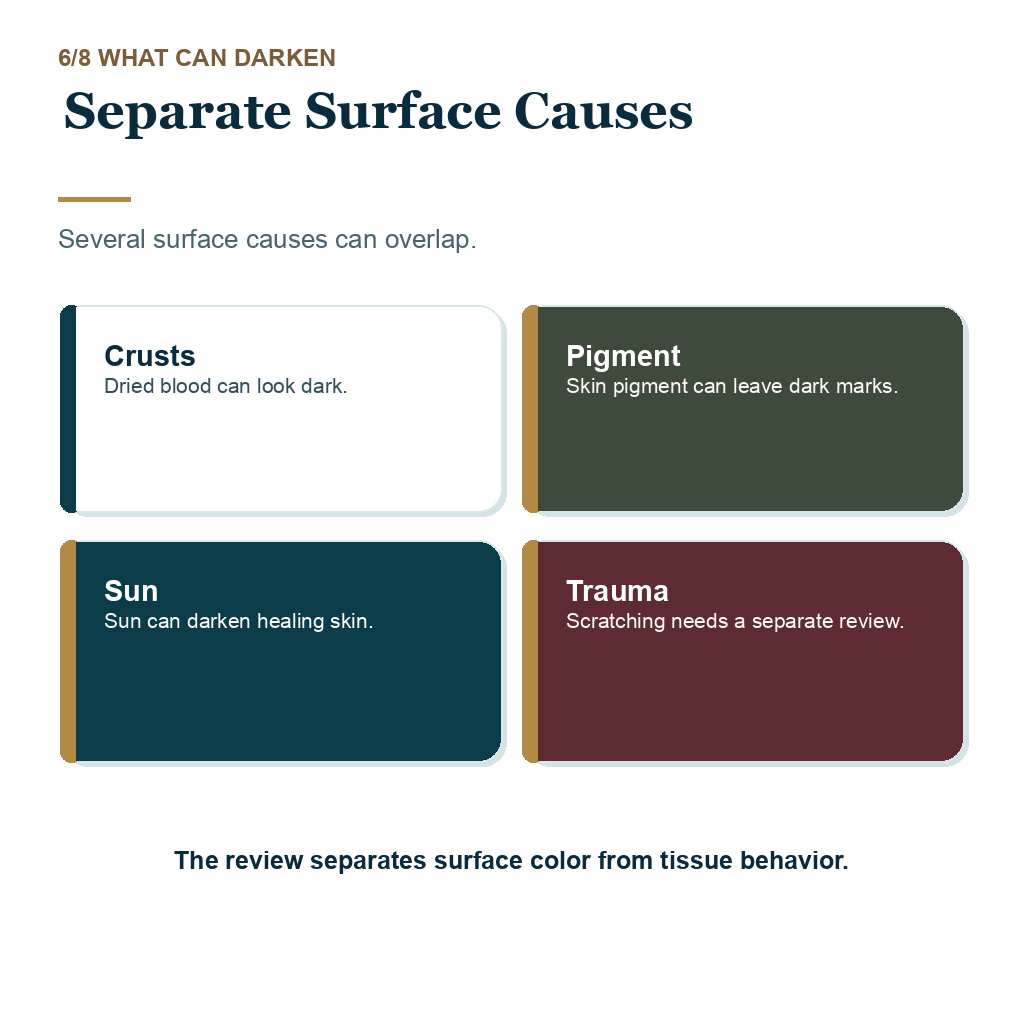
Redness and darker color can come from the same healing process, but they do not always mean the same thing. Redness often reflects blood flow and surface inflammation. A brown, grey, or purple tone may reflect pigment, dried blood under thin crusts, shadowing between grafts, or several of these together.
On darker skin, redness may be harder to see. Instead of a bright red field, the change may look dull, brown, grey, purple, or unevenly dark. That does not make it less important. I read the skin by behavior, including heat, swelling, tenderness, drainage, odor, fever, spreading edges, and timing. Those details usually matter more than the exact shade.
If the main issue is redness, scabs, or pimples, the pattern is closer to redness, scabs, and pimples after hair transplant. A darker color question needs a narrower judgment, especially when the concern is whether pigment, dried blood, infection, or sun exposure is involved.
Skin tone can change how healing looks
Skin tone changes how healing color appears. Fair skin may show “redness.” Brown skin may show “darkness,” “black dots,” “purple color,” or “hyperpigmentation.” The healing stage can be similar, but the visible language is different. For that reason, I do not compare every scalp to the same aftercare photo.
This is especially relevant in Afro and very curly hair transplant planning, where curl direction, graft angle, donor behavior, and skin response all need careful planning. Color assessment is separate from curl planning, but both can affect how recovery is judged.
I also ask about raised scars, keloids, thick scars after ear piercing, acne scarring, razor bumps, or dark marks after small skin injuries. That history may still allow FUE, but it changes the level of caution. It can affect donor planning, punch size choices, density decisions, and how closely I follow the skin after surgery.
Dark color can be part of normal healing
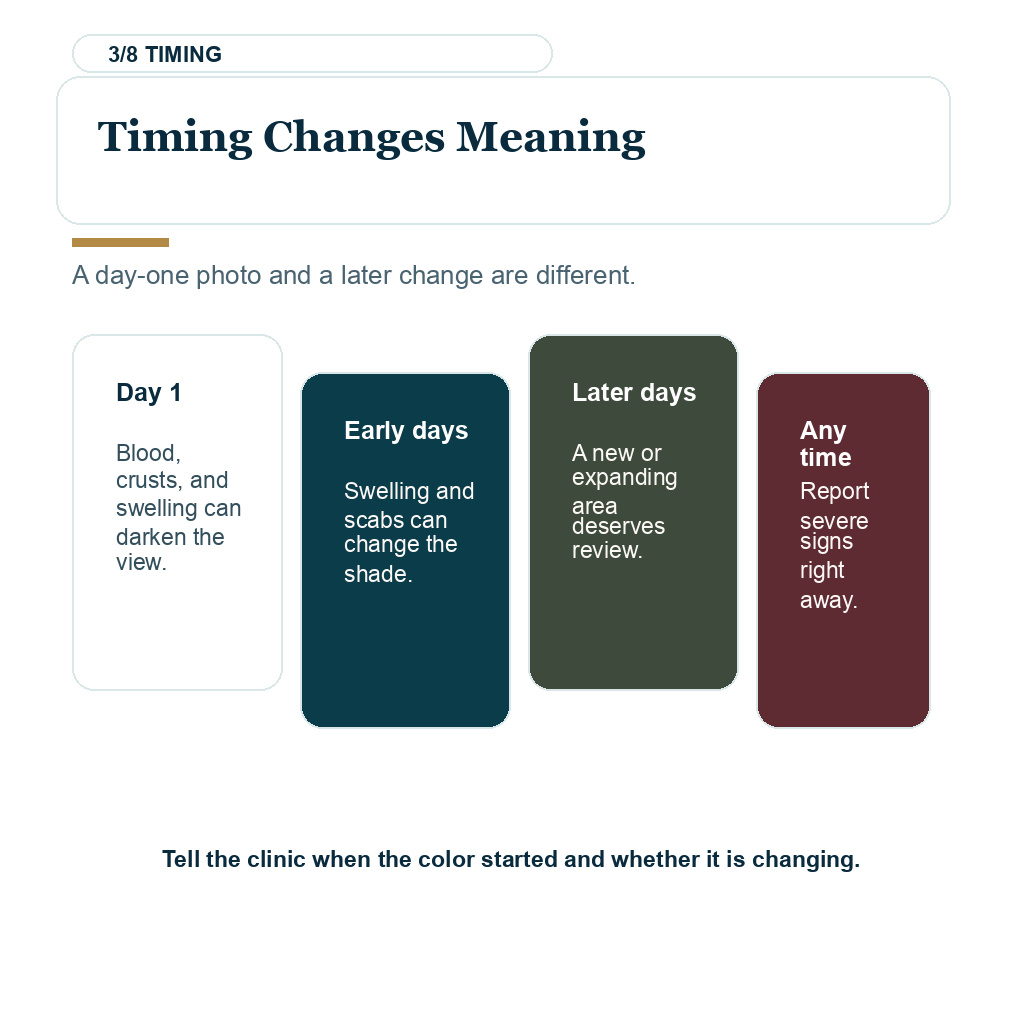
Dark color is more likely to be part of healing when the area is flat, dry, gradually improving, and not becoming more painful. Early scabs can make the recipient area look darker in the first week. After scabs shed, the skin may still look pink, reddish brown, grey, or uneven for a while. In people prone to pigment marks, the darker tone can remain visible for weeks or months before it slowly softens.
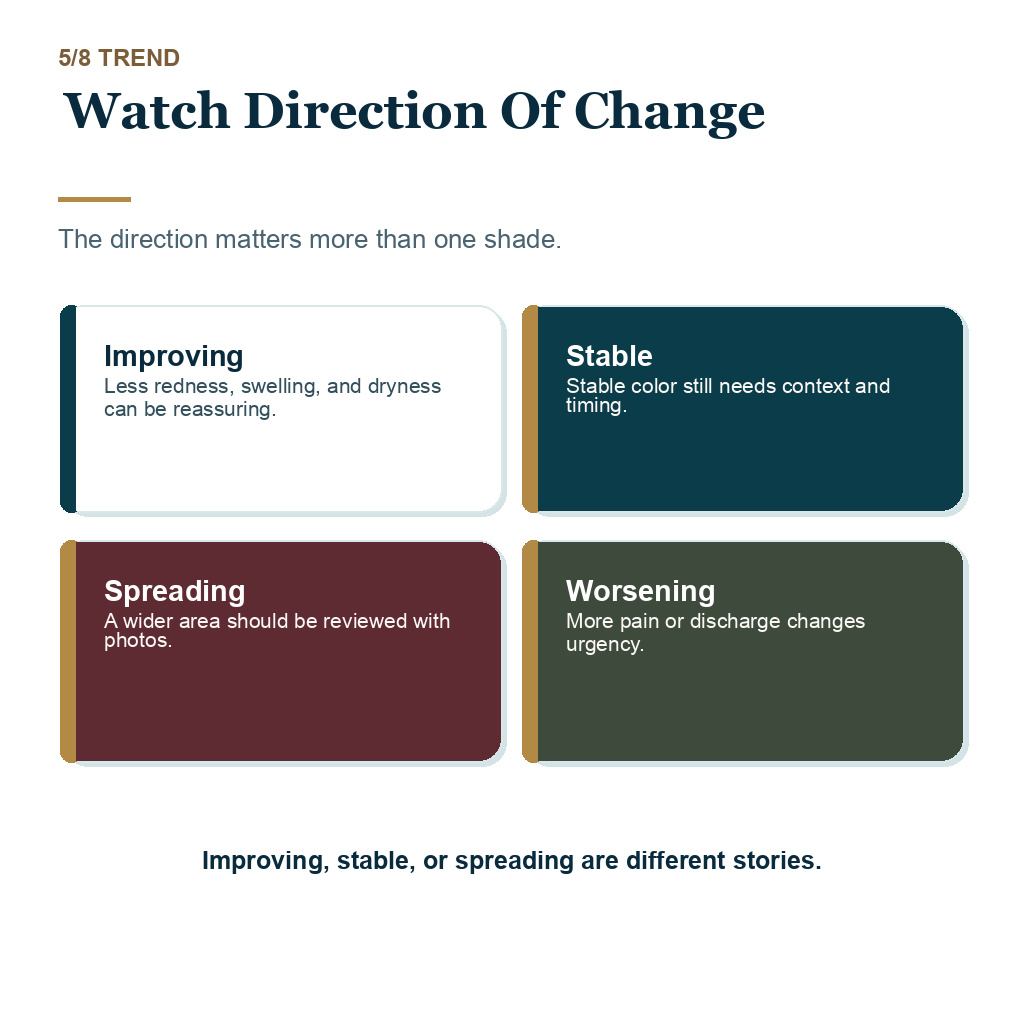
A reassuring pattern has direction. Crusting reduces, washing becomes easier, tenderness settles, and the border of the darker area softens instead of expanding. Hair shedding can make the same pigment look more visible because there is less hair covering the skin. That can feel worse in the mirror even when the skin is not becoming medically worse.
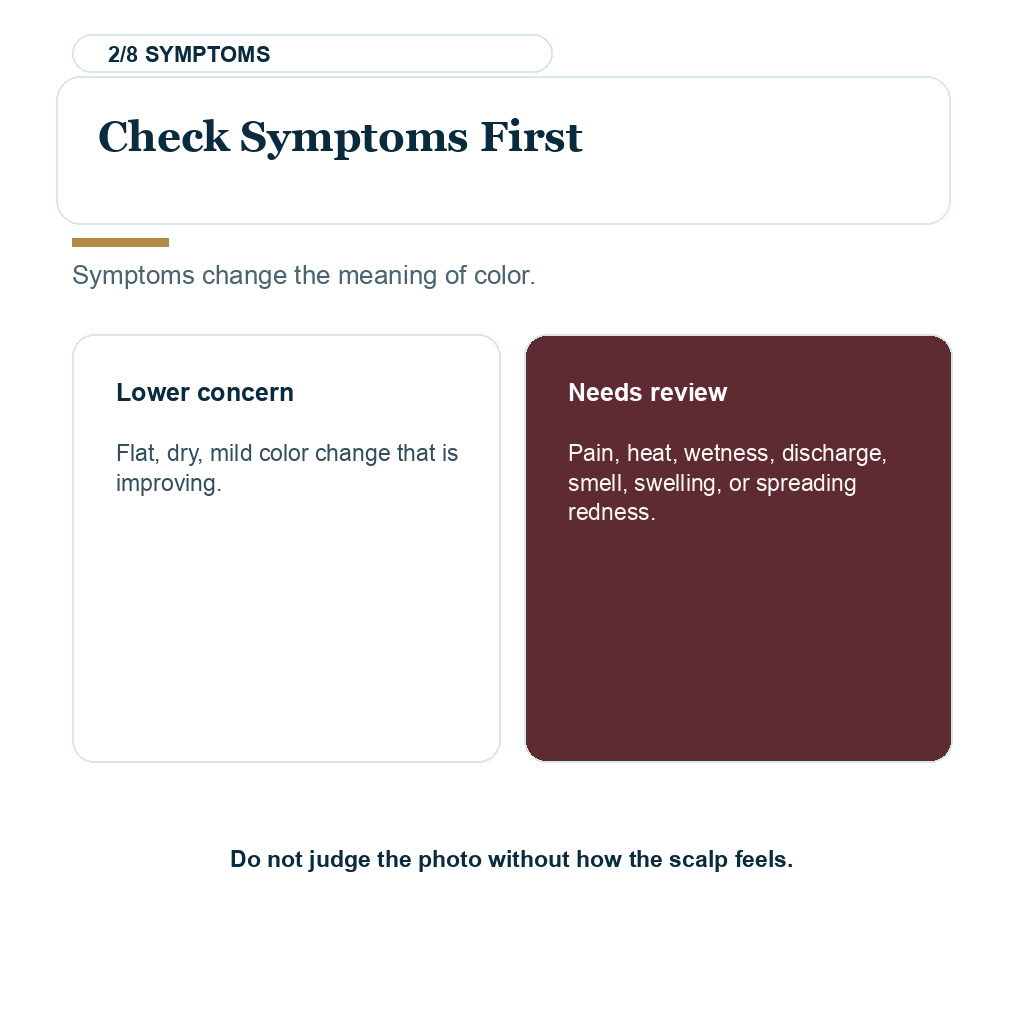
Flat, dry color that is not spreading is not the same problem as hot, swollen, painful skin. I still prefer photo review when someone is worried, but those two situations should not be treated as equal.
Dark scalp color that needs medical review
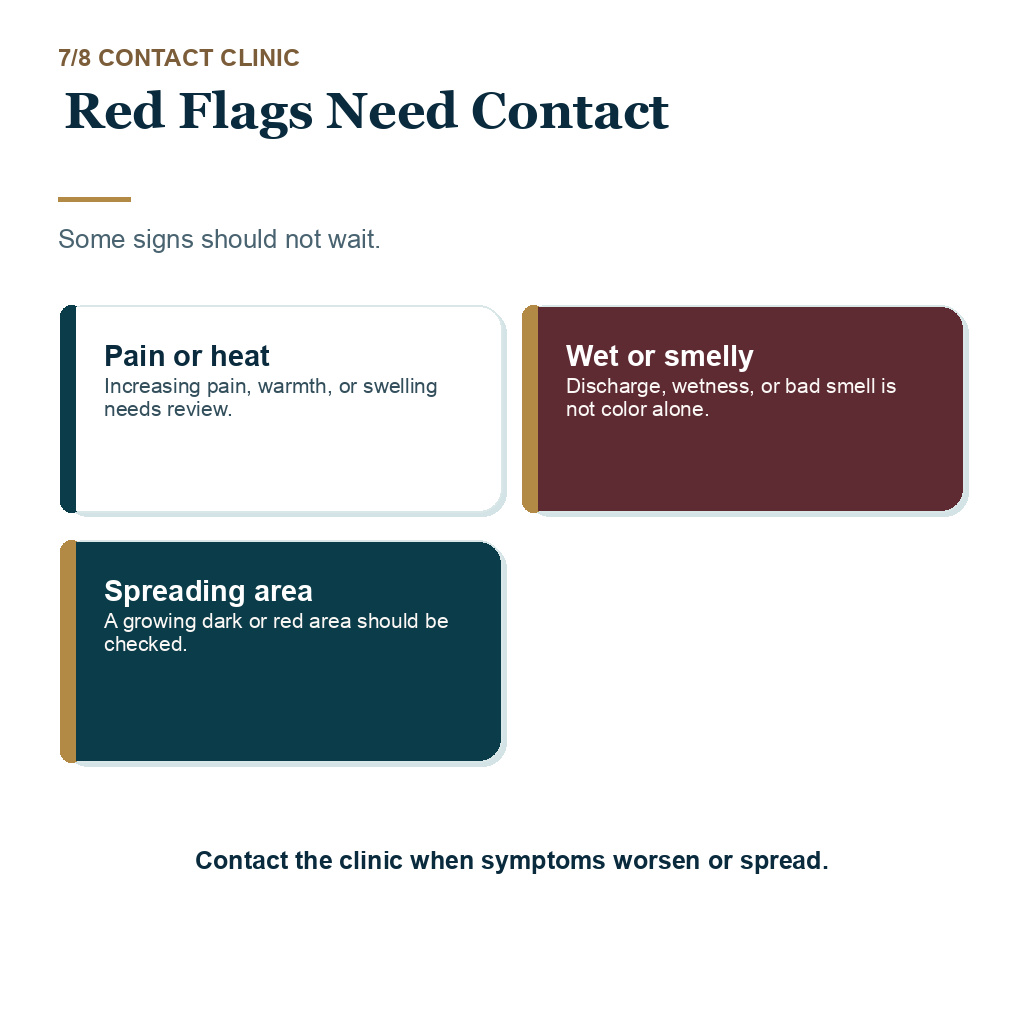
Dark color needs faster medical review when it appears with heat, increasing pain, swelling, pus, yellow or green discharge, bad smell, fever, chills, bleeding that does not settle, or a sharply expanding red or dark border. A black or grey area that looks leathery, sunken, numb, open, or rapidly worse is closer to a possible necrosis warning sign than a routine pigment question.
Infection after a hair transplant is uncommon, but it cannot be dismissed from a photograph alone when symptoms are present. If the scalp becomes increasingly painful, wet, smelly, hot, tender, or starts draining cloudy fluid, I review it as a possible infected hair transplant rather than a cosmetic color worry.
I also take a sudden change seriously. If the recipient area looked settled yesterday and becomes darker, swollen, painful, and shiny today, that is different from a steady pigment mark that has been slowly fading. Direction of change matters more than the darkest photo.
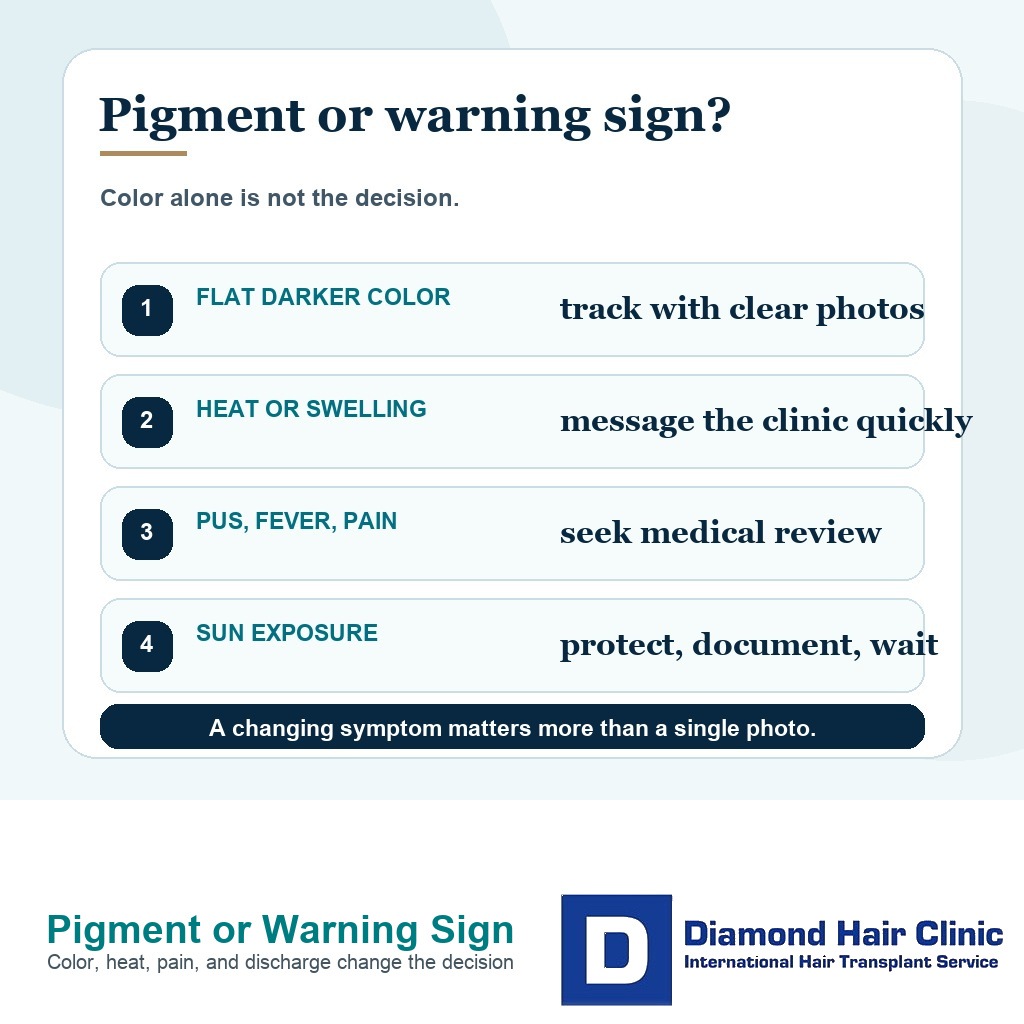
Darker color is judged together with symptoms. Flat pigment, heat, swelling, discharge, fever, and recent sun exposure do not carry the same meaning.
Sun exposure can make the color worse
Sun exposure can make a recently transplanted scalp look redder, darker, or more irritated. The fresh recipient area is vulnerable. Even when grafts are not damaged, the skin can become inflamed, dry, burned, or more prone to pigment change. This is one reason I am strict about sun protection after FUE.
A darker recipient area should not be reduced to whether sun “killed the grafts.” The skin barrier also matters. A sunburned scalp can increase redness, peeling, tenderness, and pigment change. In darker skin tones, sun related inflammation may leave a darker mark instead of obvious pink redness.
Sun after hair transplant, sunscreen after hair transplant, and tanning bed exposure after a hair transplant matter because timing, product choice, and ultraviolet exposure can change the skin response. If the scalp is already burned, sunburned scalp after hair transplant becomes a skin healing problem, not only a color concern.
Photos that help the clinic judge the color
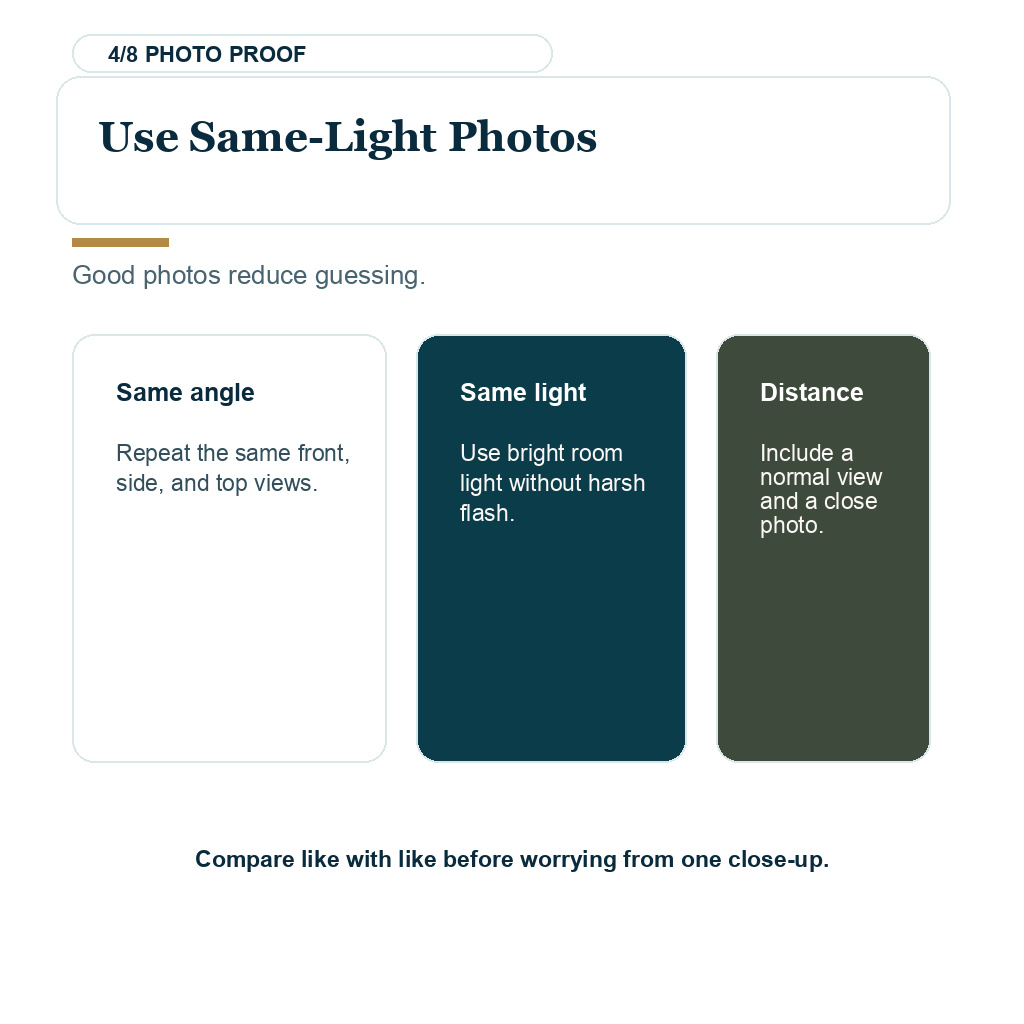
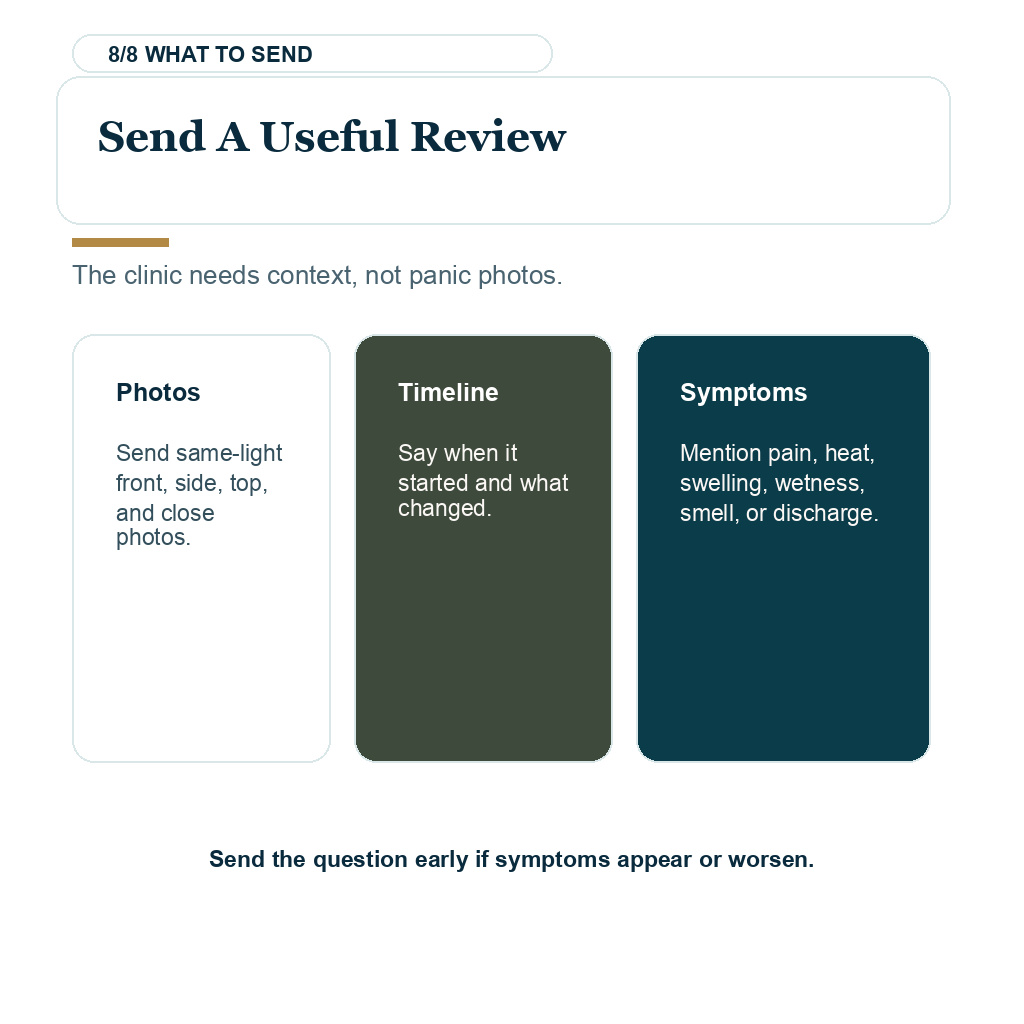
Good photos reduce guessing. Send the same angles in the same light whenever possible. Include the front hairline, both temples, top view, donor area if symptoms are present, and one wider image that shows the whole head. Avoid strong bathroom spotlights, dark rooms, beauty filters, and extreme close photos as the only evidence.
A short timeline helps as much as the photo. Include the operation date, the day after surgery, when scabs came off, when the darker color started, whether there was sun exposure, hat friction, scratching, a new product, increasing pain, discharge, fever, or swelling. One dramatic image without timing can make a harmless pigment mark look urgent, or make a real infection look less serious than it is.
Clear photos in the same light are more useful than one dramatic close photo. If the area is changing quickly, send photos the same day. If it is flat, dry, and stable, repeated photos every few days may be enough to follow whether the color is spreading, fading, or staying flat.
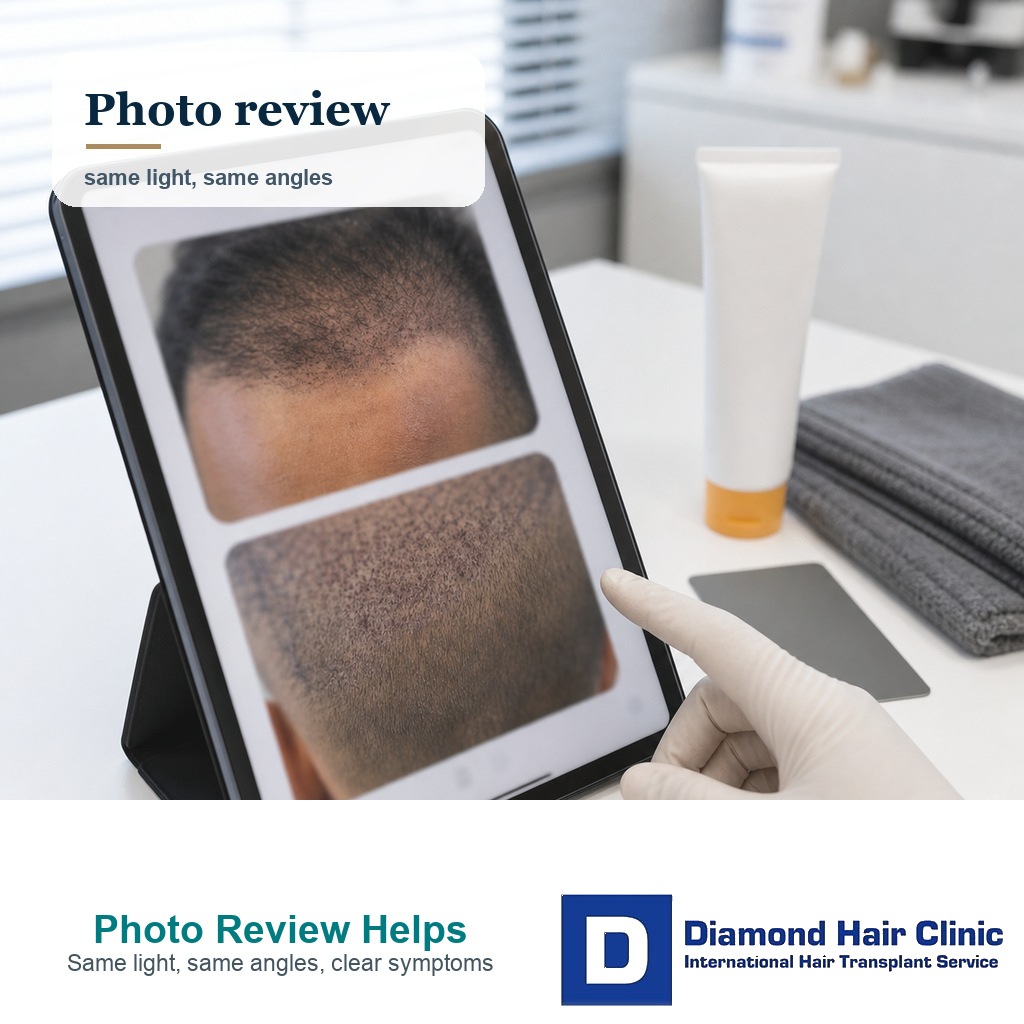
Photo review works best when angle, distance, and lighting stay consistent enough to show whether the color is spreading, fading, or staying flat.
Darker color can be pigment after inflammation
It could be. Post inflammatory hyperpigmentation means darker pigment left after inflammation or injury, and it is often more visible in darker skin tones. After FUE, inflammation can come from recipient openings, scabs, rubbing, scratching, sun exposure, folliculitis, irritating products, or delayed surface healing. The trigger has to settle before pigment can be judged fairly.
Pigment is mainly a skin color issue, not a graft survival diagnosis. That distinction matters. A dark mark can be emotionally difficult every time you look in the mirror, while the grafts underneath may still be going through the normal shedding and regrowth cycle. But pigment does not give permission to ignore warning symptoms. Heat, pus, fever, increasing pain, or swelling changes the discussion.
I am cautious with creams, acids, scrubs, retinoids, peels, and brightening products early after surgery. Healing transplant skin does not need aggressive cosmetic treatment. Rubbing the darker area to see whether it “comes off” can create more irritation and more pigment. Any pigment treatment belongs later, after the skin barrier has recovered and after the clinic has checked that the area is not inflamed or infected.
A darker area alone does not prove graft damage
Not by itself. Graft survival depends on surgical handling, implantation, blood supply, infection control, trauma, severe crusting, and recovery handling. Darker surface color alone does not prove that grafts failed. Many people with visible redness or pigment change still grow well once the shedding phase ends and new hair begins to appear.
The timing can be confusing. Around the second to eighth week, transplanted hairs often shed. If the hairs shed while the skin still looks darker, it can feel as if the operation is failing. In reality, expected hair shedding and visible skin color change may be happening at the same time.
The risk becomes more serious when darker color appears with infection signs, heavy crusting that was not cleaned properly, repeated scratching, trauma, or sunburn. Those situations can affect skin healing and may affect grafts if severe. Early photo review is safer than late regret.
These 8 symptom review slides separate color alone, symptoms, timing, same light photos, trend direction, surface causes, red flags, and what to send the clinic. Swipe sideways, use the arrows one slide at a time, or choose a number below the image.
Keloids, raised scars, and visible dots are different problems
A darker recipient area is not the same as a keloid. Keloids and hypertrophic scars are raised, thickened scar responses. They are more likely in some people and skin types, and a strong personal history deserves discussion before surgery. After FUE, I look for raised, firm, growing, itchy, or thickened areas rather than color alone.
Donor area dots are a separate issue. With darker skin and short hair, pale dots, dark dots, or contrast in the donor area may become visible. Punch size, extraction pattern, healing response, and haircut length all matter. FUE punch size and donor scarring and patchy donor area after hair transplant deal with donor area contrast rather than a darker recipient area.
A keloid history changes the plan before surgery. The risk discussion around hair transplant and keloid scars is different from flat pigment. Raised scars, thick bumps, or a strong keloid history need a slower surgical plan. Flat darker color after surgery is judged differently from a growing raised scar.
Planning details that matter more in darker skin
The best time to talk about pigment risk is before surgery, not after someone is frightened by a dark area. During planning, I ask about previous scars, acne marks, keloids, eczema, psoriasis, seborrheic dermatitis, razor bumps, folliculitis, and how the skin reacts after small injuries. I also look at donor density, curl, hair caliber, contrast between hair and scalp, and usual haircut length.
Good planning is not only about the number of grafts. It includes measured density choices, careful hairline design, donor protection, spacing in the recipient area, and realistic recovery expectations. If the skin is prone to dark marks, I explain that pigment can be part of recovery even when the surgery goes well.
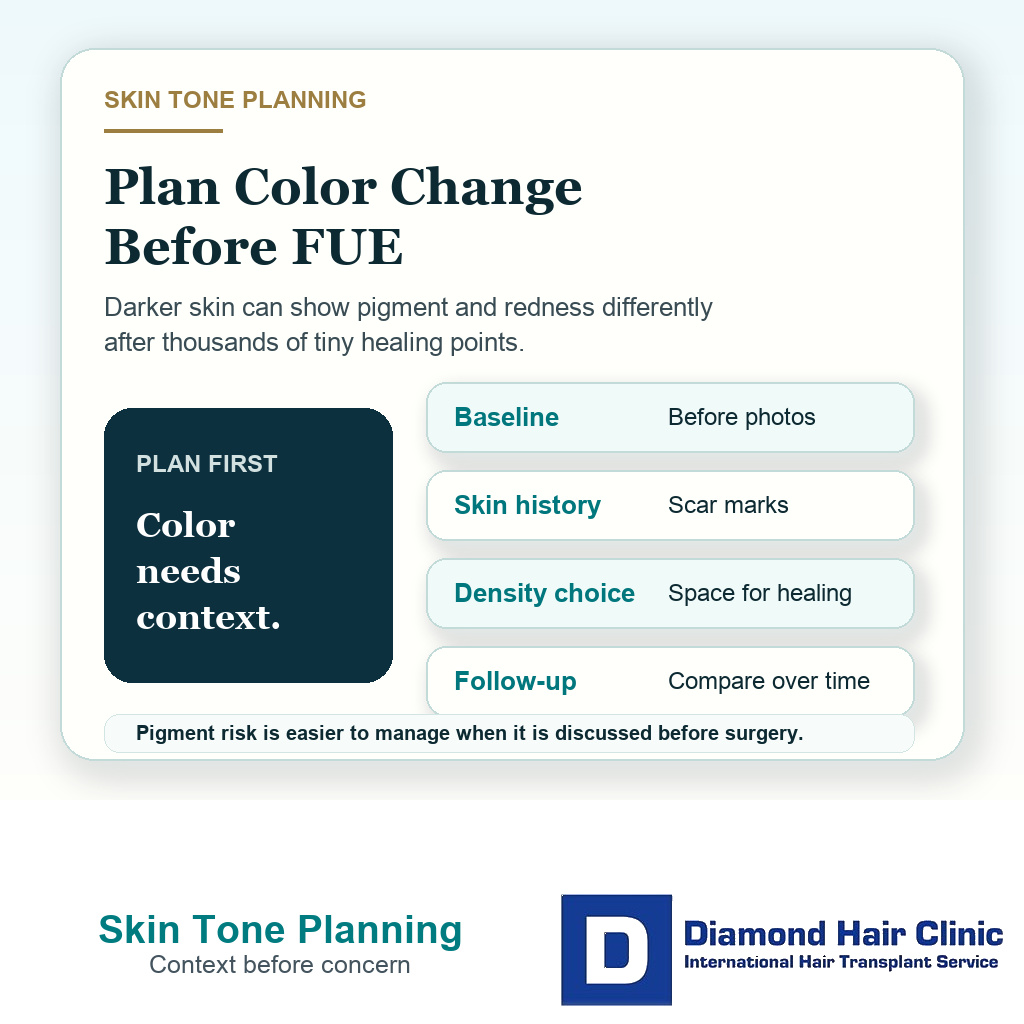
Skin tone context helps separate normal pigment change from warning signs and planning risks.
Folliculitis matters here. Inflamed bumps can leave darker marks and can make every dot feel like a failed graft. Tender or recurrent bumps fit better with folliculitis after hair transplant than with pigment alone.
Steps to take if the area looks dark today
Start with the symptoms. If there is fever, chills, increasing pain, spreading swelling, pus, cloudy drainage, bad smell, bleeding, fast change, or a dark area that looks open, numb, dark grey, black, or leathery, ask for clinic review promptly and seek medical review if access to the clinic is delayed. Do not scrub the area, apply random creams, or try to bleach the pigment.
Then take useful photos. Use natural indirect light, keep the phone steady, include wider and closer views, and repeat the same angles later. Tell the clinic when the color started and whether there was sun exposure, scratching, trauma, product use, hat friction, or new bumps. If the border is expanding, send same day comparison photos rather than waiting for the next scheduled update.
Protect the skin while the color is watched. Keep washing instructions gentle, avoid sun, avoid friction from hats that rub the recipient area, and do not pick at crusts. If sunscreen is not yet allowed in your timeline, physical shade and a hat that does not rub are often safer than applying products too early.
Give the color time only when the rest of the picture is stable. A flat darker tone that slowly fades is not managed the same way as hot, wet, painful, spreading skin. The practical order is to document clearly, protect the scalp, avoid irritation, and ask for review based on symptoms and direction of change rather than fear from one photo.
Not every color change is darker pigmentation. A patient who sees red or pink recipient skin should also read the pink recipient skin after FUE guide, because the review depends on timing, symptoms, triggers, and whether the skin is flat or raised.

Read this review excerpt
Every single one of my questions was answered and they made sure I had all the details I needed to make an informed decision.