


Sauna Heat and Sweat Recovery Timing
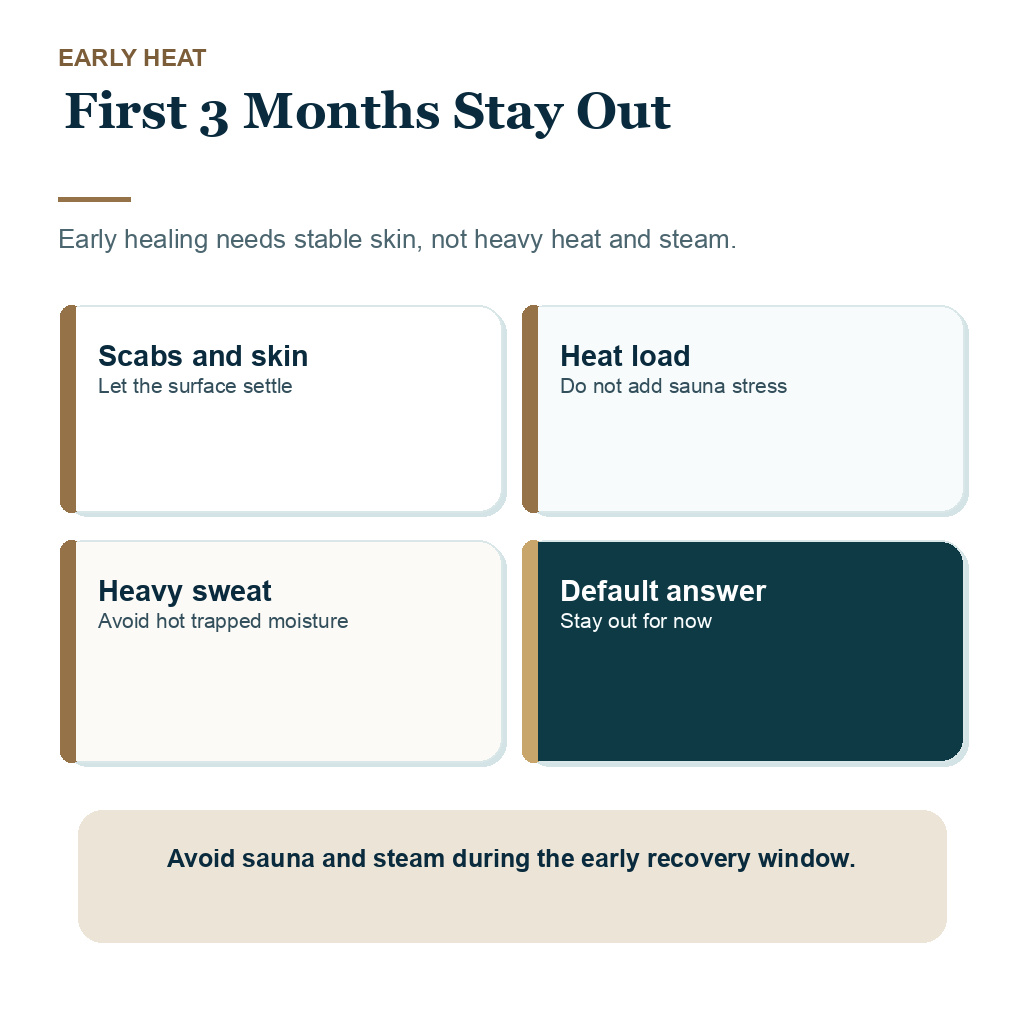
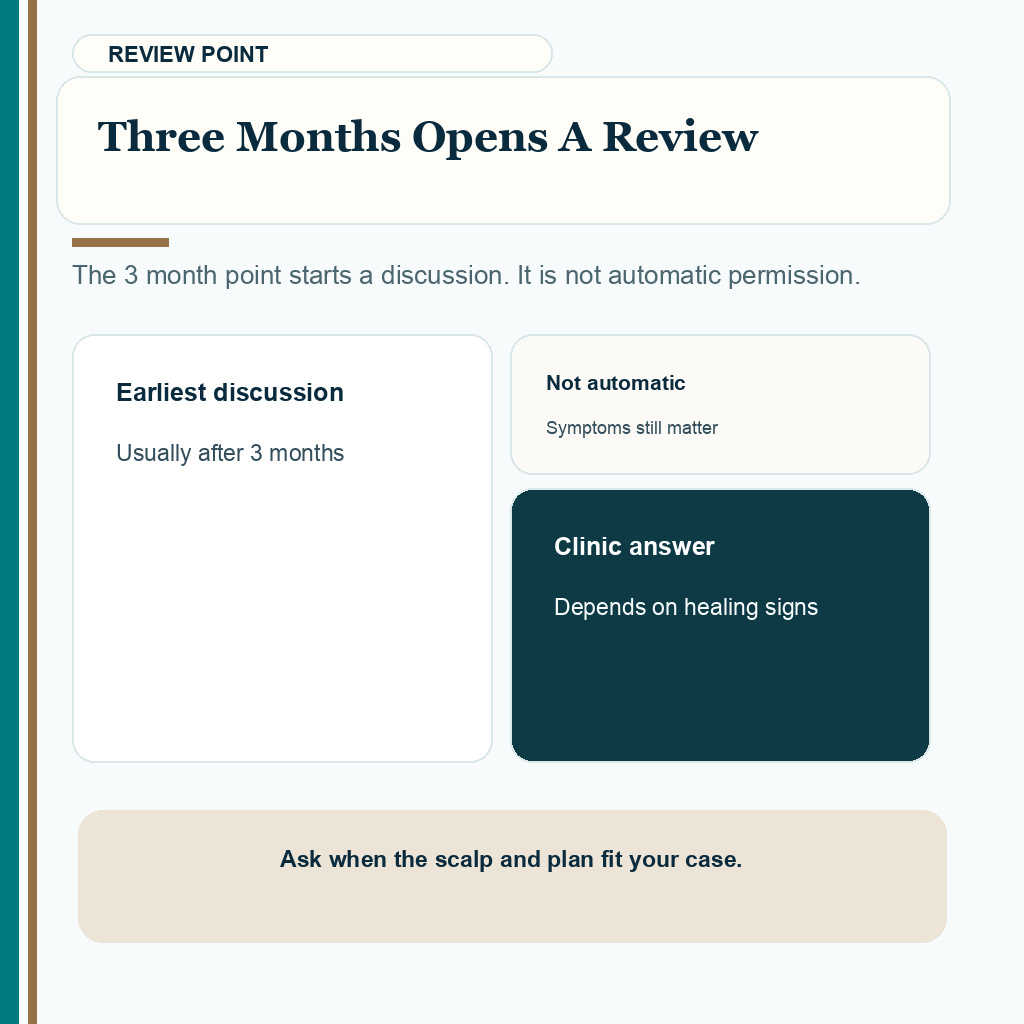
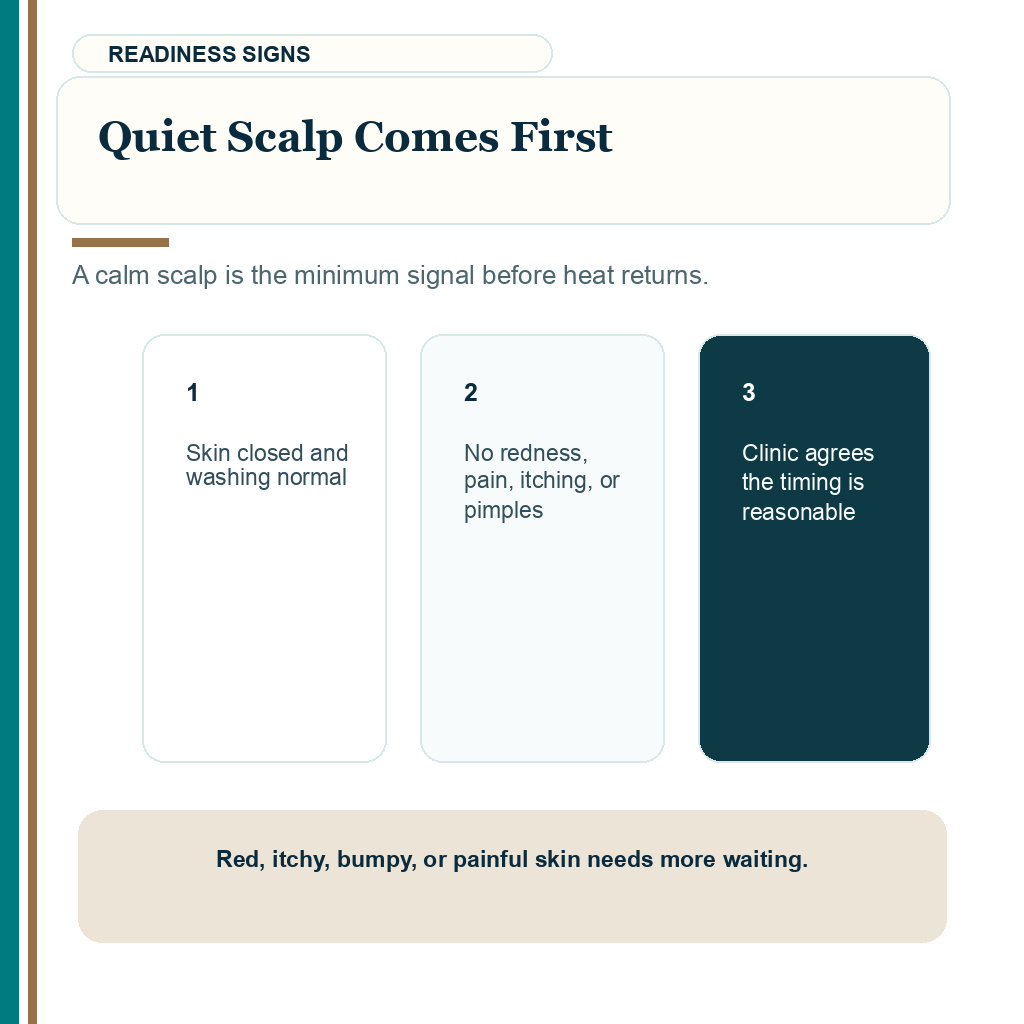
In my routine, I avoid sauna, steam rooms, hammam, and hot tubs during the first 3 months after a hair transplant. After 3 months, returning to sauna can be discussed only if the recipient area is closed, scabs are gone, swelling has settled, washing is normal, and the scalp is not red, painful, itchy, or covered with pimples.
Very hot sauna, steam rooms, repeated sessions, hot tubs, or slow healing usually mean waiting longer.
The date alone is not enough. Three months is the earliest discussion point in my routine, not an automatic permission slip. A settled scalp can return gently. A red, itchy, bumpy, or tender scalp should wait.
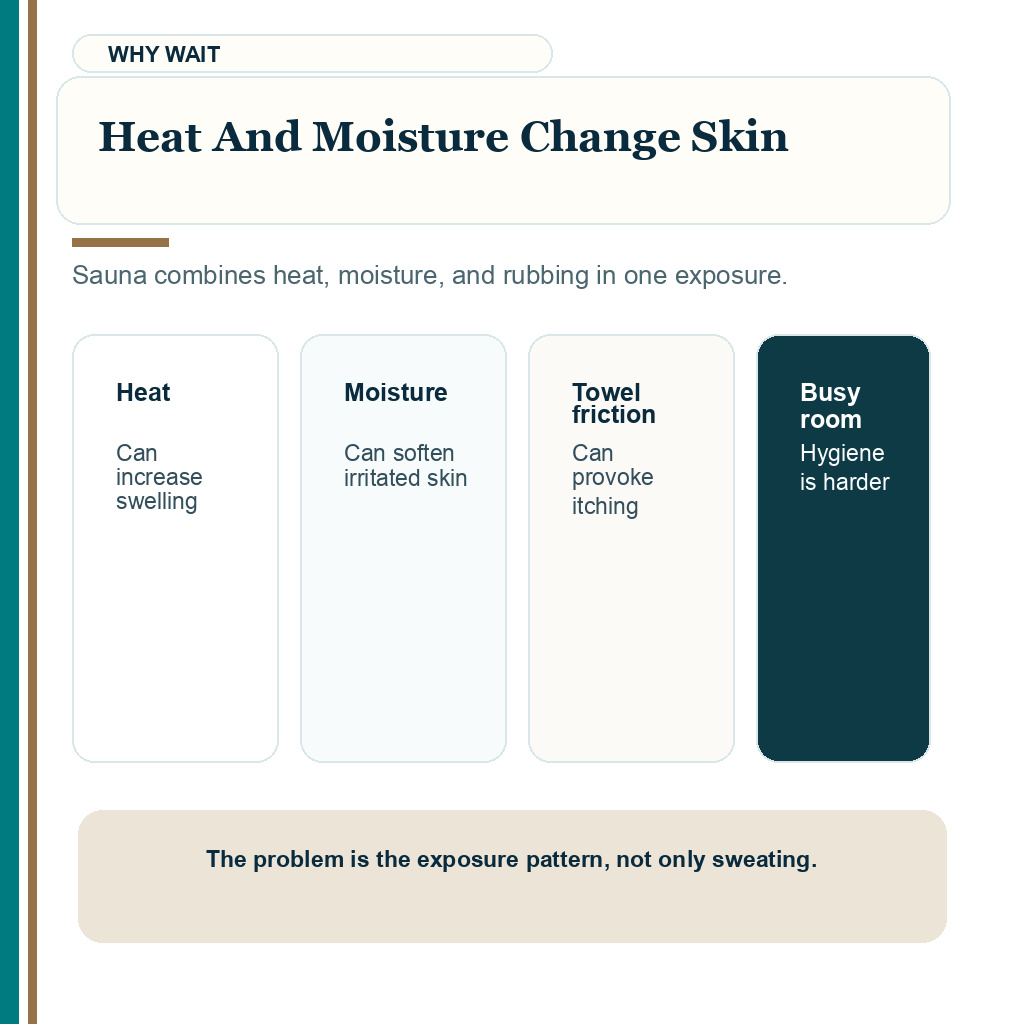
Ordinary mild sweating after a transplant does not destroy every graft. The bigger problem is the combination of heat, moisture, heavy sweating, softened skin, towel rubbing, and sometimes poor hygiene. In the early healing period, that combination can make irritation, swelling, itching, and folliculitis more likely.
Sauna timing should not be judged only by whether the grafts feel secure. Heat, towel rubbing, shared surfaces, and lingering redness can still make the scalp harder to keep calm. Feeling relaxed during the session is not the same as having healed skin afterward.
Use a private, controlled setting rather than a public spa as the first test after recovery. Redness, pimples, tenderness, or itching that still come and go mean steam, shared towels, and repeated heat sessions are too early.
Patients ask because sauna is relaxing, and many use it as part of their normal gym or recovery routine. But after surgery, the scalp should be allowed to heal quietly before it is exposed to deliberate heat stress. Before the operation, the concern is different. Sauna before hair transplant is mainly about hydration, lightheadedness, sleep, and scalp irritation before surgery day.
Avoiding sauna for the first 3 months
The first weeks after surgery are not only about graft attachment. They are also about skin healing. The recipient area has thousands of small incision points, and the donor area has thousands of extraction points. Even when the grafts are secure, the skin can still be reactive.
Heat increases blood flow and sweating. Steam and humidity soften the skin. A towel can rub the scalp. A patient may scratch because sweat causes itching. A shorter hot shower after hair transplant is not the same as a sauna session, but I still judge heat, steam, pressure, and rubbing together. None of these things is helpful when the scalp is trying to settle.
Careful hair transplant aftercare has a simple purpose. The early instructions are not meant to make recovery complicated. They are meant to keep the scalp clean, settled, and easy to read.
Steam rooms and intense heat
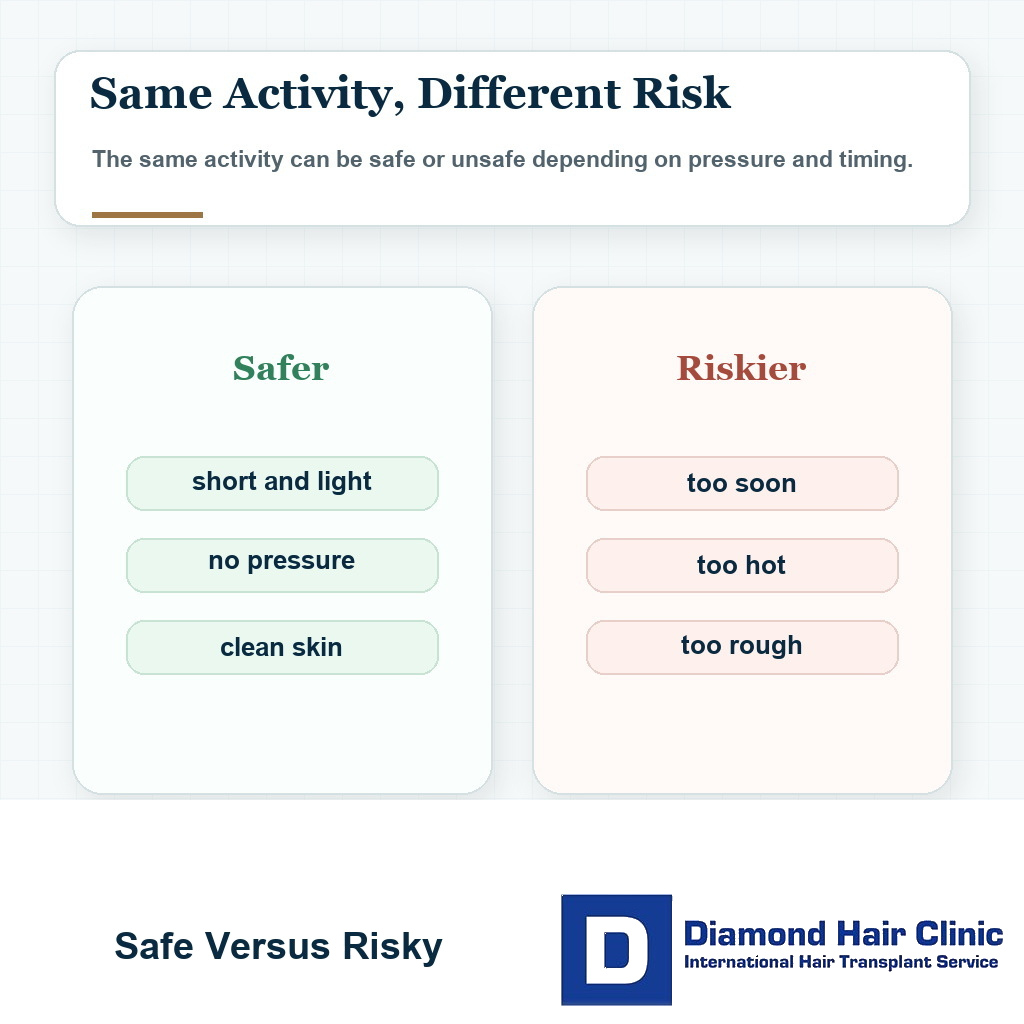
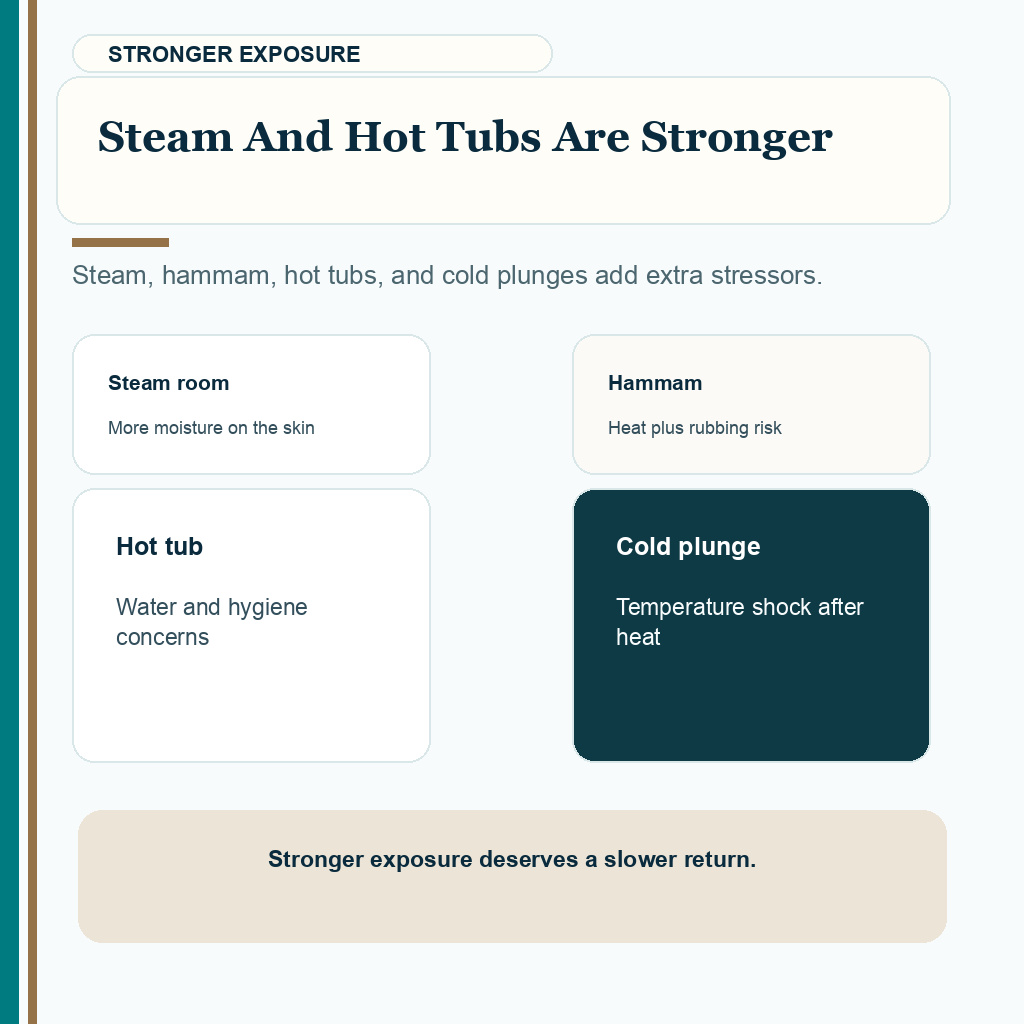
Not every heat exposure is equal. A short, gentle sauna after the scalp is healed is different from a very hot sauna, repeated sauna rounds, steam rooms, hot tubs, or a hammam where the scalp may stay damp for a long time.
Steam and wet heat deserve more caution because moisture softens the skin and can make itching or rubbing more likely. Hot tubs add another issue because the scalp may be exposed to shared water, chemicals, and bacteria.
Even after 3 months, these stronger heat exposures should return carefully. If the scalp is still red, tender, flaky, itchy, or pimple prone, sauna should wait.
Healing needed before sauna returns
The scalp should look and feel quiet before sauna returns. The scabs should be gone. The skin should be closed. There should be no bleeding, discharge, significant redness, swelling, painful bumps, or active folliculitis. Normal washing should also feel comfortable.
The ability to wash hair normally after a hair transplant returns gradually. If a patient is still afraid to wash or touch the scalp gently, it is too early for sauna.
I also check the donor area. Patients often focus on the front, but sauna affects the whole scalp. If the donor area is still sore, tight, or irritated, deliberate heat should wait.
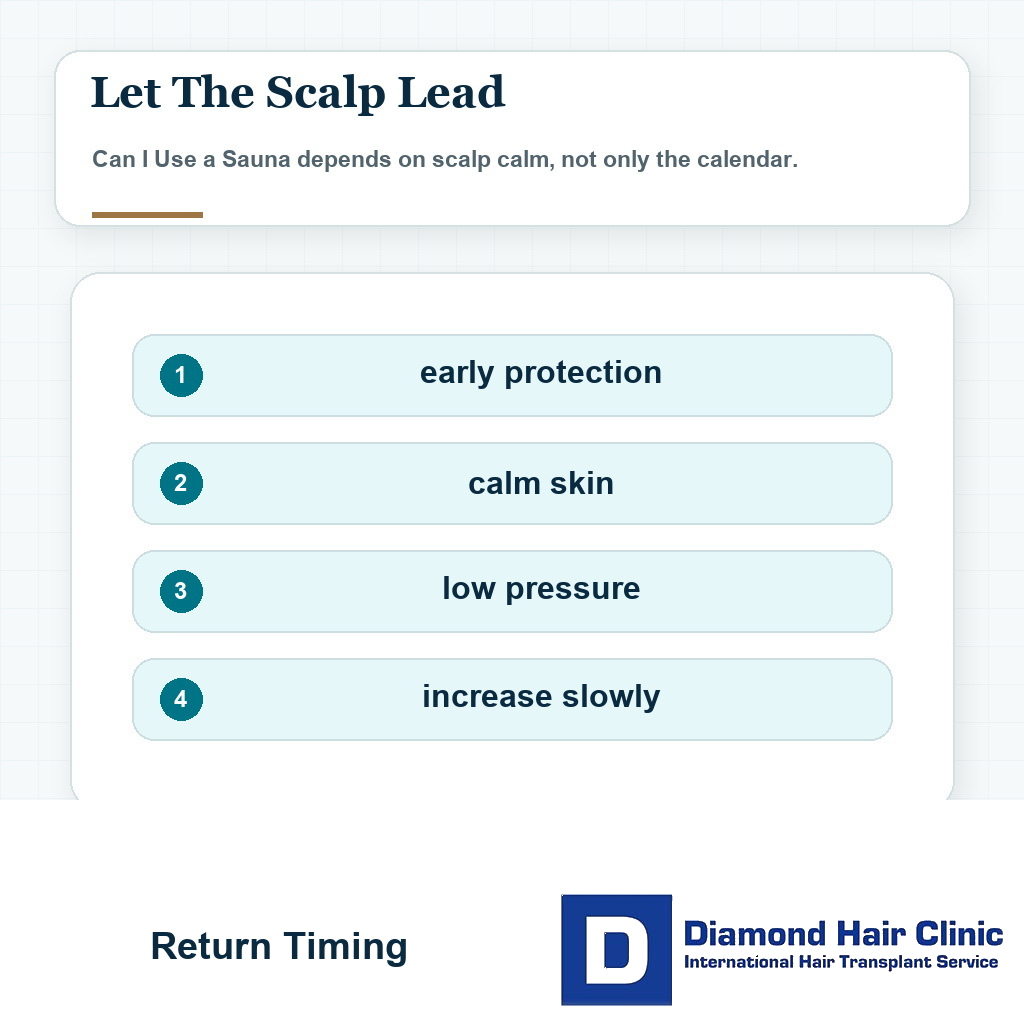
These 8 sauna readiness slides separate the first 3 months, the 3 month review point, heat and moisture risk, ordinary sweat, quiet scalp signs, stronger steam or hot tub exposure, first return, and what to do if sauna happened too early. Swipe sideways, use the arrows one slide at a time, or choose a number below the image.
Sauna and transplanted grafts
In the earliest days, the main danger is mechanical disturbance. Rubbing, scratching, bumping the scalp, or removing crusts too early can create problems. Sauna makes those behaviors more likely because sweat and heat make the scalp uncomfortable.
Later, when grafts are secure, sauna is less likely to remove them like a direct injury would. But that does not mean it is automatically wise. A healing scalp can still become inflamed, itchy, or irritated.
Graft survival is not the only question. The skin environment also protects the result.
Ordinary sweat versus sauna sweat
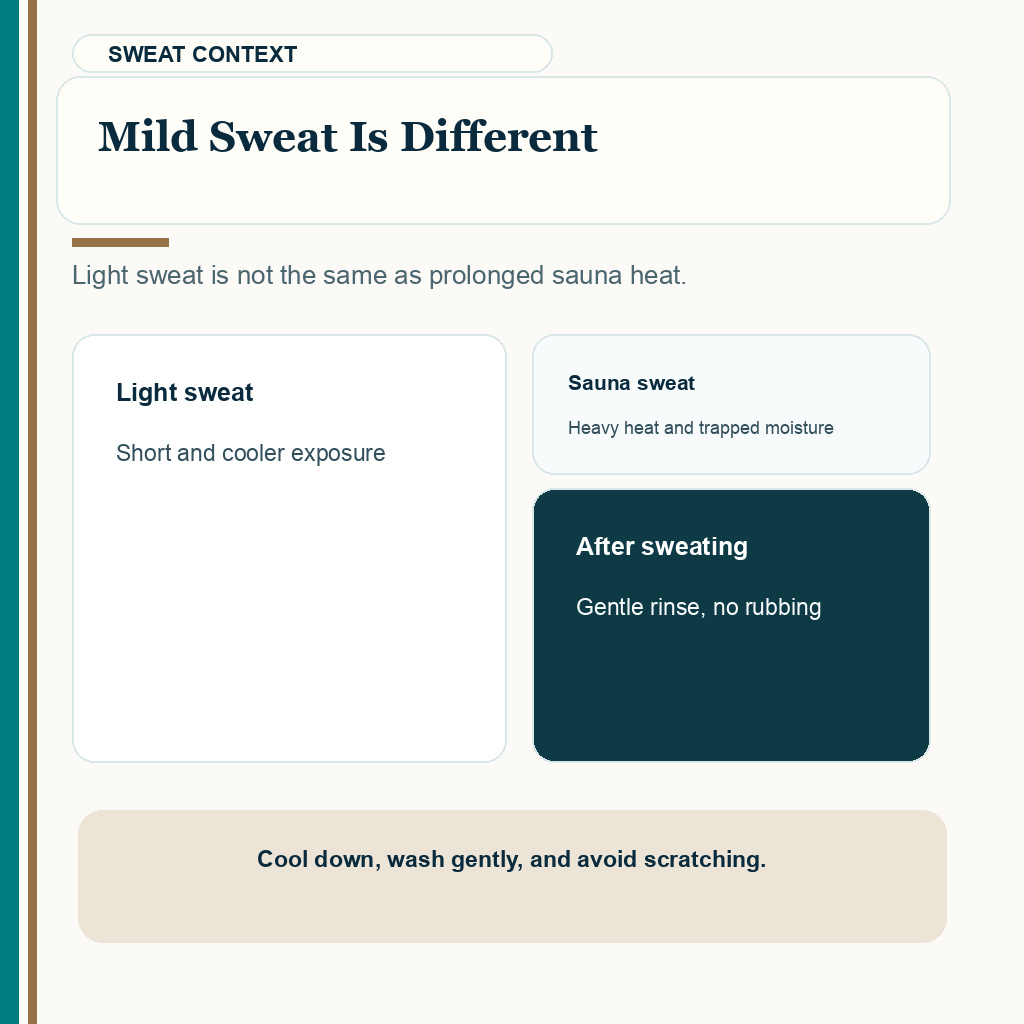
Many patients panic because they sweat a little while walking, sleeping, traveling, or moving through an airport. Ordinary light sweating is not the same as sitting in deliberate high heat for a sauna session.
The difference is intensity, duration, heat load, moisture, and what happens afterward. A little sweat can usually be cleaned gently according to the recovery plan. Sauna often leads to heavy sweat, towel wiping, repeated heat exposure, and sometimes scratching.
A normal warm shower used for washing is also different from sauna. Washing is brief, controlled, and followed by gentle drying. Sauna keeps the whole scalp hot and wet for longer, which is why I treat it as a separate recovery decision.
Exercise after a hair transplant follows a similar recovery rule. The concern is not every drop of sweat. The concern is heavy sweating combined with friction, pressure, poor timing, and an irritated scalp.
Sauna can make swelling worse
Especially early. Heat can increase blood flow and may make swelling feel more noticeable. If a patient already has forehead or eyelid swelling, sauna is a poor idea.
Swelling after surgery usually follows its own timeline, but heat and activity can make it more uncomfortable. When a patient has swelling after a hair transplant, the first week should stay quiet.
If the scalp or forehead still feels tight and puffy, do not add sauna. Wait until ordinary daily life feels normal again.
Sauna can trigger itching or pimples
It can. Sweat, heat, oil, and rubbing can irritate the scalp. In some patients this leads to itching, small pimples, or folliculitis. These problems are usually manageable, but they can create a lot of anxiety after a transplant.
If the scalp is already itchy, sauna should wait. With itching after a hair transplant, scratching is the behavior that creates the risk.
If there are active bumps, pustules, or tenderness, delay sauna. Persistent redness, scabs, and pimples after a hair transplant or active folliculitis after a hair transplant deserves a closer look before heat returns.
Swimming pools, hot tubs, and cold plunges
Swimming pools, hot tubs, sea water, lakes, and cold plunges are not the same as sauna, but they belong to the same recovery conversation. They involve water exposure, hygiene questions, scalp irritation, and sometimes sun exposure.
Hot tubs need extra caution because they combine heat and shared water. Even if the scalp looks healed, this is not the first place to test recovery.
For water based activities, sauna timing sits close to swimming after a hair transplant in my aftercare approach. Water and heat environments usually stay closer to the 3 month window, not the early healing weeks.
Sun and heat need similar caution
They are related but not identical. Sun exposure can burn or darken healing skin. Sauna causes heat, sweating, and humidity. Both can irritate a scalp that is still recovering.
If a patient is traveling to a hot country after surgery, I am not only thinking about sauna. I am thinking about direct sun, sweat, hats, travel fatigue, and how often the scalp will be cleaned.
With sun after a hair transplant, the reason is different, but the timing still needs respect. The early transplant scalp should not be treated like normal skin.
First sauna session
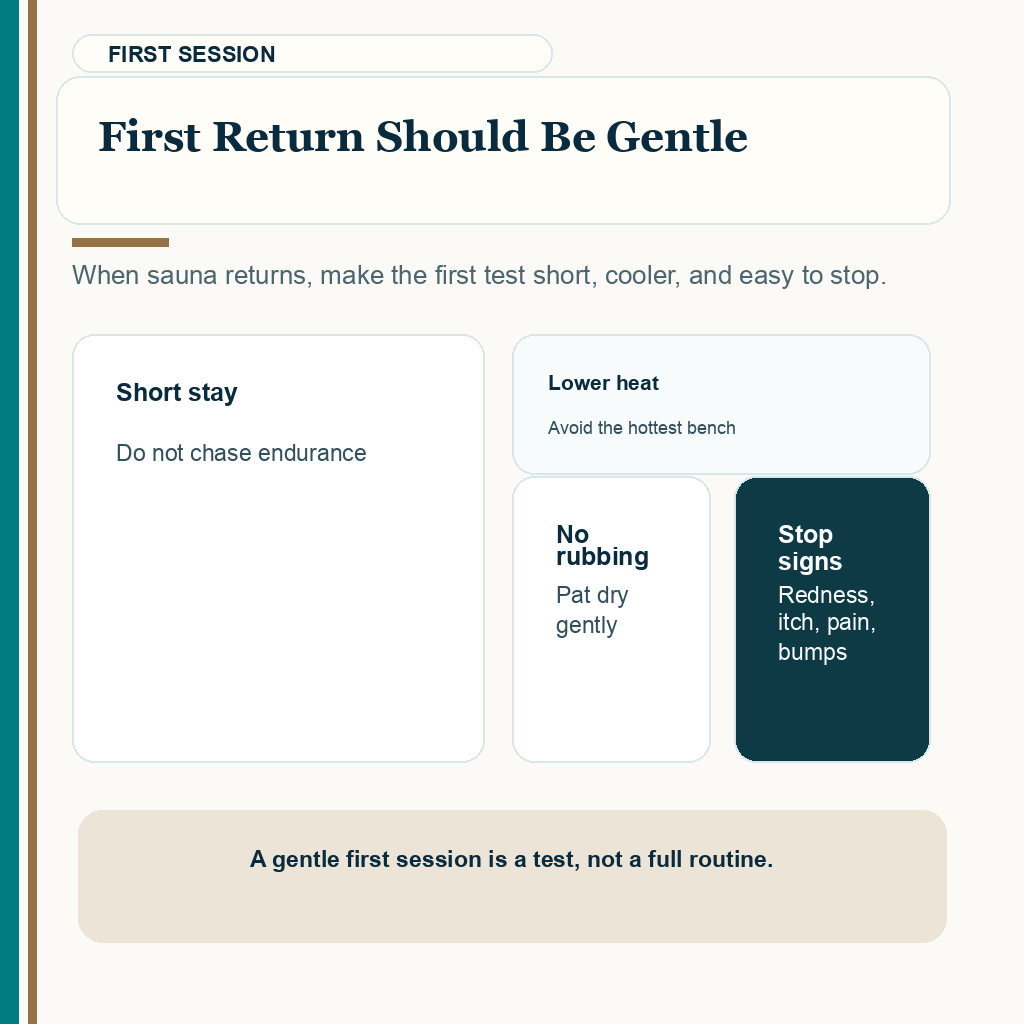
The first session should be short and gentle. Do not choose extreme heat. Do not do repeated rounds. Do not rub the scalp with a towel. Do not combine sauna with a hard workout, hot tub, steam room, and scalp products on the same day.
Afterward, rinse or wash gently according to your stage of recovery, then leave the scalp alone. Watch the next day. If redness, itching, burning, tenderness, or pimples increase, stop and wait longer.
The first sauna after a transplant is a test of tolerance, not a test of toughness.
If sauna was used too early
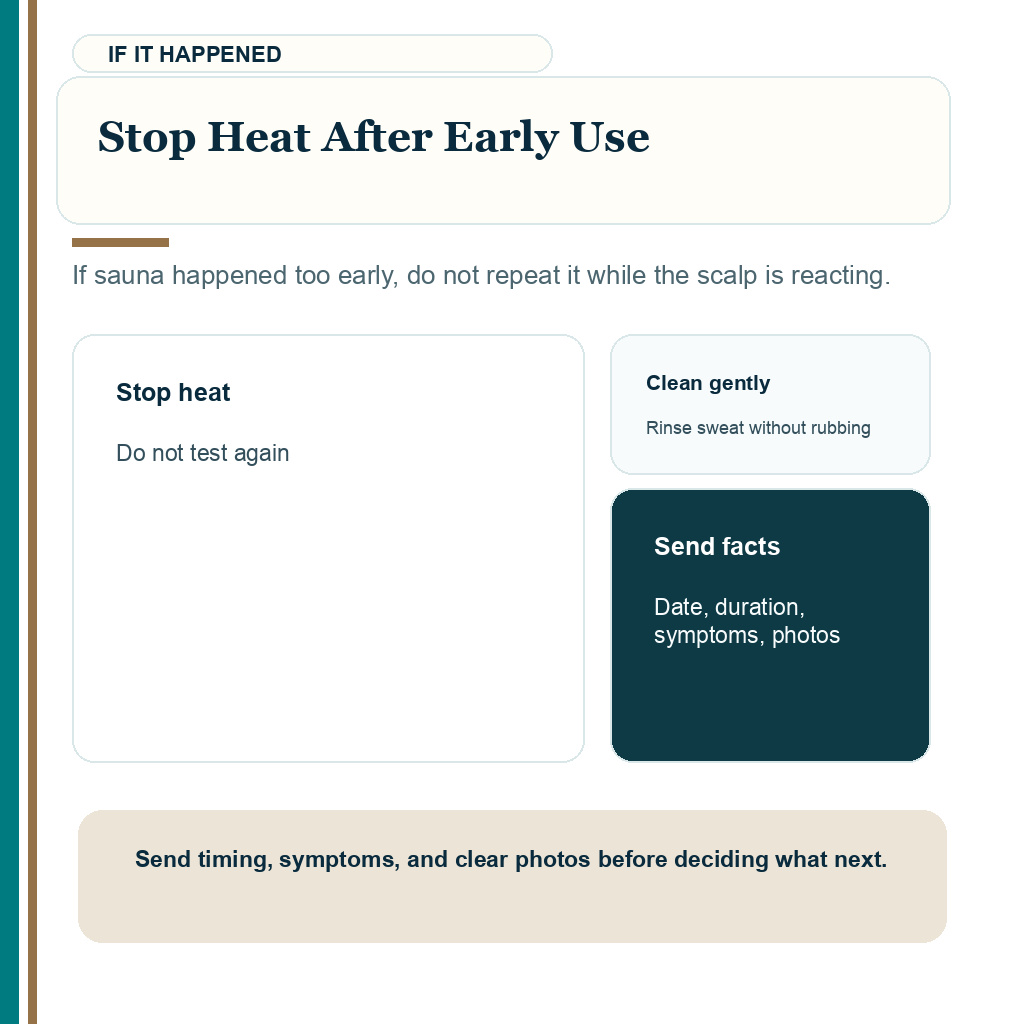
If a patient used the sauna once too early, I avoid immediate panic. The useful details are when it happened, how long the session lasted, how hot it was, whether the scalp was rubbed, and what symptoms appeared afterward.
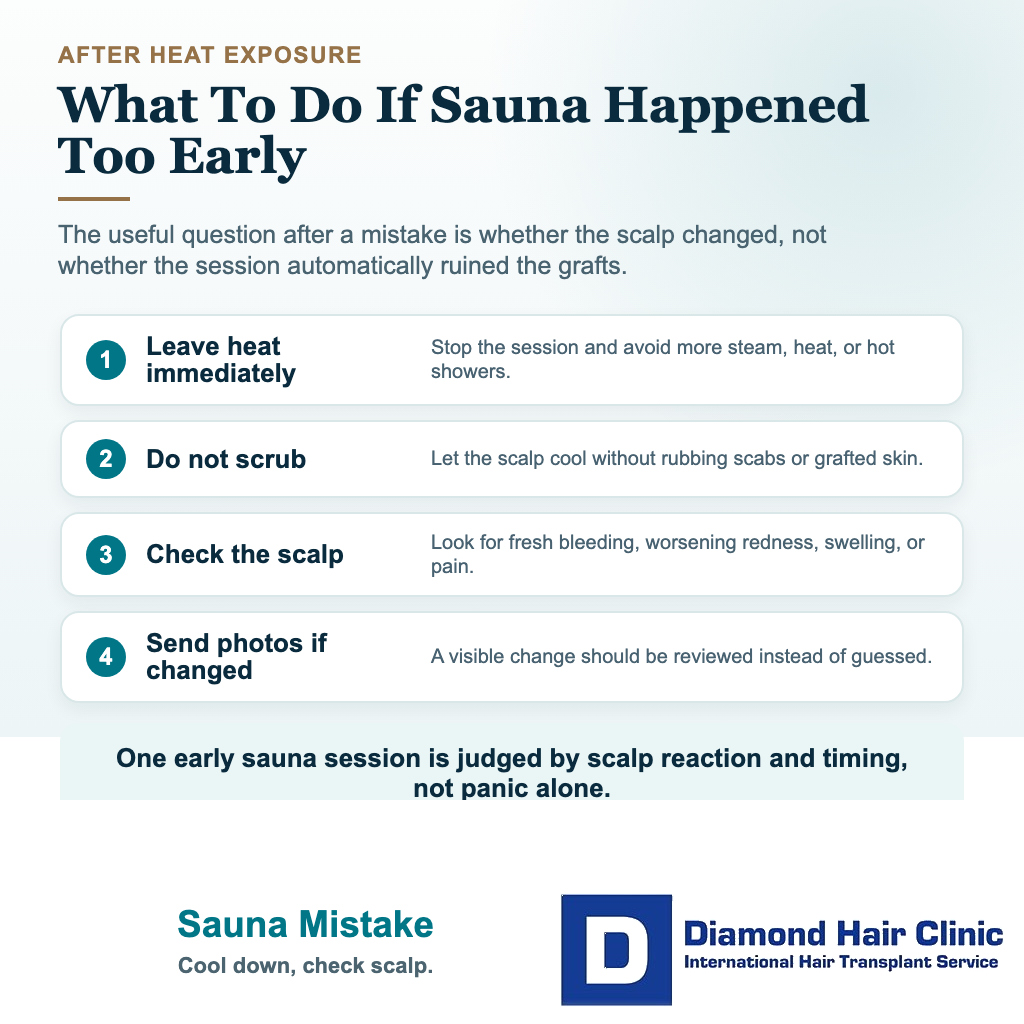
Redness or itching after heat does not prove that the grafts have been lost. With no bleeding, pain, spreading redness, discharge, or obvious graft trauma, one mistake may not cause permanent harm. Stop further sauna use and contact the clinic if symptoms appear.
Do not repeat the mistake just because the scalp looked okay the first time. Undisturbed healing is still the priority.
Patients who should wait longer
Patients with slow healing, significant redness, persistent itching, folliculitis, seborrheic dermatitis, sensitive skin, heavy sweating, diabetes, immune issues, or any sign of infection should wait longer. A large session or difficult recovery also calls for a longer delay.
I also wait longer when the patient is anxious and likely to check the scalp repeatedly after every sensation. Sauna can create temporary redness or itching, and that can start a cycle of worry and touching.
With heat exposure, waiting a little longer is often the responsible choice. It keeps healing steady and prevents the patient from chasing every temporary sensation.
After heavy sweating
If heavy sweating happens after the early fragile period, gentle cleaning is usually better than panic. Rinse or wash according to your clinic instructions. Do not scratch, scrub, use harsh shampoo, or over clean the scalp because you are worried.
Sweat itself is not always a disaster. The mistakes usually come afterward. Patients rub, scratch, use aggressive products, or keep returning to heat before the scalp is ready.
If heavy sweating leads to increased redness, burning, tenderness, or pimples, pause heat exposure and share photos for review.
Heat should wait until the scalp has settled
In my routine, the rule is clear. No sauna, steam room, hammam, or hot tub during the first 3 months after a hair transplant. After 3 months, return only if the scalp is closed, settled, scab free, and washing normally. For intense heat, steam, repeated sessions, hot tubs, or slow healing, wait longer.
When sauna returns, start modestly. Keep the first session short, avoid rubbing, rinse gently, and watch the scalp the next day. If redness, itching, burning, tenderness, or pimples increase, stop and wait longer.
A sauna is a comfort habit. The transplant is a surgical recovery. In the early weeks, protecting the surgical recovery matters more than rushing back to a habit that can wait.
Read this review excerpt
First wash completed and visual instructions given to my daughter.