


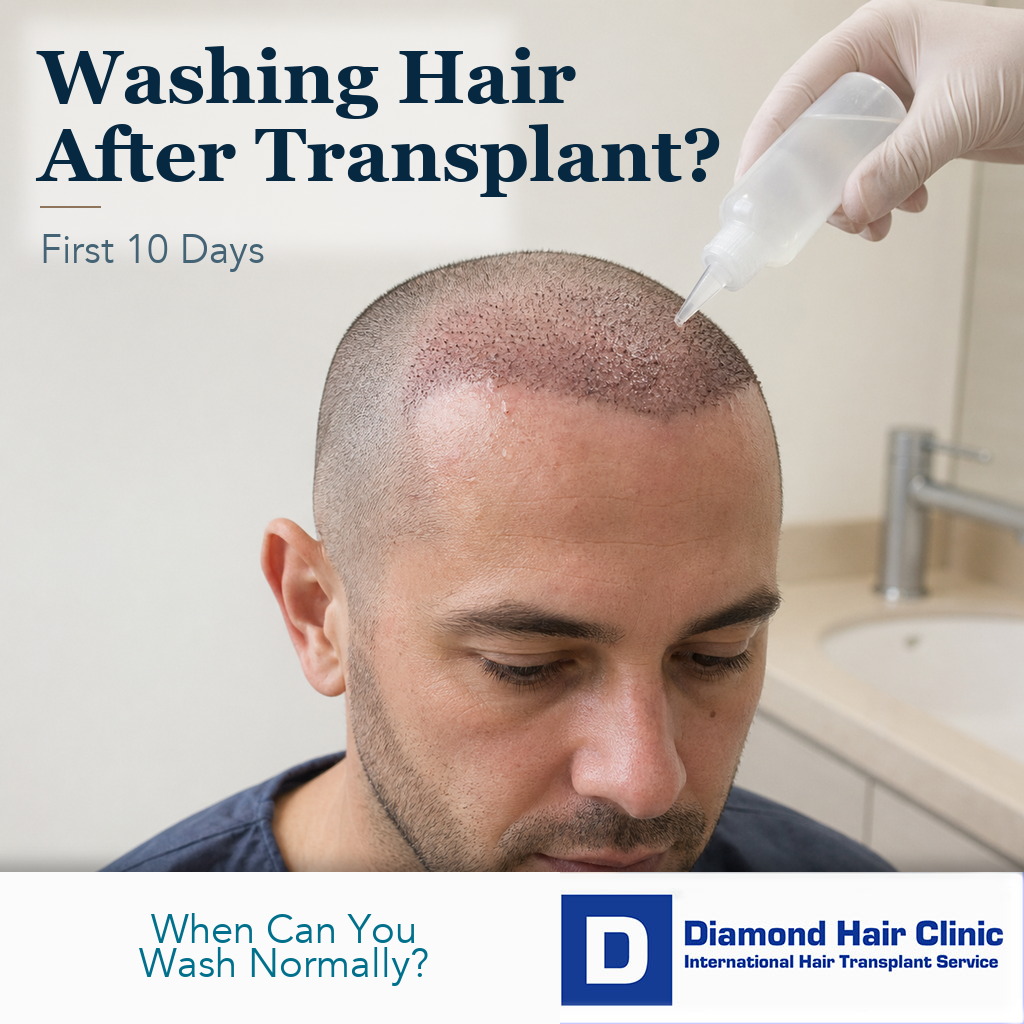
Gentle Washing Protects New Grafts
After a hair transplant, gentle washing usually begins after the first clinic check. At Diamond Hair Clinic, I perform the first wash 2 days after surgery and show exactly how much pressure is safe. A written list cannot replace seeing the correct touch. When you are comparing conflicting washing advice, the safest instruction is the one tied to your own operation, including the day to begin, the pressure to use, and the kind of touch allowed.
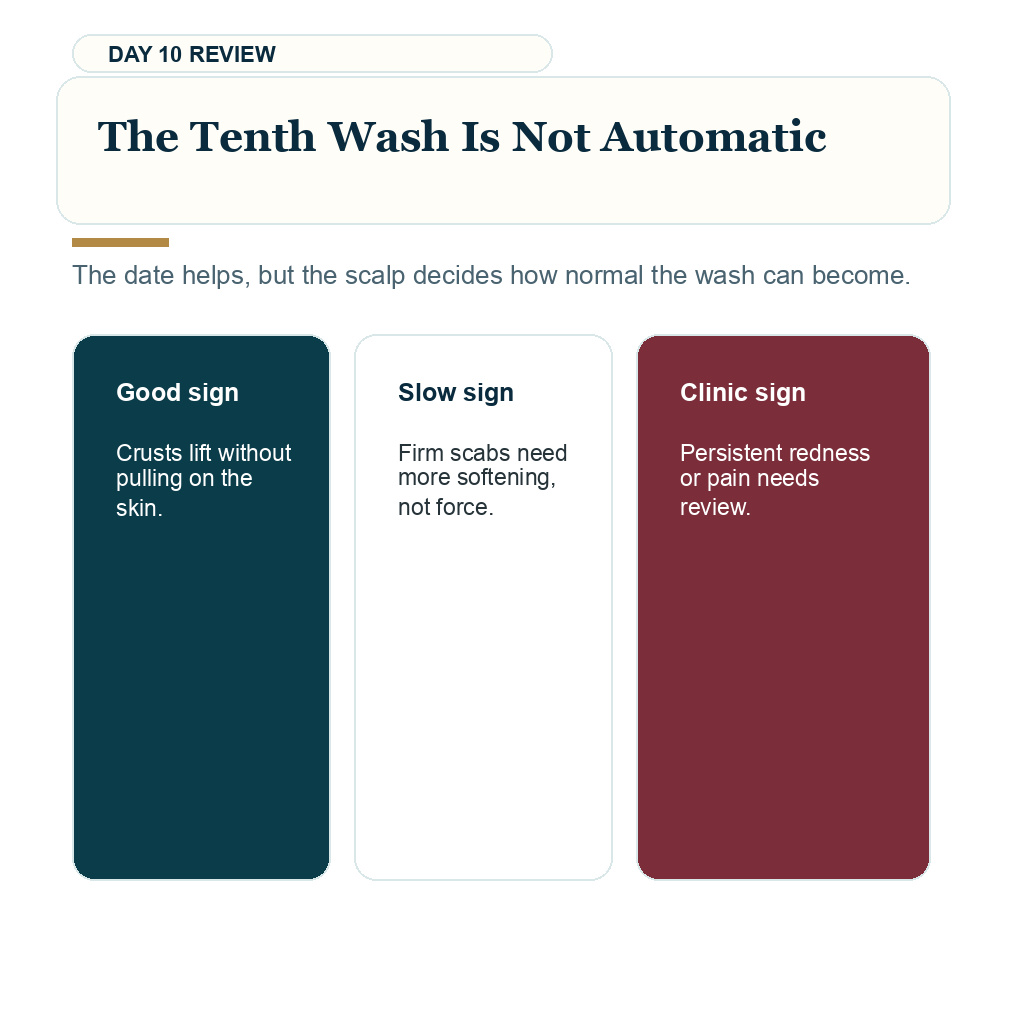
Normal washing usually returns gradually around 10 to 14 days, once the scabs have come away and the skin has settled. I do not judge this only by the date. The skin, crusting, redness, and ability to wash without rubbing or pulling all matter. When the question is the product rather than the first wash, use the normal shampoo after hair transplant guide to separate mild shampoo from stronger dandruff products. If the scalp mainly looks greasy or coated, gentle buildup clearing matters more than scrubbing.
If most crusts have cleared but a few scabs still feel anchored near the end of the second week, do not chase those last spots with a stronger shower or longer rubbing. The safer response is another controlled wash and a calm photo after the scalp dries. Review becomes more important when the area remains firmly stuck beyond the plan, or when pain, wetness, smell, bleeding, or spreading redness appears. Uneven clearing is common. Chasing symmetry on the same day often adds the friction the wash was meant to avoid.
The rule is practical. Water is not the enemy. Friction is the problem. A careful wash protects the scalp. A rushed wash, a fingernail, a rough towel, or strong shower pressure can turn a safe routine into trauma. This is the same medical distinction I use for wudu after a hair transplant, where gentle water exposure and rubbing are not the same thing. The same friction rule matters when drying. During drying after FUE without rubbing grafts, towel contact should stay gentle enough that it does not undo a careful wash.
Normal washing does not mean every normal habit returns at once. If the area seems to look less dense after the first wash, judge the healing signs before judging density. Water contact, gentle foam, normal shower pressure, regular shampoo, towel drying, hair dryer heat, and medicated shampoo timing all return at different speeds. These steps should be separated because most washing mistakes happen when a patient treats all of them as one decision. The same staged thinking applies when the patient asks when to comb hair after a hair transplant safely. Scalp massage after a hair transplant belongs in that separate pressure category, not in the first washing step.
Practical washing timeline after surgery
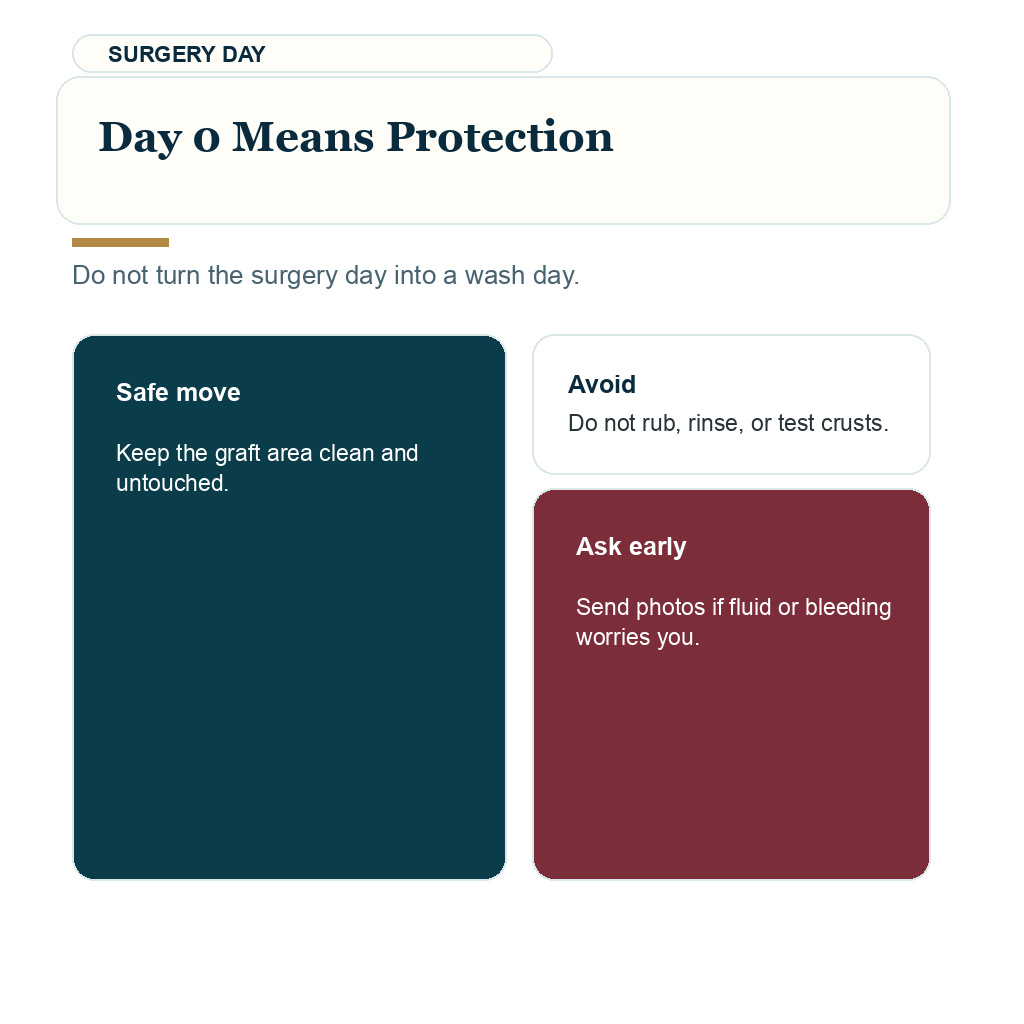
I count the day of surgery as day 0. That day is for protection, rest, and avoiding accidental contact. The recipient area should not be washed. Do not keep checking the grafts in the mirror or touching the scalp out of curiosity.
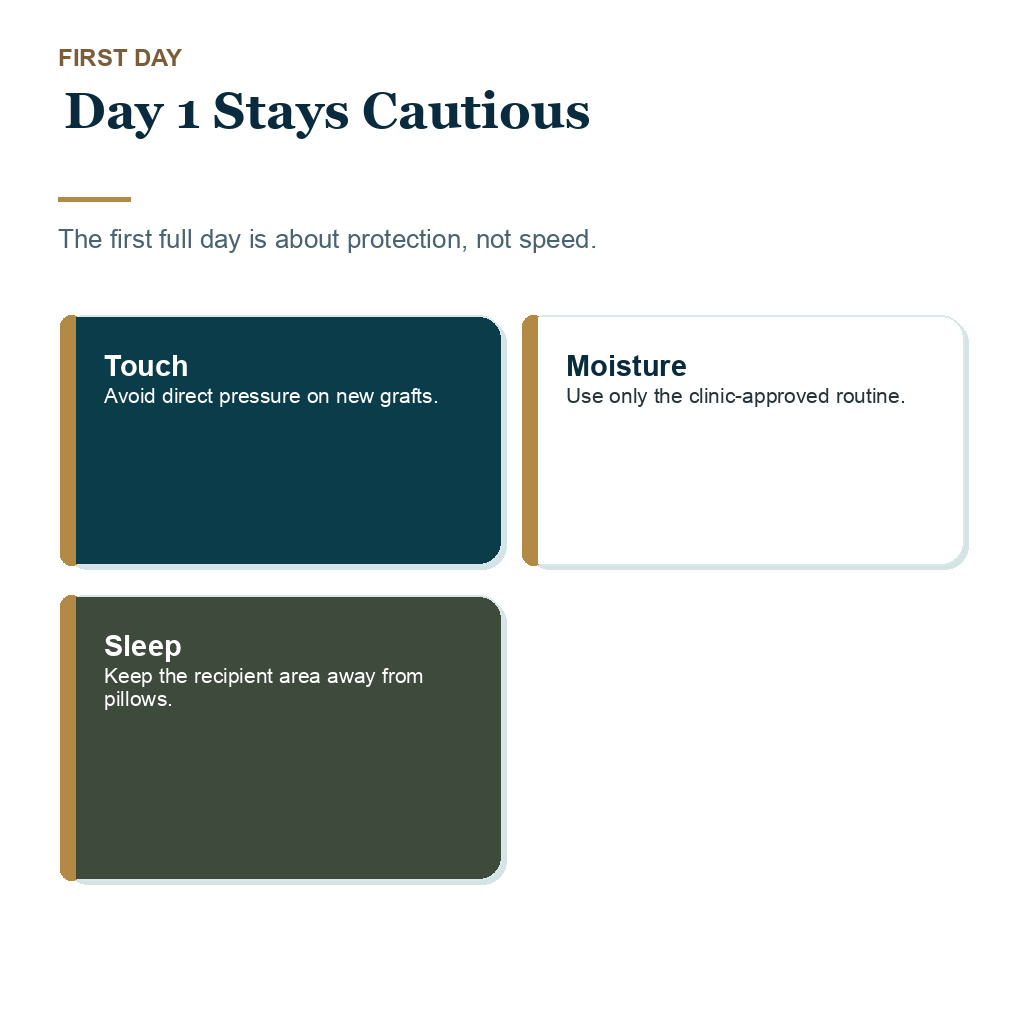
Day 1 is still a cautious day. If there is a clinic spray or cleaning instruction, it should be followed exactly. This is not the time for hot water, strong shower flow, hair oil, alcohol based products, or towel friction, especially from a rough hotel towel. If hot water or shower pressure already happened, use the hot shower after hair transplant guide to separate temperature, pressure, rubbing, and warning signs before the next wash. Saline spray after a hair transplant should support gentle washing rather than replace it. If cautious washing leaves residue and smell, scalp odor during FUE recovery needs photo review rather than stronger products.
If the shower flow cannot be made gentle, do not stand under it to prove the grafts are safe. Use the clinic spray, a cup, or another gentle method your clinic allows until normal shower pressure is approved.
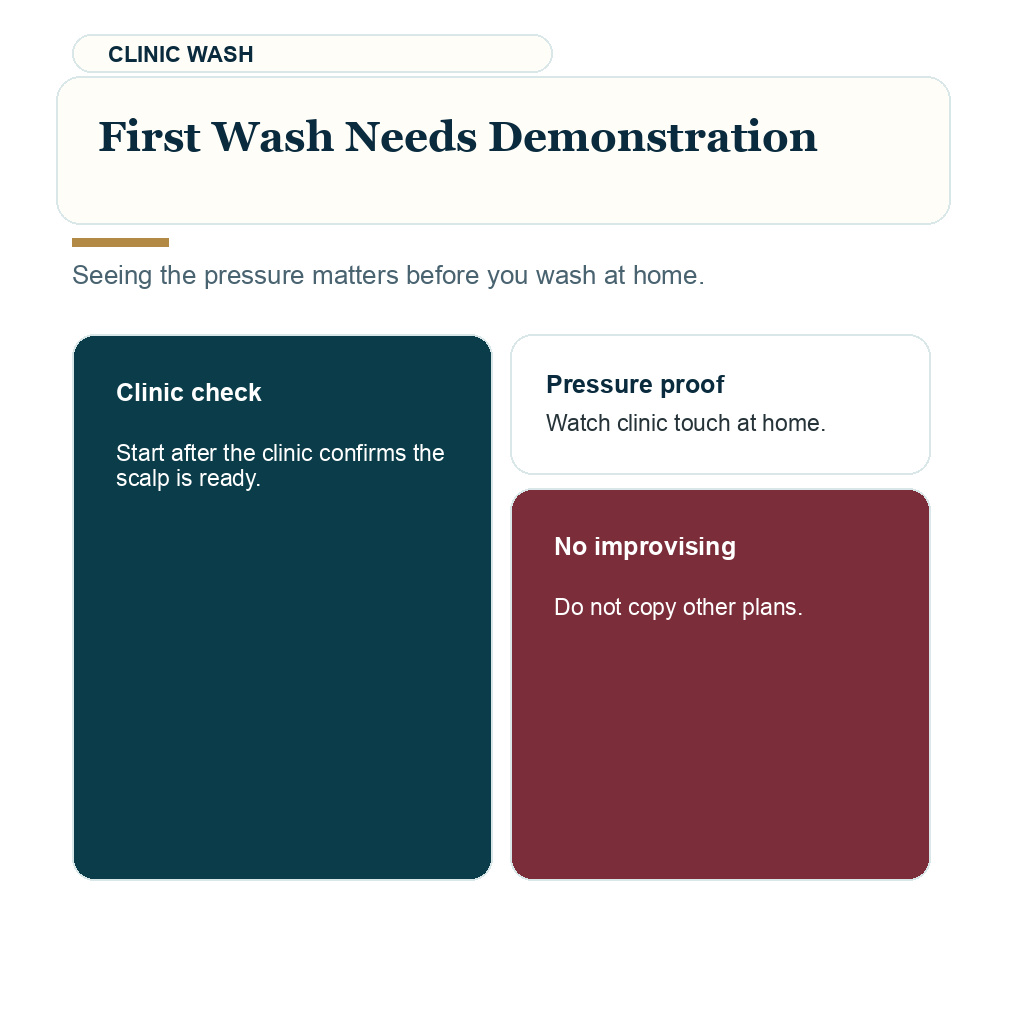
At my clinic, day 2 is the first wash. I perform it myself and show the patient the pressure, the water temperature, and the type of contact I consider safe. This demonstration matters because many patients either touch too fearfully or too confidently.
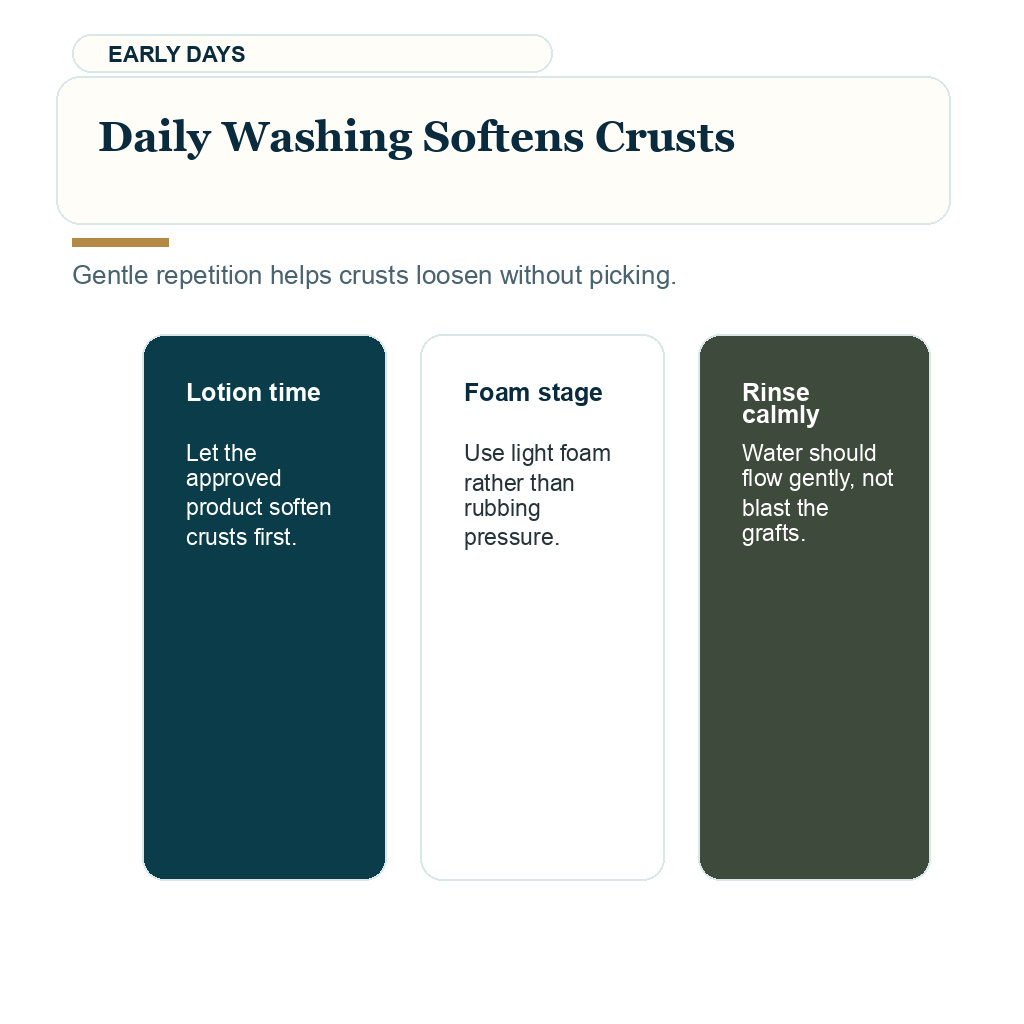
Between day 3 and day 9, washing should be repeated daily without force. The crusts should soften little by little. Do not try to make the scalp perfectly clean in one wash. If flakes appear during this stage, use the same gentle logic from white flakes after hair transplant, soften loose material, but do not scrape attached crusts.
Around day 10 to day 12, crusts usually begin to release more easily if the earlier washes were done correctly. The fingertips can become a little more active, but still with the pads of the fingers, not nails. If short hairs stay attached longer than expected, no shedding after a hair transplant is not a reason to scrub harder.
After the crusts are gone and the skin has settled, most patients can gradually return to normal washing. Gradual return matters because stable grafts and fully comfortable skin are not always the same thing.
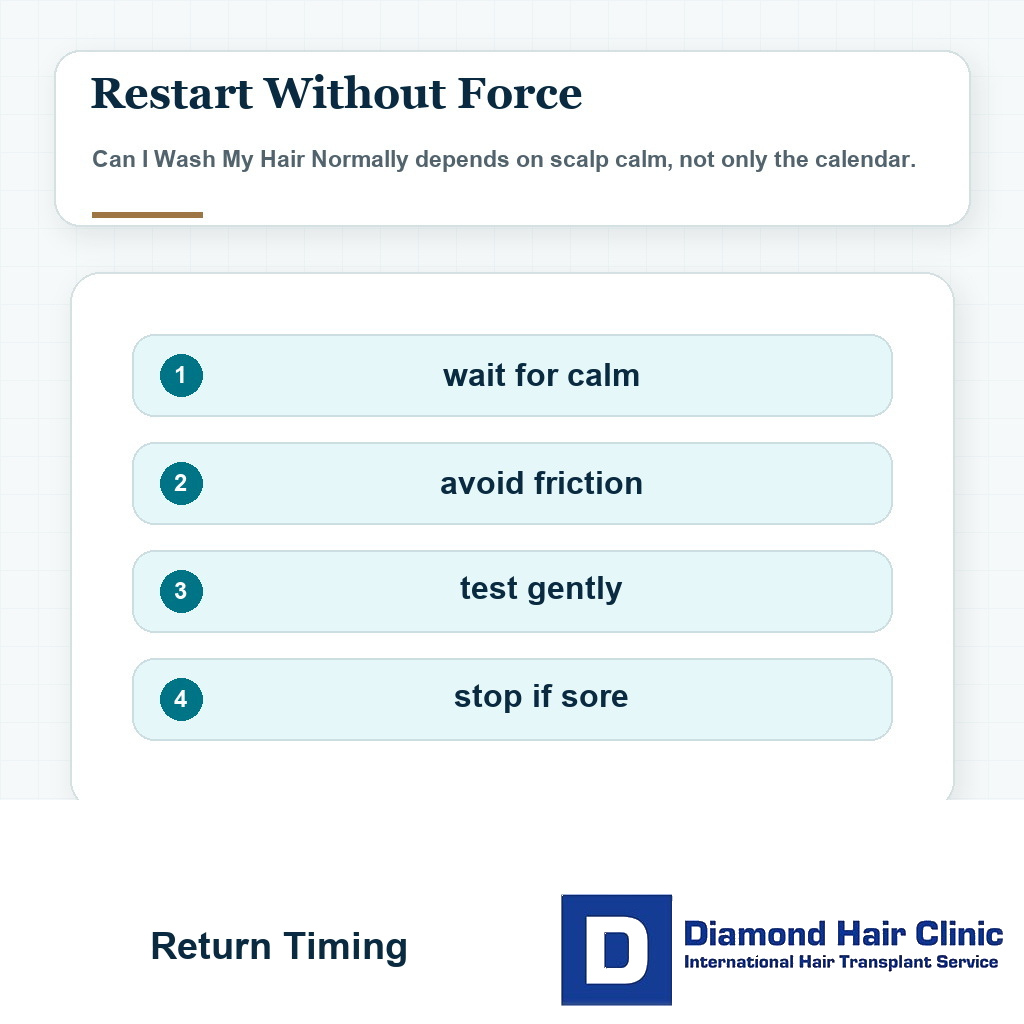
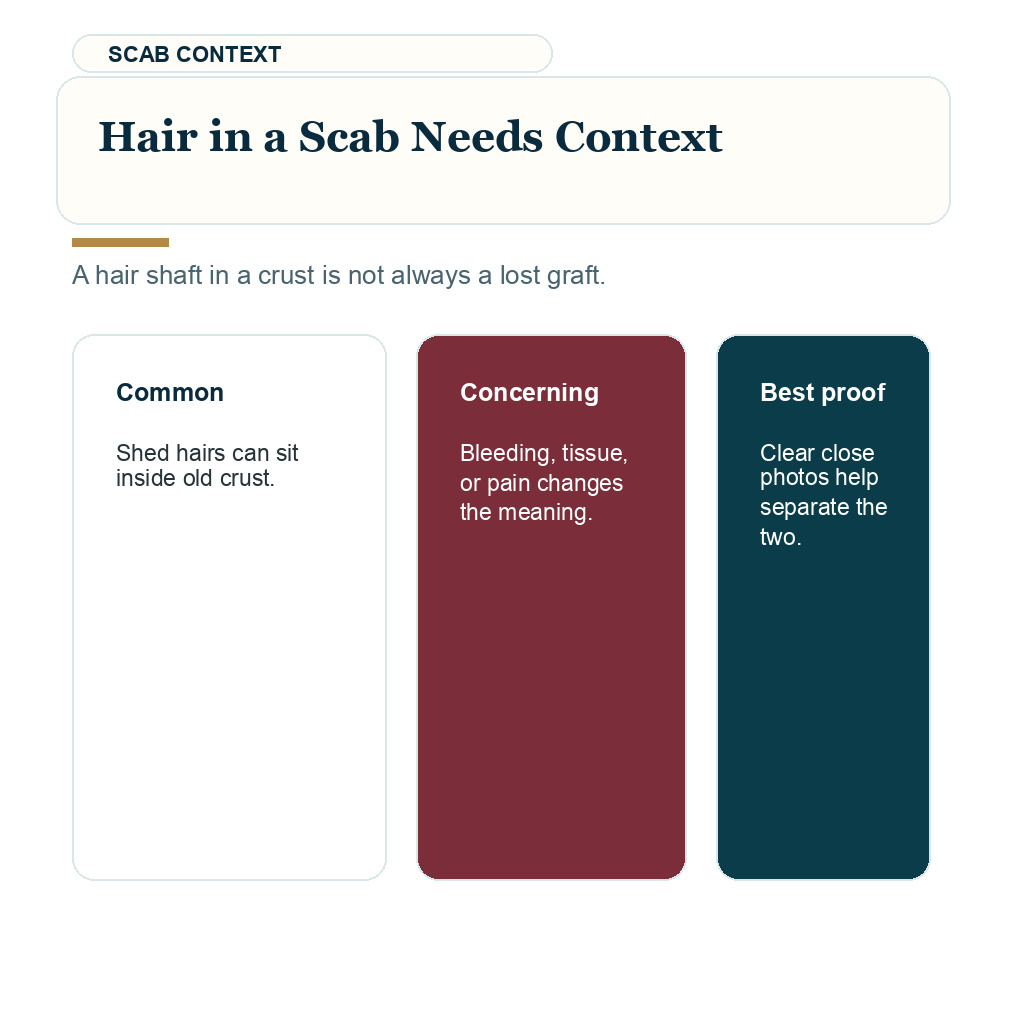
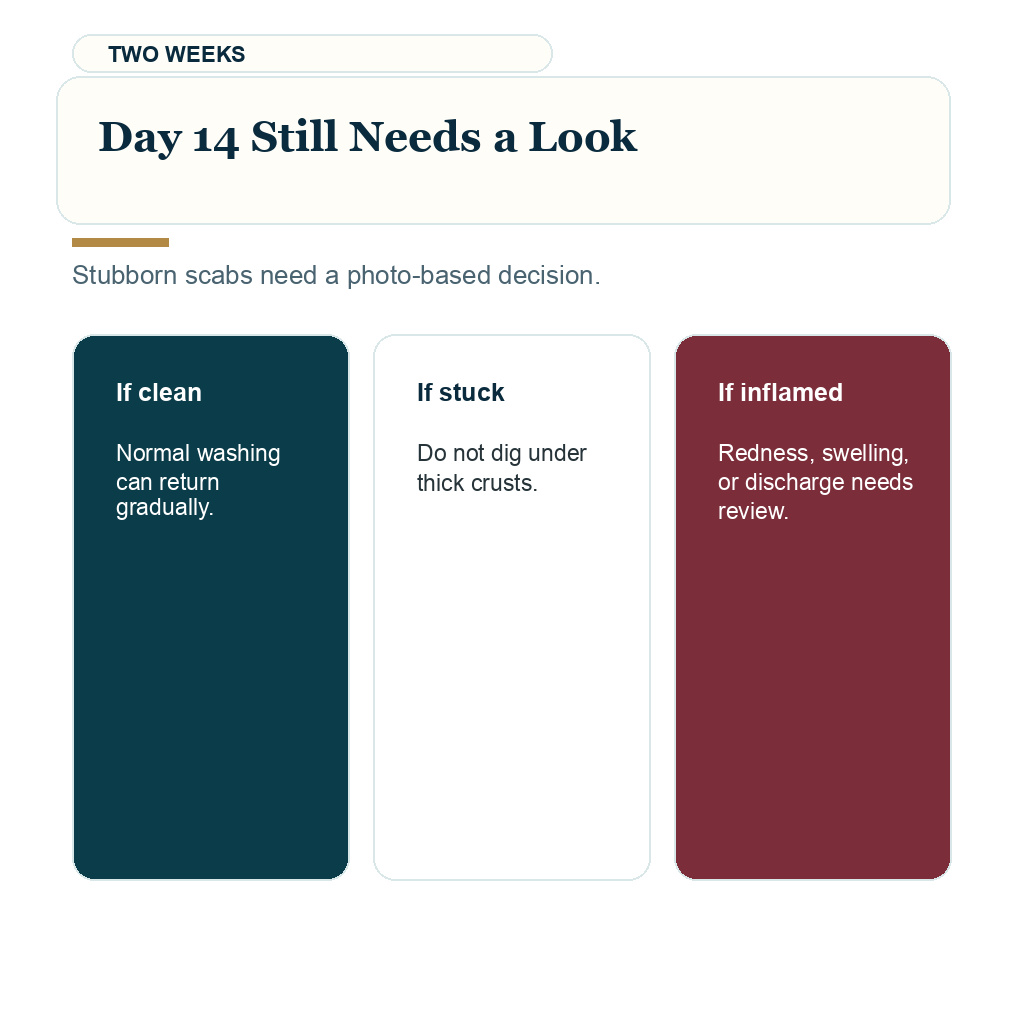
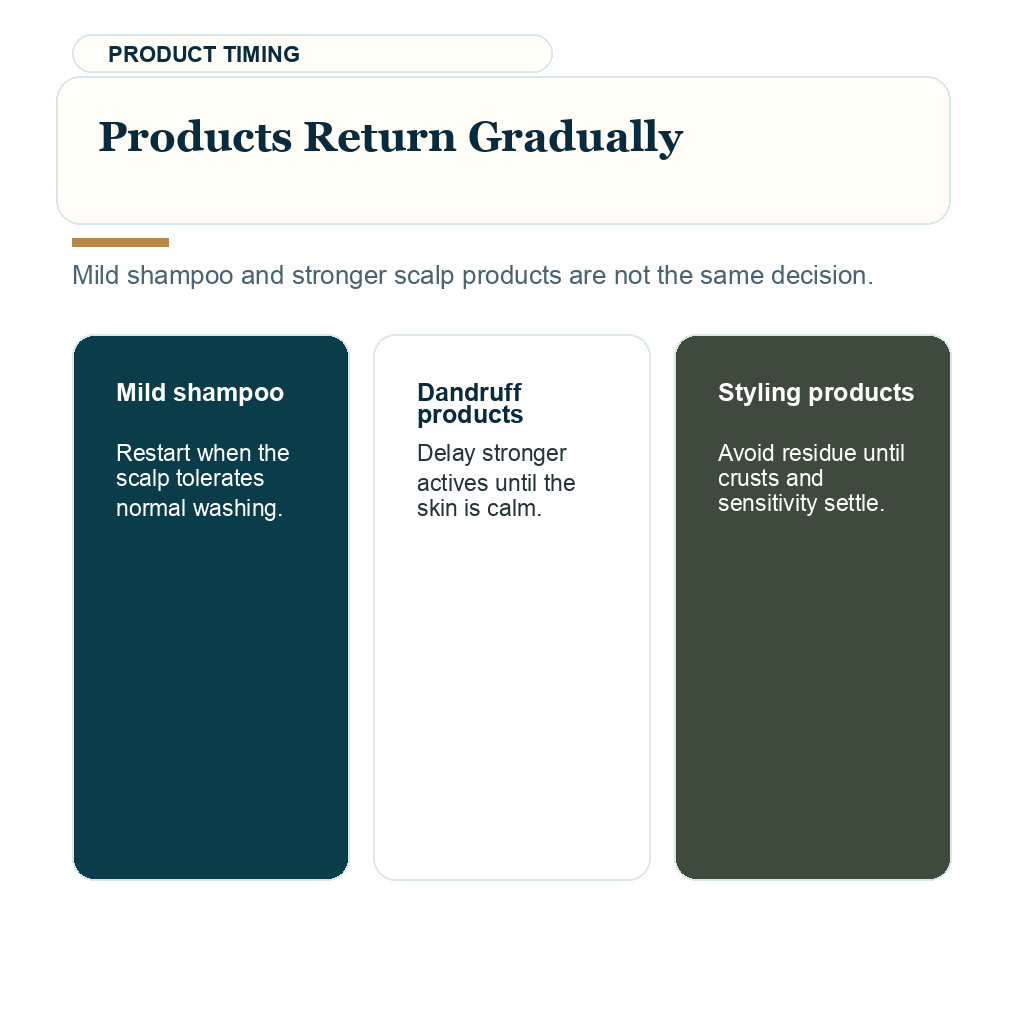
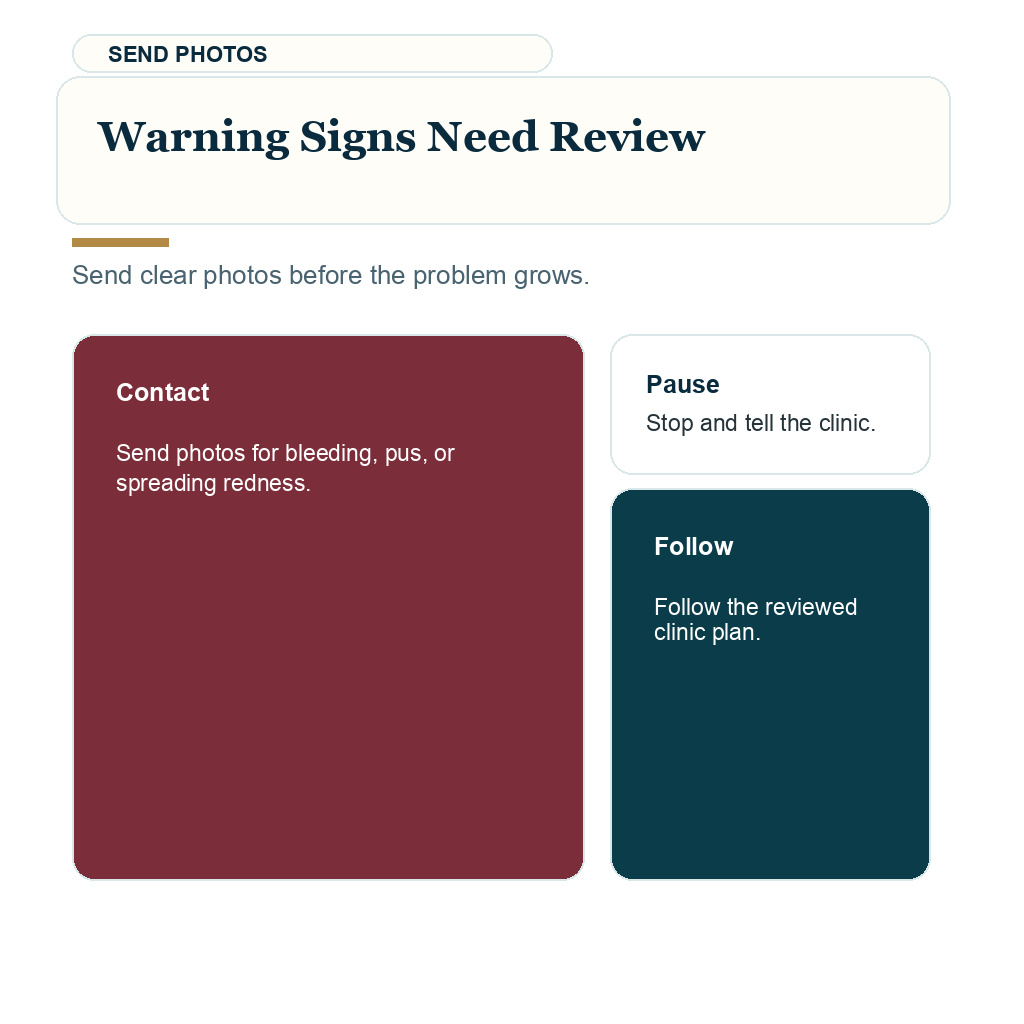
These 10 washing slides keep each stage separate, including day 0 protection, day 1 caution, the first clinic wash, daily softening, donor and recipient pressure, the 10th wash, hair caught in scabs, day 14 crusts, product timing, and warning signs. Swipe sideways, use the arrows one slide at a time, or choose a number below the image.
The safe answer in the first days
In the first days, I treat washing as part of the surgery, not as a normal bathroom routine. The recipient area has thousands of tiny openings. The donor area is also healing. The skin does not need pressure. It needs clean, controlled handling.
Washing cannot be separated from the wider hair transplant aftercare plan. If a patient sleeps badly, sweats heavily, scratches because of itching, or keeps touching the grafts in the mirror, the washing routine becomes more difficult. These details are connected in real recovery, not only on paper.
Patients often fear the wrong thing. They fear a little water, but the real danger is usually friction. Rubbing with fingertips too early, direct strong shower pressure, scratching during itching, or pulling a dry crust before it is ready can irritate the recipient area much more than a gentle instructed wash.
Patients should follow the washing method they were shown. Do not improvise. Do not test the grafts. A first wash should make the scalp cleaner and less irritated, not turn the bathroom into a stress test.

Why washing feels risky after surgery
The first wash feels risky because the patient finally has to touch the result. Until then, protection mostly means leaving the scalp alone. During washing, the patient has to do something, but do it gently enough not to disturb the skin.
I understand that fear. The patient sees scabs, small hair shafts, redness, and sometimes dried blood. Then one small crust comes away and the mind immediately says, “I lost a graft.” Quite often, that is not what happened. The patient may be seeing crust, skin debris, or a shed hair shaft, not the follicle itself.
The recipient area still deserves respect. A graft is not a loose seed sitting on the scalp, but the tissue around it is fresh. Rubbing to test whether grafts are strong, comparing the scalp with another patient’s photo, or trying to make the area look clean before the skin is ready can create unnecessary trauma.
Use the wash for cleaning, then step back before wet crusts and loose shafts become a graft loss inspection. Inspecting every crust while the skin is wet makes gentle contact easier to turn into rubbing.
Do not stop gentle washing just because shed hairs appear. When the wash approved by your clinic is careful, shedding may become more visible because loose shafts finally release. Stopping the wash from fear can leave crusting tighter and make itching worse. Stay with gentle technique, and use photo review when there is bleeding, pain, or an open spot.
If swelling, tightness, or itching after a hair transplant is also present, the urge to touch becomes stronger. Washing may relieve some dryness, but scratching during washing can create exactly the problem the patient is trying to avoid.
Graft security changes over time
The first 48 hours deserve the most caution. During this period, the recipient area needs protection from pressure, friction, impact, and unnecessary touching. After that, grafts become more secure step by step, but the skin is still healing.
There is a difference between a hair shaft coming away and a crust being pulled from the skin. A shed hair shaft can look alarming, especially when it is stuck inside a scab. Do not assume from that alone that the follicle has been lost. A dry crust that is still attached to the skin is different. If the patient pulls it too early, it can create traction on the healing tissue.
By around day 9 to day 10, grafts are usually much more stable when healing has been clean and uncomplicated. Still, aggressive scrubbing is not the answer. The calendar may say the grafts are safer, but the scalp may still be pink, dry, tender, or crusted.
The right approach is timing, not fear. Protect the grafts in the first days, soften the crusts gradually, and never pull something that is still firmly attached.
First wash timing at the clinic
At Diamond Hair Clinic, the first wash is performed 2 days after surgery. This timing lets me check the scalp early and show the patient how the recipient area should be handled. A written instruction is useful, but seeing the correct pressure and movement matters more.
During that first wash, the recipient area should not be scrubbed. The aim is to soften and clean the scalp gently. The donor area can usually tolerate slightly more cleaning earlier than the recipient area, but it is still healing and should not be treated roughly.
At the same visit, I repeat a central rule about touching grafts after a hair transplant. Light controlled contact during an instructed wash is different from rubbing, scratching, pressing, or picking. Patients often put all forms of contact into one category, but surgically they are not the same.
If another clinic performs the first wash on a different day, do not read that as the clinic being wrong by itself. Surgical method, bleeding, skin sensitivity, graft density, travel schedule, and the surgeon’s routine can all affect timing. The useful detail is whether the instruction is clear, medically sensible, and matched to the patient’s case.
First 10 days of washing step by step
During the first 10 days, do not wash the recipient area as if it is ordinary hair. The movement should be controlled, slow, and predictable. The scalp does not need bravery in this period. It needs careful handling.
Wash your hands first and use lukewarm water. Create foam in your hands before touching the scalp, then apply it gently. In the early days, this should feel like soft contact or careful dabbing, not circular scrubbing.
If your clinic has instructed it, let the foam sit briefly so crusts soften rather than being torn away. Rinse slowly with a cup, soft flow, or very gentle shower setting, and dry without rubbing by air drying or very light patting around the scalp.
The scalp does not need to look perfect after one wash. The healing environment needs to stay clean while crusts soften over several days.
Recipient and donor areas need different washing pressure
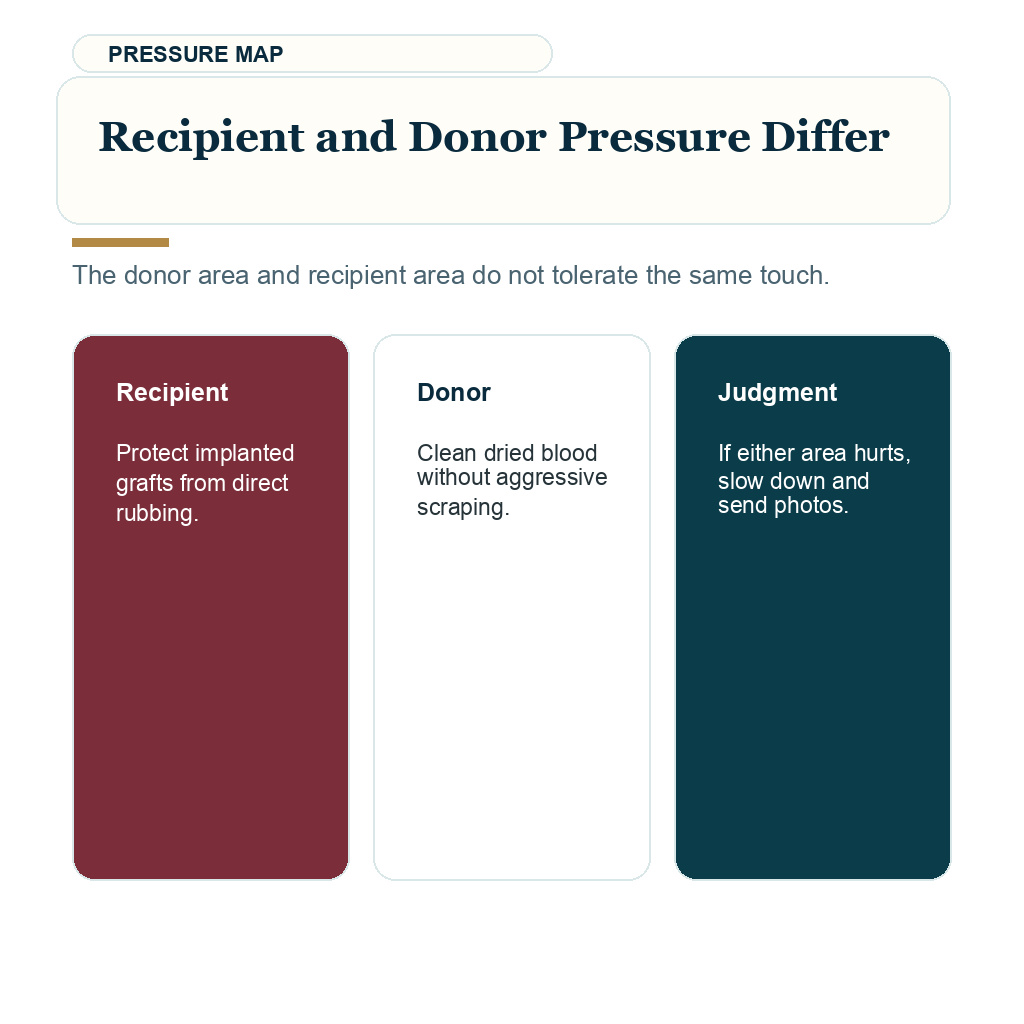
The recipient area is where the grafts were placed, so I treat it as the more delicate zone in the first days. It needs clean hands, lukewarm water, prepared foam, gentle contact, and slow rinsing. The plan should not polish the scalp. The plan should keep the skin clean while the grafts settle and the crusts soften.
The donor area is different because no new grafts are sitting there, but it is still healing. A FUE hair transplant creates many small extraction points, and those points can become irritated if the patient scratches, rubs with a towel, or uses hot water too early. The donor area may tolerate slightly more cleaning than the recipient area, but it should not be treated like normal skin in the first week.
If you want the terms to be clearer, my hair transplant glossary explains the difference between the donor area and the recipient area. In practice, patients should be extra protective over the recipient area and gently clean the donor area without turning either one into a scrubbing exercise.
Changes around the 10th wash
Around the 10th wash, many patients need a more precise explanation. They have been told not to rub, but now they also know that crusts should not stay thick forever. At this point, judgment matters.
There is a stage where you need to understand the difference between controlled firmness and aggression. In the first days, rubbing is still avoided. Around the 10th wash, if the crusts have softened well and the scalp is not bleeding or inflamed, the fingertips can usually become more active.
This still does not mean nails, scraping, towel friction, or panic. It means softening first, then using the pads of the fingers with controlled pressure so the crusts release instead of being torn away.
A crust that does not move after proper softening should not be fought. A resistant crust is not an enemy. It is a sign to soften more, stay controlled, and let the clinic decide how to proceed if uncertainty remains.
Scabs should release with steady washing
Scabs usually loosen gradually during the washing period. Picking them off one by one is not the goal. Thick, hard crusts should not be ignored either, because they can keep the scalp uncomfortable and make the patient more tempted to scratch.
In my routine, the 10th wash falls on day 12. By that stage, many crusts should be ready to come away with careful washing. Some patients need a little more time because their skin is dry, their crusts are thicker, or their transplant was larger. The safe point is that removal should feel like softening and release, not tearing.
This is the moment when many patients panic. They see tiny hairs inside crusts and think the grafts are lost. That fear is part of losing grafts when scabs come off. A hair shaft coming away with a crust is not the same thing as losing the whole follicle.
Fresh bleeding, significant pain, spreading redness, heat, pus, black tissue, or a clearly open wound after scab removal are not normal details to ignore. They need direct medical guidance with clear photos.
Hair inside a scab does not always mean graft loss
Not by itself. This is a common fear after washing. A patient looks at a crust, sees a short hair attached to it, and immediately thinks the entire graft has been pulled out.
Quite often, what the patient sees is a hair shaft trapped in a crust, not a lost follicle. The follicle can remain in the scalp while the visible shaft sheds. This can look alarming because the crust makes the hair look more substantial than it really is.
The detail that matters most is not only whether a hair is visible in the scab. Fresh bleeding, pain, an open wound, or a specific traumatic event such as scratching, scraping, or forceful rubbing changes the meaning. A few hairs seen during a careful wash without bleeding usually does not tell the whole story.
Repeated bleeding from specific points after rubbing, or a scalp that looks wounded, changes the situation. That needs direct photo review instead of anxious guessing.
Scabs still present after day 14
If scabs are still present after day 14, do not panic, but do not ignore them either. Thick crusts that remain for too long can keep the scalp uncomfortable and may encourage scratching.
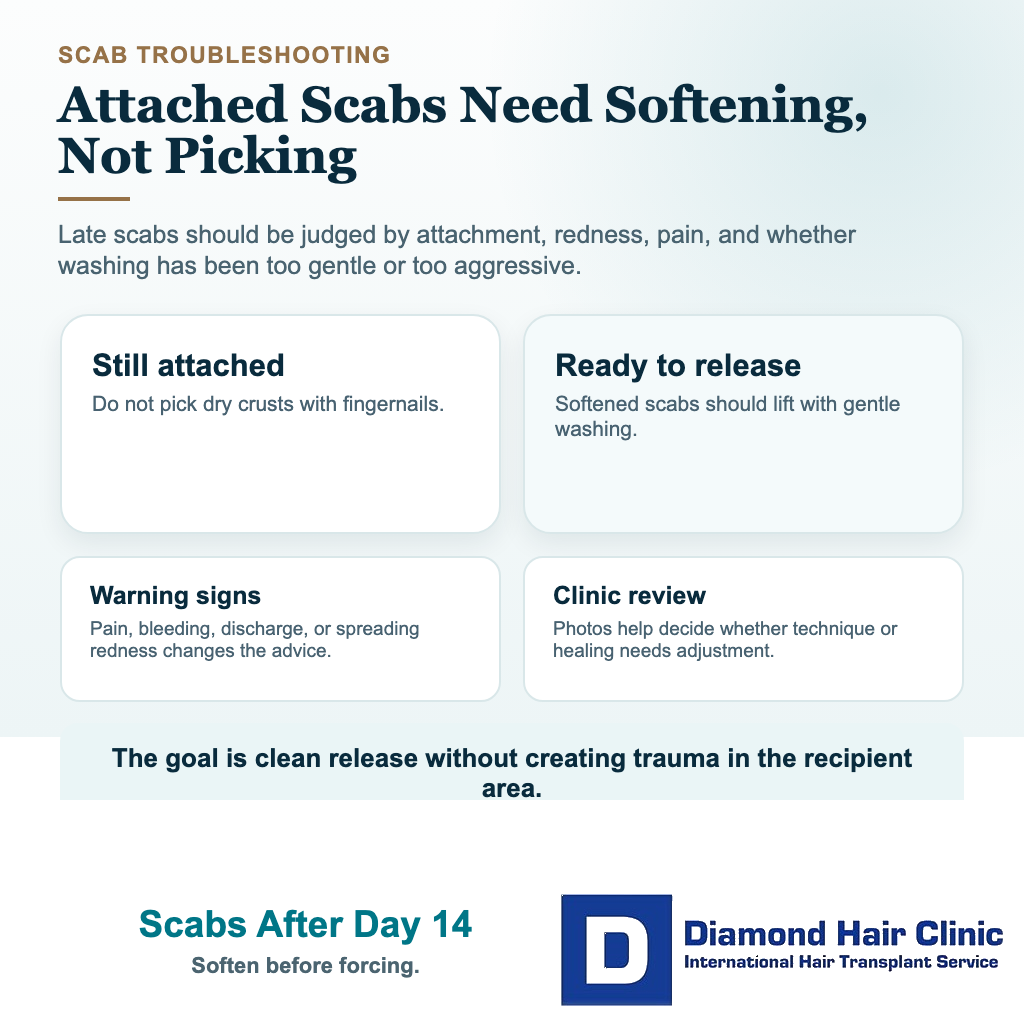
The wrong response is to suddenly scrub aggressively because the calendar says day 14. The safer response is to soften the crusts more patiently and wash with controlled fingertip pressure if the clinic has allowed it. Resistant crusts need clinic photo review before you add more force.
Some patients naturally form thicker crusts. Some cases are larger. Some skin types are drier. Some patients were too timid during earlier washes, so crusts were not softened enough day by day. These differences matter.
The rule is clear. Do not pick dry crusts. Do not use nails. Do not use a towel to remove them. Do not suddenly use strong shower pressure. If they remain attached after proper softening, the clinic should see photos and decide how to proceed.
First proper wash can make the transplant look thinner
This is a very common moment of panic. Before the crusts come off, the transplanted area can look darker and fuller because dried blood, scabs, and short hair shafts create a shadow effect. After a proper wash, the skin becomes more visible. The patient then looks in the mirror and thinks the density has disappeared.
That change does not mean something went wrong by itself. Quite often, the scalp is simply cleaner. The transplanted hair shafts may also begin to shed during the early recovery period. Washing can make that shedding more visible, but careful washing is usually not the reason the hair sheds.
I do not evaluate density from the first clean scalp, and I avoid patients doing that either. The appearance on day 7, day 10, or day 12 is a healing image, not a final result.
With no fresh bleeding, no open wound, and no clear traumatic event, a few hairs seen during careful washing usually do not tell the whole story. Bleeding from a specific point in the recipient area after forceful rubbing or scratching is different and should be reviewed with clear photos.
Fear of washing can delay scab release
Some patients protect the scalp so much that they barely wash it. I understand the reason, but under washing can create its own problem. Thick crusts can remain uncomfortable, make the scalp itch more, and make the patient even more tempted to scratch.
Using a hat to hide heavy crusts should not become a reason to delay washing. If crusts are still attached, the safer path is controlled softening and guidance from the clinic, not covering them during the day and hoping they disappear later.
If you are already beyond the first week and the crusts are still heavy, do not solve that by suddenly scrubbing hard. Soften them patiently, wash in a more controlled way, and contact the clinic if they do not loosen. Fear should not lead to neglect, and frustration should not lead to force.
Another hygiene point matters. The donor area and recipient area do not need harsh cleaning, but they do need sensible cleaning. Sweat, dried blood, sebum, and product residue can irritate the skin if they are ignored. This matters even more when the patient is returning to daily activity or thinking about exercise after a hair transplant.
The patient who washes too aggressively can create trauma. The patient who avoids washing completely can keep the scalp irritated. The better path is controlled washing, not either extreme.
Normal shower pressure and regular shampoo timing
Most patients can move toward more normal washing after the scabs are gone and the skin has settled, often around 10 to 14 days. A gradual return is safer than a sudden rough shower. Normal does not mean aggressive. It means the patient no longer needs to behave as if every touch will dislodge a graft.
Regular shampoo also depends on the scalp. A mild shampoo is usually easier in the early period. Some product ingredients can irritate healing skin if they are used too early, especially strong anti dandruff shampoos, heavy fragrance, oil based products, or medicated products. If there is seborrheic dermatitis or dandruff, timing should be decided more carefully.
Ordinary gentle shampoo is different from stronger products such as ketoconazole shampoo after a hair transplant. A medicated shampoo may be useful for the right patient, but it should not be introduced early just because the scalp feels strange.
Hair oil after a hair transplant needs caution for a different reason. Oil can soften crusts in an uncontrolled way, attract residue, and encourage extra touching. If the scalp feels dry, the dryness should be handled safely instead of covering the recipient area with a product too early.
Products to avoid while the scalp is healing
In the early healing period, simple routine is usually safer. The scalp does not need a complicated product routine. Many problems begin when a patient adds products because the skin feels dry, itchy, oily, or strange.
While the recipient area is still healing, patients should usually avoid strong anti dandruff shampoo, hair fibers, styling gel, hair spray, dry shampoo, conditioner on the recipient area, hair dye, concealers, waxes, alcohol based tonics, oils, and anything that makes the patient rub more.
The principle is practical. Until the skin is settled, avoid products that sting, trap residue, cover the scalp, or make the patient rub more. Once the scalp is healed, some products can return gradually, but the early phase should stay quiet and predictable.
If washing happened too early or with the wrong shampoo
Judge an early wash by the scalp response, not the calendar alone. Contact the clinic if there is bleeding from the recipient area, visible graft movement, increasing pain, heat, swelling, or discharge. Without those changes, return to the clinic’s washing method and do not repeat the wash more aggressively.
The right response is to stop experimenting and return to the clinic’s method. Do not repeat the wash more aggressively to make yourself feel safe. Take clear photos, send them to the clinic, and follow the next instruction carefully. One imperfect wash is rarely the same as a destroyed transplant. Repeated force, scratching, and picking are much more dangerous.
A missed or delayed scheduled wash belongs in the same category. Do not make up for it with extra shampoo, a stronger shower, or longer rubbing. Restart the routine calmly, then use photo review if crusting becomes stuck or if smell, bleeding, increasing pain, or spreading redness appears.
Patients should not change products suddenly in the first days. A mild shampoo or the product supplied by the clinic is usually enough. Strong dandruff shampoo, oil, conditioner, styling product, or alcohol based product can make the scalp more irritated when the skin is still open and sensitive.
Drying the scalp after washing
Drying is part of washing. A patient can do the wash correctly and then irritate the grafted area with the towel. In the early days, gentle air drying or very light patting around the scalp with a clean towel is safer. Avoid rubbing over the recipient area.
Hot air from a hair dryer is not wise early after surgery. Heat can irritate sensitive skin, and strong air flow can make the patient stand too close to the scalp. If a patient must use a dryer later, cool air and distance are safer, but in the early phase simple drying is usually better.
Do not use the towel to remove crusts. If crusts are ready, they should release during the softening and washing process. If they are not ready, a towel can pull unevenly and create exactly the kind of traction we are trying to avoid.
Unshaven, large, or two day cases need adjusted washing
Washing can be more confusing when the transplant is unshaven, very dense, or performed over more than one day. Existing hair can hide crusts. Crown work can be harder to see. A large session can create more surface crusting and more donor area sensitivity.
In a two day surgery, not every graft has the same age. If the first part of the work was done one day earlier, do not read that as the whole recipient area being older. Patients should follow the instruction for the newest grafted area unless the surgeon gives a more specific plan.
Unshaven cases also need patience because shampoo can remain trapped between existing hairs. The patient may feel clean while residue still sits near the skin. Do not read this as a sign that stronger rubbing is needed. It means rinsing and softening need more time.
If the patient cannot see the area well, clear photos in good light are safer than blind rubbing. A family member can help observe, but they should not become aggressive with the scalp. Early washing should still stay controlled.
Why clinic instructions can differ?
Clinics do not all wash on the same day. Some use foam, some use lotion, some prefer spray, and some perform the first wash at the clinic. A different routine is not wrong by itself.
The useful detail is whether the instruction is precise enough to follow safely. You should know when to wash, how to touch the recipient area, how to clean the donor area, when crusts should start loosening, when shower pressure can return, and which signs require contact with the clinic.
Advice becomes concerning when it is too casual. If a patient is simply told to wash normally without a demonstration, without pressure guidance, and without any explanation of scab removal, the instruction is incomplete. The issue is not only the day of the first wash. It is the lack of judgment around the healing skin.
A recovery answer should consider the day after surgery, the amount of crusting, the redness, whether there is bleeding, how the patient washed, and what was done during the operation. A safe answer comes from the real condition of the scalp, not from a generic instruction sheet.

Washing after early travel home
Many patients travel home shortly after the second day clinic check, so the washing plan should be clear before the patient leaves Istanbul. Aftercare should not end at the airport.
When the first wash will not happen at the clinic before travel, leave with the exact washing day, lotion or shampoo timing, water pressure, drying method, and a clear way to send photos. Do not build the first wash from videos or forum comments when your own scalp has just been operated on.
Hotel showers can have stronger pressure than expected. If the water flow feels too strong, use a cup or a softer stream instead of letting direct pressure hit the grafts. Hotel towels can also be rough, so do not rub the recipient area dry.
During the flight home, the bigger issue is often accidental contact. A cap, travel pillow, overhead cabin movement, or careless scratching can disturb the scalp more than a careful wash. Washing advice connects with sleeping position, swelling control, and early movement after surgery.
For patients who come for a hair transplant in Turkey, clear photos during the early healing period are safer. A photo taken in good light is much safer than guessing alone because the patient is far away.
Washing mistakes that can harm grafts
The main washing mistake is not gentle washing. It is force. A patient may rub because the scabs are annoying, scratch because the scalp itches, or use strong water pressure because they want to feel clean quickly. These actions can irritate the skin and may traumatize the recipient area.
Another mistake is using washing to chase a perfect appearance. The scalp does not need to look socially normal in the first week. It needs to heal. A patient who tries to remove every crust before the tissue is ready can create redness and worry that were avoidable.
Clinic advice deserves caution when it sounds too casual. If the patient is told to wash normally almost immediately with no demonstration, no explanation of pressure, no difference between donor and recipient area, and no plan for scabs, the instruction is incomplete. It may still be harmless for some patients, but it is not a precise way to guide early healing.
This is also one of the differences patients should consider when they compare clinics. A proper plan includes more than graft numbers or package details. It also shows how carefully the clinic handles the patient before, during, and after surgery. This also connects with how to choose a hair transplant clinic in Turkey.
Signs that washing caused a real problem
A real problem after washing is usually not subtle. If a graft is traumatically dislodged in the early period, there may be bleeding from a specific point. If the scalp becomes increasingly painful, hot, swollen, wet, or covered with spreading redness, it needs direct review rather than reassurance from a distance.
Small crusts coming away, mild redness, temporary tenderness, and hair shafts shedding can be part of normal recovery. The patient may still feel anxious because the scalp looks different every day. Redness, scabs, or pimples after a hair transplant helps show which changes are usually expected and which ones deserve faster attention.
Swelling can also confuse the patient. If swelling is present, washing may feel more uncomfortable because the scalp and forehead are already tense. The guidance on swelling after a hair transplant may help separate normal early swelling from a warning sign.
Do not keep washing harder to check the area. Stop, take clear photos in good light, and contact your clinic. It is better to ask a small question early than turn fear into rough handling.
Washing after the first two weeks
After the first two weeks, washing usually feels less medical. Still, the scalp may be pink, dry, slightly itchy, or sensitive. Do not read that as the grafts are weak. It means the skin is still settling.
Patients should not judge the transplant from every wash. Shedding can begin. Short transplanted hair shafts may fall. The scalp may look less impressive than it did immediately after surgery. Washing does not cause the normal shedding phase, but it can make the change more visible.
Steady documentation is better than daily panic. Early photos are useful for follow up, but not for judging final density, especially when judging tracking hair transplant growth.
Wash carefully, not fearfully. The scalp does not need harsh scrubbing, and it does not need total avoidance. It needs a steady routine that keeps the skin clean while respecting the recipient area.
If dust or city air reaches the scalp, the answer is not aggressive scrubbing. The dust and pollution after FUE guide explains when to follow the wash plan, when to send photos, and when warning signs matter.

Read this review excerpt
Upon arriving home, I sent 4 photos (of each side of head) after every washing process to doctor for checking where I was given personal advice for how to take care of my healing head.