


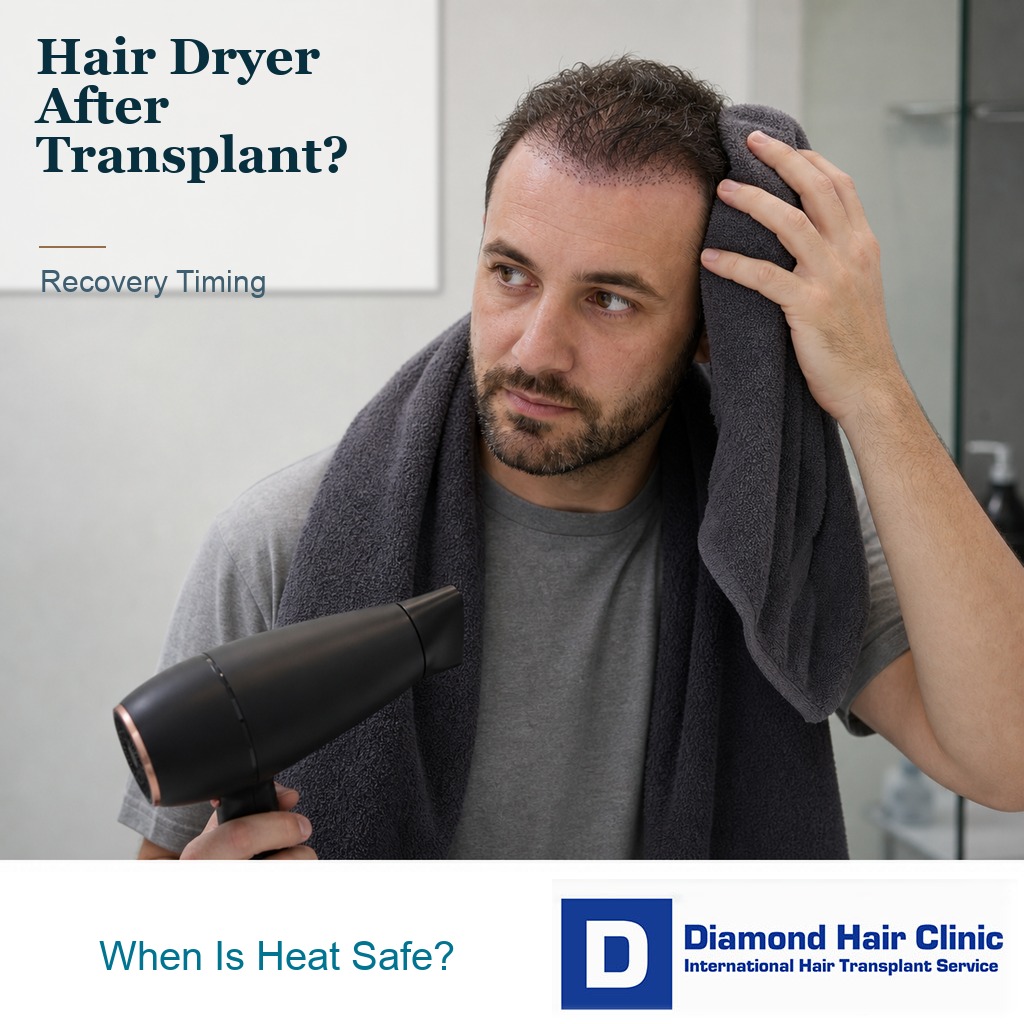
Hair Dryer Use During Graft Recovery
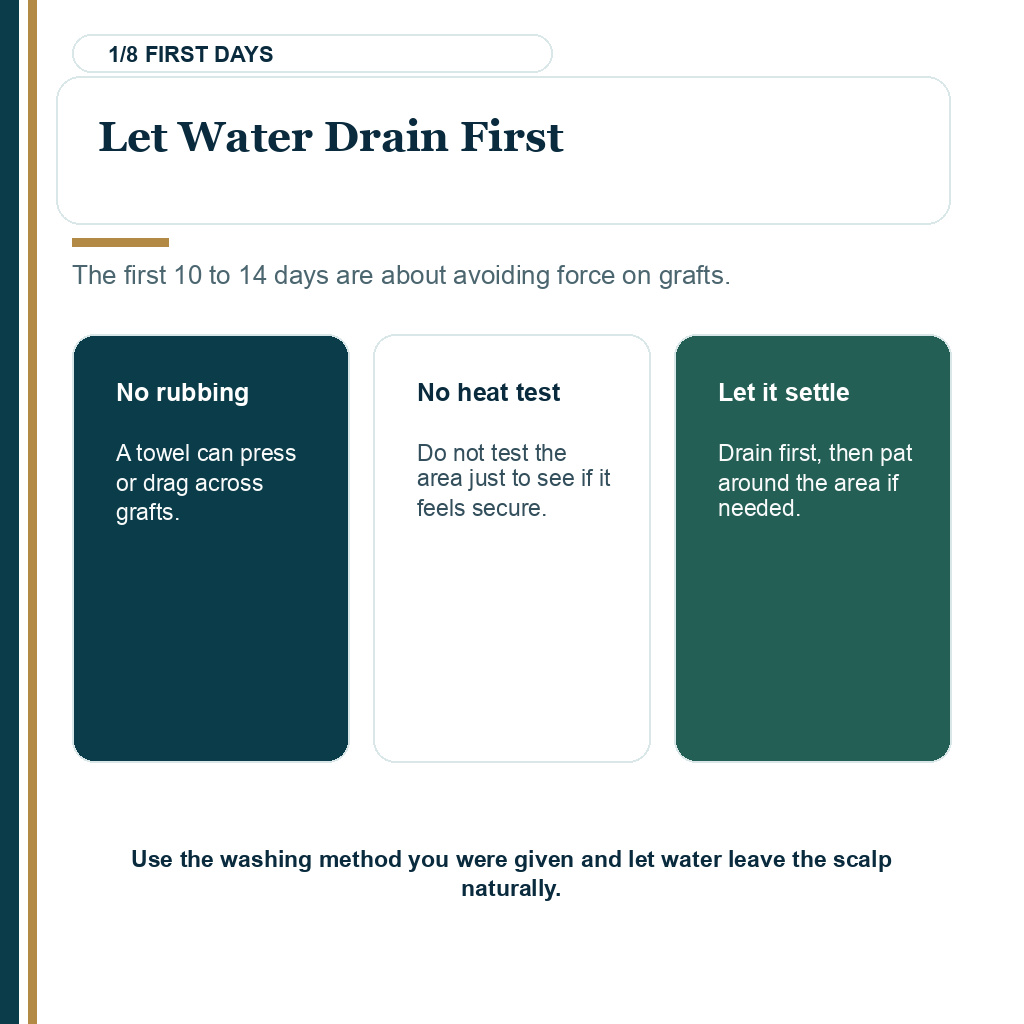
After a hair transplant, hot air, strong airflow, and a hair dryer held close should stay away from the recipient area during the first 10 to 14 days. In that early period, drying should stay simple. Let water drain, follow the washing method you were given, and avoid rubbing the grafts with a towel or brush. If the worry started in the shower rather than with a dryer, read about hot water and heat around the grafts before adding more heat. If the question is not heat but towel contact, the safer reference is drying the scalp after FUE without rubbing grafts.
Once the scabs have cleared, the skin is closed, and washing feels comfortable, a cool or low setting held away from the scalp can usually return gradually. Strong heat, a close nozzle, salon blow drying, and brushing through the transplanted area should wait if there is still redness, numbness, itching, tenderness, pimples, or crusting. Flat irons and salon smoothing deserve an even slower return. Keratin, perms, and relaxers after FUE should wait until the scalp is calm and hair length gives control.
Judge the dryer by temperature, distance, and scalp feeling. Cool airflow from a distance is not the same problem as hot air aimed at numb or tender skin. If the scalp still feels numb, treat heat more cautiously because you may not feel the dryer becoming too warm. When sensation is reduced, distance and time matter more than confidence in the heat setting.
Use airflow only when the scalp no longer needs protection
A hair dryer is mainly a heat and friction question. Early after surgery, the recipient area should dry without rubbing, brushing, hot air, or a nozzle aimed at the grafts. Let water drain first. If your clinic has allowed careful drying, use cool air from a distance and keep the dryer moving instead of holding airflow on one small area.
Be more cautious when the scalp is numb, tender, itchy, red, or still has crusts. Reduced sensation can make heat feel safer than it is, and brushing through damp transplanted hair can pull at skin that is not ready for normal styling. Salon blowouts, round brushes, straighteners, and smoothing treatments should wait longer because they combine heat with tension and repeated contact.
The donor area usually tolerates drying sooner than the recipient area, but it is still healing. If drying increases tightness, burning, bleeding, or swelling, stop and return to the simpler routine your clinic gave you. The point is temporary restraint, so a normal grooming step does not become heat or friction on healing grafts.
Steps to take during the first 10 to 14 days
During the 10 to 14 day early healing window, hair drying should protect the grafts while the skin closes and crusts loosen. Keep washing gentle, friction low, heat away, and any testing brief. If drying creates warmth, pulling, or irritation, stop and return to air drying.
During these days, do not treat the recipient area like normal hair. No rubbing, no scratching, no strong towel pressure, no hot water, and no hot hair dryer aimed at the grafts. You may feel well while the skin still needs protection.
After washing, the drying routine should be slow, cool, and controlled. Let excess water drain naturally. If a towel is used, it should touch around the area softly rather than scrub through it. The towel should not drag over the hairline or pull at crusts.
The donor area may feel less delicate, but it is still healing. A hair dryer can create heat and dryness there too, especially if the skin is tight, itchy, or tender. The early routine should be simple enough that any new irritation is easy to notice.

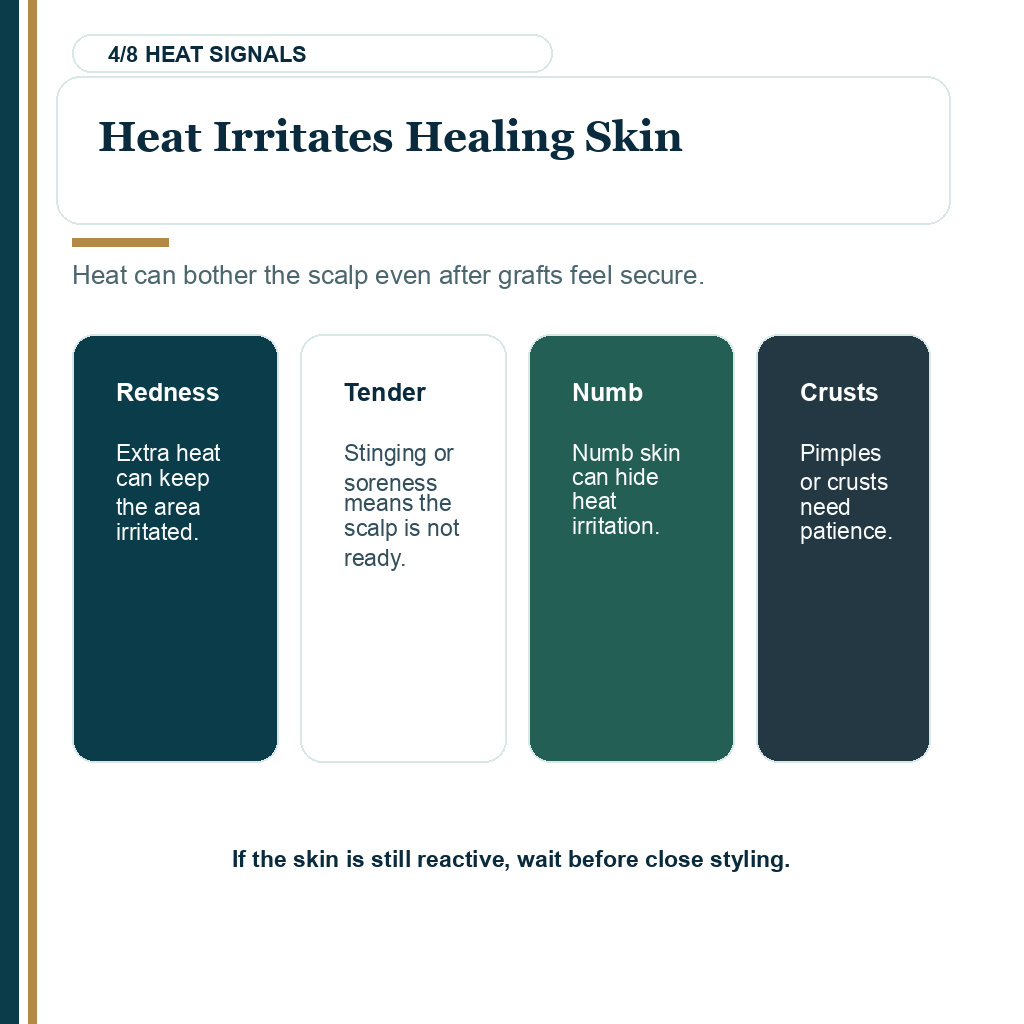
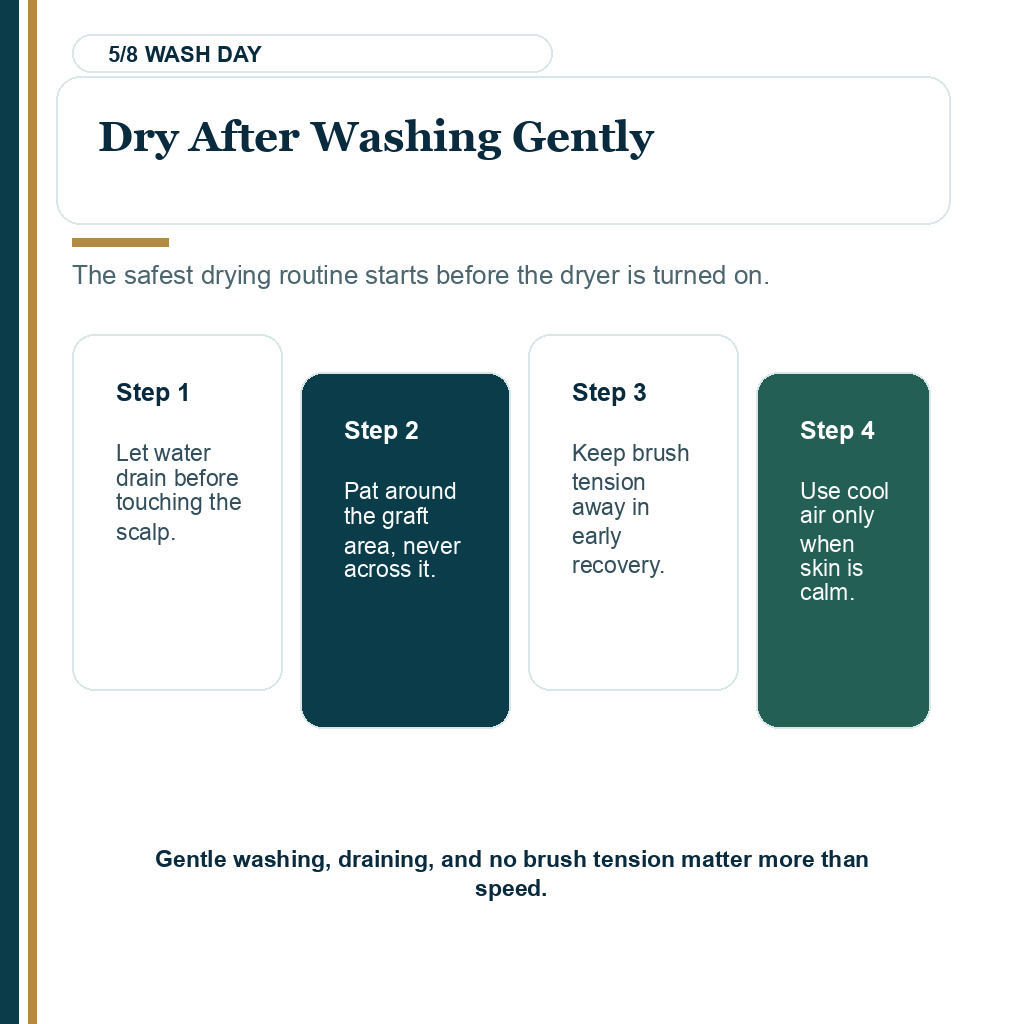
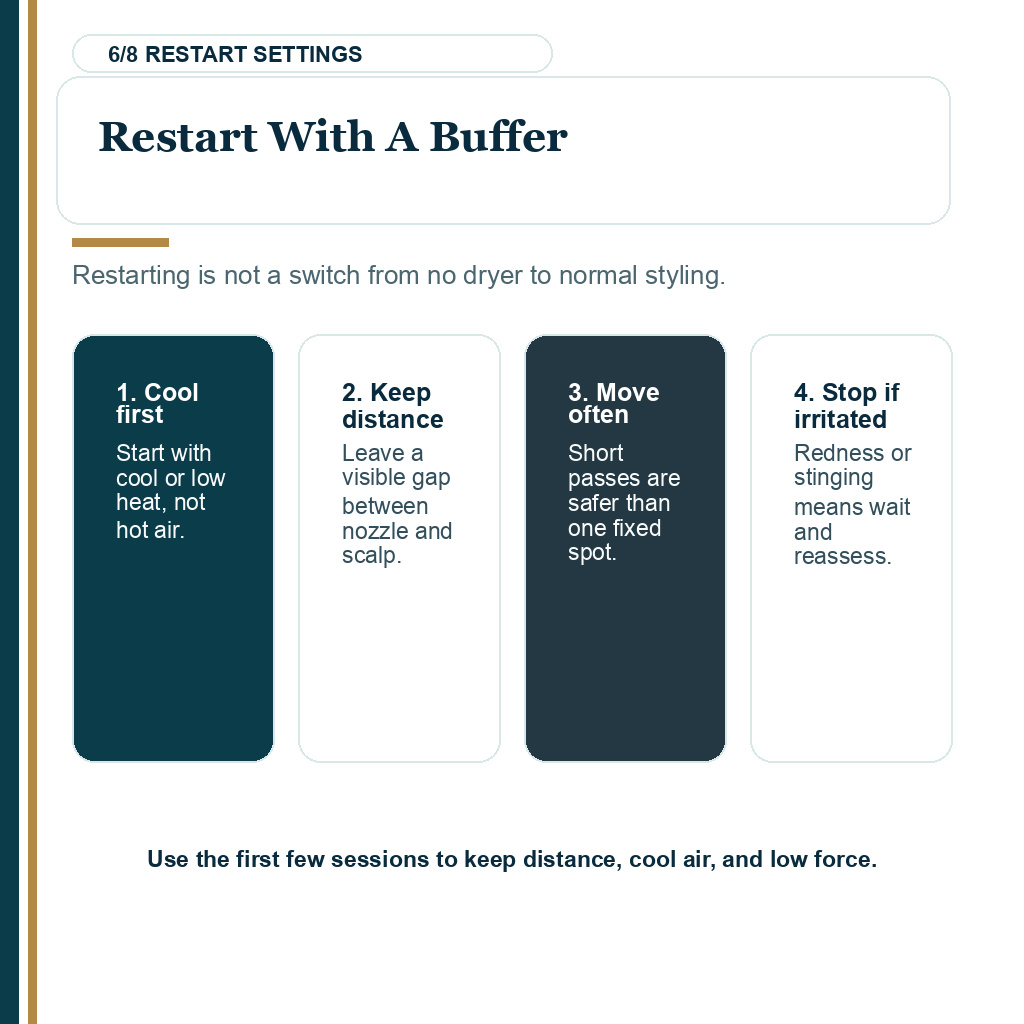
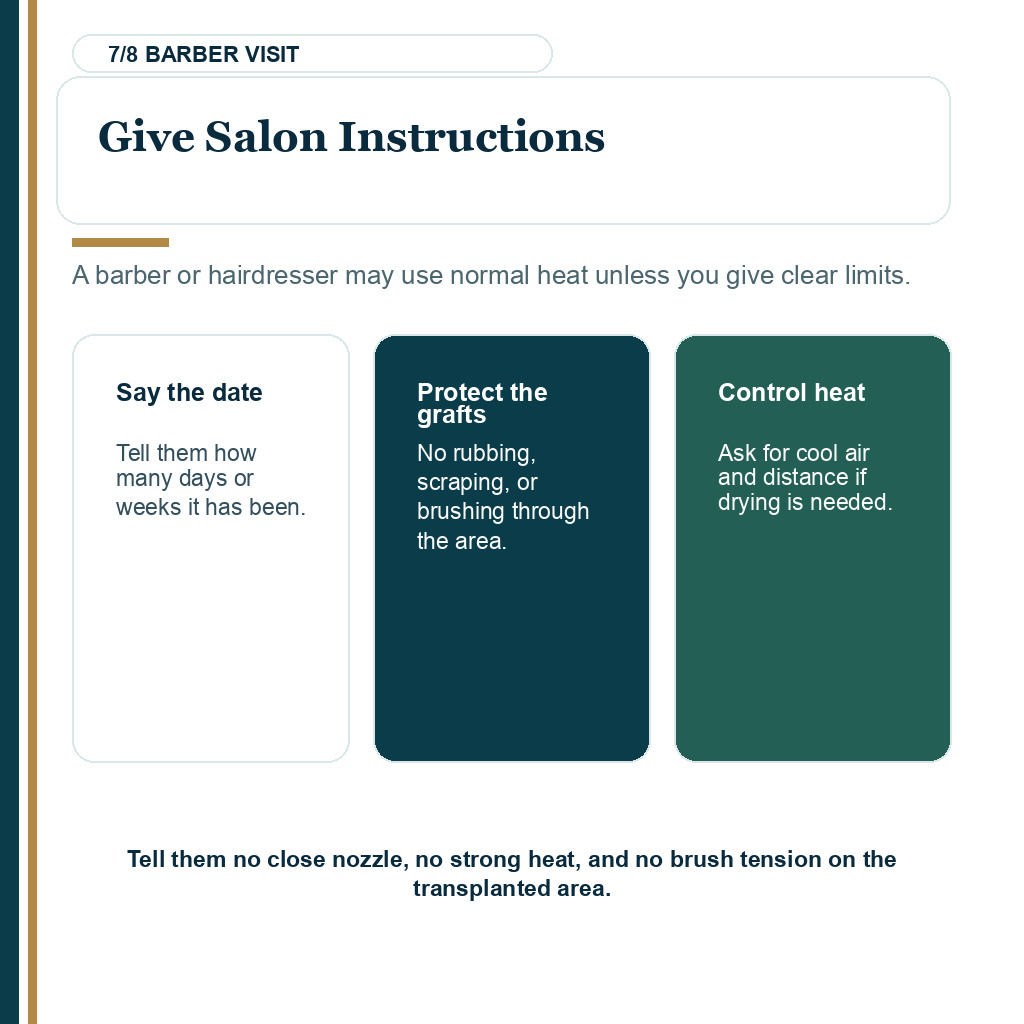
Use the 8 hair dryer recovery slides below to separate early drying, cool versus hot air, airflow risk, heat irritation, gentle washing, restart settings, salon instructions, and single hot air exposure. Swipe the carousel, use the arrows one step at a time, or choose a number below the image to jump to that point.
Cool air is different from hot air
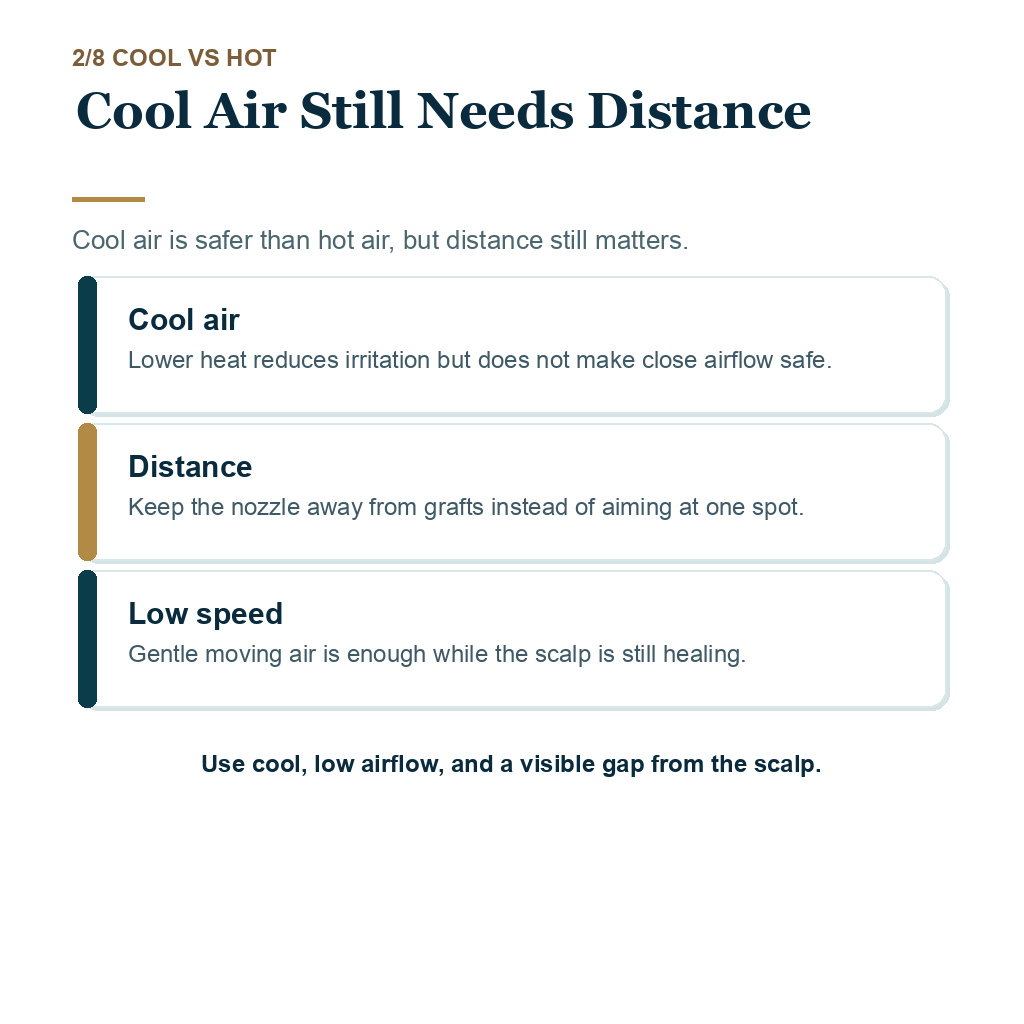
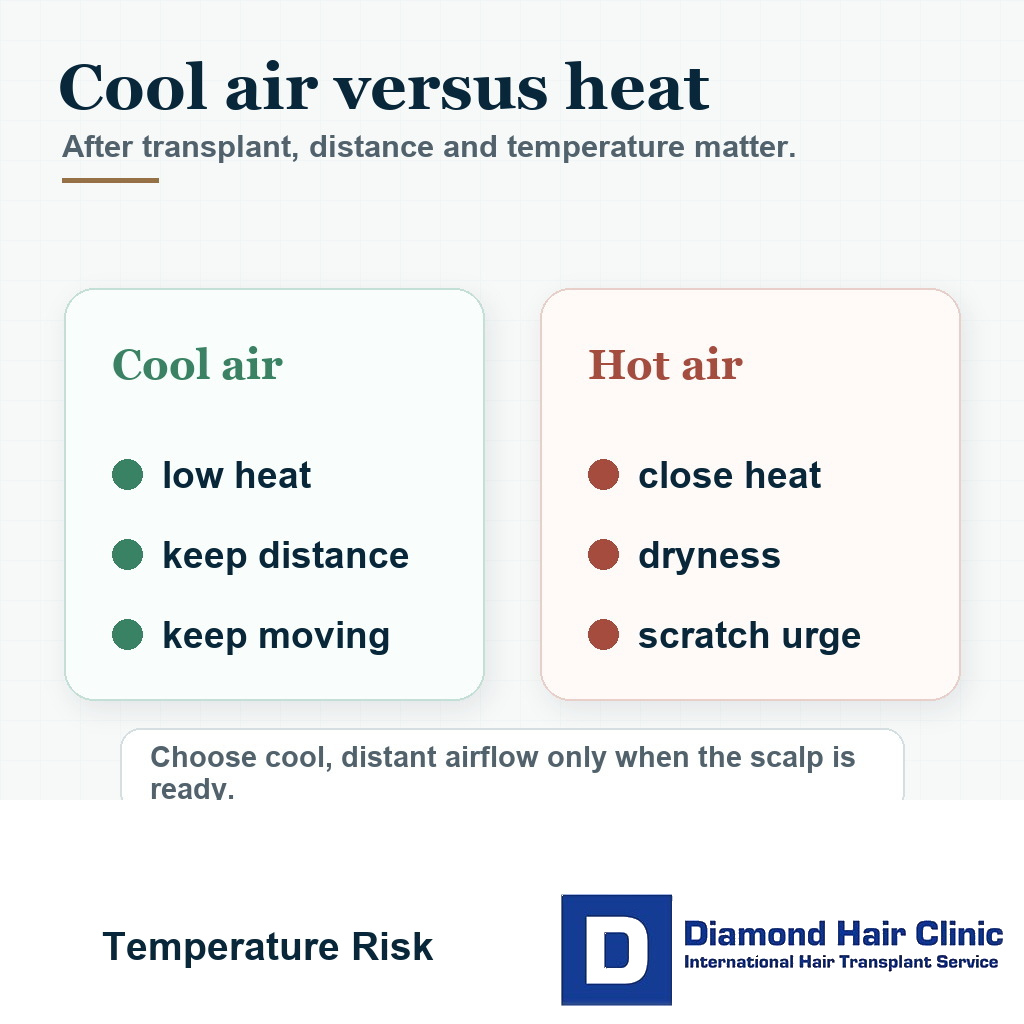
Cool air is different from hot air, but it is not permission to become careless. With a hair dryer, the setting is only one part of the risk. Distance, airflow strength, towel friction, brush tension, and repeated checking all matter.
A cool setting from a reasonable distance is much less irritating than hot air held close to the grafts. Still, in the first days, even airflow can make you keep touching the scalp, moving crusts, or testing whether the grafts feel secure.
Hot air dries the skin more aggressively. A freshly transplanted scalp can already feel tight, pink, and sensitive. Adding heat can make the surface feel more irritated, and an irritated scalp often leads to scratching or extra washing.
When I allow a hair dryer back into the routine, I think in stages. Cool air first. More distance than you normally use. Low speed setting before high speed. No brush pulling through the transplanted area. No conditioner routine after a hair transplant that forces extra combing. No attempt to style the grafted hair as if surgery had not happened.
The useful details are timing, heat setting, distance, airflow strength, and the condition of the scalp. A cool dryer after the skin has settled is a different decision from hot air aimed close to tender skin.
If the scalp is still crusted, wet looking, painful, or easily irritated, the answer is wait. If the scalp is closed, clean, comfortable, and already tolerating washing, cool air from a distance is a different level of risk from close hot airflow.
Hair dryer airflow rarely dislodges grafts alone
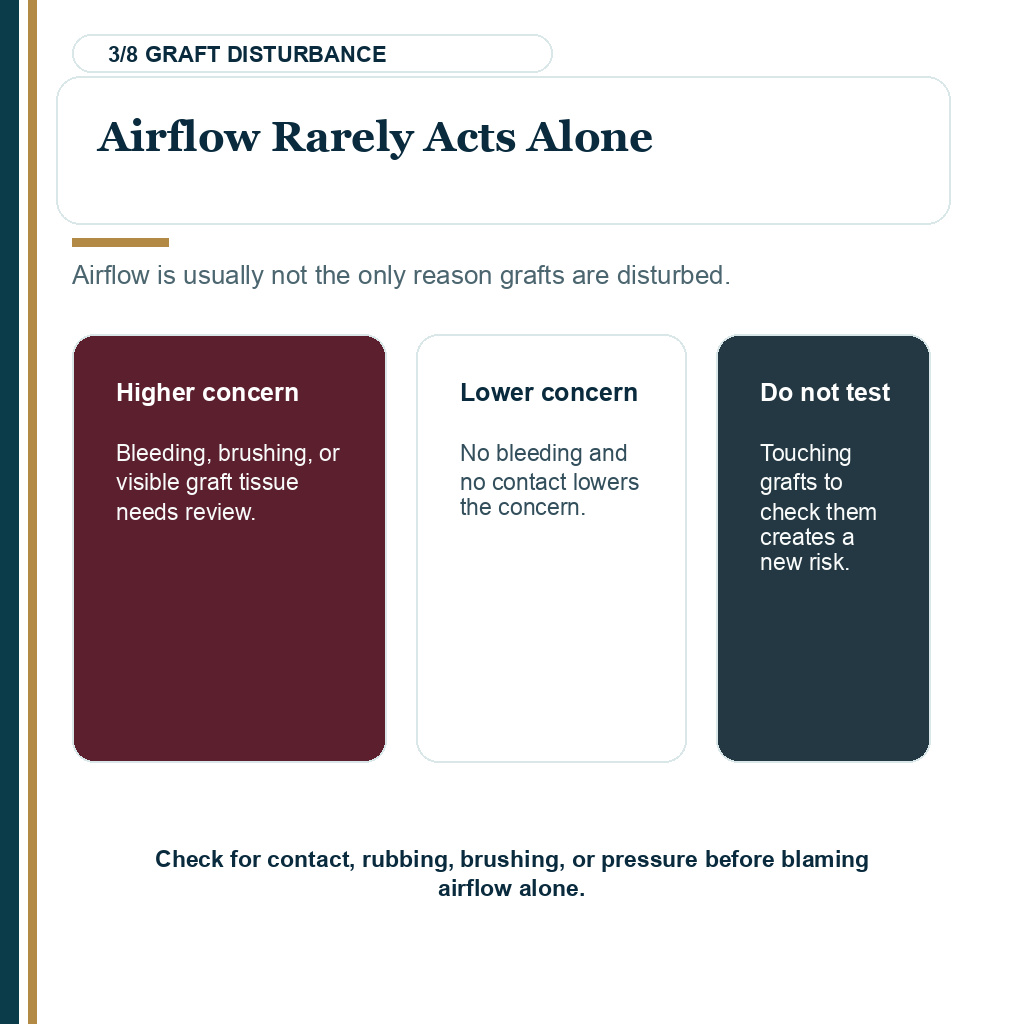
A hair dryer does not usually remove a graft by air alone when it is used gently and at the right stage. The bigger risk is the behavior around the dryer. Rubbing with a towel, combing too early, scratching because of heat, or pressing the nozzle close to the scalp can create the real trauma.
In the first few days, grafts are more vulnerable to direct contact. By the end of the first week, they are usually much more stable, but the surface skin is still healing. That distinction matters. A graft can be more secure while the recipient area is still not ready for normal styling.
If you are anxious about touching the grafts, do not use the hair dryer as a test. Do not blow on one area and then press it with your fingers to see whether anything moved. Testing creates more risk than the dryer itself.
The warning signs after real graft trauma are different from ordinary dryness. Fresh bleeding, a painful open point, a soft, fleshy looking piece, or repeated injury should be photographed and sent to the clinic. A dry crust with a short hair in it is often a different situation, as I explain in the page about lost grafts when scabs come off.
Heat can be a problem even after the grafts feel secure
Graft security and skin comfort do not return on the same day. You may be past the most delicate graft period and still have a scalp that is dry, red, numb, itchy, or reactive. Heat can make those surface symptoms louder.
When the scalp becomes warm and dry, it is easy to start adjusting, touching, or scratching. That is the pattern I try to prevent. The hair dryer becomes risky when it starts a chain of irritation, checking, and friction.
Heat also hides feedback. If the scalp is numb, you may not feel that the air is too hot until the skin is already irritated. Reduced sensation is common after surgery, and numbness after a hair transplant can take weeks or longer to normalize.
I do not decide only by the calendar. I look at whether the skin is closed, whether crusts are gone, whether redness is settling, whether washing is easy, and whether you can dry the hair without rubbing.
Drying hair gently after washing
The washing routine comes first. If washing is too rough, drying becomes rough as well. Washing after a hair transplant has its own pace for water, foam, shower pressure, towel drying, and heat.
In the first days, let extra water run off naturally as much as possible. Use a clean soft towel with light contact around the scalp. Do not scrub over the recipient area. Do not twist, drag, or rub the towel through short transplanted hairs.
After the protected period, if the scalp looks settled and your clinic has no concern, a cool dryer can be used from a distance. Keep it moving. Do not hold the nozzle over one patch of skin. The plan is to dry the hair around the recipient area, not force the recipient area dry. Do not combine it with aggressive brushing.
Safer settings when restarting
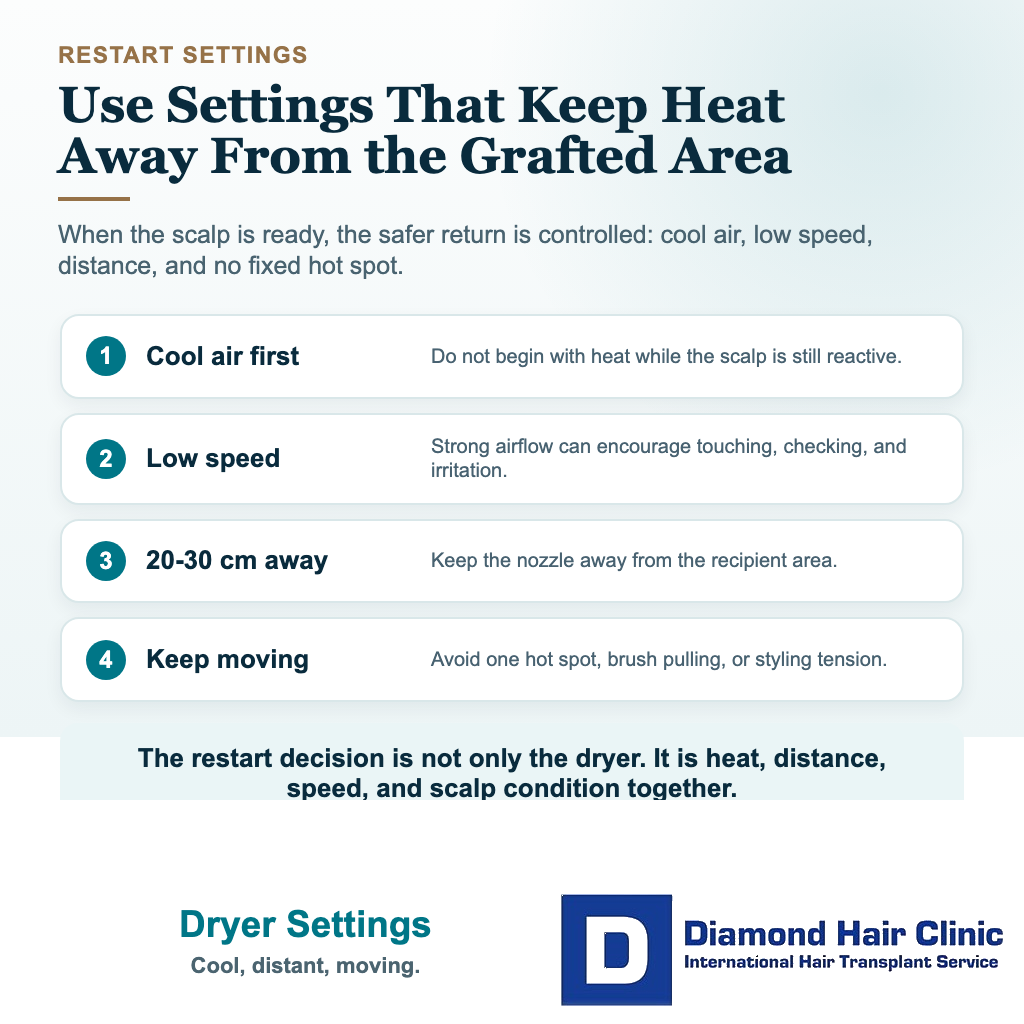
Start with cool air, low speed airflow, and a distance of at least 20 to 30 cm from the scalp. Keep the dryer moving instead of holding the air over one small patch. If the surrounding hair is long, dry that hair first and leave the recipient area for the gentlest part of the routine.
A concentrator nozzle can make airflow and heat more focused, so do not aim it directly at the grafted area in the early return period. A round brush, strong combing, or pulling the hair while drying adds mechanical stress, not only heat.
Diffusers spread airflow, while concentrators focus it. Either attachment can become a problem if it is held close, touches the scalp, or turns drying into prolonged styling. Judge the attachment by heat, distance, contact, and drying time rather than its name.
Scalp massage after a hair transplant is also about pressure, duration, repetition, and the urge to keep checking, not only the tool itself.
If the hair is longer around the transplanted area, dry the surrounding hair without pulling the grafted zone. Many mistakes happen because you are trying to make the whole hairstyle look normal too soon. Early recovery is not the moment for a perfect finish.
Numb, itchy, or red scalp needs more patience
If the scalp is numb, itchy, or red, I slow the return to heat. These symptoms do not always mean something is wrong, but they change how much irritation the scalp can tolerate.
Itching is a useful example. It can be part of normal healing, especially while crusts are drying and loosening, but scratching is still the behavior that can cause trouble. If you are already fighting the urge to scratch, hot air can make the urge stronger. The page about itching after a hair transplant is relevant for that reason.
Redness also deserves patience. A little pinkness can be normal, but a hot dryer can make the scalp look redder and feel more reactive. Then it is easy to think the result is worsening and start inspecting the area too often.
If redness is spreading, pain is increasing, the skin feels hot, there is pus, or crusts look wet and thick, do not solve that with more drying. Share clear photos with the clinic and keep the routine simple until the scalp has been assessed.
Normal styling returns gradually
Normal styling returns gradually. A cool dryer from distance after the scabs are gone is not the same as a hot salon blowout with a round brush. Styling products such as dry shampoo, heat, brush tension, and repeated combing all add different kinds of stress.
For many uncomplicated cases, light drying becomes easier after the first 10 to 14 days when the crusts have cleared and washing is comfortable. More active styling is usually better delayed until the scalp is settled, often closer to 3 to 4 weeks. If the skin is still red, flaky, bumpy, or tender, wait longer.
I use similar logic when discussing haircut after a hair transplant. Cutting hair, using clippers, brushing, and styling are not one decision. Each tool creates its own contact pattern on healing skin.
Chemical services need even more patience. Dyeing hair after a hair transplant is a separate decision because dye, bleach, developer, and scalp sensitivity create risks that a simple cool dryer does not.
Barber and hairdresser instructions
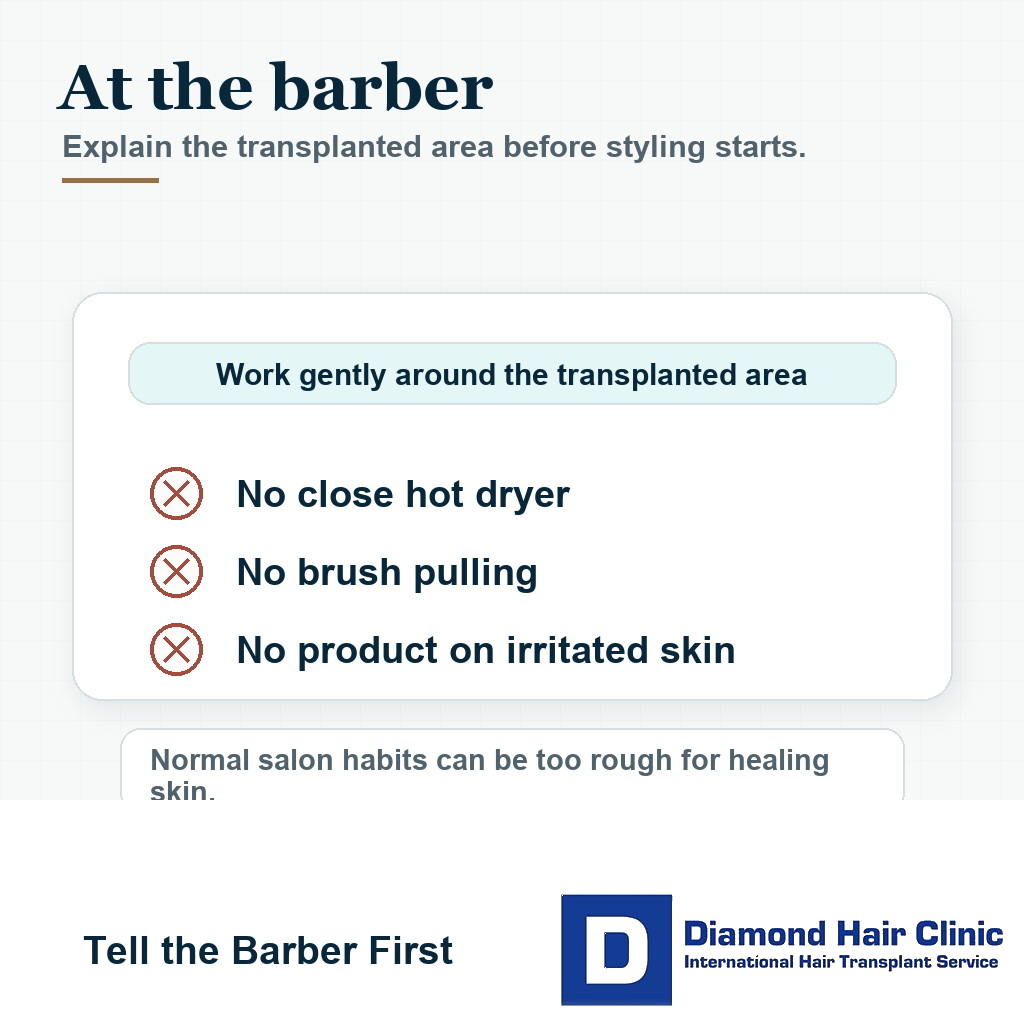
Tell the barber or hairdresser that the transplanted area is healing and must not be rubbed, brushed hard, heated closely, or styled under strong tension. Do not assume they understand hair transplant recovery because they work with hair every day.
A barber may naturally reach for the dryer, brush, clipper, towel, spray, wax, or finishing product. Those habits are normal in a salon, but not every salon habit fits early recovery. Keep the first appointment after surgery short and limited. Before the appointment begins, make it clear that the transplanted area is not ready for heat, brush tension, or finishing spray.
If styling product is being considered, think about the scalp, not only the hair. Early recovery is not the time to experiment with sprays, gels, oils, fibers, or strong fragrances. Hair product ingredients after surgery matter more when the scalp is still healing.
Keep the instruction simple. No hot dryer close to the grafts. No brush pulling across the recipient area. No product on irritated skin. If the barber cannot work gently, postpone the appointment.
If a barber used hot air once
If this happened several weeks or months after surgery and the scalp was healed, one brief hot dryer exposure is unlikely to destroy graft growth by itself. I would judge the scalp reaction, not the fear alone. If there was no burn, blistering, strong redness, pain, or open skin, the transplanted follicles are usually not damaged by that single event.
The lesson is still useful for the next appointment. Ask for cool air, more distance, no brush tension over the recipient area, and no prolonged heat over one spot. If the scalp still feels numb, ask for no heat because you may not feel the temperature accurately.
If the event happened very early, while crusts were still present or the skin was not closed, treat it differently. Stop styling, avoid extra washing or rubbing, and share photos for review if there is redness, pain, bleeding, wet crusting, or visible irritation.
If I used a hair dryer too early
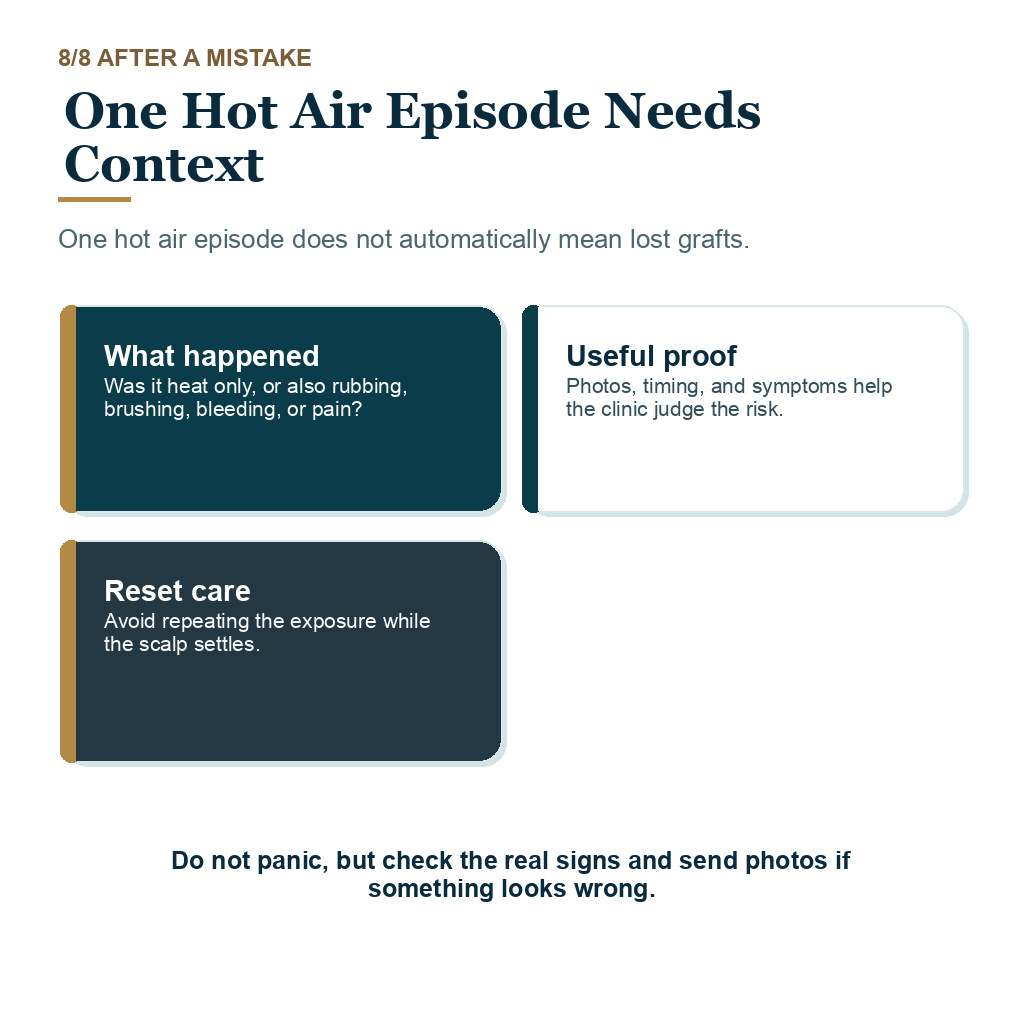
If you used a dryer too early, start with what happened to the scalp afterward. One careful exposure does not by itself mean failure. Redness, pain, heat, bleeding, or open skin matter more than the worry itself.
Look for fresh bleeding, a new open point, increasing pain, spreading redness, wet crusting, or an area that looks clearly worse than before. If none of these happened and the dryer was not hot, close, or used with rubbing, the concern is usually lower. A short, distant exposure is different from ten minutes of hot air close to crusts while the scalp is being rubbed or brushed.
If the dryer was very hot, held close, combined with towel rubbing, or followed by scratching, stop experimenting and share photos for review. Do not try to fix the worry by washing again and again. More handling can turn a small mistake into a bigger irritation cycle.
Also think about heat from daily life. Strong sun, sweating, steam, and hot rooms can all make a healing scalp more reactive. The guidance on sun exposure after a hair transplant follows the same broader principle of not adding avoidable heat while the skin is still settling.
Drying should stay cool and boring at first
The hair dryer can return only when the scalp is ready for simple drying, not styling pressure. Closed skin, settled scabs, comfortable washing, and improving redness or tenderness matter more than the date.
Use cool air, keep distance, keep the dryer moving, and leave brushes, hot air, products, and salon finishing for later. The goal is to remove moisture without heating or rubbing the graft area.
If the skin feels hot, tight, itchy, or uncomfortable, stop and go back to gentler drying. A few quiet days are better than adding irritation to a scalp that is still healing.
Read this review excerpt
Upon arriving home, I sent 4 photos (of each side of head) after every washing process to doctor for checking where I was given personal advice for how to take care of my healing head.