


Dry Shampoo Should Wait Until Scabs Are Gone
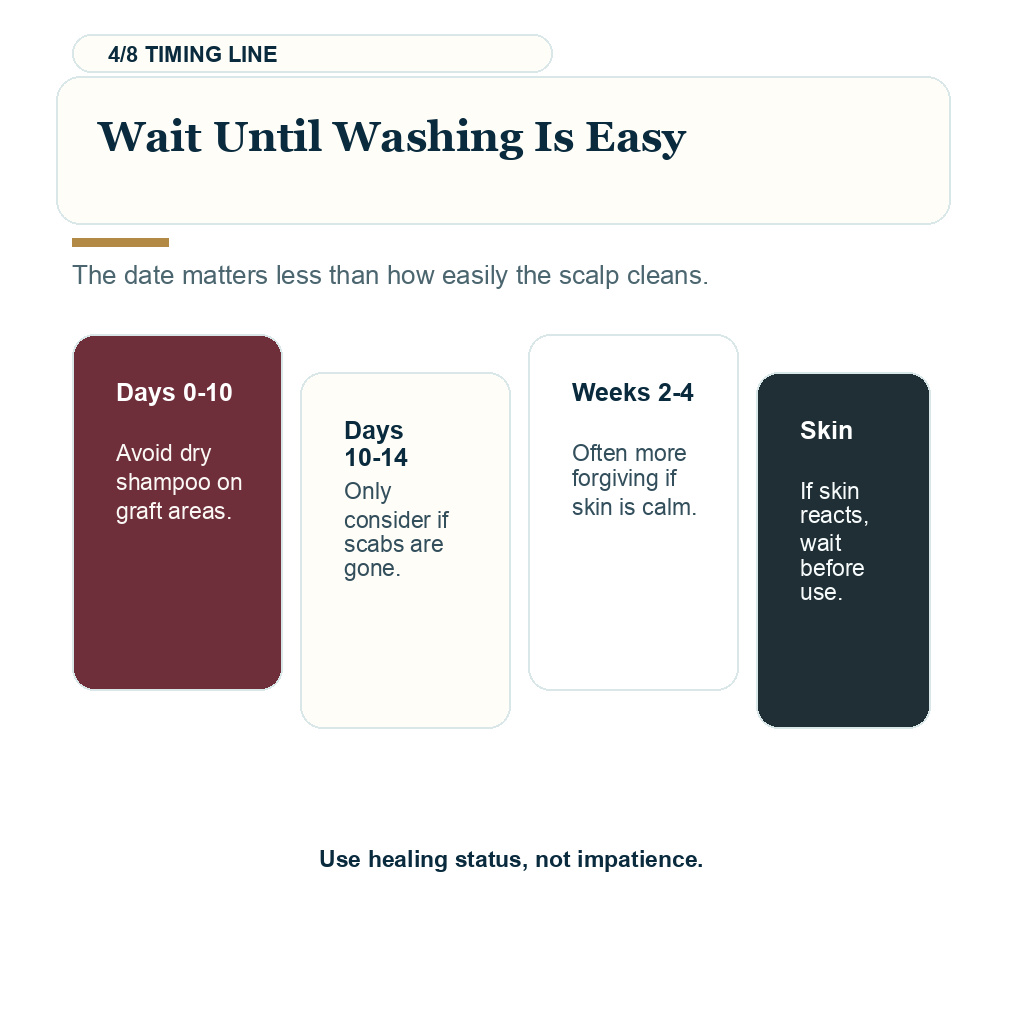
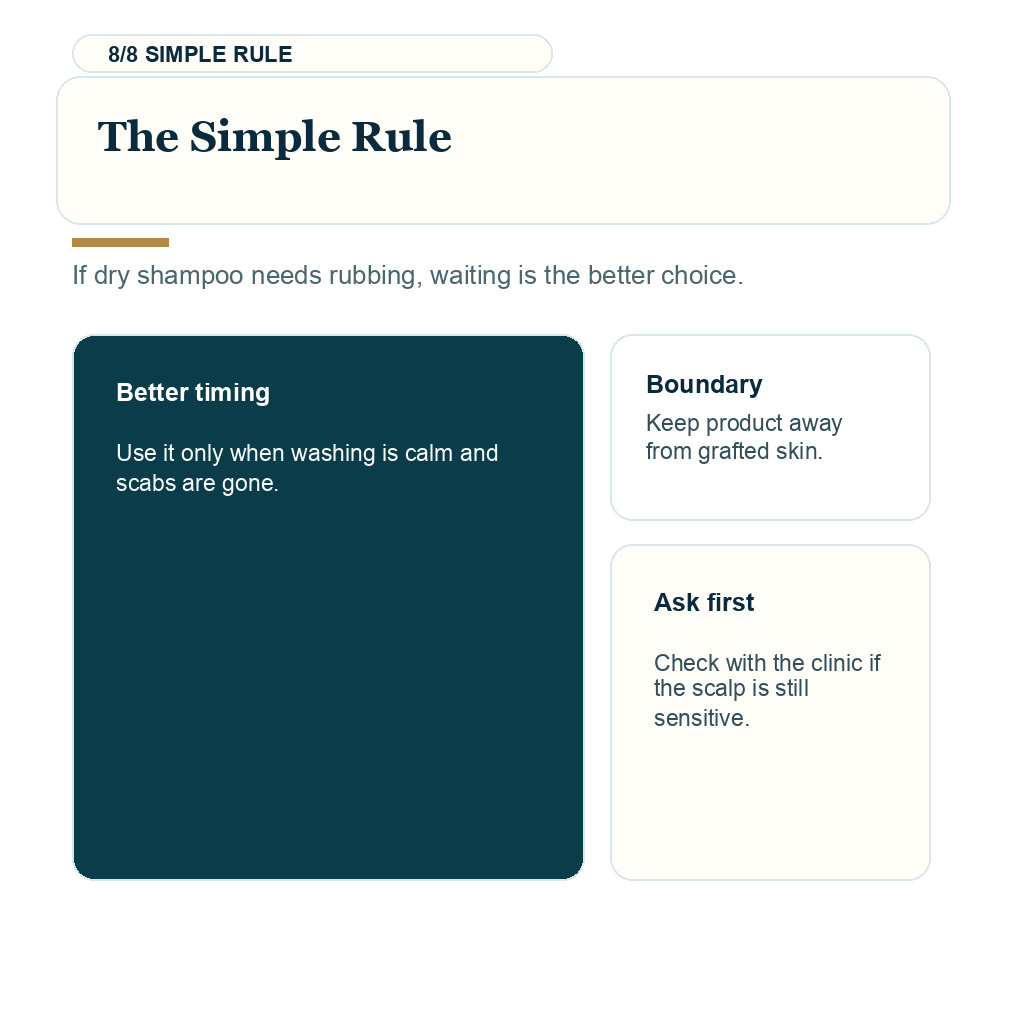
I do not advise using dry shampoo on the recipient area during the first 10 days after a hair transplant. Around days 10 to 14, it may be possible only if the scabs are gone, washing is easy, and the product can come out without rubbing. Many people are still better waiting closer to two to four weeks, especially if the skin is red, itchy, flaky, oily, or sensitive.
The key distinction is where the product will go. A small amount on longer native hair after clean healing is different from spraying powder directly onto a grafted scalp because you feel anxious about oil or shine. Dry shampoo is not a medical cleaning step. It is a cosmetic shortcut, and after surgery I judge it by residue, irritation, and how gently it can be removed. Pale buildup from products can also look like dry scale, so white flakes after hair transplant is the better reference when residue and flakes are hard to separate.
Colored dry shampoo acts more like a covering product than a wash. When it hides redness, residue, flakes, or crusts the clinic needs to see, photo review becomes less reliable.
If the reason is embarrassment about oily hair, solve the schedule first. A loose hat, a video call with better framing, or washing only the safe areas is easier to control than powder on healing skin. Keep cosmetic cover as the last step, not the first response to one uncomfortable workday.
Dry shampoo is different from normal shampoo
Normal shampoo after a hair transplant is used with water and is meant to be rinsed away. Conditioner after a hair transplant is judged by whether it rinses cleanly and stays away from healing skin. Dry shampoo sits on the hair and scalp to absorb oil. That is exactly why people want it during recovery, but it is also why very early use can become a problem after surgery.
In the first days, the scalp needs controlled cleaning, not cosmetic cover. I do not want particles collecting around scabs, sitting inside oily crusts, or making you rub harder during cleaning. The timing should stay connected to safe washing after a hair transplant, not only to whether the hair looks greasy.
Dry shampoo is also different from medical shampoo. A medicated product such as ketoconazole shampoo after a hair transplant is used for a scalp reason and must still be timed carefully. Dry shampoo is mainly cosmetic, so it has a lower priority during early healing.
Recipient area readiness matters first
The calendar gives a starting point, not permission by itself. By days 10 to 14, graft security is usually much better, but I still look at the skin. If scabs remain attached, if washing is uncomfortable, or if the scalp looks irritated, dry shampoo should wait.
I become more comfortable when you can wash the scalp gently, pat it dry, and touch the hair without anxiety. The recipient area should not bleed, sting, or shed crusts when handled normally. If you are still nervous about cleaning the area, adding a product that must later be removed is not wise.
For many people, the practical window is after the second week, and sometimes closer to one month. That is not because dry shampoo always damages grafts. It is because a small cosmetic benefit does not justify adding residue to skin that is still settling.
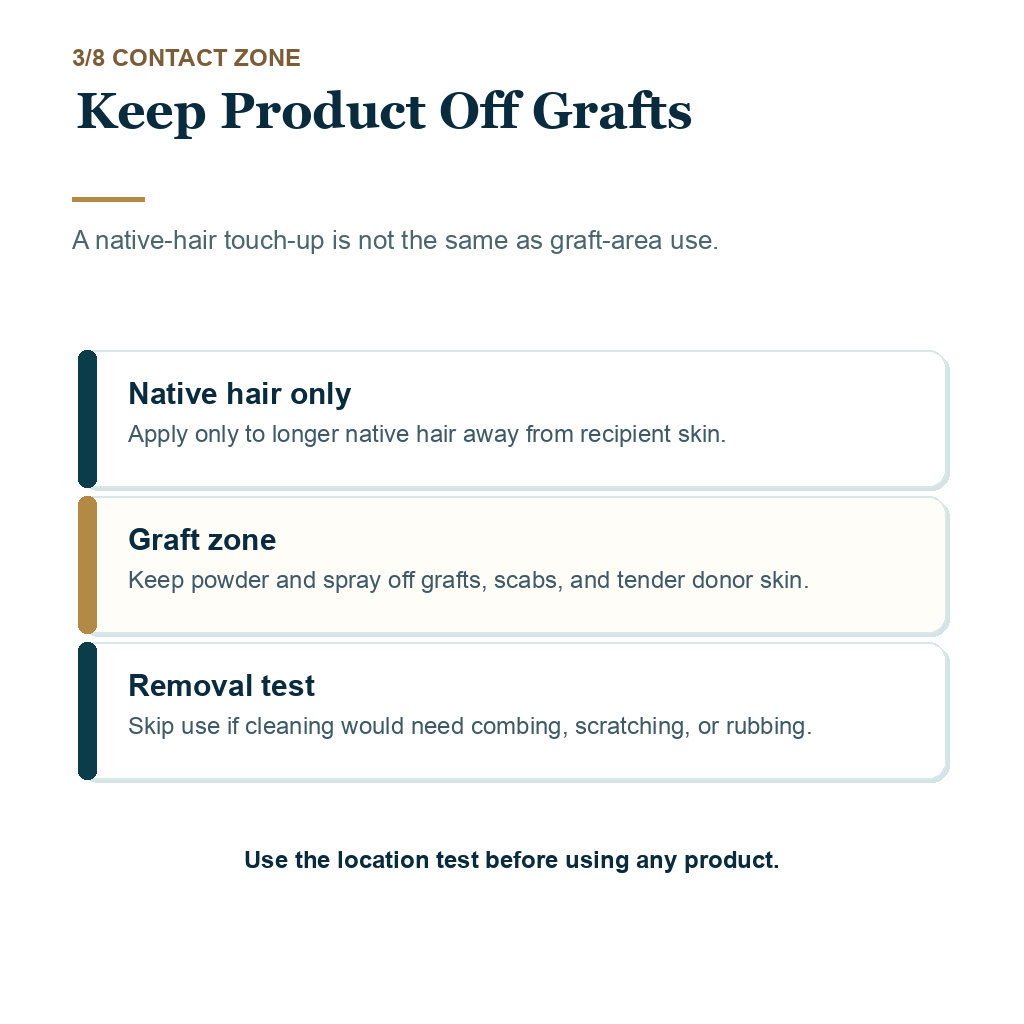
I also ask where you want to use it. A little product on untouched longer hair around the transplant is different from spraying directly onto the grafted zone. The more the product touches healing skin, the stricter the timing becomes.
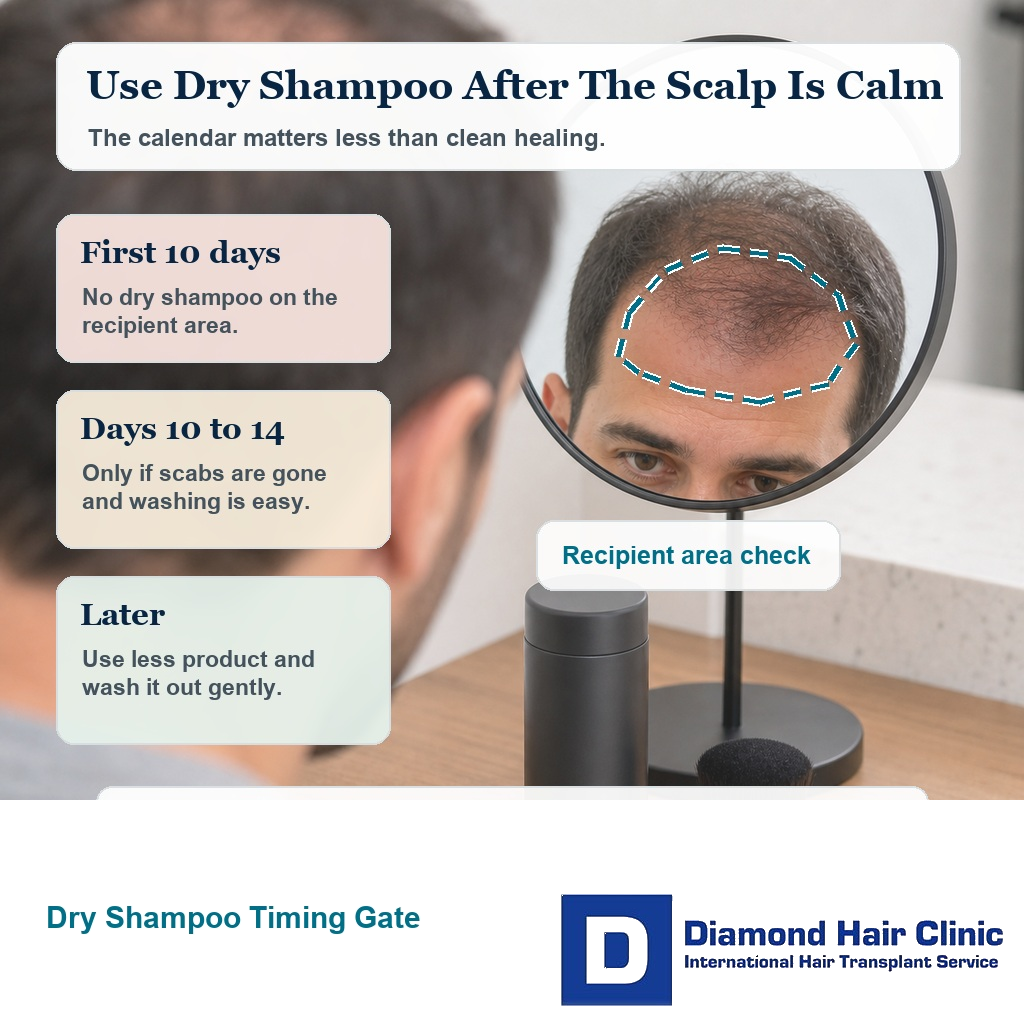
Powder or aerosol residue can be a problem
Dry shampoo may leave powder, starch, clay, fragrance, alcohol, propellant residue, or a sticky feeling depending on the product. On a normal scalp, that may only feel unpleasant. On a healing scalp, residue can make itching, flaking, and cleaning more difficult.
Colored dry shampoo and root sprays need extra caution. They may hide redness or density better, but they can also sit more visibly on the scalp and require stronger washing. A product that needs repeated spraying, brushing, or rubbing is not appropriate for early recovery.
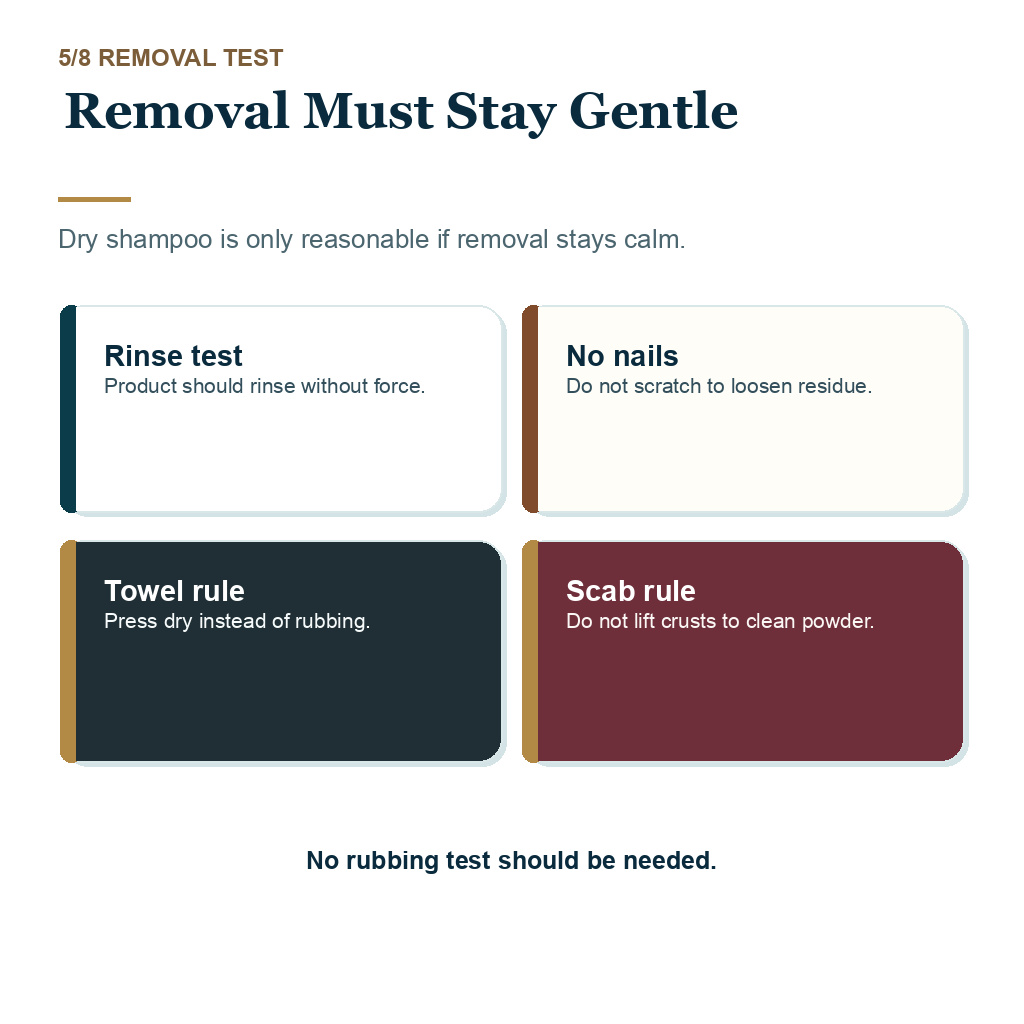
You may think the product is the main risk, but often the removal is the problem. If you need hard fingertips, a towel scrub, hot water, or a strong cleanser to remove it, the product has no place on a fresh recipient area.
Powder on a healing scalp can make a crust look dirtier and make you want to rub harder. If you cannot tell whether you are seeing residue, dry scab, or irritation, pause the product and send clean photos instead of trying to scrub the spot clear.
Another issue is false confidence. If the hair looks cleaner after spraying, you may delay a proper wash, avoid looking closely at the scalp, or keep adding product over yesterday’s residue. That routine can turn a simple cosmetic shortcut into a scalp irritation problem.
Can dry shampoo irritate an oily or sensitive scalp?
Yes, it can irritate some scalps, especially if the skin is already inflamed, oily, or reactive. Dry shampoo can also make it harder to see early changes. If small pimples, tenderness, increasing redness, or crusting appear, I want to see the scalp clearly, not covered with product.
Dandruff, dermatitis, eczema, folliculitis, and very sensitive skin all make me more conservative. I treat the scalp condition first, then discuss cosmetic residue later. That matters when you are worried about redness, scabs, or pimples after a hair transplant or have a history of folliculitis before or after surgery.
Fragrance and alcohol are also worth noticing. A product can be pleasant on normal hair but sting or dry the scalp during recovery. If a product burns when applied, it should be stopped immediately.
A reaction does not always appear instantly. Itching or flaking may start later in the day, after sweating, or after trying to wash the product out. That delayed reaction still matters because recovery should become quieter over time, not more irritated.
Using dry shampoo only if it is allowed
If dry shampoo is allowed, use a light amount on surrounding hair rather than directly on the recipient area. Keep the nozzle or powder applicator away from the grafted zone. Let the product sit on hair shafts, not on healing skin.
Use it for a limited need, not as a daily replacement for hygiene. Apply less than you think you need. Avoid strong brushing. Remove it gently the same day or at the next proper wash, depending on your surgeon’s aftercare plan.
Test only one new product at a time. If you restart minoxidil, add dry shampoo, use hair fibers, and change shampoo in the same week, any irritation becomes hard to interpret. A staged return is easier to judge, especially when minoxidil after a hair transplant is also part of the plan.
Choose a simple product with as little fragrance and styling effect as possible. Avoid heavy hold, strong color, or anything that makes the scalp feel coated. The product should solve a short appearance problem, not create a second cleaning task.

Colored dry shampoo and root spray need extra caution
Colored products need more caution than plain dry shampoo. They may stain the scalp, hide redness, and require stronger washing. If you use them too early, the scalp can look better in the mirror while the real skin condition is less visible.
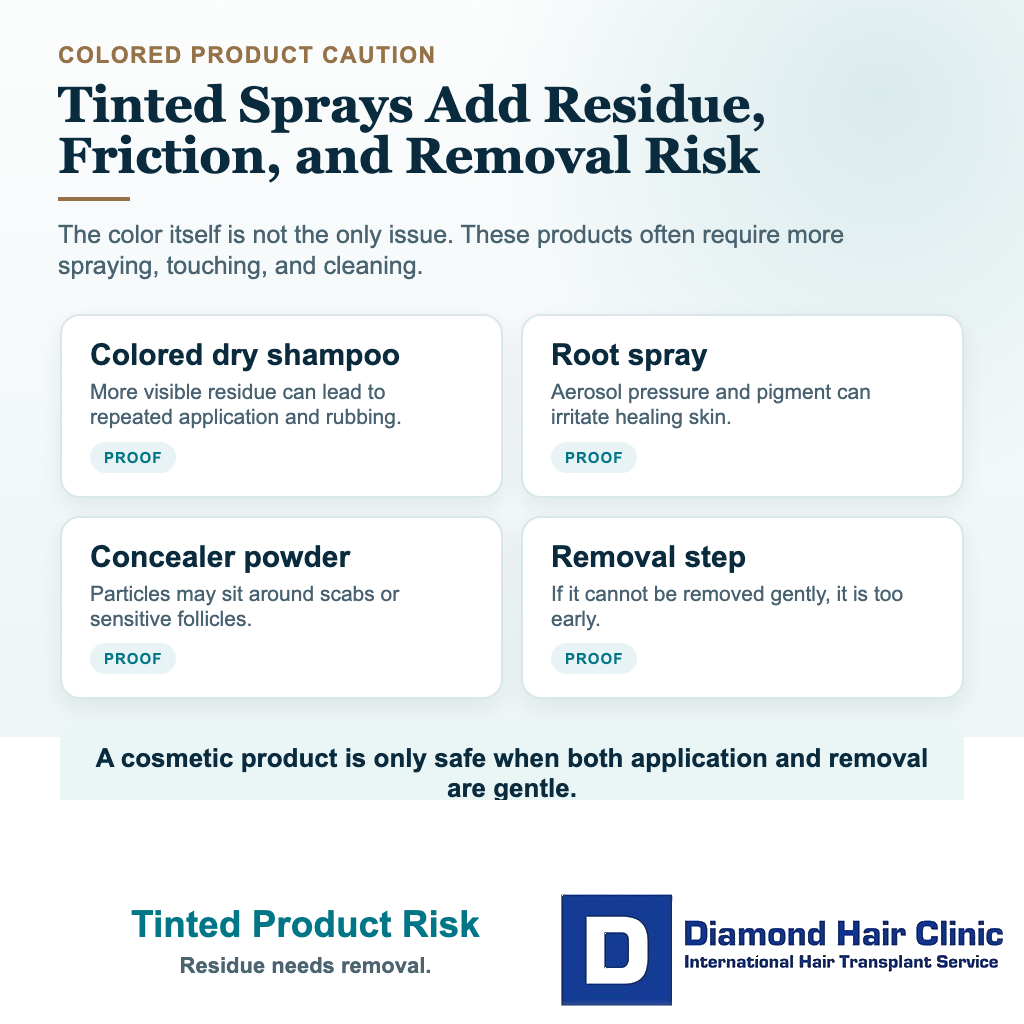
Root sprays and cosmetic concealers also encourage touching and styling. That can be a problem when you are already anxious and checking the grafts repeatedly. If camouflage is needed, use the lightest option that can be removed gently.
Some people compare dry shampoo with hair fibers after a hair transplant. The decision is similar in one way. The product may be acceptable after the skin has settled, but it should not lead the recovery plan.
Colored products also create a review problem. If I need to inspect redness, small bumps, or scab behavior, a tinted layer can hide what I need to see. On a healing scalp, seeing the skin clearly is more valuable than making the scalp look better for a photograph.
Is dry shampoo safer than a hat or styling product?
It depends on the timing and the reason. A loose hat may be useful later, but early pressure and friction can be a problem if it touches the grafts. Dry shampoo avoids pressure, but it adds residue. Styling gels, waxes, sprays, and strong hair products can create a different cleaning problem.
These products are not simply safe or unsafe. I look at what they do to the scalp. A product that sits on skin, needs rubbing, traps sweat, or makes you touch the recipient area more often deserves more caution. The same practical thinking applies when deciding when a hat after a hair transplant is reasonable.
Heat styling is another separate issue. If dry shampoo makes you want to blow dry, brush, and style aggressively, the routine becomes too much. Early recovery should stay simple, which is why I also give separate advice on when a hair dryer after a hair transplant can be used.
Plan work or travel appearance without hiding the scalp
This is often the real reason behind the question. Dry shampoo is not medically important. The concern is greasy hair, visible redness, social questions, work meetings, travel, or a planned event. Dry shampoo does not solve oily healing skin. It adds a layer that later has to come out during the same careful washing routine.
I understand that pressure. Still, one public appearance should not decide the timing of a cosmetic product. If the recipient area is not ready, the better plan may be adjusting the schedule, working from home longer, styling surrounding hair carefully, or accepting a few visible recovery days.
If work visibility is the main pressure, plan time off work after a hair transplant before surgery rather than relying on dry shampoo to hide healing skin. Public facing work, travel, swelling, redness, and washing should be planned before the operation, not improvised with cosmetic products in the first week.
Discuss privacy before surgery when possible. If visible recovery would be difficult for you, you need a realistic plan for the first 10 days, the shedding phase, and the slow growth months. That is closely connected to when someone may look normal in public after a hair transplant.
Can dry shampoo replace washing?
No. Dry shampoo cannot replace proper washing after a hair transplant. It can absorb oil temporarily, but it does not clean the scalp the way water and appropriate washing do. If you use it to postpone washing, residue can build up and the scalp becomes harder to assess.
The first wash instructions are there for a reason. They help remove crusts gradually, keep the scalp clean, and reduce the temptation to scratch. Follow the clinic’s hair transplant aftercare plan first, then add cosmetic products only when they no longer interfere.
Oily or uncomfortable skin is usually better handled through proper washing instructions than by covering the scalp. Dry shampoo should stay a temporary appearance tool, not a substitute for healing care.
Stopping dry shampoo when irritation appears
Stop if dry shampoo causes burning, itching, increased redness, tenderness, flaking, pimples, sticky residue, or difficult washing. Stop if the scalp feels worse the next day. Stop if you need to scrub to remove it.
Also stop if you are using it to hide a concern that needs review. If the scalp is becoming more inflamed, if density looks patchy later in recovery, or if one area behaves differently from the rest, photographs and clinic review are more useful than more product.
Cosmetic products can make daily life easier, but they should never make you ignore the scalp. In recovery, the best product is often the one you are not ready to use yet.
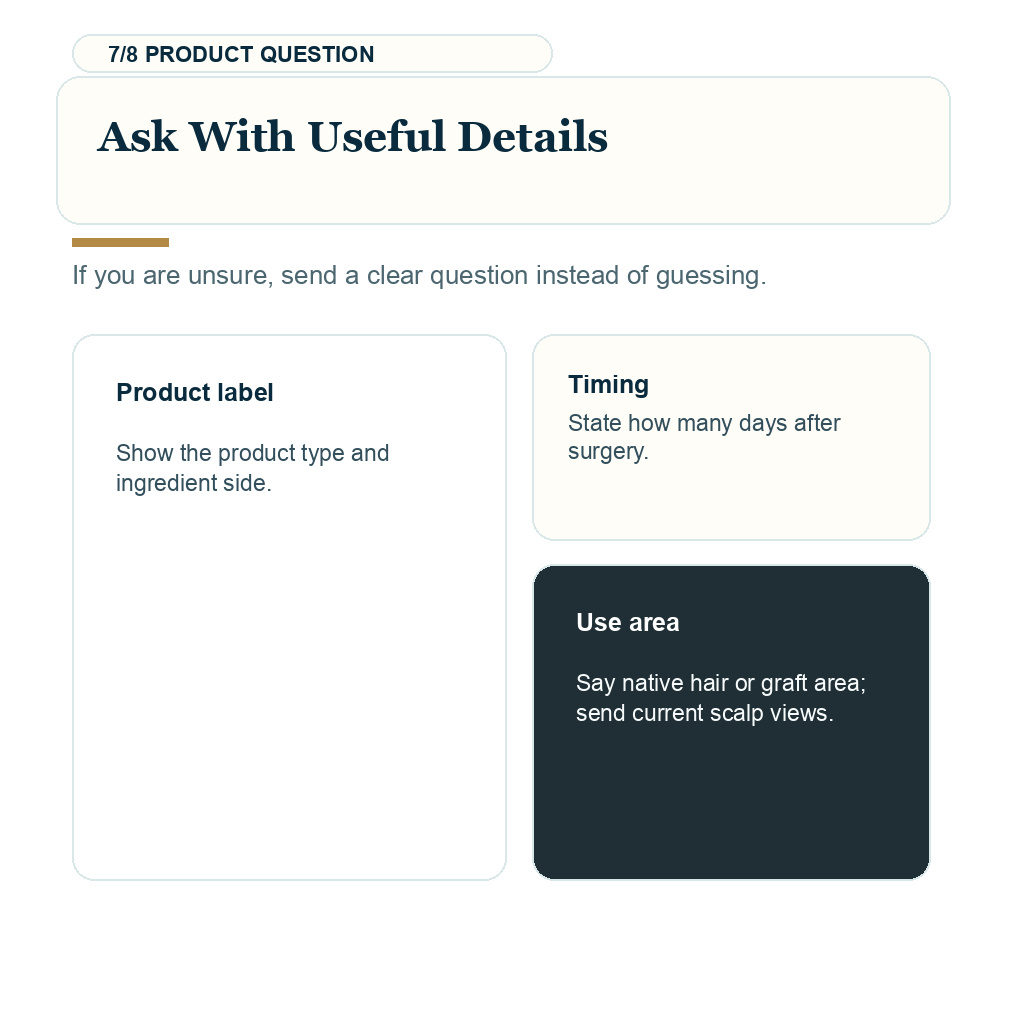
Send clear photographs before using the product rather than after. A clean scalp photo tells the clinic more than a styled photo with powder, spray, and shadows. That small step can prevent unnecessary worry and unnecessary irritation.
Use the 8 dry shampoo timing slides below to compare scab status, product residue, graft zone contact, washing ease, gentle removal, stop signals, and what details to send if you are unsure. Swipe sideways, use the arrows, or choose a number below the image.

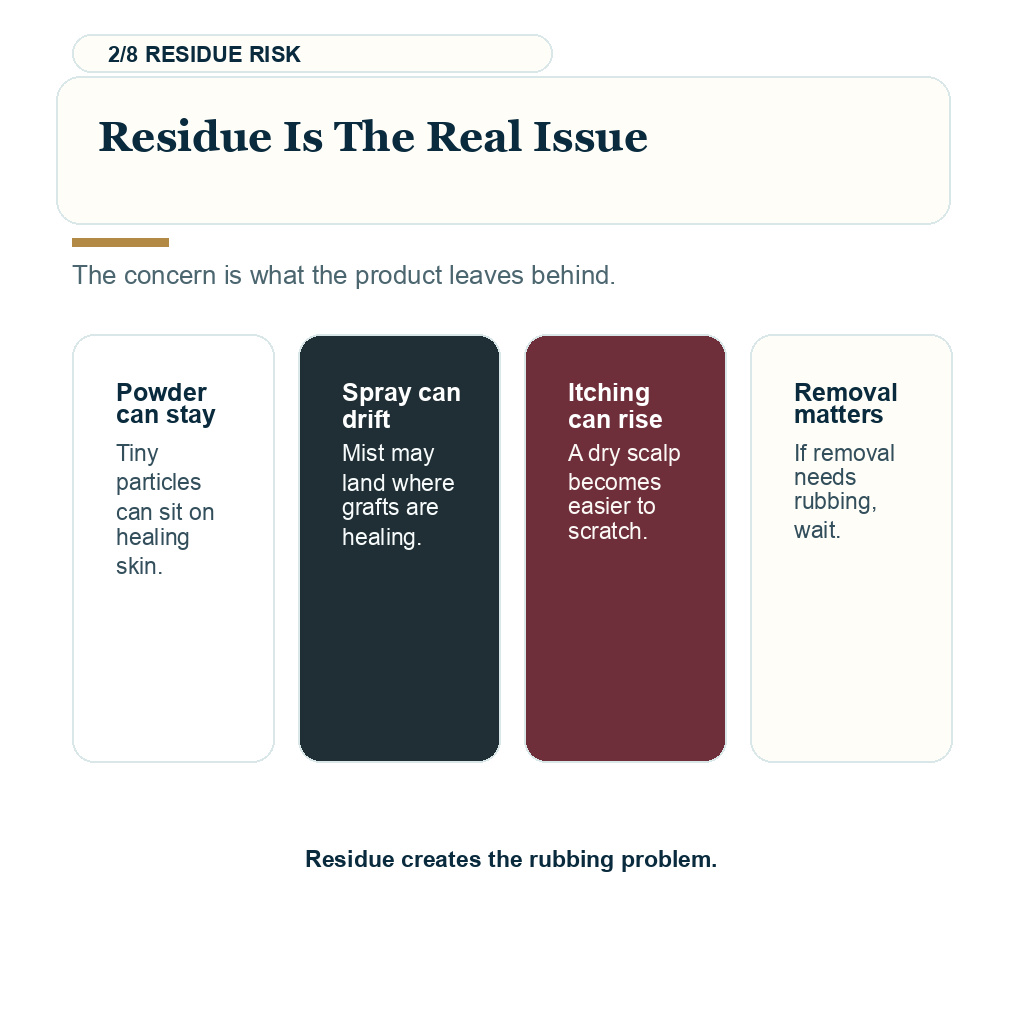

Clean skin matters more than cosmetic cover
Dry shampoo is usually a privacy question, not a medical need. If the scalp is still crusted, tender, red, sticky, or hard to wash, a powder or spray can hide the surface I need to see and can make you touch the graft area more than you should.
When appearance pressure is high, solve the schedule first. Work from home, a quieter social plan, gentle washing, or a later public event is safer than using residue to cover healing skin too early. Once the grafts are secure and washing is easy, use the smallest amount and stop if the scalp reacts.
Read this review excerpt
First wash completed and visual instructions given to my daughter.