


Public Return Timing Depends on Visible Healing
Most patients start to look socially presentable after the first 10 to 14 days, but looking completely normal in public is different from simply being safe to go outside. The first 10 to 14 days are mainly about protecting the grafts and letting the scabs come away properly. After that, redness, uneven hair length, shedding, and the contrast between transplanted and native hair can still make the result visible. If you are considering Botox or fillers after a hair transplant, wait until these visible recovery signs are no longer making the transplant hard to judge.
If you already use a hair system during recovery, that plan needs review before surgery. Adhesive, pressure, and repeated removal can change the safety of the early healing period.
Most patients need 10 to 14 days before the transplant stops dominating their appearance. Everyday life often feels easier after 3 to 4 weeks, while the ugly duckling phase can stay socially noticeable for several months. The biggest factor is not just healing speed. It is whether your work, haircut, skin redness, graft placement, and native hair allow you to blend the area naturally.
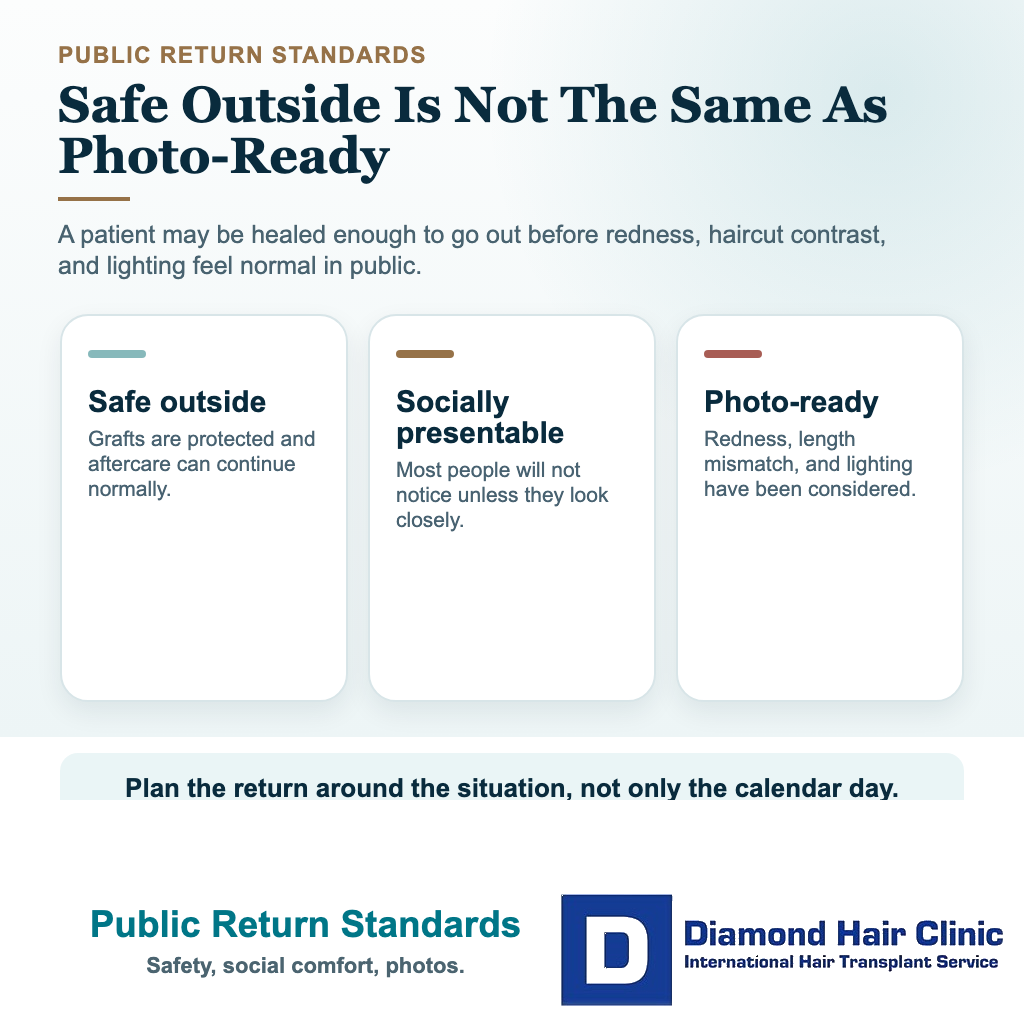
There are really three different standards. Safe to go outside means the grafts are protected. Socially presentable means most people will not notice unless they look closely. Ready for photos means redness, haircut mismatch, shedding, lighting, and normal conversation distance have all been considered. These do not follow the same timeline.
Define the event before choosing the date. A video call, office doorway, dinner table, passport control, and wedding photo all expose different parts of recovery.
This question is also social. Many patients are really asking whether people will stare, whether colleagues will notice, whether travel will feel uncomfortable, or whether they will regret being seen too early. If the public deadline is a wedding or formal photo event, I plan the timing more cautiously because being socially presentable is not the same as being ready for photos. Emotional comfort is part of planning a hair transplant well.
Some patients look normal sooner than others
Two patients can have surgery on the same day and look very different two weeks later. One may have light redness, a short haircut, and an easy return to work. Another may have stronger redness, pale skin, visible scabs for longer, swelling, or native hair that makes the transplant area stand out.
The number of grafts also changes visibility. A small frontal adjustment may be easier to hide than a large session across the hairline, mid scalp, and crown. But graft number alone does not explain everything. Hair color, skin tone, hair length, shaving pattern, and the way the recipient area was planned all matter.
I give a safe range first, then adjust it to the person in front of me. A patient with a public facing job needs a different plan from someone who can work quietly from home, and a patient with stronger redness may need more privacy than a patient whose skin settles quickly.
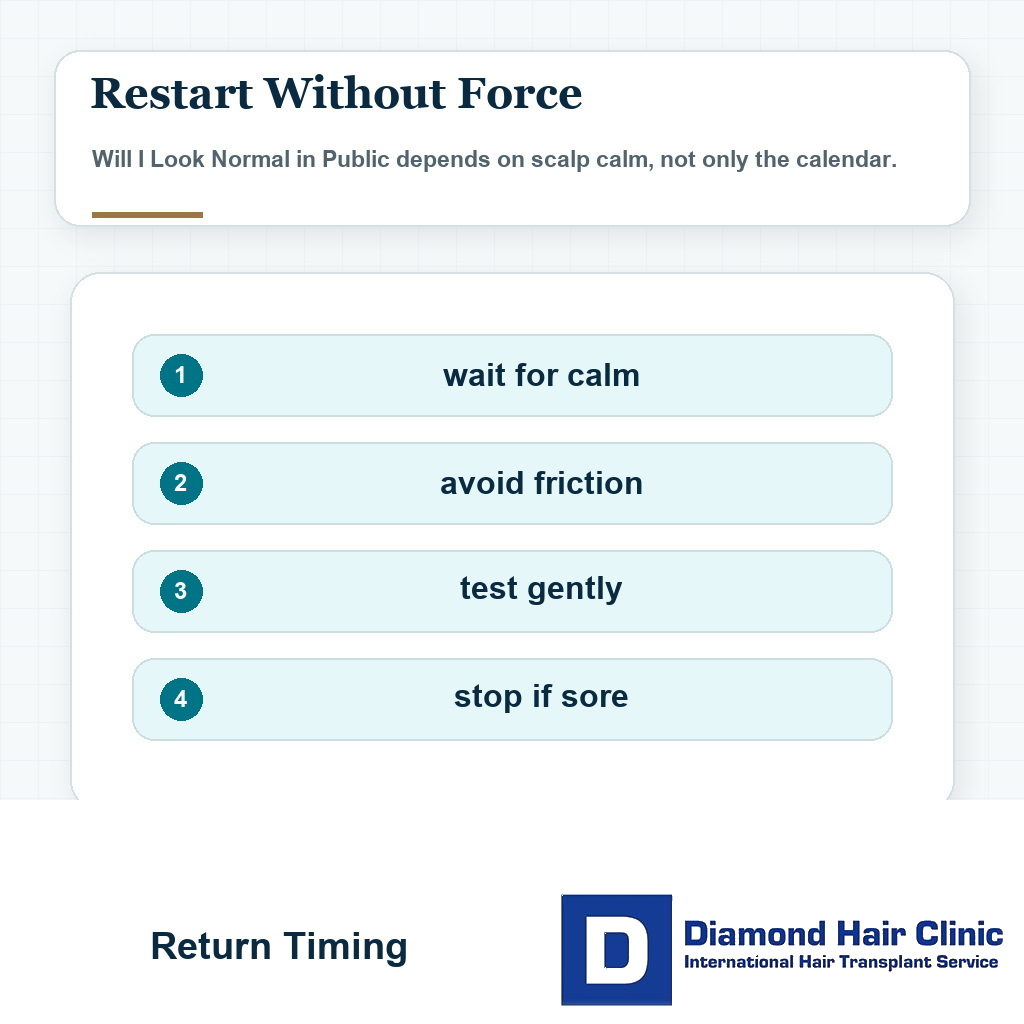
Unshaven planning can reduce visibility only in selected cases
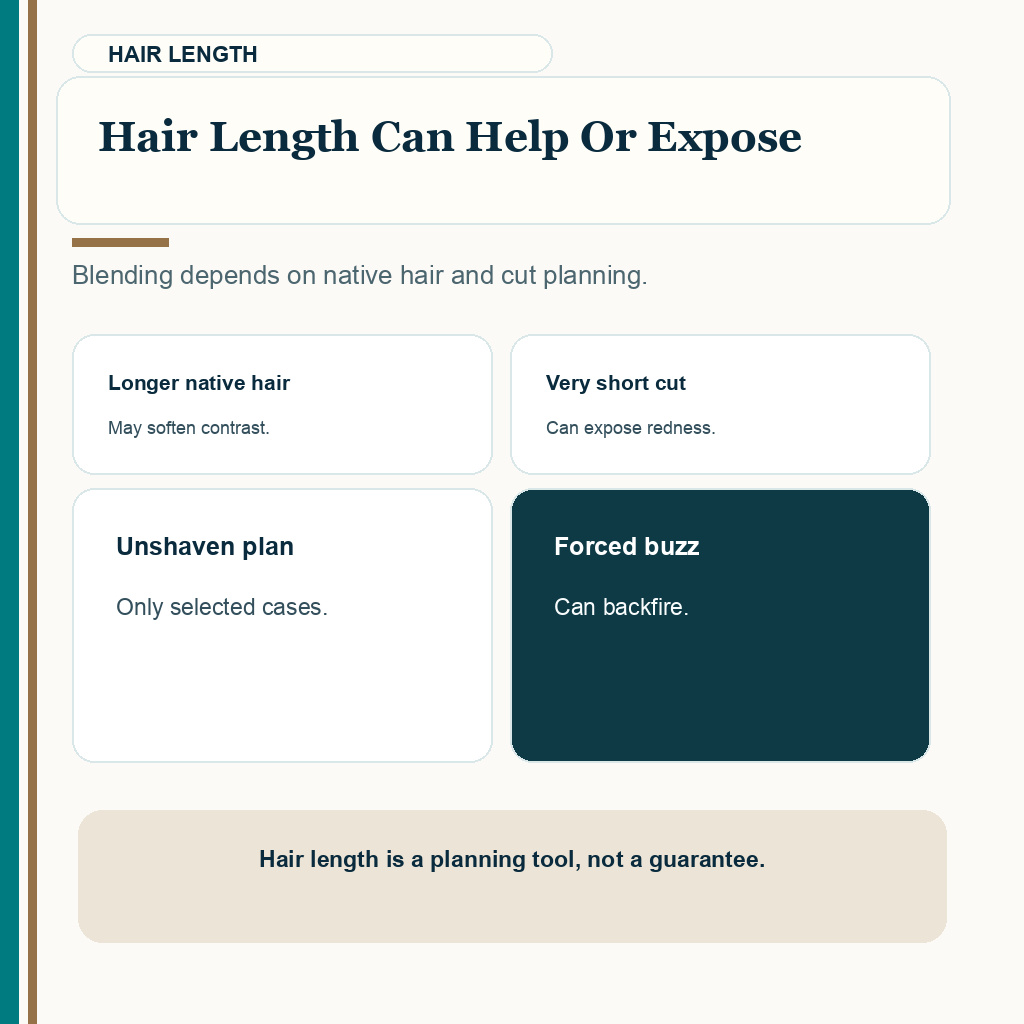
Sometimes, but not always. Keeping some existing hair longer can make the early recovery less obvious, especially when the work is small and the patient has enough surrounding hair to camouflage the area. But a unshaven plan is safer only when it still allows careful graft handling.
If the main reason for a unshaven request is fear of being seen in public, I still have to judge the surgical side first. I need enough access to extract grafts cleanly, see the direction of the existing hair, control the recipient area, and place grafts without compromising angle or density. If hiding the surgery makes the operation less precise, a partial shave or full shave is usually the cleaner surgical choice for the final result.
I explain the limits of unshaven hair transplant risks before promising discretion. Looking more normal in week one should not come at the cost of a less natural result in year one.
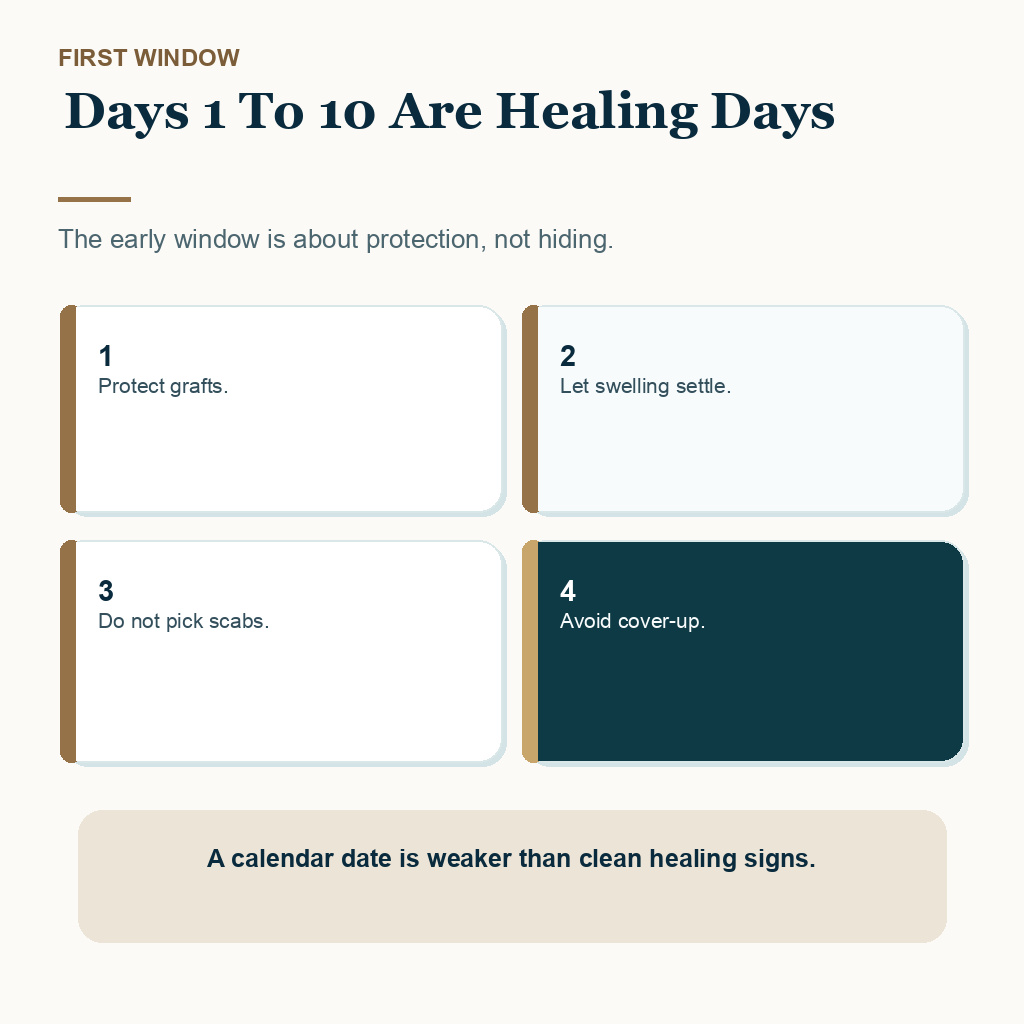
First 10 to 14 days in public
The 10 to 14 day window is often the most visible and delicate part of early recovery. The scalp can look red, dotted, dry, swollen, or uneven. The donor area may also look freshly shaved or patchy, especially if the hair around it is longer.
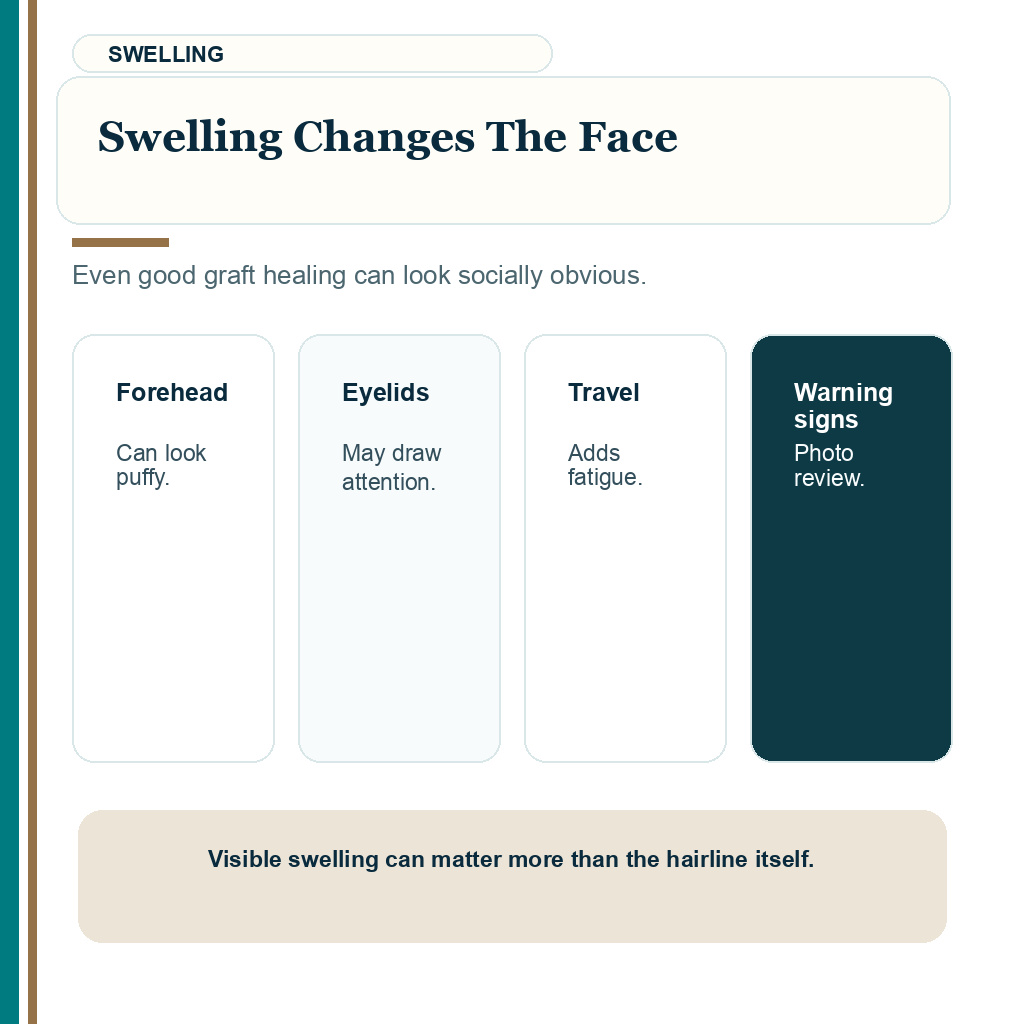
Swelling can also make the face look more unusual for a few days, especially around the forehead or eyes. That point does not mean the transplant has failed. It means the patient may not look socially comfortable yet, even if the healing is moving in the right direction.
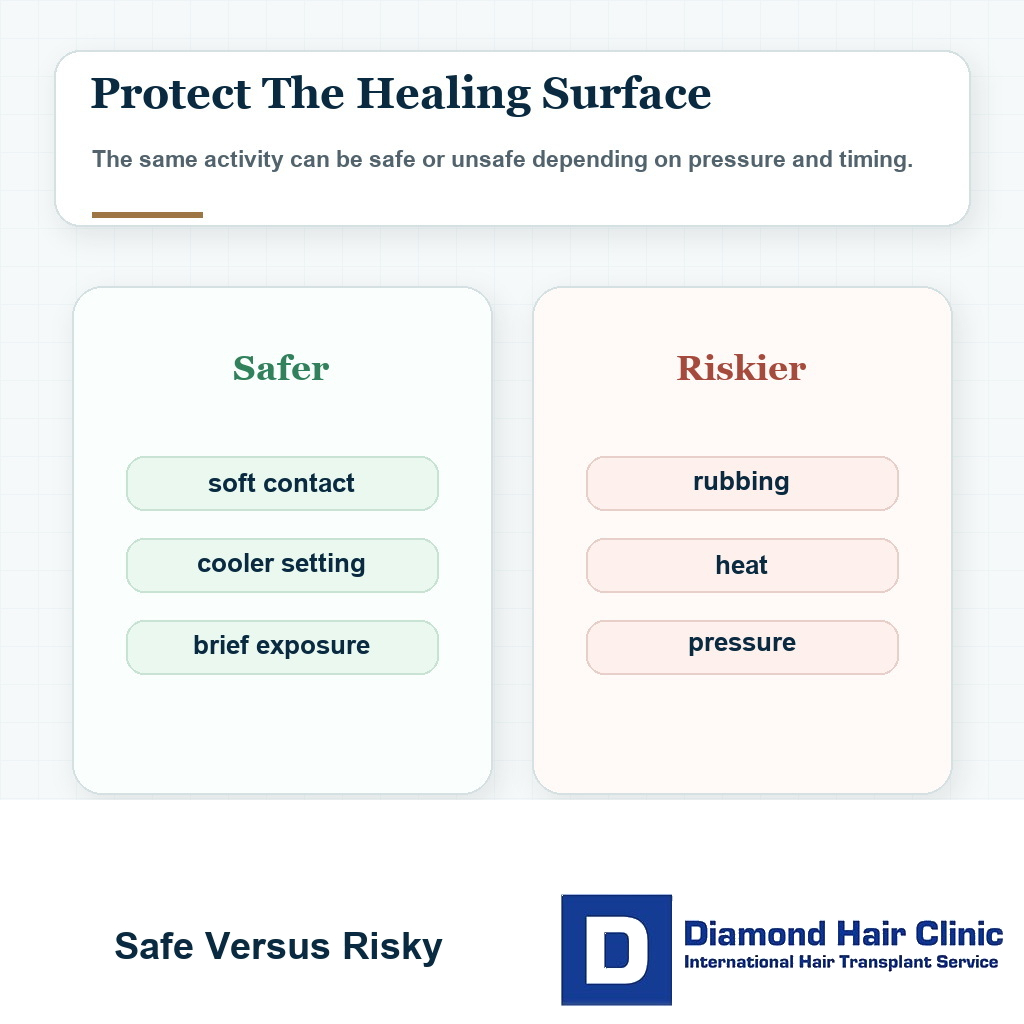
During this stage, I focus much more on clean healing than looking perfect. The priority is gentle washing, avoiding rubbing, protecting the recipient area, and following the hair transplant aftercare plan. Trying to hide the transplant too aggressively can create more risk than simply accepting a short visible phase.
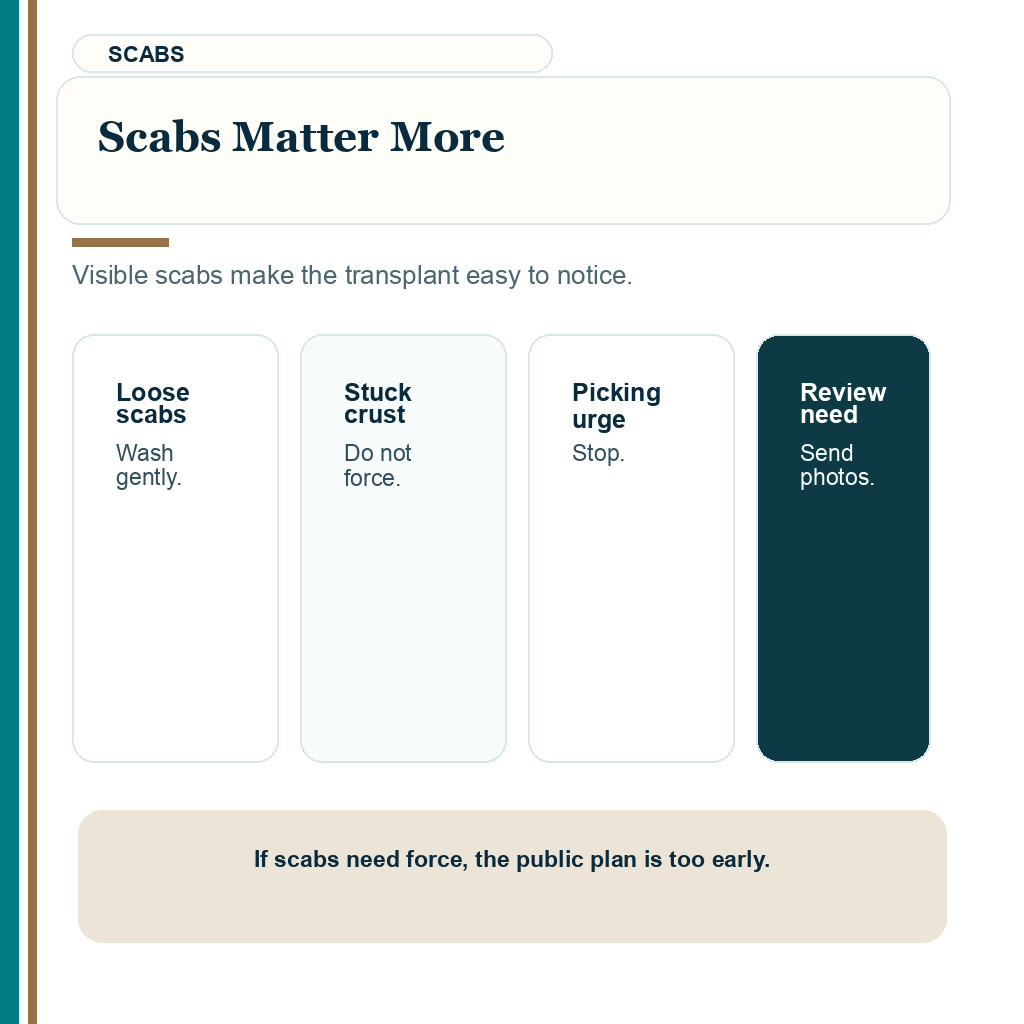
Many patients feel better once the scabs begin to clear. Still, do not scrub hard just because you have a meeting soon. If the scalp needs a few more days, those few days can protect the result.
First dates and close social plans need graft protection first
A first date a few days after FUE is different from a normal coffee or dinner. The person may sit close, notice redness or scabs, ask about a hat, or see that the scalp is still healing. If you are still in the first week, I would not build the plan around hiding the scalp. I would first ask whether the setting lets you protect the grafts calmly.
If a loose clean hat is not yet safe, do not force one just to feel less exposed. The same is true for concealer, fibers, heavy styling, alcohol, late nights, sweating, or any situation where you may touch the scalp without thinking. A simple private explanation can be enough, and if you want more privacy, delaying the meeting is often the better choice.
You do not need to turn the transplant into a dramatic announcement. Many patients can simply say that they had a medical procedure and are following the aftercare instructions for a short period. The important point is that privacy should not make you rub, scrub, cover, or rush the scalp before it is ready.
If privacy is the main worry, keeping a hair transplant private still has to fit the medical timeline. A loose clean hat is useful only when it does not press or drag across healing grafts.
If there is fresh bleeding, worsening pain, spreading redness, discharge, bad smell, fever, or clear trauma to the grafts, the question is not how to explain the transplant socially. Contact the clinic and let recovery guide the calendar.
Returning to work without feeling too exposed
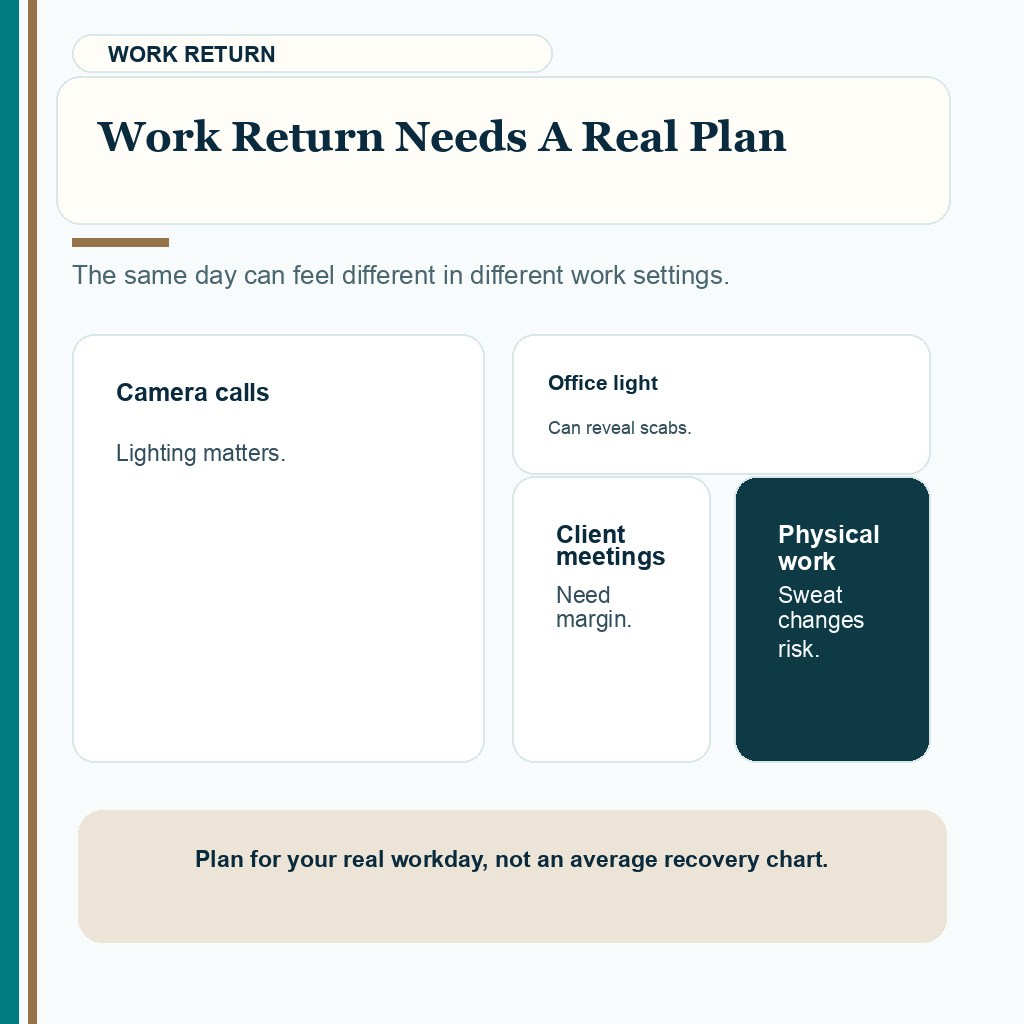
For quiet desk work, many patients can return earlier than they look completely normal. For a public facing role, a stage, a camera job, or a workplace where people inspect each other closely, the plan needs more privacy.
Looking normal means different things at work, airport security, family meals, and video calls. Name the situation you need to manage, then plan the haircut, hat rules, travel timing, and camera use around that situation.
I usually guide the patient to separate medical safety from social comfort. You may be medically able to work after several days, but still feel visibly exposed. For work specific timing, time off work after a hair transplant depends on the job. Here, I am looking at the more personal question of how visible the recovery may feel in daily life.
If you can work remotely for the first week, use that advantage. A safe return means avoiding heavy sweating, dirty environments, helmets, tight hats, and anything that may rub the grafts. Courage is less important than keeping a healing surgical area out of the wrong environment too early.
Hat use needs timing and graft protection
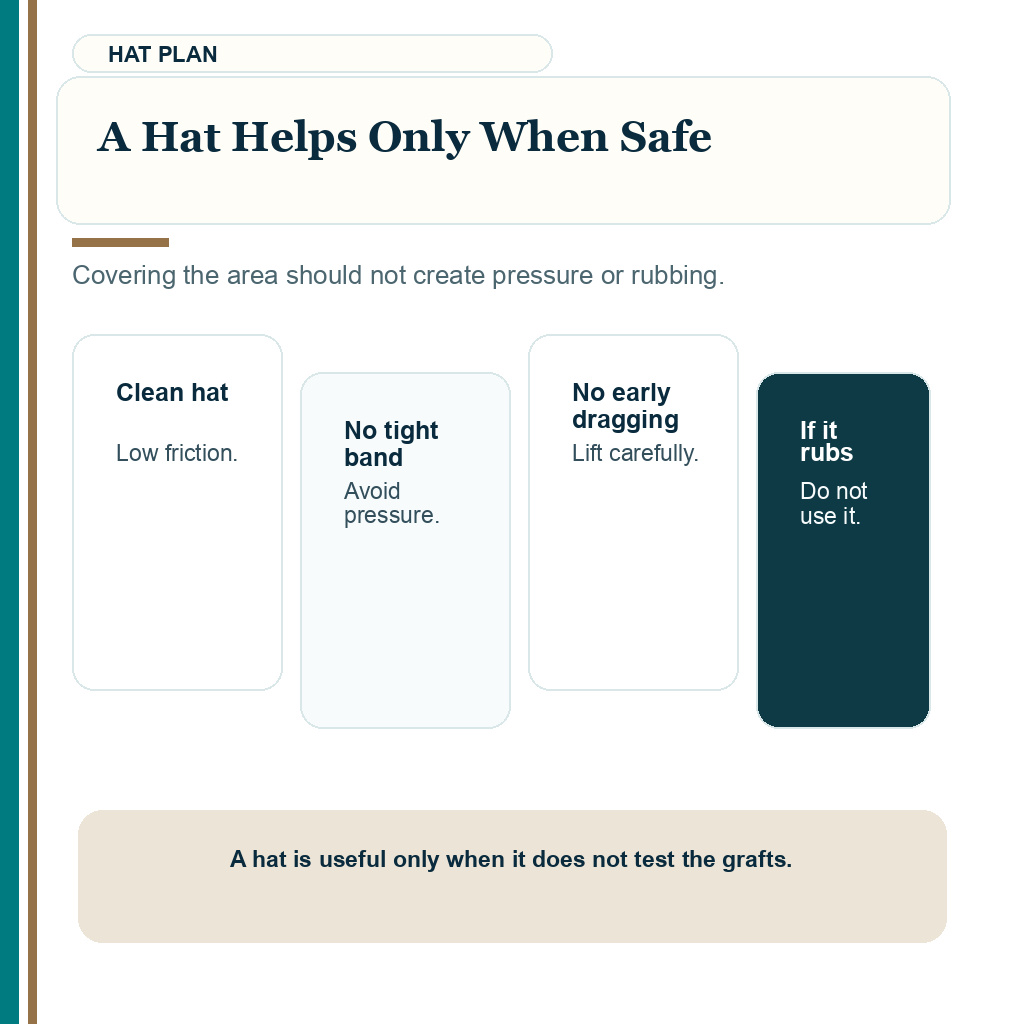
A hat can help socially, but only when the timing and fit are safe. In most cases, I avoid anything touching the recipient area during the first 10 days. A loose clean hat may become reasonable between day 10 and day 14 if the scabs are coming away normally and the hat does not rub.
The timing for wearing a hat after a hair transplant depends on healing, fit, and timing. A soft loose hat used carefully is different from a tight cap, beanie, helmet, or hard hat. The difference matters because pressure and friction are not cosmetic details in early healing.
If you need a hat for work, I review the job before surgery. A loose hat in a clean indoor environment is one thing. A helmet, dusty workplace, or physical job is another. Planning this before the operation is much better than improvising on day 5.
The 10 public return slides below separate visibility standards, days 1 to 10, scabs, redness, swelling, hair length, hat use, work setting, concealers, and the final readiness decision. Swipe sideways or use the arrows one slide at a time.


The ugly duckling phase can feel socially difficult
It can. This is the part many patients underestimate. After the early scabs clear, the transplanted hairs may still be visible for a short time. Then shedding begins, and the area can look thinner, uneven, or less organized.
The hardest social period is often not the first week. It is the period from about week 3 through the first few months, when the scalp looks healed enough that other people think it should look normal, but the new growth has not arrived yet.
A careful haircut can help, but the wrong haircut can make the contrast worse. Cutting too soon is especially risky in the recipient area. The guidance on getting a haircut after a hair transplant explains why scissors, clippers, and shaving do not all belong to the same timeline.
Buzzing hair is not always the best blend
A buzz cut can help some patients, but it is not a magic solution. If the donor area is still red, the recipient area is patchy, or native hair shock loss is present, buzzing everything short can expose more than it hides.
I understand the temptation. A patient looks in the mirror and wants everything to be one length. But if the scalp is still healing, patience and controlled styling are safer than a rushed cut. The safer timing for using a buzz cut during the ugly duckling phase depends on the donor area, the recipient area, and whether shock loss is making the contrast worse.
The most useful visual plan is usually made before surgery. If I know a patient must return to a visible workplace, I think about shaving pattern, hair length, graft placement, donor appearance, and what is realistic during the first month.
Fibers and concealers need careful timing
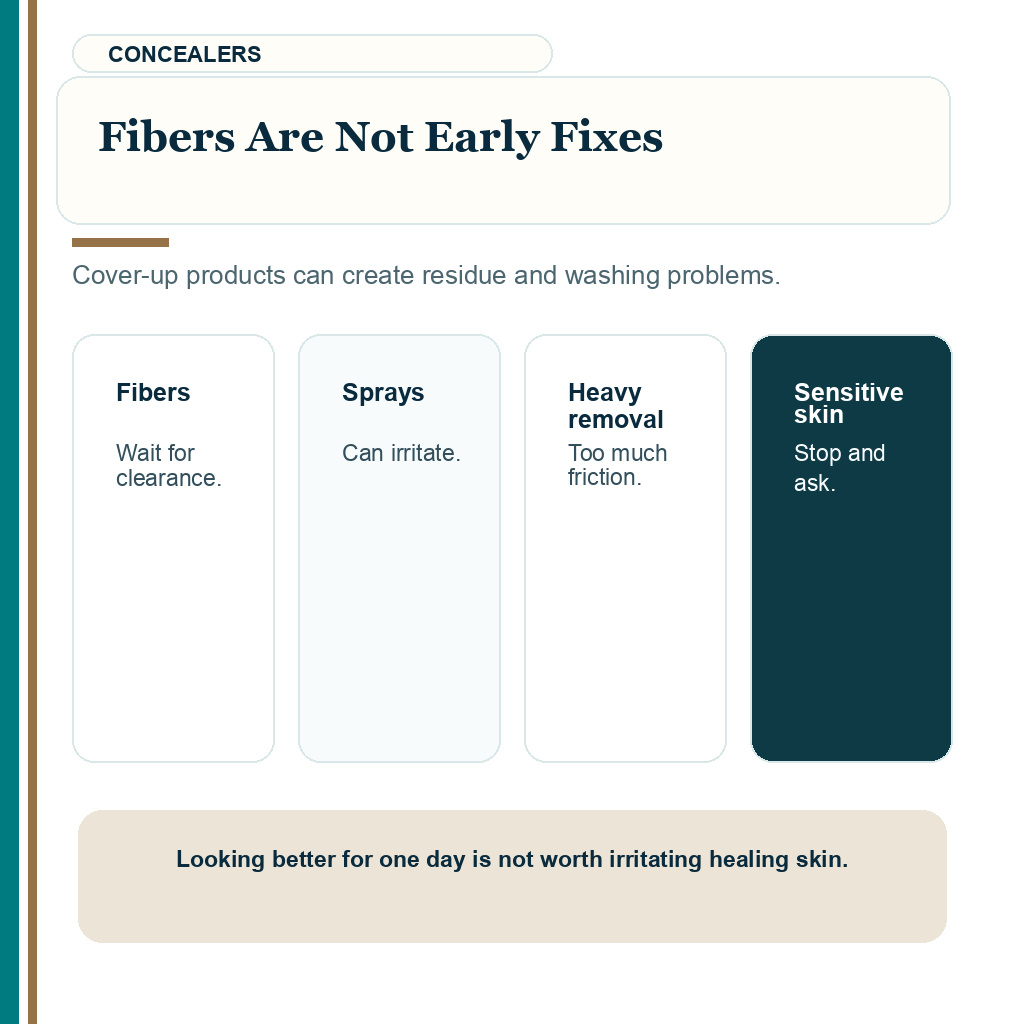
Hair fibers can be useful later, but I avoid powders, sprays, dry shampoo, waxes, or concealers sitting on a healing recipient area too early. The scalp may look closed before it is ready for product buildup.
In most cases, I ask patients to wait 4 to 6 weeks before using fibers or concealers, and longer if there is redness, pimples, sensitivity, or crusting. Hair fibers after a hair transplant create this issue too, because cosmetic coverage should not hide a healing problem.
The problem with using concealer too early is not just irritation. It can also hide warning signs. If redness spreads, bumps appear, or the scalp becomes itchy, I need to see the skin clearly. Looking normal for one evening is not worth confusing the healing picture.
Redness and scabs are the main early giveaway
Some redness and scabbing are normal early after surgery. The key question is whether the appearance is improving in the expected direction. If redness is getting lighter, scabs are loosening with proper washing, and there is no increasing pain or discharge, the patient is usually moving through the normal visible phase.
If redness becomes stronger, painful, hot, spreading, or associated with pus, that is a different conversation. Not every red spot is dangerous, but when to worry about redness, scabs, or pimples after a hair transplant depends on whether the signs are settling or getting worse.
For public visibility, redness is often more noticeable on lighter skin and under harsh bathroom or office lighting. A patient may look acceptable outdoors or in soft daylight, then feel shocked under direct overhead lights. Patients should not judge their appearance from the harshest possible mirror.
Travel can make the public stage harder
Travel does not usually damage a transplant by itself, but it can make the visible stage harder. Long flights, poor sleep, swelling, dehydration, luggage, crowded airports, and stress can all make the first days feel less controlled.
For many medically stable patients, flying after surgery is possible, but I usually prefer a safer window of 24 to 48 hours, and 48 to 72 hours for a long flight or a patient who feels swollen, tired, or anxious. The practical question of flying after a hair transplant is not only whether the grafts are safe. It is also whether the patient can travel without adding unnecessary pressure to early healing.
If you have a long trip and a public job waiting at the other end, do not plan as if everything will look perfect. Give yourself recovery space. It is better to return with some margin than to arrive home exhausted, swollen, and forced into public life before you are ready.
Shedding can make you feel less normal later
The first visible recovery is not the final emotional stage. Many patients feel relieved when scabs clear, then become worried again when transplanted hairs shed or native hairs look thinner around the operated area.
This can be normal, but it needs context. Transplanted hair shedding and native hair shock loss after a hair transplant are not the same thing. The appearance can temporarily feel worse before the new hair begins to grow.
Do not diagnose failure from a difficult month 2 mirror. Early recovery can be visually unfair. If you want to document the result properly, use consistent photos and a monthly rhythm, not daily panic. Tracking hair transplant growth with comparable photographs is more useful than harsh daily mirror checks.
Public return planning should be part of surgery
Public visibility may sound like an emotional detail, but it affects how the patient experiences recovery. If a patient has a public facing job, a social event, a wedding, a travel schedule, or strict workplace rules, that should be part of the surgical plan before surgery.
When I plan a case, you need to know what will be visible, what may be hidden, what should not be hidden too early, and what type of work may need more time. You also need to understand that a natural result later matters more than forcing the scalp to look perfect in the first two weeks.
If a clinic promises that nobody will notice after a few days, the promise is too narrow. Some patients do heal quickly, but that kind of answer ignores redness, scabs, shaving, donor visibility, swelling, skin tone, graft count, and the patient’s workplace. The patient needs a real visibility plan, not a line that only sounds reassuring before committing.
Wait until healing is calm enough to be seen
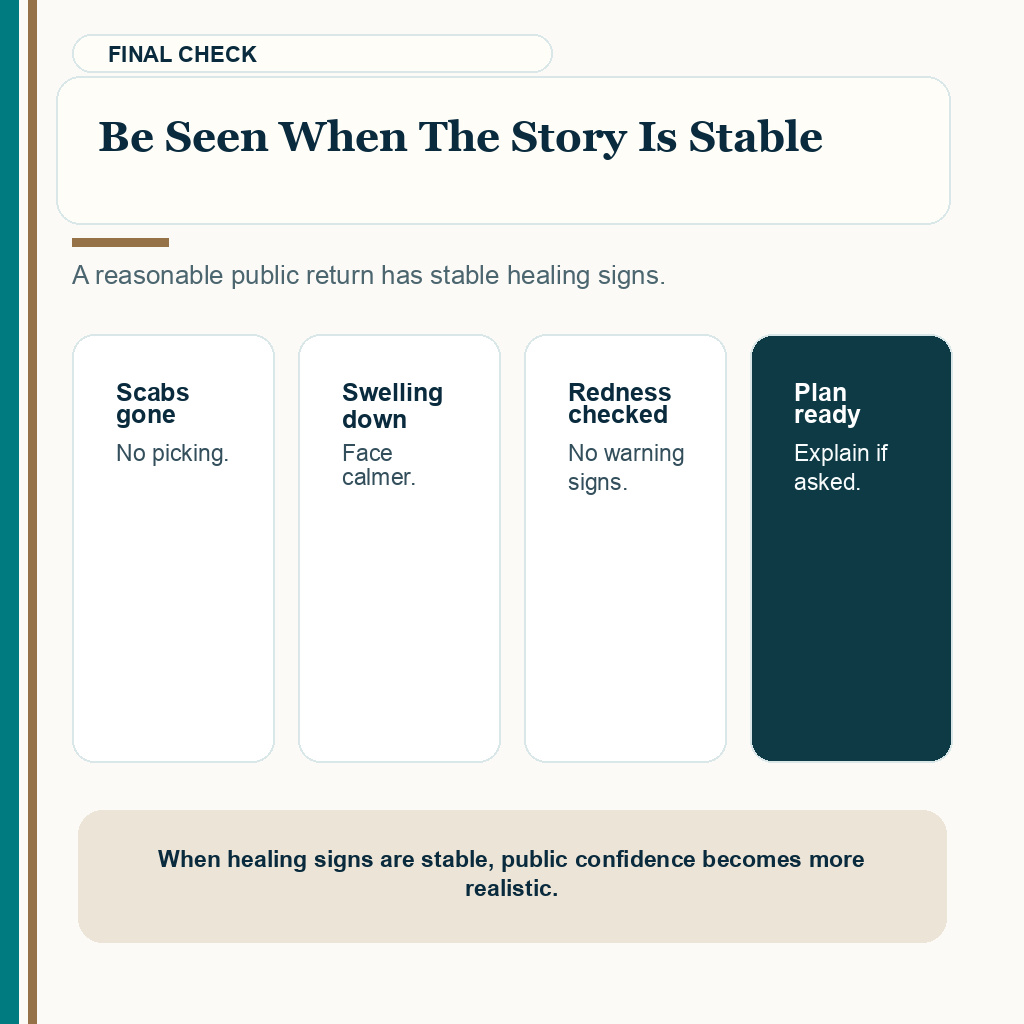
I decide this by looking at healing first and appearance second. If the scabs are gone, the redness is settling, the donor area is not drawing too much attention, and the patient can be seen without needing risky covering tricks, returning to public life becomes much easier.
In practice, I look for a recipient area that is dry and free from rubbing by clothing, hats, or work equipment. Scabs should be clearing with gentle washing, not forceful scrubbing. Redness should be stable or improving, the donor area should be clean enough for normal movement and sleep, and the public plan should not depend on heavy products, tight hats, helmets, or rushed cutting. The patient also needs to understand that shedding can make the hair look uneven later, even after the first visible healing phase has passed.
Do not plan your public return around the most flattering photo you saw from another patient. Plan it around your own skin, your own job, your own hair length, and your own tolerance for being noticed. That is usually a more realistic way to recover.
If you can give yourself 10 to 14 days, you will usually make the first visible stage much easier. If you can give yourself 3 to 4 weeks before a public event, even better. If the event really matters to you, plan the surgery months before it, not days before it.
A hair transplant is a long term decision. Looking slightly visible for a short time is often unavoidable. What I focus on is that the patient does not damage the grafts, does not panic during normal shedding, and does not choose a clinic that treats the public return as an afterthought.
Read this review excerpt
First wash completed and visual instructions given to my daughter.