


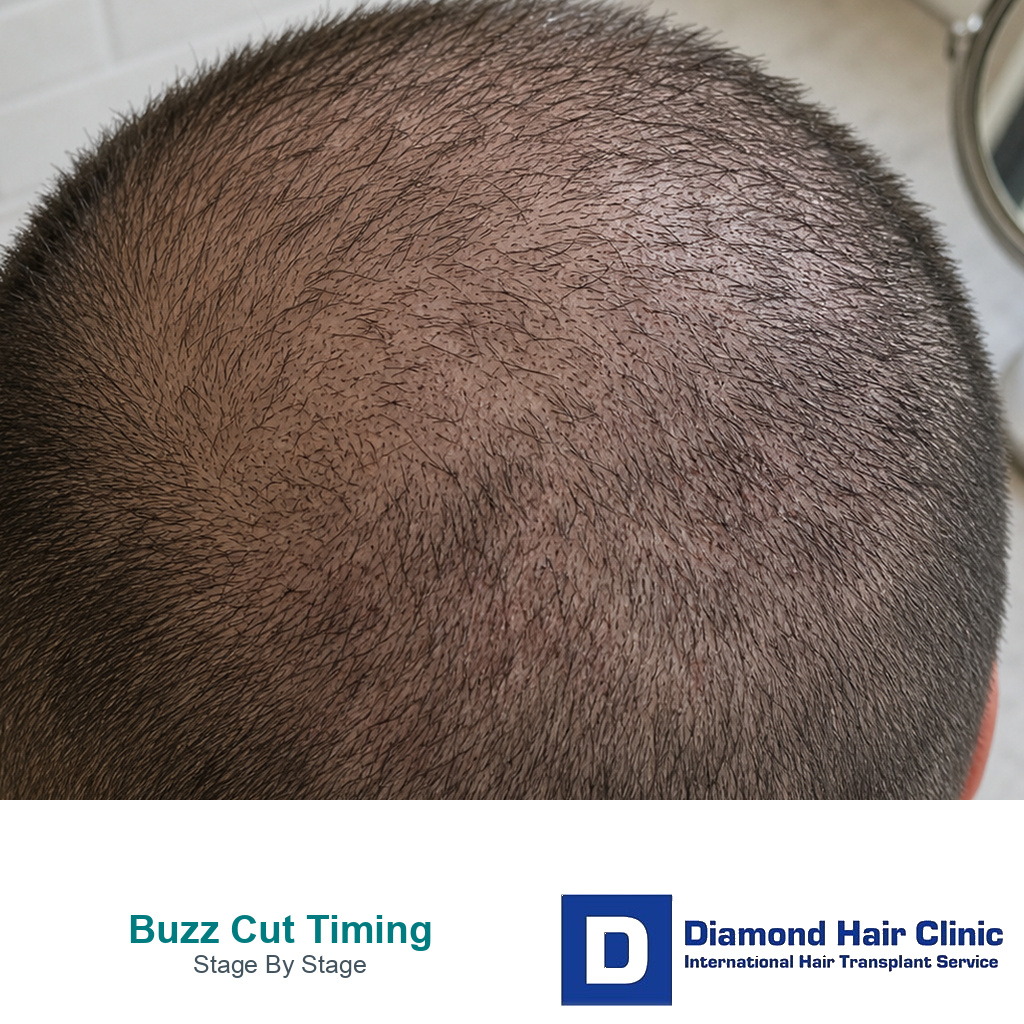
Buzz Cut Timing During the Ugly Duckling Phase
A buzz cut after a hair transplant can help some patients get through the ugly duckling phase, but only when the timing and haircut style fit the healing stage. It can reduce the contrast between the sides and the thin transplanted area, but it does not speed up growth, stop shedding, or prove that the final result will be dense.
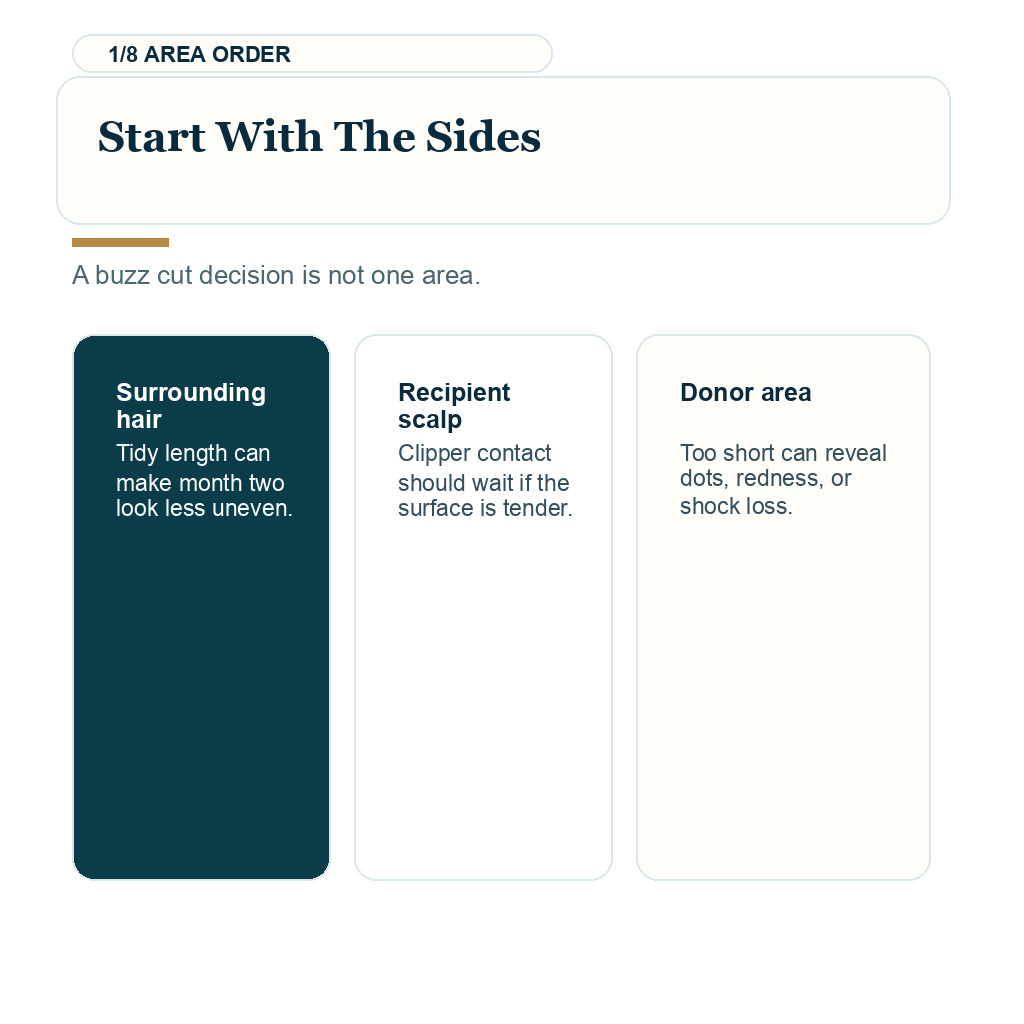
I divide the haircut decision into three areas. The surrounding native hair can often be tidied earlier. The grafted recipient area needs more caution because the skin may still be sensitive. The donor area can look worse if it is clipped too short before redness, dots, shock loss, or uneven regrowth have settled.
A graft may be secure enough that it is not sitting loose on the surface, but the skin over and around that graft may still dislike friction, pressure, heat, repeated clipper passes, or a rough barber visit. Graft security and skin readiness are related, but they are not the same thing.
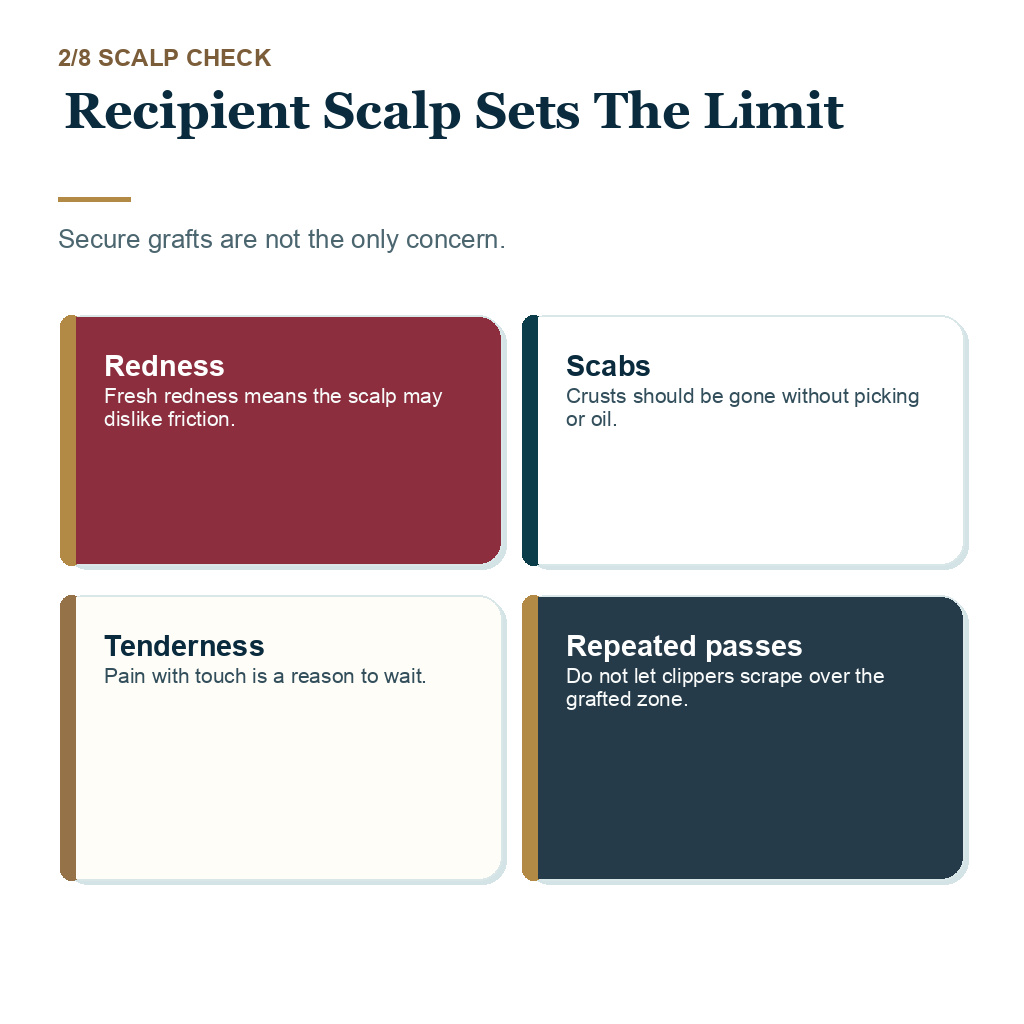
If the scalp looks quiet and the clinic has reviewed the timing, a careful trim can be useful. If the recipient area is red, bumpy, tender, crusted, or still easily irritated, buzzing that zone usually creates more anxiety than it solves.
Choose the cut for how you need to appear in normal life, not for checking the transplant in the mirror. A shorter cut can hide uneven length, but it can also expose redness and donor dots.
Ask the barber to start with a longer guard than your final goal. You can always go shorter after checking redness and dots, but you cannot undo an anxious first pass over sensitive skin.
Month two and month three can make a haircut feel urgent
Month two and month three are often the most frustrating part of recovery. The scabs are gone, normal life has restarted, and many patients no longer want to rely on hats after a hair transplant. At the same time, the transplanted area may have shed and the sides may look much stronger than the top.
That contrast can make the whole head look unfinished. The top may show low early density, redness, fine new hairs, or patchy early growth. The sides and back may look normal. A buzz cut feels tempting because it seems like it can make everything match again.
The feeling is understandable. The mistake is treating the haircut as a way to judge the transplant. At this stage, the question is not whether the result is good or bad. The question is whether a haircut can reduce contrast without irritating the healing areas.
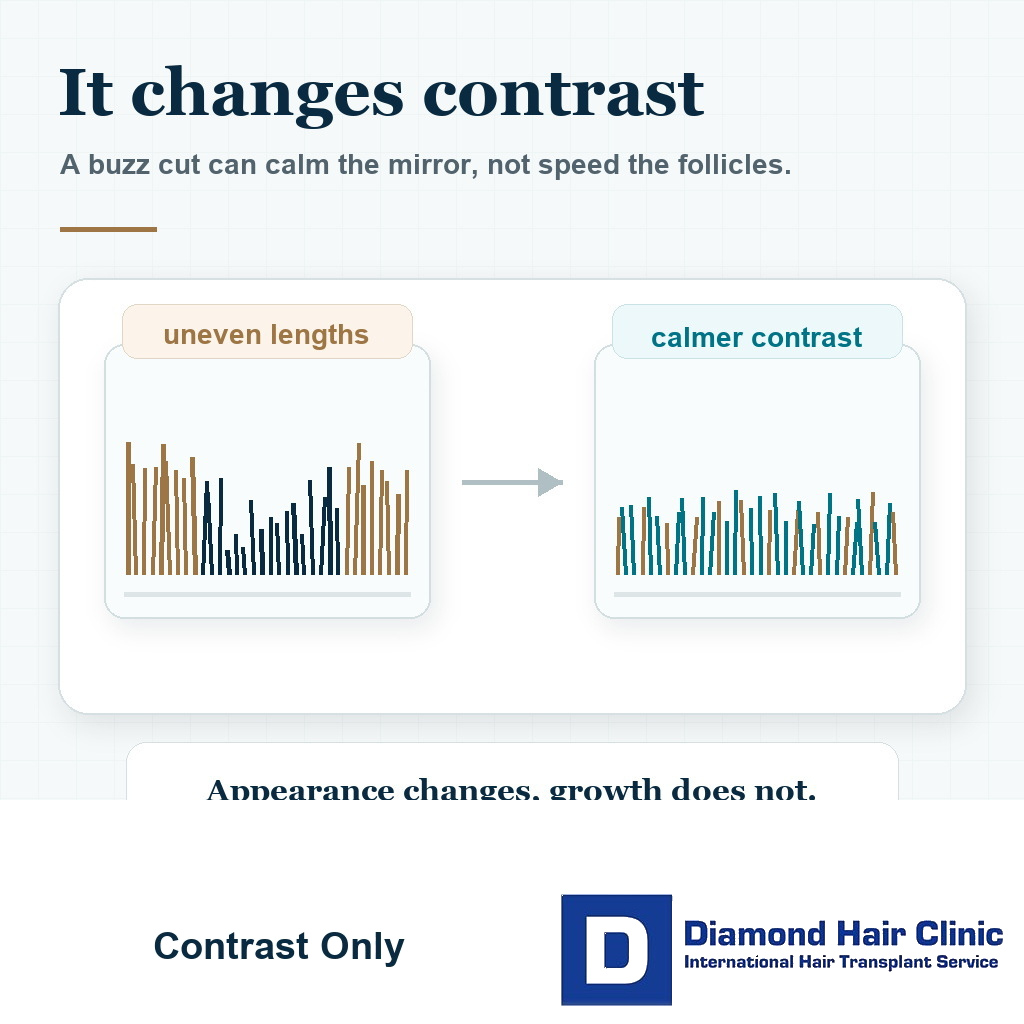
A buzz cut usually does not put grafts in danger
After the early healing period, a careful haircut does not normally pull transplanted grafts out. The grafts are not loose for months. A light touch by accident is different from a forceful rub, scratch, or traumatic pass over the recipient area.
There are two separate questions. Are the grafts anchored enough? Is the skin ready for clippers? A scalp can be past the highest risk period for graft displacement and still be red, sensitive, bumpy, or easy to irritate.
A buzz cut timing question is easier to judge when you compare it with touching grafts after a hair transplant. One gentle accidental touch is not the same as repeated pressure. In the same way, a careful trim around the area is not the same as pushing clippers over healing skin several times to force a very short look.
Treat the recipient area more gently than the sides
The recipient area is where tiny incisions were made and grafts were placed. Even when the surface looks closed, the skin can remain reactive. Clippers may create vibration, heat, friction, and pressure. A rushed barber may also make repeated passes over the same small area.
This matters more if the skin still shows redness, scabs, or pimples after a hair transplant. At that point, making the haircut perfectly even for a few days is less important than keeping irritated skin from becoming more inflamed.
A light trim near the recipient area is different from a zero guard, skin fade, razor shave, or repeated clipper work directly over the grafted zone. Those are separate levels of contact. Starting longer and reassessing is safer than trying to hide a temporary awkward stage too aggressively.
Trimming surrounding hair before the grafted zone is usually safer
Often, yes. If the sides and back are making the transplanted area look much thinner, tidying the surrounding native hair can be the better first step. This reduces the visual mismatch without forcing clippers directly over the recipient area.
The barber can soften the transition, keep the guard length sensible, and avoid heavy pressure near the grafted zone. This is often more useful than chasing a very short buzz cut across the whole scalp. A haircut should make recovery easier to live with, not create a new round of checking and worry.
A general haircut after hair transplant guide still has to be applied to the exact healing stage. Scissors, a light trim, a guarded clipper cut, a close shave, and a skin fade are not the same decision.
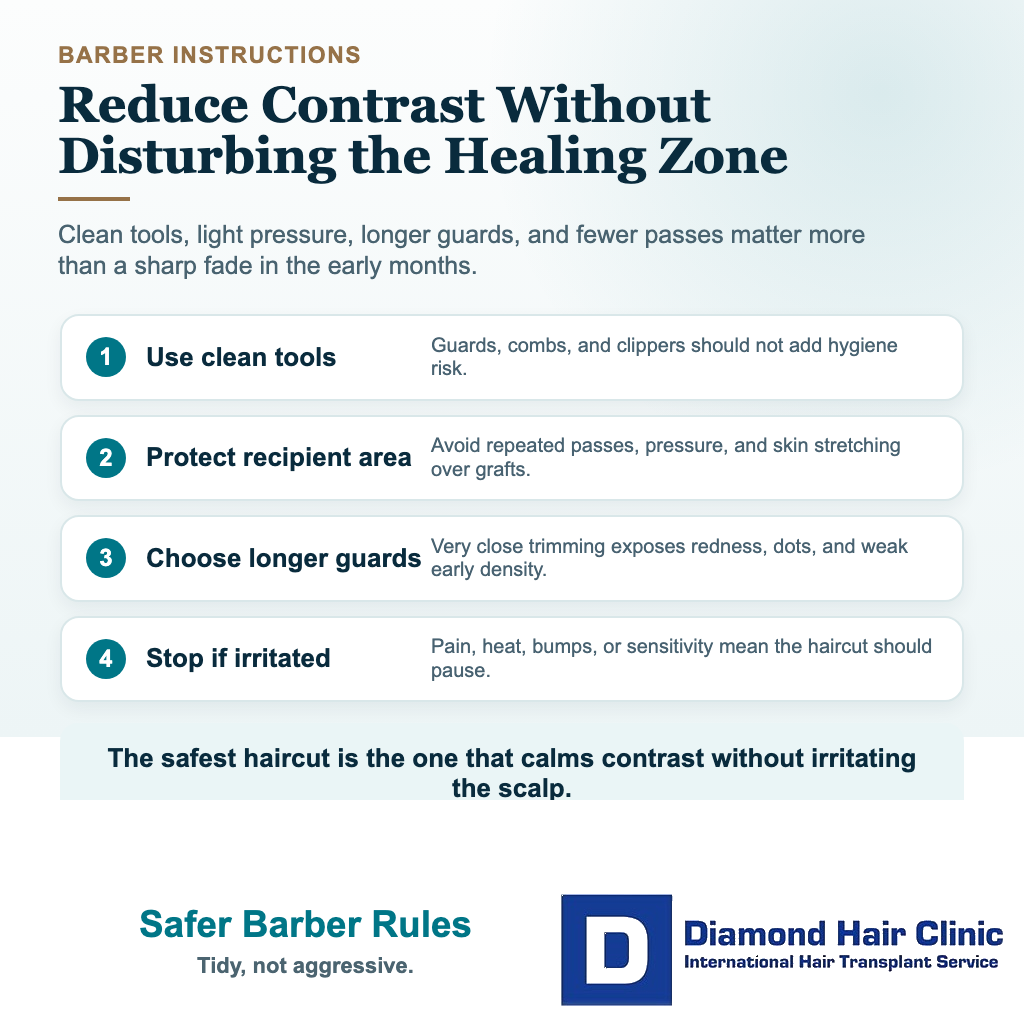
Barber instructions after a hair transplant
Tell the barber this is post-operative skin, not a normal buzz cut appointment. The first haircut should be slow, clean, and gentle. Tools should be clean. Pressure should be light. The first length should be longer than the length you think you want.
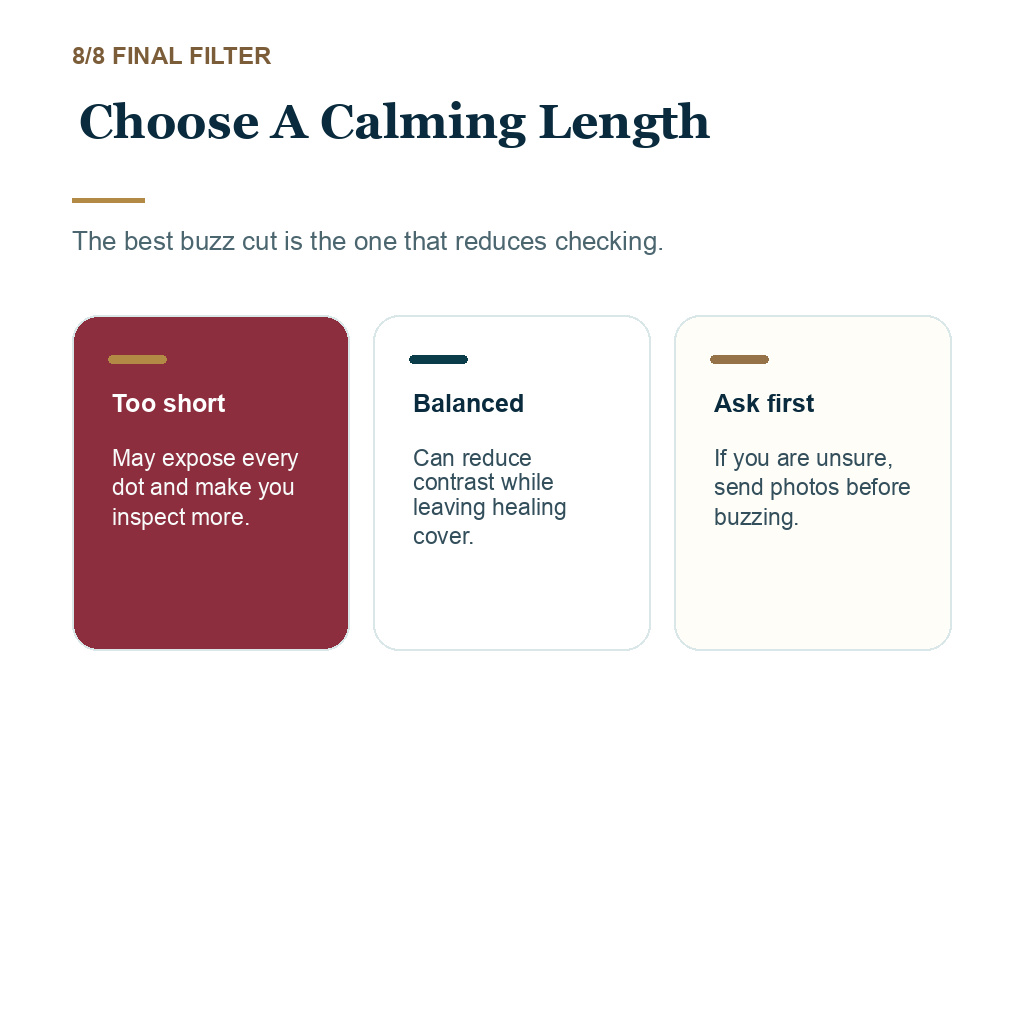
A simple way to handle the first trim is this. Longer first, shorter later. If the first trim looks acceptable and the scalp stays quiet, there is room to reassess. If the first cut is too short, every red patch, donor dot, thin area, and uneven early growth zone becomes more visible immediately.
Avoid repeated passes over the recipient area. Avoid dragging the clipper teeth across sensitive skin. Avoid trying to fix every small uneven patch in one session. The haircut should be controlled enough that you are not studying the mirror for damage afterward.
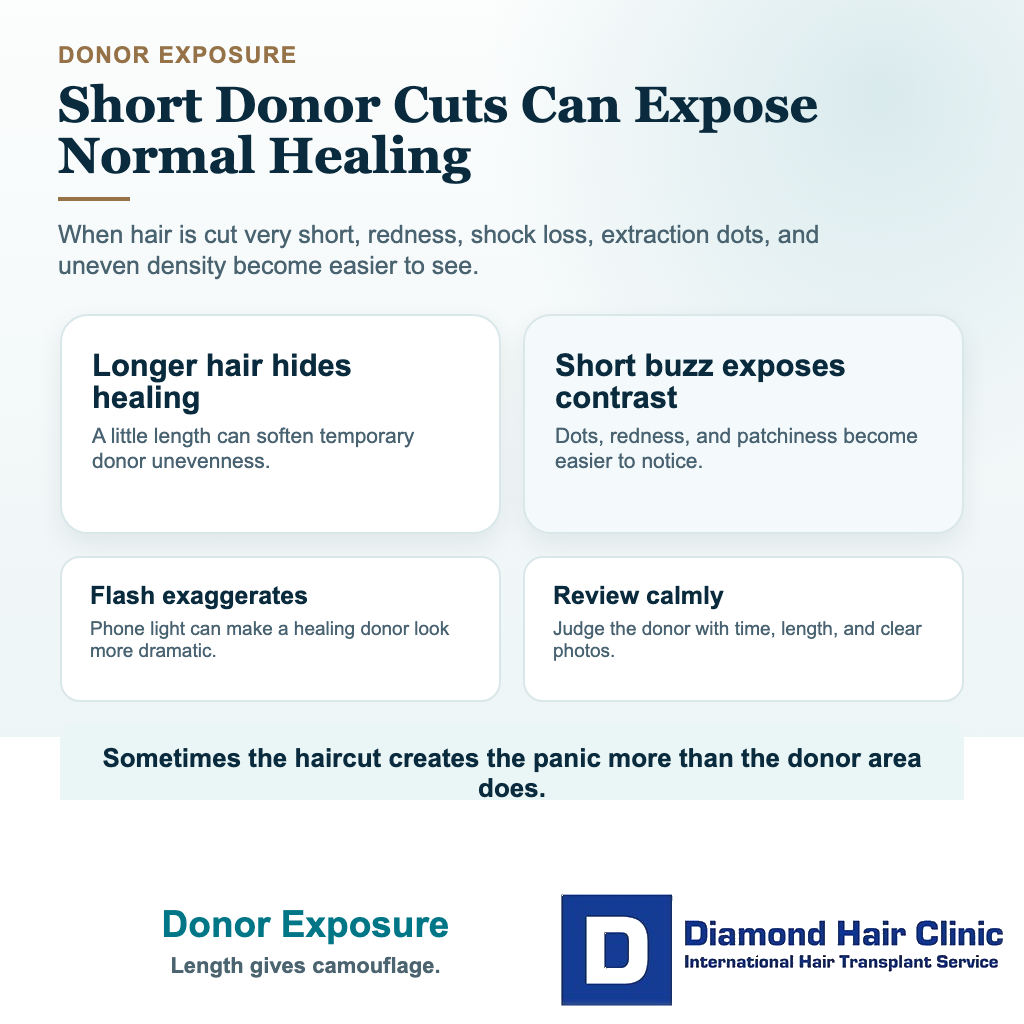
A very short donor cut can create new panic
The donor area may look acceptable at one length and alarming at another. If it is clipped very short too early, normal redness, small extraction dots, mild shock loss, uneven regrowth, or temporary sensitivity can become much more obvious.
The question of whether the donor area can look normal after FUE depends on extraction quality, donor density, healing, hair length, and time. Hair length is part of the assessment. A very short clip can make a normal healing donor look worse than it really is.
Frequent donor checking can make a short cut harder emotionally. If a short cut will make every dot or patch feel like donor damage, it may be better to keep more length until the donor has settled.
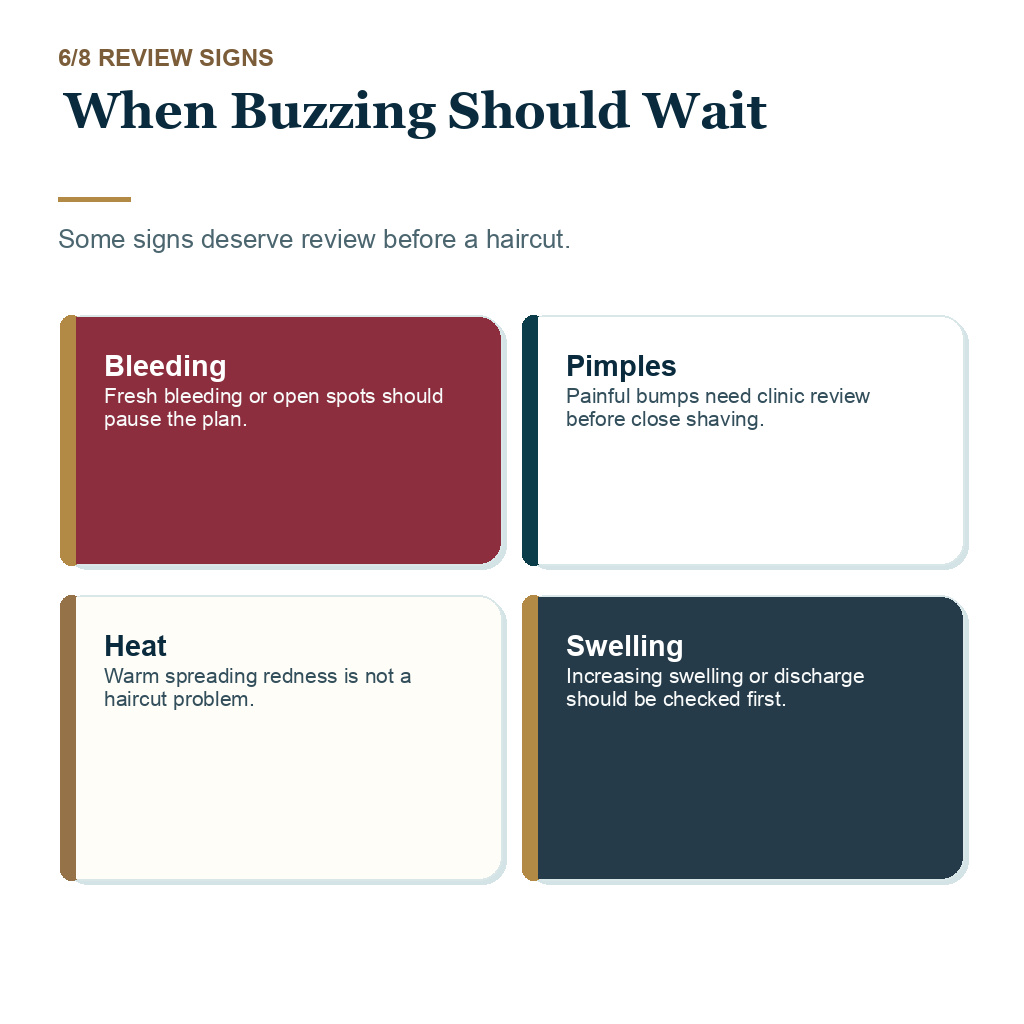
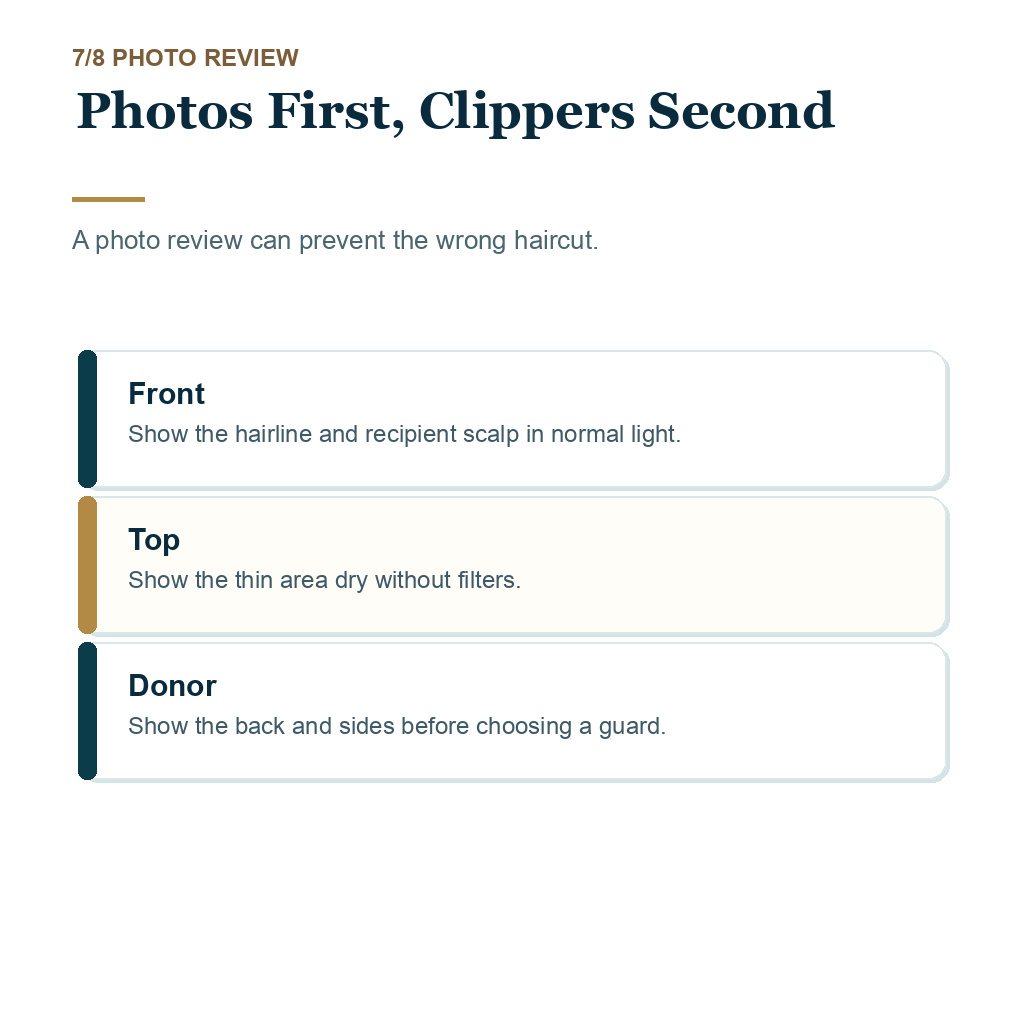
Use the 8 buzz cut timing slides below to separate surrounding hair, recipient scalp caution, donor area visibility, barber limits, review signs, and when photos should come before clippers. Swipe the carousel, use the arrows one step at a time, or choose a number below the image to jump to that point.


The ugly duckling phase does not mean the transplant is failing
No. The ugly duckling phase is usually a contrast problem, not proof of failure. The transplanted hair may have shed, the new hairs may not be visible yet, and the surrounding hair continues to grow normally. Under harsh light or after a shower, the mismatch can look stronger. Fibers and concealers are not a shortcut through the ugly duckling phase if the scalp is still healing or washing is still delicate.
A buzz cut can reduce that mismatch in some patients. It can also expose redness, thin spots, donor dots, and scalp shine. I judge it by skin condition, work demands, haircut length, and how much the patient tends to overcheck early changes.
When I assess a hair transplant result, I do not judge it from one awkward early month. I look at the design, donor use, growth progression, hair direction, density distribution, and how the result is maturing over time.
Month five and month six are grooming decisions, not density verdicts
Around month five or month six, I separate looking presentable from judging density. If the top still looks thin, keeping a little more length over the transplanted area often looks better than cutting everything short to inspect it. If the sides and back are creating too much contrast, tidy those areas first and keep the recipient area longer than your final goal. A fresh buzz cut can make normal early gaps, scalp shine, and uneven maturation look worse, so I do not use it as a density verdict.
When I allow hair fibers after a hair transplant, I want the scalp calm, dry, fully healed, easy to wash clean, and far enough along that product use will not hide or aggravate redness, bumps, soreness, crusting, or irritation. For review photos, send the hair dry and clean, without fibers, spray, oil, or styling product, so I can judge the skin color, growth pattern, and donor area clearly.
Situations where buzzing should wait for review
A short haircut is not the answer if the scalp is painful, hot, draining, very irritated, or covered with persistent pimples. It is also not the answer if the donor looks progressively patchier rather than slowly settling.
If there is sudden worsening, strong pain, unusual swelling, discharge, spreading warmth, or a donor concern that seems to be getting worse, send photos before booking a barber visit. Do not hide a medical or healing problem under a haircut.
This is also where normal shedding needs to be separated from real warning signs. The emotional worry of the ugly duckling phase is common. A worsening skin problem needs review.
Photos should come before clippers
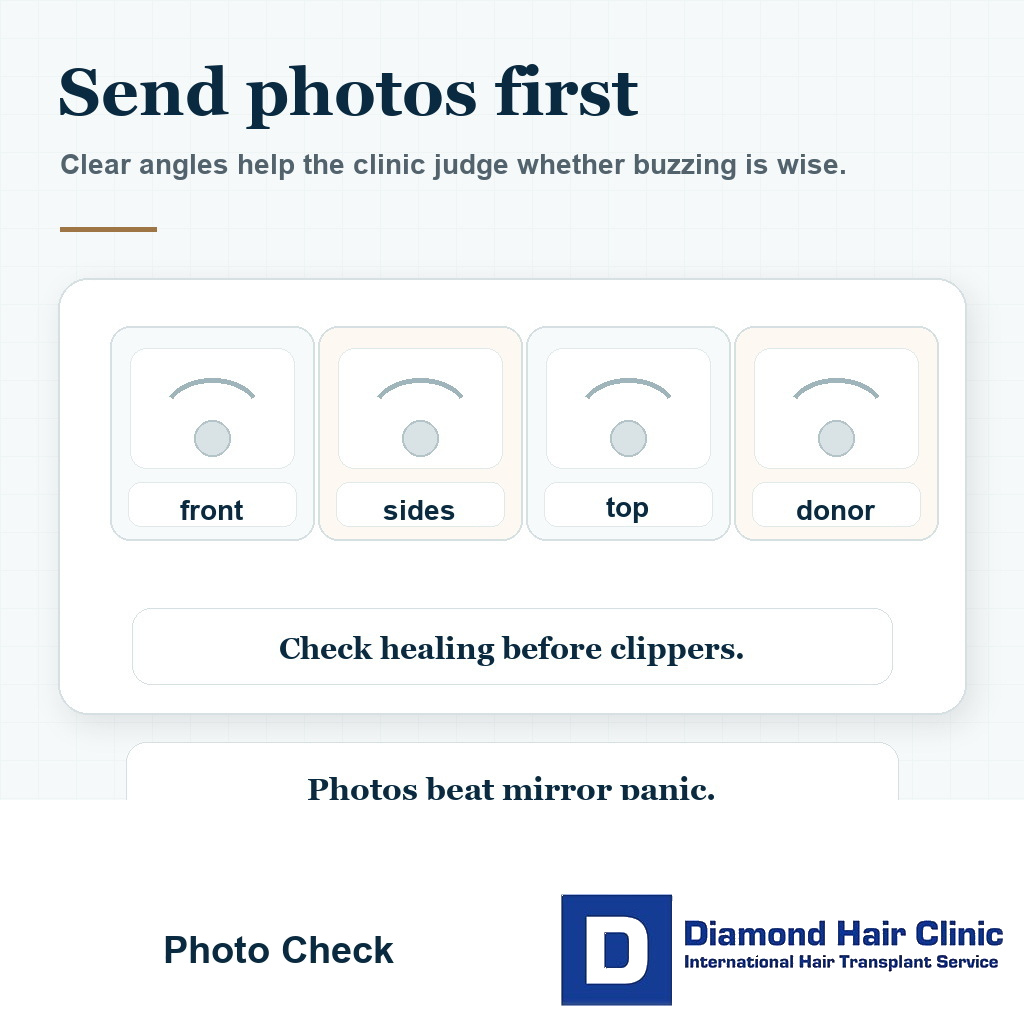
Before clippers touch the recipient area, clear photos are more useful than guessing. I want front, both sides, top, donor, and close views of any red, bumpy, sore, or uneven area. Good photos make the advice more specific.
Fixed internet rules are too blunt for this decision. One patient may be ready for careful surrounding hair tidying, while another at the same month may still need to avoid the recipient area because the skin is reactive.
For the lifetime question of keeping the head very short, read the separate guidance on shaving your head after a hair transplant. That is different from managing a temporary awkward recovery stage.
When a buzz cut is worth waiting for?
If the scalp is quiet, the timing is appropriate, and the plan is gentle, a buzz cut or partial trim can make the ugly duckling phase easier to tolerate. The safest version usually starts by reducing the sides and back, keeping more length than expected, and avoiding direct clipper pressure over any irritated recipient skin.
If the goal is to reduce contrast, do that carefully. If the goal is to prove the transplant is working, a buzz cut cannot do that. Early photos, harsh lighting, and short haircuts can distort judgment during recovery.
The final result is judged over months, not by how even the scalp looks during one difficult haircut stage. A careful trim can help you feel more presentable. A rushed short cut can make temporary healing details look like permanent problems.

Read this review excerpt
Every single one of my questions was answered and they made sure I had all the details I needed to make an informed decision.