


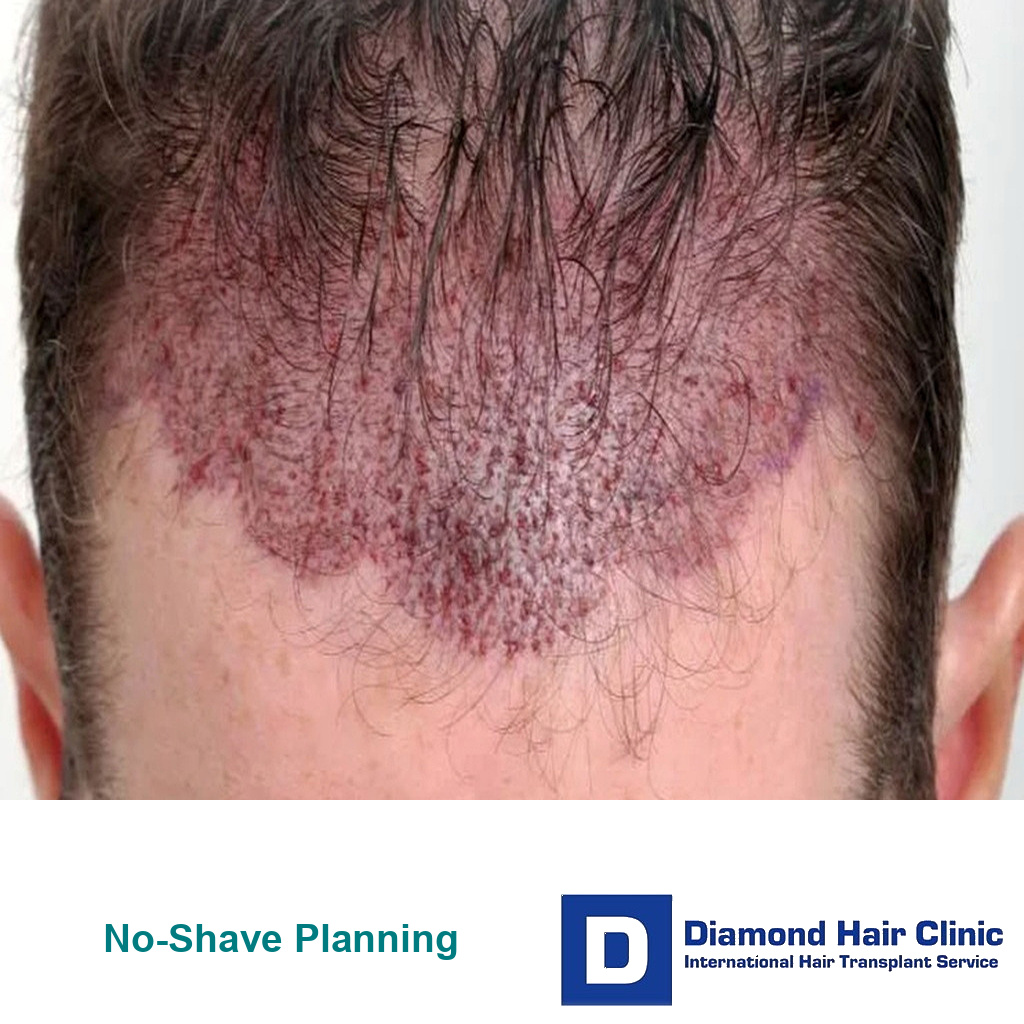
No Shave FUE Planning and Privacy Limits
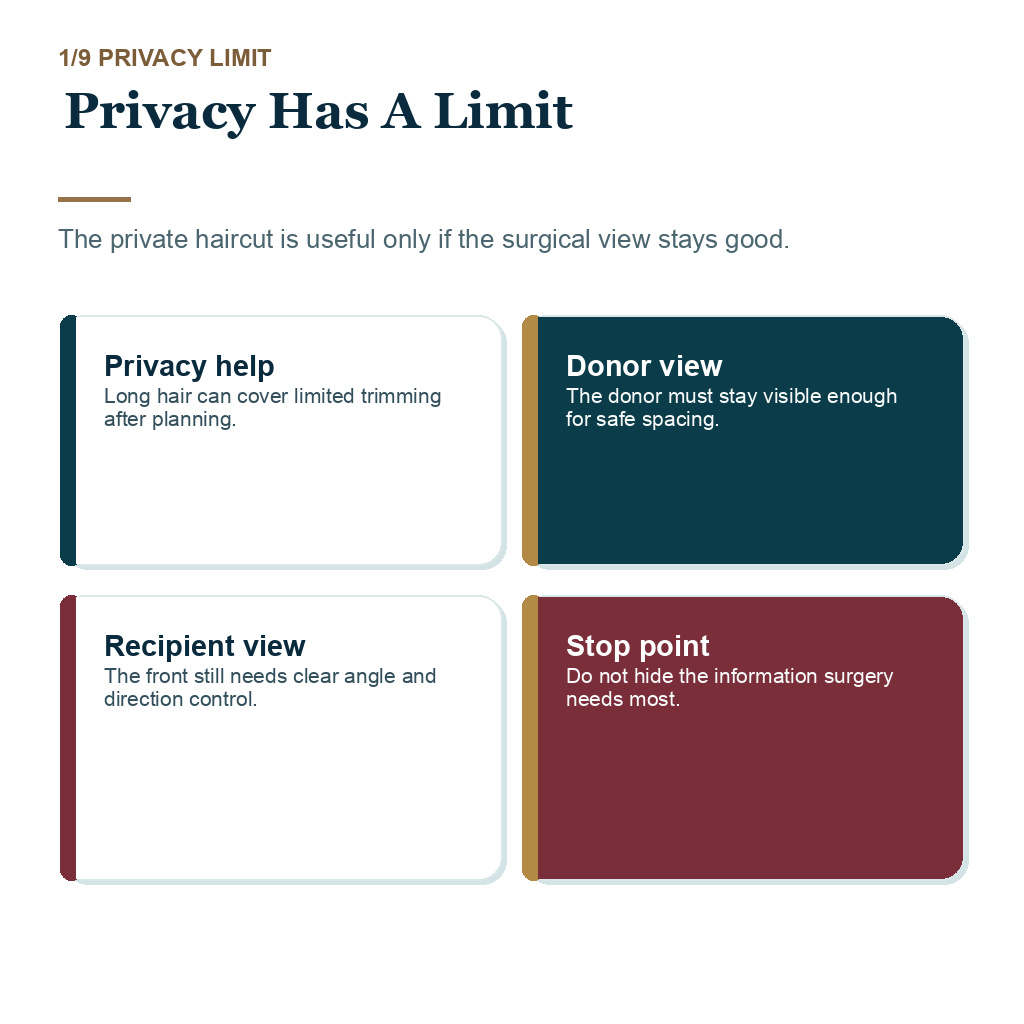
Privacy matters, but surgical visibility matters more. Some patients request a hair transplant without shaving the whole head. The plan is only safe when the surgeon can still see the donor area, the recipient area, and the way each graft is handled. No shave usually means avoiding a full scalp shave. It does not mean avoiding every trim, every visible recovery sign, or every tradeoff.
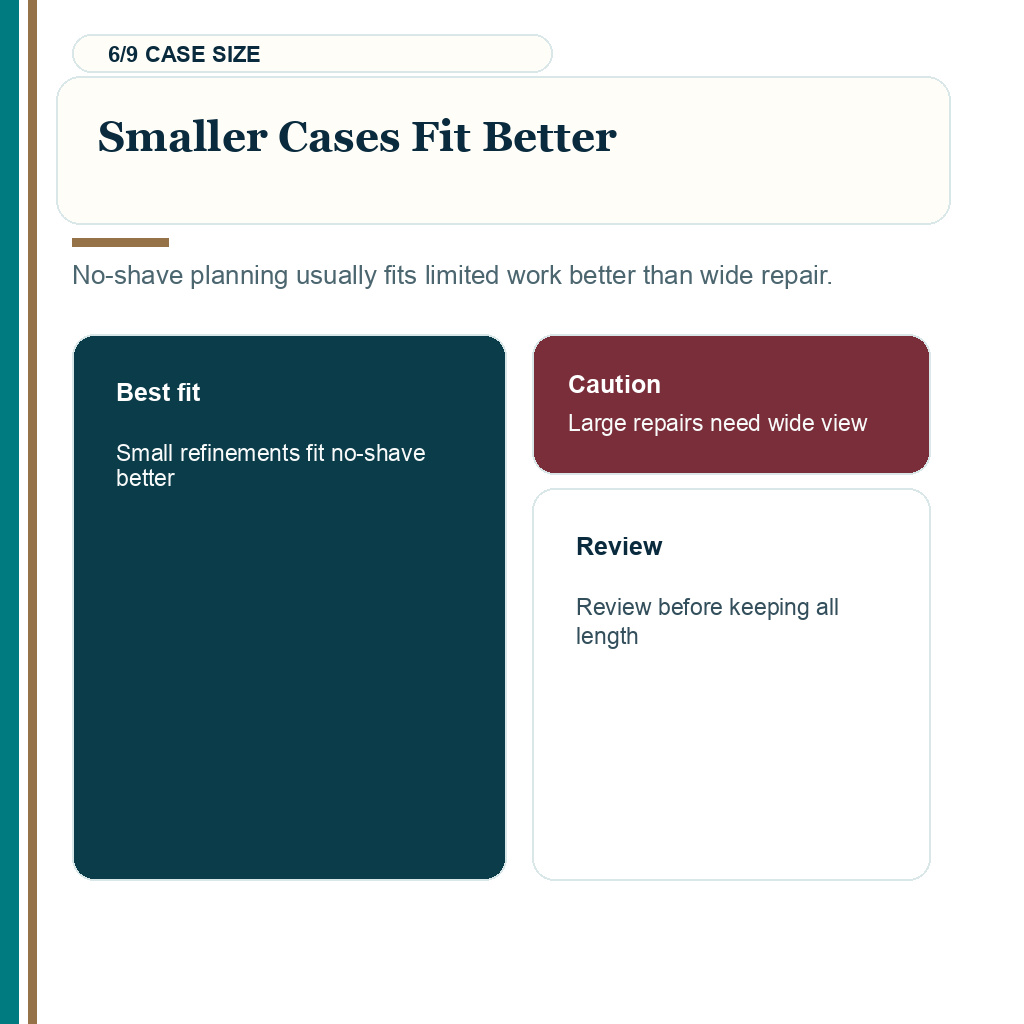
It is most reasonable for smaller FUE cases, partial hairline work, or patients with enough surrounding hair to cover a limited donor window. It becomes a weak choice when the donor area needs wide mapping, when a high graft number is being promised, when diffuse thinning is present, or when the patient expects the surgery to be invisible. Social privacy and surgical concealment are not the same thing. The question I ask is whether I can still see, extract, place, and review the grafts properly while keeping more hair long.
I understand why people request this option. Some cannot take much time away from work. Some do not want family or colleagues to notice. Some have long, curly, or textured hair and hope it will cover the early signs of surgery. That concern is real. It just cannot sit above graft safety, donor management, and natural hairline planning.
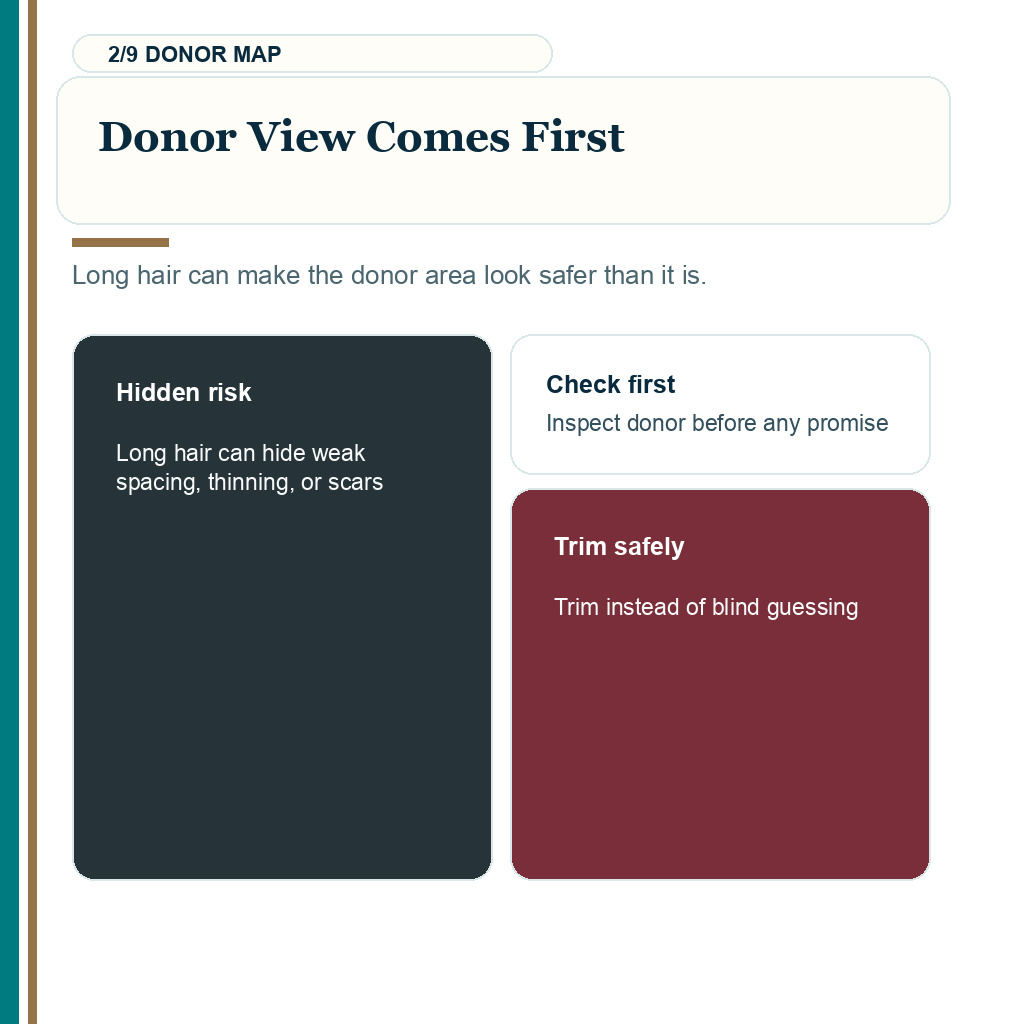
Styled long hair can hide the problem from a camera, but it cannot hide donor risk from the surgeon. I need parted scalp photos and donor photos that show density clearly, not only the hairstyle or angle that looks best socially.
Privacy planning should include the photos you would rather avoid. Parted donor, crown, and side views tell the surgeon more than the style that hides thinning best.
Long surrounding hair can also change how progress looks later. It may hide redness, short new hairs, or crown transparency in one photo and expose them in another. A no shave method therefore needs matched follow-up photos and a clear explanation of which areas were actually treated.
What does no shave actually mean?
No shave hair transplant usually means the clinic avoids shaving the whole scalp. It does not always mean no trimming at all.
The phrase can describe several different approaches. In one version, a small donor strip is trimmed and hidden under surrounding hair. If that trimmed area later needs cosmetic coverage, extensions after FUE still need low tension and careful timing. In another version, only the recipient area is left longer. Some clinics use the term for long hair FUE, where selected hairs are extracted without the usual wide shave. Some use it as a marketing label for a partial shave procedure.
DHI can also appear in no shave marketing, but the label does not remove the same basic question. The surgeon still needs a clear donor map, clean graft handling, recipient area access, and a recovery plan the patient can actually follow.
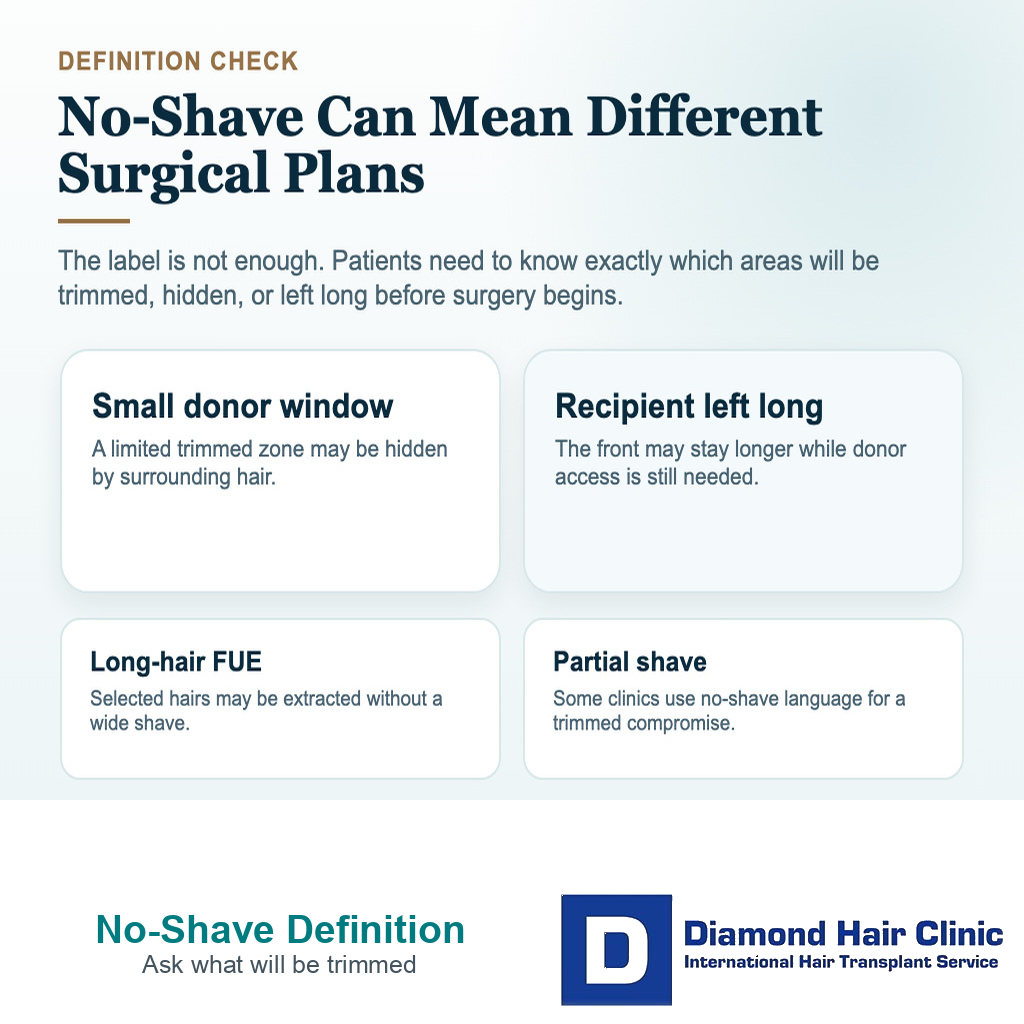
Because the wording is not always precise, the plan needs to name the real method in plain language. It may be a hidden partial shave, recipient area no shave, or true long hair FUE. The visible details still matter because the patient needs to know what will be shaved, how wide the donor trimming may be, whether the recipient area will be clipped, and how the area may look on the first evening. A no shave label does not remove the need for FUE hair transplant planning, proper extraction angle, graft handling, and careful recipient area work.
The difference matters because two clinics may use the same phrase and mean different operations. One plan may hide a small donor window well. Another may leave you with visible scabs, swelling, and a larger trimmed zone than expected. The exact trimming map and any haircut before surgery need to be agreed before surgery, not discovered on surgery day.
When does no shave FUE make sense?
No shave FUE can make sense when the surgical target is modest, the donor hair is dense enough to cover a small trimmed zone, and the patient accepts that privacy may still be imperfect. It may help someone who needs limited frontal reinforcement, a small scar related adjustment, or a conservative refinement where only a smaller number of grafts is needed.
A good example is a limited frontal reinforcement where surrounding hair can cover a controlled donor window and the recipient area is still easy to see. A poor example is a diffuse thinning pattern, a large crown case, or a wide frontal rebuild being forced into a tiny hidden trim because the patient was promised privacy first.
The strongest candidates usually have enough length around the donor area to cover the trimmed section. The hair should not be so sparse that every small gap becomes visible. The patient also needs a realistic return to work plan. No shave surgery can reduce the visible haircut change, but it cannot erase redness, crusts, swelling, or early shedding. For client meetings or camera work, add public facing work after hair transplant to the privacy plan, not only shaving choices.
For a patient trying to keep a hair transplant secret, no shave planning may be one part of the plan. Other details still matter. Appointment timing, travel, social downtime, washing instructions, hat timing, and whether the recipient area can be styled without touching grafts all affect privacy.
Long hair can help privacy but not erase recovery
Long hair can cover a small donor window, but it can also create the wrong expectation. For a patient with longer hair, including many female patients, the trimmed donor area may be easier to hide while the recipient area can still show redness, crusts, short new hairs, or uneven early growth.
The practical problem is not only whether the haircut is visible. It is whether the hair can be parted without pulling, washed safely, kept away from grafts, and checked without tangling around crusts. Long hair can hide the donor window socially while making washing, parting, and product control more awkward in the first days.
Before surgery, I want the privacy plan discussed plainly. The hair must be able to part without pulling, and a fringe or softer style has to be realistic for work, travel, photos, and important events during visible recovery. A no shave plan should reduce unnecessary exposure, not promise that surgery will disappear.
Plan for the possibility that keeping the surrounding hair long could make early recovery look more uneven than a shorter cut. Shortening hair away from the surgical areas can sometimes blend the different lengths better. Any haircut still has to respect the donor and recipient areas separately, including the timing and the tool used around each area.
Privacy can weaken the surgical plan
The request becomes risky when it pushes the surgery toward a smaller visual change on the day of surgery but a weaker final plan. The main unshaven hair transplant risks appear when privacy reduces visibility, limits donor assessment, or pressures the graft number. If a patient needs wide donor evaluation, large extraction, crown work, or advanced repair, keeping the hair long may hide the information the surgeon needs to see.
Long surrounding hair can make donor density look stronger than it is. It can hide miniaturization, scars, patchiness, or uneven extraction risk. It can also make the recipient area look fuller than it really is, especially when styling, fibers, or existing length cover thinning. I do not build the plan around that illusion.
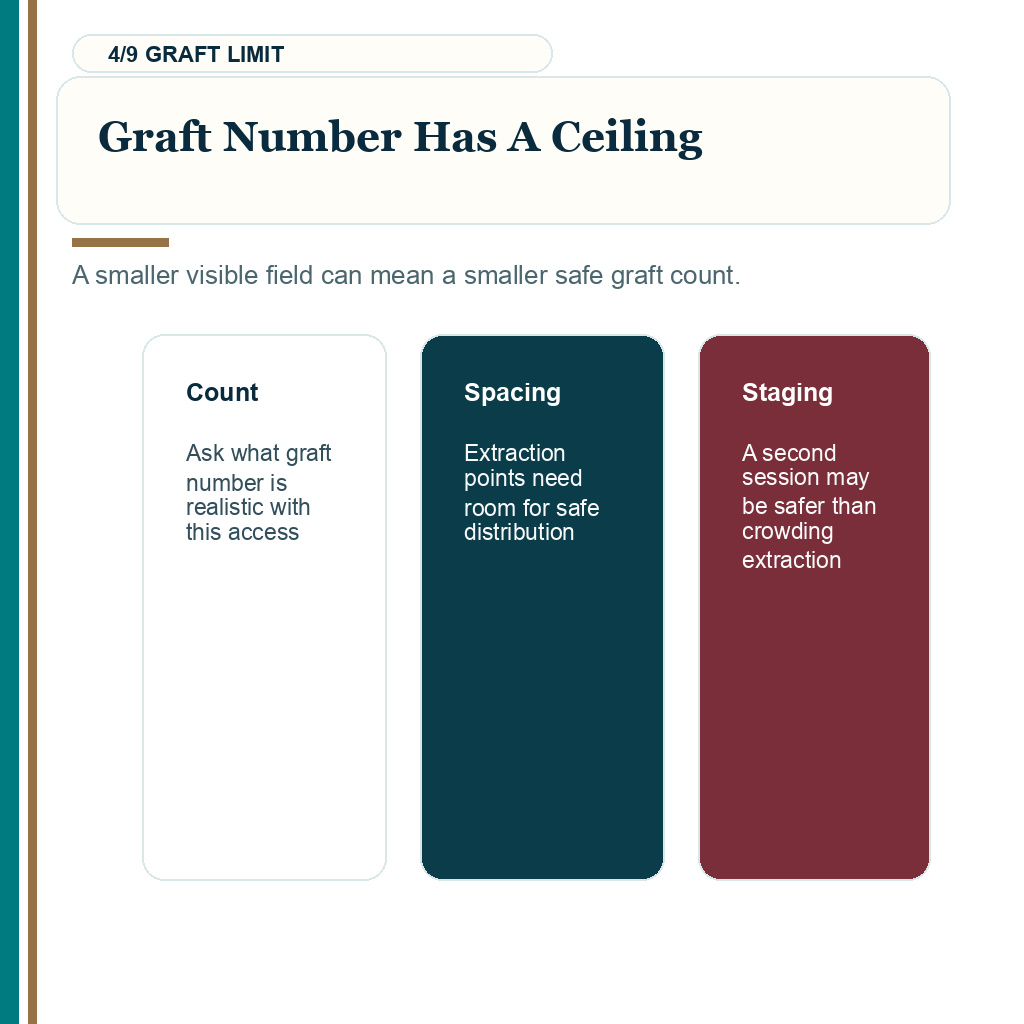
This is especially relevant when the case depends on a specific graft number. If the clinic promises a large count while also promising minimal visibility, ask how the team will keep the extraction field visible, distribute extraction points, count grafts, and stop before the donor field becomes too crowded. Graft count verification is already difficult for patients. A hidden donor field can make the discussion even less clear.
A useful no shave plan also defines the backup choice in writing. If privacy reduces visibility, the practical options are to keep the no shave limit and accept fewer grafts, widen the trimmed window, or stage the operation. That decision needs to be made before extraction, not while the patient is lying on the table.
Younger patients need stricter no shave planning
A small frontal case can look like a good no shave request when the patient has long hair, no crown loss, and enough coverage to hide a limited donor window. I still slow the plan down when the patient is younger, the corners are changing, the family history is strong, or the hair loss pattern is not stable.
The privacy question is only one part of the decision. In younger patients, a naturally high hairline, a widow’s peak, and early recession can overlap. I need old photos, current dry hair photos, donor assessment, family history, and a clear medical discussion before I decide how low the front can safely go. If the design depends on native hair staying strong forever, the no shave method is hiding a future problem rather than solving today’s visibility concern.
When the goal is lowering a naturally high forehead, I separate stable facial proportion from active recession before I choose the no shave route. A hidden trim window cannot answer whether the new line will age well.
Surgery can still be possible without finasteride in selected patients, but the design usually needs more discipline. Medication is not automatic and is not the same decision for every patient. Sex, age, diagnosis, side effects, pregnancy plans, and the prescribing doctor’s view can all change the discussion. When medication is not medically appropriate, not tolerated, or not wanted, the hairline may need to stay higher, the corners may need subtle support instead of full lowering, and the graft number may need to protect donor reserve. That is the same planning logic behind a hair transplant without finasteride. Privacy can reduce a haircut change, but it cannot replace long term native hair planning.
Use the 9 no shave planning slides below to compare privacy, donor visibility, recipient access, graft number limits, visible recovery, case size fit, textured hair, clinic questions, backup choices, and the final safety rule. Swipe the carousel or use the arrows one step at a time.
No shave FUE is not invisible surgery
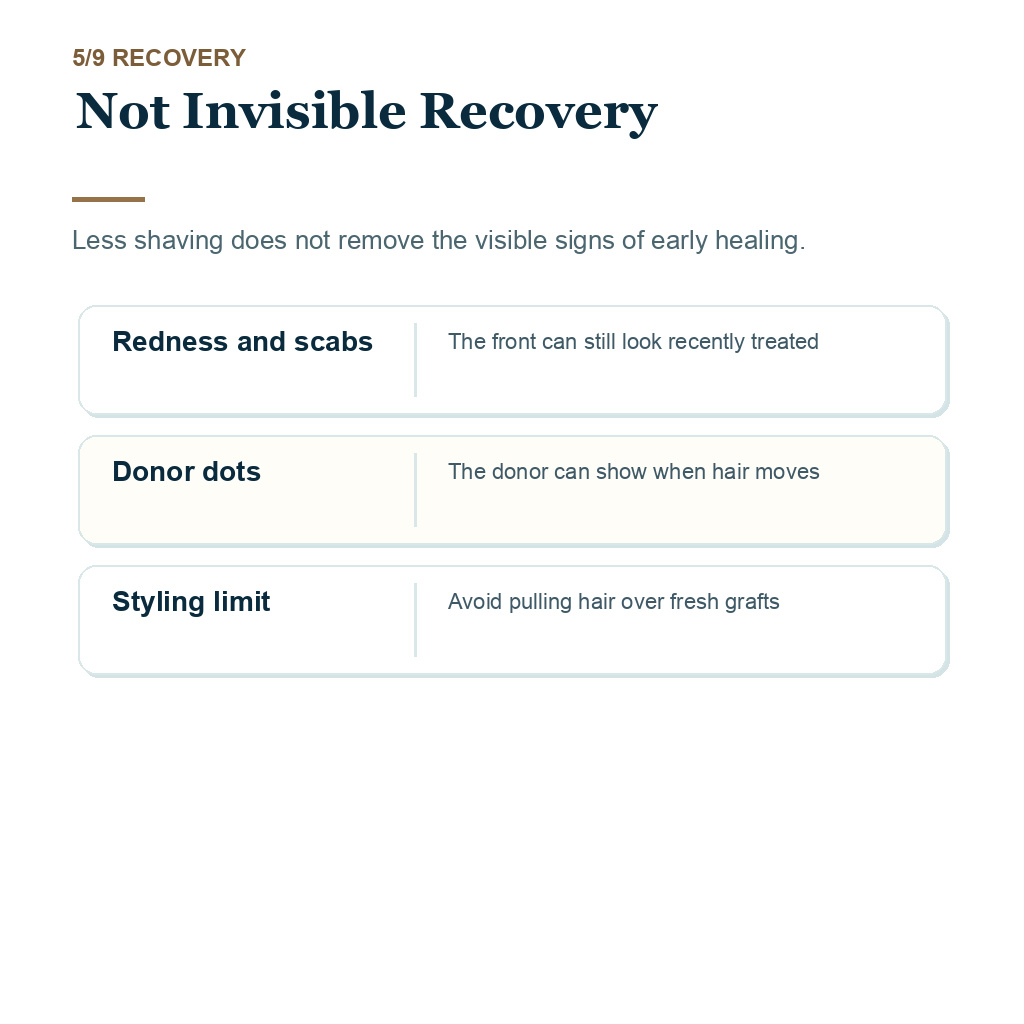
No shave FUE can make the operation easier to hide in selected patients, but it should not be sold as undetectable. The recipient area may still show redness, small crusts, swelling, or short trimmed hairs. The donor area may still show small extraction points, especially if the hair is moved, wet, windy, or cut short too soon.
The first evening is usually about protecting the grafts and not disturbing the donor window. During the first week, redness, crusts, washing limits, and swelling can still make the operation visible. Around 10 to 14 days, scabs often settle if washing has gone well, but the hair may still look uneven. At 4 to 8 weeks, shedding and short regrowth can make the area look different even when the early skin signs have improved.
A no shave plan may hide some trimming, but it does not give permission to comb, brush, press, or style hair over fresh grafts. The first days are the least forgiving. Washing must stay gentle and controlled. Styling products may be delayed. Hair fibers, concealers, sprays, gel, and tight clips can stick to crusts, irritate the scalp, or pull on grafts if restarted too early. If the patient expected to brush the hair normally and walk into work as if nothing happened, the mismatch between expectation and reality can create anxiety.
For patients planning around an event, the timing decision has to be wider than shaving. The timeline needs to include redness, shedding, shock loss risk, and the stage when the hair looks socially acceptable. If the operation is near a wedding, hair transplant before a wedding should be planned around visible recovery, not only the surgical method.
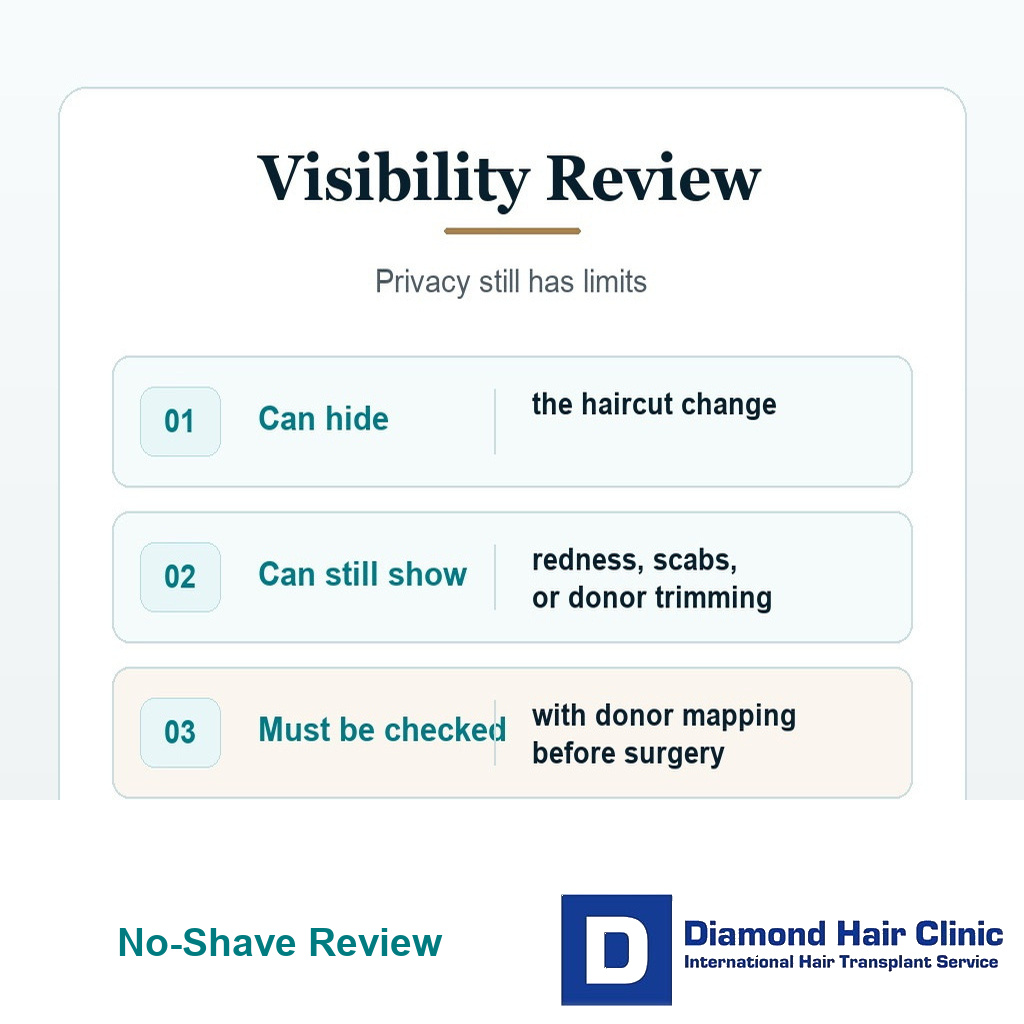
No shave surgery can reduce a visible haircut change, but redness, scabs, washing limits, and donor visibility still matter.
Does no shave mean fewer grafts?
Sometimes yes. No shave planning can reduce the practical graft number because the extraction field may be smaller, slower, or harder to see. That is not a failure by itself. A smaller, safer operation may be the correct choice. The problem starts when the clinic promises the same large graft count without explaining how visibility, spacing, and donor distribution will be controlled.
With a full shave, the surgeon can see the donor pattern more openly. With partial trimming, the extraction plan has to work around hair that remains long. That may protect privacy, but it can also make the procedure slower and more technically demanding. The larger the case and the more diffuse the thinning, the more likely a controlled partial shave or full shave becomes safer than a very limited hidden window.
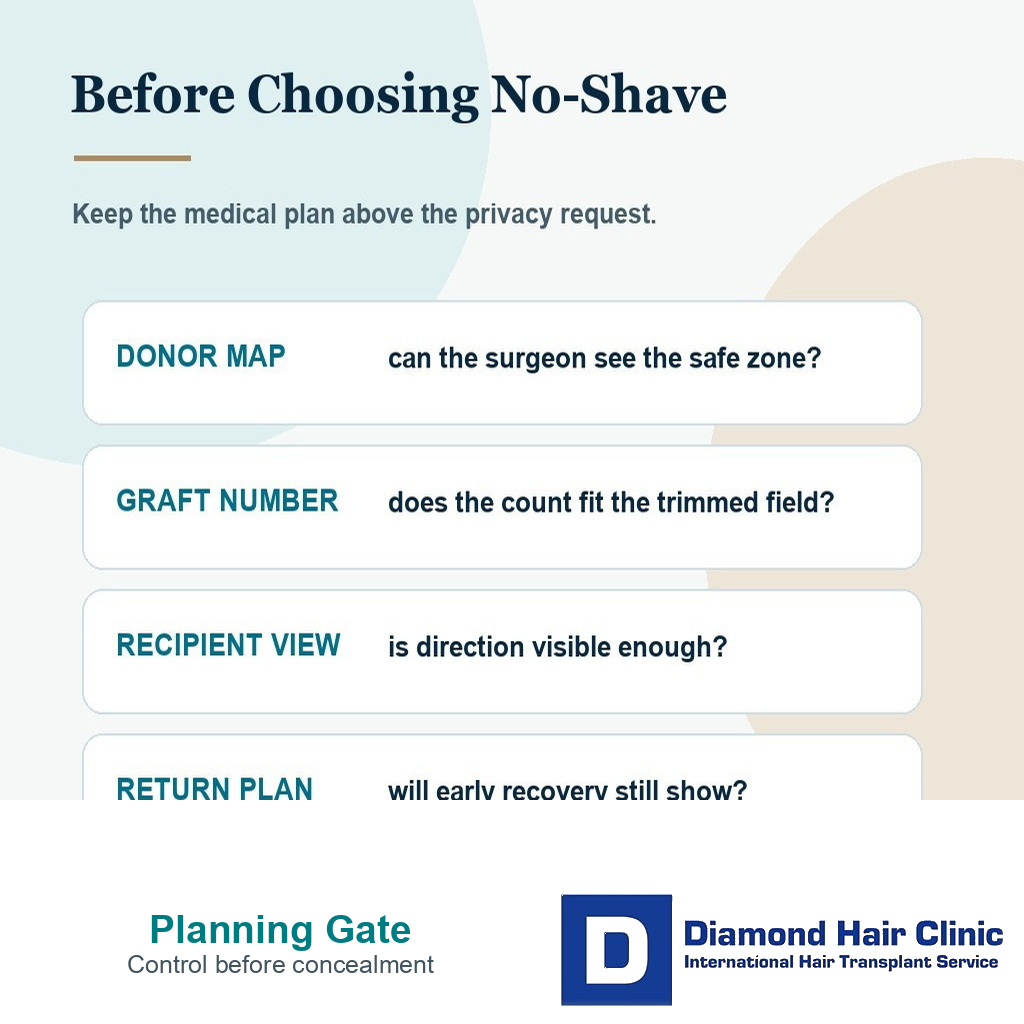
The no shave decision should pass donor, graft number, recipient area, and return to work checks before surgery.
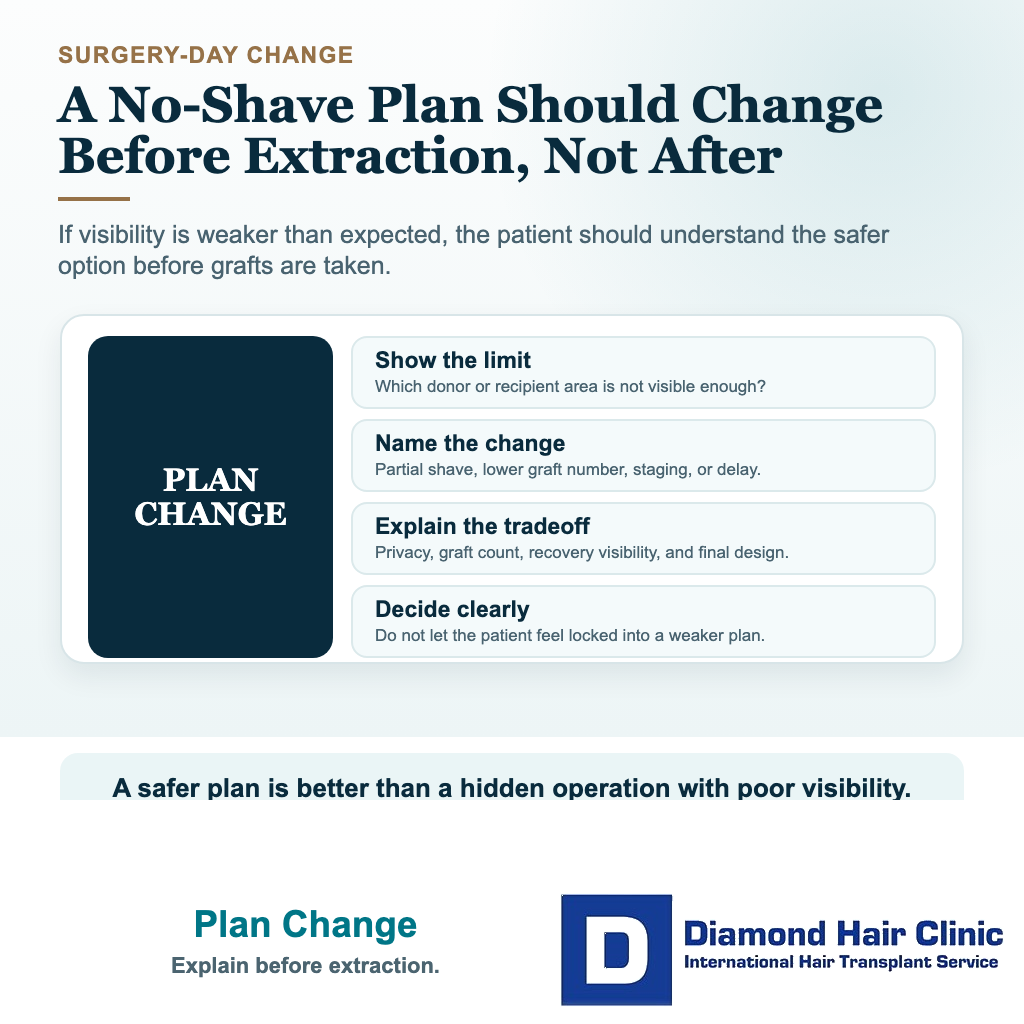
If the no shave field cannot safely provide enough grafts, the plan should change. This should happen before surgery begins. That may mean a partial shave, a staged approach, a smaller hairline target, or a different timing decision.
Donor area checks still come first
The donor area should be checked with the hair separated, lifted, and photographed under useful lighting. The surgeon needs to see density, miniaturization, scars, previous extraction marks, skin condition, and how the hair sits at the length the patient actually wears. For remote review, I want dry hair, no fibers, and useful front, top, side, back, and crown views rather than one flattering close-up.
A no shave request should not hide weak donor quality. If the donor is already thin, the surrounding long hair may cover the weakness in the mirror but not change the surgical limit. Removing grafts from a donor area that only looks strong because it is long can create visible thinning later.
Patients who wear short sides or fades should discuss that before choosing no shave FUE. A no shave operation may keep the area hidden while the hair is long, but future short haircuts can reveal extraction patterns. Short hair after FUE donor scars has to be part of donor planning if the patient may later cut the sides short.
Recipient area visibility still matters
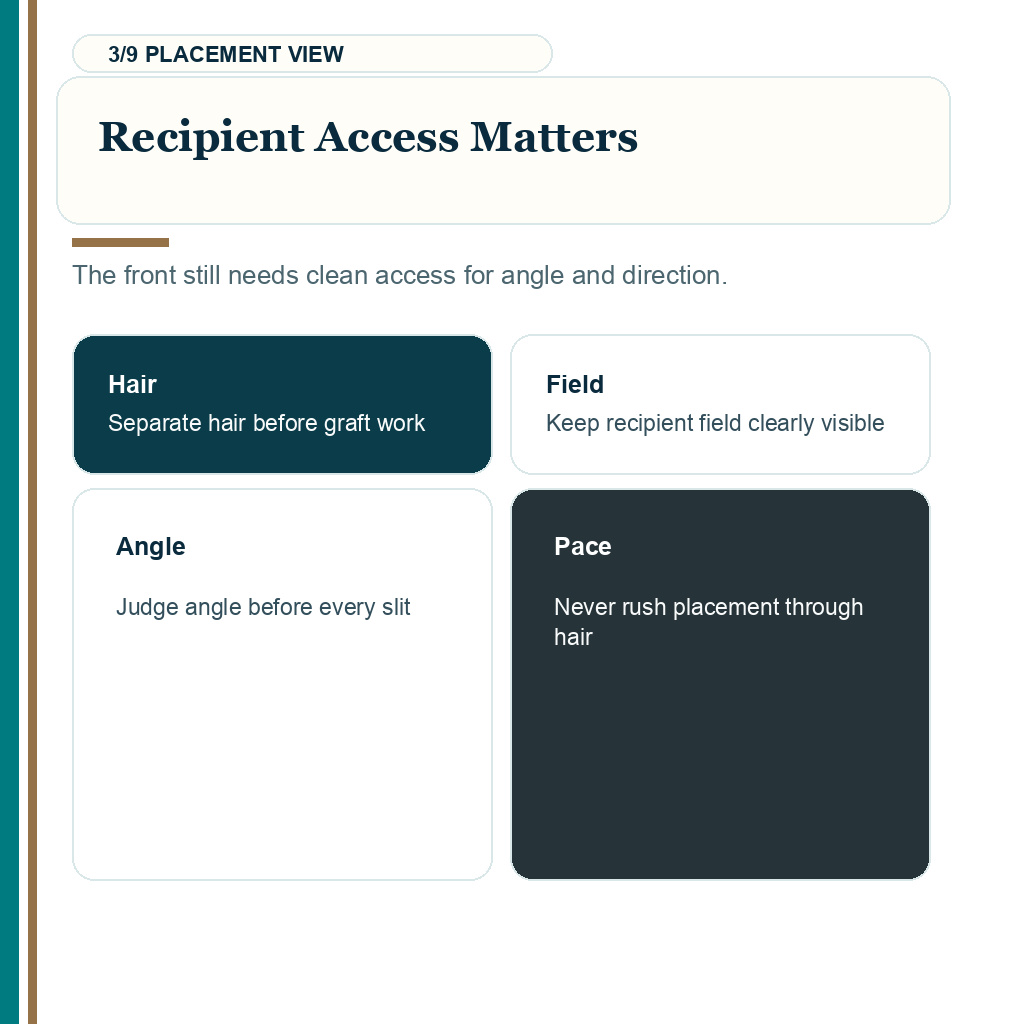
The recipient area also needs visibility. The surgeon must judge native hair direction, hairline shape, density gaps, miniaturized hair, and the exact angle where new grafts should be placed. If too much long hair covers the work area, placement may become more difficult.
Before I agree to leave the recipient area unshaven, I map the treatment footprint rather than judging the request from the graft number alone. A limited quote placed mainly into bare recession is a different operation from the same number spread behind the hairline among native hairs. The farther the plan extends into existing hair, the more access, sectioning, or selective trimming may be needed to see direction and protect the follicles already there.
Some patients want no shave surgery because they are using styling, fibers, or long hair to hide the thinning area. That can be understandable socially, but it is not helpful medically. Before surgery, the clinic needs clean photos, an uncovered view of the baseline, and hair fibers or concealers washed out before the final assessment. Part the hair enough to show the real thinning pattern and use the same light when photos are being compared. Hair fibers before a hair transplant can hide the true pattern if they are not disclosed.
Recipient area planning is not only about putting grafts where the hair looks thin. The surgeon must protect existing native hair, avoid unnecessary trauma, and respect the future loss pattern. Privacy should never make the recipient area less reliable to assess than it needs to be.
Curly and textured hair can help or hide risk
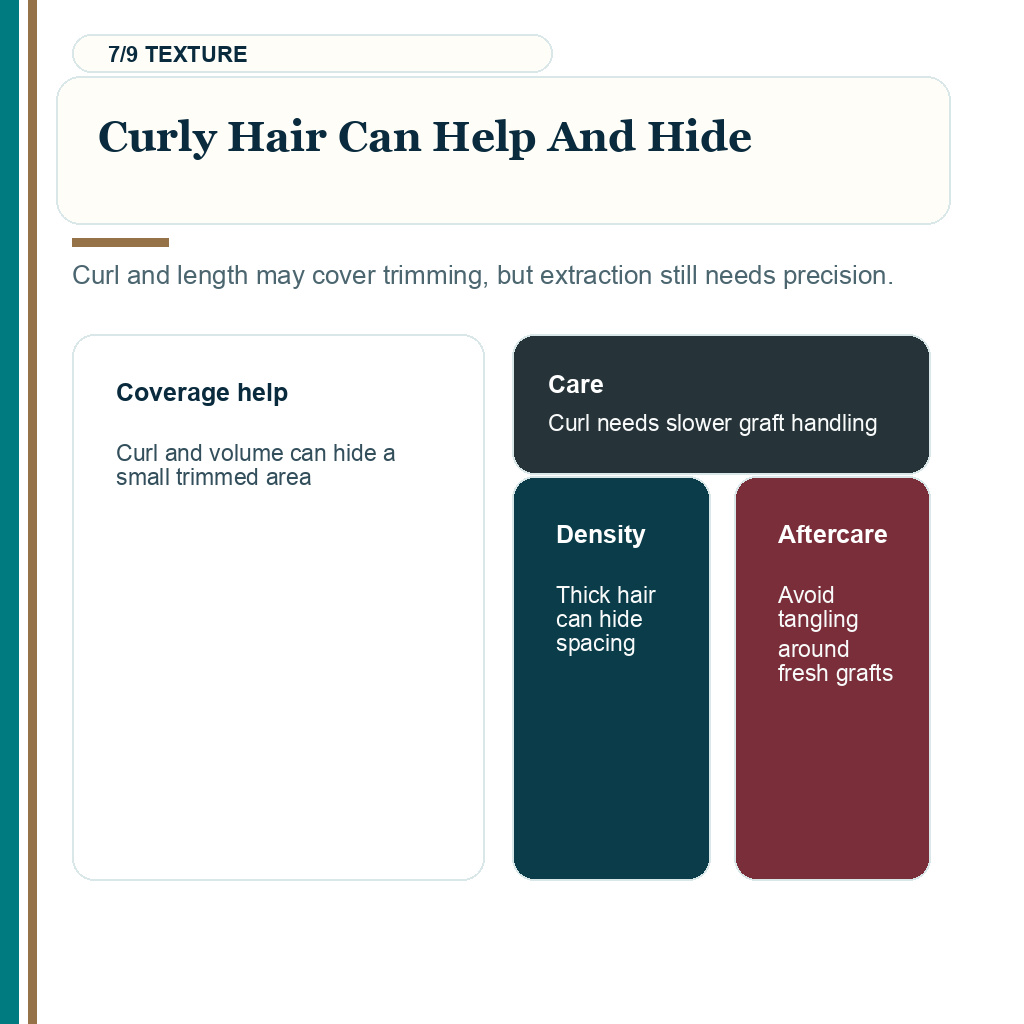
Curly or Afro textured hair can sometimes help hide a limited trimmed area because volume and curl may cover the scalp more easily than straight fine hair. That can make no shave or partial shave planning attractive for selected patients, but the scalp still has to be visible when the hair is sectioned.
The surgical side can be more demanding. Curved follicles may require more careful extraction angle and slower graft handling. Concealment is not proof that extraction will be easy. In some patients, the hair hides the scalp well for social reasons while the follicle shape makes extraction more technically sensitive.
For Afro textured hair, locs, or longer curly styles, the practical conversation needs to happen before the operation. The plan has to cover how the donor area will be accessed, whether the hair must be sectioned or temporarily released, how washing will be done, and whether the patient can follow aftercare without pulling, twisting, or tangling around grafts.
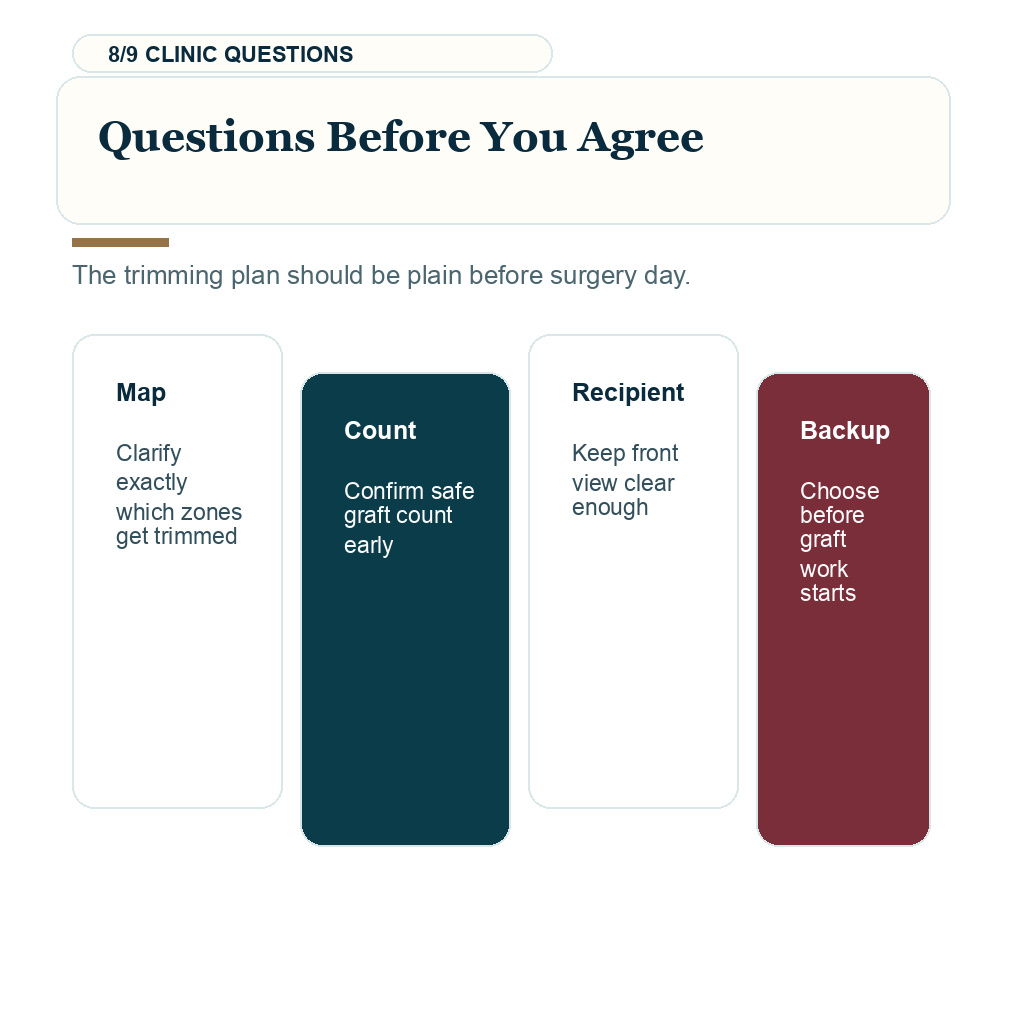
What should the clinic explain before you choose no shave?
A good answer names the exact trimming plan plainly. The label may be hidden partial shave, recipient area no shave, or long hair FUE. It should explain which areas will be clipped, whether the surgeon can still see the existing hair direction and planned graft angles clearly, how many grafts are realistic under that approach, and what will happen if the safe number is lower than expected.
The answer should also say who evaluates the donor area after the hair is separated and before extraction starts. A strong clinic answer explains how the team decides between full shave, partial shave, and no shave. A warning answer keeps repeating privacy while avoiding donor visibility, recipient access, graft count, recovery appearance, and the backup plan.
Review first week appearance expectations. That discussion needs to include redness, scabs, washing, swelling, styling limits, and when a hat or haircut may be reasonable. Looking normal after a hair transplant and haircut timing after surgery are visible recovery questions, not just labels attached to the surgical method.
Plan changes should happen before extraction starts
If the donor or recipient area looks different after the hair is separated under proper lighting, the plan may need to change. A larger trim, a partial shave, a lower graft number, or a staged operation can be the safer decision when visibility is not good enough. A planned change can be acceptable. A rushed change that you do not understand should stop the process until it is explained.
Before extraction starts, the clinic needs to explain what changed, show which area needs better visibility, and tell you how the change affects privacy, graft number, recovery appearance, and the final design. If the choice is between a hidden operation and a safer operation, the surgical plan comes first. That decision has to be clear before surgery begins, not after the patient feels locked into the day. The patient also needs to know whether the deposit, schedule, consent, or graft target changes if the lower risk option is a partial shave or staged case.
Choosing between shaved, partial shave, and no shave
Decide by ranking the medical plan first and the privacy preference second. A full shave often gives the clearest donor and recipient view. A partial shave may balance privacy with surgical control. A no shave approach may be reasonable when the case is small enough and the patient accepts the limits.
If the main fear is being seen with a shaved head, review whether a shorter recovery plan, a different surgery date, or a staged approach would protect you more than forcing the operation into a no shave format. Some patients are better served by accepting a few visible recovery days than by weakening the donor plan.
Patients who plan to shave later, or who commonly wear very short hair, should ask how the donor will look after it heals. Shaving the head after hair transplant has its own timing and visibility issues.
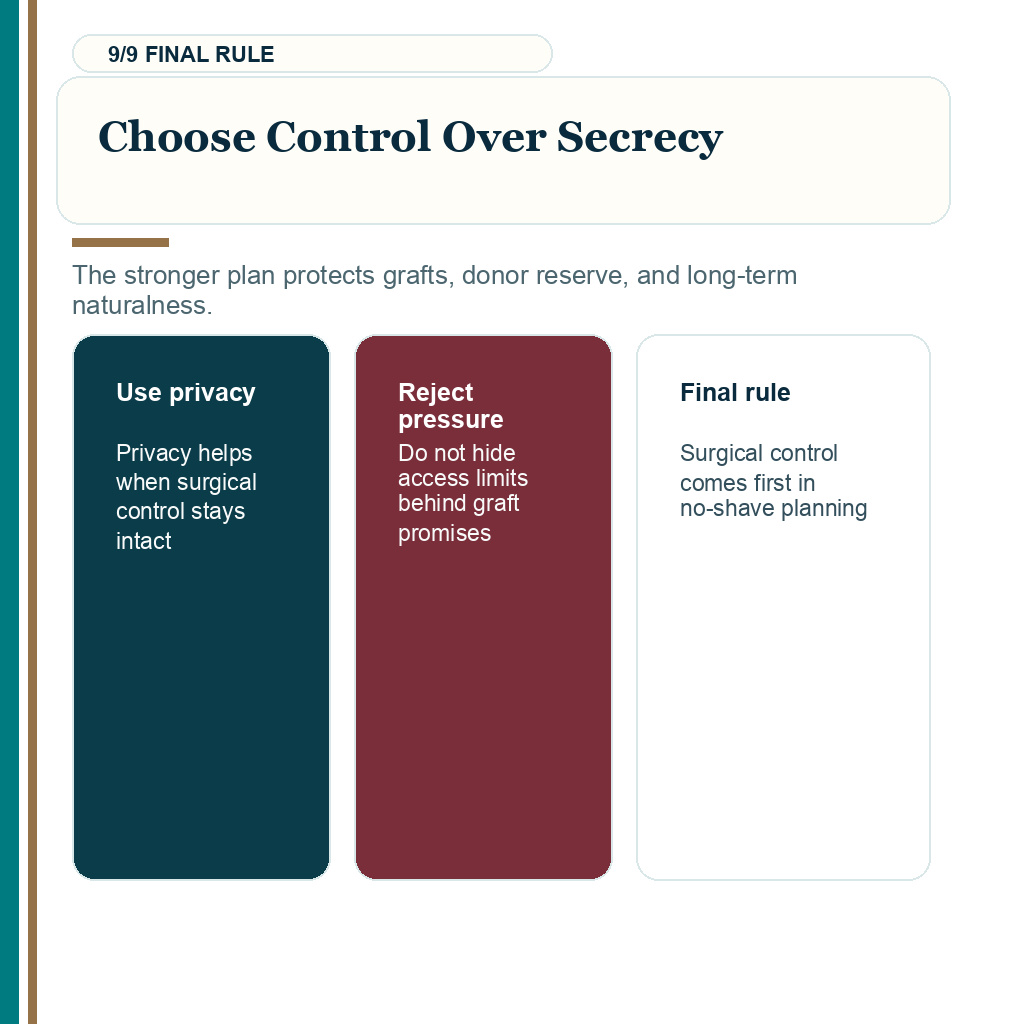
A no shave hair transplant is a useful option for selected patients, not a separate standard of quality. Choose it only when the surgeon can still see, harvest, place, clean, and review properly. If it supports that plan, it can be considered. If it hides information or pressures the graft number, the better decision is to change the plan, even if that makes the early recovery more visible.
Read this review excerpt
He was very thorough in every little detail and I never felt pressure to do anything I wasn’t sure of.