


Keeping a Hair Transplant Private Depends on Timing
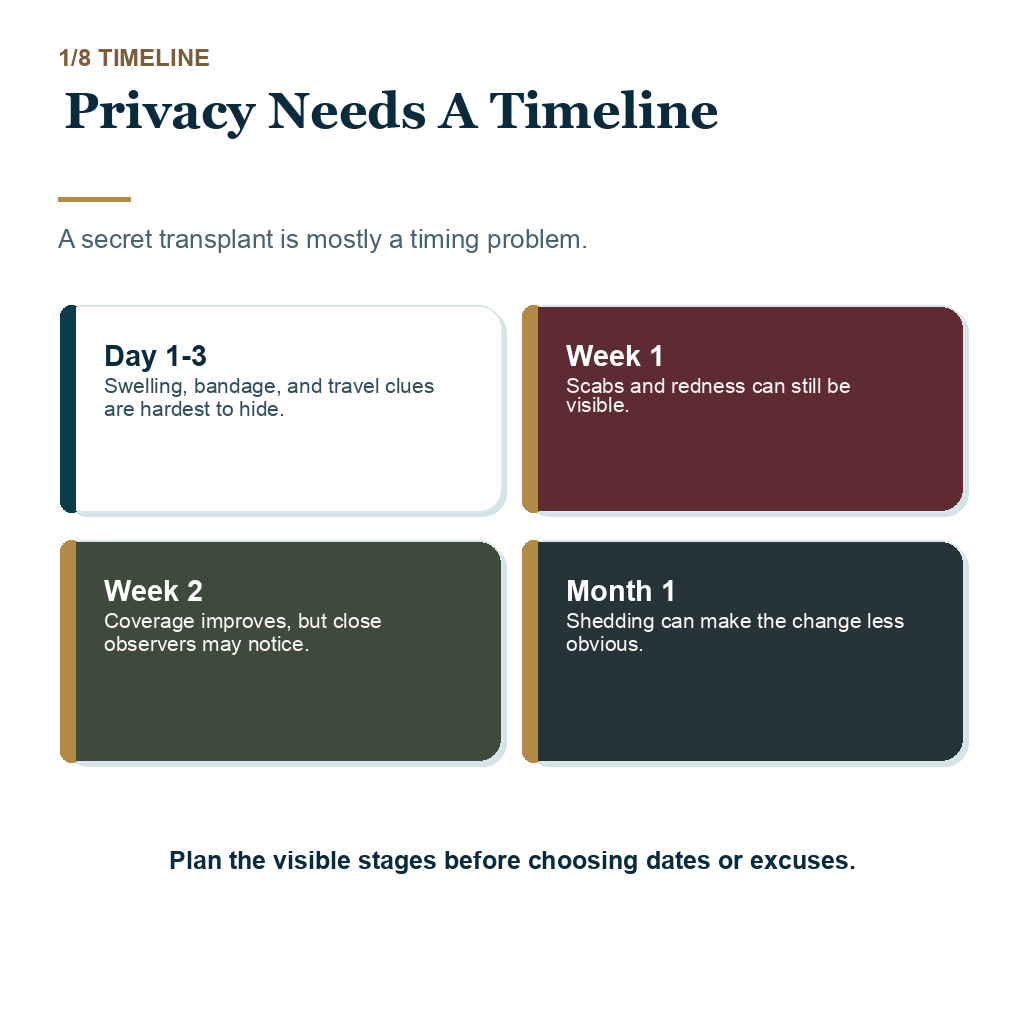
You can sometimes keep a hair transplant private, but you should not plan surgery on the promise that nobody will notice anything. The first 10 to 14 days are the hardest to hide because shaving, redness, scabs, swelling, short hairs, and donor area changes can be visible. After that, privacy depends on your hair length, graft number, skin redness, work schedule, and how natural the result is planned from the beginning.
Privacy is a planning issue, not a guarantee. It is more realistic when the hair loss is moderate, existing hair can help blend the work, and you can protect the first recovery window. It becomes harder when the area is large, the hairline is being rebuilt, the donor area needs a full shave, or you must return to close public contact too quickly.
A discreet plan should make recovery safer and the final result natural. It should not depend on hiding every stage at any cost. If you tell nobody, still decide who can help with transport, photos, or a clinic message if recovery becomes stressful.
A hair transplant is hard to hide in the first days
A hair transplant is hard to hide early because the scalp has just been operated on. Even clean work can show small scabs, redness, short transplanted hairs, swelling, and a sharp change in hair length. The donor area may also look recently shaved or dotted after FUE extraction.
The visible period is also the most protective period. Fresh grafts need protection from rubbing, pressure, scratching, heavy sweating, and careless covering. If you try too hard to hide the surgery, you may accidentally do the exact things that make early healing less safe.
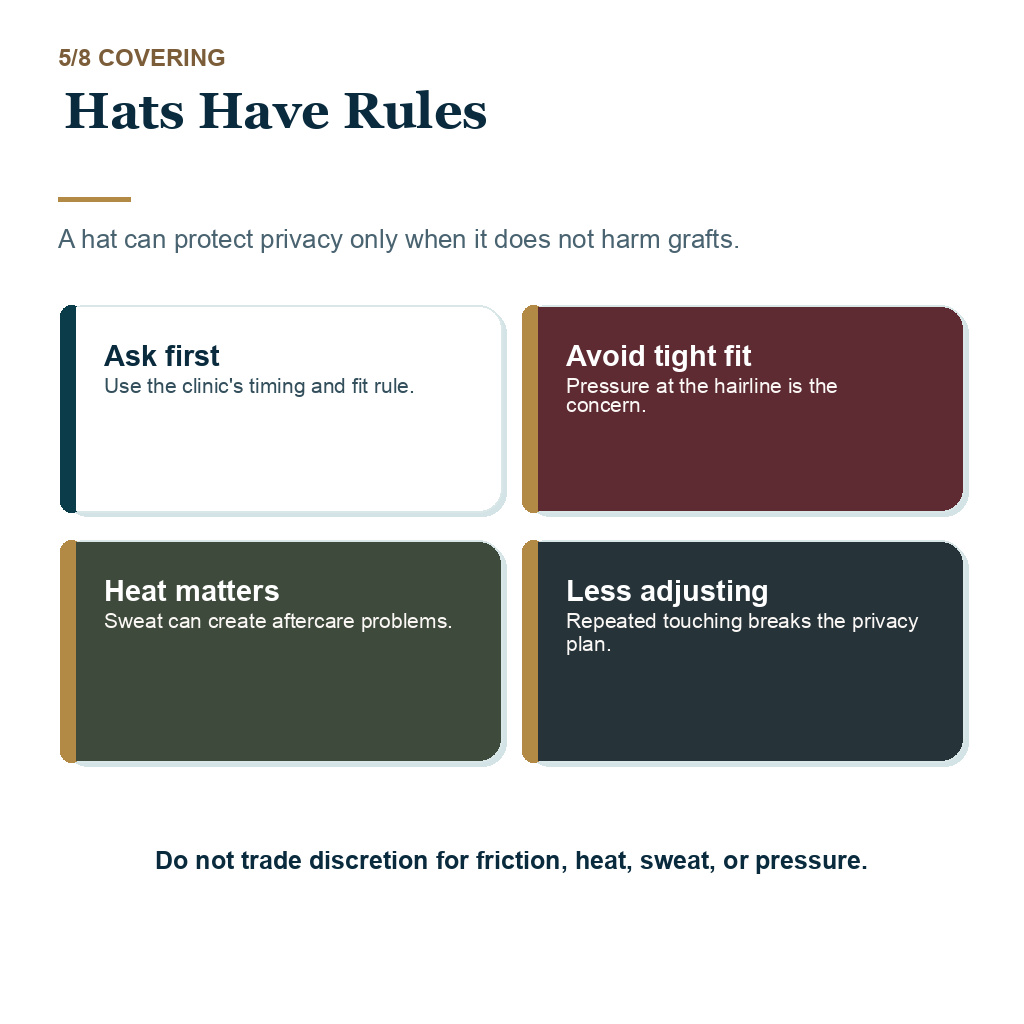
A loose hat, careful haircut, remote work plan, or hair extensions after FUE may help at the right time. None of them should be used in a way that presses, pulls, overheats, or rubs the recipient area too early.
If privacy matters, discuss it before surgery, not after the scalp is already healing and the timeline is fixed. I need to know which part must stay private, what work or family situation you are returning to, and how much time you can realistically stay away from close inspection. If you rely on hair fibers before a hair transplant, that dependency belongs in the planning conversation too.
Most people look normal enough in public after the early healing phase
Many people look socially acceptable after about 10 to 14 days, but that does not mean every visible sign is gone. Redness, uneven hair length, donor area contrast, and early shedding can still show. Plan privacy around the real recovery window discussed in looking normal after a hair transplant.
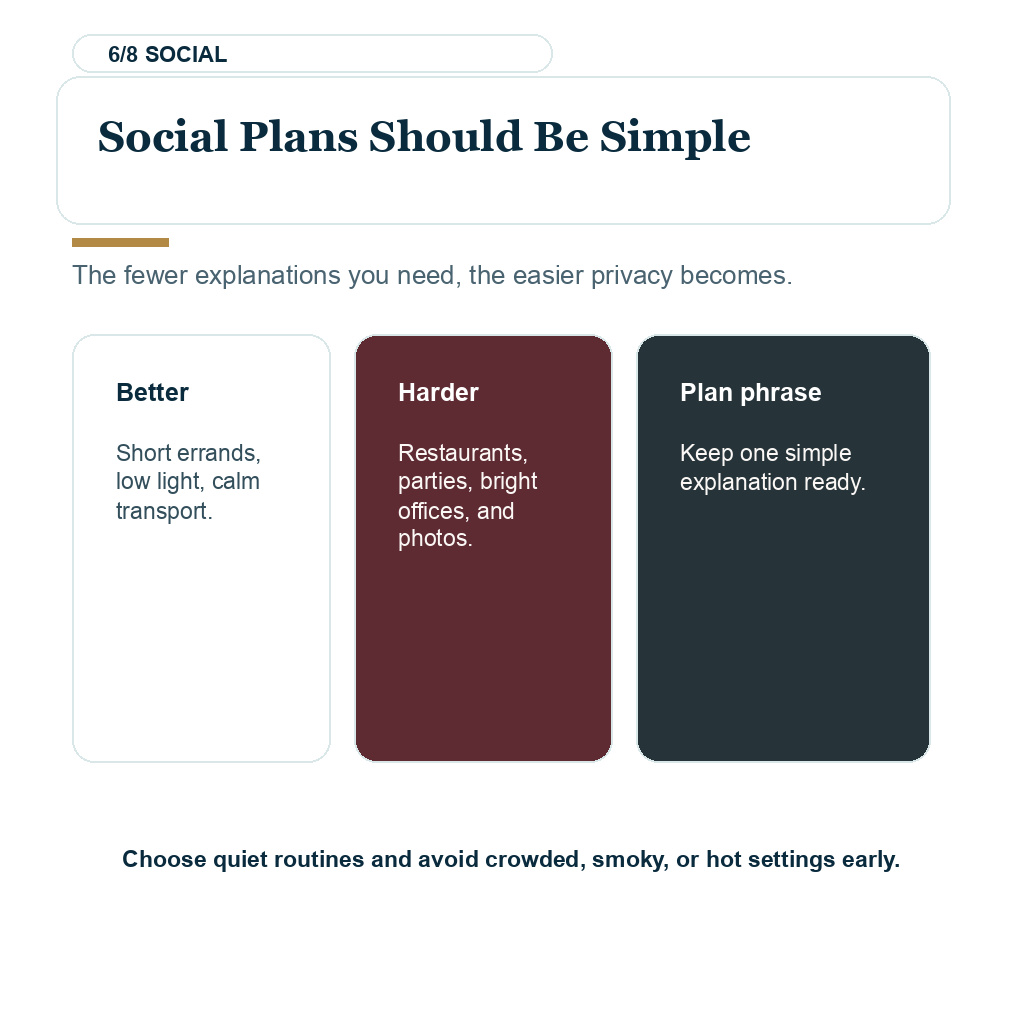
The setting matters. Walking through an airport is different from sitting under bright office lights with people who know your usual hairline. A video meeting is different from a wedding, a client presentation, or dinner with close family.
Short public exposure is different from close repeated exposure. A cap in an airport for a short period is not the same as wearing a tight hat all day at work. A quick video call with soft lighting is not the same as a public facing job under bright light.
Some people overestimate how closely others inspect them. Others underestimate how obvious a shaved recipient area can look in the wrong lighting. I bring both thoughts back to the same decision. Plan the calendar directly, then protect the scalp while it heals.
Privacy should remove social pressure, not add scalp pressure. If secrecy depends on a tight hat, early fibers, or constant checking, the calendar is too crowded.
Unshaven hair transplant can make privacy easier
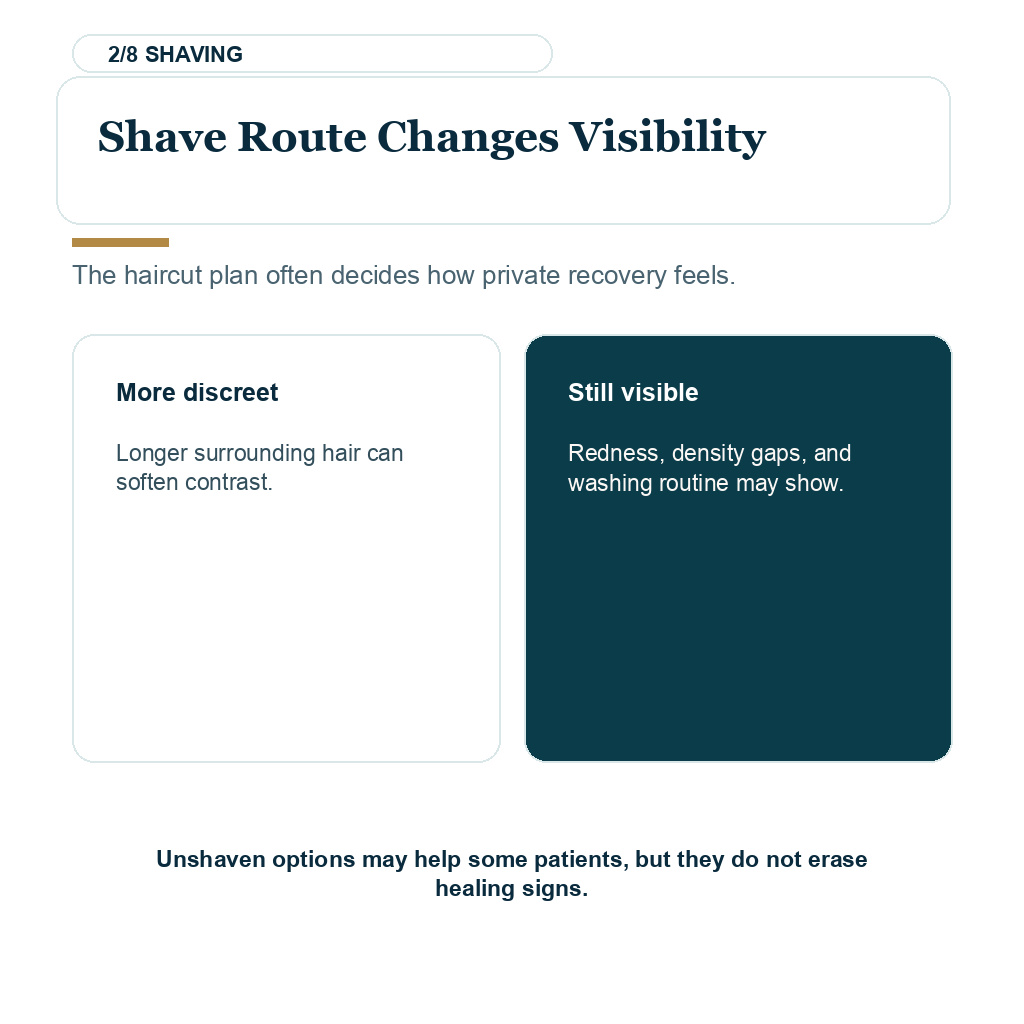
An unshaven or partially shaven approach can make recovery more discreet for the right case, but it is not a magic way to hide every transplant. It may help when existing hair is long enough to cover part of the recipient area and the graft number is limited. It becomes less useful when you need broad coverage, dense placement, or major hairline reconstruction.
Privacy should not weaken surgical quality. If an unshaven approach makes graft placement slower, less controlled, or less suitable for the case, then the privacy benefit may not be worth the compromise. The risks have to be judged case by case, as I explain in unshaven hair transplant risks.
A clean, carefully planned transplant that is temporarily visible is safer than a hidden approach that reduces control over angle, density, spacing, or donor management. The operation still has to serve the final result, not only the first two weeks.
For some people, partial shaving is enough. For others, full shaving is more reliable. The decision should come from the hair loss pattern and surgical plan, not from embarrassment alone.
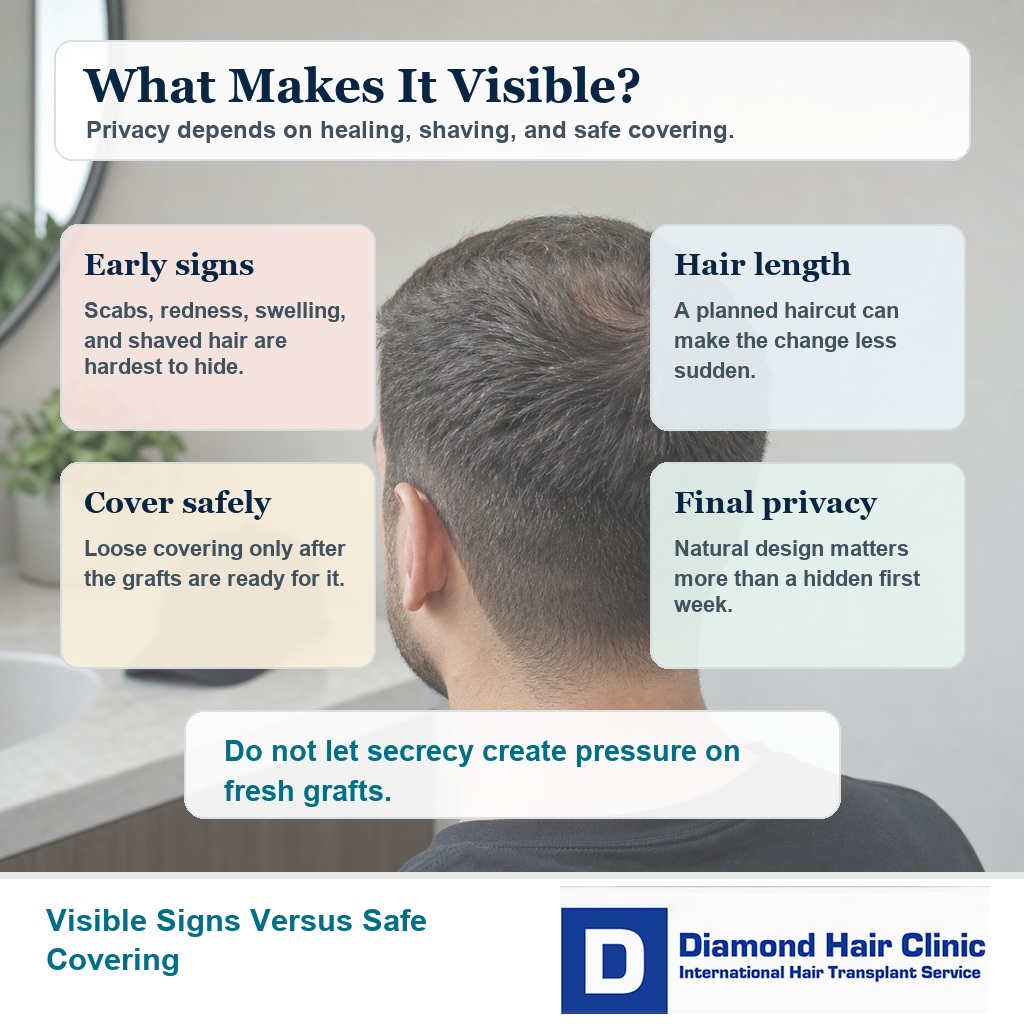
Privacy after a hair transplant depends on surgical planning, hair length, recovery time, and safe covering choices.
Later noticeability depends on design, density, and healing
Later, people notice different things. They may not see scabs anymore, but they may notice an unnatural hairline, too much density in the wrong place, a sudden change from very bald to very low hairline, or a donor area that looks thin when the hair is cut short.
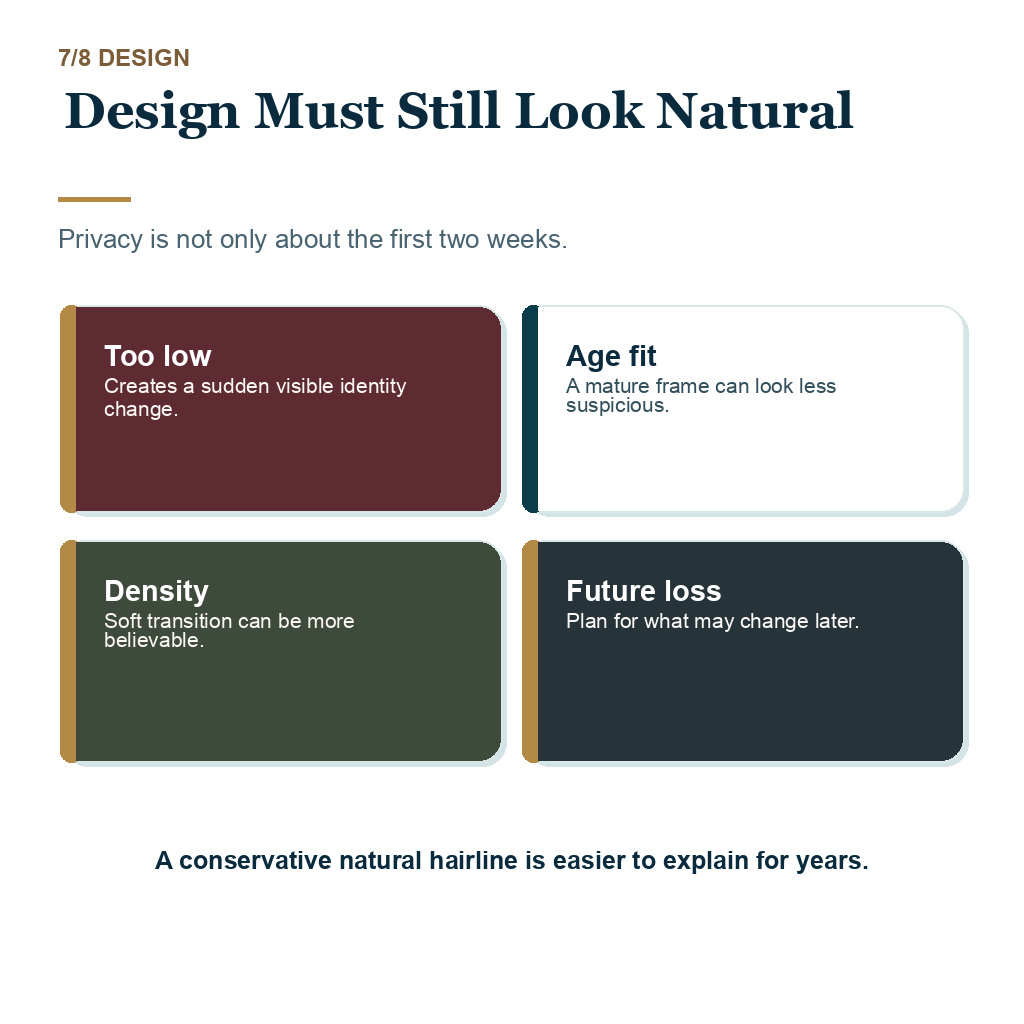
Final privacy depends more on surgical judgment than secrecy. A natural result should not announce itself. It should fit your age, face, hair caliber, donor capacity, and future hair loss pattern. The role of natural hairline design is to make that fit hold up over time.
I separate temporary visibility from long-term detectability. A transplant can be obvious for a short recovery period and still look natural later. The bigger problem is a hidden recovery followed by a final hairline that looks too low, too straight, too dense, or mismatched to the donor area.
The donor area can reveal poor planning too. If too many grafts are taken from one zone, short haircuts may expose patchiness or overharvesting. If you want privacy long term, donor management matters as much as the front hairline.
Work, travel, and social events need recovery planning
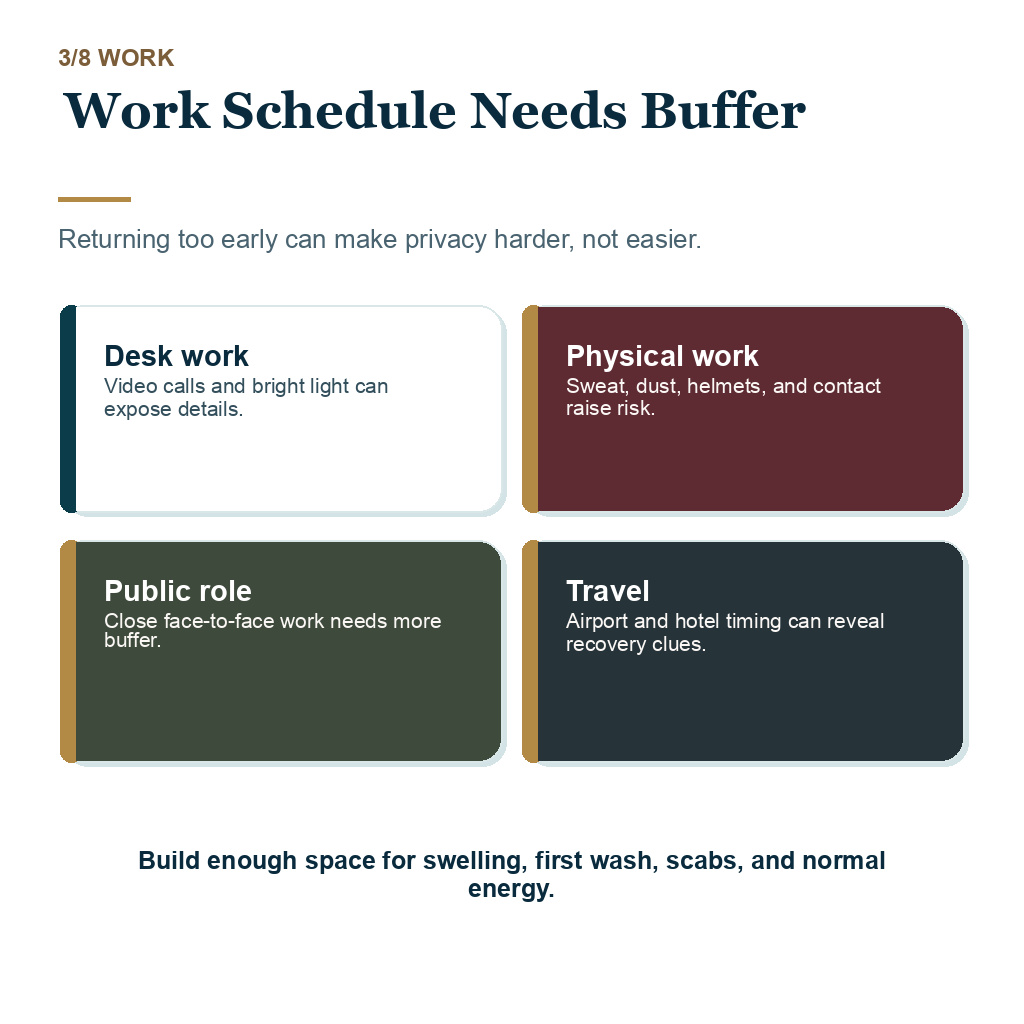
If privacy matters, the calendar matters. Time away from public work, fewer close social commitments, and control over video calls make recovery easier. Sunglasses may help some people feel less exposed, but glasses or sunglasses after a hair transplant still need to be judged by frame pressure and graft location.
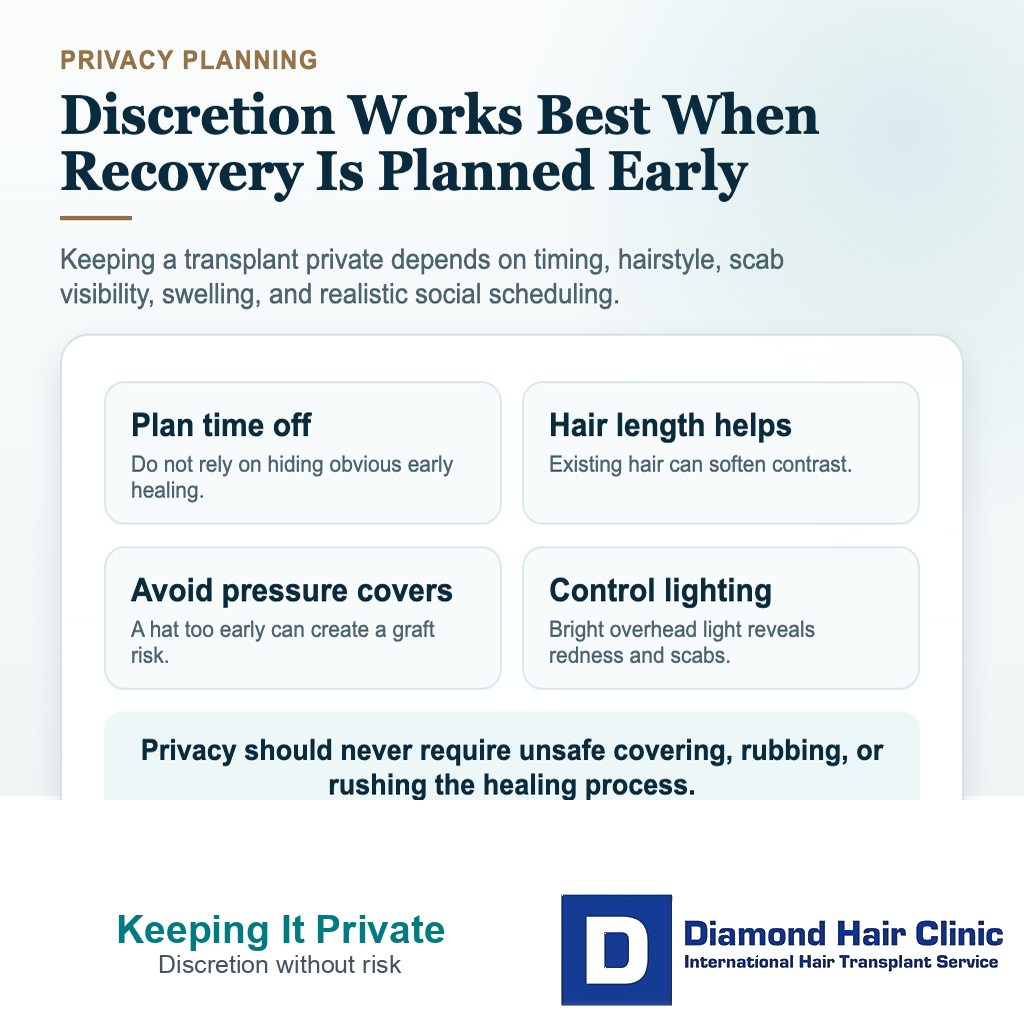
Plan around the visible recovery period instead of hoping it disappears early. A time off work after a hair transplant plan protects that window. Give the scalp enough time before you put yourself under social pressure. Mandatory workplace covers need their own plan, so hairnet or work cap timing after FUE should not be improvised on the first shift back.
Travel can be discreet, but it should not become careless. The flight home, hotel recovery, washing schedule, sleep position, and sun exposure still matter. If nobody around you knows about the surgery, the instructions must be clear before you leave the clinic because you may have less practical help in the first days.
For a wedding, public speaking event, business trip, or important photo day, choose the surgery date with extra margin. The earliest possible return is not always the best return.
I also prefer you to prepare one simple private answer before surgery. You do not need to explain every medical detail. A short neutral explanation is better than being caught off guard and rushing into a tight hat, heavy concealer, or poor washing. If you plan to use a hat for privacy, wearing one occasionally before surgery may make it seem less unusual when you return to work. Check your workplace dress code first. If someone asks directly, a prepared line protects privacy better than a rushed hat or last minute concealer.
Hats and haircuts can help only when used safely
A hat can help privacy after the grafts are safe enough, but it should not be used too early or too tightly. Wearing a hat after a hair transplant needs careful timing because pressure and rubbing matter in the early period.
A haircut can also help, but timing is important. Some people want to blend the donor area quickly. Others need to let the scalp settle first. Getting a haircut after a hair transplant needs that timing judgment because clippers, scissors, donor hair, and the recipient area are not all treated the same way.
A barber should not disturb the recipient area before it is ready. Harsh products, heavy fibers, sprays, or aggressive styling should not be used just to hide redness. Cosmetic covering should never come before graft safety.
When privacy matters, the haircut plan should be reviewed before surgery. Sometimes growing the top longer helps. Sometimes a planned short haircut before surgery makes the change less dramatic. Sometimes the most discreet plan is simply enough time away, not forced camouflage.
Recovery signs can reveal surgery
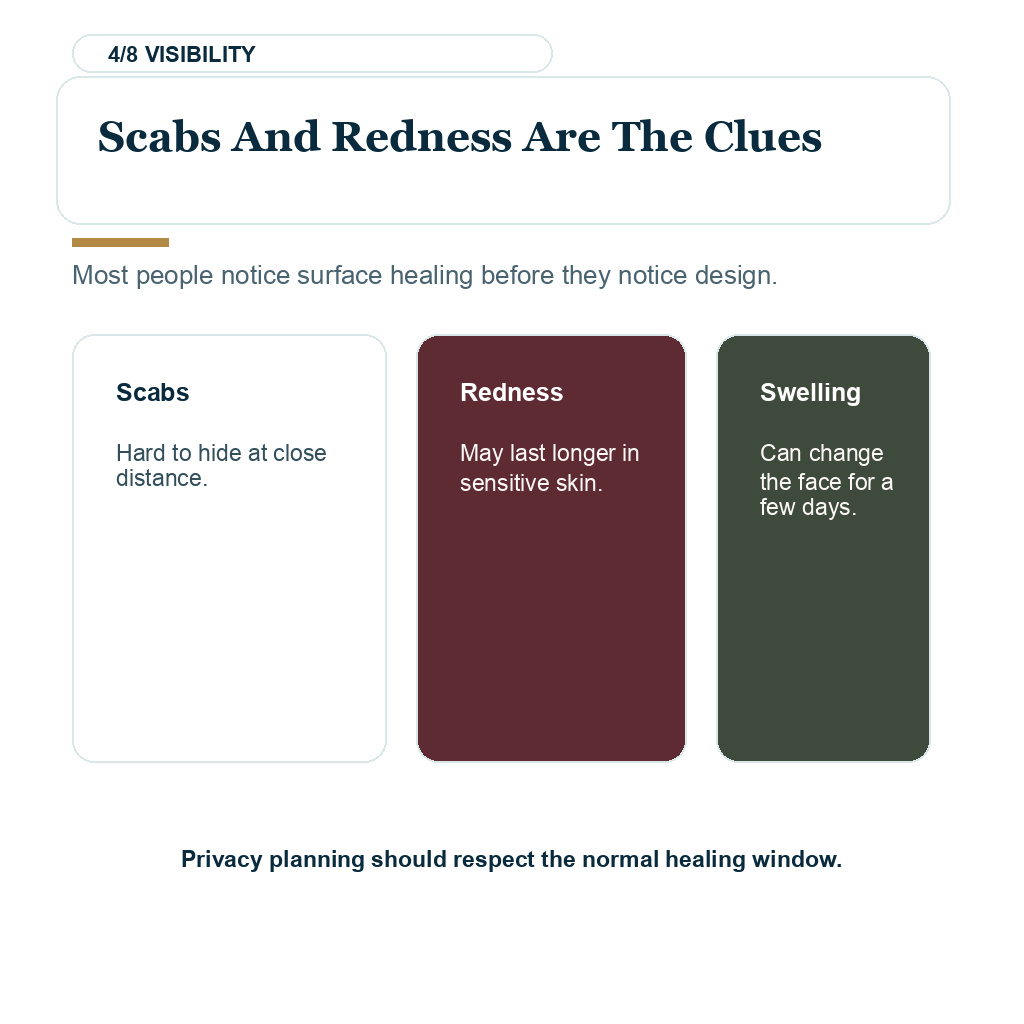
The signs most likely to reveal a recent transplant are scabs in the recipient area, redness around the grafts, swelling in the forehead, a sharply shaved donor area, and uneven hair length. These are recovery signs, not proof that the transplant is failing.
Redness, scabs, and pimples after a hair transplant can be expected in some cases, but some changes need review. Swelling after a hair transplant is another reason the face or forehead may look different in the first days.
Privacy anxiety can make every normal sign feel larger. You may inspect the hairline from a few centimeters away and assume everyone else will do the same. Most people will not. Close friends, partners, and colleagues may still notice a sudden change, especially if the lighting is strong or your usual hairstyle changed.
The better answer is not panic. Careful washing, steady aftercare, and avoiding trauma allow visible signs to settle. Washing hair after a hair transplant helps recovery look cleaner without rushing the scalp.
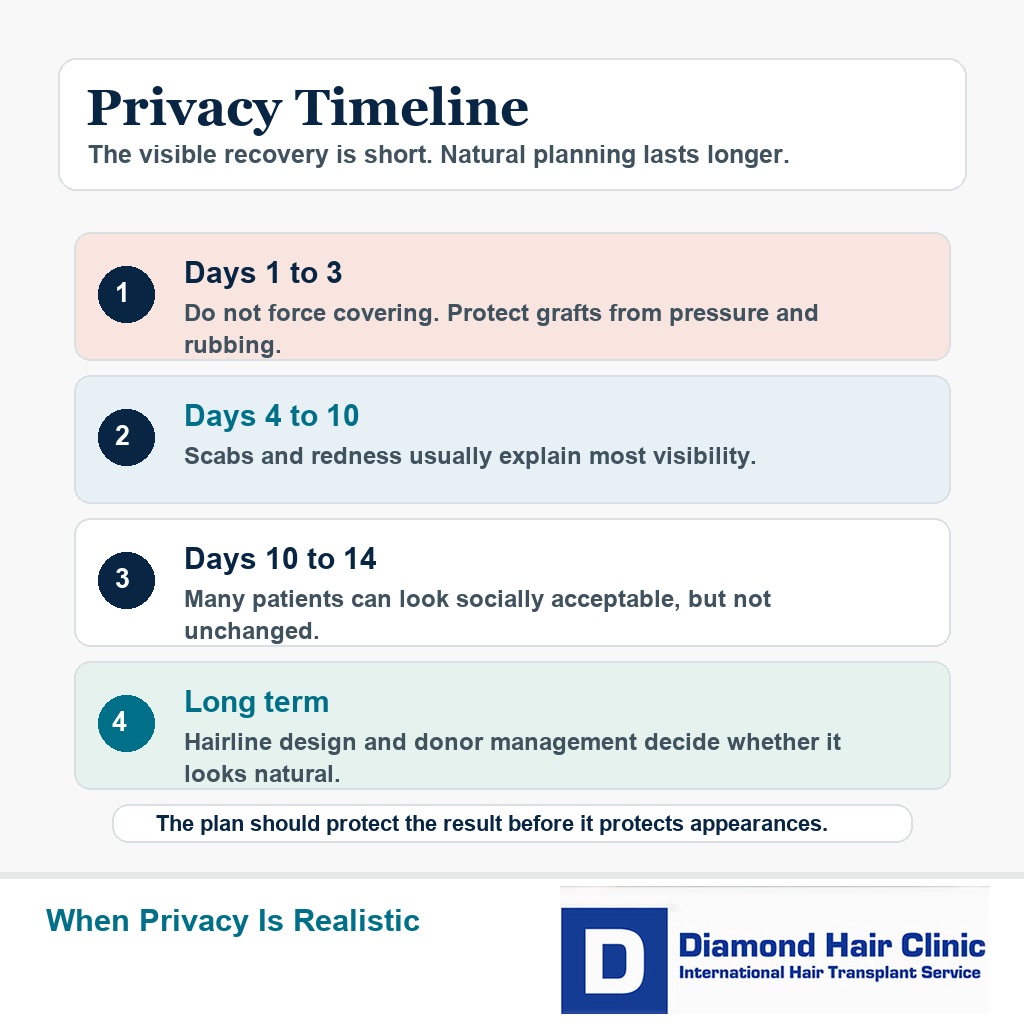
The most visible stage is early healing. The most important long term privacy factor is natural planning.
Hiding surgery becomes unsafe when warning signs are ignored
Hiding surgery becomes unsafe when pressure, friction, heat, sweat, products, or poor timing are used to force the scalp to look normal before it is ready. Privacy should not make you ignore recovery instructions.
The date needs reconsideration if you must return immediately to a very public setting, wear a tight helmet or cap all day, exercise heavily, use fibers early, or attend an event where the scalp may be bumped or touched. You may still be a good candidate, but the date may be wrong.
There is also an emotional side. If secrecy feels more important than safety, it can push you toward the wrong clinic, a weak unshaven plan, or a small session that does not solve the actual hair loss pattern. Anxiety can make a short-term hiding strategy look more attractive than a sound surgical plan.
A discreet transplant still has to be medically sound. If privacy demands make the operation less safe, less natural, or less realistic, the plan should change.
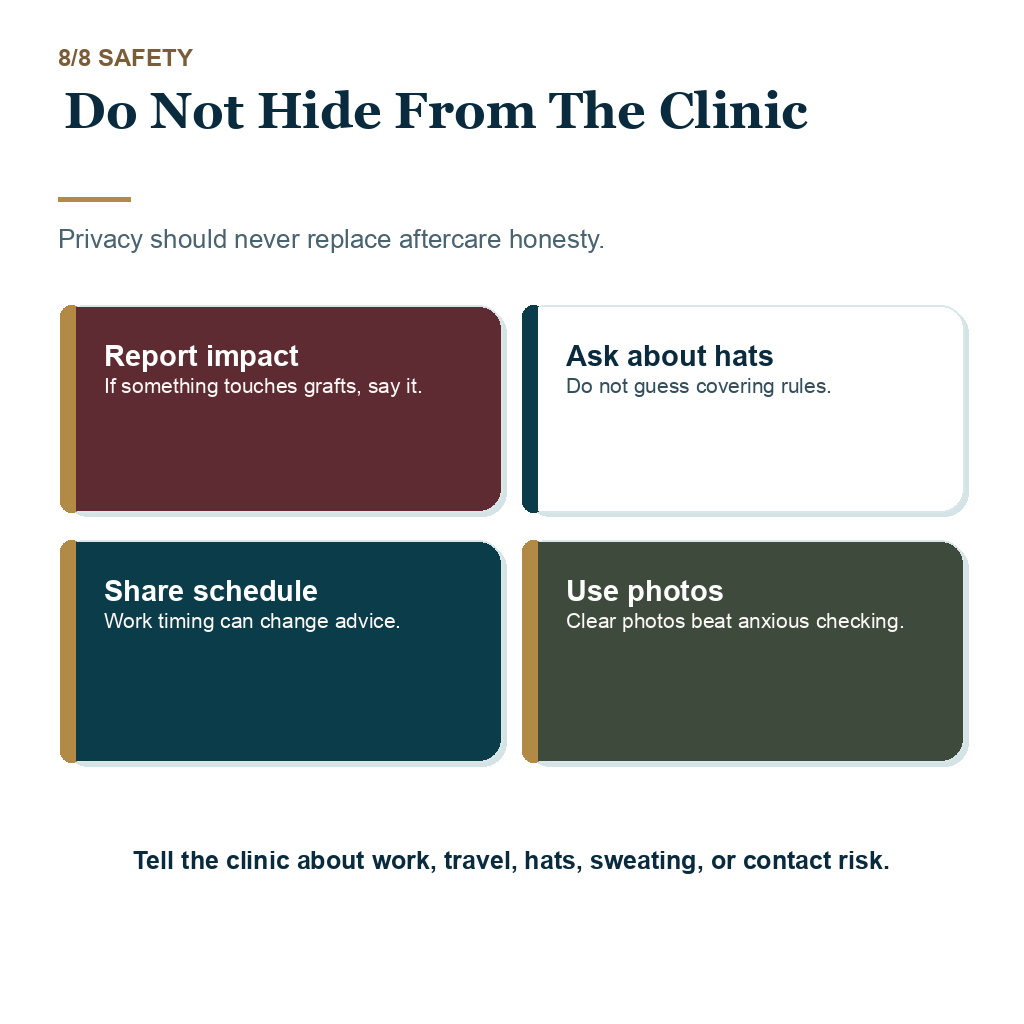
Telling one trusted person can protect aftercare
If you want privacy, I still prefer that at least one trusted person knows about the surgery when possible. This is not for gossip. It is for practical help during travel, sleeping, washing, swelling, medication timing, and the first days when you may be tired or anxious.
Secrecy can increase pressure. If you are trying to hide everything, you may rush back into normal routines too early, wear the wrong hat, skip proper washing, or avoid contacting the clinic because you do not want to explain the situation.
You do not need to announce the surgery publicly. But a private plan should still have support, especially after a larger session or international travel.
Family objections can point to real planning risk
If you are an adult, family pressure cannot make the surgical decision for you. Still, some objections deserve attention because they may point to real planning risk, not only fear. Future native hair loss, donor reserve, medication tolerance, possible later sessions, and the visible recovery window all belong in the decision before anyone tries to keep the operation private.
If family pressure is making consent unclear, treat it like final hair transplant doubts and slow the decision down. If the main fear is medication, bring finasteride side effects into the surgical plan before booking. Good finasteride tolerance can help the discussion, but it is not enough to make a transplant wise on its own. Poor tolerance does not close the door to surgery, but the design may need more restraint and the future native hair loss plan must be clearer.
Privacy should never push you to hide warning signs, rush washing, wear a tight hat too early, or accept a weak hairline only because it is easier to explain at home. Privacy planning should protect healing first and explanations second.
Privacy promises that sound too easy deserve caution
Be careful with any clinic that makes invisible surgery sound guaranteed. A useful consultation should explain what can be made discreet and what cannot. It should not sell privacy by ignoring graft number, shaving needs, donor area limits, skin redness, or work schedule.
Some clinics use privacy as a sales tool. They may promise a no shave transplant without explaining whether the case is suitable, or they may show only perfect final photos without discussing the first two weeks.
A privacy promise only matters after the surgeon has examined the donor area, the recipient area, the future hair loss pattern, and your actual social needs. Choosing a hair transplant clinic in Turkey should begin with that level of surgeon involvement, not with a secrecy promise.
A real consultation makes the tradeoffs clear. If a clinic only says the transplant will be secret, easy, and undetectable, the answer is not serious enough for real surgery.
A discreet hair transplant needs planning before surgery
I start by deciding whether the operation itself is wise. Privacy does not matter if you are too young, the donor area is weak, the hair loss is unstable, or the expected coverage is unrealistic. A private mistake is still a mistake.
Then I look at the visible recovery. I review your work schedule, whether you can work remotely, whether you can take time away, how short you normally wear the hair, whether hats are acceptable in daily life, and whether a partial shave is technically suitable.
I also plan the result to age naturally. A discreet final result often means a measured hairline, careful temple work, realistic density, and donor grafts used where they matter most. It may mean refusing a dramatic low hairline even if that would look exciting in a before and after photo.
Before committing, the medical and practical limits should be clear. Privacy should never replace proper planning, because a quiet recovery cannot fix a weak surgical decision.
These 8 privacy planning slides separate the timeline, shave route, work buffer, scabs and redness, hat rules, social plans, natural design, and clinic safety planning. Swipe sideways, use the arrows one slide at a time, or choose a number below the image.
Key decisions come before committing
First, decide how private the recovery truly needs to be and where you can be flexible. Avoiding office attention, keeping the surgery from family, and not wanting hair to become a topic for months are different privacy needs.
Then decide whether you are willing to take enough recovery time. If you can only take two or three days away from client work after FUE, the timing may not be right. If you can arrange 10 to 14 quieter days and manage the next weeks sensibly, privacy becomes more realistic.
Finally, decide whether you are choosing the plan for the final result or for short-term secrecy. The best surgical plan may be temporarily more visible but more natural for the rest of your life. The most hidden short-term plan is not always the strongest medical plan.
Realistic guidance is better than a secrecy promise. A hair transplant can often be kept low profile with good timing, natural design, and careful recovery. But the result should never depend on a secret. It should depend on proper diagnosis, donor protection, surgeon-led planning, and a hairline that still looks natural when nobody is thinking about the surgery anymore.
Read this review excerpt
He was very thorough in every little detail and I never felt pressure to do anything I wasn’t sure of.