


Hair Transplant Emotional Readiness
A hair transplant is emotionally reasonable when the hair loss problem is real, the donor area can support the plan, and you understand what surgery can and cannot change. If that clarity disappears in the final days, I use final hair transplant doubts that need a pause to decide whether the plan should slow down before grafts are removed.
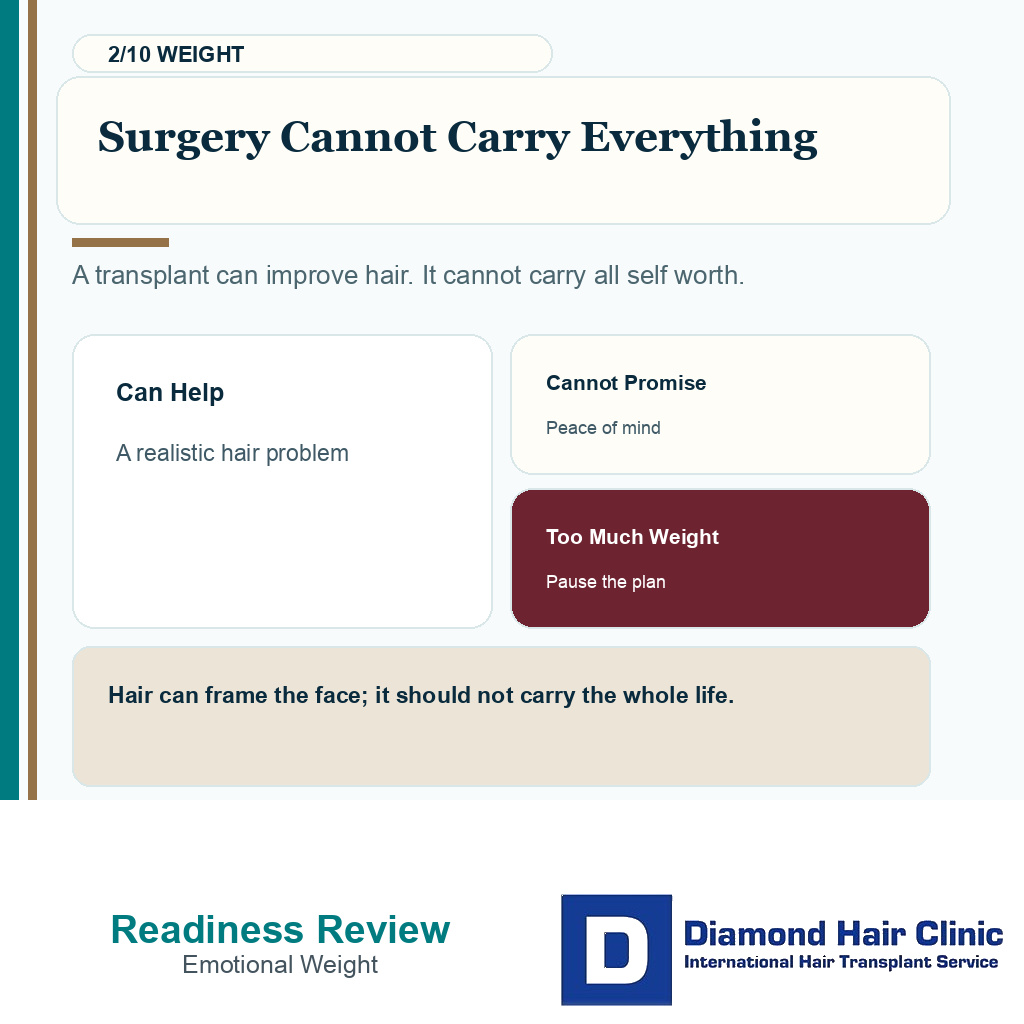
It should not be used as the only answer to isolation, severe distress, obsessive mirror checking, or the feeling that life cannot move forward without a perfect result. Surgery can improve a realistic hair problem, but it should not carry the whole weight of a person’s self worth. When motivation is stable and expectations are realistic, surgery may be a positive step. When the emotional pressure is bigger than the surgical problem, waiting can protect you.
If each answer online gives you relief for a few minutes and then sends you searching again, pause before booking. The problem may be uncertainty, not the hairline plan itself. A clear plan should still make sense when the phone is closed and the next outside opinion is not available. If the relief disappears that quickly, postpone the decision and find the part of the plan that still feels unresolved.
Emotional readiness belongs inside the medical plan
Hair transplantation is a visible operation. It changes the hairline, the donor area, the recovery period, and the way you look at photographs for many months. Emotional readiness belongs inside the consultation, not outside the medical plan as a separate personal issue.
A technically possible operation can still be badly timed. If you expect the transplant to remove every insecurity, every awkward social moment, or every fear about aging, the result may feel disappointing even when the grafts grow. Hair can frame the face better, but it cannot promise peace of mind. The consultation has to separate the surgical target from the emotional weight placed on that target.
In my consultation, candidacy is more than a graft calculation. Hair transplant candidacy needs donor capacity, diagnosis, future planning, and realistic expectations. Emotional readiness is one more part of that same judgment.
Healthy motivation is specific and realistic
Wanting a hair transplant is not shallow or weak by default. Hair loss can change how a person feels in the mirror, in photos, at work, or in relationships. You may be tired of hiding the frontal hairline, styling around thinning, or looking older than you feel. Those feelings are real.
If the question in your mind is whether a hair transplant will help dating, I would reframe it. Surgery may improve a real hairline or density concern, and that can make some patients feel less exposed in photos or social settings. It should not be booked as a promise that other people will find you attractive, that a relationship will change, or that confidence will be fixed. The healthier goal is to improve a specific hair problem while accepting recovery, limits, and future hair loss planning.
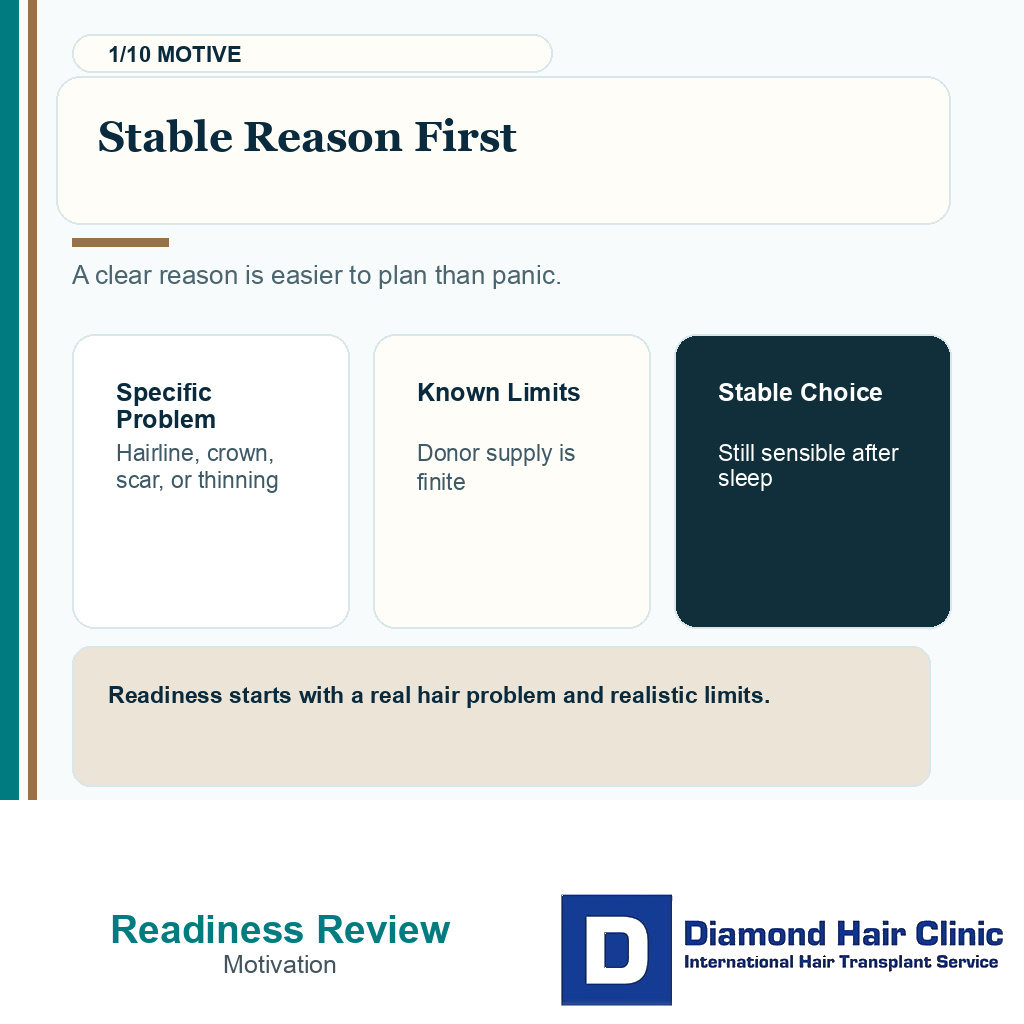
Motivation is healthier when you can name a specific problem, such as a receding hairline, weak frontal frame, crown limitation, old scar, or visible thinning pattern. You can also accept that the operation has limits. Native hair can continue to thin, donor supply is finite, the recovery has awkward stages, and the final result takes time.
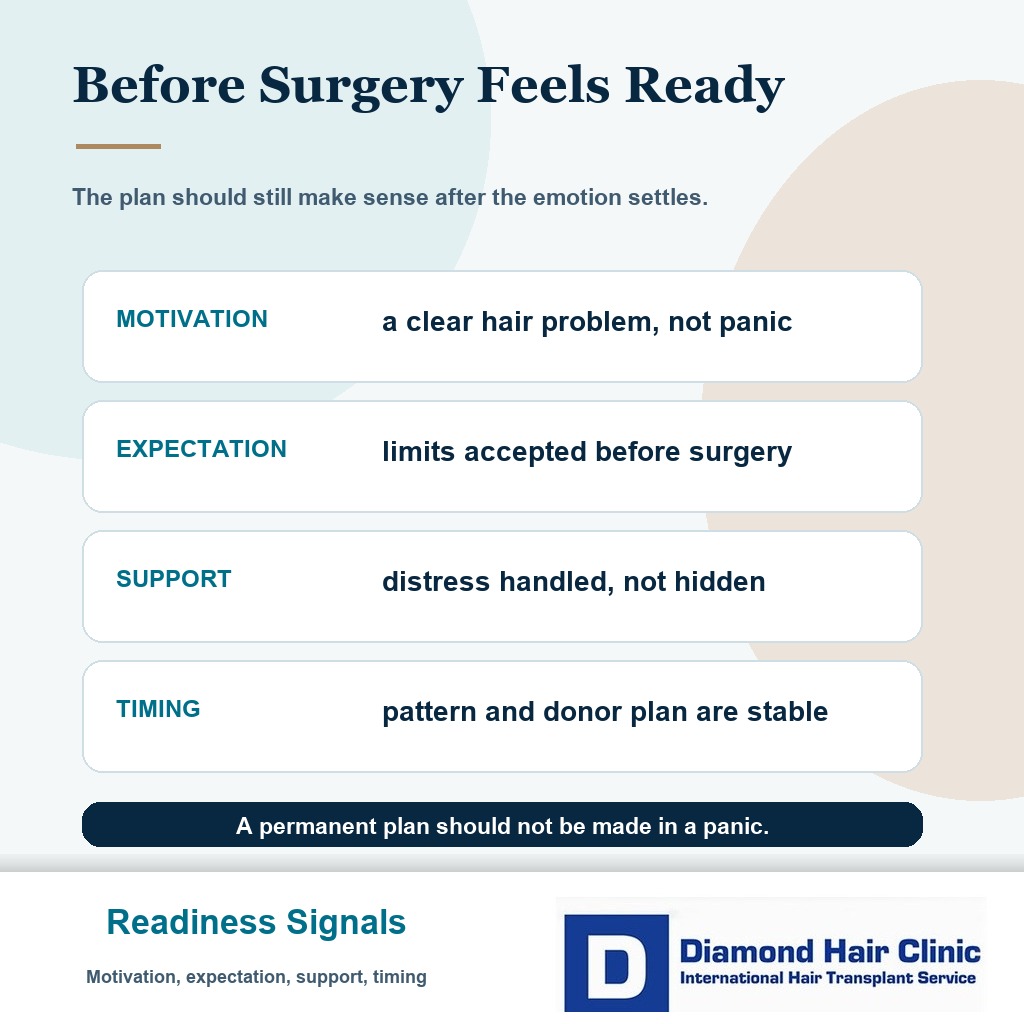
Stable motivation, stable expectations, and stable medical planning are the combination that makes the decision safer. You do not need to be emotionless. You need enough clarity to make a permanent surgical decision without panic driving the plan.
When the diagnosis is still uncertain, that clarity also includes separating emotional pressure from androgenetic alopecia planning before FUE before any graft plan is promised.
Less hiding, not a new life
Some patients are not asking surgery to make them a different person. They are tired of planning around wind, wet hair, bright light, photos, hats, and the styling routine needed to hide thinning before leaving home. That daily mental load can be a reasonable reason to ask about surgery, as long as the hair loss problem is visible and the donor area can support the plan.
That goal is different from expecting a transplant to make dating easy, change how every person treats you, or remove every insecurity. A result has to work in ordinary conditions, not only under clinic lighting, so I connect this expectation with judging a natural hair transplant result before deciding whether the plan is emotionally ready.
If the goal is easier styling and less hiding, the consultation can test it against photos, donor limits, hairline design, hair characteristics, and future loss. If the goal is a new life, a new personality, or relief from severe distress, surgery is being asked to carry too much.
Pause the decision when distress is larger than the hair problem
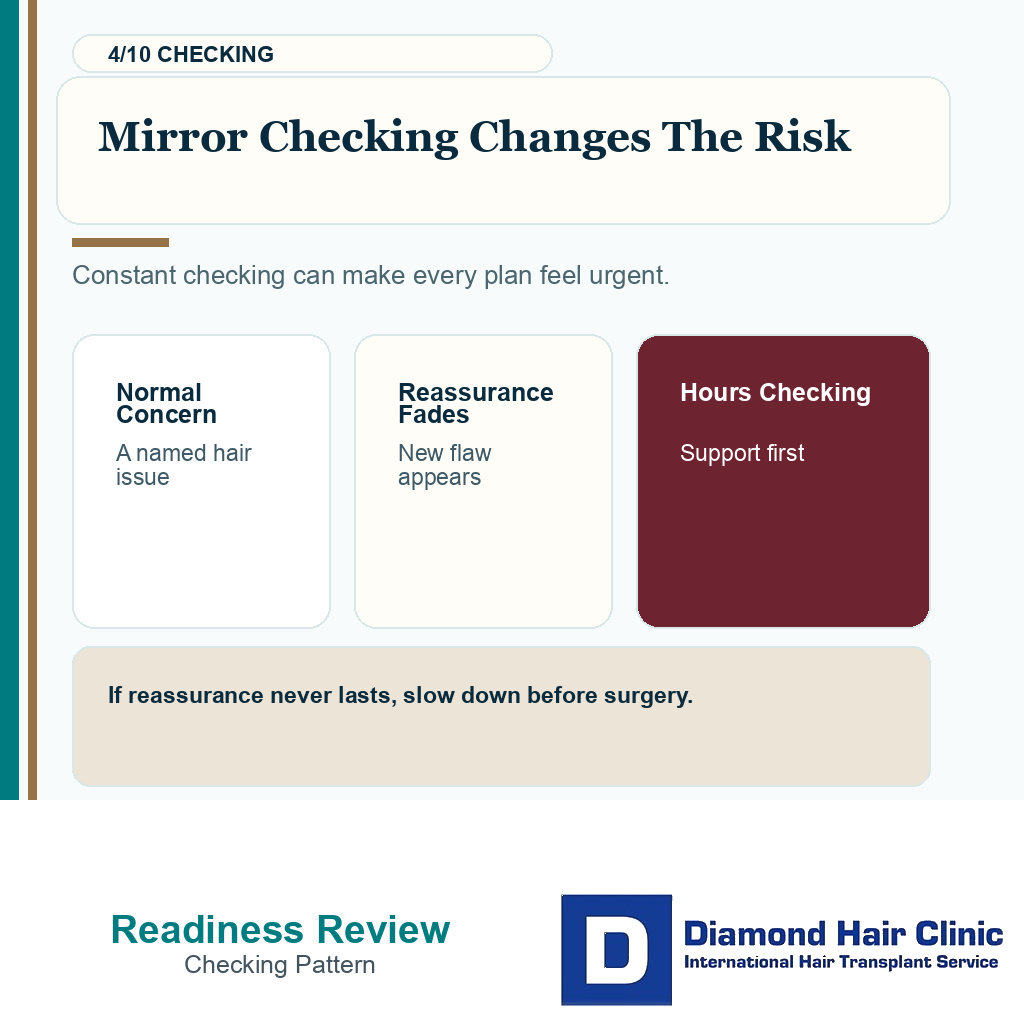
The decision should be paused when the emotional problem is larger than the hair loss problem being treated. Warning signs include feeling unable to leave the house, believing life has no value without surgery, checking the mirror or camera repeatedly through the day, or needing a perfect result before any social life can start. If checking consumes hours, reassurance never lasts, or every photo creates a new urgent flaw, the emotional pattern deserves attention before permanent donor hair is used.
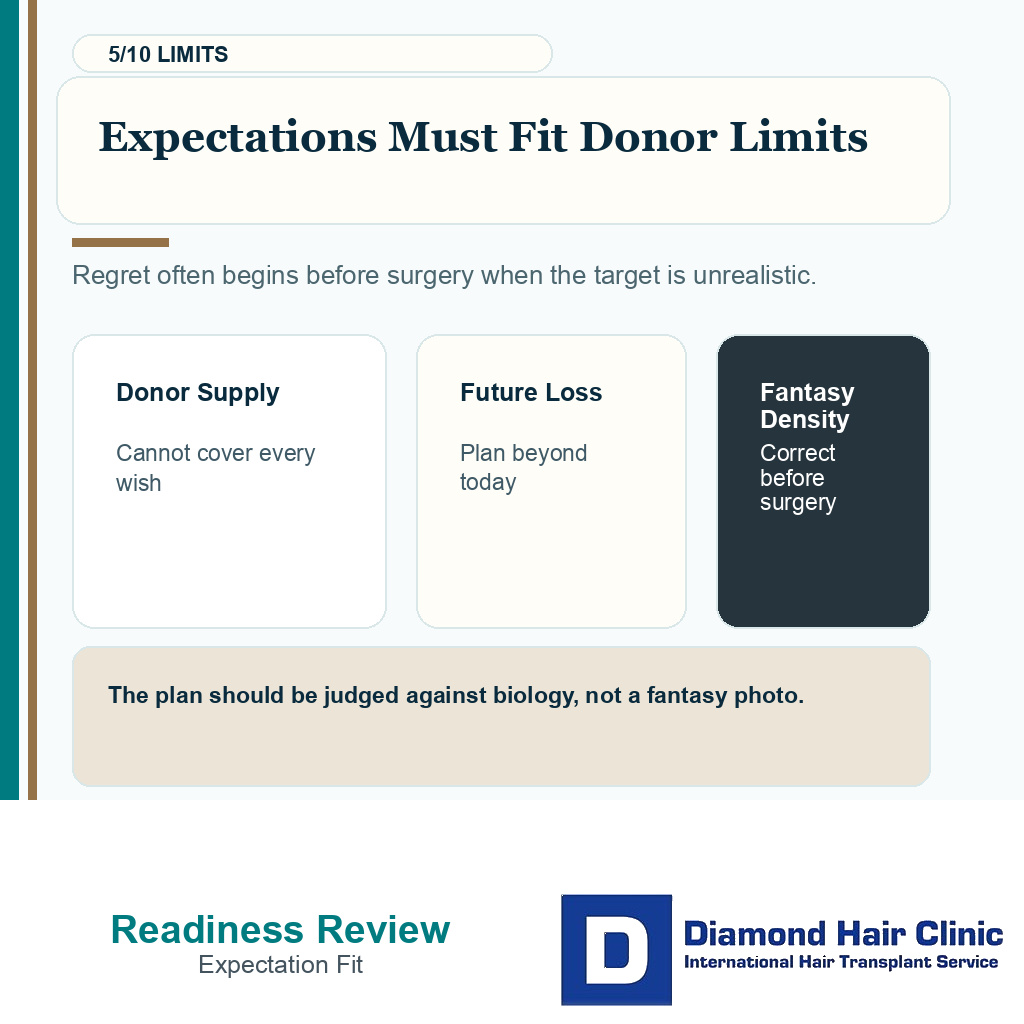
A pause is also wise when normal limits feel unacceptable. Density may not match teenage hair, the crown may need conservative coverage, a very low hairline may age badly, and future native hair loss can still continue after surgery. If any limitation feels impossible to accept, even a technically clean result may become emotionally difficult.
Fear before surgery is common, and anxiety before hair transplant is judged separately from readiness. Ordinary nerves usually become easier to manage with explanation. A decision driven by crisis, desperation, or obsessive checking often needs time and support before surgery is safe to plan.
Slow down before payment when emotions are high
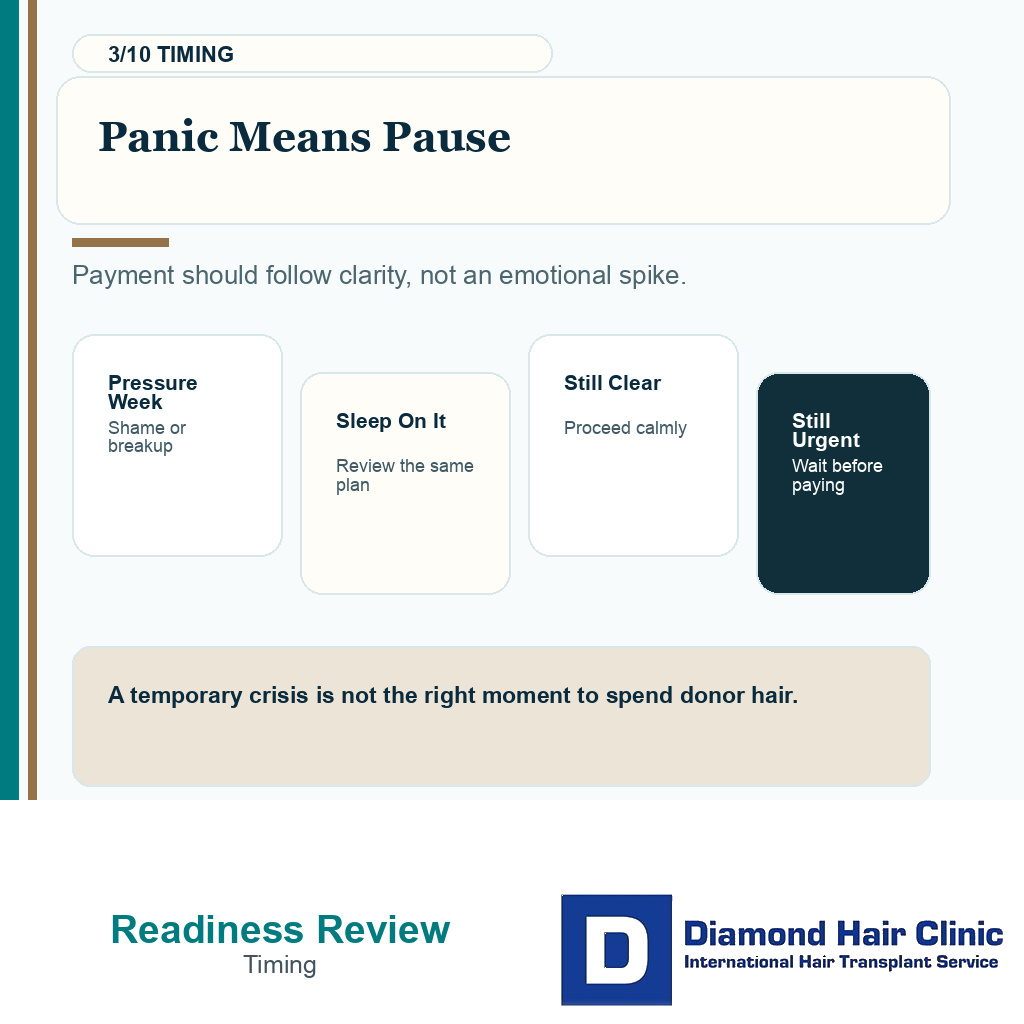
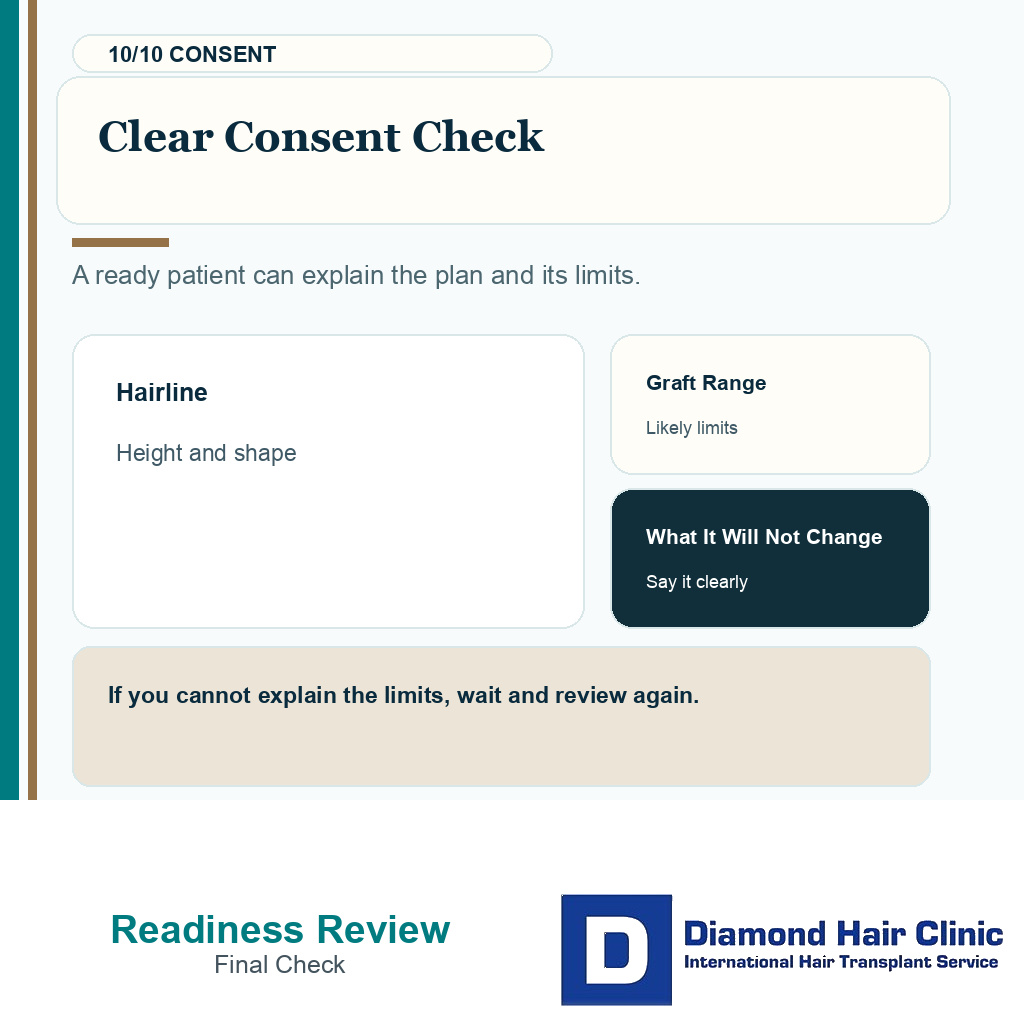
If the decision feels urgent because of shame, panic, a breakup, a job change, a wedding, or a bad week of mirror checking, I would slow the process down before payment. A deposit should follow a clear medical plan, not an emotional spike. Before paying, you should be able to describe the hairline height, likely graft range, donor limits, recovery visibility, and what the surgery will not change.
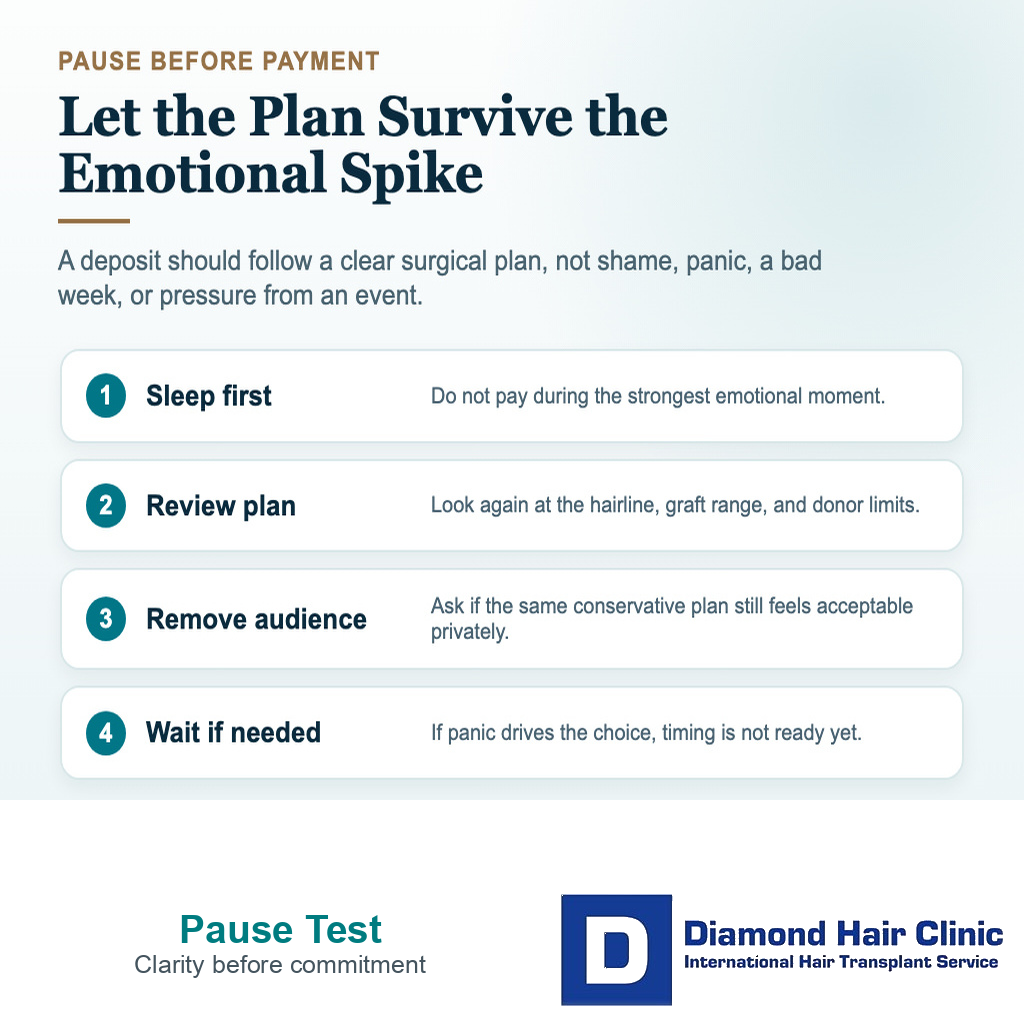
Sleep on the decision, review the proposed hairline and graft plan again, and ask whether you would still accept the same conservative plan if nobody else could see your hair for a while. This pause is not meant to discourage surgery. It protects you from using permanent donor supply during a temporary crisis. When the plan still feels sensible after the pressure settles, the decision is usually cleaner and the consultation becomes more useful.
Unrealistic expectations can create regret before surgery
Regret often begins before the operation, not after it. It begins when you imagine a result that the donor area, hair characteristics, skin contrast, or future hair loss cannot support. If that expectation is not corrected, you may judge the result against a fantasy instead of a responsible plan.
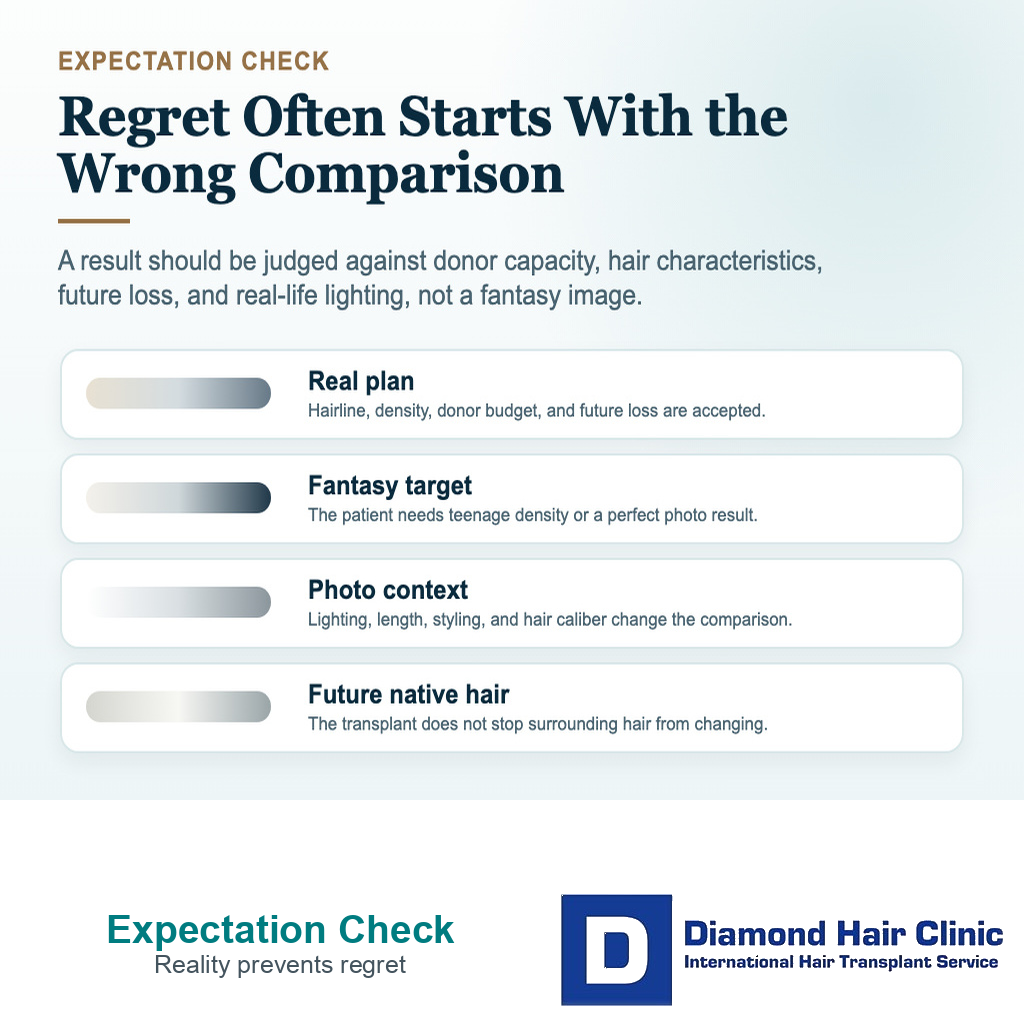
Before and after galleries can make this worse. One strong photo may hide styling, lighting, hair product, hair length, medication use, or the fact that the person in the photo had better donor hair than you. Edited selfies, filters, and social media angles are even weaker planning references. A page of hair transplant before and after photos needs context before it becomes a comparison point.
Daily life is also harsher than clinic lighting. Wet hair, strong bathroom light, wind, and short haircuts reveal details that edited photos can hide. If you need the transplant to look dense in every condition, the expectation must be corrected before surgery, especially when harsh light and wet hair already expose weak density.
Younger patients need future loss planning
Younger patients often feel urgency more strongly because hair loss appears at the same time as dating, university, early work life, and social identity. That pressure deserves respect, but the plan still has to protect the future.
If you are young, ask whether the pattern is stable, whether medication has been reviewed properly, whether the donor area can support future loss, and whether the proposed hairline will still look natural ten years later. A teenage hairline may feel emotionally attractive at 22 and look like a mistake at 32 if the surrounding native hair continues to recede.
Being too young for a hair transplant is about age, pattern, and donor risk. Emotional readiness adds another question. Are you choosing surgery from a future plan, or from the fear of losing youth immediately?
Social pressure can push timing too fast
The worry is not only hair. It may be being seen during recovery, being asked questions, looking different at work, or having people notice scabs, redness, shedding, or a shaved donor area. That social pressure can push the timing too fast.
Repeated jokes or public comments about a hairline can hurt. Wanting to change a feature for yourself is different from feeling that you must transform it to stop the teasing or satisfy an audience. Surgery cannot guarantee that people will stop scrutinizing your appearance. A wish that remains when the comments are quiet is easier to separate from the urgency they create.
When people around you object, sort the reason before you react. Some are responding to old images of obvious surgery or simply to the idea of cosmetic treatment. That is social stigma, not an assessment of your donor area or surgical plan. But if someone points to a vague graft range, an unclear surgeon role, or a hairline you cannot explain, take that specific concern back to the surgeon. Family approval should not decide the operation, and neither should the wish to prove anyone wrong.
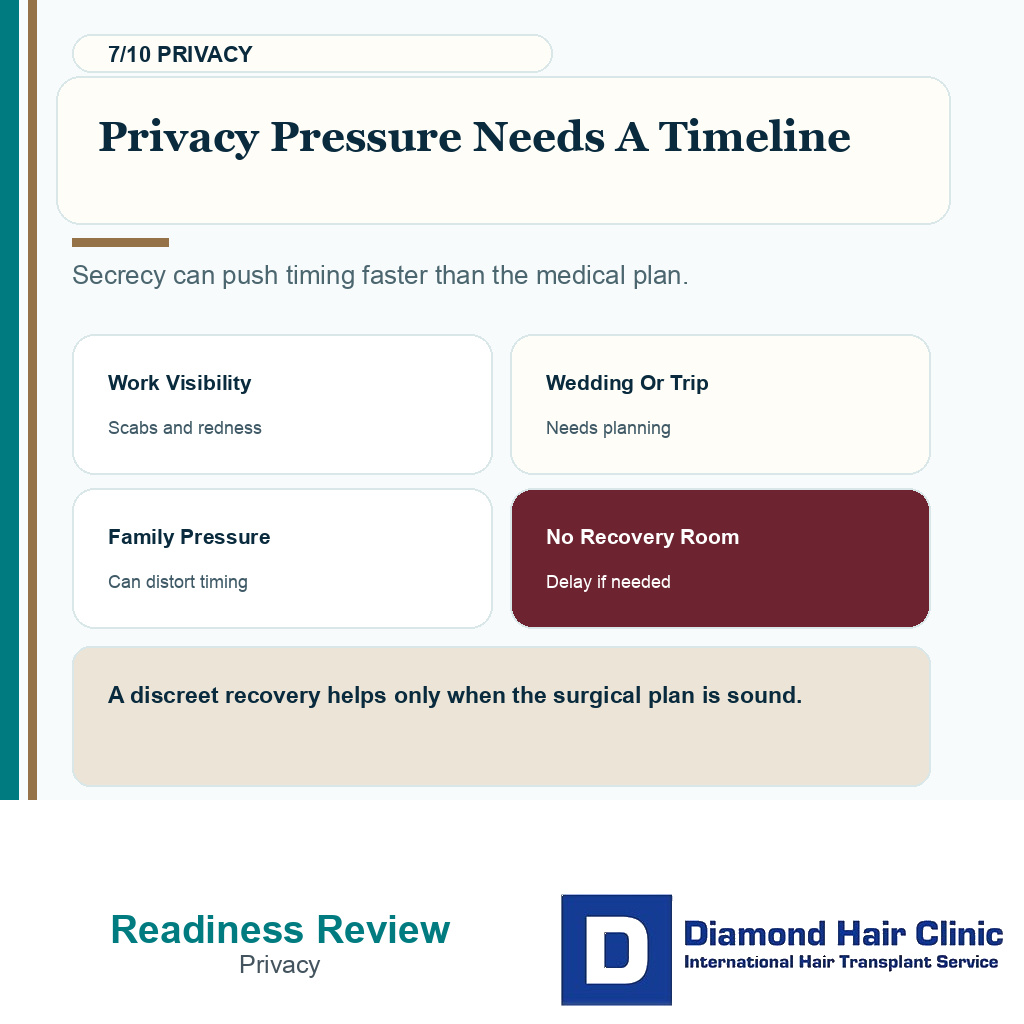
Social privacy is a planning issue. It is not a guarantee that recovery will be invisible. If you work in public, have a wedding, have a trip, or feel family pressure, you may need a more realistic timeline before booking. Planning around privacy can be reasonable. Building the whole decision around hiding the surgery can make the emotional pressure heavier.
Dating after surgery needs the same kind of timeline planning. The first weeks can include redness, scabs, shedding, a shaved donor area, and sometimes a hat plan once the grafts are safe. The first public days also need to respect wind exposure after FUE, dust, and pollution instead of treating visibility as the only problem. The early months are also not a fair test of the final result. If you need to feel completely private before seeing someone, plan the timing around healing instead of forcing surgery into the next available date.
If secrecy matters, keeping a hair transplant secret can set the visibility expectations. The medical plan should still come first. A discreet recovery is useful only when the surgical plan itself is sound.
Severe distress needs support before surgery
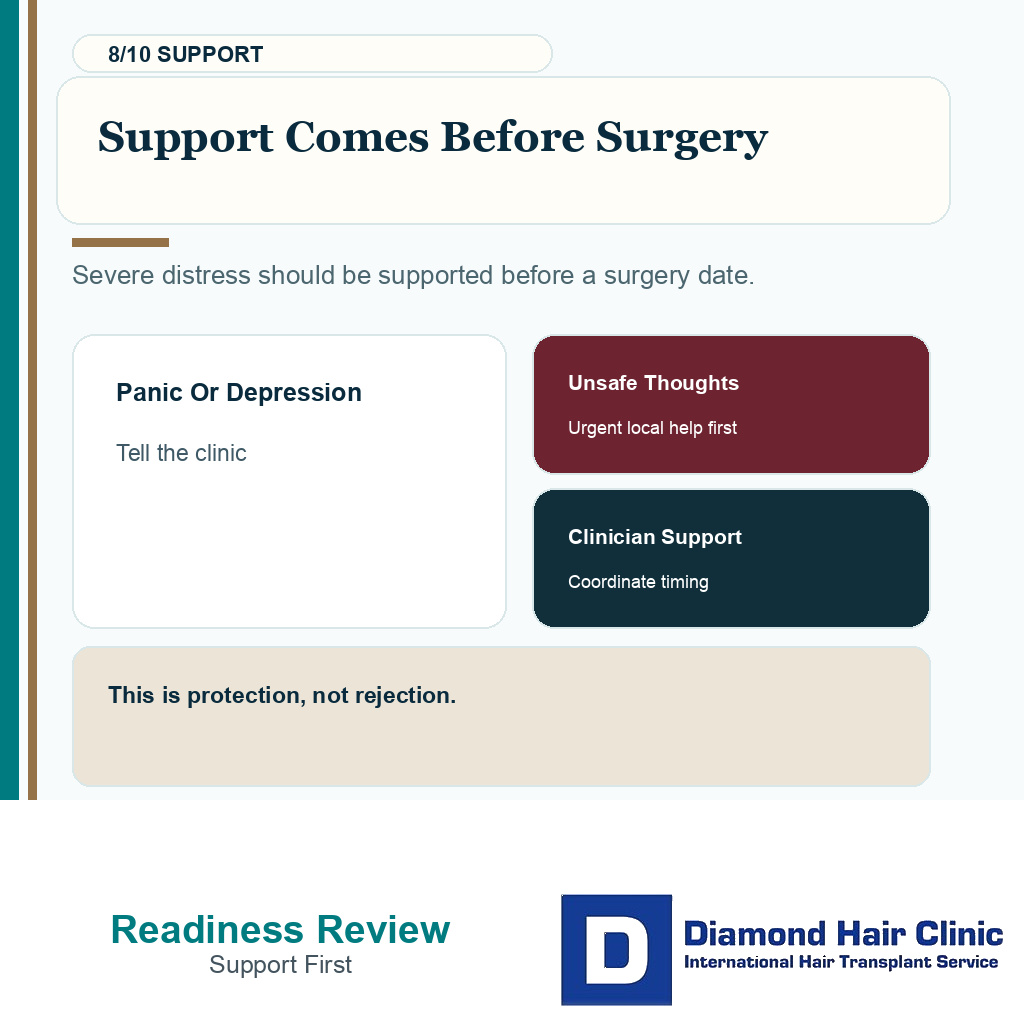
A hair transplant consultation should not diagnose a mental health condition. At the same time, I should not ignore severe distress. If you describe depression, panic, thoughts of self harm, compulsive hair pulling, constant appearance checking, or body image distress that feels impossible to interrupt, surgery should wait until you have proper medical or psychological support. If you feel unable to stay safe, urgent local mental health or emergency help comes before any surgery date.
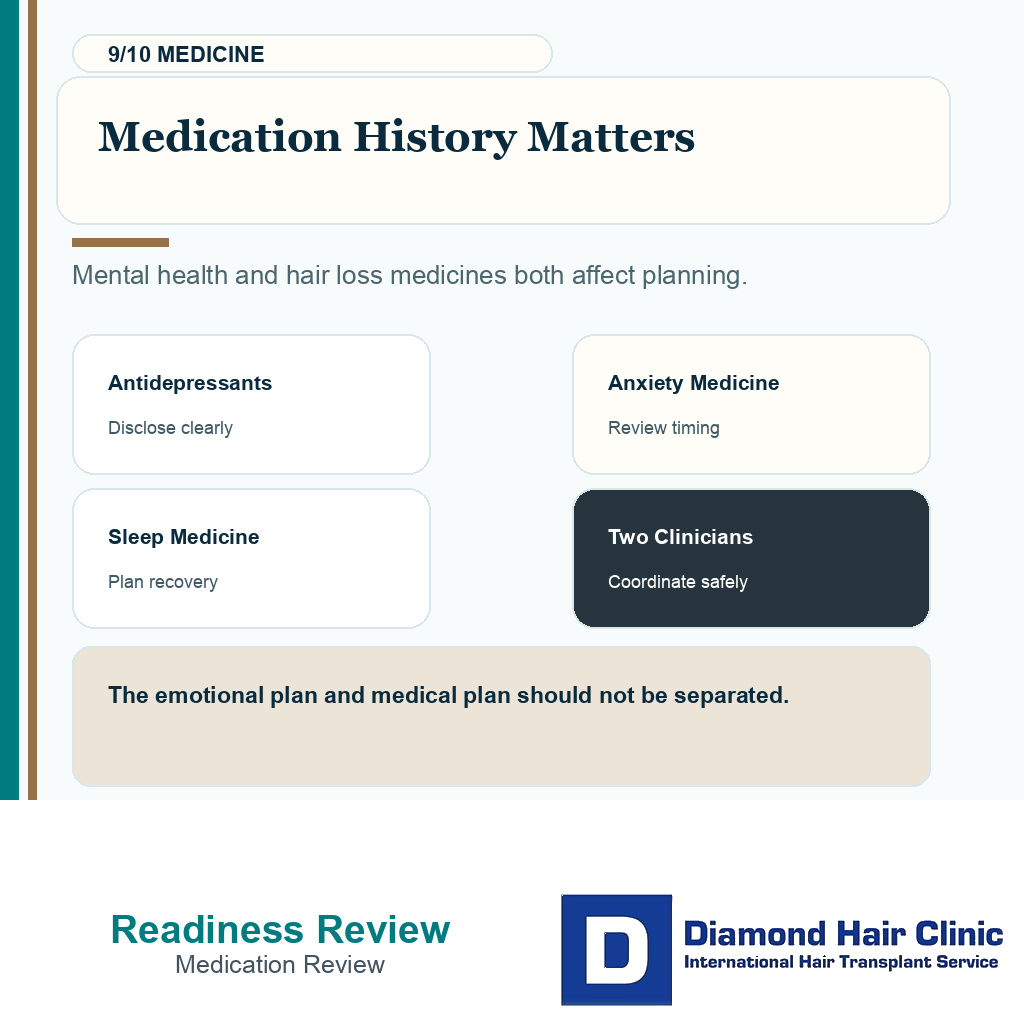
This is not rejection. It is protection. Cosmetic surgery can be helpful for the right person with the right goal, but it is not treatment for untreated mental health distress. If the emotional pain is extreme, the safer first step is support from a qualified clinician who can help you separate hair loss from wider suffering. If you are already in therapy or taking mental health medication, tell both the clinic and your clinician so timing, consent, and recovery expectations can be coordinated.
Medication history also matters. Antidepressants, anxiety medication, sleep medication, hormonal treatment, and hair loss medication should be reviewed clearly before surgery. The emotional plan and the medical plan should not be separated.
Swipe through the 10 slides below to check whether motivation, expectations, timing, privacy pressure, and support needs are ready for a surgical decision. Use the arrows for one step at a time, or choose a number below the image to jump to that point.

A realistic hair transplant goal sounds specific
A realistic goal sounds specific. You might want a more stable frontal frame, softer temples, better styling options, or a crown plan that respects donor limits. You understand that one operation may not solve every area and that future native hair loss still needs attention.
An unrealistic goal usually sounds absolute. It may mean needing to look exactly like you did at 18, wanting full density everywhere, refusing any visible recovery stage, or believing surgery will fix confidence completely. More grafts do not solve that kind of pressure. Better planning, more time, or nonsurgical support may be needed first.
A strong plan still has limits. It protects the donor area, chooses a hairline that can age naturally, and leaves space for future change. Native hair can keep changing after surgery, so hair loss can continue after hair transplant belongs in the expectation discussion.
Readiness should make the plan clearer
The consultation should make you clearer, not just more excited. That means reviewing the diagnosis, donor capacity, hairline design, future loss, medication history, and the real reason you want surgery now. If you cannot repeat the main limits back in your own words, the decision needs more time.
For some people, the answer is to proceed with a conservative, clearly explained plan. For others, the answer is to wait, use medical treatment longer, send clearer photos, seek a second opinion, or review a health issue before travel. If you are still choosing between clinics, before booking a hair transplant helps define what must be clear before commitment.
Surgeon role also matters emotionally. You need to know who designs the hairline, who reviews the donor area, who gives anesthesia, who performs the key surgical steps, and who checks the final plan. Understanding surgeon involvement in hair transplant surgery helps you ask that directly.
Emotional readiness starts with a steadier day
Emotional pressure does not make surgery wrong by itself, but it can make timing less reliable. The person considering FUE needs enough calm to understand limits, compare options, accept waiting, and know that surgery cannot control every future hair change.
If the choice feels urgent because of panic, shame, relationship pressure, or constant checking, the better first step may be support, diagnosis, photographs over time, and another conversation when the mind is steadier.
The right operation should still feel understandable on an ordinary day. If it only feels acceptable during a crisis, the timing needs more care.
Read this review excerpt
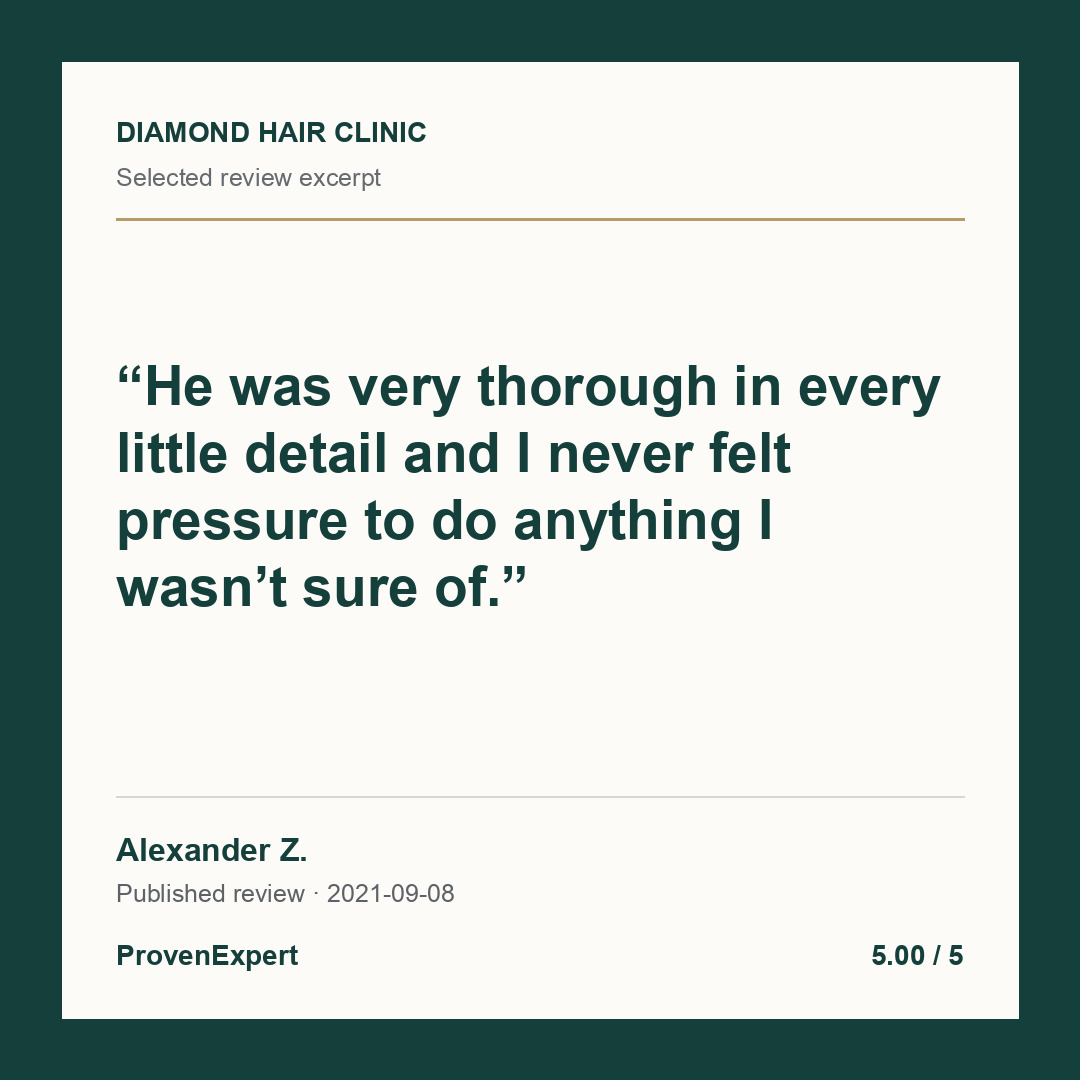
He was very thorough in every little detail and I never felt pressure to do anything I wasn’t sure of.