


Waiting Can Protect a Hair Transplant Plan
Pause before a hair transplant when the medical condition, hairline plan, graft number, surgeon role, or clinic communication is still unclear. Losing a deposit or changing a flight is frustrating. Wasting donor hair, accepting a design you do not understand, or starting surgery with a new health issue can be much harder to repair.
Ordinary nerves are common before surgery. They do not mean the operation is wrong. The more useful question is whether you are anxious because surgery is a serious step, or because something has not been properly reviewed.
When the second answer is possible, I slow the decision down. A good surgery date is not only a date on the calendar. It is the day when the medical status, donor plan, hairline design, medication review, and follow up route are clear enough to proceed.
If the main reason to continue is an expiring discount, a nonrefundable flight, a comparison photo, or fear of losing a slot, pause before the calendar starts making the medical decision for you.
Doubt in the final days should become a written list of unanswered plan questions, not a rushed clinic switch or a date protected only because travel is paid.
Pause when a changed plan cannot be reread. The final hairline, graft range, and surgeon role should be written clearly enough that you can review them calmly before surgery.
Postponing after booking can be reasonable
Postponing is not failure when the reason is real. It can be the decision that protects the result.
I often see the booking date start to feel more powerful than the surgery itself. A deposit has been paid, time off work is arranged, flights are booked, family knows, and the mind has been preparing for months. Those costs are real. They are still smaller than the cost of a rushed operation on the wrong plan.
A hair transplant uses a limited donor area. It changes the hairline, the density distribution, the future repair options, and sometimes the way you see yourself for years. If there is a serious unanswered question before surgery, waiting is not overthinking. It is careful surgical judgment.
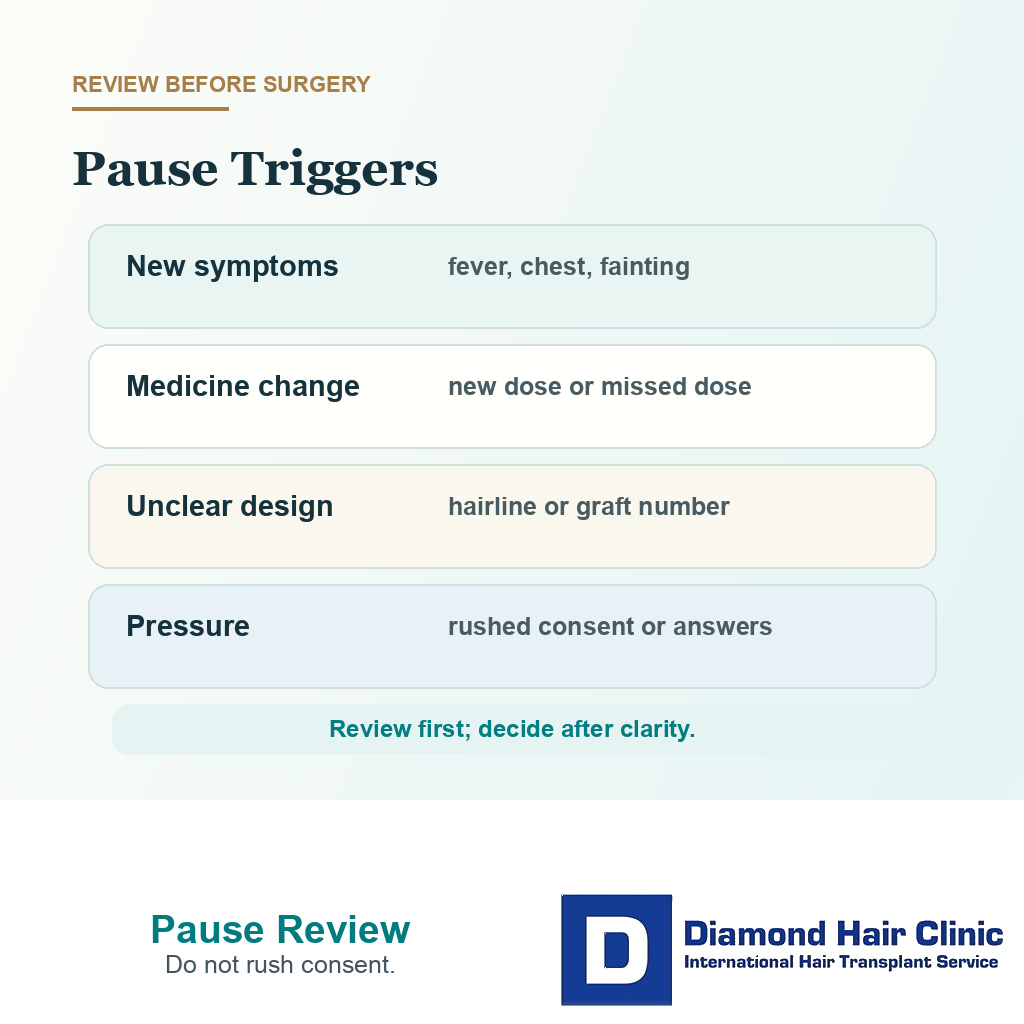
This is especially true when the concern is not only emotional. New symptoms, high blood pressure, a recent infection, a medication change, uncertainty about who performs the operation, or a design that was never explained all deserve review before you enter the operating room.
Normal nerves before surgery
Nerves feel uncomfortable, but they can still be normal. Before an elective procedure, many people check the mirror more often, imagine the worst case, and feel the weight of making a permanent decision.
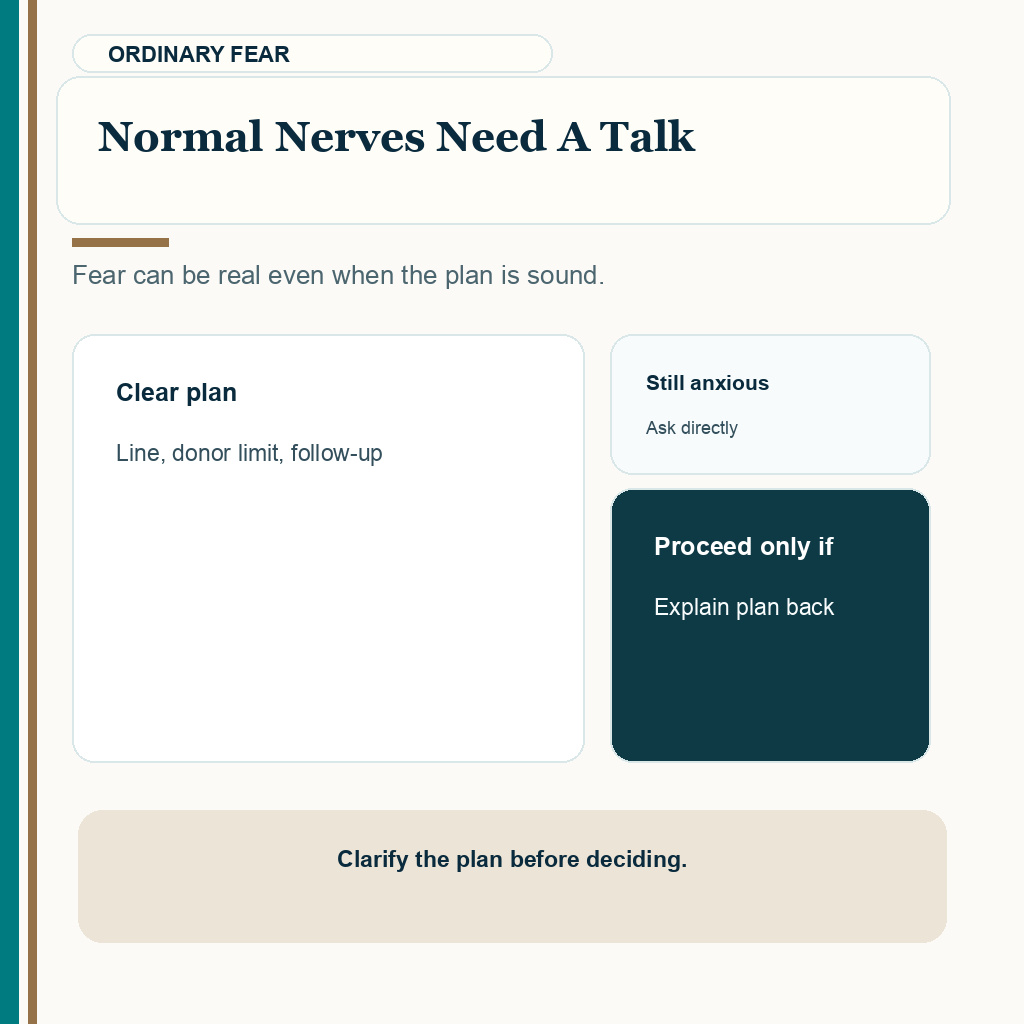
Nervousness alone does not make me cancel surgery. I look at what the nerves are attached to. If you understand the plan, donor limits, recovery, surgeon role, and realistic result, the anxiety may simply reflect that the decision matters.
The situation changes when anxiety is attached to missing information. If you still do not know who will design the hairline, why the graft number changed, or why a high blood pressure reading was dismissed, the feeling is no longer only anxiety. It is a signal that the plan needs review.
Normal fear needs a different response from anxiety before hair transplant surgery. On this page, the decision is narrower. Continue only when the concern has been reviewed, or pause before donor hair is used permanently.
Medical changes that should pause surgery
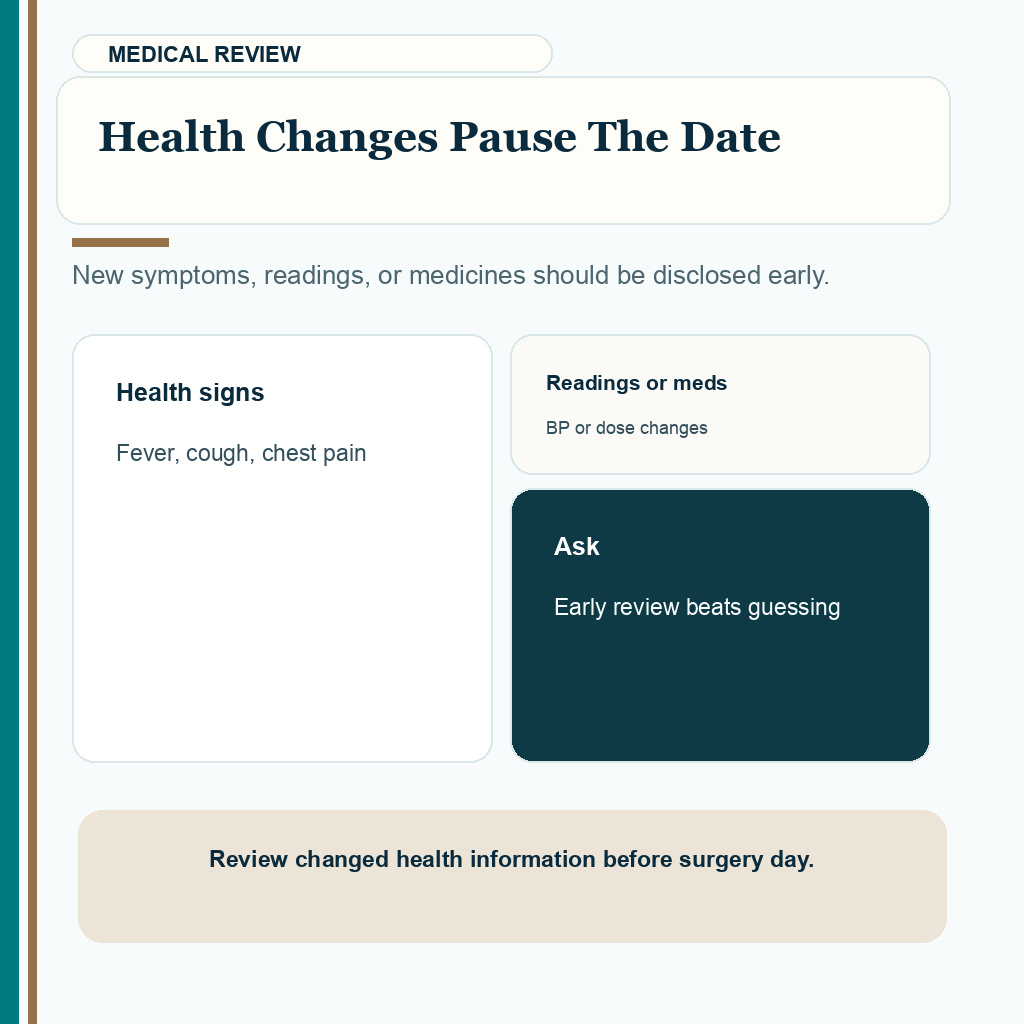
A new medical detail close to surgery must be disclosed before the procedure, even if it feels embarrassing or inconvenient. You may feel well and still have a finding that changes the risk calculation.
I need to know about fever, a new cough, active infection, uncontrolled diarrhea or vomiting, chest pain, fainting, a sudden blood pressure problem, a new medication, a missed prescribed medicine, a recent emergency visit, or any doctor instruction that changed after booking. These details do not always cancel the procedure. They decide whether the surgery can be planned safely that day. Hiding them because you fear postponement is more dangerous than asking early.
For example, a single anxious blood pressure reading is different from repeated high readings, symptoms, or a known heart history. This reasoning also applies to illness. A mild resolved cold is different from fever, chest symptoms, or feeling unwell on arrival. I treat high blood pressure and hair transplant surgery and cold or flu symptoms before hair transplant surgery as review questions, not inconveniences to hide before travel.
Medication changes matter as well. Blood thinners, sedatives, stimulants, painkillers, antidepressants, diabetes medicine, herbal supplements, alcohol, nicotine, and recreational substances can change bleeding, blood pressure, sedation, pain control, or aftercare reliability. Do not adjust them on your own. Disclose them clearly, and treat medication before hair transplant as a surgeon review, not paperwork.
Planning gaps that matter more than the deposit
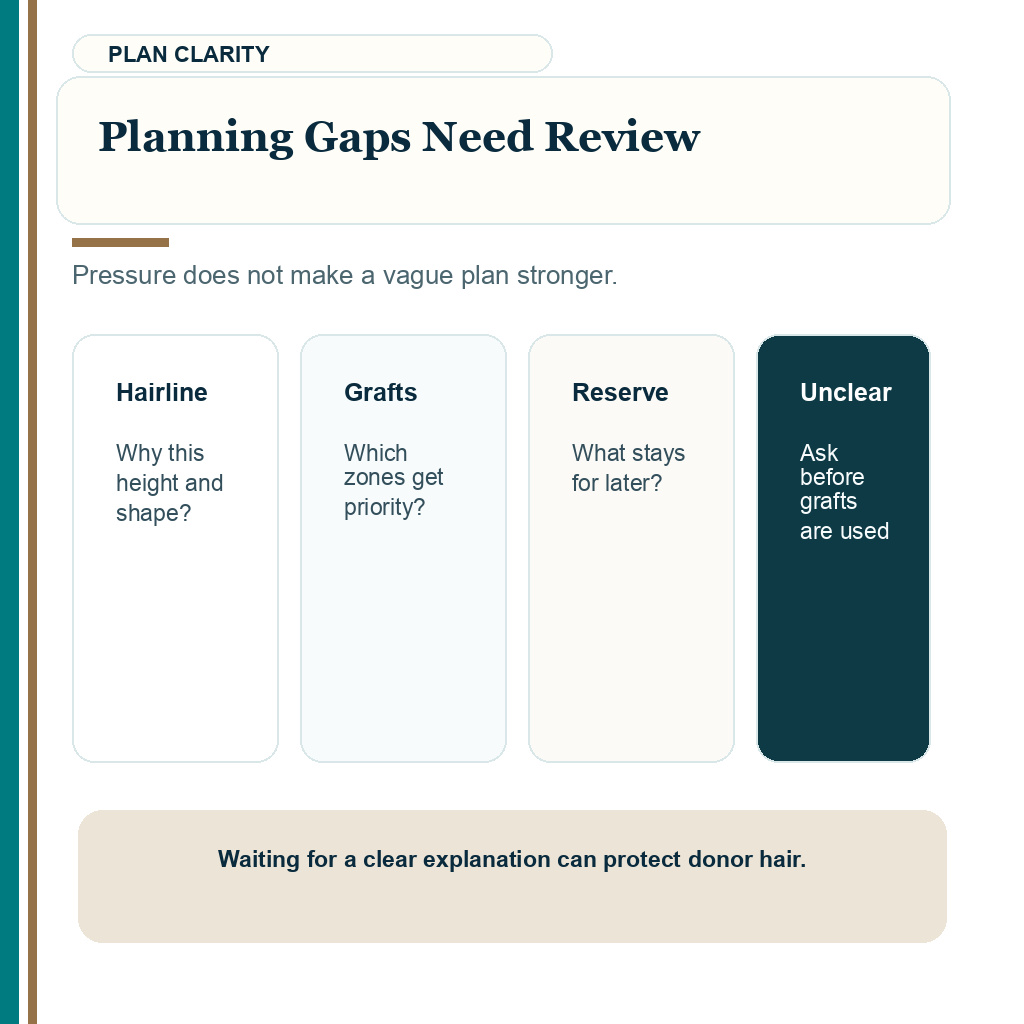
Money pressure can make vagueness feel acceptable. That is dangerous. A deposit does not make a weak plan stronger.
Before surgery, I review the donor area, recipient area, hairline height, hairline shape, graft range, priority zones, and realistic density with you. You do not need to become a surgeon. You do need to know what is being attempted, what is being left for later, and where the limits are.
If the plan was made only from photos, the final face to face assessment may change the answer. That can be reasonable when the explanation is clear. It becomes a problem when the change is large and the explanation is weak. A higher graft number, a lower hairline, added crown work, or a new donor strategy cannot be treated like a quick sales adjustment.
Photos can start the discussion, but final surgical judgment needs examination, donor assessment, hair caliber, miniaturization review, and a realistic discussion of future hair loss. Hair transplant planning from photos alone reaches its limit here.
If the plan changes on arrival and you do not understand why, pause before signing anything. The answer may still be reasonable. But it needs to be explained before the surgery starts, not after the donor hair has already been used.
Do not let the first full explanation happen after shaving or medication. If the hairline, graft range, or priority zones change on arrival, the reason needs to be discussed while you are fully alert and before consent, local anesthesia, or donor work begins.
Surgeon role, donor safety, and the decision
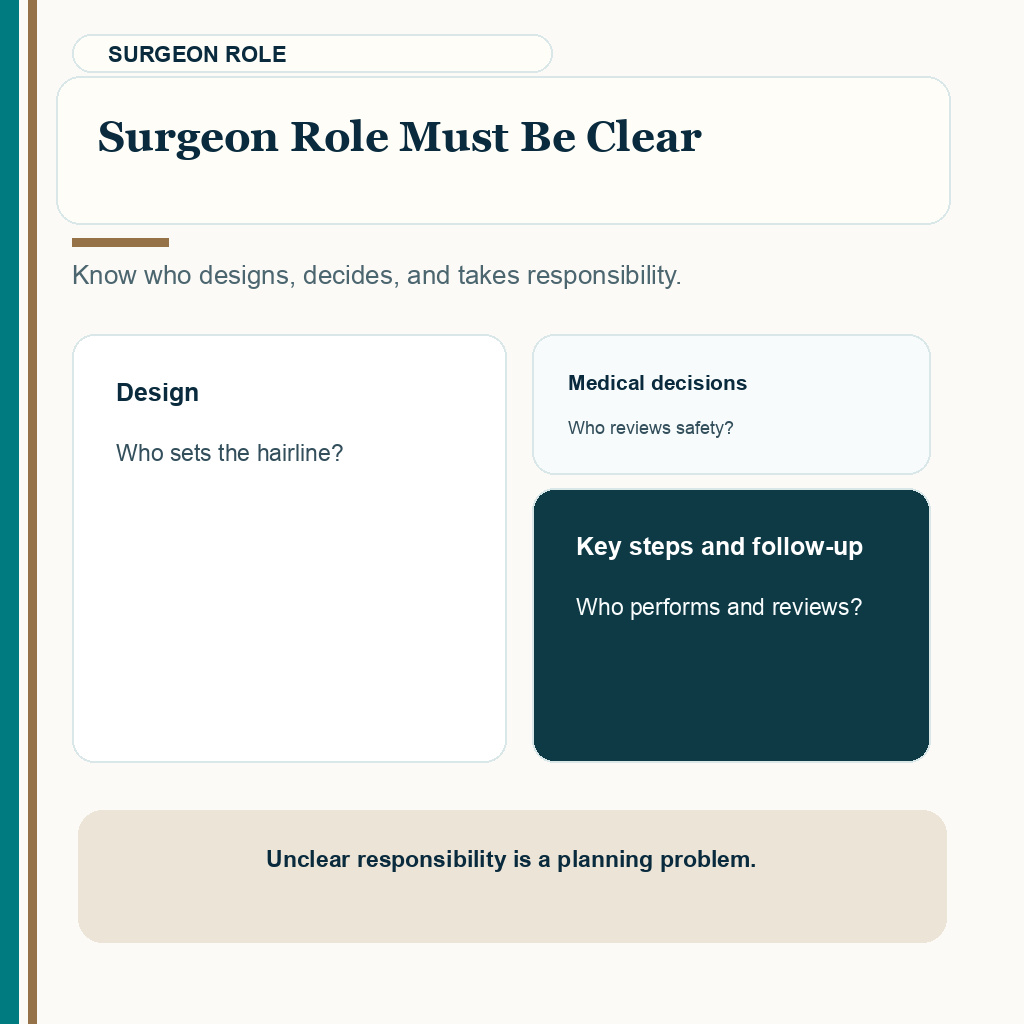
You may be ready emotionally and still be in the wrong surgical model. If nobody can clearly explain who designs the hairline, who makes the medical decisions, who performs the key steps, and who takes responsibility after surgery, you are not fully informed.
At Diamond Hair Clinic, direct surgeon involvement matters because hair transplant surgery is not only extraction and implantation. It is diagnosis, donor budgeting, hairline design, graft distribution, density judgment, bleeding control, anesthesia decisions, and follow up interpretation.
Surgeon involvement in hair transplant surgery matters because donor area overharvesting warning signs can appear after the damage is already difficult to undo.
When you feel pressured to accept a high graft number, a very low hairline, or a plan that uses donor hair aggressively without explaining future loss, waiting can protect you. A postponed surgery can be rescheduled. A depleted donor area cannot be reset.
Flights, hotels, and time off already arranged
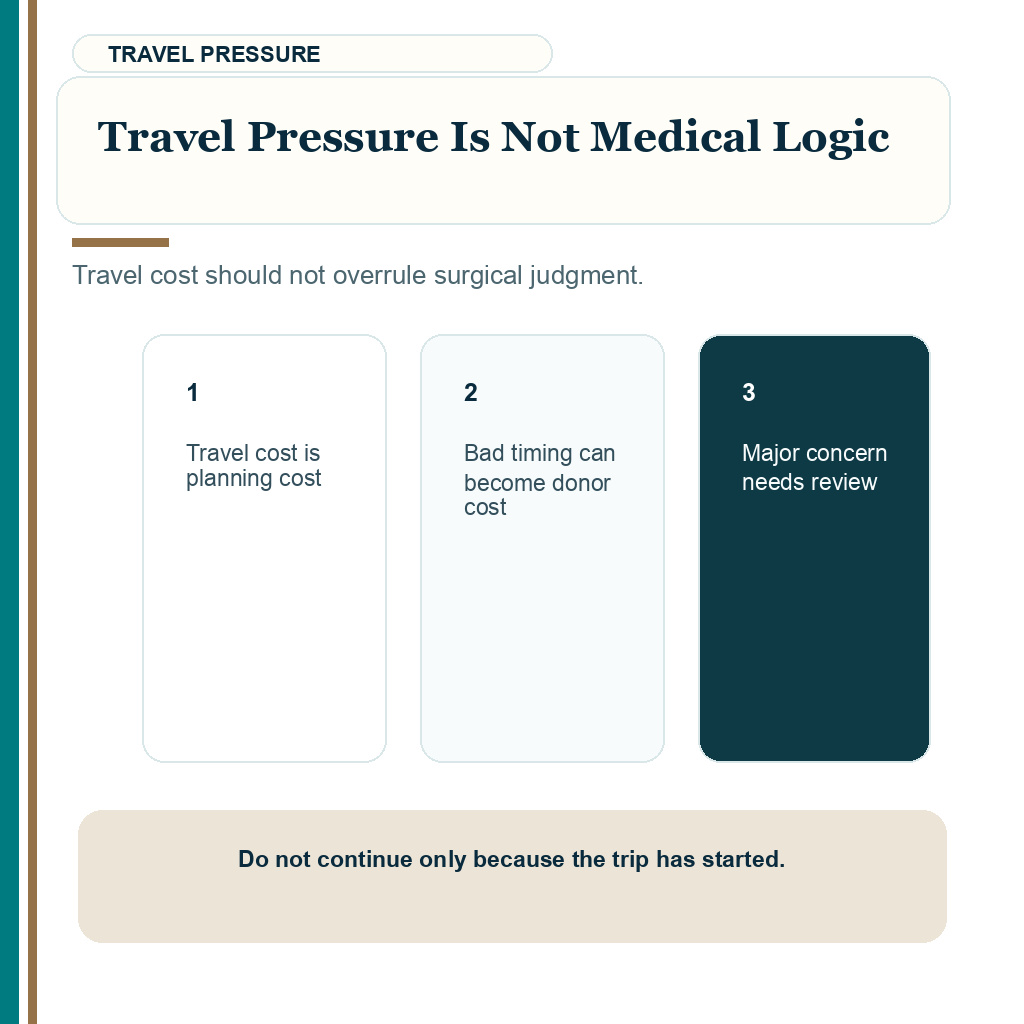
This is the hardest part for many international travelers. Travel turns a medical decision into a financial and emotional event. You may think, “I am already here, so I must continue.” That sentence can push you into a poor decision.
Travel cost matters. A flight, hotel, or work absence is still a planning cost. A bad surgical decision becomes a donor cost, a repair cost, and an emotional cost. Those are heavier.
If the concern is mild and fixable, the answer may be a short delay, a repeat blood pressure check, a medicine clarification, a revised plan, or a proper surgeon conversation. If the concern is major, the answer may be postponement and a new date. Either way, the decision should come from medical and surgical logic, not from the feeling that you have already spent too much to stop.
Hair transplant booking pressure and surgeon waitlists can create urgency from both sides. The clinic may have limited dates, and you may feel trapped by flights, work, or family expectations.
A clinic can explain cancellation rules, but a financial rule should not become medical pressure. If the only argument for continuing is that the date is already booked or the deposit may be lost, the plan is not strong enough yet.
Deciding in the final days
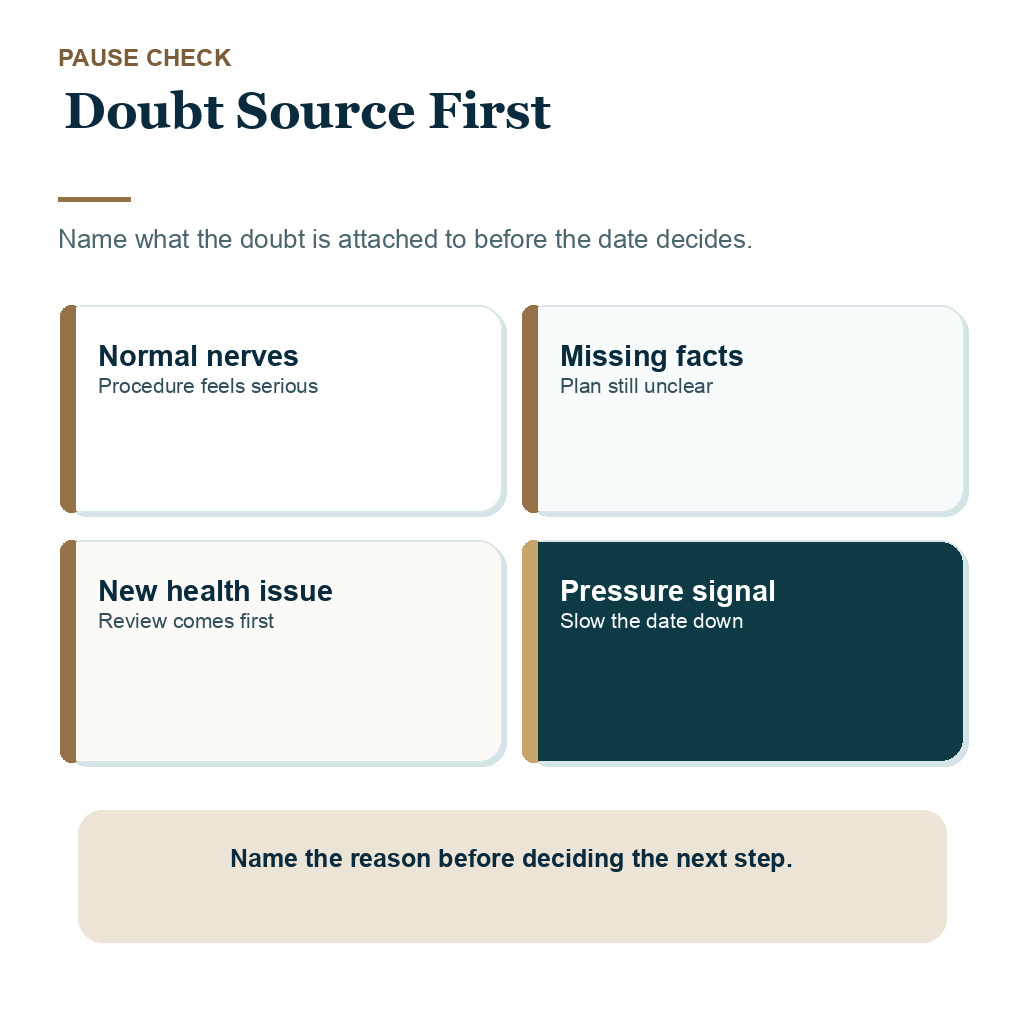
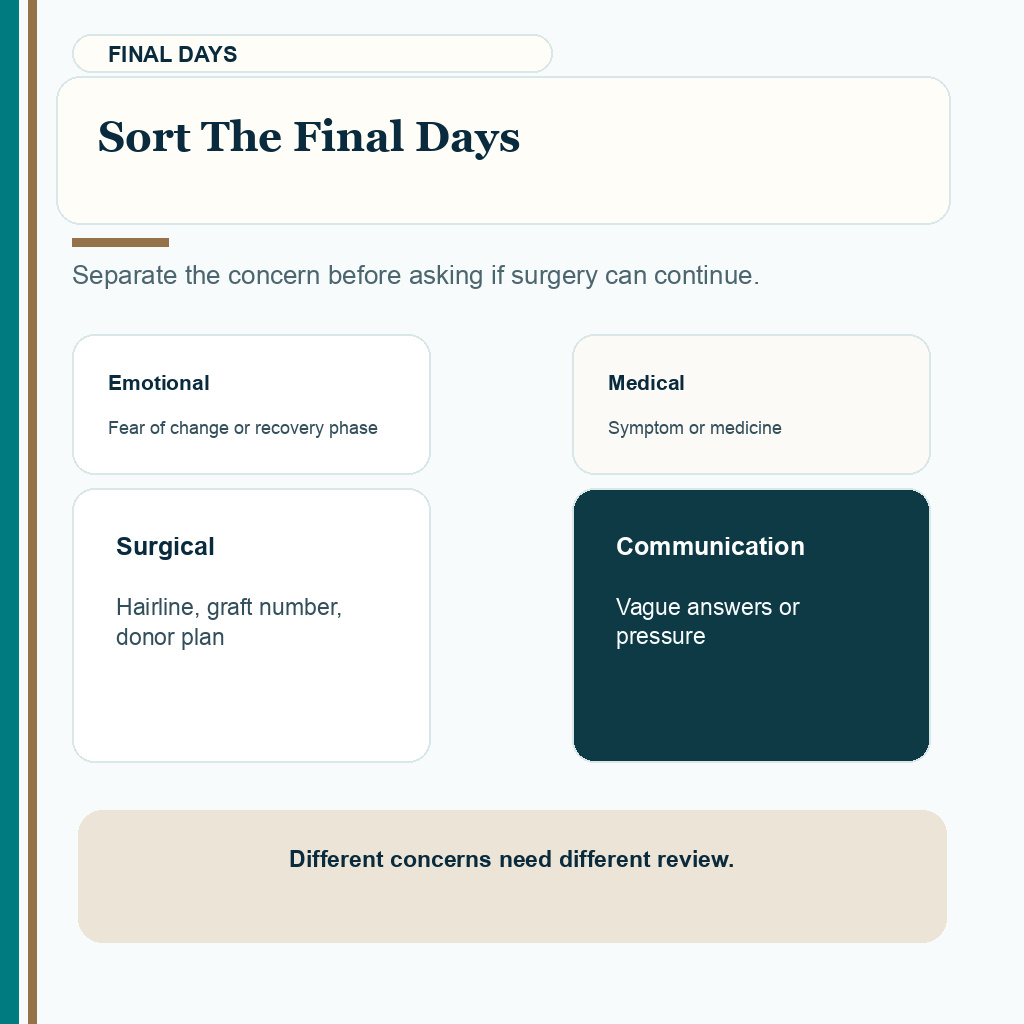
I separate the concern into emotional, medical, surgical, and communication problems.
Final doubts before surgery usually fall into one of four groups. An emotional concern sounds like fear of the procedure, fear of change, or fear of the ugly duckling phase while the plan itself is clear. A medical concern is a new symptom, abnormal reading, medication issue, active infection, or health change. A surgical concern is an unclear hairline, graft number, donor strategy, or surgeon role. A communication concern is when the clinic gives vague answers, avoids responsibility, or changes major details without explanation.
Emotional concern asks for a direct conversation. Medical or surgical uncertainty asks for review before surgery continues. Communication failure asks for even more caution because a hair transplant requires trust before and after the operation.
When health status changes after booking, medical changes after booking a hair transplant need direct review. When the original decision was rushed, before booking a hair transplant is the better starting point.

Information that helps the clinic decide safely
Before asking whether surgery can go ahead, send the information that lets the surgeon judge the situation. A worried message asking whether something is okay is understandable, but useful facts make the answer safer.
For a medical issue, send the symptom, when it started, whether it is improving or worsening, temperature if relevant, blood pressure readings if relevant, medication name and dose, last dose timing, allergies, alcohol or nicotine use, and any doctor advice already received. For a planning issue, send current photos, the proposed hairline, the quoted graft number, the priority areas, the donor concern, and the exact part of the plan that feels unclear.
When the issue is surgical planning, ask for the graft range by zone, why that hairline height is being chosen, which areas will be left untreated, how donor reserve is being protected, and who reviews the final plan on surgery day. Those details make the decision concrete instead of emotional.
For a communication issue, name the missing answer directly. Who designs the hairline? Who performs extraction? Who handles graft placement? Who reviews blood pressure or medication changes? Who answers if swelling, bleeding, infection signs, or panic happens after travel home?
These questions are not rude. The informed consent before surgery discussion should include these answers. If a clinic cannot answer them clearly before surgery, you have learned something useful before donor hair has been used.

When something changes before surgery, a useful message includes timing, readings, medicine details, and the exact planning concern.
These 8 pause check slides separate ordinary nerves, medical changes, planning gaps, surgeon role, travel pressure, final days concern sorting, the facts to send, and when a pause can return to the calendar. Swipe sideways, use the arrows one slide at a time, or choose a number below the image.

Surgery timing after a pause
A pause does not always mean cancellation forever. It means the missing piece has to be resolved.
Surgery can usually return to the calendar when the medical issue has settled or been cleared, the medication question has been answered, the hairline and graft plan are understood, the surgeon role is clear, and you have enough trust to consent without pressure. The timing may be days, weeks, or longer depending on the reason.
If the pause happened because of illness, fever, uncontrolled blood pressure, a new medicine, or an abnormal test, the timing must follow medical review. Blood tests before hair transplant are not only paperwork. They protect you and the surgical day.
If the pause happened because of a planning concern, the response is a better plan, not a faster sales answer. If the original clinic cannot provide that clarity, a second opinion before hair transplant surgery may prevent a mistake that would be much harder to repair later.
My surgical view on pausing
My aim is not to make a nervous person cancel good surgery. It is also not to let bad timing continue because you feel trapped by a date.
The safer decision is the one you can explain back in plain language. You know what will be done, who is responsible, where the donor limit is, what result is realistic, and what would make the plan change. The clinic knows your health, medicines, expectations, and follow up needs.
If those conditions are present, normal nerves can be managed. If they are missing, waiting is often the more mature decision.
A postponed procedure may feel disappointing for a few days. A poorly planned procedure can create years of regret. Many cases of hair transplant regret after surgery begin before the operation, when someone already felt that the decision was not ready. It is better to recognize that moment while the donor area is still untouched and the plan can still be corrected.
When waiting protects the medical condition, the hairline design, the donor area, or your informed consent, waiting is not weakness. It is part of good surgical judgment.

Read this review excerpt
He was very thorough in every little detail and I never felt pressure to do anything I wasn’t sure of.