




Graft number changes on surgery day
A small adjustment after shaving and donor inspection can be medically reasonable. Hair direction, donor density, miniaturization, scalp condition, and the true size of the recipient area may look different once the hair is trimmed and examined closely.
Not every change is unsafe. What matters is whether the change is explained before it turns into pressure. A material change is different from a small technical adjustment. It affects what you thought you were accepting. That may include the number of grafts, the recipient area, hairline height, crown coverage, donor reserve, cost, risk, or who performs the surgical steps. Consent has to match the change being made, not just the plan described before shaving.
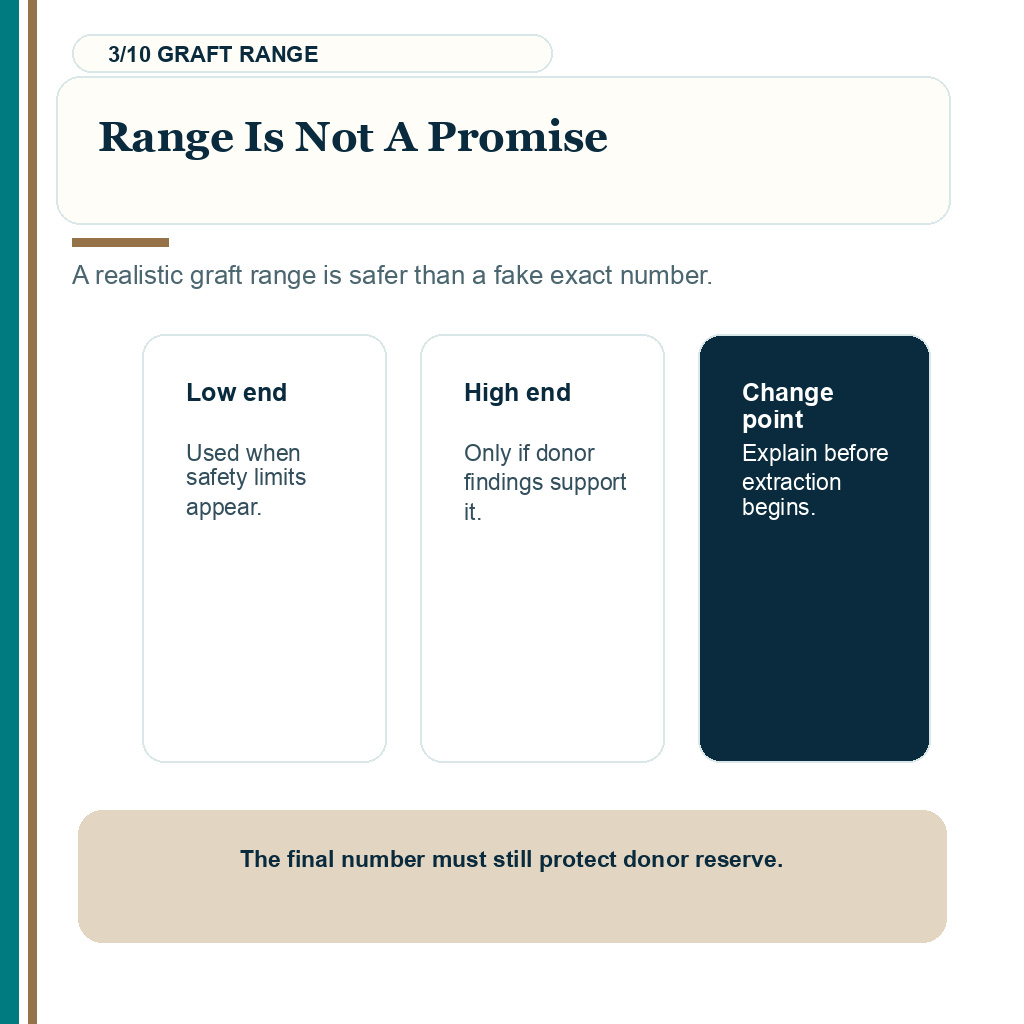
For that reason, surgery day graft number changes are safer when the original plan is a range, not a fake exact promise. Consent should make that range understandable, including what would make the number lower or higher and how donor safety is protected. A verbal change is easier to misunderstand unless the revised plan is shown back to the patient in simple wording.
If the final design, recipient area, cost, or graft range changes after you have already signed, the discussion should be refreshed before extraction or recipient area incisions begin. A quote change before surgery should also be explained in plain language and, when the change is material, reflected in the written record. A signed form should not be stretched over a different operation.
A surgery day change needs a reason before the work continues. New findings should connect to the donor area, recipient area, long term design, and recovery instructions, not only to what can still fit into the schedule.
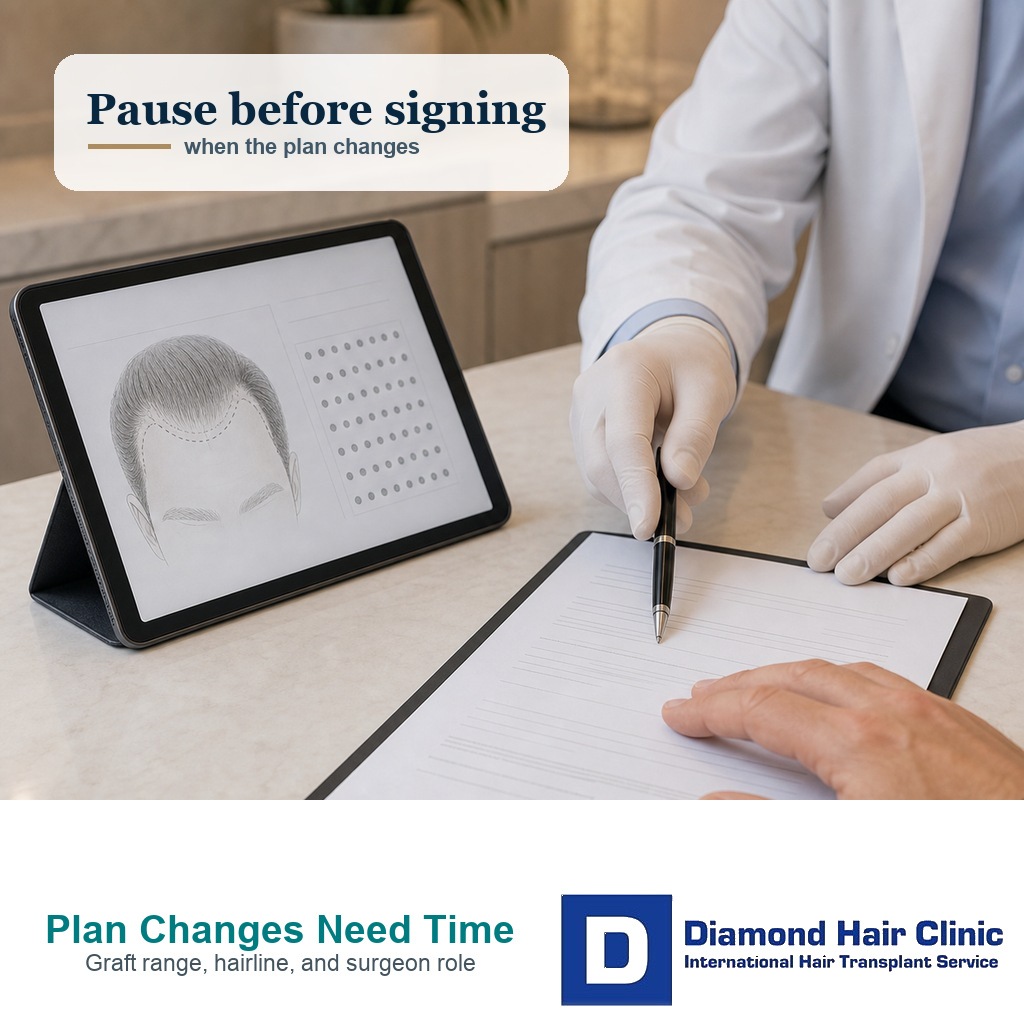
Consent is stronger when a patient has enough time to understand a last minute change before surgery begins.
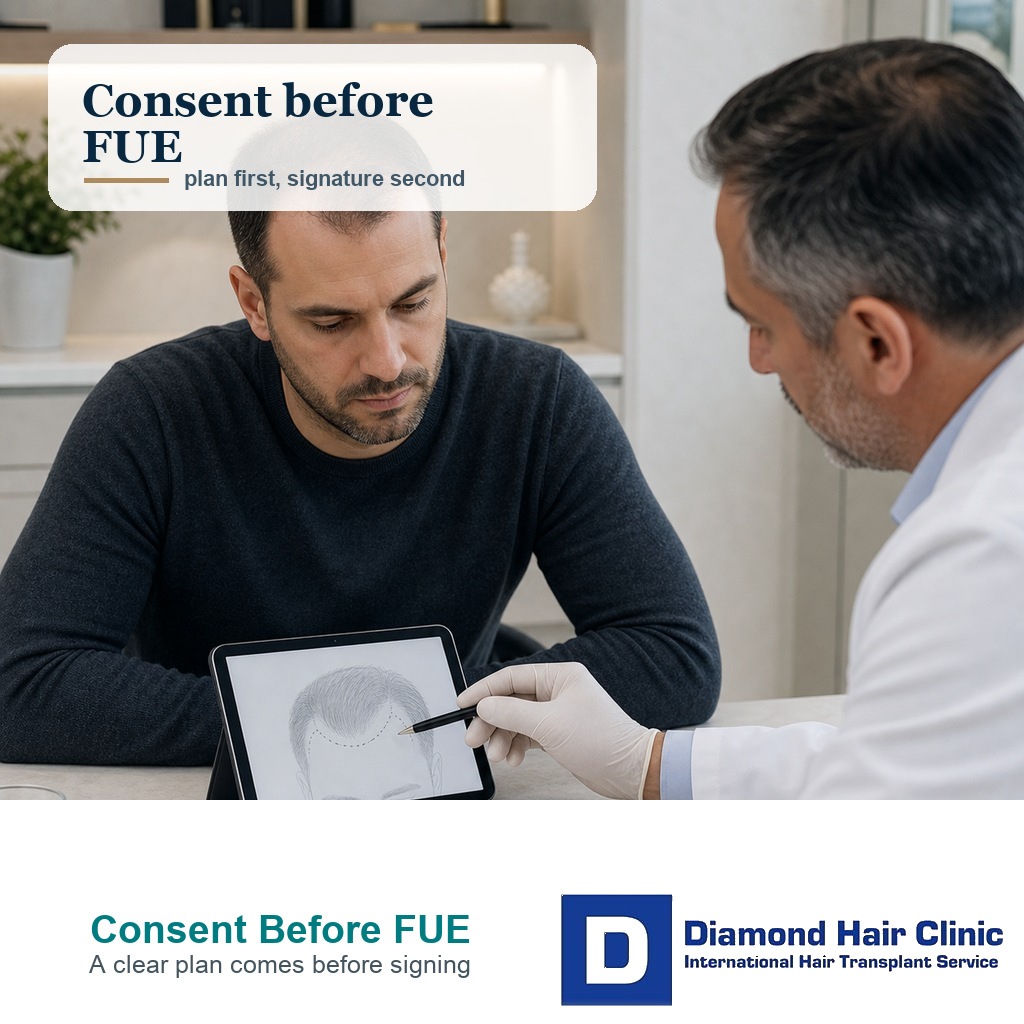
Hairline explanation before surgery starts
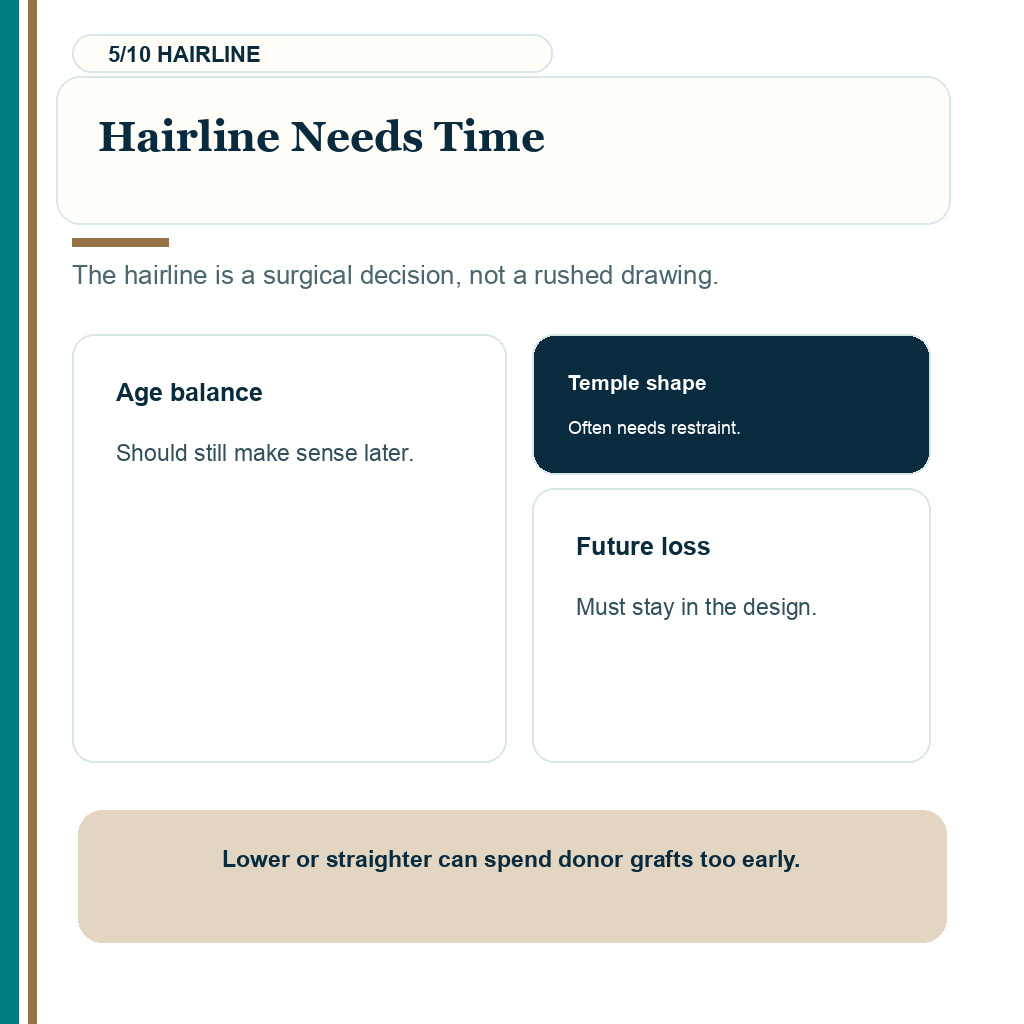
The hairline is not a drawing to rush while you are nervous. It controls age balance, facial proportion, future hair loss risk, density planning, and whether the result will still look natural years later.
For me, the hairline discussion is a surgical decision, not sales language. You need to understand why the line sits where it sits, why the temple area may need a conservative shape, and why a lower or straighter hairline can spend donor grafts too early.
That decision belongs close to hairline design in hair transplant. If you see the final drawing for the first time after medication, sedation, shaving stress, or travel fatigue before surgery, the clinic has made the decision harder than it needed to be.
Surgeon responsibility for the medical steps
Consent is incomplete if you do not know who is responsible for the medical steps. A clinic name is not enough. You need to know who evaluates candidacy, who designs the hairline, who decides the graft range, who creates the recipient area, who extracts, who places, and who supervises the whole process.
If another doctor or trainee will observe, assist, or perform part of the operation, a general team label is not enough. The final consent should state that person’s role, the steps they may take, and who will supervise before the procedure starts.
The answer can vary between clinics, but it should not be vague. If a coordinator handles the whole explanation and the surgeon appears only briefly, you have not had the same decision process as a surgeon led hair transplant. That makes surgeon involvement in hair transplant and who performs hair transplant surgery consent questions, not only clinic selection questions.
You have the right to understand whose judgment is shaping your donor area and hairline. Without that clarity, the form may say yes to surgery while you still do not know who is actually doing the surgery.

Read this review excerpt
“The doctor spoke English fluently, listened carefully, and was able to communicate everything clearly. I felt involved in every decision, and that gave me a lot of confidence moving forward.”
Translation problems can weaken consent
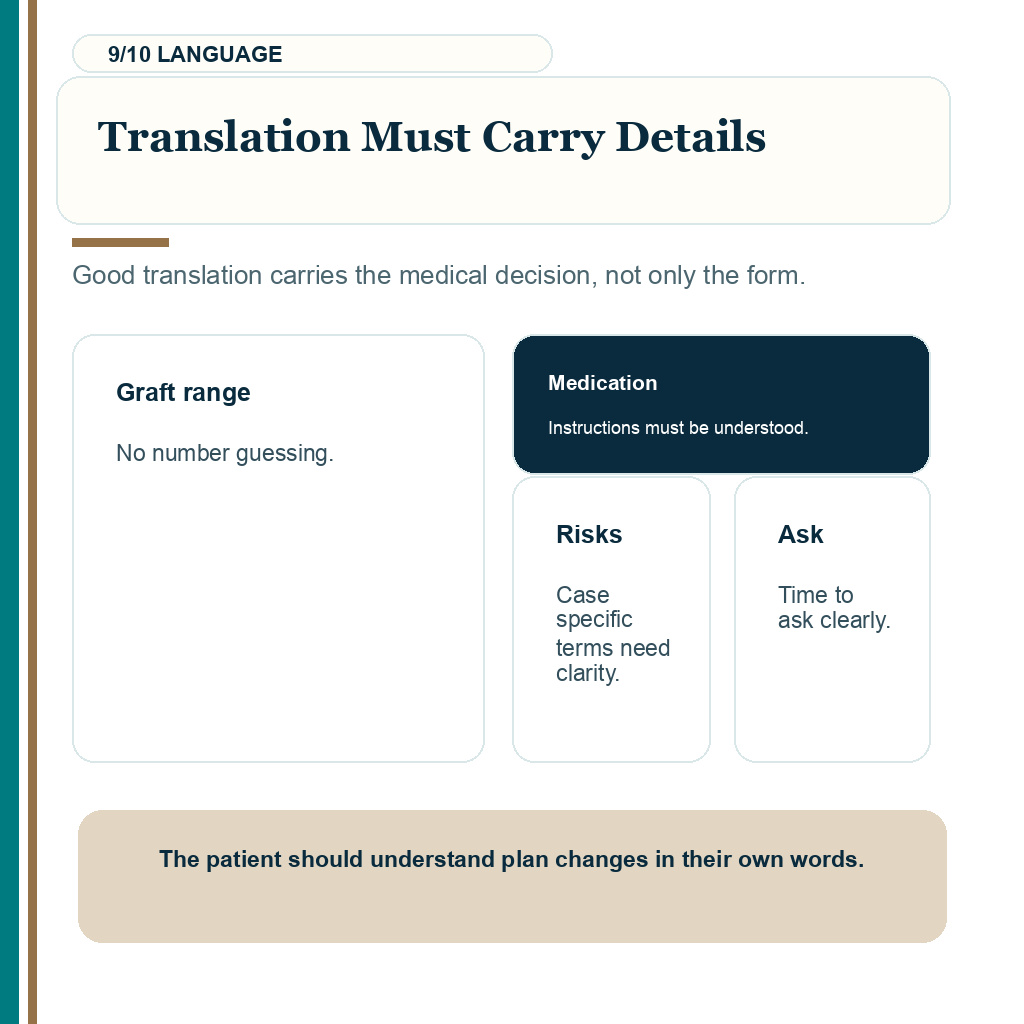
You may speak general English well and still miss medical details about graft range, donor limits, anesthesia, medication, or plan changes. Translation matters most when the decision is not routine. A small misunderstanding before surgery can become a large regret after surgery.
If a translator is involved, keep that person in the medical discussion, not only at reception. The goal is that you can repeat the final plan in your own words and ask what happens if the design changes after shaving. If a translated consent form is not available, a clear written summary in your language can still reduce misunderstanding. If you use hearing aids or a cochlear processor, consent should also confirm how instructions and pause signals will be handled during FUE.
I discuss this communication problem in more detail in language barriers during hair transplant abroad. For consent, I use a practical test. If you cannot clearly explain what you are agreeing to, the conversation is not finished.
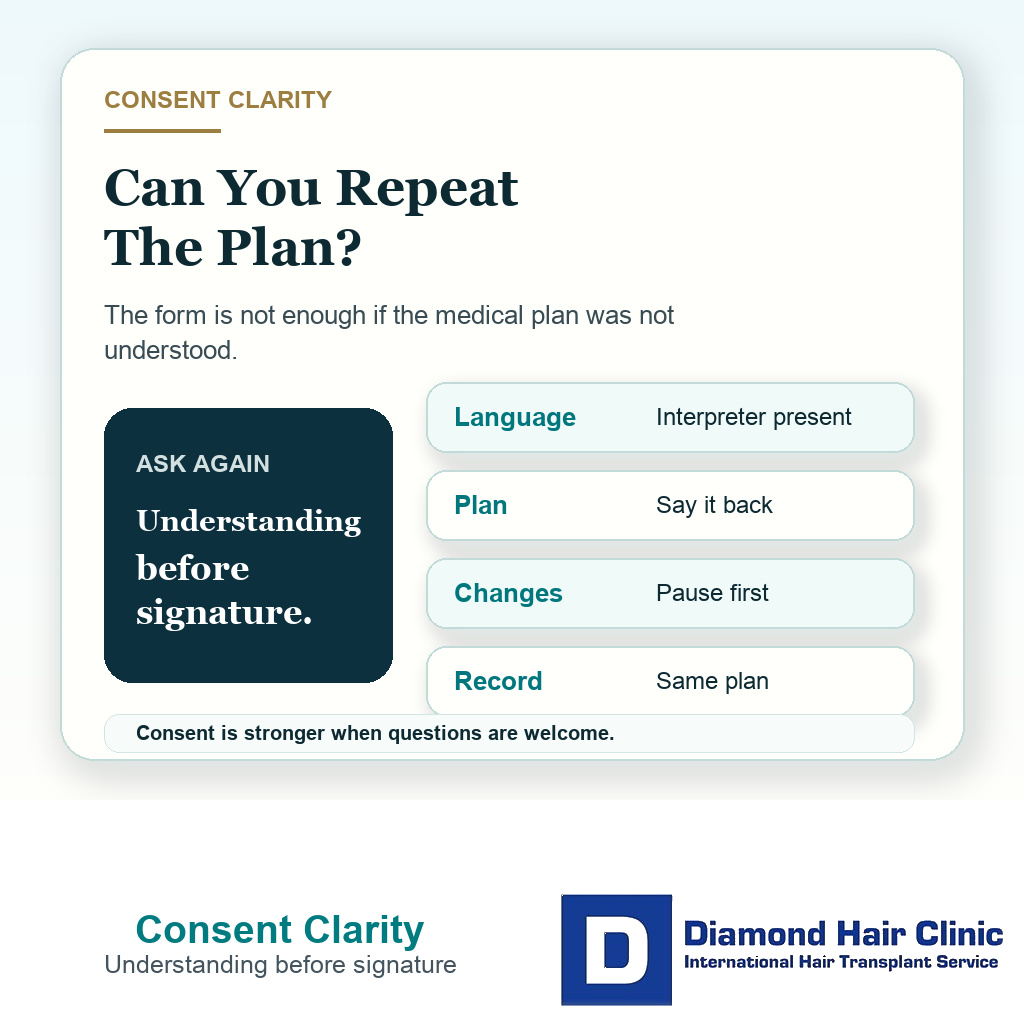
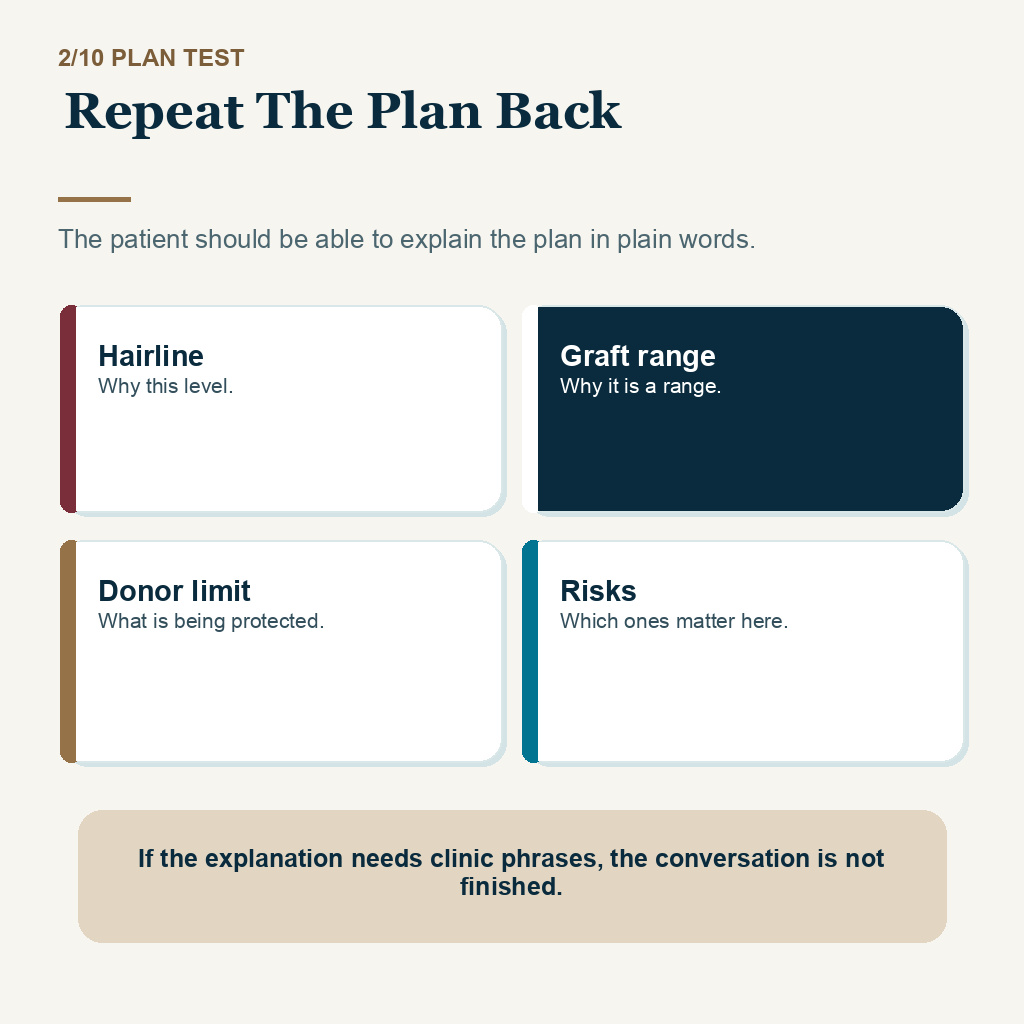
Consent is stronger when the patient can repeat the final plan, ask questions, and pause if the plan changes.
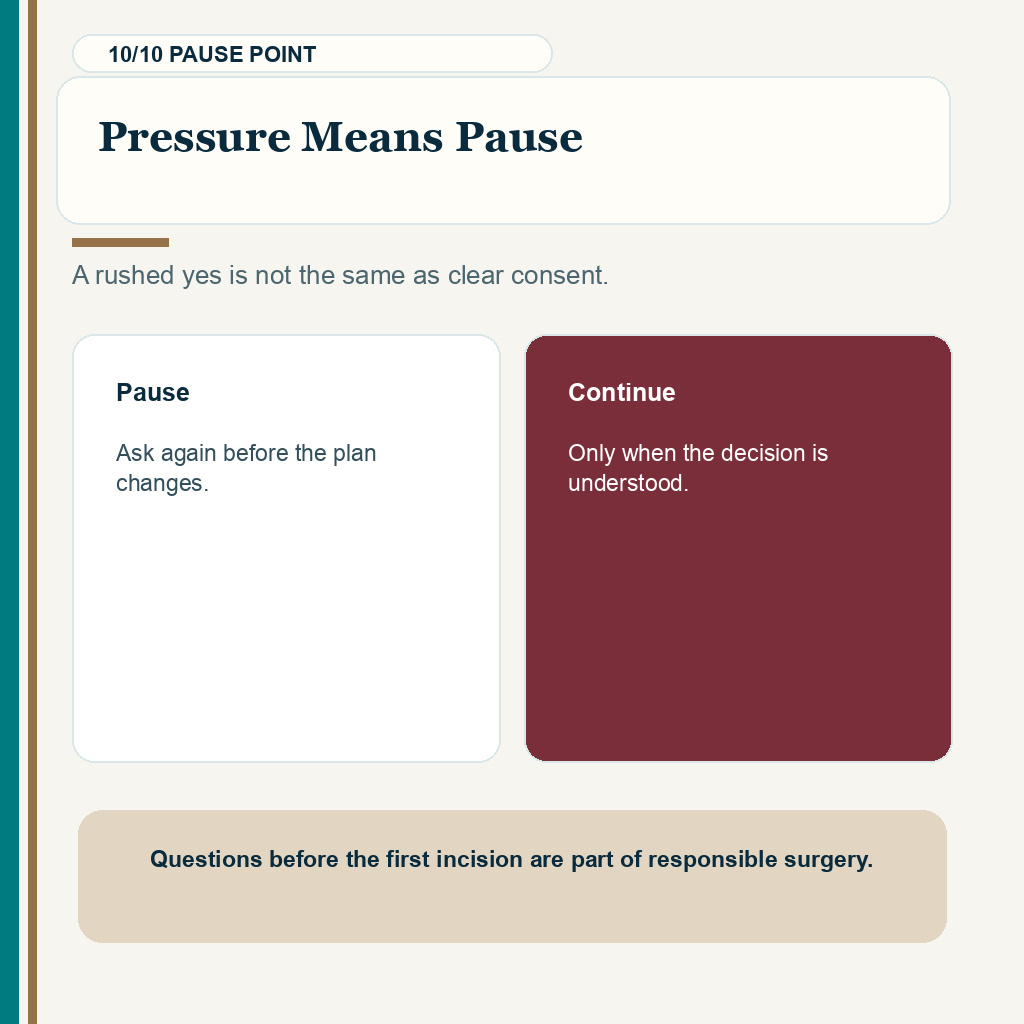
Pressure should pause the decision
Pressure can come from a discount, a deposit, a limited slot, a travel schedule, a translator waiting, or the feeling that the team is already prepared. None of those should replace medical understanding.
It is a warning sign when asking one more question makes someone feel difficult. Questions before the first incision are part of responsible surgery. You need a quiet moment to look at the marked hairline, ask questions, and decide before premedication, shaving stress, or theatre momentum makes the decision harder. If you are being pushed to accept a lower hairline, a higher graft number, a different surgeon role, or a larger recipient area than expected, a pause is healthier than a rushed yes.
This overlaps with booking pressure before a hair transplant and deposit decisions before booking. Payment or scheduling should follow the medical plan. It should not make you afraid to question it.
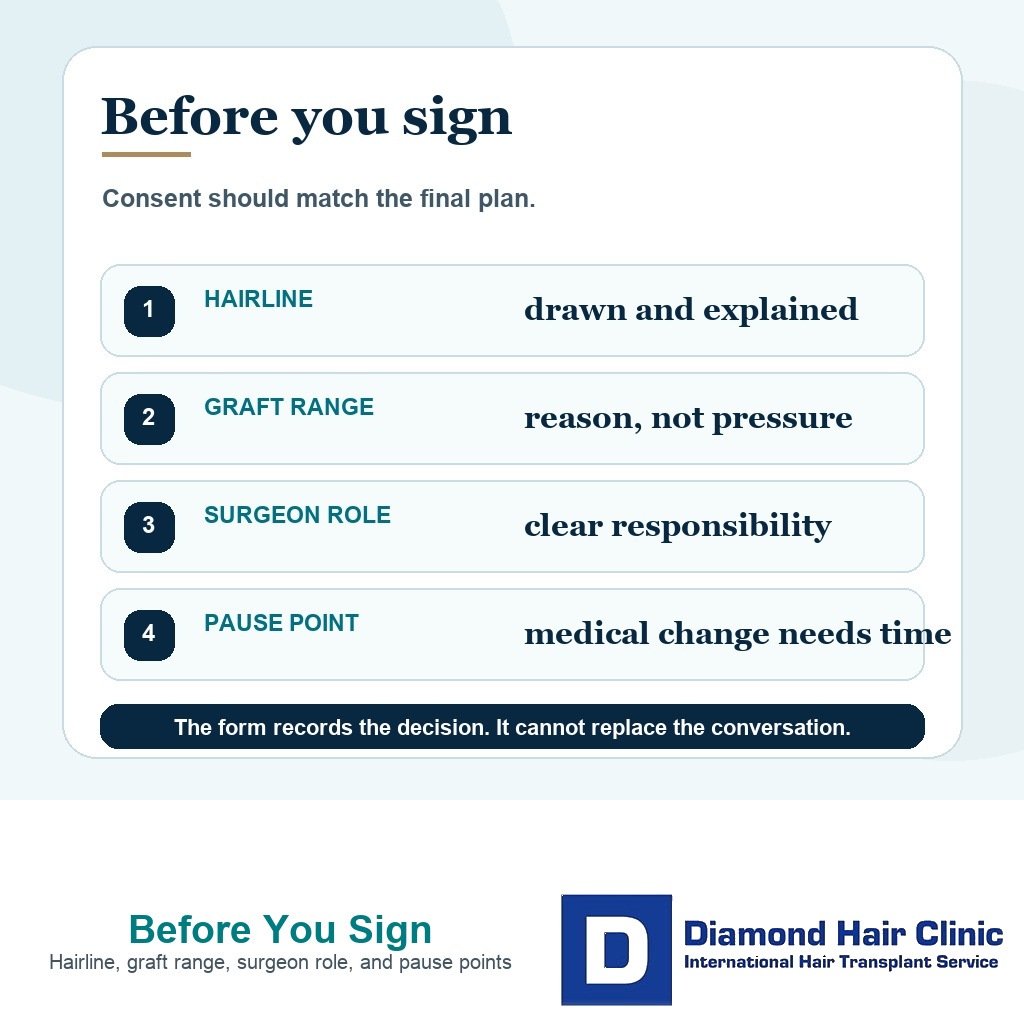
Before signing, the hairline, graft range, surgeon role, and pause point need to be understood.
Medical changes that should pause the operation
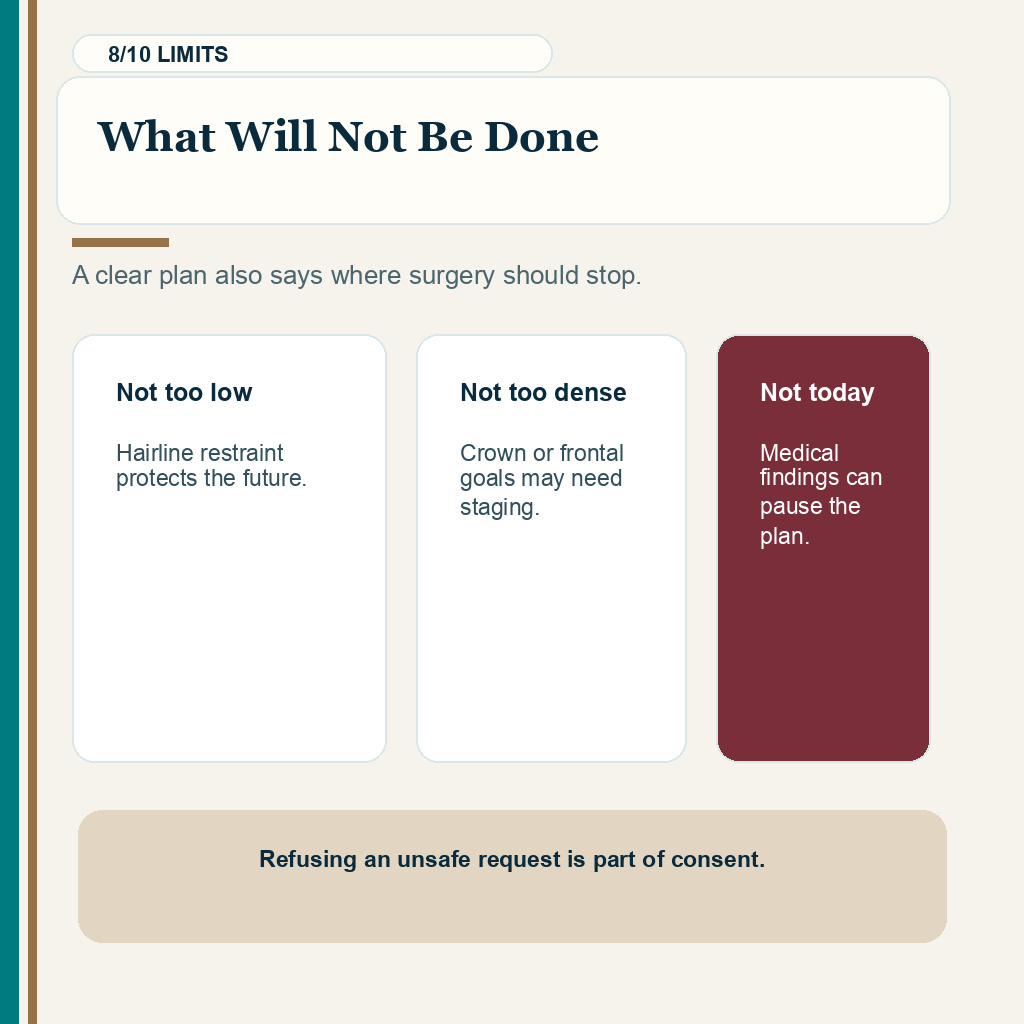
Some findings deserve a pause because they change the safety or quality of the procedure. Examples include active scalp inflammation, infection signs, unclear scarring alopecia, uncontrolled blood pressure, concerning blood test results, undisclosed medication use, recent illness, unexpected donor weakness, or a hairline request that would damage future options. If new health information appears after booking, treat it as a medical change after booking, not as a small scheduling inconvenience.
You do not need to diagnose these issues alone. The surgeon needs to explain whether the finding changes the plan. If it changes the plan materially, momentum is not a reason to continue without a fresh discussion. A pause can mean a smaller plan, a postponed plan, a medication review, or no surgery that day. Those options should be named rather than hidden behind “we can still continue.”
There are times when waiting protects the hair transplant plan. Postponing is not a failure when it prevents poor donor use, unsafe medication handling, or a result that you do not truly understand.
What I need documented after the final review?
After the final examination, consent needs a record that matches the operation about to start. The treated areas, final graft range, hairline position, donor limit, anesthesia plan, medicines, surgical roles, and pause conditions belong in that record.
Make the removal plan part of final review
The final review can also confirm practical details that affect monitoring, positioning, and hygiene. Jewelry, piercings, watches, and nails before FUE should be settled before shaving, medication, or procedure room setup begins.
The record also needs to say what is not being promised. Perfect density, full crown coverage, guaranteed growth, healing without any scar, and unchanged native hair do not belong in a consent discussion as promises.
‘Results cannot be guaranteed’ describes biological uncertainty, not an escape from the agreed graft range, surgeon roles, complication plan, follow-up route, or written correction policy.
When the plan changes on the day of surgery, the reason needs to be written before the procedure starts. Weaker donor supply, skin inflammation, bleeding risk, a medicine issue, or a safer graft limit changes the consent because it changes the operation.
If shaving reveals a different area than the one agreed before surgery, stop and confirm it before extraction begins.
Documents to keep before surgery
Get the forms you will be expected to sign before you travel or pay the final balance. Give yourself time to read them before the day of surgery.
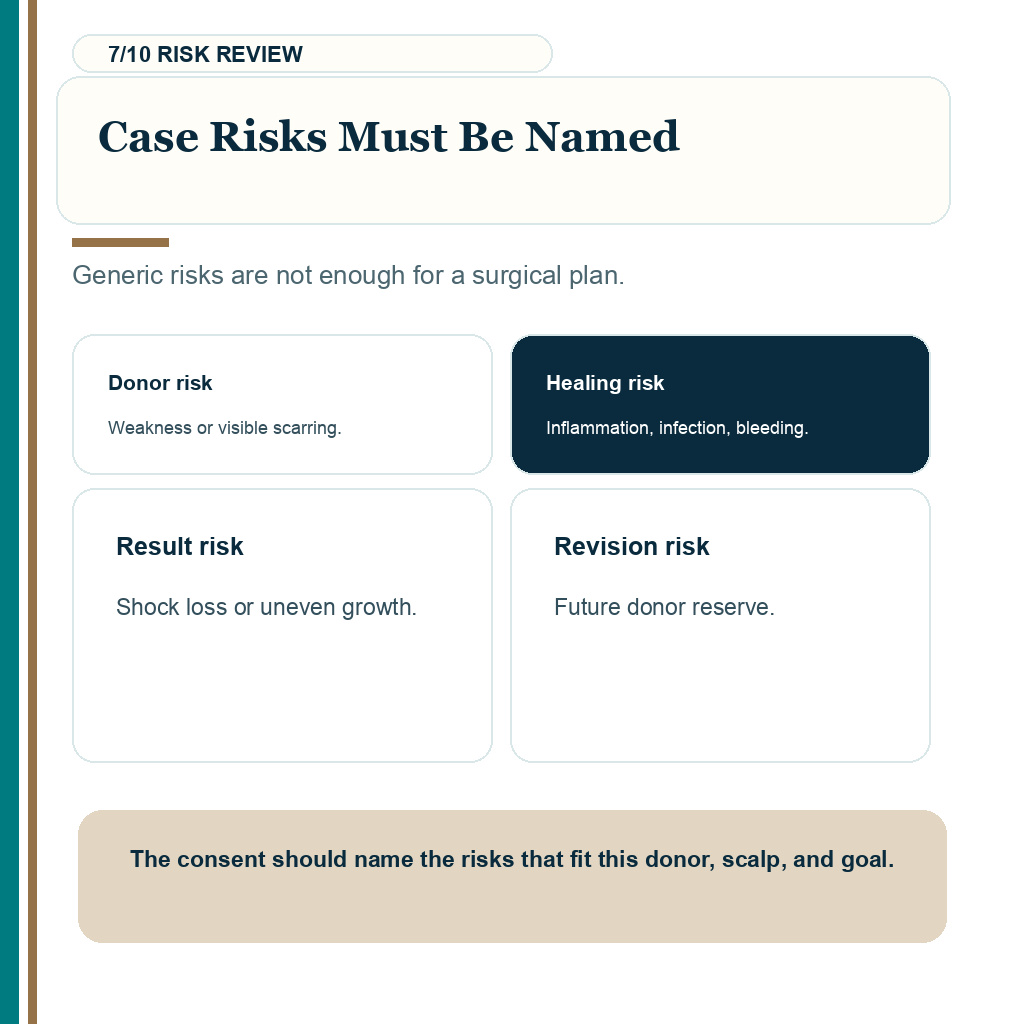
Keep the final written plan, proposed graft range, hairline photos or drawings, medication instructions, named medical role of the surgeon, case specific risk notes, recovery instructions, payment and rescheduling terms, and any message setting out what will happen if the plan changes. For international surgery, keep travel insurance and hair transplant abroad documents separately. They support logistics, but they do not replace surgical consent.
The written record is not paperwork for an argument later. It helps both sides confirm they are talking about the same operation. If the plan changes after a direct review, update the written record before the procedure starts.
A material change needs a dated or clearly identifiable version of the final plan and consent before extraction or recipient incisions begin. Keep it with the earlier draft so the change can be understood without relying on memory.
Be especially careful with broad promises. A hair transplant guarantee can sound reassuring, but consent should still explain limits, biology, donor capacity, native hair loss, and the fact that no clinic can promise perfect growth or lifetime density.
Ask for a second opinion before signing if the plan is unclear
Ask for another view if the graft number is much higher than expected, the donor area was barely examined, the hairline feels too low, the surgeon role is unclear, the clinic avoids direct answers, translation is weak, or the plan changes after you arrive and you feel pressured to continue.
A second opinion is also useful when you are being told that a large session can solve everything at once. Hair transplant planning is not only about filling space. It also asks how much donor area can be used without creating a bigger problem later.
The best time for a second opinion before a hair transplant is before grafts are removed. After surgery, the donor has already been spent, and repair planning becomes more limited.
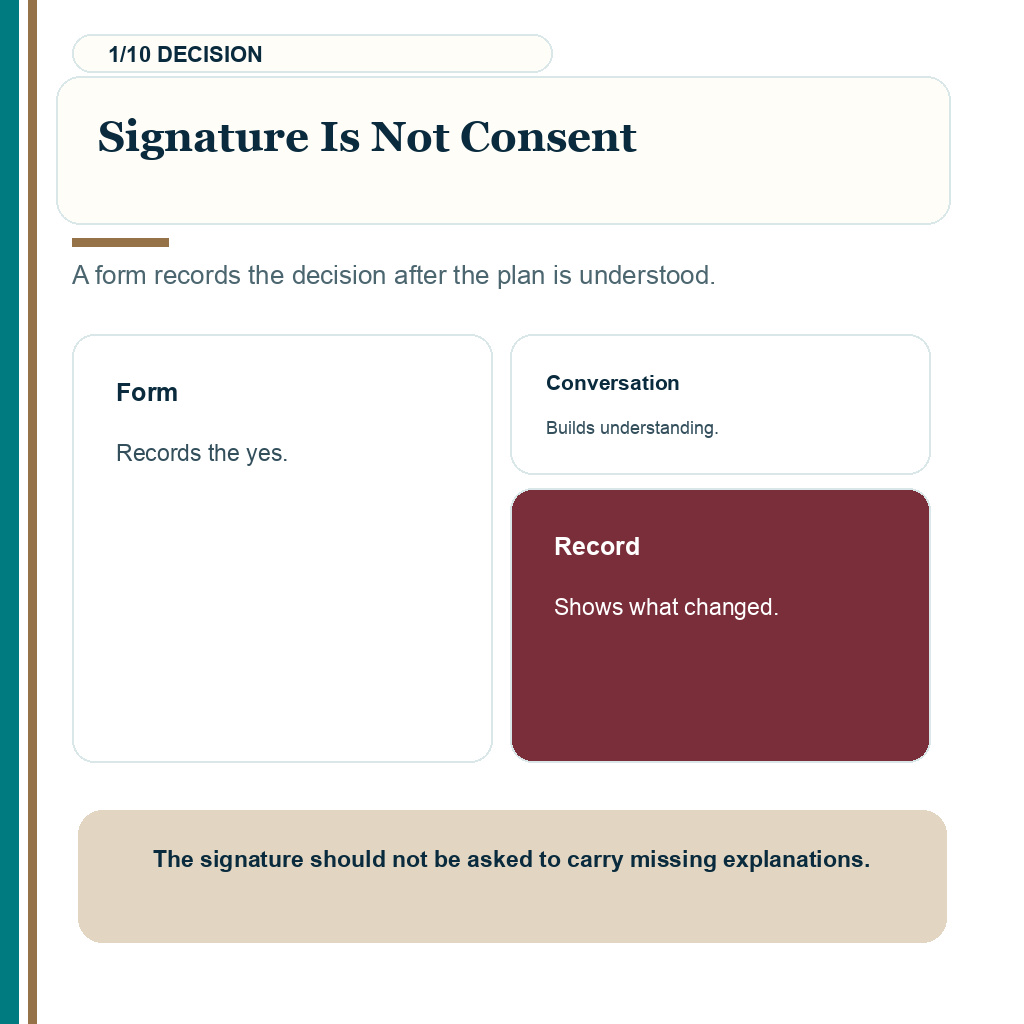
Consent has to name the real operation
Before signing, be able to describe where grafts will go, why the hairline sits there, what range is expected, what could change after shaving, who performs the key steps, and which risks matter in your case.
If one part of the form says FUE, another says FUT, or a branded implantation term appears without explanation, do not treat the conflict as a harmless typo. The final document should name the exact donor method, how the recipient sites will be made and filled, and which clauses apply before you sign.
Pressure, embarrassment, lost deposits, or confusion about responsibility are valid reasons to pause. Those second thoughts before a hair transplant should be handled before a consent form becomes urgent.
The booking message role map is useful because consent is stronger when the responsible doctor and key surgical steps are already clear. A signature should confirm understanding, not hide missing answers.