Preoperative Documents Need a Clear Purpose
If a clinic asks for a passport copy, flight details, photos, blood results, a medication list, a consent form, or a clearance letter, do not judge the request only by the name of the document. The important point is which decision that file will change. The purpose may be identity, travel logistics, medical review, surgical planning, or consent. It should not be a way to pressure a booking, skip questions, or replace surgeon review.
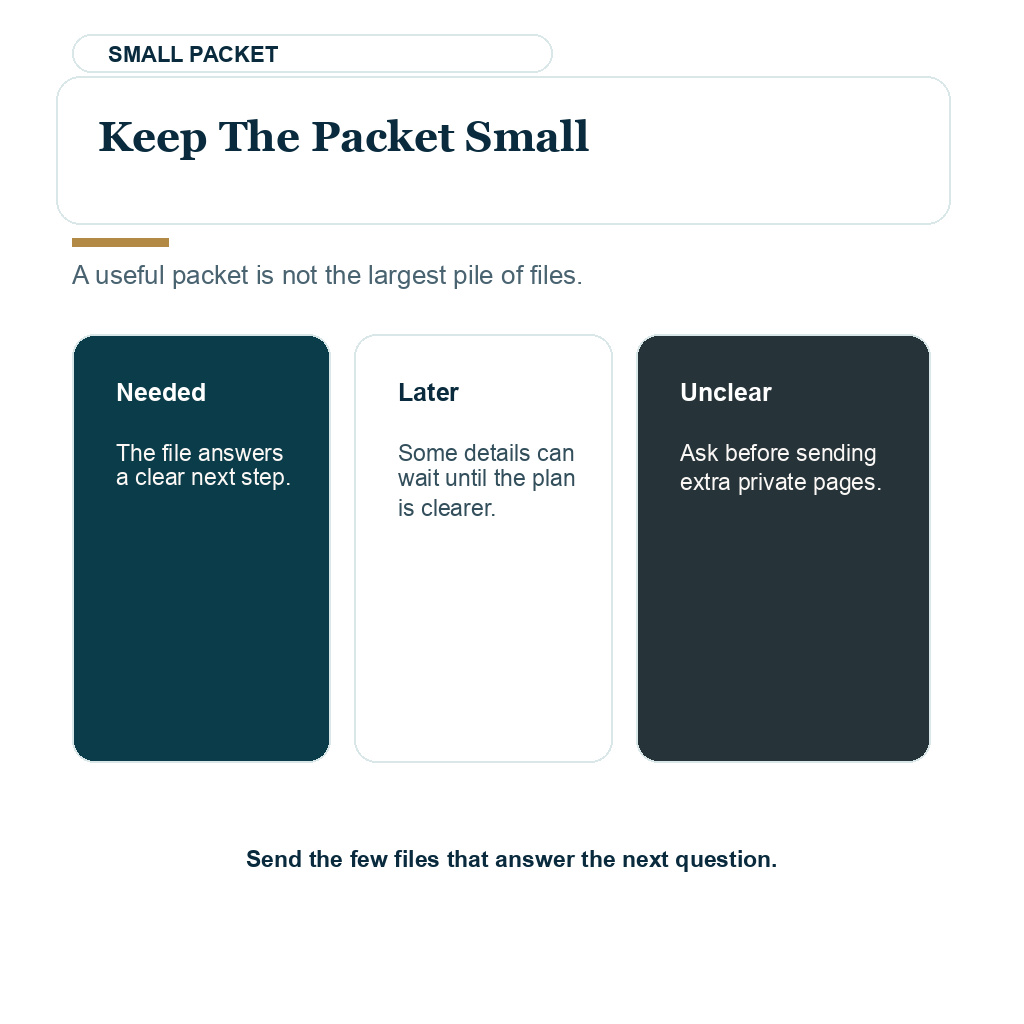
At Diamond Hair Clinic, a useful packet is not the largest pile of files. It is the smallest set that helps me make a safer decision.
From the patient side, hair transplant travel can start to feel administrative very quickly. You may be asked for personal documents while you are comparing hair transplant packages in Turkey, checking flights, and trying to understand whether the surgical plan is real. The safer approach is simple. Each file should have a clear job. It should be obvious what it changes, why it is needed now, and who will review it.
Document purpose matters before the file name
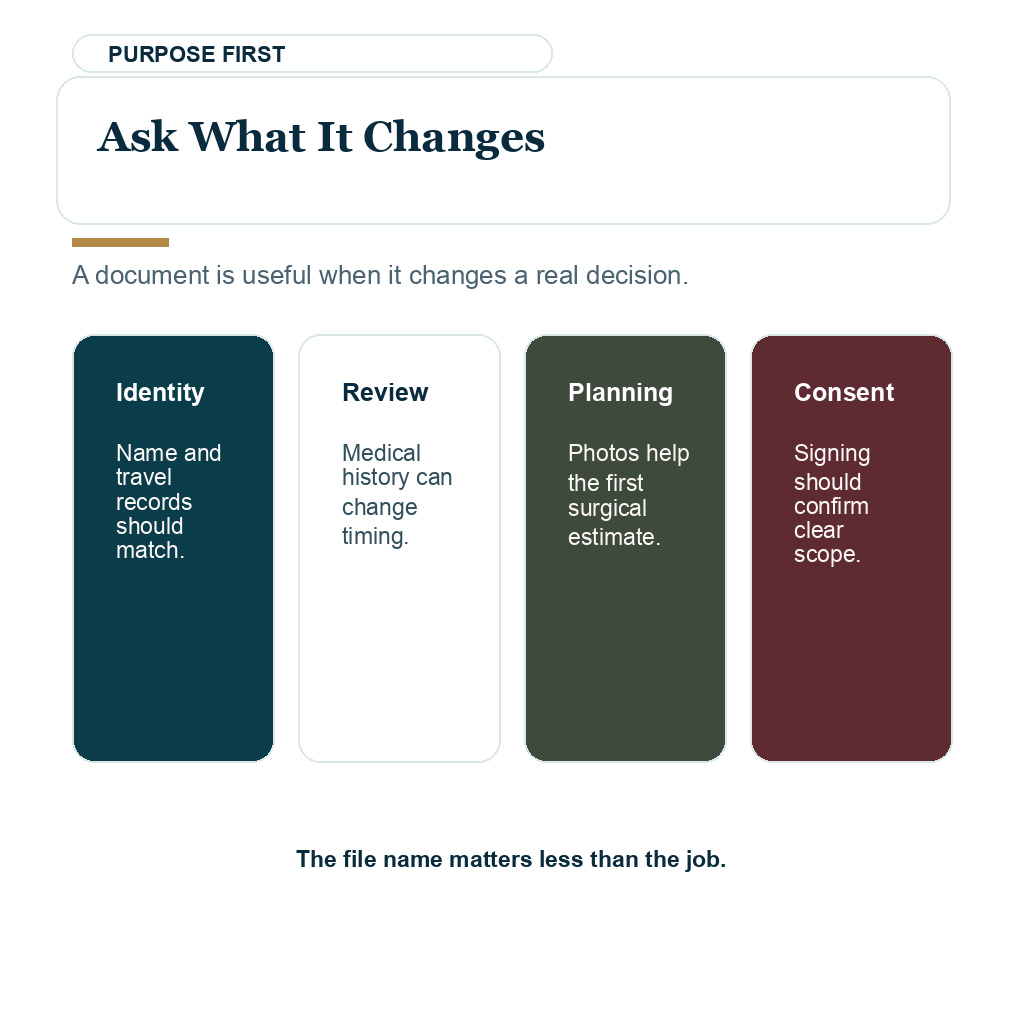
A useful document is not useful because it looks official. It is useful because it changes a decision. A passport copy may help the clinic match your name, travel booking, and appointment record. A flight detail may help the team plan transfers and avoid a rushed arrival. A blood test may show whether surgery day needs extra review. A medication list may show whether the medical history is straightforward or needs a treating doctor note. On the day itself, documents should stay narrow and useful inside a small packing plan for a long FUE surgery day.
That is different from collecting a fixed document list for every patient. Some documents belong early in the process. Some can wait until the surgical direction is clearer. Some are sensitive enough that the clinic should be able to name why it needs that exact page or detail. The best request is narrow, named, and tied to the decision in front of you.
When a request arrives through a coordinator, it still needs to connect back to the surgical plan. I have written separately about why a hair transplant coordinator should not replace the surgical plan. Documents need that clinical anchor too. Coordination is helpful when it keeps you organized. It becomes risky when paperwork moves faster than clinical judgment.
Identity and travel documents have a logistics job
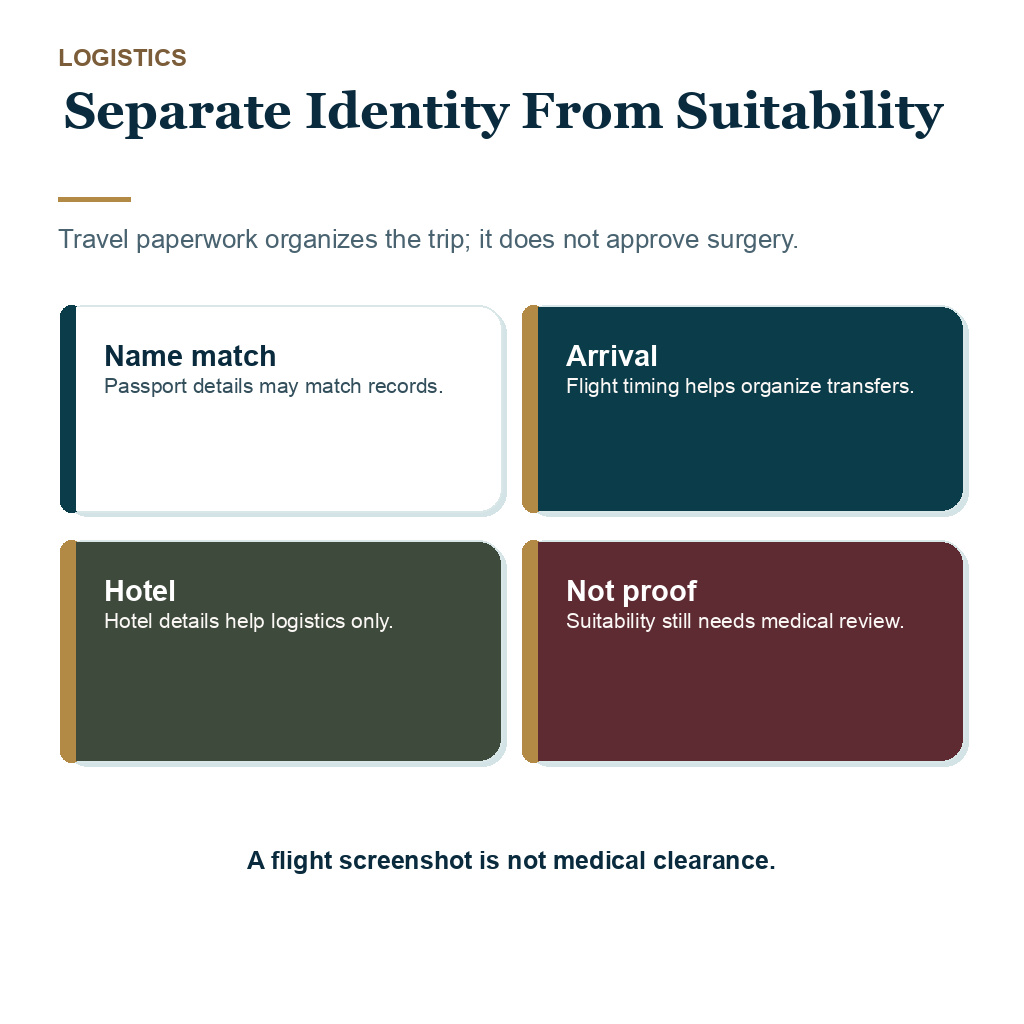
Identity and travel documents are usually about logistics. They help confirm who is coming, when you arrive, where transfer timing should be placed, and whether the appointment record matches the travel record. This can be practical, especially for international travel. It does not mean the clinic has already approved the donor area, hairline design, graft number, or medical suitability.
That distinction protects you. A passport copy does not decide whether the donor area can safely supply the requested grafts. A flight screenshot does not decide whether surgery should happen the next morning. Hotel details do not make a weak plan stronger. They help the team organize the trip once the medical and surgical direction is appropriate.
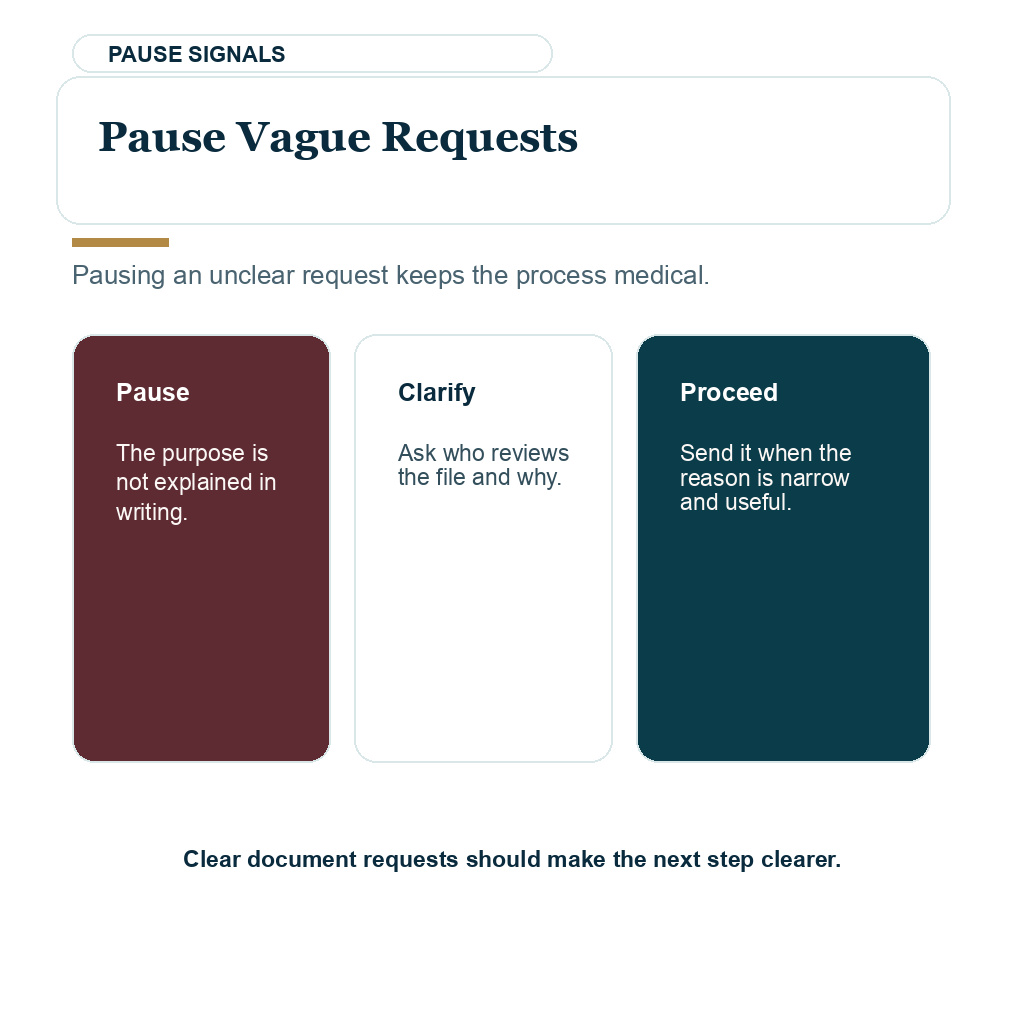
If a clinic asks for identity or travel information before the plan is clear, the purpose should be stated plainly. It may be needed for a tentative appointment record, or it may be pressure toward a deposit and travel confirmation. A clear clinic can explain the difference without making you feel difficult.
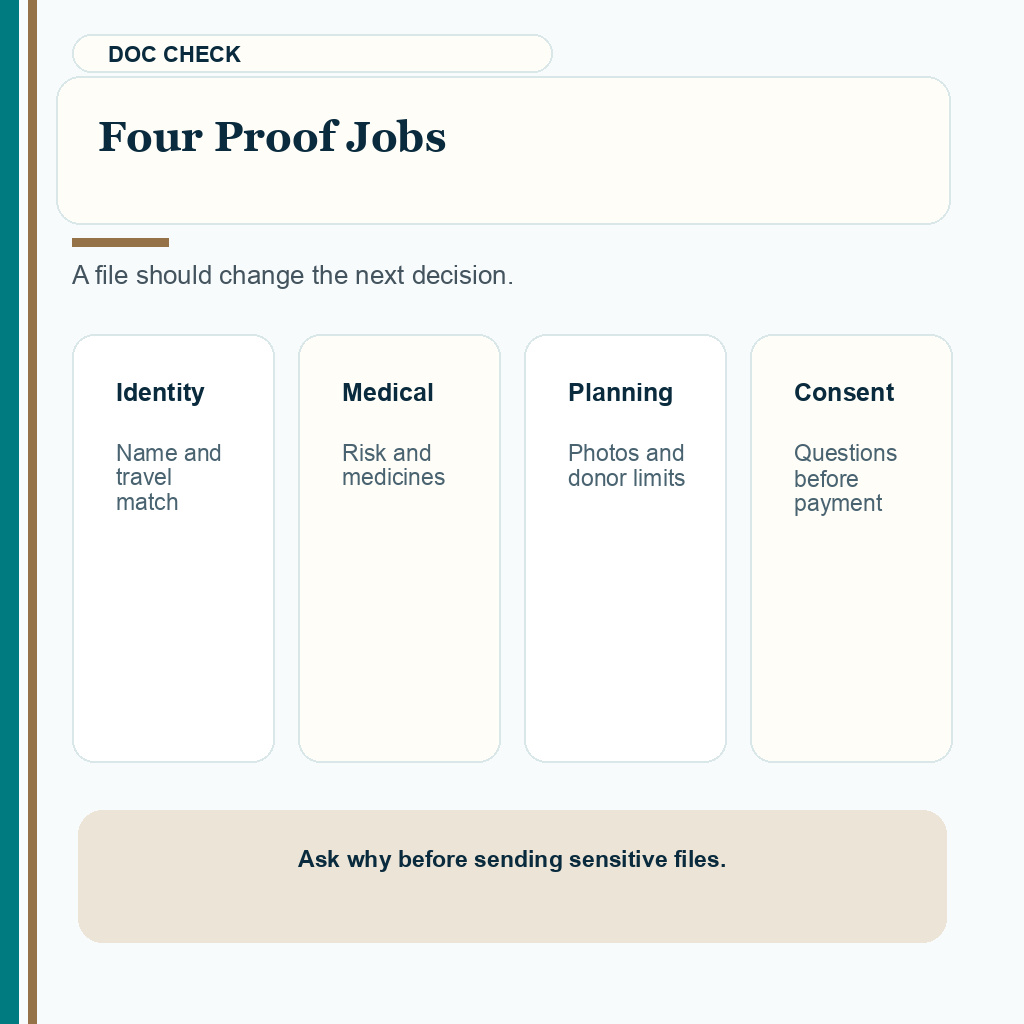
A useful document should change a clinical, planning, consent, or travel decision.
Medical documents need clinical context
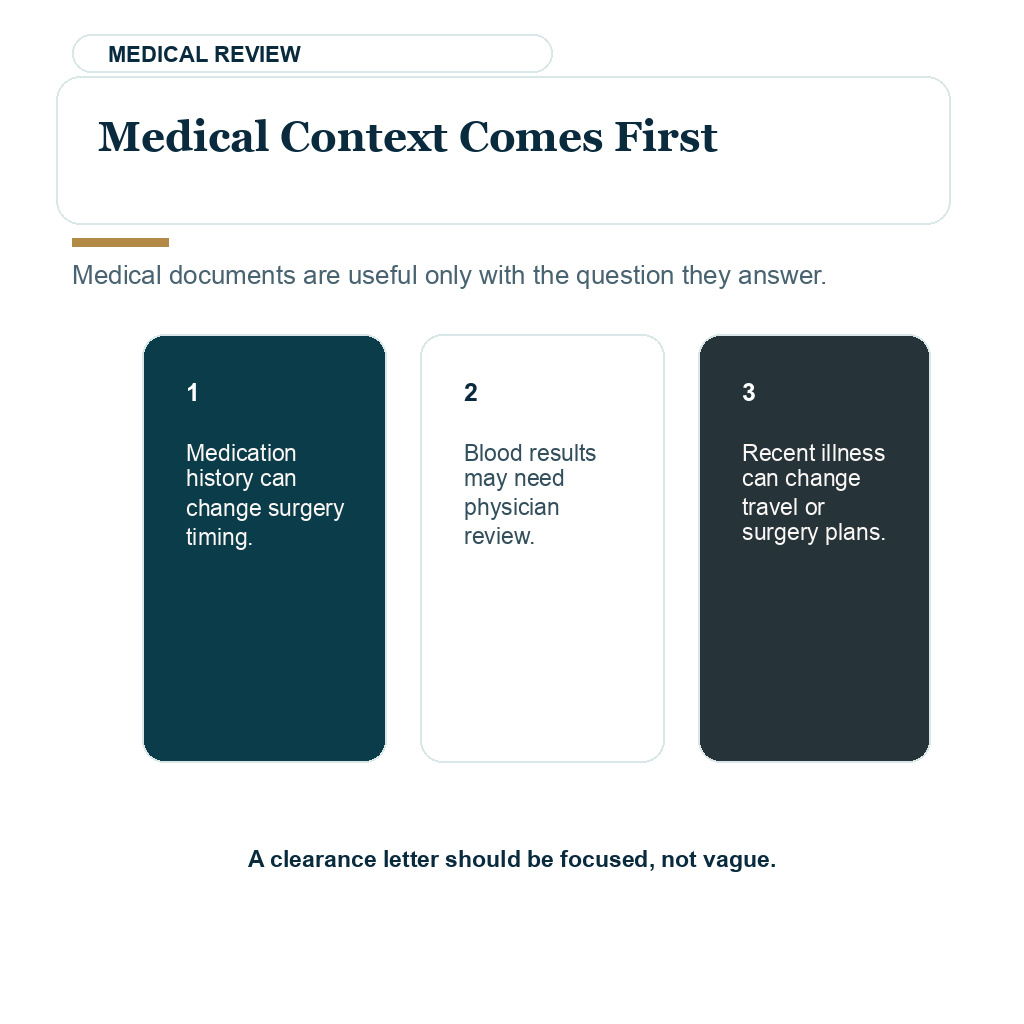
Medical documents are different. Blood tests, chronic disease history, medication lists, allergy details, previous surgery records, and clearance letters can change safety. They may affect anesthesia planning, surgery timing, drug instructions, aftercare, or whether a treating doctor needs to comment before travel.
Keep medical files dated and labeled instead of sending cropped screenshots one by one. A medicine list, lab result, and clearance note are easier to review when the clinic can see what each document is and when it was issued.
A medication list is not just a formality. Blood thinners, immune medicines, heart medicines, diabetes medicines, psychiatric medicines, and recent antibiotics can all change how we think about timing. A blood test can show that medical review is needed before the clinic day. A clearance letter can help, but only when it answers the right question. It is not a magic permission slip.
Travel fitness and surgery fitness can be confused. Being fit enough to board a flight does not mean you are ready for FUE. The airline may care about whether you can travel safely. The surgeon must also care about bleeding risk, infection risk, anesthesia safety, donor planning, and recovery instructions. These lanes overlap, but they are not identical.
If health changes after booking, update the clinic early instead of hiding the change to protect the date. I use that judgment in medical changes after booking a hair transplant. A document is useful when it helps the clinic notice the change before the plan becomes rushed.
Photos help planning, but they have limits
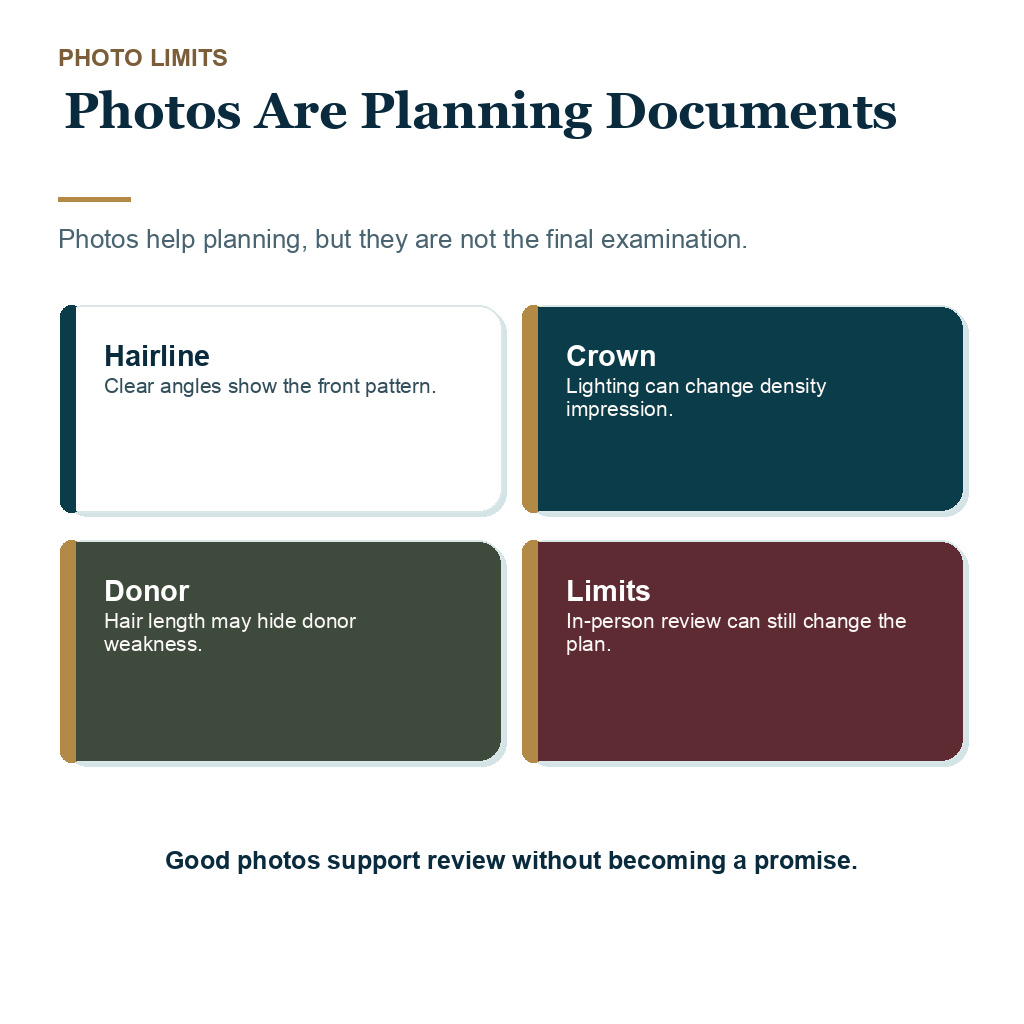
Photos are planning documents. Good photos help us understand the hairline, temples, frontal area, crown, donor area, and previous surgery signs. They can help us decide whether a consultation should continue, whether expectations need to be reset, and whether the first plan is realistic enough to discuss travel.
Keep the photographs taken before medication, SMP or earlier surgery when you have them, alongside the current set. Label each set with its date and the treatments already underway. The earlier record helps explain what changed.
But photos are not a final examination. Lighting can hide miniaturization. Hair length can hide donor weakness. A crown can look better or worse depending on the angle. A previous surgery can be difficult to judge without parting the hair and seeing scar behavior. For that reason, a plan built from photos is a first review, not a final promise.
The useful photo set is the one that actually helps the surgeon. Blurry selfies, filtered hairline photos, and crown photos from too far away can create false confidence. A better route is to follow a structured photo request and treat building a hair transplant plan from photos as a first surgical review, not a final promise before the in person examination.
Consent forms should make the decision clear
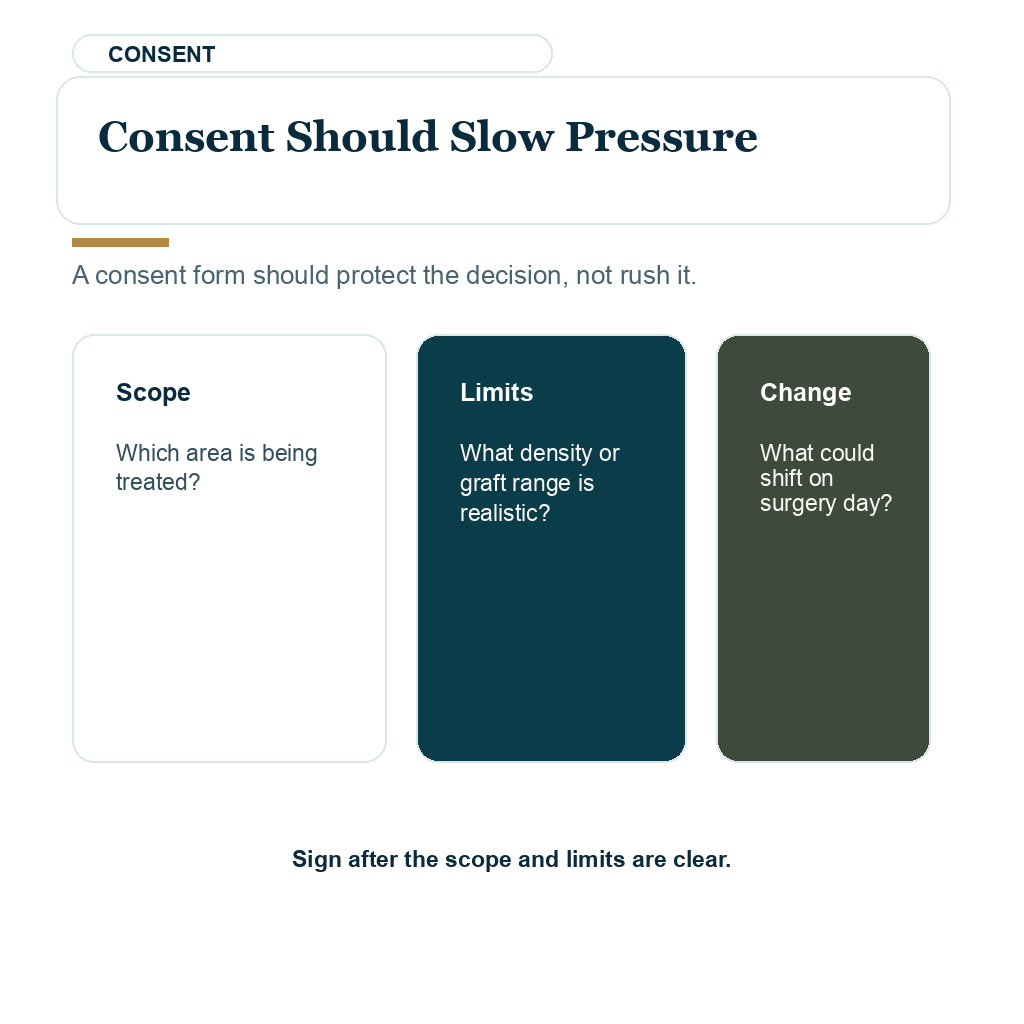
A consent form has a different purpose again. It is not one more obstacle before payment. It should slow the decision down and make the main points visible. The treated area, donor limits, realistic density, possible surgery day plan changes, and aftercare responsibilities should be understood before signing.
If a consent document arrives before you have clear answers, signing faster is the wrong response. The missing answers should come first. I handle financial steps through that clarity too. A hair transplant deposit before booking makes sense only after the scope, limits, and timing are clear enough.
Consent is strongest when it is connected to a real plan. It is weakest when it is used to make a sales message look final. If the clinic has not explained the hairline logic, donor protection, and realistic coverage limits, then the document is not doing its job.
Review the purpose before sending files
This review separates four different document jobs. Choose the closest job and check whether the request changes a real decision.
Identity and travel logistics
Name matching, arrival dates, hotel timing, transfer planning, and safe contact details belong here. This lane does not prove that surgery is suitable.
Medical readiness
Medication lists, blood tests, current diagnoses, treating doctor notes, and recent health changes sit in this lane. They support safety review, but they do not replace surgical judgment.
Photos and surgical planning
Clear hairline, donor, crown, and previous surgery photos belong in the planning lane. Photos help estimate the route, but they are not the final examination.
Document requests should match booking messages
A common worry is that the written messages and the document requests do not match. One message may talk about a package. Another asks for a passport copy. Another asks for photos. Another asks for a deposit. If you cannot see how those requests connect, the process starts to feel less medical and more transactional.
Hair transplant booking messages should match the surgical plan, and document requests need that level of clinical clarity. Each request should make its purpose clearer. It should not create a fog where you send more and more files while still not knowing whether the surgeon has reviewed the case properly.
Written plan details should agree with the documents you are asked to sign. Graft count, treated area, surgeon role, and the change process should be clear before paperwork feels final.
You can keep a simple record. For each requested file, write one sentence beside it. Passport copy for identity match. Flight details for arrival and transfer timing. Medication list for medical review. Photos for first surgical planning. Blood tests for safety screening. Consent form for confirmed understanding. When that sentence cannot be written, the clinic should explain the reason.
The reply to a submitted document should confirm receipt and the next step. It should also say whether your appointment is reserved or whether something is still outstanding.
Before sending sensitive files
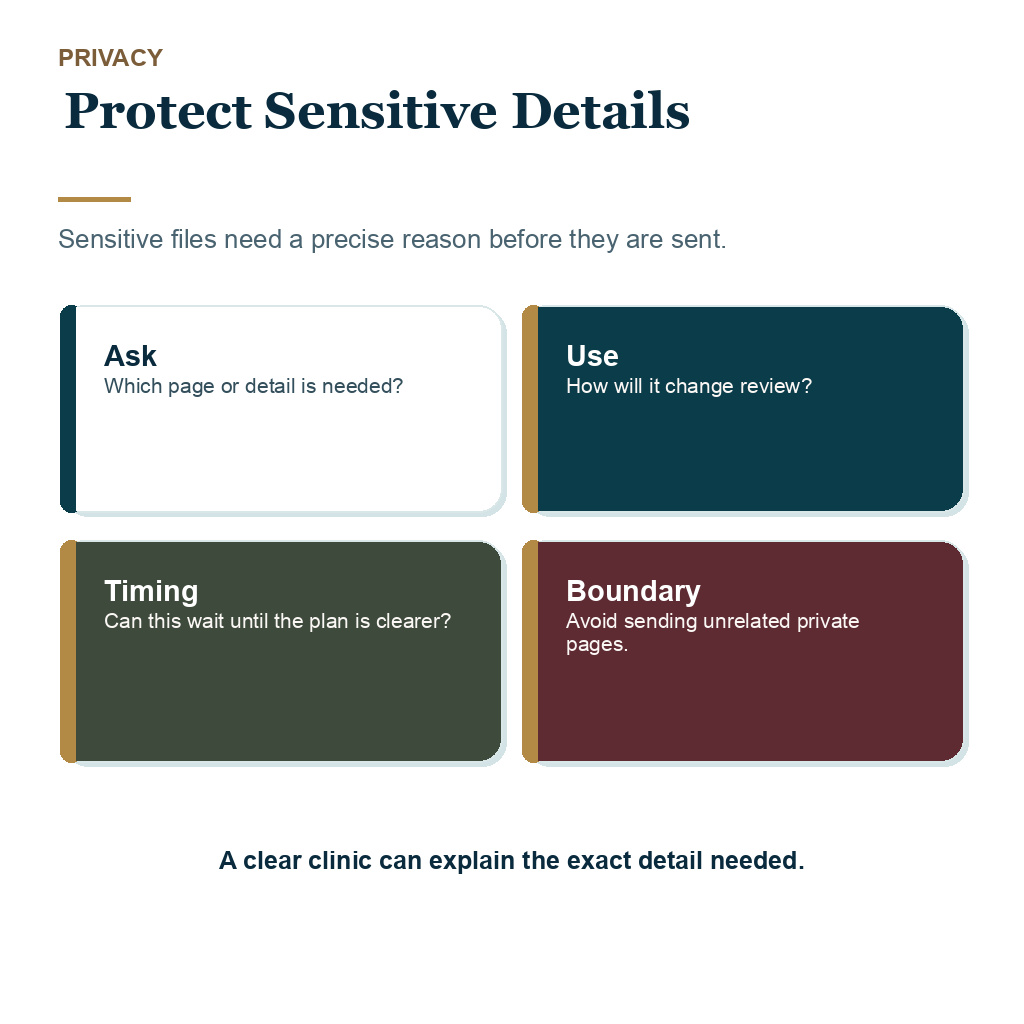
Some documents contain sensitive personal information. That does not mean you should never send them. It means the request needs to be precise. The request should name which detail is needed, how it will be used, and whether unnecessary pages can be left out or sent later. A clinic that takes medical privacy seriously should be comfortable with that boundary.
For example, a medication list may be useful because it shows bleeding risk, infection risk, or anesthesia concerns. A full unrelated record may not be needed at the first step. A passport page may be needed for identity and travel matching. A wider set of identity documents may not be necessary. A blood test may belong closer to surgery timing rather than during a vague early sales conversation.
The aim is to keep paperwork proportional. When the document has a purpose, you understand why it is being sent and the clinic can use it responsibly.
When a medical record contains unrelated private pages, the clinic should identify the exact page or detail needed. A focused document can answer the medical question while keeping unrelated personal information out of the conversation.