



Planning a Safe Hair Transplant Package in Turkey
Hotels and transfers are useful only when they support a serious medical plan. Hotel, transfer, price, graft number, translator support, and add ons can all be clear while the most important part remains vague. I judge the offer only after I know who assessed the donor area, who planned the hairline, who creates the recipient area incisions, how many patients are treated that day, and what happens if the plan changes. That is also how I judge whether a hair transplant deposit is being requested at the right time. I also want travel plans to include a written answer about travel insurance for a hair transplant abroad, because hotel and transfer details do not solve emergency or complication costs.
Travel can be organized as a package, but diagnosis, donor management, hairline design, recipient area planning, graft handling, and follow up cannot be treated like travel extras. A package can make the trip easier, but it should never replace surgical judgment or a careful plan for long term hair loss. It should also explain in writing how hair transplant aftercare support is handled after you leave Istanbul.
The appeal of packages in Turkey
Many international patients are drawn to hair transplant in Turkey because the country has experienced surgeons, organized medical tourism, and prices that are often lower than in Western countries. For someone comparing offers from another country, a complete package feels simple. The clinic arranges surgery, hotel, transfers, and sometimes medication or aftercare in one clear price.
That simplicity can help. If you are flying to Istanbul, especially if you are traveling alone to Turkey for a hair transplant, you do not want to manage every small detail after a long flight. Clear logistics reduce stress when the schedule is already medically important.
The problem begins when the package becomes more important than the surgical plan. A comfortable hotel room does not tell me whether the donor supply can support the plan. A transfer car does not tell me whether the hairline is age appropriate. A fixed price does not tell me who will create the recipient area incisions or whether the clinic will protect grafts for future hair loss. The same issue appears when hair transplant booking pressure makes the patient pay before surgeon access and graft reasoning are clear. For a separate planning frame, I explain how to look at a Turkey hair transplant without the sales lens before the hotel, transfer, or graft count starts to lead the decision.
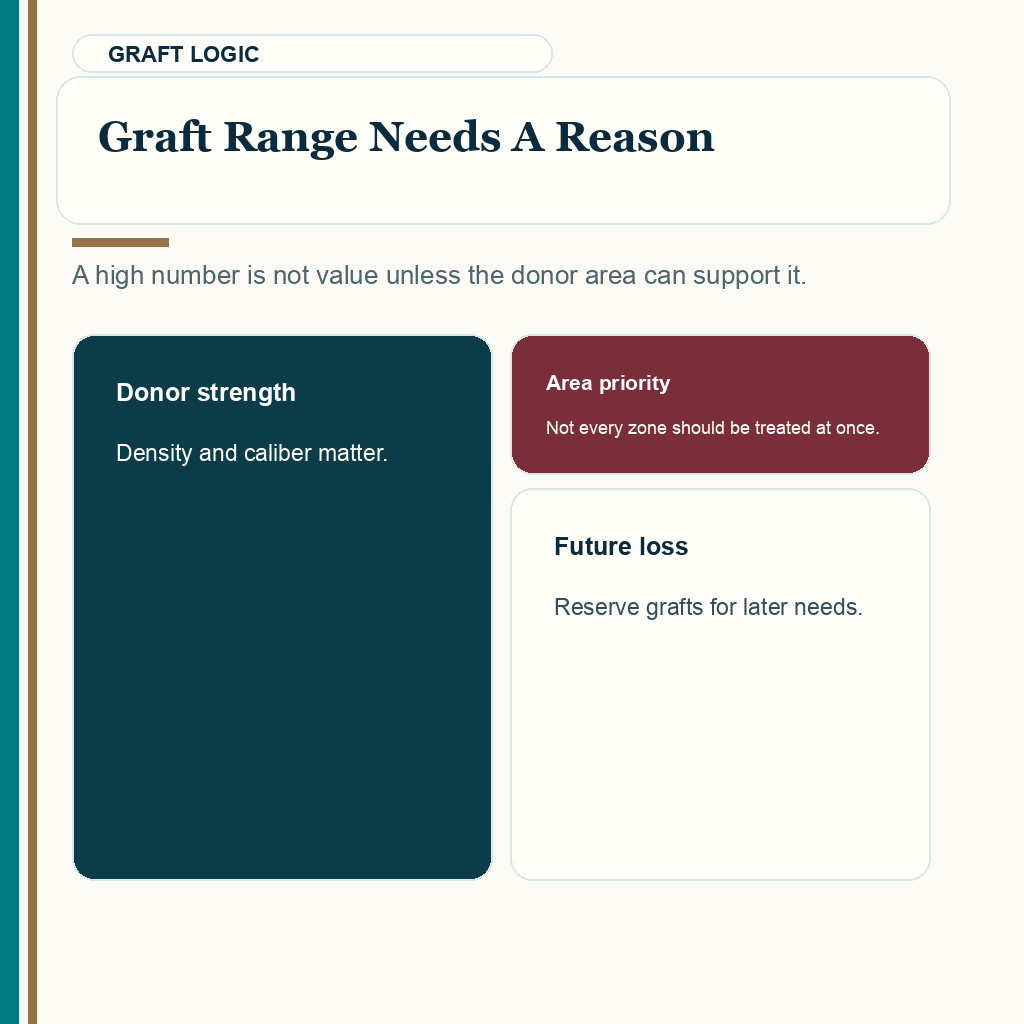
When a package spreads a high graft range across more than one day, the schedule can feel medically careful, but logistics are not the same as responsibility. The offer still needs to name the donor limit, coverage priority, surgeon role, and stopping rule before flights make the advertised range feel fixed.
A higher tier only matters medically if it changes consultation depth, surgeon role, planning time, follow-up responsibility, or record clarity. If the tier mainly changes travel comfort or marketing language, it should not make the surgery feel safer by itself.
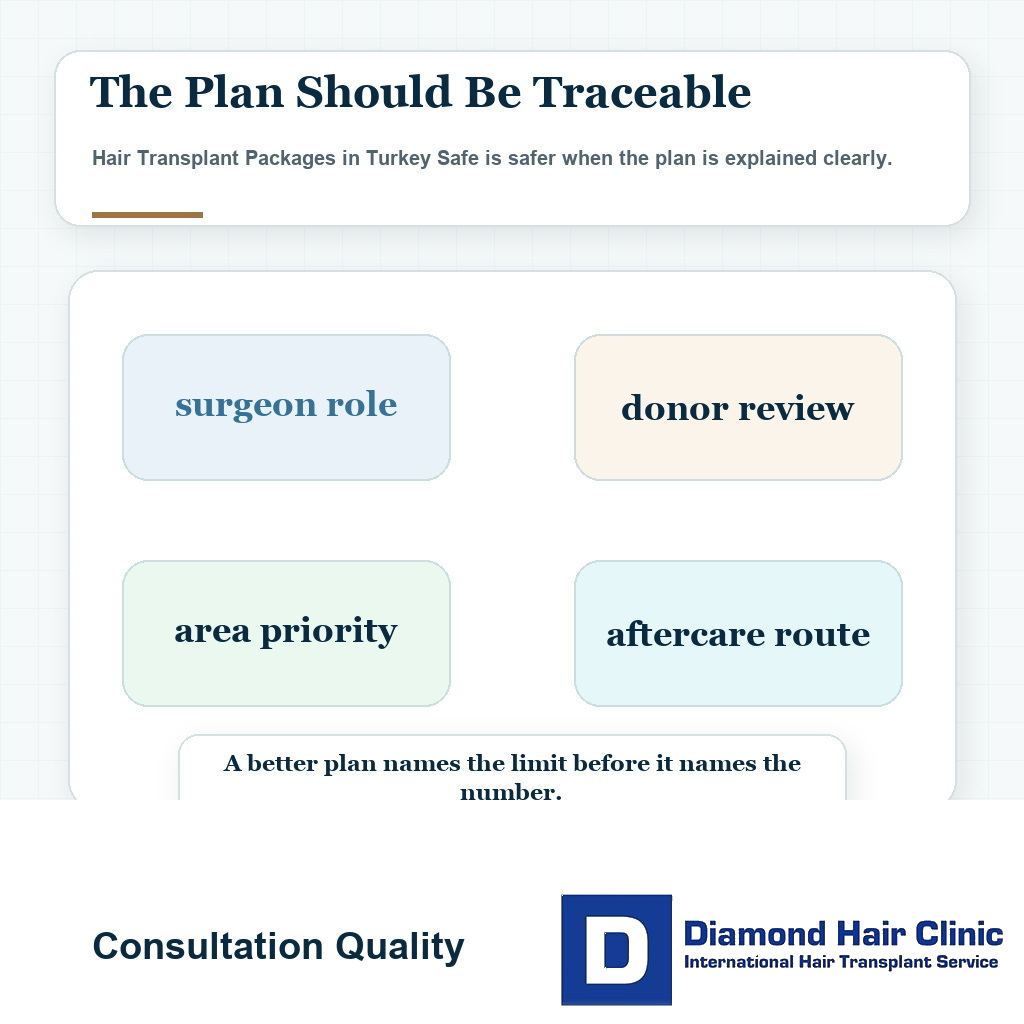
Proof before price in a safe package
Before I take any package seriously, the medical plan has to be clear. You should know whether the surgeon has reviewed the case, whether the donor area has been judged properly, whether the hairline design is conservative enough for your age, and whether the graft number fits the long term plan. Language and translation belong in that same decision, because language barriers during a hair transplant abroad can make a clear looking package medically unclear. If you want to test the medical side of the package, use case review before travel before judging the hotel or transfer details.
An online estimate can start the conversation, but it should not close it. Photos and videos can help me understand the case, but they cannot replace surgical judgment. If the donor area looks different when I examine it in person, or if the recipient area needs a different plan, the clinic must be willing to adjust the recommendation instead of forcing the original package promise.
Price matters, but it should be understood inside the full structure of the clinic. A page about hair transplant cost in Turkey can explain the broad range, while the package itself must show what the number includes medically. For tightly curly hair, an Afro or curly hair package budget should include curl review, not only hotel and transfer lines. A lower price can still be safe with the right medical structure, and a higher price alone does not prove quality. The relevant comparison is the surgeon involvement, planning time, daily patient volume, donor protection, and follow up behind the price.
Separate the surgery fee from optional add ons before you compare prices. PRP, laser sessions, special products, and stem cell style injections need their own written reason, cost, timing, and review point. If the operation plan becomes weaker only because you decline an extra package, the package is carrying too much of the decision.
Read an itemized quote from the base surgery and facility fee through to optional treatments, discounts, and the final amount due. An item can be included or discounted without being medically necessary for your case. The same quote should show the deposit, remaining balance, and the terms that apply if the surgical plan changes.
That makes choosing a hair transplant clinic in Turkey much more serious than comparing package lists. A safe package should make the plan more transparent. It should not hide the most important medical decisions behind a single attractive price.

A complete package helps with logistics
A complete package can help when the clinic uses it to organize the trip around surgery. Flights, hotel timing, airport transfer, clinic transfer, after surgery control, and first washing need coordination. These details matter when you are coming from another country. If dental treatment is part of the trip, dental work before or after a hair transplant should be scheduled by medical timing, not by package convenience. The paperwork should be just as practical, so each hair transplant document has a clear purpose rather than acting as another package item.
Convenience becomes valuable when it supports medical safety. A well planned schedule gives you time to arrive, rest, have the operation, recover quietly, receive the early after surgery check, and leave without rushing. The travel side should serve the medical side, not the other way around.
I see the package as a frame around the surgery. It can make the experience smoother, but it cannot make a weak plan strong. With a limited donor supply, an unrealistic crown expectation, or a hairline request that is too young for the face, no hotel or transfer arrangement can fix the plan.
For patients comparing countries, the broader question of traveling abroad for a cheaper hair transplant is not only about saving money. The real test is whether the saving still leaves enough medical responsibility before, during, and after the operation.
The budget should include what the package does not touch. Meals, flights, extra nights, medicines, lab checks, and a companion can change whether the advertised price is truly manageable. Keep dental extras separate from the transplant package, because they can change appointment timing, recovery comfort, and the real cost of the trip.

Read this review excerpt
I had my initial consultation by sending videos and pictures through WhatsApp and had a comprehensive report about the number of grafts required, details of the surgery, post op care .
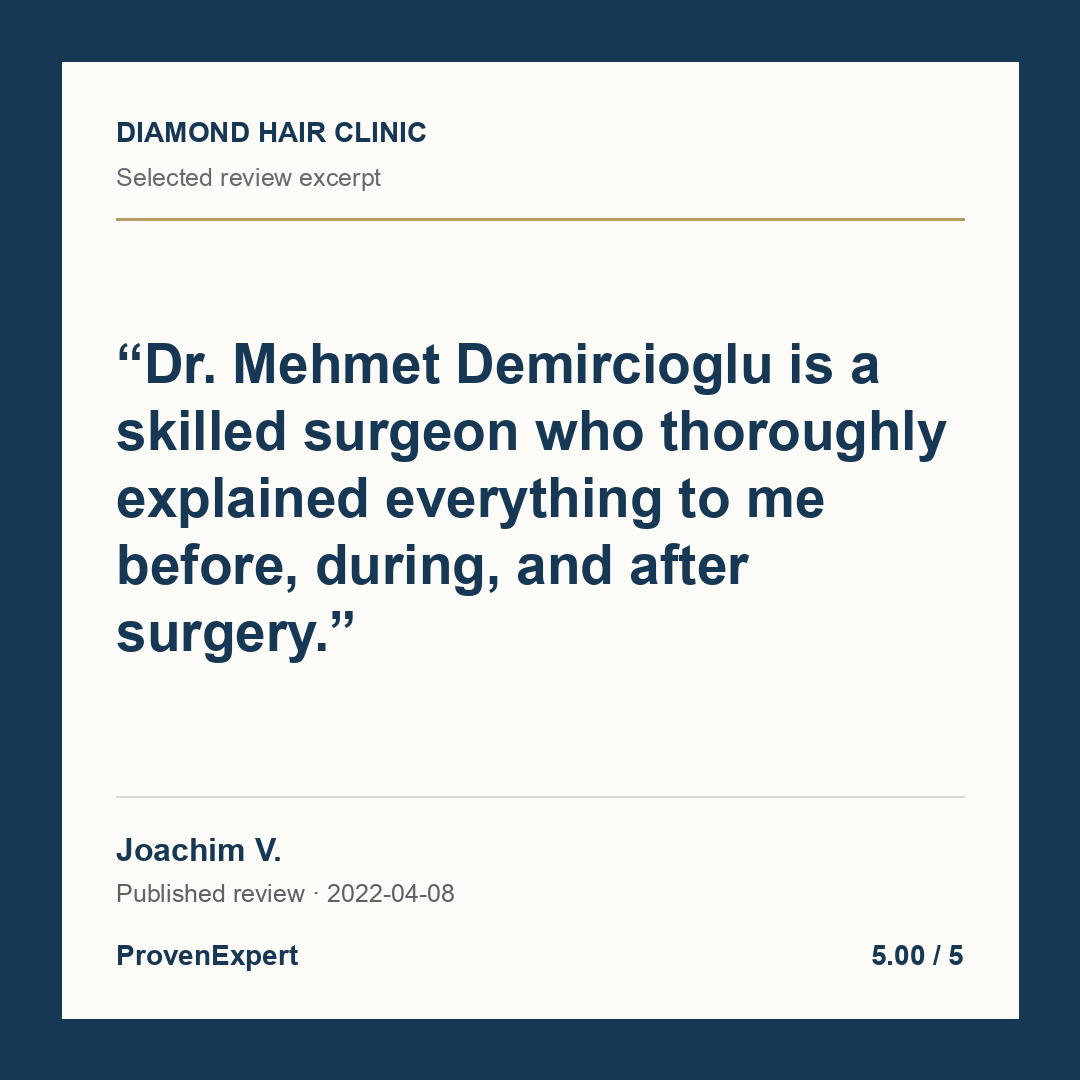
Read this review excerpt
Dr. Mehmet Demircioglu is a skilled surgeon who thoroughly explained everything to me before, during, and after surgery.
Low package prices need careful review
A low price becomes risky when it is paired with vague responsibility. If the conversation is confident about graft numbers, hotel, transfer, discount, and available dates, but unclear about who makes the surgical plan, you do not yet have enough information to decide safely.
Some clinics use package language to make surgery feel like a travel product. You may feel that you are choosing between service levels, when the real decision is who will operate on a limited donor area. That mindset is dangerous because a hair transplant cannot be returned or replaced if the plan damages the donor area or creates an unnatural hairline.
Pay attention to red flags of Turkish hair mills when the offer sounds too easy. Very high graft numbers, unclear surgeon involvement, pressure to pay quickly, generic before and after photos, and a consultation that never becomes medically specific all point in the same direction. You are being sold certainty before the case has been understood properly.
Graft number alone is not enough
Patients often compare packages by graft number because it feels measurable. One clinic says 3000 grafts, another says 4500 grafts, and a third says maximum grafts. On paper, the highest number can look like the best value. In surgery, it may be the weakest plan.
A graft number has meaning only when it is connected to donor strength, hair caliber, skin quality, future hair loss, the size of the recipient area, and the hairline design. A large number may be appropriate for one person and excessive for another. A smaller number may protect you better when the safe donor supply is limited or the hair loss pattern is still progressing.
Be especially careful when a package presents grafts like a shopping quantity. The same medical problem appears when too many grafts in one area can damage tissue or weaken long term planning. More grafts can help only when the scalp, donor area, and surgical design can support them.
The package should be able to say no to its own headline number. If fewer grafts protect you better, if the hairline should be higher, or if the crown should wait, the clinic should explain that before any grafts are spent.
Donor grafts are a limited resource. Once they are removed, they cannot be put back into the donor area. A package that uses too many grafts early may leave you with fewer options for the crown, future thinning, or repair surgery later.
Package number versus surgical record
| Package wording | Medical record needed |
|---|---|
| Maximum grafts | The safe donor limit and the reason the clinic may stop lower |
| One fixed price | What happens if fewer grafts are safer after examination |
| Large graft range | Which zones receive priority and which zones may wait |
| Included aftercare | Who reviews photos, warning signs, and early recovery questions after travel |
A package becomes easier to compare when the graft number connects to graft count verification, donor reserve, and written follow-up responsibility.
Medical responsibility inside the package
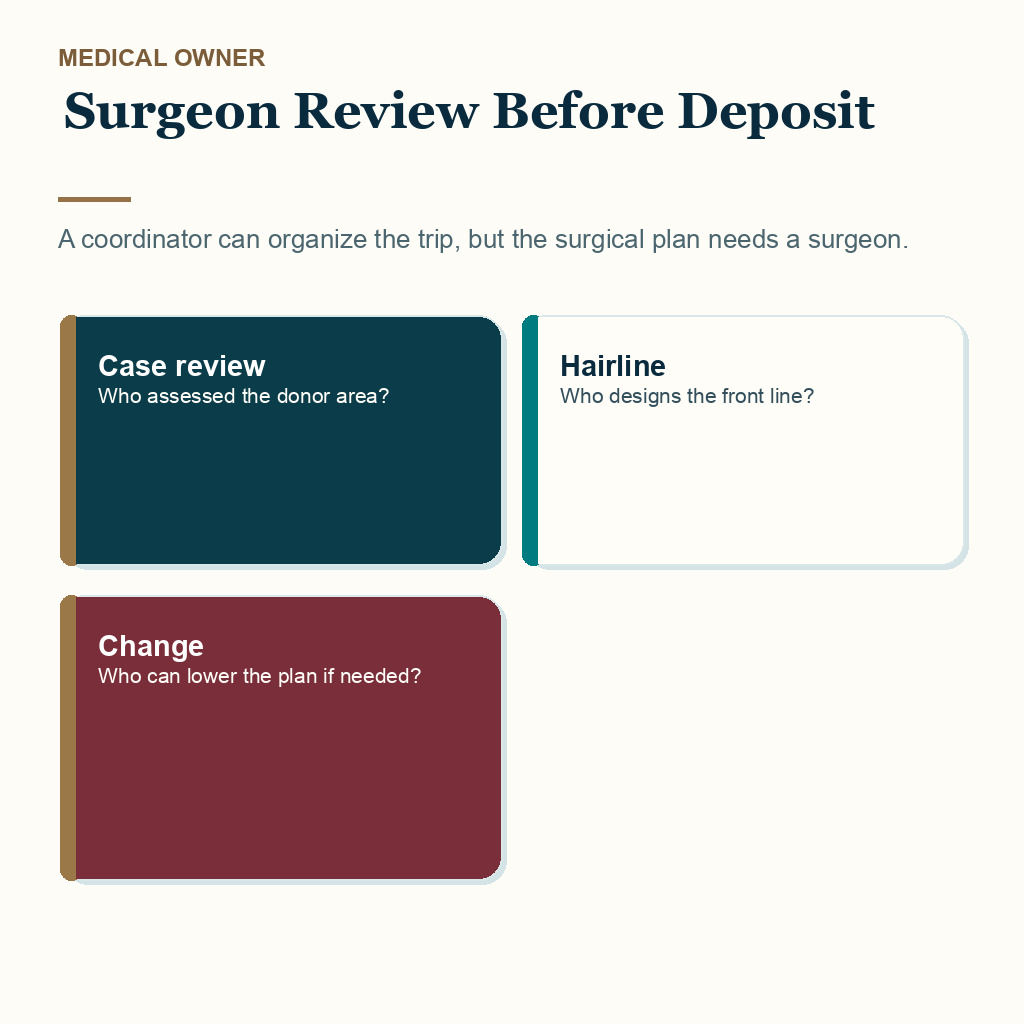
The surgeon should be responsible for the medical plan. A coordinator can help with photos, travel, appointment timing, and communication, but the coordinator should not be the person deciding whether the donor supply can support the plan, whether the hairline is safe, or whether the graft number is reasonable.
A package may reach you directly from a clinic, through a comparison website, or through a full service platform. The route should disclose who selects the clinic, how the service is paid, whether the recommendation is independent, and whether you can speak to the surgical team before a deposit makes the choice feel locked.
It is not enough for a surgeon’s name to appear on the website after the package has already been sold. The package should identify who reviews your case before the deposit, who designs the hairline, who creates the recipient area incisions, and who has authority to reduce an aggressive offer after the in person examination.
There is a clear difference between organizing a patient and diagnosing a patient. A coordinator may collect information and explain the steps, but the surgical judgment has to come from the person medically responsible for the operation. The line becomes unsafe when you are asked to accept a graft number, pay a deposit, or choose a package before the surgeon has meaningfully assessed the case.
That distinction is central to a coordinator’s role in the surgical plan. You should also know who actually performs your hair transplant, because the package name does not create the result. The result comes from planning, incision control, graft handling, donor management, and follow up.
Hotel and transfer promises are support details
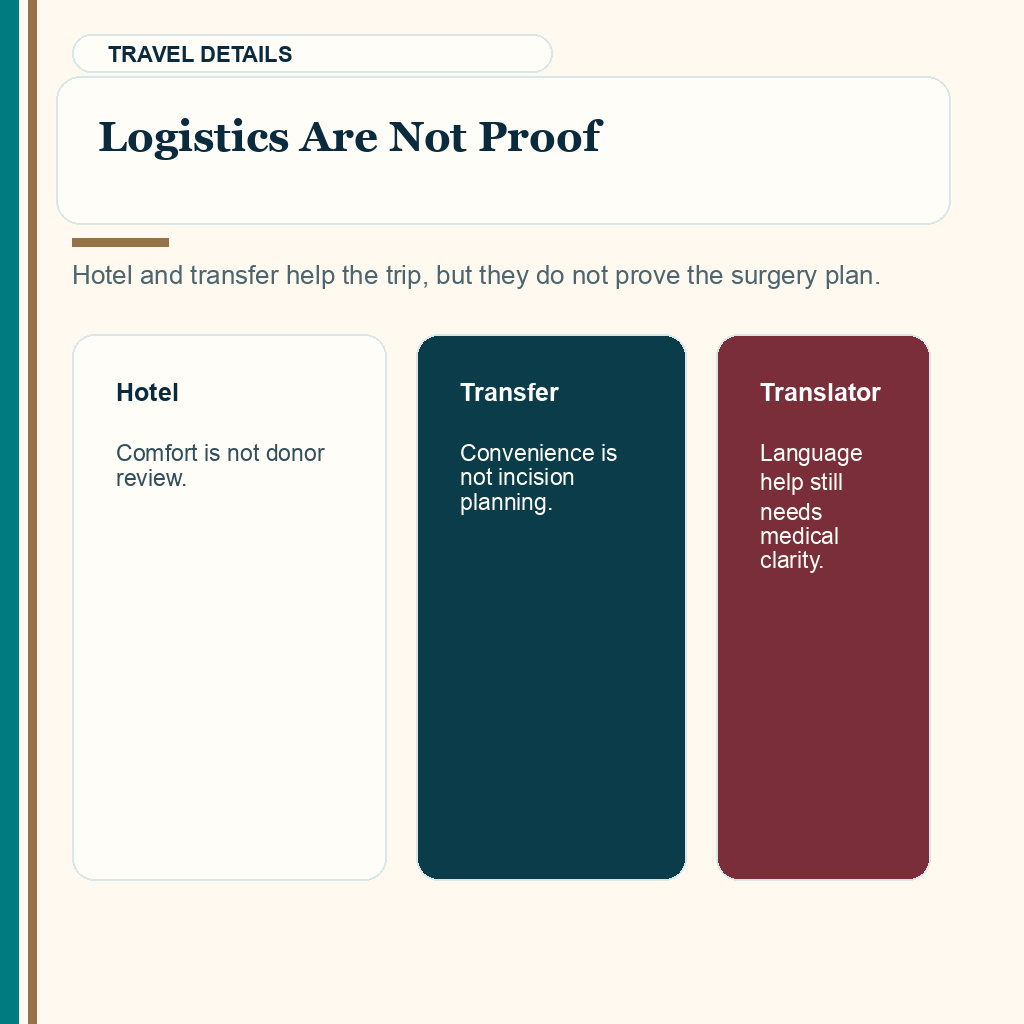
Hotel and transfer promises are logistics, not medical proof. A good hotel can make the trip easier. A private transfer can prevent unnecessary stress after a flight. These details help you move through the process in a more organized way.
But logistics should never distract you from the operation itself. A clinic may have polished transport, a good hotel, and fast communication while still having weak surgeon involvement or a high volume model. Keep the order clear. First comes medical suitability, then surgical planning, then logistics.
If the package is presented mainly through hotel photos, transfer cars, luxury words, or a smooth itinerary, bring the conversation back to the scalp. The clinic should explain how the donor area was examined, why the hairline suits your face and future loss, and who takes responsibility if the surgical plan changes on the day.
Costs that can sit behind a fixed price
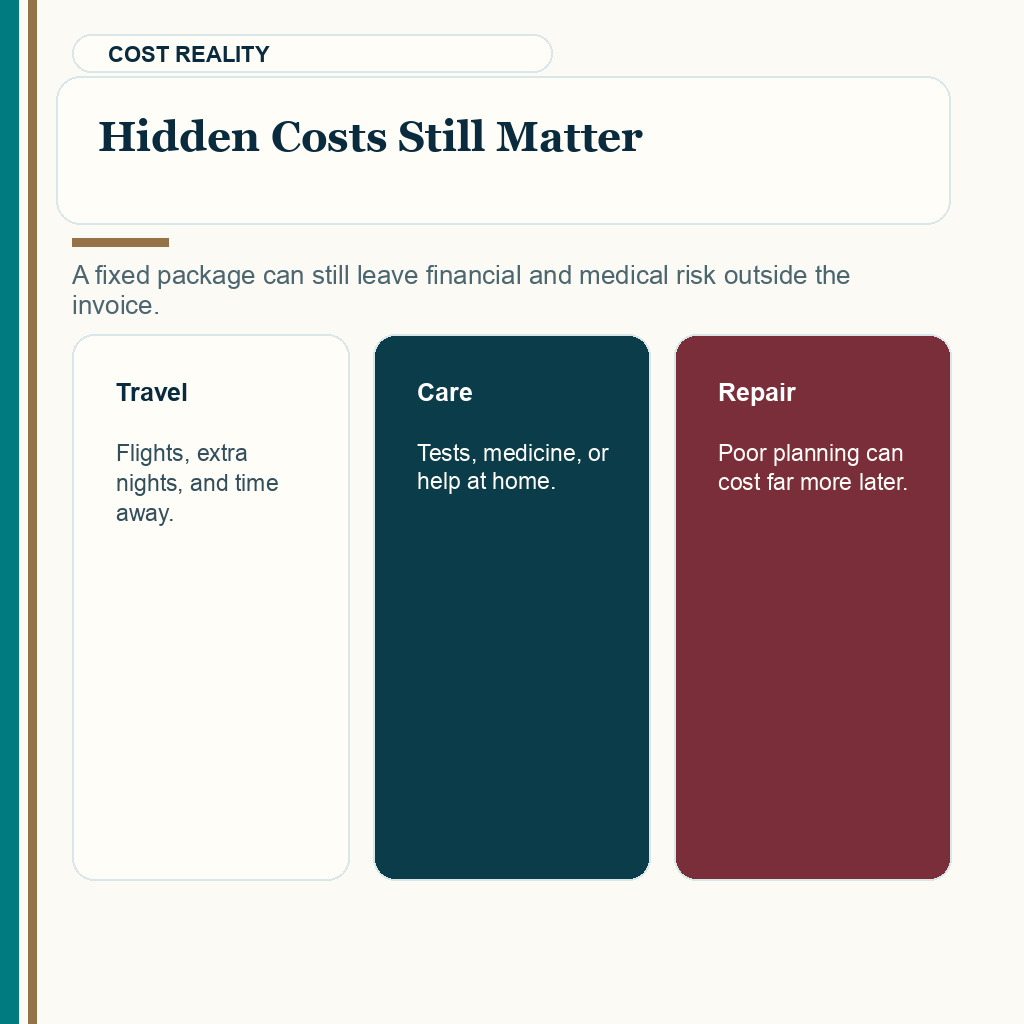
A fixed price can still leave important costs unclear. You may need to think about flights, extra nights, local transport, time away from work, medications, follow up visits at home, blood tests if required, and the financial risk of repair if the first surgery is poorly planned.
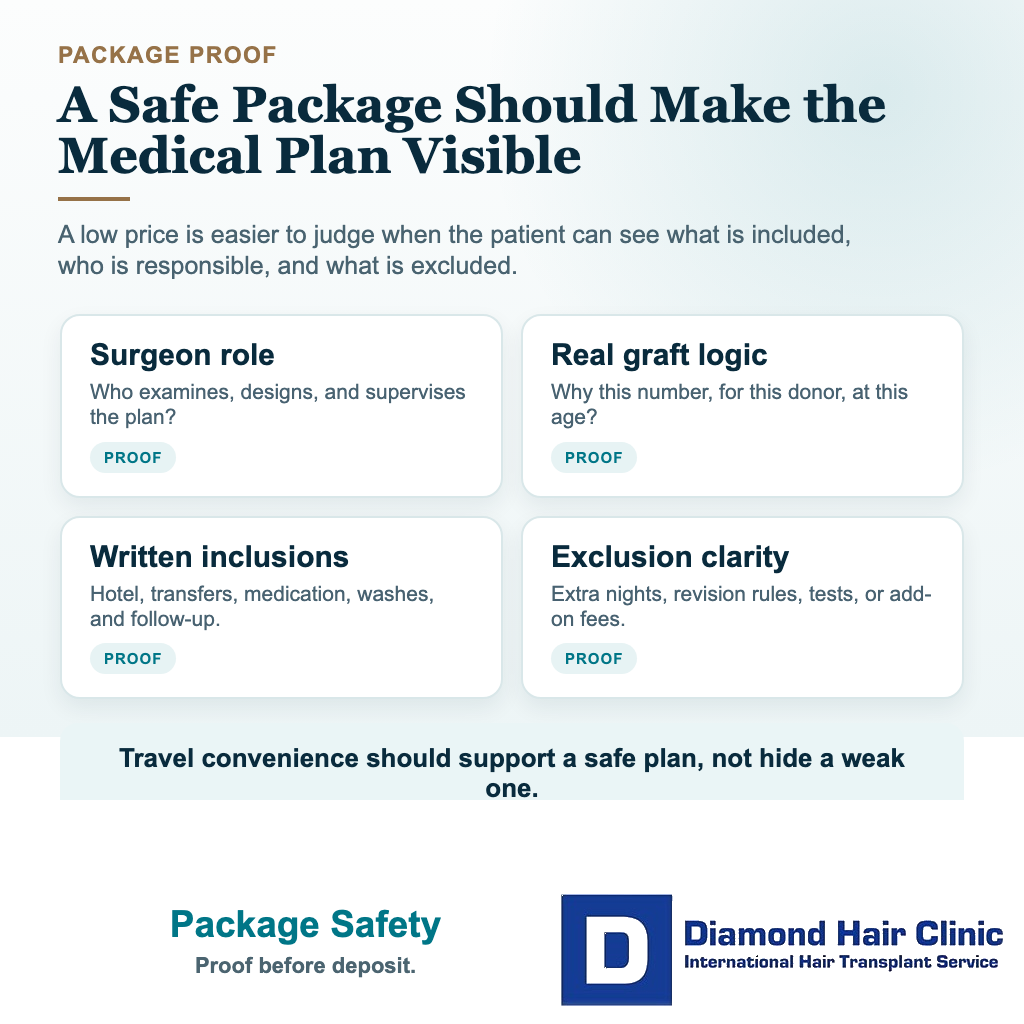
The fixed price should also explain what happens if the in person examination changes the plan. If fewer grafts are safer, if surgery should be postponed, or if the hairline should be less aggressive, the clinic’s answer tells you how medical the package really is. The clinic should not punish you for a safer medical decision.
A package price can hide differences in medical structure. One clinic may include careful surgeon assessment and close follow up. Another may include many travel details but very little surgeon time. The invoice may look similar, while the actual medical value is completely different.
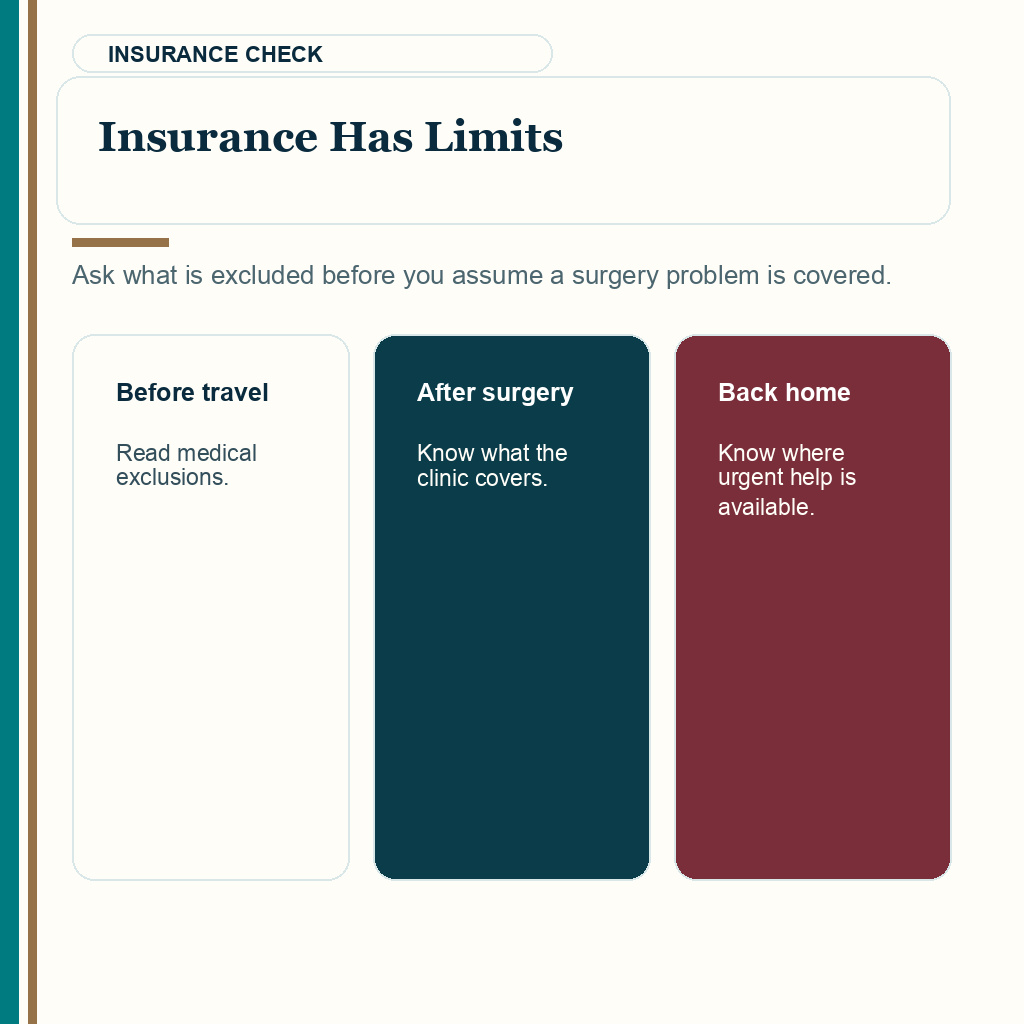
Ordinary travel insurance may not cover a surgery related problem after you fly home. Before travel, the written plan should state what the clinic covers, what your own policy excludes, and where urgent help is available if a real complication appears after you return.
Good financial planning for a hair transplant in Turkey should include the cost of doing the operation properly, not only the cheapest way to complete the trip. The most expensive outcome is often not the higher quality surgery. It is a cheap operation that creates an unnatural hairline, overharvested donor area, or repair problem that cannot be fully corrected.
These 10 slides separate package convenience from the medical decisions that should be clear before payment. Swipe sideways, use the arrows, or choose a number below the image.
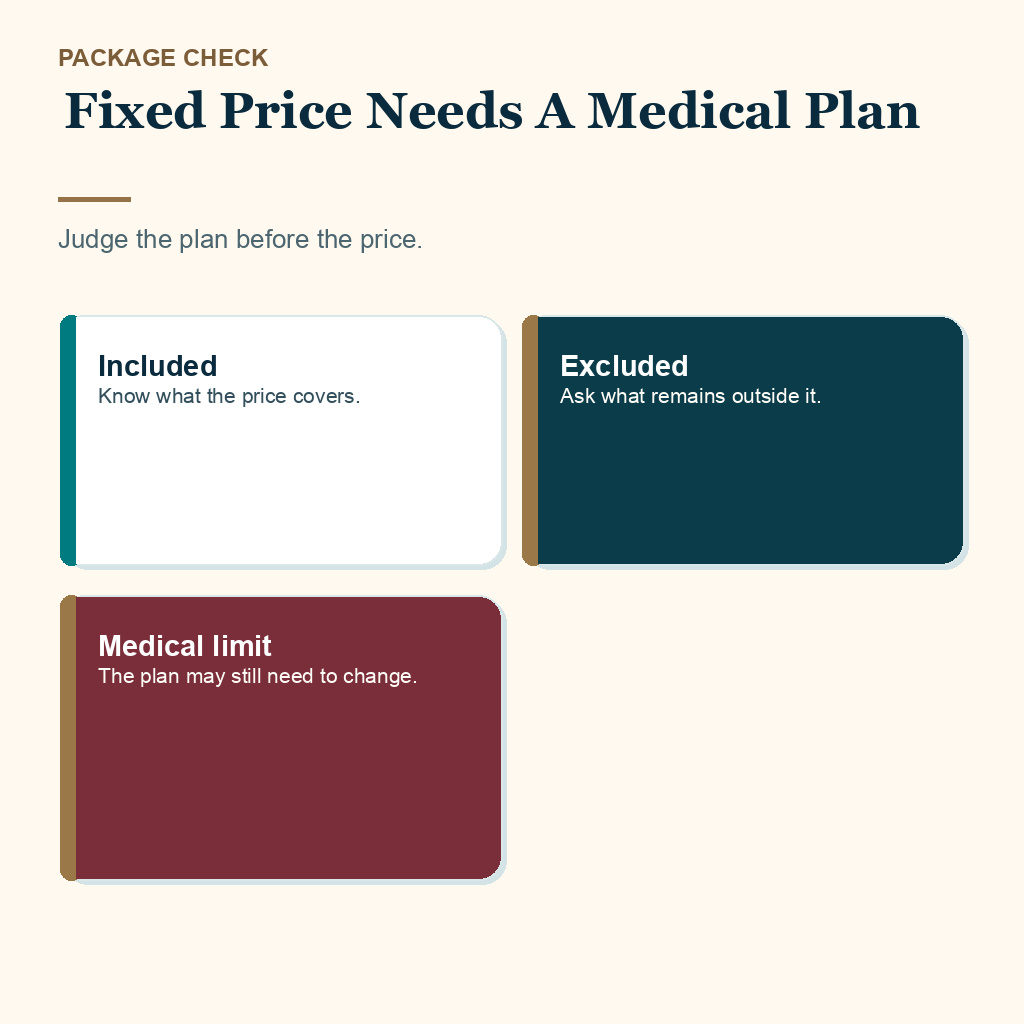

When a package stops being a medical plan
A package can organize hotel nights, transfer, translation, and payment. It stops feeling medical when the same offer is used for every age, pattern, donor quality, hairline request, and crown expectation.
Treat hotel and transfer details as travel support, not proof of surgical quality. The package is only useful when the medical responsibility is just as clear as the pickup time.
In a real review, logistics can stay fixed while surgery remains conditional. Weak donor findings, diffuse thinning, active scalp disease, a hairline that is too low, or a crown plan that would spend too much reserve can make the plan smaller, delayed, staged, or refused.
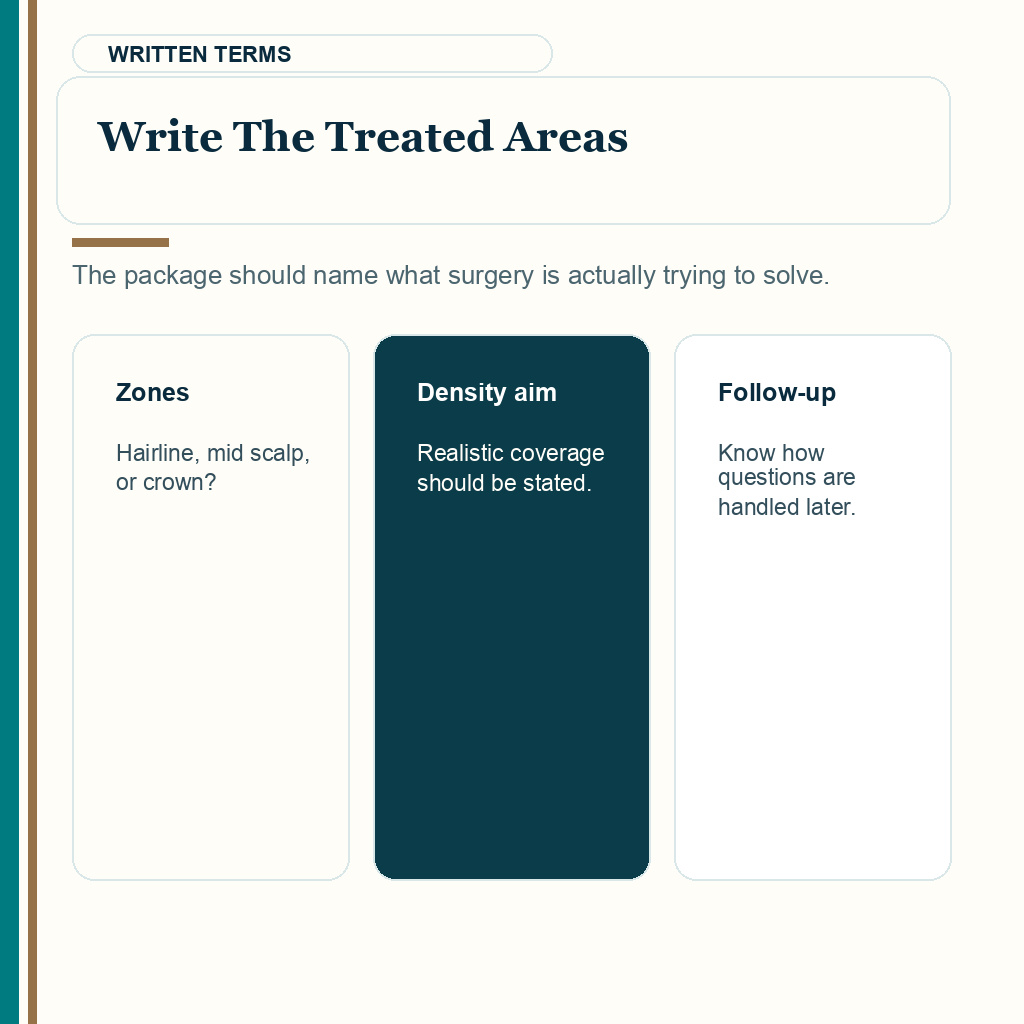
The written package needs to separate convenience from surgery. It needs to name the treated areas, likely graft range, hairline responsibility, surgeon role, aftercare contact, and what has not been promised. The package is useful only when it makes medical responsibility easier to see.
Details to have in writing before payment
Before a deposit, the package should be written in a way you can understand later, not only explained quickly in messages. You should know what is included, what is excluded, how many hotel nights are covered, whether airport and clinic transfers are included, whether flights are excluded, which medication or aftercare products are provided, how payment for the hair transplant in Turkey is documented, and how you can reach the clinic after you leave Turkey.
Know who stands behind the package
- Company taking payment. The written quote, invoice and payment instructions should identify the business receiving your money.
- Treating facility. Confirm the facility name and address where the operation is planned, even when a different company arranges the booking.
- Responsible surgeon. Identify the doctor responsible for your assessment and operation, with the surgical roles stated clearly.
- Records and follow-up. Know who keeps your medical records and who is responsible for answering clinical concerns after you return home.
These identities may belong to different organizations. The links between them should be clear before payment. The detailed Ministry authorization and company identity checks explain how to verify the company, intermediary, facility and responsible doctor.
The medical part also needs written clarity. The likely graft range, the reason for that range, who draws the hairline, who creates the recipient area incisions, who performs extraction, and the response to a weaker donor finding should all be clear before money makes the decision feel locked. If cancellation, refund, or rescheduling could affect travel plans, the refund and rescheduling terms should be written with the same clarity before payment. A package promising maximum or unlimited grafts should also state the donor limit that can reduce the number safely.
The number of days in Turkey should fit recovery rather than only the cheapest hotel arrangement. A very short itinerary may look efficient, but the first wash, early control, swelling, sleep, and flight timing still matter. I explain that timing separately in how many days to stay in Turkey after a hair transplant.

Read this review excerpt
Absolutely everything regarding logistics was conveyed in a clear and timely manner via WhatsApp by Dr. Mehmet’s office.

Read this review excerpt
Everything was explained clearly in the confirmation email I received from the clinic after booking my flight. From arrival to departure, everything went smoothly and according to plan.
Package details that must be written
A package is useful only when it makes the medical and travel plan easier to understand. It becomes risky when the hotel and transfer details are clear but the surgical responsibility is vague.

For international patients, the written package should make the surgery safer to understand. If it mainly makes the sale easier, the package is doing the wrong job.
Extras inside a package can mislead patients
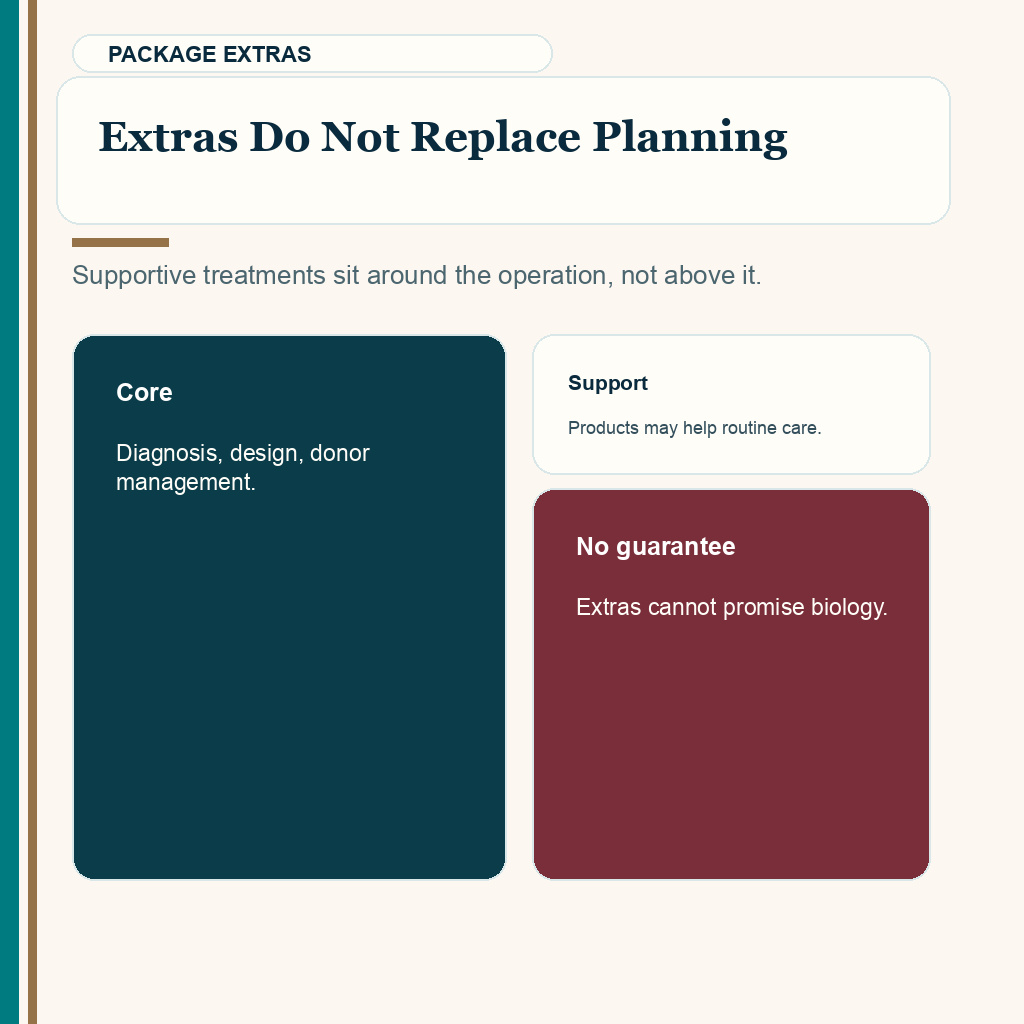
Extras can be useful in the right context, but they can also make a package look more medical than it really is. PRP or exosome style treatments, vitamins, shampoos, serums, laser sessions, or special recovery products may sound reassuring when you are anxious. None of them can rescue poor donor management, poor hairline design, excessive graft extraction, or weak surgical execution.
Supportive treatment should be separated from the core operation. The core operation is diagnosis, planning, extraction pattern, recipient area design, graft handling, and follow up. Extras sit around that core. They should not become the reason to trust a package.
If an extra is being presented as a guarantee of growth, density, or success, treat that language with suspicion. Healing is biological. Growth depends on many factors, including graft quality, handling, placement, tissue health, aftercare, and your own hair loss pattern. A package can include supportive steps, but it should not promise biology as if it were a hotel upgrade.
Package upgrades should not make the medical decision by themselves. Extra tiers matter only when they change surgeon involvement, incision control, planning time, follow up, or record clarity in a way that applies to your case. If the change is mainly a label, a room name, or sales wording, it should not make the surgery feel safer by itself.
Deposit warning signs before payment
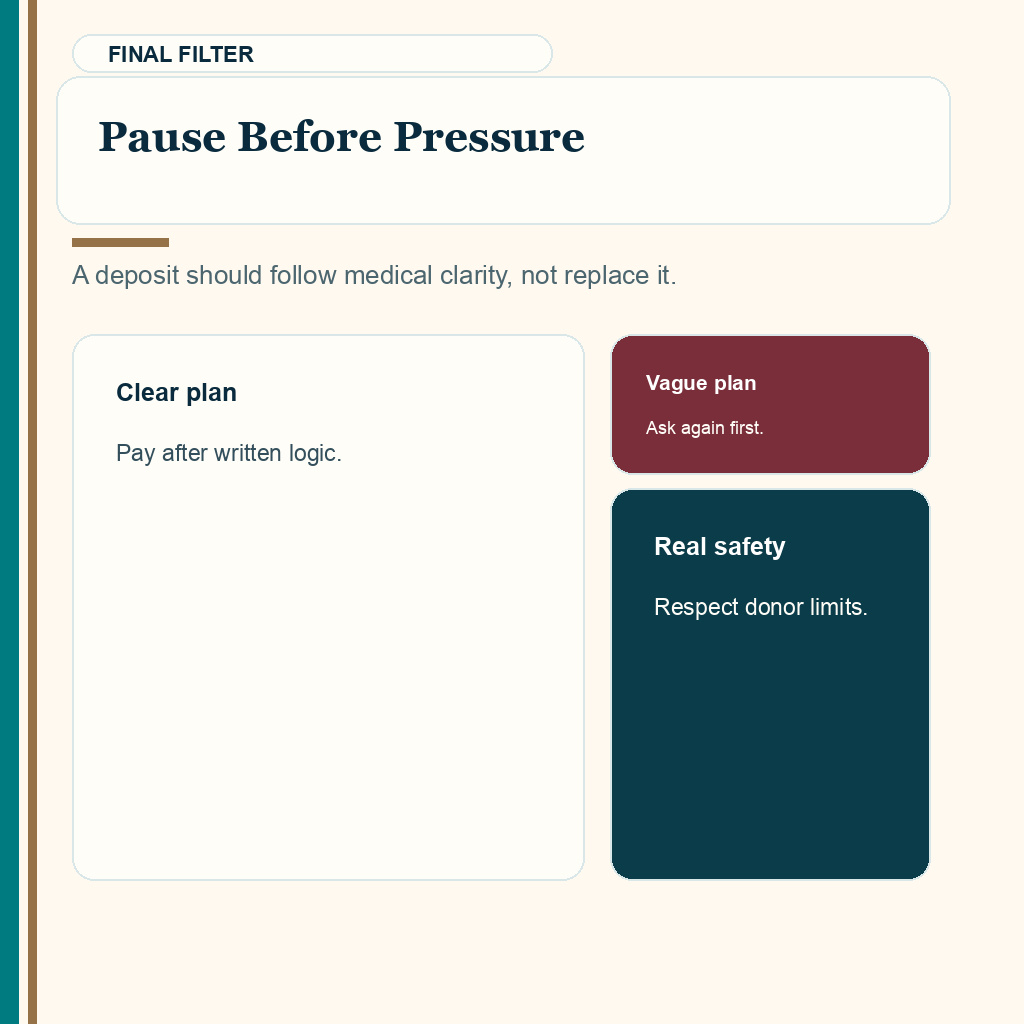
A deposit should come after clarity, not before it. Before you pay, the medical plan should make sense. You should know the likely graft range, the reason for that range, the hairline approach, the donor limitations, the surgeon’s role, the recovery schedule, and what the clinic will do if the plan needs adjustment.
The clinic should state in advance how it handles a surgeon’s decision to make the operation smaller, delay it, or not proceed after the in person examination. A real medical package must be able to become smaller, slower, or even no surgery if that is safer. A fixed offer that protects the deposit at all costs is not putting medical judgment first.
If the clinic cannot explain these points, pause. A discount deadline, a limited slot, or a package price should not push you into surgery before the case has been understood. Fear of losing a booking date is a poor reason to spend donor grafts.
The medical points that must be settled before committing to a hair transplant matter even more with package offers. A consultation should leave you clearer about responsibility and limits, not merely excited by the convenience of the trip.
Package safety starts with medical screening
Start by removing the travel language from the offer and looking at what remains. A responsible surgical plan should still stand without the hotel, transfer, discount, or package label. The surgeon’s role, donor protection, and a hairline suited to your age and future loss should remain clear.
Then look at the clinic’s rhythm. A clinic that treats too many people in one day may have less time for individual planning and follow up. Hair transplantation needs patience because small decisions create permanent changes. A package should not make you feel processed through a system.
A useful package is clear in logistics and serious in medicine. You receive organized travel support, but the medical conversation stays personal. The graft number is explained, not sold. The donor reserve is protected, not treated as unlimited. The hairline is designed for the face and future, not only for a dramatic early photo.
If a package gives you convenience and medical clarity, it can be useful. If it gives you convenience while hiding the surgeon, donor plan, or realistic limits, the convenience may become part of the risk. A hair transplant is not only a trip to Turkey. It is a permanent surgical decision, and the package should respect that from the first message.