


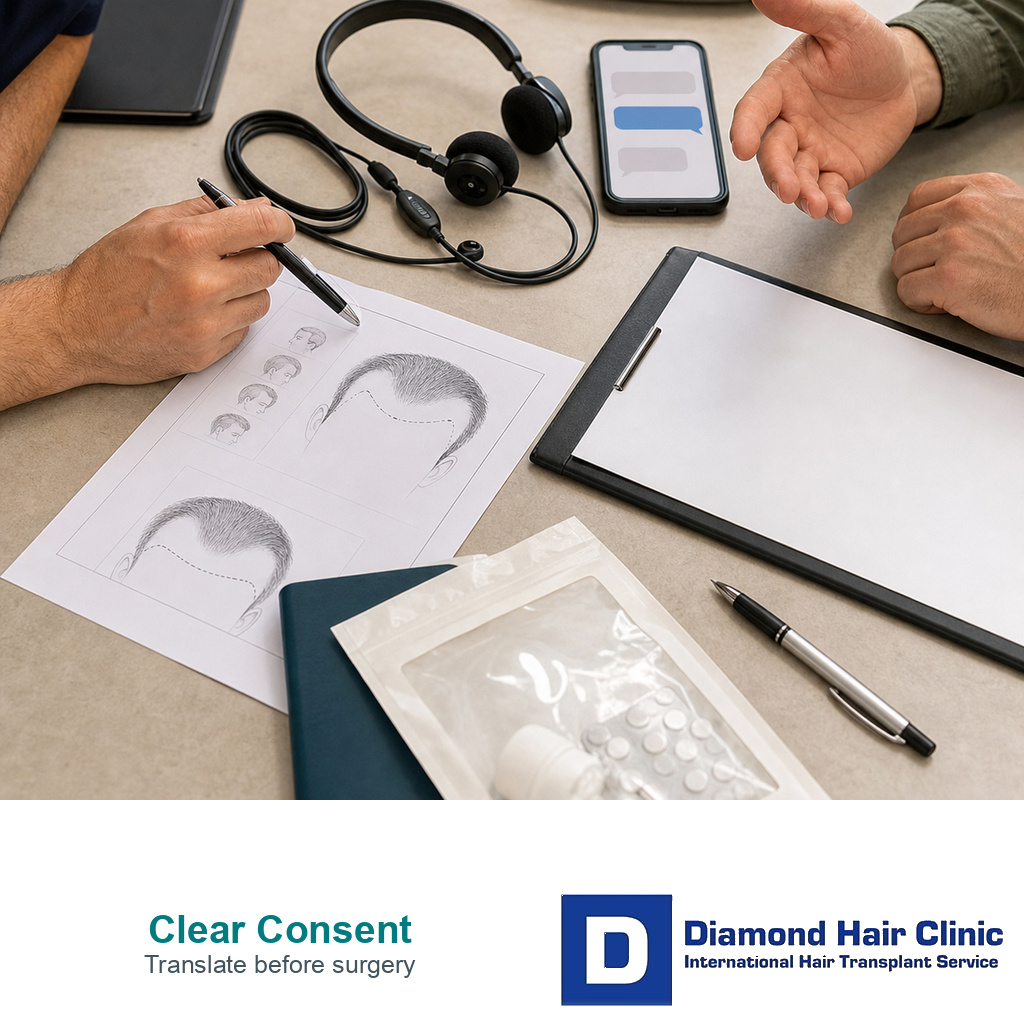
Language Barriers During Hair Transplant Abroad
If you travel for a hair transplant and you do not share a fluent language with the clinic, translation becomes part of safety. It is not only a comfort detail. It affects consent before hair transplant surgery, hairline planning, medication review, anesthesia communication, and follow up. A clinic can be friendly and organized, but if you cannot clearly understand who is doing each surgical step, what graft number is being planned, what risks apply to your case, and what to do after surgery, you are accepting too much uncertainty.
I see this most often when someone compares clinics from another country. Price, hotel, transfers, and photos are checked first, while communication is assumed to be solved after arrival. That is too late. Donor assessment, hairline design, anesthesia, blood tests, medicines, consent, and the recovery plan all need clear discussion before the first incision. Insurance wording can create the same problem, so ask for help understanding travel insurance for hair transplant abroad before you rely on it.
Before travel, the plan should be written down and repeated back in the patient’s own words. When both sides cannot confirm the same hairline, graft range, medicine list, and aftercare plan, translation is still part of the medical risk.
Confirm who will translate during hairline drawing, medical questions, and aftercare teaching, not only who answers booking messages. The person helping with logistics may not be the person beside you on surgery day.
Translation has to reach the consent points, not only the booking chat. The patient needs to hear who will make the recipient sites, what happens if the graft number changes, how pain or anxiety is handled, and how problems are reported after the flight home.
Practical guide
Plan the trip around
the medical decision
International patients need more than a surgery date. Use the route that matches the practical question you are trying to settle before travelling, paying, or returning home.
Language problems can change the surgical plan
A hair transplant plan is built from details. The surgeon needs to understand your age, hair loss pattern, donor capacity, family history, medication use, previous procedures, skin conditions, medical history, styling goals, and tolerance for future sessions. You need to understand the same plan in return.
When language is weak, the plan can look clear on paper but remain vague in reality. A number such as 3,000 grafts may be repeated several times, but you may still not understand why that number fits your donor area, whether the crown is being delayed, whether future hair loss is expected, or whether the hairline is being kept age appropriate. If you are comparing hair transplant packages in Turkey, the package details matter much less than whether the medical plan has been explained in a language you can actually use.
For me, communication quality is part of surgical quality. If you cannot ask a difficult question and receive a precise answer, the clinic has not yet earned trust.
Details that must be translated before consent
Before you agree to surgery, translation must cover more than arrival instructions. It needs to explain the diagnosis, donor estimate, recipient area plan, hairline design, graft range, anesthesia plan, medical risks, medicines to stop or continue, recovery instructions, and what happens if the examination in person changes the plan.
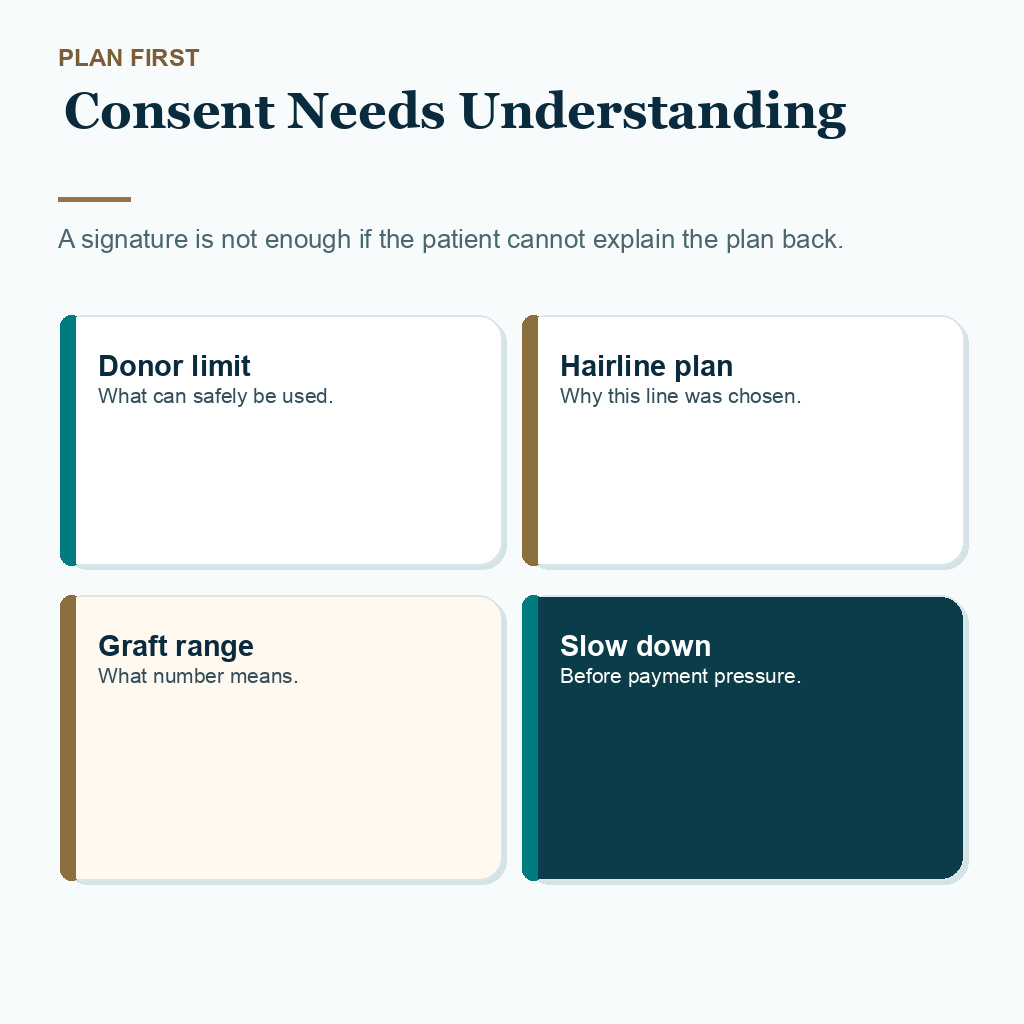
You also need time to think. Consent is weak when the explanation happens quickly, in fragments, or only after travel pressure has already started. If you sign a form but cannot explain the procedure back in your own words, the consent process has not done its job. A signature is not the same as understanding the operation.
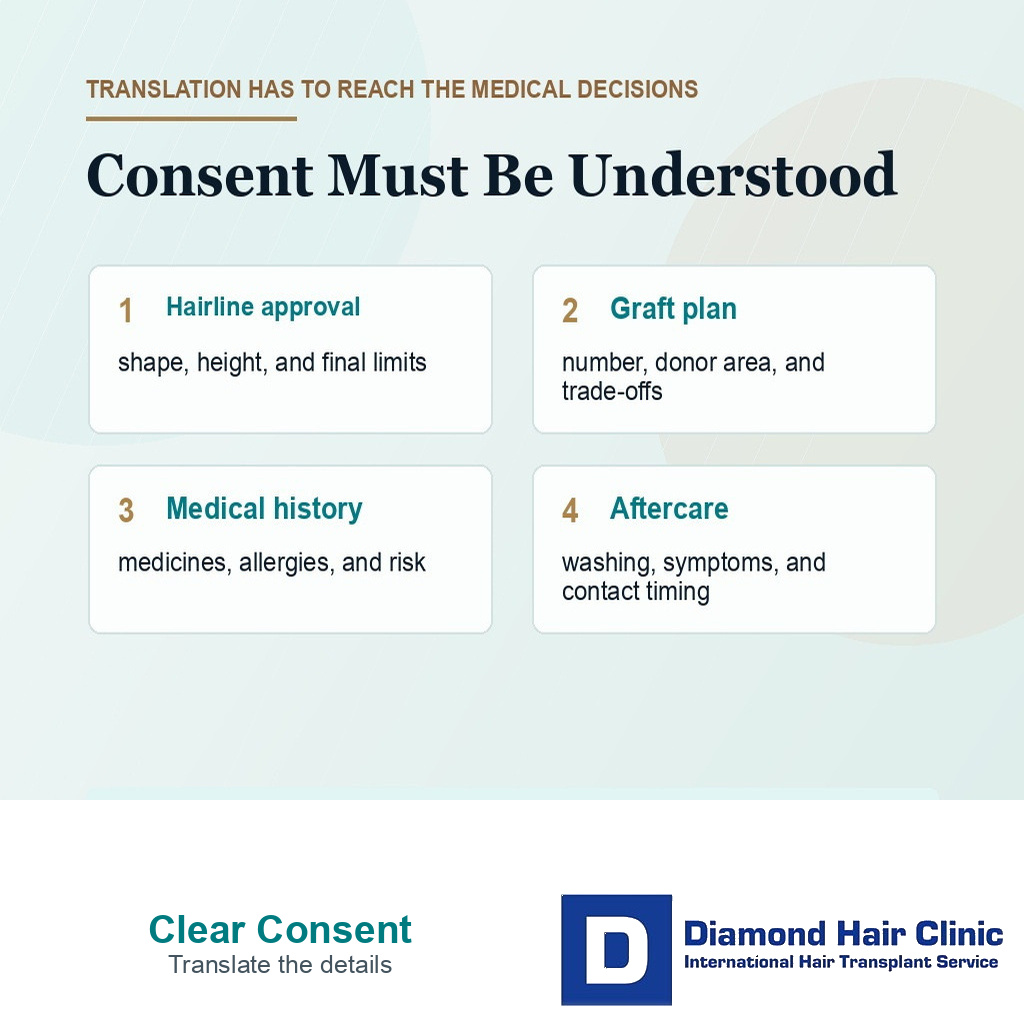
Language support should cover the hairline, graft plan, medical history, and aftercare instructions before surgery starts.
A friend, family member, or translation app can help with simple logistics. I do not use that as the only bridge for consent, medication history, anesthesia, hairline design, or complication instructions. Those conversations need accurate medical translation, enough time for questions, and a written summary you can keep. If a machine translation is used to draft a message, the medical meaning still needs human review before it becomes the basis for consent. Keep the translated summary in a form you can reopen after the decision, not only as a temporary chat message.
Remote photos make this even more important. Photos can start a discussion, but they cannot fully show donor density, miniaturization, scalp condition, hair caliber, or the true limits of coverage. Hair transplant planning from photos alone must stay provisional until the donor area is examined properly.
These 10 communication safety slides separate consent, medical vocabulary, hairline planning, coordinator limits, medication lists, anesthesia signals, aftercare, photo review, deposit timing, and written follow-up. Swipe sideways, use the arrows one slide at a time, or choose a number below the image.


The surgeon should explain the hairline and graft plan
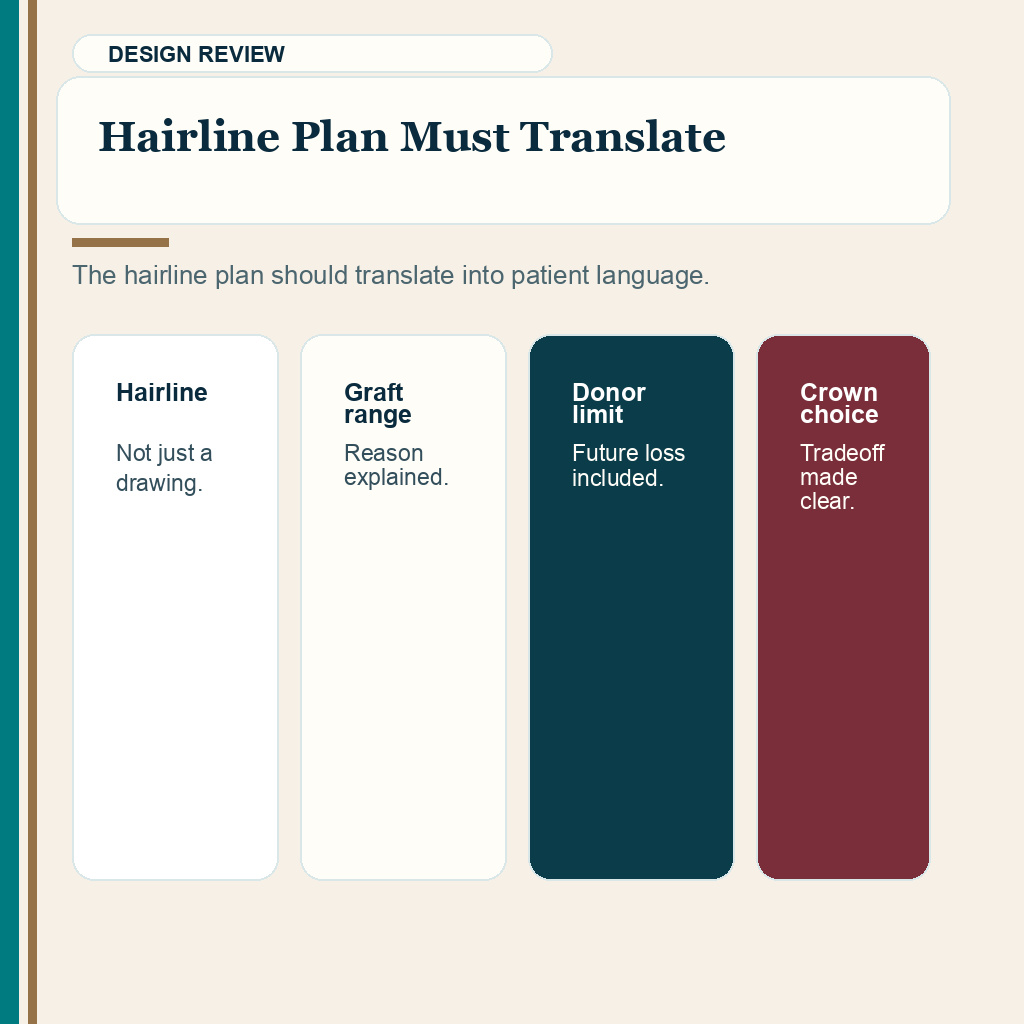
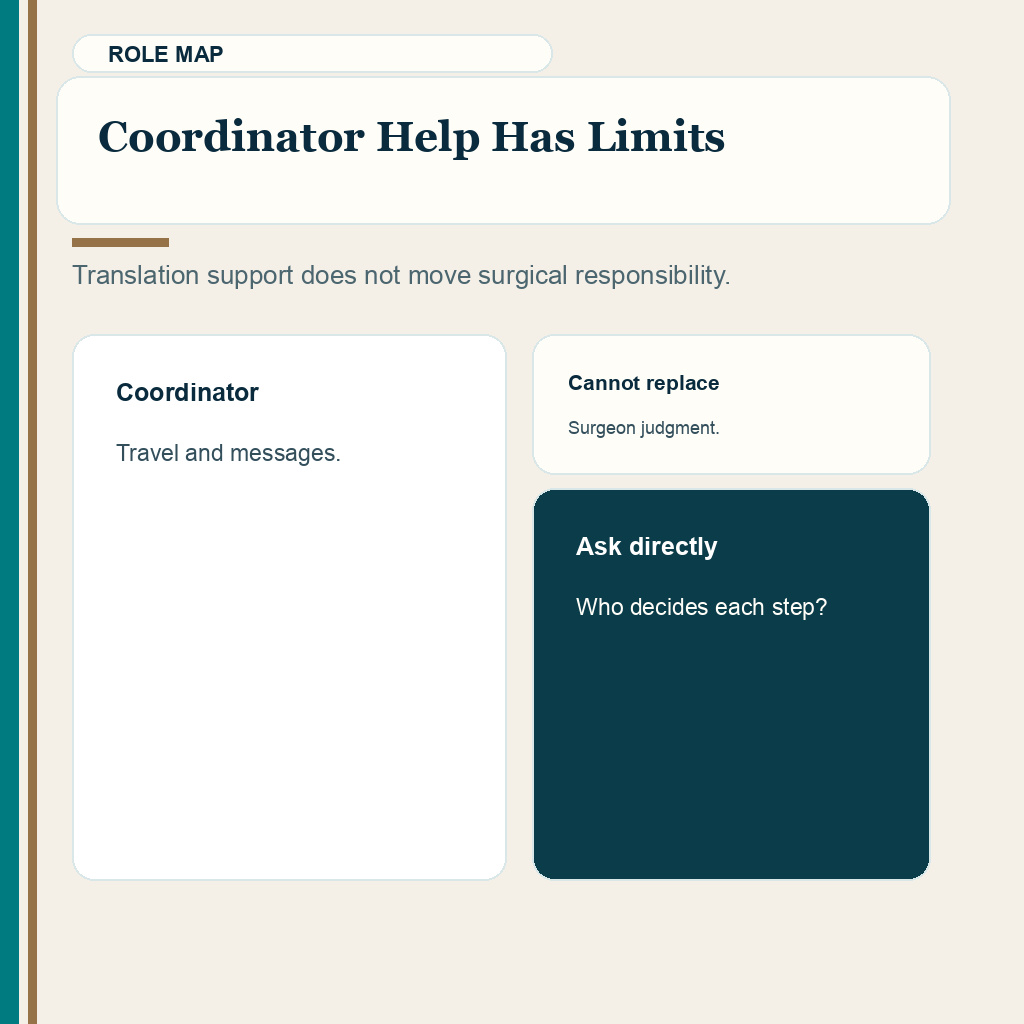
The hairline and graft plan should be explained by the doctor responsible for the surgical decision, with translation support when needed. A coordinator can help with scheduling, photos, travel, and practical messages, but the coordinator should not become the person deciding the hairline, graft number, donor limits, or medical suitability.
If the explanation comes only through a sales channel, ask who actually examined the donor area and who will make the decision on surgery day. The role of coordinators in surgical planning still has a clear limit. A bilingual coordinator can help you understand logistics and written instructions, but translation support does not move the medical responsibility away from the surgeon.
One more point matters before travel. The person advertised online may not be the person who performs the key surgical steps. Surgeon involvement in the hair transplant should be clear, including who designs the hairline, who supervises anesthesia, who creates incisions, and who reviews the result during the procedure.
Front desk translation is not enough for medical decisions
A front desk translator may help with hotel pickup, payment, or appointment timing. That support is useful. It does not solve surgical communication if the interpreter is absent during hairline design, anesthesia questions, graft number changes, first washing, or the review of warning signs. I want a named communication route for each medical decision, not only a friendly person at reception.
The person who speaks your language during booking may not be the person beside you on surgery day. A useful interpreter for logistics may not know the vocabulary of donor limits, recipient area incisions, miniaturization, medication risks, or graft number changes. They may translate politely but not precisely, or summarize a decision that should have been explained fully. Polite agreement is not enough when you are agreeing to a permanent hairline decision.
Translation for booking and medical interpretation are different jobs. The critical moments are hairline design, medical review, anesthesia, first wash, and recovery instruction. Translation must be available at those points, not only when the clinic wants to organize logistics.
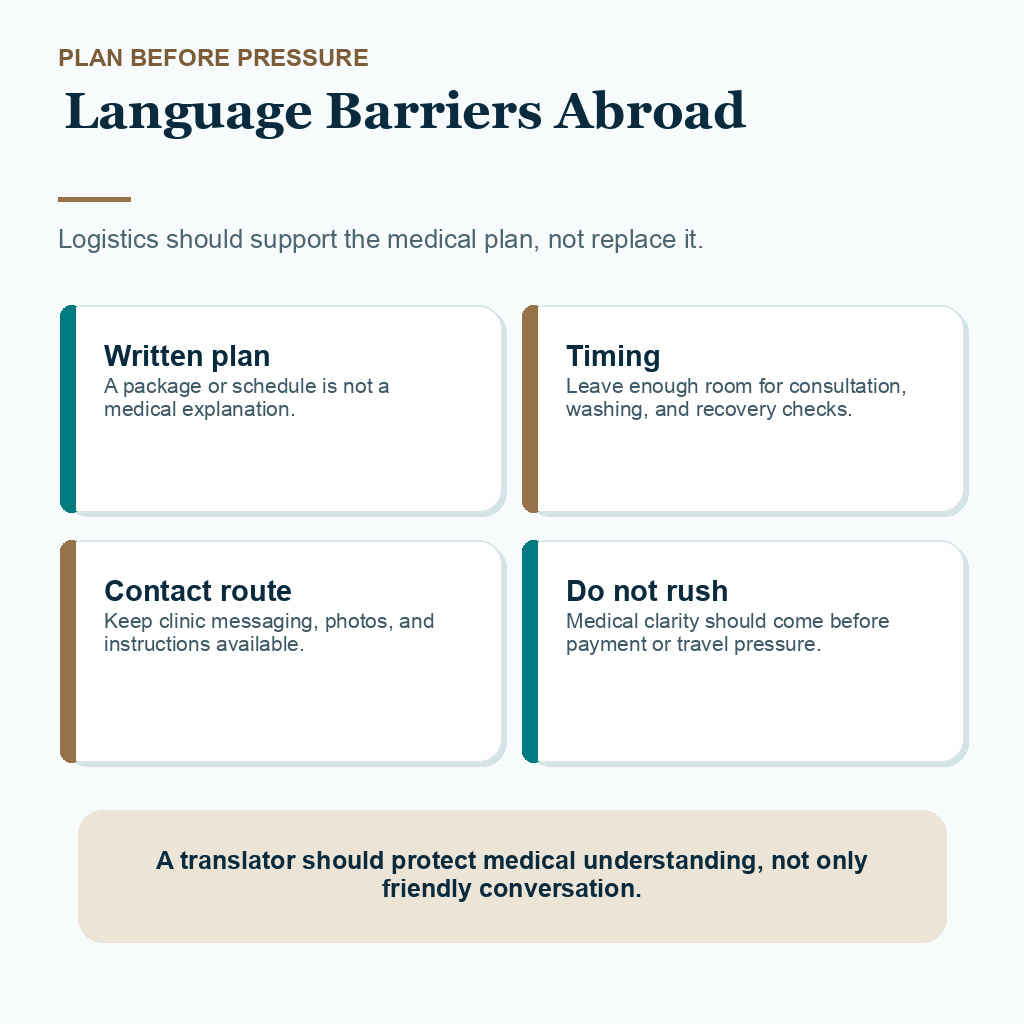
Language support should include confirmation that you understand the plan, risks, instructions, and follow up steps.
Daily English is not the same as medical consent
You may manage daily English well enough for travel, hotels, restaurants, and messages. That does not mean you fully understand surgical consent, graft planning, donor limits, anesthesia, medication risks, or complication instructions. Medical language is a different level of communication, and stress can make a familiar second language feel weaker on surgery day.
If you understand only most of the explanation, slow the process down. Ask the clinic to repeat the plan in simpler words, write down the final hairline and graft plan, and confirm the medicine instructions in a form you can read later. A useful consent conversation should allow you to explain the plan back in your own words, so the team can correct any misunderstanding before surgery starts.
That becomes especially important when the plan changes after the donor area is examined in person. A change in graft number, hairline height, crown coverage, or medicine instruction should be translated before you agree, not summarized after the decision has already been made.
Medication details that need translation
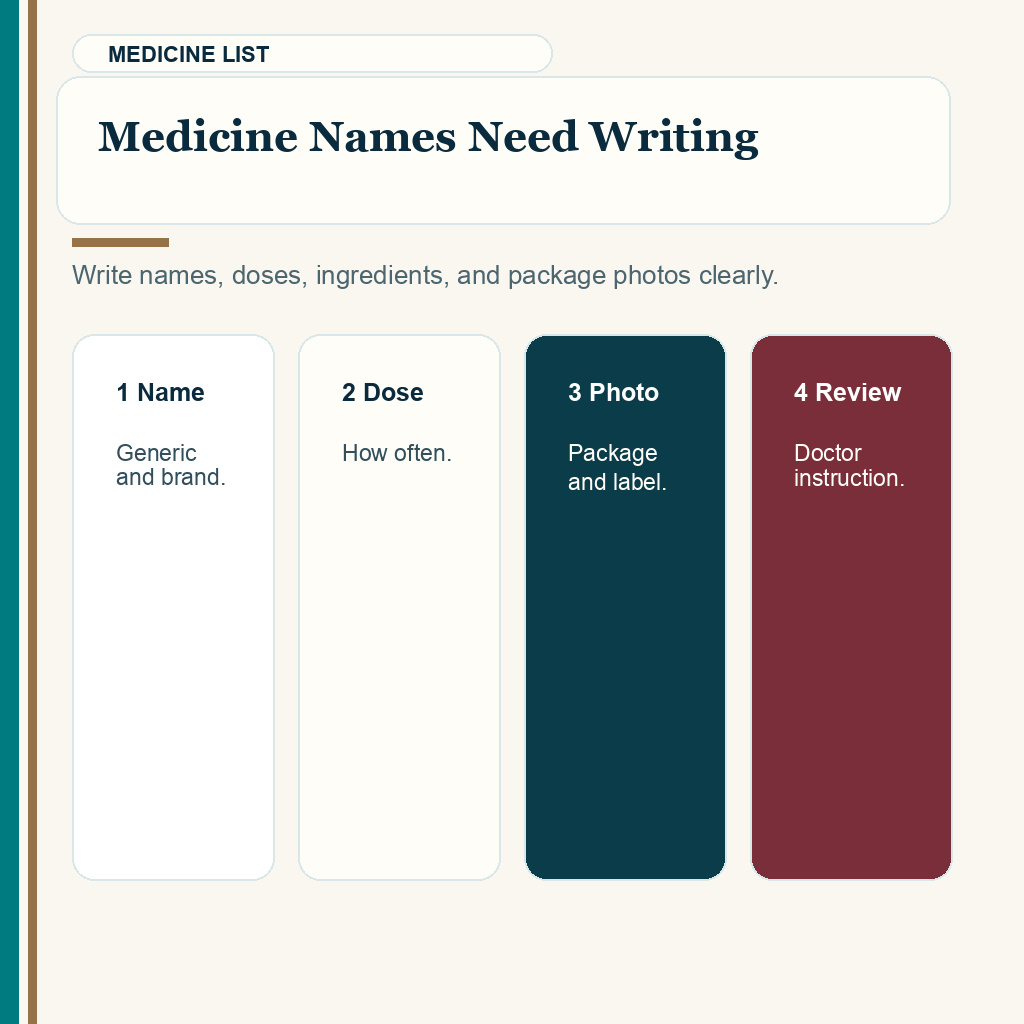
Medication history is one of the easiest places for language problems to become medical problems. I need a clear written list of blood thinners, aspirin, blood pressure medicine, diabetes medicine, antidepressants, sleeping tablets, allergy medicines, steroids, biologic medicines, supplements, alcohol use, and any recent illness. Medicine names should be written clearly because brand names and pronunciation can change between countries. When possible, include the generic name, active ingredient, dose, and a photo of the package or prescription label. You need to know which medicines to continue, which ones require review, and which changes need approval from the prescribing doctor.
Do not rely on a hurried verbal summary if your health history is complex. Prepare a written medicine list with the medicine name, dose, timing, reason for use, and prescribing doctor instructions. If possible, bring recent blood test results and important medical letters in English or in a language the clinic can read accurately. Proper blood tests before hair transplant surgery protect both timing and safety.
If your health changes after booking, the translation plan becomes even more important. Fever, infection, abnormal blood tests, a new medicine, a disease flare, or advice from your doctor to wait should be reviewed as medical changes after booking a hair transplant before you travel. This is not a topic to settle after arrival at the hotel.
Communication must stay available during anesthesia
Most people are awake with local anesthesia during a hair transplant. The team still needs clear communication about pain, dizziness, anxiety, blood pressure, allergies, previous reactions, and medicine use. Before the procedure begins, agree on simple words or signals for pain, dizziness, nausea, chest symptoms, allergy symptoms, and pause. Patients who use hearing aids, cochlear implant processors, or similar devices should also agree on a hearing device communication plan before FUE, because spoken instructions may not be clear in every chair position. If sedation is being discussed, communication becomes even more important because you must understand the reason, alternatives, monitoring, and risks before taking any sedative medicine.
Sedation should not be treated as a convenience extra for someone traveling internationally who feels anxious about pain. Comfort matters, but breathing, heart history, sleep apnea, alcohol, sleep medicines, and monitoring matter more. Sedation during hair transplant surgery needs a clear medical reason, monitoring, and a person who understands the risks before taking any sedative medicine.
If you cannot clearly describe symptoms during the procedure, the team loses important safety information. Translation needs to remain available when you are awake, uncomfortable, worried, or asked to report a new symptom.
The room also needs to be quiet enough for you to hear instructions and report symptoms. Staff conversation or music should pause while you speak to the team.
Communication questions before a deposit
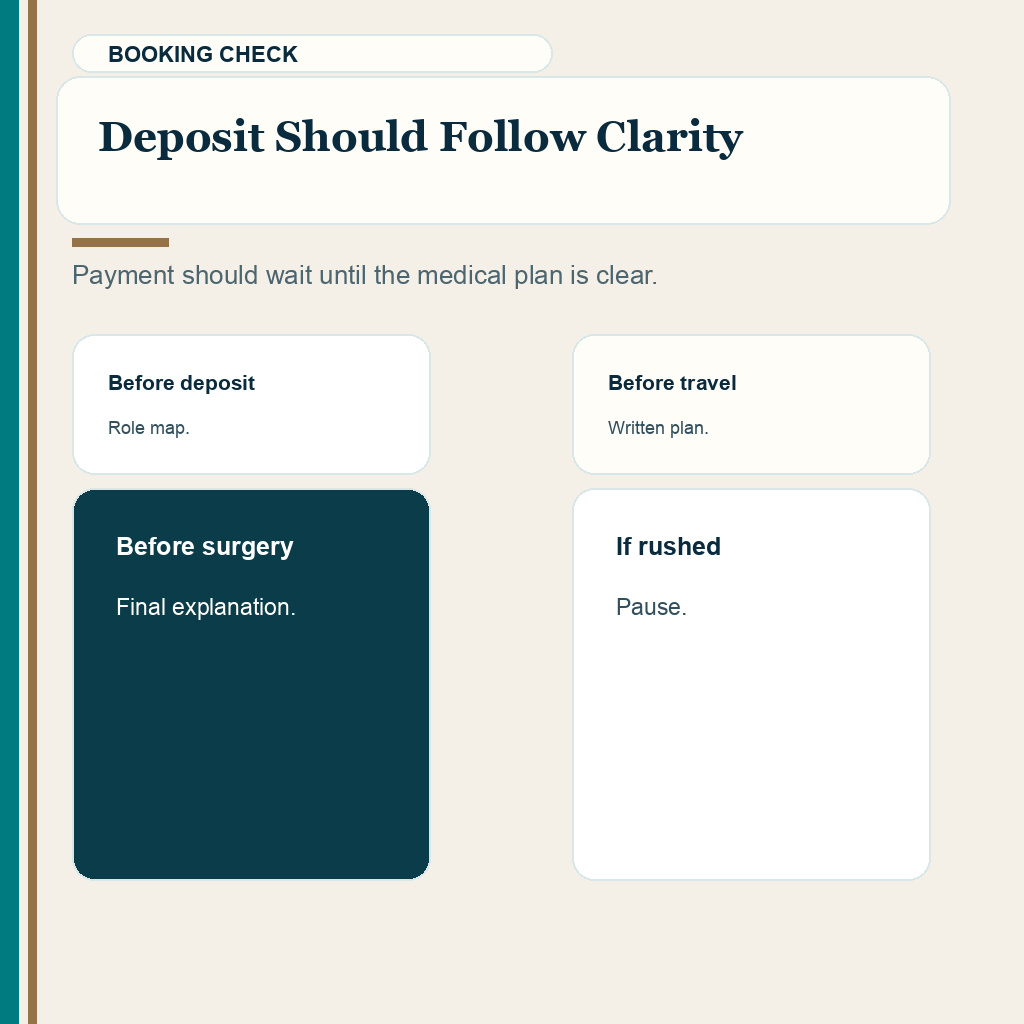
Before paying a deposit, get a written communication plan for the online consultation, examination in person, hairline design, consent, anesthesia, the operation, first wash, hotel recovery, photo review, and follow up after you return home. It should name the person responsible for medical translation during critical surgical steps and explain the backup if that interpreter is unavailable. Consent and anesthesia cannot depend on improvised translation.
A deposit is not the problem by itself. Pressure before clarity is the warning sign. If you are being pushed to book before the clinic can explain surgeon involvement, graft planning, medical review, and follow up in your language, pause. That is when hair transplant booking pressure becomes risky.
You should also ask whether the quoted package includes postoperative contact, photo review, and medical escalation if something changes. The advertised price means less if you are alone with unclear instructions once the operation is finished.
Recovery instructions and photo review details
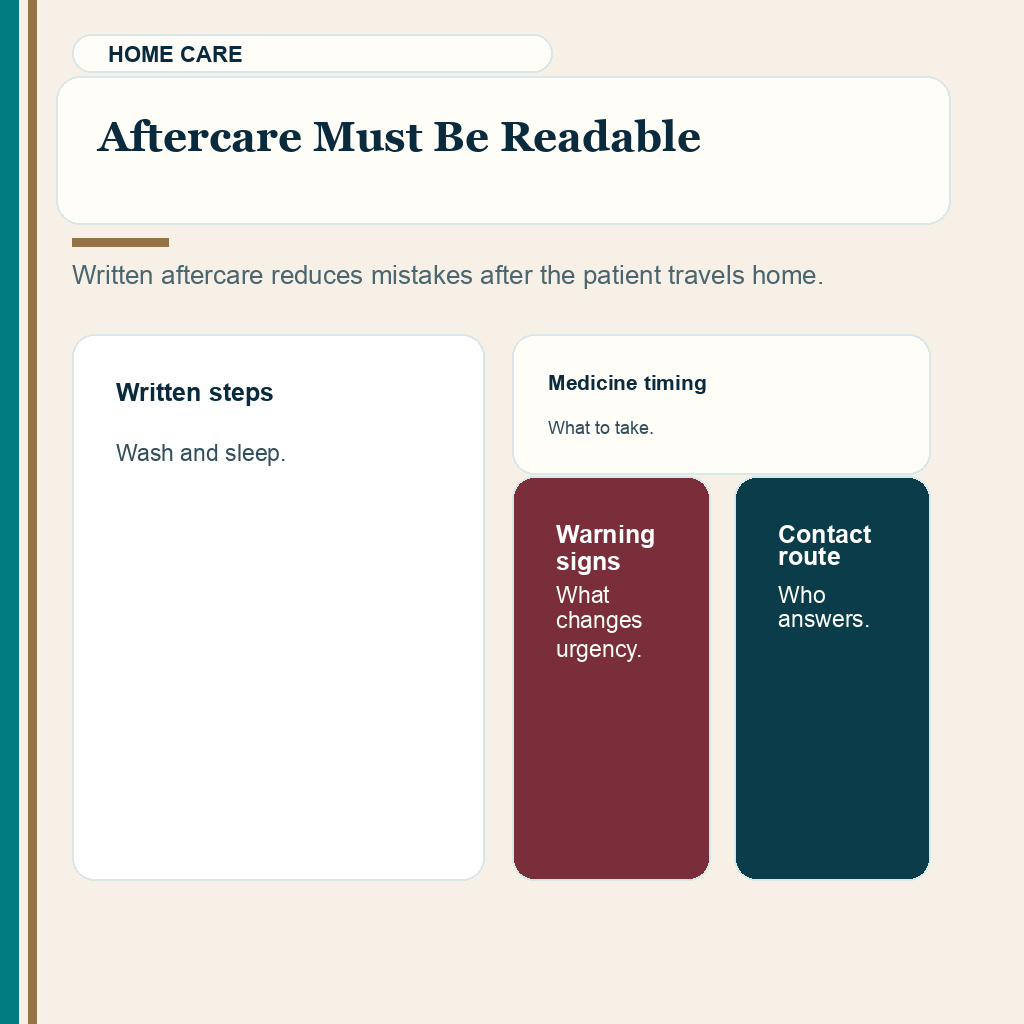
Recovery instructions must be specific enough for real life. You need to know how to sleep, wash, protect grafts, manage swelling, avoid touching, use medicines, send photos, and identify warning signs. Translation must also explain what is urgent, what can wait, and when a local doctor or emergency service in your own country should be contacted.
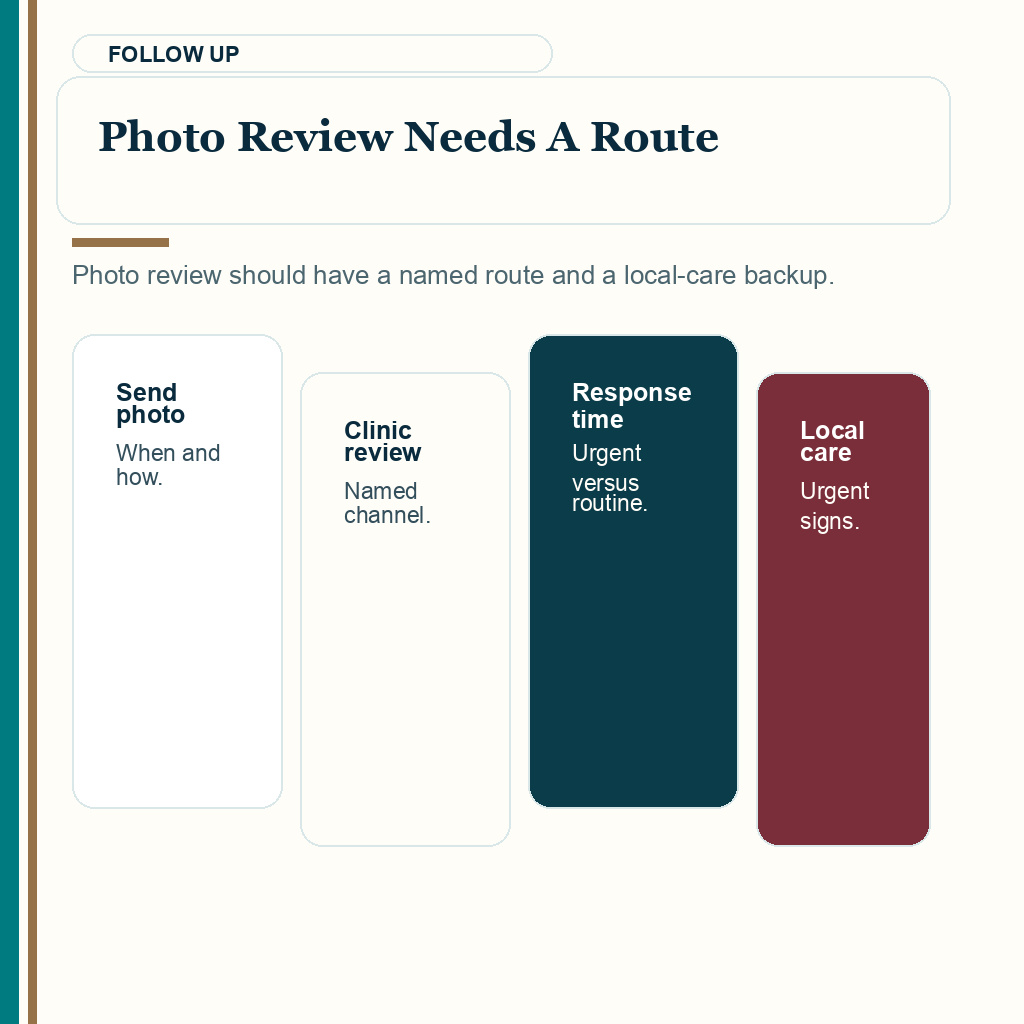
Written instructions help, but they are not enough when symptoms do not match the usual examples. If you wake up with bleeding, worsening pain, spreading redness, discharge, fever, dizziness, or clear graft trauma, you need to know who reviews the photos and how quickly the clinic replies. You also need to know which symptoms should go to local urgent medical help in your own country before waiting for a translated clinic response. If you fly home soon after surgery, follow up after hair transplant surgery needs to be a defined part of the safety plan.
If you are traveling alone to Turkey for a hair transplant, the communication plan should be even clearer. You may not have someone beside you to interpret instructions, notice confusion, or help you decide whether a symptom needs attention.
Safer reasons to pause or postpone
It is safer to pause when you cannot explain the plan back clearly, the hairline design is being rushed, the graft number changes without a proper explanation, the medical history is incomplete, the translator is unavailable for consent, or the person performing key steps is unclear.
It is also safer to pause when you feel pressured because travel, payment, or time off work has already been arranged. Travel plans create emotional pressure. They do not make a weak plan stronger. A translated yes does not protect you if the real plan remains unclear. If translation fails before surgery starts, postponement can be the safest medical decision.
Warning signs around clinic structure matter before travel. If the clinic cannot explain who is responsible, who is licensed, who performs the key surgical steps, and how complications are handled, treat those as red flags of Turkish hair transplant clinics.
Communication support at Diamond Hair Clinic
At Diamond Hair Clinic, the medical plan is not treated as a sales script. Dr. Mehmet Demircioglu reviews the donor area, the recipient area, the likely future hair loss pattern, and your expectations before accepting the case. International communication must support that medical decision, not replace it.
If you are considering a hair transplant in Turkey, access to staff who can speak English or another shared language is only the starting point. The clinic must explain the surgical reasoning clearly enough for an unpressured decision.
That means you should understand why a hairline is placed at a certain height, why the crown may be delayed, why the donor area limits the graft number, why certain medicines matter, and why future hair loss changes the plan. When needed, slowing the process is better than letting a misunderstanding enter the operating room.
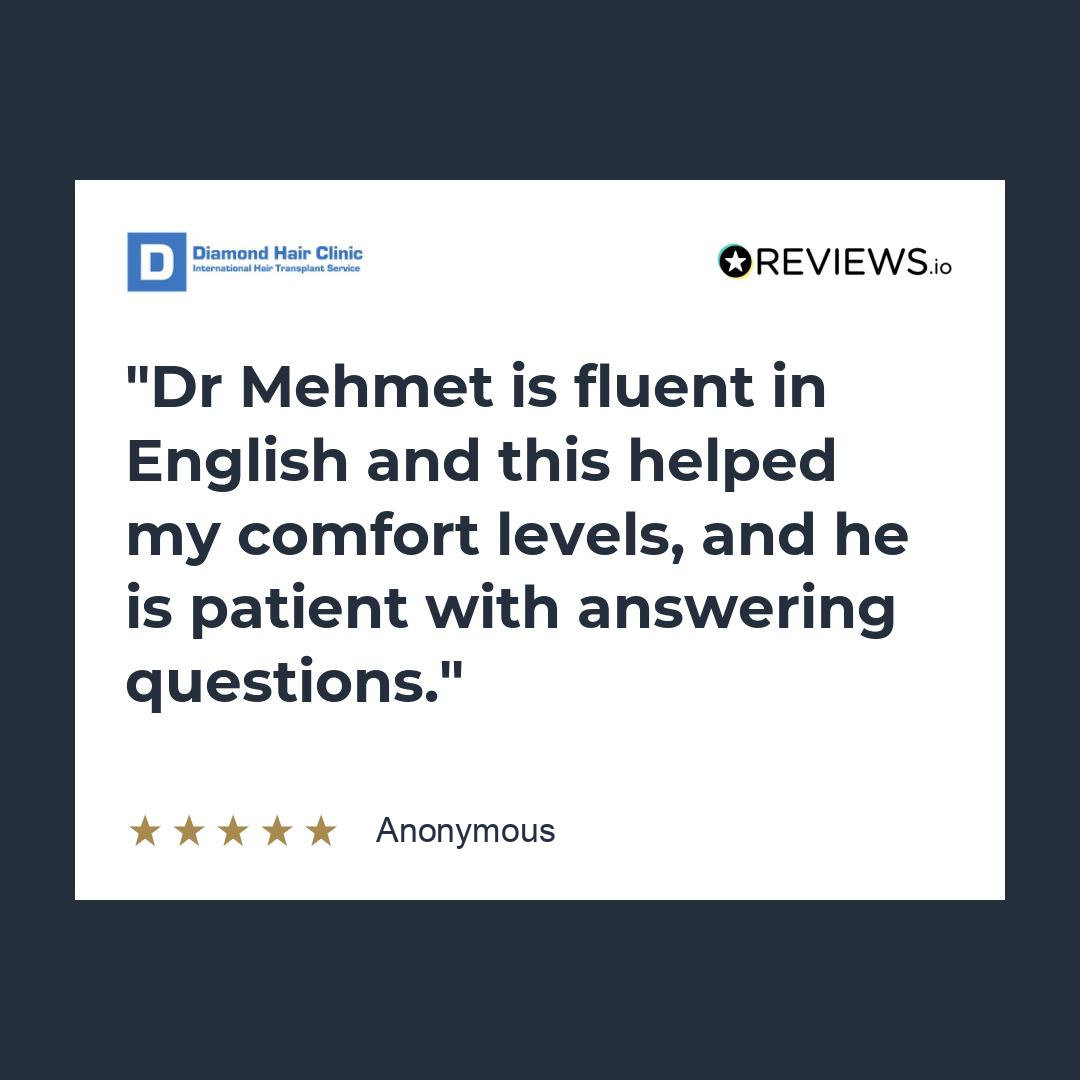
Read this review excerpt
“Dr Mehmet is fluent in English and this helped my comfort levels, and he is patient with answering questions.”
Medical language must be clear for the trip
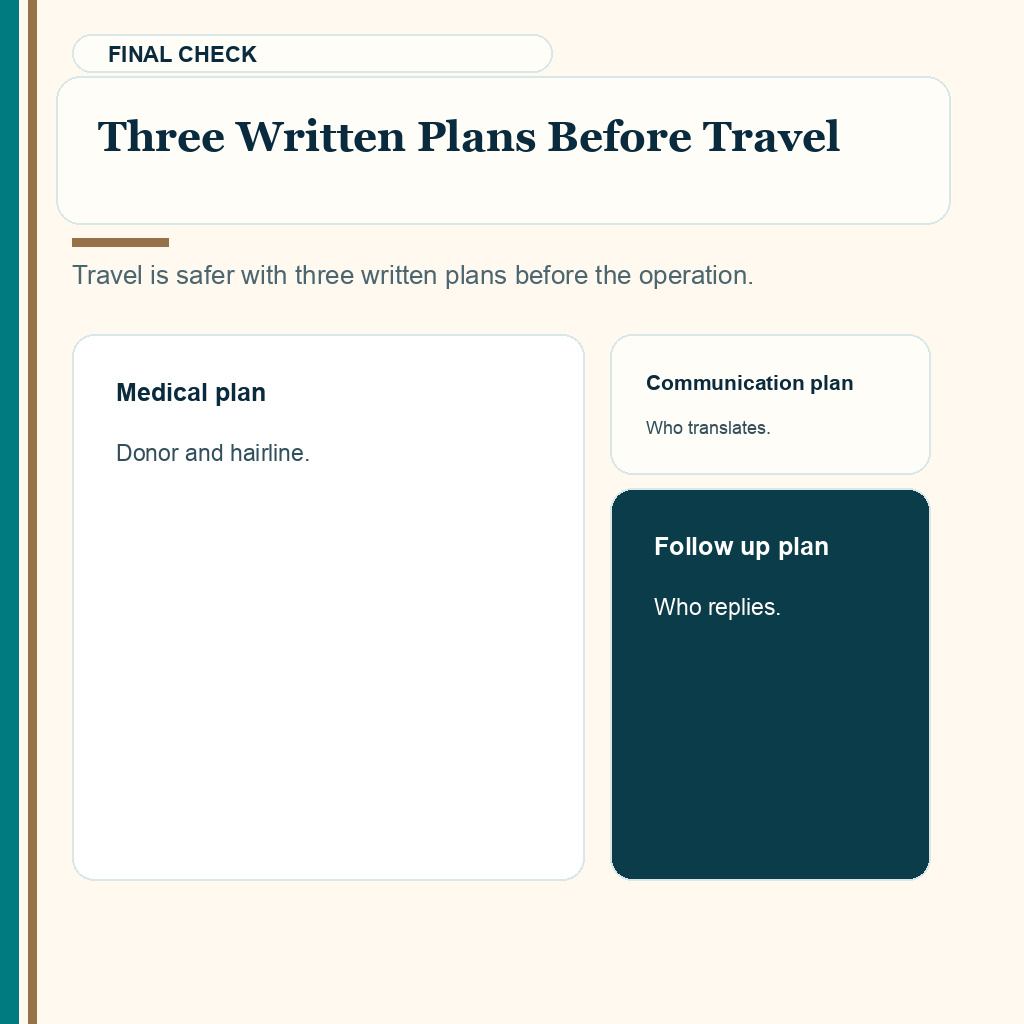
Before traveling abroad for a hair transplant, you need three written parts of the plan. The first is the medical plan, which explains the donor area, recipient area, hairline design, graft range, and limits. The second is the communication plan, which explains who translates medical information before payment, during consent, on surgery day, and during early recovery. The third is the follow up plan, which explains who reviews concerns after surgery.
If those three parts are clear, language difference can often be handled well. If they are vague, the risk is not only inconvenience. The risk is consent without understanding, a hairline you did not fully accept, a medication detail missed, or a complication message that nobody interprets correctly.
Do not travel for surgery until the plan can be explained in a language you understand. A hair transplant is a medical operation on a finite donor area. Convenience, price, and travel organization are useful only when clear medical communication comes first.
Clear messages matter even more when language differences are part of the trip. The booking messages and surgical plan guide gives patients a simple way to verify the channel and role map before travel.