


Sedation During Hair Transplant Needs Medical Review
For most FUE hair transplants, sedation is not needed. The scalp needs good local anesthesia, slow injections, clear communication, and proper monitoring. Sedation can help a selected anxious person, but it should not be routine and it should not be used as a shortcut for poor preparation. Dentures, aligners, retainers, mouthguards, loose teeth, and dental jewelry should be disclosed before sedation decisions, because the FUE dental appliance plan may change with airway and drowsiness concerns.
I understand why you may ask for it. You may want to avoid needles, pain, panic, or the feeling of being trapped in a long procedure day. But sedation is not a simple comfort switch. A small reviewed dose for anxiety is different from being kept asleep, and both need a medical reason. A request to sleep through the day should be separated into needle fear, face down anxiety, panic, and true breakthrough pain.
Sedating medicine can affect breathing, blood pressure, heart rhythm, memory, nausea, balance, and the ability to follow instructions after surgery. If a restroom pause is needed, bathroom breaks during FUE should be planned before the patient stands or walks. When the operation can be done safely with local anesthesia, I do not add sedation just to make the package sound easier. A medicine readback before sedation keeps the drug name, reason, escort plan, and expected alertness clear before the day moves forward. A pacemaker, ICD, device alert, or recent rhythm review changes the monitoring discussion before any sedating medicine is considered.
Memory is part of the sedation discussion. If medicine may make the patient drowsy or forgetful, the key instructions should be repeated when the patient is alert enough to understand them.
Put those instructions in writing. Label each product by area and timing, then ask the patient or escort to repeat the plan back. A recording can help later, but it should support the written instructions rather than replace a clear handoff.
Before any sedating medicine is given, the operative plan should already be written and confirmed. That includes the hairline, recipient zones, graft range, donor limits, and who performs each surgical step. If the plan may need to change, agree in advance which changes require a pause and a fresh discussion. Sedation can affect recall and responsiveness, so it should not become the moment when the hairline, coverage, or operator roles are quietly revised.
Routine sedation changes the responsibility
Hair transplant surgery is long, but it is not normally the kind of operation that needs deep sedation or general anesthesia. The scalp must be numb. You need to be comfortable enough to stay still. The surgical team needs clear visibility, controlled bleeding, and cooperation for position changes. If the anxiety is mainly about face down positioning during FUE, support, signaling, and break planning come before deeper sedation. Before using sedation as the easy answer, review long hair transplant session planning so the procedure day itself is paced properly.
A small sedative dose may reduce anxiety in a selected case, but it can also make the day less predictable. Breathing may become shallower, sleepiness may increase, nausea can appear, instructions may be forgotten, and supervision after surgery becomes more important, including the car ride after FUE. If sedation becomes deeper than planned, the medical responsibility changes immediately. That is not a small detail during elective surgery. After surgery, sleep aids and sedatives still need review instead of guessing, especially during sleepless nights after FUE.
Comfort should never be separated from airway and heart safety. If the difficult part is the first injections, I first handle that with explanation, slow technique, pauses, and enough local anesthesia rather than making the whole procedure medically heavier. Sedation may make the numbing stage easier, but it does not replace the need for reliable local anesthesia.
Local anesthesia can usually handle the pain
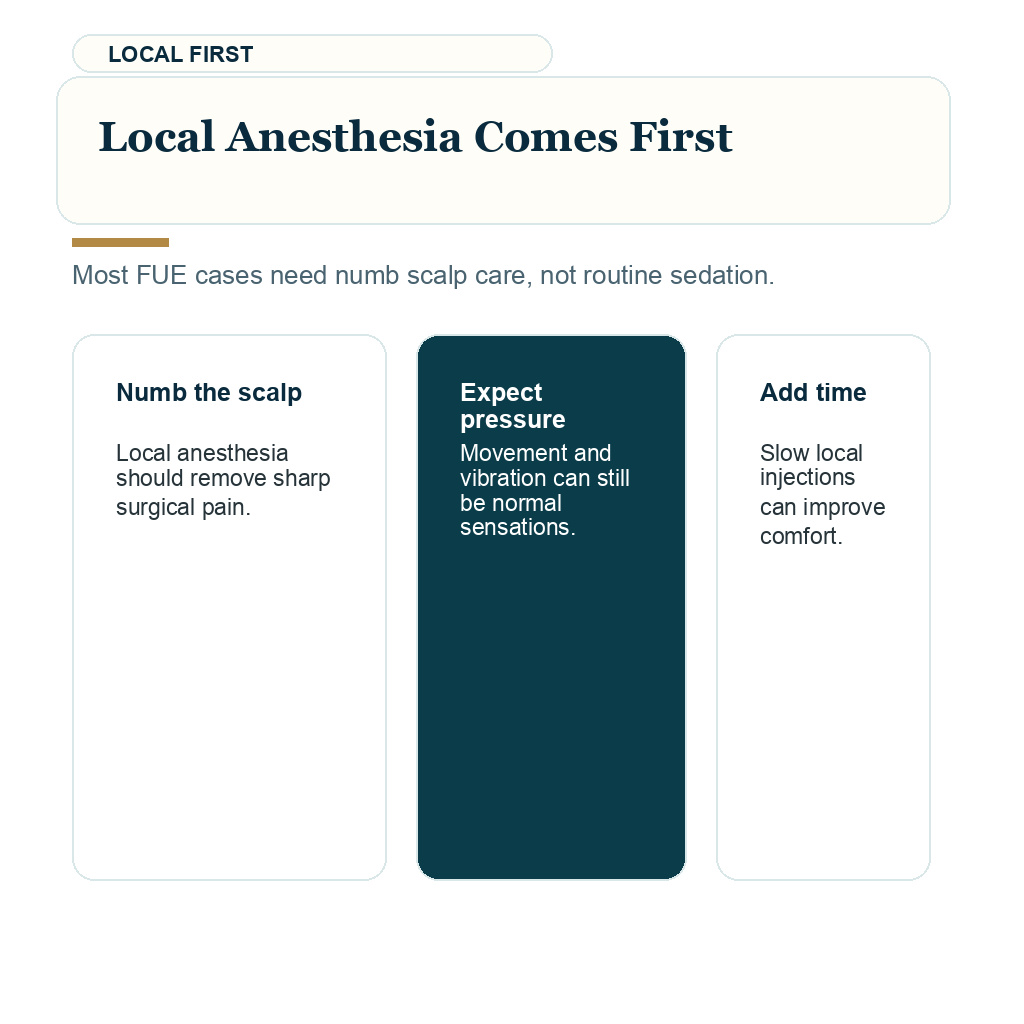
Local anesthesia is the main pain control method in hair transplant surgery. It numbs the donor area and the recipient area so extraction, recipient area creation, and graft placement should not feel sharp. The beginning can be uncomfortable because the anesthetic itself has to be injected. After the scalp is numb, most people feel pressure, movement, vibration, and time rather than surgical pain.
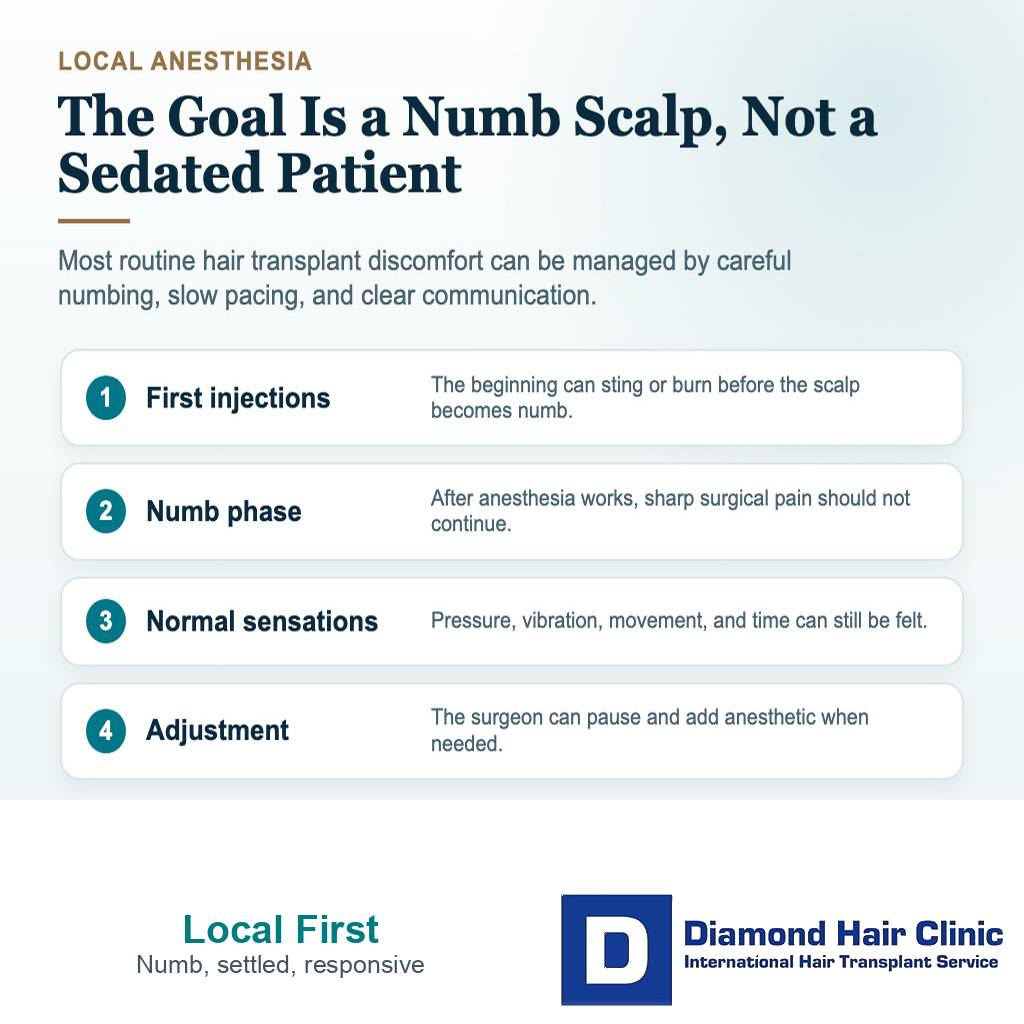
I explain the difference between discomfort and surgical pain before the procedure because expectations change how the day feels. If you expect zero sensation, normal pressure can feel frightening. If you know what pressure, movement, and vibration mean, the day is easier to tolerate. The first phase is easier to understand through how painful anesthetic injections are during a hair transplant.
Good local anesthesia needs patience. The surgeon has to inject slowly, wait long enough for numbness to work, and add more anesthetic when needed. It should not be rushed because the schedule is busy.
Pain during the procedure should not be treated as a test of toughness. Sedation may make a patient calmer, but it does not replace proper numbness, slow testing, and a pause when an area still feels sharp.
Sedation can add medical risks
Sedation affects the brain and nervous system. Depending on the medicine and dose, it may reduce anxiety, cause sleepiness, slow breathing, lower blood pressure, interact with other medicines, or make you less responsive. It can also move from light anxiety control into deeper sedation, especially when repeated doses are given.
Awake but less anxious and deeply sleepy are different sedation states. Those two situations should not be sold under the same soft word. Your body responds to the medicine, the dose, your health, and combinations with alcohol, sleeping pills, pain medicine, anxiety medication, antihistamines, or recreational drugs.
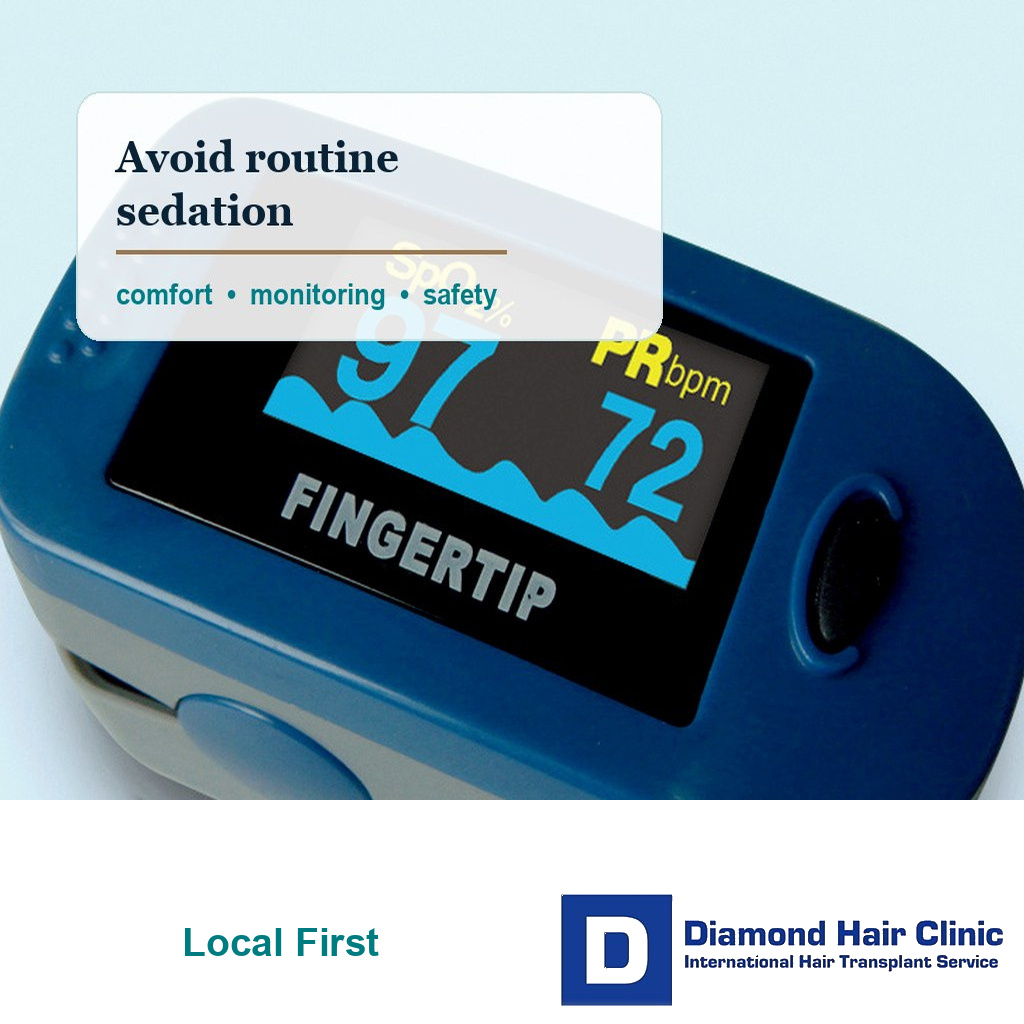
Deep sedation needs a stronger medical setup. The clinic must be able to monitor oxygen level, breathing, pulse, blood pressure, and responsiveness. It must also be ready to react if sedation becomes deeper than intended. Monitoring is not only a machine on the finger. A sedated person needs someone assigned to watch breathing, alertness, and recovery while the surgical work continues.
Some patients need closer review before sedation
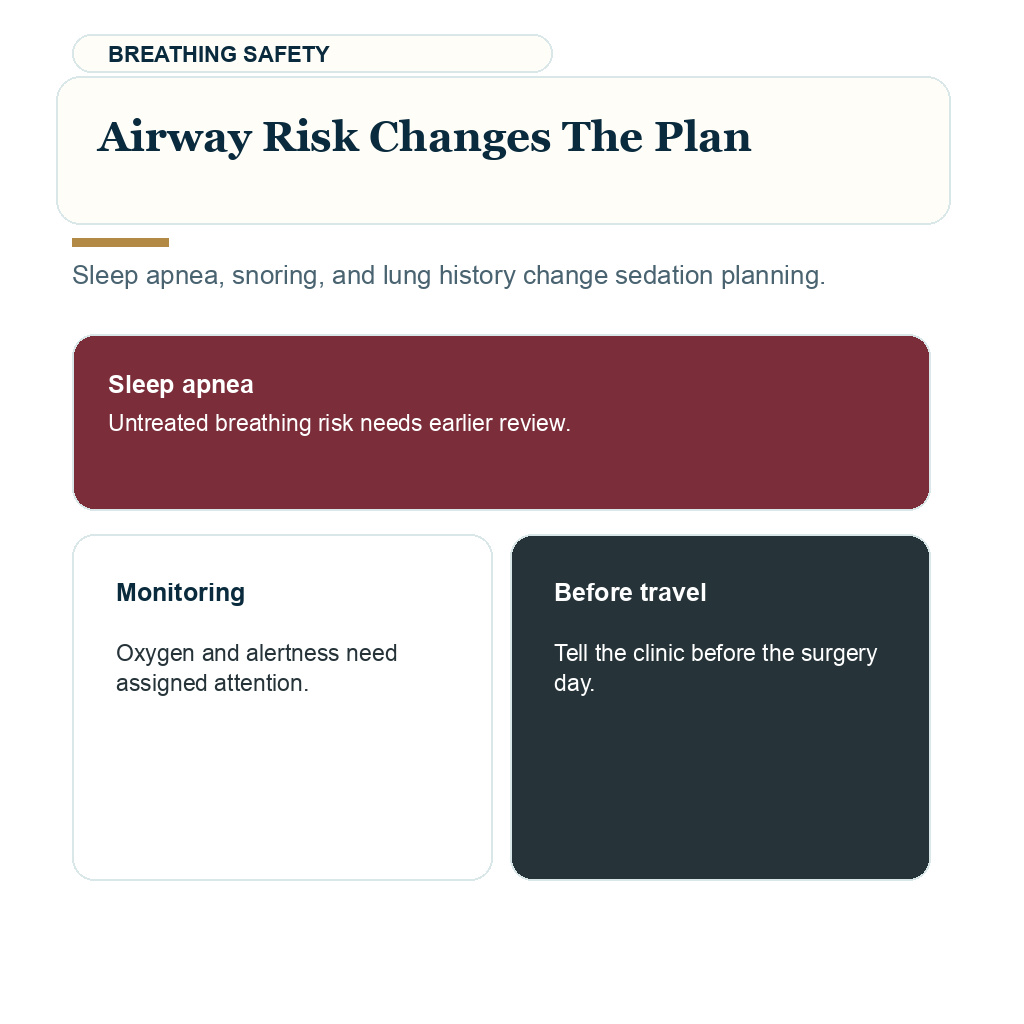
The risk is higher if you have untreated sleep apnea, unstable blood pressure, heart rhythm symptoms, recent chest pain, serious lung disease, heavy alcohol use, drug use, beta blocker or blood pressure medicine changes, or a medication list that already includes sedating drugs. These details do not always cancel surgery, but they change the decision. They can also affect whether ECG or chest imaging records before FUE need review before sedation is considered.
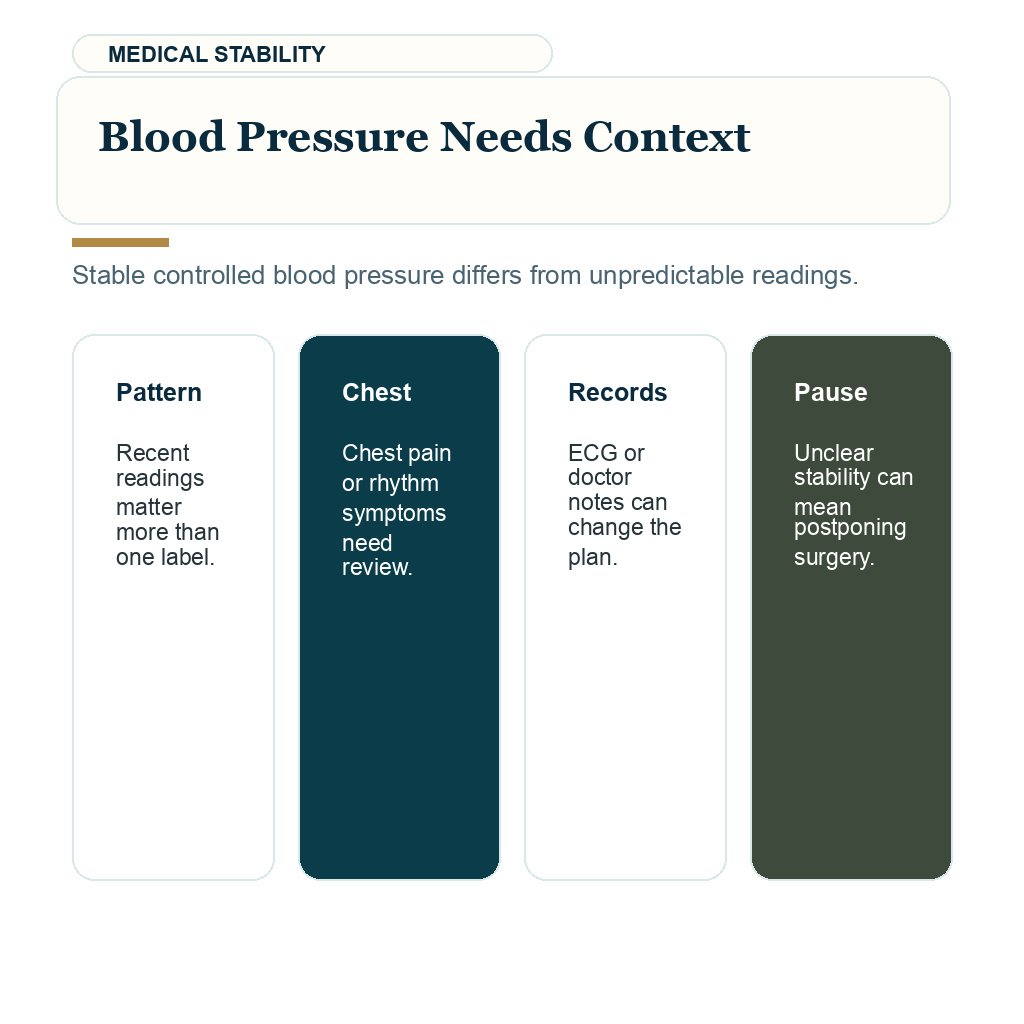
Stable controlled blood pressure is different from unpredictable readings. An old stable heart history is different from recent stent placement, chest pain, fainting, or rhythm symptoms. Treated sleep apnea with reliable CPAP use is different from severe snoring with no diagnosis.
Sedation is not separate from high blood pressure before hair transplant surgery, heart disease and stent safety review, or sleep apnea and CPAP recovery planning. The issue is not the label alone. It is how stable your health is and whether the setting can manage the risk.
Specific details should be reviewed before any sedative
Before any sedative is considered, I need your medicines, allergies, previous anesthesia reactions, blood pressure pattern, heart and lung history, sleep apnea status, smoking or vaping history, alcohol intake, and recent illness. The plan also needs fasting instructions, consent before medicine is given, clear monitoring responsibility, available rescue equipment, and a safe way for you to leave the clinic afterward. If the history or discharge plan is incomplete, the answer should be delay, not guesswork.
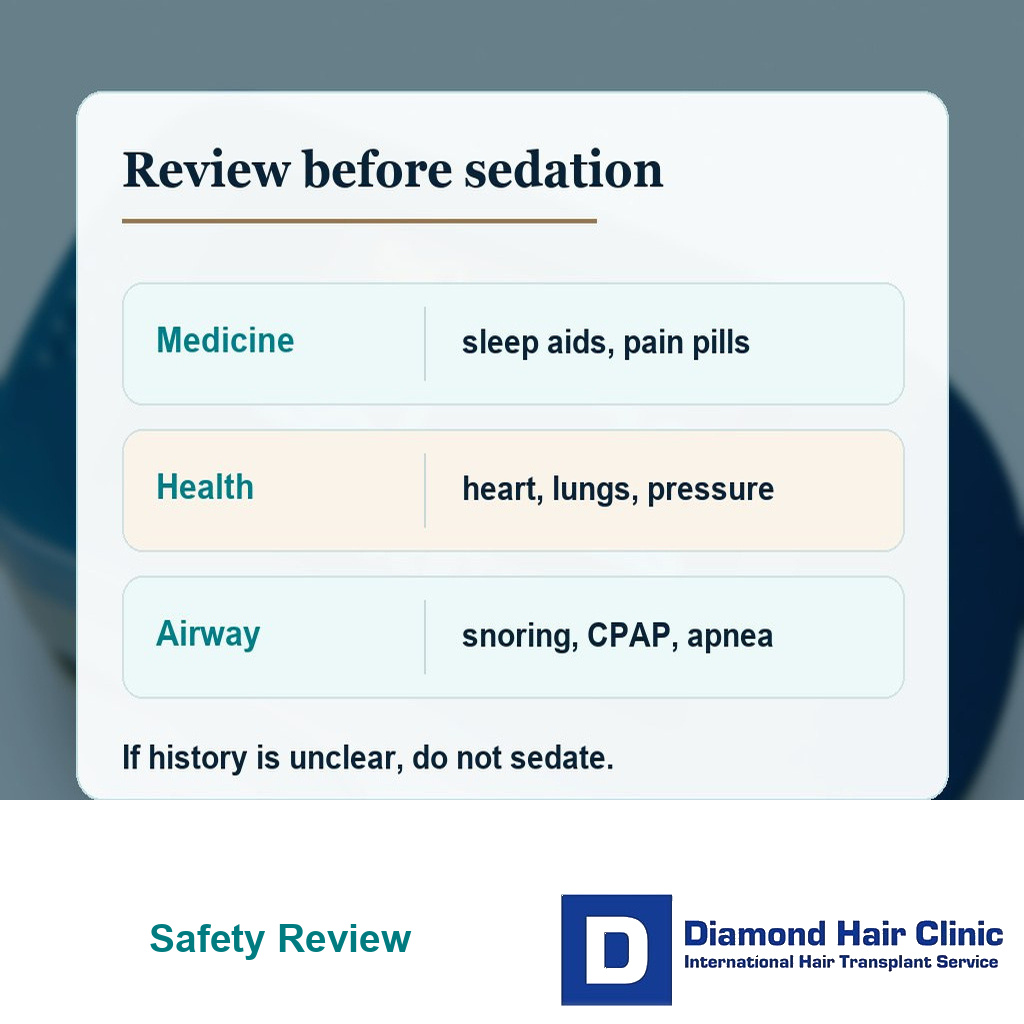
Disclose every medicine and supplement. This includes prescription tablets, over the counter painkillers, sleeping aids, anxiety medication, herbal products, bodybuilding supplements, and drugs taken only occasionally. A medicine that seems unrelated to hair can still matter when sedation is discussed.
List accessory details with medicines
The same disclosure habit should include practical items that can change monitoring or clean handling while sedation is being considered. If a piercing is difficult to remove, or if gel, acrylics, dark polish, or nail extensions may affect a finger monitor, add it to the review and settle the FUE jewelry, piercing, and nail removal plan before the day starts.
Blood work and medical clearance are not ceremonial when sedation enters the conversation. With blood tests before hair transplant surgery, basic checks can reveal bleeding risk, infection concerns, or medical conditions that need clarification before the operation. Medication planning before surgery is also separate from comfort and belongs in a proper medication review before hair transplant surgery.
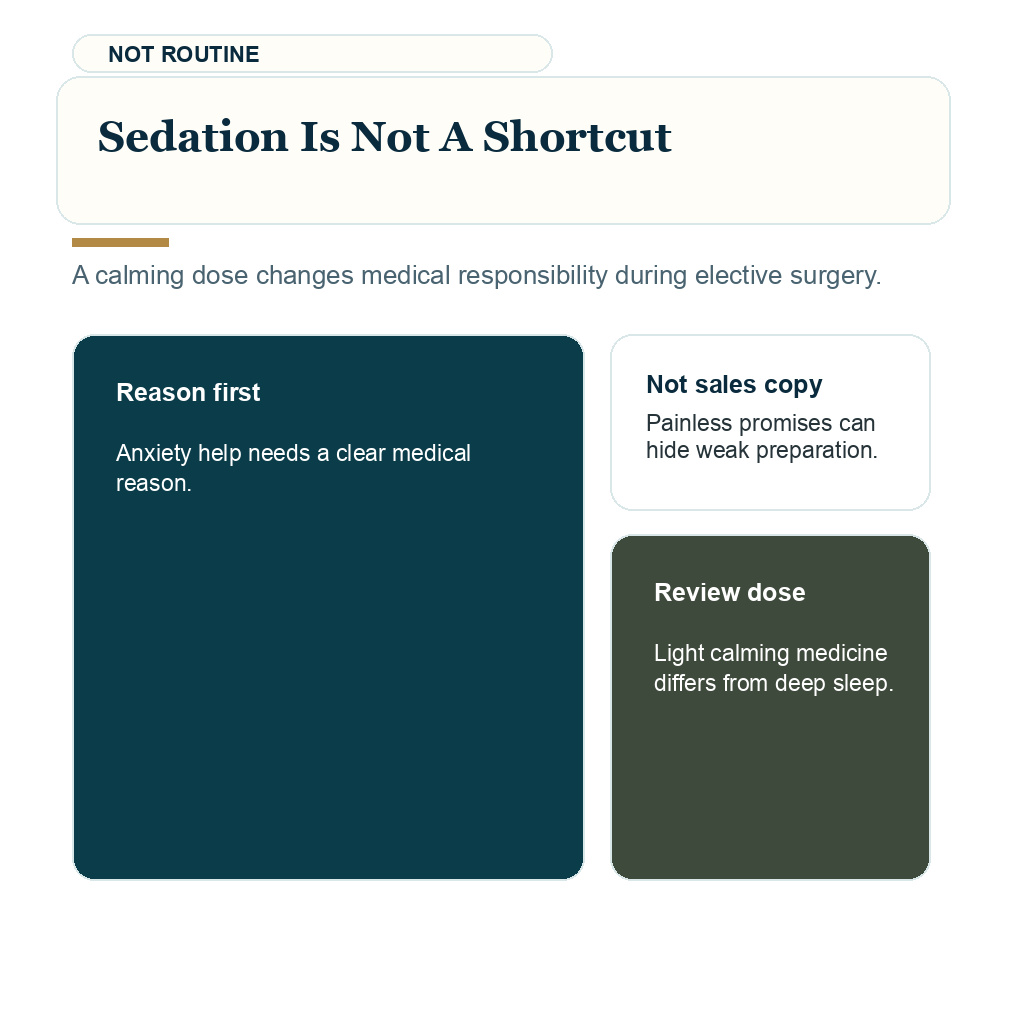
These 10 sedation review slides separate local anesthesia, anxiety control, airway risk, medicine interactions, blood pressure context, fasting, escort planning, already taken tablets, needle fear, and delay signals. Swipe sideways, use the arrows one slide at a time, or choose a number below the image.


A sedative already taken before arrival must be reported
If you took Xanax, Valium, a sleeping pill, strong pain medicine, an antihistamine, or any other calming tablet before telling the clinic, say it before the first medical step begins. I need the exact name, dose, time taken, whether alcohol was used, and whether you feel sleepy, dizzy, confused, nauseated, short of breath, or unusually relaxed.
Do not take an extra tablet to make the day easier, and do not hide it because flights or deposits are arranged. Alcohol, opioid pain medicine, antihistamines, sleep medication, and anxiety tablets can stack sedating effects, including slower breathing and poor coordination. The procedure may need to be delayed if the medicine, dose, combination, or monitoring setup is unclear. Xanax or Valium before a hair transplant needs a separate medication decision, and any sedating medicine taken without a clear plan needs that review.
Deep sleep is the wrong goal for routine FUE
Some people say they want to sleep through the whole thing. I understand the wish, but deep sleep is not the goal of hair transplant surgery. The goal is safety, a stable scalp, controlled bleeding, careful graft work, and clear recovery instructions. The clinic should be clear whether it means an anxiety tablet, light sedation, IV sedation, or general anesthesia, because those are different medical decisions.

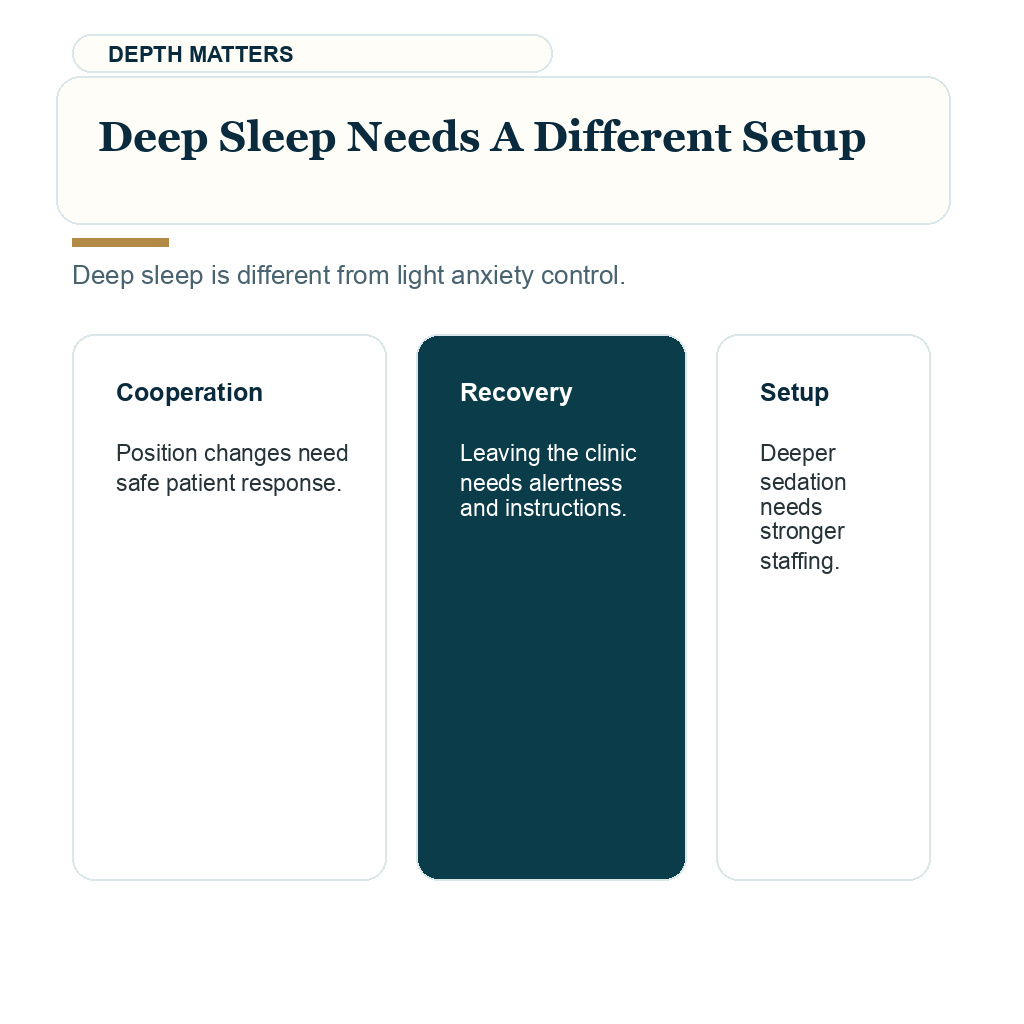
If you are too deeply sedated, you may not cooperate well with position changes, report discomfort clearly, or recover quickly enough to leave with simple instructions. Deep sedation may also require a different level of staffing and rescue ability. If a clinic offers deep sleep casually, slow down and ask who is medically responsible for that sedation.
Painless marketing can hide medical risk. A clinic should not use sedation to cover rushed injection technique, weak preparation, or a poor explanation of local anesthesia. If the procedure is planned correctly, most people do not need deep sedation to get through it.
Fear of anesthetic injections can be managed directly
Needle fear is real. I do not dismiss it. The first anesthetic injections can sting or burn, and that moment can be stressful. But the solution does not have to be sedation.
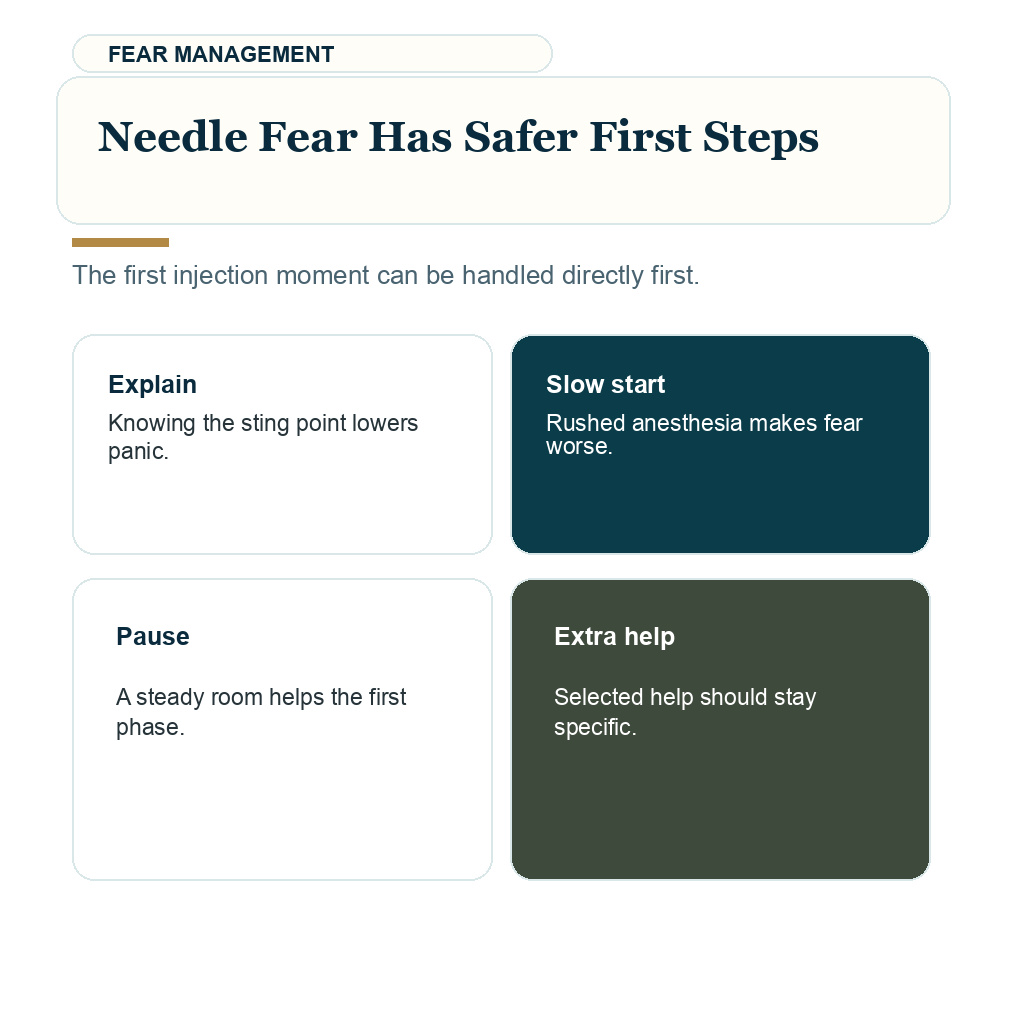
There are safer steps first. The surgeon can explain exactly when the uncomfortable part begins, inject slowly, give the first area time to numb, pause when needed, and continue only when you are settled. A steady room and an unhurried team matter. A rushed team makes pain feel worse. Agree on a pause signal before the first injection, not after panic builds.
Needle fear should be managed, not used to justify unnecessary deep sedation. A small number of people may still need extra help, especially if they faint, shake, or cannot remain still. Even then, the plan should be medical and specific, not a vague promise that you will be asleep.
Travel makes sedation offers more complicated
Travel can make sedation more complicated because you may be tired, dehydrated, jet lagged, anxious, and far from your usual doctor. You may also feel pressure to continue because flights, hotel bookings, deposits, and time off work are already arranged.
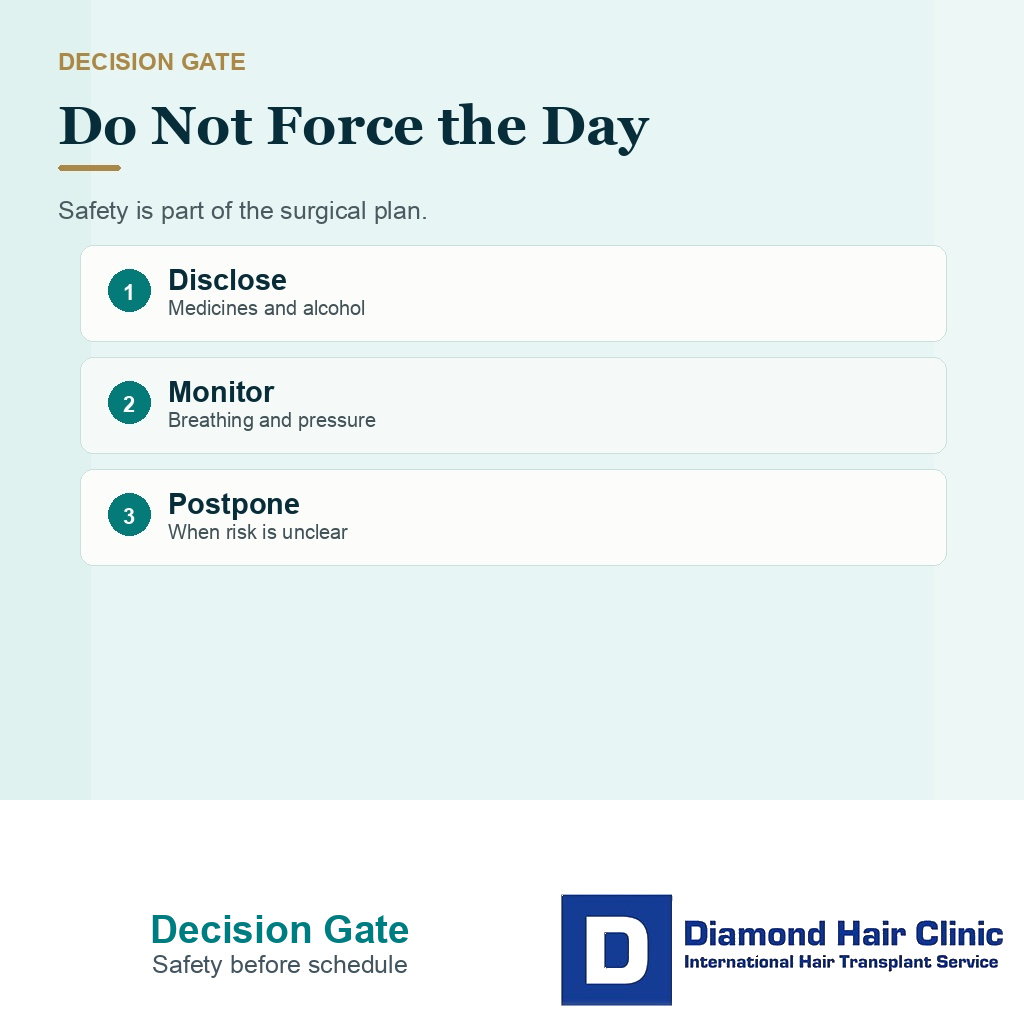
Sedation should not be used to force the schedule. If you drank alcohol recently, used a sleeping pill after travel, have uncontrolled blood pressure, forgot a key medicine, or failed to disclose a medical condition, postponement may be the better decision.
Before paying a deposit, ask whether sedation is optional, who supervises it, what monitoring is used, and whether the surgery can be delayed if the medical review is not clear. Those questions belong beside the wider booking questions in what to clarify before booking a hair transplant.
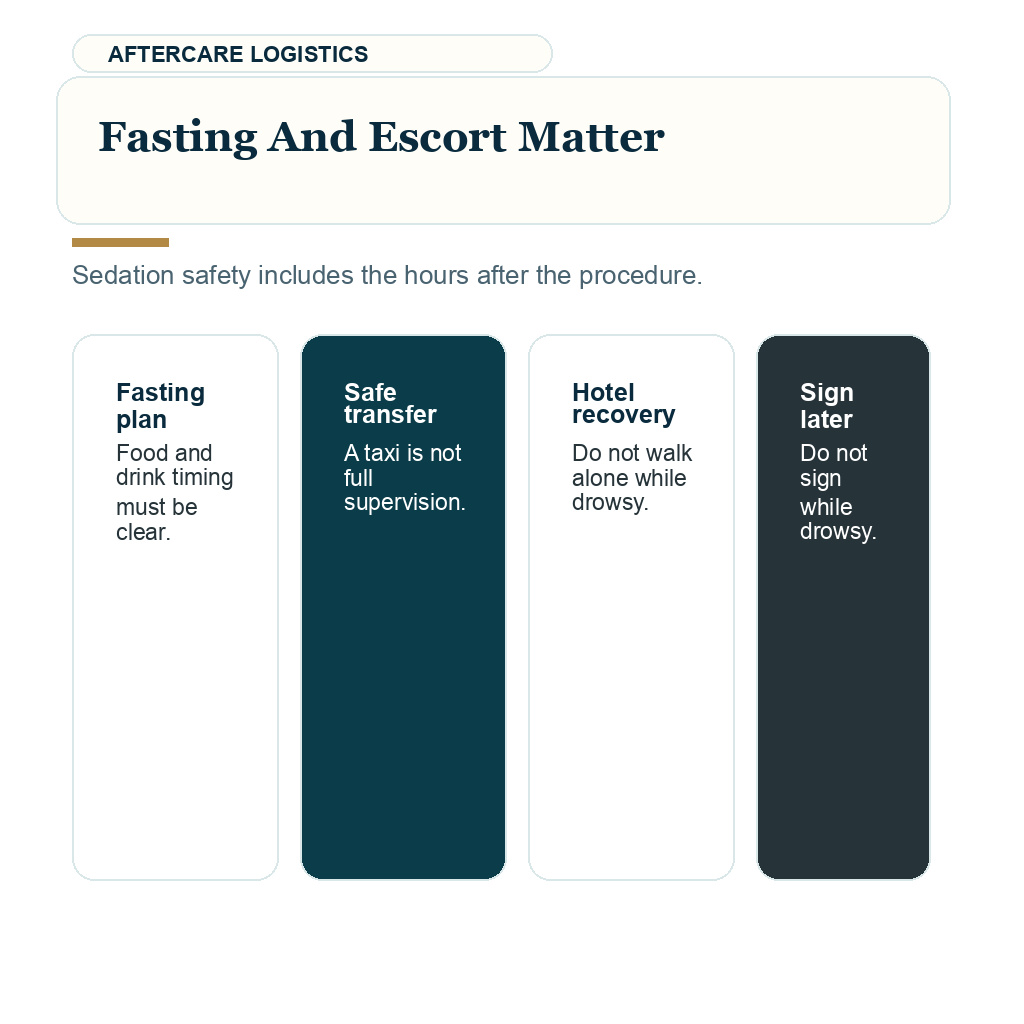
If sedation is used, plan the hours after surgery before the day begins. You may need an escort, a safe transfer to the hotel, observation until alertness returns, and a delay in signing documents, walking alone, driving, flying, or taking more sedating medicine. A taxi booking is not the same as a recovery plan.
Alcohol before a hair transplant is a good example. It can affect sleep, hydration, judgment, bleeding, and the way sedating medicines are handled. The same is true for postoperative sleep aids, which need separate thinking from procedure day sedation and are covered in sleeping pills after hair transplant recovery.
Some situations should delay surgery instead of adding sedation
I delay the procedure if sedation seems necessary but the medical risk is not clear. I also delay if there is unstable blood pressure, concerning heart symptoms, untreated breathing risk, unclear medication interaction, recent heavy alcohol use, or a history that does not make sense on surgery day.
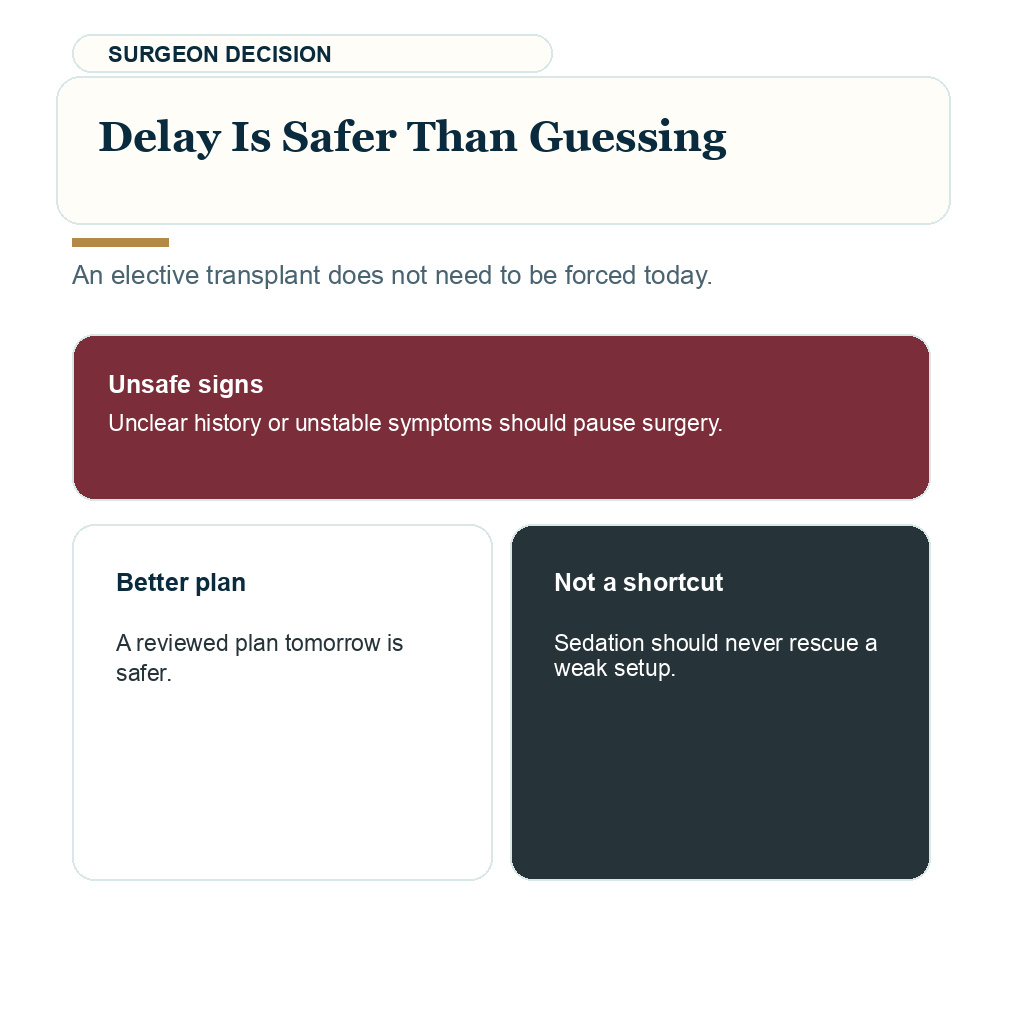
If sedation is needed to make an unsafe day possible, the surgery should wait. Serious hair transplant safety risk follows that threshold, where danger rises when screening, anesthesia, sedation, or emergency readiness is weak. Hair transplant surgery is elective. There is no medical emergency that forces grafts to be moved today. A better plan tomorrow is safer than a forced plan today.
The risk is higher in high volume or travel focused settings where you may feel the day cannot be changed. Red flags of Turkish hair mills include pressure, vague responsibility, and package style medical decisions that should make you cautious.
Sedation should be a medical exception, not the sales pitch
Comfort matters, but routine deep sleep is not the starting point for most FUE cases. Local anesthesia, careful injections, calm communication, and breaks usually protect the patient without adding unnecessary sedation risk.
If sedation is considered, the reason has to be clear. Severe anxiety, medical suitability, monitoring, fasting rules, medicines, and recovery supervision all matter more than a promise that surgery will feel easier.
At Diamond Hair Clinic, the question is not how quickly we can make the day continue. It is whether sedation genuinely improves safety for this patient, or whether awake local anesthesia is the cleaner choice.

Read this review excerpt
Overall, I underestimated how unpleasant the transplant would feel. But I am so grateful I chose Diamond and Dr. Mehmet and his team to guide me through the process.