
Long Hair Transplant Sessions Should Not Be Rushed
A full day FUE procedure can be safe, but only when comfort, graft handling, donor limits, and the team’s pace all stay controlled. There is no useful safe number of hours by itself without the graft handling and donor plan. I judge whether the day stays controlled as grafts are extracted and placed, not by the clock or graft count alone. The risk is a clinic that keeps adding grafts after body position, pain control, graft handling, hydration, breaks, or surgeon oversight has become unclear. In my planning, slowing down, reducing the target, or splitting the work is better than turning a long FUE day into a race over the number of grafts.
Patients usually ask this after reading about very large sessions online. The worry is practical. They picture lying face down for hours, feeling local anesthesia wear off, developing back pain, struggling to ask for a break, or sensing that the team is racing to finish. When the main concern is lying face down during FUE, I plan the chair setup, support, and break signal before extraction starts. Plan long surgical days around staff capacity, surgeon involvement, and safe graft handling, not only the largest number.
A large one day plan needs a stopping rule before surgery starts. The team should know when to slow down, reduce the graft target, or split the work if graft quality, donor response, body comfort, or placement pace changes.
An unplanned pause is different from normal staging. If the scalp becomes too reactive, swelling increases, pain control is no longer steady, or placement quality would suffer, I do not judge the next grafts by the original number alone. I reassess the case after the tissue settles. The donor area, recipient skin, graft handling, untreated area priorities, and real value of the extra grafts all still have to make sense. Finishing a printed target is never more important than protecting graft quality and the long term donor plan.
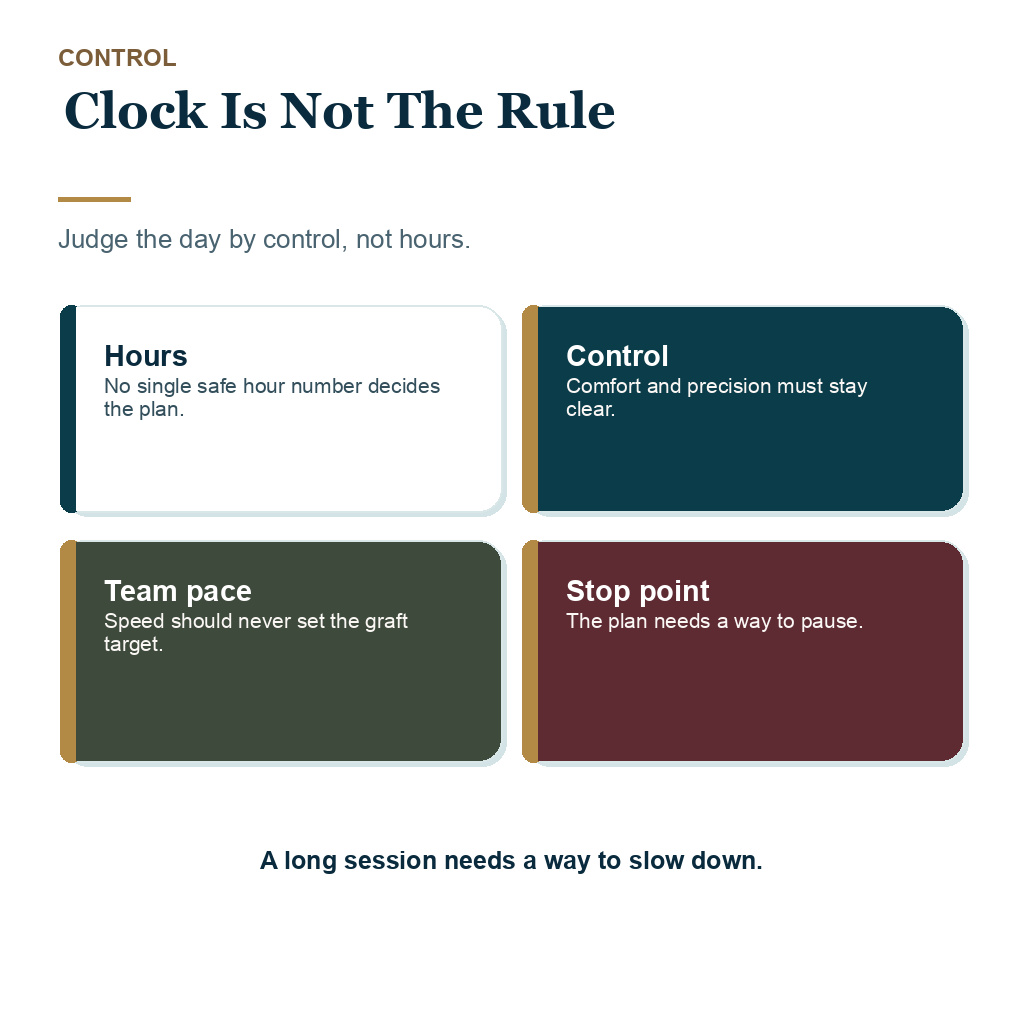
The clock matters less than control of the day
Hours on the schedule do not decide whether a long session is safe. During those hours, I look at whether you can stay still without distress, whether anesthesia still works, whether grafts stay hydrated, whether the team keeps precision, and whether the surgeon is still making decisions rather than chasing a final number.
A planned long session is different from a day that becomes long because the clinic is behind, overbooked, or trying to catch up. The work needs pacing, not force. A careful team can pause, adjust position, or reduce the target when the situation changes. If that flexibility is missing, the plan was not strong enough.
Discuss a large case before surgery, not as an improvisation on the day. A 5000 graft hair transplant in one session and a smaller session are not opposite ideas. Both only make sense when the donor area, treated area, available time, and team structure support the plan.
This also applies to a plan for 4,000 to 4,500 grafts. It may be safe in a selected patient, but it should not stay a fixed target if pain control, body position, donor response, graft quality, or placement pace starts to change.
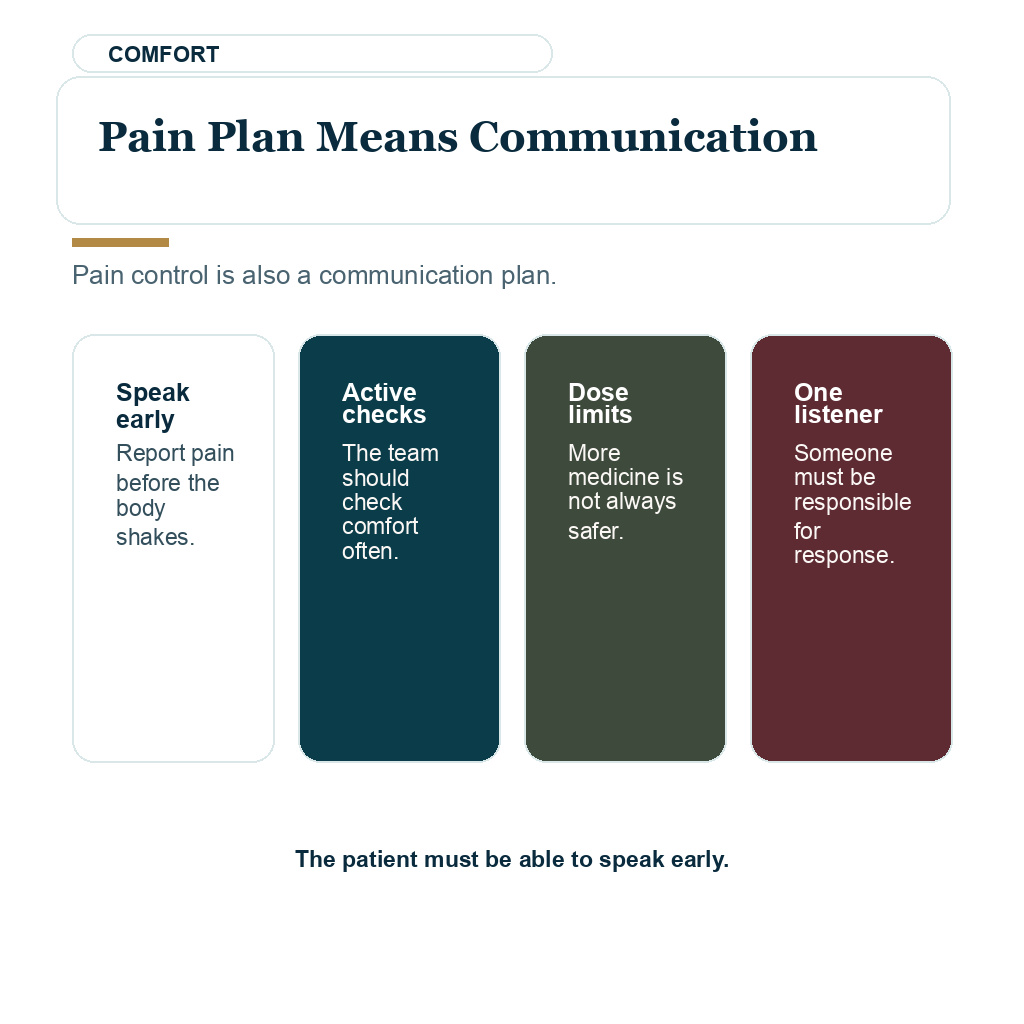
Pain control should be a communication plan
Local anesthesia is usually the main comfort tool in FUE. That does not mean you need to suffer through the day in silence. Before surgery, agree on a clear way to speak up if sensation returns, pressure becomes painful, or anxiety rises. The team also needs to check comfort actively instead of waiting for a loud complaint.
Some people are not afraid of the transplant itself. They are afraid of injections, tool sounds, or feeling trapped in one position. That matters. When the main fear is needles or loss of control, needle phobia before hair transplant needs to be discussed before the day begins, not after the chair is already reclined.
Local anesthesia also has medical limits. The answer is not to keep adding medicine without thought. Dose, timing, body weight, blood pressure, heart history, and adrenaline use all matter. If those details are part of the concern, adrenaline in hair transplant anesthesia needs a clear dose and timing plan. Sedation is a separate decision. It should not be treated as an easy way to force a longer day.
Body position can become the real challenge
Pain is not only scalp pain. In a long session, the back, neck, shoulders, hips, and legs can become the bigger challenge. FUE extraction may require one position for a long time. Recipient area work may require another. Even a healthy person can become restless if position is not managed well.
Casual promises about extreme graft numbers ignore this part of surgery. The scalp may be anesthetized, but the body is still awake. Mild stiffness is different from back pain, reflux, breathing difficulty, anxiety, leg numbness, or restlessness that makes stillness difficult. A comfort problem can become a precision problem.
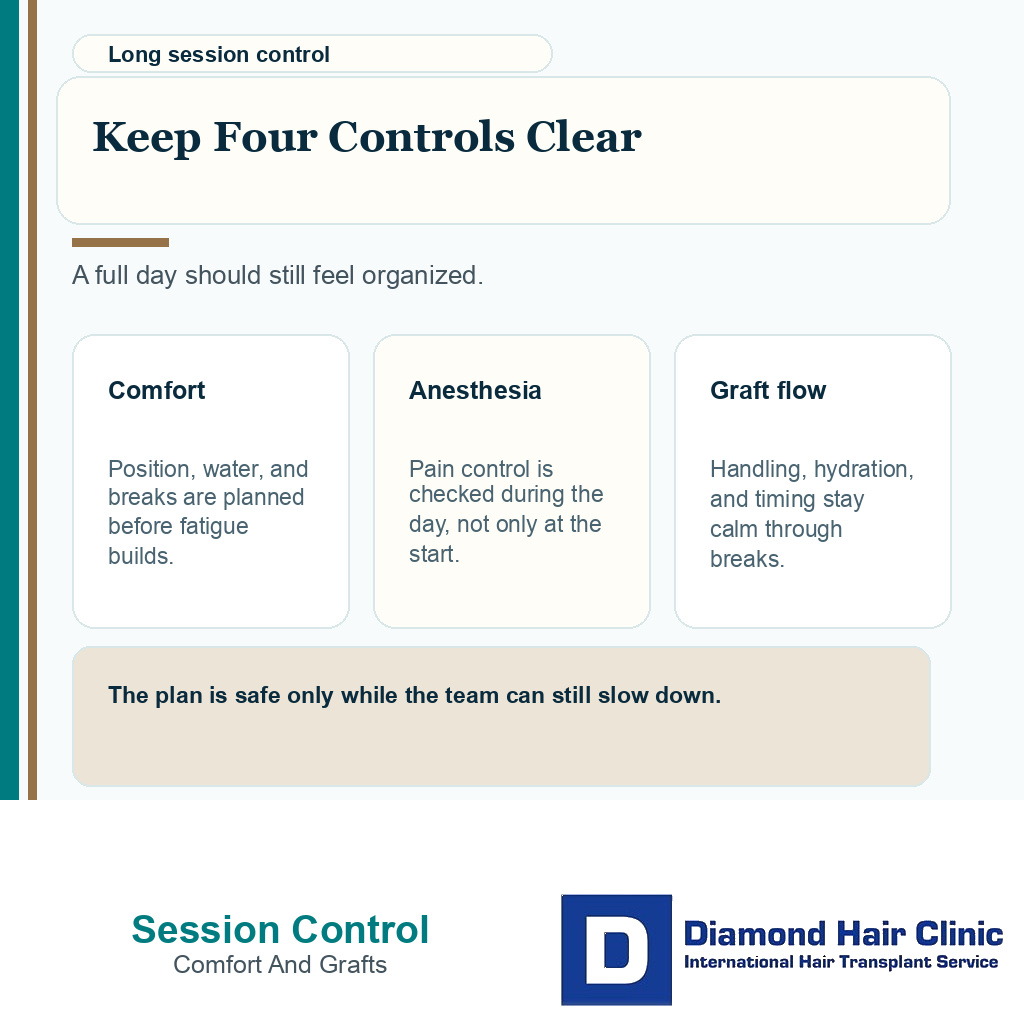
Small details help. The chair or table, neck support, bathroom timing, meal timing, water, and planned position changes all matter. These are not luxury details. They keep the body settled enough for precise work. A body position problem should be handled before it becomes a surgical problem.
Breaks should protect the patient and the grafts
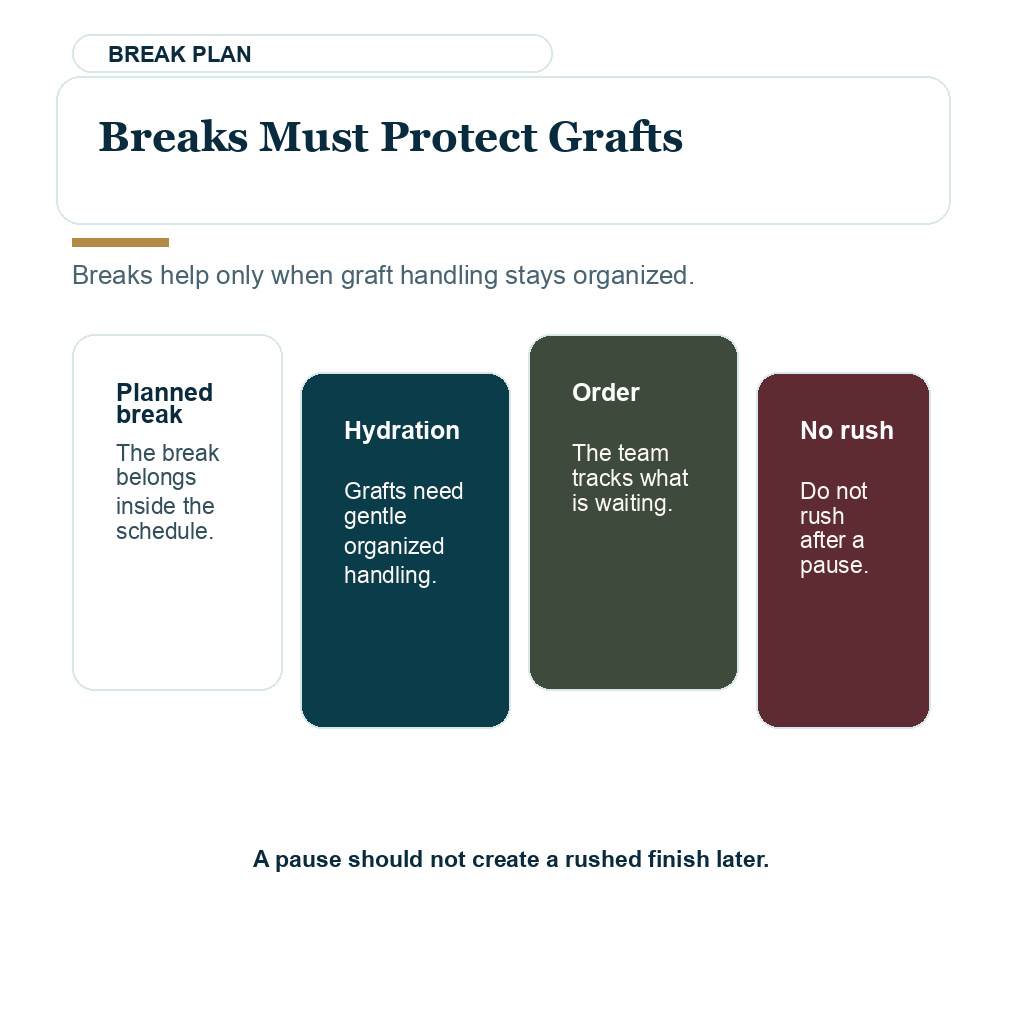
Breaks are useful when they are planned into the surgical day. A planned break is different from a disorganized pause that leaves grafts waiting, creates confusion, or makes the team rush later. A good break plan gives you a chance to reset while the team keeps graft handling organized.
During a long case, grafts need gentle handling, hydration, and clear organization so placement remains controlled. The exact laboratory routine belongs to the clinic, but the clinical rule is clear. Before I accept a long session, I want the recipient site and placement sequence described clearly. Premade sites and stick and place organize incision and insertion differently. The name alone does not show whether a long session is controlled, so the clinic should state when sites are made, when grafts are extracted, and how placement is paced. The longer the day, the more disciplined the system has to be. A large session must not create a situation where grafts wait because the schedule was too ambitious.
Some cases raise the question of whether a two day plan is safer. The answer depends on donor area, graft target, medical history, travel plan, and the clinic’s ability to maintain quality across both days. A two day hair transplant plan can be more reasonable for some very large cases, but the decision has to come from surgical judgment, not marketing.
A big graft number does not excuse rushed judgment
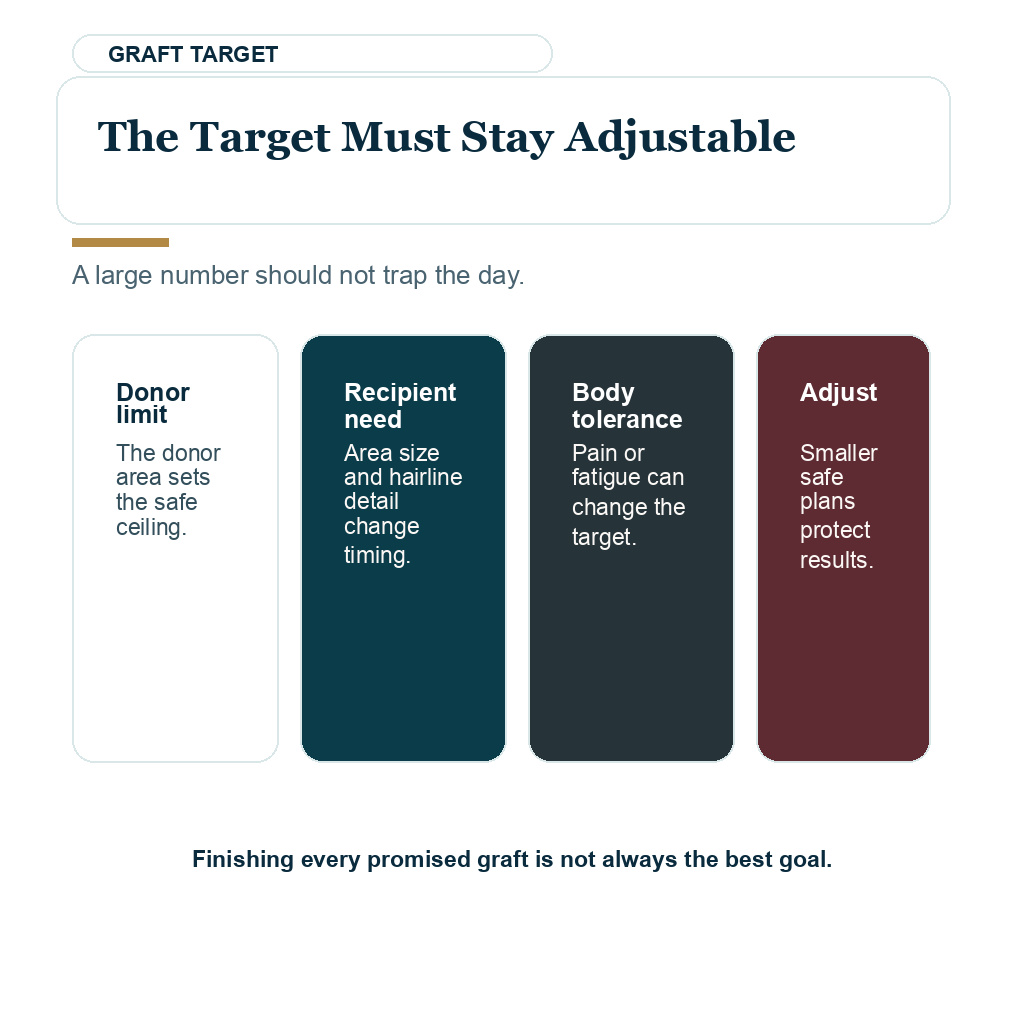
A big session can sound generous before surgery. It can also hide weak planning. A clinic may promise a number that looks impressive, then spend the day trying to reach it even when donor quality, body tolerance, bleeding, swelling, or time pressure says the plan needs to change.
The graft number needs to match the donor area, hair characteristics, recipient area size, and the person in the chair. If the hairline requires precision, the donor is limited, or the body is not tolerating the day well, finishing every promised graft is not the highest goal. A large graft number does not excuse rushed judgment.
Pain can also increase as graft count and duration increase, so hair transplant pain and graft count need to be discussed before you accept a larger session. The reason is simple. If discomfort becomes uncontrolled, stillness and precision can suffer.
Some people are not suited to a long fixed day
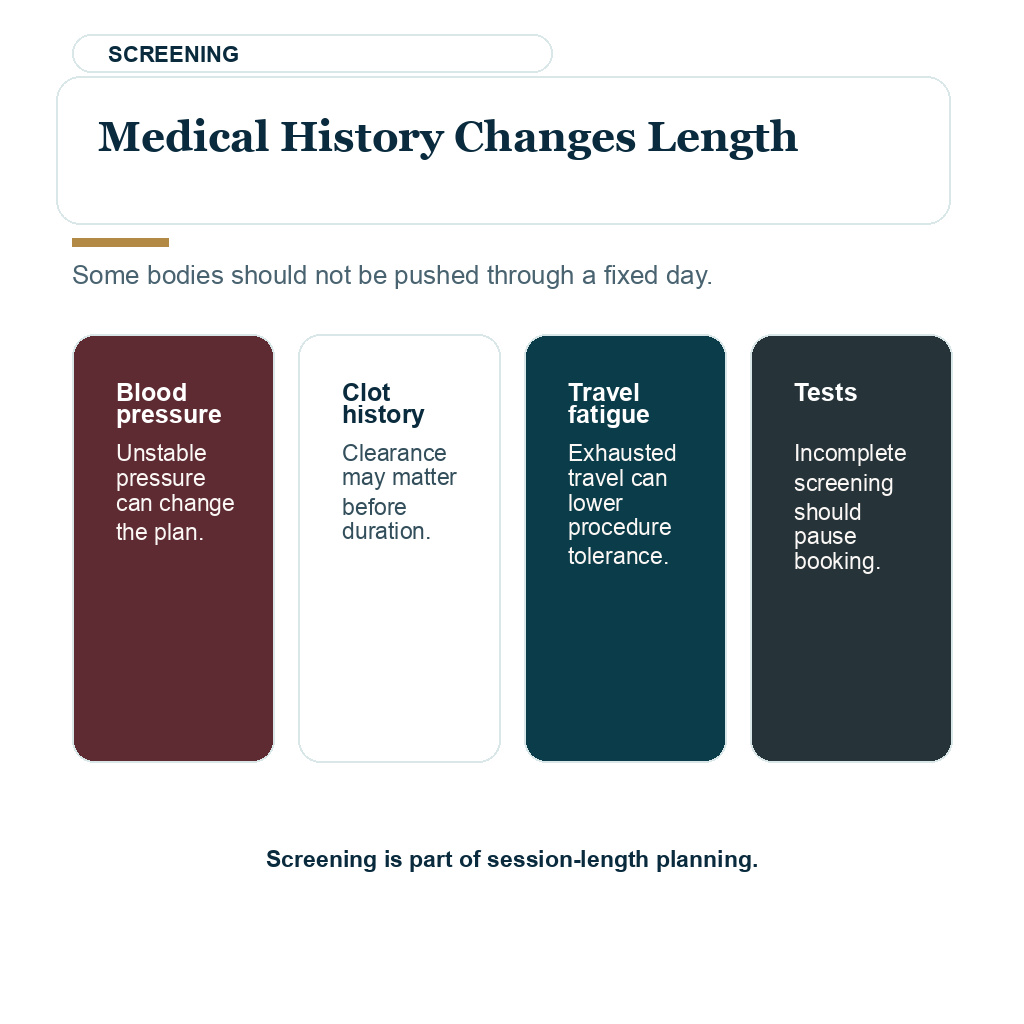
Medical history can change the whole decision. Unstable blood pressure, heart disease, a blood clot history, diabetes, sleep apnea, medication changes, anxiety attacks, back problems, or recent illness can make a very long fixed session the wrong plan. Recent illness matters most when it affects breathing, stillness, hydration, stamina, or the ability to stay settled during delicate work. The same is true when blood tests are incomplete, medication changes are hidden, or travel has left the body exhausted.
Preoperative screening is not paperwork. It is how the surgical team decides whether the body can tolerate the plan. Blood tests before hair transplant are one part of that process. So is telling the clinic about medical changes after booking, even if you are worried the date may be delayed.
If you have a clotting history, blood thinner history, or recent medical event, session length becomes part of the safety discussion. Someone with a blood clot history before hair transplant cannot be treated like a standard cosmetic booking. The plan may need clearance, adjustment, or postponement.
Communication during surgery must be easy
A long procedure cannot depend on you guessing when it is acceptable to speak. Before surgery, you need to know how to ask for more local anesthesia, a position adjustment, a bathroom break, or help with anxiety. The team also needs one clear person responsible for listening and responding.
This becomes especially important in medical tourism. If language barriers during a hair transplant abroad make anything beyond basic words difficult, the clinic needs a plan before the procedure begins. Pain, dizziness, nausea, panic, chest discomfort, breathing trouble, or a medication concern cannot be reduced to a thumbs up or thumbs down. The patient must be able to report a problem before it becomes urgent.
Small discomfort is better reported early. Waiting until pain is severe or the body is shaking is not bravery. It makes the day harder for everyone. A careful clinic treats a reasonable break or comfort report as useful information, not an interruption.

Read this review excerpt
During the whole procedure they would make sure I was okay and comfortable as much as possible.
Splitting the work can be safer
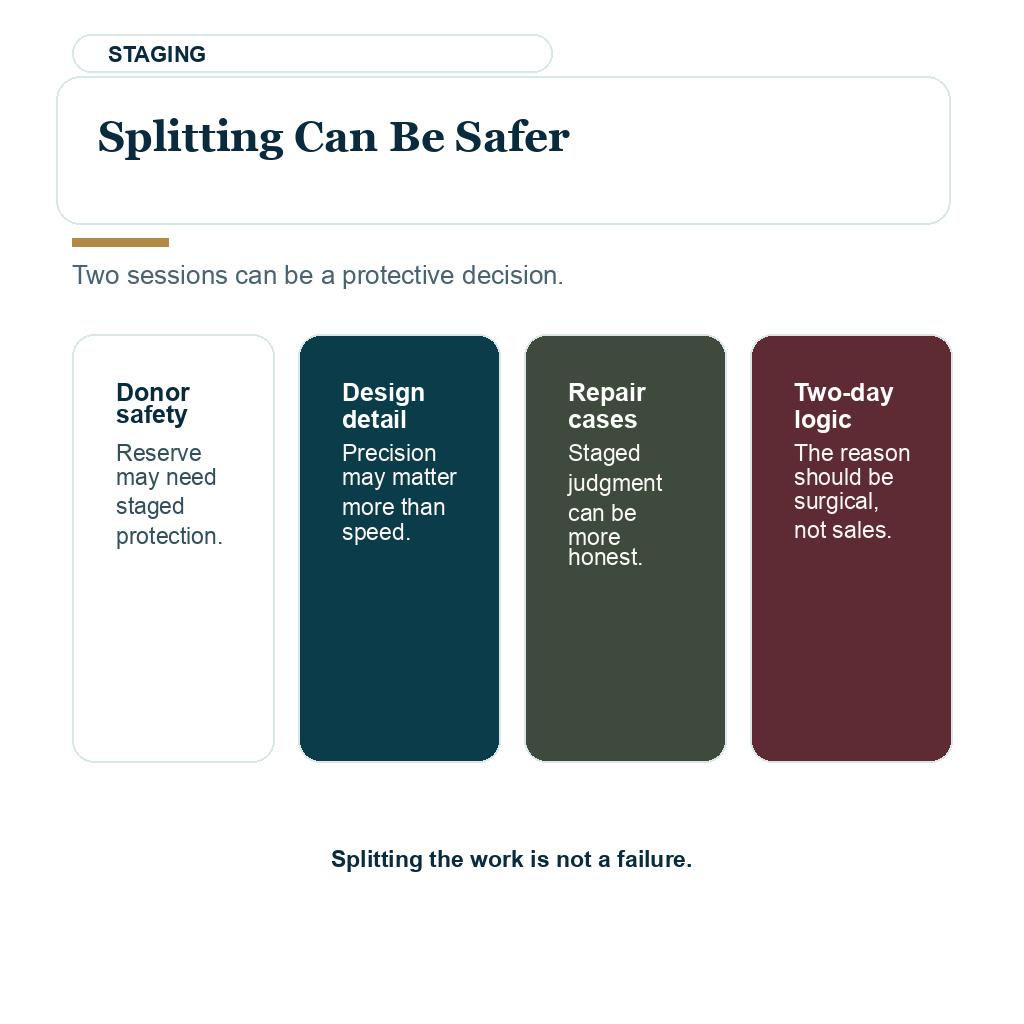
Splitting or reducing a session makes sense when the donor area needs protection, the recipient area plan needs more precision than speed, the medical history is borderline, body position is not tolerated, or graft handling would become too compressed. Splitting the work is not a failure. It can be the decision that protects the result.
There are also design reasons to avoid doing everything in one long push. A planned first stage can show how the donor responds, how the hairline heals, and how density develops. In repair cases, staged judgment can be especially valuable. You may want the biggest possible change in one trip, but the scalp and donor supply may argue for patience.
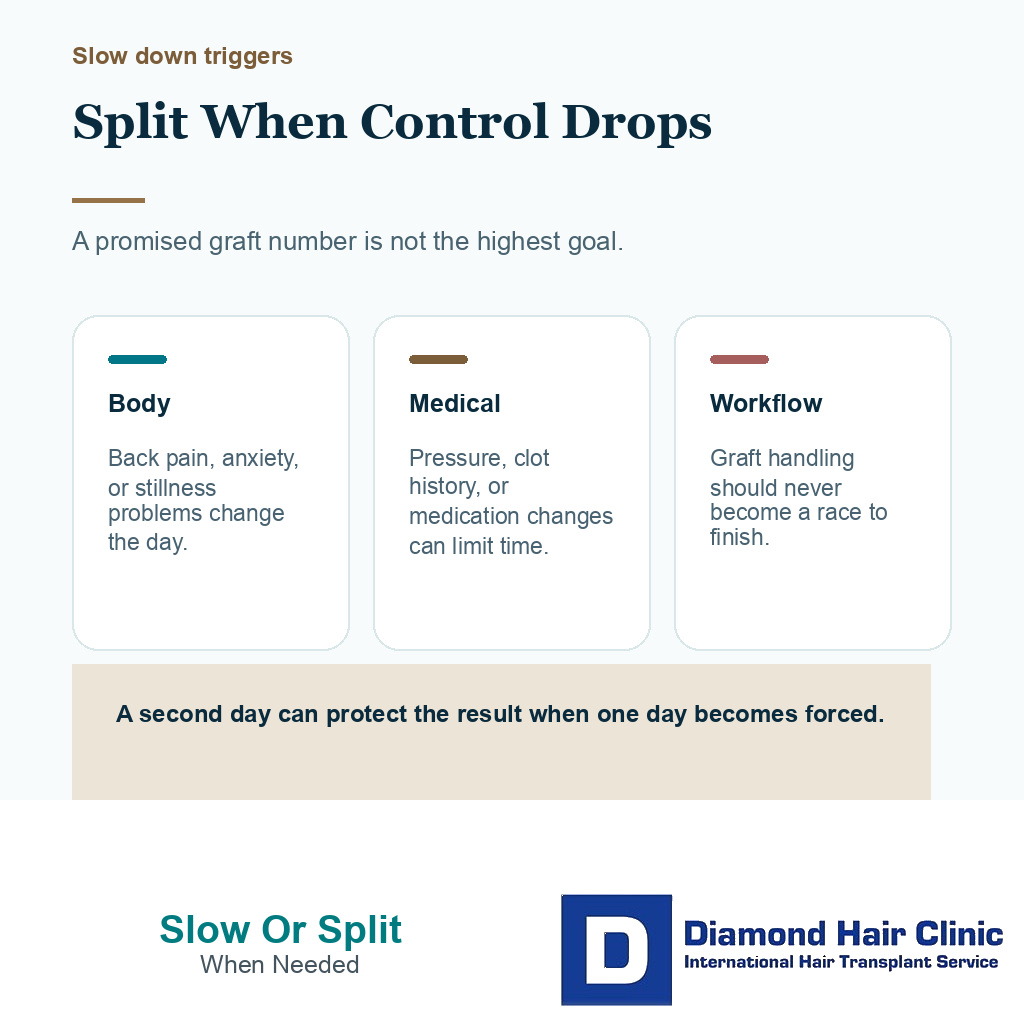
A staged plan can protect the result when the alternative is a rushed finish. It keeps the surgical decision clear when patient tolerance, graft handling, donor reserve, or timing becomes uncertain. Before I accept a long session, I want a clear explanation of why one session is reasonable, why two sessions may be better, or why the date should wait.
Questions before booking a long FUE session
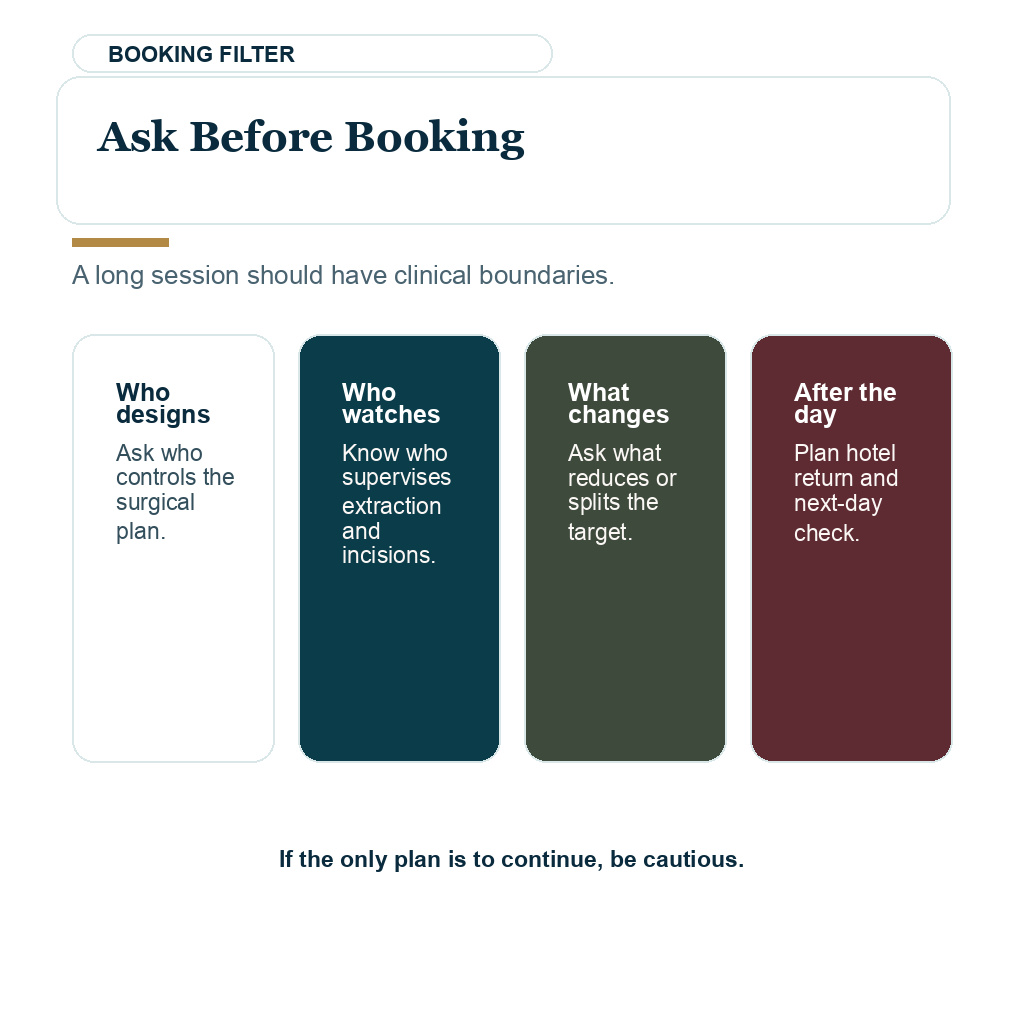
Before you pay a deposit or book flights for a long session, ask how the graft number was chosen. Ask who designs the hairline, who performs or supervises extraction, who creates the recipient area incisions, who places grafts, and who remains responsible if the plan needs to change. Ask what happens if pain returns, if your back becomes painful, or if the day is running longer than expected.
Knowing the assistants’ names is only the start. The clinic should say who is expected to stay with your case from extraction through placement and explain any planned change. If someone changes during the day, the handoff needs a named person who checks the graft count, remaining placement map, and shift in responsibility before work continues. Experience matters, but saying that a team has worked together for years is not a substitute for a clear role and handoff plan.
Also ask what would make the clinic reduce the graft number or split the case. This reveals whether the plan has real clinical boundaries. If the only answer is that the clinic always finishes the promised number, be cautious. A surgical plan needs a way to stop, not only a way to continue.
The end of a long day also needs planning. Ask how you will return to the hotel, what support you need on the first night after hair transplant, when the next day check happens, and whether the travel schedule gives your body enough time before flying. This matters more if the procedure runs longer than expected or you are alone in Istanbul.
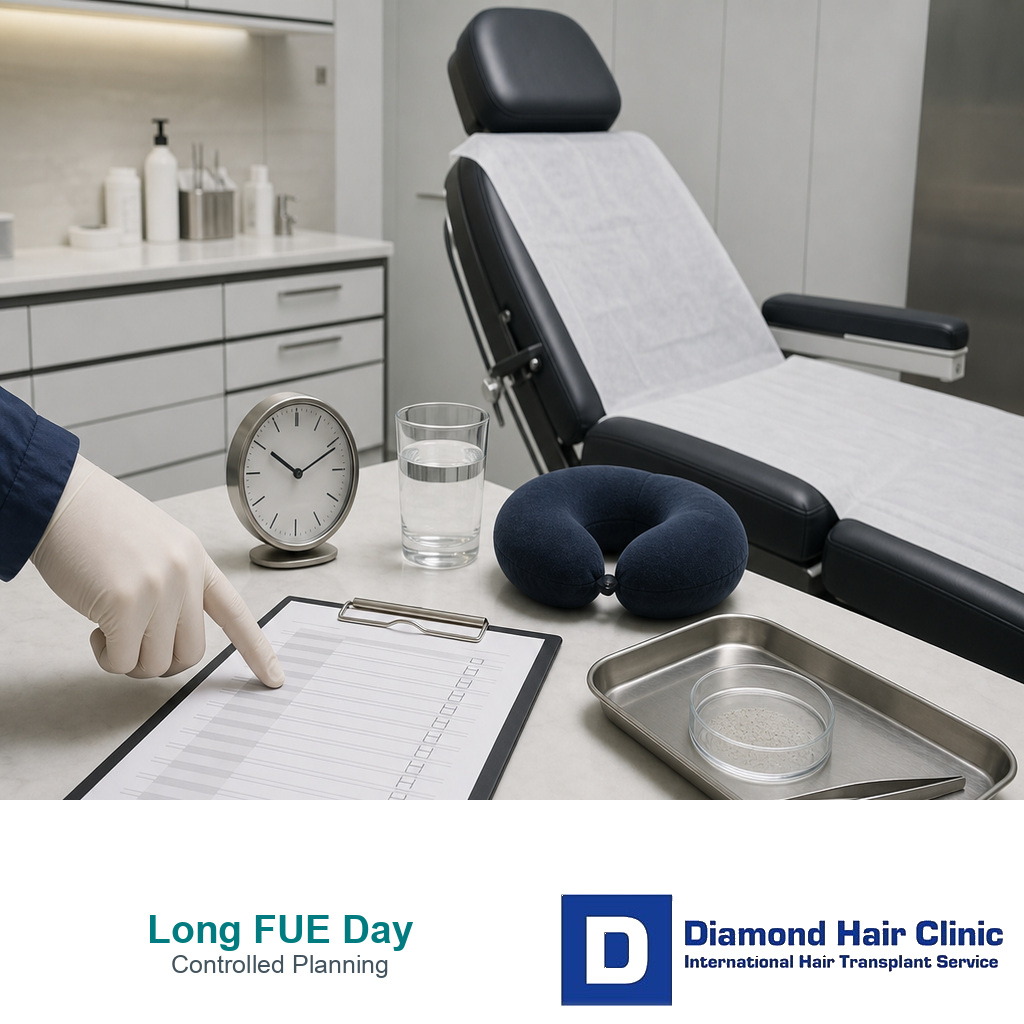
These eight slides show how I judge a long FUE day before accepting the plan. I look at the clock, the graft target, pain control and communication, body position, planned breaks, medical history, whether to split the work, and the questions to ask before booking. Swipe sideways, use the arrows one slide at a time, or choose a number below the image.