Graft Waiting Time Needs Protection
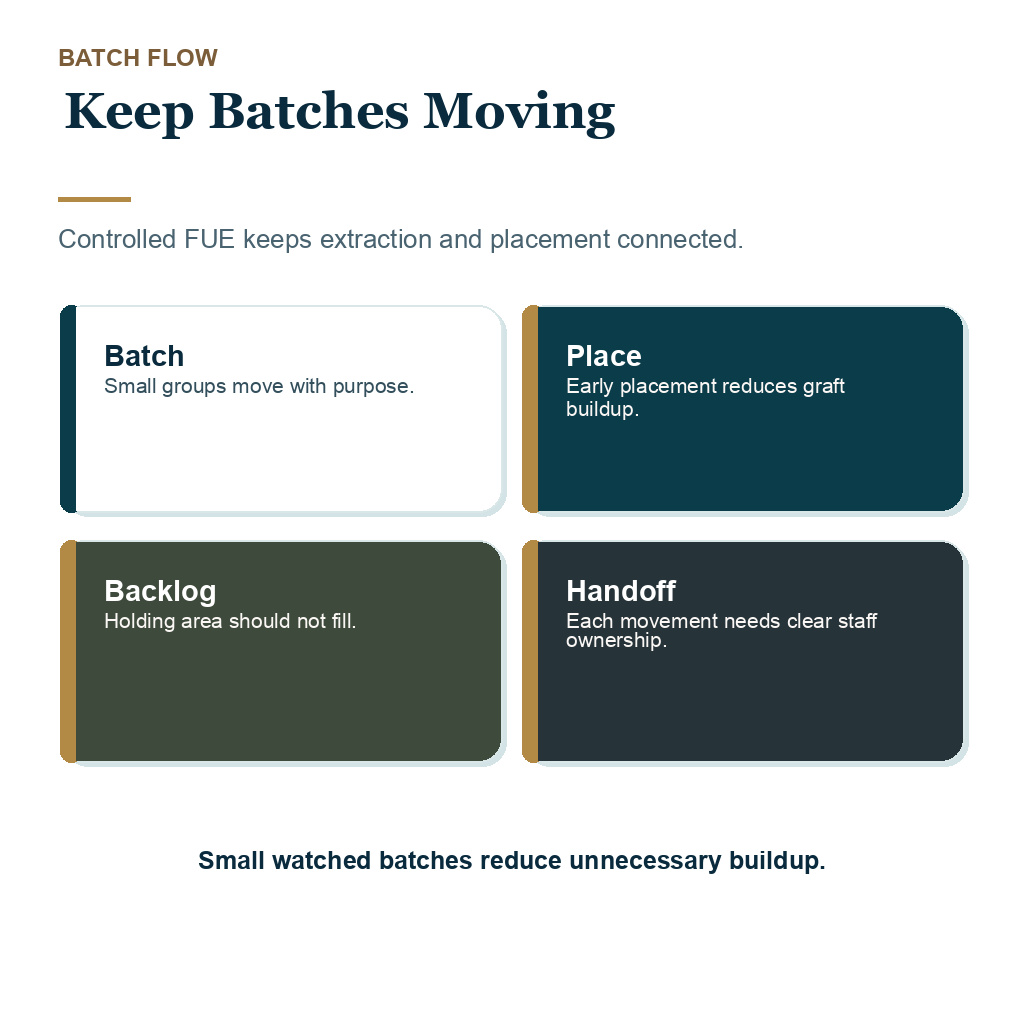
A long FUE session does not harm grafts simply because it takes hours. The more useful question is how each graft is protected after it leaves the donor area, while it waits, and before it is placed. In a controlled plan, grafts move through extraction, hydration, storage, sorting, and implantation in small, watched batches. In a weak plan, extraction can run too far ahead and the clinic may talk about speed or graft count while grafts wait longer than they should.
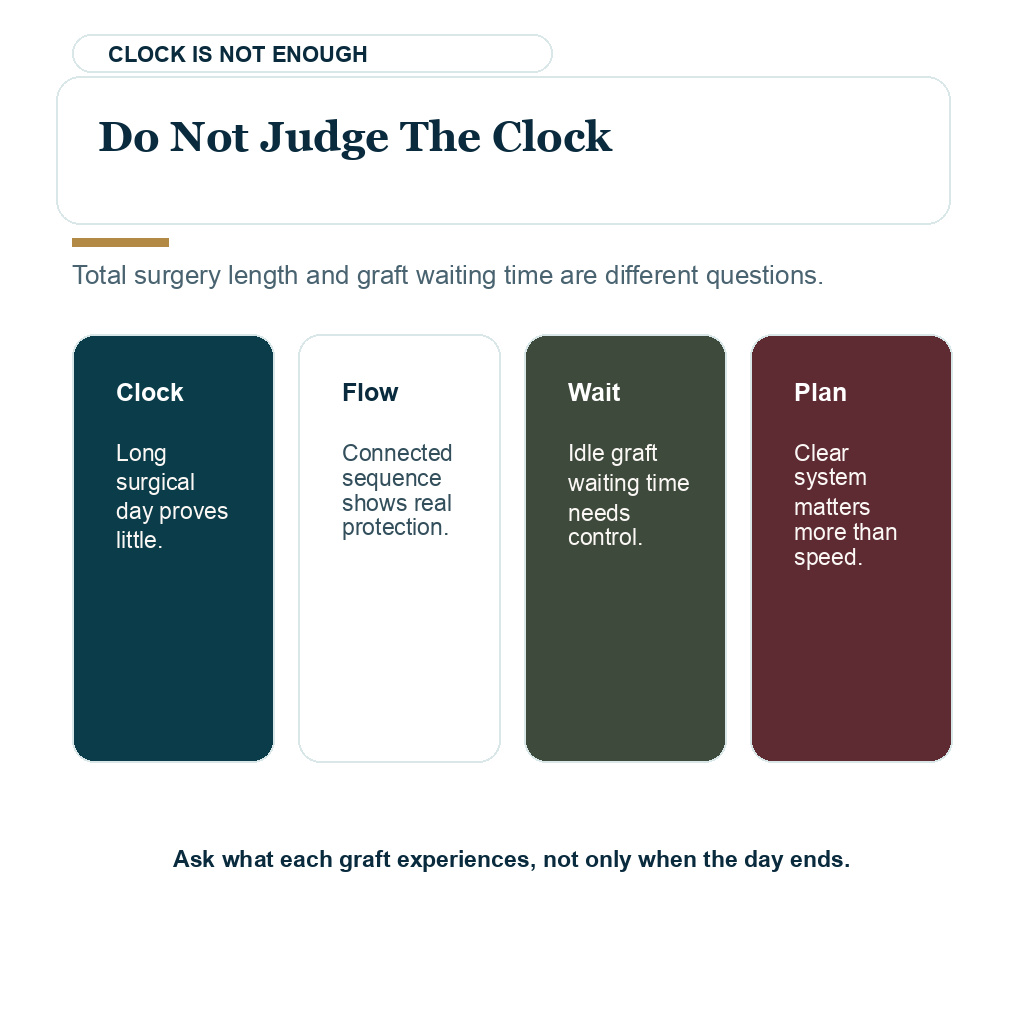
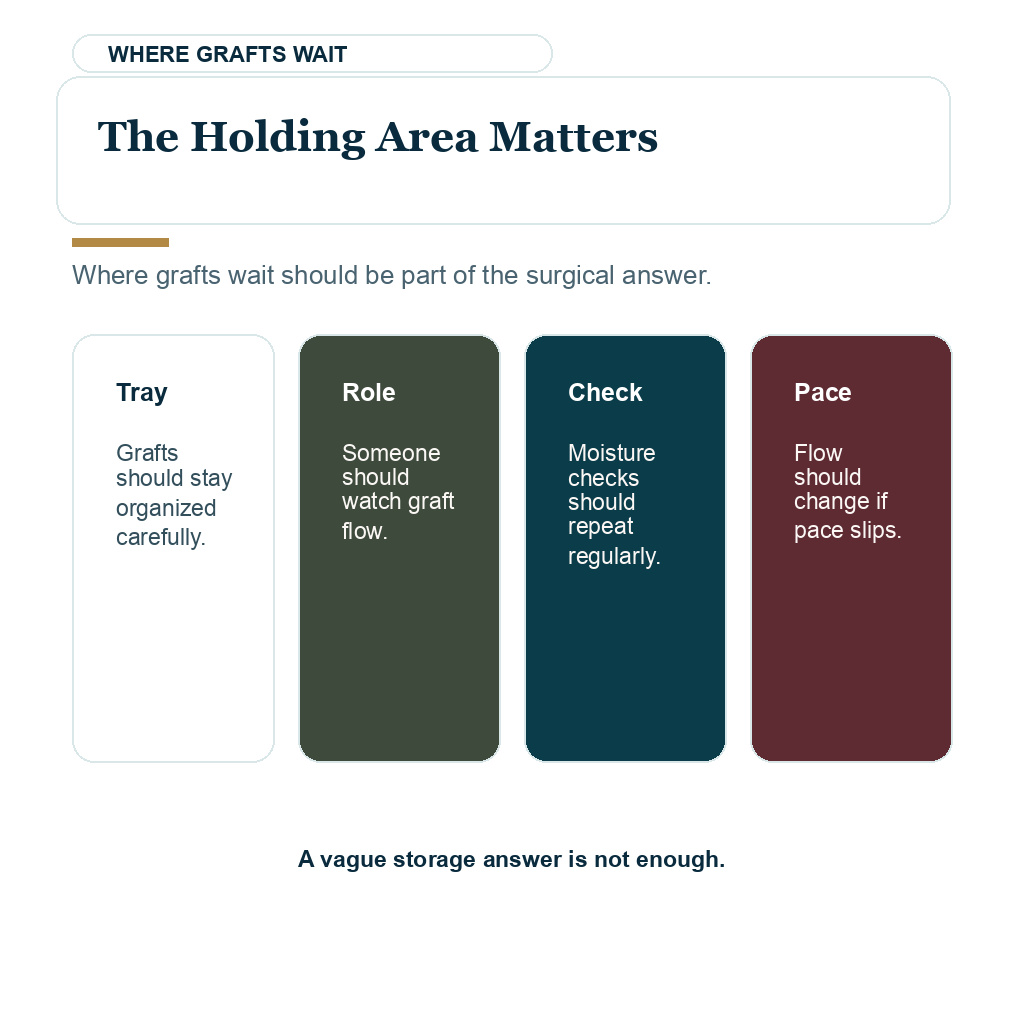
For a long hair transplant plan, I look for the system behind the day. I want to know how grafts are kept moist, where they wait, who watches the flow, whether placement starts early enough, and when I would split the plan instead of stretching it. Total surgery length and each graft’s waiting time are not the same thing.
If you are comparing a long hair transplant session, ask about graft flow before you focus on comfort, lunch breaks, or the final graft number.
Graft waiting time matters more than the wall clock
People often ask whether eight, ten, or twelve hours is too long for FUE. That question is reasonable, but it misses the detail that matters most. A long operation can stay organized when extraction and placement move together. A shorter operation can still be rough if grafts are removed in a large rush and then wait without a protected path.
For the graft, the sensitive period begins after removal from the donor area. It no longer has its normal blood supply. It depends on careful handling, moisture, appropriate holding conditions, and a smooth sequence into the recipient area. That does not mean every minute carries the same danger. It means time outside the body must be controlled, not guessed.
A serious answer describes the flow. If the clinic says only, “Do not worry, we do this every day,” you still have no picture of what happens between extraction and placement. A useful answer explains batch size, storage, placement readiness, and the threshold for changing the plan. When patients ask about grafts being out of the body, I translate that into a workflow question about when extraction starts, how batches are protected, and when placement begins.
What happens to a graft after removal?
After a graft is removed, it is small, delicate, and easy to injure. The hair follicle tissue must not dry. It should not be squeezed, scraped, overheated, or left in a careless pile. The surrounding tissue also matters because rough handling can damage what the eye does not immediately see.
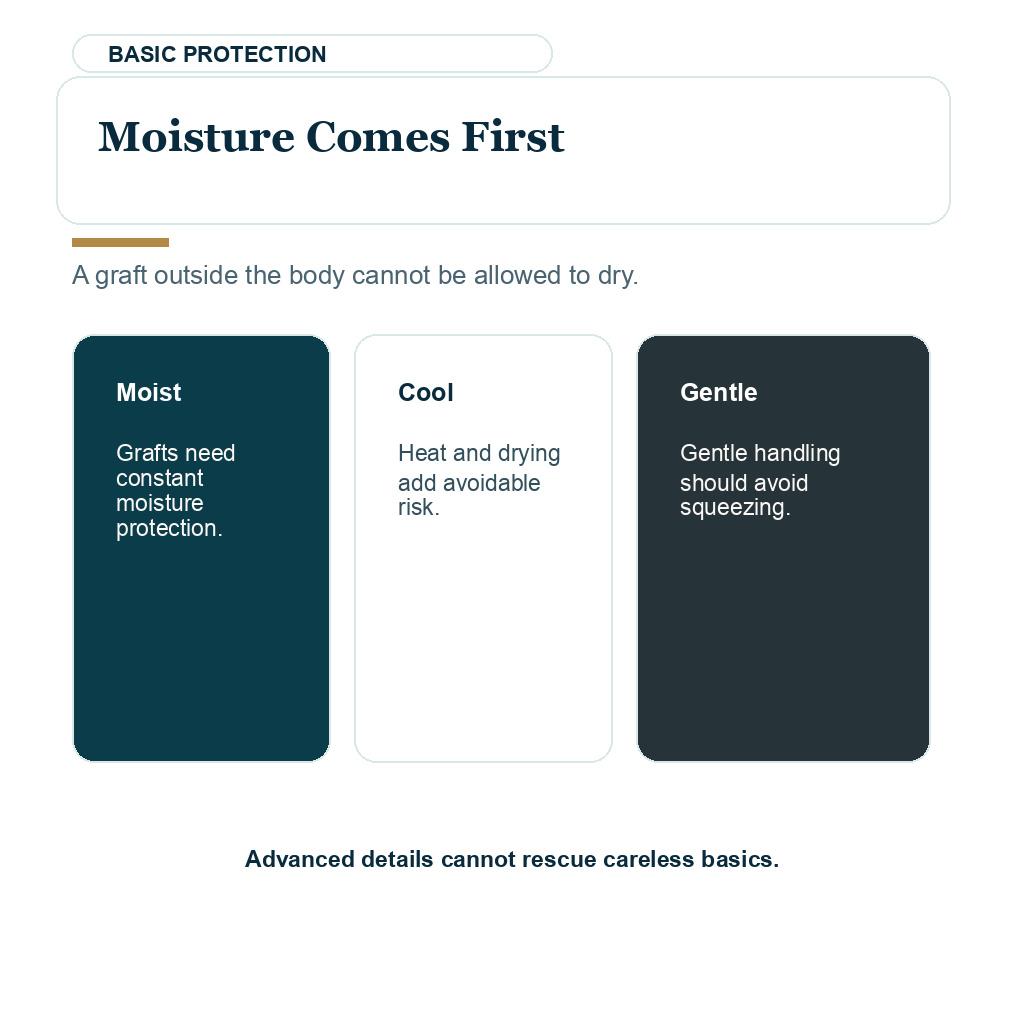
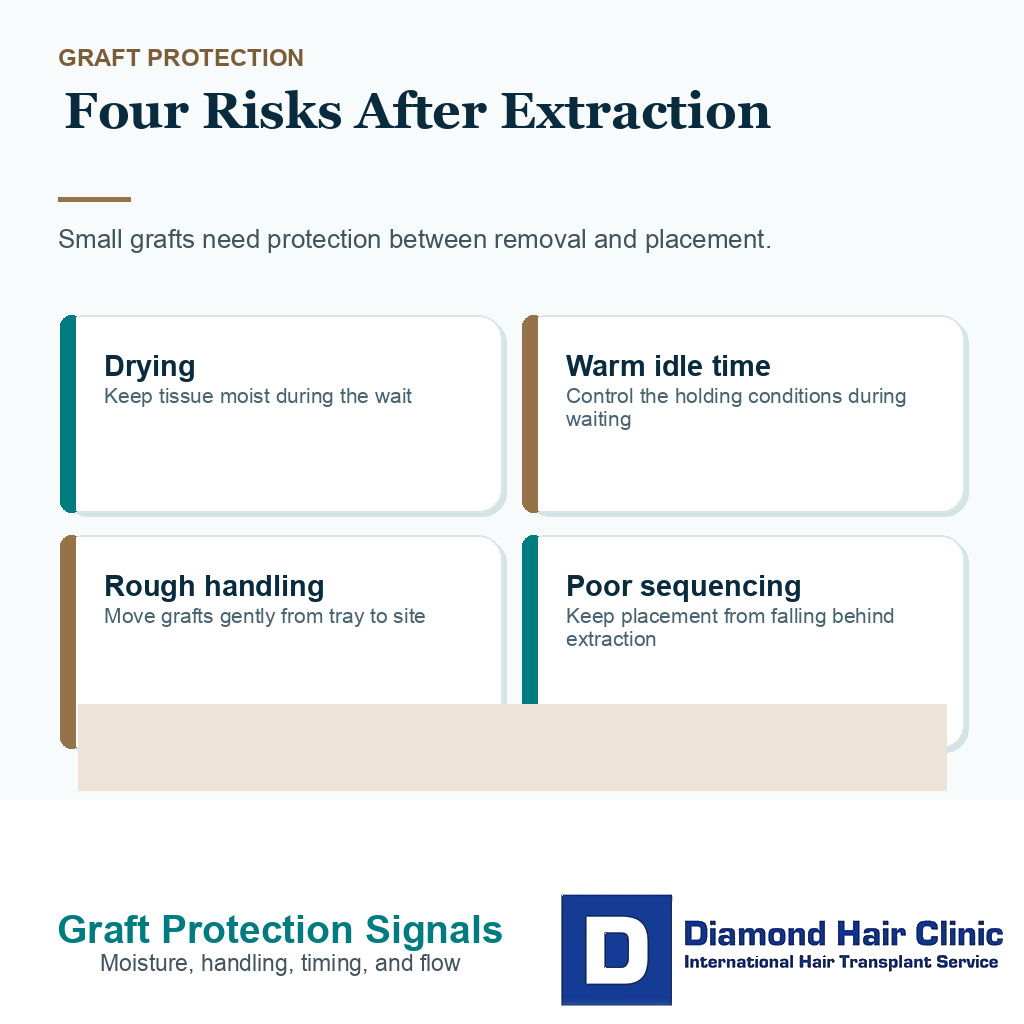
In practical terms, I want four things protected. First, grafts need moisture. Second, they need a holding environment that does not expose them to heat or drying. Third, they need gentle movement from tray to implantation. Fourth, the sequence must avoid unnecessary waiting. These are basic principles behind FUE hair transplant, even when you never see the tray under magnification.
I do not promise an exact survival percentage from one storage method. That would sound precise but may not reflect a real surgical day. The safer point is simpler. Good graft handling depends on hydration, temperature awareness, gentle handling, and limited idle time. Advanced solutions or laboratory details cannot rescue a disorganized operation if the basics are weak.
A long FUE session can still be controlled
The same total surgery time can mean different things. One clinic may extract in smaller batches, keep grafts protected, and place continuously as the plan progresses. Another may extract too much too early, then try to catch up later. The time estimate sounds similar, but the grafts experience a different day.
That workload is why a clinic that operates on too many hair transplant patients per day creates a separate concern. Even if each person is promised attention, the real test is whether the team has enough time, focus, and coordination to protect graft handling for every case.
Speed alone is not proof of safety. Slow work alone is not proof of care. What matters is whether extraction, holding, sorting, channel work, and placement are planned as one connected system.
Opening the recipient sites before FUE extraction is a recognized sequence, not a warning sign by itself. It can reduce the time between extraction and placement when the recipient design and planned graft number are already settled. The order only makes sense inside a controlled surgical plan, with the surgeon responsible for the design, donor limits, graft handling, and any change to the planned count.
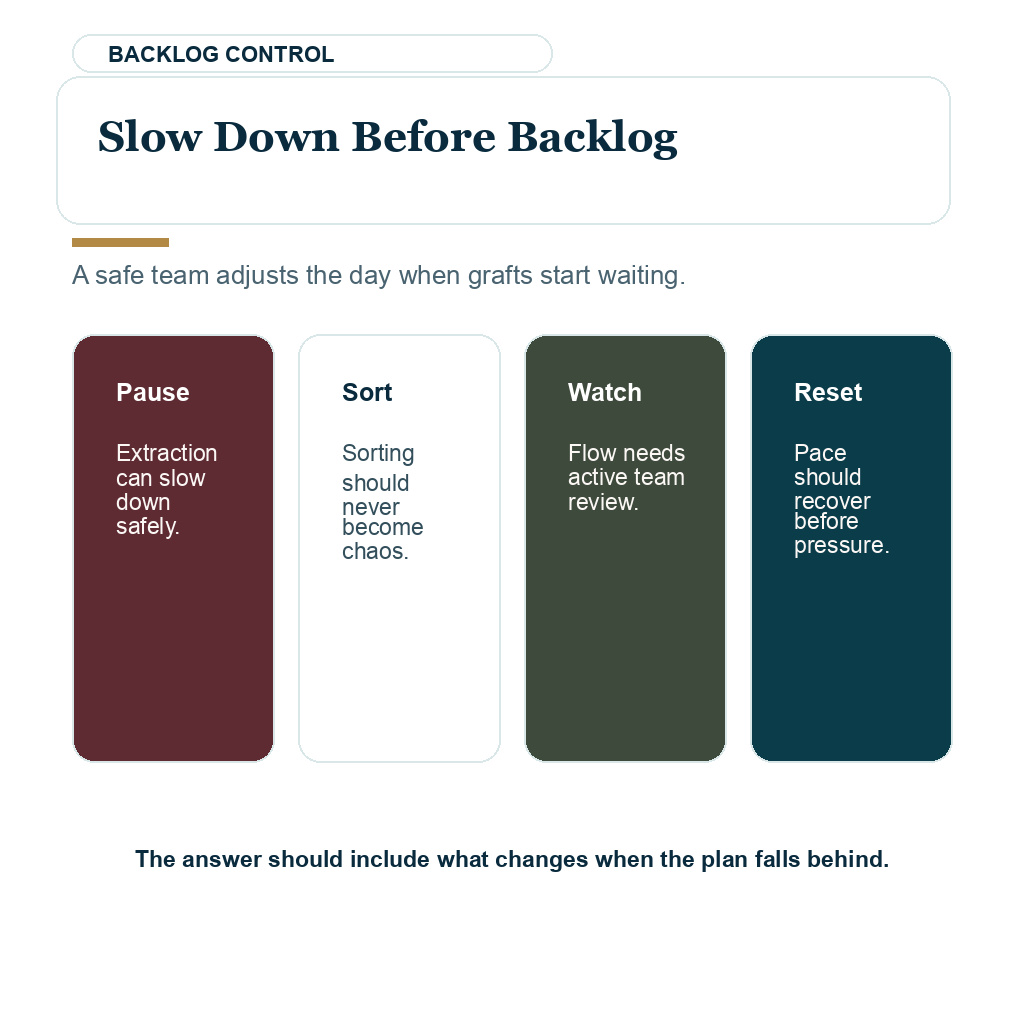
Breaks should be planned around graft flow, not the other way around. If extraction pauses, placement and graft holding should still stay controlled rather than leaving the last batch waiting because the room is off schedule. When the room falls behind, the current graft batch still needs a clear holding plan.
Graft flow during a long session should stay organized
Choose the closest description of the clinic plan. The selected state shows what should be clear before you trust the day.
Protected batches
Extraction and placement are sequenced so grafts do not build up without purpose. A useful answer gives a batch size and names the person watching hydration and movement from tray to placement.
Busy holding area
The clinic describes storage, but the flow sounds crowded or dependent on catching up later. Clarify when placement starts, how the team prevents a backlog, and what changes if the team falls behind.
Placement running late
Extraction is ahead of implantation, so graft waiting time becomes the main concern. A controlled team can slow extraction instead of letting the holding area fill.
Make sure the plan protects grafts already outside the donor area.
Split discussion
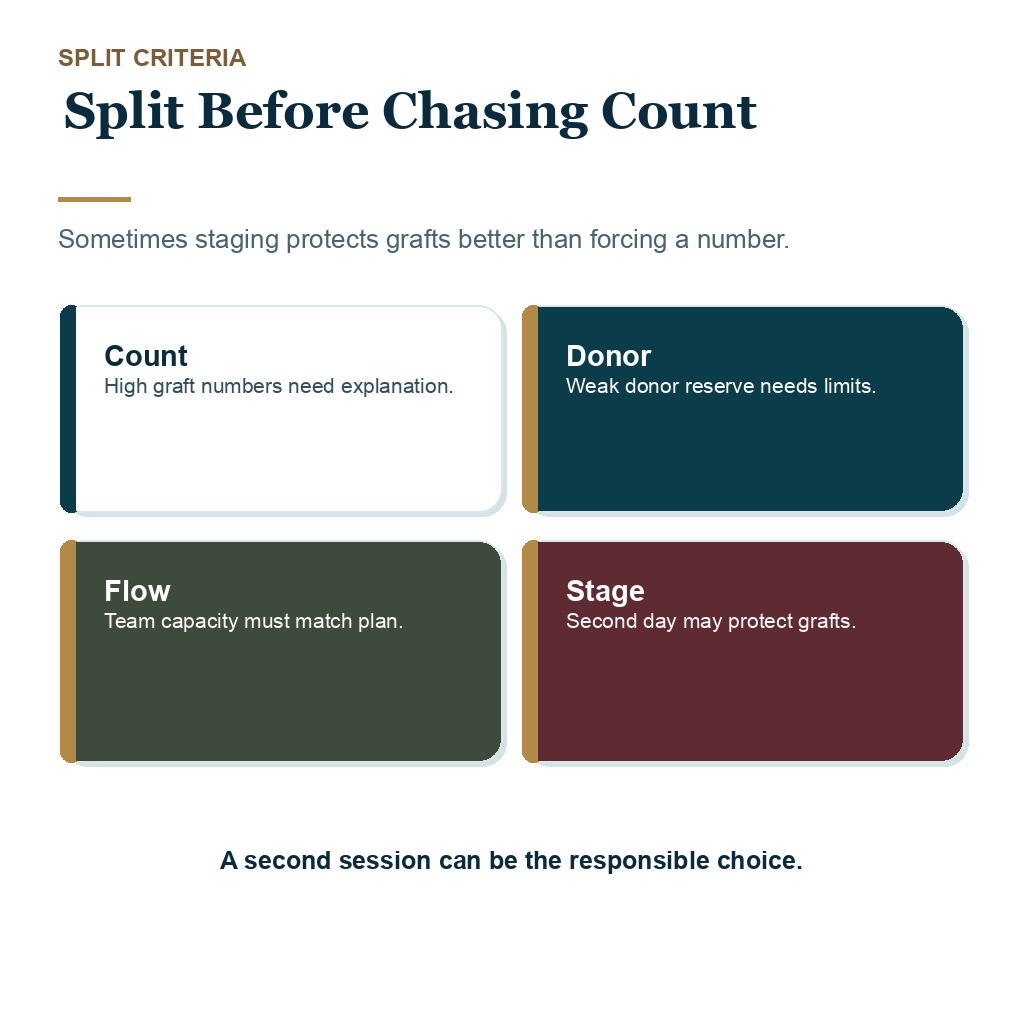
The proposed number, donor condition, or team flow makes a smaller second session worth discussing. Splitting can protect graft handling and donor planning. It is not a defeat.
Clarify what would be gained by staging the work and whether donor safety improves with a split plan.
Vague answer
The clinic gives reassurance but cannot explain graft movement, holding, placement sequence, or split criteria. That is a reason to slow the booking decision.
Pause before booking if the answer stays vague. Ask for a surgeon-led explanation, not only a coordinator promise.
Questions about graft flow before booking
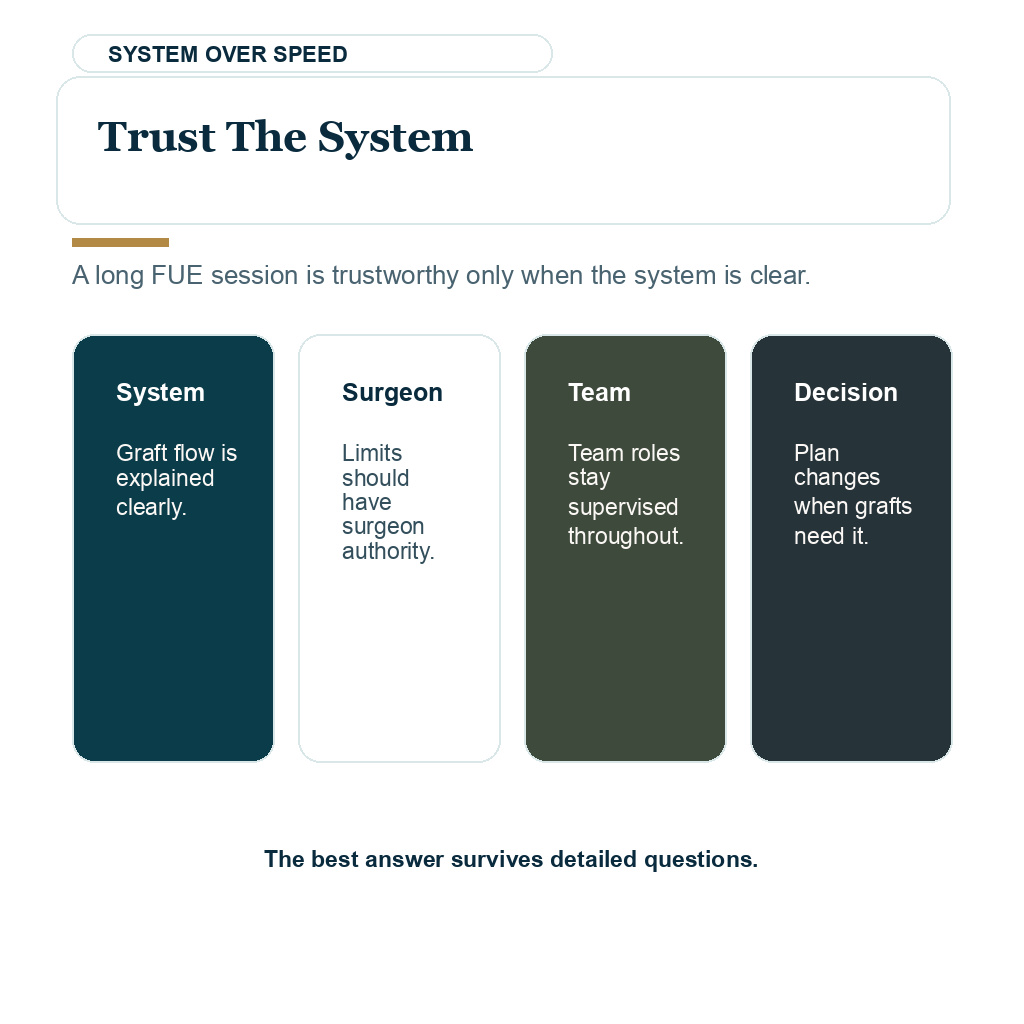
The best questions are practical, not aggressive. You want to know how grafts move from extraction to placement, where they wait, whether placement begins while extraction continues, who monitors the holding area, and what signs would make the surgeon reduce the graft count or split the operation. If placement slows down, the backup plan matters more than a confident survival percentage. Strong graft flow depends on team timing, holding conditions, and the willingness to reduce the target before quality drops.
This matters before money, flights, and dates make you feel locked in. A booking conversation should not be limited to photos and payment. In hair transplant booking messages, the message should reveal the surgical plan, not only confirm the appointment. If the answer comes only from a coordinator, you can still ask how the surgeon is involved in the graft flow decision. A coordinator’s surgical plan is not the same as surgeon responsibility.
Good answers are usually concrete. They mention sequence, not only confidence. Weak answers stay broad and sound like “We use a good solution,” “We are very fast,” or “The team is experienced.” Those claims may be true, but they do not tell you how grafts are protected during the long part of the day.