


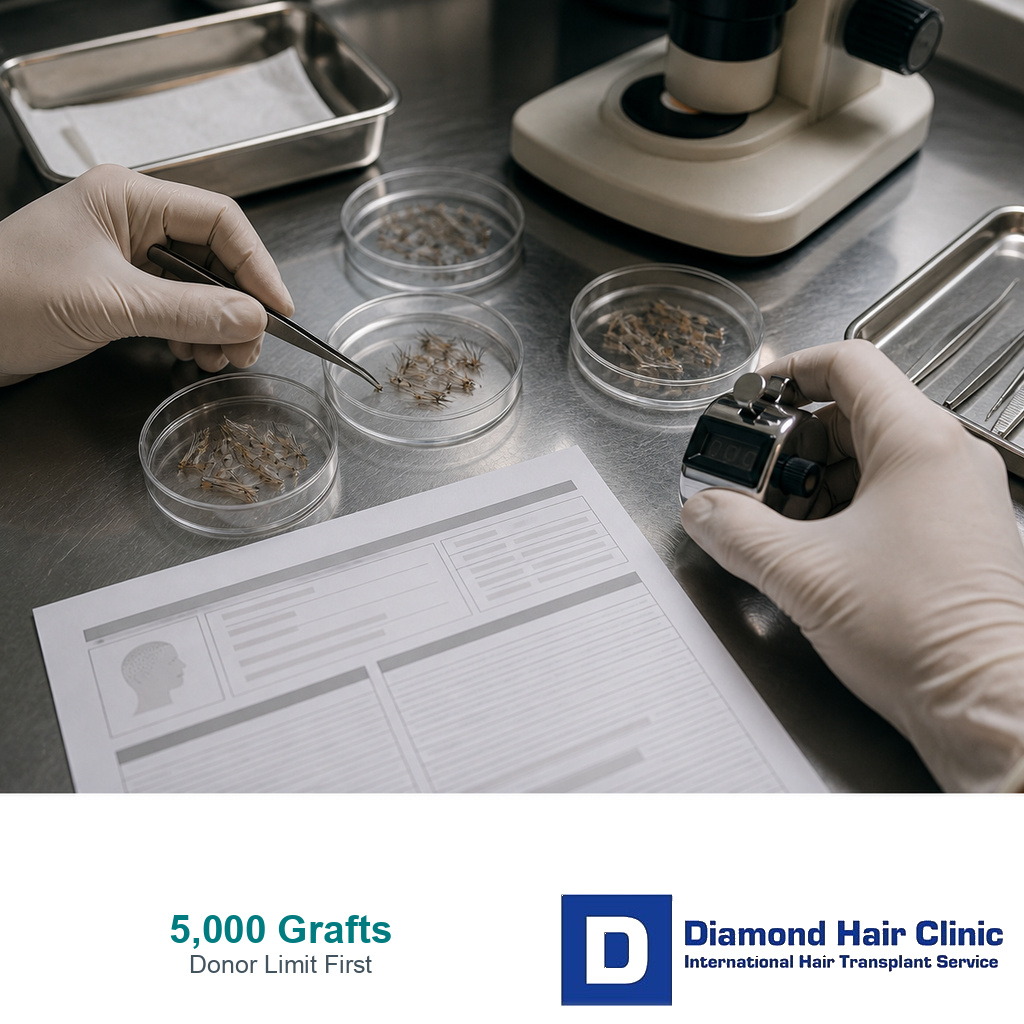
5000 Graft FUE and Donor Safety
A 5,000 graft session can be too much, but the number itself is not the problem. It becomes too much when the donor area, the hair loss pattern, the surgical team, or the long term plan cannot support it safely. In the right patient, a session this size may be reasonable. With many patients, a smaller first operation or staged surgery is the wiser choice. The same total number may be safer when it is divided with purpose instead of forced into one long day. A carefully staged 3,000 graft hair transplant may protect the donor area better than chasing a larger number too early.
That caution also applies before a very large session. A quote for 4,000 to 4,500 grafts may sit below some clinic definitions of a mega session, but it still needs large session discipline. Donor measurement, graft handling, a clear stopping rule, and a reason not to stage the work should be clear before surgery.
Some cases are safer without one large operation. A smaller staged hair transplant may protect the donor area more carefully.
A large graft number makes the donor cost my first concern, not the sales impression. I ask what it will cost the donor area. A graft number is not the result, and a larger number can be the weaker plan if it spends the donor area badly. It is a withdrawal from a limited lifetime supply.
For a 5,000 graft plan, the stopping rule matters more than the promise. If extraction quality, swelling, bleeding, or graft handling starts to drift, donor protection should override the printed estimate.
The consent for a large session should include a lower number plan. If the donor does not look as strong in person, the safer result may be fewer grafts placed well rather than the full number chased at any cost. Consent is stronger when it also covers a lower safe number on the day.
I understand why a large graft estimate feels reassuring. It sounds decisive. It can make a patient feel that years of hair loss may finally be handled in one day. But I only respect a large plan when the examination, donor quality, recipient area, and future planning all support it together.
Cases where a session this size can make sense
A large session can make sense when the patient has a strong donor area, good hair characteristics, a recipient area that truly needs broad coverage, and realistic expectations. The surgical team also has to be able to protect graft quality through a long operation. Without that, the number may look strong on paper and still be weak surgery. Long hair transplant session planning also matters here because comfort, breaks, anesthesia review, and graft handling must stay controlled when the day is extended.
For some patients with advanced frontal and midscalp loss, a larger session may help create better framing and coverage. Even then, I decide carefully where the grafts go. A patient often looks better when grafts are concentrated in the areas that create the strongest visual change, instead of being spread thinly over every bald area. A patient considering that size of session should also understand Norwood 4 or 5 hair transplant planning before judging whether front, crown, and reserve can all be treated safely.
The goal should not be to recreate teenage density over the whole scalp. If the hairline is planned too low, the patient may spend grafts before the future pattern is understood. The goal should be a natural result that respects the donor area and still leaves options for later. That difference matters more than the number itself.
Grafts and hairs are not the same count
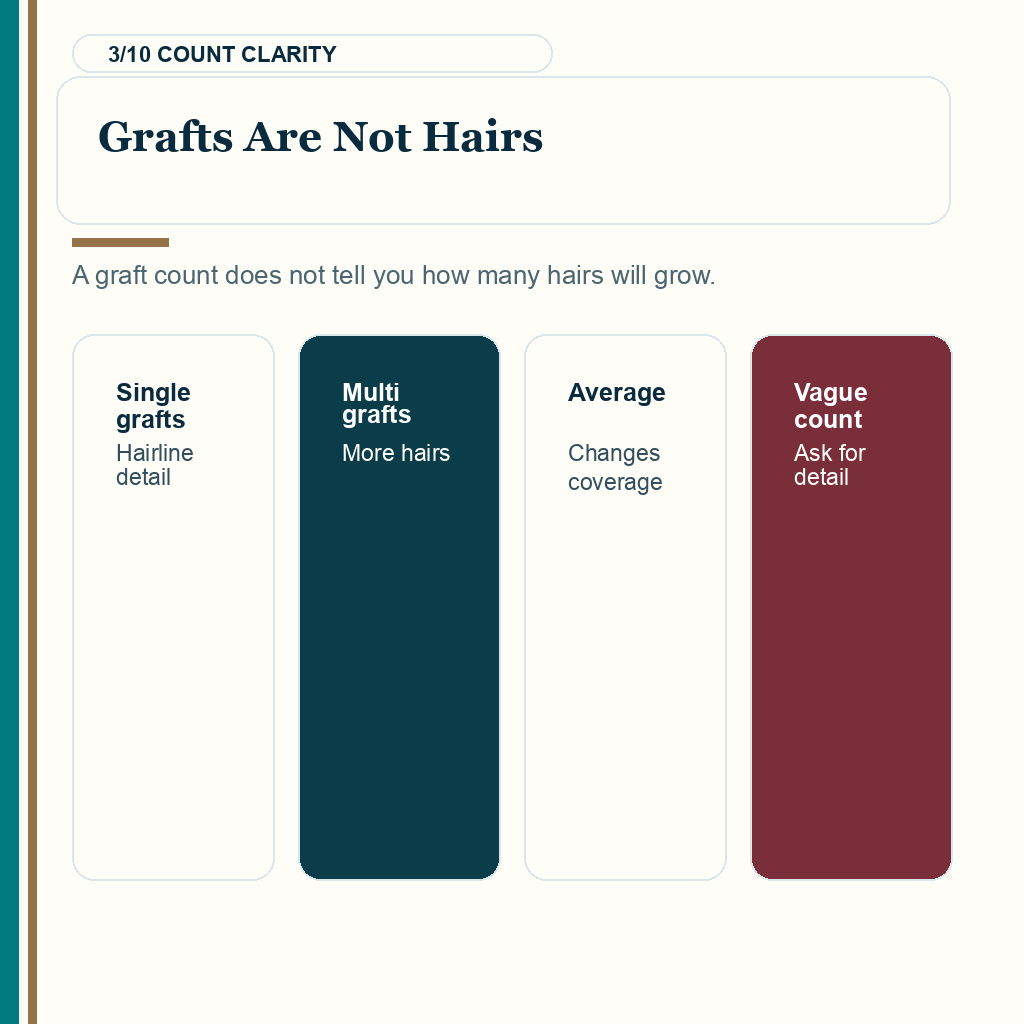
This is a common misunderstanding in large hair transplant planning. A graft is a follicular unit, and one graft usually contains one to four hairs, with occasional variation. The hair count inside a large plan can therefore be very different from patient to patient.
It matters because a patient with many two and three hair grafts may create stronger visual coverage than a patient with many single hair grafts, even if both receive the same graft number. The written number on a quote does not tell the whole story. I check the donor density, hair caliber, graft composition, and how many single hair grafts must be saved for the hairline.
Patients need to know exactly what the clinic is counting. Is the number the implanted follicular units, the extracted grafts, the number of hairs, or a package label? These are not the same thing. If the language is loose, two quotes that both say 5,000 may not be describing the same operation.
Mixed 5,000 graft quotes belong in a different category from 5,000 scalp grafts. The source mix changes hairline softness, coverage value, extraction markings, and later reserve. A total number is easier to judge when each source is tied to a zone.
A large session should never be judged only by the graft count. It needs judgment by how those grafts are selected, protected, divided between zones, and used in a way that still looks natural as the patient ages.

A plan for 5000 grafts should raise concern when donor safety is unclear
The number worries me when it appears before a proper medical assessment. If a clinic gives a large quote from a few photos and does not explain donor density, miniaturization, hair caliber, crown demand, and future hair loss, I slow down immediately. I also slow down if the plan moves higher on surgery day without the same medical explanation.
The issue is not only that the final density may disappoint the patient or create a thin looking hair transplant result. The greater danger is that the donor area may be weakened for life. A graft taken from the donor area is no longer available there. If too many are taken from a limited zone, the patient may trade frontal thinning for a patchy or visibly depleted donor.
I take donor area overharvesting very seriously. A big number can feel exciting during consultation, but if the donor is damaged, the patient may have fewer repair options later and a harder cosmetic problem than the original thinning.
I look at the donor area before the bald area
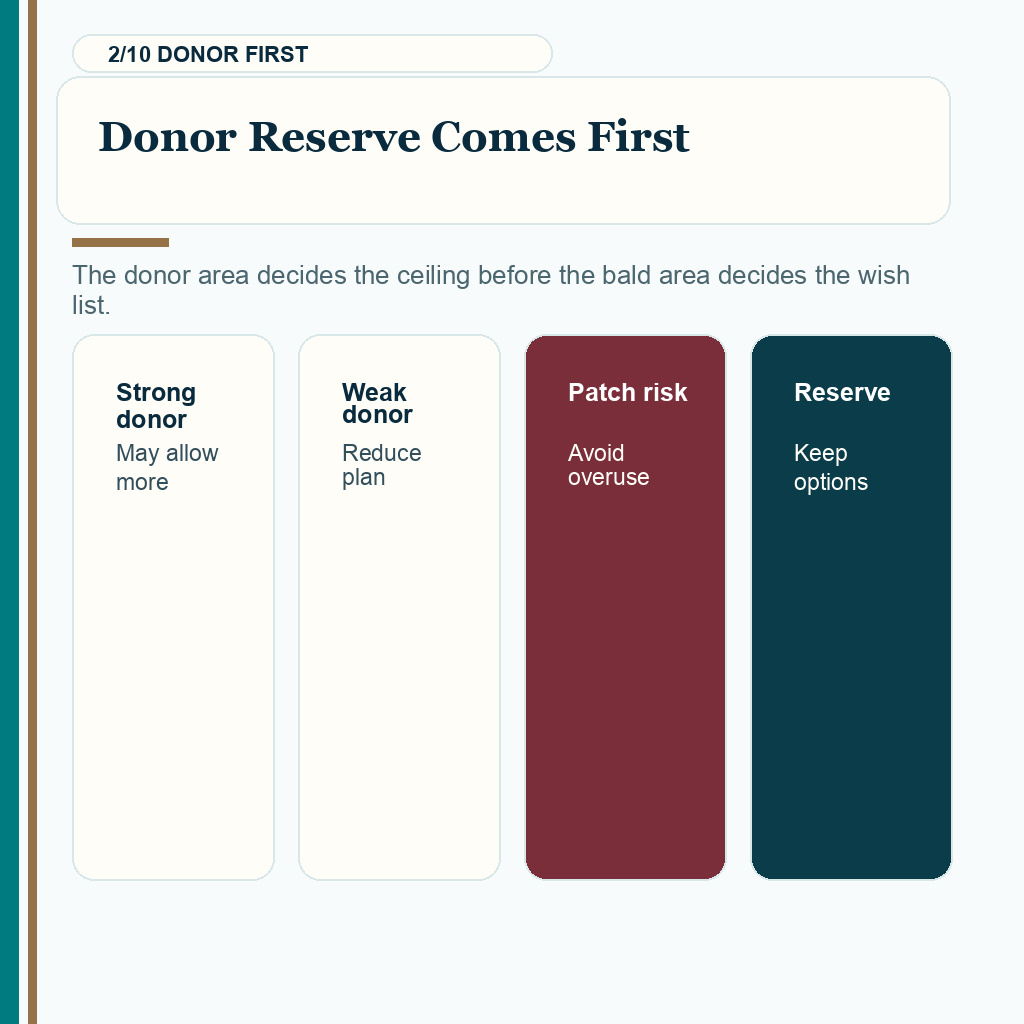
Many patients look at the bald area first and think the answer is to fill all of it. I look at the donor area first. The bald area tells me what the patient wants. The donor area tells me what is possible.
Two patients may both want a large transformation, but they should not simply receive the same plan. One may have thick hair, good density, and a stable safe donor zone. Another may have fine hair, diffuse thinning, retrograde loss, or previous surgery. The same number can be sensible in one patient and careless in another.
If I see signs that the donor is limited, the discussion changes. In those cases, the question of a weak donor area matters more than any large graft promise.
Good donor management means knowing what to use now and what to preserve for later. A patient may need donor reserve for a second session, crown work, repair, or future hair loss that is not obvious today.
A thin donor appearance late in the first year after a very large session should send the review back to baseline donor photos, extraction spread, surgery day donor photos, and the haircut the patient actually wears. The session size matters, but the better judgment is whether the remaining donor still looks even in normal life.
One long session versus staging the work
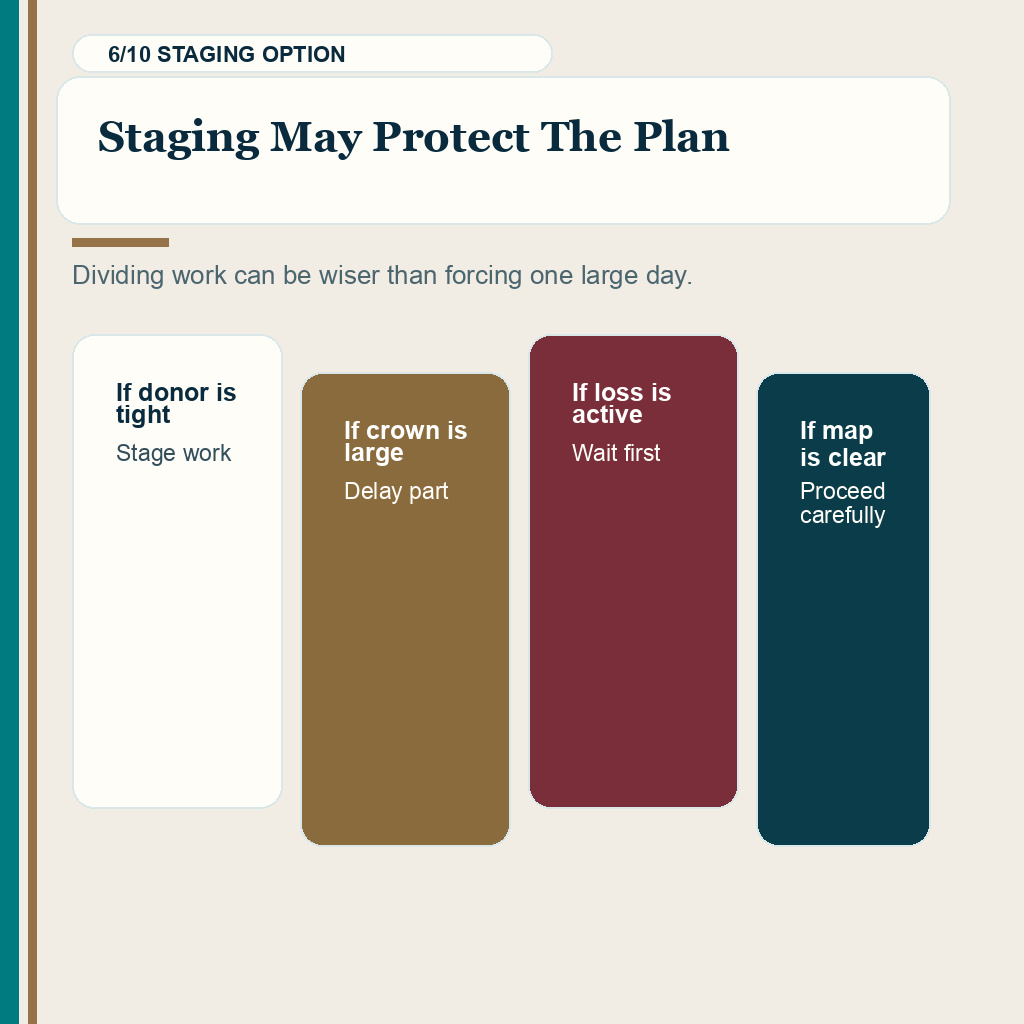
Sometimes one session is possible. Sometimes staging the work is safer. The answer depends on donor strength, recipient area size, expected surgical time, graft handling quality, and whether the patient’s goals can be met without exhausting the donor too quickly.
When a quote sits around 4,500 to 5,500 grafts, spreading the work over more than one day may reduce fatigue and time pressure, but it does not make the donor decision safe by itself. The donor still needs a measured extraction map, a density range for each treated area, and a smaller stopping point if the donor looks weaker in person.
I know staged surgery can feel disappointing at first. Patients naturally want one operation and one recovery. But staged planning can give the surgeon more control. It allows the first result to mature, shows how the patient heals, and protects grafts for areas that may matter more later.
That caution becomes stronger when the patient has advanced baldness and wants the hairline, midscalp, and crown all addressed. I apply the same judgment that I explain in the article about whether advanced baldness can be treated in one session. The safer approach is not always the fastest plan.
I also separate a large single session from more extreme offers. When very high graft numbers are presented as routine, that is the moment to ask more careful questions. The same planning problem becomes even more important when a clinic presents a 7,000 graft hair transplant over two days as an ordinary promise.
Coverage a large session can really create
There is no single universal answer, because a large session does not look the same on every scalp. Hair caliber, curl, color contrast, skin tone, graft quality, recipient area size, and the number of hairs inside each graft all change the visual result.
One patient may get a strong visual improvement from that number. Another may get only modest coverage because the hair is very fine, the scalp contrast is high, or the bald area is too large. I judge a plan by more than the graft count.
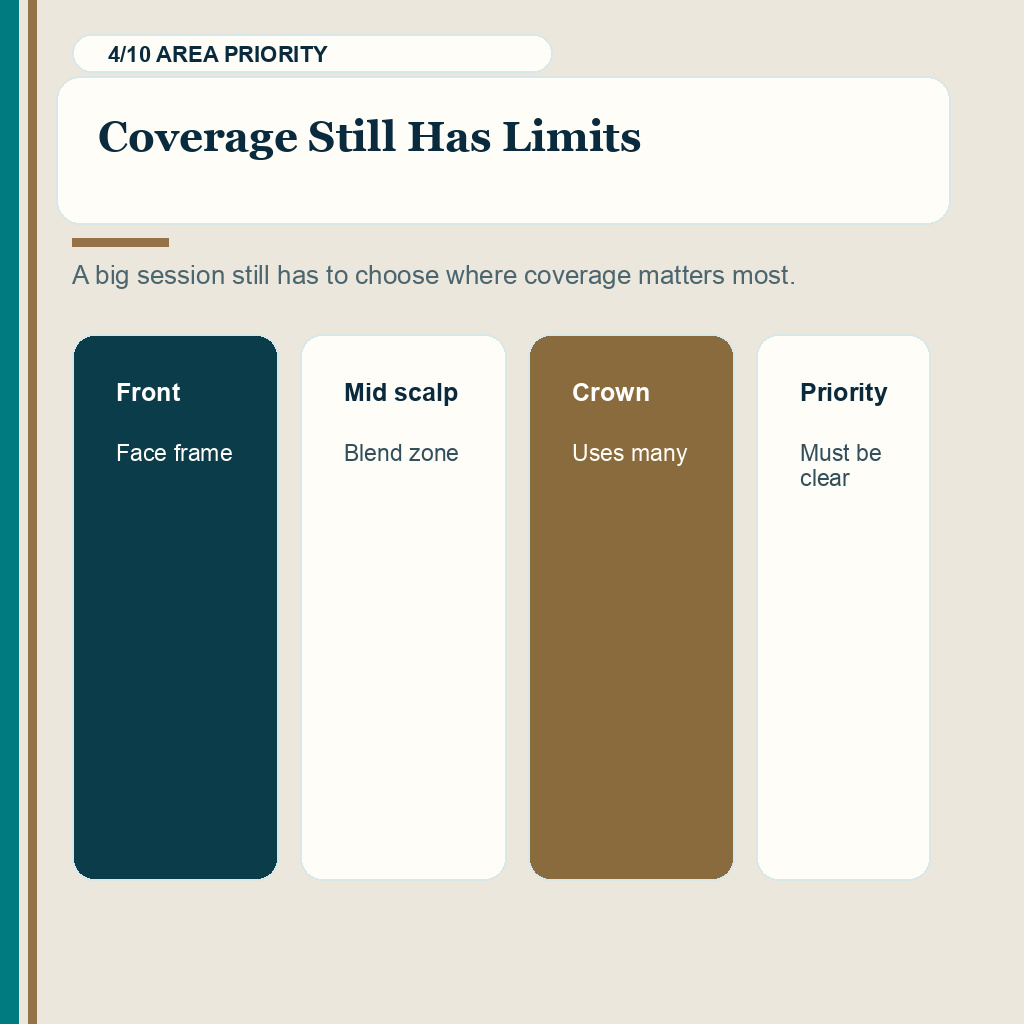
Five thousand grafts can still be a first stage in advanced baldness, not a complete answer. The crown can use a large part of that number, while the hairline and mid scalp still need enough grafts to frame the face. The treated zones need to be named clearly before a patient believes one large count automatically covers everything.
The more useful question is where those grafts will create the most value. If the frontal third is designed well, the patient may look much better even when the crown remains thinner. If the grafts are spread too widely, the whole scalp may still look weak.
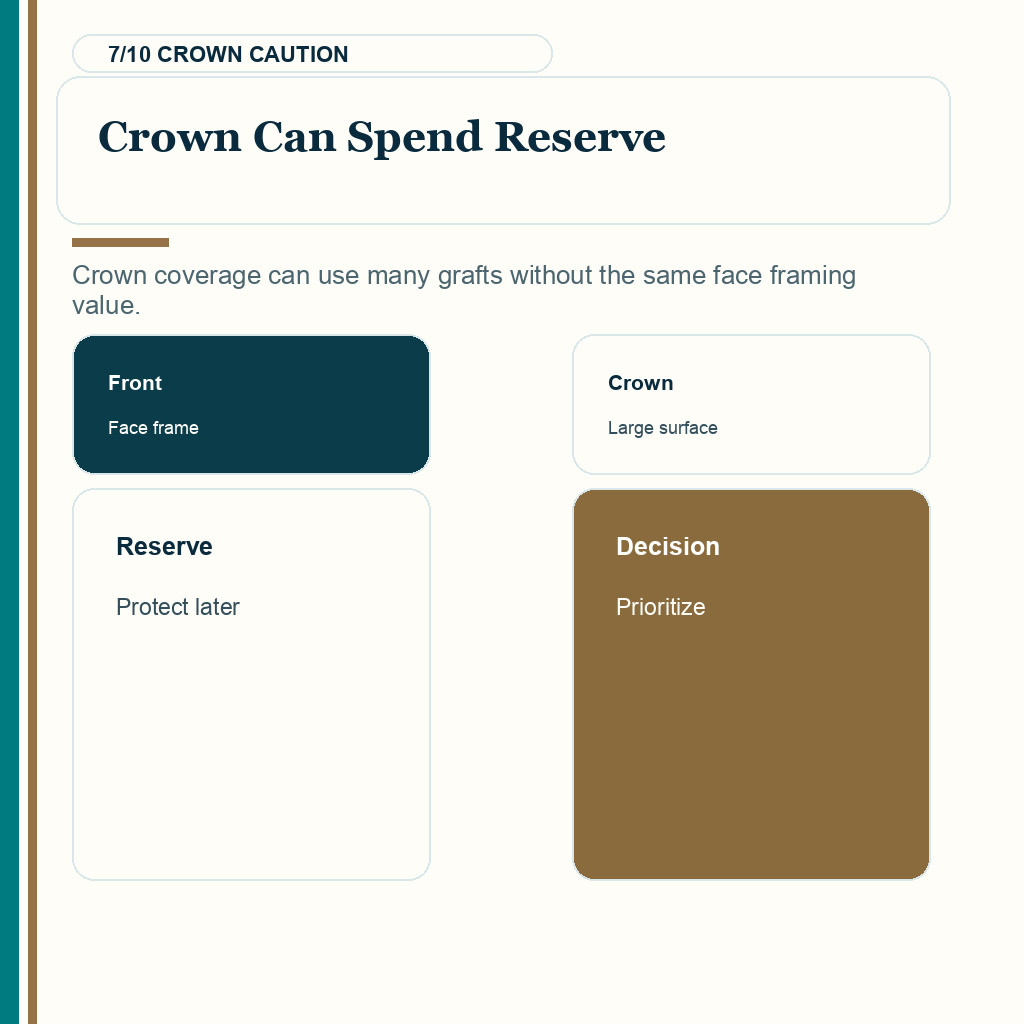
The choice between hairline or crown first matters in a large session plan. The crown can consume many grafts, and if it is filled too early or too aggressively, the patient may lose the chance to build a natural front that frames the face.
Pure math can help, as long as the patient understands that it is only a planning estimate. At 30 grafts per square centimeter, 5,000 grafts can cover 166.67 square centimeters. At 35 grafts per square centimeter, it can cover 142.86 square centimeters. At 40 grafts per square centimeter, it can cover 125 square centimeters. At 45 grafts per square centimeter, it can cover 111.11 square centimeters.
Those numbers are not a promise of cosmetic density. They only show the balance between area and density. If the area becomes larger, the average density must fall. If the density rises, the area that can be covered becomes smaller. A patient with advanced hair loss may still look thin if the grafts are spread over too much scalp.
I use this calculation to make the conversation clearer. A patient may want hairline, midscalp, and crown coverage in one operation, but the math may show that the plan would become too thin everywhere. In that case, priority planning is safer than pretending that one number can solve every zone equally. This is especially true in Norwood 6 or 7 hair transplant planning, where the result may fail if every zone is treated lightly.

Clinic promises that should make you pause
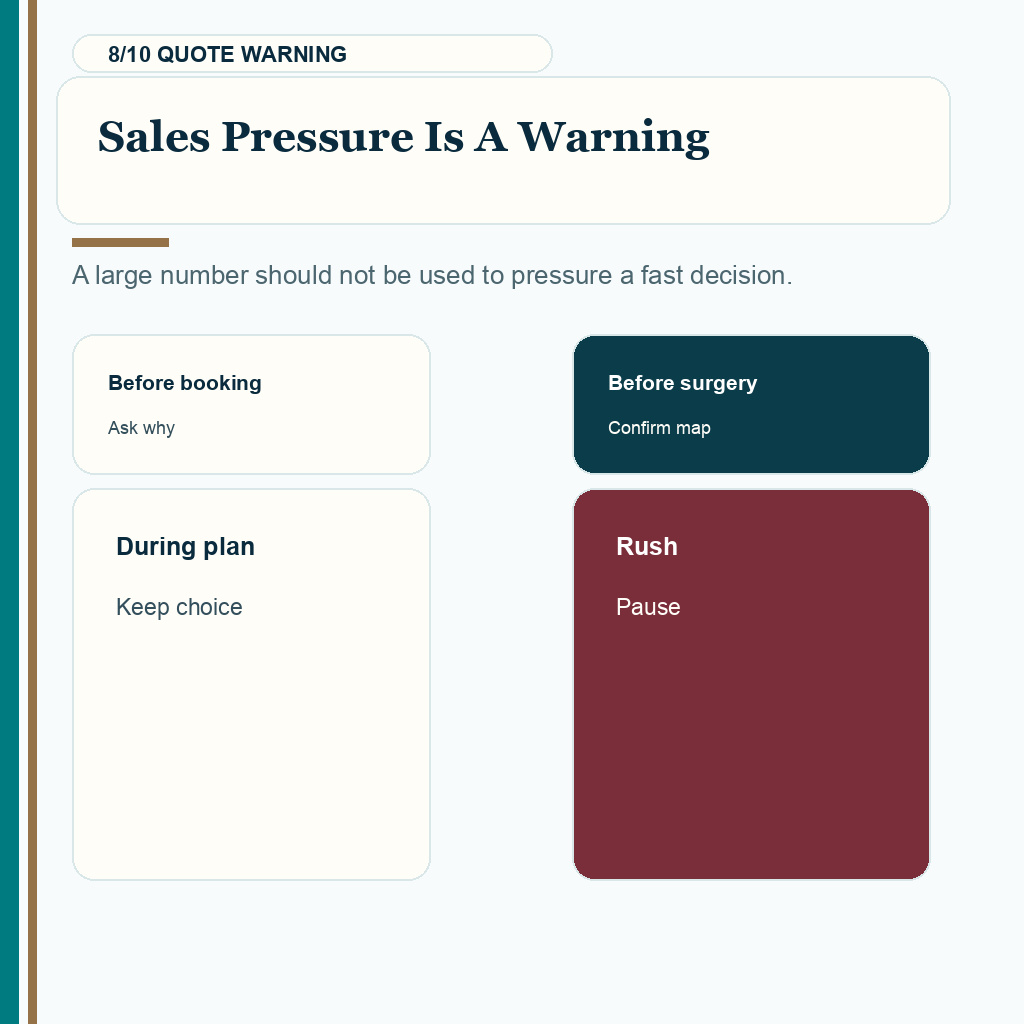
Pause when the clinic sells the number before explaining the plan. The number alone is not medical judgment. It can easily become a sales tool.
I become concerned when every patient is offered maximum grafts, when the price is built around the biggest number, or when the patient is told that more grafts always means a better result. The practical distinction is simple. A large session chosen after examination is different from a large package sold before diagnosis. I also worry when nobody clearly explains who will perform each part of the surgery.
Hair transplantation is not only extraction and placement. It is diagnosis, planning, donor management, hairline design, recipient area incision design, graft handling, density distribution, and long term strategy. If the patient does not know who actually performs the hair transplant, the graft number should not reassure them.
Large numbers can also distract patients from basic warning signs. If a clinic pressures you to book quickly, avoids donor limitations, promises full coverage in one session, or treats all patients with the same package, compare that behavior with the red flags of Turkish hair transplant clinics and the way the hair transplant cost in Turkey is being presented before paying a deposit.
Graft handling matters more in a long session
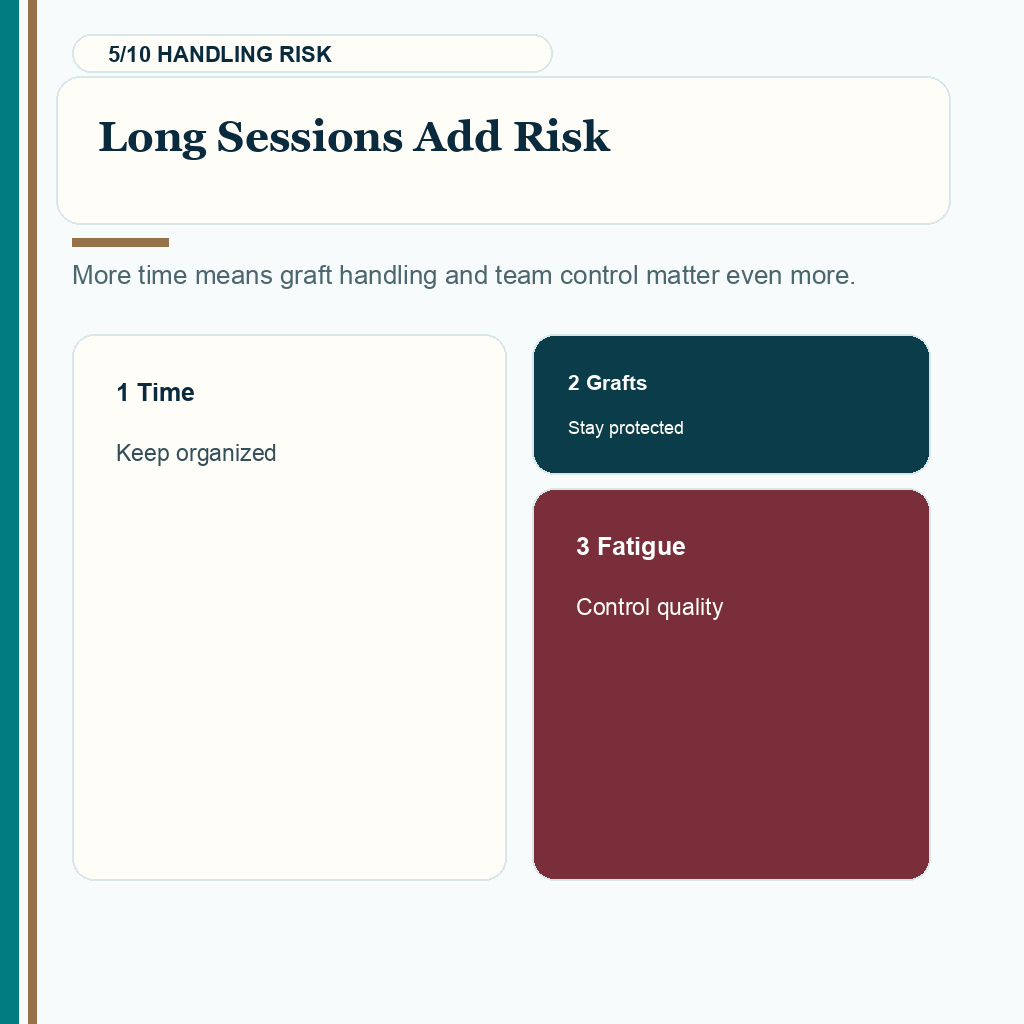
In a session of this size, the surgical day is long. That means the team must protect graft hydration, temperature, organization, timing, and gentle handling for many hours. The challenge is not only removing enough grafts. The challenge is keeping the quality of the last grafts as carefully protected as the first grafts.
For a plan this large, the stopping point matters as much as the target. The safe number is the number the donor and graft workflow can tolerate, not the number printed in the quote. A high count is especially risky in a second operation when the first surgery already spent donor hair. The question is not whether a clinic can move many grafts, but whether those grafts solve the right area without closing future options.

I do not accept assembly line thinking in large cases. A tired team, rushed placement, poor graft counting, or weak supervision can turn a large number into a weak result. The number is easy to remember. The result depends on whether the grafts were handled well from the first extraction to the last placement.
If a session size would create too much pressure on graft quality, I stage the work. A smaller controlled session is better than a larger operation where donor harvesting, recipient area creation, or implantation becomes less precise near the end.
A responsible large session plan should also have a safe stopping point. If the donor is not yielding clean grafts, bleeding is harder to control, recipient skin is under unusual pressure, the graft count is becoming less reliable, or the team cannot protect the last grafts as carefully as the first, the safer decision may be to reduce the number instead of forcing the quote.
Judging whether your graft quote is responsible
A reliable graft quote should come with reasoning. The clinic should explain where the grafts will go, why that number is needed, how the donor will be protected, what will be left for the future, and what result is realistic.

If two clinics give very different numbers, do not simply trust the higher one. A higher quote may be more aggressive, not more accurate. A lower quote may be safer, or it may be incomplete. If one clinic warns that the donor is weak while another offers a large number, review the weak donor warning with a high graft quote before booking. The useful difference is whether the clinic explains donor capacity, treated area, density target, future loss, and what happens if the donor does not support the planned number.
Conflicting estimates are common, which is why the reason behind the number matters more than the higher offer. That also matters when clinics give different answers about why graft numbers differ between clinics. A careful plan should connect the number to donor capacity, surface area, density goals, future hair loss, and the surgeon’s responsibility for the result.
Graft calculation starts with the area that needs visual priority, not with the number that sounds attractive. Then I check whether the donor can safely provide what the plan requires. That is the basis of how a surgeon calculates the required graft number.
Use this slide guide to check whether a 5,000 graft quote is supported by donor reserve, area priorities, handling control, staging logic, crown planning, and written answers. Move through the slides sideways, use the arrows one at a time, or tap a number below the image.

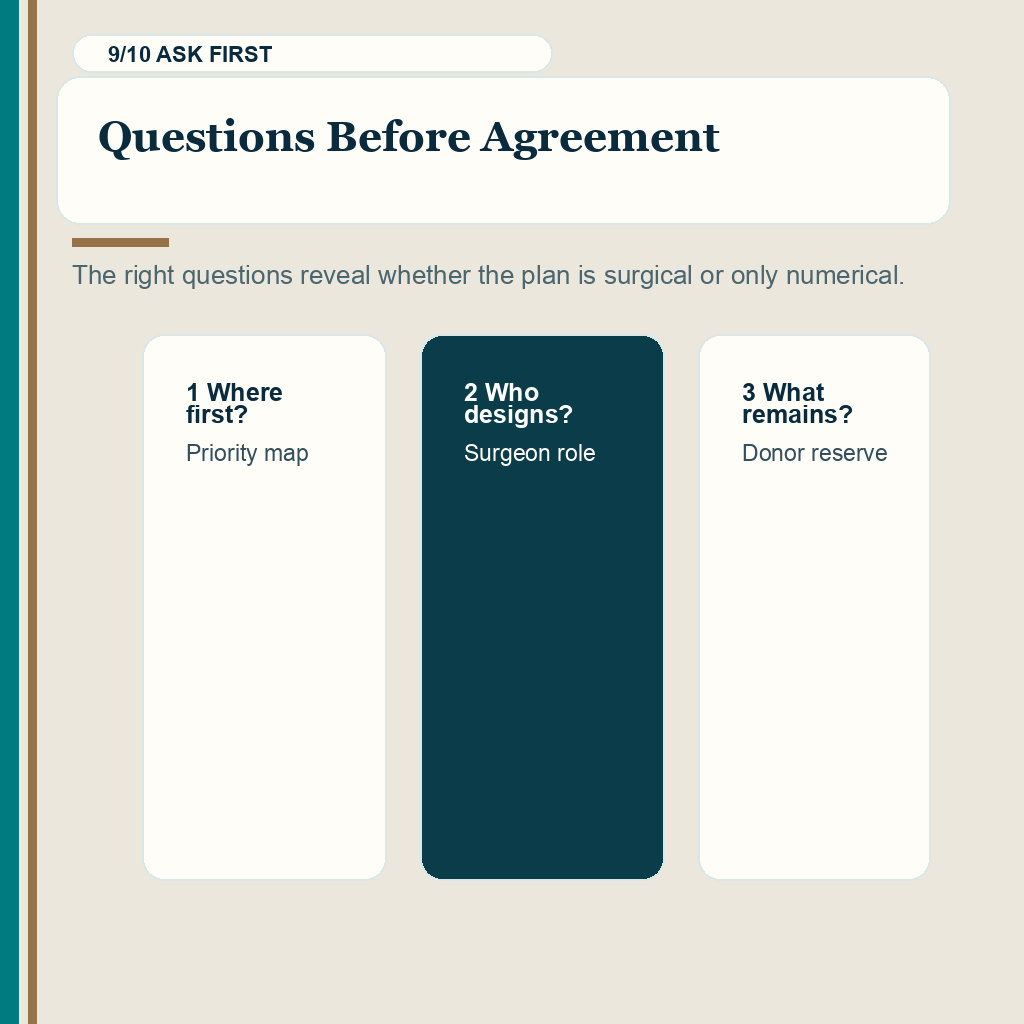

Questions before accepting a large session
Before committing to a large session, the operation needs a reason that fits your donor area, age, hair loss pattern, and future. A clinic should be able to explain that clearly, without making the patient feel rushed.
Ask where the grafts will go first if the donor should not be pushed too far. This question tells you a lot. If every area is promised full coverage, but nobody explains priority, density distribution, or what will be saved for later, the plan may be more emotional than surgical.
Before agreeing to a large session, the patient needs to know who will design the hairline, who will open the recipient area incisions, and how the grafts will be protected during a long operation. These are not small details. In a session of this size, fatigue, handling, timing, and judgment all matter.
One more question is very useful. If my crown or native hair continues to thin later, what will I still have left to work with? A good answer should include donor reserve, not only today’s coverage. That is often where a serious plan separates itself from a sales promise.
These questions are not meant to make the patient suspicious. They are meant to make the consultation clearer. A careful clinic will not be uncomfortable with careful questions before surgery.
Reasons I would advise waiting or doing less
I advise waiting when the hair loss is still moving quickly, when the patient is very young, when the donor area is not strong enough, when expectations are unrealistic, or when medical treatment should be considered before surgery. Sometimes the best surgical decision is not to operate yet.
I may also choose fewer grafts when the patient’s main need is framing the face, not filling every thin area. A carefully planned smaller session can look more natural than an aggressive operation that tries to solve everything at once. This is especially true when the crown is involved, because crown work can use many grafts without giving the same face framing benefit as the frontal area.
Before approving a large operation, I ask whether the patient is truly a good candidate for a hair transplant. If the diagnosis is wrong, if the donor is unstable, or if the patient is chasing density that surgery cannot responsibly create, then a bigger operation may only make the wrong plan bigger.
For me, the safer operation is the one that improves the patient while still leaving future options. A large number only has value when the donor area can truly support it.
Five thousand grafts need donor math
The size of the session is not impressive by itself. It is only reasonable when the donor area can give that number without looking depleted, when the recipient area truly needs it, and when the design still leaves options for future hair loss.
The reason behind the number has to be visible. A smaller first session, staged density, or a more conservative hairline can sometimes serve the patient better than one long operation that spends too much donor hair too early.

Read this review excerpt
Every single one of my questions was answered and they made sure I had all the details I needed to make an informed decision.