


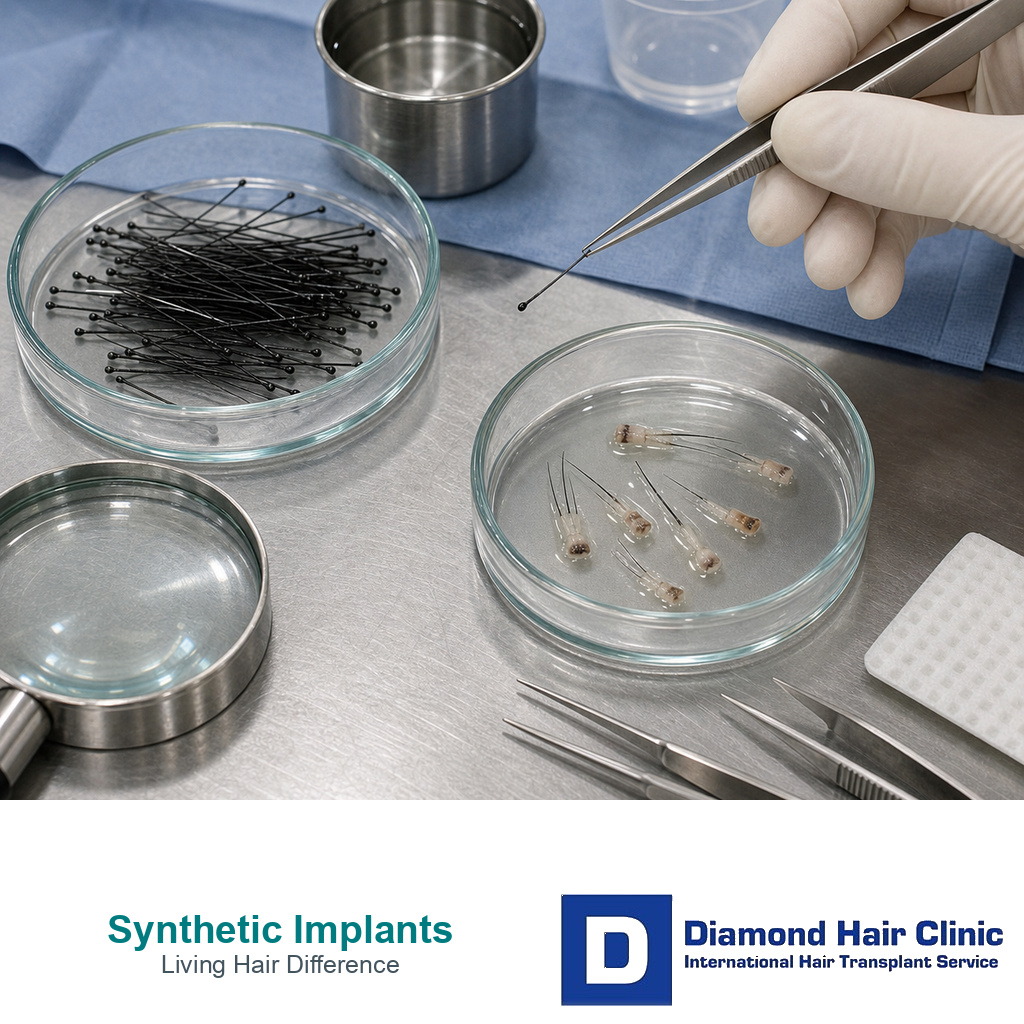
Synthetic Hair Implants Versus Hair Transplant Surgery
For most patients, no. Synthetic hair implants are not a safe, true alternative to a modern hair transplant. A real hair transplant moves living follicles from your own donor area to the thinning area. Synthetic hair implants place artificial foreign material into the scalp.
Living grafts still need the same person
Living grafts behave differently from artificial fibers because they come from the patient’s own donor supply. Someone else’s donor hair is not a routine substitute for that biology.
That difference matters. The instant coverage is the part patients notice first. The long term scalp behavior is the part that needs attention before any clinic makes the procedure sound simple. Synthetic fibers do not grow, do not heal like living tissue, and can create inflammation, infection, fiber loss, scarring, maintenance needs, or future repair problems.
If you are choosing between living grafts and artificial fibers, the first step is proper diagnosis, donor assessment, medical treatment when appropriate, and conservative surgical options before considering anything synthetic. This is not only about whether synthetic hair can look dense on day one. The question is what the scalp will look like years later.
Why do synthetic hair implants sound attractive to patients?
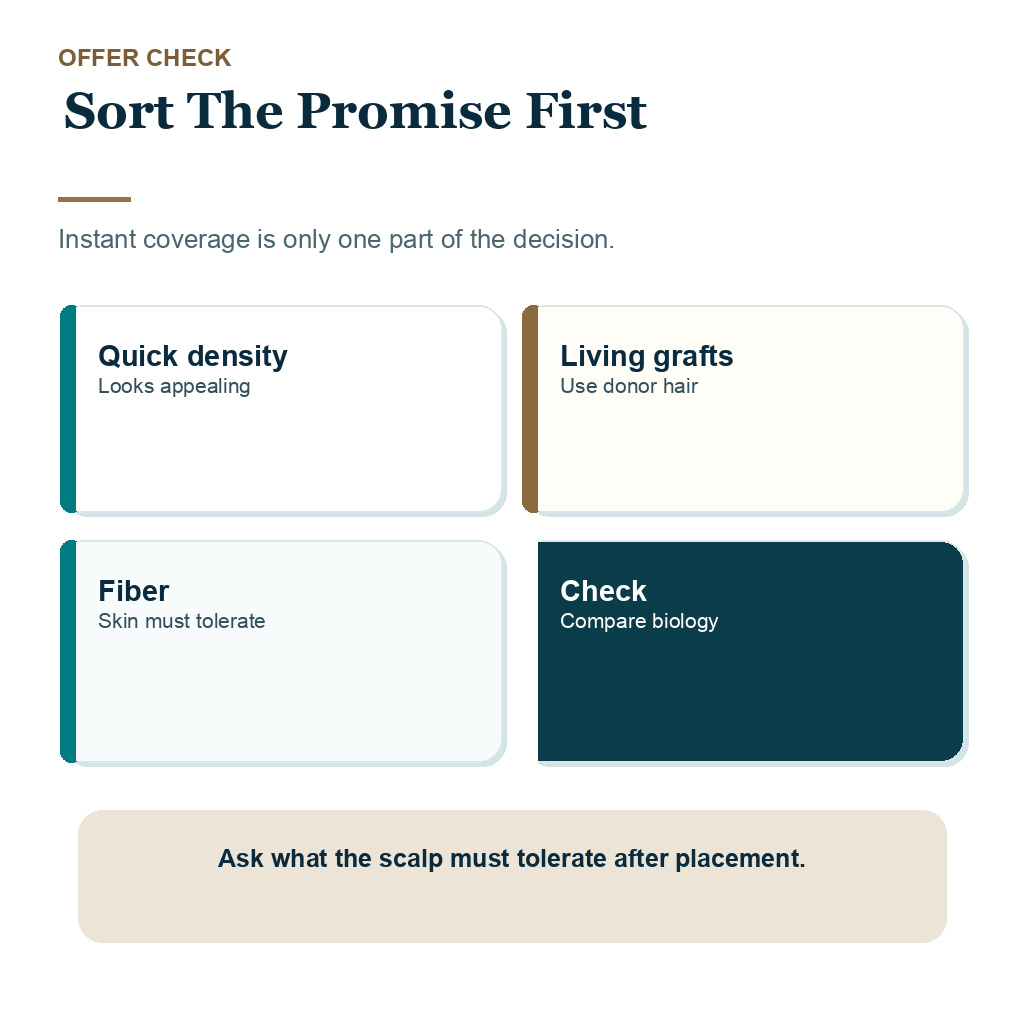
They sound attractive because they promise fast coverage without using the normal donor supply. For a patient who has weak donor hair, advanced hair loss, or disappointment after previous treatment, that can feel like an answer.
Artificial fiber density is the wrong first test because the scalp still has to tolerate the material. The exit plan matters more because scalp reaction, removal, scarring, infection risk, and later repair limits decide whether the method is truly simple.
A patient may think that weak donor reserve can be solved by artificial material. That is a reasonable question. The difficulty is that the scalp is not an empty surface where we can place anything and expect it to stay quiet.
That promise is exactly where caution should increase. A method that seems to bypass donor limits completely may be moving the risk into scalp reaction, maintenance, removal, and repair.
A real transplant is limited by biology. Synthetic fibers try to create the appearance of density without the same biology. It is better to discuss hair transplant tools and techniques directly than to offer a shortcut that may make later repair more difficult.
Artificial hair fibers mainly raise scalp reaction risk
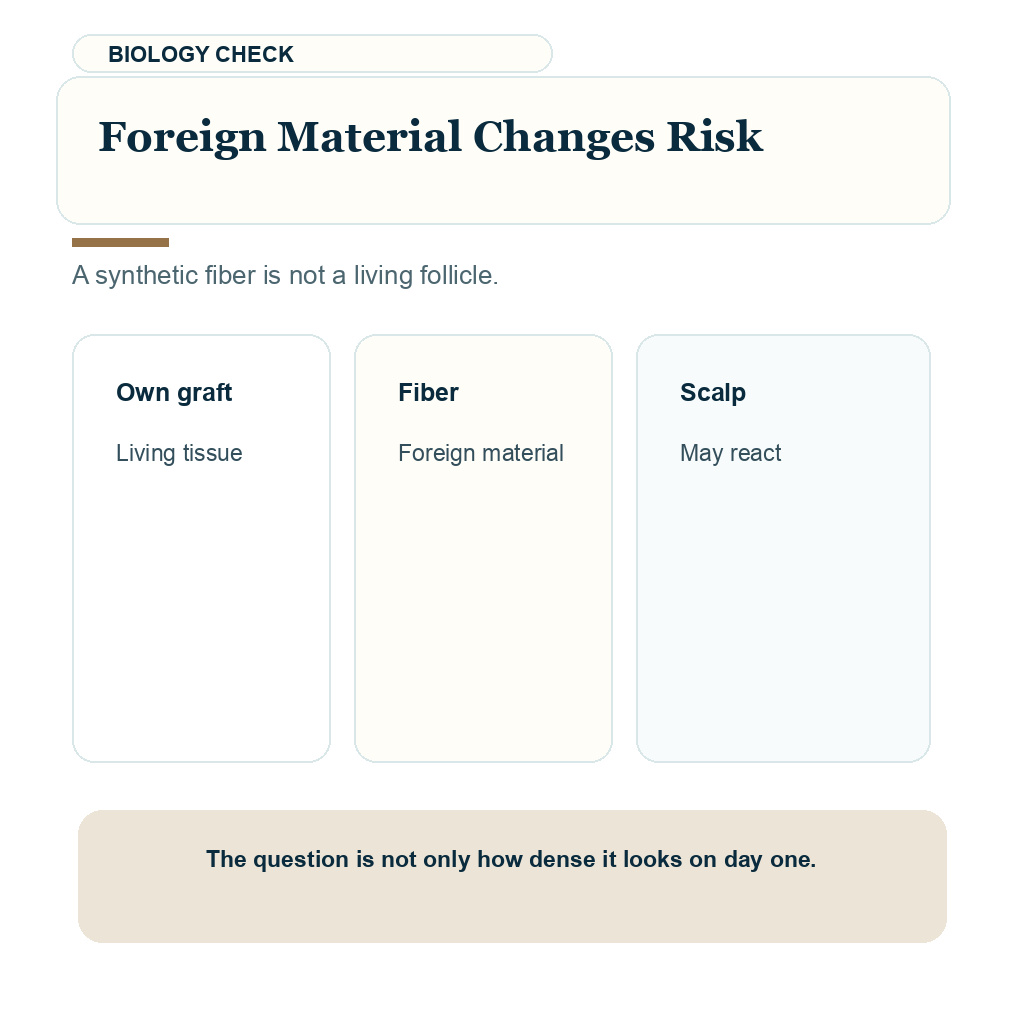
The main medical concern is that the scalp may react to implanted foreign material. Infection, chronic inflammation, itching, crusting, shedding of fibers, granuloma like reactions, and scarring can turn a cosmetic shortcut into a long term medical problem. The risk is not only fiber loss. It is inflammation or scarring that can make the scalp harder to repair.
Modern marketing may use words such as biocompatible, but biocompatible does not mean biologically alive or risk free. The scalp still has to tolerate a synthetic object passing through the skin. A synthetic fiber may be tolerated for a period in a carefully selected patient, but if the skin reacts, the difficulty is no longer only cosmetic.
This is not only a preference about technique. In the United States, implanted prosthetic hair fibers are treated as a banned medical device, while natural hair transplants are specifically separated from that ban. For a patient, that regulatory history is a reason to pause and ask harder questions, especially when a clinic presents synthetic fibers as a simple alternative.
What do maintenance and removal really mean?
Synthetic hair cannot be judged only by the first density photo. The patient also needs to understand shedding of fibers, breakage, repeated replacement sessions, scalp cleaning, crusting, and what happens if the skin reacts around the implanted material. Before choosing synthetic fibers, the patient needs a written plan for maintenance, removal, and medical responsibility if the scalp reacts.
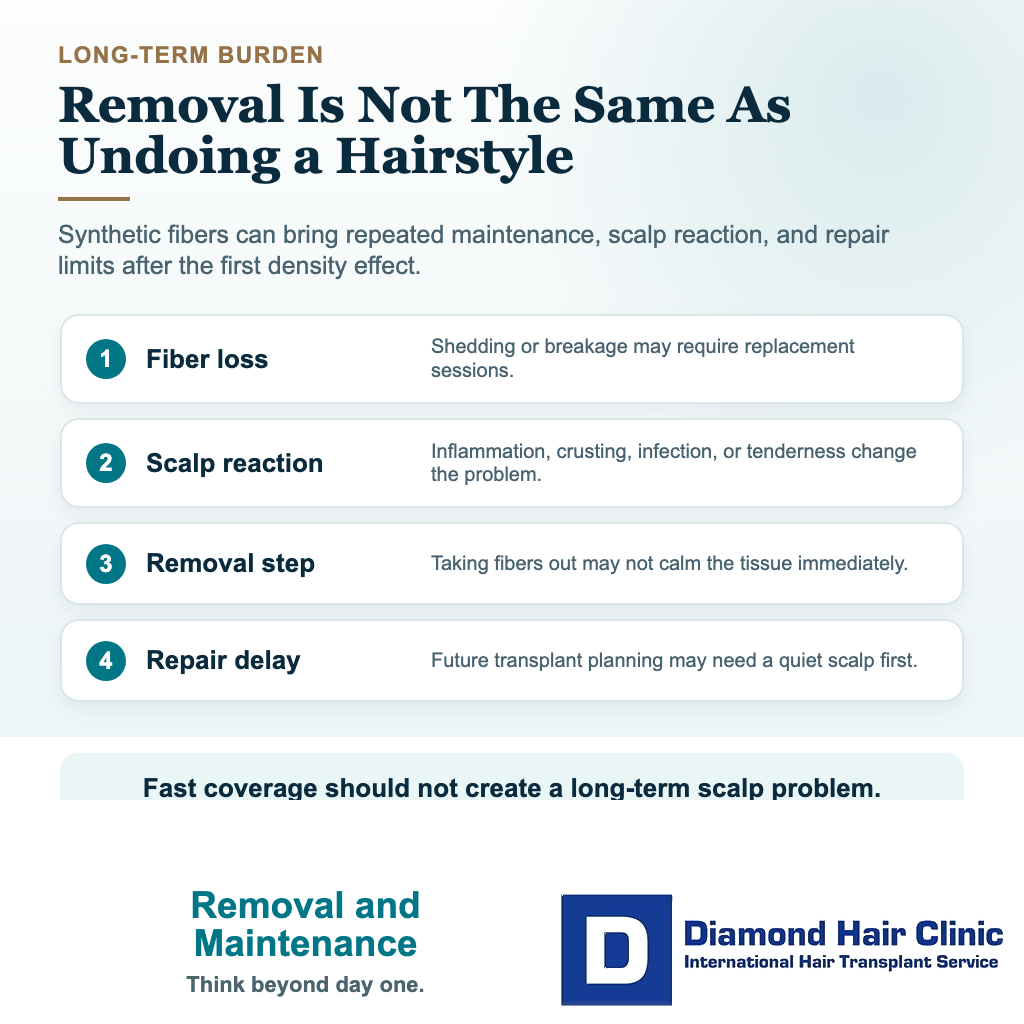
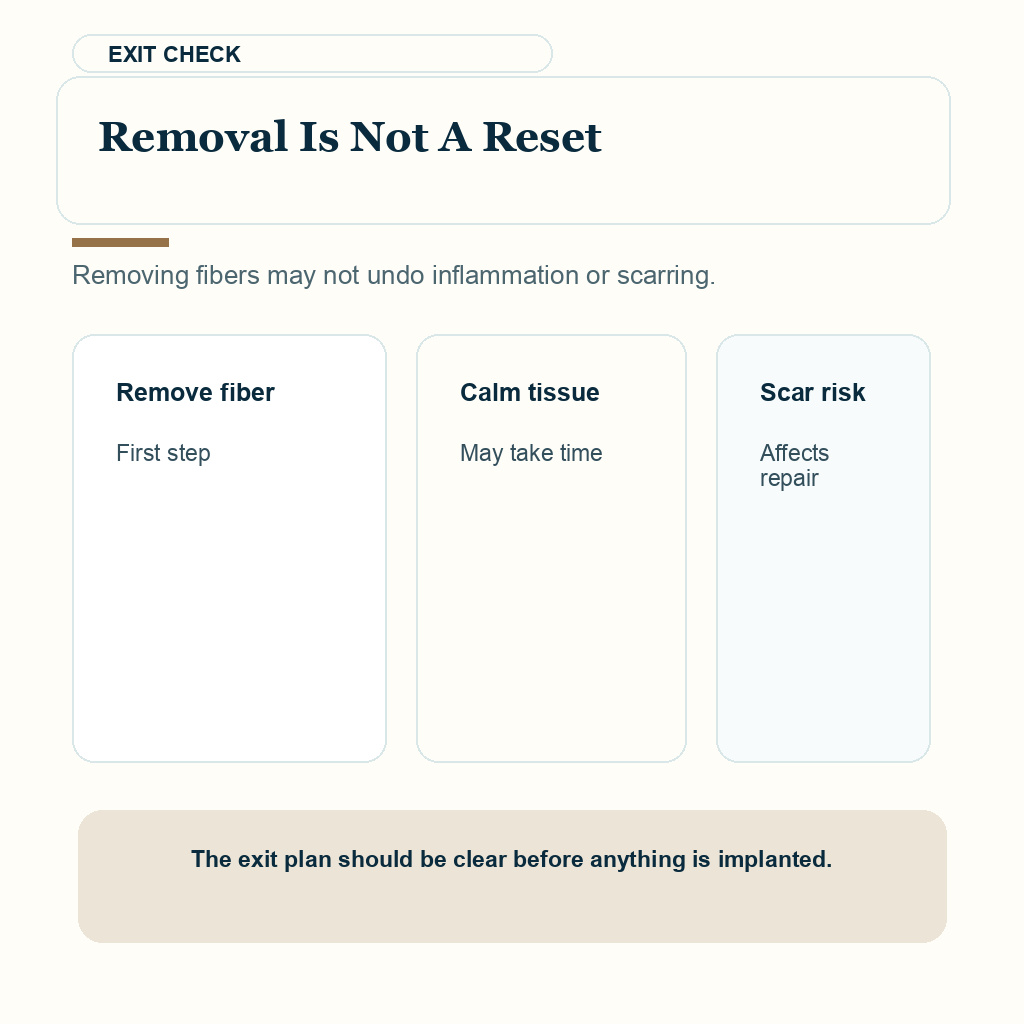
Removal is not the same as undoing a hairstyle. If the scalp has become inflamed, infected, tender, or scarred, removing fibers may be only the first step. The real work may be calming the tissue, treating infection or inflammation, and deciding whether any future transplant can be planned safely.
Patients need to think beyond the first cosmetic effect. A living transplant has biological limits, but it also has biological behavior. A synthetic fiber may offer fast visible coverage, but it creates a maintenance relationship with the scalp. That means repeated checks, possible replacement, and a clear removal pathway if tolerance changes.
A real hair transplant is biologically different
A real transplant uses your own living follicular units. In a properly planned FUE hair transplant, those grafts are taken from the donor area and placed into the recipient area with attention to angle, direction, density, and long term planning.
A transplanted follicle has living biology. It can grow a real hair shaft, shed and regrow through the normal cycle, and become part of the scalp tissue when handled correctly. A synthetic fiber does not have that biology.
Some patients are not good surgical candidates. Donor reserve is a limited lifetime supply, and the safe lifetime graft budget needs judgment before any aggressive plan is accepted.

Synthetic implants can damage future repair options
They can. If the scalp becomes inflamed, scarred, infected, or repeatedly crusted around synthetic fibers, future surgery may become harder. Removal is not the same as undoing the decision. A quiet scalp is usually easier to plan than a scalp that has been reacting to foreign material.
Patients often think only about the first cosmetic change. The repair plan has to consider what happens if the fibers need to be removed, if fragments remain, if the skin scars, or if the patient later wants a real transplant.
When scarring is present, the question becomes more complex. Blood supply, skin quality, and realistic expectations matter so much in repair planning. That same limit applies to hair can grow in scar tissue.
Which safer options should I consider first?
The safer sequence is proper diagnosis, donor measurement, medical stabilization when appropriate, conservative hairline planning, and a direct discussion of limits. For one patient this may lead to surgery. For another, medication, scalp micropigmentation, camouflage, a hair system, or waiting may protect the scalp better.
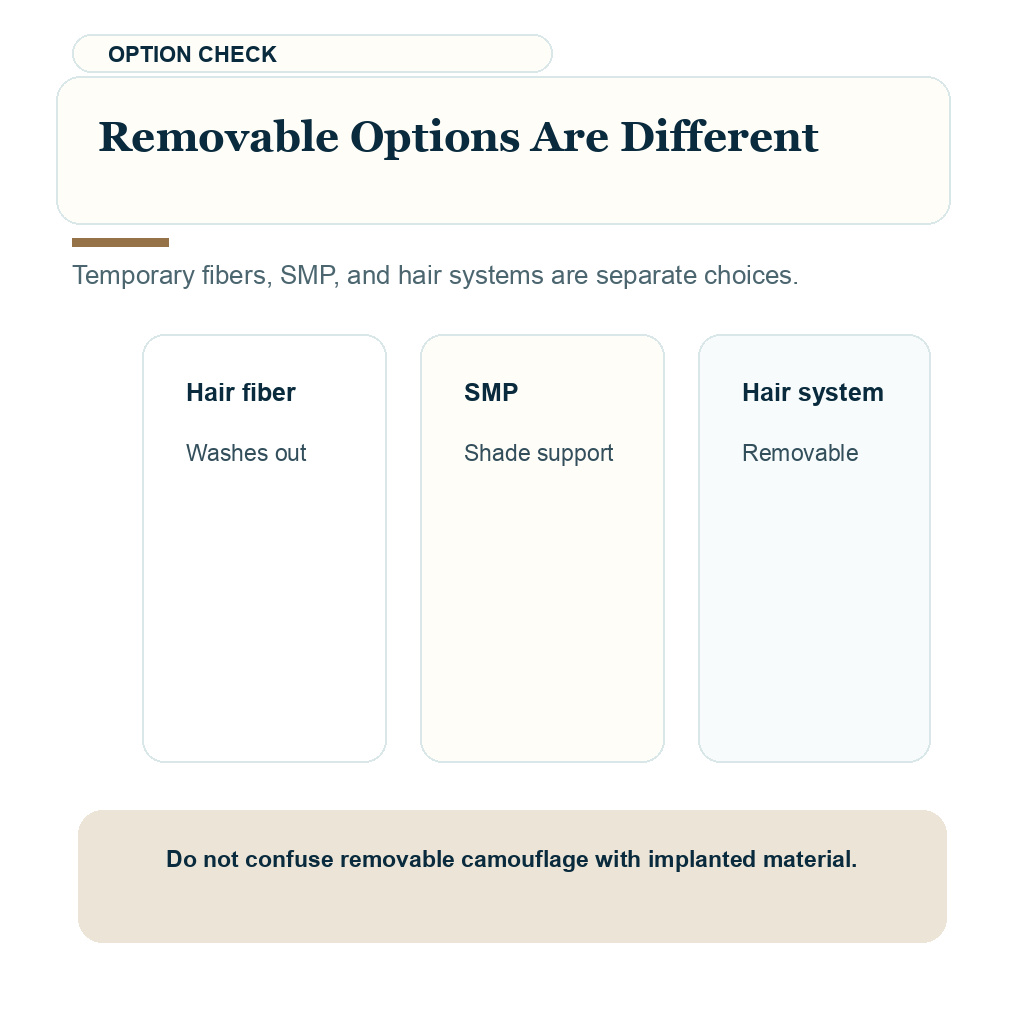
Temporary cosmetic fibers are different from implanted synthetic hair. Products used as hair fibers after a hair transplant sit on existing hair and wash out. They do not cross the skin barrier, and they can be stopped if the scalp becomes irritated.
A hair system after a hair transplant is also a different conversation. It can create coverage without spending donor grafts, but glue, clips, hygiene, timing, and scalp health still need careful planning.
If donor hair is limited, the right patient may discuss beard or body hair, scalp micropigmentation, or a smaller transplant goal. None of these options is magic. The point is to protect the scalp and keep future choices open.
These 10 synthetic hair decision slides compare instant coverage with scalp tolerance, maintenance, removal, donor planning, and future repair risk. Swipe sideways, use the arrows one slide at a time, or choose a number below the image.




Why I treat artificial fiber as a repair risk decision?
When artificial fiber is placed into the scalp, I do not see it as only a cosmetic choice. I see a repair risk decision. The patient is asking the skin to tolerate foreign material, cleaning routines, replacement, possible removal, and the chance that inflammation or scarring may affect future options.
That is different from moving the patient’s own donor hair. A real graft still needs careful handling, but it is living tissue. Artificial fiber does not grow, shed, or recover like a follicle. If the scalp reacts badly, the problem can become medical before it is cosmetic.
I become especially cautious when synthetic hair is offered to a patient who already has weak donor reserve, previous failed surgery, active scalp irritation, or desperate expectations. Those patients need more careful planning, not a shortcut that may make later repair harder.
Evaluate a clinic by how it explains complications
When a clinic offers synthetic hair, listen carefully to how it explains complications. The discussion needs to cover infection, inflammation, shedding, replacement, removal, scarring, long term follow up, and what happens if the scalp reacts poorly.
For medical tourism, the follow-up problem is central. A scalp reaction after returning home needs reachable medical care, and a procedure that needs long follow-up should not depend on a clinic you cannot reach.
The patient also needs to know who is giving the medical explanation and who remains responsible afterward. The discussion of who performs your hair transplant is relevant here because responsibility matters even more when a procedure carries repair risk.
If the clinic shows only fresh density photos and avoids the complication conversation, that is a warning sign. A permanent foreign material must never be sold as an easy shortcut. There need to be clear policies for infection management, fiber loss, removal, follow up, and referral if the scalp becomes medically complicated.
If you already have synthetic fibers, start with scalp review
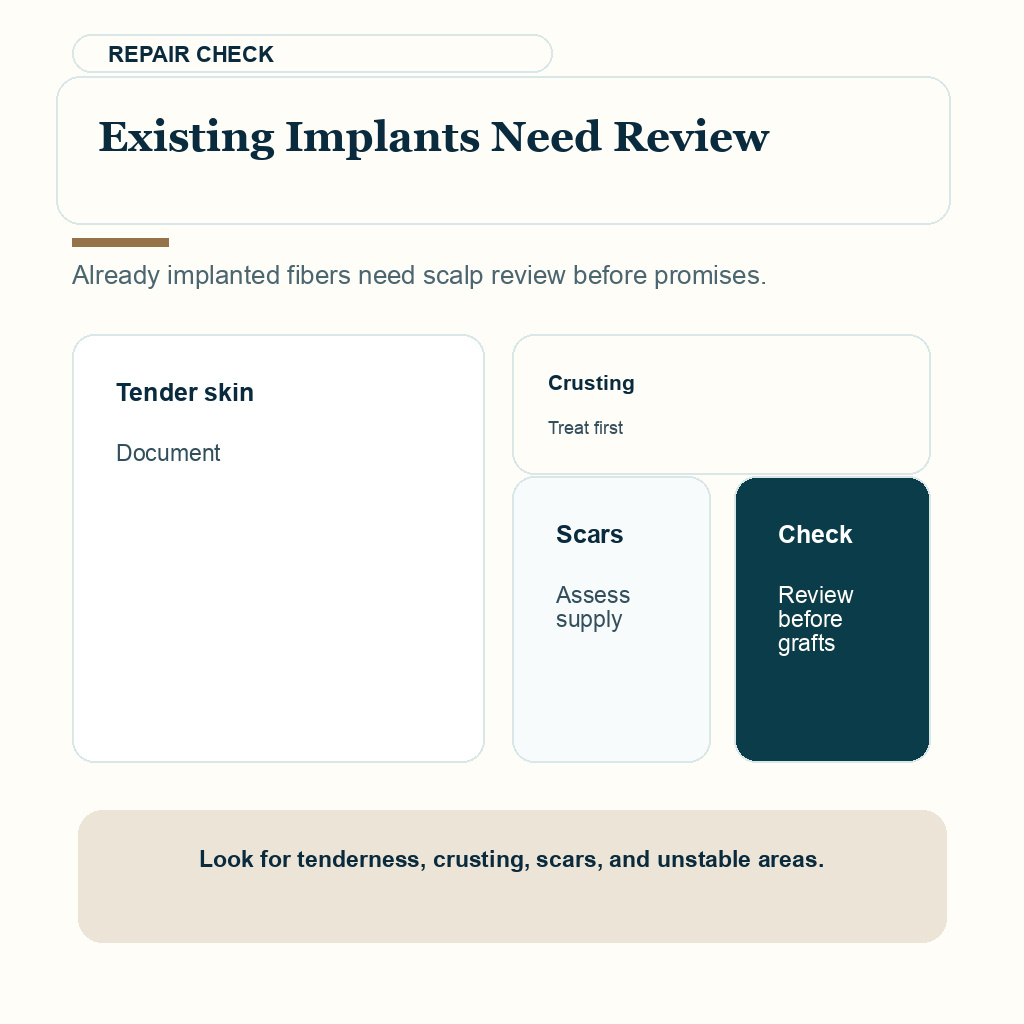
If a patient already has synthetic hair implants, the first review needs to examine the scalp for inflammation, infection, scarring, tenderness, crusting, fiber stability, and areas where the skin no longer looks healthy.
Another cosmetic procedure cannot be rushed before the tissue is understood. Sometimes the first goal is not density. The first goal is to settle and protect the scalp.
If there is pain, pus, spreading redness, persistent crusting, bad smell, fever, or worsening swelling, treat it as a medical problem first. The patient needs medical review rather than another sales consultation.
When I would not advise synthetic fibers?
Synthetic fibers are a bad choice when the scalp is inflamed, the patient already reacts badly to implanted material, hygiene will be difficult, or the patient expects them to behave like living hair. I also step back when the offer avoids explaining removal, infection risk, and what happens if the scalp becomes harder to repair later.
A patient who is not a good transplant candidate may still be a poor synthetic implant candidate. Sometimes the medical answer is medication review, camouflage, scalp treatment, a hair system, or no procedure until the diagnosis is clearer.
Synthetic hair implants are risky when the scalp or expectations are unstable
They are especially risky when the patient is young, still losing native hair, has active scalp inflammation, has unrealistic density goals, has a history of poor healing, or is being pushed by a clinic that makes the decision feel urgent.
Extra caution is needed when a patient has limited donor hair and feels desperate. That is exactly the situation where an instant density promise can sound strongest, but it is also the situation where protecting future repair options matters most.
Foreign fibers create a long follow-up burden
Synthetic hair implants can look like a quick coverage solution, but the scalp is being asked to tolerate foreign material after the visible result is created. Infection, inflammation, removal difficulty, scarring, and limited access to follow-up care are part of the same decision.
If you already have fibers in the scalp, start with a direct skin assessment before adding more procedures. If you are considering them abroad, ask who will examine you if the scalp reacts after you return home and what removal would involve.
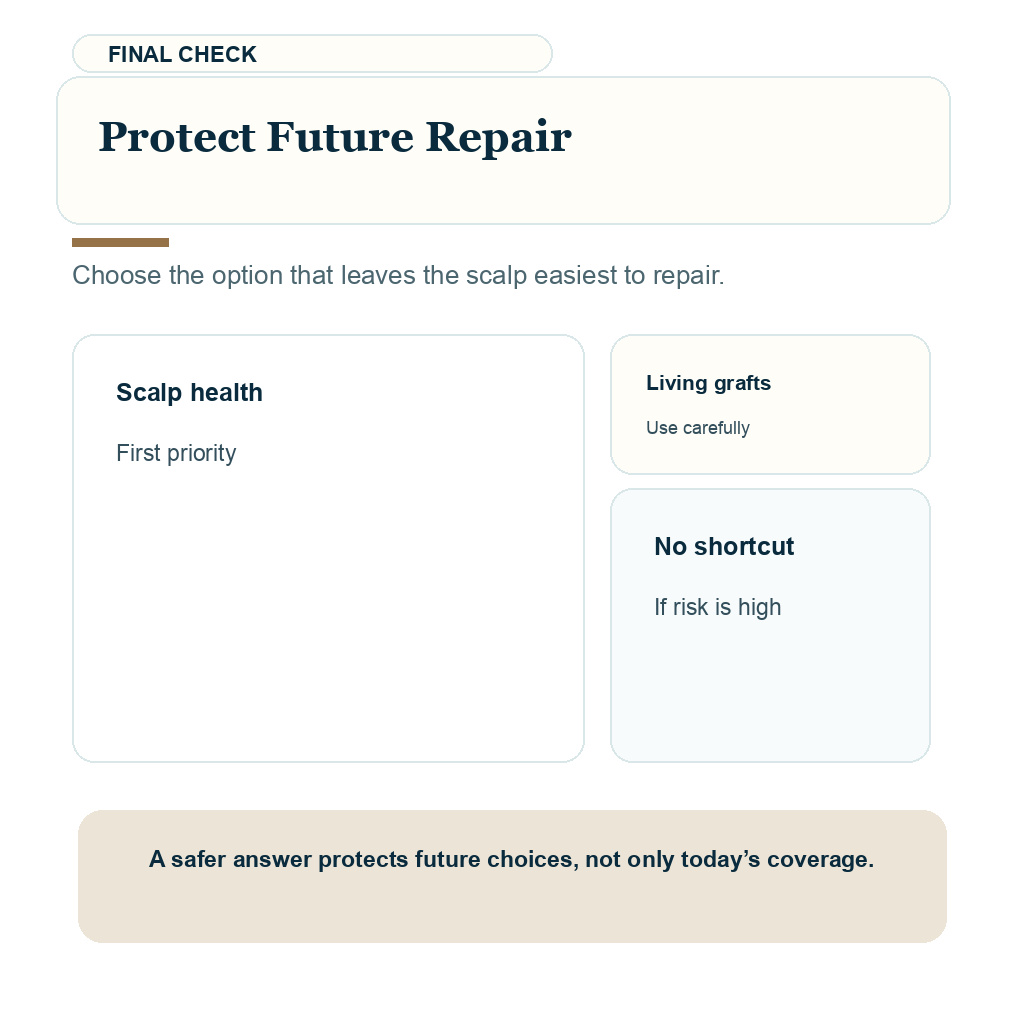
When a biological transplant, medical treatment, styling change, or removable cosmetic option can solve the problem with less long-term risk, I would explore that first. Fast coverage matters less than a scalp that can tolerate the method and a repair path that remains realistic.

Read this review excerpt
Every single one of my questions was answered and they made sure I had all the details I needed to make an informed decision.