


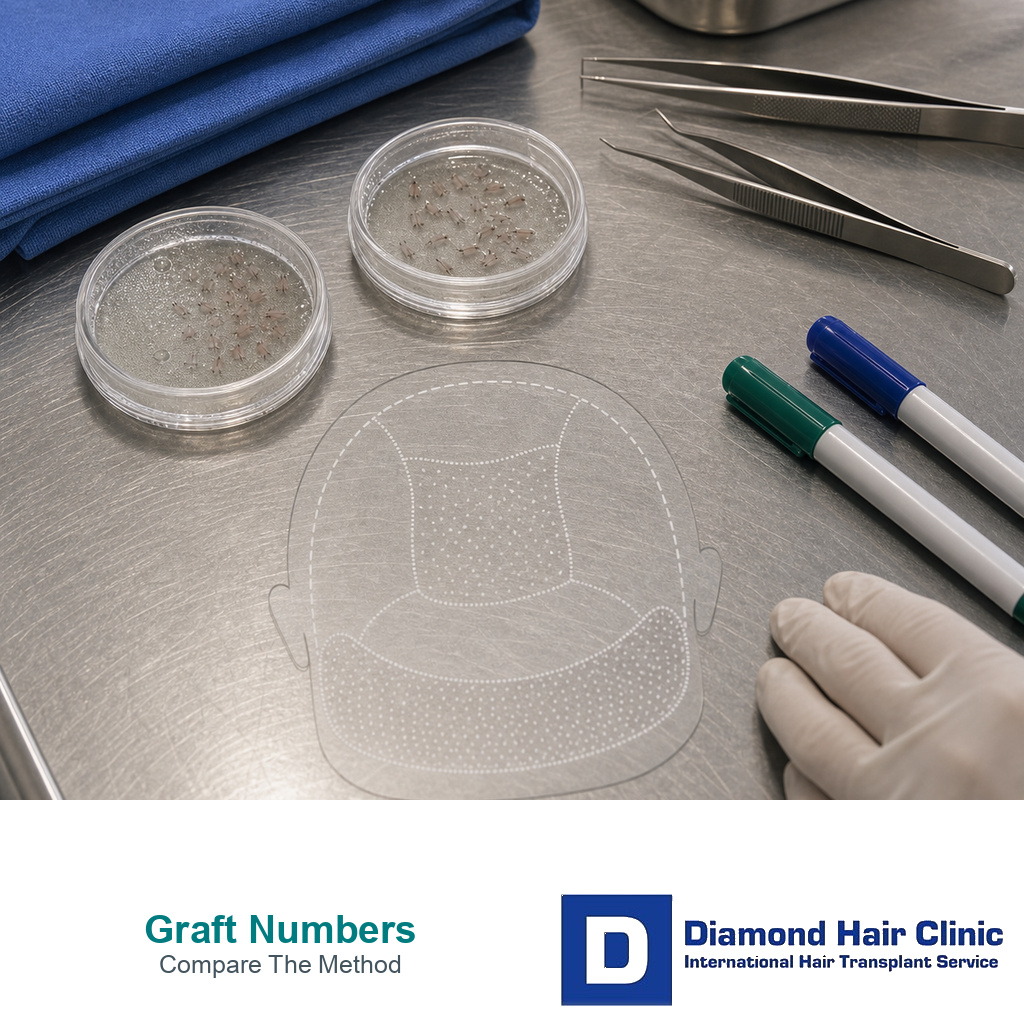
Different Graft Numbers Need Careful Comparison
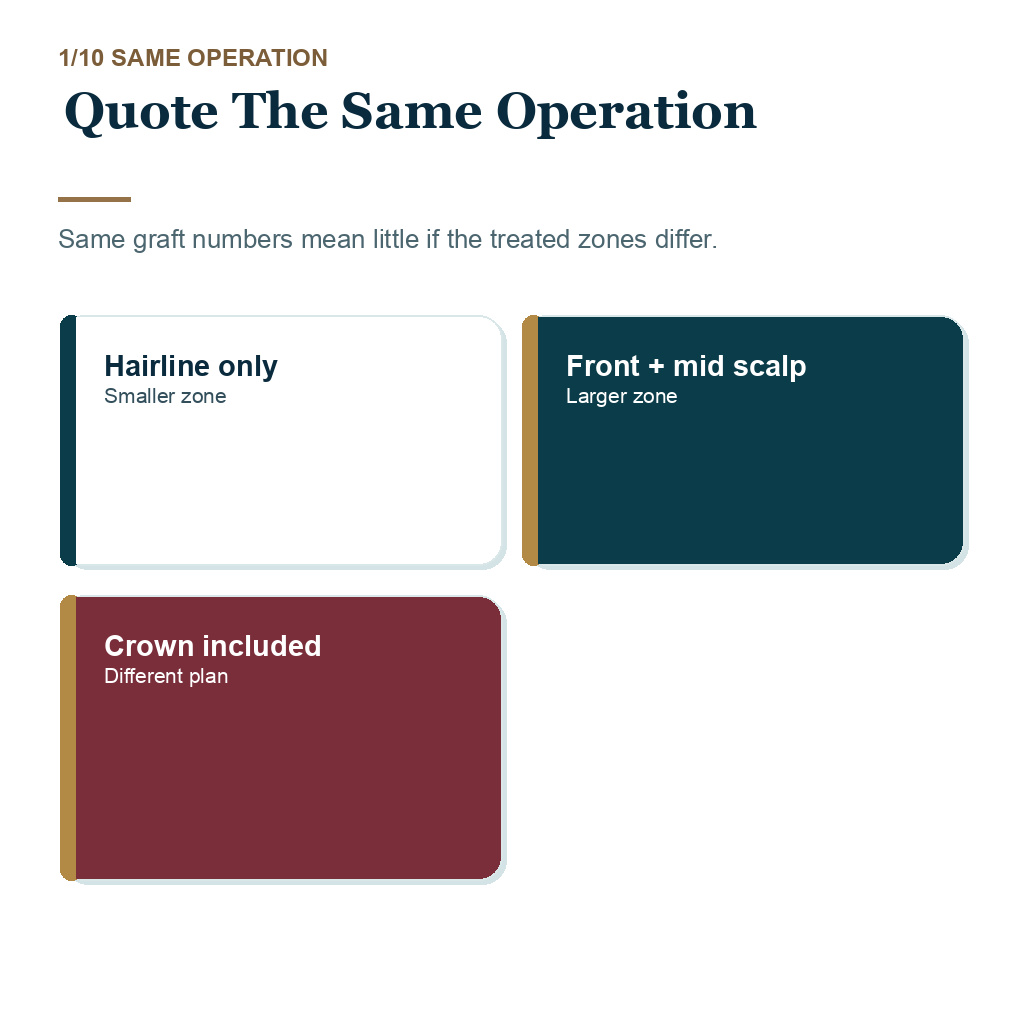
Two clinics can give different graft numbers because they may not be planning the same operation. One may quote only the hairline. Another may include the frontal third, mid scalp, or crown. Another may use a large number because it makes the offer sound stronger than the surgical plan really is.
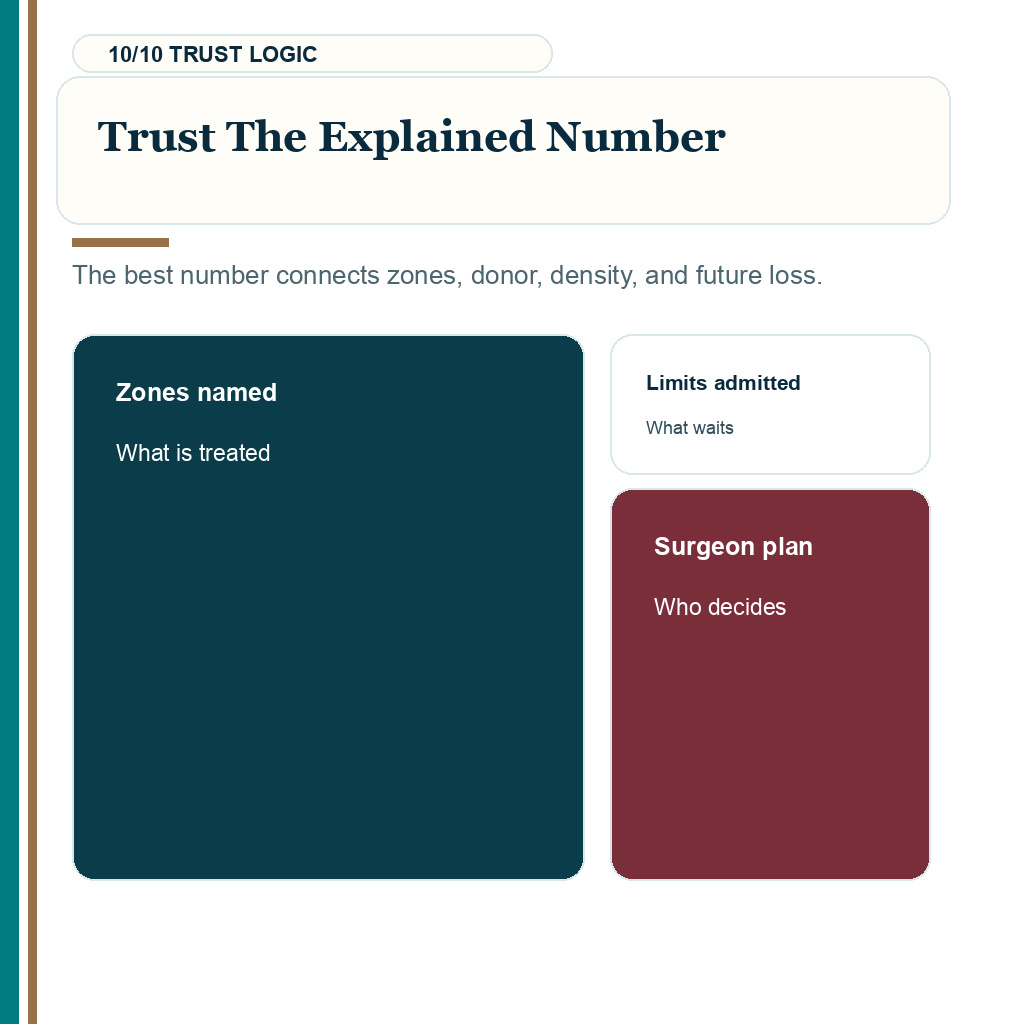
The number worth trusting is the one that can be explained. A higher count still needs to show what it protects for the future, not only what it fills today. It is the number connected to the treated zones, donor capacity, hair shaft thickness, expected density, future hair loss, and the surgeon making the plan.
A graft number without an explanation of what will be treated, what will remain thin, and what donor reserve will be protected is still only a quote. It is not yet a surgical plan.
Future reserve belongs inside the quote. A plan that treats the whole scalp today can look generous while leaving no clear strategy for later thinning.
When two quotes disagree, ask each clinic to draw the boundary of the work. The number makes more sense when you know what is being left thin on purpose.
Two clinics can quote different graft numbers
Different quotes often mean different maps of the scalp. A 1,500 graft estimate may be for a small frontal correction. A 3,000 graft estimate may include the frontal third and some mid scalp blending. A 5,000 graft promise may be trying to cover too much in one surgery, or it may be a reasonable plan only in a selected patient with strong donor capacity.
I do not compare graft numbers as isolated figures. I compare the diagnosis, the treatment zones, the donor area, and the long-term risk. The same hairline photograph can lead to different plans if one patient has thick hair shafts and stable loss, while another has fine hair, early diffuse thinning, or crown progression.
The number should become easier to understand during consultation. If the explanation is only “you need more grafts” or “we can do the maximum,” the conversation is already too thin.
Key details come before accepting a graft number
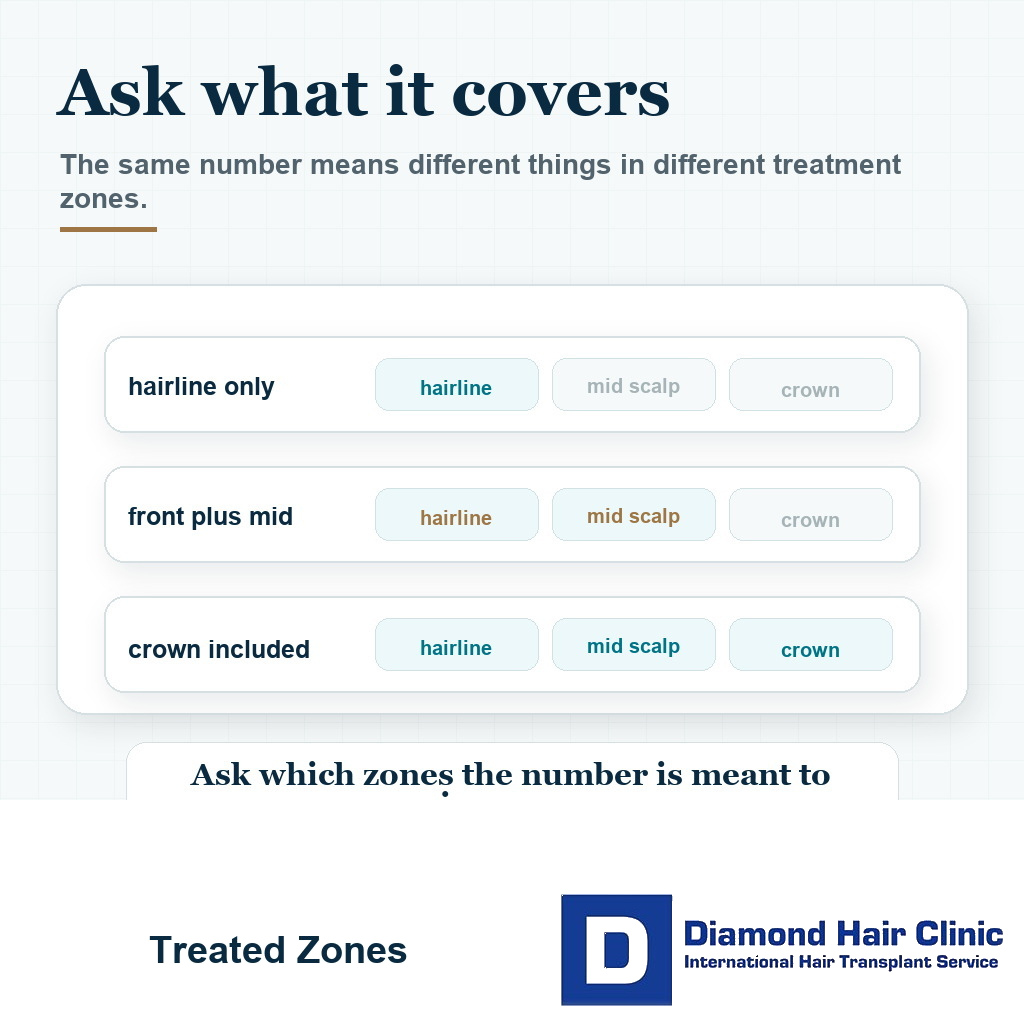
Start with the area being treated. A quote for the hairline alone is not the same as a frontal third quote. A frontal third quote is not the same as a plan that also tries to soften the mid scalp, temple points, or crown.
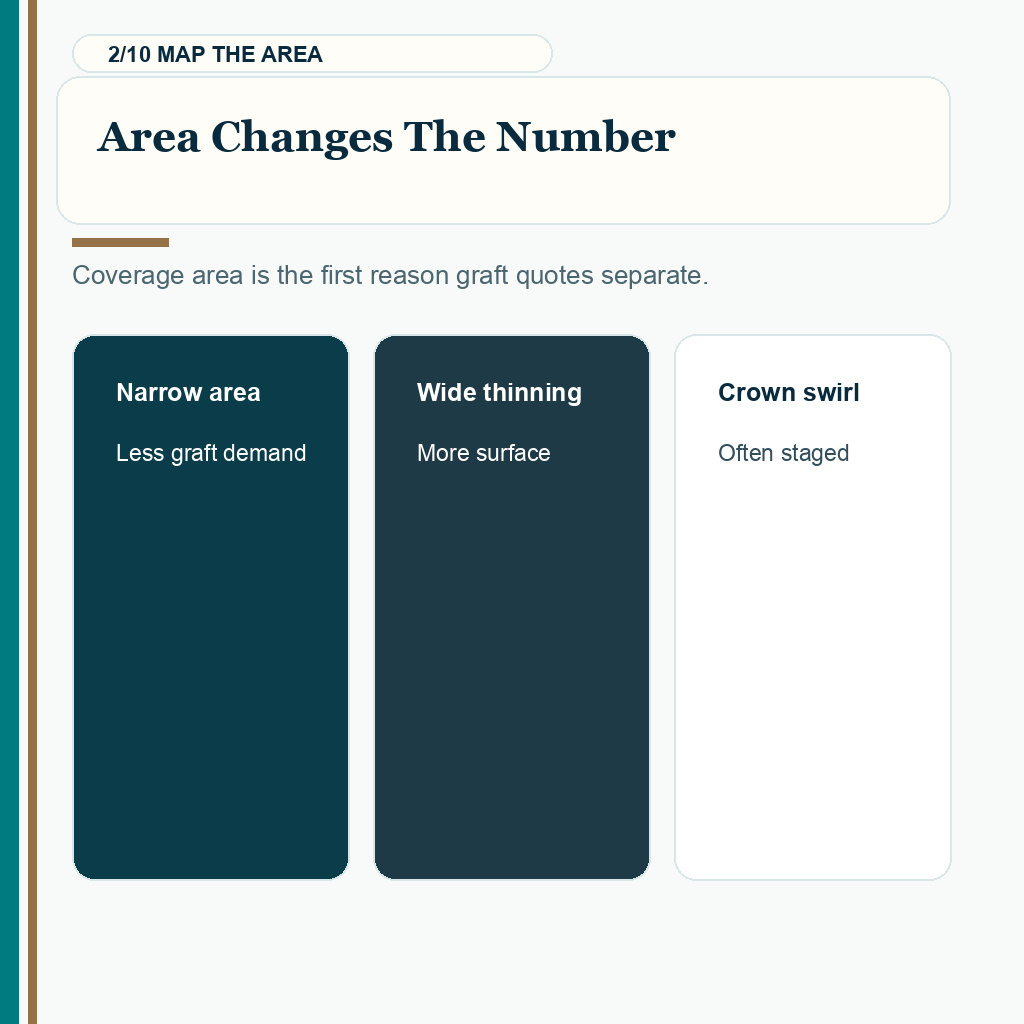
When a clinic gives the recipient area in square centimetres, confirm whether the number covers only the zones receiving grafts or the whole thinning scalp. A measurement for the hairline and crown that leaves out an untreated mid scalp cannot be compared directly with an estimate for the entire top. Keep the zone map beside the area figure so the density calculation has a clear meaning.
Then ask how the donor area was judged. Donor hair does not grow back after FUE, so every extra graft has a cost. A higher number must earn that cost by giving a visible benefit without weakening future options.
Finally, ask who made the decision. A graft number created from a quick photo review or a sales script is different from a surgeon calculating the graft number after looking at donor capacity, recipient area size, hair quality, and future hair loss.

What must be written before one quote becomes the plan?
Before I accept a graft number as a plan, I want it written in a way that can be checked later. I want the document to name the treated zones, the priority order, the estimated graft range, the donor findings, the density goal, and the area that may be left untreated.
I also want the limit to be visible. If the hairline request is too low, the crown would consume too many grafts, the donor looks weaker in person, or diffuse thinning changes the diagnosis, the number should come down before the patient feels locked into travel or payment.
A lower number may be safer if it protects the donor, and a higher number may be reasonable if the measured area truly supports it. The explanation decides which number deserves trust.
After surgery, the number is still not enough by itself. Graft count verification needs the distribution, the surgery notes, the photos, and follow up over time. The patient needs to know what was actually done, not only what was quoted.
If the result later looks thinner than the number promised, collect the immediate surgery photos, the treated zone map, the donor photos, and steady monthly updates before judging. The question is whether the issue is count, distribution, growth timing, native hair loss, or an overambitious plan. Those are different problems.
When the final result does not match the number
If a poor result is being blamed on the graft count, separate three questions before deciding what went wrong. How many grafts were actually placed, where were they placed, and did the design fit the donor supply and bald area? A mismatch can come from weak growth, a plan spread too widely, crown expectations, poor photo comparison, or a number that was never explained clearly. Start with records and current donor review before making a repair or refund decision.
Photo estimates are only a starting range
Photos are useful for the first conversation, but they are not the same as an examination. Lighting, hair length, wet hair, combing direction, scalp contrast, and camera angle can all change how large the recipient area appears.
Photos can also hide details that matter more than the empty area. Miniaturized hair behind the hairline, weak donor density, crown spread, and diffuse thinning are easy to miss if the photos are incomplete. For that reason, a plan made from photos needs to stay flexible until the scalp is examined closely.
A small change on surgery day can be reasonable if the surgeon explains what was found. A large unexplained jump is different. The reason for the change should be clear before the patient agrees to the new plan.
A lower graft number is sometimes safer
A lower graft number can be safer when the patient is young, donor supply is limited, the hair loss pattern is still moving, or the plan is intentionally narrow. Sometimes the best first surgery is a controlled frontal improvement that leaves donor reserve for later.
Lower is not always better. A very small quote can also be misleading if it promises full coverage over a wide area. For example, 1,000 grafts may be enough for a small touch to the corners in the right patient. It will not rebuild a large frontal zone, thicken the mid scalp, and cover the crown with natural density.
A protective low number and an underplanned low number are not the same. A protective low number explains what will still look thin. An underplanned low number avoids that conversation and lets the patient imagine more coverage than the surgery can safely create. The clinic’s usual limit for one operating day does not measure your donor reserve. Compare the planned daily workload separately from the number your donor can safely provide over time.
High graft numbers can be worrying
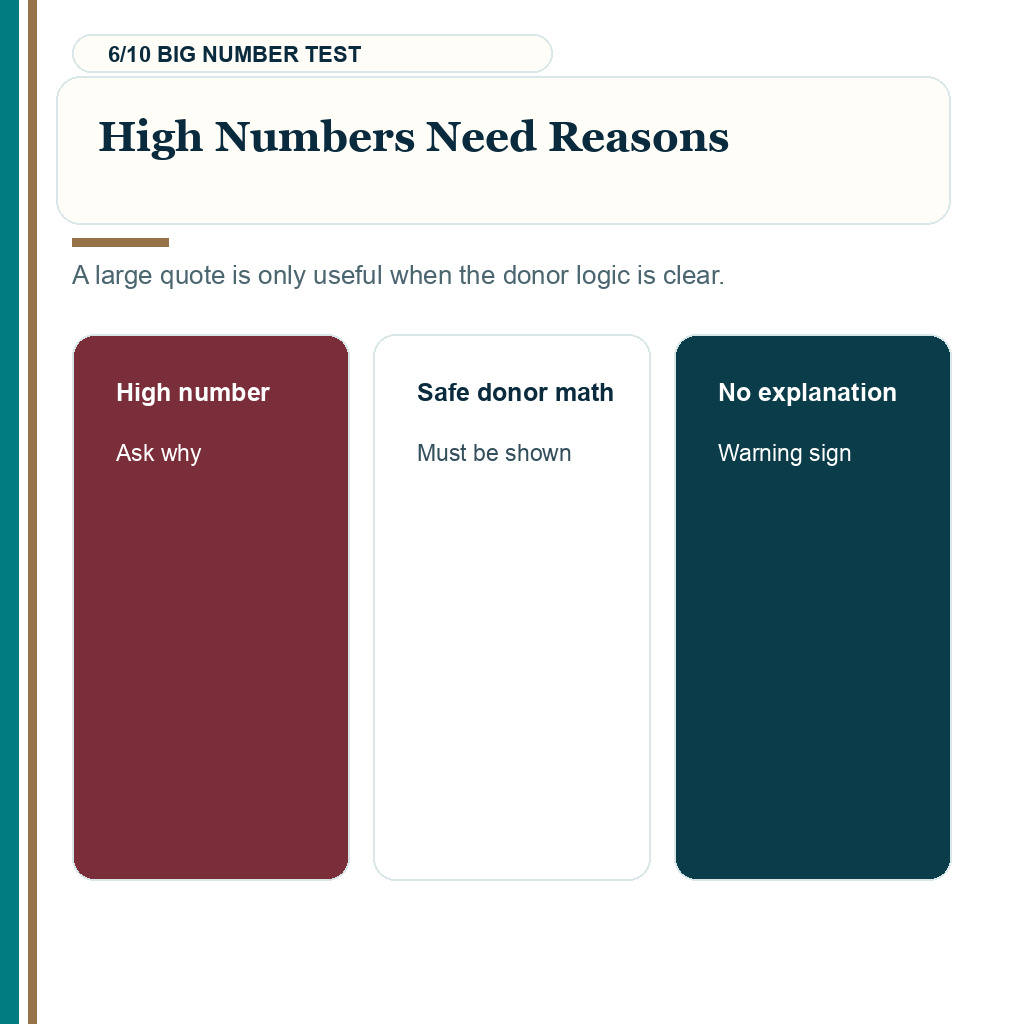
The number should worry you when it appears before the plan. Large sessions can be appropriate in selected patients, but the explanation must come first. The surgeon should be able to describe the donor capacity, the treated zones, the expected density, and why the number is safe for that scalp.
The danger is not only taking many grafts. It is taking many grafts without donor logic. When too many grafts are extracted or packed too aggressively, the patient can lose donor quality, healing quality, and future repair options.
A high number with donor math is different from a high number used as sales bait. If almost every patient receives the same large estimate, the clinic may be selling volume rather than planning surgery.
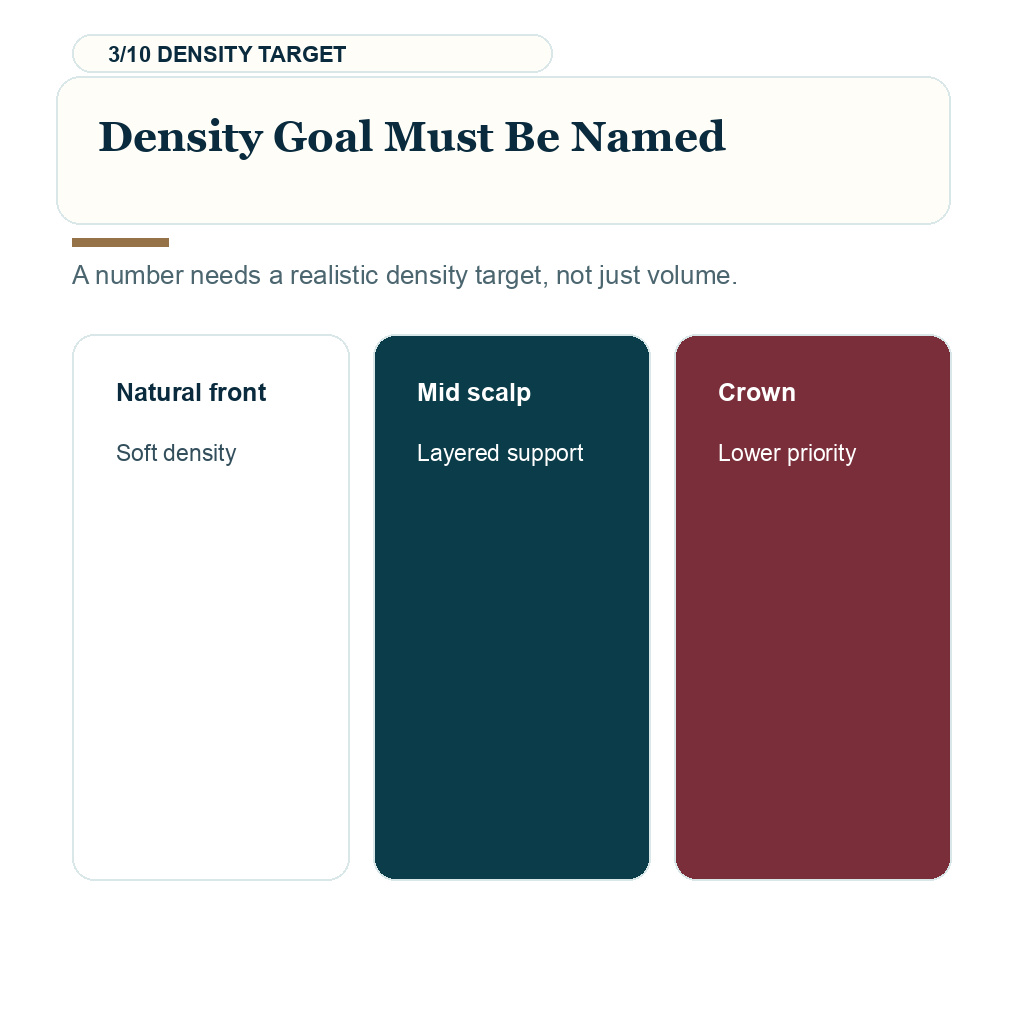
Use these 10 graft quote comparison slides to separate treated zones, density goal, donor budget, hair caliber, high number risk, grafts versus hairs, age and future loss, medication stability, price pressure, and the reasoned number to trust. Swipe sideways, use the arrows one slide at a time, or choose a number below the image.
The donor area limits the plan
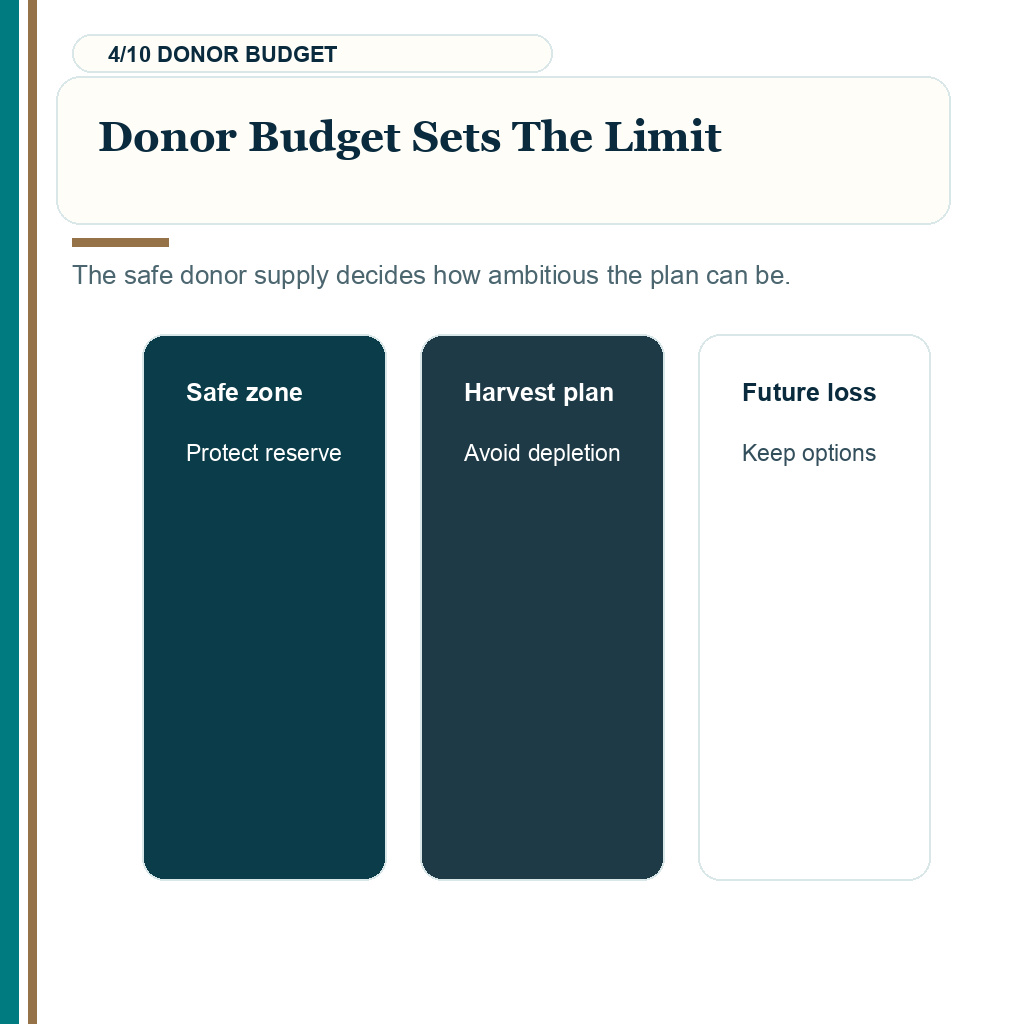
The donor area decides how ambitious the surgery can safely be. A patient may want a low hairline, strong temples, mid scalp density, and crown coverage, but the donor area may not support all of those goals at once.
Many misunderstandings begin because the patient looks only at the recipient area. The safe harvest limit matters just as much. The front must look natural, and the back of the scalp must not be sacrificed to create that look.
Lifetime graft planning matters when the donor area cannot answer every current and future request. A first surgery should improve the visible problem today without spending the donor area as if future hair loss will never happen.
Grafts, hairs, and coverage are different measures
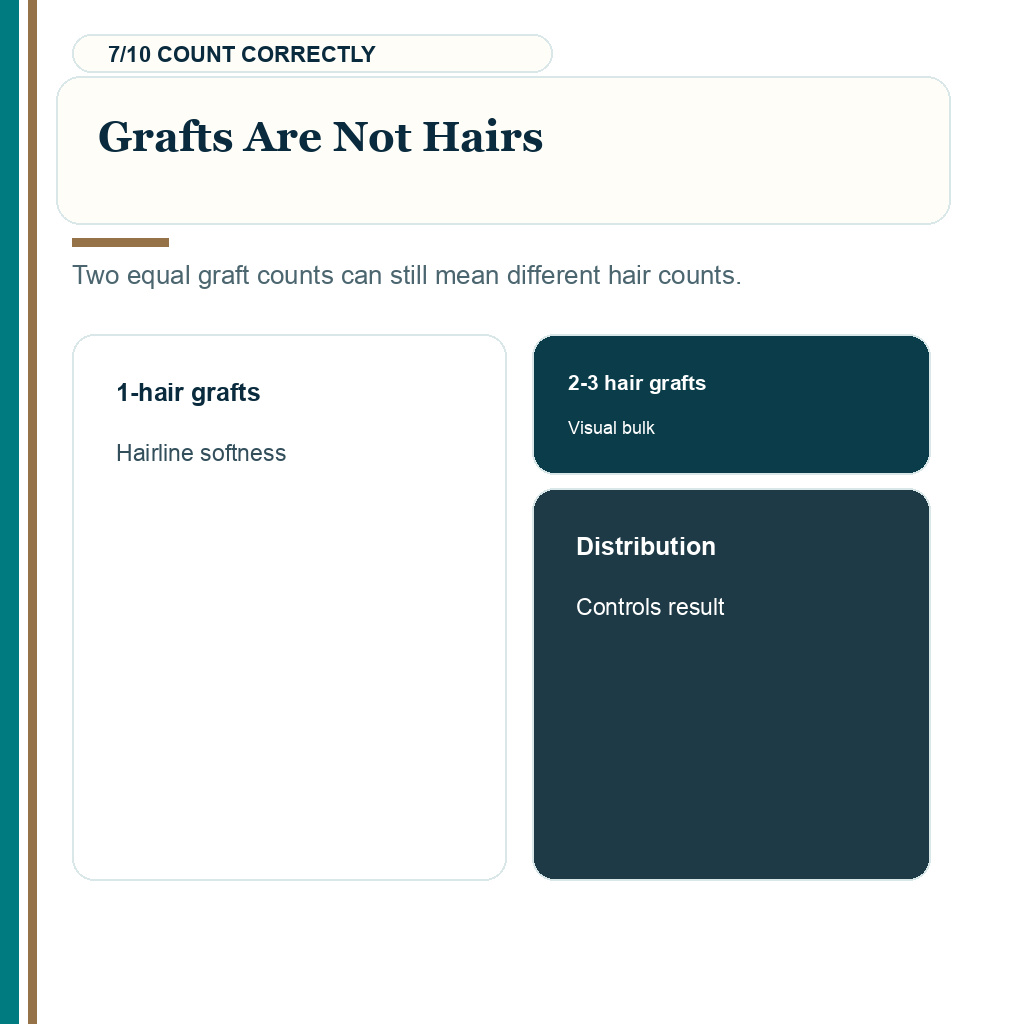
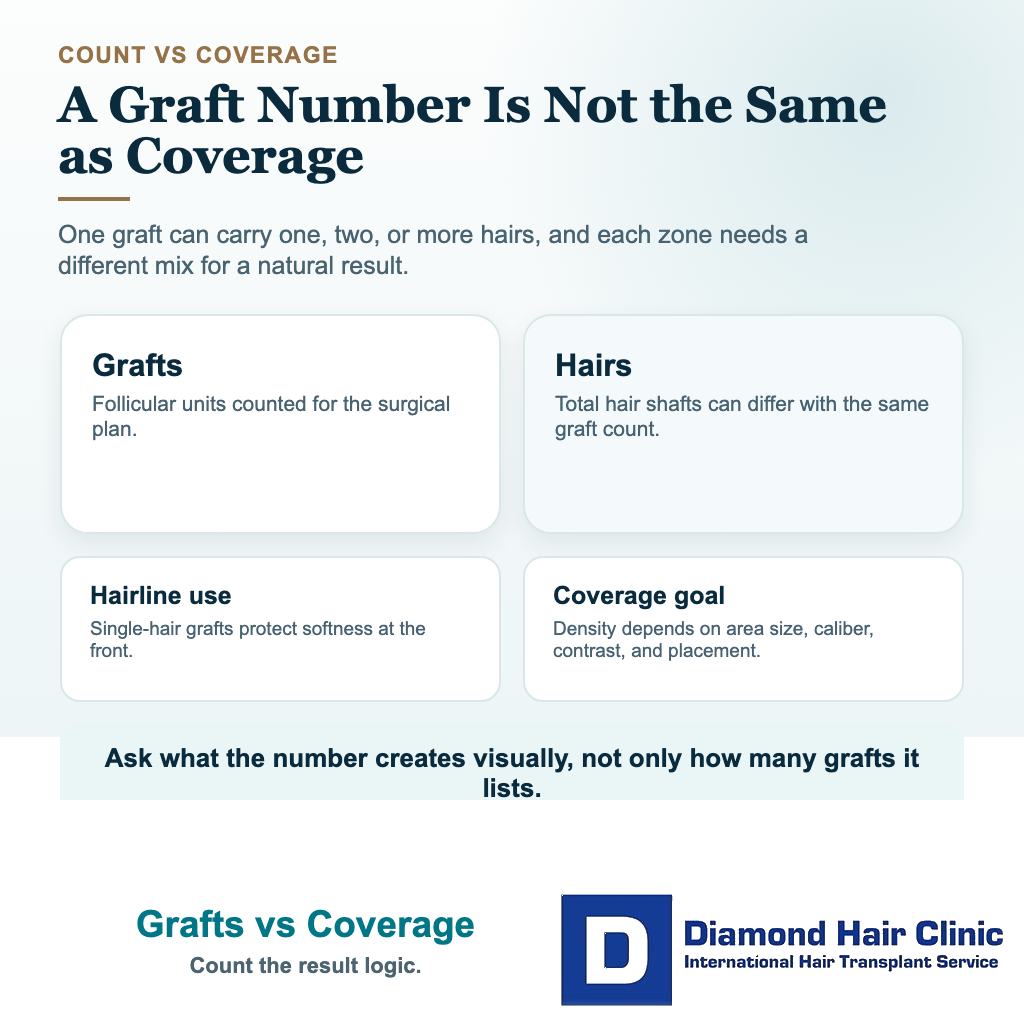
A graft is a follicular unit. It is not always one hair. Some grafts contain one hair, while others contain two, three, or sometimes more. Two patients can receive the same graft number and still receive different total hair numbers.
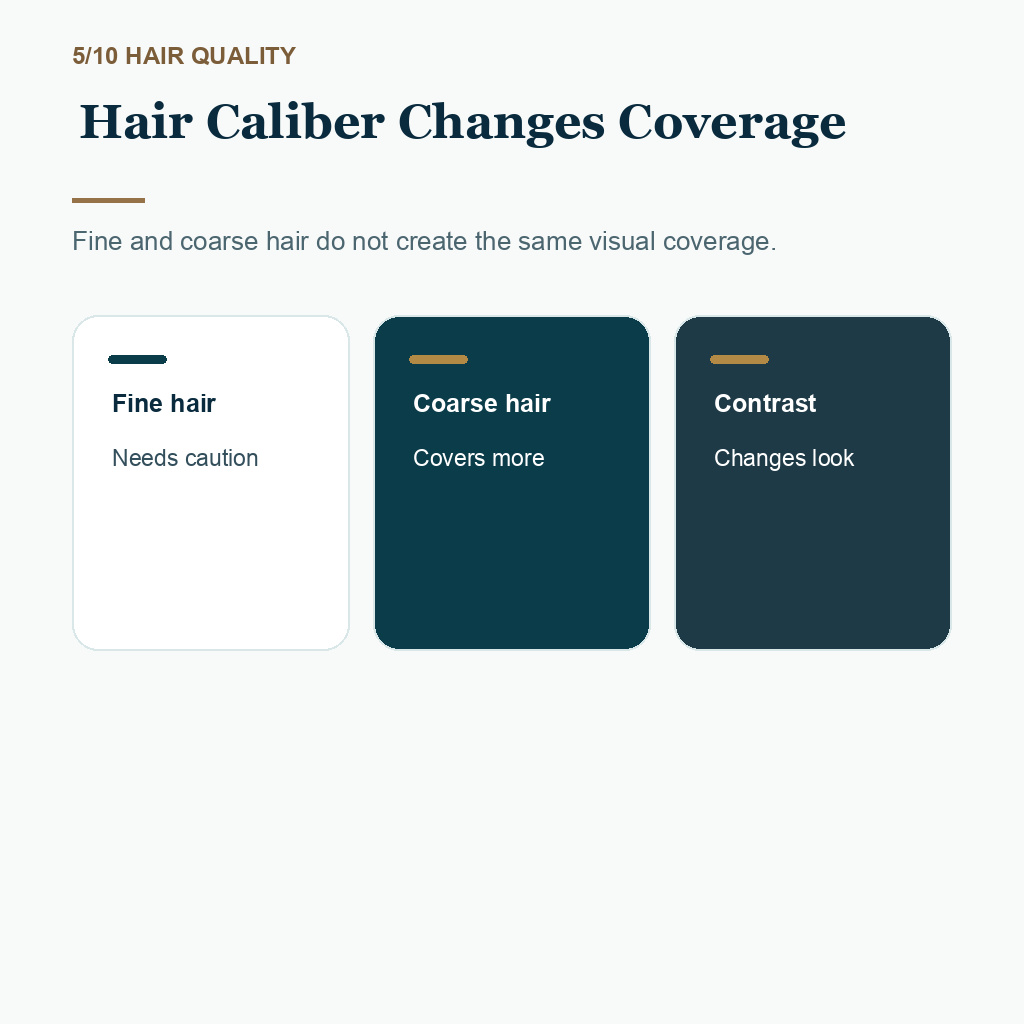
Hair quality changes the visual result as well. Coarse, wavy hair can create more coverage with fewer grafts. Straight, fine hair with strong scalp contrast may need more grafts to create the same visual effect. This makes fine hair density planning different from thick hair planning.
Distribution matters too. A natural hairline needs softer grafts with one hair at the front, while the area behind it can use stronger grafts with two or more hairs when the direction and angle are planned correctly. A number can sound impressive and still look weak if the grafts are placed in the wrong pattern.
Age, pattern, and medication change the estimate
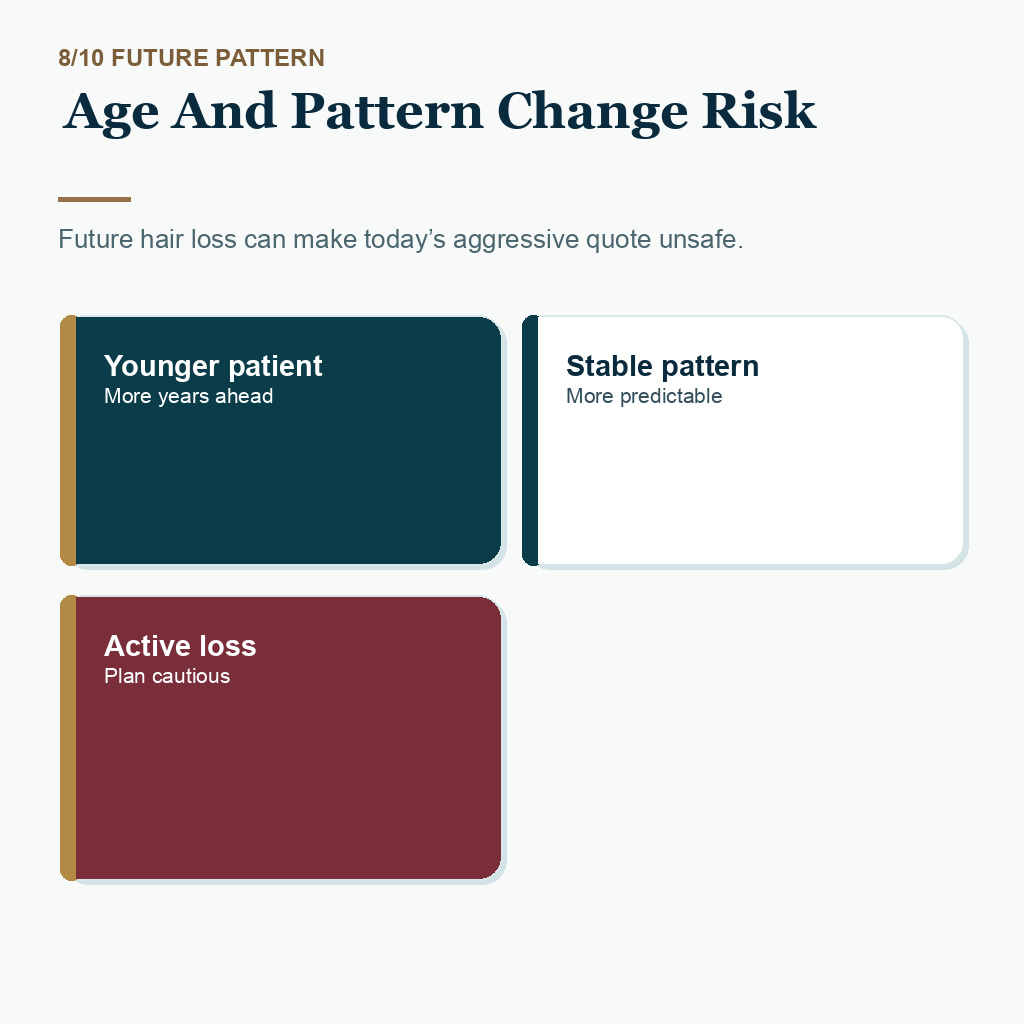
A patient in the early twenties and a patient in the early forties may need different graft plans even if the hairlines look similar today. Younger patients may have many years of hair loss ahead of them, so a low flat hairline can spend too much donor reserve too early.
If hair loss is active, a large surgery may create a strong hairline now while the area behind it continues to thin later. The result can look unnatural because the surgery solved today’s shape but ignored tomorrow’s pattern.
Before surgery, I need to know whether the patient is a good candidate for a hair transplant, not only whether the patient wants one. Medication can also affect the plan. If treatment stabilizes native hair, the surgery may be smaller and more strategic. If the patient cannot or does not want medication, I plan the graft number with more caution because future native hair loss becomes a larger part of the risk. A recent treatment change or active shedding can make the estimate wait until the pattern is easier to read.
Hairline design also changes the estimate. Lower, flatter, younger hairlines demand more grafts today and can create harder problems later. Naturalness is not created by density alone. If two clinics disagree mainly because one drew a low straight hairline, compare the design limit before comparing the number.
A graft quote should answer planning questions
When a clinic gives a graft quote, the number should come with a purpose. A reassuring quote explains what the number is meant to achieve.
The quote should answer which zones are being treated, what density is realistic in each zone, how the donor area was assessed, whether the number is fixed or a range, and whether the crown is included or intentionally delayed.
It should also explain whether the clinic is counting grafts or hairs. That distinction matters because the same graft number can produce different total hair counts.
A useful quote also names the person responsible for the surgical decisions. If a coordinator gives a number but cannot explain incision planning, donor safety, hairline design, or limits, the patient is not being protected enough.
Price can distort graft numbers
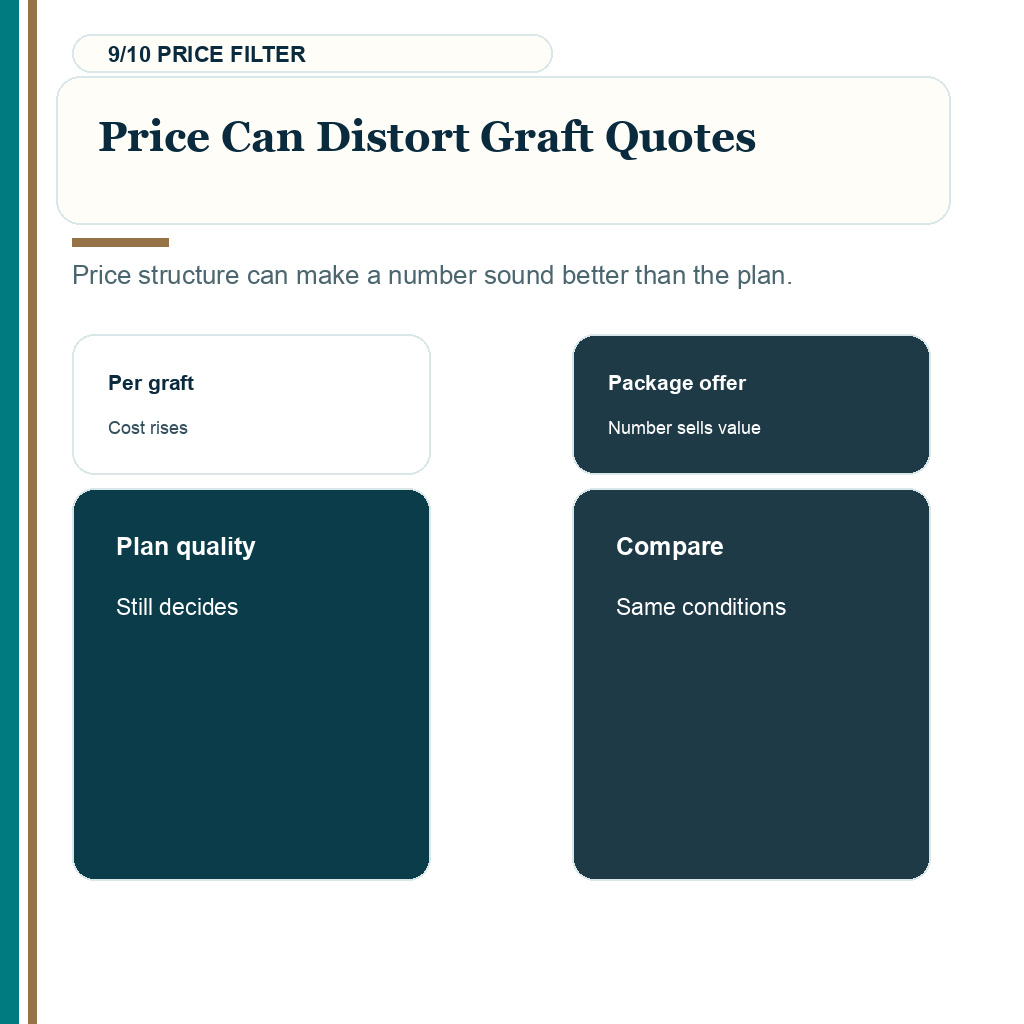
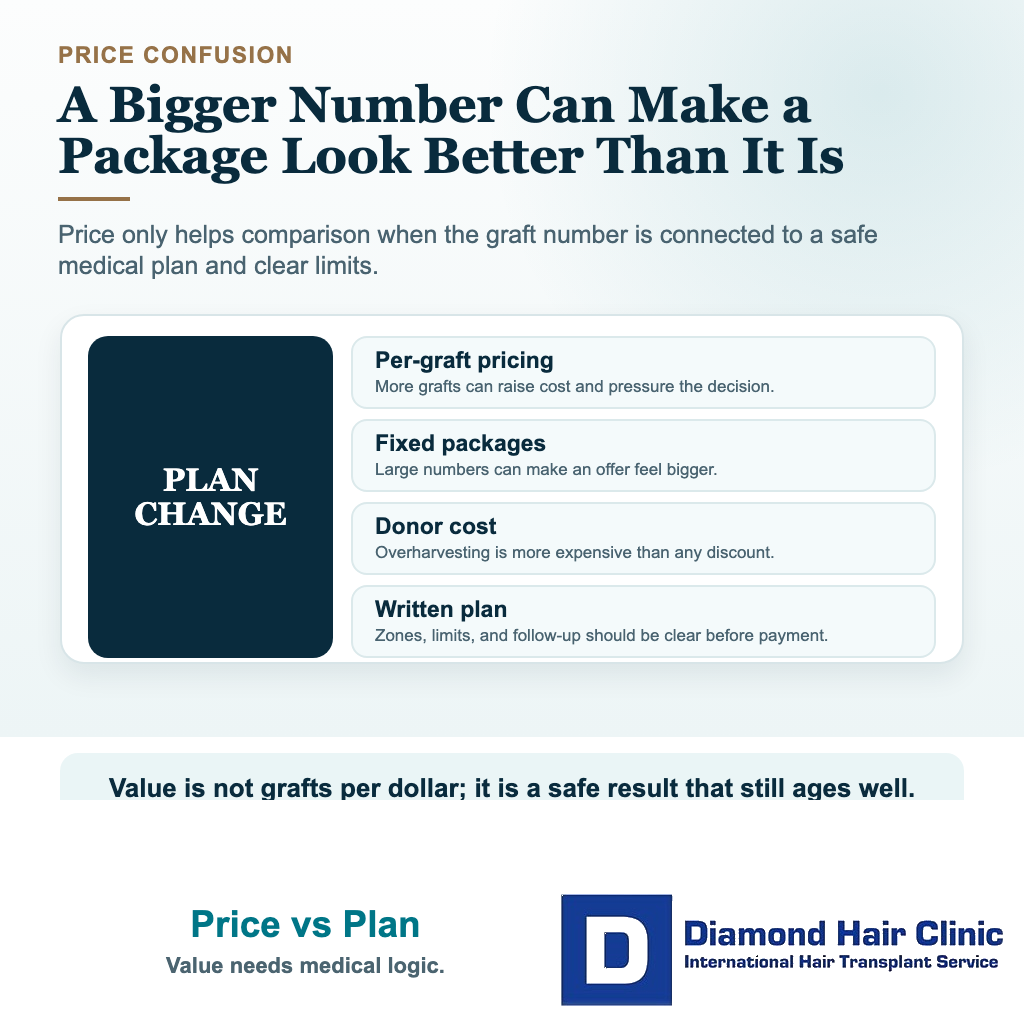
Price can make graft count comparisons confusing. In some clinics, the patient pays per graft, so the number directly changes the cost. In other clinics, the package is fixed, and a large graft number can make the offer feel more valuable.
A high number that looks cheaper is not always better value. If the donor is damaged or the result looks thin because the plan was unrealistic, the low price did not protect the patient. It only moved the cost into the future.
When comparing hair transplant cost in Turkey, compare surgeon involvement, treated zones, donor management, realistic density, and follow-up. Price alone does not show whether the graft number is safe.
The same is true for technique names. Sapphire FUE can be an excellent method in the right hands, but the blade does not decide how many grafts are safe. The plan decides that.
A graft estimate must explain what it leaves in reserve
If two clinics give different graft numbers, do not rush toward the larger estimate. A second opinion before surgery can help you test the reasoning before choosing. That is especially important when the conflict is a warning about a weak donor area and a larger quote.
The number I trust is the one connected to a clear explanation. It should show the treated zones, donor capacity, expected density, hairline design, future hair loss risk, and the medical situation. It should also admit limits. If two stages are safer, that limit should be explained before surgery, not after the donor area has already been spent.
In my own planning, the graft number comes after the diagnosis and donor map. I personally design the hairline, plan the surgery, and create the recipient area incisions with a sapphire blade. The number is only useful when it belongs to a surgeon-led decision.
A useful graft number leaves room for future hair loss. It improves the visible problem, protects the donor area, and explains what should stay in reserve if the pattern continues to evolve.
When you understand this, the consultation becomes clearer. You stop asking which clinic promised more, and you start asking which surgeon explained the number more carefully.

Read this review excerpt
Upon arriving home, I sent 4 photos (of each side of head) after every washing process to doctor for checking where I was given personal advice for how to take care of my healing head.