


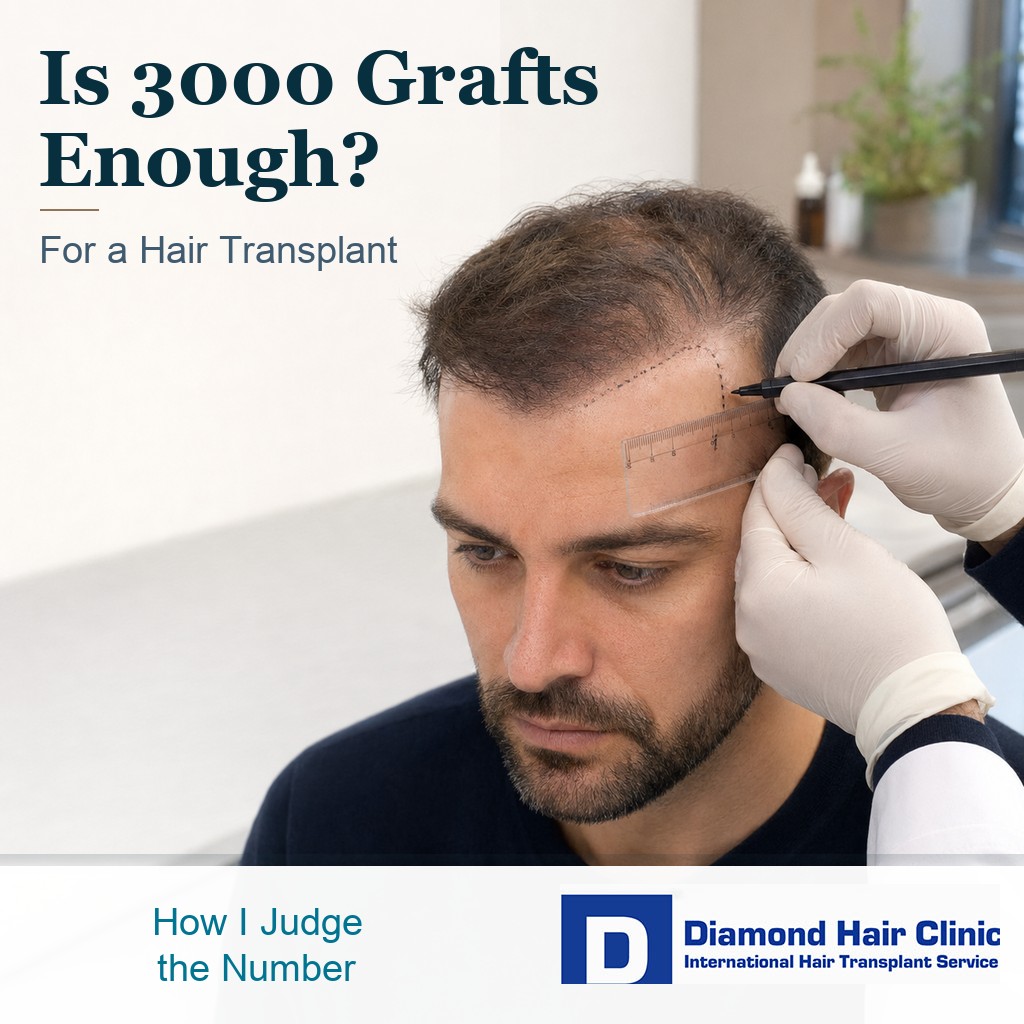
3,000 Grafts and the Right Coverage Area
A 3,000 graft plan can be enough only when the goal, recipient area, and donor reserve match that number. For many patients, this graft count can give a meaningful improvement in the hairline, temples, and frontal mid scalp. It is usually not enough to rebuild the hairline, fill the mid scalp, and give strong crown coverage in the same operation.
Before you compare clinic offers, you need to know what the grafts are supposed to accomplish. Three thousand grafts can be exactly right, too little, or too much depending on the area, the density goal, and the future hair loss pattern. The number only becomes useful when it is tied to a clear surgical priority.
The zone map matters more than the headline number. Three thousand grafts placed mostly into the crown is a different operation from three thousand grafts divided between the hairline, mid scalp, and crown. When the number is split, the crown cannot be judged as if the full count was used there.
If people disagree about whether 3,000 grafts is enough, the missing piece is often the job assigned to the number. It may be a strong frontal plan, a light blend across two zones, or an overextended promise. When a patient says 3,000 to 3,500 grafts covered a large bald area, I judge the number by its assigned job. A frontal frame, broad light coverage, crown blending, and a staged first pass each create a different visual result.
Leaving the crown for later can be responsible donor planning when the reason is clear, such as donor reserve, medication response, or a safer staged review.
One total leaves the most important detail unanswered. The written proposal should say which zones receive density, which zones are only blended, and which zones are intentionally saved for later.
When I evaluate a proposal like this, I look beyond whether that amount can be extracted. The real questions are whether the grafts are being used in the correct priority, whether the donor area will remain healthy, and whether the result will still look natural as hair loss changes over time. For a hair transplant in your 30s, that future loss question can matter as much as the first year density.
Coverage fit compass
Four checks before trusting a 3,000 graft plan
The same 3,000 graft count can be strong or weak depending on where those grafts are spent. Test the number against the surgical priority before treating it as proof.
Priority zone
The number needs a defined job
Three thousand grafts can work well for a clear frontal goal. The same number becomes weaker when it is stretched across the hairline, mid scalp, and crown without priority.
Ask this first. Which zones are being treated, and which zones are intentionally saved for later?
Crown promise
Crown coverage changes the compromise
Including the crown means the plan needs to explain the density tradeoff. Crown work can consume many grafts, so the quote should say whether it is treated now, left for later, or only lightly blended.
A plan that promises everything with the same number deserves a slower second look.
Hair quality
Graft count is not the same as hair count
Fine straight hair, high scalp contrast, or a wide recipient area can make 3,000 grafts look thinner. Stronger multi hair grafts behind the hairline help, but the soft front still needs single hair grafts.
The useful comparison is not only graft number. It is placement, hair count alongside graft count, caliber, and the density goal.
Donor reserve
The donor area has to stay useful
Even with 3,000 grafts, the plan should still protect future options. If the plan takes too much for a small cosmetic gain, the donor cost may be higher than the coverage benefit.
Ask what reserve remains and how the plan would still make sense if hair loss progresses later.
This compass is a planning filter, not a density promise. The right plan depends on direct donor examination, recipient area size, hair caliber, native hair stability, and long term reserve.
3,000 grafts work best for focused frontal goals
The front can often be treated well with this graft count when the patient has a clear frontal goal. This may mean rebuilding a receded hairline, filling the temples, and adding density into the frontal mid scalp. When the crown is stable or not being treated yet, the visual change can be strong because the front frames the face.
A plan like this should have a clear job. It should not be spread thinly everywhere just to make the patient feel that all areas were touched. If the grafts are distributed with clear priority, they can create a more natural and stronger frame than a larger number placed without priority.
I see this as a moderate plan. It is more than a small refinement, but it is not a complete solution for every pattern of baldness. A patient who only needs temple and frontal strengthening may even need less. The closer question may be when 2000 grafts can be enough.
The plan works best when the donor area can support the extraction, the hair characteristics give good visual coverage, and the hairline design is realistic. If you want a low, dense, youthful hairline and crown coverage too, the estimate begins to lose its meaning.
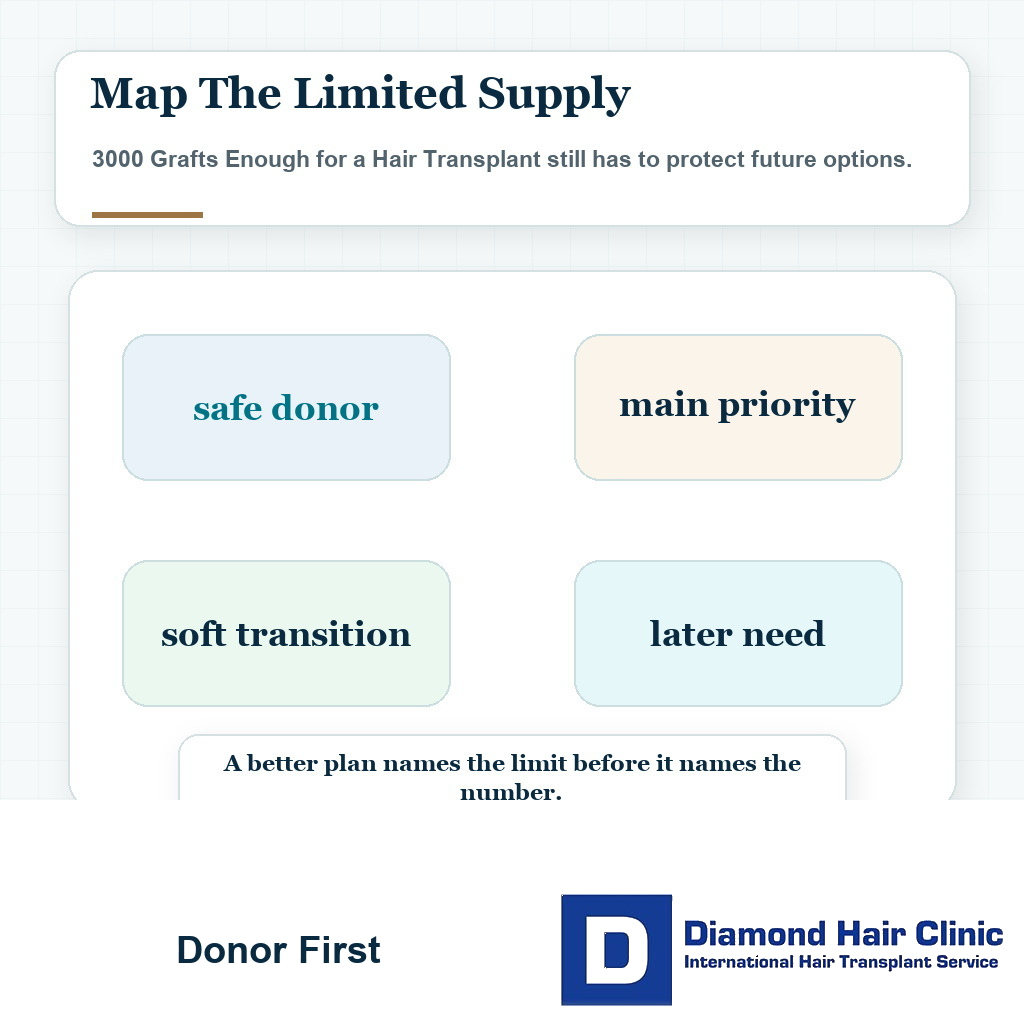
The plan starts to fall short in broader areas
The plan starts to fall short when the bald area is broad, the crown is empty, the mid scalp is diffuse, and the patient expects full coverage in one operation. It may improve the appearance, but it will not recreate a full head of hair in an advanced pattern. A disappointing review needs to separate surface area, expected density, graft growth, and continuing native thinning before another session is planned.
An immediate postoperative photograph answers a narrower question. It can show where the grafts were placed, but it cannot prove growth or final density. If regular spacing is worrying you, assess visible graft rows and day one photos separately rather than asking a calculation for 3,000 grafts to predict the result.
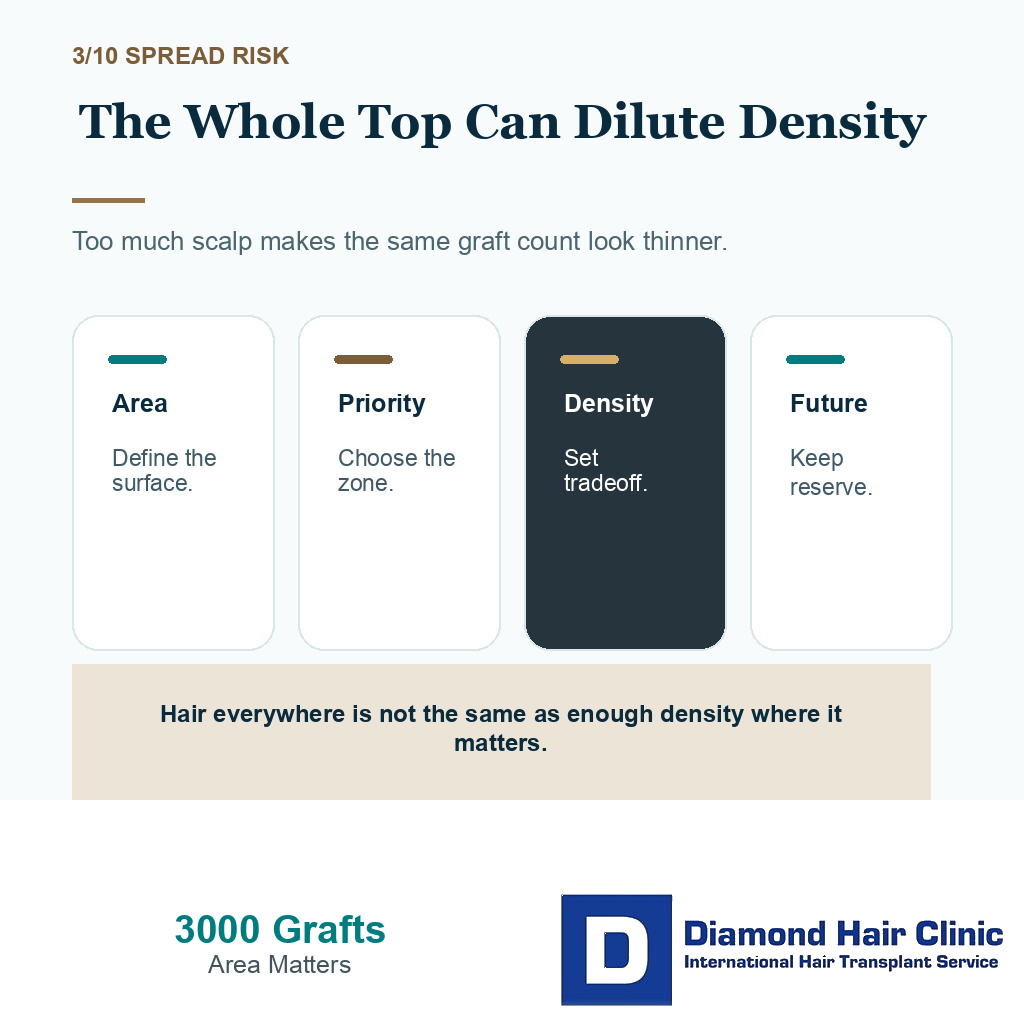
I see this misunderstanding often. A patient hears a number and tries to imagine the final result from that number alone. But the same number can cover a small area with good density or a larger area with lower density. The area matters as much as the count.
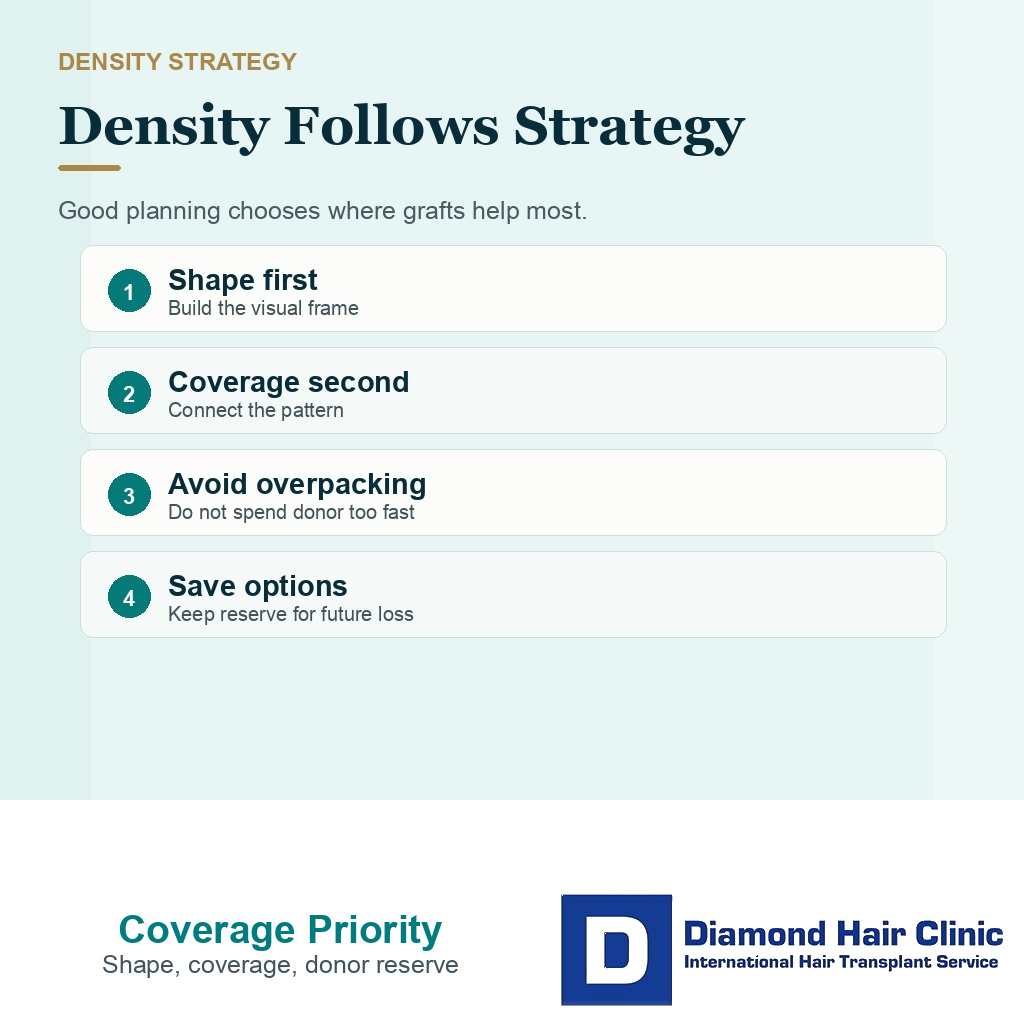
Before I accept a 3,000 graft plan, the treated surface area has to be defined. Three thousand grafts in a measured frontal zone is different from three thousand grafts stretched across the whole top. If the clinic cannot explain which zones are priority and what density compromise is expected, the number is not yet a surgical plan.
If the clinic tries to cover the entire top of the scalp with one moderate session, the grafts may be scattered too widely. The patient then sees hair everywhere, but not enough density anywhere. That is one reason why some hair transplant results look thin even when the surgery did place thousands of grafts.
In a patient with advanced baldness, a larger first session or staged surgery may be needed. Still, I do not jump from a moderate number to the largest possible number just to make the plan sound stronger. A very large session has its own donor and survival risks, which is why I treat a 5000 graft session as a serious decision rather than an easy upgrade.
3,000 grafts can rebuild the hairline and frontal zone in selected cases
It can often rebuild the hairline and frontal zone when the design is mature, the area is not too large, and the surgeon does not waste grafts on an unrealistically low hairline. At this point, the number can make sense.
The first priority is the hairline shape. A natural hairline should fit the face, age, hair caliber, future hair loss risk, and donor capacity. When you ask for a very low hairline and also want strong density behind it, I slow the plan down. With a limited graft budget, lowering the hairline too much can steal density from the frontal mid scalp.
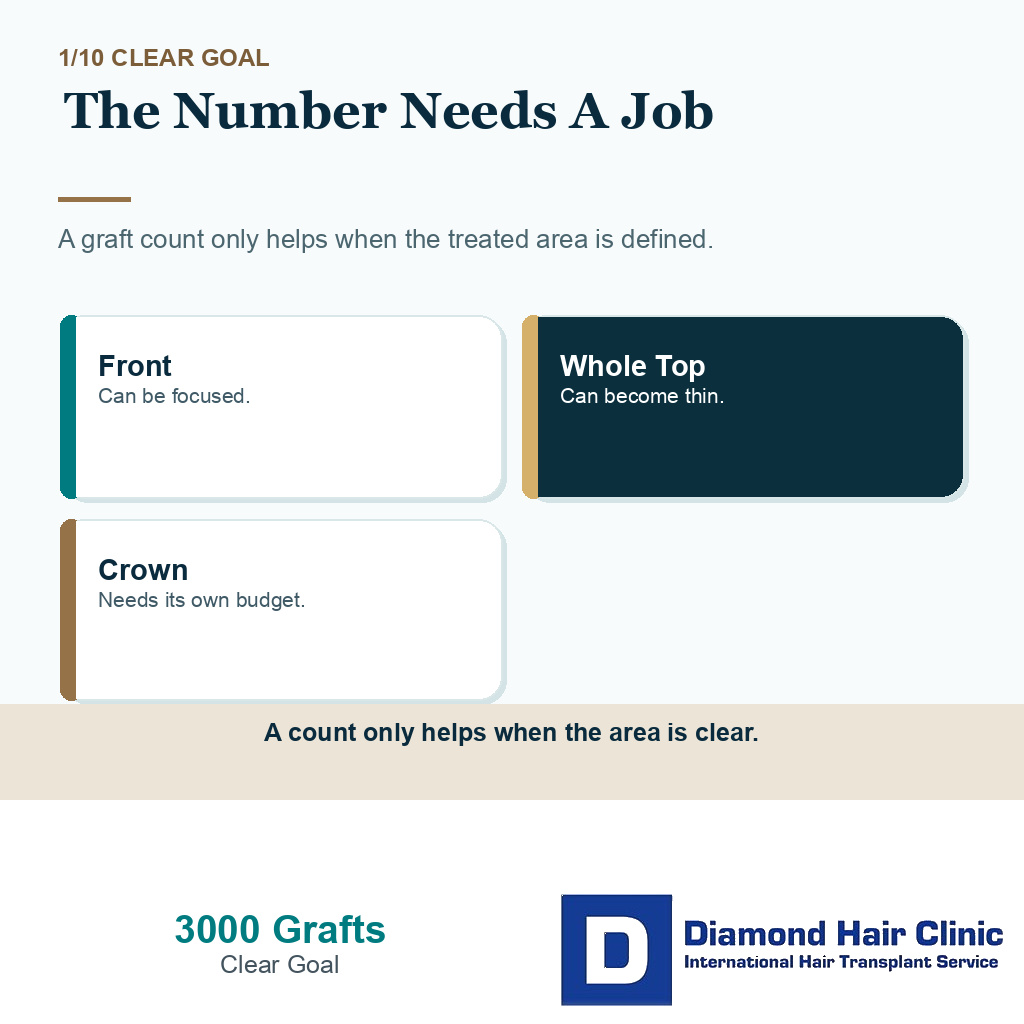
When donor supply is limited, frontal coverage often gives the highest visual return. A well planned frontal restoration can change the frame of the face even if the crown is left for later. In that setting, prioritizing the hairline before the crown often protects both the result and the future options.
Do not judge the plan only by whether the drawn hairline looks exciting on the day of consultation. The useful detail is whether that hairline can be supported with density today and still make sense if more native hair is lost later.
Use the 10 coverage planning slides below to judge what a 3,000 graft plan is meant to treat. Swipe the carousel, use the arrows for one step at a time, or choose a number below the image to jump to that point.


Crown treatment at the same time needs compromise
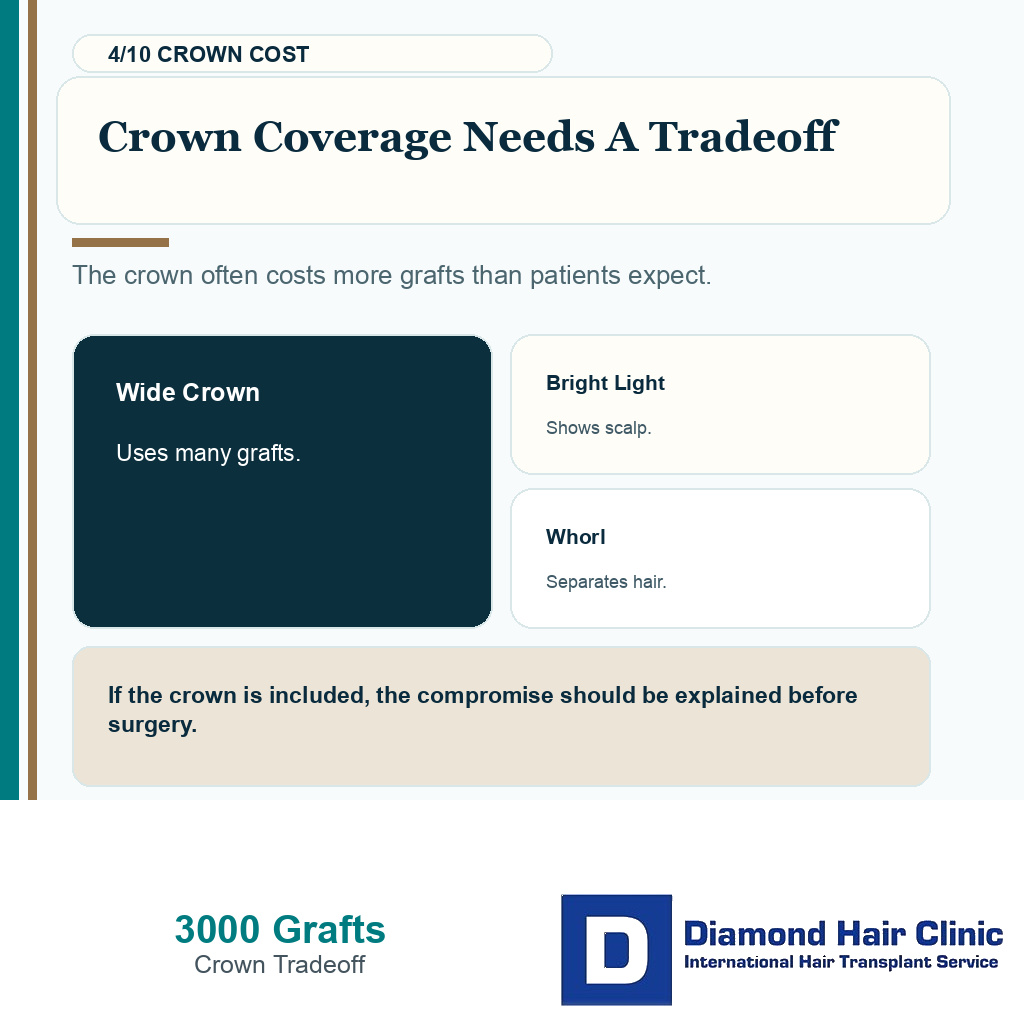
The crown can improve in carefully chosen patients, but crown coverage is more demanding than many patients expect. The crown has a circular growth pattern, a wider visual surface, and a tendency to look thin under bright light. It can consume many grafts without giving the same visible return as the frontal hairline.
When the crown is the only concern and the area is moderate, a moderate graft plan may be more than enough. If the patient wants the hairline, mid scalp, and crown treated together, the plan becomes a compromise. That compromise may be acceptable, but it must be explained before surgery.
I assess crown grafts carefully in younger patients when the future pattern is not clear. The crown can expand. If we spend too much donor hair there before stabilizing the case, we may weaken the options for the front or mid scalp later. For that reason, realistic crown coverage needs its own timing discussion.
Sometimes the wiser plan is to treat the front first, follow the result for 12 to 18 months, and then decide whether the crown deserves a second session. That is not delay for its own sake. It is how I protect future options.
The same graft count can look full or thin
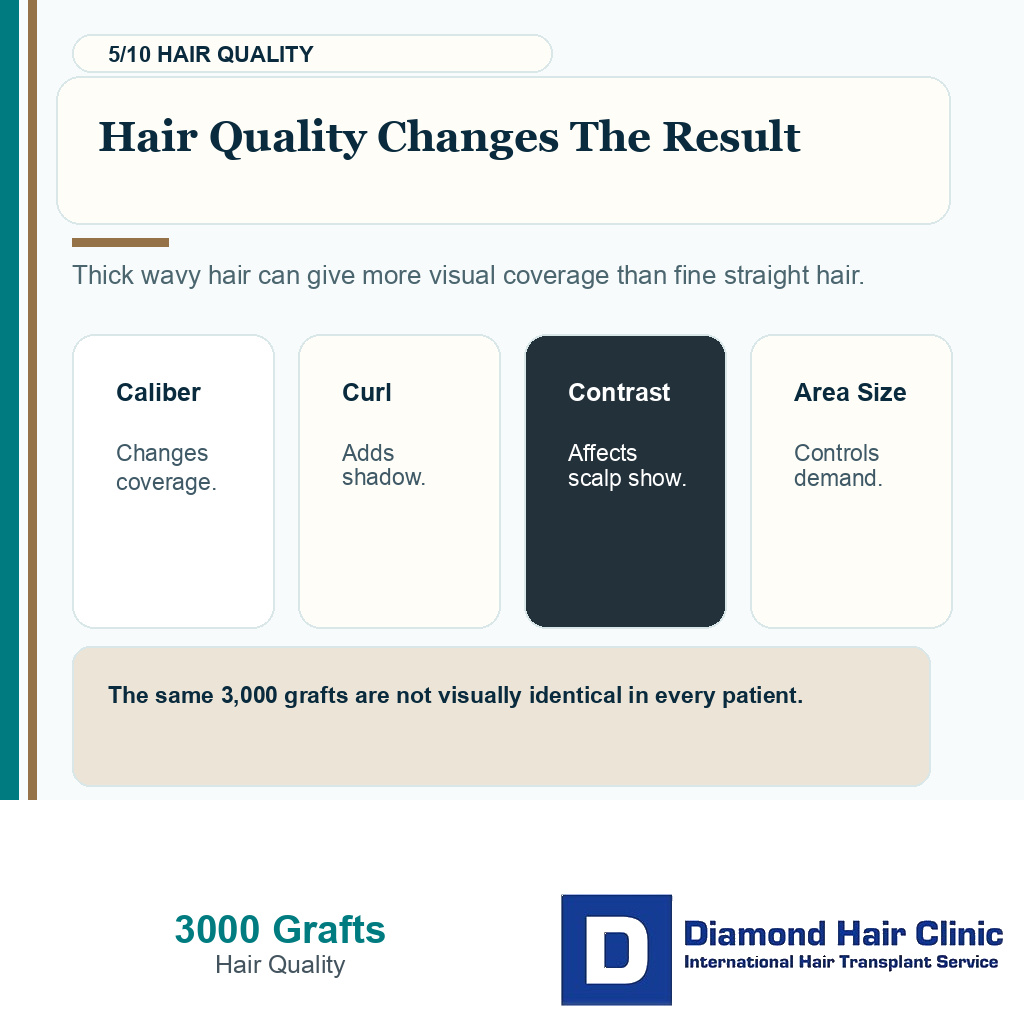
The same operation can look very different from one patient to another because grafts are not identical. Hair caliber, curl, color contrast, donor density, follicular unit quality, and the size of the recipient area all change the visual result.
A patient with thicker, slightly wavy hair and low skin contrast may get a stronger visual effect from this amount of grafts. Another patient with fine straight hair, pale scalp contrast, and a wide recipient area may need more grafts to create the same appearance of density.
Planning from a photograph alone can easily mislead you. A photograph can show the pattern, but it cannot fully show donor quality, miniaturization, scalp laxity, hair caliber, or long term risk. To understand the number properly, the surgeon has to connect the graft count with the full surgical plan. That full plan view is why how I calculate graft numbers is never only a counting exercise.
Density is not only a calculation. Direction, angle, spacing, survival, and blending with native hair all matter. A smaller number placed with judgment can look more natural than a larger number placed without artistic control.
Hair count matters as much as graft count
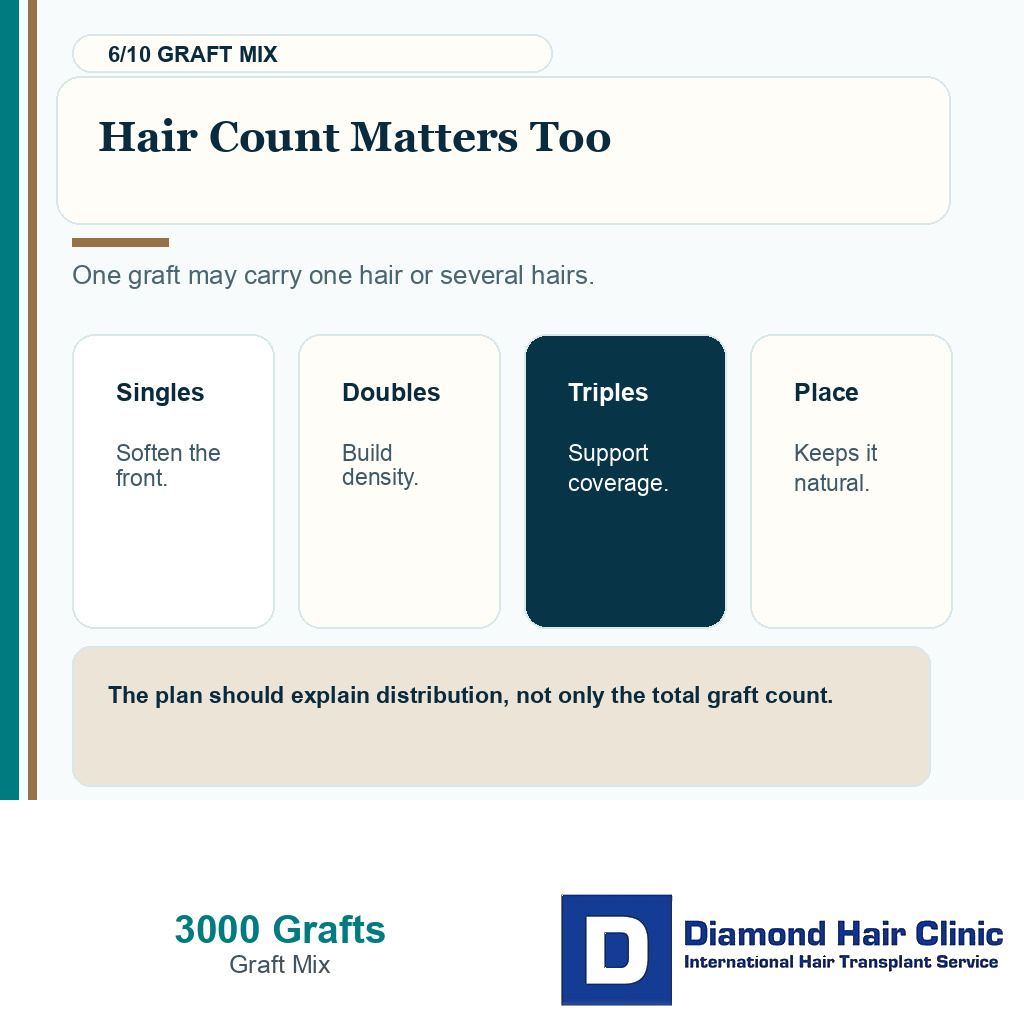
A graft can contain one hair, two hairs, three hairs, or sometimes more. This means 3,000 grafts are not visually identical in every patient. One patient may receive many multi hair grafts that give stronger coverage behind the hairline. Another may need many single hair grafts in the front for softness, which is correct but gives a different density effect.
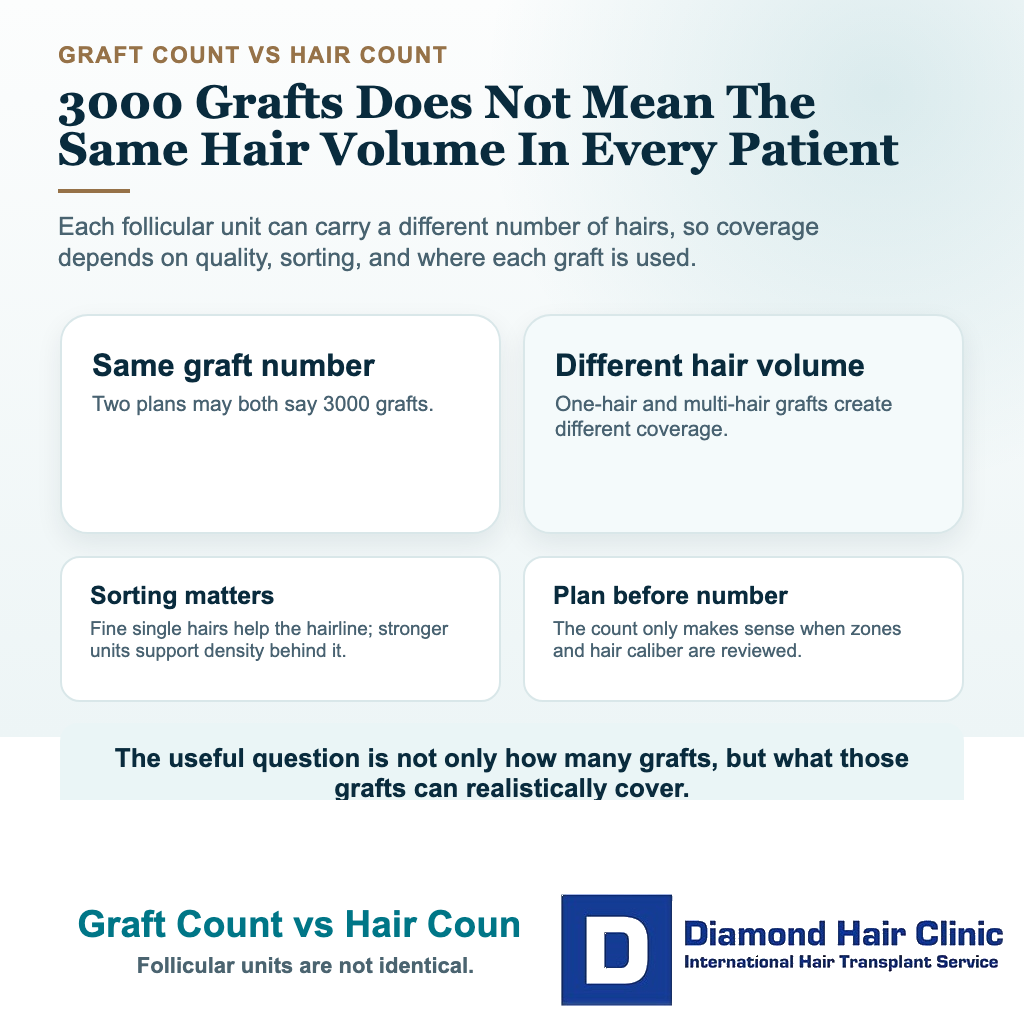
The plan depends on more than the number. I check how many single hair grafts are needed for the first rows, how many stronger grafts can be used behind them, and whether the donor hair has enough caliber to create coverage without making the hairline look harsh.
A clinic that only says 3,000 grafts without explaining distribution is leaving out a necessary part of the plan. The number matters, but placement, hair count, hairline design, and donor planning decide whether the result looks natural.
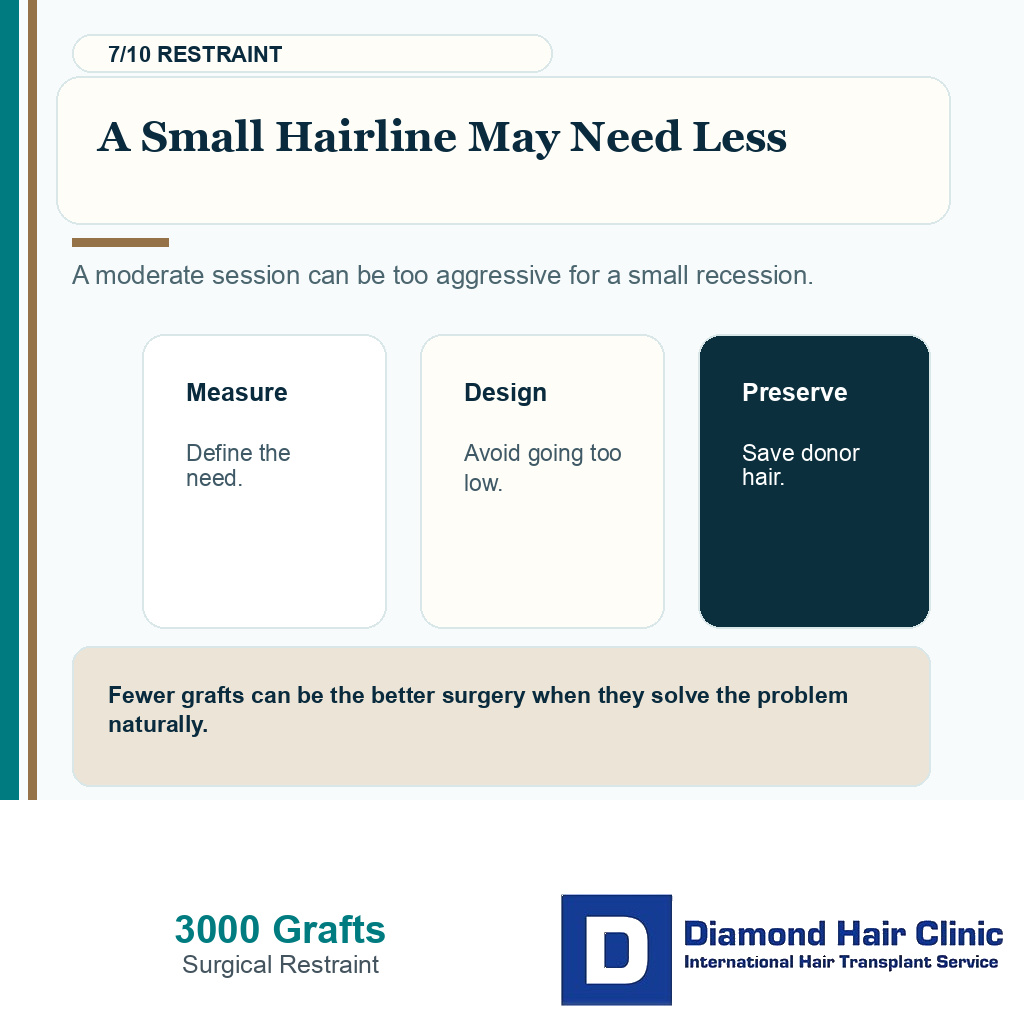
A moderate session can be too much for a small hairline
It can be too many if the patient only has mild temple recession or a small hairline adjustment. In that case, the concern is not that the patient receives too much hair. The concern is that the donor area is used too aggressively for a problem that did not need that many grafts.
For a small hairline, surgical discipline means not spending donor hair simply because it is available. If the recipient area is small, forcing a high graft count may create dense packing pressure, unnecessary donor extraction, or an unnaturally low hairline. The result may look impressive in a short term photo, but the long term cost may be higher than the patient realizes.
When a clinic offers a large number for a small recession, the reason should be clear. The plan should come from measurement, donor assessment, hairline design, and realistic density needs, not from making the package sound bigger. That is where too many grafts in one area can become a problem, even when the quote sounds generous.
If fewer grafts can create a natural result while preserving the donor area, fewer grafts may be the better surgery.
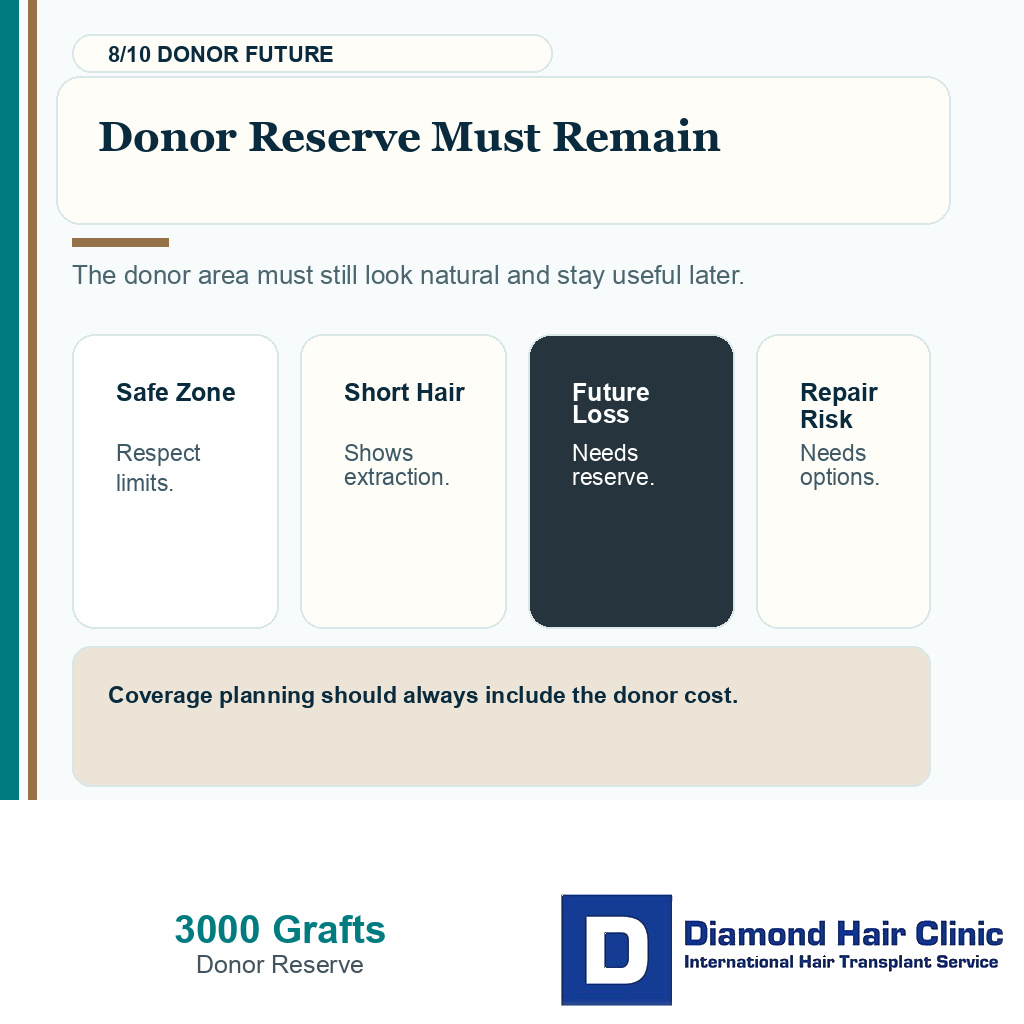
Protecting the donor area while planning
I protect the donor area by treating it as a limited reserve, not as an unlimited supply for every density wish. An extraction of this size can be reasonable in many patients, but it must be distributed safely across the donor zone and matched to future needs.
The donor area must still look natural after extraction. It must also remain useful if the patient needs another procedure years later. This matters especially in young patients, diffuse thinning patients, crown cases, and patients with a family history of advanced hair loss.
I look at the donor area as a limited reserve. I check density, hair caliber, safe donor boundaries, miniaturization, and how short the patient likes to cut the hair. A patient who wants a very short haircut after surgery has less room for careless extraction.
The concern is a plan that talks only about coverage and does not explain the donor cost. If a clinic says the donor can give any number easily, I pause the plan. You also need to know the risk of overharvesting the donor area, because donor damage is often harder to repair than thin coverage.
Different clinics may be planning different goals
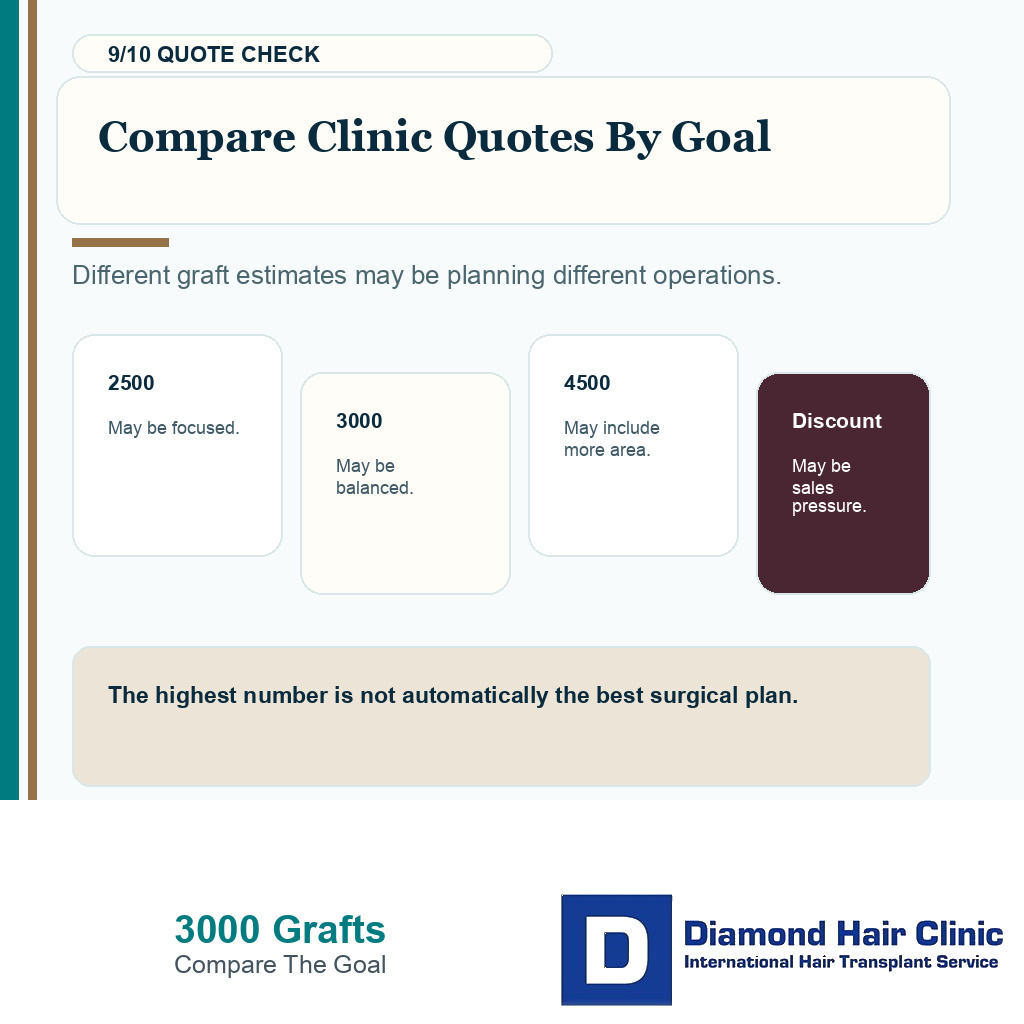
Different clinics give different answers because they may be planning different hairlines, different densities, different priorities, and different levels of donor risk. One clinic may say 2500 grafts. Another may say 3000. Another may say 4500. The patient then feels that the highest number must be the most complete plan, but that is not always true.
A lower estimate may be conservative and responsible. A higher estimate may be appropriate in a larger area. It may also be a marketing number. The difference cannot be judged safely without seeing the design, the donor plan, and the reason behind the number.
When I see very different quotes, I first ask what each clinic is trying to achieve. If one plan treats only the frontal third and another tries to treat the crown too, the numbers cannot be compared as if they are the same operation. This is the same reasoning behind why clinic graft estimates can differ.
Be careful with urgency. If the consultation makes the decision feel easy, certain, and discounted, you may be hearing a sales process rather than a surgical plan. A proper consultation should leave you clearer about limits, not only more excited about the number.
The plan must be clear before you accept it
A good plan should make clear what the grafts are meant to do. If that answer is only “3,000 grafts,” the conversation is not specific enough yet.
Before surgery, I want the diagnosis, hair loss pattern, and donor reserve to be clear. The hairline height, temple design, and recipient area priority need to feel mature and medically reasonable before surgery begins.
When crown coverage is included, the compromise has to be clear before surgery. If native hair is still at risk, medication needs review directly, especially when the transplant is relying on native hair staying stable. If a second session may be needed later, I explain that before the first operation, not after the result has grown.
The surgeon should be able to explain the reasoning personally. A graft number should never be accepted as a promise by itself. It should be accepted only when the plan behind it is medically and visually coherent.
If the patient is not truly a candidate yet, surgery may be the wrong answer no matter how attractive the quote sounds. Candidate judgment comes before the graft number, which is why whether you are a good candidate for a hair transplant matters in any serious plan.
Three thousand grafts need a target
A 3,000 graft plan means little until the target is named. A focused frontal restoration, a broad mid scalp goal, and an advanced case that also wants crown coverage are not the same operation.
The decision starts with the area being treated, the hair caliber, donor strength, native hair stability, crown risk, and the density that can be achieved without pretending the donor area is unlimited.
If the number fits the target, the plan should sound specific. You should know what is being prioritized, what is being left for later, and why the donor area can support that choice. Without that explanation, 3,000 grafts is only a quote.
Read this review excerpt
We also had a levelled conversation about my hairline and results I could expect based on my donor density area.