


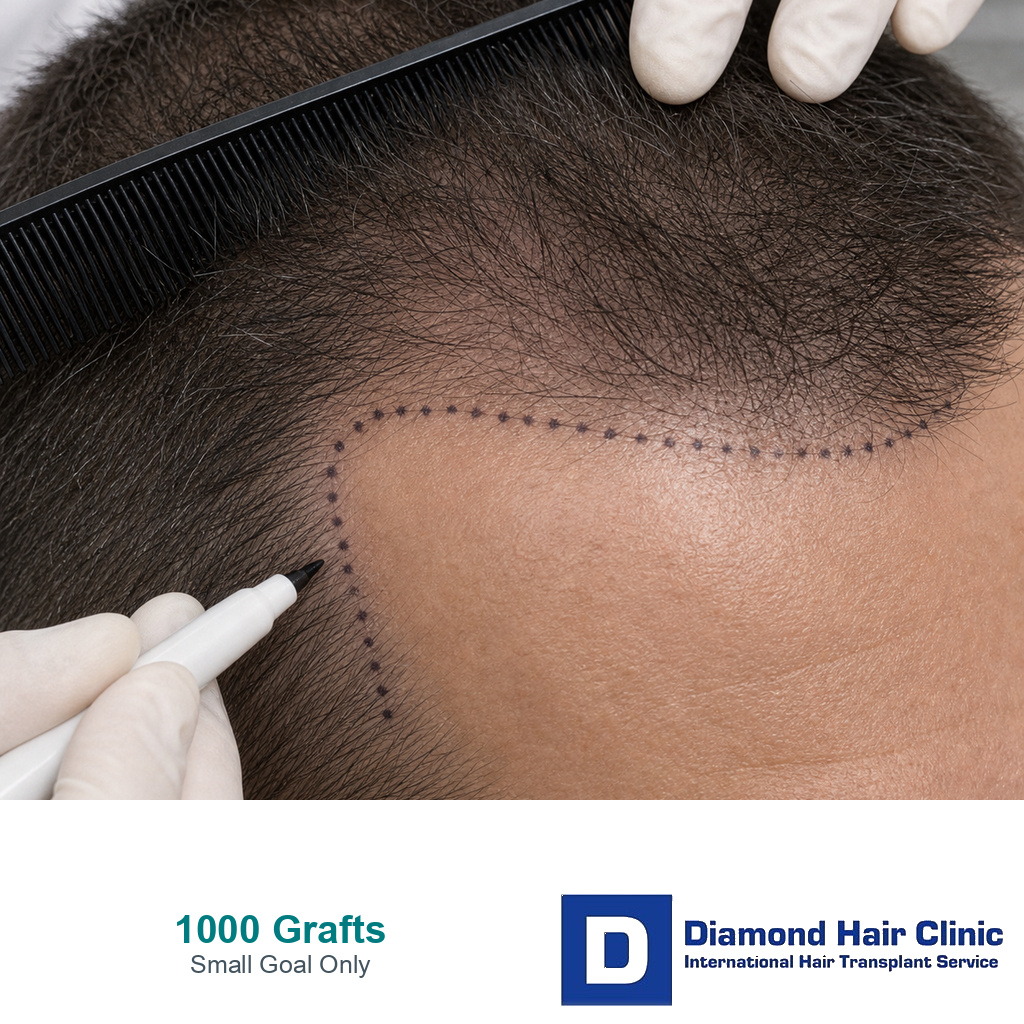
1000 Grafts in a Small Hair Transplant Session
1,000 grafts can be enough for a hair transplant, but only for a small and clearly defined goal. It may be enough to soften mild temple recession, improve a limited hairline weakness, or refine a previous result. It is usually not enough for broad frontal thinning, crown coverage, advanced hair loss, or a major hairline lowering plan. I first check whether the target is small enough for that number, not whether the number sounds attractive.
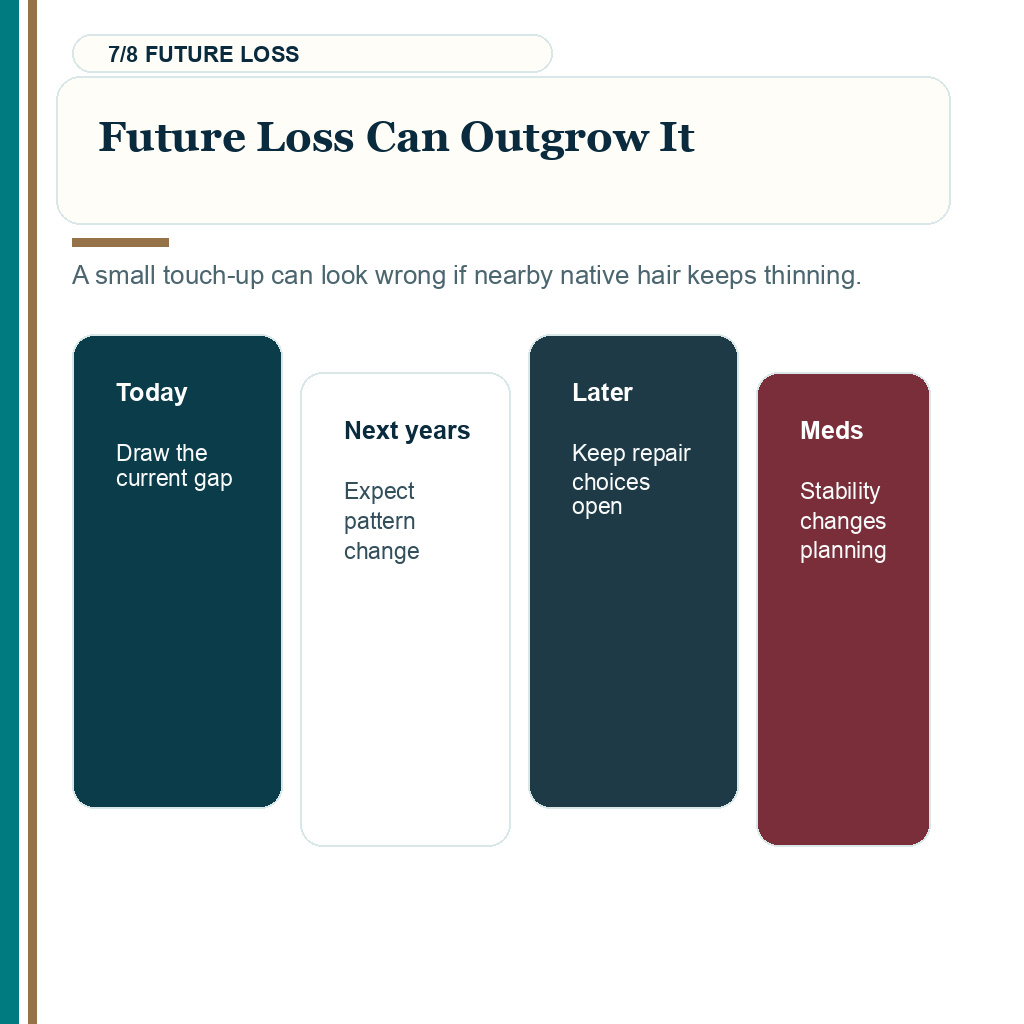
A 1,000 graft plan works only when the target area is small enough. The number matters less than the area, donor quality, native hair, density goal, and future pattern it has to protect. One thousand grafts can be a precise correction. It is not a shortcut for a result that actually needs a larger plan. The first thousand grafts should not spend the whole margin for correction. A small hairline plan is stronger when it leaves enough donor reserve for a second limited touch if the recession progresses or the first design needs refinement.
With a 1,000 graft case, the visible problem has to be real enough to justify surgery. A small operation can make a patient inspect a normal hairline more closely, so the benefit must be clearer than the anxiety driving the request.
The number only helps after the target is drawn
In plain terms, a small surgical plan can be very sensible when the target is small. It becomes disappointing when the patient is expecting a dramatic change across a large area.
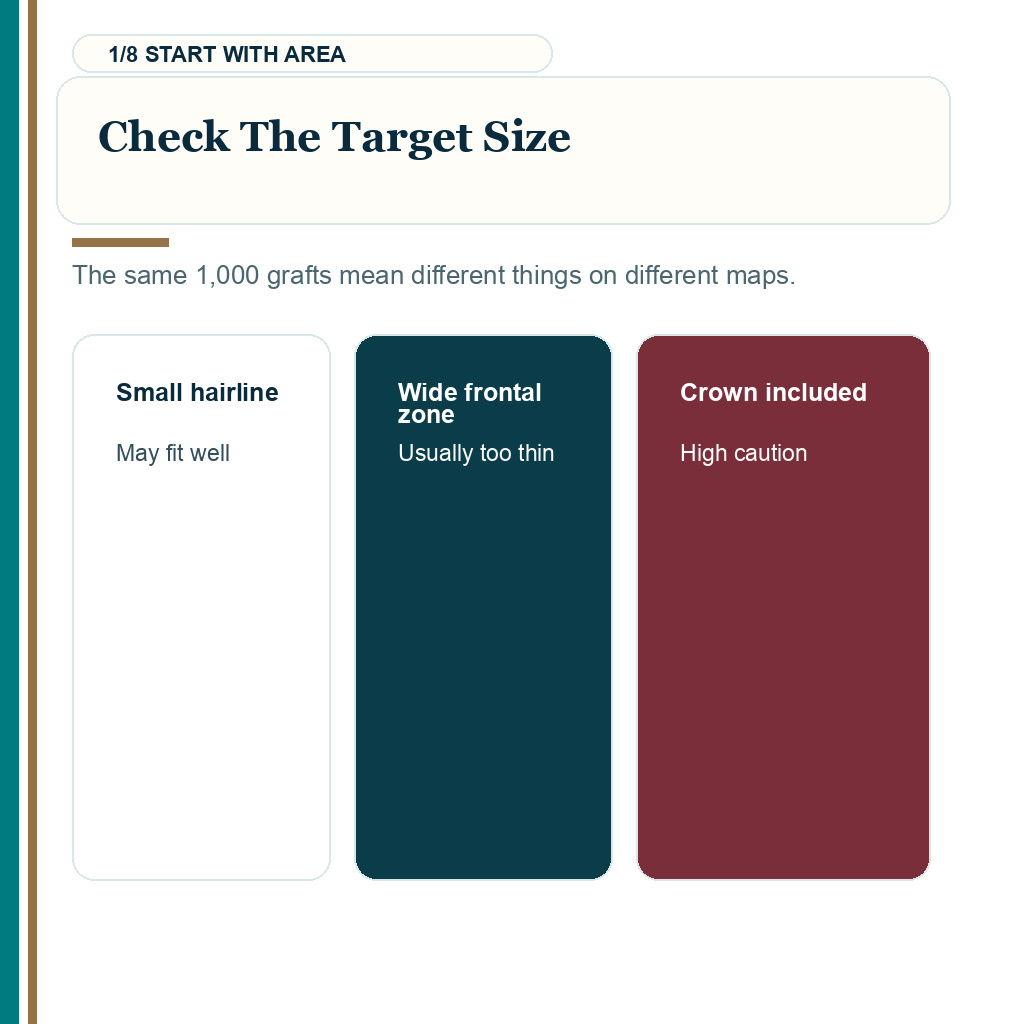
When I hear a small number like this, I immediately ask where those grafts will go. A thousand grafts placed into two small temple corners is very different from the same amount spread across the frontal third, mid scalp, and crown. The same number can look strong in one area and almost invisible in another.
I ask whether the hairline is being lowered or only reinforced. A thousand grafts used to soften existing corners is not the same as a thousand grafts used to create a lower new hairline.
I try to keep every estimate tied to a real drawing and a real area. The plan should explain what will be improved, what will be left alone, and why a limited approach protects the patient’s future. In graft number calculation, I use area, density, donor reserve, and future hair loss to shape the estimate.
Area coverage depends on surface size
The number becomes more practical when we connect it to surface area. If 1,000 grafts are placed at 40 grafts per square centimeter, they cover 25 square centimeters. At 35 grafts per square centimeter, they cover 28.57 square centimeters. At 25 grafts per square centimeter, they cover 40 square centimeters, but the visual density will be lighter.
This is arithmetic, not a promise of appearance. Twenty five square centimeters in a frontal hairline behaves differently from the same area in a crown whorl or thin mid scalp.
Patients also need one more distinction. A graft is not exactly the same thing as a visible hair. Some grafts contain one hair and some contain more than one. In the front hairline, I deliberately use fine single hair grafts. Behind that, stronger grafts can add weight. So 1,000 grafts used mostly for the front edge will not look the same as 1,000 grafts used behind an existing line.
Those figures do not mean every patient needs the same density. The front hairline needs single hair grafts, softer irregularity, and a gradual transition. The zone behind the hairline may need more visual weight. Fine straight hair usually needs more careful density planning than thicker or wavy hair. For fine hair, I want the plan to name the exact area it can improve instead of letting 1,000 grafts sound reassuring by itself.
I do not answer from graft count alone. A thousand grafts can be excellent for a small hairline refinement. The same 1,000 grafts can look too light if they are spread across a large frontal zone or a wide crown. The drawing matters as much as the number.
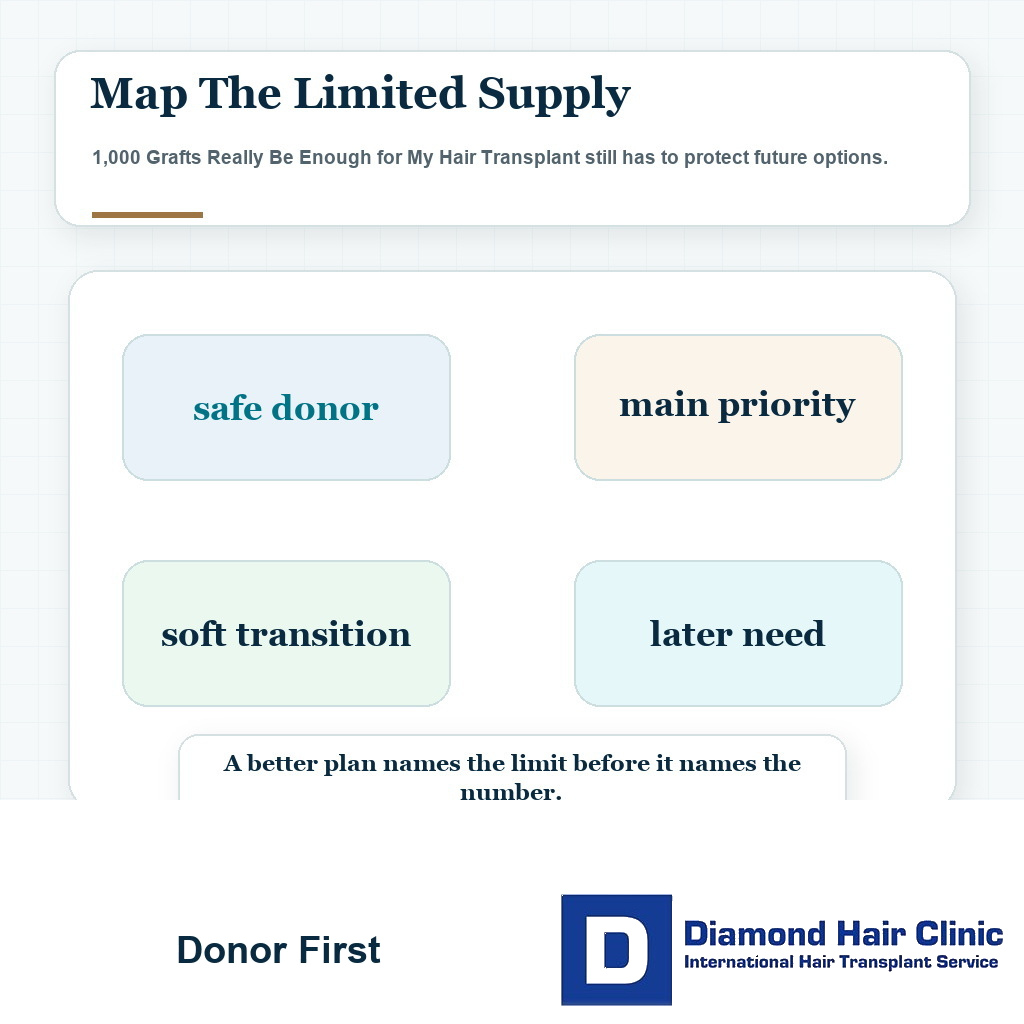
Small hairline plans can work well
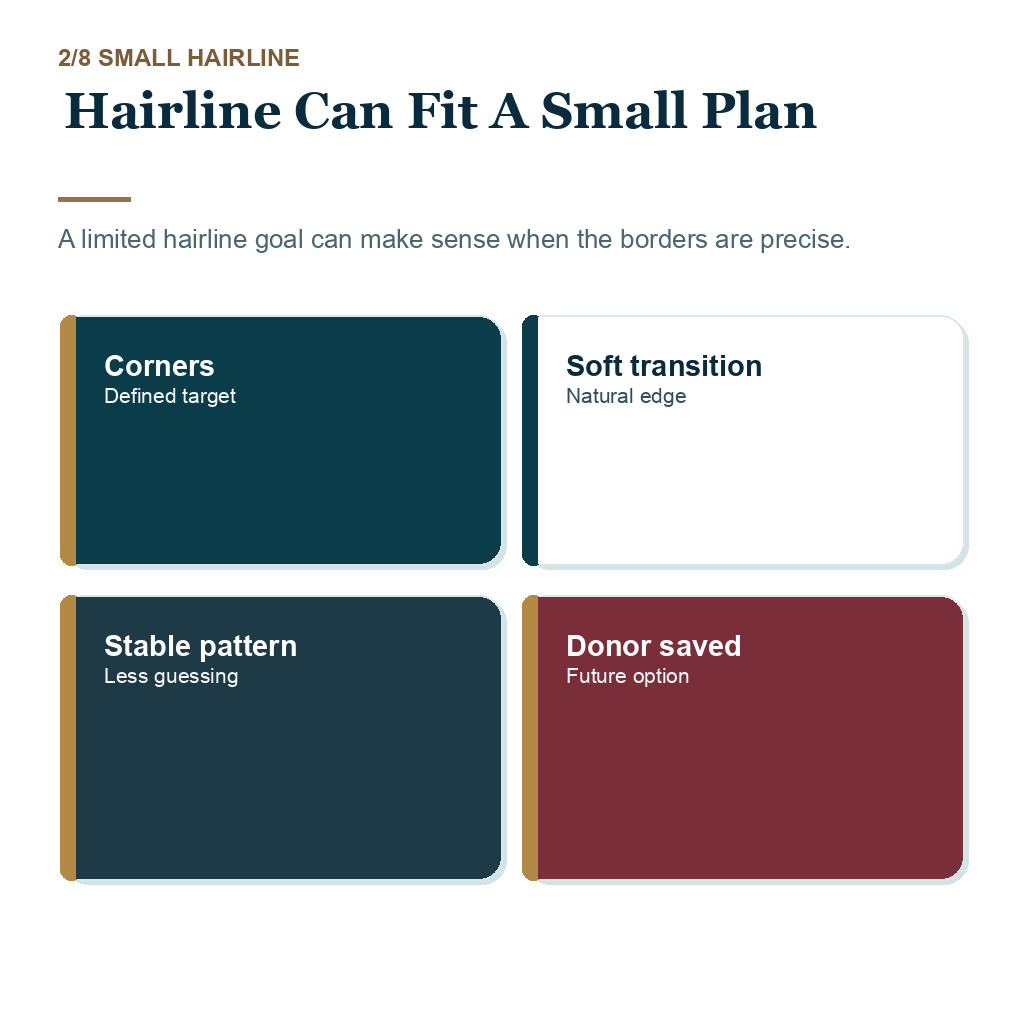
One thousand grafts can be enough when the hairline already has a good shape and the patient only needs careful reinforcement. This might mean filling mild temple recession, improving one thinner corner, softening a slightly high transition, or adding density to a very limited frontal zone.
In these cases, the result can be natural because the transplant is not trying to remake the face. It is supporting what is already there. The existing native hair carries part of the visual density, and the transplanted grafts are used with precision rather than force.
For me, natural hairline design matters more than ambition here. A small hairline plan can look excellent when the angles, single hair grafts, irregularity, and transition zone are handled well. It can also look artificial if the clinic places strong grafts too straight, too low, or too dense in the wrong area.
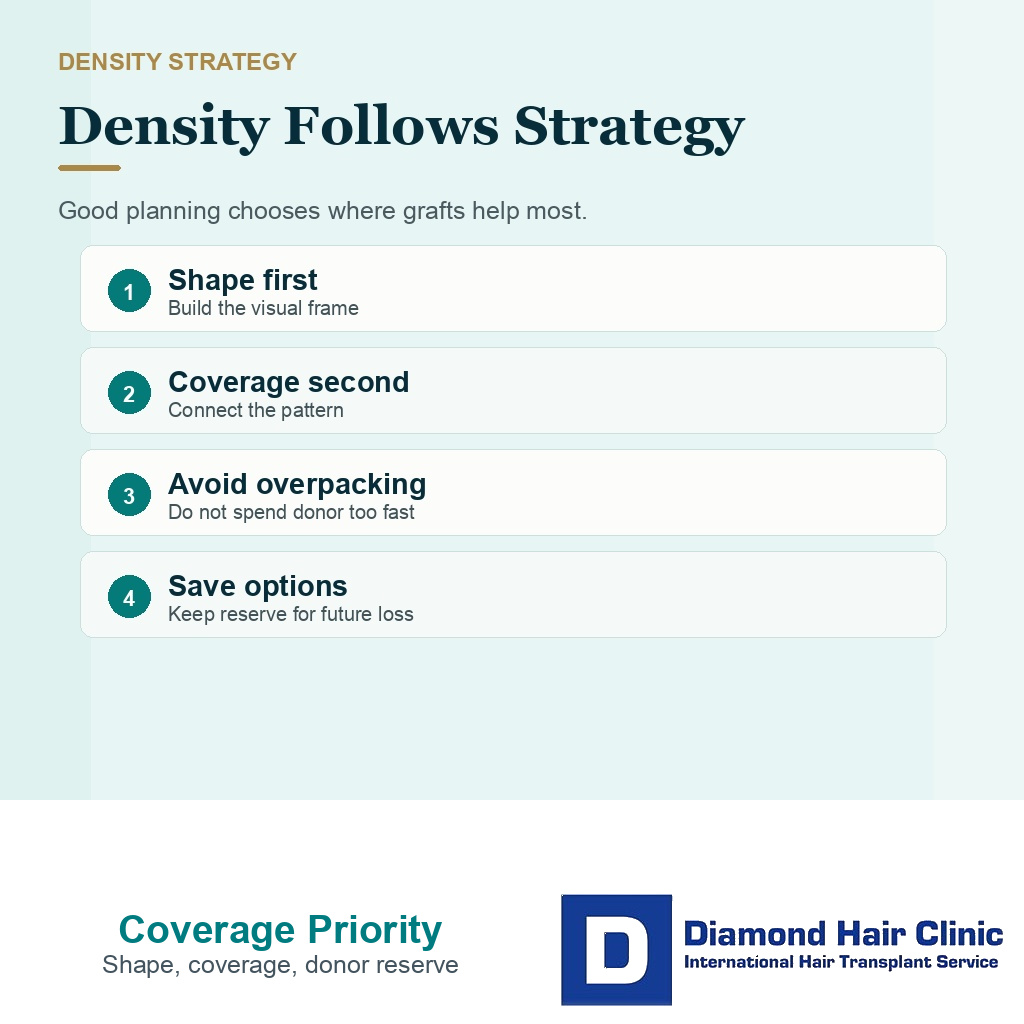
Limited procedures disappoint when the area is too wide
One thousand grafts is probably too little when the bald or thinning area is wide, when the patient wants to lower the hairline significantly, when the mid scalp is also thinning, or when the crown is part of the expectation. It is also often too little when the existing hair around the area is dense and the transplanted zone must match that density closely.
I see this misunderstanding often. A patient may look at a small recession in the mirror and think it is only a minor correction. But if the surrounding hair is thick, the transplanted area must blend into that thickness. If the grafts are spread too thin, the result may look like a faint outline rather than a natural hairline.
I assess whether the patient is asking for coverage or for framing. Coverage means trying to make a visibly thin area look fuller. Framing means improving the shape around the face. One thousand grafts can sometimes help framing very nicely, but it is rarely a strong answer for broad coverage.
A patient may be happy with a conservative refinement if that was the agreed goal. The same plan feels disappointing if it was sold as a transformation. Patients often mix these two goals together, and that is where disappointment begins.
I sometimes compare a limited procedure with larger examples such as whether 2,000 grafts are enough. I am not saying every patient needs a larger procedure. I am saying the difference between a subtle refinement and a more visible reconstruction can be the graft budget.
Different clinics may give different numbers
Two clinics may look at the same patient and give very different graft numbers because they are not always planning the same result. One clinic may be planning only the corners. Another may be planning the full frontal hairline. One may be conservative. Another may be chasing a dramatic before and after photo.
Sometimes the difference is realistic surgical judgment. Sometimes it is poor communication. Sometimes it is marketing. A low number can be careful planning, but it can also be under treating the area. A high number can be useful, but it can also be unnecessary pressure on the donor area.
Patients need to know why graft numbers differ between clinics. The number is not meaningful until the clinic explains the area, the intended density, the expected visual change, and what is being left untouched for future hair loss.
Small sessions can still carry a minimum procedure fee because the clinic is reserving an operating slot, trained staff, anaesthesia, and sterile setup. That fee is separate from the clinical graft estimate. I do not increase the graft count to make a limited case fit a pricing model. The planned graft range and total session fee should appear as two separate numbers.
The same number can look full or thin
Density changes everything. A small graft count placed into a very small area may create a strong visual improvement. The same amount spread over a larger area may look thin even if every graft grows.
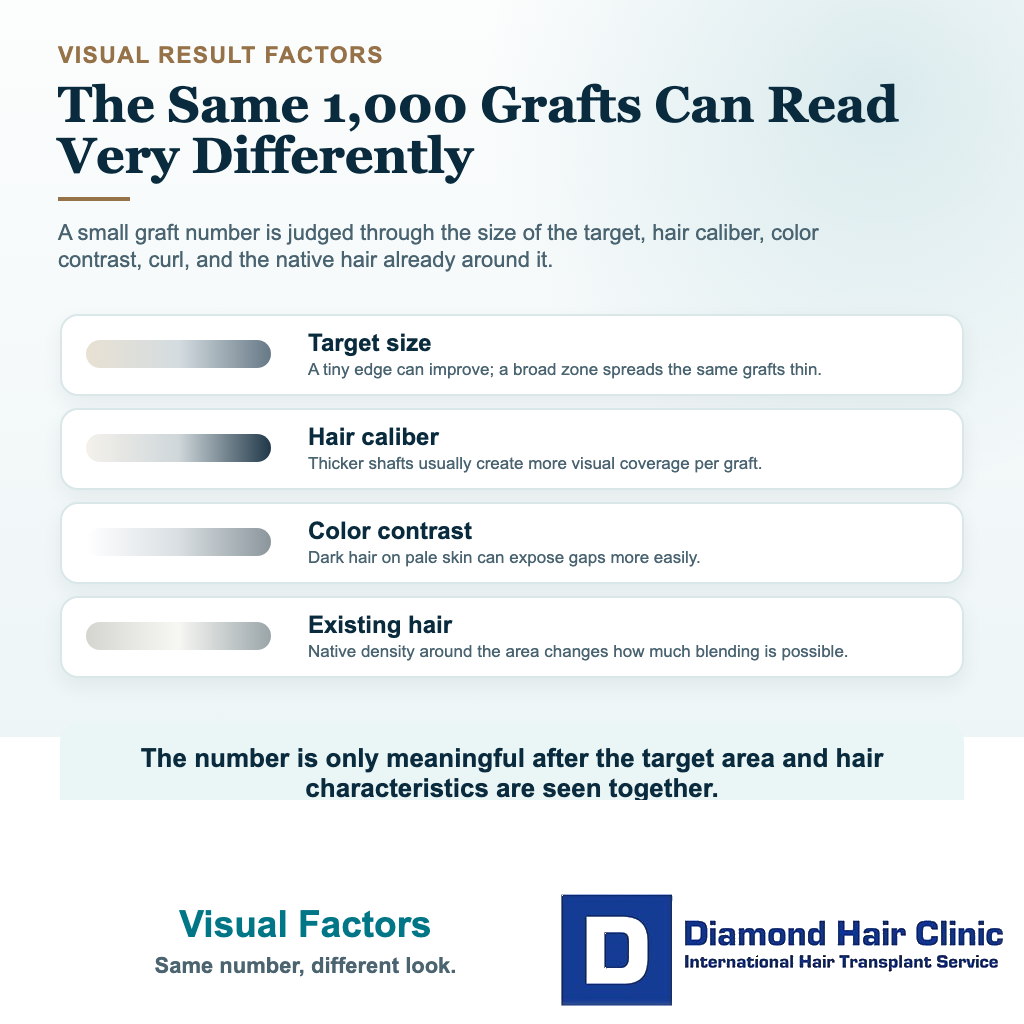
I assess hair caliber. Thick hair can create more visual coverage than fine hair. Wavy or curly hair can create more coverage than very straight fine hair. Dark hair on light skin may reveal more scalp contrast than lighter hair on lighter skin. These details decide whether a small graft number will look natural or disappointing.
Promises based on graft count alone are not reliable. If a patient has fine straight hair and high contrast between scalp and hair color, the same plan may look lighter than expected. If the patient has thicker hair with a favorable wave, the same number can create a stronger visual effect. The number is only one part of the result.
In surgery, density is not only a matter of adding more grafts. If too much is packed into a small area, the scalp can react poorly and donor grafts can be wasted. The risk with too many grafts in one area is that a clinic may spend donor hair without creating a better result. The right number is the one that fits the tissue, the design, and the future.
Crown work needs caution with a small graft number
For the crown or mid scalp, a small graft number is usually a limited plan. It may help a small crown weakness, but it will not rebuild a large crown with strong density. The crown can absorb grafts quickly because the hair direction changes in a circular pattern and the surface area is often larger than patients expect.
Many patients become disappointed at this point. They hear a number, imagine a full result, and later realize the grafts were spread across too much scalp. If the crown is large, I usually prefer to be very realistic about what this amount can and cannot do.
A small crown plan should usually be described as softening or blending unless the bald spot is truly small. Calling it restoration creates the wrong expectation. Sometimes medication, waiting, or staged planning is wiser than placing a small number into a large area and calling it coverage.
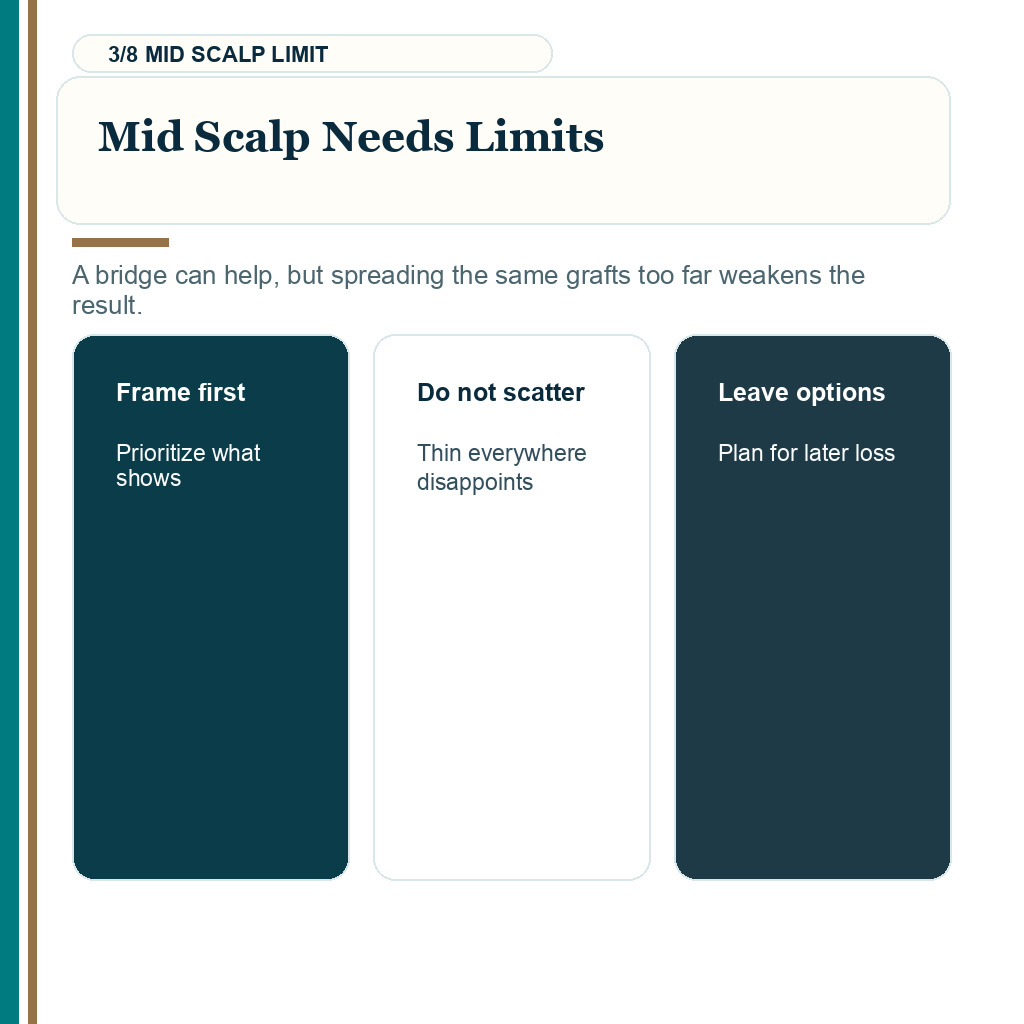
Mid scalp thinning needs its own diagnosis. If native hair is still miniaturizing, adding a small number may not solve the underlying progression. The transplant may improve one part while the surrounding hair continues to thin. A good plan must look beyond the first photo.
If the crown is already becoming a concern, I usually want the patient to understand priorities. A limited number of grafts may be better saved for the frontal frame, or the crown may need to wait until the hair loss pattern is clearer. Sometimes the strongest surgical decision is where not to spend grafts yet.
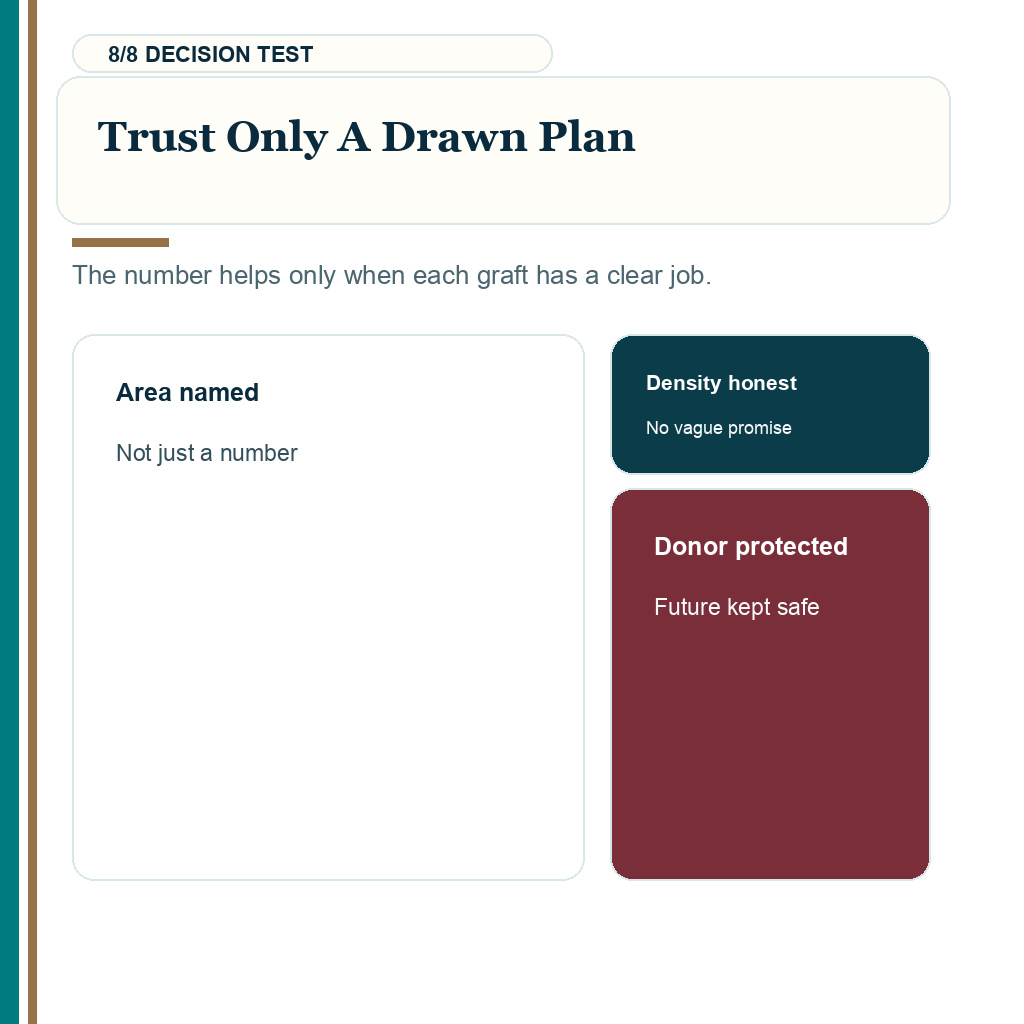
Use these 8 small session planning slides to check target size, hairline fit, mid scalp limits, crown caution, density expectations, donor budget, future loss, and the final drawn plan. Swipe sideways, use the arrows one slide at a time, or choose a number below the image.


Small procedures can still create problems
Even a small procedure can create problems if it is done for the wrong patient or in the wrong area. Patients sometimes think a low graft number means low risk. The risk may be lower than a very large session, but it is not zero.
Fewer grafts usually mean fewer donor extractions and recipient sites, but they do not create a separate healing timetable. A smaller session may feel easier, yet it does not guarantee faster healing or less shock loss. The treated area, density between native hairs, prior surgery, technique, and individual skin response still matter. Keep the planned aftercare restrictions until your surgeon reviews the scalp, even when recovery feels light.
If grafts are placed densely between fragile native hairs, there can be native hair shock loss. If the design is too low, too straight, or too aggressive for the patient’s age and future hair loss, the result can look unnatural later. If the wrong grafts are used in the front row, the hairline can look coarse even in a small procedure.
A small transplant is still a real decision. A procedure of this size can work well when it is precise. It can also create a visible problem if the clinic uses the number as a quick cosmetic fix without thinking about the face, the donor area, and the future pattern of hair loss.
Donor area thinking comes before saying yes
The donor area is not unlimited. A small first surgery can be a good decision if it protects the donor for the future. It can also be a poor decision if it is used to chase a tiny cosmetic concern too early, while the patient may need those grafts later for more meaningful coverage.
In consultation, I check whether the plan gives enough value for what it uses. If the patient has stable mild recession, strong donor hair, and a realistic goal, it may be reasonable. If the patient is young, actively thinning, and anxious about a very small imperfection, I may advise waiting.
Donor area planning is central to my answer, but I do not think about it only in a defensive way. A graft used today cannot be used again later. Careful surgery does not always mean doing fewer grafts. It means using the right grafts for the right reason.
Small touch ups are useful only for limited problems
A small touch up can be very useful when the original result is mostly successful and the difficulty is limited. It may improve a thin corner, add density to a small area, soften a previous line, or balance a side that healed thinner than expected.
But a touch up is not always simple. If the first transplant has poor direction, pluggy grafts, scarring, or an unnatural hairline position, adding more grafts may not fix the real problem. Sometimes the first step is repair planning, not simply more density.
I link this topic to hair transplant touch up for that reason. A touch up should be small because the difficulty is small, not because the clinic is avoiding a more direct discussion about repair, density, or donor limits.
Clear plan before accepting the number
Before accepting this type of plan, ask to see the treated area on the scalp, not only a number in a message. The plan needs to show whether the grafts are going only into the temples, across the full hairline, into thinning native hair, or into a previous transplant area. Without that clarity, the number is only a label.
If you are asking for an estimate from photos, use the same views for every clinic. Send the front, both temples, lifted hairline, top, crown, and donor area so a small graft number is tied to the same target each time.
The expected change also needs to be realistic. A clinic should not sell a small graft number as a full transformation if the area needs more. I keep the opposite risk in mind too. A clinic should not push a much larger plan if a small refinement is enough. Both can be wrong for different reasons.
This should be settled before committing to a hair transplant. The surgical goal, future plan, donor tradeoff, and reason behind the number should all be clear. If that answer is only a price and a date, the consultation is not complete.
One thousand grafts only answers a small target
A 1000 graft session can be useful when the area is limited and the expectation is modest. It is not a magic number for broad thinning, major lowering, or crown coverage.
The right question is whether that number fits the surface area, hair caliber, age, donor reserve, and future loss risk. A small operation can still be too much if surgery is not ready.
The best graft count is the one that solves the chosen problem without pretending to solve every future problem.

Read this review excerpt
told me the quality of my donor hair and what he could take out and advised me what will the be best outcome with what donor hair I had.