


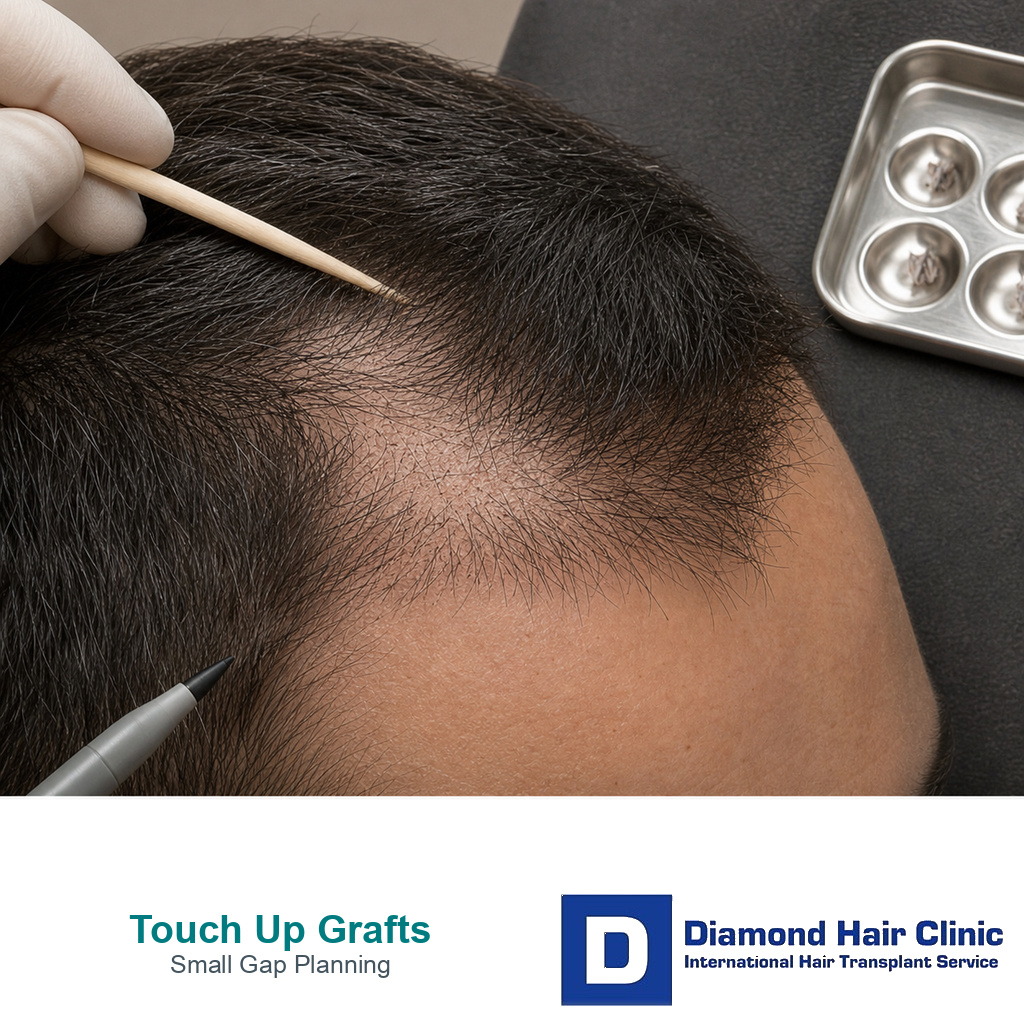
Hair Transplant Touch Up Grafts
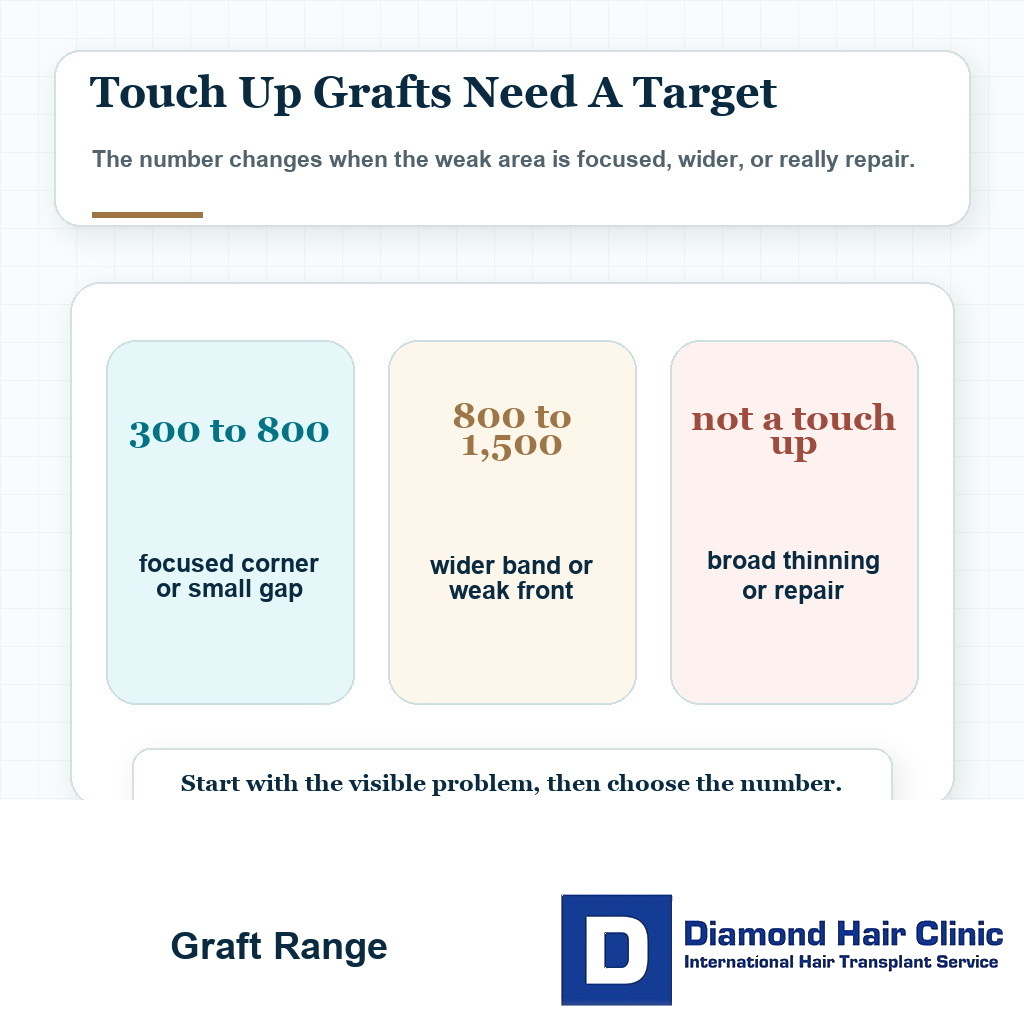
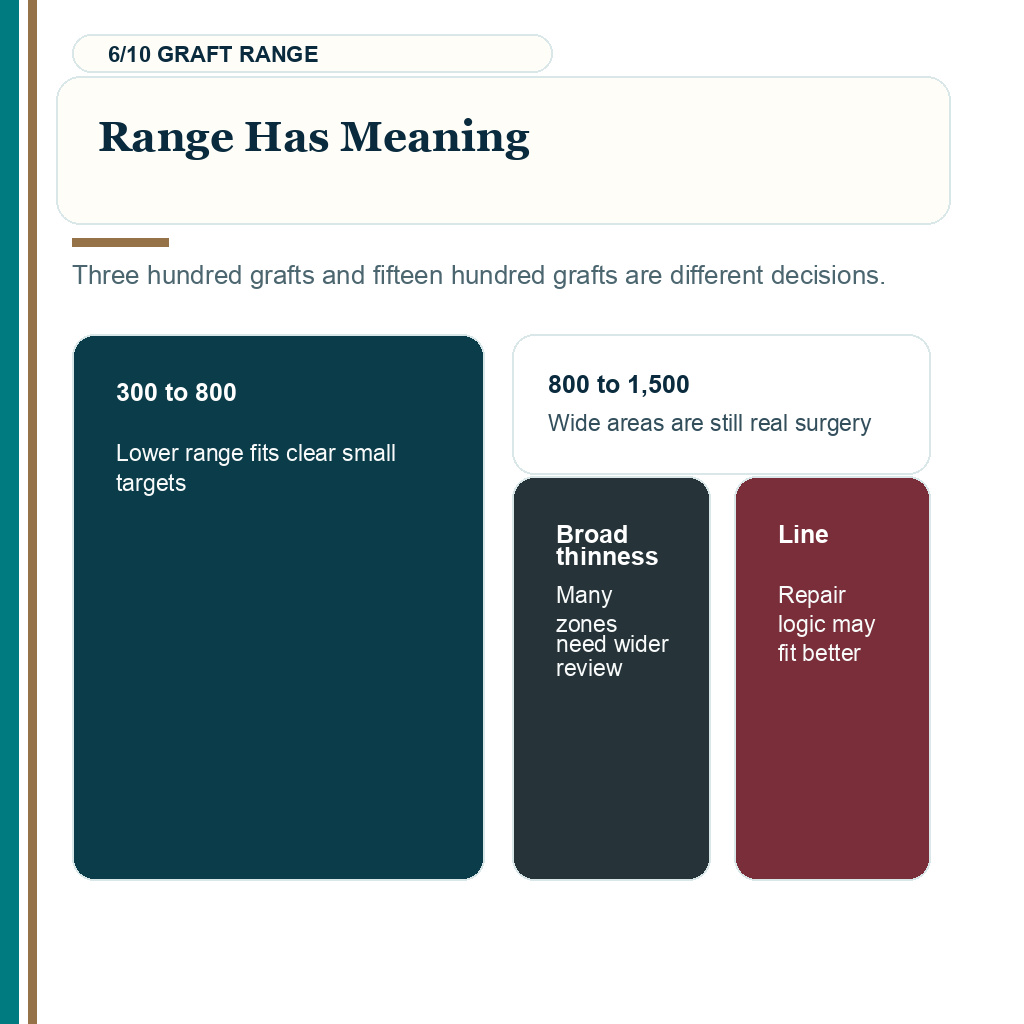
For a small hair transplant touch up, the practical range is often 300 to 800 grafts. If the thin area is wider, if the first surgery was weak, or if the concern is closer to repair than minor refinement, the plan may rise to 800 to 1,500 grafts.
The number is not decided by one photo. The review has to include the size of the weak area, existing density, hair caliber, graft angle, donor reserve, scalp contrast, and whether the patient is truly ready for a second hair transplant.
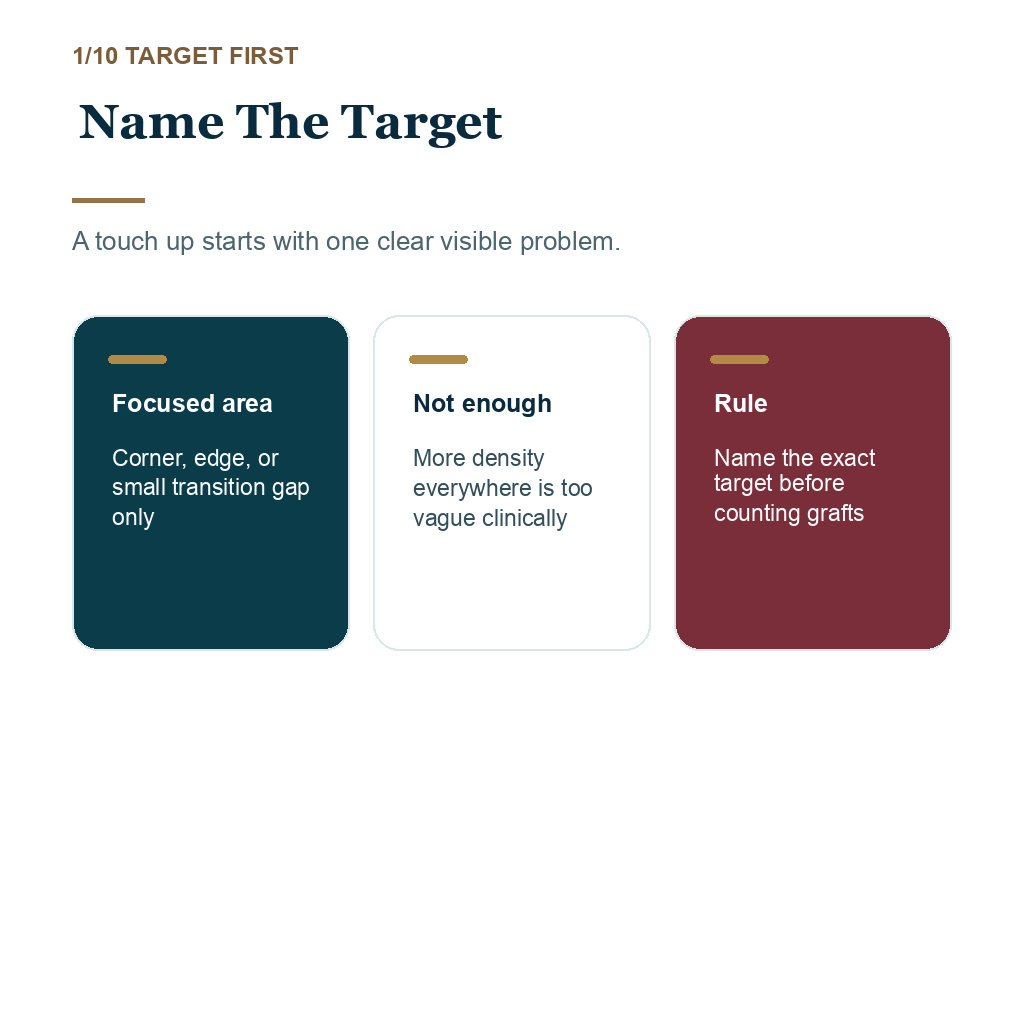
A touch up should have a clear target. A thin corner, a small gap behind the hairline, a weak transition zone, or one visible density break may improve with a modest number of grafts. A vague desire for more density everywhere is not a touch up plan.
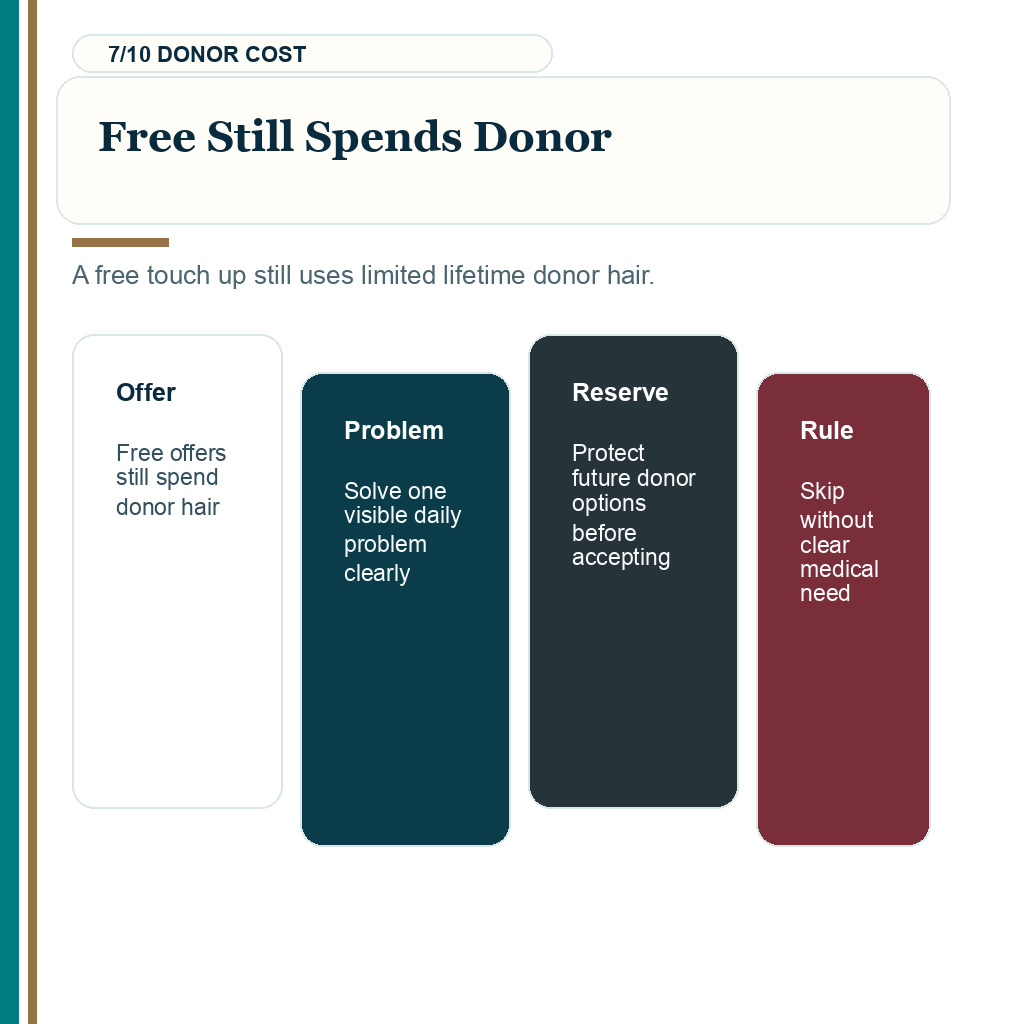
A clinic minimum, a free touch up offer, or a package number is not the same as medical need. A free offer may sound reassuring, but it still has to pass the same surgical test. The result must be mature, the weak area must be truly small, and the extra grafts must solve a visible problem without weakening the donor area.
When the weak area is noticed before the first result has matured, I do not call the answer a routine touch up yet. The first job is to document the design, healing, and graft placement pattern so a later decision is based on facts rather than panic.
Even when a touch up is free, it still spends donor hair. Treat it like a new surgical decision and make sure the weak area, donor cost, and exact target are explained better than before.
Small refinements should leave stable areas alone. When the visible complaint is only one edge or transition, restraint can protect donor hair better than adding density everywhere.
A minimum graft package can turn a small correction into unnecessary surgery. If the weak area only needs a few precise changes, the plan should be allowed to stay small or be refused instead of filling a package number.
Realistic graft ranges for a touch up
For a focused hairline or temple corner touch up, the range is often 300 to 800 grafts. This can be enough when the existing result is mostly good and only one visible detail needs refinement.
For a wider thin band, weak frontal density, or a first surgery that needs stronger correction, 800 to 1,500 grafts may be more realistic. At that point, the plan may still be modest, but it is no longer a tiny adjustment.
Coverage across the crown, mid scalp, and hairline is no longer a minor refinement. That scope needs to be assessed as a second transplant or repair plan.
Small touch ups can still be difficult
Small does not mean easy. A few hundred grafts placed at the wrong angle, with the wrong hair caliber, or in the wrong density pattern can make the visible edge worse rather than better. That is also how I approach mustache hair transplant planning, because the upper lip has very little visual margin for error.
The hairline is especially unforgiving. A small number of grafts at the front can change the whole impression because the eye reads the front edge first. The surgeon must choose fine single hair grafts, correct direction, and careful spacing.
A touch up can require more judgment than the number suggests. A small correction near the front edge may be technically more demanding than a larger area that is less visible.
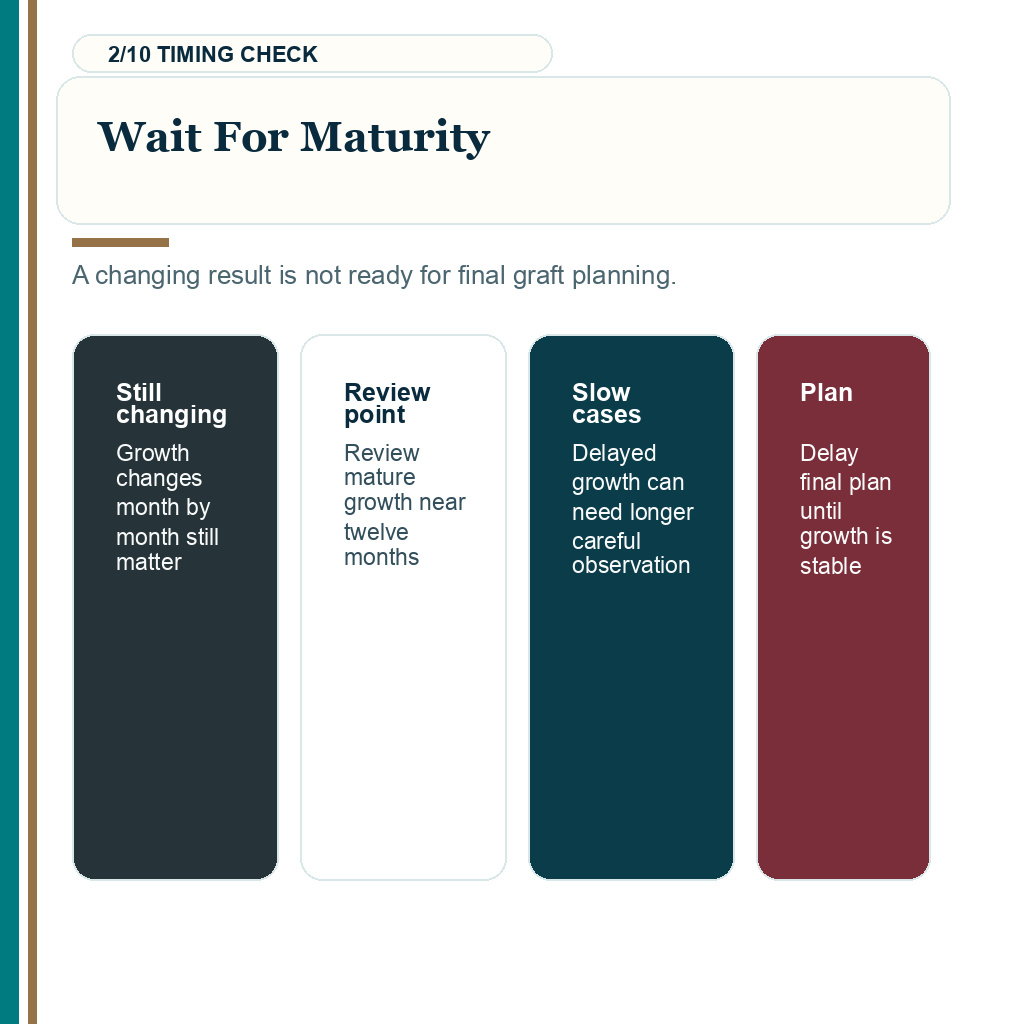
Wait until the result is mature before planning touch up surgery
For cosmetic touch up decisions, waiting at least 12 months after the first transplant is usually the safer judgment. The hair needs time to grow, thicken, soften, and settle into its final direction. The same waiting logic applies when the first concern was row like spacing after FUE, because the pattern must be judged after stable growth.
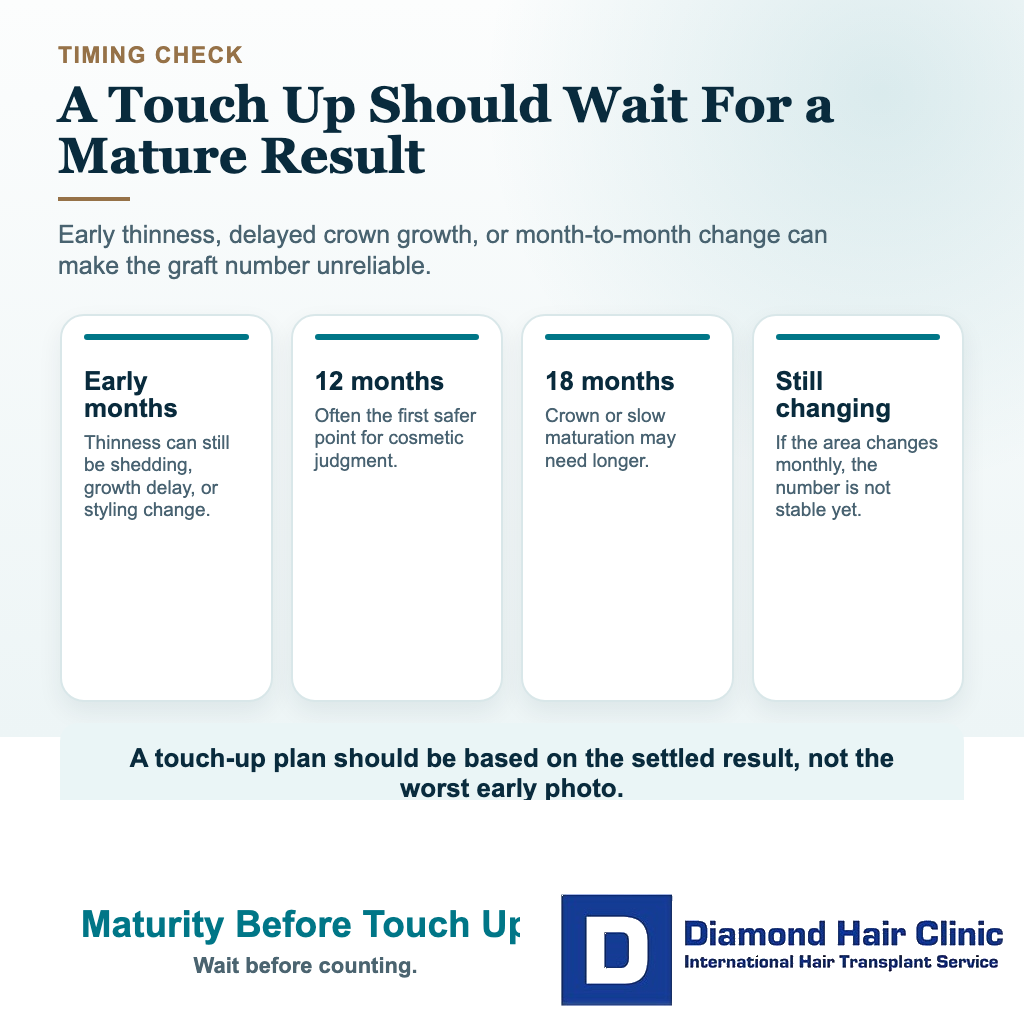
In crown cases, slower growth patterns, or patients with delayed maturation, 18 months can be more sensible before final judgment. The crown can look thin for longer because of the spiral pattern and the way light hits the scalp.
If the concern appears early, the discussion of low density at 4 months after a hair transplant is a better comparison than planning surgery from an immature result. Early thinness is not simply failure, and a touch up decision should not be made too soon.
There is a difference between noticing a weak area and being ready to operate on it. If the area is still changing from month to month, the number is not stable yet. A touch up needs planning from a mature pattern, not from the most disappointing photo in the waiting period. At month seven, I usually do not turn one thin photo into a touch up plan. I first want matched photos, the original graft distribution, and a clear answer on whether the weak area is static, still maturing, or structurally under planned.
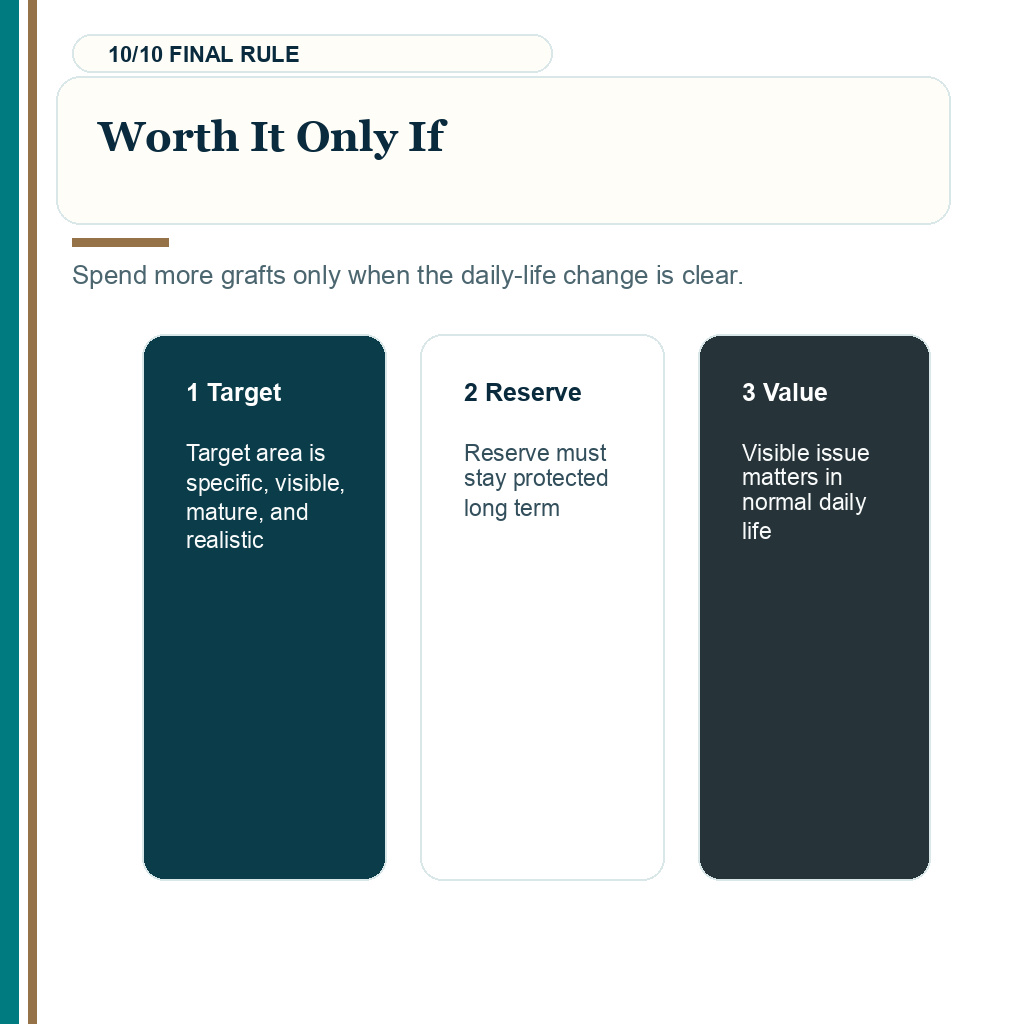
Use the 10 touch up graft planning slides below to compare target size, result maturity, photo limits, design problems, graft range, free offers, donor reserve, repair boundaries, and whether refinement is worth spending more donor hair. Swipe the carousel, use the arrows one step at a time, or choose a number below the image to jump to that point.
The factors that matter more than the photo
The number depends on the size of the thin zone, the existing density, the hair caliber, the number of hairs per graft, scalp contrast, hair length, direction, and whether the surrounding native hair is stable.
Two patients can have the same visible gap and need different graft numbers. Thick hair may cover more with fewer grafts.
With fine donor hair, a touch up may improve coverage while the added hairs usually retain their fine caliber. Extra grafts are not a promise of the fullness seen with coarse hair. Dark hair on light skin may reveal scalp more easily than lower contrast hair.
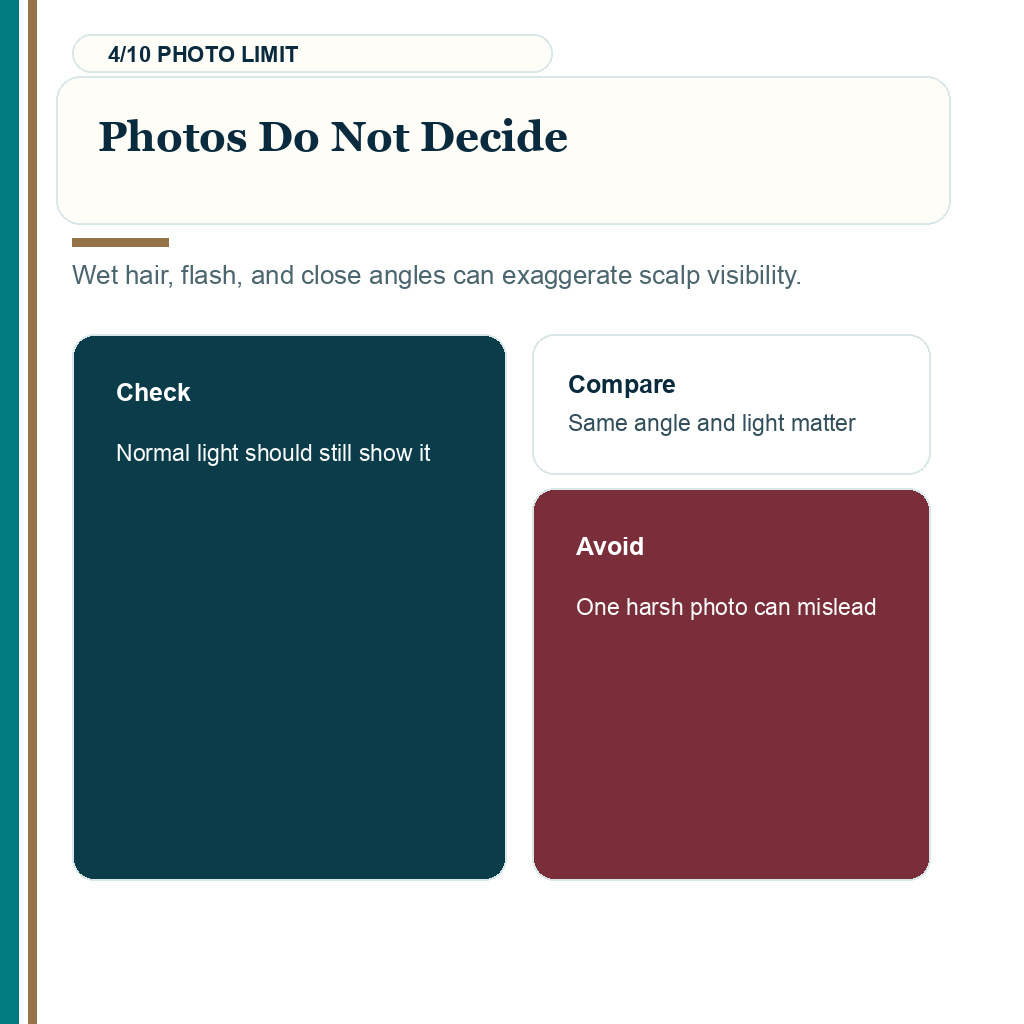
A touch up should not be calculated from one image alone. A photo can show the concern, but examination shows whether the concern is a graft number problem, a hair direction problem, a lighting problem, or an expectation problem.
Small graft numbers help most in focused areas
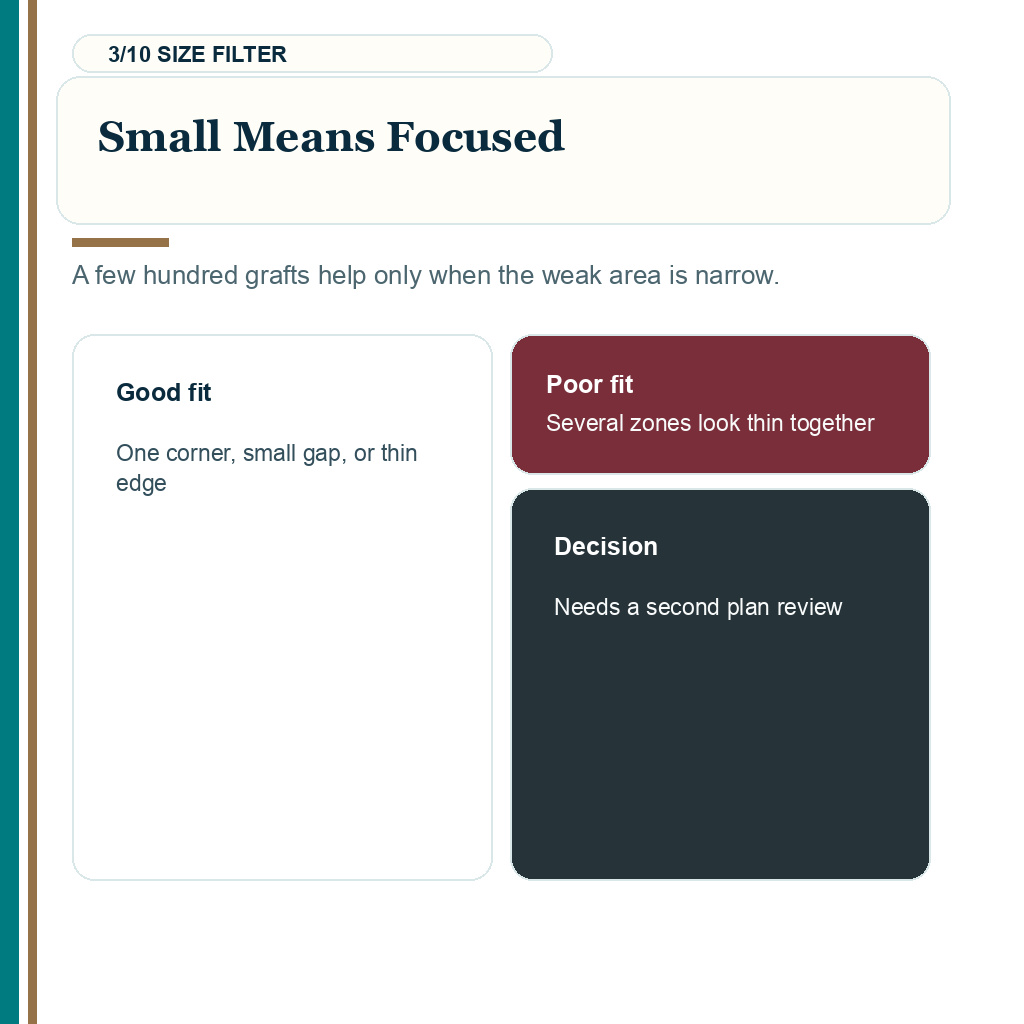
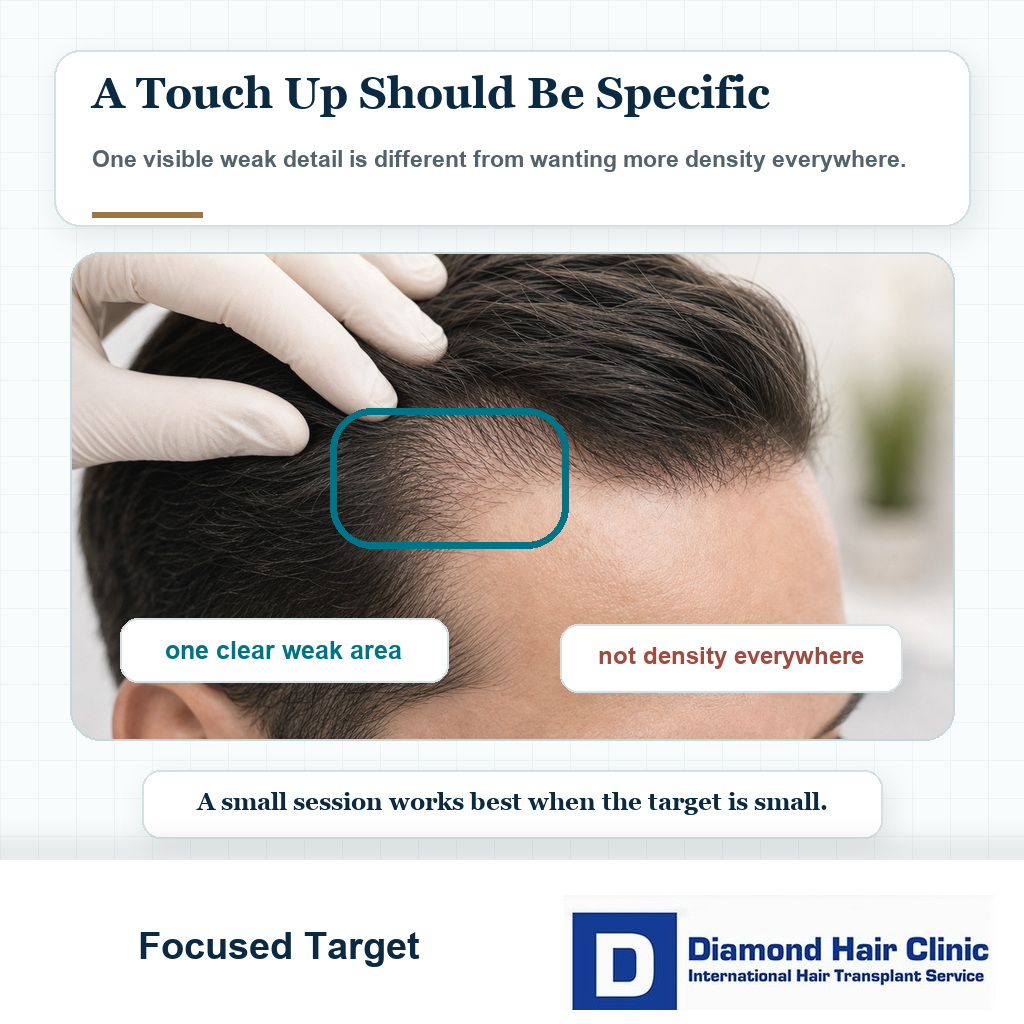
A small number of grafts can make a real difference when the concern is focused. A thin corner, a small gap behind the hairline, a weak transition zone, or a visible break in density may improve with a modest number of grafts.
The same number can be useless if the concern is broad. Two hundred grafts placed into a large crown will not transform the area. A few hundred grafts spread across a wide mid scalp may disappear visually.
The detail the patient wants to improve should be named clearly. If that answer is precise, a touch up may be reasonable. If that answer is that everything looks thin, the plan needs deeper diagnosis.
Touch up surgery cannot always hide a weak first result
Sometimes it can improve the appearance, but it should not be used to cover a diagnosis that was never made. Poor survival, poor planning, donor depletion, wrong graft direction, or ongoing native hair loss must be understood first.
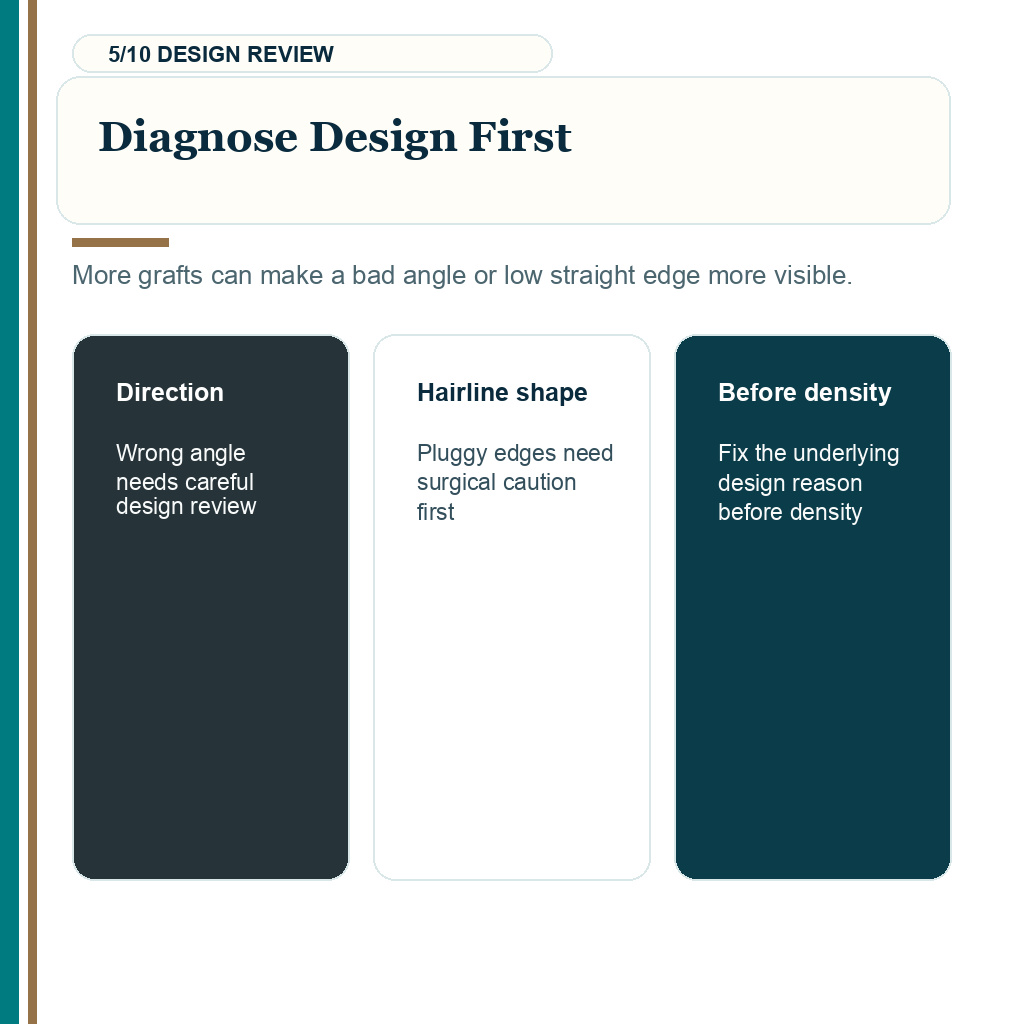
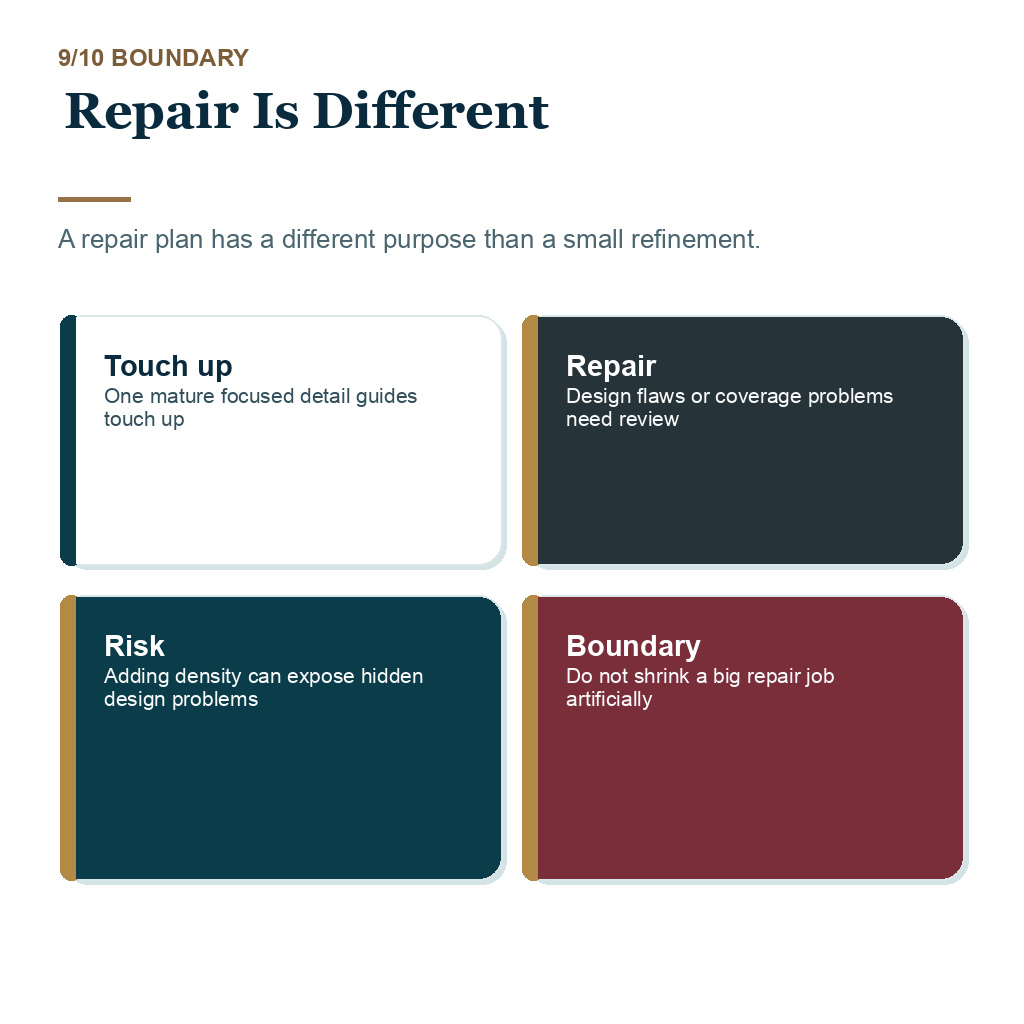
If the first result looks thin because the original grafts were spread over too large an area, a small touch up may not solve the real problem. If the hairline was designed too low or too straight, adding density may make the design more visible.
Disappointing density needs a diagnosis before more grafts are proposed. The review of why some hair transplant results look thin separates growth, design, coverage, and ongoing hair loss from a problem that another small session can actually correct.
Touch up surgery is different from repair
A touch up improves a result that is basically sound. Repair corrects a result that has a structural problem. The difference matters because the graft number, timing, and surgical approach may be very different.
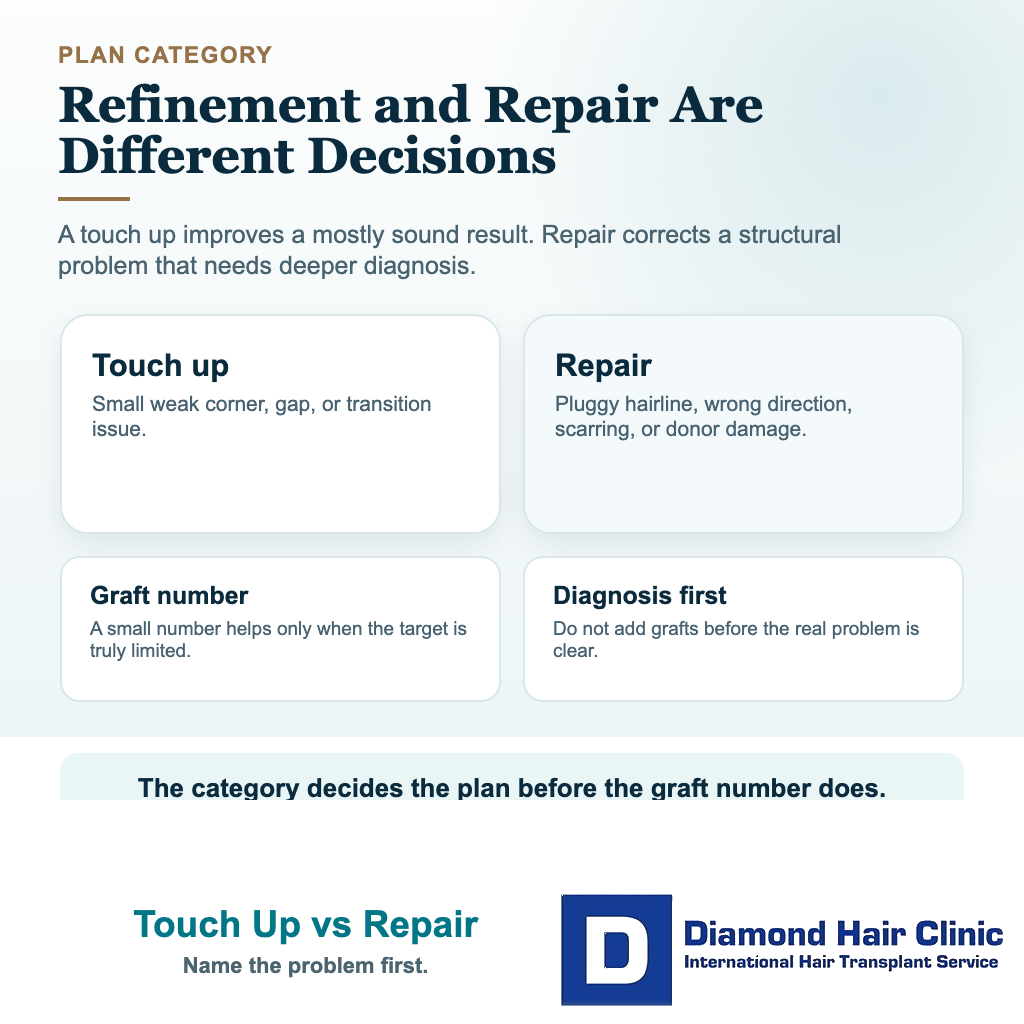
A small thin corner may only need a touch up. A pluggy hairline, wrong direction, overharvested donor area, scarring, or poor original design moves the plan toward repair, not minor refinement.
Touch up decisions connect to bad hair transplant repair when the concern is more than density. The real category has to be clear before more grafts are spent.
Donor capacity still needs protection
Every touch up spends from the same remaining lifetime graft supply. A small session can feel harmless, but grafts used for minor refinement are no longer available for future hair loss, crown expansion, or repair.
Before a touch up, the donor area needs to be examined again. If the first surgery used many grafts, the remaining safe donor capacity matters. Refinement should not spend donor hair casually just because the session is smaller.
The donor area is the patient’s reserve for life. A touch up is worth considering only when the expected improvement justifies the donor cost.
Judging whether refinement is worth it
The change should be visible in normal life, not only under harsh light or close camera inspection. A touch up should improve daily appearance in normal light. It should not feed endless checking under a phone camera. When the concern changes between front, top, and close camera views, the photo review should come before another graft plan.
Even a small touch up involves another procedure and recovery. Include the quote, any travel, and time away from your usual routine when weighing the improvement you expect.
If the issue appears only in wet hair, direct flash, or one harsh photo, surgery becomes less convincing. The result needs judgment under normal social conditions as well. A touch up should solve a real visual problem, not a temporary emotional reaction.
Harsh light and wet hair after a hair transplant are relevant here because many density concerns become exaggerated under extreme conditions.
Touch up surgery can be the wrong decision
A touch up is a bad idea when the patient is still early, the donor area is already stressed, the expectation is perfection, or the first result has not been properly diagnosed.
It is also a bad idea when the patient is chasing a teenage density that no hair transplant can safely recreate. Transplant density is a cosmetic illusion built with limited donor hair. It should not be treated like restoring the original scalp exactly.
Ongoing native hair loss around the transplanted area changes the plan. Otherwise the new grafts may look good briefly, then the surrounding hair continues to thin and creates another concern.
A touch up can damage existing hair if planned poorly
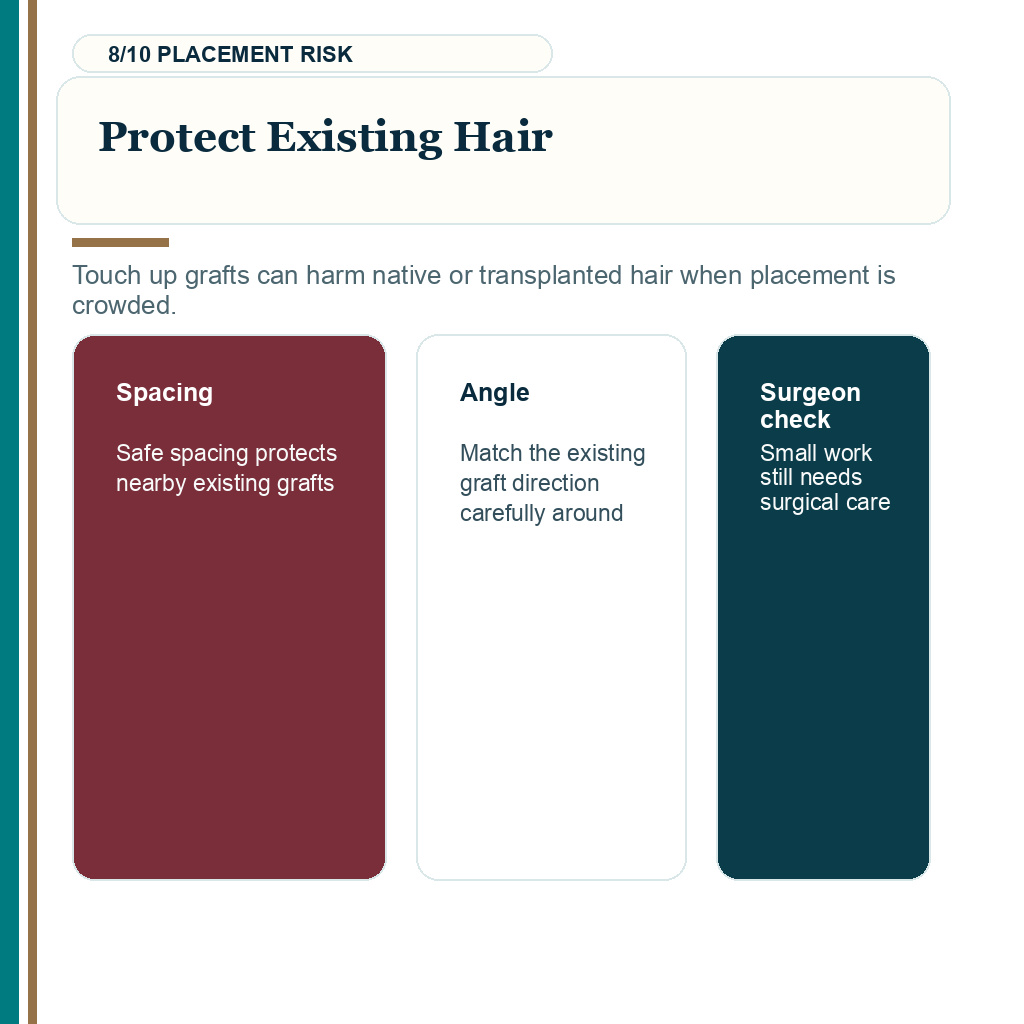
A touch up into an area that already has hair is different from placing grafts into empty skin. Any surgery between existing hairs needs attention. The surgeon must avoid unnecessary trauma to transplanted and native hairs, especially when placing grafts into a partially filled area. The more hair already present, the more precise the work needs to be.
Touch ups are not simply wrong. They should be performed only when the benefit is clear and the technical plan is careful. The plan should improve density without disturbing the hair that is already helping the result.
Shock loss risk, scalp health, and active thinning all have to be part of the decision. The touch up should fit the biology of the scalp, not only the patient’s wish for more density.
Graft counting can mislead patients
Patients often ask for a number because a number feels concrete. In reality, hair caliber, curl, contrast with skin, previous scarring, direction, and the size of the weak area all change the result.
A small touch up in the hairline can require more precision than a larger session in a less visible zone. The difficulty is not always proportional to the graft count.
The target comes before the number. It has to be named clearly, whether it is the weak corner, the transition zone, the front edge, or the density break that is actually changing the appearance.
A weak area that needs 400 grafts should not become 1,000 grafts just because a clinic minimum makes the booking easier. If the area truly needs closer to 1,000 grafts, 400 grafts should not be promised just because the word touch up sounds small.
When the quote starts to look like a full second operation, I stop calling it a simple touch up and review the donor plan, native hair risk, and original design again.
Protecting the future during refinement
The future is protected by asking whether the patient may need more surgery later. If the hair loss pattern is still changing, the touch up must be part of a longer plan, not a quick cosmetic patch.
A crown likely to expand, native hair thinning behind the transplant, or limited donor reserve all point toward more conservative refinement. A small touch up today should not make a necessary future operation harder.
Growth tracking helps here. Consistent photos can reduce emotional decision making before another procedure. That is the practical issue in tracking hair transplant growth.
Checks before a touch up
Before a touch up, the result needs enough maturity to be judged fairly. If the concern is around the front edge, a month eight hairline check can help separate immature texture from direction, shape, and design problems before surgery is planned. Density, direction, hairline shape, donor reserve, scalp health, miniaturization, and whether the concern is visible in normal life all need review.
Records from the first surgery are useful when they are available. The original graft number, distribution, donor use, and healing history can explain why the current result looks the way it does. Differences between the two sides also need comparison in matched photos before slower maturation is mistaken for a reason to operate again.
A touch up can change the whole impression
A well planned touch up can change the whole impression when it corrects the detail that catches the eye. This may be the front edge, one corner, or a weak transition behind the hairline.
The hairline is the most common place where a small change can matter. A few hundred well chosen single hair grafts can soften an edge or connect a gap. In the crown, the same number may be much less visible because the area is larger and the spiral pattern is demanding.
Many touch up decisions lead back to hairline design. The front edge can define the result more than the total number of grafts suggests.
What I need before approving a touch up
Before I approve another small session, I need the first result to be mature, the exact area to be outlined, and the donor examination to show that the likely improvement is worth the grafts. I also compare the original distribution with current native hair stability so the correction does not create another weak transition later.
If those pieces do not agree, I postpone the operation or treat the case as a second operation or repair. The discussion of when another hair transplant is no longer worth it becomes relevant when a minor gain would spend donor hair needed for a more important future problem.
Read this review excerpt
We also had a levelled conversation about my hairline and results I could expect based on my donor density area.