


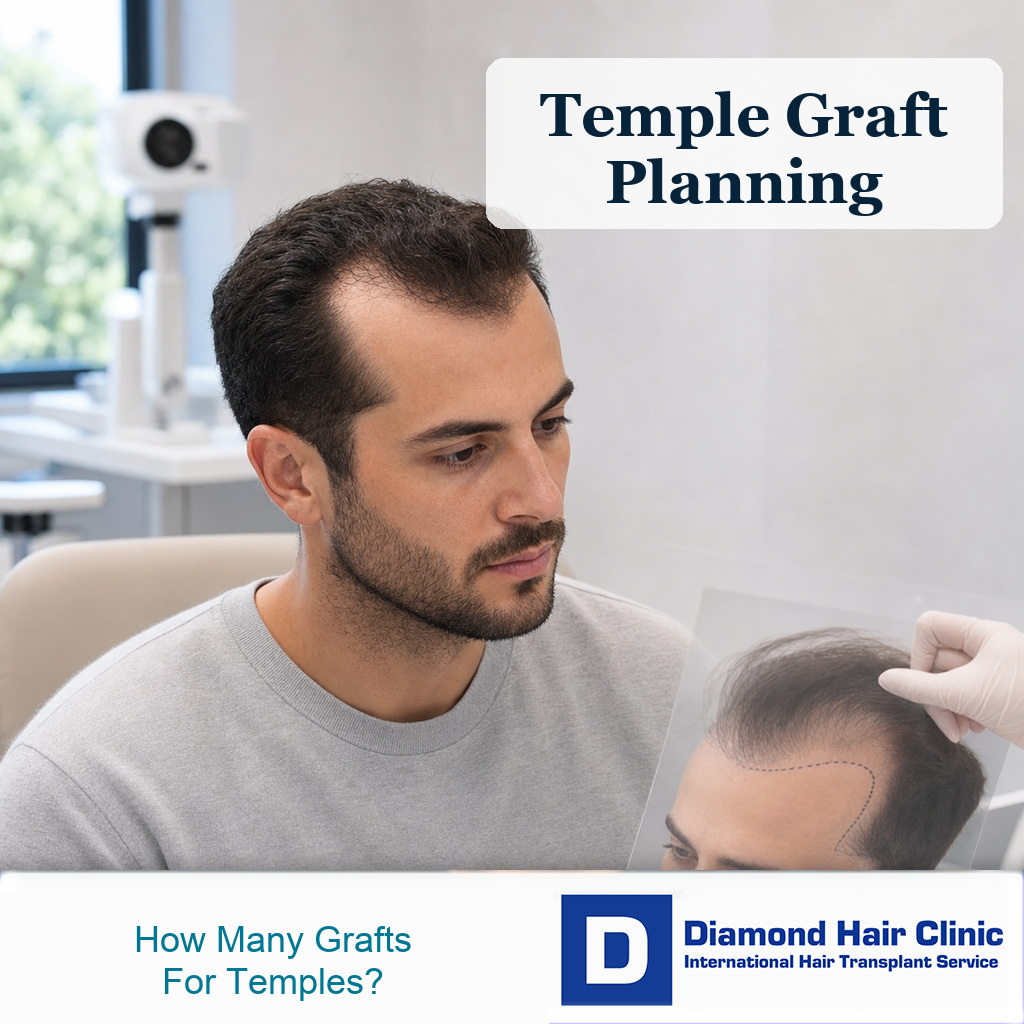
Temple Corner Graft Planning Needs Donor Control
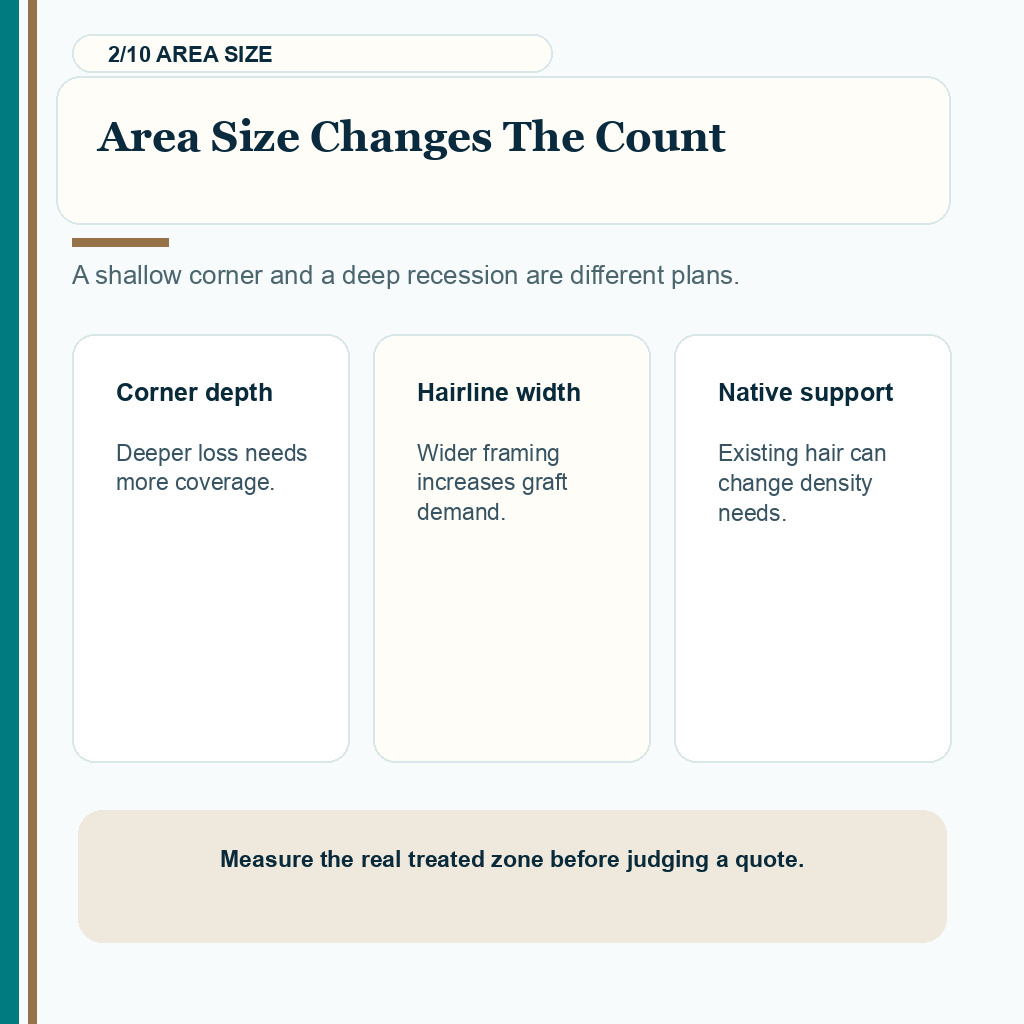
For mild temple corner recession, I often plan around 800 to 1,800 grafts to soften both corners. A very small corner refinement may need 400 to 800 grafts. If the plan also lowers the hairline or rebuilds the frontal band, it can move toward 1,800 to 2,500 grafts or more. I do not choose that number from a front photo alone. I first separate temple corners from true temple points, then check age, hair caliber, donor strength, recession depth, and whether the pattern is stable or still moving backward.
Temple corner photos are more useful when the eyebrows are relaxed and the hair is pulled back from both sides. A tilted selfie or wet styling can make one corner look worse and push the discussion toward a number before the design is clear.
I also separate the corner from the temple point. Filling a receded corner softens the front, while rebuilding the point changes the side frame of the face and needs a stricter design reason.
If your concern is mainly a central V shape rather than corner recession, a widow’s peak hair transplant needs a slightly different design discussion before graft numbers are chosen.
The part that matters most is not whether the number sounds impressive. It is whether the number matches the area being treated and protects the donor area for the future. A temple plan that looks modest on paper can be very strong when it is placed well. A larger plan can still look unnatural if the hairline is too low, too flat, or designed without long term thinking.
When the temples have already been treated, I do not plan another small procedure as though it were the first. I review the earlier graft count and placement map, how the existing grafts grew, the donor extraction pattern, and whether scar tissue or weak native hair changes the plan. After several procedures, another pass may produce less visible improvement while using more donor reserve and making placement between existing hairs more difficult. A marked gap in a photograph is therefore not enough to justify another graft number.
A temple quote should name the design target first, because softening the corners is not the same as rebuilding the side temple points. Filling the corners, lowering the front, and rebuilding true temple points are different uses of the donor supply.
Temple corners usually need a modest graft range
If the concern is mainly the two front temple corners, the common planning range is usually 800 to 1,800 grafts. A small Norwood 2 pattern may sit closer to the lower end. If both corners, the frontal hairline, and the transition behind the hairline need rebuilding, the number may rise. For wider corner loss, Norwood 3 graft planning should connect that number to hairline height and future donor reserve.
I treat this range as a starting estimate, not a promise. The real number depends on the size of the recipient area, the desired density, the existing hair behind the corners, and the quality of the donor hair. A small number works only when the surgical goal is clearly limited. That same limit applies when 1,000 grafts can be enough.
For a wider frontal plan, the discussion may move closer to the territory covered in my article about whether 2,000 grafts are enough. Every temple case does not need 2,000 grafts. At that point, the plan has moved from a small corner refinement into a broader frontal frame.
The same temple recession can need different graft numbers
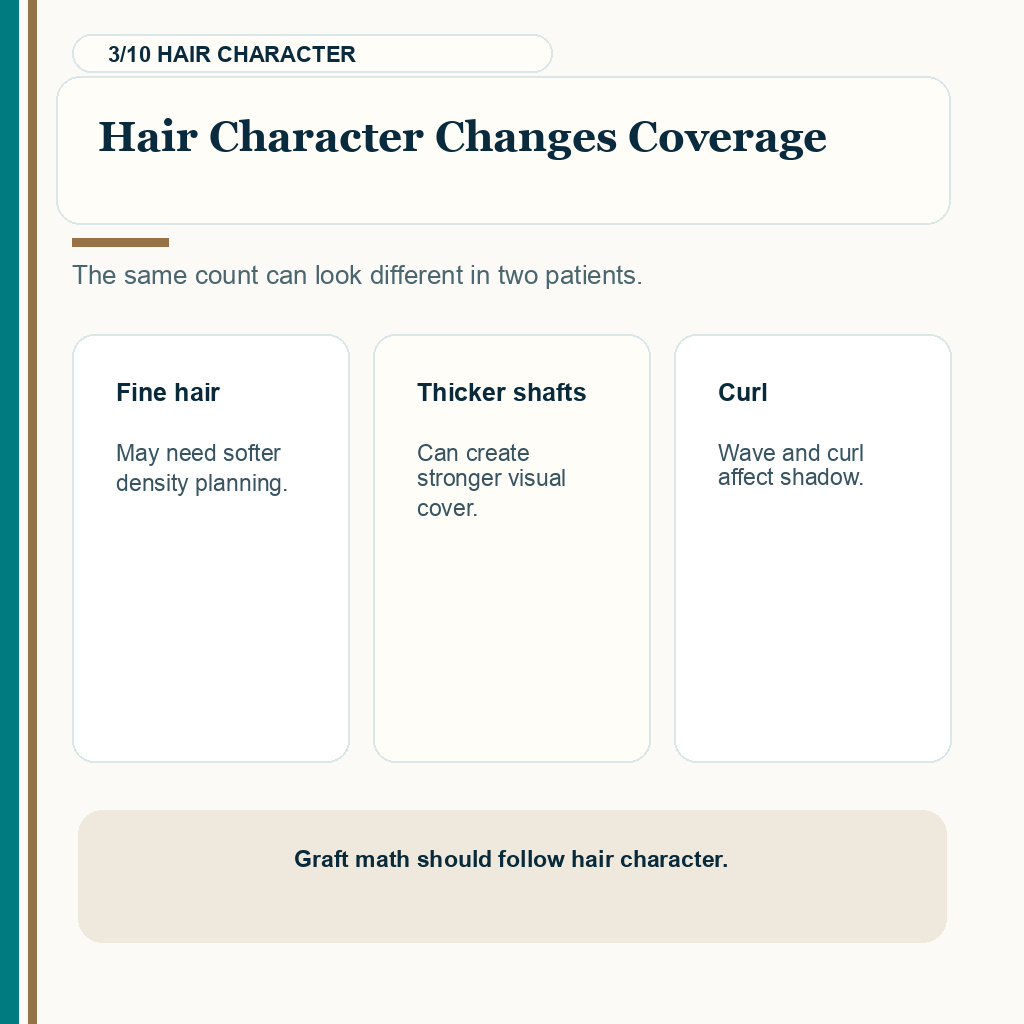
Two men can look similar from the front and still need different plans. One may have thick donor hair, low skin and hair color contrast, and strong hair behind the corners. Another may have fine hair, high contrast, and early thinning spreading into the frontal band. The same graft number will not create the same visual result in both cases.
Area is only one part of the calculation. Hair caliber, curl, graft quality, the number of hairs inside each graft, direction of existing hair, and the density target all change how many grafts are needed. My page on 45 grafts per cm2 goes deeper into why density numbers can mislead when they are not tied to a real zone and real hair characteristics.
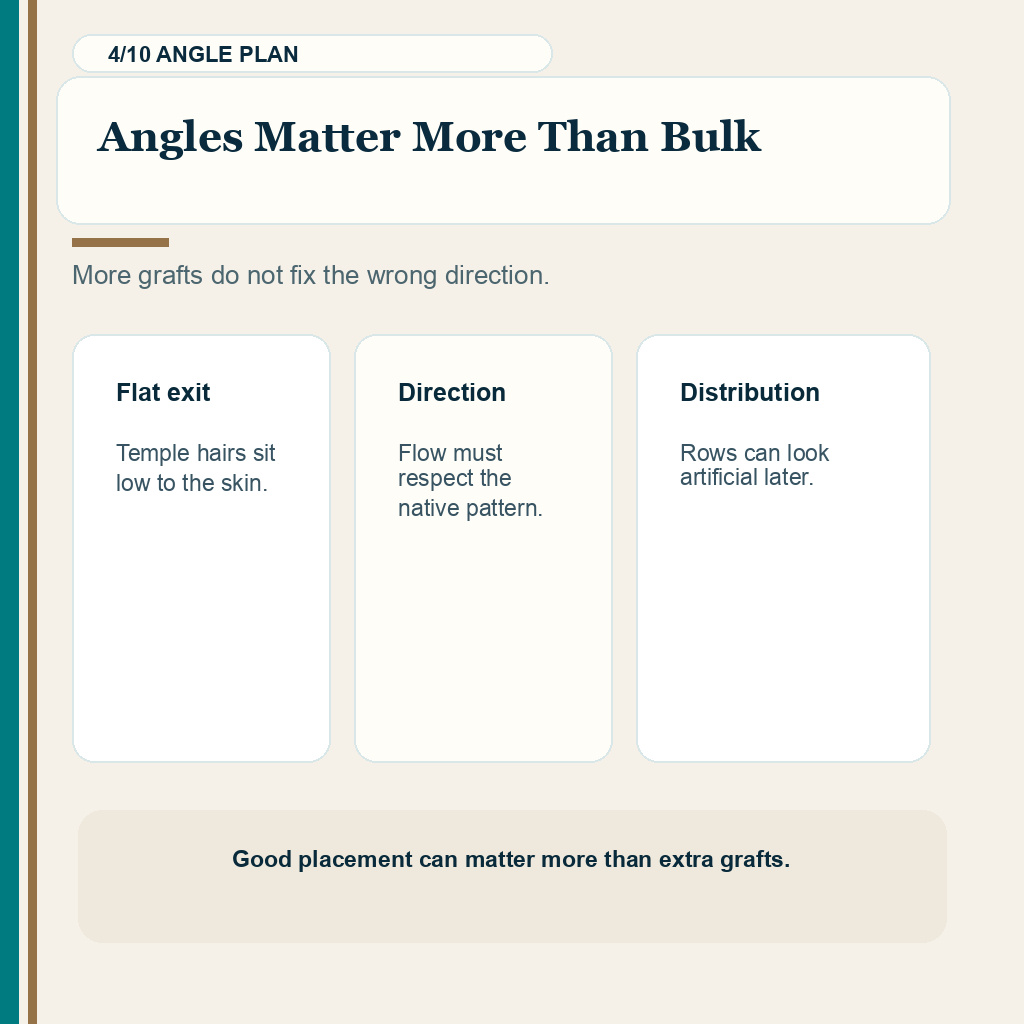
A careful temple plan also needs a soft front edge. The first rows should not be packed with coarse multiple hair grafts. When the front looks harsh, the issue is often not just the graft number. It is the graft selection, angle, irregularity, and design.
Temple corners and temple points are different areas
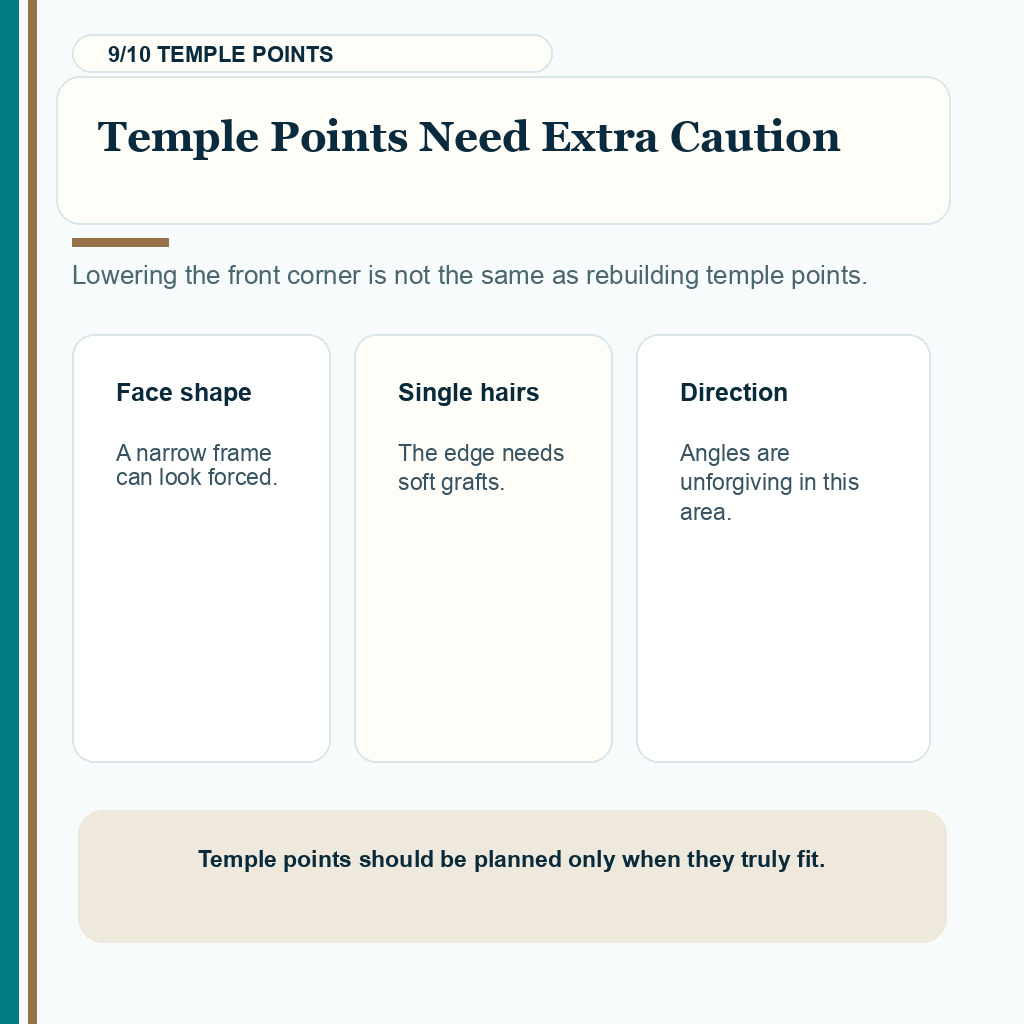
People often use the word temples for two different areas. The front temple corners are the recessed corners of the frontal hairline. The temple points are the side projections that frame the face near the outer brow and sideburn area. They are not planned in the same way.
Front temple corners usually belong to the hairline design. They can often be improved as part of natural hairline design. True temple points are less forgiving because the hair direction is flatter, the caliber must be chosen carefully, and the side frame of the face is immediately visible.
Closing a front corner softens an M shaped hairline, while rebuilding a temple point changes the side outline of the face. When both areas are involved, I slow the plan down. An aggressive temple point can make the face look artificial even if the grafts grow, so the side frame needs deliberate planning. Temple point restoration is not a minor addition.
True temple points need their own graft judgment
True temple points often use fewer grafts than people expect, but they demand more precision. A small side point refinement may use 100 to 300 grafts per side. A stronger reconstruction can need more, especially if the side frame has almost disappeared, but I keep the number moderate unless the donor area and overall hair loss pattern support it.
The temple point is not just a gap to fill. The hair lies flatter, the direction is sharper, and the front edge must use carefully selected fine grafts. If coarse grafts or the wrong angle are used, even a small number can look obvious.
Temple corners and temple points should not be turned into one casual quote. Someone may need 1,200 grafts for the frontal corners and still need a separate judgment about whether the side temple points should be touched at all.
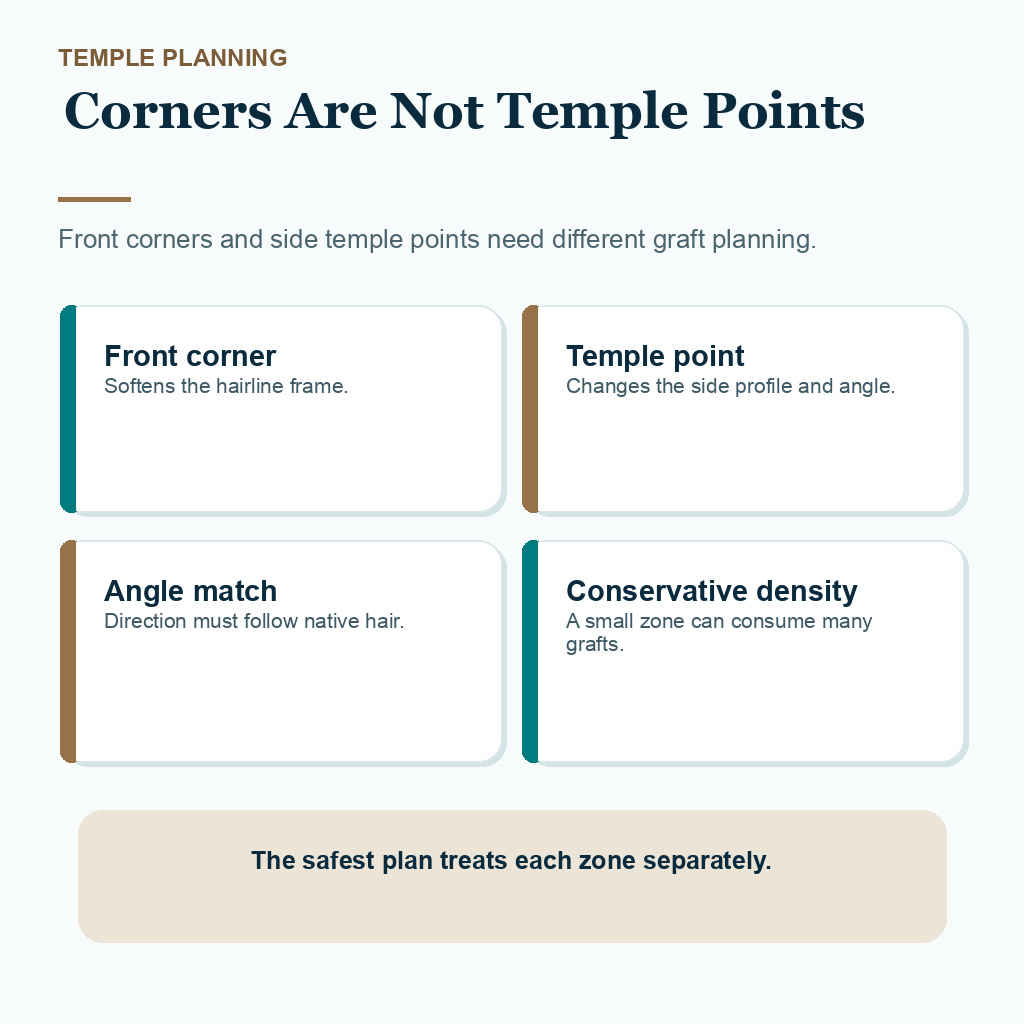
Front temple corners belong to the hairline, while true temple points shape the side frame of the face.

A side temple point needs flatter direction and finer graft selection than a front corner refinement.
A small temple transplant can be enough
A small temple transplant can be enough when the pattern is stable, the hairline shape is mature, and the gap only needs softening. In that setting, careful surgery can improve the frame of the face without spending too much of the donor budget.
For a very limited temple corner refinement, about 500 to 1,000 grafts may be enough when the area is truly small and the central hairline is not being lowered. I would not let that number quietly become a full hairline lowering plan. The drawing should show exactly what is being softened and what is being left alone.
A limited graft number can be a strength here, not a compromise. If the real problem is only corner refinement, a larger operation may not add value. More grafts may lower the hairline unnecessarily, increase the surgical footprint, spend donor reserve, and make future planning harder.
I judge this especially carefully in early recession. If the pattern is close to a stable mature hairline, a small refinement may be reasonable. If the temples are still moving, the same small operation can create an island of transplanted hair with thinner native hair behind it.
Temple surgery can be unwise
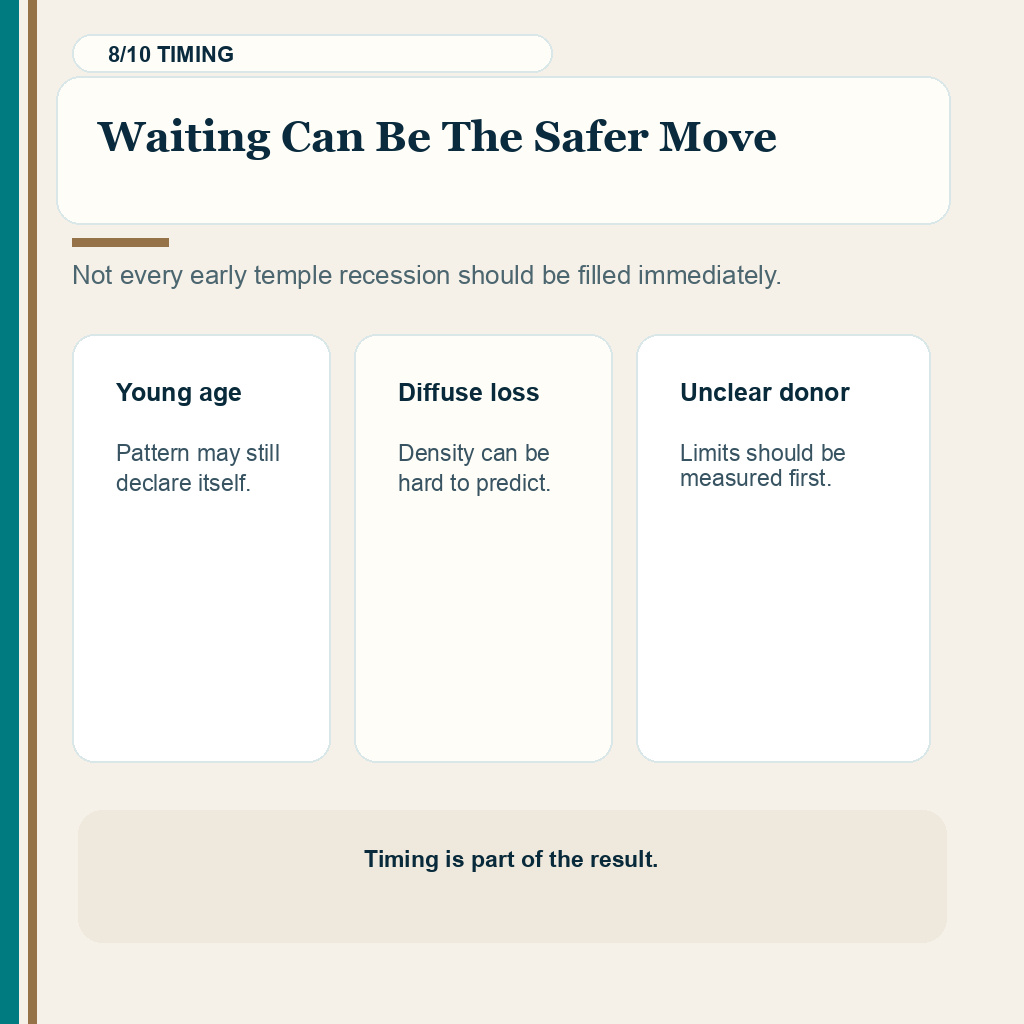
Temple surgery can be technically possible and still be a poor choice. The risk is higher when someone is young, the recession has changed quickly, the crown is starting to thin, or the donor area does not look strong enough for future needs.
In a younger man, the temptation is to rebuild the exact teenage corners. That can look attractive in a drawing, but it may not age well. A mature, slightly higher shape often protects him better than a low, sharp hairline that demands too many grafts too early.
This decision is closely related to whether a hair transplant is worth it at Norwood 2. At Norwood 2, filling the temples is only part of the judgment. The pattern also has to be stable enough to make surgery wise.
Age changes the temple graft plan
Age changes how much risk I accept. A 22 year old with fast temple recession is not the same as a 38 year old with a stable pattern for many years. The younger scalp may still be revealing the final direction of hair loss. The older case may have clearer planning information and a more predictable surgical target.
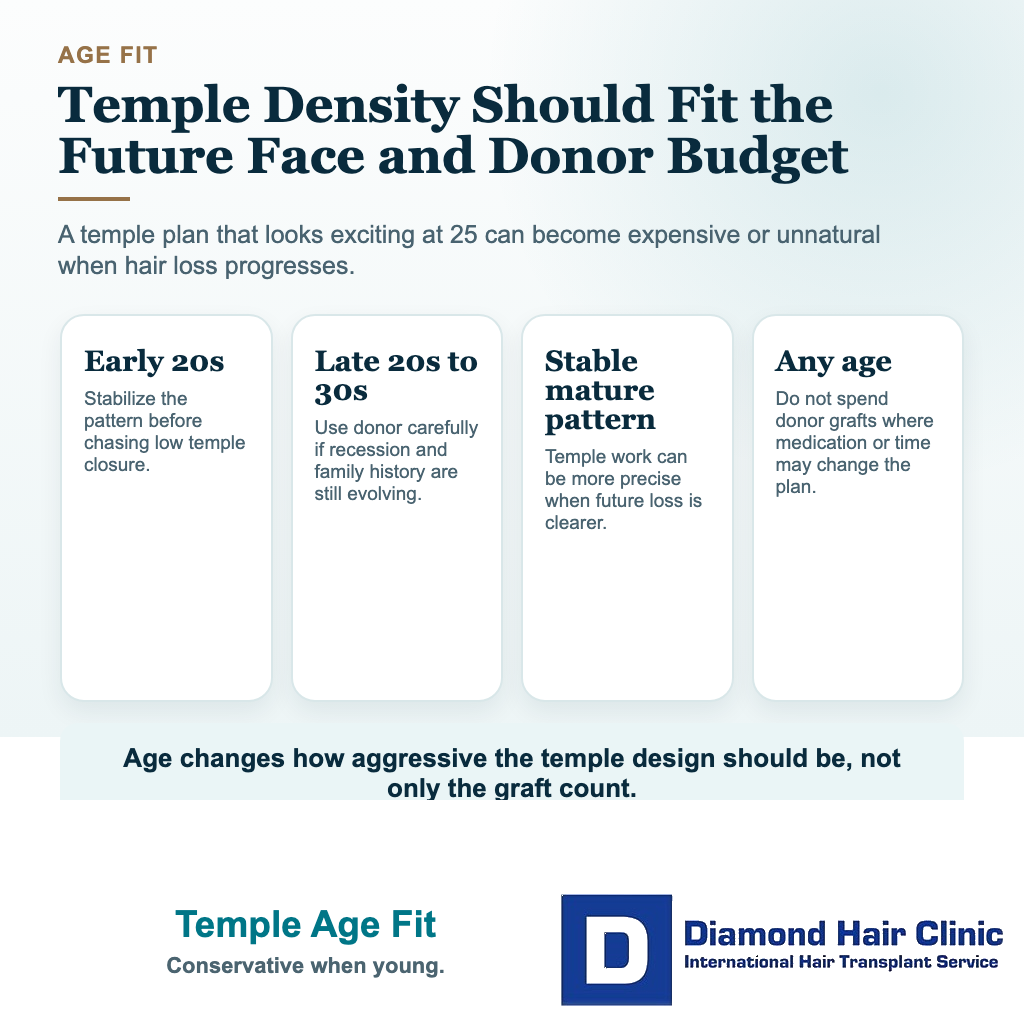
Old photos matter. Family history matters. Crown condition matters. Miniaturization behind the corners matters. A single front selfie can show the visible recession, but it cannot show whether the hair behind the proposed temple line is strong enough to support the result later.
I connect temple planning with receding hairline diagnosis before I talk too confidently about graft numbers. If the recession is active, medication, monitoring, or a more conservative design may be the safer first step.
A low temple plan can waste donor grafts
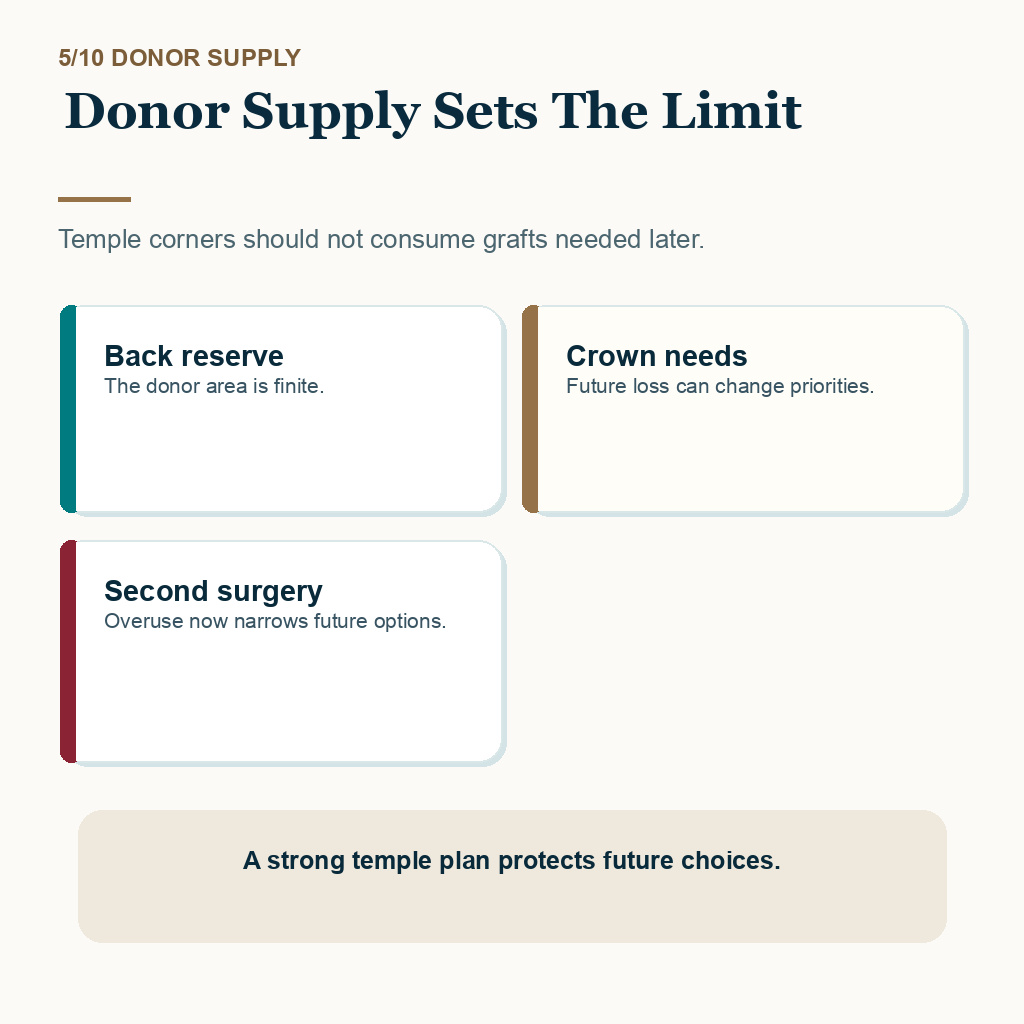
A low temple plan can use many grafts in a small visible area. If the shape is too low or too flat, the result may create a dramatic early outline but leave less flexibility later. Donor grafts cannot be used twice.
I pay attention to the donor budget, not only the immediate hairline. The donor area may still be needed for future frontal, mid scalp, or crown work. A pleasing first operation should not spend grafts as if future loss will never happen. Keep that in mind with safe lifetime graft use.
Low and flat temple designs are also visually risky. Natural mature hairlines often have some maturity, irregularity, and facial balance. A design that removes all recession can look artificial, especially with age. The same warning about low and flat hairlines applies strongly to aggressive temple work.

Temple planning should follow the whole face and hairline, not only fill the lowest visible corner.
Medication can change the temple surgery decision
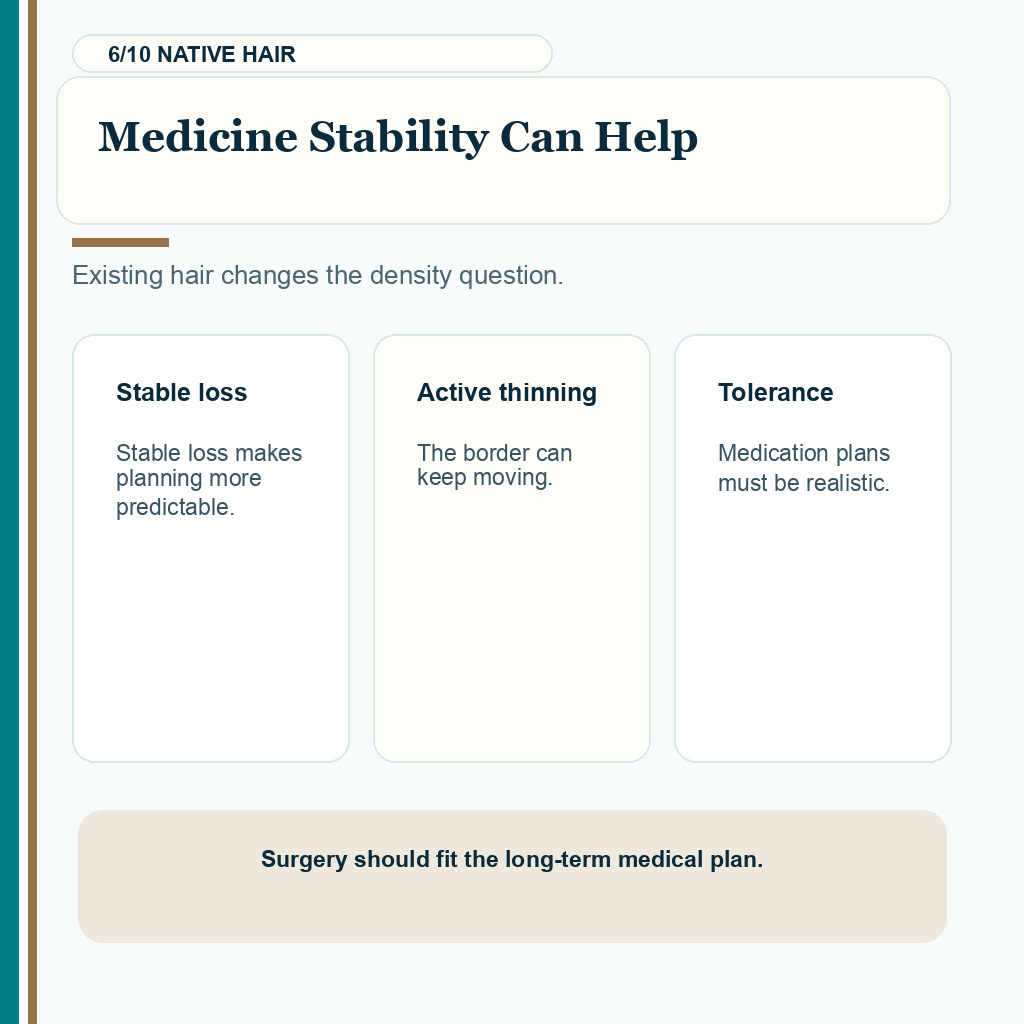
Medication does not create a new donor area, but it can change the stability of the hair around the transplant. If native hair behind the temples is miniaturizing, surgery alone may not protect the overall frame. The transplanted corners may grow while the untreated hair behind them becomes thinner.
For some people, finasteride or another medical plan can make the timing of surgery more sensible. For others, medication is not tolerated or not appropriate, and the surgical design must be more moderate. I think about medication as part of planning, not as a magic guarantee. That also matters for finasteride before or after a hair transplant.
The key is to decide what problem surgery is solving. If surgery is correcting a stable corner gap, it may help. If active thinning is moving across the front, the first decision may be medical stabilization or waiting before any graft number is trusted.
A temple graft quote needs the reasoning
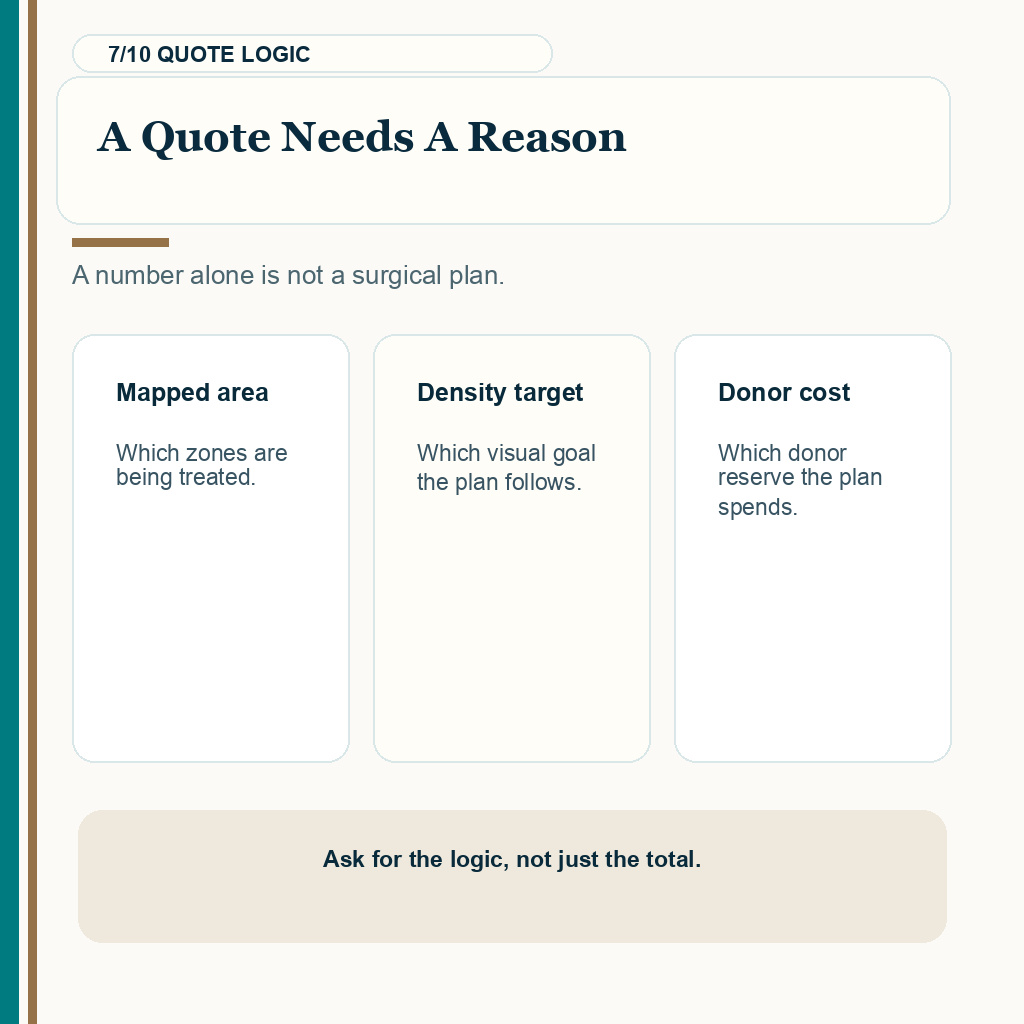
A temple graft quote should explain the area, the design, the density plan, the donor assessment, and the future risk. A number alone is incomplete information. A clinic can say 1,200 grafts or 2,200 grafts, but the number means little unless you know exactly where those grafts will go and why.
Be concerned if the quote is based only on a few photos, if the proposed hairline is drawn very low, if true temple points are added casually, or if nobody explains what happens if the native hair behind the corners keeps thinning. A good plan should leave you clearer about the tradeoff, not only more excited by a number.
When two clinics give different graft numbers, first define the treated area. Corners, the whole frontal band, temple points, and a lowered hairline are different operations, even if they all get described as temple work.
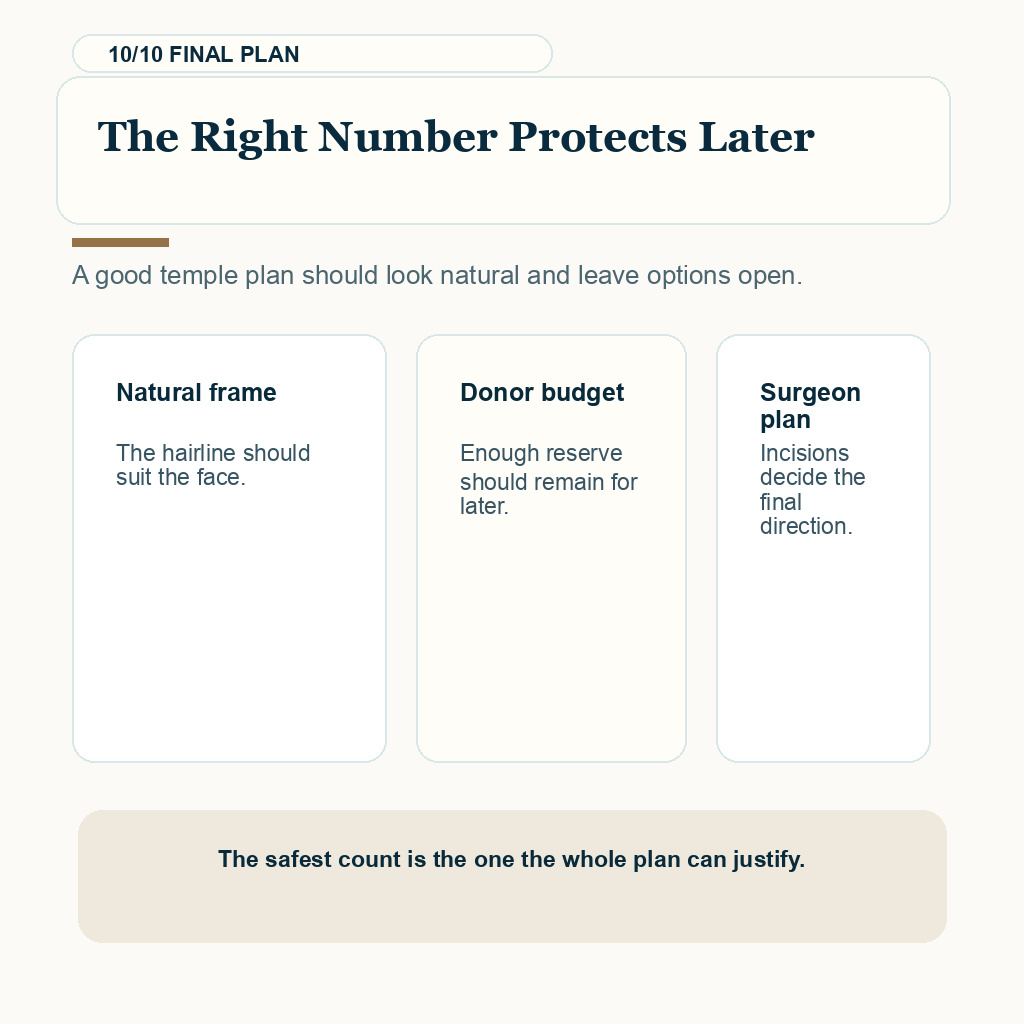
I also check whether the quoted number protects the future. A quote can be technically possible and still be unwise if it spends too many grafts on a low corner while the crown, mid scalp, or frontal bridge may need attention later. Temple work should earn its grafts by improving the frame without stealing reserve from areas that may matter more later.
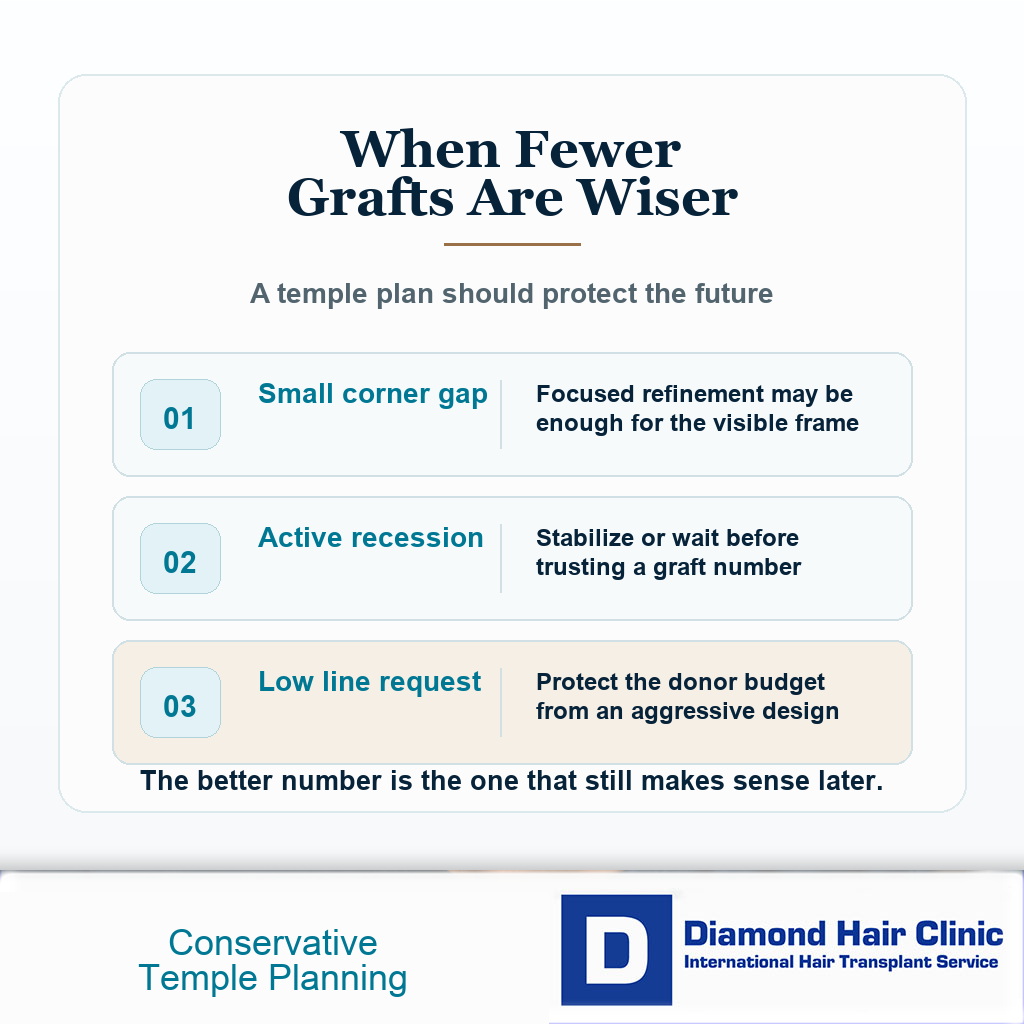
A lower graft number can be the better plan when the recession is small, active, or too early to treat aggressively.

Temple restoration needs a soft and age appropriate shape
A good temple result should soften the recession and improve the frame of the face. It should not look like a stamped on straight line. The hair should exit at natural angles, the first rows should be soft, and the transition into the existing hair should not look abrupt.
Density expectations must stay realistic. Temple corners are visible, but they are not meant to be a wall of hair. If the surgeon tries to create a very dense, low, flat border, the result may look strong immediately after implantation and still look unnatural later.
The most useful result is often subtle. People may notice that the face looks more balanced without immediately identifying that surgery was done. For many men, that is a better outcome than a dramatic hairline that consumes too many grafts and draws attention.
Temple design also has to work when the hair is wet, short, or seen under strong light. A design that only looks good with styled dry hair may disappoint in daily life. Temple work needs enough softness to survive real conditions, not only clinic photos.
When the plan is moderate, future options usually stay more open. When the plan is too aggressive, repair becomes harder because the visible edge has already been defined. The safer shape is one that looks natural now and still makes sense as the person gets older.
Temple grafts should earn their place
Temple work is small in area but large in visual effect. I look at whether the recession is stable, the donor area is strong, the proposed shape fits the face, and the graft number matches the limited space being treated.
A few well placed grafts can soften the frame. Too many grafts, or a line that reaches too far forward, can make the temples look designed rather than natural.
When you compare quotes, ask what will be treated, what will be left alone, and how the temples may age if the hair behind them thins later. The right temple plan should improve the frame without spending donor hair on a shape you may have to revise.

Read this review excerpt
told me the quality of my donor hair and what he could take out and advised me what will the be best outcome with what donor hair I had.