


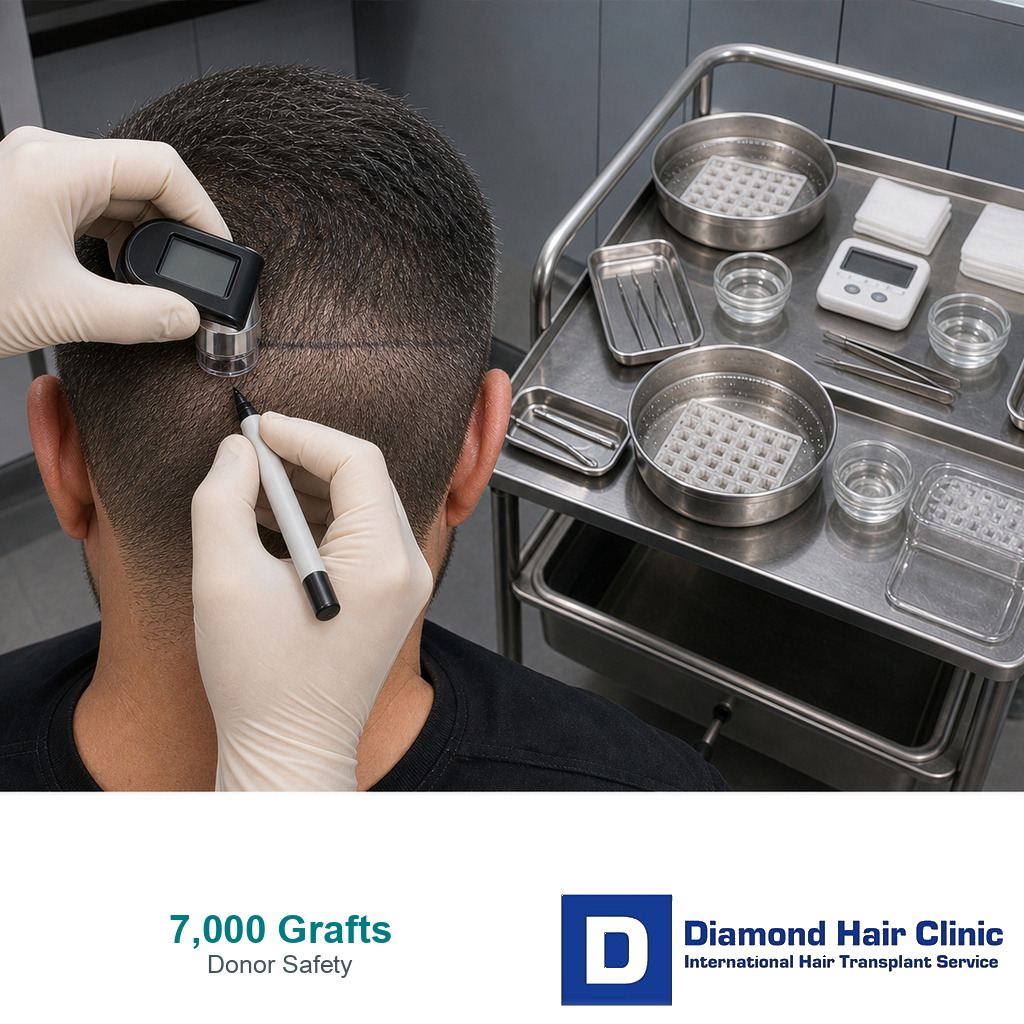
7,000 Grafts Over Two Days and Donor Safety
A 7,000 graft hair transplant over two days can be physically possible in the right patient, but I do not treat it as a routine safe plan. For many patients, staged surgery limits donor stress, especially when the donor area, crown, and future hair loss pattern are not fully understood.
Two days can reduce some time pressure compared with forcing everything into one long day, but it does not create extra safe donor supply or erase the need for a stopping rule. If the scalp cannot safely give that many grafts, dividing the operation into two days does not make the donor stronger. The plan also has to state whether the number means scalp grafts only or a mixed plan using beard or body hair as support. Those are very different operations.
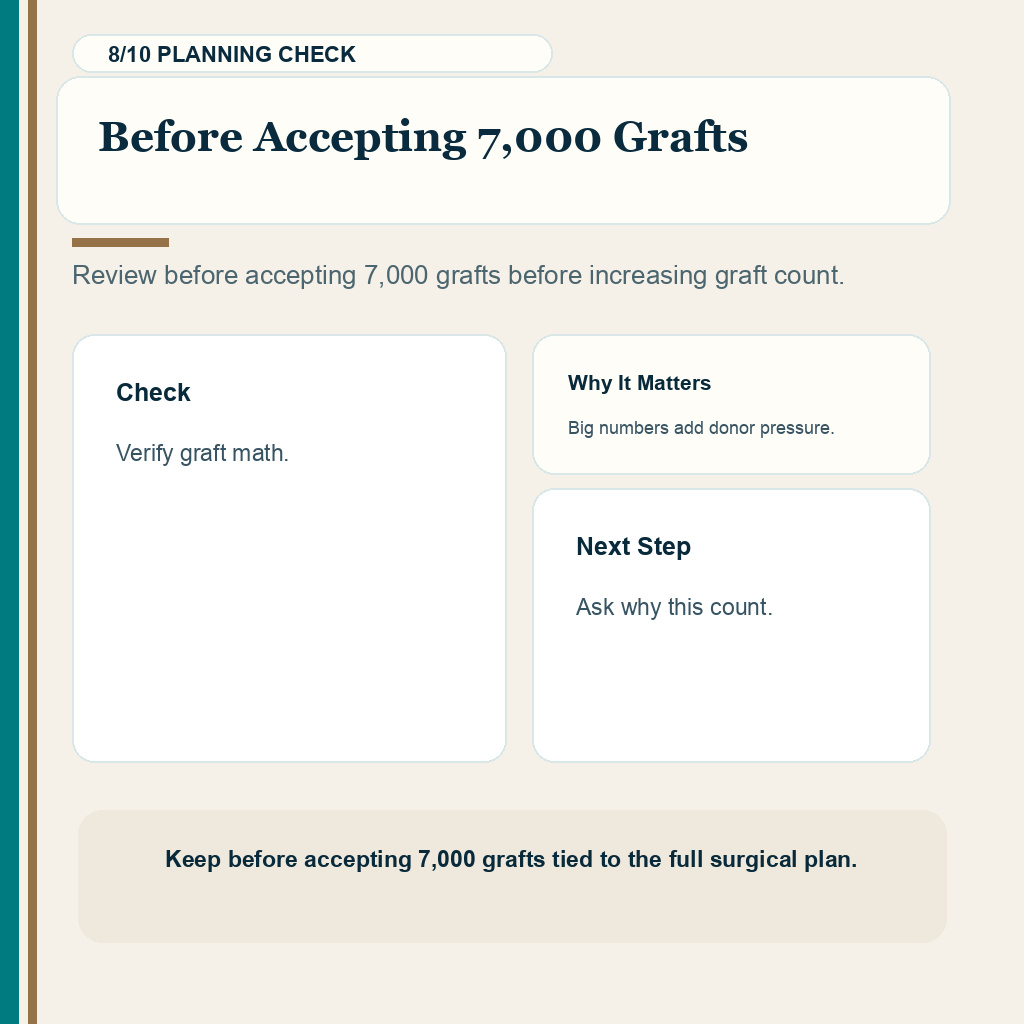
The exact number matters. If a clinic promises 7,000 grafts before careful donor measurement, that raises a serious concern about donor area overharvesting and repair difficulty later. A surgery day jump toward a very large graft number deserves fresh donor area scrutiny.
Judging a 7,000 graft plan
A plan this large must start with a proper donor examination, not with a standard package. The surgeon has to decide whether the donor can safely support that total extraction, whether the recipient area truly needs it, and whether the patient may need grafts in the future.
For many patients, a staged plan is safer. A first surgery can rebuild the frontal frame and mid scalp, then the crown or remaining areas can be reassessed later. This gives time to judge healing, growth, donor appearance, and the patient’s true priorities.
Two surgical days are different from staging after the first result. When staging is needed, the value is in learning from the first surgery before spending more donor hair.
Large sessions are not simply wrong. The difficulty is a large session planned from marketing, pressure, or arithmetic instead of donor biology.
Very large sessions should not feel routine
A session at this scale uses a very large part of the donor capacity. For some patients, it may approach a major part of the lifetime safe scalp donor supply. For others, it may exceed what the donor can give without visible thinning. The number cannot be judged in isolation. In a Norwood 6 or 7 case, this is also a naturalness decision, not only a numbers decision.
A clinic may be able to attempt the operation. The safer test is whether the safe donor zone, hair caliber, skin healing, recipient area size, and future hair loss pattern make that ambition responsible.
This donor limit also matters with 5,000 grafts in one hair transplant session. As graft numbers rise, planning discipline has to rise with them.
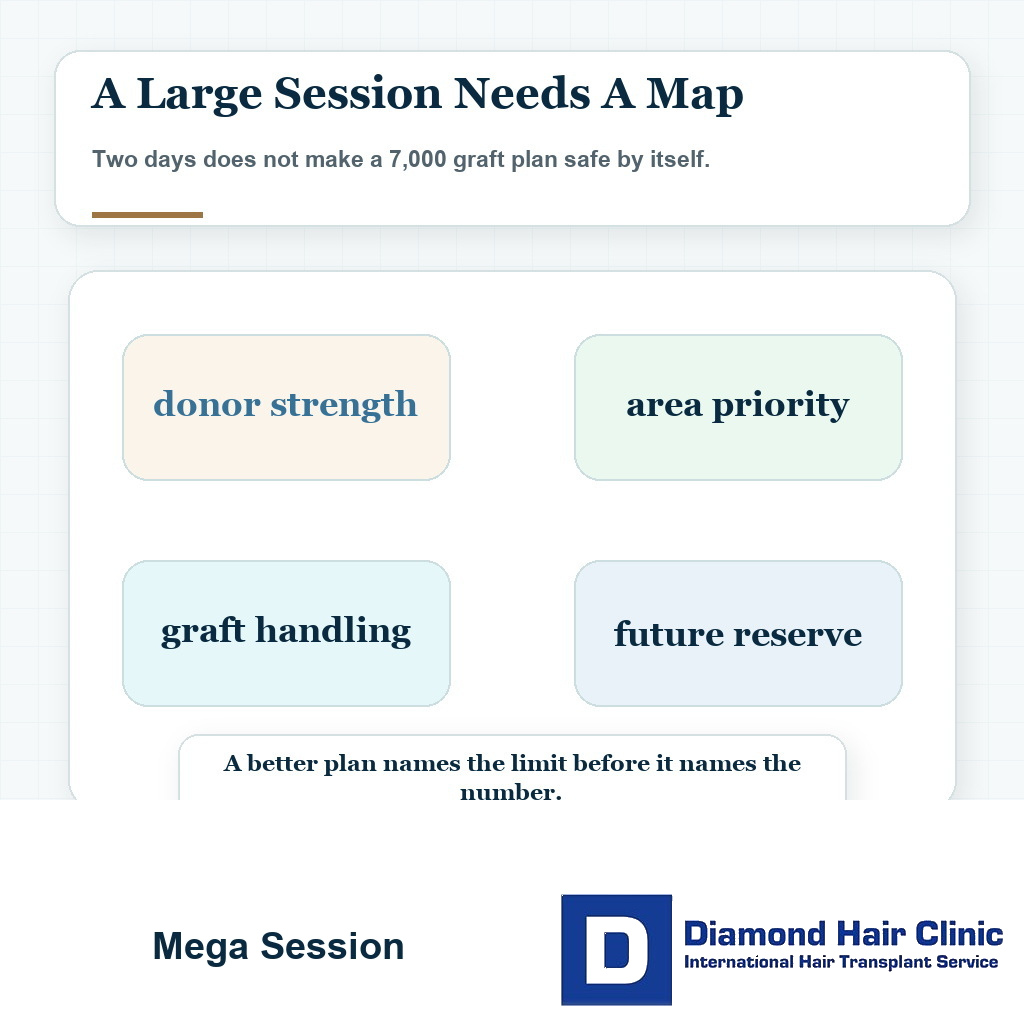
The donor area decides the answer
The donor area sets the surgical limit. If the back and sides can safely provide fewer grafts than the plan demands, the result may create visible thinning, patchiness, or an overharvested appearance that is very hard to repair.
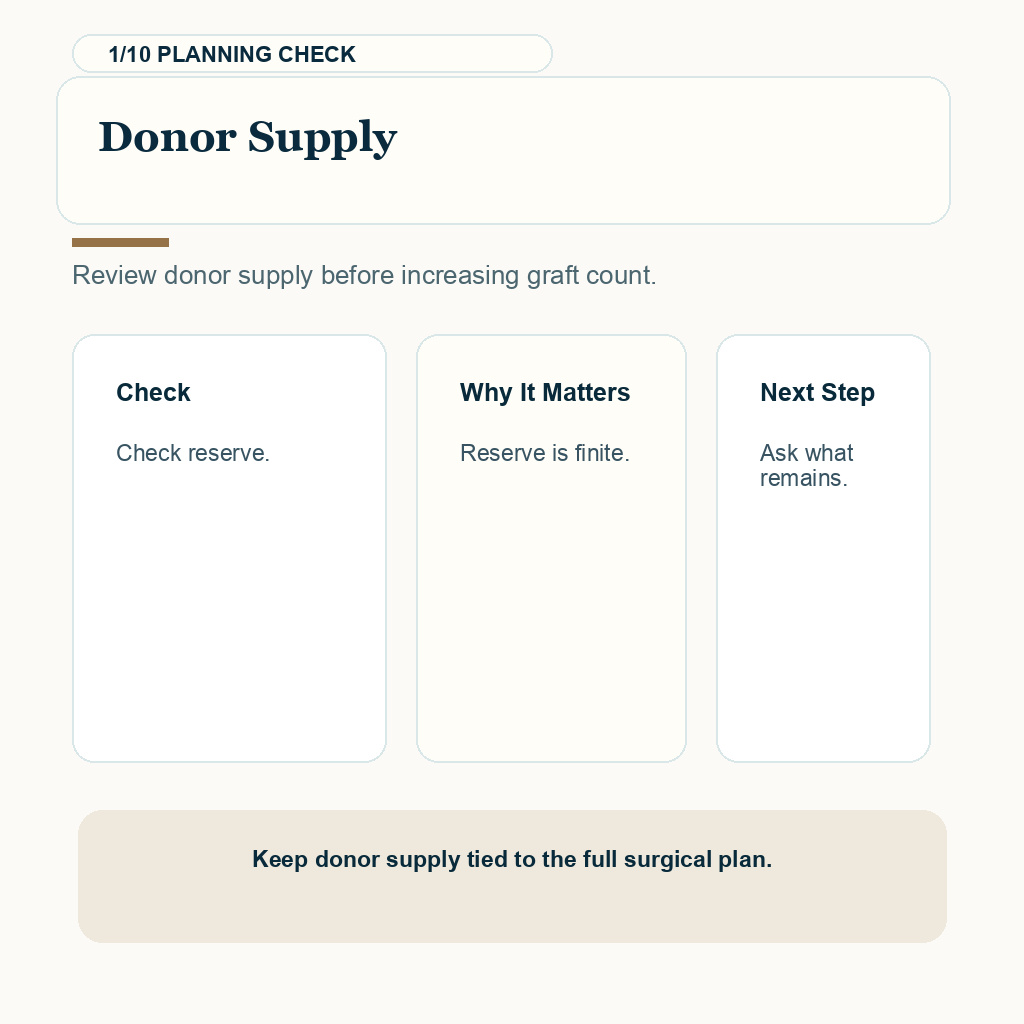
Before accepting a very large plan, the donor assessment needs to include density, hair caliber, safe zone size, skin contrast, previous extraction history, miniaturization risk, and whether the patient may need future surgery. A strong donor in one patient does not make the same number safe in another patient.
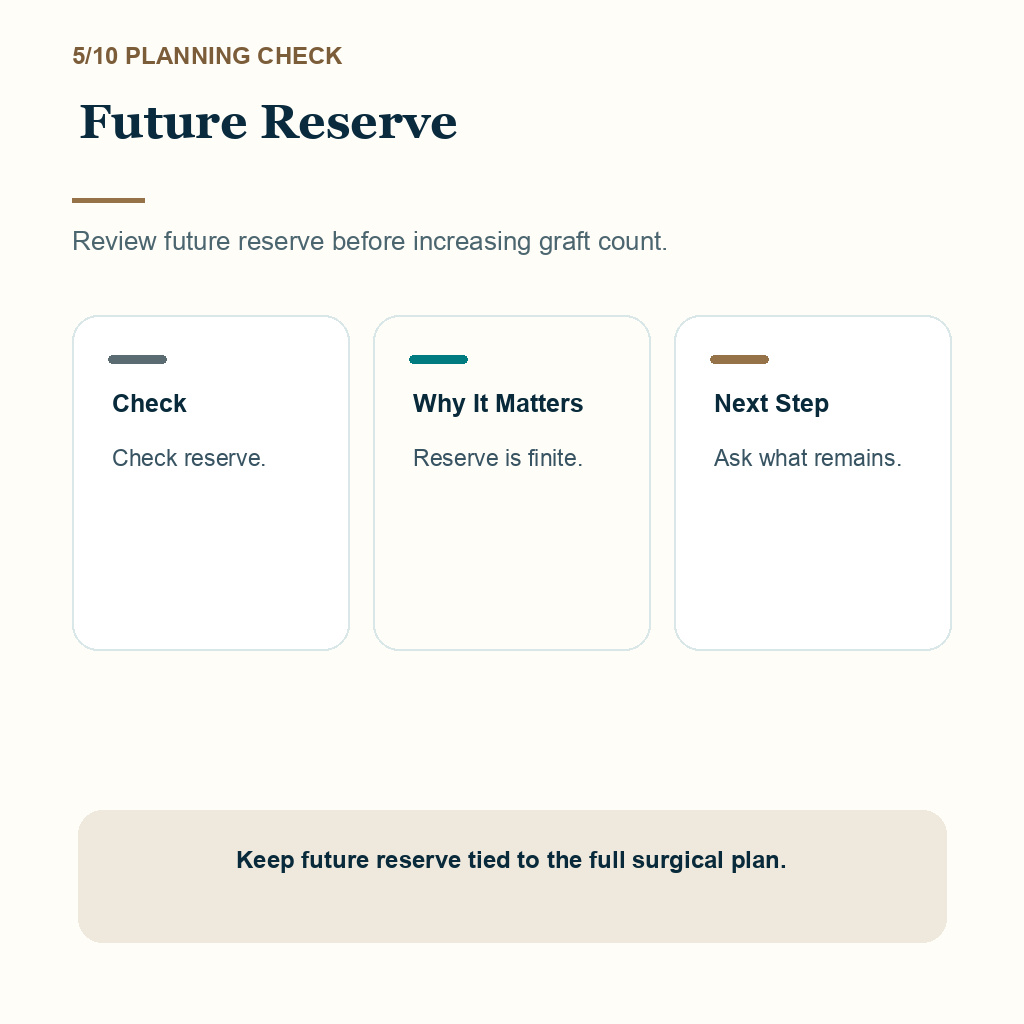
The donor area has to be protected as future reserve, not treated like an extraction target. A large operation can look impressive on the day of surgery and still be a poor decision if it spends too much donor too early.
Two days does not guarantee safety
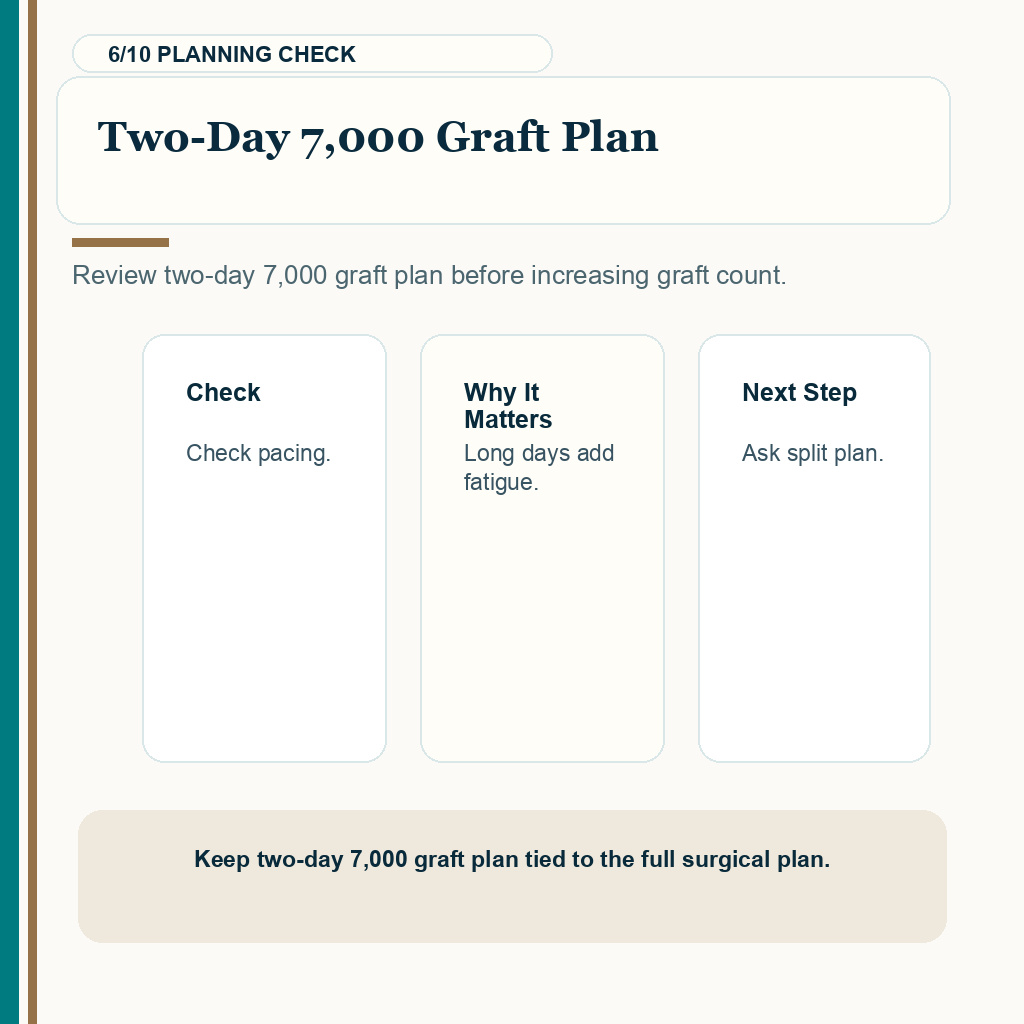
Two days may allow a team to work with less rush, but it does not remove the biological load. The patient still has a very large extraction and a very large number of recipient area incisions. The donor still has to heal. The recipient area still has to accept the grafts. The team still has to protect graft survival. For that reason, I also look at long hair transplant session planning when one day pressure, breaks, anesthesia review, and graft workflow may affect the schedule.
A second day can also bring swelling, fatigue, anesthesia exposure, bleeding tendency, and patient discomfort into the planning. These issues do not mean two days is impossible. They mean the surgeon must be careful rather than treating the second day as a magic safety feature.
The operation must never become a race to reach a number. A safe stopping point has to exist before surgery starts. If the donor begins to show that the original plan is too ambitious, the surgeon has to reduce or stop the plan rather than chase the promised total.
Before a large two day surgery, the stopping rule should be clear. If the first day shows weaker donor quality, slower extraction, swelling, or graft handling limits, reducing the target may protect the donor area better than pushing further. Splitting a very large graft count across sessions does not make the number safe by itself. The plan needs donor mapping, extraction limits, team rhythm, and a stopping rule before the count is treated as realistic.




Large sessions can make sense in selected cases
A large session may make sense when the donor is genuinely strong, the safe zone is measured carefully, the hair caliber offers good coverage, the recipient area is realistic, and the patient understands that density will still have limits.
It may also make more sense in a patient with stable advanced hair loss than in a young patient whose pattern is still moving. The more uncertain the future, the more conservative graft use should become.
Even in a suitable patient, the plan needs to stay conservative enough to protect the future. A large session must not mean taking everything available simply because it can be taken.
Measurements before accepting a plan this large
Before accepting a number this large, the donor area needs measurement, not guessing. The review should include density, hair caliber, safe donor boundaries, miniaturization, previous surgery, skin quality, extraction spacing, and the patient’s ability to wear the donor hair short afterward.
The recipient plan also needs a clear map. The map should show how many grafts are going to the hairline, mid scalp, and crown, what density is realistic in each area, what hair count is expected, and what is being left for the future.
The number also needs to be separated by donor source. A 7,000 graft plan using scalp hair alone is different from a mixed plan using scalp, beard, and body hair, especially if the hairline is involved.
A plan that only says the number will cover everything is not mature enough. Advanced hair loss needs prioritization, not only a large total.
The crown is risky in mega sessions
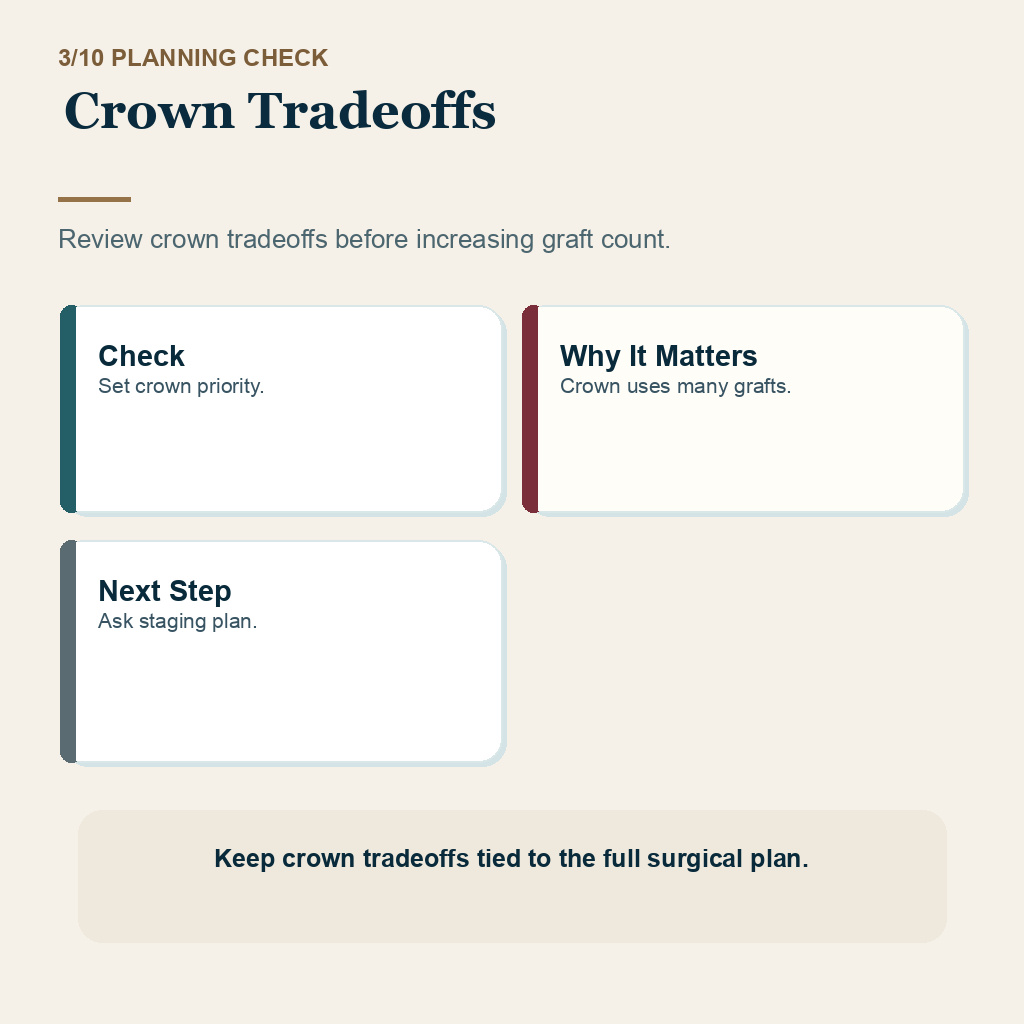
The crown can consume grafts quickly because of the spiral pattern and the size of the area. Patients often want the crown filled fully, but the crown may need many grafts to create visible density. If too much donor is spent there too early, future planning becomes harder.
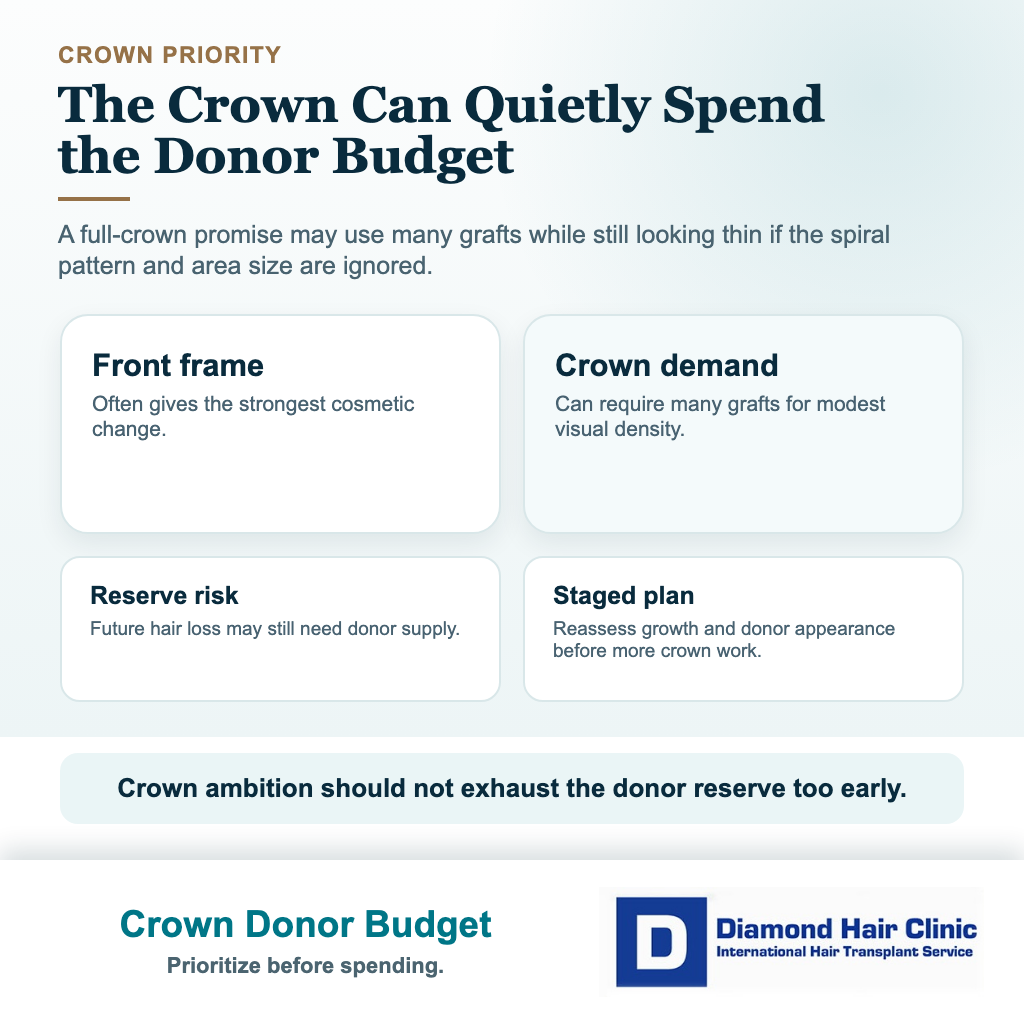
In many advanced cases, the frontal frame and mid scalp deserve priority before chasing full crown density. The face is framed by the front. The crown matters, but it should not destroy the donor reserve.
The crown hair transplant discussion explains why this area needs realistic density expectations. A crown plan should be clear about coverage, not built around a dramatic number.
Staging advanced baldness
In advanced baldness, priorities come first. For many patients, frontal framing and mid scalp coverage come before full crown density. This creates a more useful cosmetic change and protects grafts for later decisions.
A staged plan may feel slower, but it often gives more control. If the first surgery grows well, the second plan can be adjusted. If the donor heals with less reserve than expected, the second stage can be more conservative. If the patient becomes satisfied with partial coverage, unnecessary graft use can be avoided.
Two surgical days with 7,000 grafts are not the same as a later staged approach. A true staged approach leaves enough time to see growth, donor appearance, and recipient healing before more grafts are removed or placed. In larger advanced cases, that often means waiting at least 9 to 12 months before deciding whether the second or third step is still safe.
The decision between hairline or crown first matters in advanced cases. The safest sequence is not always the fastest sequence.
Warning signs of an unsafe plan
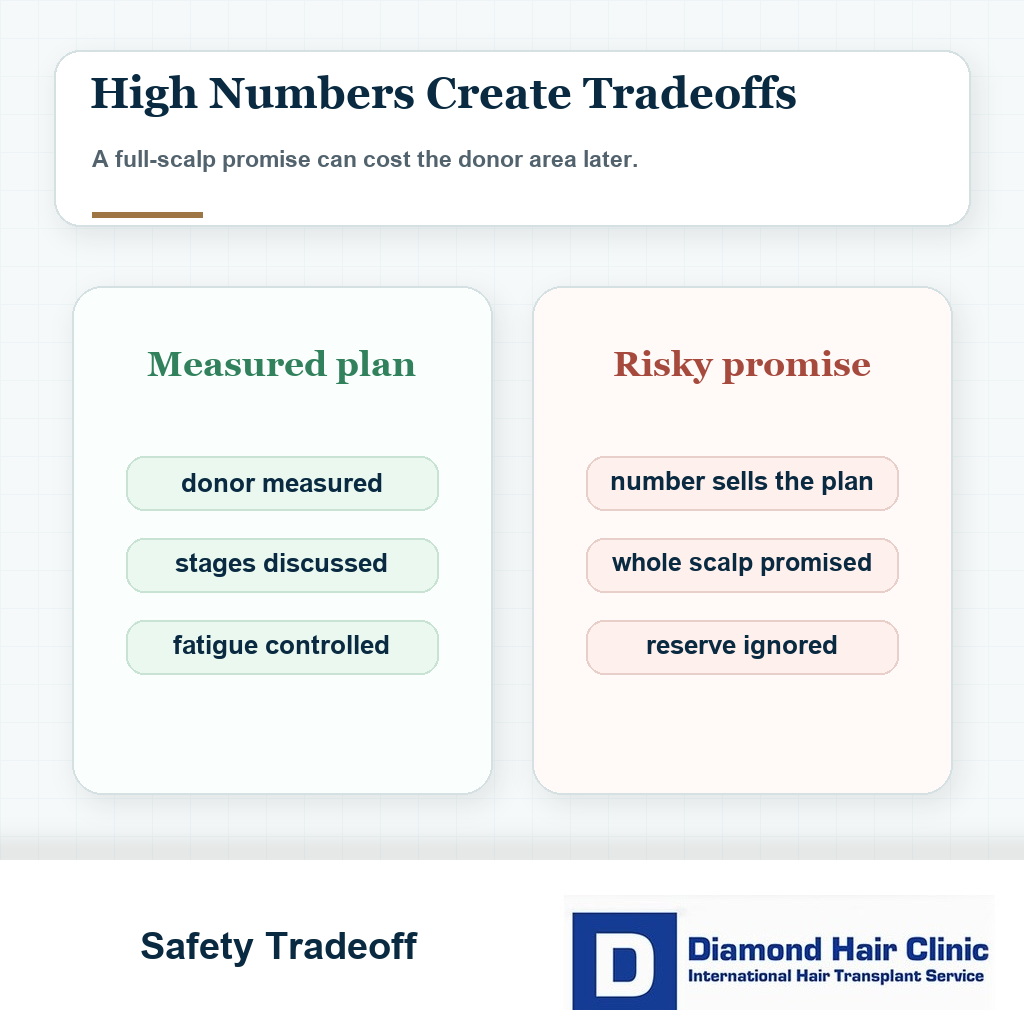
The warning signs include a guaranteed high graft number before examination, no explanation of donor density, a very low flat hairline plus crown coverage in one package, pressure to book quickly, and no clear surgeon responsibility.
It is also concerning when the clinic uses the number as the main selling point. More grafts are not always better. More grafts can create more trauma, more donor depletion, and more future limitation if the plan is not controlled.
The discussion of too many grafts in one area shows the risk on the recipient side. A natural result depends on distribution, survival, angle, and density, not only total graft count.
Patient temptation around mega sessions
Patients feel tempted because they want one recovery, one trip, one emotional finish line, and the feeling that the difficulty is fully solved. That is understandable. Hair loss is tiring, and patients naturally want an efficient answer.
But convenience should never outrank donor preservation. The donor area has to serve the patient for life. If a large operation damages that resource, the patient may lose options that would have mattered later.
Before accepting a proposal like this, know who mapped the donor, who decides the safe stopping point, and who protects the scalp if the plan becomes too demanding. The bigger the operation, the clearer the responsibility needs to be.
Fatigue and graft handling over two days
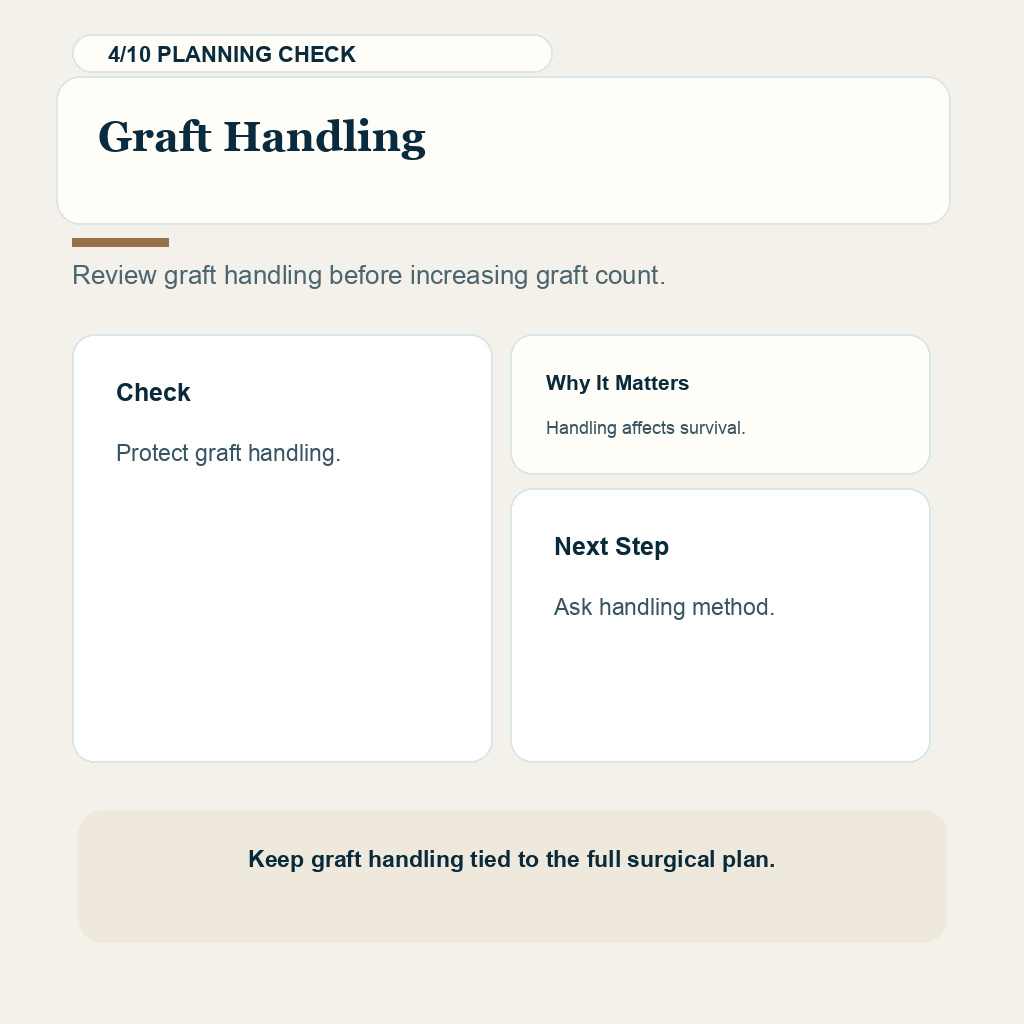
Graft survival depends on careful handling, hydration, temperature control, gentle placement, and team discipline. A very large operation gives more opportunities for fatigue and rushed handling if the clinic is not structured properly.
The patient also has limits. Swelling, discomfort, anesthesia exposure, bleeding tendency, and physical fatigue all matter. A protected plan respects both the grafts and the patient.
Careful planning matters more than chasing the largest possible number. A smaller number done with full attention may be better than a larger number done under pressure.
Very high graft counts and graft survival
A very high graft count can increase survival risk if the clinic cannot handle the grafts properly. The issue is not only extraction. Grafts must be kept healthy between removal and placement, and the recipient area must be prepared with correct spacing, angle, and blood supply in mind.
If the operation is too rushed, grafts may stay outside the body too long, become dry, be handled roughly, or be placed into an area that has been treated too aggressively. These details are not visible in a package advertisement, but they can affect the final result.
A large number by itself does not mean poor growth. Some large cases can grow well in expert hands and suitable patients. But as the number rises, the margin for error becomes smaller. Quality control has to rise with the ambition.
Hair count matters as much as graft count
Not all grafts are equal. A plan with mostly single hair grafts does not create the same visual coverage as a plan with many two hair and three hair grafts. Hair caliber also changes the cosmetic effect. Thick hair covers more than fine hair.
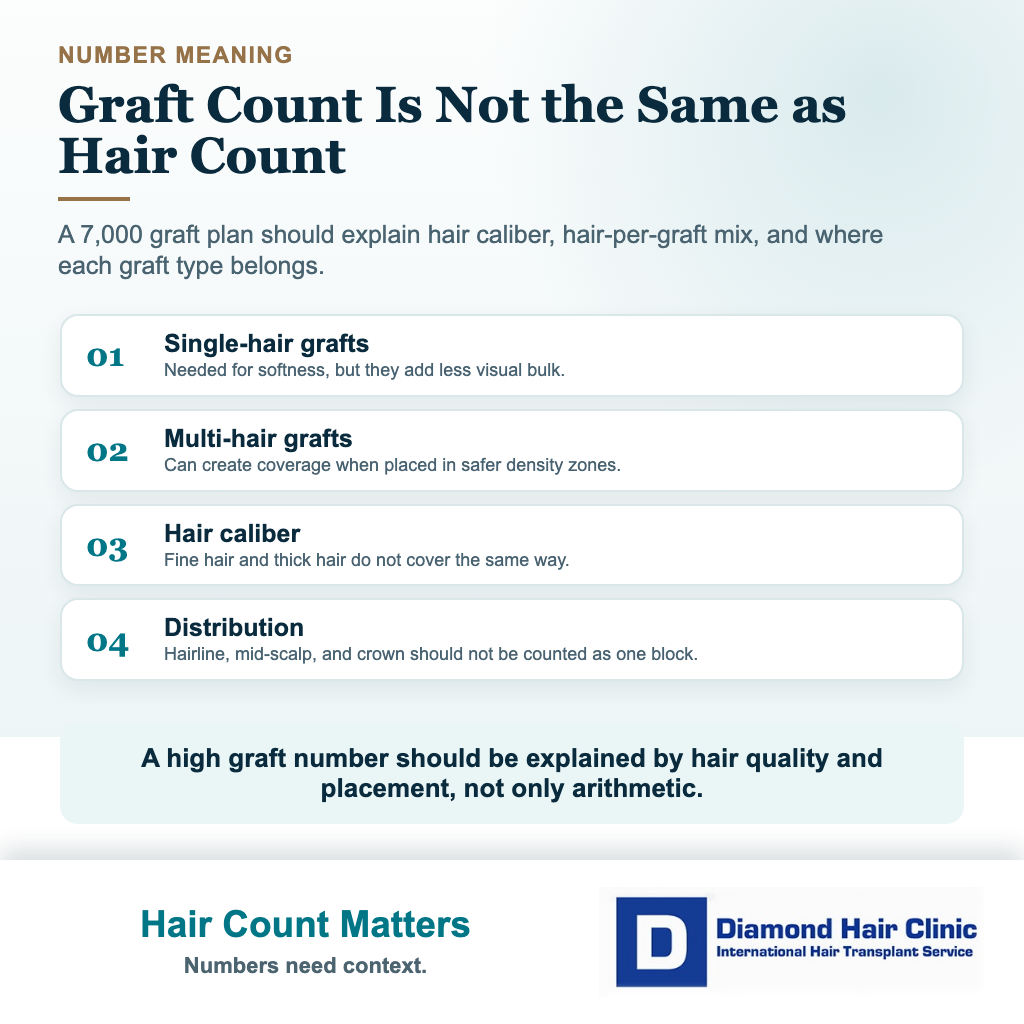
A large plan should not be evaluated only by the graft number. The expected hair count, donor quality, placement distribution, and purpose of each zone all change the visual result. A high graft number without a thoughtful distribution can still look thin in the wrong places.
The way a surgeon calculates graft number matters because numbers can be used very differently. The quote should explain what the number means, including scalp grafts or mixed grafts, expected hair count, zone distribution, and the reserve left behind.
Beard or body hair can change the plan
Beard or body hair can sometimes support coverage when scalp donor is limited, but it does not make a very large scalp plan automatically safe. Hair from outside the scalp has different texture, growth cycle, length, and cosmetic behavior.
Beard hair may help selected crown or mid scalp cases, but it should not be used casually in the frontal hairline. Body hair can be even less predictable. These sources are support tools, not permission to overuse the scalp donor.
When body hair is used as a donor source, clarify whether the proposed grafts are scalp grafts, beard grafts, body grafts, or a combination. The total number means much less if the sources are not separated.
Overharvesting later
Overharvesting may not be obvious on the day of surgery. It can become visible later as patchy thinning, see through donor zones, uneven texture, or difficulty wearing the hair short. Sometimes the patient notices it only after the redness fades and the hair is cut shorter.
The donor needs closer inspection when the proposed operation becomes very large. A patient may celebrate a big number at first and only understand the donor cost months later.
If donor damage has already happened, overharvested donor area repair is often limited. Prevention is much stronger than rescue.
Whole scalp coverage in one trip
The wish to address the whole scalp in one trip is understandable. International travel is expensive, recovery takes time, and emotionally it feels better to finish everything at once. But hair transplantation should not be planned around convenience alone.
Trying to cover the hairline, mid scalp, and crown with high density in one very large plan can create thin coverage everywhere or spend too much donor too early. In some patients, a more moderate first surgery gives a better looking result because the priority zones receive proper attention.
Staging is not meant to leave the patient unfinished. It is meant to create a result that still has options. A staged plan can feel slower, but it may protect the patient from the regret that comes from an exhausted donor area.
Questions before accepting a large number
Before accepting a large number, know why so many grafts are needed, where they will be taken from, how the donor will look afterward, and what will remain for the future. That is more useful than asking whether the number sounds impressive.
The plan should also say what happens if the surgeon sees during surgery that the donor cannot safely support the original number. The original target may be reduced, the second day may change, and the team should tell the patient clearly before pushing further.
A mature plan should survive detailed questions. If the explanation is only that more grafts means better results, the plan is still too shallow.
Future second or third surgery
A plan this large must never ignore future surgery. Some patients may still need more work later because hair loss continues, the crown expands, or expectations change. If the donor is largely spent in the first operation, future options become limited.
This matters especially for younger patients. A large session may seem efficient now, but future hair loss may reveal gaps that were not visible at the time of surgery.
A third hair transplant depends heavily on remaining donor reserve after previous surgeries. The first operation must not consume the future without a very strong reason.
Explaining large sessions to patients
The conversation needs to come back to one point. The issue is not whether a large session is possible somewhere in the world. It is whether it is wise for this patient’s donor reserve, hair loss pattern, and future needs.
That shift changes the conversation. It moves the patient away from spectacle and back toward judgment. A high graft number needs justification from the scalp, not from anxiety, price, or marketing.
7,000 grafts over two days may be possible in the right patient, but it must never be treated as a routine shortcut. The decision needs to come from the donor examination, recipient area plan, crown priority, team capacity, safe stopping point, and future reserve. If those pieces cannot support the number clearly, staging the surgery is usually the wiser decision.
If medication is declined, not tolerated, or still undecided, the threshold for a very large session should become stricter. More grafts do not replace native hair stability. The design may need a higher hairline, less crown ambition, or staged coverage so the operation does not spend donor hair to chase unstable thinning.

Read this review excerpt
Every single one of my questions was answered and they made sure I had all the details I needed to make an informed decision.