One Patient Per Day, Explained Clinically
Room count is not the clinical point. A schedule has to leave enough room for medical judgment, not only room turnover. The day should let the surgeon examine the donor area, design the hairline, adjust the graft plan, supervise graft handling, and stay accountable after the patient leaves the clinic.
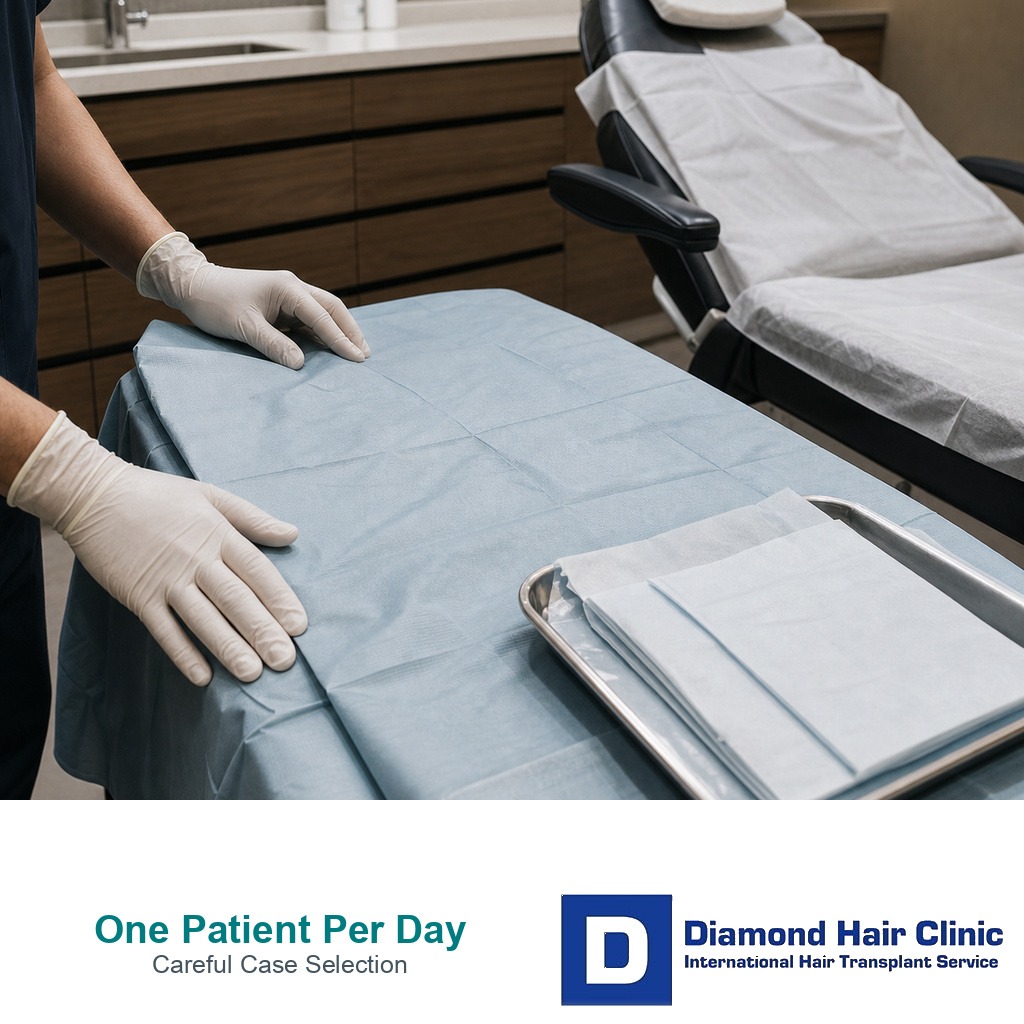
In my own clinic, I am the founder and the only surgeon. I keep the clinic to one patient a day because I do not want several surgical plans competing for the same medical attention. It is not a marketing phrase for me. It is a capacity limit that protects judgment.
This still needs context. One patient per day does not rescue a weak plan, and a clinic treating more than one small case can still have a responsible system. Case size, surgeon number, team training, and supervision all matter. The risk begins when the schedule, package, or sales process becomes stronger than the individual surgical plan.
A hair mill model is not simply a cheap clinic or a Turkish clinic. It is a high-volume system where speed, packages, rotating responsibility, and unclear medical ownership can become more important than the patient’s donor limits, hairline design, graft handling, follow-up, and long-term result.
One patient per day is a clinical capacity choice
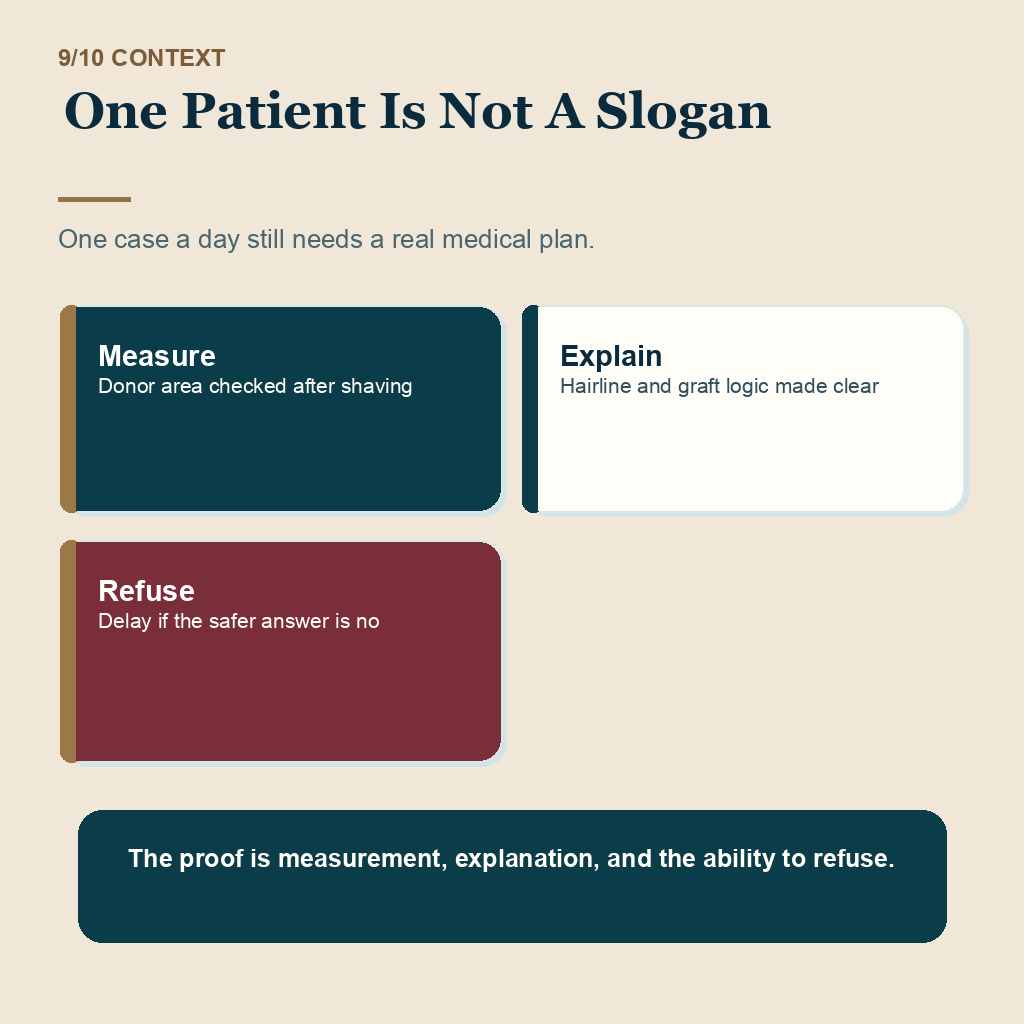
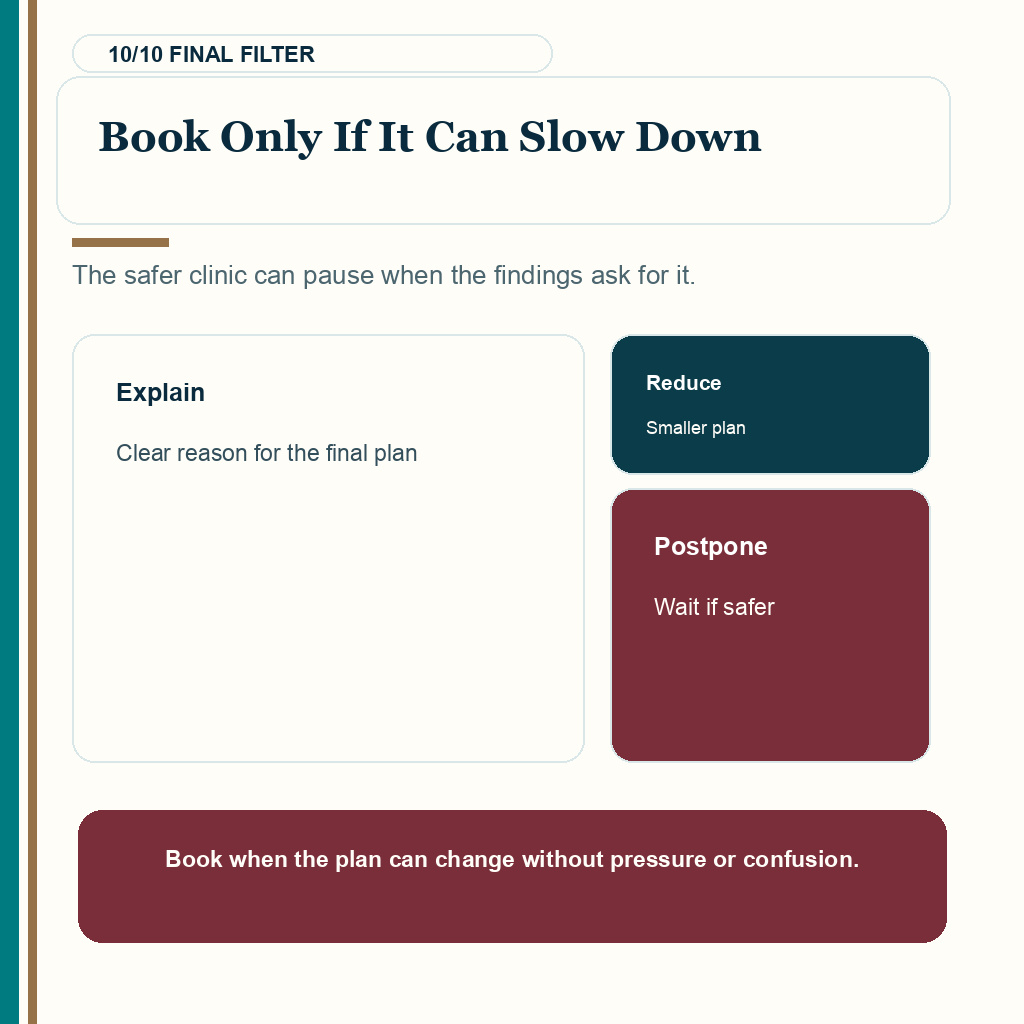
For me, one patient a day is a surgical boundary. It gives the case enough space for donor review, hairline judgment, anesthesia awareness, graft handling, and the uncomfortable decision to reduce or postpone surgery when that is safer.
That is where the time matters. Some patients are safer with fewer grafts, a higher hairline, medication first, staging, or waiting. Those decisions are difficult to make well when the clinic day is built around maximum volume.
Read this review excerpt
“The biggest game changer for me was the Diamond Hair Clinic’s one operation a day rule, which seemed very patient-friendly and boosted my confidence in the clinic.”
The number still needs context
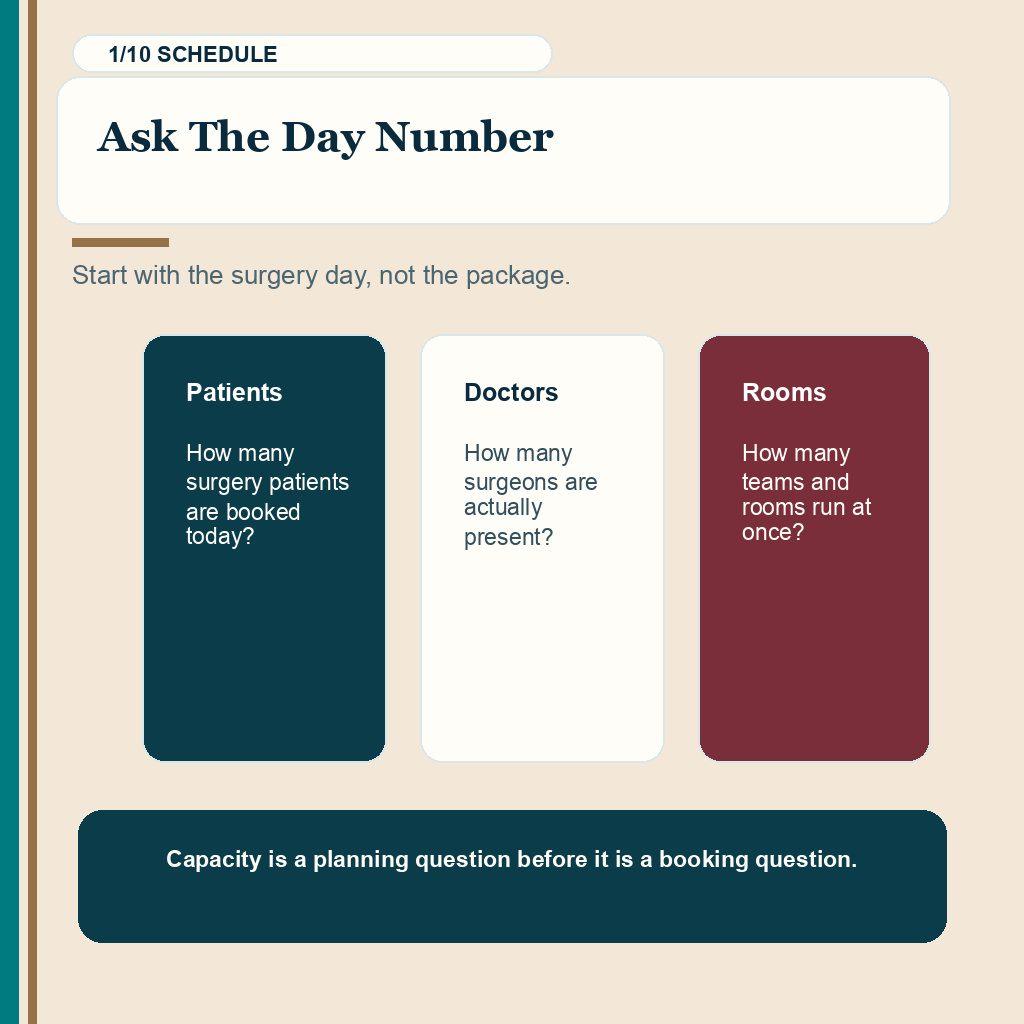
Patients often ask, “How many patients do you operate on per day?” That is a fair question, but the answer has to be tied to the actual room. The useful details are how many surgeons are present, who draws and approves the hairline, who examines the donor area after shaving, who can change the graft number, who creates the recipient area incisions, who checks graft quality, and who is available if bleeding, dizziness, pain, or anxiety appears. Daily case numbers mean little without the graft range, room timing, and the steps each surgeon can personally control. Keep the answer in the same written plan that gives the date and price. It should say how many operating patients the named surgeon is responsible for that day, how many rooms are involved, and who can revise the plan after direct assessment.
The danger is not teamwork. A trained surgical team is part of proper hair transplant surgery. The danger is when teamwork becomes a way to hide weak accountability. If a clinic says a famous surgeon is involved, but your actual contact is a rotating group of staff members and the operation day feels like a production line, slow down before you commit.
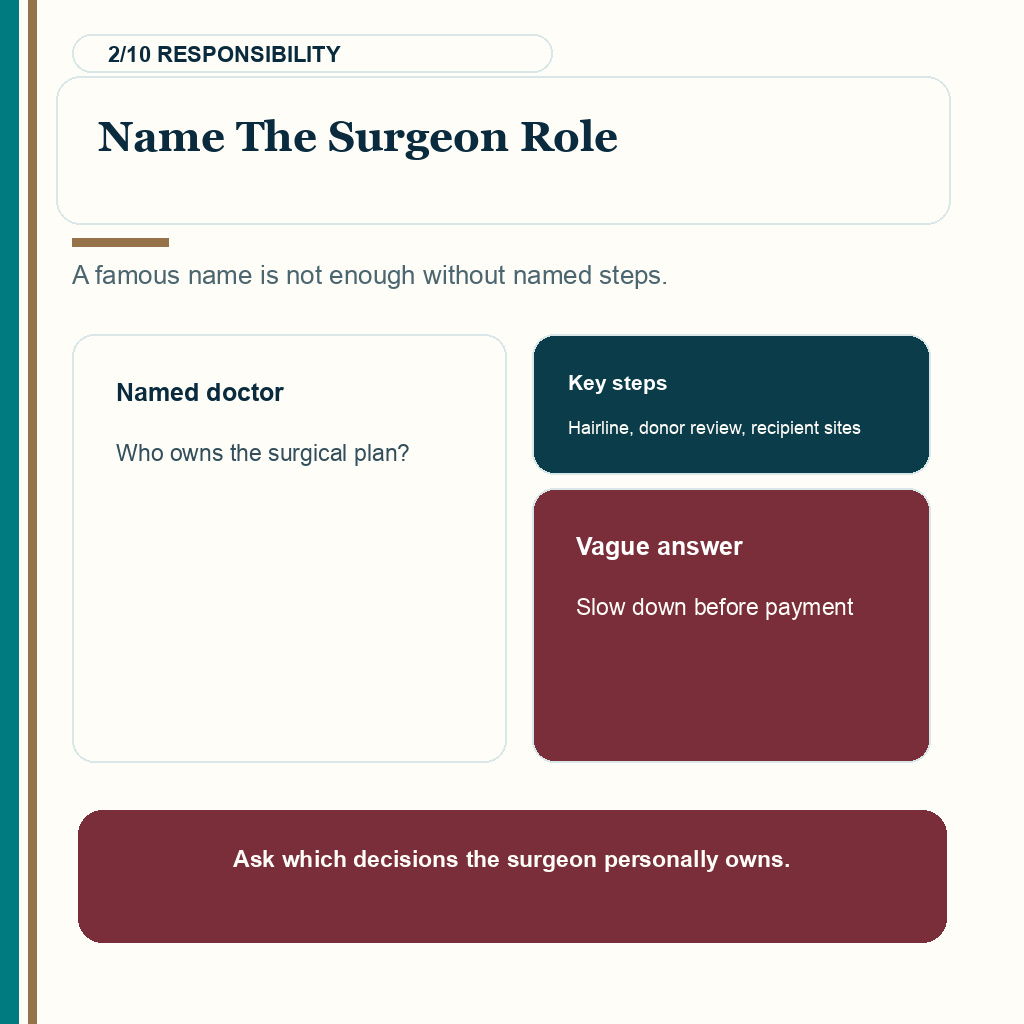
The phrase surgeon involvement in hair transplant surgery should be specific. It should mean named responsibility for the parts of the case that require medical and aesthetic judgment, not only a greeting, a quick drawing, or a signature on paperwork.
What does a hair mill model mean clinically?
When patients use the phrase hair mill, they are usually trying to describe a model, not only a price point. The clinical risk is a day built around volume, with preset graft promises, several patients moving through rooms, different staff members giving different answers, and no clearly named surgeon owning the donor limit, hairline design, recipient area incisions, and changes after shaving.
That does not make every large clinic unsafe. The issue is accountability. If the model makes it hard to pause, reduce the graft number, raise the hairline, or postpone surgery when the findings require it, then the schedule is becoming stronger than the surgical plan.

Signs of a crowded surgery day
A crowded operation day usually shows itself in small details before it shows itself in a final result. The consultation feels shorter than expected. Questions are answered by different people each time. The hairline is drawn quickly. The graft number sounds fixed before a full donor review. The patient is moved between rooms. The team seems to be watching the clock.
Rushed surgery is not always visible from the appointment calendar. It can show up when discomfort, a plan change, or a record request is treated as an interruption rather than part of the operation.
Impressive speed is not the same as controlled surgery. Thousands of recipient openings can only support a natural result when angle, depth, spacing, bleeding control, protection of existing hairs, and graft distribution are checked as the work happens. A fast count becomes a warning sign when the room treats recipient site work as a number to finish instead of a surgical map to keep accurate.
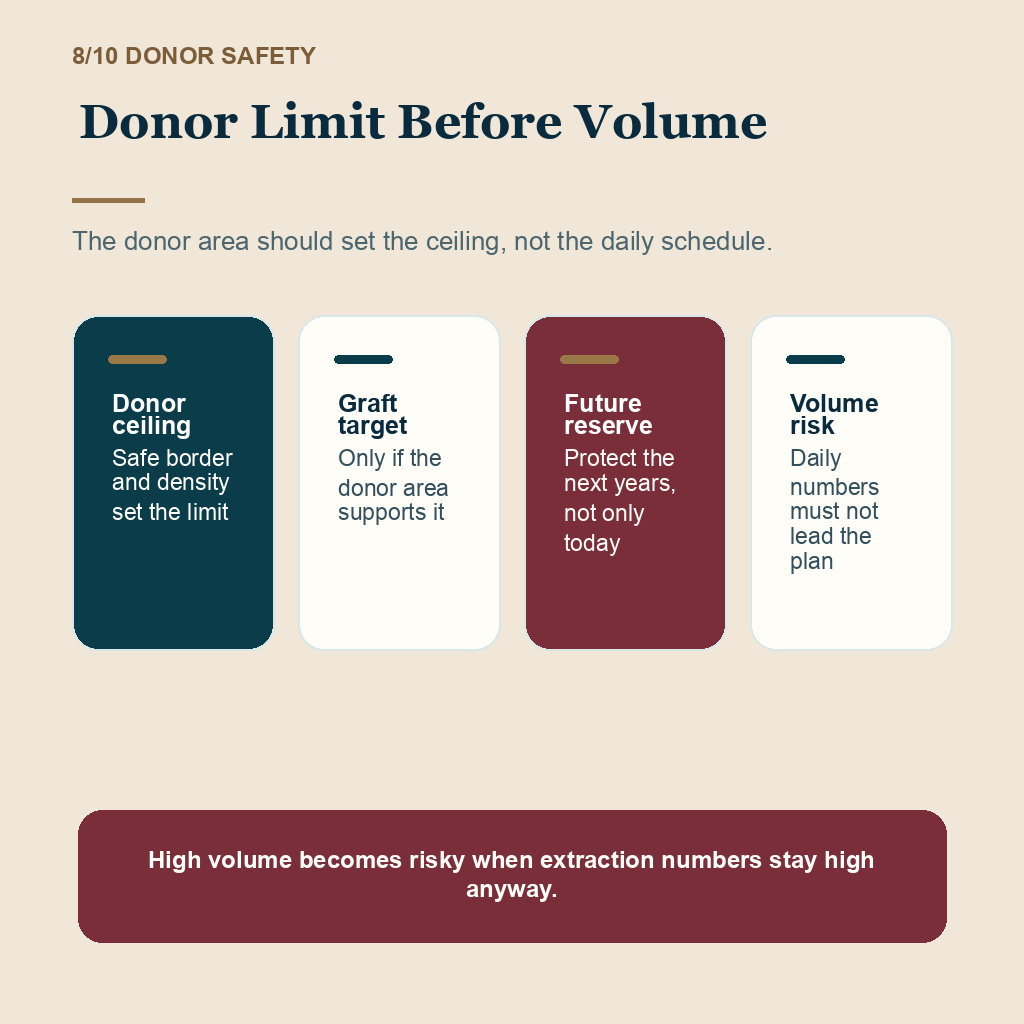
Daily capacity is useful when it leaves room for a changed decision. If the donor looks weaker after shaving, the schedule should allow the plan to become smaller without turning that into conflict.
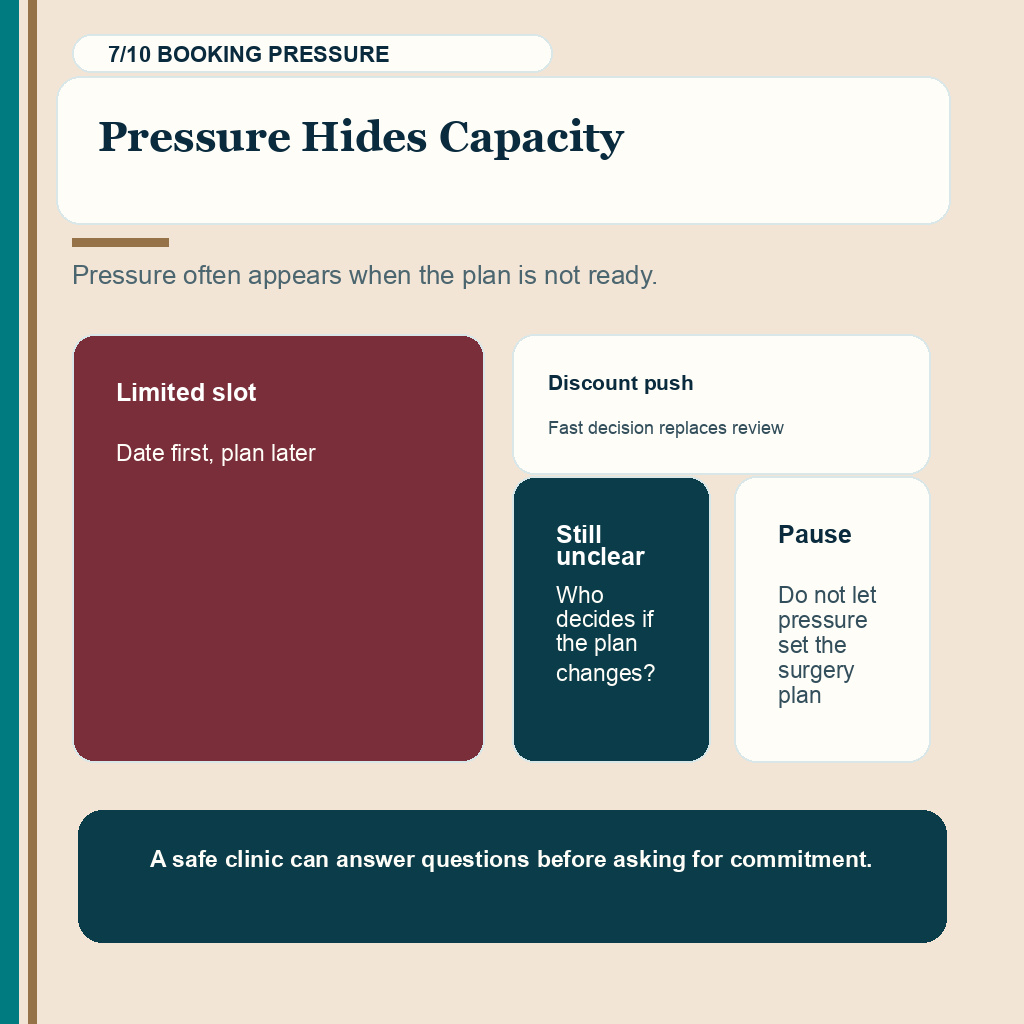
None of those signs proves that harm will happen. But together, they suggest that the clinic is protecting the schedule more than the surgical plan. A hair transplant plan needs room to think. If the scalp looks different after shaving, if the donor density is lower than expected, if the hairline should be more conservative, or if the patient becomes medically unstable, the team must be able to pause and adjust.
That pause is difficult in a day built around volume. When several patients are waiting, changing one plan can affect the next case, the next anesthesia start, the next extraction team, and the next transfer. Pressure can quietly enter the room here even when nobody says anything aggressive.
Planning time after shaving
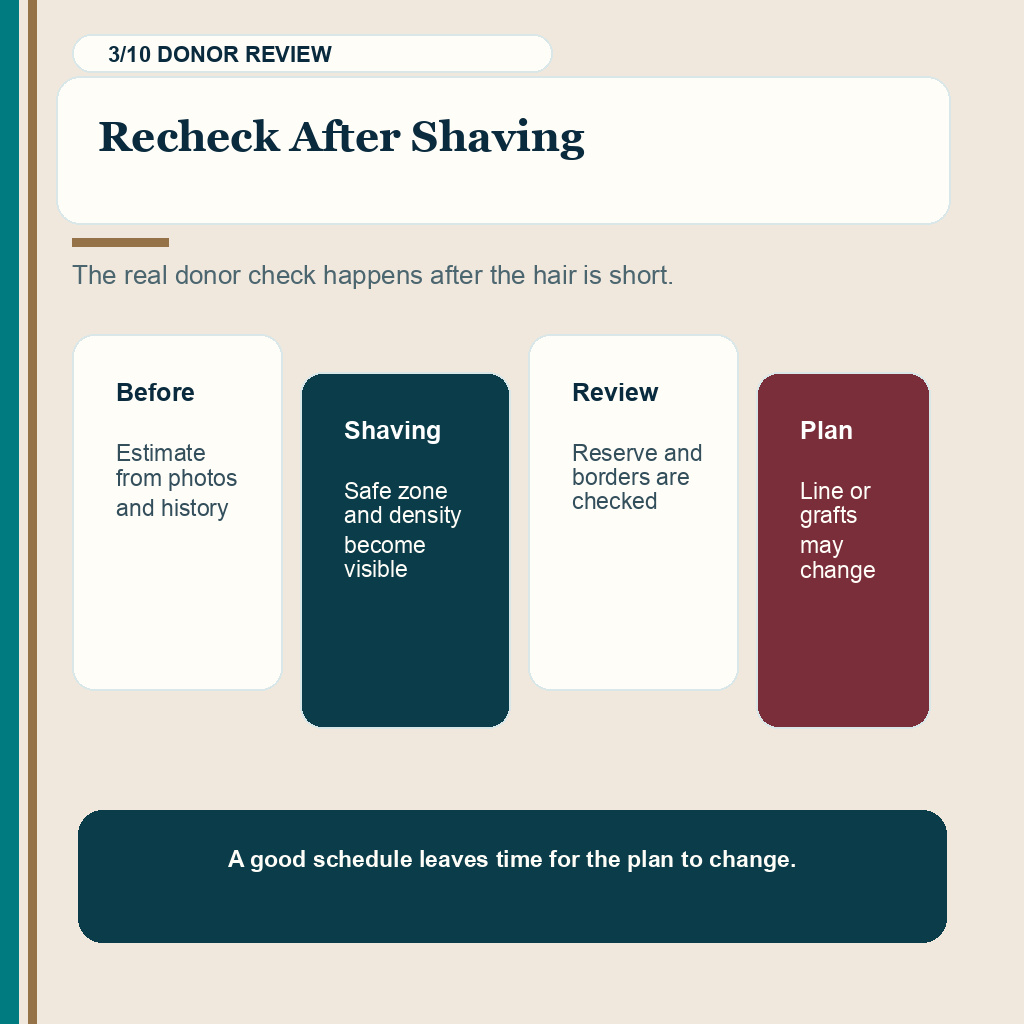
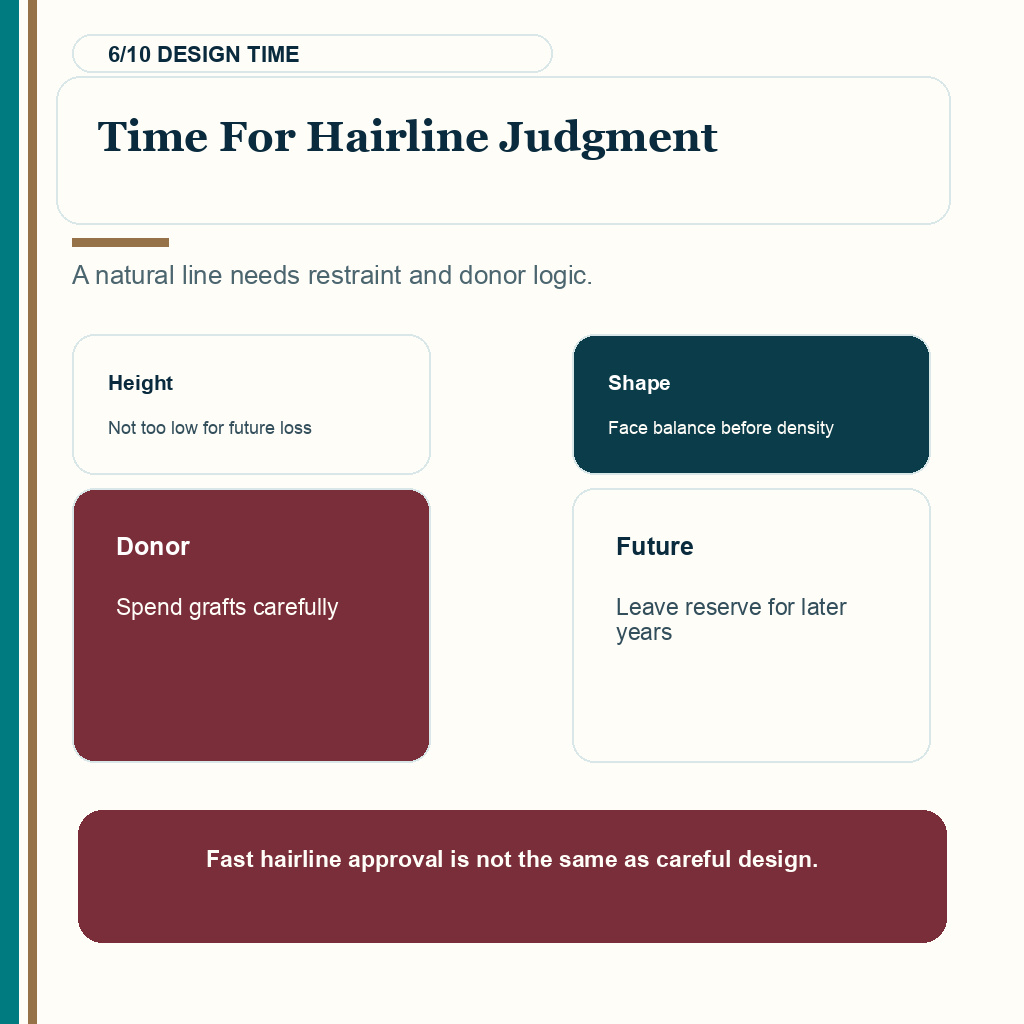
Photos before surgery are useful, but they do not replace the final check in the clinic. After shaving, the surgeon can see miniaturization, density, donor limits, crown pattern, hair shaft quality, scars, scalp inflammation, and the real shape of the thinning area more clearly. This is also when the hairline should be checked against the face, future loss pattern, and donor reserve.
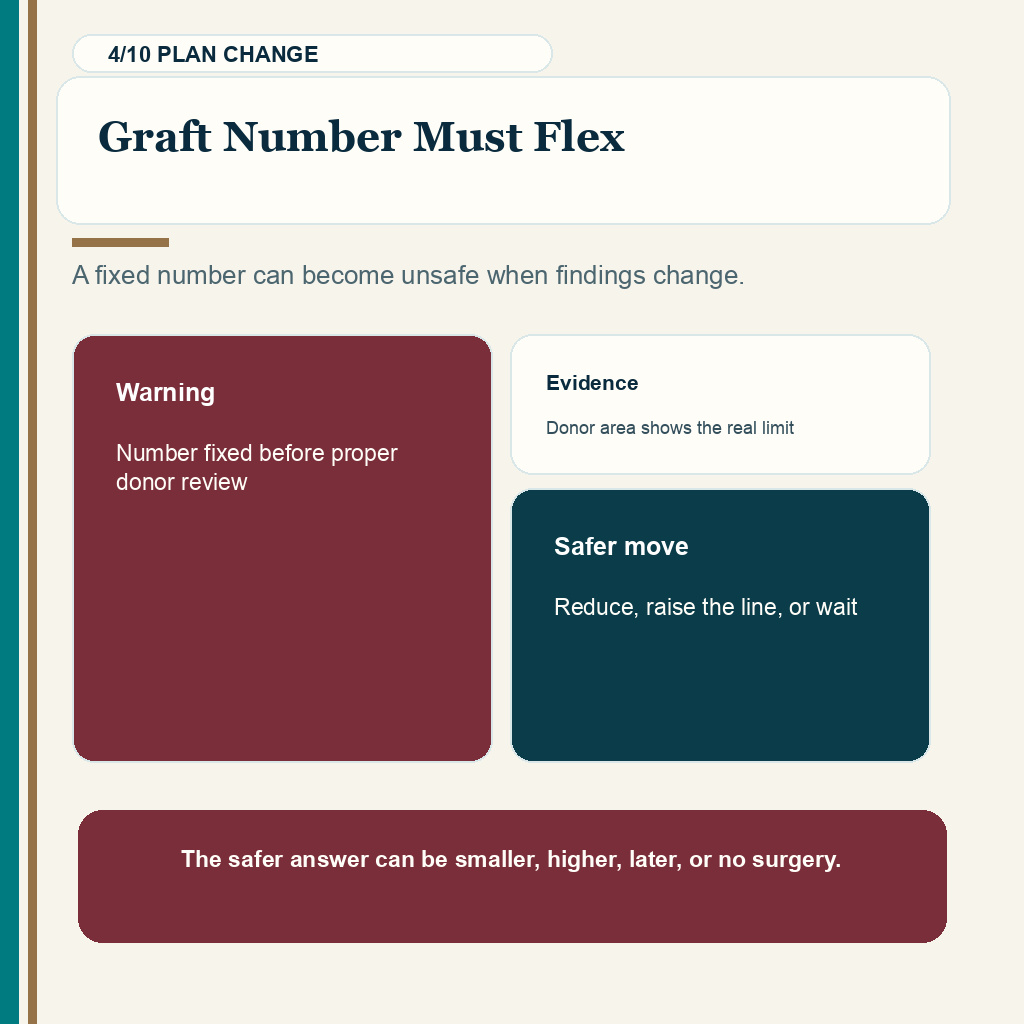
If the clinic is too busy, this stage can become rushed. The patient may be told that everything is fine, the graft number stays high, and the line is “natural” without enough explanation. In some cases, the plan changes suddenly after shaving. That does not always mean the clinic is unsafe, because real findings can change a plan. But a change should be explained, measured, and agreed. When the estimate shifts after direct examination, hair transplant graft number changes on surgery day become a consent issue, not just a number update.
The important point here is time. If the patient is one of several cases being processed, the schedule may reward fast acceptance. A careful surgeon-led plan rewards the opposite. It allows the patient to understand why the line is placed there, why the graft number is reasonable, and what is being preserved for the future.
Facial hair cases make that time pressure easier to see. A beard or mustache plan needs the surgeon to slow down over direction changes, border softness, graft selection, and shaving habits. If the schedule cannot slow down for those details, the problem may not appear in the quote, but it can appear later on visible facial skin.
Ask who is with you at each step
There is a difference between a stable trained team and an improvised capacity system. In a stable team, everyone knows the surgeon’s standards, the sequence of the operation, the graft handling rules, and the patient’s plan. In a high-volume model, capacity may be filled by whichever team is available that day. The patient may not know who is extracting, placing, supervising, or answering problems.
Before booking, ask the clinic to describe the roles. You do not need theatrical promises. You need plain answers that name the person who examines the donor area, designs the hairline, gives or supervises anesthesia, creates the recipient area incisions, extracts, places, checks graft quality, and stays responsible if the plan changes.

Read this review excerpt
Dr Mehmet made my incisions and team made extraction and implantation stages.
If two friends or partners are offered surgery one after another or a shared discount, judge each case separately. Each patient still needs an individual donor measurement, hairline plan, medical review, recovery instruction, and surgeon availability. Convenience should not turn two different operations into one rushed schedule.
These questions overlap with the broader guide to who performs your hair transplant surgery, but the daily capacity question adds one more layer. Even if the roles sound good in theory, the schedule must allow those roles to happen properly.
Three ways a surgery day can be staffed
The same daily patient count can describe very different arrangements. These examples compare responsibility and timing, not a universal safe number.
One surgeon, overlapping critical steps
Two cases need that surgeon’s judgment during the same part of the day. The important issue is which decisions overlap, who remains with each patient, and whether a change can wait safely for the surgeon. Moving between rooms is not the same as being available for both decisions.
Separately assigned surgeons
Cases can run at the same time without sharing one surgeon when each patient has a named responsible surgeon and a trained team. The assignment must cover the actual donor, hairline, recipient area and medical decisions, not only the name on the booking.
Sequential smaller cases
The critical work for one case is completed before the next needs the same surgeon. This can reduce overlap, but the later slot still needs room for an overrun, a changed donor finding or a patient who needs more time. Even a smaller case can need extra time and medical judgment.
In every arrangement, donor density, miniaturization, safe zone borders and the graft budget need review before extraction. Team training and graft handling standards still matter. Bleeding, graft quality or donor findings must be able to change the plan without pressure to keep the next slot on time.
A day with one patient can still be unsafe if the plan is vague
The opposite is also true. A clinic can operate on only one patient that day and still give a weak plan. If no one measures the donor, the hairline is too low, the graft number is unrealistic, or the surgeon is not meaningfully involved, the patient is not protected just because the clinic says “one patient.”
One patient per day should not become the only shortcut a patient uses. It creates room for careful planning, but the value depends on what fills that room, including direct surgeon review, a donor plan that can be explained, and follow-up that stays connected to the original decision.
The patients per day question is not a slogan. It opens a conversation about planning quality. A clinic with one patient and poor medical judgment is still unsafe. A clinic with more than one small case may be acceptable if each case has a named surgeon, clear timing, proper team support, and enough room for review. The standard is not isolation. The standard is accountable planning.
If a coordinator is the main person giving the plan, be careful. Coordinators can help with photos, travel, timing, and practical steps. They should not replace the surgeon’s decision about donor limits, hairline design, graft count, or whether surgery is appropriate. Hair transplant coordinators and surgical planning limits are a separate topic, but that boundary still applies. Coordination should support the surgeon’s decision, not replace it.
The 10 surgery day capacity slides below take a closer look at planning time, staffing and responsibility. Swipe sideways or use the arrows to view one slide at a time.