


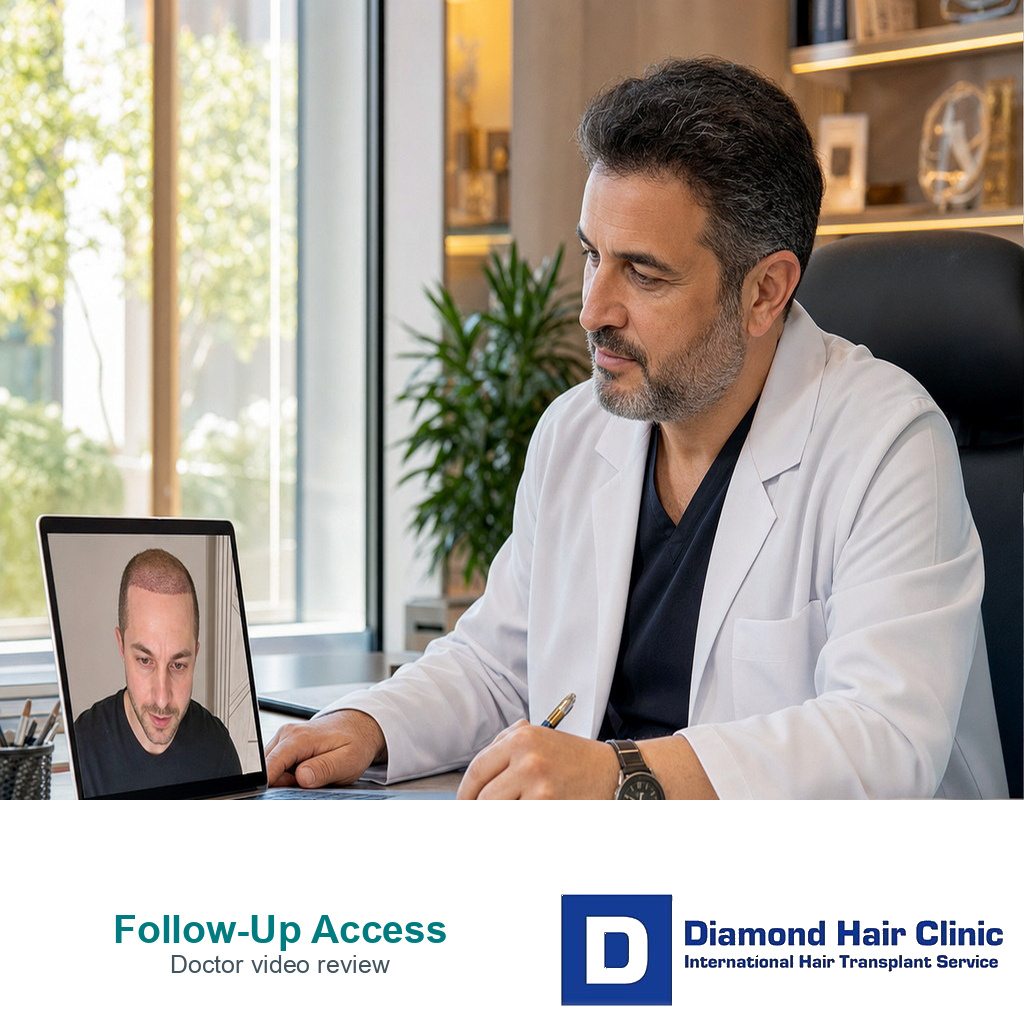
Hair Transplant Follow-Up After Surgery
After a hair transplant, follow-up should make three things clear. You should know who reviews your healing, how routine questions are answered, and which symptoms should not wait for a normal message reply. Written hair transplant aftercare instructions are useful, but they do not replace medical review when bleeding, swelling, pain, discharge, fever, medication issues, or graft trauma appears. If aftercare instructions are unclear, a focused follow-up question is safer than mixing several routines together.
Agree in advance which recovery photos need urgent review, which channel to use, and which changes can wait for routine follow up. That simple rule prevents both dangerous delay and repeated messages for normal changes.
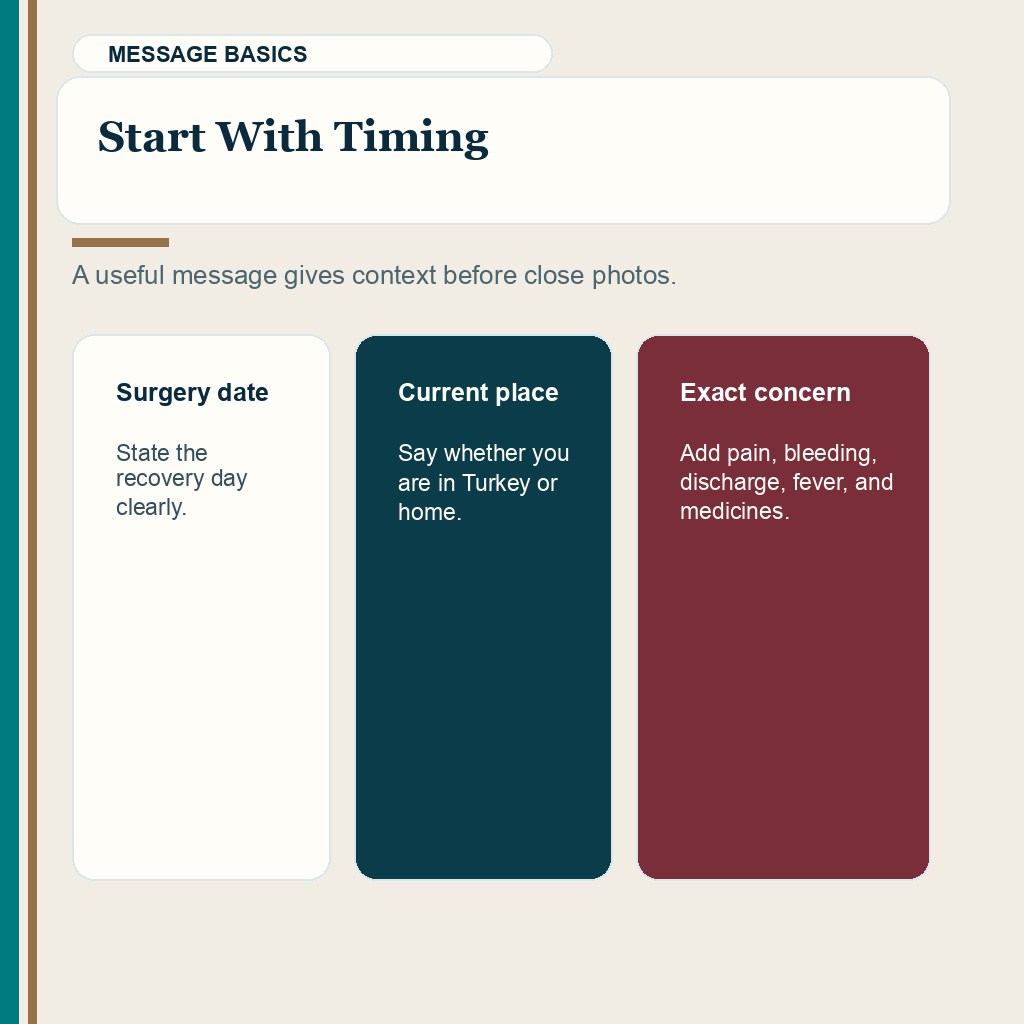
Send one organized update before taking more closeups. A clear message is easier to review than ten separate rushed notes, especially when it includes the surgery date, the concern, symptom change, and the best front, top, donor, or side view for that question.
A dark scab with wet, open, smelly, or worsening skin should not wait for routine message replies either, because a photo cannot always separate dried blood from an unsafe wound.
This matters even more when you travel home soon after surgery. The operation is not separate from the days that follow it. The grafts, donor area, recipient area, scabs, swelling, washing, and anxiety all need the same medical judgment that shaped the surgical plan. A hair transplant is not finished when you leave the clinic, because the grafts, donor area, and symptoms still need organized review. Before the trip, Turkey hair transplant without the sales lens explains why follow-up has to be part of the medical plan, not an afterthought after booking.
Practical guide
Plan the trip around
the medical decision
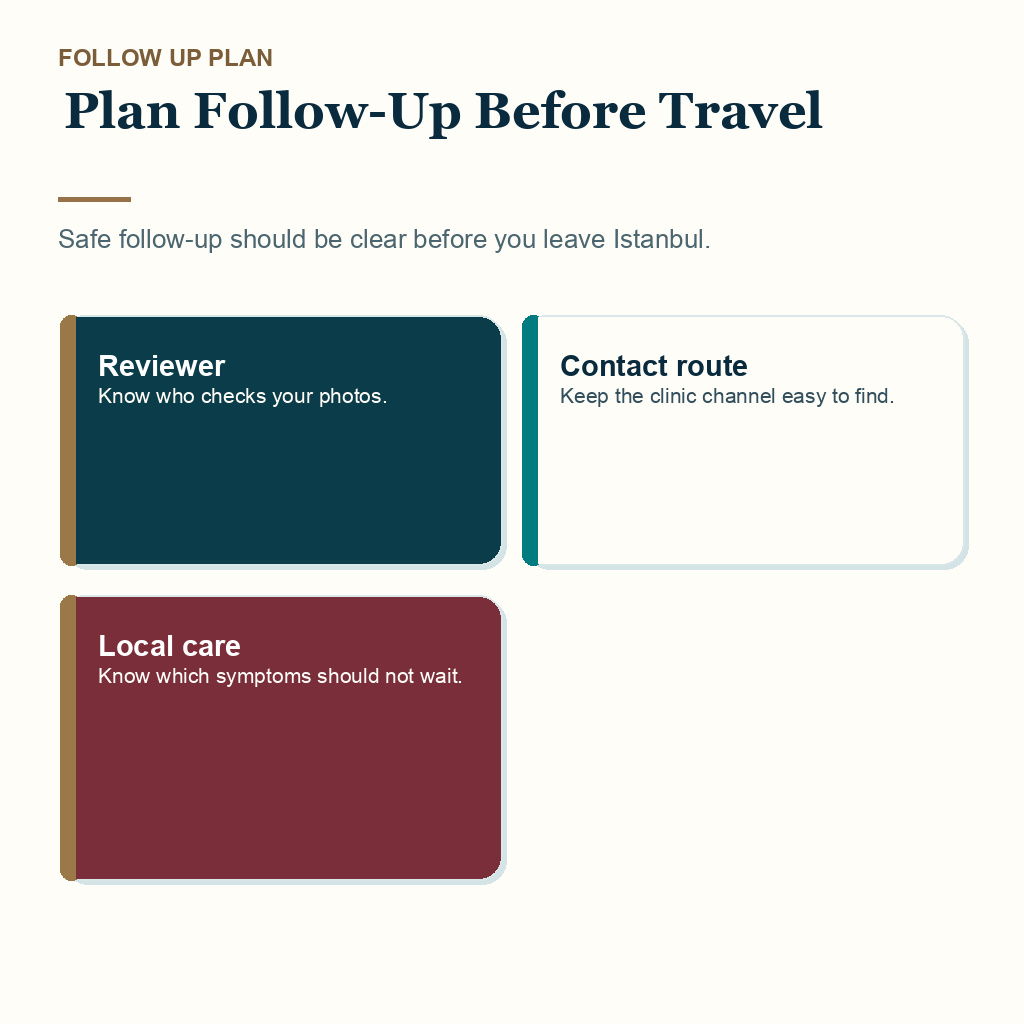
Follow-up starts before the patient leaves Istanbul. Use the route that matches the concern you need to plan for after surgery or after returning home.
Follow-up still matters after you leave the clinic
The first days after FUE are often medically simple, but they can feel difficult. A small blood spot may look like graft loss. Swelling can change the face. Scabs can make the recipient area look uneven. The donor area may feel tight, tender, numb, or itchy.
Many of these findings settle without treatment, but you still need to know which details matter. A generic instruction sheet cannot read timing, symptoms, photos, medication history, and surgery details together. Follow-up gives those details a proper place.
I also see follow-up as donor protection. Unusual pain, spreading redness, discharge, wound opening, or a worsening donor area problem should be reviewed early. The same applies to the recipient area. If there is active bleeding, clear trauma, or possible infection, the answer should be more precise than “wait and see.”
A clear first night recovery plan reduces unnecessary fear, but it should also explain how to reach the clinic if the healing does not follow the expected pattern.
Details I want in the first follow-up message from abroad
A useful message from abroad should not be only a close photo with the word worried. I need the operation date, the recovery day, the country or city you are in, the exact concern, pain level, bleeding or discharge status, temperature if you feel unwell, and whether the symptom is improving or worsening.
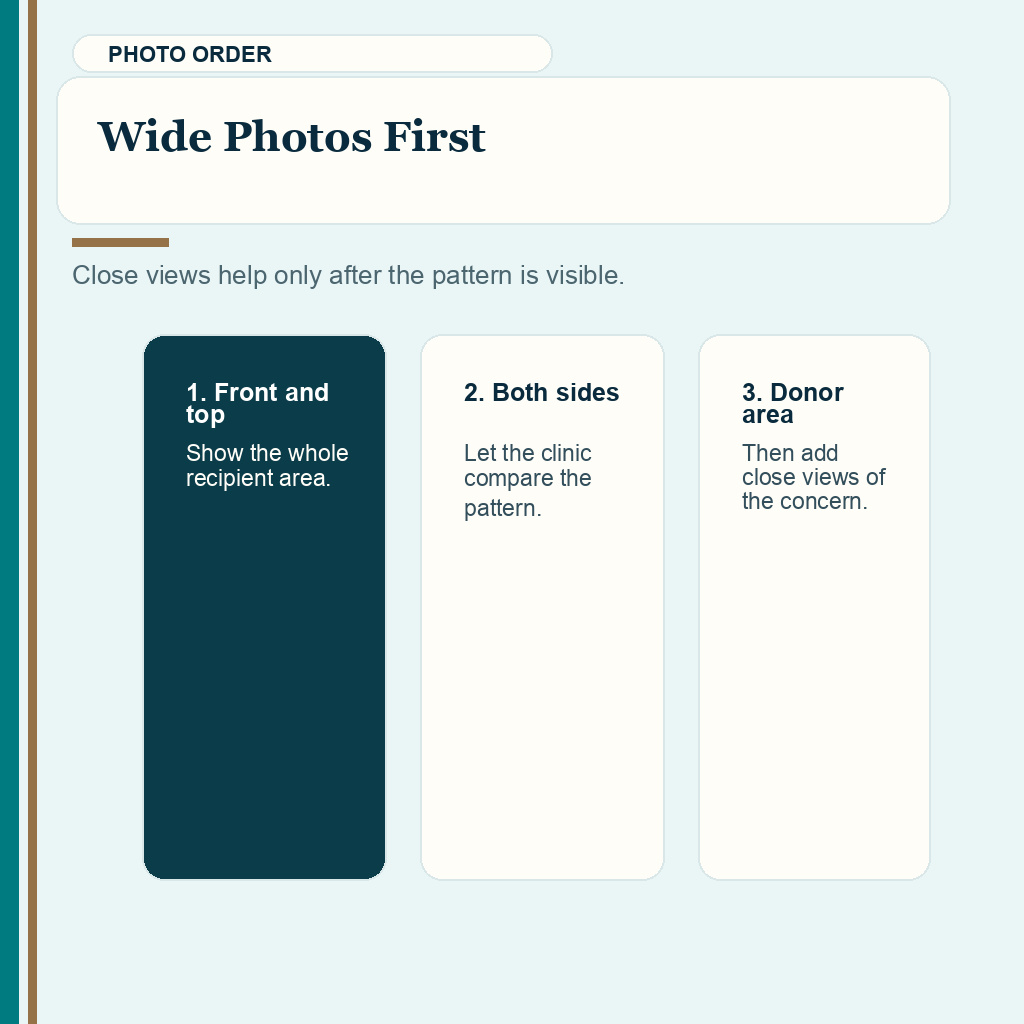
Send wider photos first, then close photos. Wider views show the pattern. Close photos show the surface. If the image is only very close, it can make a normal scab look frightening and it can hide whether redness, swelling, or scabbing is spreading.
If a local doctor has already seen you, send the diagnosis and the medication name, dose, and duration. That allows the clinic to judge the transplant context without guessing or mixing advice with treatment that has already started.
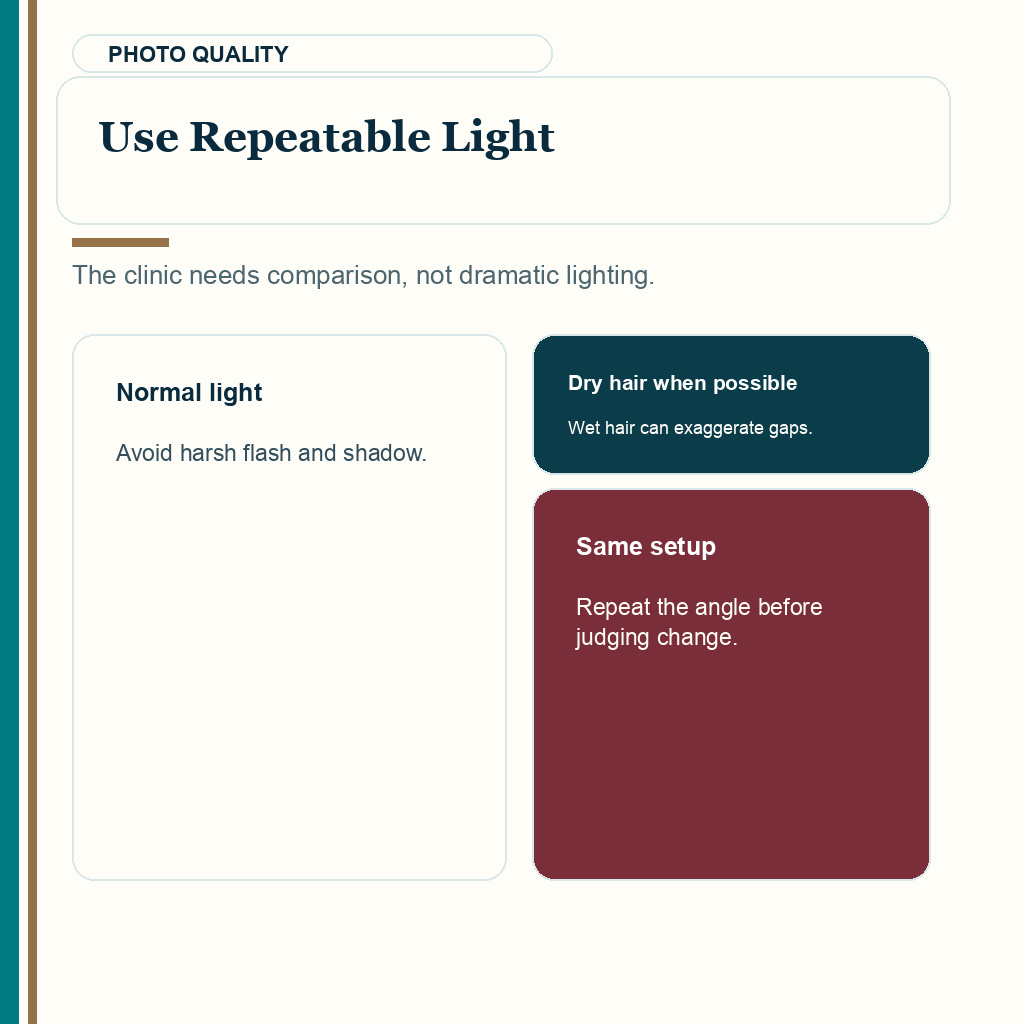
When healing is delayed, the message should show the pattern, not only the closest image. Tell me the surgery date and recovery day, whether the area is dry, wet, bleeding, painful, smelly, or draining, which shampoo, spray, ointment, antiseptic, or antibiotic you used, and whether a local doctor has already examined you. Repeat photos in the same room and light when possible, so I can judge whether the scab, redness, or open area is improving or worsening.
Messaging alone is not always enough after surgery
WhatsApp or email can work well for simple follow-up, especially after international travel. The channel is not the problem. What matters is whether the message reaches someone who understands the operation and can judge the concern from the surgical plan, not from a generic script.
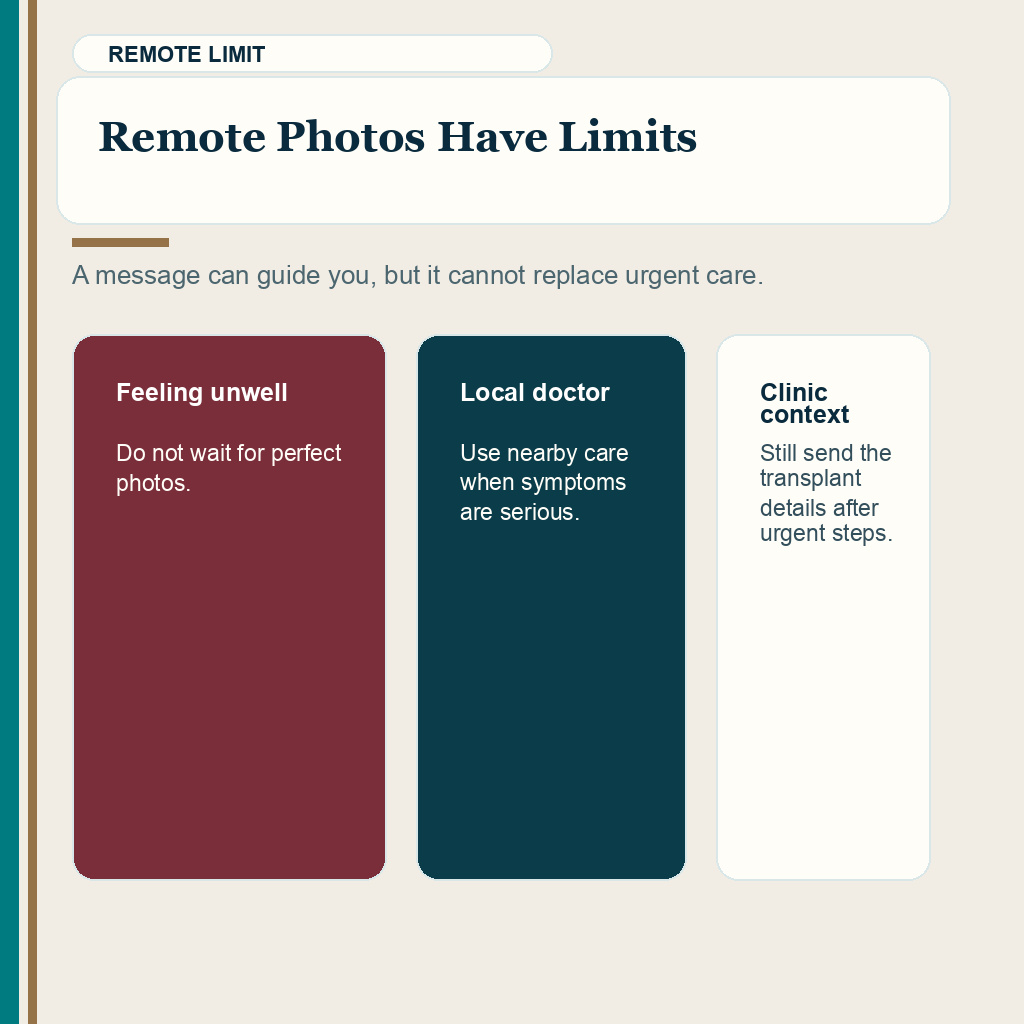
A short reply may be enough for a simple timing question, such as when to wash, when to send the next photo, or whether a small amount of dryness is expected. It is not enough for worsening pain, fever, discharge, fresh bleeding, trauma, fainting, chest symptoms, breathing symptoms, or a medication problem. Remote follow-up is useful only when the clinic knows its limits.
Before surgery, you should know who reviews your photos, how quickly the clinic normally replies, and what symptoms mean you should seek local medical care instead of waiting for a routine reply.
Slow replies become urgent when symptoms change
A useful follow-up plan is more than a phone number. It needs a route for evenings, weekends, travel days, and time zone differences. It also needs a first message format, so the clinic is not trying to guess from one blurred close-up.
If the question is simple, a short delay may be acceptable. A routine washing question is different from fresh bleeding that does not stop, fever, spreading redness, pus or cloudy discharge, severe allergic symptoms, breathing symptoms, wound opening, or clear trauma to the grafts. Remote follow-up should guide urgent decisions, not delay urgent medical care.
This distinction is important for international patients. You need to know which symptoms can wait for clinic review and which symptoms require help near the hotel or at home. If the concern appears after the return flight, the practical steps are covered in recovery concerns after flying home from a hair transplant. A serious symptom should not be treated like an ordinary recovery question.
The first two weeks need focused checks
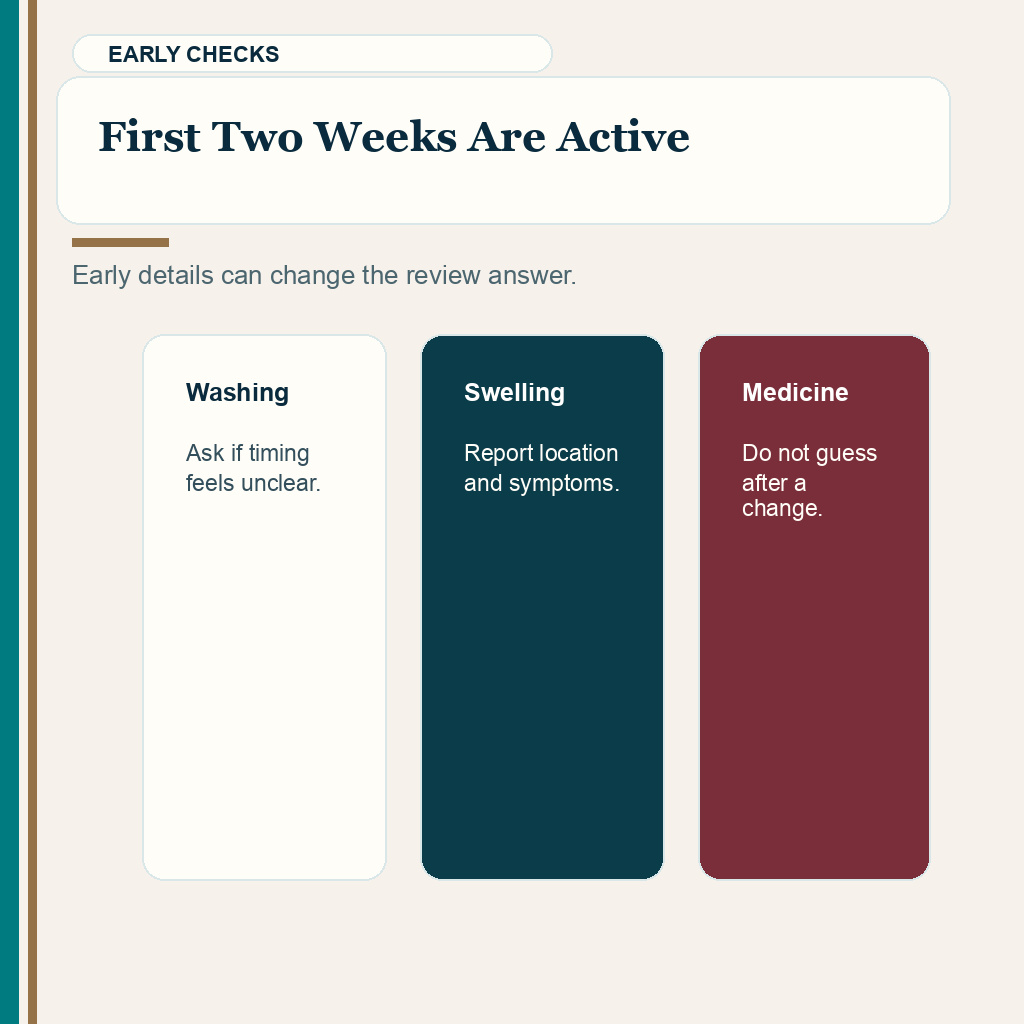
The first two weeks are the most active follow-up period. The clinic may need to review washing, scab softening, swelling, small bleeding, donor discomfort, sleeping position, medicine use, and accidental contact with the grafts. Parents should also report any bump, scratch, or pulled scab involving a child using the same calm photo routine described in caring for children after hair transplant surgery.
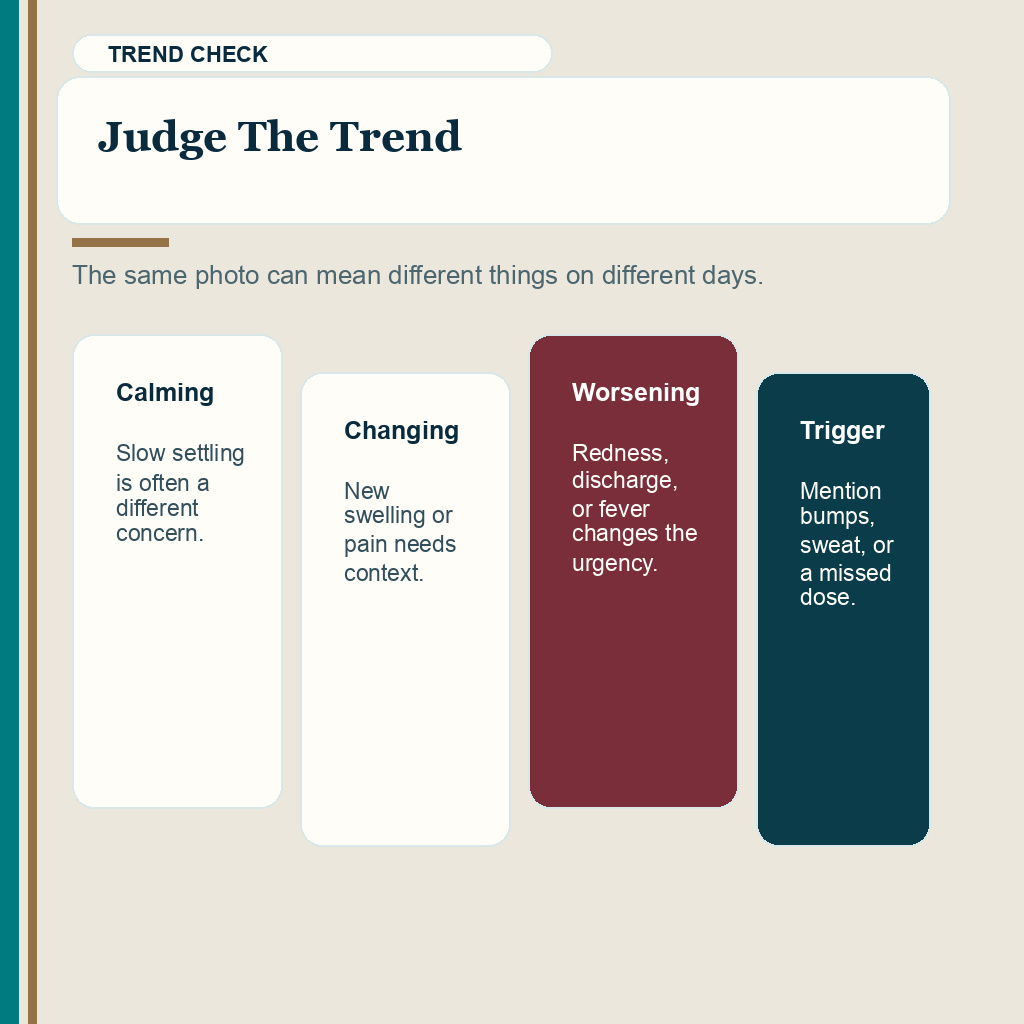
Normal healing should not become a medical emergency, but the review still has to be specific. Day 2 swelling is different from day 8 swelling with pain. A tiny blood spot after washing is different from bleeding that does not settle with gentle pressure. A few pimples are different from spreading redness and discharge.
During early healing, the pattern matters more than the symptom label. I look at whether the symptom is improving or worsening, where it sits, and what happened before it started, such as a bump, scratching, heavy sweating, long bending, a medication restart, or a missed prescribed medicine. A similar review helps when a patient reports hiccups after a hair transplant. Timing, duration, medicine changes, reflux, vomiting, fever, and photos matter more than the symptom label alone. A focused guide to track electric shock sensations after FUE gives patients the exact timing, location, medicine, and photo details to include.
For home care, you also need stable instructions for washing hair normally after hair transplant. Direct review still matters when the scalp does not behave as expected.
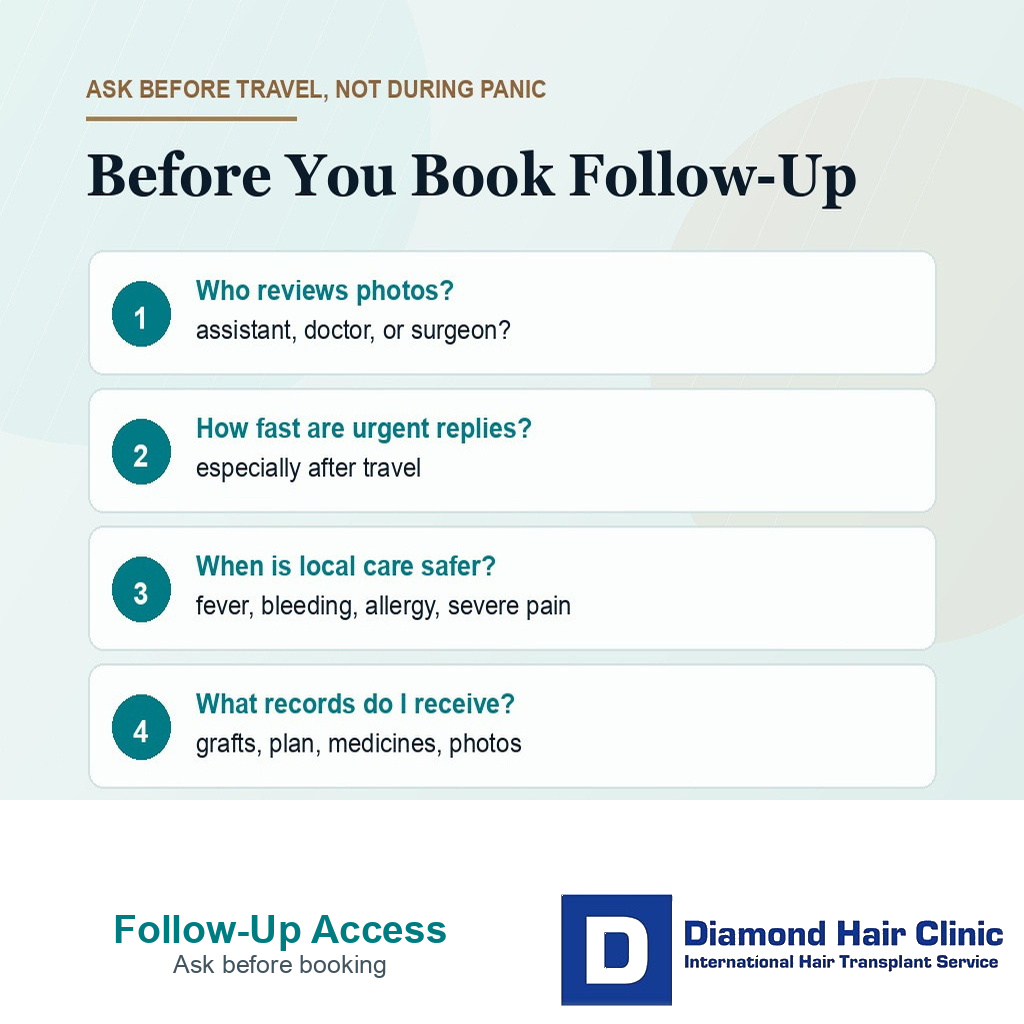
Before booking, follow-up access needs to be clear enough to protect the patient after travel.
The 10 follow-up slides below cover photo timing, scalp angles, and signs that should not wait for a routine reply. Swipe sideways, use the arrows for one slide at a time, or choose a number below the image.
Some photos need a direct medical answer
Photos are helpful, but they can also mislead. Lighting, wet hair, angle, zoom, flash, and panic can make normal healing look worse. The opposite can also happen. A photo may look mild while the symptom is getting worse.
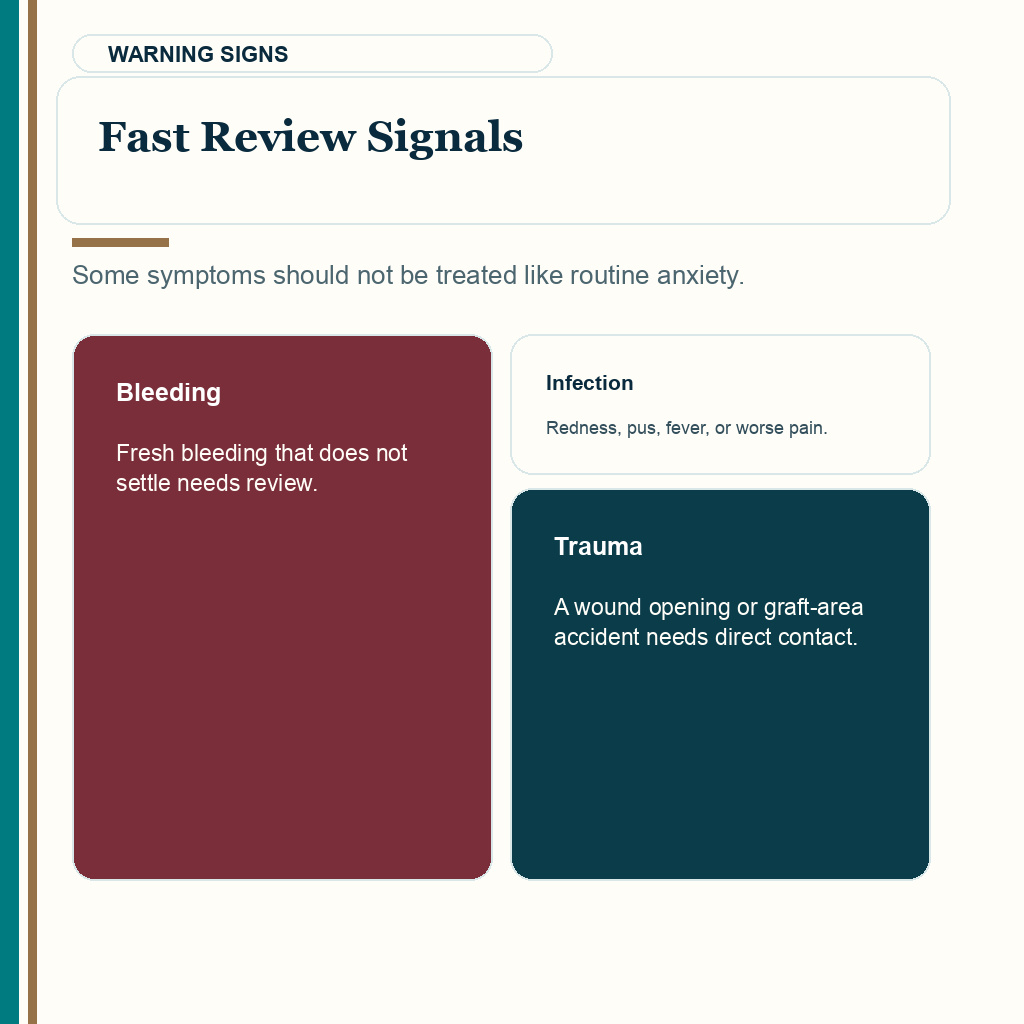
A photo needs a medical answer when the symptom carries risk, changes quickly, or does not match the expected timing. Fresh bleeding, worsening pain, discharge, spreading redness, wound opening, fever, increasing swelling with other symptoms, a new painful lump, or clear trauma to the grafts should be reviewed directly.
For example, after surgery you may worry that scabs mean grafts are coming out. In many normal recoveries, scabs shed without graft loss. But if scabs come away with active bleeding or after a clear accident, the clinic must look more carefully. That distinction is the reason I wrote separately about scabs and possible graft loss after hair transplant.
Redness, scabs, or pimples after hair transplant need review by pattern and direction. A mild change may settle. A worsening pattern needs attention.
Travel makes follow-up more important
Travel changes the risk calculation. If you live nearby, you can usually come back for review. If you travel internationally, you may be on a plane, in a hotel, or already home when swelling, bleeding anxiety, washing confusion, medication questions, or donor discomfort appears.
That does not mean traveling for surgery is wrong. It means the follow-up plan must be built before surgery, not improvised after you leave. The clinic needs to explain how photos are reviewed, how urgent symptoms are handled, and when you should see a doctor locally.
If you are coming to Istanbul, the number of days in Turkey matters. Staying longer is not only about tourism or convenience. It gives the surgical team time to inspect the scalp, guide washing, and catch early problems before you travel. That is the practical value behind planning how many days to stay in Turkey after hair transplant.
Traveling alone adds another layer. If you are tired, swollen, anxious, and far from home, judging symptoms can be harder. A companion is not medically required for everyone, but support can make the first days easier. The practical risks are covered in traveling alone to Turkey for hair transplant.
Read this review excerpt
“I very highly recommend Diamond hair clinic with Dr. Demircioglu and his team. They were all so professional and easy to talk with. I am still in contact with him and sending monthly updates about my progress.”
Keep key records before flying home
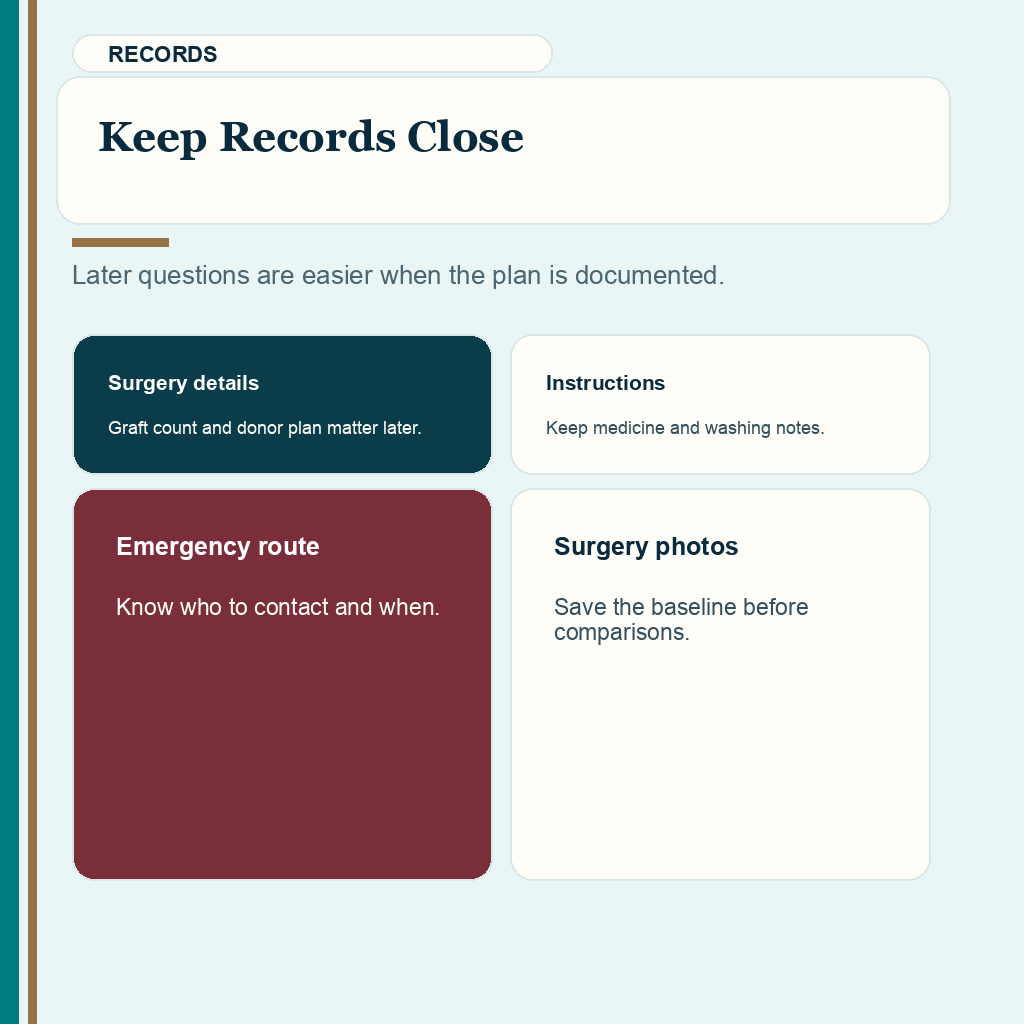
Before leaving the clinic, you need more than a receipt and a shampoo bottle. Useful records include the graft count, donor and recipient plan, medication instructions, washing instructions, emergency contact route, and clear photos from the surgery period.
Follow-up photos do not need to be artistic. They need to be clear and repeatable. A useful set usually includes good light, dry hair when possible, one front view, one top view, both side views, donor area photos, and a short note about the day after surgery, pain level, bleeding, swelling, medicine use, and any accident. A close-up without context can create panic. A repeated photo set gives the clinic something safer to compare.
Clear records from the operation make later review easier. Many later concerns depend on surgical details, including a hairline that looks uneven, a donor area that feels patchy, or a graft number that changed from the estimate. The clinic should be able to answer from the actual plan, not from a sales summary.
If a clinic avoids giving basic records, that is not a small administrative issue. It makes future review harder. It can also make repair planning harder if the result disappoints. Clear records are part of patient protection.
If the worry is graft number accuracy, hair transplant graft count verification has its own limits after surgery.
Essential instructions are not optional extras
Some recovery instructions are medically important. Gentle washing, avoiding trauma, taking prescribed medication correctly, protecting the scalp from infection risk, and contacting the clinic for warning signs all matter.
Other items may be optional or commercial. Special shampoos, vitamin bundles, PRP packages, laser devices, serums, and other extra products can be presented as if they are the reason the transplant succeeds. Some may have a place in selected cases, but they should not be sold as a substitute for medical follow-up.
The first priority is the surgical plan, graft handling, donor management, infection control, and clear follow-up. Extra products cannot rescue poor planning. They also cannot replace a clinic that answers real concerns after surgery.
If a clinic makes recovery support sound like a product package instead of medical supervision, slow down and separate essential care from optional products. Claims about mesotherapy kits after transplant surgery and laser cap timing after hair transplant need the same careful reading.
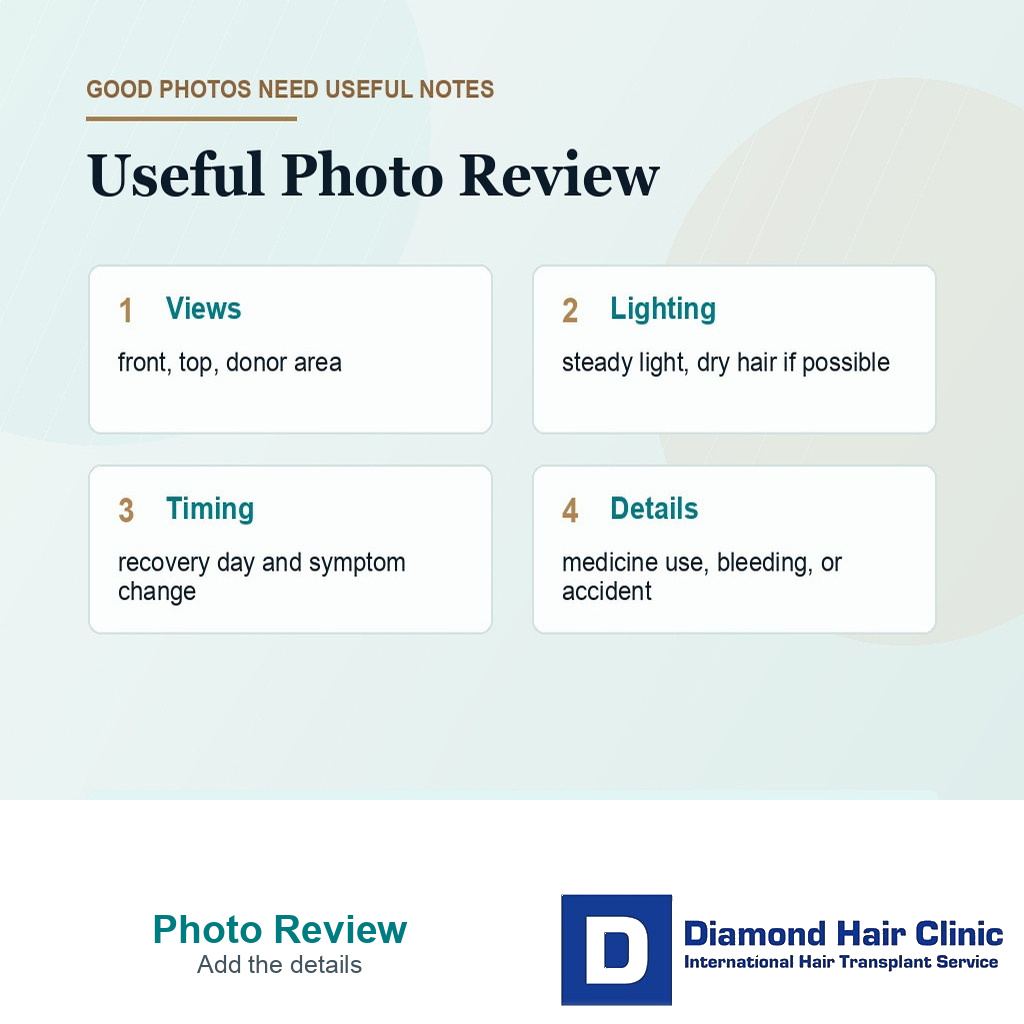
Useful follow-up photos need repeatable views, symptom timing, and enough context to judge the pattern.
Warning signs need urgent contact
Some recovery questions can wait for the next planned photo review. Others need prompt contact with the clinic, and sometimes local medical care.
After a hair transplant, I treat several symptoms seriously. Fresh bleeding that does not settle, worsening pain instead of improving discomfort, pus or cloudy discharge, spreading redness, fever, opening of a wound, increasing swelling with other symptoms, severe allergic reaction, or clear trauma to the recipient area all need prompt review.
If the symptom looks urgent, remote follow-up should not delay local medical care. Fever with feeling unwell, rapidly spreading redness, heavy bleeding, breathing symptoms, confusion, fainting, chest symptoms, or a severe allergic reaction may need a doctor near you immediately. Do not wait for the perfect photo set when the symptom itself is urgent.
If you take blood thinners, aspirin, sedatives, heart medication, diabetes medication, or immunosuppressing treatment, follow-up needs more careful review. Medication changes after surgery can matter. If the medical history changes, tell the clinic instead of assuming the instruction sheet still covers everything.
Small bleeding and true post transplant bleeding are not the same concern. The same early distinction applies to swelling after hair transplant, where timing and associated symptoms change the answer.
Follow-up protects the long-term result
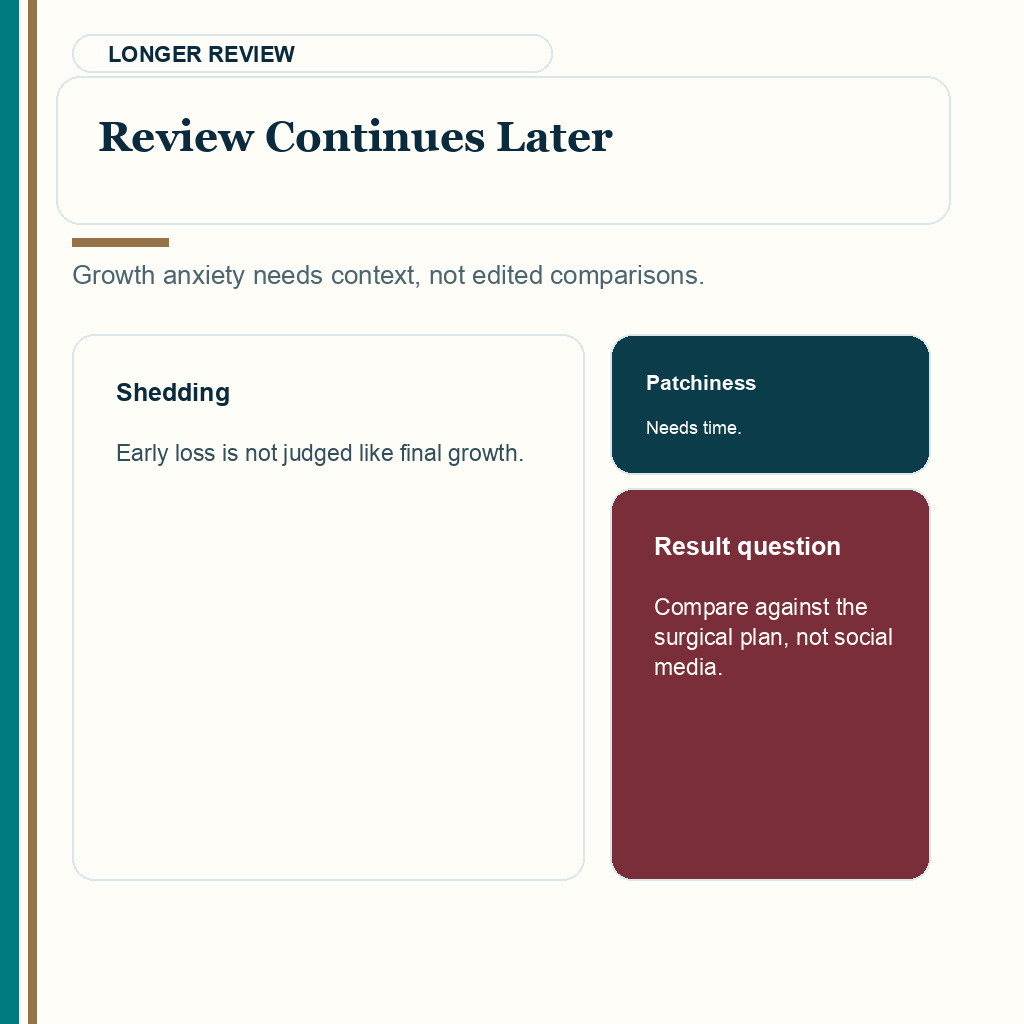
Follow-up is not only about the first two weeks. You also need realistic guidance during shedding, redness, patchiness, slow growth, shock loss, and the long waiting period before density can be judged.
Without follow-up, it is easy to look for reassurance from strangers, compare yourself to edited clinic photos, or panic after each mirror check. That can create unnecessary fear, but it can also hide a real issue when the advice is wrong.
The clinic that performed the surgery knows the hairline plan, donor quality, graft distribution, density target, and long-term hair loss strategy. That knowledge matters months later. If the result is weak, the review must separate slow growth, native hair loss, medication history, styling limits, donor constraints, and true surgical failure.
If you are worried during the waiting period, the emotional side is also real. I wrote about this in the emotional crash in hair transplant recovery. Good follow-up does not promise a perfect result. It gives you a grounded way to understand the timeline.
Before scheduled follow-up ends, it should be clear who can assess later hair loss or scalp concerns, whether that is the original clinic or a clinician experienced in hair and scalp conditions closer to home. Keep the surgery summary and photographs of the established result for that review. New thinning needs a fresh assessment before another transplant is considered.
Follow-up should be clear before the deposit
Good follow-up is not decoration after the operation. It tells you who reviews photos, how concerns are handled after travel, and whether the clinic is still medically present once the surgery day is finished.
Before booking, know who designs the hairline, who is responsible for the medical steps, how long reviews continue, and what happens if swelling, shedding, redness, or anxiety appears at home.
Follow-up cannot rescue a weak surgical plan, but poor follow-up can make a normal recovery feel unsafe. A clinic that explains review clearly is easier to trust during the months when growth is still uncertain.
Read this review excerpt
“I must say dr.Mehmet and his staff are outstanding. They were very professional from the time I arrived in Istanbul till I left and continued to give quality instructions post surgery after my arrival back to the states.”
Ask practical follow-up questions before choosing a distant clinic
A distant clinic needs more than graft number, package price, hotel, airport transfer, or result photos. The aftercare plan should name who reads your messages, which symptoms reach the surgeon, what records you receive, and how support continues after you leave.
A safe hair transplant is not only a technical event. It is a planned medical process with surgery, healing, communication, and long-term review. When follow-up is weak, you carry more uncertainty alone.
Before booking, the follow-up route should already be clear. You should know who reviews you after surgery, how to reach them, and which symptoms need local medical care instead of waiting for a reply. Choose the clinic that can explain the plan before surgery and still stand behind you after surgery. The days after the operation are not an afterthought. They are part of the treatment.