


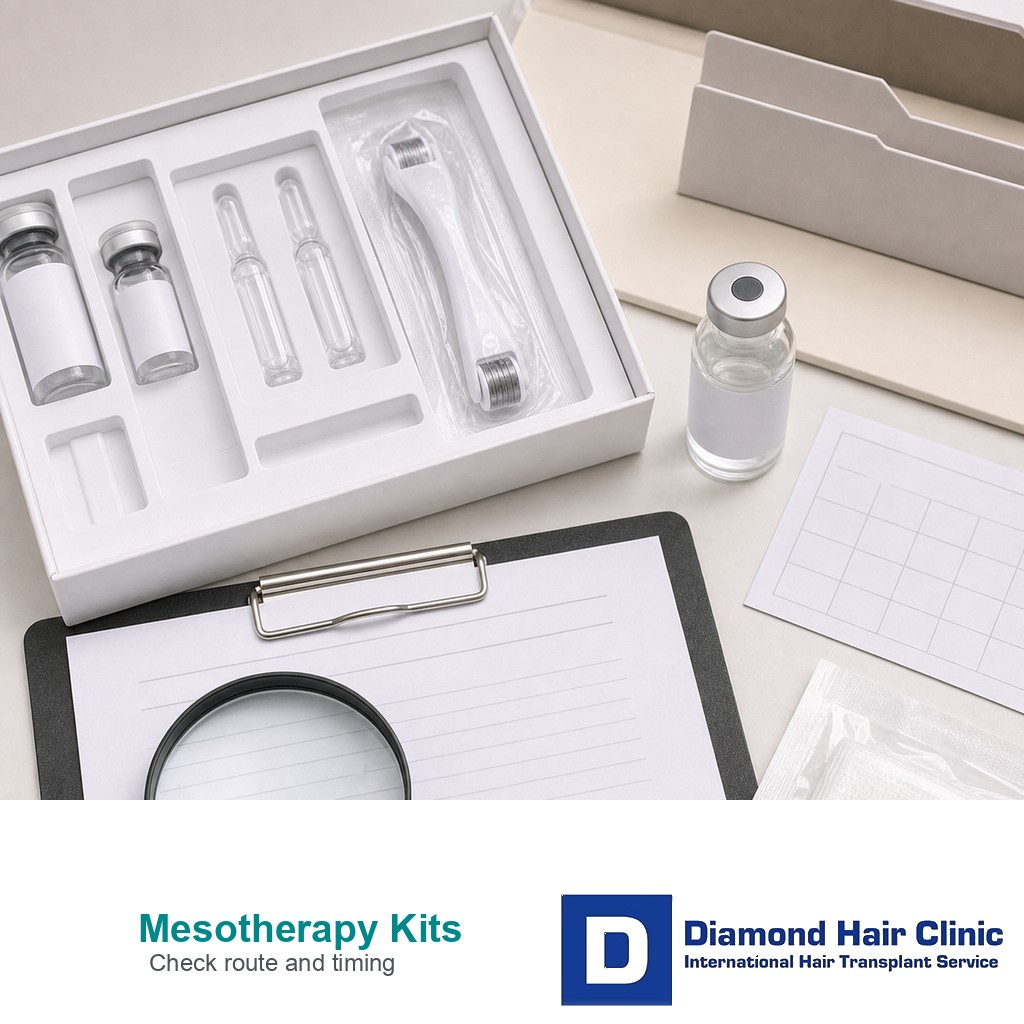
Mesotherapy Kits After Transplant Surgery
Mesotherapy after a hair transplant is not an automatic requirement, and it should not be sold as graft insurance. Extra injections are not a recovery shortcut while the scalp is still settling. The word can mean an injection given in a clinic, a bottle of serum used at home, or a roller kit that breaks the skin. Those are different medical questions. Before paying for a package, you need to know the exact ingredient, route, timing, supervision, and what result the clinic is actually claiming.
A clearly explained optional extra can have a place, just as a stem cell extra before hair transplant only makes sense when the clinic can explain what it contains and why it is being offered. My concern starts when a product is sold before you understand normal growth timing, native hair loss, medication options, and early healing. A transplanted graft does not become stronger because a bottle has an impressive name. It needs careful surgery, clean handling, stable healing, and a long term plan that protects the hair around it.
Mesotherapy can mean different things after surgery
Mesotherapy is a loose word. In one clinic, it may mean small injections into the scalp. In another, it may mean bottles of topical serum used at home. In another, it may be a roller kit sold with vague instructions. These are different interventions, so the first question is not whether mesotherapy is good or bad. The first question is what the clinic is actually asking you to use.
If a clinic recommends it, get the product name, active ingredients, dose, route, timing, and purpose in writing, especially when the plan is dutasteride injections after hair transplant. It should be clear whether it will be injected by a medical professional, used as a topical scalp serum, or paired with a roller. The label, expiry date, batch or lot number when applicable, and instructions should be clear enough to show another doctor when you return home. Without those details, you are not making a medical decision. You are buying a label.
For an injected offer, separate the medical plan from the sales add on. A treatment that needs a prescriber, dose, sterile route, and side effect follow up should not be treated like a shampoo upgrade.
That matters after transplant surgery because the scalp is healing. A product used on an intact scalp at month 6 is not the same as a product rubbed, rolled, or injected into the recipient area while the skin is still closing. Even if the ingredients sound supportive, the wrong timing can cause rubbing, crust disruption, folliculitis, contact irritation, or confusion about what is causing redness. With medications after a hair transplant, the name of the product is less important than why, when, and how it is used.
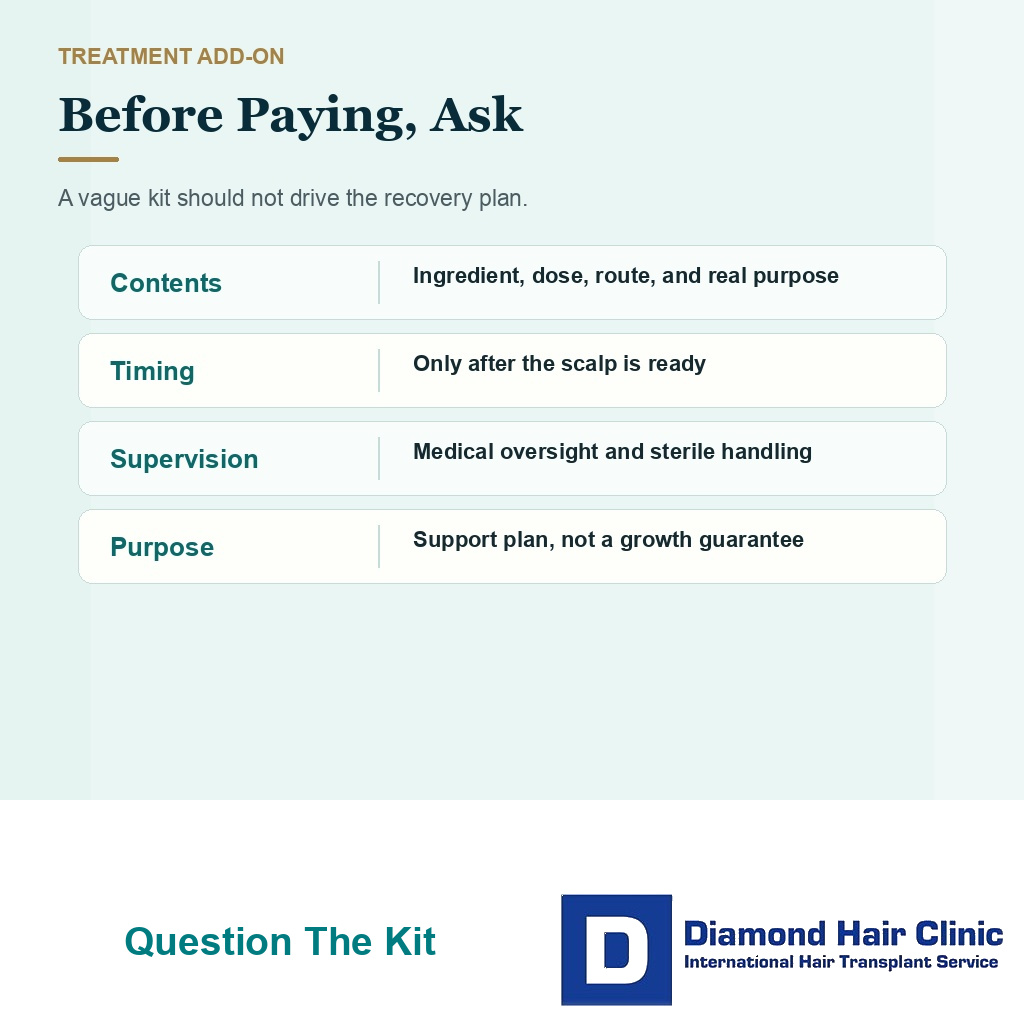
Before paying for mesotherapy, clarify the ingredient, timing, route, sterility, and realistic purpose.
Graft insurance is the wrong promise
A strong transplant result starts before any aftercare product is opened. It depends on donor selection, graft handling, recipient area design, incision angle and direction, blood supply, and protection after surgery. If those steps are weak, mesotherapy cannot turn poor surgery into excellent surgery. If those steps are strong, mesotherapy should still be explained as optional support, not as insurance for growth.
At month 2, 3, or 4, the transplanted area can look thin, shed, patchy, or delayed. Product promises feel more tempting at that stage because anxiety is high and visible growth is still immature. But normal growth timing can make any product look more powerful than it is. If hair begins to appear after a serum starts, the timing alone does not prove the serum caused the growth. Tracking hair transplant growth without panicking requires careful judgment about early improvement and late thickening.
Growth after surgery has too many variables for a simple product promise. Hair transplant guarantees should be viewed carefully. Trust comes from surgical design, graft handling, donor management, and clear follow up, not from adding another treatment to the package.
Recovery extras cannot replace medical planning
Mesotherapy is sometimes discussed as if it can replace a real hair loss treatment plan. That is risky. Male pattern hair loss can continue behind and around the transplant. The transplanted hair may grow, while native hair keeps miniaturizing. A scalp serum or injection package does not solve that long term problem by itself.
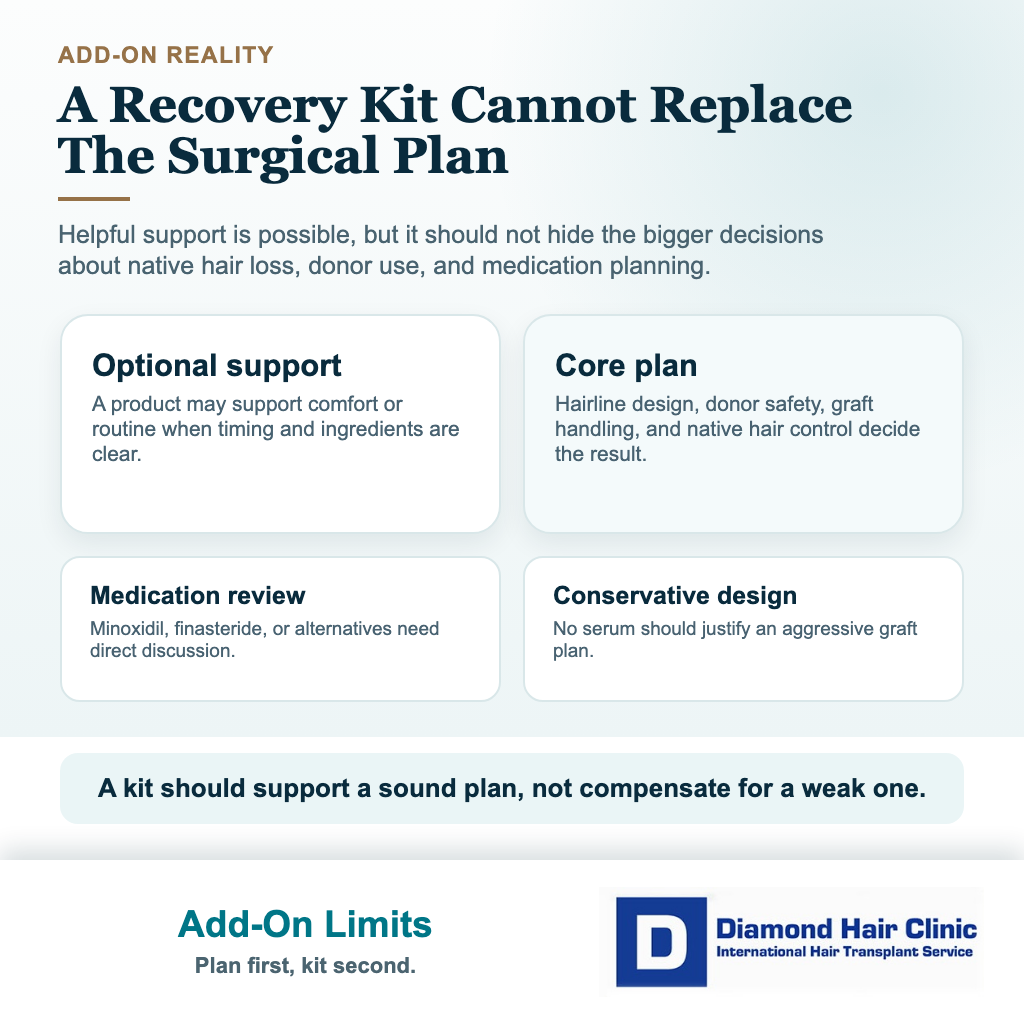
Medication planning still has to answer whether minoxidil after a hair transplant has a role, whether finasteride or dutasteride is appropriate, or whether the patient cannot tolerate those options. Topical finasteride before or after transplant surgery may sound more local, but it still needs medical history, side effect review, expectations, and follow up.
Mesotherapy can be discussed as support in selected cases, but it should not be used to avoid the harder conversation. If you are young, losing native hair quickly, or already have crown and middle scalp thinning, the plan has to deal with donor management and medical stabilization. Selling a kit while avoiding the native hair loss question leaves the main risk untouched.
Scalp roller is a separate medical question
A bottle alone and a bottle with a roller are not the same plan. Rolling or needling the scalp creates small skin injuries. Early after a hair transplant, the recipient area may still be sensitive, pink, crusted, itchy, or inflamed. Aggressive rolling can irritate the skin, disturb healing, and introduce contamination if the device is not sterile.
I separate mesotherapy serum from microneedling after a hair transplant. A roller is not just a delivery tool. The scalp experiences it as a mechanical intervention. The safe timing depends on healing, skin condition, density of the transplanted area, and whether there is redness, pimples, or tenderness.
A sterile, single use device used under medical supervision is very different from a home roller that is reused, shared, stored in a bathroom, cleaned poorly, or pressed too hard. A roller should not be treated as a casual way to push cosmetic serums or medications into healing skin. When a clinic gives a roller after surgery, the instructions need to state why it is needed, when it can start, what pressure is safe, how it should be cleaned or replaced, and which warning signs mean it should stop. Vague instructions are a reason to keep the device away from a healing recipient area.
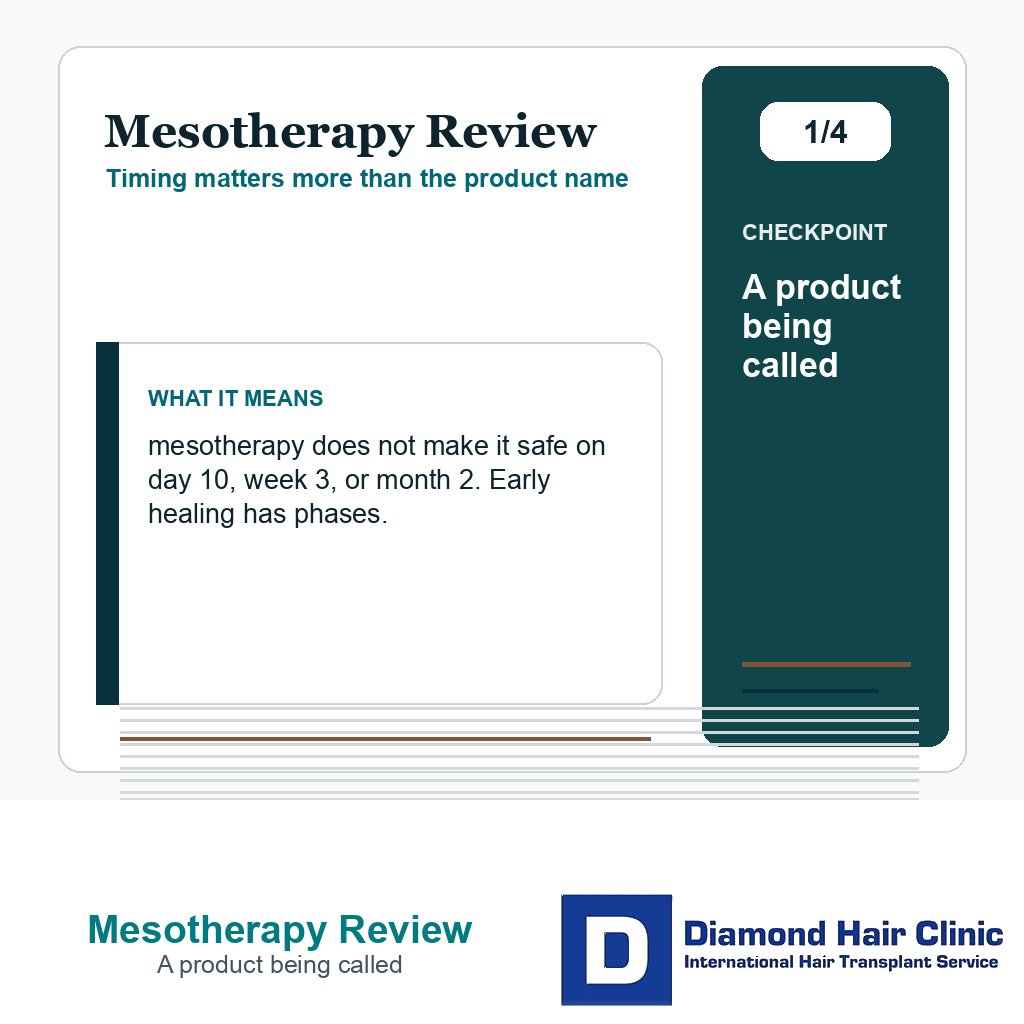
Timing matters more than the product name
Calling the treatment mesotherapy does not make it safe just because it appears on a package schedule. Early healing has phases. The grafts become more secure, crusts clear, skin redness settles, and the scalp gradually tolerates normal washing and products again. If the scalp is still sore, inflamed, scabby, or infected, adding a serum, roller, or injection can make the situation harder to interpret and harder to treat.
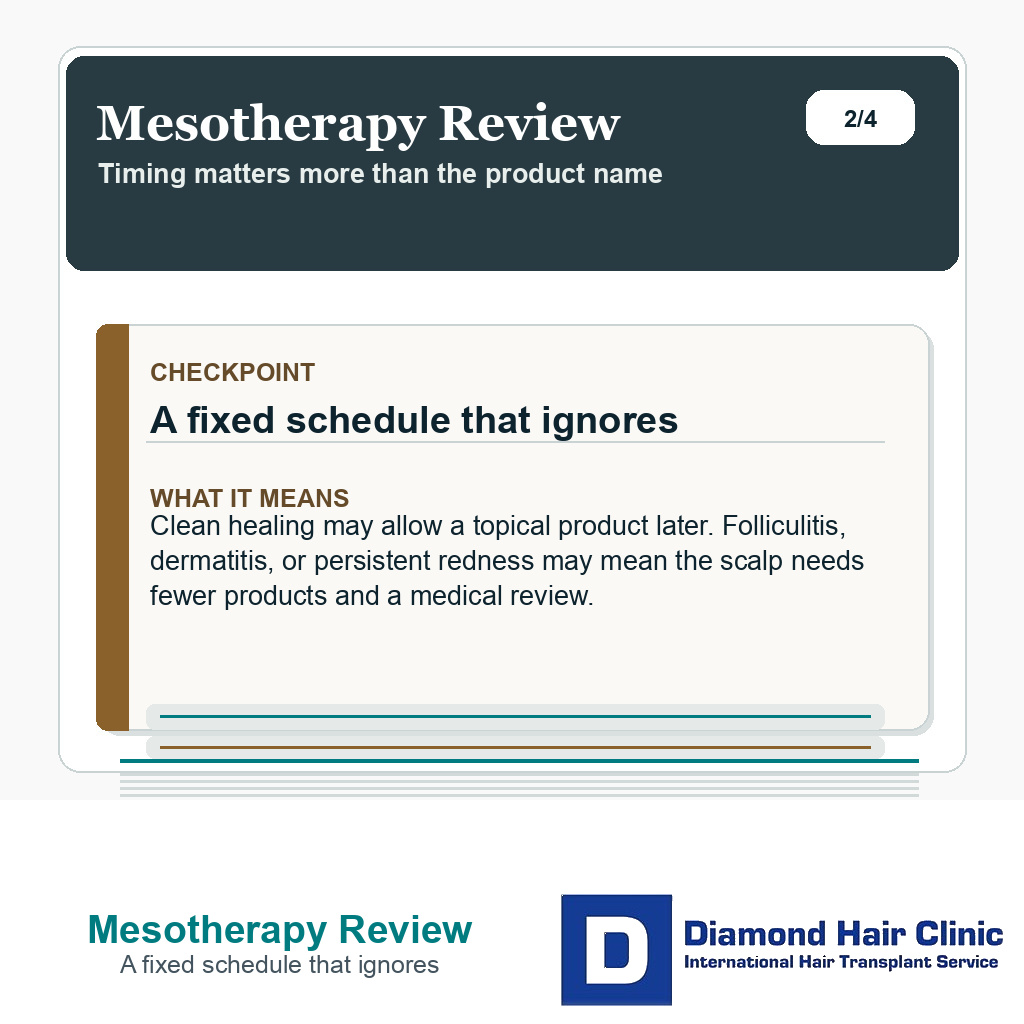
A fixed schedule that ignores the skin is poor planning. Clean healing may allow a topical product later. Folliculitis, dermatitis, or persistent redness may mean the scalp needs fewer products and a medical review. With folliculitis and hair transplant surgery, pimples, pustules, and inflammation should not be covered up with extra cosmetic treatments.
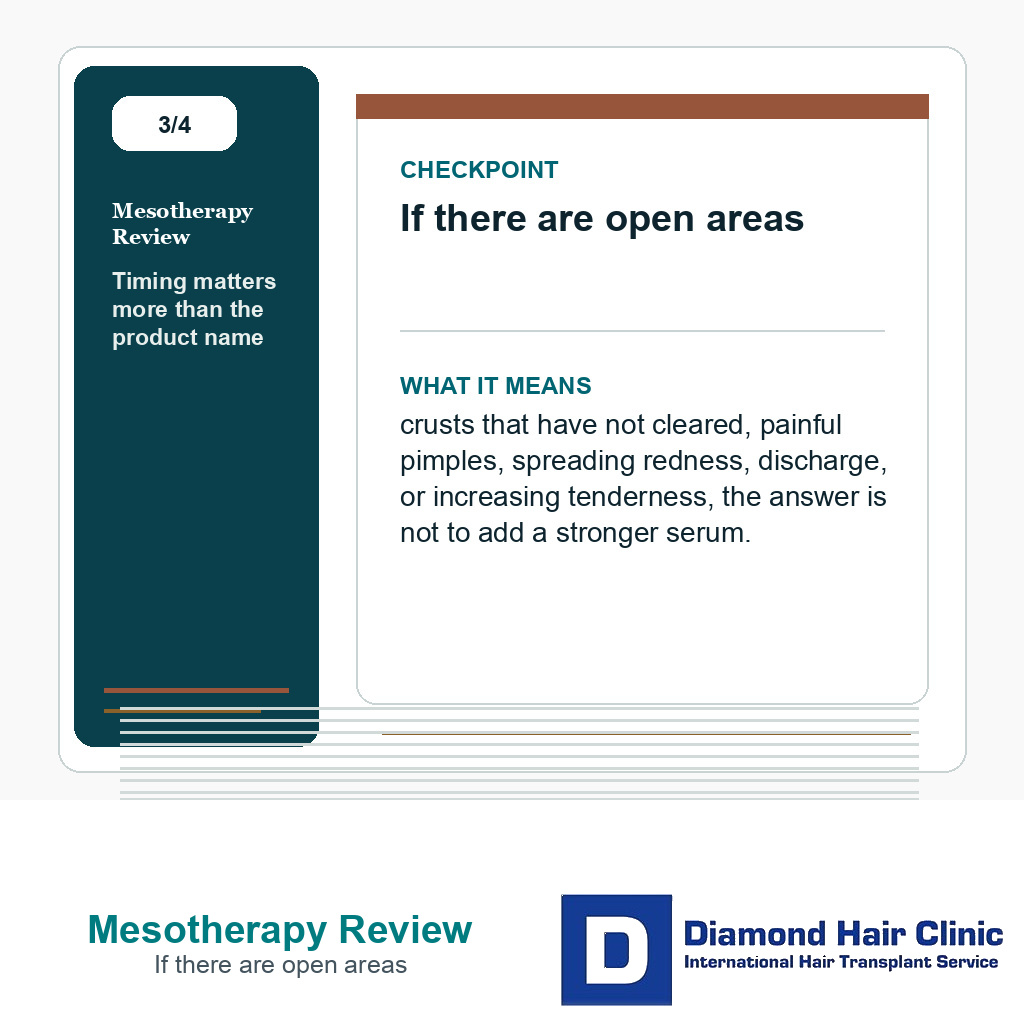
If there are open areas, crusts that have not cleared, painful pimples, spreading redness, discharge, or increasing tenderness, the answer is not to add a stronger serum. Stop extra scalp products and contact the clinic with recent photos before anything is injected, rolled, or rubbed into the area.
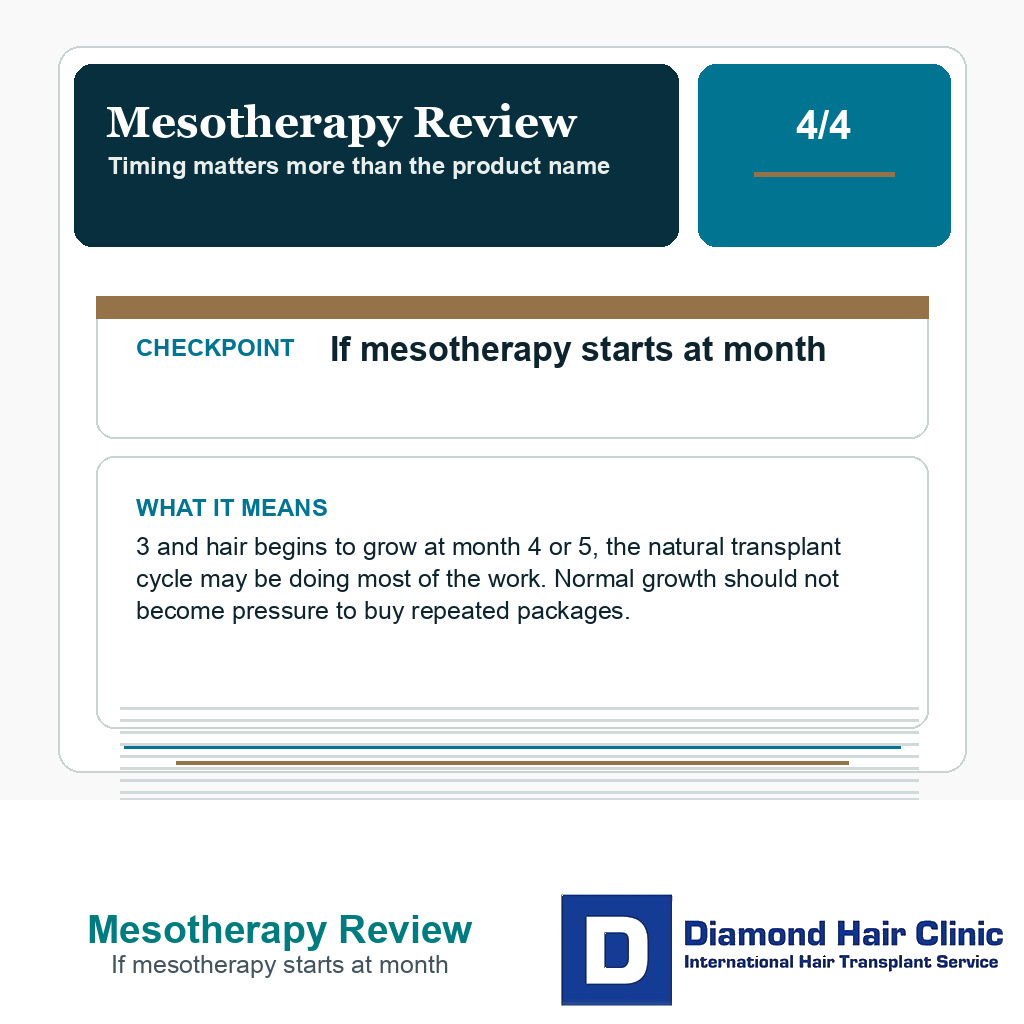
Timing also matters because of expectation. If mesotherapy starts at month 3 and hair begins to grow at month 4 or 5, the natural transplant cycle may be doing most of the work. Normal growth should not become pressure to buy repeated packages.
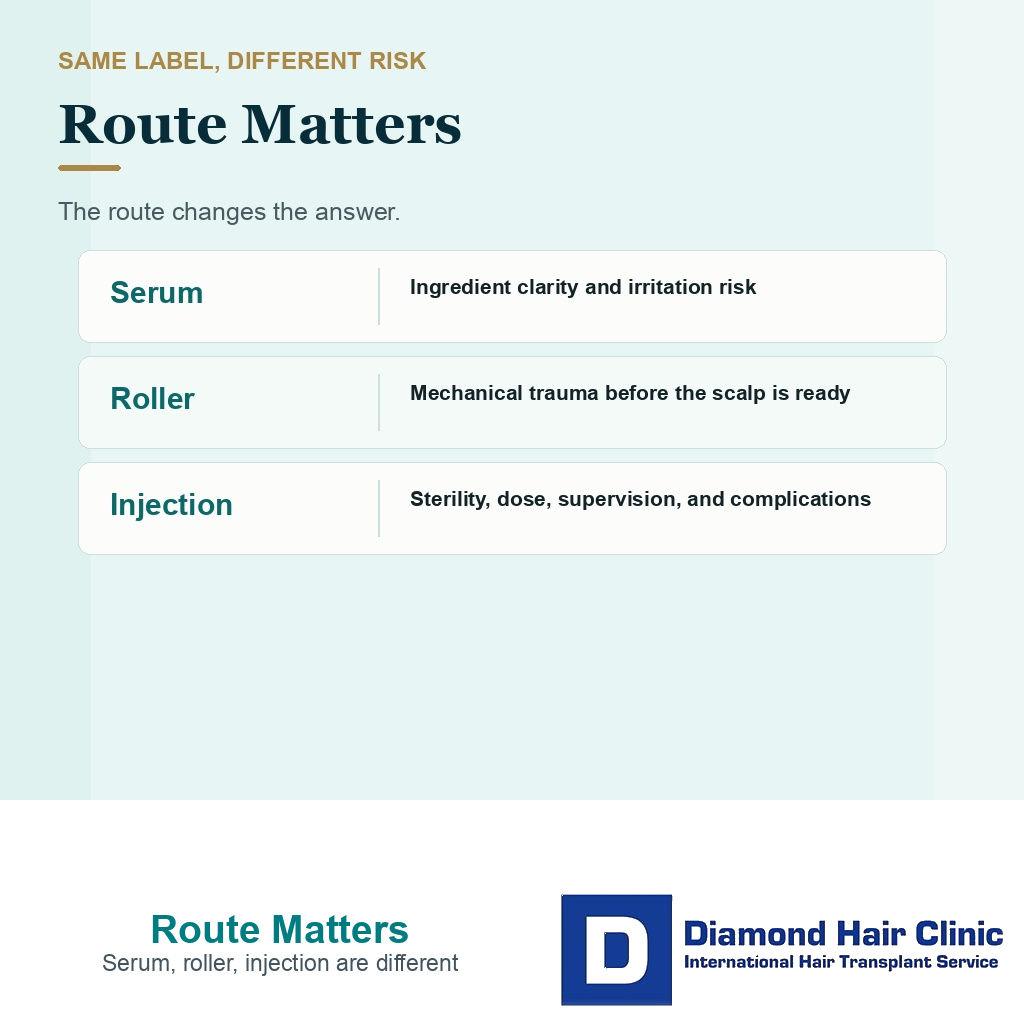
A serum, a roller, and an injection create different scalp risks, especially while the recipient area is healing.
These 4 slides help separate marketing claims from real recovery decisions around mesotherapy kits. Swipe sideways, use the arrows, or choose a number below the image.
If mesotherapy or a roller was used too early
If you already applied a serum, used a roller, or had injections earlier than advised, stop the extra treatment for now and do not scrub the scalp to undo it. Check for fresh bleeding, new pain, discharge, spreading redness, increased swelling, open skin, stuck residue, fever, or graft material on the fingers or device. If anything looks different, share clear photos with the clinic with the exact product, timing, and how it was applied. Keep the bottle, box, or device until the clinic has reviewed the situation.
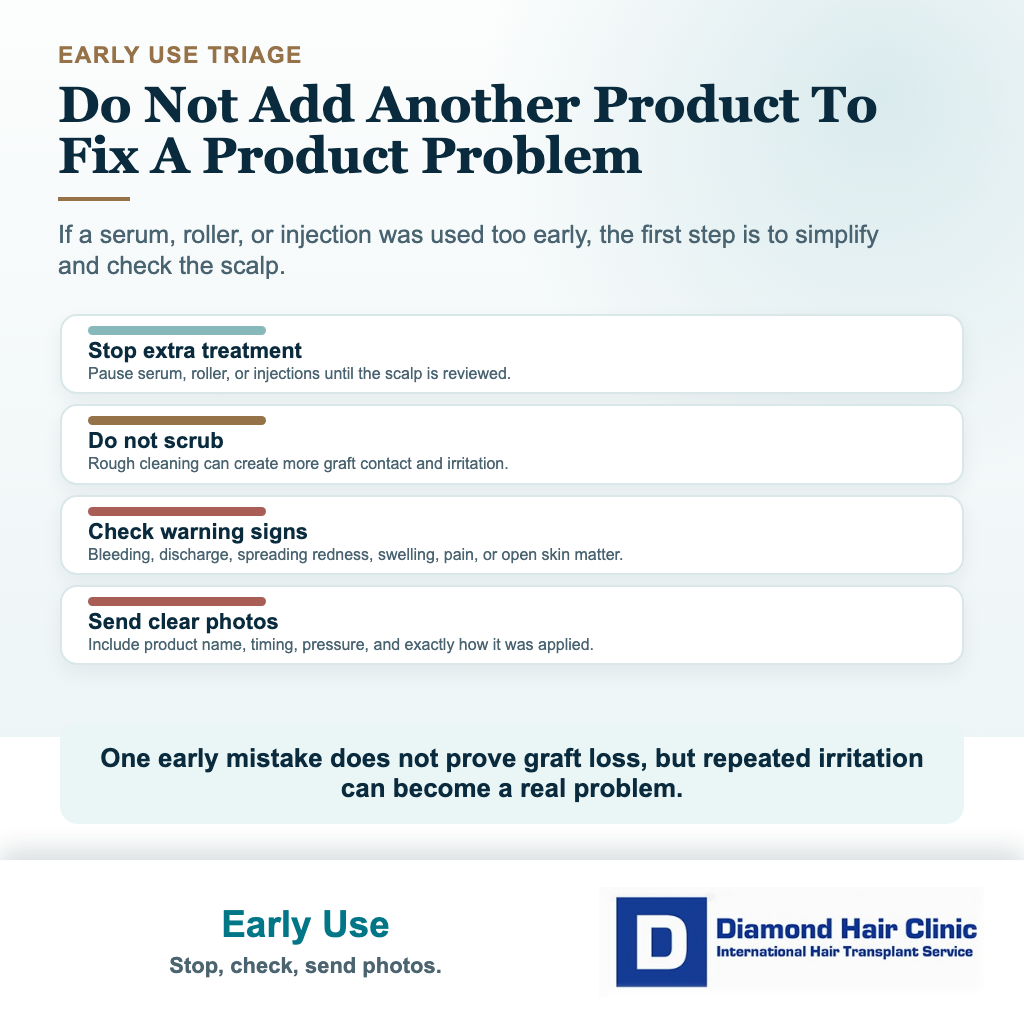
A single early mistake does not mean the transplant is lost, but repeated rubbing, rolling, or injecting into irritated skin can create a real problem. If graft contact or rubbing is the concern, use the warning signs from touching grafts after a hair transplant. Until the scalp is reviewed, keep the routine simple and avoid adding another product to calm irritation caused by the first one.
Injection and scalp treatment risks
Treat injected mesotherapy more seriously than a cosmetic bottle. Once a treatment pierces the scalp, sterility, ingredients, dose, medical supervision, allergy risk, bleeding tendency, infection risk, and the qualification of the person performing it all matter. Home injection or unsupervised needle use should not be treated as aftercare. Rare complications have been reported with mesotherapy used for hair loss, including inflammatory damage and scarring at injection sites.
This does not mean every injection is dangerous. It means vague answers are not acceptable. If the clinic cannot name the ingredients, cannot explain why that formula is chosen, or cannot describe what complications to watch for, the treatment should not be presented as routine. The scalp after surgery deserves more respect than a sales package.
Extra caution is needed if you have psoriasis, eczema, seborrheic dermatitis, folliculitis, diabetes, immune suppressing medication, blood thinners, or a history of abnormal scarring. In those cases, possible hair support is only one part of the decision. The first issue is whether the scalp and medical history make extra punctures or products sensible.
PRP, exosomes, and light therapy need separate decisions
Patients often hear about several extras at the same time, such as mesotherapy, PRP, exosomes, laser caps, vitamins, and special shampoos. These do not belong in one vague recovery package. Each has a different proposed mechanism, cost, evidence level, timing issue, and risk profile.
I discuss PRP and exosomes after hair transplant separately because platelet based and biologic extras are not the same as injecting a mixed mesotherapy formula. I also separate red light therapy after hair transplant because light devices create a different timing and skin sensitivity question. Even vitamins after hair transplant depend on deficiency and diet, not fear.
When a clinic bundles many extras together, you may feel that refusing them means refusing proper medical planning. I do not frame it that way. A transplant plan should explain which parts are essential, which are optional, which belong only in narrow situations, and which are mainly commercial. Optional support should remain optional.
A prepaid session can still wait if the scalp is irritated, punctured, swollen, or medically unclear after surgery. Payment status does not make the scalp ready for an extra session.
How I separate an aid from a sales package?
Before mesotherapy is added after surgery, I want the ingredient list, timing, sterile preparation, person performing it, side effect plan, and follow-up responsibility to be clear enough for the patient to repeat back.
The claim has to stay narrow. Scalp comfort, temporary support, native hair quality, and transplant growth are not the same promise. If a kit is sold as insurance for graft survival, the language is already too large.
For an international patient, the practical question is also aftercare. If redness, pimples, irritation, swelling, or fear appears after travel, the clinic must still be able to explain what to stop, what to continue, and when the scalp needs medical review.
Questions before paying for a package
Start with what the treatment contains. A label such as growth serum, mesotherapy, or booster is not enough. You need to know whether it includes minoxidil, finasteride, dutasteride, peptides, vitamins, anesthetic agents, ingredients for inflammation, alcohol, fragrance, preservatives, or a compounded formula. If the answer is unclear, keep the product away from a healing scalp.
Then clarify who gives it, where it is prepared, whether it is sterile, when it starts, how many sessions are planned, what each session costs, and what side effects mean you should stop. Ask what the clinic expects it to do. Reducing shedding, thickening native hair, supporting scalp health, replacing medication, and improving transplant growth are different claims. They need separate explanations.
The clinic should also explain what happens if you decline it. A claim that the transplant will fail without the package needs a proper clinical explanation. If the treatment is important for your case, the reasoning should be medical, not emotional. If it is optional, that should be said plainly.
Extra treatments should not hide donor or graft problems
Mesotherapy, PRP, exosomes, PRF, or light devices should not be used to distract from a weak donor plan, an unrealistic graft number, visible placement concerns, or a crown plan that was never defined clearly. If the transplant plan is unsafe, an extra product does not make it safe.
Before I discuss supportive treatments, I want the main operation to stand on its own logic. The donor reserve, treated zones, graft range, hairline design, and recovery plan should make sense before any package item is added around them.
Kits and needles should not outrank graft healing
I first decide whether the surgical plan is strong without the extra. The hairline should be appropriate for the patient age, donor use should be conservative, graft numbers should match the area, and future native hair loss should be part of the design. No serum should be used to justify an aggressive plan.
If you are likely to need medical support, recognized options need a clear discussion rather than being hidden behind a kit. If you cannot take finasteride, have irritation from topical products, or feel anxious about minoxidil shedding, that needs a direct medication conversation. A mesotherapy package may still be considered later, but it should not replace the central plan.
The decision also depends on follow up. If you will travel home after surgery, the clinic should not leave you dependent on unclear products you cannot identify, replace, or use safely. Ask whether the clinic can support questions from abroad if irritation, pimples, redness, or uncertainty appears after you start the product. A simple, understandable aftercare plan is often safer than a complicated package that creates anxiety every time the scalp looks different.
Mesotherapy after hair transplant surgery may be considered, but it is not necessary by default. A clinic is not better only because it sells a serum kit, and a patient is not careless because they decline one. The decision should rest on ingredients, timing, scalp condition, evidence, cost, and whether the treatment fits the long term hair loss plan.
If the scalp is healing well and the product is clear, supervised, and optional, the discussion can stay practical. If the product is vague, expensive, pushed with fear, used with a roller too early, or presented as a substitute for proper medical planning, the offer deserves scrutiny. You should never feel that transplanted grafts depend on buying a bottle you do not understand.
A plan after transplant is not built from extras. It is built from careful surgery, clean hair transplant aftercare, realistic growth expectations, and clear follow up. Mesotherapy can only be judged after those basics are already protected.

Read this review excerpt
He was very thorough in every little detail and I never felt pressure to do anything I wasn’t sure of.