


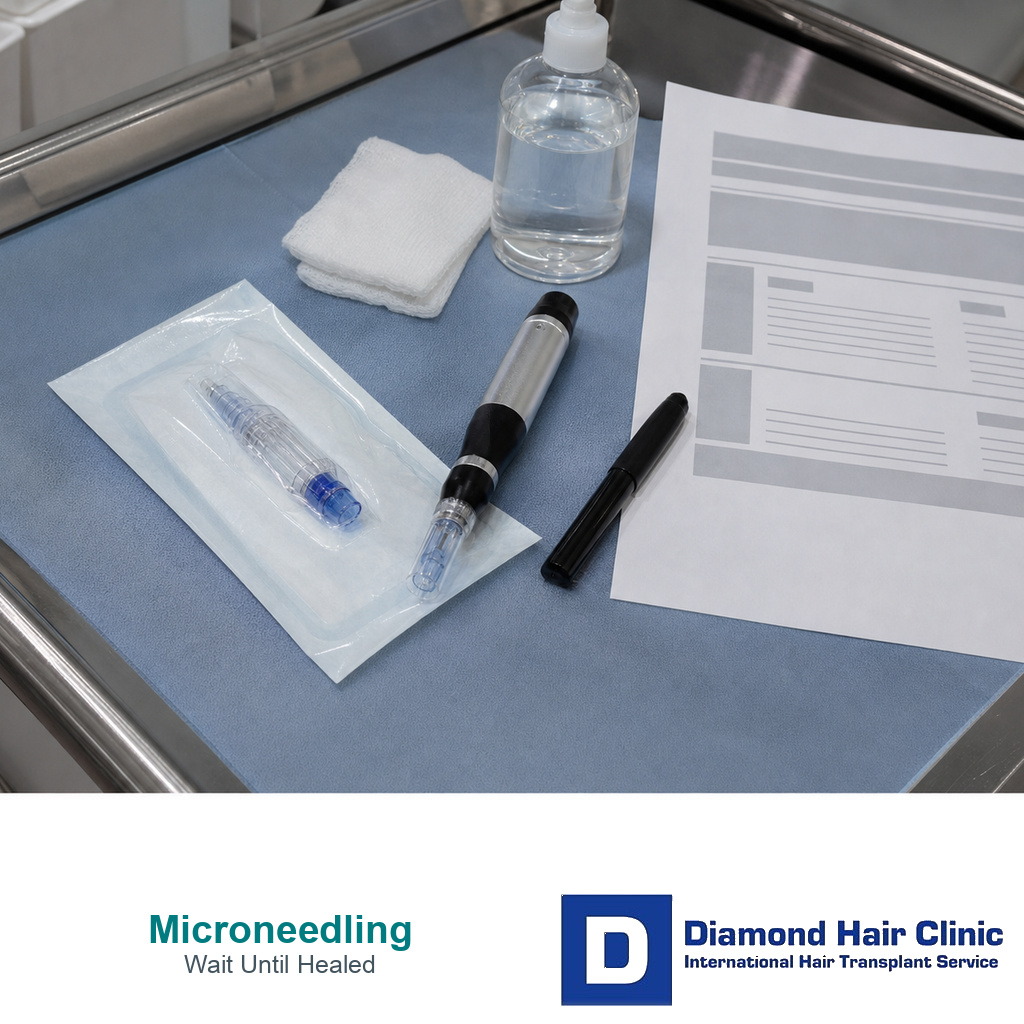
Microneedling Timing During Scalp Recovery
For the transplanted recipient area, I do not allow microneedling for at least 6 months after a hair transplant. Even after 6 months, the scalp should be examined before a patient restarts. If the area was not transplanted, the conversation may reopen earlier, usually after 3 months, but only if the scalp is fully settled and the needling stays away from the grafted zone.
Microneedling creates controlled injury. The recipient area has already been injured in a precise surgical way during the transplant. Adding more trauma too early is poor recovery judgment, not a stronger treatment plan. It can increase redness, bleeding, tenderness, infection risk, and anxiety without improving the surgical result.
Microneedling can sometimes return, but timing matters. The decision depends on whether the skin has recovered enough, whether there is a clear reason to use it, and whether the patient understands where, how deep, and how often it should be done.
Do not restart with a needle length or frequency just because it sounded harmless. The decision changes when the area is grafted, pink, irritated, scarred, or mixed with fragile native hair.
A paid roller, pen, or serum package should not move the healing boundary earlier. The question is whether the grafted skin is ready, not whether the product is being offered.
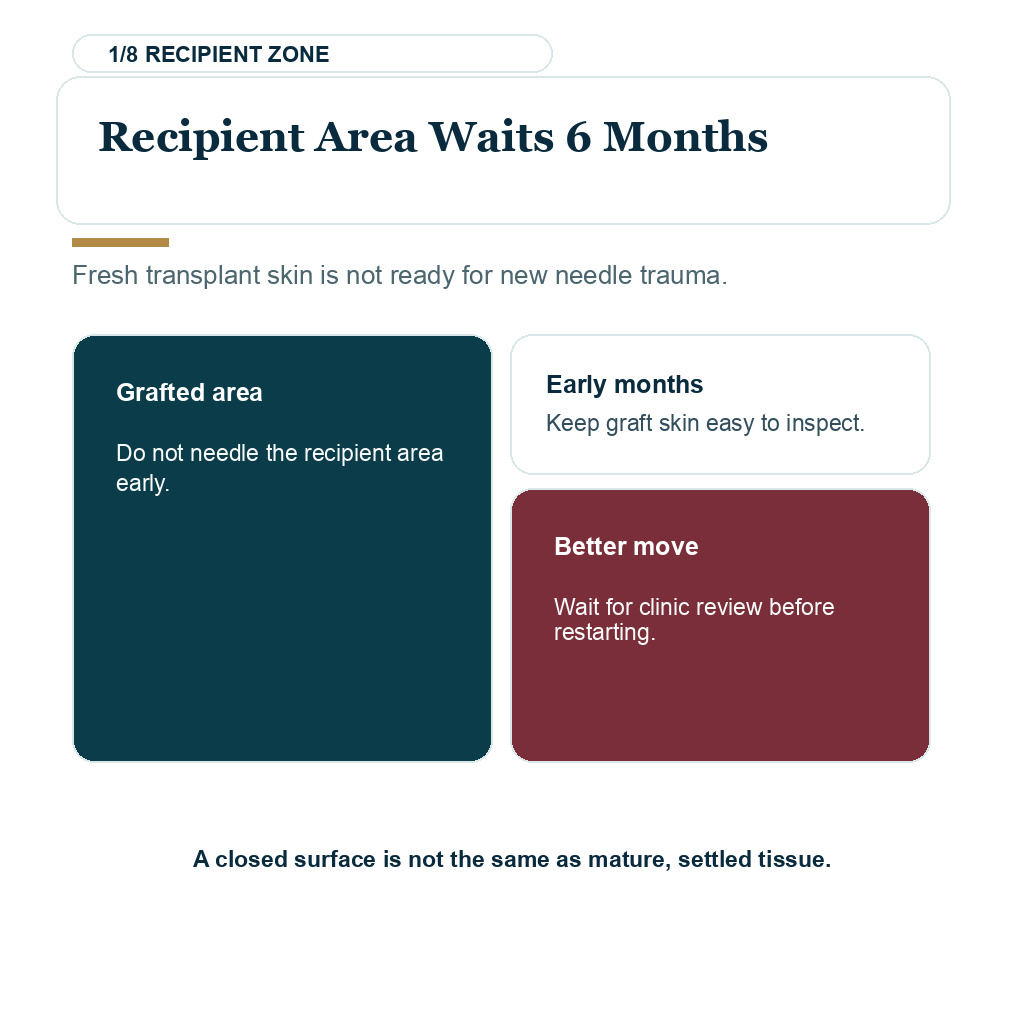
Recipient area microneedling waits 6 months
The recipient area needs time to move from early healing to stronger tissue stability. In the first weeks, the skin is closing, scabs are clearing, inflammation is settling, and the patient is learning not to touch or rub the grafts. This is still part of hair transplant aftercare, not a time to add new procedures. In the following months, the scalp may still be pink, sensitive, numb, tight, or reactive.
Microneedling adds thousands of new needle injuries. That may be useful in selected native hair routines, but it does not belong over a transplanted area while the scalp is still recovering from surgery.
Microneedling can also confuse the result. If redness, bumps, shedding, or irritation appears after needling, the patient may think the transplant is failing when the real issue is inflammation created by the needling itself. Mark the recipient and donor boundaries before using the device, because a pen can drift from native scalp into healing skin.
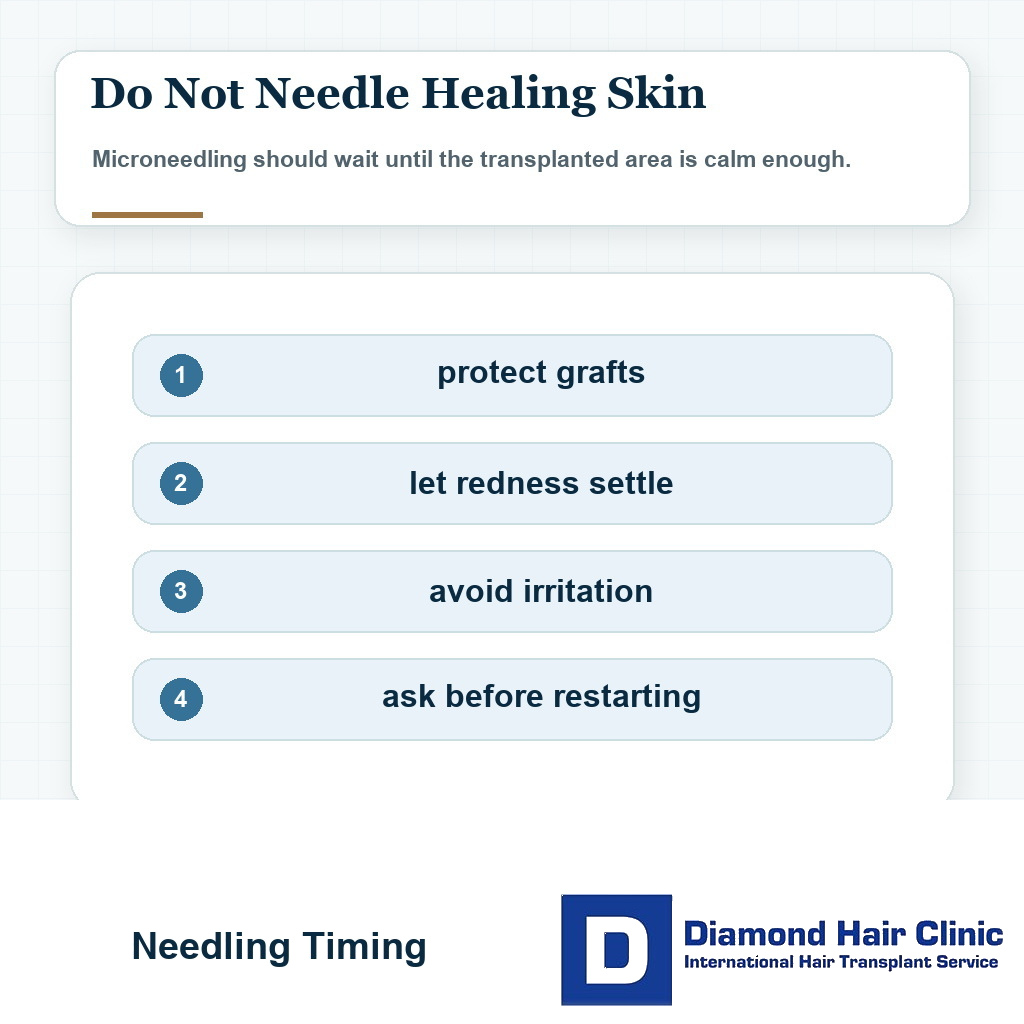
Recipient area versus native scalp
The recipient area is where grafts were placed. That zone deserves the most protection. Untouched native scalp is different, but it is still close enough that a roller or pen can easily drift into the grafted area if the plan is vague.
If a patient wants to microneedle a crown that was not touched, or a separate thinning area far away from the transplant, I may discuss it after 3 months if the scalp is settled. But I still want clear boundaries. A vague plan can easily become an aggressive routine that touches the recipient area.
A home roller or pen needs a clear boundary so it cannot drift into grafted, crusted, red, or irritated skin.
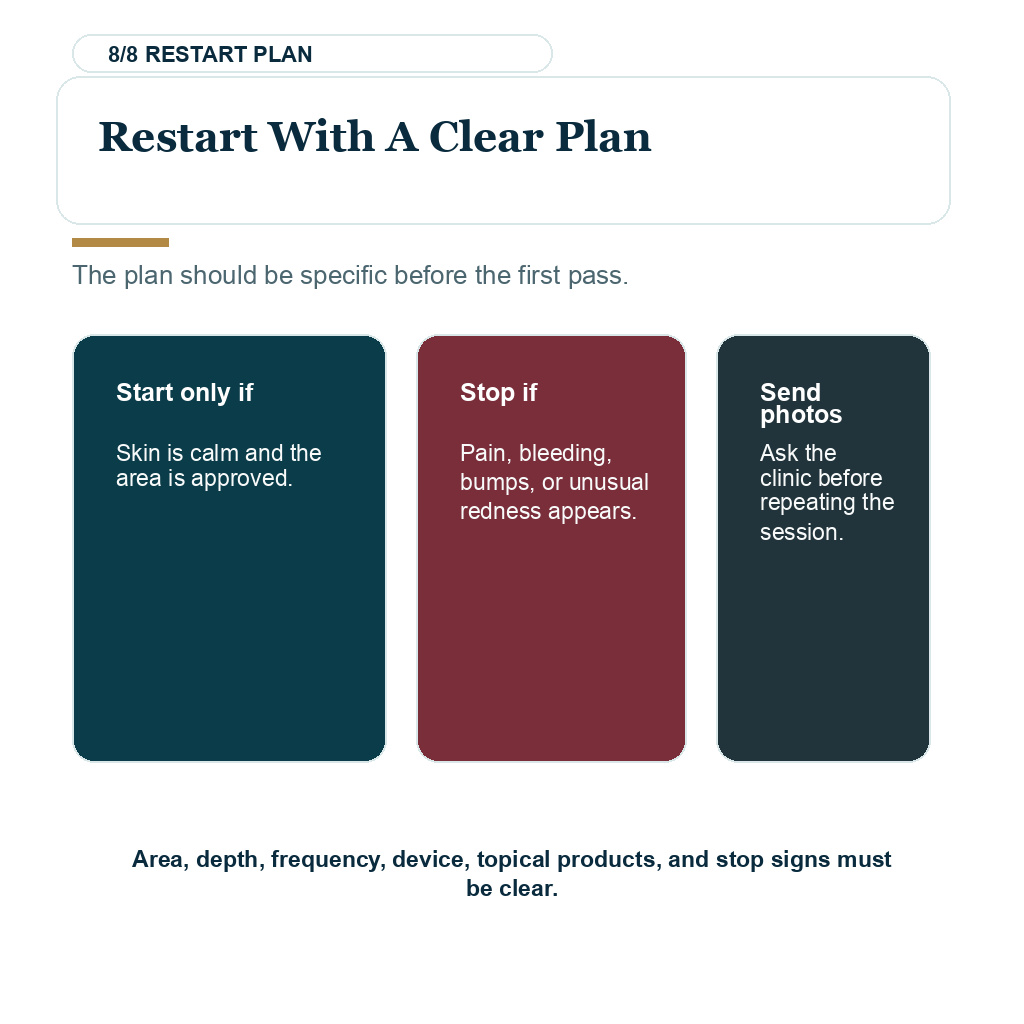
If I approve microneedling, the instruction must be specific. The area, depth, frequency, device, and stop signs must be clear before needling restarts.
Microneedling and native hair
Microneedling may have a place in some native hair treatment plans, often alongside medication such as minoxidil. It creates tiny injuries that may increase local healing signals and may help some topical treatments penetrate better. I would not conclude that it should be used over fresh grafts. If needling is being offered inside a mesotherapy kit after transplant surgery, the timing and scalp boundaries should be even clearer. If needling is added while medication or shampoo is also changing, too many treatments after FUE can make irritation look like a graft problem.
Supporting native hair and protecting a scalp after surgery are different conversations. If the patient’s native hair is still thinning, I usually focus first on diagnosis, medication discussion, and long term planning. Microneedling should not distract from the bigger question of whether the hair loss pattern is stable.
If the patient is also considering minoxidil after a hair transplant, timing matters. Treatment related shedding can already create anxiety when someone plans a hair transplant during a minoxidil shed. Adding needles too early can make that anxiety worse.
Healed skin is not mature skin
A scalp can look healed on the surface before the deeper tissue has fully settled. The grafts may be secure while the skin still needs time to regain comfort, normal sensation, and tolerance to minor trauma.
I do not decide from appearance alone. A scalp that looks closed at 3 weeks is not necessarily ready for needling. A scalp that looks quiet at 3 months may still need a conservative plan if the patient wants to treat the recipient area.
Healed skin means the surface has closed. Mature skin means the tissue behaves more normally again. Microneedling belongs closer to the second stage, especially in a transplanted zone.
Needle depth, frequency, and risk
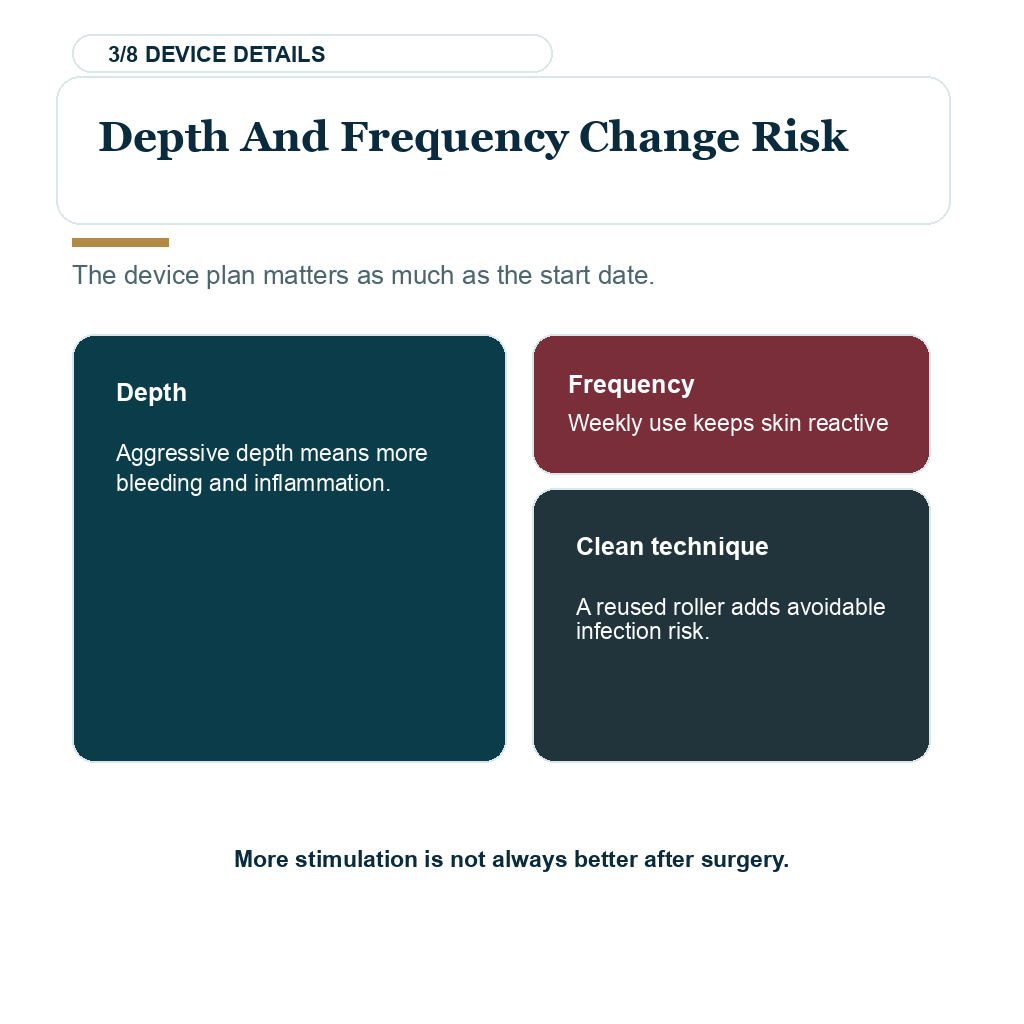
This is not only about when to start. It is also how deep, how often, what device is used, and how much pressure the patient applies. One cautious, controlled treatment on an untouched native area later in recovery is a very different decision from weekly 1 mm or 1.5 mm rolling over the hairline and then applying minoxidil while the skin is still red.
A shallow professional treatment performed after healing is not the same as an aggressive home roller used every few days. A sterile, controlled device is also different from a reused roller that is pressed hard into the scalp. Deeper needling creates more bleeding and more inflammation. In a recent transplant area, that matters.
If microneedling later becomes appropriate, the plan should stay conservative. Low frequency, controlled depth, clean technique, and stopping when the scalp reacts matter more than trying to stimulate the scalp as much as possible. More stimulation is not always better.
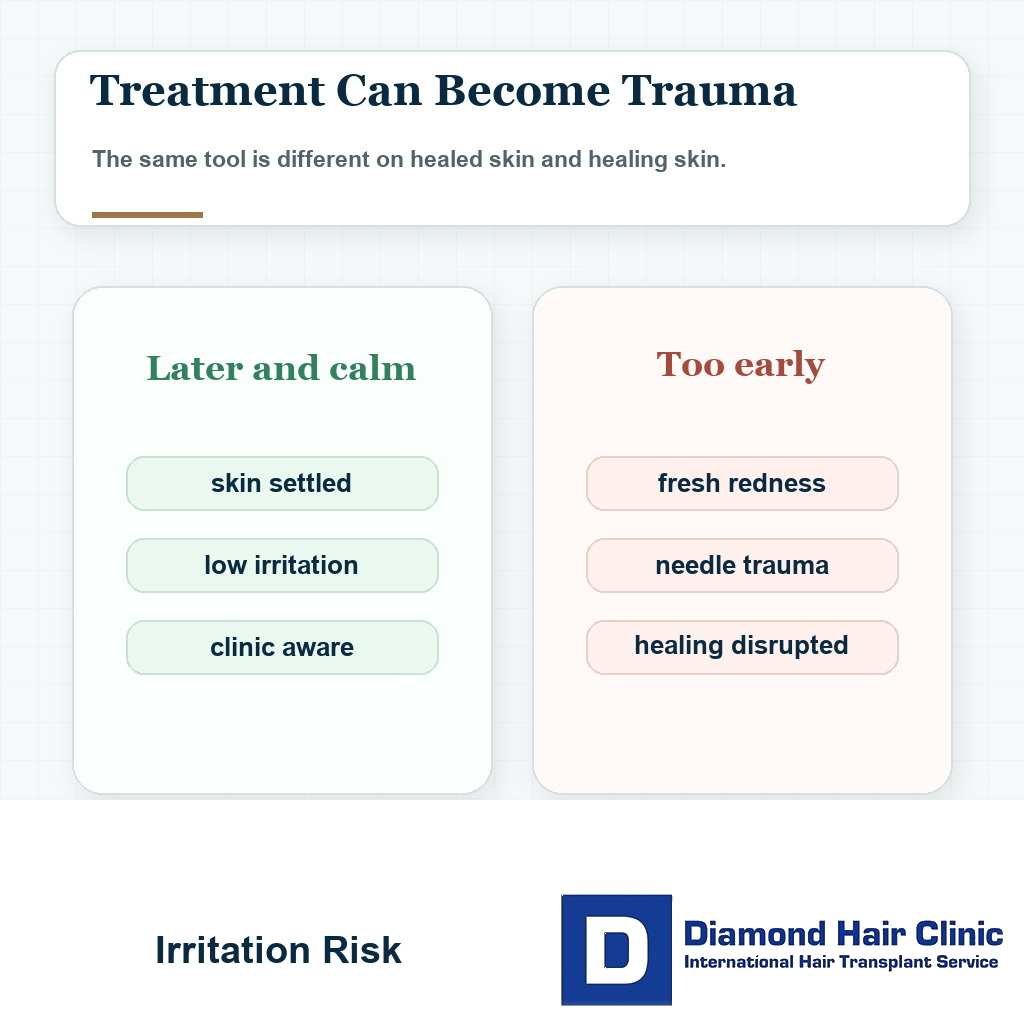
Patients who need extra caution
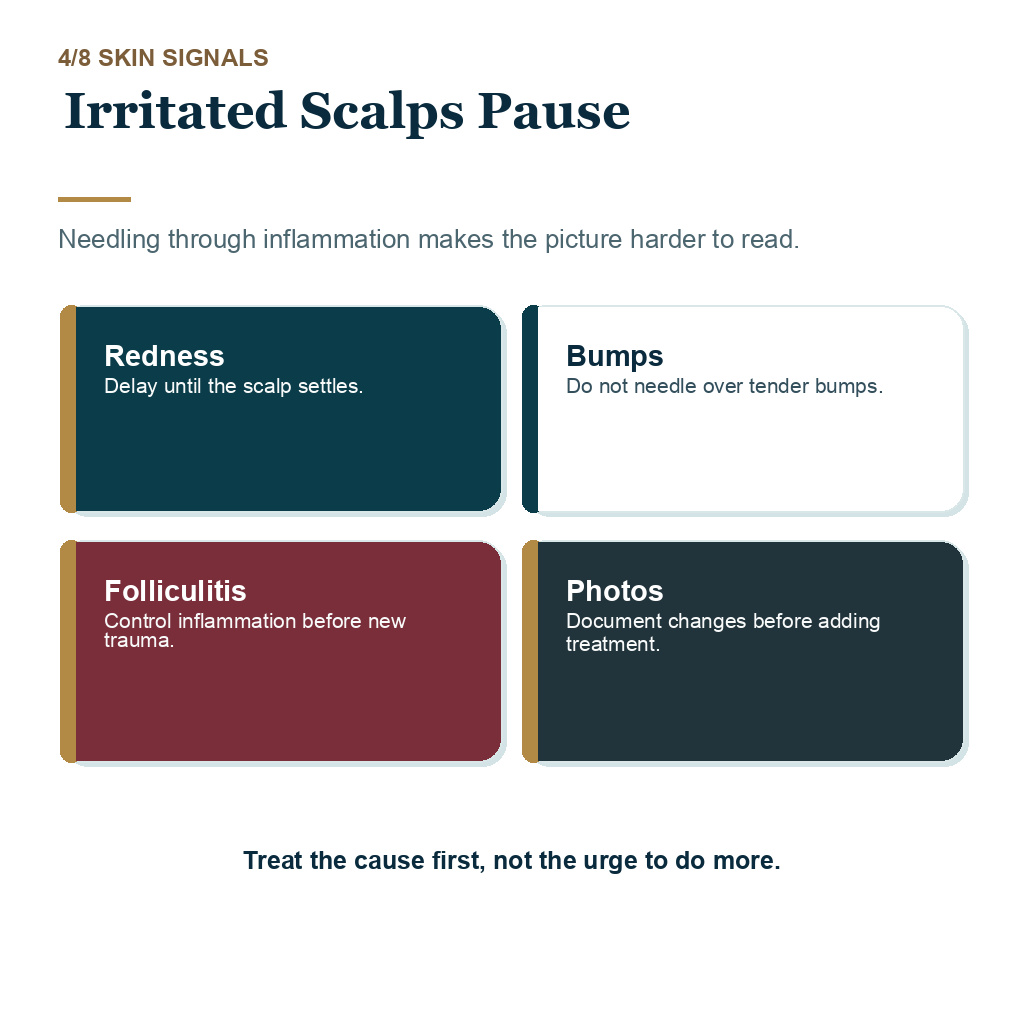
Patients with folliculitis, psoriasis, seborrheic dermatitis, keloid tendency, diabetes, slow healing, strong redness, active bumps, or a habit of over treating the scalp need extra caution. Microneedling in an irritated scalp can make the problem worse.
If bumps or ridges are already present, do not treat them blindly with needles. Needling over bumps or ridges after a hair transplant can make the cause harder to understand.
This also matters for folliculitis. If the scalp has painful bumps, pustules, or recurrent inflammation, the answer is not to needle through it. In folliculitis and hair transplant planning, active inflammation should be controlled before more trauma is added.
Microneedling is not a rescue for slow growth
When growth feels slow, patients often search for something active to do. Microneedling can sound attractive because it feels like taking control. But slow growth in the first months is usually part of the normal transplant timeline, not proof that the scalp needs extra injury. I also separate microneedling from red light, PRP, exosomes, minoxidil, and other add on treatments. Combining several new treatments during the same anxious month does not make the transplant safer or easier to judge. If the scalp reacts, it becomes harder to tell whether the issue came from needling, a product, a device, or the normal growth cycle.
If graft placement was good and healing is normal, the best response may be patience, consistent photos, and medical review. Do not disturb a healthy recovery just because the mirror is not changing quickly enough.
Consistent monthly photos are a safer way to track hair transplant growth than trying to force progress with early needling.
Microneedling and shedding
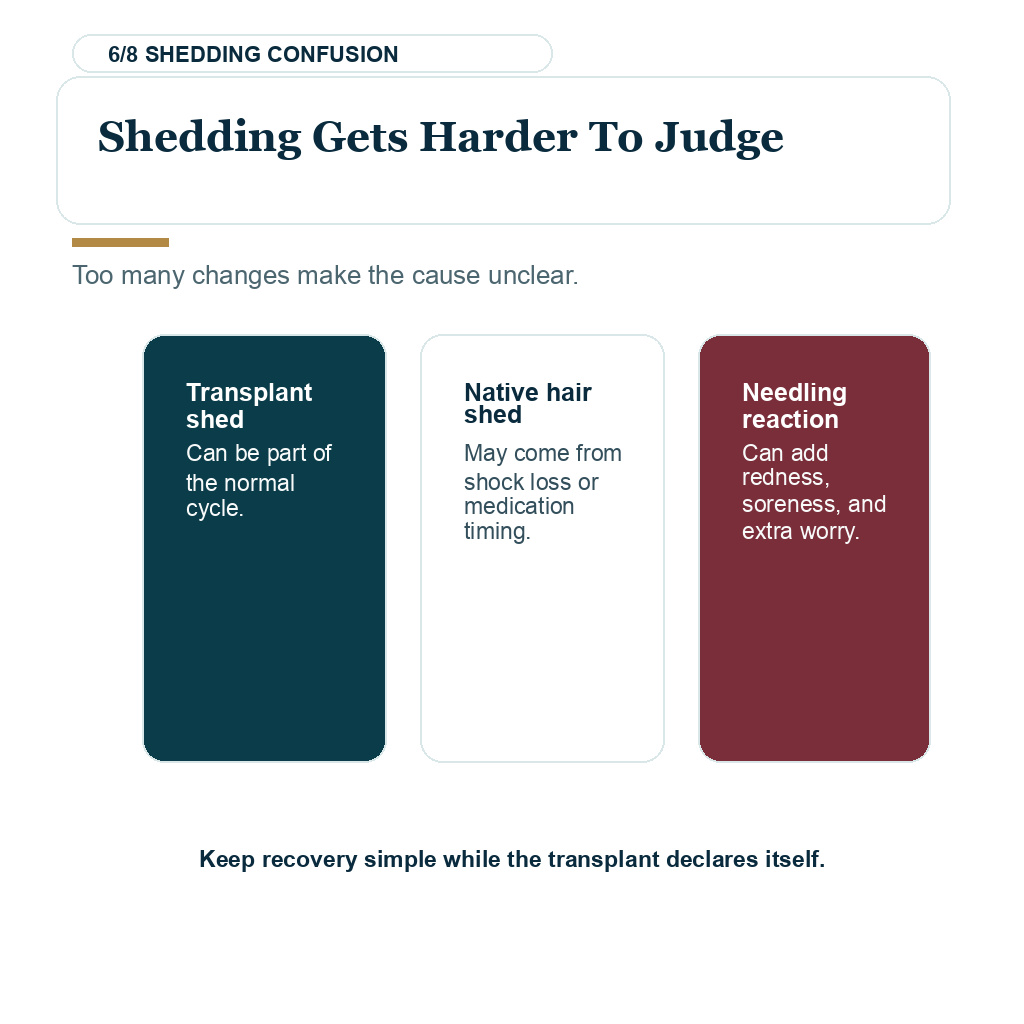
It can irritate the scalp and may trigger temporary shedding in some patients, especially if it is too aggressive, too frequent, or combined with topical treatments too soon. After a transplant, that can be very confusing because shedding already has several possible causes.
Transplanted hairs often shed as part of the normal cycle. Native hairs can sometimes shed from shock loss. Minoxidil can create a shed in some patients. If microneedling is added too early, it becomes harder to know what is happening.
In the early months, I usually prefer a simpler recovery. Microneedling is not a quick answer to month three or month four growth anxiety, even if red light, PRP, exosomes, minoxidil, or oils are being discussed at the same time. The fewer extra treatments we add, the easier it is to judge what the transplant itself is doing and what may be irritating the scalp.
Protecting patients who already microneedle
Some patients used microneedling before surgery and want to restart exactly the same routine afterward. I ask them to pause and reassess. A transplanted area is not the same as untouched scalp in the early months. Do not let a routine from before surgery restart automatically just because the device is already at home.
A routine used for microneedling before a hair transplant does not always continue after surgery. For a while, the scalp is not the same surface the patient was treating before, and the plan must respect that change.
If microneedling later becomes appropriate, the plan should be conservative and deliberate. Avoid active inflammation, avoid aggressive depth, and stop if the scalp becomes sore, unusually red, or develops bumps. After surgery, a familiar roller becomes a wound care question again, not just a habit to restart.
Microneedling around the hairline
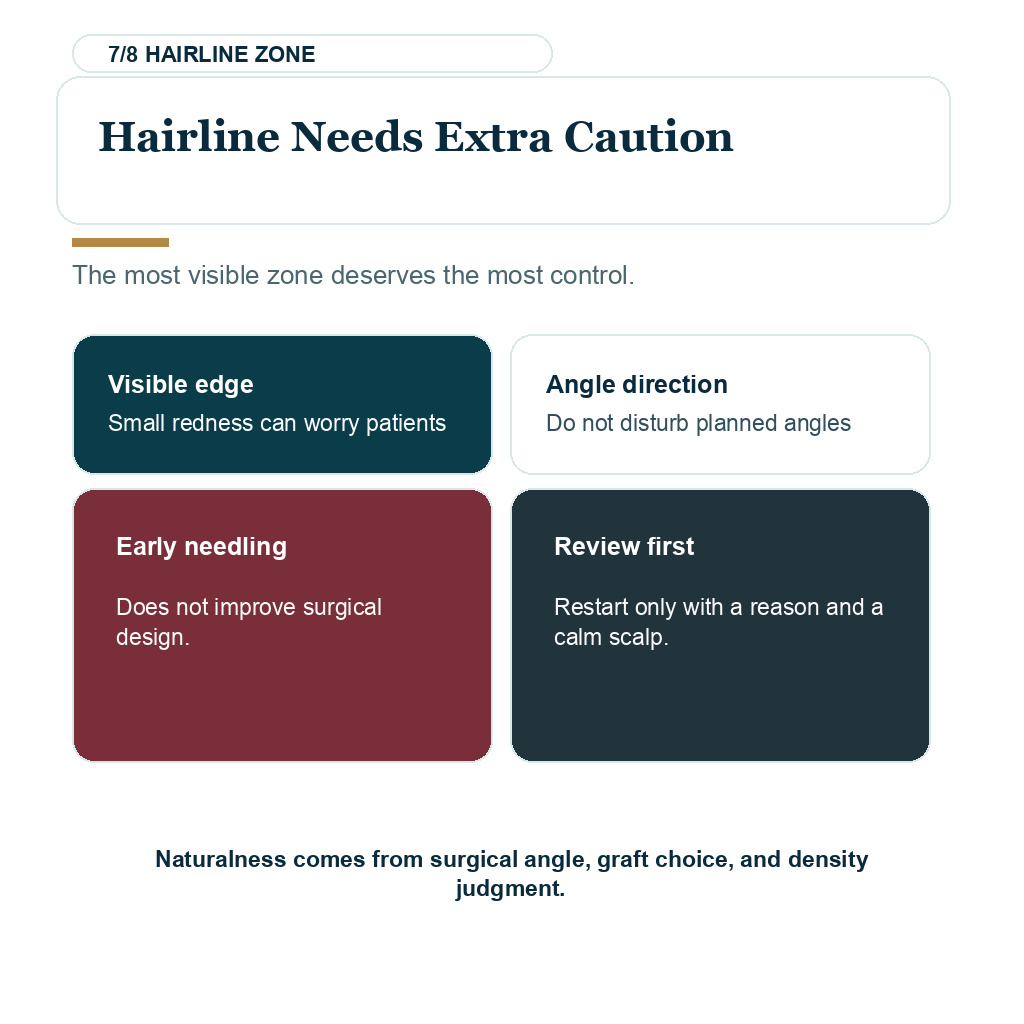
The hairline needs particular care. It is the most visible part of the transplant, and even small irritation, redness, scabbing, or uneven healing can make the patient anxious.
If grafts were placed in the hairline, I avoid needles in that zone for at least 6 months. Even after that, I would only consider it if there is a clear reason and the skin looks settled.
A natural hairline is created by surgical design, angle, direction, graft selection, and density judgment. It is not improved by early aggressive needling.
Use the 8 microneedling timing slides below to separate recipient area waiting time, native scalp boundaries, device depth, irritated scalp warnings, slow growth anxiety, shedding confusion, hairline caution, and the restart plan. Swipe the carousel, use the arrows one step at a time, or choose a number below the image to jump to that point.


If microneedling restarted too early
If you already microneedled too early, stop immediately and look at the scalp once, not every hour. If there is no bleeding, pain, spreading redness, swelling, discharge, or worsening tenderness, the main step may be observation and avoiding more trauma. Repeated checking can irritate the area again and make the anxiety worse.
If symptoms appear, contact the clinic. Do not continue because you feel embarrassed. Early contact is better than repeating the same mistake and creating more inflammation.
If minoxidil or another strong topical product was applied immediately after needling and the scalp is burning or irritated, I would usually pause and ask the clinic for instructions. The answer should be based on the skin reaction, not embarrassment or panic.
Checks before approving microneedling
Approval depends on timing, treated area, skin reaction, device depth, and the reason for needling. I check redness, bumps, scalp comfort, and the patient’s tendency to over treat before allowing it.

I also ask what device the patient wants to use, what depth, how often, and whether topical medication will be applied afterward. These details decide whether the plan is controlled or careless.
Microneedling is not a shortcut for poor graft planning, poor donor management, or unrealistic density expectations. If the transplant plan itself was weak, needles cannot correct that foundation.
Needling the donor should not be sold as a way to rebuild a donor area that was overused. It may be discussed for selected scalp or hair loss reasons after healing, but removed donor follicles are not returned by needling the skin. If the back and sides look depleted after FUE, the first review is the extraction pattern and remaining donor reserve, not a more aggressive needling routine.
Needles should wait for a settled scalp
For the recipient area, do not restart microneedling before six months. At that point, the scalp should be settled and comfortable and should be clinically reviewed rather than cleared simply because the surface looks healed.
An untouched native area may be discussed earlier, usually after 3 months, but only with clear boundaries. The area, depth, frequency, device, and topical products all matter. Do not needle through bumps, redness, tenderness, crusting, or folliculitis.
Most importantly, do not copy another patient’s routine. That person may have a different surgery, different skin, different medication plan, and a different reason for needling. A good result is protected by careful surgery, controlled healing, and a long term plan that does not keep provoking the scalp. In the early months, patience is often the safer treatment.

Read this review excerpt
First wash completed and visual instructions given to my daughter.