



Too Many Treatments Can Confuse Early Recovery
After FUE, a simple recovery routine is usually safer than adding new products, salon procedures, or extra scalp treatments too early. One product may be reasonable when there is a clear reason, but topical minoxidil, topical finasteride, ketoconazole shampoo, oils, supplements, PRP, and microneedling all started together can make redness, itching, shedding, and dryness harder to interpret. If the scalp looks greasy, first decide whether it is ordinary oily scalp after FUE or a real inflammation problem. Experimental products such as research topicals after FUE need an even slower plan, with one change at a time.
This is also how I treat hyperbaric oxygen after hair transplant. It may be discussed as support in selected cases, but it should not become another treatment added because the patient is afraid the grafts will fail.
I am not against treatment when it has a reason. I separate prescribed medicine that protects your general health, clinic aftercare that protects the grafts, and optional products that can usually wait. The first month after FUE is not the time to test every product that looks promising just because recovery feels uncertain. It is the time to let the graft area heal, protect the donor, and keep the routine simple enough that a reaction can be understood quickly. If a package bundles PRP, laser, and products, give each step a reason and a timing before it reaches healing skin. If a clinic expects months of paid PRP, light therapy, injections, or products after surgery, it should explain that schedule before you book. I want the written plan to separate early recovery care from optional support, state how long each item may continue, and name the review point for stopping it. The likely time and total cost should be clear before you choose the clinic, not after the transplant is finished.
When several add ons start together, the scalp has no clean baseline. If redness settles after three products are stopped, the lesson is still unclear. A slower sequence makes irritation easier to trace and keeps the early FUE routine from becoming a product test.
Which treatments should not be changed casually?
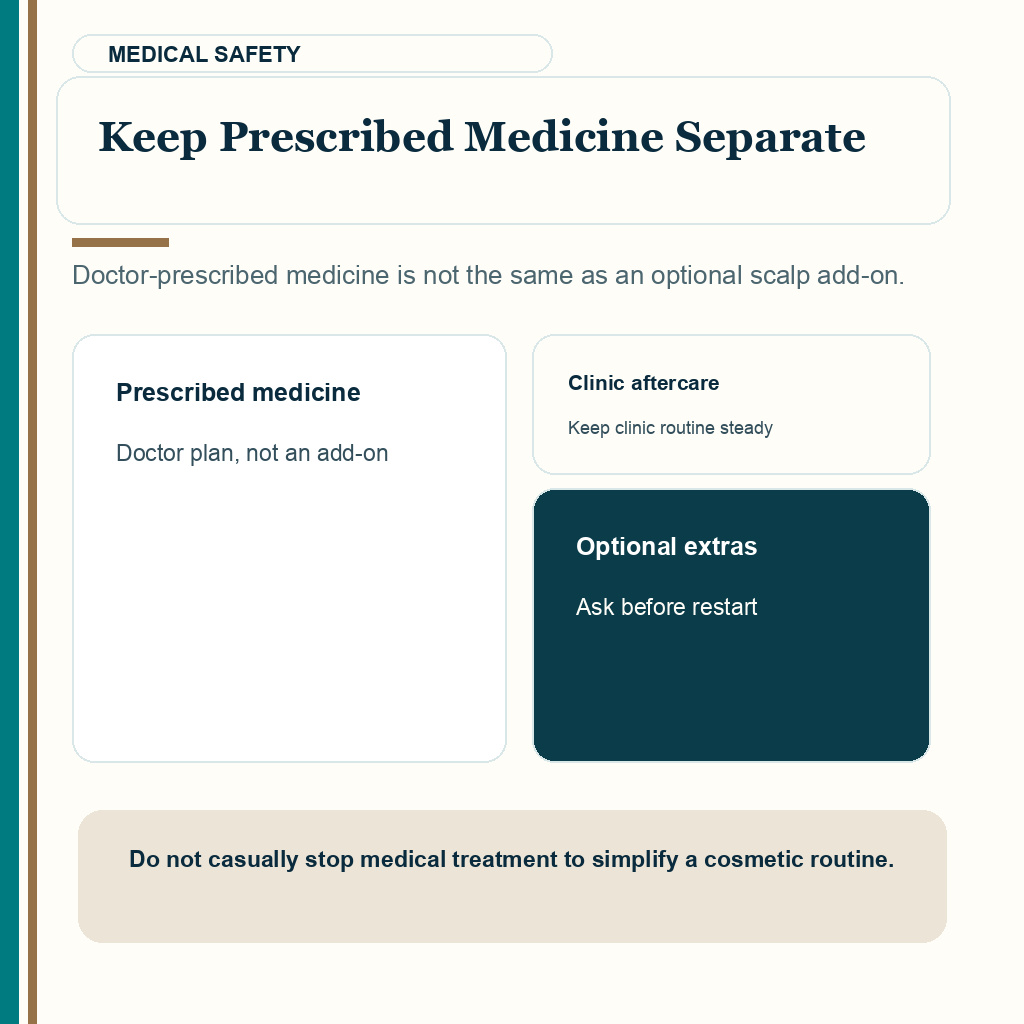
Here I mean optional extras patients often add themselves, including growth serums, oils, strong shampoos, supplements, PRP bookings, microneedling, or new topical formulas. It is not advice to stop antibiotics, pain medicine, blood pressure tablets, blood thinners, antidepressants, or any long-term treatment prescribed by a doctor.
If a medicine was prescribed for a medical reason, the plan should be changed by the doctor who understands that reason. Optional scalp products are different. They can usually be paused, delayed, or introduced slowly so the clinic can see what the scalp is reacting to. A new product is easier to judge when the scalp has a baseline photo and one clear reason for starting it.
What should stay simple in the first month?
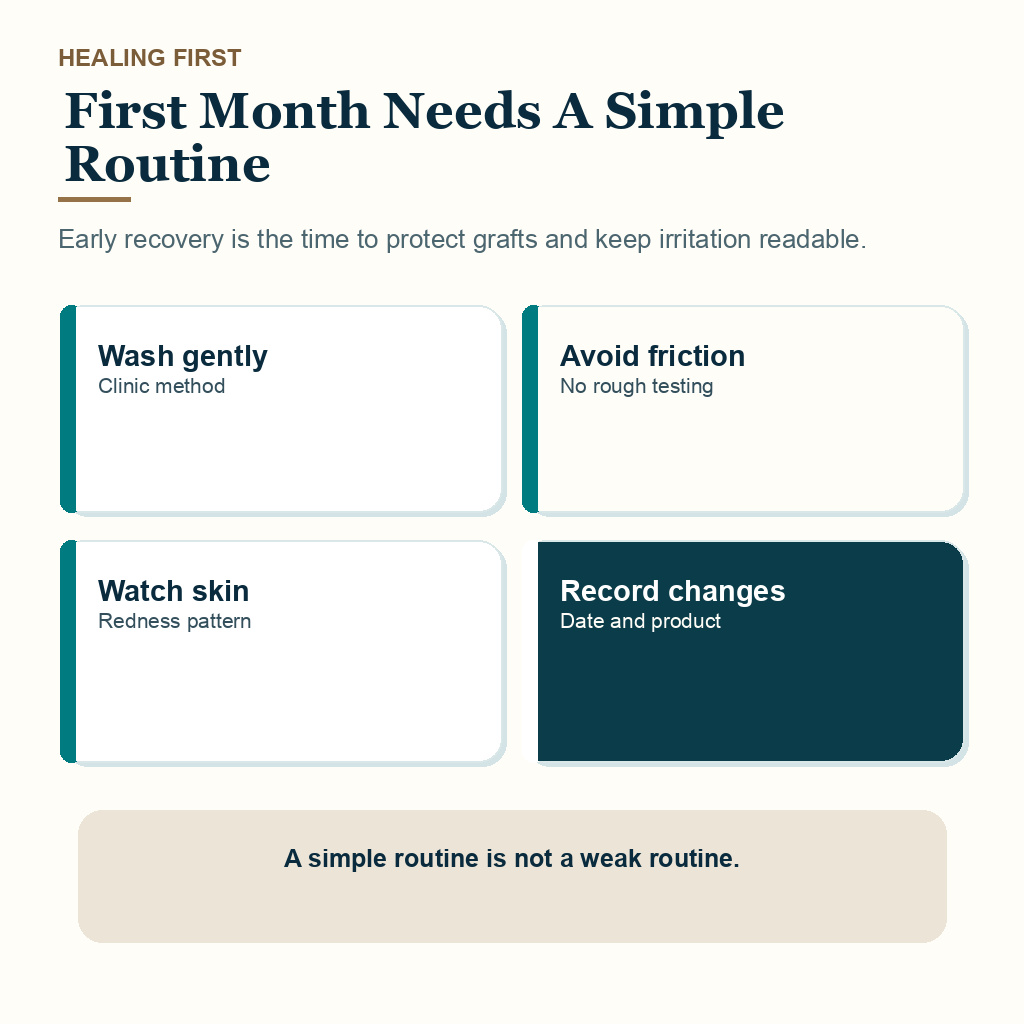
Early after a hair transplant, the grafts need gentle handling. Washing, spraying, sleeping position, crust softening, and avoiding friction matter more than adding a long list of active products. A recovery routine that looks impressive on paper can become a problem if it makes the scalp sting, itch, flake, or stay red.
The grafts are most vulnerable to mechanical trauma early on. Once the grafts are secure, the skin is still healing. I separate hair transplant recovery instructions from long term hair loss treatment. The recovery routine protects the surgical result. Medication and supportive treatment are added only when the skin can tolerate them and when the reason is clear.
A simpler routine also helps the clinic judge progress. If redness appears after one new product, the trigger is easier to identify. If five changes happened in the same week, the answer becomes guesswork.
Why does stacking treatments make side effects hard to read?
Many people add treatments because they are afraid of losing native hair during recovery. That fear is understandable, especially when the shedding phase starts. The trouble begins when every possible solution is started together. Minoxidil can cause dryness or irritation. A medicated shampoo can sting if used too early. Oils and serums can leave residue. Needling can inflame healing skin. Supplements can change lab results or interact with other medication.
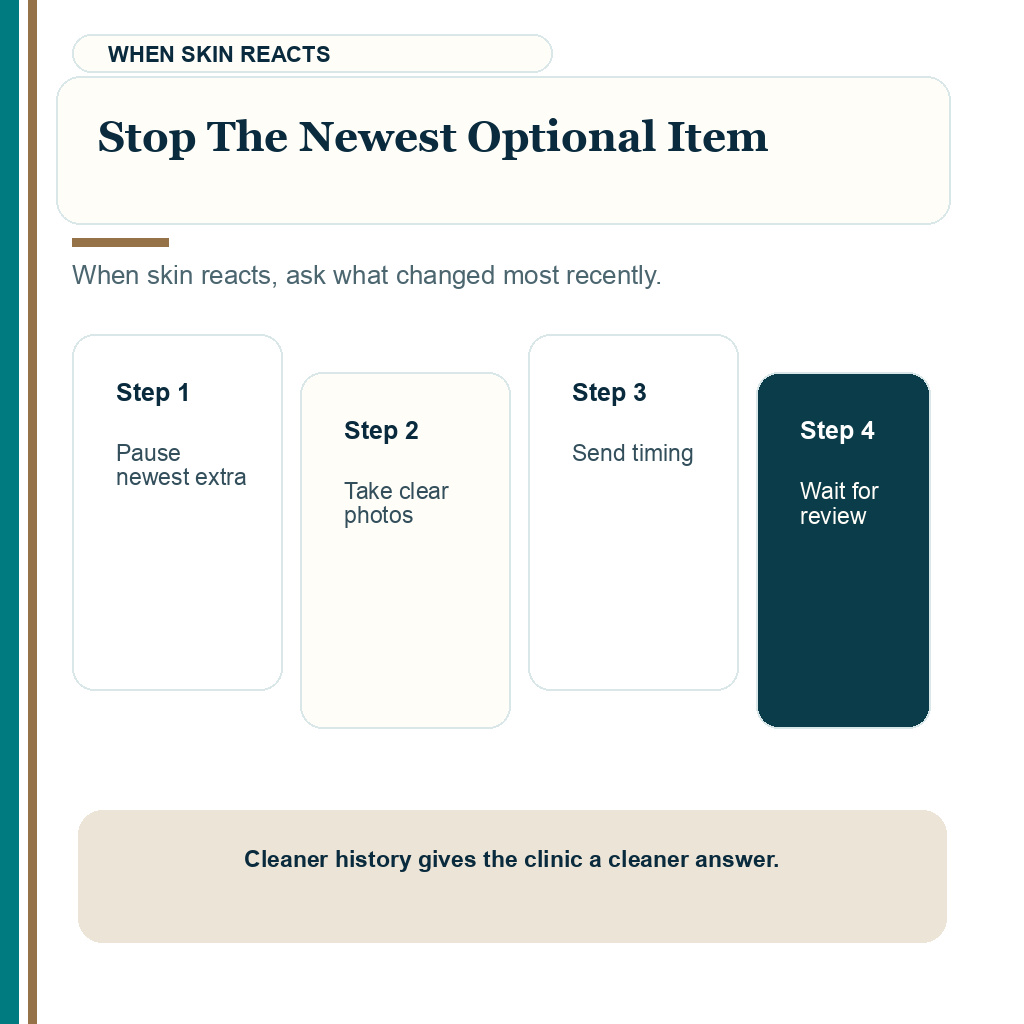
If the scalp becomes angry, I need to know what changed first. A stacked routine hides that information. The result is often a messy cycle of stopping everything, restarting everything, or blaming the transplant when the real cause may have been a product mismatch.
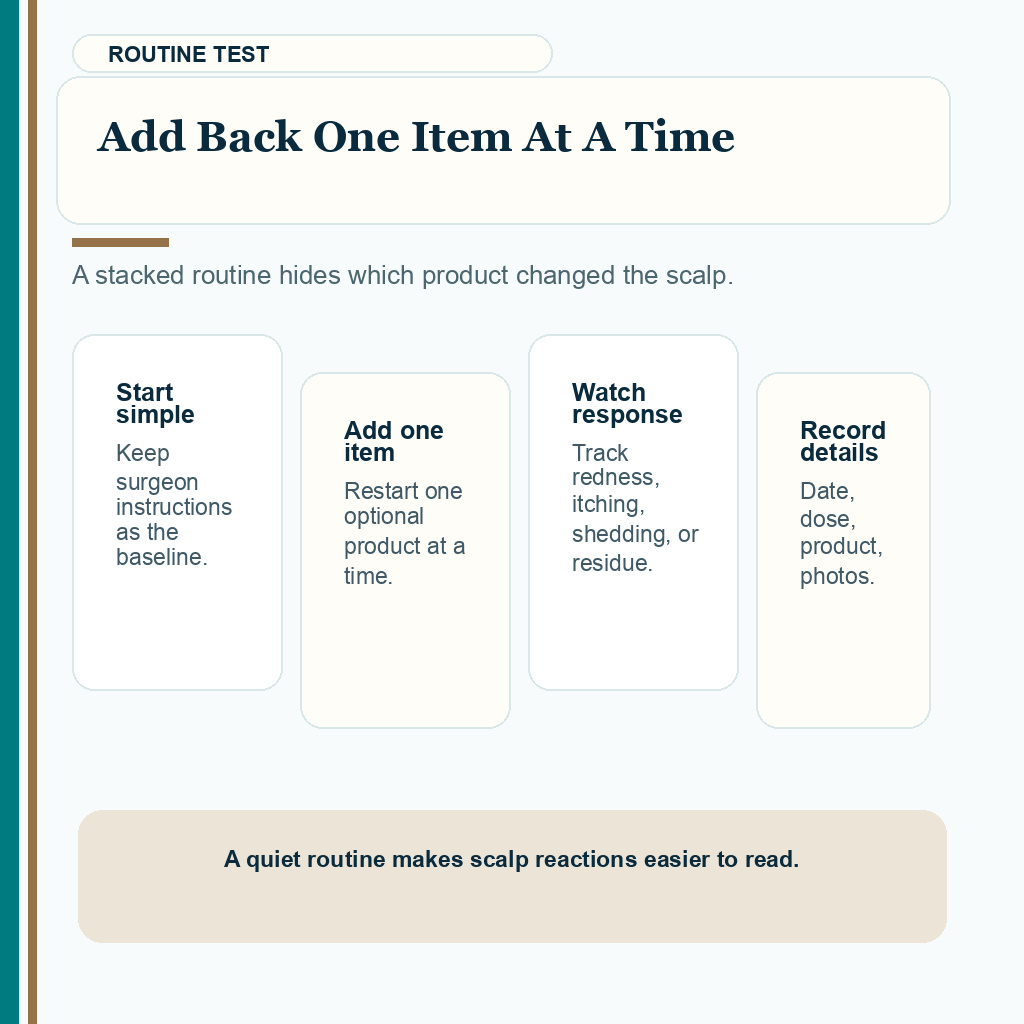
Adding one treatment at a time helps the clinic read redness, itching, and shedding more clearly.
This is also why I do not judge a routine by how many items it contains. I judge it by whether each item has a reason, a start date, and a way to monitor tolerance.
Are topical products still active treatments?
Topical treatments can feel harmless because they are applied to the skin. They are still active treatments. Minoxidil after hair transplant can be useful for native hair, but it can also dry the scalp, cause irritation, or create an early shed that feels worrying. If it is restarted at the wrong moment, product irritation can be confused with a transplant problem.
Topical finasteride after hair transplant also needs a clear plan. It may suit some people who cannot tolerate oral treatment, but the dose, application area, and timing matter. Adding it on the same day as minoxidil, a new shampoo, and a serum makes any side effect harder to interpret.
Residue is another practical issue. Thick foams, sprays, oils, and cosmetic fibers can sit on the graft area or donor skin. They may not damage a healed graft by themselves, but they can make washing harder and can irritate skin that is already dry or sensitive.
Oral medicines and supplements need a separate reason
Oral treatments are not scalp products. They involve the whole body. Oral minoxidil around hair transplant planning needs attention to blood pressure, swelling, palpitations, and medical background. It should not be added casually because another routine looks strong.
Supplements deserve restraint too. Iron, vitamin D, zinc, biotin, and other products can be useful when there is a deficiency or a clear indication. Taking many supplements without a reason does not guarantee better growth. It can create stomach upset, affect blood tests, or distract from the true cause of poor shedding or poor density.
A treatment plan is stronger when every item earns its place. If an item has no diagnosis, no target, and no monitoring plan, I leave it out until there is a reason to add it. If a medicine was already prescribed for a clear reason before surgery, I do not want it stopped or restarted casually either. Changes still need a plan.
Medicated dandruff shampoo helps only in selected situations
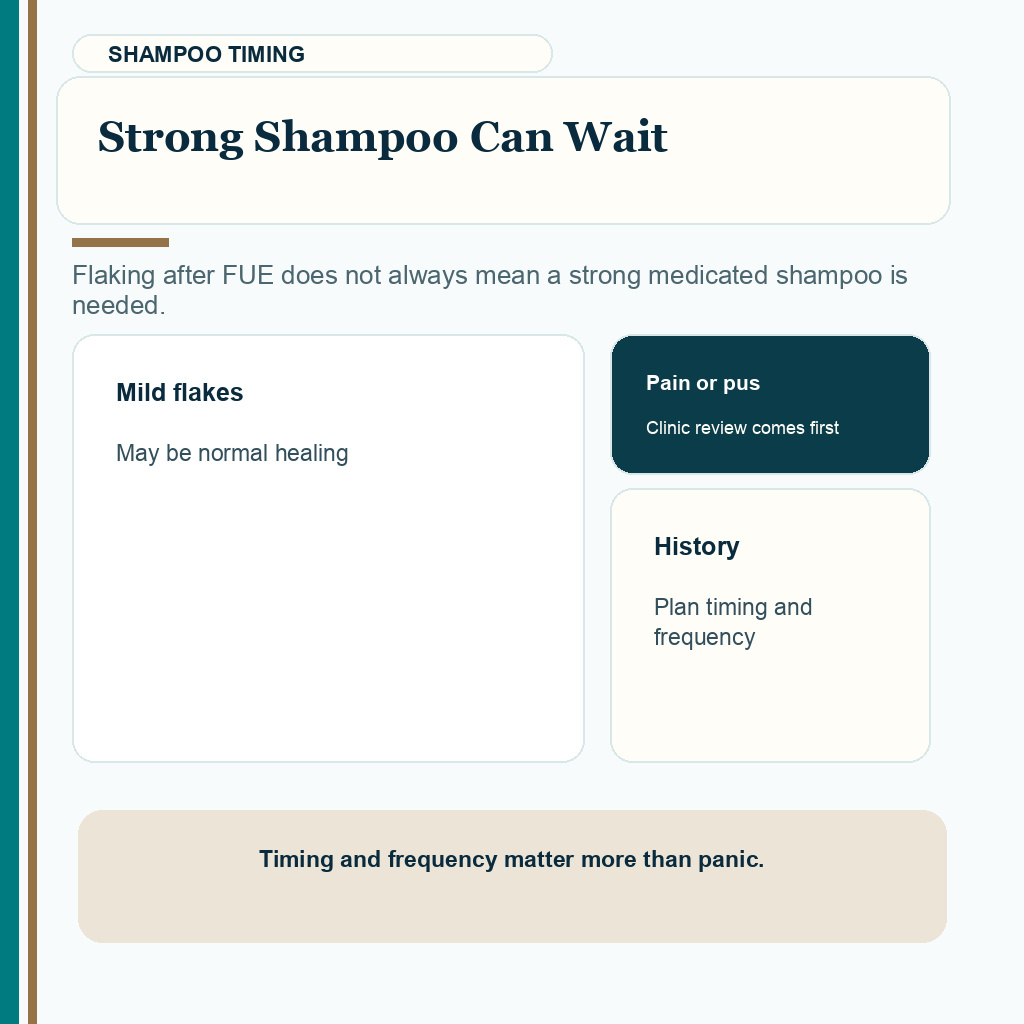
A medicated shampoo can still be too strong just because it is sold over the counter. Ketoconazole shampoo after hair transplant may help dandruff or seborrheic irritation, but timing and frequency matter. Used too early or too often, it can dry the scalp and make crusting or itching feel worse.
If there is already a history of seborrheic dermatitis and hair transplant planning, the clinic may build a controlled shampoo schedule. That is different from adding a strong shampoo because the scalp looks a little flaky during normal healing.
The scalp can look imperfect during recovery. Mild flaking, tightness, and uneven dryness do not always mean disease. The question is whether there is spreading redness, greasy scale, pain, pustules, or a history that makes inflammation more likely.
Microneedling and aggressive massage need to wait
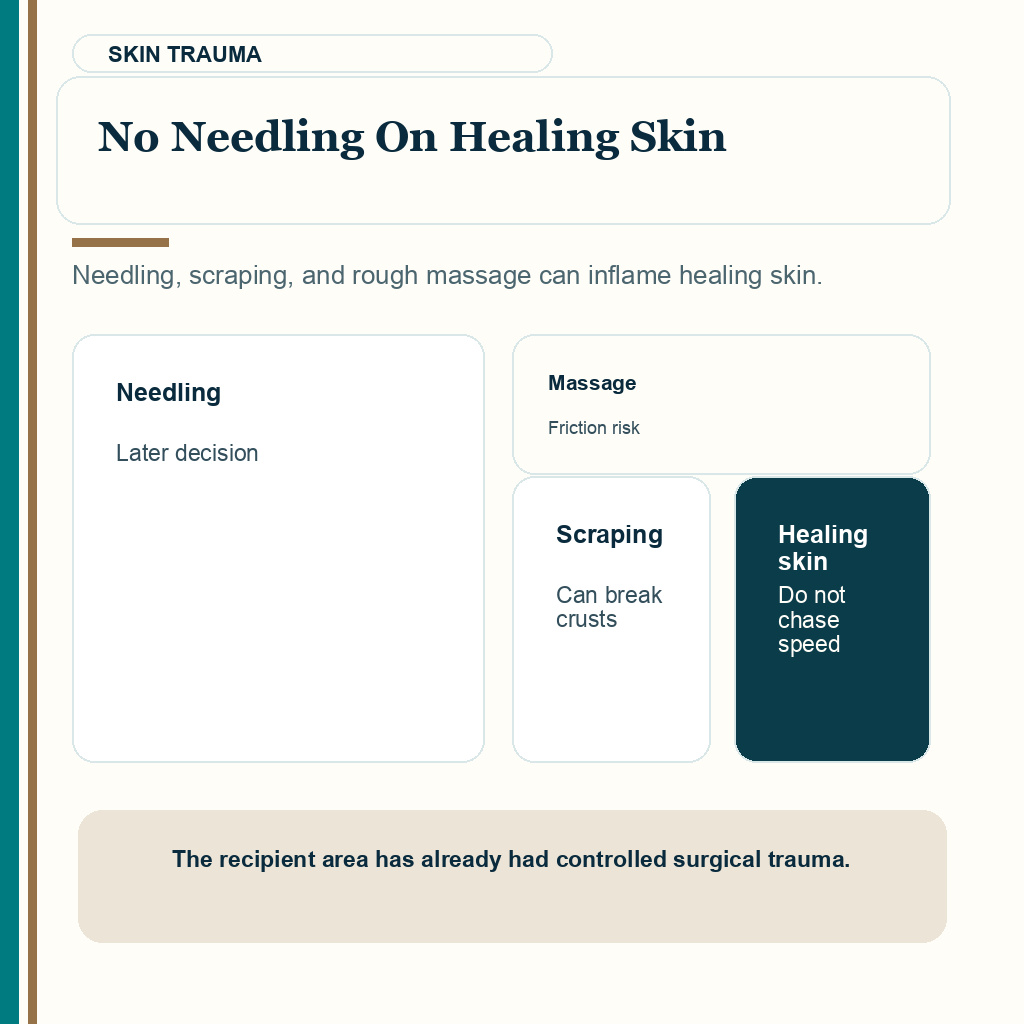
Microneedling belongs to a later stage, not to early graft healing. It intentionally creates small injuries in the skin. That can be useful in some non-surgical hair loss routines, but after FUE the recipient area has already been through controlled surgical trauma. Adding needling too early can create irritation, bleeding, infection risk, and unnecessary anxiety.
The same applies to firm massage, scraping, rough exfoliation, and devices that pull at crusts. The recipient area is not a place to chase faster healing with force. If microneedling is considered later, microneedling after hair transplant needs a timing decision based on skin recovery, not impatience.
Oils and cosmetic serums also need caution. Hair oil after hair transplant and copper peptide serums after hair transplant can be discussed later, but they should not cover active redness, pustules, or tender skin before the clinic has seen photos.
PRP and booster treatments are not emergency rescue
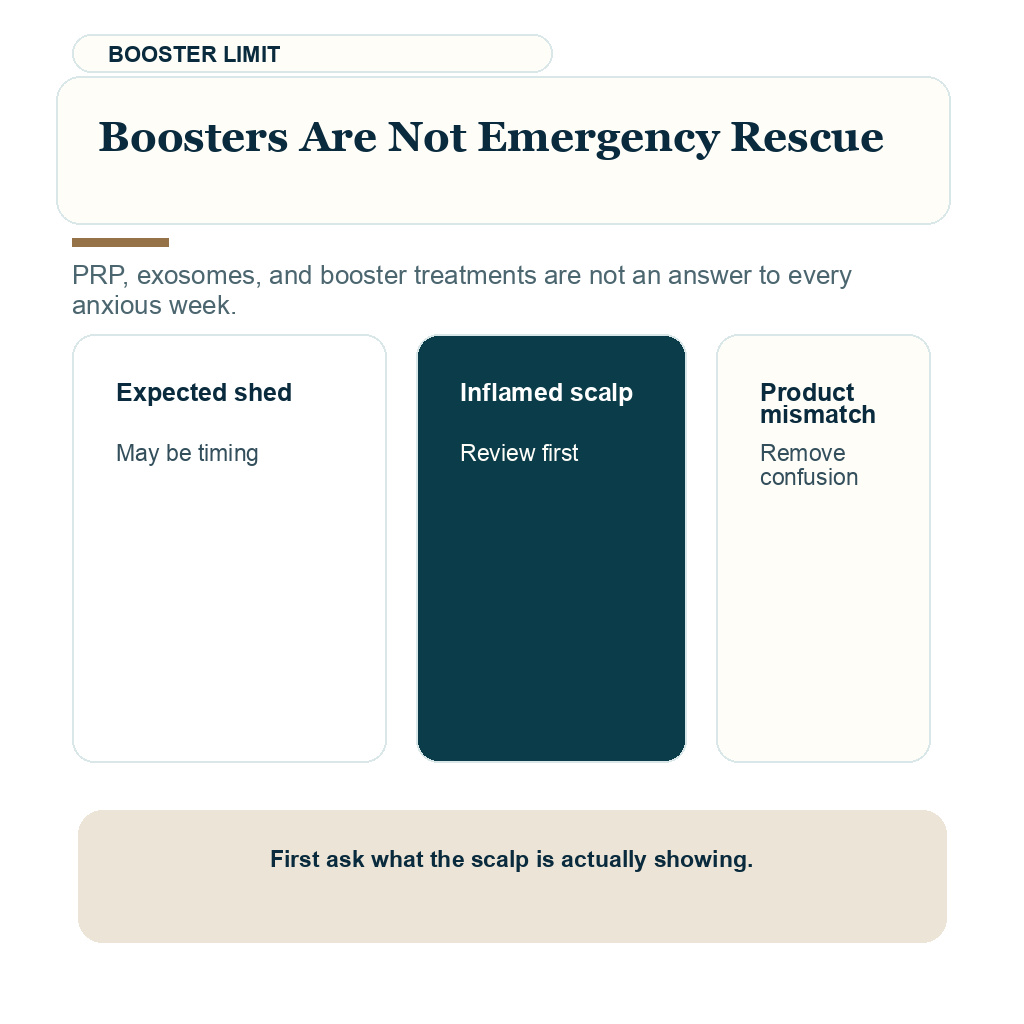
PRP, exosomes, and other booster treatments are often marketed as a way to improve growth. They are not an emergency response to every shed or every anxious week. Shedding after FUE can be normal, and native hair can also shed if medication changes are made around the same time.
PRP and exosomes after hair transplant require realistic expectations. They may be considered as supportive treatment in selected cases, but they cannot replace precise graft placement, donor protection, or a clear recovery routine. A booster treatment also does not solve irritation caused by a product that the scalp cannot tolerate.
Before adding an injection treatment, the basic questions need to be answered. Is the scalp inflamed? Is there infection? Is the shedding expected? Has medication changed recently? Is the worry coming from one bad photo or from a real change over several days? A strong plan starts with those details.
When do warning signs mean the routine needs review?
Some symptoms mean the new product or routine should pause until the clinic reviews the scalp. Burning that does not settle, spreading redness, rash, swelling, heat, pus, increasing pain, sudden crust breakdown, or fever after hair transplant are not normal routine adjustments. They need photos and medical review.
Allergy signs during hair transplant recovery may look different from infection. A rash can be itchy and widespread. Infection can be painful, warm, or associated with discharge. Redness, scabs, and pimples after hair transplant need context because a small pimple is different from spreading inflammation.
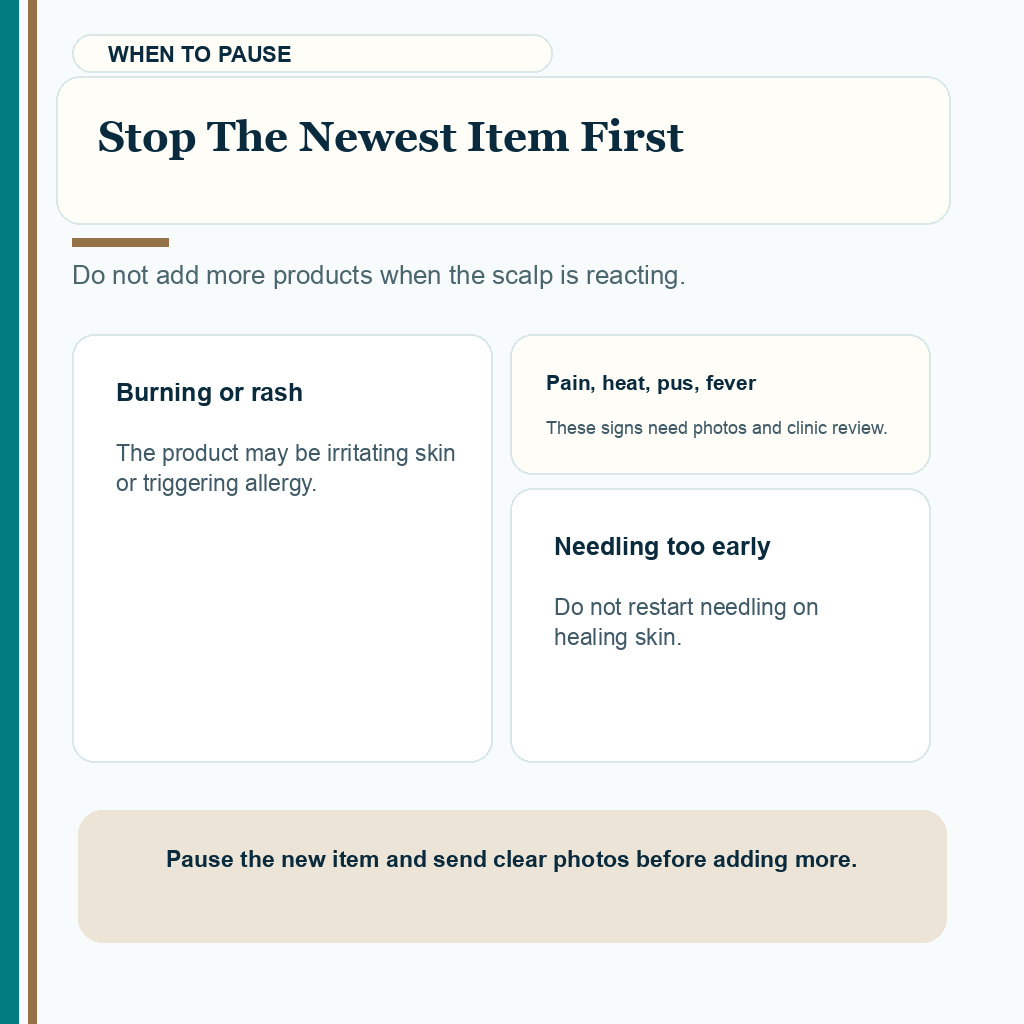
Burning, rash, pain, heat, pus, fever, or early needling should pause the new item until the clinic reviews it.
The next useful step is often to stop the newest item, not to add another one. That gives the skin a cleaner test and gives the clinic a clearer story.
These 10 treatment stacking slides show why optional extra treatments should be paused, separated, or restarted one step at a time. Swipe sideways, use the arrows one slide at a time, or choose a number below the image.
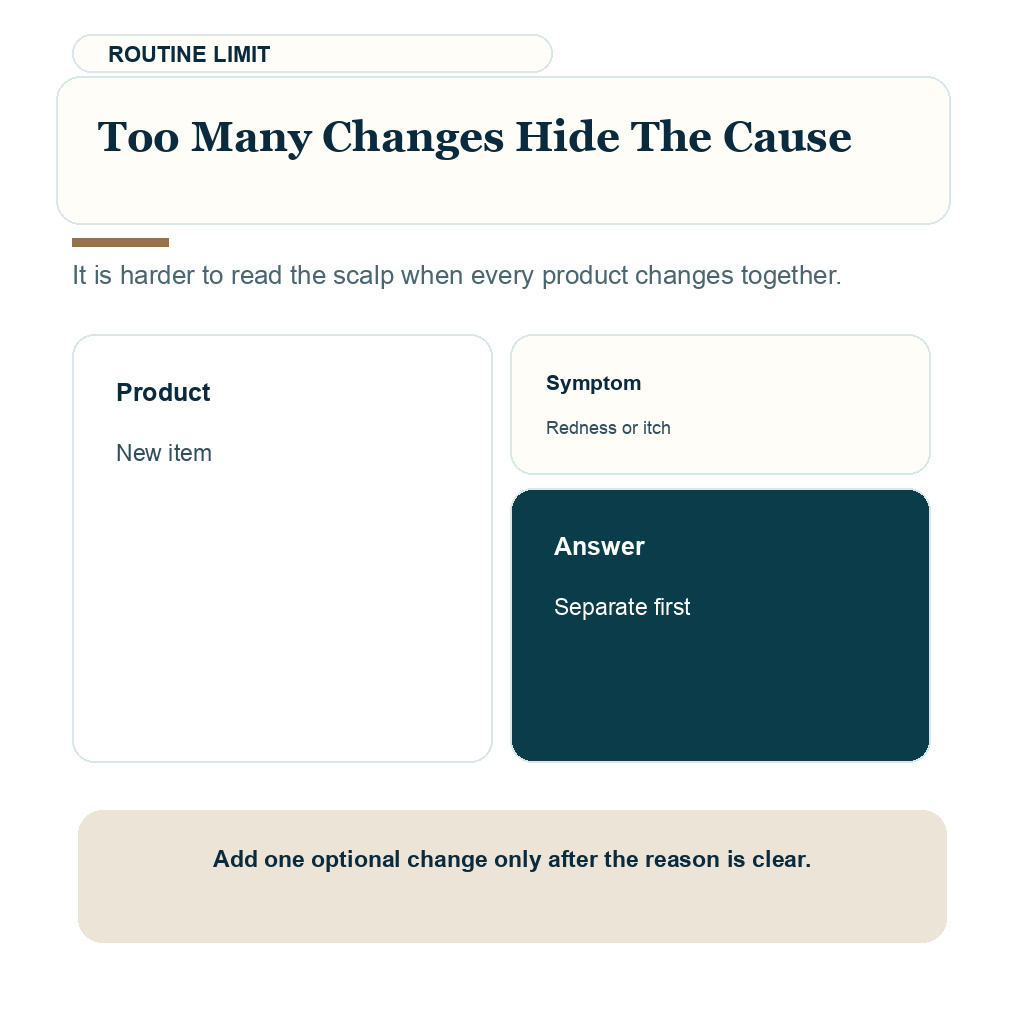


How can treatments come back one step at a time?
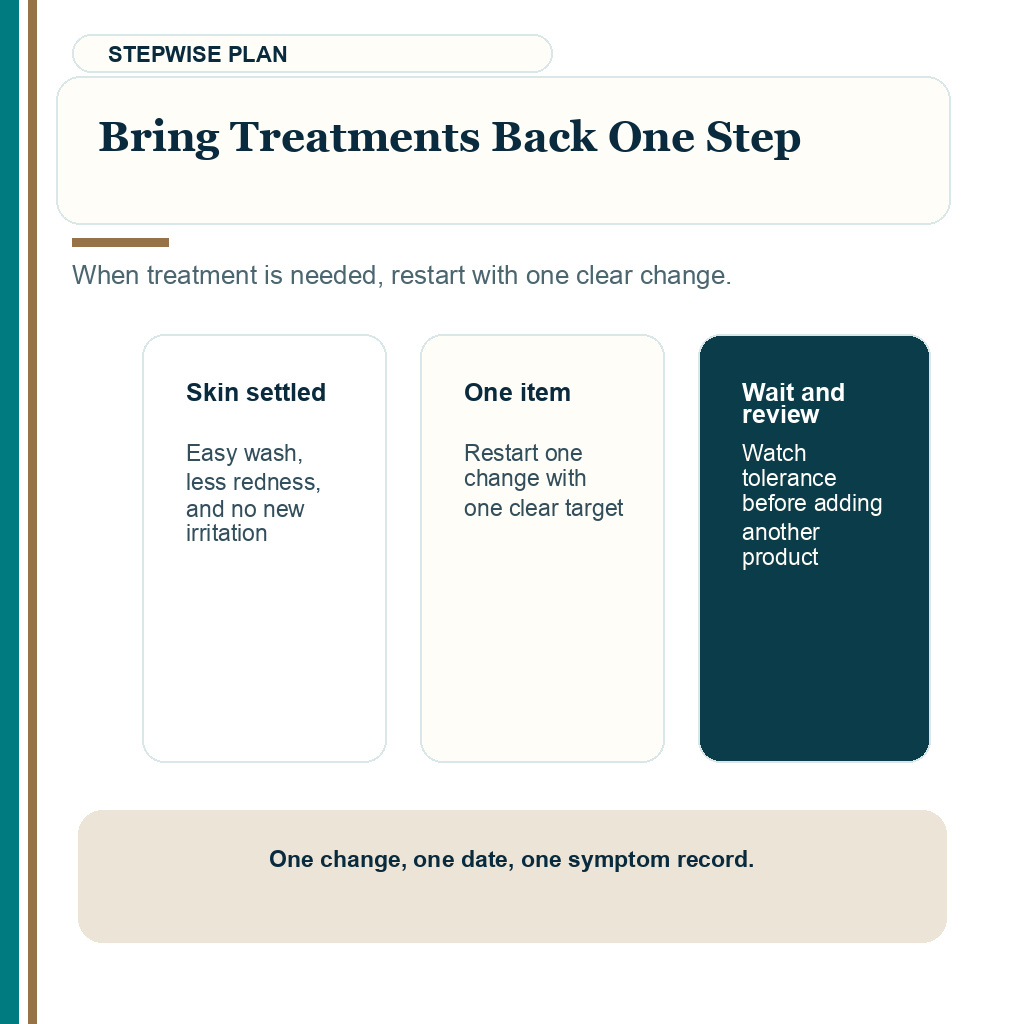
I use a stepwise method when treatment is needed after the early healing phase. First, I confirm that washing is comfortable, crusts have cleared, and the skin is not angry. Next, I add only one new item. Then I wait long enough to see whether itching, redness, dryness, or shedding changes.
For example, if minoxidil is planned, I do not start it on the same day as a new shampoo and a new serum. If topical finasteride is planned, the dose and area should be understood. If a medicated shampoo is needed, the frequency should be agreed rather than improvised.
When native hair shedding is the main fear, hair transplant during a minoxidil shed is a separate discussion. A shed does not always mean the transplant is failing. It may mean the hair cycle is reacting to treatment, timing, stress, or medication changes.
Keep the scalp readable
When too many products are added at once, the scalp becomes hard to interpret. A clear photo series, product start dates, dose or frequency, and the exact symptom timeline often tell me more than another new treatment.
Send the ingredient list, not only the front label. Alcohol, fragrance, essential oils, acids, and heavy occlusive ingredients can irritate healing skin even when the product is sold for growth or recovery.
A simple routine gives the grafts and the skin a clean baseline. Once the scalp is calm and the reason is real, useful treatment can be added deliberately instead of guessed into place.
Read this review excerpt
First wash completed and visual instructions given to my daughter.